Both FirstEnergy Corp. and its shareholders argued to a federal judge that they shouldn’t be forced to publicly disclose which executives ordered the payment of political bribes that the company admitted to in a related criminal case.
The two parties are awaiting judicial approval of a proposed settlement from a derivative lawsuit filed by FirstEnergy’s shareholders. The settlement would call for FirstEnergy’s insurers to pay the company $180 million for damages incurred via the company’s role in what prosecutors have described as the largest public corruption manifestation in state history.
In an agreement with prosecutors reached in July 2021, FirstEnergy as a company admitted to a $60 million bribery scheme anchored by the then-Speaker of the Ohio House, and another $4.3 million bribe to Ohio’s then top utility regulator.
The statement of facts in that agreement, however, anonymizes the FirstEnergy officials involved in the scandal. The agreement also called for FirstEnergy to pay a $230 million penalty and cooperate with investigators to possibly avert a charge of wire fraud against the company.
Delaying any possible approval in the shareholder’s derivative case, U.S. District Judge John A. Adams asked the shareholders’ attorneys last week to state who at FirstEnergy ordered the bribe payments,
Jeroen van Kwawegen, an attorney representing the plaintiffs, demurred and didn’t answer the question, prompting Adams to cut short the hearing. Adams then issued an order calling for any “interested parties” to either provide an answer to his question or offer a good reason why they can’t divulge the information. He threatened the lawyers with contempt and possible expulsion from the case for failure to answer.
The shareholders, in arguments submitted Wednesday, offered to privately tell the judge who at FirstEnergy ordered the bribes. They said they couldn’t do so publicly because doing so would breach confidentiality rules associated with discovery (the pre-trial evidence exchanging process) and mediation.
The shareholders’ lawyers said their obligations are to their clients and to FirstEnergy itself — not the public.
“Such public disclosure could also be harmful to FirstEnergy considering the myriad related criminal and civil proceedings, the ongoing regulatory investigations, and the securities class action pending in the Southern District of Ohio where FirstEnergy is a defendant,” they wrote.
Kwawegen attached emails attached to the filing showing he asked lawyers FirstEnergy and its former executives if they’d agree to voluntarily disclose some of the information. He was rejected by the company, its former CEO Chuck Jones, Dennis Chack, and Mike Dowling (whose lawyer said they are not inclined to provide a “blanket waiver” but asked for specifics). Jones, Chack and Dowling were all fired in October 2020 amid an internal investigation.
FirstEnergy made similar arguments. The lawsuit and settlement, its lawyers said, are aimed to recover for harm done to the company because of its actions. Any public accountability, they argued, “risks harm to the interests of FirstEnergy and its stockholders, which is exactly the opposite of what a derivative litigation is supposed to do.”
Notably silent on the issue: federal prosecutors. They didn’t weigh in either way before the court. A spokeswoman for U.S. Attorney for the Southern District of Ohio Kenneth Parker didn’t respond to an inquiry.
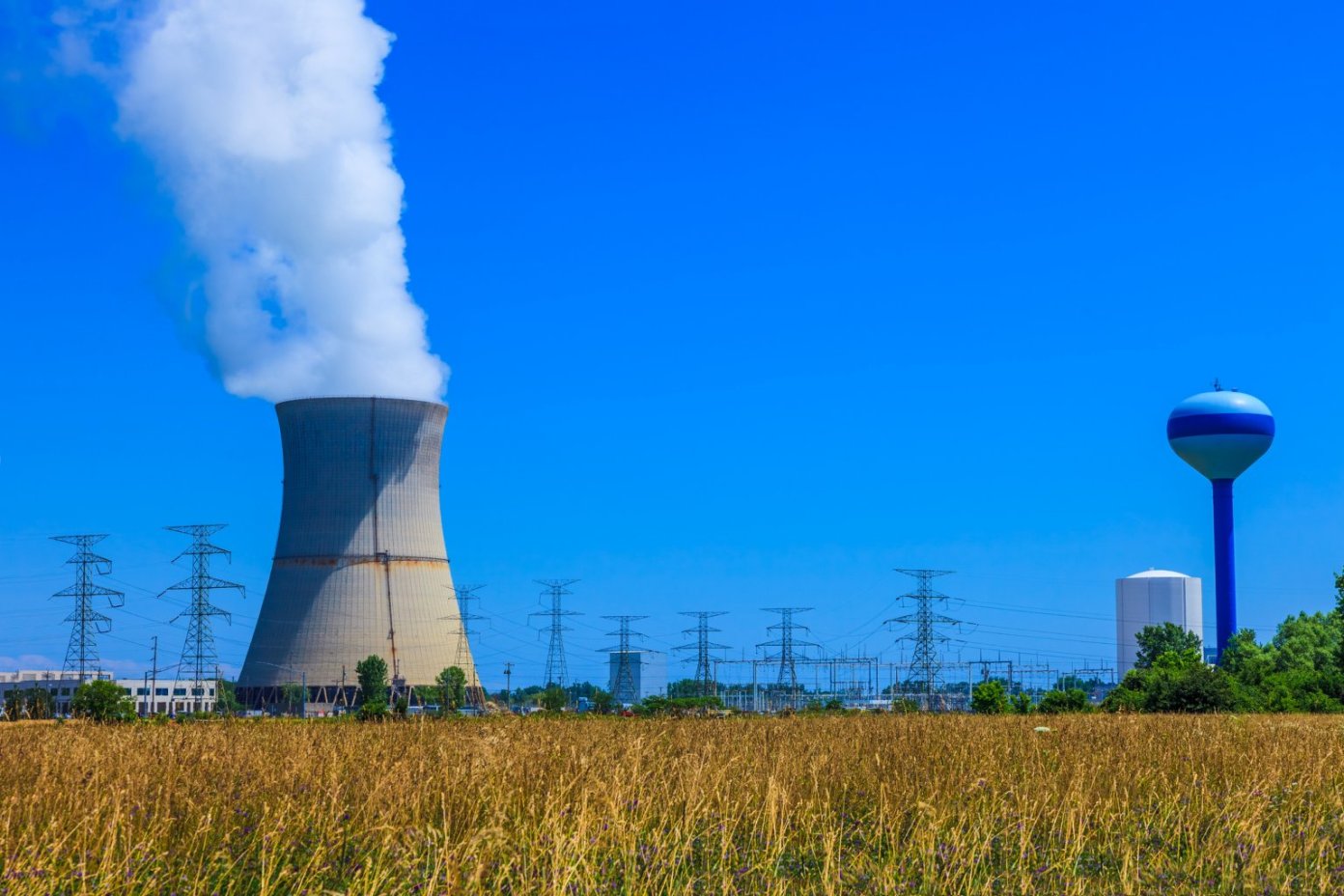
The derivative lawsuit traces back to the passage of House Bill 6 in 2019. The energy overhaul legislation, among other provisions, provided a massive bailout of two nuclear power plants owned at the time by a FirstEnergy subsidiary. Federal prosecutors said the legislation was worth $1.3 billion to the company.
To ensure it passed and thwart a referendum attempt to repeal it, FirstEnergy admitted to providing $60 million to a nonprofit secretly controlled by then House Speaker Larry Householder, R-Glenford. Householder allegedly used the funds to elect a slate of candidates that would support his bid to become the House Speaker, engineer the bill’s passage, thwart a repeal effort, and enrich himself personally. He has pleaded not guilty and awaits trial, scheduled for January 2023.
FirstEnergy also admitted to secretly paying $4.3 million to energy attorney Sam Randazzo just before Gov. Mike DeWine named him chairman of the Public Utilities Commission of Ohio. Randazzo has not been accused of a crime and has denied wrongdoing.
A judge who oversees utility cases was involved in writing a coal and nuclear bailout now at the center of what prosecutors have described as the largest public corruption case in Ohio history, subpoenaed documents show.
That same judge, Greg Price, is presiding over multiple regulatory cases in which a government watchdog agency is trying to investigate that same corruption. His orders, spanning 18 months, have blocked investigations into a utility at the center of the scandal on multiple fronts.
One ruling barred the agency from deposing a witness who worked on a FirstEnergy Corp. audit — an audit that the company’s CEO said in a text message that former PUCO chairman Sam Randazzo helped conceal. Another allowed FirstEnergy to attest to regulators its own innocence, as opposed to hiring an independent auditor to review the company’s practices after it was accused in court documents of participating in a bribery scheme.
As an attorney examiner at the Public Utilities Commission of Ohio, Price hears cases involving disputes between utility companies, residential interests, industrial interests, and others. Examiners — essentially administrative judges — preside over PUCO case hearings, issue procedural orders like what evidence must be turned over between parties in a case, and influence the five-member commission on final orders.
The records show Price helped draft the legislative text, received regular updates about its legislative progress, formally reviewed HB 6 for the PUCO, and was briefed on its status as lawmakers launched efforts to repeal it after the FBI arrested the Ohio House speaker and four alleged co-conspirators.
The legislation, among other provisions, provided $1 billion from ratepayers to bail out two nuclear plants owned at the time by a FirstEnergy subsidiary; subsidized two coal plants jointly owned by several utility companies for an estimated $700 million from ratepayers; and allowed FirstEnergy to “decouple” its revenue from its energy sales, which its CEO said would “recession-proof” the company.
Prosecutors charged former House Speaker Larry Householder in July 2020 with using $60 million secretly provided by FirstEnergy to pass the bill, enriching himself personally and politically. FirstEnergy in 2021 entered into a deferred prosecution agreement with the DOJ, admitting to bribing not only Householder but former PUCO chairman Sam Randazzo. The company says it paid Randazzo $4.3 million for regulatory favors just before he was appointed.
Householder has pleaded not guilty and awaits trial. Randazzo has not been charged with a crime and has maintained his innocence. FirstEnergy paid a $230 million penalty and is cooperating with the investigation in an effort to avert a charge of honest services wire fraud.
Alongside the criminal probes, the PUCO has four open cases regarding FirstEnergy and House Bill 6. These have put Price in charge of answering questions about what kind of evidence FirstEnergy must turn over to outside investigators. Ashley Brown, a former PUCO commissioner and current executive director of the Harvard Electricity Policy Group, said this poses a conflict of interest for Price.
“It’s very, very strange to me that he would be both involved at the policy level and adjudicating those same policy issues later on,” Brown said. “If it were me, I’d recuse myself.”
In a brief phone call, Price declined to answer questions about the subpoenaed records or his role in the passage of HB 6. Matt Schilling, a PUCO spokesman, declined to answer written questions or make officials available for interviews, citing open PUCO cases and pending criminal investigations.
However, he defended Price’s apparent involvement in drafting HB 6.
“It is not unusual for the PUCO or its subject matter experts to be asked to review and share their expertise regarding legislation pertaining to public utility and commercial transportation law,” Schilling said.
Utility law is complex and requires specialized industry and legal knowledge to practice. But an administrative law judge like Price is supposed to be neutral and his actions transparent, said Neil Waggoner, an environmental advocate with the Sierra Club.
“The PUCO, especially under Randazzo’s tenure, showed itself to be neither of those things,” he said. “We need a full accounting of exactly what input and involvement PUCO commissioners and staff had in regard to HB 6 and repeal efforts, as well as an accounting for how that may or may not have impacted ongoing proceedings.”
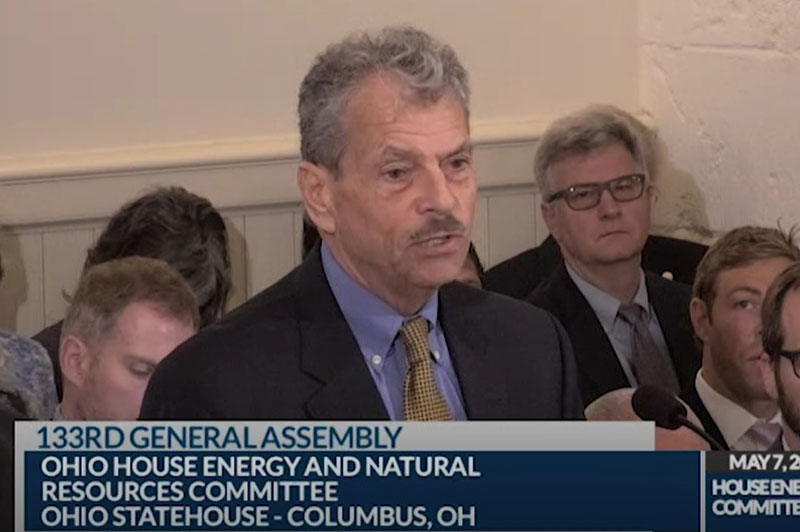
Then-PUCO Chair Sam Randazzo testifies as an interested party regarding House Bill 6 on May 7, 2019. Source: Ohio Channel.
Requests denied
Householder was arrested July 21, 2020. The PUCO, somewhat inexplicably, didn’t launch any investigation into FirstEnergy until Sept. 15 of that year.
When it finally did, it rejected requests from the Ohio Consumers’ Counsel to hire an independent auditor to determine whether the company broke any laws in the passage of the bill. Instead of bringing in a disinterested investigator, Price ordered a FirstEnergy official to answer to the PUCO whether it did so. The FirstEnergy official denied wrongdoing at the time.
Randazzo resigned as chairman in November 2020 after the FBI raided his condo and FirstEnergy first disclosed the $4.3 million payment to him. The company said it identified the payment via an internal investigation ordered by its board of directors after Householder’s arrest.
In September 2021, Price presided over a hearing over whether FirstEnergy would have to turn over that same internal investigation to the Ohio Consumers’ Counsel, a state-funded watchdog agency that represents residential consumers’ interests before the PUCO. Price ordered the company to give it to the PUCO to review privately, before ruling whether it should be turned over.
“We’ve heard a lot about this internal investigation, but we are in no position to make any rulings as to whether or not it’s privileged sight unseen,” Price said.
After review, the PUCO found the report to be protected by attorney client privilege and ruled it didn’t need to be released.
Around that same time, Price ruled FirstEnergy didn’t need to provide the Ohio Consumers’ Counsel with the documents it gave federal regulators who sought to investigate the HB 6 episode. Price denied the request until the Federal Energy Regulatory Commission issued its audit.
“If and when a public audit is released by FERC, we can revisit this issue at that time,” he ruled in August 2021, according to a hearing transcript.
FERC’s audit, released earlier this month, found FirstEnergy improperly used $71 million to lobby for the passage of HB 6 and ordered the company to develop a plan to refund customers. The Ohio Consumers’ Counsel has since asked Price to honor his word. The matter awaits a ruling.
Larry Householder addresses reporters June 16 after lawmakers voted to expel him from the General Assembly. He has pleaded not guilty to a racketeering charge and awaits trial. Photo by Jake Zuckerman.
‘Burning’ an audit
Before utility companies can add extra fees to users’ bills, they need the PUCO’s permission.
FirstEnergy in 2017 got that permission to apply a “Distribution Modernization Rider” (DMR) fee to its customers. Over the objections of the Consumers’ Counsel, the PUCO denied a request to attach a refund mechanism to the charge. The commissioners called adding a refund mechanism “counterproductive.”
Two years, one lawsuit, and $458 million collected from customers later, the Ohio Supreme Court deemed the charge unlawful and cut it off. The judges found the PUCO allowed the charge without making sure FirstEnergy uses the money to modernize the grid (despite the name). However, state law prohibits the court from demanding refunds unless PUCO explicitly creates such a mechanism.
When the PUCO allowed the charge, it hired Oxford Advisors to serve as a third-party monitor and file a final report auditing the funds. Oxford, through PUCO staff, requested a delay on its deadline to file the report. The commissioners, with Randazzo at the helm one year into his chairmanship, instead determined the audit would be “moot” and dismissed the case on Feb. 26, 2020.
Less than two weeks later, FirstEnergy CEO Chuck Jones sent a text to another company executive (the text was later obtained by the Consumers’ Counsel via records request).
In the text, Jones said Randazzo “will get it done for us but cannot just jettison all process.” He lists several favorable regulatory decisions, including “burning the DMR final report has a lot of talk going on in the halls of PUCO about does he work there or for us?”
In December 2020 and under heavy public scrutiny, the PUCO ordered a different firm, Daymark Energy Advisors, to resurrect the audit and determine how FirstEnergy used the money.
Citing the text as an impetus, the Ohio Consumers’ Counsel asked the PUCO to issue a subpoena for any draft version of the final Oxford audit, and to compel an Oxford employee to testify about it.
Price, in a ruling earlier this month, denied the requests relating to that final audit. He said the Counsel’s reliance on the text message shows its “obvious interest in investigating potential wrongdoing” admitted to by FirstEnergy “rather than investigating what the Commission actually has jurisdiction over investigating, which is whether [FirstEnergy] improperly used DMR funds.”
He ordered the auditor to testify at a PUCO hearing, but only about an earlier filing — not the report that was allegedly covered up.
Daymark’s final audit, released in January, could not trace the outcome of the DMR money because FirstEnergy commingled it with revenue from all 11 of its utilities. The auditors said they were unable to determine both whether the money was spent on modernizing the grid and whether it was spent on HB 6 lobbying.
However, Price, defending the decision to reject the Ohio Consumers’ Counsel’s subpoena, said the second audit “appears to fully address whether [FirstEnergy] properly expended the DMR funds.”
The Consumers’ Counsel has since appealed the case to the five commissioners on the PUCO, emphasizing the “extraordinary” nature of the case. The Counsel asked the PUCO’s legal director — not Price — to certify the appeal and sent to the full commission to overrule Price.
“To paint issues pertaining to the use of DMR funds as outside the PUCO jurisdiction is just plain wrong,” the Ohio Consumers’ Counsel wrote.
‘Nicely done Greg’
The most explicit reference in the subpoenaed records of Price working on HB 6 comes in the window between when law enforcement arrested Householder and when they raided Randazzo’s condo.
After the arrests, a state legislative committee considered a repeal of the bill. A state representative asked in writing whether Randazzo helped write or review the decoupling language in HB 6.
“We did make suggestions to mitigate some of the more objectionable language that, as I recall, would have given the PUCO limited/no discretion,” Randazzo said in an email to Scott Elisar, his former law partner who he hired as PUCO’s policy director.
“Tammy and Greg Price were involved I think. I do recall saying that it should be removed because it was going to be confusing when blended with other issues as well as the difficulties people were having distinguishing between [FirstEnergy] and [FirstEnergy Solutions].”
Most of the records are less clear as to Price’s involvement. They show that starting on April 12, 2019, the day HB 6 was introduced, Price was regularly updated on the bill’s developments. When Randazzo sought help with his testimony before lawmakers in May 2019, PUCO’s legal director Angela Hawkins added Price to an email thread.
“Will make him available to assist if necessary on the below issue,” she saidon May 6, 2019.
On May 20, 2019, Randazzo thanked the head of the Ohio Air Quality Development Authority, Christina O’Keeffe, for a visit to discuss HB 6. Price and other staff are copied onto the email chain, though it’s not clear who attended.
When the bill passed the House on May 29, 2019, a legislative report from the governor’s office listed Price, Elisar and the PUCO’s Statehouse liaison as legislative and legal reviewers for the agency on the bill. A similar reportfrom when the bill passed the Senate listed the designation as well. Price was listed as a “required attendee” for the PUCO on a July 15, 2019 hearing and received a briefing on it afterward.
In late September 2020, another PUCO lawyer wrote a formal legal memoanalyzing legislation to repeal HB 6. The memo is addressed to Price and Randazzo.
An administrative judge blocked a watchdog’s attempt to obtain an audit that the Ohio utility regulatory agency’s former chairman, who has been accused of taking a $4.3 million bribe, allegedly tried to squash before publication.
The ruling, released Friday evening, is a setback for the Ohio Consumers’ Counsel, a state funded agency representing residential ratepayers in utility cases. The OCC has pushed for investigations of FirstEnergy, especially since the company admitted to playing a central role in a massive public corruption scandal.
The OCC asked the Public Utilities Commission of Ohio to grant it a subpoena to obtain a copy of any draft audit into a $458 million charge from FirstEnergy that started in 2017 collected called the “Distribution Modernization Rider.” The OCC also sought to depose an auditor who worked on report.
The Ohio Supreme Court blocked FirstEnergy from continuing to charge customers for the DMR, two years after it was first applied on monthly bills. The court said the PUCO unlawfully failed to ensure the money is actually spent on modernizing the grid. A subsequent PUCO investigation was inconclusive as to whether the DMR monies were used to fund the bribery operations.
The Supreme Court’s order questioned the value of leaving intact the audit when it overturned the rider, finding the reviews fail to properly protect ratepayers from the “possible misuse of DMR funds.” Additionally, the justices reasoned that any findings of misuse of the funds would be moot given the court had already blocked the charge and a state law blocked the court from ordering refunds unless PUCO explicitly allows for them, which it did not. The PUCO later nixed the audit, citing the court’s thinking.
The OCC has previously obtained a text message from FirstEnergy’s CEO referencing former PUCO Chairman Sam Randazzo “burning the DMR final report.”
The text partially came to light when FirstEnergy entered into a deferred prosecution agreement with the U.S. Department of Justice to possibly avert a charge of wire fraud. The company agreed to pay a $230 million penalty. It also admitted to paying Randazzo $22 million over nine years, including $4.3 million just before he started as PUCO chairman. The company also admitted to a separate $60 million bribery scheme ran through the state Legislature to pass House Bill 6 in 2019.
Randazzo has not been charged with a crime and has maintained his innocence. The PUCO has received two subpoenas in connection with the investigation.
PUCO Attorney Examiner Gregory Price denied both the OCC’s requests. He said the facts are clear that no such draft report exists in any form. Additionally, the question of FirstEnergy’s political spending is being “thoroughly addressed” in other PUCO cases.
Price ruled OCC’s reliance on the Randazzo text shows its “obvious interest in investigating potential wrongdoing” as opposed to matters it “actually has jurisdiction over.”
In December 2020, about two months after federal agents raided Randazzo’s home, the PUCO opted to resume the audit into the DMR. However, this time it hired Daymark Energy Advisors. That audit, released earlier this year, was inconclusive as to whether the DMR funds were used to fund the HB 6 campaign. FirstEnergy, the auditors said, pooled funds from all its 11 utilities in one pot, creating an “inability” for the auditors to track the funds.
Price, however, said the final report “appears to fully address whether [FirstEnergy] properly expended the DMR funds.”
In records the PUCO provided to federal prosecutors, Price is copied onto email threads regarding policy meetings before and after the passage of House Bill 6. As was first reported by Cleveland.com, one email shows Price was invited to one such meeting days before the House passed the bill.
Other investigations into FirstEnergy, Randazzo and other alleged conspirators continue. Former House Speaker Larry Householder is expected to stand trial on a racketeering charge in connection with the scandal this fall. He recently asked a court to dismiss the charge against him. That motion has not yet received a ruling.
Meanwhile, FirstEnergy shareholders have filed a class action lawsuit against the company as well.
Electric customers across Ohio collectively spent an estimated $211 million via add-on bill charges over the last two years to cover for losses from two coal-fired power plants that continue to bleed millions annually, according to new data from state regulators.
The money to the Ohio Valley Electric Corp. (OVEC) — an entity comprised of several investor-owned utilities from multiple states that operates the plants — flows thanks to a 2019 state law now at the center of a criminal bribery prosecution.
The Public Utilities Commission of Ohio began to allow three of the utilities that own and are contractually obligated to buy power from OVEC — American Electric Power (43% equity stake), Duke Energy (9%), and AES Ohio (4.9%) — to pass on their losses on OVEC to their customers, starting in the mid-2010s. The payments were originally only allowed through 2024. Through 2019, the three utilities’ customers were charged an estimated $159 million on OVEC.
House Bill 6, a law passed in 2019 that’s now the focal point of what prosecutors have said is the largest political corruption investigation in state history, extended the subsidies through 2030 and spread the three utilities’ (AEP, Duke and AES) losses to electric customers of all Ohio utilities (not just those that own OVEC).
In 2020, Ohio electric customers statewide paid $115 million to OVEC’s owners to cover their losses on the deal, according to data provided by a PUCO spokesman. In 2021, they paid about $97 million (July through December 2021 costs are estimates). Under the law, residential customers pay a maximum $1.50 per month to utilities to cover their OVEC losses. Industrial customers pay a maximum of $1,500.
OVEC operates two 1950s-era coal plants in Cheshire, Ohio and Madison, Indiana, originally built to power the federal government’s uranium enrichment facilities near Portsmouth. That agreement ended in 2003. The utility companies that own OVEC last renegotiated their contract in 2011 extending its life through 2040.
Technically, the OVEC plants could save utility customers money if OVEC could generate and sell electricity at below-market costs. However, a mix of market forces, environmental regulations and recently spending more than $1 billion on a “scrubber” system designed to limit emissions have left the plants selling electricity at costs well above those of PJM, an energy marketplace serving utilities in 13 states including Ohio.
“[Our] analysis shows that at this time, the OVEC plants cost customers more than the cost of energy and capacity that could be bought on the PJM wholesale markets,” wrote London Economics International, a firm the PUCO commissioned to audit the subsidies, in December.
A draft version of a 2020 PUCO-commissioned audit by the same firm found that “keeping the plants running does not seem to be in the best interests of the ratepayers.” The line was removed from the final version at the request of a PUCO staffer who asked the auditors to use a “milder tone and intensity of language,” according to emails obtained by the Ohio Consumers’ Counsel (OCC), which represents ratepayers in PUCO cases and has advocated ending the OVEC subsidies.
Along with the raw finances, Ohio consumers are subsidizing plants that have belched nearly 21 million tons of carbon dioxide, 21,000 tons of nitrogen oxide, and 12,000 tons of sulfur dioxide into the atmosphere since January 2020, plus smaller discharges of arsenic, lead, and mercury, according to data from the U.S. Environmental Protection Agency provided by the OCC.
“Why the hell is this still in place?” said Neil Waggoner, an advocate with the Sierra Club’s Beyond Coal campaign. “I think that this is utility capture in practice. This is the utilities in this state having a death grip on the regulators and people in power to the point that they’re getting exactly what they want.”
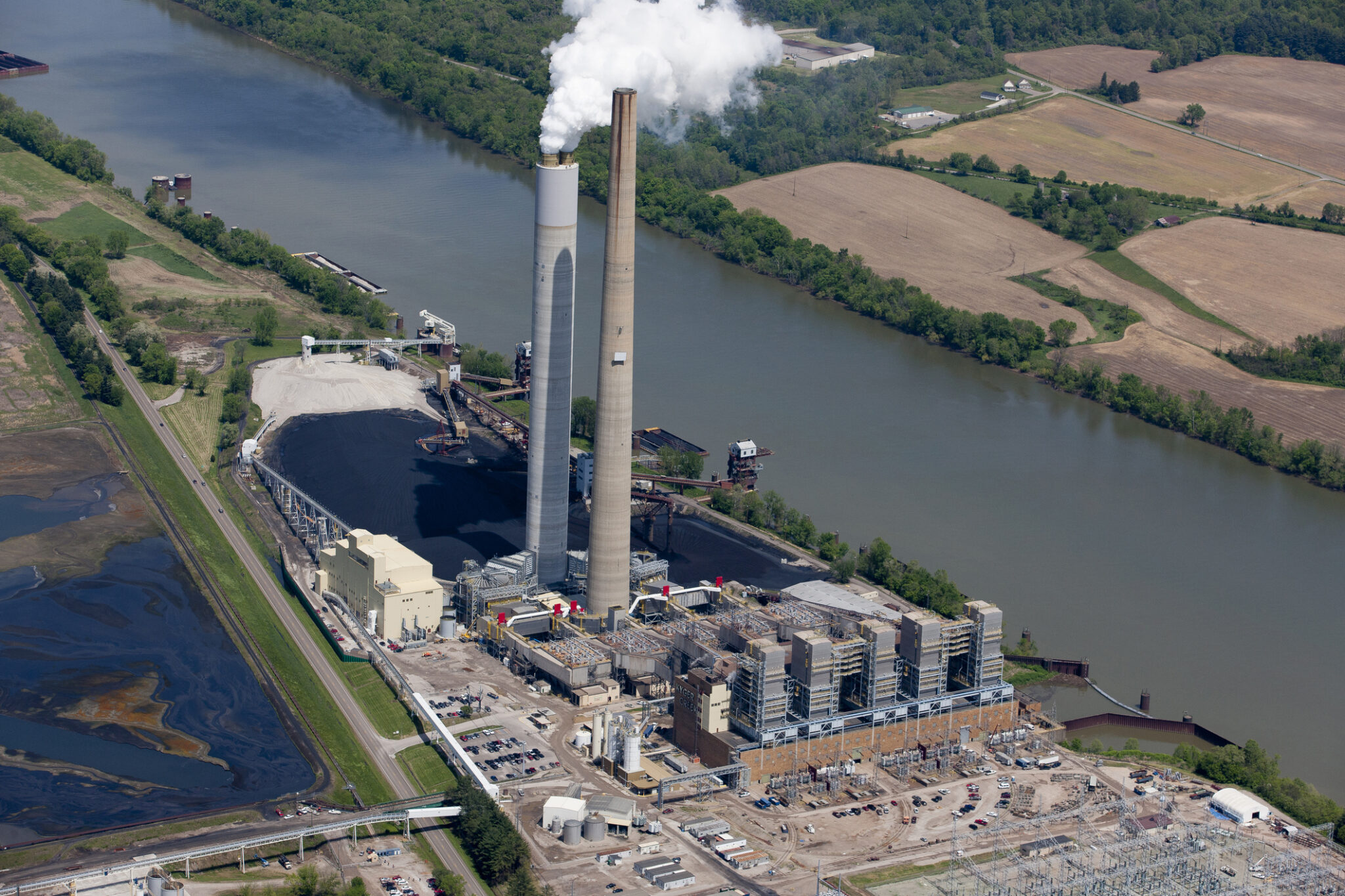
The Clifty Creek Power Plant, in Madison, Indiana, which is operated by OVEC. Photo taken by Rep. Casey Weinstein, D-Hudson, who visited the plant and has called for a repeal of state law forcing Ohio ratepayers to subsidize it.
A sticky bailout
FirstEnergy Corp. admitted in July to paying more than $60 million to an account controlled by the former House Speaker and his allies to ensure passage of HB 6. The prosecutors’ allegations have focused in court documents on an estimated $1.3 billion nuclear bailout and other non-coal related provisions of the sweeping bill that are favorable FirstEnergy. Former speaker Larry Householder, accused of using the money to engineer passage of the bill and shore up his own political aims, has pleaded not guilty. Two Householder allies involved in the alleged scheme have pleaded guilty to racketeering.
State lawmakers in early 2021 passed legislation repealing the nuclear bailout and “decoupling” provision (a ratepayer-backed revenue guarantee for FirstEnergy). However, the OVEC bailout was left intact.
There are bipartisan efforts in the House and Senate to repeal the OVEC bailout from state law, and the narrower PUCO-approved bailout that preceded them. Neither has come up for a vote and the sponsors are pessimistic on their chances.
Sen. Mark Romanchuk, R-Ontario, perhaps the plants’ most prominent critic and co-sponsor of the Senate legislation, said he is in negotiations with the utilities that own the plants and is not giving up. He declined an interview.
“Not sure where things will go but we’re not giving up,” Romanchuk said.
House Democrats have called for a repeal of the OVEC subsidies, though they only control 34 of 99 seats in the chamber. Rep. Jeff Crossman, a Parma Democrat who recently announced plans to run for attorney general, said the OVEC charges should be repealed but as much is unlikely.
“There’s probably not a will to undo the OVEC charges,” he said. “They donate gobs of cash to the right folks. There’s just no other reason to support these plants.”
House Speaker Bob Cupp, R-Lima, said in October he doesn’t believe there’s support in the House Republican caucus to repeal the coal bailout.
House Majority Leader Bill Seitz, R-Green Twp., has told several state media outlets the bailouts aren’t going anywhere. He did not respond to written questions about the uneconomic nature of the plants, or why ratepayers should cover their owners’ losses on them.
“We’ve beat this [OVEC] horse to death. It’s not going to change,” Seitz said to Cleveland.com in October. “They’ve introduced God knows how many bills — none of them are going anywhere, in my humble opinion.”
Michigan takes action
AEP is by far OVEC’s largest shareholder, with a roughly 43% equity stake in the company, and the two share several executives.
While repeal efforts in Ohio are at a lull, other states have signaled resistance to allowing utilities to continue to pass OVEC’s owners’ losses to customers.
The Michigan Public Service Commission in a November order noted that OVEC’s costs exceed the market price of electricity by tens of millions. It warned that AEP’s local utility may not be able to pass on all its OVEC losses to customers that are “incurred because of imprudent” decisions.
“The order today put I&M [an AEP unit] on notice that the Michigan share of these excess costs are unlikely to be permitted without additional evidence that continuing to purchase power from the units was in the best interest of its customers,” the Michigan regulators said in a news release.
AEP spokesman Scott Blake said in an email the OVEC plants are “critical resources that help ensure the reliability of the grid and offer protection from increases in the costs of other fuels.” He said AEP Ohio customers for decades benefitted from OVEC’s power via affordable electricity and good jobs. OVEC, he argued, insulates customers from cost spikes caused by things like a surge in natural gas prices or a shortfall of renewable energy supply.
“AEP Ohio customers benefited for decades from the power provided by OVEC in the form of affordable electricity and good jobs,” he said. “While there may be years where power from OVEC is more expensive than the market, as generation from natural gas and other sources becomes more expensive, customers could see refunds from OVEC in the future.”
Fitch Ratings determined OVEC’s outlook is “stable” in February — just one step above “speculative.” However, its analysts found that repealing HB 6 wouldn’t necessarily harm OVEC’s prospects. The analysts reasoned that for one, in the event of a repeal, AEP, Duke and AES would still be able to pass on their OVEC losses to customers. For two, the “sponsoring” utilities have already contractually agreed to purchase the power OVEC generates, regardless of who eats the losses.
Meanwhile, in a Virginia appeal of a public service commission rate case, Virginia Attorney General Mark Herring accused OVEC of charging an AEP utility in Virginia well beyond market costs for electricity. The case is ongoing.
Columbus, Ohio – The Public Utilities Commission of Ohio (PUCO) today adopted a settlement agreement requiring refunds of overcharges to customers of PALMco Energy OH, LLC and PALMco Power OH, LLC, which are retail energy providers doing business as Indra Energy. The companies will also waive any outstanding unpaid bills.
“Today we are happy to provide more than $1 million in relief to customers impacted by PALMco’s misleading rates,” stated PUCO Chair Jenifer French. “At the PUCO we take allegations of misleading marketing or customer enrollment very seriously and we will continue to work to ensure fairness in Ohio’s competitive energy marketplace.”
Under the terms of the agreement, PALMco will refund customers whose rates increased by more than 50% from August – December 2019, totaling more than $215,000. PALMco will also waive uncollected bills of approximately $832,000. Any remaining balances after PALMco issues refunds will be donated to a charity chosen by the Ohio Consumers’ Counsel (OCC).
PALMco’s current owners, officers or partners are barred from doing business in Ohio’s retail energy markets for seven years by the terms of the agreement.
A copy of today’s opinion and order is available on the PUCO’s website at www.PUCO.ohio.gov. Click on the link to Docketing Information Service and search for case 19-2153-GE-COI.
Case background
On December 19, 2019, PUCO staff filed a notice stating it received 51 complaints from PALMco customers between Aug. 1, 2019 and Dec. 10, 2019 about abnormally high electricity and natural gas bills. In its letter, PUCO staff noted concern that PALMco was already under investigation for nearly identical allegations of misleading and deceptive practices to market to and enroll customers with “competitive” and “the best” rates, however charged customers more than 4 times the regulated utilities’ prices.
On Sept. 21, 2021, PUCO staff, OCC and PALMco filed a joint settlement agreement and recommendation for the Commission’s consideration.
PUCO regulations
The PUCO is charged with adopting and enforcing regulations to protect consumers from any misleading or deceptive acts or practices by competitive retail electric and natural gas providers.
The PUCO maintains its Energy Choice Ohio website to provide helpful tools to assist consumers in evaluating their electric and natural gas supply options. The PUCO’s Apples to Apples comparison charts provide customers with a snapshot comparison of rates if they do not choose to enroll with a competitive supplier, versus current electric and natural gas supplier offers, and contract terms. The charts are updated daily.
An energy lobbyist who Gov. Mike DeWine appointed as the state’s top regulator of public utilities received $22 million from FirstEnergy Corp. in the decade before his appointment — including $4.3 million paid just before assuming the post and specifically to execute official duties to benefit the Akron-based utility — court documents revealed Thursday.
Sam Randazzo, who resigned as chairman of the Public Utilities Commission of Ohio after federal agents raided his Columbus home, used his PUCO chairmanship to scuttle a requirement that FirstEnergy undergo a rate review set for 2024, which company executives believed would hurt its bottom line, the documents state.
FirstEnergy entered into a deferred prosecution agreement — in which the U.S. Department of Justice could drop the charge if the company meets certain conditions including a $230 million criminal penalty — on one count of wire fraud.
It also agreed to a stipulation of facts detailing its nearly $61 million in payments to an account the former speaker of the Ohio House allegedly controlled and spent to pass House Bill 6, legislation worth an estimated $1.3 billion to the company.
Thursday’s filing, however, is flush with new details about FirstEnergy’s long relationship with Randazzo, dating back to a contract in 2010 and a consulting deal inked in 2013.
The agreement states one FirstEnergy executive texted another on Nov. 15, 2019 that Randazzo is “going to make the requirement [for a rate review] to file go away, but I do not know specifically how he plans to do it.” The document doesn’t directly identify the executives.
On Nov. 21, 2019, PUCO issued an order finding it is “no longer necessary or appropriate” that three utilities owned by FirstEnergy file a new case when its current rate structure expires in 2024.
Executive 1 thanked Randazzo via text the next day, according to prosecutors, attaching an image showing the company’s stock price increasing.
An email for Randazzo on file with the Supreme Court is no longer in operation. In a statement obtained by the Cincinnati Enquirer, he said he executed his duties as chairman lawfully and denied performing any action to advance FirstEnergy’s interests. He said all payments to him were made under his consulting agreement with the utility.
“In the fall of 2020, it became clear that issues surrounding House Bill 6 and a public attack on my background and character had escalated to a point that made it impossible for me to effectively perform my duties at the PUCO,” he said, explaining his choice to step down.
According to prosecutors, Executive 1 and Executive 2 met Randazzo at his condo in late December 2018 to discuss remaining $4.3 million on his consulting agreement and a job posting for a PUCO seat. FirstEnergy had no legal requirement to make the payment but did so anyways.
When a related court filing divulged Randazzo’s company accepted payments from FirstEnergy, executives worried the disclosure would torpedo the appointment. However, it only “grazed the temple,” they said, and forced “State Official 1” and “State Official 2” to perform “battlefield triage.”
The governor nominates PUCO commissioners off a shortlist from a nomination council. A DeWine spokesman did not answer specific inquiries, including whether the governor is one of the unmentioned state officials.
“As I have consistently said, we understood that Sam Randazzo had worked for manufacturing companies, energy companies, and consumers, and that he had done work for First Energy. Sam Randazzo was a well-known subject-matter expert in energy issues,” the governor said in a statement. “If, as stated in the court documents, Sam Randazzo committed acts to improperly benefit First Energy, his motives were not known by me or my staff.”
Haley Carducci, a spokeswoman for Lt. Gov. Jon Husted, didn’t specifically answer whether Husted is one of the two state officials.
“The Lt. Governor has not been contacted by any federal law enforcement officials regarding this case, so we have no reason to believe that he is mentioned in this document,” said Husted spokeswoman Haley Carducci.
Along with Randazzo’s help on the regulatory side, the agreement states that he helped craft and review language of House Bill 6 including a “decoupling” provision, which created a ratepayer backed guarantee of FirstEnergy’s revenues at 2018 levels, a good year for the company. The bill also bailed out two nuclear plants owned by a former FirstEnergy subsidiary; bailed out two coal plants owned by a spread of different utility companies; and gutted the state’s renewable energy and efficiency standards.
Randazzo has deep ties to the fossil fuel energy industry. He worked as a lobbyist and lawyer for the Industrial Energy users Ohio, which represents interests of energy-intensive manufacturing and commercial business before the PUCO.
As a donor, he contributed more than $282,000 to state candidates over 23 years, according to an analysis from the National Institute on Money and Politics. More than $194,000 went to Republicans, $36,000 to Democrats, and $48,000 to candidates of unspecified parties.
When his name appeared on a short list of potential candidates for DeWine to choose, a spread of environmental groups wrote a letter outlining “serious concern” for Randazzo’s “extreme bias” against clean energy.
“Mr. Sam Randazzo has worked earnestly to dismantle Ohio’s energy efficiency resource standard and renewable portfolio standard (RPS) since 2012 via multiple pieces of legislation,” they wrote. “He was supportive of the legislation that froze Ohio’s standards for two years, worked behind the scenes with the study committee that issued a faulty report allegedly assessing the costs and benefits of the RPS and EERS, and even continued to push the repeal and weakening of these standards after Governor Kasich’s veto of a bill that would have essentially eliminated the standards.”
The Ohio Consumers Counsel, a state agency that represents residential ratepayers before PUCO, issued a statement after news broke of the filing.
“The public got some justice today regarding the Ohio House Bill 6 scandal and FirstEnergy,” said agency director Bruce Weston. “But justice is also a longer road that requires state reforms to curb the utilities’ political influence that is costing Ohioans money on their utility bills.”
Rep. David Leland, D-Columbus, said the information about Randazzo places the scandal right on DeWine’s doorstep.
“This, combined with the significant money FirstEnergy gave to his campaign makes it clear that Governor DeWine needs to come clean to the people of Ohio about his role in this historic scandal,” he said.
Catherine Turcer, director of Common Cause Ohio, which frequently advocates for anti-corruption and campaign finance reform legislation, said the entire episode highlights that current law allows some political entities to spend enormous sums of money without ever disclosing the source.
“Clearly, Ohio legislators also need to create greater transparency so that voters can ‘follow the money’ and determine who is funding political spending by all entities including nonprofits. It’s not yet too late for us to pass new laws that will shine a light on ‘dark money,’” she said. “However, our state legislative leaders need to act with urgency and make transparency and accountability a top priority — or Ohioans will undoubtedly face yet another embarrassing scandal.”
Shortly after HB 6 passed, a FirstEnergy executive texted Randazzo, according to prosecutors. Attached was an edited image of Randazzo’s face atop Mount Rushmore, with FirstEnergy executives and lobbyists alongside him on the iconic monument.
“HB 6 F(***) ANYBODY WHO AINT US,” the executive wrote.
Gov. Mike DeWine’s latest appointee to lead Ohio’s scandal-plagued utility regulator last week raised concerns among some lawmakers and consumer watchdogs. She claimed that her agency has only a very limited ability to make electric companies refund billions in improper charges to ratepayers.
There was always going to be scrutiny when Jenifer French made her first appearance last Wednesday before the Ohio Senate and Public Utilities Committee.
DeWine appointed her in March to chair the Public Utilities Commission of Ohio. DeWine’s first appointee, Sam Randazzo, resigned in November after the public learned that a lobbyist believed to be Randazzo got a $4.3 million payment from Akron’s FirstEnergy just as Randazzo took over as Ohio’s top utility regulator.
For its part, FirstEnergy last year fired its top executives after discovering the payment to Randazzo — and after federal prosecutors accused it of being at the center of a $61 million bribery scandal that resulted in a $1.3 billion bailout that greatly benefited FirstEnergy and associated companies.
French, a former Franklin County Common Pleas judge, told the Senate committee that she wanted to use her background to restore public confidence in the agency.
But Sen. Mark Romanchuk, R-Ontario, wanted to get down to specifics.
“You mentioned something about public trust and public trust, I believe, is fixing this refund problem,” he said. “Since 2009, there has been about about $1.5 billion that has been deemed improper at the court and that money was not refundable back to the ratepayers — the people who paid that money.”
Romanchuk was referring to charges that the PUCO allowed, but that the Ohio Supreme Court later struck down as illegal.
The funds include $456 million FirstEnergy got, supposedly to modernize the utility grid. But at least some of the money was placed into a pool that FirstEnergy’s out-of-state utilities could borrow from.
Allowing electric companies to pocket improper proceeds from ratepayers is not a business-friendly practice, Romanchuk told French.
“That was $1.5 billion that was pulled out of our economy, and I would argue that’s not a good thing as we compete with other states and other countries around the world,” he said.
French replied, in essence, that while her agency has the power to allow rate increases, it has scant power to get the money back when the increases are ruled to be illegal.
At issue is why the PUCO, when it grants rate increases, doesn’t routinely say they’ll have to be refunded if the courts strike them down or if the utilities don’t use the money as they promise.
“My understanding is that there are very limited circumstances in which the PUCO can set rates that are capable of being refunded at the end,” French said. “For the most part, it’s the call of the legislature.”
Romanchuk disputed that. He pointed to a 2019 Ohio Supreme Court decision saying that if the PUCO had built a refund mechanism into the “rider” that allowed FirstEnergy to collect $456 million, it could have forced the company to pay it back when an audit showed the money wasn’t used for its stated purpose.
The decision said that a 1953 law “bars any refund of recovered rates unless the tariff applicable to those rates sets forth a refund mechanism… FirstEnergy’s tariffs for the modernization charge, however, contain no refund mechanism.”
French said she was unfamiliar with that decision.
A year before, the court said something similar in a case in which FirstEnergy was allowed to make yet another upcharge. In that case, the PUCO was asking that the company refund $43 million in “imprudent” purchases of renewable energy credits.
Referring back to its 1957 Keco Industries v Cincinnati decision, the court said that refunds would amount to illegal “retroactive ratemaking” because the fees the utilities ended up collecting would differ from those filed in the original tariffs. In other words, once a rate is legally set, the PUCO can’t change it willy-nilly, the decision said.
But the 2018 decision additionally said this: “FirstEnergy also asserts that the plain language of (the 1953 law) bars any refund in this case because the ($43 million) rider did not specify a refund process. We agree.”
So why wouldn’t refunds be legal under Keco if a provision for them is a part of the original order?
French said it was her understanding of the Keco case that unless a rate increase was of a special type — a “reconciled rider” — the only way refunds can happen is if the General Assembly changes the law.
“If it is not provided for in a law… or a reconciled rider, refunds would require a statutory change,” she said. “I think the Supreme Court was very clear about that. If there are opportunities for us by statute to be permitted to determine whether a rider is refundable or not, certainly that is something we would look into.”
That rationale can be hard to understand. In emails, PUCO spokesman Matt Schilling was asked why his agency doesn’t routinely make a refund mechanism part of any rate increase.
He said the decisions to which French and Romanchuk were referring relied on two separate authorities. French was talking about the Keco decision, while Romanchuk was talking about a decision based on the 1953 statute, Ohio Revised Code 4905.32.
Neither, however, uses the term “rider” and none of the subsequent Supreme Court decisions Schilling provided contains the term “reconciled rider.”
The state’s official consumer watchdog, the Ohio Consumers’ Counsel, said nothing stops the PUCO from building refund mechanisms into rate hikes that are later ruled to be unlawful.
“In the words of former Supreme Court Justice Paul Pfeifer, it ‘boggles the mind’ that Ohio consumers are denied refunds of utility charges after the court finds a PUCO order to be improper,” spokesman J.P. Blackwood said in an email. He added that PUCO commissioners seem to be substituting their own judgement for that of the Supreme Court.
“That PUCO commissioners have protected utilities more than consumers by not making certain charges refundable, further shows that the selection process for PUCO commissioners needs reform,” he said.
Last Wednesday, Sen. Teresa Fedor, D-Toledo, put those sentiments more succinctly.
“It’s time for the board members of the PUCO to start siding with the citizens of Ohio,” she said.
On December 21, a collection of open government and consumer advocates and former Statehouse reporters who championed open and accountable government called on Governor Mike DeWine to require additional financial disclosure from applicants to the Public Utilities Commission of Ohio (PUCO).
Their letter calls for the governor to require all finalists to disclose all work they have done with utilities, their consultants, and lobbyists over the past 10 years including the nature of the work performed and the amount of compensation received.
“Ohio’s financial disclosure requirements are simply inadequate,” said Catherine Turcer, executive director of Common Cause Ohio. “We are urging Governor DeWine to require more robust disclosure for the applicants before he considers appointing one of them to the Public Utilities Commission. Ohioans should be able to ‘follow the money’; such disclosure will help Governor DeWine identify conflicts of interest and could help head off future problems.”
Faith in the PUCO was shaken by last month’s revelation that FirstEnergy made a mysterious payment of $4 million to an official tasked with regulating the company. This filing with the Security and Exchange Commission revealed that this $4 million payment in 2019 was to terminate “a purported consulting agreement” that had been in place since 2013.
Although the November 19th filing did not name the recipient of the money, Sam Randazzo fits the description of someone who “subsequently was appointed to a full-time role as an Ohio government official directly involved in regulating” FirstEnergy. Randazzo was appointed chairman by Gov. Mike DeWine on February 4, 2019. The filing came after the FBI raided Mr. Randazzo’s condo as part of its ongoing investigation into corruption at the Statehouse.
A check of Randazzo’s financial disclosure statements lists no $4 million payment from anyone. It does, however, show that he was paid an unknown amount by the Sustainability Funding Alliance of Ohio, a company he incorporated in 2010. The Sustainability Funding Alliance also turned up in a 2018 bankruptcy filing among the companies used by FirstEnergy’s generation subsidiary, FirstEnergy Solutions. It is precisely these kinds of self-dealings and conflicts of interest that could and should be exposed with more financial stringent disclosure requirements for future PUCO applicants. We should not need the FBI to expose after-the-fact the financial ties and machinations of PUCO applicants.
Signatories to the letter include Douglas Jones, Director Emeritus National Regulatory Research Institute; Tom Roberts, NAACP Ohio Conference; Brandi Slaughter, Ohio Council of Churches; Jen Miller, League of Women Voters of Ohio; Catherine Turcer, Common Cause Ohio; Joe Hallett, Toledo Blade, The Plain Dealer, Columbus Dispatch 1985-2014; T.C. Brown, The Plain Dealer 1989-2006; Ted Wendling, The Plain Dealer 1999-2006; Will Skora, Open Cleveland; Jim Underwood, Horvitz Newspaper, The Plain Dealer 1985-1993.
Former PUCO Commissioners Ashley C. Brown, J. Michael Biddison, and Todd Snitchler also sent a letter today to Gov. DeWine urging the Public Utilities Commission to launch a Commission Ordered Investigation (COI).
Click here for a letter that Common Cause Ohio sent to the current members of the PUCO requesting that they provide additional financial disclosure to the public.
To read the letter from open government and consumer groups and advocates to Gov. DeWine, click here.
To read the letter from former PUCO members to Gov. DeWine, click here.
An Akron-based utility company that figures prominently in a massive nuclear bailout scandal is saying that state regulators don’t have the authority to investigate whether the company improperly financed the bailout effort.
Over the past week, FirstEnergy Corp. has filed two documents with the Public Utilities Commission of Ohio saying that the commission and the state’s consumer representative don’t have standing to investigate whether FirstEnergy and affiliated companies improperly used ratepayer money in what has been called the largest bribery scandal in state history.
Marty Schladen has been a reporter for decades, working in Indiana, Texas and other places before returning to his native Ohio to work at The Columbus Dispatch in 2017. He’s won state and national journalism awards for investigations into utility regulation, public corruption, the environment, prescription drug spending and other matters.
Federal prosecutors say $60 million in utility money was used to pass a $1.3 billion nuclear bailout into law. But FirstEnergy says the utility commission lacks the authority to investigate whether it improperly used ratepayer funds in the affair.
“The commission lacks any statutory basis to conduct an investigation of FirstEnergy Corp. with respect to the alleged expenditures or to order FirstEnergy Corp. to show cause that it has not violated Ohio utility law,” FirstEnegy said in a Sept. 23 filing.
It was in response to an order by the utility commission that it show “that the costs of any political or charitable spending in support of (the bailout bill), or the subsequent referendum effort, were not included, directly or indirectly, in any rates or charges paid by ratepayers in this state.”
Federal prosecutors in July charged then-House Speaker Larry Householder and four associates with using $60 million from FirstEnergy and related interests in a scheme to make Householder speaker and pass a $1.3 bailout of two failing nuclear plants owned by FirstEnergy Solutions, a successor company to FirstEnergy Corp.
The effort was successful, although there is an effort in the legislature to repeal it before the charge hits ratepayers’ bills on Jan. 1.
FirstEnergy and associated companies haven’t been charged, but in announcing criminal charges against Householder, U.S. Attorney David M. DeVillers stressed that the investigation was far from over. An affidavit supporting the criminal complaint also refers repeatedly to “Company A,” or FirstEnergy, and it makes reference to its CEO.
In addition, Ohio Attorney General Dave Yost last week filed a civil suit that names FirstEnergy, a subsidiary and its successors — as well as Householder and his associates — as defendants.
The Ohio Consumers’ Counsel, the state’s official consumer representative in utility matters, has asked for an independent investigation into whether FirstEnergy improperly used ratepayer funds in the dark-money scheme to pass House Bill 6, the bailout legislation. The agency was disappointed when the utilities commission only directed the company to show that it had not acted improperly.
But even that is too much for FirstEnergy.
In documents filed on Monday with the utility commission, it said it was legally entitled to a reasonable profit. The company also seemed to argue that what it did with much of its money was nobody’s business.
“Beyond the investment necessary to provide adequate service, a public utility may spend its funds in the best interests of the utility as determined by its management.,” the company argued, later adding, “To the extent the Companies use a portion of their revenues to make political or charitable contributions, this is not improper or illegal.”
AWinter Reconnect Order is issued by the Public Utilities Commission of Ohio (PUCO) on an annual basis. The order allows residential customers who are disconnected or are threatened with disconnection to pay a maximum amount of $175 to have their service restored or maintained.
Who is eligible to use the Winter Reconnect Order?
Any residential customer who is served by a regulated utility company, regardless of income, may use the Winter Reconnect Order, to establish, maintain or restore service. Customers that have multiple residential accounts may only utilize the winter reconnection order at their primary residence.
Who offers the Winter Reconnect Order?
All regulated natural gas and electric companies must comply with the Winter Reconnect Order. To see the full list of regulated utility companies in Ohio, CLICK HERE.
When can the Winter Reconnect Order be used?
The Winter Reconnect Order may be used once per winter heating season, typically mid October through April 15.
How can a customer sign up for the Winter Reconnect Order?
There is no sign up required. Customers can simply contact their utility and mention the Winter Reconnect Order. Regulated utilities in Ohio are familiar with the order and will be able to guide consumers through the process.
How much is a customer required to pay with the Winter Reconnect Order?
If a residential customer’s service has been disconnected for non-payment or is threatened with disconnection, he or she may pay the required $175, and if applicable, a reconnection fee of no more than $36 up front to restore service and follow the company’s procedures to get reconnected. If paying at an authorized agent, the customer will also need to call their utility with the receipt number to report the payment.
The Winter Reconnect Order payment of $175 can be split between two regulated utility companies if both utilities have been disconnected or are threatened with disconnection. Customers requesting to use a split payment must contact both of their regulated utility companies.
Customers requesting new natural gas or electric service, who have no previous balance with their utility, may establish service under the winter reconnect order by paying $175, rather than paying the required security deposit. Such customers may have the remaining balance of the security deposit added to their next month’s bill.
What is a reconnection charge?
If your utility has a reconnection charge, it is a fee that must be paid before service can begin again. The PUCO approves a reconnection charge for each utility company and the utility is not allowed to charge more than the set amount. Any company that does not have a reconnection charge may not assess one. If the company’s approved reconnection charge is greater than $36, the remaining amount of the reconnection charge may be added to their next month’s bill.
Can the $175 payment be made by a third party?
Yes. Customers who are at or below 175 percent of the , may be eligible to receive funds through the (HEAP) Winter Crisis program. For a complete list of HEAP providers please contact (800) 282-0880.
What if the customer owes more than $175 to the utility company?
Regardless of how much a consumer may owe a utility, if they make the $175 payment, plus a reconnection fee of no more than $36, the utility must restore or maintain their service. Customers who utilize the Winter Reconnect Order are required to enroll on an extended payment plan.
Can the utility company require a security deposit before reconnecting service?
Yes. However, the total amount the company may require a customer to pay to maintain or reestablish service, including the security deposit, may not exceed the Winter Reconnect Order amount of $175, plus a reconnection fee of no more than $36. If the security deposit exceeds the Winter Reconnect Order and any applicable reconnection fee, the remaining amount of the security deposit may be added to the next month’s bill.