Tag: puco

  • DeWine says Randazzo’s ties to First Energy were well known, but the evidence of this is lacking

    DeWine says Randazzo’s ties to First Energy were well known, but the evidence of this is lacking

    BY:  Ohio Capital Journal

    The office of Gov. Mike DeWine has for months been saying that connections between the guy he picked to be the state’s top regulator and a utility at the center of an epic bribery scandal were well known around Capitol Square when DeWine nominated him in January 2019.

    If the relationship were common knowledge, it might seem more innocent that some in DeWine’s administration knew the utility had paid the regulator $4.3 million just before the governor nominated him. However, the administration has provided scant evidence that the claim is true — and there’s considerable evidence suggesting it isn’t.

    The regulator, Sam Randazzo, died by suicide earlier this month and the utility, Akron-based FirstEnergy, has admitted to its role in a scandal that has sent one public official to prison for 20 years and seen yet another defendant die by suicide.

    Meanwhile, DeWine’s lieutenant governor, Jon Husted, won’t talk about a $1 million FirstEnergy contribution to a group supporting him. And DeWine himself hasn’t explained what senior people in his administration with FirstEnergy connections knew about the scheme — in which $61 million in bribes were paid for a $1.3 billion ratepayer bailout.

    Multiple ties

    Among them is Laurel Dawson, who was chief of staff of the incoming DeWine administration at the beginning of 2019. At the same time, her husband, Mike Dawson, was a lobbyist for FirstEnergy.

    A few weeks before, on Dec. 18, 2018, Gov.-elect DeWine and Lt. Gov.-elect Jon Husted had dinner at the Columbus Athletic Club with FirstEnergy CEO Chuck Jones and Vice President Micheal Dowling. At the dinner, they discussed whether Randazzo would be acceptable to head up the Public Utilities Commission of Ohio — the agency that was supposed to regulate the executives’ utility, according to a state indictment of Randazzo, Jones, and Dowling that was filed in February.

    After the dinner, the FirstEnergy executives drove about a mile to Randazzo’s condo and negotiated a $4.3 million payment to Randazzo, the indictment said. FirstEnergy later said the payment was a bribe in a deferred prosecution agreement with the U.S. Justice Department.

    As PUCO chairman, Randazzo helped draft and lobby for the bailout law and did several other lucrative favors for FirstEnergy. His indictment said it capped off a decade-long relationship in which he was a paid “consultant” for FirstEnergy unbeknownst to his law firm or a group of industrial energy users on whose behalf Randazzo was supposed to be negotiating concessions.

    The indictment says at least one person in the DeWine administration — Laurel Dawson — knew that Randazzo had gotten a huge payment from FirstEnergy in the weeks before DeWine nominated him to chair the PUCO at the beginning of February 2019.

    Randazzo told “the Governor-elect through his incoming Chief of Staff that he had received $4.3 million from FirstEnergy, which he claimed was final payment of a ‘consulting agreement,’” Randazzo’s indictment said.

    For her part, Laurel Dawson is cooperating with the state prosecution, but she isn’t commenting publicly.

    Common knowledge?

    In the months since the state indictment of Randazzo and the FirstEnergy executives, DeWine Press Secretary Dan Tierney has been saying that Randazzo’s ties to FirstEnergy weren’t news even at the time the governor was considering him in early 2019 to head the PUCO.

    In February, he told Cleveland’s News Channel 5, “it was well known that Randazzo was a paid consultant for FirstEnergy.”

    Tierney modified that somewhat, telling the Capital Journal earlier this month, “it was well known to our staff that Mr. Randazzo was an energy consultant, and it was well-known to them and many people that Mr. Randazzo was a consultant employed by First Energy.”

    However, it appears that Randazzo and FirstEnergy’s top leadership went to great lengths to keep their relationship secret.

    Many of the counts Randazzo was charged with have to do with his failure to report income from FirstEnergy on state ethics disclosures while he was PUCO chairman. A bill of particulars accompanying the indictment adds that Randazzo didn’t disclose a 2015 consulting agreement with FirstEnergy to the members of his own law firm, McNees, Wallace and Nurick. Randazzo’s membership agreement in the firm barred barred him from outside employment, the filing said.

    Pressed on the matter this week, Tierney said in an email, “Mr. Randazzo testified numerous times at the General Assembly prior to his appointment to the PUCO. In addition, Mr. Randazzo served on the PUCO Nominating Council, which requires ethics disclosures. These were among the reasons Mr. Randazzo’s relationships with utilities and FirstEnergy were well known at the Statehouse and on Capitol Square.”

    The Capital Journal obtained Randazzo’s disclosures from the Ohio Ethics Commission for the period he served on the PUCO Nominating Council — 2007 to 2017. “FirstEnergy” doesn’t appear on any of them.

    Tierney was informed of that and asked whether DeWine’s office could point to any testimony Randazzo gave to the General Assembly in which he divulged his long, profitable relationship with FirstEnergy. Tierney didn’t answer that question, saying instead, “My understanding is that Mr. Randazzo’s business entities are listed on the ethics form(s), and those business entities not only were well known to be associated with Mr. Randazzo on Capitol Square, but also well known to have First Energy as clients.”

    Shell game

    The entity that appears on Randazzo’s ethics disclosures is the Sustainability Funding Alliance of Ohio — a group prosecutors accused Randazzo of using as a shell corporation to skim millions in FirstEnergy money earmarked for his industrial clients. The group’s relationship with FirstEnergy was so secret that the corporation’s top executives feared that a partial disclosure would tank Randazzo’s nomination to the PUCO.

    FirstEnergy Solutions — a subsidiary Jones and Dowling desperately wanted ratepayers to bail out — was going through bankruptcy. One of its filings mentioned the Sustainability Funding Alliance, which Randazzo had also listed on his ethics disclosures.

    The FirstEnergy executives were in a panic about it and their communications show that the connection between their company and Randazzo’s entity was far from well known.

    The DeWine administration is “going to be mad at Sam (and hopefully not us) for not disclosing the financial relationship,” Dowling texted Jones on Jan. 30, 2019, less than a week before DeWine nominated Randazzo. “That’s Sam’s responsibility.”

    When the nomination went through anyway, Dowling told Jones, “A bullet grazed temple,” to which the FirstEnergy CEO replied, “Forced DeWine/Husted to perform battlefield triage.”

    “Secret for-profit entity”

    In his email Monday, Tierney also said, “What media has described as the ‘dossier’ regarding Randazzo’s relationship with First Energy, which is a collection of public domain documents from the time in 2019, shows that much of this was colloquially known on Capitol Square and within the energy advocacy community.”

    The “dossier” Tierney referred to was a 198-page document from a former aide warning DeWine about Randazzo’s murky relationships. It was delivered to Laurel Dawson on Jan. 28, 2019 — about a week before her boss nominated Randazzo.

    Tierney said the document shows that Randazzo’s ties to FirstEnergy were well known. But the first page of the dossier says something quite different.

    “Publicly available documents suggest that PUCO applicant Sam Randazzo has opaque, undisclosed financial ties to FirstEnergy that should be fully examined and made public,” it says. “The enclosed evidence demonstrates that Randazzo personally profits from a secret for-profit entity funded by FirstEnergy Solutions.”

    Catherine Turcer, executive director of Common Cause Ohio, said that it’s past time for DeWine, Husted and their staffs to be much more forthcoming about their involvement in the bailout and about what DeWine and Husted did to investigate whether any member of the administration acted improperly.

    “It makes sense to be as clear as possible about what actually happened,” she said. “And I don’t just want to hear from the governor. I want to hear from the lieutenant governor.”

    Marty Schladen
    MARTY SCHLADEN

    Marty Schladen has been a reporter for decades, working in Indiana, Texas and other places before returning to his native Ohio to work at The Columbus Dispatch in 2017. He’s won state and national journalism awards for investigations into utility regulation, public corruption, the environment, prescription drug spending and other matters.

    Ohio Capital Journal is part of States Newsroom, the nation’s largest state-focused nonprofit news organization.

    MORE FROM AUTHOR

  • Indicted former Ohio utility chair Sam Randazzo reported dead by suicide

    Indicted former Ohio utility chair Sam Randazzo reported dead by suicide

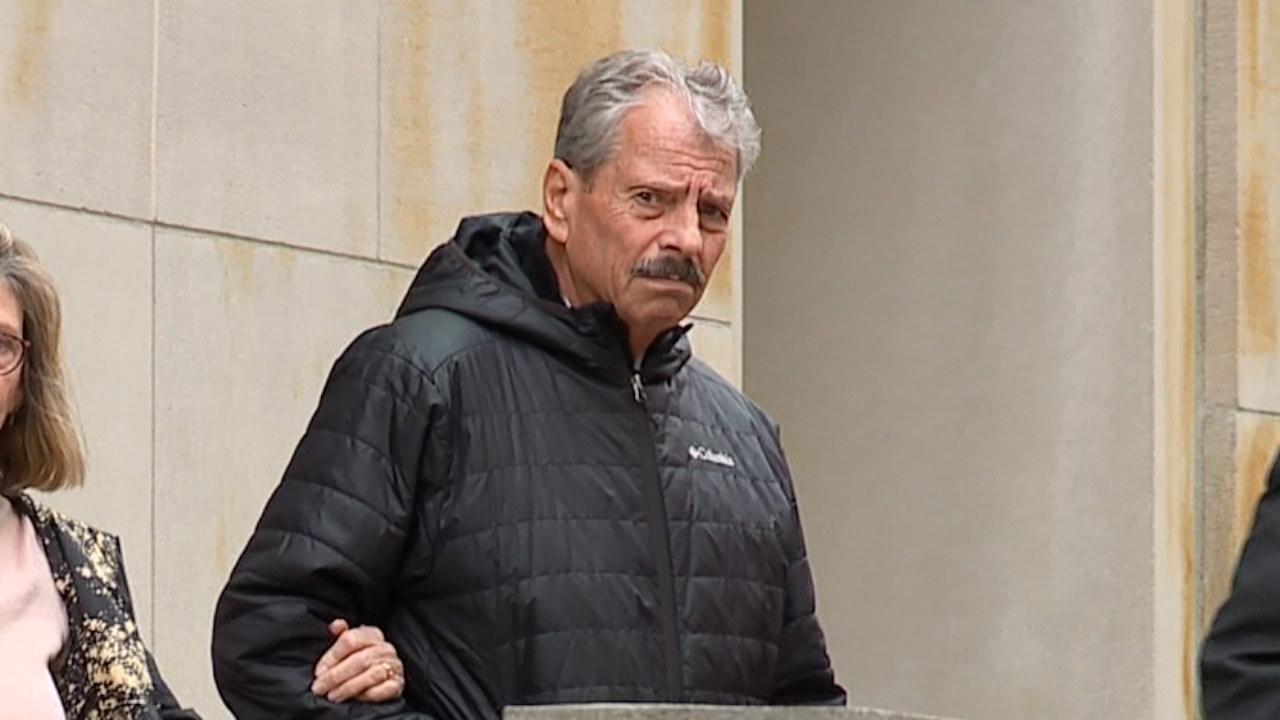
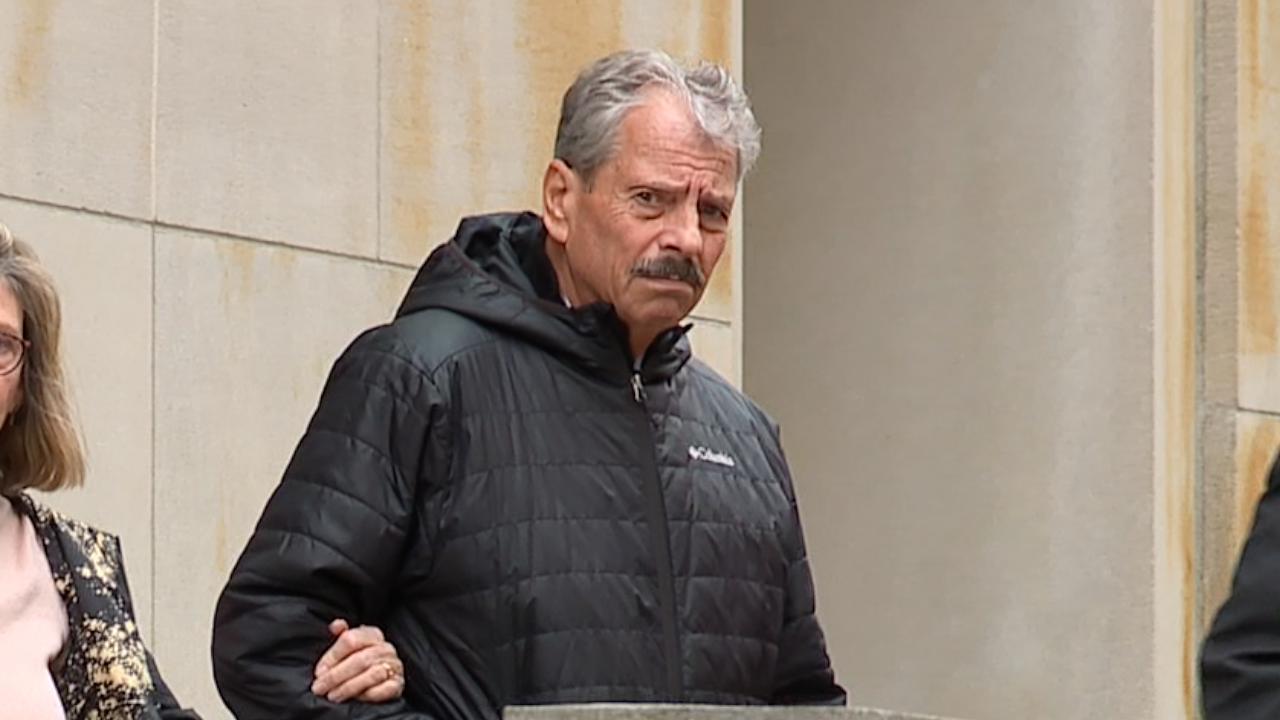
     Former Public Utilities of Ohio Chair Sam Randazzo at court. (Photo by WEWS.)

    BY:  – Ohio Capital Journal

    Sam Randazzo, Gov. Mike DeWine’s first pick to chair the Public Utilities Commission of Ohio, has died by suicide, the Columbus Dispatch is reporting.

    Randazzo’s body was found Tuesday in a Franklin County warehouse he owned, the paper reported. A spokesman for Franklin County Coroner Nathaniel Overmire couldn’t immediately be reached.

    Randazzo — a 74-year-old energy consultant turned regulator — was charged both in state and federal court over his role in a massive utility scandal that broke in July 2020, along with other alleged misdeeds. In the bribery scandal, Akron-based FirstEnergy paid more than $60 million in bribes between 2017 and 2020 in exchange for a $1.3 billion ratepayer bailout.

    DeWine picked Randazzo to be the state’s top regulator after a decade of shady dealings between Randazzo and FirstEnergy, his state indictment says. They include secretly being a paid consultant for FirstEnergy while also serving as general counsel to industrial energy users who were trying to get a better deal from FirstEnergy, the document says.

    Randazzo also secretly skimmed millions from settlements FirstEnergy paid the big users to get them to go along with rate hikes for everybody else, the indictment says.

    Just before DeWine nominated Randazzo to chair the PUCO in early 2019, FirstEnergy’s top executives paid him $4.3 million — a payment that FirstEnergy later conceded was a bribe.

    DeWine’s chief of staff reportedly knew about the payment before Randazzo was nominated, but it’s unclear how much she, DeWine, and others in the administration knew about the more than $10 million Randazzo was paid by FirstEnergy over the years. She was slated to testify at the former regulator’s state trial.

    As PUCO chairman, Randazzo helped draft the bailout legislation and did a number of other lucrative favors for FirstEnergy, court documents and testimony have shown.

    After a lengthy federal trial last year, former House Speaker Larry Householder, R-Glenford, was sentenced to 20 years in prison for his role in the scandal. Former Ohio GOP Chairman Matt Borges was sentenced to five years for his.

    Two others pleaded guilty and await sentencing. Another defendant, lobbyist Neil Clark, died by suicide.


    Marty Schladen
    MARTY SCHLADEN

    Marty Schladen has been a reporter for decades, working in Indiana, Texas and other places before returning to his native Ohio to work at The Columbus Dispatch in 2017. He’s won state and national journalism awards for investigations into utility regulation, public corruption, the environment, prescription drug spending and other matters.

    Ohio Capital Journal is part of States Newsroom, the nation’s largest state-focused nonprofit news organization.

    MORE FROM AUTHOR

  • Corruption tax? Policy expert says that’s basically what Ohio utility consumers have been paying

    Corruption tax? Policy expert says that’s basically what Ohio utility consumers have been paying

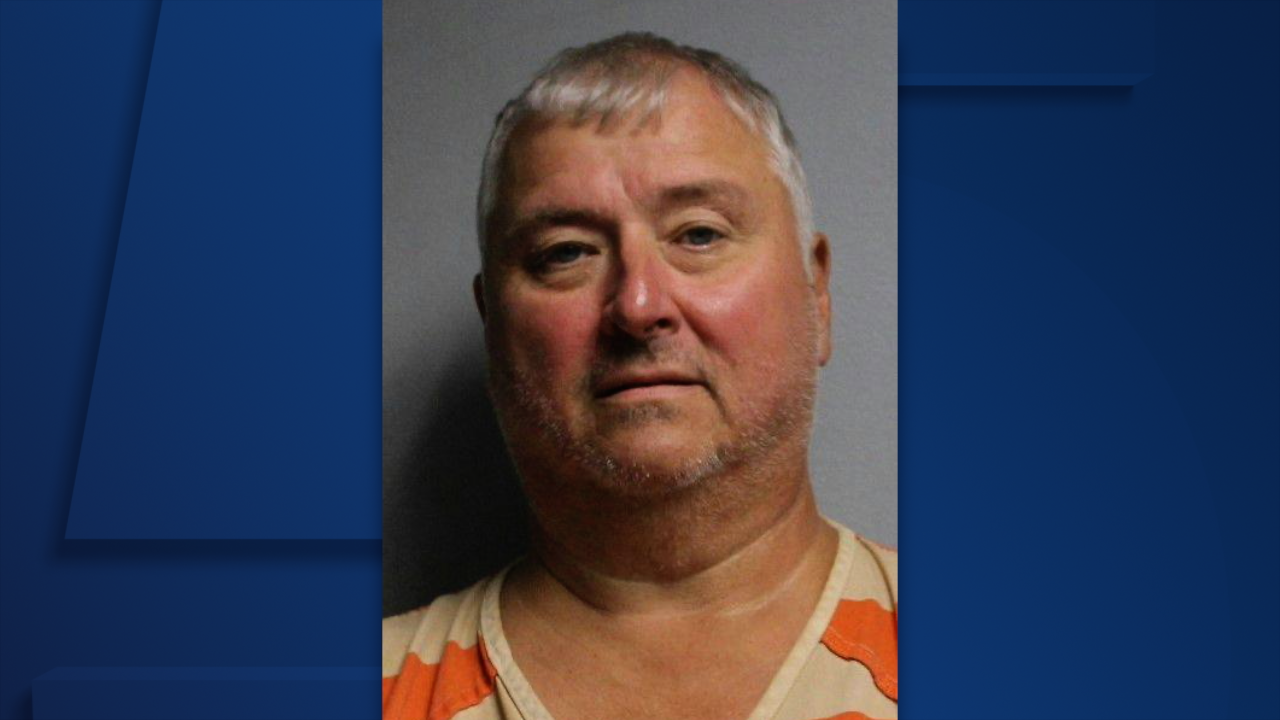
    Mugshot of former Ohio House Speaker Larry (Photo from the Butler County Jail.)

    BY:  Ohio Capital Journal

    Many politicians — especially conservatives — are loath to approve anything that could be construed as a tax increase.

    But since 2009, Ohio’s leadership has gone along with a number of questionable rate hikes demanded by regulated utilities. They’ve functioned in the same manner as tax increases — regressive ones with unsavory origins.

    There were new state charges earlier this month in Ohio’s massive FirstEnergy bribery scandal. They brought new attention to the issue, but that scandal is hardly the only time Ohio utilities have been able to impose questionable rate increases on their unsuspecting customers.

    In the scandal, Akron-based FirstEnergy paid more than $61 million in bribes in exchange for the 2019 passage and protection of a $1.3 billion ratepayer bailout. As a consequence, former House Speaker Larry Householder, R-Glenford, is serving a 20-year federal prison sentence.

    The state charges filed this month against two top FirstEnergy executives and the state’s top regulator pertain to those crimes. But they also describe more than a decade’s worth of additional shady increases in which payoffs played a central role.

    They accuse Sam Randazzo — whom Ohio Gov. Mike DeWine later appointed to be top regulator — of secretly helping FirstEnergy make huge, secret payments to powerful energy users. In exchange, the charges say, the industrial users dropped their opposition to rate increases FirstEnergy wanted to impose on all its customers.

    The payments might not have been illegal, but they functioned as kickbacks all the same.

    The Columbus Dispatch on Sunday reported that in 2008 then-Gov. Ted Strickland, a Democrat, tried to negotiate an end to the shady practice, but then-House Speaker Jon Husted killed the attempt, a former aide to Strickland told the paper. Husted is now DeWine’s lieutenant governor and is said to be planning a run in the 2026 Ohio Republican primary to be governor in his own right.

    Those increases are in addition to a whole slew of other rate hikes that Ohio’s erstwhile regulator has granted, but the state Supreme Court later ruled to be illegal. They total more than $1.5 billion worth altogether. Even though the gains have been ruled unlawful, utilities have gotten to keep them because the Public Utilities Commission of Ohio keeps granting such increases without building in a refund mechanism in the event they’re struck down.

    Jenifer French, DeWine’s appointment to replace the disgraced Randazzo, has repeated PUCO staff claims that such refund mechanisms are illegal. But the legal case seems dubious and watchdogs and lawmakers from both parties dispute it.

    So Ohio ratepayers have shelled out billions in illegal electric payments and untold millions more as the consequence of shady kickbacks to powerful companies. Those who allowed such payments are responsible for what is the functional equivalent of a tax increase, said Rob Moore, principal of Scioto Analysis, a Columbus firm that applies economics to questions of public policy.

    One reason they work the same as a tax is because one has little choice in 2024 about paying for electrical service, he said.

    “You can’t get away from it,” Moore said. “You’re going to have to pay something for electricity.” He later added, “That’s functionally no different from a tax.”

    And it’s one that falls extra-hard on the poor.

    Disconnected electricity and gas can destroy perishable food while also taking away the ability to cook it. For those who are struggling, finding money and getting to the store for one batch of food can already be a challenge. Having to do it again after arranging a reconnection can be even more difficult.

    Disconnection also can be used as a rationale for children’s services to break up a family, the Energy News Network reported in 2022.

    The news outlet reported that as part of a story about nearly 200,000 disconnections by Ohio electric utilities at the height of the coronavirus pandemic. Advocates asked the PUCO for relief, but the regulatory agency said it was powerless to act.

    Moore said that if you view utilities as the practical equivalent of a tax, it’s a regressive one.

    “In general, lower-income people pay more of their income on utilities than upper-income people,” he said.

    Moore cited a 2013 report by the U.S. Energy Information Agency saying that households in the bottom 20% of incomes made 6% of their total expenditures on home energy, while those in the top 20% paid half that.

    Energy-insecure households are likely to be poorer still. The agency last year reported that they paid 27% more in real terms than everybody else — $1.24 per square foot vs. 98 cents.

    As with the state and local tax burden, the extra costs Householder, the PUCO and others have imposed on Ohio seem to be falling most heavily on those least able to pay it.

    “Basically, he just levied a tax and lined his pockets with it,” Moore said of the former speaker.


    Marty Schladen
    MARTY SCHLADEN

    Marty Schladen has been a reporter for decades, working in Indiana, Texas and other places before returning to his native Ohio to work at The Columbus Dispatch in 2017. He’s won state and national journalism awards for investigations into utility regulation, public corruption, the environment, prescription drug spending and other matters.

    MORE FROM AUTHOR


  • Ohio indictments provide a better picture of squalid relationships that spurred massive scandal

    Ohio indictments provide a better picture of squalid relationships that spurred massive scandal

    Former Public Utilities of Ohio Chair Sam Randazzo at court. (Photo by WEWS.)

    BY:  Ohio Capital Journal

    An Ohio grand jury has handed up a 44-count indictment against three players in what is likely the biggest bribery scandal in state history. And when the 50-page indictment was unveiled Monday, it provided new details about a decade of payoffs and conflicts as one of them — who became the state’s top regulator — allegedly did a huge electric utility’s bidding.

    The indictment concerns a $1.3 billion dollar bailout that Akron-based FirstEnergy has already admitted to the federal government that it paid more than $60 million in bribes to purchase.

    Former Ohio House Speaker Larry Householder, R-Glenford, and former state GOP Chairman Matt Borges are serving federal prison sentences for their roles in the 2019 passage of the bailout and the dirty-but-succesful fight to thwart a voter-led repeal.

    When federal prosecutors in 2021 charged those two and three others, they said their investigation continued. But it wasn’t until December that they charged another in the case — Sam Randazzo, a lawyer and longtime energy consultant whom Gov. Mike DeWine nominated to chair the state’s top regulator, the Public Utilities Commission of Ohio.

    That left the people who paid the alleged bribes — FirstEnergy’s top executives — uncharged in a scheme that took place more than four years ago.

    Double dealing

    All that changed Monday when Ohio Attorney General Dave Yost announced state charges against Randazzo and former First Energy CEO Chuck Jones and former Vice President Michael Dowling for their alleged roles in the criminal conspiracy. The three were arraigned in Akron on Tuesday and each pleaded not guilty.

    They were charged in an indictment that alleged shady dealings between the them stretching back 13 years.

    “It all began with a well-lawyered theft in 2010,” the indictment said.

    It went on to describe how Randazzo was general counsel for a group of large FirstEnergy customers — the Industrial Energy Users of Ohio — while also working as a FirstEnergy consultant. Only, the Industrial Energy Users didn’t know that Randazzo was also being paid by the company they were paying him to fight, the indictment said.

    It accuses Randazzo of settling the industries’ claims against FirstEnergy on terms acceptable to FirstEnergy and running the settlements through Randazzo-controlled shell companies where he took a skim — again, unknown to the industrial energy users.

    “His clients, the industrial members of IEU-Ohio, did not know he was a consultant for FirstEnergy,” the indictment said. “Randazzo did not tell them. Years later, some of the money would make its way to IEU-Ohio. Some of it would end up in Randazzo’s pocket.”

    The Industrial Energy Users appear to have engaged in some cynical conduct of their own, however. The indictment describes a 2015 agreement in which FirstEnergy was to pay Randazzo’s company $8.5 million for “consulting services.”

    It was really a cash “side deal” in which FirstEnergy paid the industrial users to drop their objections to a rate hike FirstEnergy wanted, supposedly in the name of “energy security,” the indictment said. In other words, prosecutors said that with Randazzo’s facilitation, FirstEnergy paid off a wealthy, powerful group of electricity users in order to raise rates on everybody else.

    Such arrangements proved quite profitable for Randazzo.

    “Between 2016 and 2019, FirstEnergy paid… $13,152,639.94 to Randazzo’s two shell companies,” the indictment said. “Of that total, Randazzo gave $7,756.903.84 to his IEU-Ohio Client and kept $5,395,736.10 for himself.”

    Cozy relationships

    This is the guy the incoming DeWine-Husted administration thought would be a good candidate to regulate utilities — companies to which Ohioans have little choice in paying their billions.

    The state indictment describes how, on Dec. 18, 2018, FirstEnergy execs Jones and Dowling met with Gov.-elect DeWine and Lt. Gov.-elect Jon Husted at the Columbus Athletic Club and discussed whether the executives wanted Randazzo to regulate their massive electric utility.

    The notion that a governor would ask a huge utility who might be acceptable as a regulator might itself seem startling. But after the dinner, according to the indictment, Jones and Dowling did something even more brazen.

    They went to Randazzo’s German Village condo and pursuant to that, Randazzo solicited a $4.3 million payment from Jones and Dowling, the indictment said. FirstEnergy paid the money “without ever having received an invoice for the payment and without any work or consulting services being performed,” the indictment said. It added that the executives made the payment over the objections of a company lawyer.

    Randazzo told Laurel Dawson, DeWine’s chief of staff, about the payment, calling it a “consulting agreement.” But he didn’t tell her of the other millions he’d gotten from the utility he was seeking to regulate, the indictment said. Randazzo also never told the Ohio Ethics Commission about any of the money he’d gotten from FirstEnergy, the indictment said.

    In Dawson, Randazzo might have had a sympathetic audience. Her husband, Michael Dawson, was a “paid FirstEnergy lobbyist” in 2016, when he’d gotten a $10,000 loan from Randazzo, the indictment said.

    But if his chief of staff told DeWine about the huge payoff Randazzo got from FirstEnergy, it must not have fazed the new governor. DeWine nominated Randazzo to be chairman of the Public Utilities Commission — the ratepayers’ supposed protector — on Feb. 4, 2019.

    Versatile player

    During Householder’s six-week trial in Cincinnati last year, federal prosecutors put on exhaustive evidence of how the FirstEnergy executives financed Householder’s bid to become speaker and to pass the notorious bailout known as House Bill 6.

    “Together, Jones, Dowling, Randazzo and his shell companies worked in concert to steal the power of government and bend it to the will of FirstEnergy,” was the way the state indictment unveiled on Monday put it.

    Most of the details of Randazzo’s involvement in the creation and passage of HB 6 are already known from the federal trial. They show him acting in multiple, conflicting, often-undisclosed capacities — similar to those the state indictment alleges he had already played with FirstEnergy and the industrial energy users.

    Even though he was supposed to be a regulator, Randazzo drafted portions of the bailout legislation and passed them between FirstEnergy officials and a Householder employee who had recently worked for the PUCO. They sometimes only shared printed copies of the huge bill, out of an apparent apprehension about leaving electronic fingerprints.

    According to text messages between Jones and Dowling, Randazzo went so far as to actively lobby for passage of the bailout — which would seem a big departure from the traditional duties of a disinterested regulator.

    Jones and Dowling discussed a meeting about HB 6 that Randazzo had with Sen. Steve Wilson, R-Maineville, and the Senate’s counsel. “We have a good plan to help,” Dowling told his boss.

    Other officials

    Despite the fact that DeWine had reason to know Randazzo was connected to FirstEnergy, the governor made him the state’s top utility regulator and he signed the billion-dollar bailout that benefitted the company the day it passed. And on July 21, 2021 — the day Householder was arrested — DeWine said he wasn’t in favor of repealing the measure.

    The governor subsequently walked that back, but HB 6 is still on the books and Ohio utilities are still getting hundreds of millions in ratepayer subsidies as a result.

    DeWine wasn’t the only state official to act at least peripherally in the scandal.

    Secretary of State Frank LaRose has refused to explain the “private” updates that FirstEnergy CEO Jones said the state’s chief elections official was providing during an attempt to gather signatures to put an HB 6 repeal on the ballot.

    And Yost himself dealt a mortal blow to the signature gathering when he initially rejected the ballot language — cutting nearly in half the time HB 6 opponents had to gather a quarter-million valid signatures. And in text messages presented in the federal trial, Borges told a co-conspirator that Yost thought HB 6 was a bad law, but wouldn’t speak up because of help he’d gotten from FirstEnergy in the past.

    Beyond the bailout

    Randazzo’s alleged help to FirstEnergy wasn’t limited to HB 6. He also thwarted a PUCO look into the company’s books that was likely to force a cut in electricity bills. That would have caused falling stock prices and a hit to Jones’ and Dowling’s portfolios, the indictment said.

    The erstwhile regulator was apparently so helpful that Jones at one point told a FirstEnergy subordinate to back off for fear of being too obvious. In a text message included in the indictment, Jones told Dennis Chack that Randazzo’s pro-FirstEnergy conduct “has a lot of talk going on in the halls of PUCO about does he work there or for us?”

    Even so, Randazzo’s behavior at the PUCO continued to be shameless, urging fellow regulators to join him in lobbying for the corrupt bailout, the indictment said.

    Randazzo “began internally lobbying PUCO staff members between July 2020 and September 2020 to generate strategies to save HB 6, despite facing internal objections about the inappropriateness of the effort to save HB 6,” it said.

    The indictment included a Sept. 15, 2020 email in which Randazzo told subordinates, “One option (and I really think we need to get other commissioners and staff into a proactive mode): We could, on our own initiative, issue a show-cause order to (FirstEnergy) directing (FirstEnergy) to show that no costs associated with HB 6 have been included in any riders or base rates.”

    Had such an order been issued, the result would have been misleading. While the bill didn’t raise consumer costs through riders or base rates, it included a provision that ensured FirstEnergy would collect at least as much as it did in one of its best years and it created a massive subsidy for money-losing coal plants.

    Randazzo’s efforts seemed finally to end two months later, when the FBI searched his condo.


    Marty Schladen
    MARTY SCHLADEN

    Marty Schladen has been a reporter for decades, working in Indiana, Texas and other places before returning to his native Ohio to work at The Columbus Dispatch in 2017. He’s won state and national journalism awards for investigations into utility regulation, public corruption, the environment, prescription drug spending and other matters.

    MORE FROM AUTHOR


  • Ohio utility regulator front and center in massive bailout scandal

    Ohio utility regulator front and center in massive bailout scandal

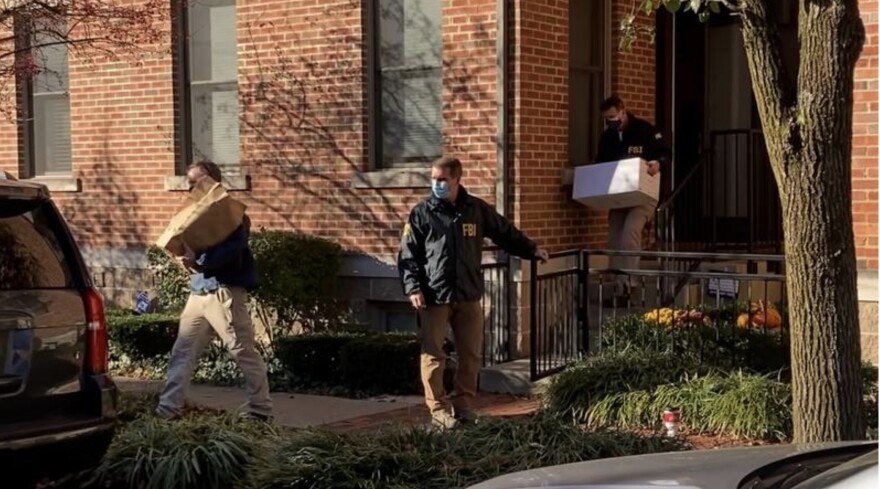
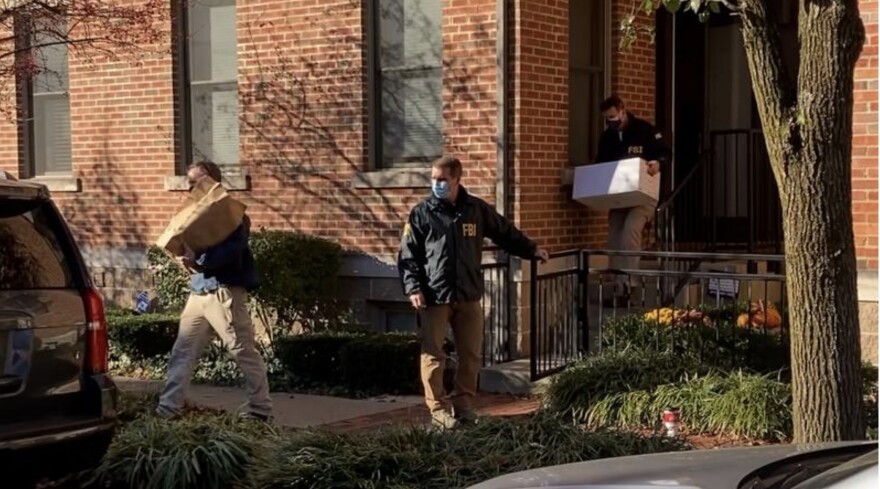
    FBI agents remove boxes of materials from PUCO Chairman Sam Randazzo’s condo in Columbus Nov. 17, 2020. Photo courtesy of Daniel Konik/Statehouse News Bureau.

    BY: MARTY SCHLADEN – Ohio Capital Journal

    CINCINNATI — Ohio’s utility regulator is at the center of a massive bribery and money laundering scandal that has been the focus of a trial here since late last month. In 2019, its chairman and a very recent senior official played a central role in writing corrupt bailout legislation that would give more than $1 billion in subsidies to companies the Public Utilities Commission of Ohio was supposed to be regulating.

    But did their role in the process violate any PUCO rules? The answer is unclear.

    When it comes to being a consumer watchdog, the PUCO doesn’t have the best track record. 

    Since 2008, it has granted more than $1 billion in electric rate increases that were later declared illegal by the Ohio Supreme Court. But, thanks to the way the increases — or “riders” — were written, there’s no way to force utilities to return those ill-gotten gains to ratepayers.

    In at least one of those instances, a regulator might have known the rate hike was illegal when he voted to grant it.

    In June of 2019 — as Akron-based FirstEnergy was funneling millions through dark-money groups to pass the bailout that is the subject of the trial here — the Supreme Court struck down an increase that had already paid the company a non-refundable $460 million. Asim Haque, who months earlier was chairman of the PUCO, sent a FirstEnergy executive a text suggesting that Haque knew the increase was illegal when he voted for it. Haque then said he was just kidding.

    Then, just last month, the PUCO approved an increase of more than 50% in fixed rates for Columbia Gas without making the company go through a formal process to show that it needs the money. That means that after five years throughout much of Ohio, it likely will cost nearly $60 a month just to have gas service  — regardless of whether you live in a 500 square-foot apartment or if you live in a mansion on a five-acre lot. Any payments for gas itself will be in addition to that amount.

    It doesn’t appear that Columbia owner NiSource needed the money. Last year, before the PUCO allowed the rate hike, NiSource’s profits came in $217 million — or 41% — higher than expected. Then, a month after the increase was granted, NiSource announced it was increasing its profit forecast for 2023.

    In a press release, the company boasted of “strong regulatory execution” — including by winning the fixed-rate increase from the PUCO.

    And then there’s House Bill 6, the 2019 law that is the subject of the trial in federal court here that has been ongoing since Jan. 23.

    Former Ohio House Speaker Larry Householder and former Ohio Republican Party Chairman Matt Borges are on trial for their participation in what prosecutors say is likely the biggest bribery and money laundering scandal in Ohio history. They allege that $61 million that mostly came from FirstEnergy was used to make Householder speaker in 2019, and then to pass and protect the $1.3 billion bailout. Most of that money was intended to prop up FirstEnergy’s failing nuclear and coal plants.

    No current or former PUCO employees have been charged in the scandal. But, to put it charitably, the conduct of at least two of them was puzzling — given that the agency’s mission is to protect ratepayers who don’t have a choice about buying the utilities’ products.

    In January 2019, Householder won the speakership and was beginning his push for a FirstEnergy bailout. At the same time,  FirstEnergy lobbyist Ty Pine sent PUCO senior advisor Pat Tully’s resume to Jeff Longstreth, Householder’s right-hand man, according to testimony in the trial. Within weeks, Tully had moved from his PUCO job to one as senior advisor for energy policy in the House Republican Caucus.

    Sam Randazzo, a former FirstEnergy consultant, was confirmed as Gov. Mike DeWine’s nominee to chair the utility commission in April 2019. When he nominated Randazzo, DeWine brushed off warnings that his nominee had “opaque and undisclosed” ties to FirstEnergy.

    In the Householder trial, Tully testified that while Randazzo was still a nominee, he met with Tully, Householder and Rep. Nino Vitale R-Urbana. From there, Tully worked with Randazzo to help draft the utility bailout, HB 6, and to reconcile it with draft legislation submitted by FirstEnergy. The bill secured final passage in July 2019 — months after Randazzo had taken the helm at the utility commission.

    In other words, Ohio’s top utility regulator helped write a law that gave a billion-dollar bailout to a company he was supposed to be regulating on the ratepayers’ behalf. And he was heading an agency that over the previous decade had awarded electric utilities more than $1 billion in illegal, non-refundable rate hikes.

    Randazzo would later resign after the FBI in 2020 raided his Columbus condo. And in a deferred prosecution agreement, FirstEnergy admitted that it paid him $4.3 million just before he became PUCO chairman.

    But does the PUCO have any rules against the role Randazzo played in drafting HB 6? 

    Asked if the agency had a policy prohibiting a commissioner from helping write legislation affecting a utility he or she is supposed to be regulating, spokesman Matt Schilling initially seemed to say that it did not.

    “The PUCO is a state agency and will always be responsive to requests for information or technical assistance to the Ohio General Assembly on matters related to utilities and commercial transportation,” Schilling said in an email last week.

    But in answer to a follow-up, Schilling seemed to say something different. He was asked if that means PUCO believes there was nothing inherently improper about its chairman helping to draft legislation creating subsidies for utilities the agency regulates.

    “No, I never stated anything like that,” Schilling replied. “The PUCO does not comment on ongoing proceedings or court cases.”

    So what about commission employees doing as Tully did when he had a FirstEnergy lobbyist passing out his resume? After all, you might pull punches as a regulator if you’re hoping to land a job with one of the companies you’re supposed to be regulating.

    Schilling’s response might not be very reassuring. He cited a law that “prohibits Commission employees from seeking employment with utilities regulated by the Commission.”

    But Schilling also sent along agency guidance that contains a pretty big loophole.

    “Although this law prohibits Commission employees from soliciting Commission-regulated utilities for employment, it does not prevent employees from considering employment opportunities with these utilities in instances in which the utility approaches the employee,” it said.

    It seems that, after the fact, it might be difficult for the PUCO to figure out who approached whom when an employee jumps ship for a well-paid utility job. And its protections against conflicts of interest during the hiring process don’t seem ironclad.

    “However, if you are contacted by a utility concerning a possible job offer, you must immediately advise your supervisor of the contact so that your supervisor can limit your duties to matters which do not involve the utility in question while any discussions are taking place,” the guidance said.

    In Tully’s case, he didn’t end up directly on FirstEnergy’s payroll. But he did help write a law that the company paid more than $60 million for.

  • Utility regulator accused of taking a bribe helped write bill targeting watchdog

    Utility regulator accused of taking a bribe helped write bill targeting watchdog

    FBI agents remove boxes of materials from PUCO Chairman Sam Randazzo’s condo in Columbus Nov. 17, 2020. Photo courtesy of Daniel Konik/Statehouse News Bureau.

    BY: JAKE ZUCKERMAN Ohio Capital Journal

    Ohio’s former top utility regulator, who was accused of taking a $4.3 million bribe, quietly spent months helping write a sweeping energy bill that targeted a state watchdog agency that advocates for Ohio’s residential electric customers, records show.

    Emails that the Public Utilities Commission of Ohio gave in response to two FBI subpoenas show its former chairman, Sam Randazzo, conferred with the bill sponsor and helped draft legislative language. The bill would have limited the reach of the Ohio Consumers’ Counsel and given often-hostile state legislators control of its board.

    The OCC appears at PUCO cases and advocates for residential ratepayers’ interests, which often run counter to those of investor-owned utility companies and industrial-scale energy customers. The agency’s efforts have led to millions in refunds to consumers, including $306 million from FirstEnergy Corp. last year to settle a lawsuit against the company for charging an unlawful profit margin on its customers.

    Akron-based FirstEnergy told prosecutors last summer that it paid a business owned by Randazzo $4.3 million before his 2019 appointment in exchange for “official actions.” The company also said it gave a nonprofit secretly controlled by then-GOP House Speaker Larry Householder $60 million to help pass House Bill 6 — energy legislation worth an estimated $1.3 billion to FirstEnergy. Householder has pleaded not guilty and awaits trial. Randazzo has not been charged with a crime.

    Records released earlier this year showed some of Randazzo’s behind-the-scenes lobbying work on HB 6. The records released last week show his influence spanned further.

    In May 2020, Rep. Nino Vitale, R-Urbana, introduced the text of House Bill 246. The bill would have narrowed the scope of cases the OCC can join and subject the agency to “any reasonable conditions that the commission deems necessary to avoid duplication, repetition or delay.” It also gives state lawmakers appointment power over six of nine seats on the OCC’s board.

    The legislation contained a sweep of other changes as well, including creating new ways for utilities to set their prices, modifying setback rules for wind farms, and allowing the Ohio Power Siting Board to create new setback requirements for solar energy sites.

    In the six months before Vitale unveiled the bill, Randazzo and PUCO staff met with Vitale, drafted elements of the legislation, and helped edit Vitale’s introductory testimony to lawmakers, the subpoenaed emails show. The emails don’t show Randazzo addressing the OCC provisions directly. But in a statement through his attorney, Randazzo equivocated when asked if he drafted or advised on the section.

    “If so but having no recollection of either writing or advising any such language, it would only have been as the result of a request from the legislature,” he said. “It is likely that the utilities had input.”

     Sam Randazzo, then a private sector attorney, testifies before the PUCO in March 2018. Source: The Ohio Channel.

    The PUCO released the emails after the Ohio Capital Journal filed a public records request and an eventual lawsuit seeking them.

    Around Thanksgiving of 2019, Randazzo asked to meet with Maura McClelland, a policy adviser and attorney at the PUCO, to meet and discuss the language of the bill’s “ratemaking piece.”

    HB 246 created a new option for utilities to set prices called “alternative rate plans.” According to nonpartisan analysts with the state Legislative Service Commission, the plans can take into account aspects of fair energy pricing that the current model misses like efforts for energy efficiency or cash flow problems from the companies.

    “In general, alternative rate plans could lead to higher prices paid by ratepayers,” the LSC analysts wrote. “But presumably, PUCO would only approve those higher costs after examining aggregate effects in accomplishing its policy objectives.”

    HB 246 would also allow the PUCO to consolidate parties that it determines have “sufficiently common interests” to speed up cases.

    In a memorandum opposing the bill, the Ohio Manufacturers’ Association said the legislation would block its members from meaningful participation at the PUCO. The manufacturers argued the bill in several areas consistently gives utilities the upper hand over their customers, especially via the ratemaking proposal.

    “The bill is opaque and no clear reasoning exists for why its proposed changes are needed,” the memorandum states.

    Roger Sugarman, an attorney representing Randazzo, said via email that neither Randazzo nor the PUCO were the driving force behind the bill. He said he couldn’t determine if the LSC’s analysis is correct without more details.

    “Without knowing what type of alternative rate plan, or the object of your question and the statutory conditions required to secure PUCO approval, it is not possible to evaluate the LSC analysis,” he said. “In general, rate applications filed by utilities, whether alternative or traditional, lead to higher rates; the question is usually about how much higher.”

    He said some pieces of the bill wouldn’t have affected much change versus current law. Plus, the bill all but died after its first hearing. Randazzo’s time “was occupied by more pressing and important things than HB 246.”

    FBI agents arrested Householder and charged him with racketeering in June 2020. He awaits trial. Agents raided Randazzo’s condo months later. In July 2021, FirstEnergy signed a deferred prosecution agreement with the U.S. Department of Justice. It agreed to pay a $230 million penalty and cooperate with the ongoing investigation into HB 6 to possibly avert a charge of wire fraud.

    In a statement of facts paired with the agreement, FirstEnergy said it paid companies controlled by Randazzo $4.3 million in exchange for official action. The company said it hired Randazzo as a consultant and paid him a total of about $22 million since 2010.

    Before starting in state government, Randazzo represented industrial scale energy users before the PUCO. He spent years fighting against Ohio energy policies that forced utilities to include more renewable energy in their mixes or make their customers’ homes more energy efficient. He also represented subsidiaries of both CenterPoint Energy and Dominion Energy as a lobbyist, as well as a group of citizens opposing a wind farm in Huron County.

    Vitale drew significant media attention via outrageous claims including that Bill Gates invented the novel coronavirus or that Gov. Mike DeWine was bringing “FEMA Concentration Camps” to Ohio in relation to the pandemic. (Randazzo said his position on COVID “pulled in a very direction” than Vitale’s.)

    Vitale also, perhaps more subtly, helped guide HB 6 from legislation to law. He co-sponsored the bill and chaired the House Energy and Natural Resources committee that reviewed it. He first won office with $7,700 in financial backing from Householder’s campaign committee. He voted for HB 6 in 2019 and against repealing it after Householder’s arrest. He was one of 21 lawmakers who voted against expelling Householder from office.

    Vitale didn’t respond to a phone call or emails to his personal and official accounts.

     State Rep. Nino Vitale, R-Urbana. Photo from Ohio House website.

    “As you all know, anyone can be indicted for anything. Anything,” he said in a floor speech last year defending Householder.

    “However, that person deserves to go in front of a jury of their peers and prove their case. They might be guilty, they might not … That’s what makes us different from a communist country.”

    Federal prosecutors alleged that Householder secretly controlled a nonprofit organization that received $60 million from FirstEnergy. He used the money to elect a slate of candidates who would vote him into the House Speaker’s office and in turn support HB 6. He’s also accused of spending the money for personal use. Two alleged conspirators, including Householder’s former political adviser, have pleaded guilty.

    When the anti-OCC bill dropped, few knew or suspected of either Randazzo’s financial ties with FirstEnergy or his lobbying work on the bill. However, after Householder’s arrest and the raid on Randazzo’s home, some raised interest in ensuring the bill’s quick death.

    “This bill is a danger to anyone in Ohio who pays a utility bill and it remains on the Ohio House docket as a direct attack on the OCC and all Ohio residential utility customers,” wrote former Democratic State Senator Leigh Herington in a November 2020 op-ed in the Columbus Dispatch.

    He suggested the legislation was simple retaliation for the OCC’s opposition to House Bill 6 and another bill that allows FirstEnergy a more favorable accounting formula to determine if its collections from customers are “significantly excessive.” (The OCJ previously reported Randazzo lobbied on that legislation as well.)

    Utility companies spend big and wield considerable sway in Ohio politics. As Herington noted, the OCC has seen its size dwindle over the years. Its budget dropped from $9.3 million in 2011 to $5.5 million in 2020.

    The OCC also suggested the bill was retaliatory in nature due to its opposition to HB 6. Vitale’s bill, the agency said in a resolution, would “weaken the independence” of the board as well as its “utility watchdog role.”

    A PUCO spokesman said the emails only show the PUCO working on language related to the agency and the state Power Siting Board. He said he didn’t know why Randazzo and Vitale communicated through personal email accounts.

    “The PUCO does not take a position on proposed legislation,” he said. “We will always be responsive to inquiries from members of the General Assembly as they go through the legislative process.”

  • Ohio judge helped write a bailout that led to arrests; now he’s blocking outside probes

    Ohio judge helped write a bailout that led to arrests; now he’s blocking outside probes

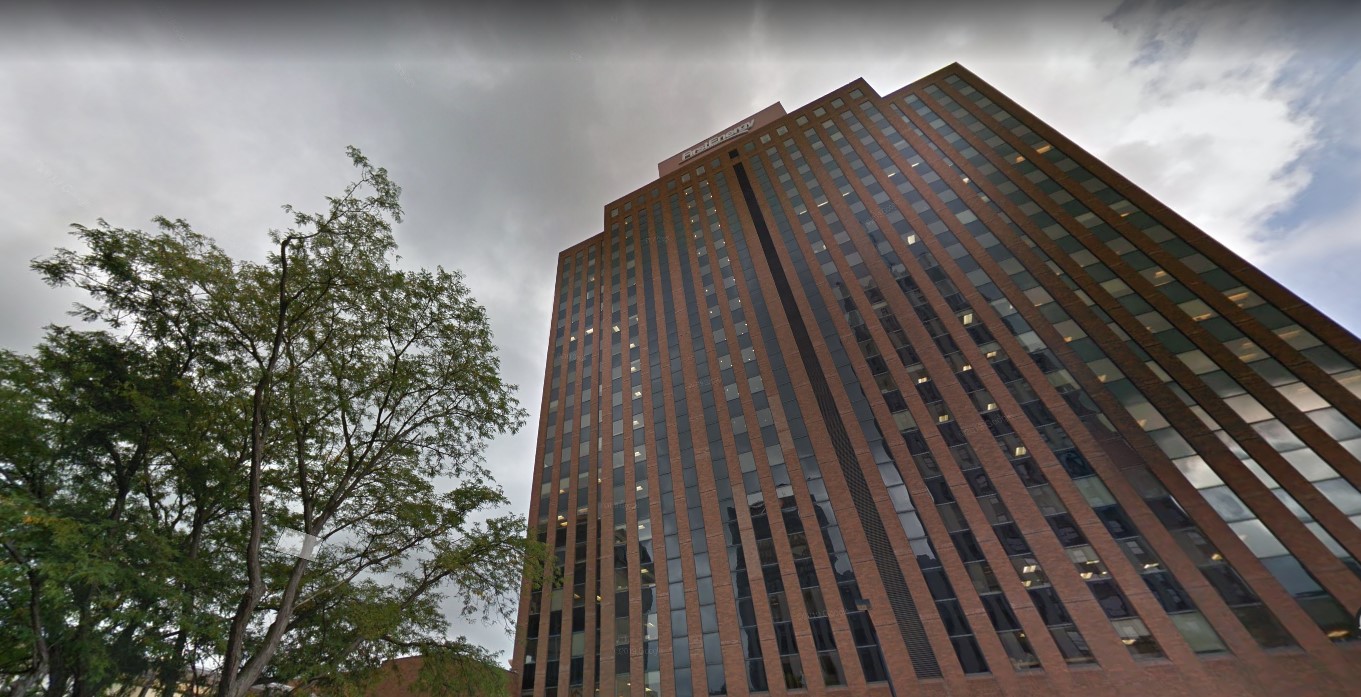
    FirstEnergy’s headquarters in Akron. Source: Google Maps.

    BY: JAKE ZUCKERMAN – Ohio Capital Journal

    A judge who oversees utility cases was involved in writing a coal and nuclear bailout now at the center of what prosecutors have described as the largest public corruption case in Ohio history, subpoenaed documents show.

    That same judge, Greg Price, is presiding over multiple regulatory cases in which a government watchdog agency is trying to investigate that same corruption. His orders, spanning 18 months, have blocked investigations into a utility at the center of the scandal on multiple fronts. 

    One ruling barred the agency from deposing a witness who worked on a FirstEnergy Corp. audit — an audit that the company’s CEO said in a text message that former PUCO chairman Sam Randazzo helped conceal. Another allowed FirstEnergy to attest to regulators its own innocence, as opposed to hiring an independent auditor to review the company’s practices after it was accused in court documents of participating in a bribery scheme. 

    As an attorney examiner at the Public Utilities Commission of Ohio, Price hears cases involving disputes between utility companies, residential interests, industrial interests, and others. Examiners — essentially administrative judges — preside over PUCO case hearings, issue procedural orders like what evidence must be turned over between parties in a case, and influence the five-member commission on final orders. 

    His involvement in the passage of House Bill 6 in 2019 came to light when the PUCO, which regulates utility companies and sets electric rates, submitted troves of records to the U.S. Department of Justice in response to two subpoenas.  

    The records show Price helped draft the legislative text, received regular updates about its legislative progress, formally reviewed HB 6 for the PUCO, and was briefed on its status as lawmakers launched efforts to repeal it after the FBI arrested the Ohio House speaker and four alleged co-conspirators.

    The legislation, among other provisions, provided $1 billion from ratepayers to bail out two nuclear plants owned at the time by a FirstEnergy subsidiary; subsidized two coal plants jointly owned by several utility companies for an estimated $700 million from ratepayers; and allowed FirstEnergy to “decouple” its revenue from its energy sales, which its CEO said would “recession-proof” the company.

    Prosecutors charged former House Speaker Larry Householder in July 2020 with using $60 million secretly provided by FirstEnergy to pass the bill, enriching himself personally and politically. FirstEnergy in 2021 entered into a deferred prosecution agreement with the DOJ, admitting to bribing not only Householder but former PUCO chairman Sam Randazzo. The company says it paid Randazzo $4.3 million for regulatory favors just before he was appointed.

    Householder has pleaded not guilty and awaits trial. Randazzo has not been charged with a crime and has maintained his innocence. FirstEnergy paid a $230 million penalty and is cooperating with the investigation in an effort to avert a charge of honest services wire fraud.

    Alongside the criminal probes, the PUCO has four open cases regarding FirstEnergy and House Bill 6. These have put Price in charge of answering questions about what kind of evidence FirstEnergy must turn over to outside investigators. Ashley Brown, a former PUCO commissioner and current executive director of the Harvard Electricity Policy Group, said this poses a conflict of interest for Price.

    “It’s very, very strange to me that he would be both involved at the policy level and adjudicating those same policy issues later on,” Brown said. “If it were me, I’d recuse myself.”

    In a brief phone call, Price declined to answer questions about the subpoenaed records or his role in the passage of HB 6. Matt Schilling, a PUCO spokesman, declined to answer written questions or make officials available for interviews, citing open PUCO cases and pending criminal investigations.

    However, he defended Price’s apparent involvement in drafting HB 6.

    “It is not unusual for the PUCO or its subject matter experts to be asked to review and share their expertise regarding legislation pertaining to public utility and commercial transportation law,” Schilling said.

    Utility law is complex and requires specialized industry and legal knowledge to practice. But an administrative law judge like Price is supposed to be neutral and his actions transparent, said Neil Waggoner, an environmental advocate with the Sierra Club.

    “The PUCO, especially under Randazzo’s tenure, showed itself to be neither of those things,” he said. “We need a full accounting of exactly what input and involvement PUCO commissioners and staff had in regard to HB 6 and repeal efforts, as well as an accounting for how that may or may not have impacted ongoing proceedings.”

     Then-PUCO Chair Sam Randazzo testifies as an interested party regarding House Bill 6 on May 7, 2019. Source: Ohio Channel.

    Requests denied

    Householder was arrested July 21, 2020. The PUCO, somewhat inexplicably, didn’t launch any investigation into FirstEnergy until Sept. 15 of that year. 

    When it finally did, it rejected requests from the Ohio Consumers’ Counsel to hire an independent auditor to determine whether the company broke any laws in the passage of the bill. Instead of bringing in a disinterested investigator, Price ordered a FirstEnergy official to answer to the PUCO whether it did so. The FirstEnergy official denied wrongdoing at the time.

    Randazzo resigned as chairman in November 2020 after the FBI raided his condo and FirstEnergy first disclosed the $4.3 million payment to him. The company said it identified the payment via an internal investigation ordered by its board of directors after Householder’s arrest. 

    In September 2021, Price presided over a hearing over whether FirstEnergy would have to turn over that same internal investigation to the Ohio Consumers’ Counsel, a state-funded watchdog agency that represents residential consumers’ interests before the PUCO. Price ordered the company to give it to the PUCO to review privately, before ruling whether it should be turned over. 

    “We’ve heard a lot about this internal investigation, but we are in no position to make any rulings as to whether or not it’s privileged sight unseen,” Price said.

    After review, the PUCO found the report to be protected by attorney client privilege and ruled it didn’t need to be released. 

    Around that same time, Price ruled FirstEnergy didn’t need to provide the Ohio Consumers’ Counsel with the documents it gave federal regulators who sought to investigate the HB 6 episode. Price denied the request until the Federal Energy Regulatory Commission issued its audit.

    “If and when a public audit is released by FERC, we can revisit this issue at that time,” he ruled in August 2021, according to a hearing transcript.

    FERC’s audit, released earlier this month, found FirstEnergy improperly used $71 million to lobby for the passage of HB 6 and ordered the company to develop a plan to refund customers. The Ohio Consumers’ Counsel has since asked Price to honor his word. The matter awaits a ruling. 

     Larry Householder addresses reporters June 16 after lawmakers voted to expel him from the General Assembly. He has pleaded not guilty to a racketeering charge and awaits trial. Photo by Jake Zuckerman.

    ‘Burning’ an audit

    Before utility companies can add extra fees to users’ bills, they need the PUCO’s permission.

    FirstEnergy in 2017 got that permission to apply a “Distribution Modernization Rider” (DMR) fee to its customers. Over the objections of the Consumers’ Counsel, the PUCO denied a request to attach a refund mechanism to the charge. The commissioners called adding a refund mechanism “counterproductive.”

    Two years, one lawsuit, and $458 million collected from customers later, the Ohio Supreme Court deemed the charge unlawful and cut it off. The judges found the PUCO allowed the charge without making sure FirstEnergy uses the money to modernize the grid (despite the name). However, state law prohibits the court from demanding refunds unless PUCO explicitly creates such a mechanism.

    When the PUCO allowed the charge, it hired Oxford Advisors to serve as a third-party monitor and file a final report auditing the funds. Oxford, through PUCO staff, requested a delay on its deadline to file the report. The commissioners, with Randazzo at the helm one year into his chairmanship, instead determined the audit would be “moot” and dismissed the case on Feb. 26, 2020.

    Less than two weeks later, FirstEnergy CEO Chuck Jones sent a text to another company executive (the text was later obtained by the Consumers’ Counsel via records request). 

    In the text, Jones said Randazzo “will get it done for us but cannot just jettison all process.” He lists several favorable regulatory decisions, including “burning the DMR final report has a lot of talk going on in the halls of PUCO about does he work there or for us?”

    Federal agents arrested Householder in July 2020. They raided Randazzo’s condo on Nov. 17, 2020, the same day FirstEnergy disclosed the $4.3 million payment to Randazzo (not named personally in the document) in afiling with the U.S. Securities and Exchange Commission.  

    In December 2020 and under heavy public scrutiny, the PUCO ordered a different firm, Daymark Energy Advisors, to resurrect the audit and determine how FirstEnergy used the money. 

    Citing the text as an impetus, the Ohio Consumers’ Counsel asked the PUCO to issue a subpoena for any draft version of the final Oxford audit, and to compel an Oxford employee to testify about it.

    Price, in a ruling earlier this month, denied the requests relating to that final audit. He said the Counsel’s reliance on the text message shows its “obvious interest in investigating potential wrongdoing” admitted to by FirstEnergy “rather than investigating what the Commission actually has jurisdiction over investigating, which is whether [FirstEnergy] improperly used DMR funds.”

    He ordered the auditor to testify at a PUCO hearing, but only about an earlier filing — not the report that was allegedly covered up.

    Daymark’s final audit, released in January, could not trace the outcome of the DMR money because FirstEnergy commingled it with revenue from all 11 of its utilities. The auditors said they were unable to determine both whether the money was spent on modernizing the grid and whether it was spent on HB 6 lobbying.

    However, Price, defending the decision to reject the Ohio Consumers’ Counsel’s subpoena, said the second audit “appears to fully address whether [FirstEnergy] properly expended the DMR funds.”

    The Consumers’ Counsel has since appealed the case to the five commissioners on the PUCO, emphasizing the “extraordinary” nature of the case. The Counsel asked the PUCO’s legal director — not Price — to certify the appeal and sent to the full commission to overrule Price.

    “To paint issues pertaining to the use of DMR funds as outside the PUCO jurisdiction is just plain wrong,” the Ohio Consumers’ Counsel  wrote.

    ‘Nicely done Greg’

    The most explicit reference in the subpoenaed records of Price working on HB 6 comes in the window between when law enforcement arrested Householder and when they raided Randazzo’s condo.

    After the arrests, a state legislative committee considered a repeal of the bill. A state representative asked in writing whether Randazzo helped write or review the decoupling language in HB 6.

    “We did make suggestions to mitigate some of the more objectionable language that, as I recall, would have given the PUCO limited/no discretion,” Randazzo said in an email to Scott Elisar, his former law partner who he hired as PUCO’s policy director.

    “Tammy and Greg Price were involved I think. I do recall saying that it should be removed because it was going to be confusing when blended with other issues as well as the difficulties people were having distinguishing between [FirstEnergy] and [FirstEnergy Solutions].”

    Most of the records are less clear as to Price’s involvement. They show that starting on April 12, 2019, the day HB 6 was introduced, Price was regularly updated on the bill’s developments. When Randazzo sought help with his testimony before lawmakers in May 2019, PUCO’s legal director Angela Hawkins added Price to an email thread.

    “Will make him available to assist if necessary on the below issue,” she saidon May 6, 2019.

    On May 20, 2019, Randazzo thanked the head of the Ohio Air Quality Development Authority, Christina O’Keeffe, for a visit to discuss HB 6. Price and other staff are copied onto the email chain, though it’s not clear who attended.

    When the bill passed the House on May 29, 2019, a legislative report from the governor’s office listed Price, Elisar and the PUCO’s Statehouse liaison as legislative and legal reviewers for the agency on the bill. A similar reportfrom when the bill passed the Senate listed the designation as well. Price was listed as a “required attendee” for the PUCO on a July 15, 2019 hearing and received a briefing on it afterward.

    In late September 2020, another PUCO lawyer wrote a formal legal memoanalyzing legislation to repeal HB 6. The memo is addressed to Price and Randazzo.

    Months after the Householder arrests, Brown, a former PUCO Commissioner, wrote an op-ed in the Cleveland Plain Dealer criticizing the PUCO and calling on it to investigate FirstEnergy. Randazzo alleged Brown’s take on a 40-year-old regulatory issue involving the PUCO and a natural gas company was incorrect. He emailed Price and 10 other staffers requesting research assistance to refute Brown.

    Price dug up an old news clip on the incident and sent it to the chairman.

    “Nicely done Greg,” Randazzo said. 

  • FirstEnergy paid $4.3 mil to top energy regulator and reaped the benefits, court docs state

    FirstEnergy paid $4.3 mil to top energy regulator and reaped the benefits, court docs state

    Then-PUCO Chair Sam Randazzo testifies as an interested party regarding House Bill 6 on May 7, 2019.

    Source: Ohio Channel.

    “HB 6 F(***) ANYBODY WHO AINT US,” the executive wrote.

    BY: JAKE ZUCKERMAN and Ohio Capital Journal

    An energy lobbyist who Gov. Mike DeWine appointed as the state’s top regulator of public utilities received $22 million from FirstEnergy Corp. in the decade before his appointment — including $4.3 million paid just before assuming the post and specifically to execute official duties to benefit the Akron-based utility — court documents revealed Thursday.

    Sam Randazzo, who resigned as chairman of the Public Utilities Commission of Ohio after federal agents raided his Columbus home, used his PUCO chairmanship to scuttle a requirement that FirstEnergy undergo a rate review set for 2024, which company executives believed would hurt its bottom line, the documents state.

    FirstEnergy entered into a deferred prosecution agreement — in which the U.S. Department of Justice could drop the charge if the company meets certain conditions including a $230 million criminal penalty — on one count of wire fraud.

    It also agreed to a stipulation of facts detailing its nearly $61 million in payments to an account the former speaker of the Ohio House allegedly controlled and spent to pass House Bill 6, legislation worth an estimated $1.3 billion to the company.

    Thursday’s filing, however, is flush with new details about FirstEnergy’s long relationship with Randazzo, dating back to a contract in 2010 and a consulting deal inked in 2013.

    The agreement states one FirstEnergy executive texted another on Nov. 15, 2019 that Randazzo is “going to make the requirement [for a rate review] to file go away, but I do not know specifically how he plans to do it.” The document doesn’t directly identify the executives.

    On Nov. 21, 2019, PUCO issued an order finding it is “no longer necessary or appropriate” that three utilities owned by FirstEnergy file a new case when its current rate structure expires in 2024.

    Executive 1 thanked Randazzo via text the next day, according to prosecutors, attaching an image showing the company’s stock price increasing.

    An email for Randazzo on file with the Supreme Court is no longer in operation. In a statement obtained by the Cincinnati Enquirer, he said he executed his duties as chairman lawfully and denied performing any action to advance FirstEnergy’s interests. He said all payments to him were made under his consulting agreement with the utility.

    “In the fall of 2020, it became clear that issues surrounding House Bill 6 and a public attack on my background and character had escalated to a point that made it impossible for me to effectively perform my duties at the PUCO,” he said, explaining his choice to step down.

    According to prosecutors, Executive 1 and Executive 2 met Randazzo at his condo in late December 2018 to discuss remaining $4.3 million on his consulting agreement and a job posting for a PUCO seat. FirstEnergy had no legal requirement to make the payment but did so anyways.

    When a related court filing divulged Randazzo’s company accepted payments from FirstEnergy, executives worried the disclosure would torpedo the appointment. However, it only “grazed the temple,” they said, and forced “State Official 1” and “State Official 2” to perform “battlefield triage.”

    The governor nominates PUCO commissioners off a shortlist from a nomination council. A DeWine spokesman did not answer specific inquiries, including whether the governor is one of the unmentioned state officials.

    “As I have consistently said, we understood that Sam Randazzo had worked for manufacturing companies, energy companies, and consumers, and that he had done work for First Energy. Sam Randazzo was a well-known subject-matter expert in energy issues,” the governor said in a statement. “If, as stated in the court documents, Sam Randazzo committed acts to improperly benefit First Energy, his motives were not known by me or my staff.”

    Haley Carducci, a spokeswoman for Lt. Gov. Jon Husted, didn’t specifically answer whether Husted is one of the two state officials.

    “The Lt. Governor has not been contacted by any federal law enforcement officials regarding this case, so we have no reason to believe that he is mentioned in this document,” said Husted spokeswoman Haley Carducci.

    Along with Randazzo’s help on the regulatory side, the agreement states that he helped craft and review language of House Bill 6 including a “decoupling” provision, which created a ratepayer backed guarantee of FirstEnergy’s revenues at 2018 levels, a good year for the company. The bill also bailed out two nuclear plants owned by a former FirstEnergy subsidiary; bailed out two coal plants owned by a spread of different utility companies; and gutted the state’s renewable energy and efficiency standards.

    Randazzo has deep ties to the fossil fuel energy industry. He worked as a lobbyist and lawyer for the Industrial Energy users Ohio, which represents interests of energy-intensive manufacturing and commercial business before the PUCO.

    Lobbying records show he represented Greenwich Neighbors United, which fought off a potential wind farm development in Huron County; the Ohio Gas Company; and Vectren Corp., a natural gas company.

    As a donor, he contributed more than $282,000 to state candidates over 23 years, according to an analysis from the National Institute on Money and Politics. More than $194,000 went to Republicans, $36,000 to Democrats, and $48,000 to candidates of unspecified parties.

    When his name appeared on a short list of potential candidates for DeWine to choose, a spread of environmental groups wrote a letter outlining “serious concern” for Randazzo’s “extreme bias” against clean energy.

    “Mr. Sam Randazzo has worked earnestly to dismantle Ohio’s energy efficiency resource standard and renewable portfolio standard (RPS) since 2012 via multiple pieces of legislation,” they wrote. “He was supportive of the legislation that froze Ohio’s standards for two years, worked behind the scenes with the study committee that issued a faulty report allegedly assessing the costs and benefits of the RPS and EERS, and even continued to push the repeal and weakening of these standards after Governor Kasich’s veto of a bill that would have essentially eliminated the standards.”

    The Ohio Consumers Counsel, a state agency that represents residential ratepayers before PUCO, issued a statement after news broke of the filing.

    “The public got some justice today regarding the Ohio House Bill 6 scandal and FirstEnergy,” said agency director Bruce Weston. “But justice is also a longer road that requires state reforms to curb the utilities’ political influence that is costing Ohioans money on their utility bills.”

    Rep. David Leland, D-Columbus, said the information about Randazzo places the scandal right on DeWine’s doorstep.

    “This, combined with the significant money FirstEnergy gave to his campaign makes it clear that Governor DeWine needs to come clean to the people of Ohio about his role in this historic scandal,” he said.

    Catherine Turcer, director of Common Cause Ohio, which frequently advocates for anti-corruption and campaign finance reform legislation, said the entire episode highlights that current law allows some political entities to spend enormous sums of money without ever disclosing the source.

    “Clearly, Ohio legislators also need to create greater transparency so that voters can ‘follow the money’ and determine who is funding political spending by all entities including nonprofits. It’s not yet too late for us to pass new laws that will shine a light on ‘dark money,’” she said. “However, our state legislative leaders need to act with urgency and make transparency and accountability a top priority — or Ohioans will undoubtedly face yet another embarrassing scandal.”

    Shortly after HB 6 passed, a FirstEnergy executive texted Randazzo, according to prosecutors. Attached was an edited image of Randazzo’s face atop Mount Rushmore, with FirstEnergy executives and lobbyists alongside him on the iconic monument.

    “HB 6 F(***) ANYBODY WHO AINT US,” the executive wrote.

  • Consumer protection? New DeWine regulatory chief says most overcharges can’t be refunded

    Consumer protection? New DeWine regulatory chief says most overcharges can’t be refunded

    Getty Images

    By Marty Schladen and Ohio Capital Journal

    Gov. Mike DeWine’s latest appointee to lead Ohio’s scandal-plagued utility regulator last week raised concerns among some lawmakers and consumer watchdogs. She claimed that her agency has only a very limited ability to make electric companies refund billions in improper charges to ratepayers.

    There was always going to be scrutiny when Jenifer French made her first appearance last Wednesday before the Ohio Senate and Public Utilities Committee. 

    DeWine appointed her in March to chair the Public Utilities Commission of Ohio. DeWine’s first appointee, Sam Randazzo, resigned in November after the public learned that a lobbyist believed to be Randazzo got a $4.3 million payment from Akron’s FirstEnergy just as Randazzo took over as Ohio’s top utility regulator. 

    For its part, FirstEnergy last year fired its top executives after discovering the payment to Randazzo — and after federal prosecutors accused it of being at the center of a $61 million bribery scandal that resulted in a $1.3 billion bailout that greatly benefited FirstEnergy and associated companies.

    French, a former Franklin County Common Pleas judge, told the Senate committee that she wanted to use her background to restore public confidence in the agency. 

    But Sen. Mark Romanchuk, R-Ontario, wanted to get down to specifics.

    “You mentioned something about public trust and public trust, I believe, is fixing this refund problem,” he said. “Since 2009, there has been about about $1.5 billion that has been deemed improper at the court and that money was not refundable back to the ratepayers — the people who paid that money.”

    Romanchuk was referring to charges that the PUCO allowed, but that the Ohio Supreme Court later struck down as illegal. 

    The funds include $456 million FirstEnergy got, supposedly to modernize the utility grid. But at least some of the money was placed into a pool that FirstEnergy’s out-of-state utilities could borrow from. 

    Allowing electric companies to pocket improper proceeds from ratepayers is not a business-friendly practice, Romanchuk told French.

    “That was $1.5 billion that was pulled out of our economy, and I would argue that’s not a good thing as we compete with other states and other countries around the world,” he said.

    French replied, in essence, that while her agency has the power to allow rate increases, it has scant power to get the money back when the increases are ruled to be illegal. 

    At issue is why the PUCO, when it grants rate increases, doesn’t routinely say they’ll have to be refunded if the courts strike them down or if the utilities don’t use the money as they promise.

    “My understanding is that there are very limited circumstances in which the PUCO can set rates that are capable of being refunded at the end,” French said. “For the most part, it’s the call of the legislature.”

    Romanchuk disputed that. He pointed to a 2019 Ohio Supreme Court decision saying that if the PUCO had built a refund mechanism into the “rider” that allowed FirstEnergy to collect $456 million, it could have forced the company to pay it back when an audit showed the money wasn’t used for its stated purpose.

    The decision said that a 1953 law “bars any refund of recovered rates unless the tariff applicable to those rates sets forth a refund mechanism… FirstEnergy’s tariffs for the modernization charge, however, contain no refund mechanism.”

    French said she was unfamiliar with that decision. 

    A year before, the court said something similar in a case in which FirstEnergy was allowed to make yet another upcharge. In that case, the PUCO was asking that the company refund $43 million in “imprudent” purchases of renewable energy credits.

    Referring back to its 1957 Keco Industries v Cincinnati decision, the court said that refunds would amount to illegal “retroactive ratemaking” because the fees the utilities ended up collecting would differ from those filed in the original tariffs. In other words, once a rate is legally set, the PUCO can’t change it willy-nilly, the decision said.

    But the 2018 decision additionally said this: “FirstEnergy also asserts that the plain language of (the 1953 law) bars any refund in this case because the ($43 million) rider did not specify a refund process. We agree.”

    So why wouldn’t refunds be legal under Keco if a provision for them is a part of the original order?

    French said it was her understanding of the Keco case that unless a rate increase was of a special type — a “reconciled rider” — the only way refunds can happen is if the General Assembly changes the law.

    “If it is not provided for in a law… or a reconciled rider, refunds would require a statutory change,” she said. “I think the Supreme Court was very clear about that. If there are opportunities for us by statute to be permitted to determine whether a rider is refundable or not, certainly that is something we would look into.”

    That rationale can be hard to understand. In emails, PUCO spokesman Matt Schilling was asked why his agency doesn’t routinely make a refund mechanism part of any rate increase.

    He said the decisions to which French and Romanchuk were referring relied on two separate authorities. French was talking about the Keco decision, while Romanchuk was talking about a decision based on the 1953 statute, Ohio Revised Code 4905.32.

    Neither, however, uses the term “rider” and none of the subsequent Supreme Court decisions Schilling provided contains the term “reconciled rider.”

    The state’s official consumer watchdog, the Ohio Consumers’ Counsel, said nothing stops the PUCO from building refund mechanisms into rate hikes that are later ruled to be unlawful.

     “In the words of former Supreme Court Justice Paul Pfeifer, it ‘boggles the mind’ that Ohio consumers are denied refunds of utility charges after the court finds a PUCO order to be improper,” spokesman J.P. Blackwood said in an email. He added that PUCO commissioners seem to be substituting their own judgement for that of the Supreme Court. 

    “That PUCO commissioners have protected utilities more than consumers by not making certain charges refundable, further shows that the selection process for PUCO commissioners needs reform,” he said. 

    Last Wednesday, Sen. Teresa Fedor, D-Toledo, put those sentiments more succinctly.

    “It’s time for the board members of the PUCO to start siding with the citizens of Ohio,” she said.

  • Open Government and Consumer Advocates Urge More Transparent Application Process for PUCO Applicants

    Open Government and Consumer Advocates Urge More Transparent Application Process for PUCO Applicants

    On December 21, a collection of open government and consumer advocates and former Statehouse reporters who championed open and accountable government called on Governor Mike DeWine to require additional financial disclosure from applicants to the Public Utilities Commission of Ohio (PUCO). 

    Their letter calls for the governor to require all finalists to disclose all work they have done with utilities, their consultants, and lobbyists over the past 10 years including the nature of the work performed and the amount of compensation received.

    “Ohio’s financial disclosure requirements are simply inadequate,” said Catherine Turcer, executive director of Common Cause Ohio. “We are urging Governor DeWine to require more robust disclosure for the applicants before he considers appointing one of them to the Public Utilities Commission. Ohioans should be able to ‘follow the money’; such disclosure will help Governor DeWine identify conflicts of interest and could help head off future problems.”

    Faith in the PUCO was shaken by last month’s revelation that FirstEnergy made a mysterious payment of $4 million to an official tasked with regulating the company.  This filing with the Security and Exchange Commission revealed that this $4 million payment in 2019 was to terminate “a purported consulting agreement” that had been in place since 2013.  

    Although the November 19th filing did not name the recipient of the money, Sam Randazzo fits the description of someone who “subsequently was appointed to a full-time role as an Ohio government official directly involved in regulating” FirstEnergy.  Randazzo was appointed chairman by Gov. Mike DeWine on February 4, 2019. The filing came after the FBI raided Mr. Randazzo’s condo as part of its ongoing investigation into corruption at the Statehouse.

    A check of Randazzo’s financial disclosure statements lists no $4 million payment from anyone. It does, however, show that he was paid an unknown amount by the Sustainability Funding Alliance of Ohio, a company he incorporated in 2010. The Sustainability Funding Alliance also turned up in a 2018 bankruptcy filing among the companies used by FirstEnergy’s generation subsidiary, FirstEnergy Solutions. It is precisely these kinds of self-dealings and conflicts of interest that could and should be exposed with more financial stringent disclosure requirements for future PUCO applicants. We should not need the FBI to expose after-the-fact the financial ties and machinations of PUCO applicants.   

    Signatories to the letter include Douglas Jones, Director Emeritus National Regulatory Research Institute; Tom Roberts, NAACP Ohio Conference; Brandi Slaughter, Ohio Council of Churches; Jen Miller, League of Women Voters of Ohio; Catherine Turcer, Common Cause Ohio; Joe Hallett, Toledo Blade, The Plain Dealer, Columbus Dispatch 1985-2014; T.C. Brown, The Plain Dealer 1989-2006; Ted Wendling, The Plain Dealer 1999-2006; Will Skora, Open Cleveland; Jim Underwood, Horvitz Newspaper, The Plain Dealer 1985-1993.

    Former PUCO Commissioners Ashley C. Brown, J. Michael Biddison, and Todd Snitchler also sent a letter today to Gov. DeWine urging the Public Utilities Commission to launch a Commission Ordered Investigation (COI).

    Click here for a letter that Common Cause Ohio sent to the current members of the PUCO requesting that they provide additional financial disclosure to the public. 

    To read the letter from open government and consumer groups and advocates to Gov. DeWine, click here.

    To read the letter from former PUCO members to Gov. DeWine, click here.