

Tag: puco

  • Maintain electric and natural gas service by using a “Winter Reconnect Order”

    Maintain electric and natural gas service by using a “Winter Reconnect Order”

    A Winter Reconnect Order is issued by the Public Utilities Commission of Ohio (PUCO) on an annual basis. The order allows residential customers who are disconnected or are threatened with disconnection to pay a maximum amount of $175 to have their service restored or maintained.

    Who is eligible to use the Winter Reconnect Order?

    Any residential customer who is served by a regulated utility company, regardless of income, may use the Winter Reconnect Order, to establish, maintain or restore service. Customers that have multiple residential accounts may only utilize the winter reconnection order at their primary residence.

    Who offers the Winter Reconnect Order?

    All regulated natural gas and electric companies must comply with the Winter Reconnect Order. To see the full list of regulated utility companies in Ohio, CLICK HERE.

    When can the Winter Reconnect Order be used?

    The Winter Reconnect Order may be used once per winter heating season, typically mid October through April 15.

    How can a customer sign up for the Winter Reconnect Order?

    There is no sign up required. Customers can simply contact their utility and mention the Winter Reconnect Order. Regulated utilities in Ohio are familiar with the order and will be able to guide consumers through the process.

    How much is a customer required to pay with the Winter Reconnect Order?

    If a residential customer’s service has been disconnected for non-payment or is threatened with disconnection, he or she may pay the required $175, and if applicable, a reconnection fee of no more than $36 up front to restore service and follow the company’s procedures to get reconnected. If paying at an authorized agent, the customer will also need to call their utility with the receipt number to report the payment.

    The Winter Reconnect Order payment of $175 can be split between two regulated utility companies if both utilities have been disconnected or are threatened with disconnection. Customers requesting to use a split payment must contact both of their regulated utility companies.

    Customers requesting new natural gas or electric service, who have no previous balance with their utility, may establish service under the winter reconnect order by paying $175, rather than paying the required security deposit. Such customers may have the remaining balance of the security deposit added to their next month’s bill.

    What is a reconnection charge?

    If your utility has a reconnection charge, it is a fee that must be paid before service can begin again. The PUCO approves a reconnection charge for each utility company and the utility is not allowed to charge more than the set amount. Any company that does not have a reconnection charge may not assess one. If the company’s approved reconnection charge is greater than $36, the remaining amount of the reconnection charge may be added to their next month’s bill.

    Can the $175 payment be made by a third party?

    Yes. Customers who are at or below 175 percent of the , may be eligible to receive funds through the (HEAP) Winter Crisis program. For a complete list of HEAP providers please contact (800) 282-0880.

    What if the customer owes more than $175 to the utility company?

    Regardless of how much a consumer may owe a utility, if they make the $175 payment, plus a reconnection fee of no more than $36, the utility must restore or maintain their service. Customers who utilize the Winter Reconnect Order are required to enroll on an extended payment plan.

    Can the utility company require a security deposit before reconnecting service?

    Yes. However, the total amount the company may require a customer to pay to maintain or reestablish service, including the security deposit, may not exceed the Winter Reconnect Order amount of $175, plus a reconnection fee of no more than $36. If the security deposit exceeds the Winter Reconnect Order and any applicable reconnection fee, the remaining amount of the security deposit may be added to the next month’s bill.
  • Consumer advocate wants to know where utility got $60M from in alleged bribery scandal

    Consumer advocate wants to know where utility got $60M from in alleged bribery scandal

    cccc

    Ohio’s official utility watchdog wants to know where Akron-based FirstEnergy got the $60 million that federal prosecutors say fueled the largest bribery scandal in Ohio history.

    The Office of Ohio Consumers’ Counsel on Tuesday evening filed several motions with the Ohio Public Utilities Commission

    • A request for an investigation and a management audit of FirstEnergy.
    • A requirement that the company show that it hadn’t misused consumer money to support the passage of a nuclear bailout. 
    • And that the regulator reopen a probe into how FirstEnergy spent money intended to upgrade the electricity grid.

    In July, the U.S. Attorney’s office charged then-House Speaker, Larry Householder, R-Glenford, in an alleged scheme to funnel FirstEnergy money through 509(c)(4) “dark money” groups in a corrupt effort to elect supportive lawmakers and make Householder speaker. 

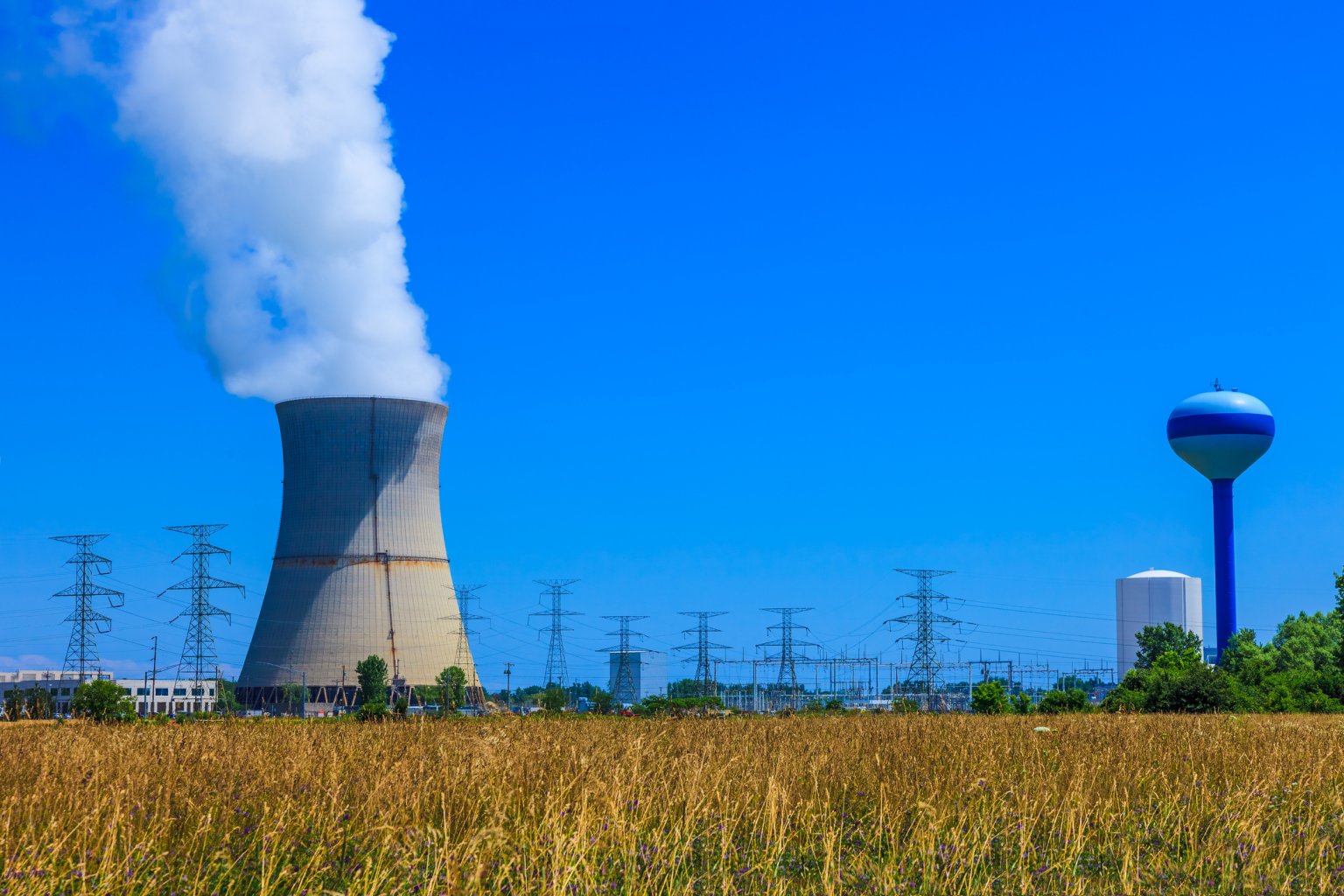
    The feds say the goal was to pass House Bill 6, a $1.3 billion bailout that went primarily to two failing nuclear power plants, but also subsidized two failing coal-powered generators. In addition, the money was used to fund a xenophobic campaign to stop a voter repeal of HB 6 and to line the pockets of Householder and his alleged conspirators, federal officials said.

    Also charged were Matt Borges, a lobbyist who was formerly chairman of the Ohio Republican Party, Neil Clark, a lobbyist who owns Grant Street Consulting, Juan Cespedes, also a lobbyist, and Householder’s aide, Jeffrey Longstreth.

    In its filing, the consumers’ counsel said it was asking the utilities commission to do its job.

    “The (Public Utilities Commission of Ohio) has the right and duty to regulate public utilities, for the protection of the public,” it said. “The PUCO should require FirstEnergy to show that money it collected from consumers, including the distribution modernization charge money, was not improperly used regarding House Bill 6 and that it did not violate any utility regulatory laws or PUCO orders regarding House Bill 6.”

    A FirstEnergy spokeswoman said her company will comment through official channels.

    “We are unable to comment on pending litigation, but we will respond to the motion by September 23 as required,” External Communications Manager Jennifer M. Young said in an email.

    In its filings, the consumers’ counsel noted that “Long before the House Bill 6 subsidies, FirstEnergy was authorized to charge its consumers nearly $7 billion for these and other FirstEnergy power plants as part of the transition to power plant competition (and a supposed end to future power plant subsidies) under Ohio’s 1999 electric deregulation law.”

    The documents also focused on $465 million FirstEnergy was allowed to collect from Ohio ratepayers in 2017 and 2018 as a “distribution modernization rider.” In other words, the charge was meant to fund improvements to the lines and poles and other equipment needed to efficiently deliver electricity in Ohio.

    The consumers’ counsel pointed to an independent audit showing that at least some of the money was used for other purposes. For example, it was placed in FirstEnergy’s “Regulated Utility Money Pool,” where its out-of-state utilities could borrow from it.

    The dividends FirstEnergy paid shareholders also took a big jump once the company started collecting more from ratepayers, supposedly to improve the power grid. The money for dividends from FirstEnergy’s Ohio utilities went from $141 million in 2016 to $350 million in 2017 — the first year of the subsidy — to $400 million in 2018.

    The Ohio Supreme Court subsequently declared the charge to be unlawful, but the money wasn’t refunded to ratepayers. 

    After the court ruling, the utilities commission shut down an investigation into the extra charge and how the money was used. But now the consumers’ counsel says it “should be reopened in light of the new information alleged in the U.S. Criminal Complaint about FirstEnergy’s use of extraordinary amounts of money in its efforts for the passage of House Bill 6.”

    After other interested parties have a chance to respond to the consumers’ counsel motions the utilities commission will decide whether to approve them.


    Marty Schladen

    Marty Schladen has been a reporter for decades, working in Indiana, Texas and other places before returning to his native Ohio to work at The Columbus Dispatch in 2017. He’s won state and national journalism awards for investigations into utility regulation, public corruption, the environment, prescription drug spending and other matters.