Tag: research

  • In CINCINNATI: 5 Things We Learned About Alzheimer’s in 2023

    In CINCINNATI: 5 Things We Learned About Alzheimer’s in 2023

    Cincinnati, Ohio – 2024—2023 was a landmark year for Alzheimer’s disease research, including advancements in treatment, risk factors and diagnosis of Alzheimer’s and other dementias. In this new era of Alzheimer’s treatments, here are five significant discoveries from this year:

    1. There are now three newly approved treatments for Alzheimer’s, with a fourth on the way.

    In July 2023, the U.S. Food and Drug Administration (FDA) granted traditional approval for Leqembi for treatment of mild cognitive impairment due to Alzheimer’s and mild Alzheimer’s dementia. This treatment, while not a cure, slows cognitive decline and can give people with early Alzheimer’s more time to maintain their independence.

    The FDA granted accelerated approval to Aduhelm for the same purpose in June 2021. At the Alzheimer’s Association International Conference (AAIC) in July 2023, Eli Lilly reported positive results for a third treatment — donanemab — in that same population. The company expects FDA action by the end of 2023.

    In May, the FDA approved brexpiprazole for agitation in people with Alzheimer’s disease. This is the first FDA-approved treatment for Alzheimer’s-related agitation, which is experienced by about 45% of Alzheimer’s patients. According to research published in May 2023, there are more than 140 therapies being tested that target multiple aspects of Alzheimer’s.

    1. Hearing aids could slow cognitive decline for at-risk older adults. 

    In the largest clinical trial to investigate whether a hearing loss treatment intervention can reduce risk of cognitive decline, researchers found that older adults with hearing loss, who were at higher risk of cognitive decline, cut their cognitive decline in half by using hearing aids for three years.

    1. Blood tests for Alzheimer’s are coming soon, and could improve diagnosis and treatment.

    Blood tests show promise for improving, and possibly even redefining, future Alzheimer’s diagnosis. Advancements reported for the first time at AAIC 2023 demonstrate the simplicity and value to doctors of blood-based biomarkers for Alzheimer’s.

    Blood tests are already being implemented in Alzheimer’s drug trials for further proof of their effectiveness. And they are incorporated into proposed new diagnostic and staging criteria for the disease. Blood tests — once verified, and approved by the FDA — would offer a noninvasive and cost-effective option in identifying blood-based markers for the disease.

    1. First-ever U.S. county-level Alzheimer’s prevalence estimates. 

    The first-ever county-level estimates of the prevalence of people with Alzheimer’s dementia — in all 3,142 United States counties — were reported at AAIC 2023. For counties with a population of 10,000 or more people 65 or older, researchers estimated the highest Alzheimer’s prevalence rates in Ohio.

    The researchers identified certain characteristics that may explain the higher prevalence in these counties, including older average age and higher percentages of Black and Hispanic residents.

    According to the Alzheimer’s Association, these stats can help public health officials determine the burden on the health care system, and better pinpoint areas of high risk and high need — for example, for culturally-sensitive health support and caregiver training services.

    1. Chronic constipation is associated with poor cognitive function. 

    Approximately 16% of the world’s population struggles with constipation. That prevalence is even higher among older adults. This year, researchers reported that less frequent bowel movements were associated with significantly worse cognitive function.

    Compared to those with bowel movements once daily, people with bowel movements every three days or more had worse memory and thinking equal to three additional years of cognitive aging. These results stress the importance of clinicians discussing gut health, especially constipation, with their older patients, including how to prevent constipation.

    There are 220,000 Ohioans 65 and older living with Alzheimer’s disease, according to the Alzheimer’s Association 2023 Alzheimer’s Disease Facts and Figures. That number is expected to hit 250,000 by 2025. A total of 493,000 Ohio caregivers provide 736 million hours of unpaid care each year.

    Those concerned about themselves or a loved one can contact the Alzheimer’s Association Greater Cincinnati Chapter at 513.721.4284 to schedule a care consultation and be connected to local resources.

    To learn more about Alzheimer’s or other related dementia, or to access free tools and resources, visit alz.org or call the Alzheimer’s Association 24/7 Helpline at 800.272.3900.

    ____________________

    Alzheimer’s Disease Facts and Figures, an annual report released by the Alzheimer’s Association, reveals the burden of Alzheimer’s and dementia on individuals, caregivers, government and the nation’s health care system.

    The accompanying special report, The Patient Journey in an Era of New Treatments, examines the importance of conversations about memory at the earliest point of concern, as well as a knowledgeable, accessible care team to diagnose, monitor disease progression and treat when appropriate. This is especially true now, in an era when treatments that change the underlying biology of Alzheimer’s are available.
  • Emma Steiner, Marcel Mangan, Orhan Ozbudak and Team CoUREage 4.0 have $214,301.00 for Leukemia and Lymphoma cure

    Emma Steiner, Marcel Mangan, Orhan Ozbudak and Team CoUREage 4.0 have $214,301.00 for Leukemia and Lymphoma cure

    by David Miller

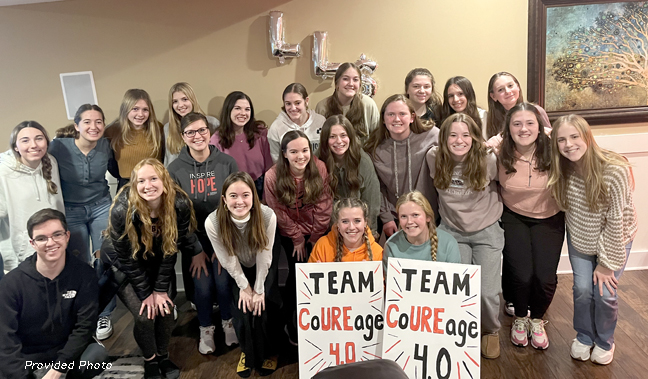
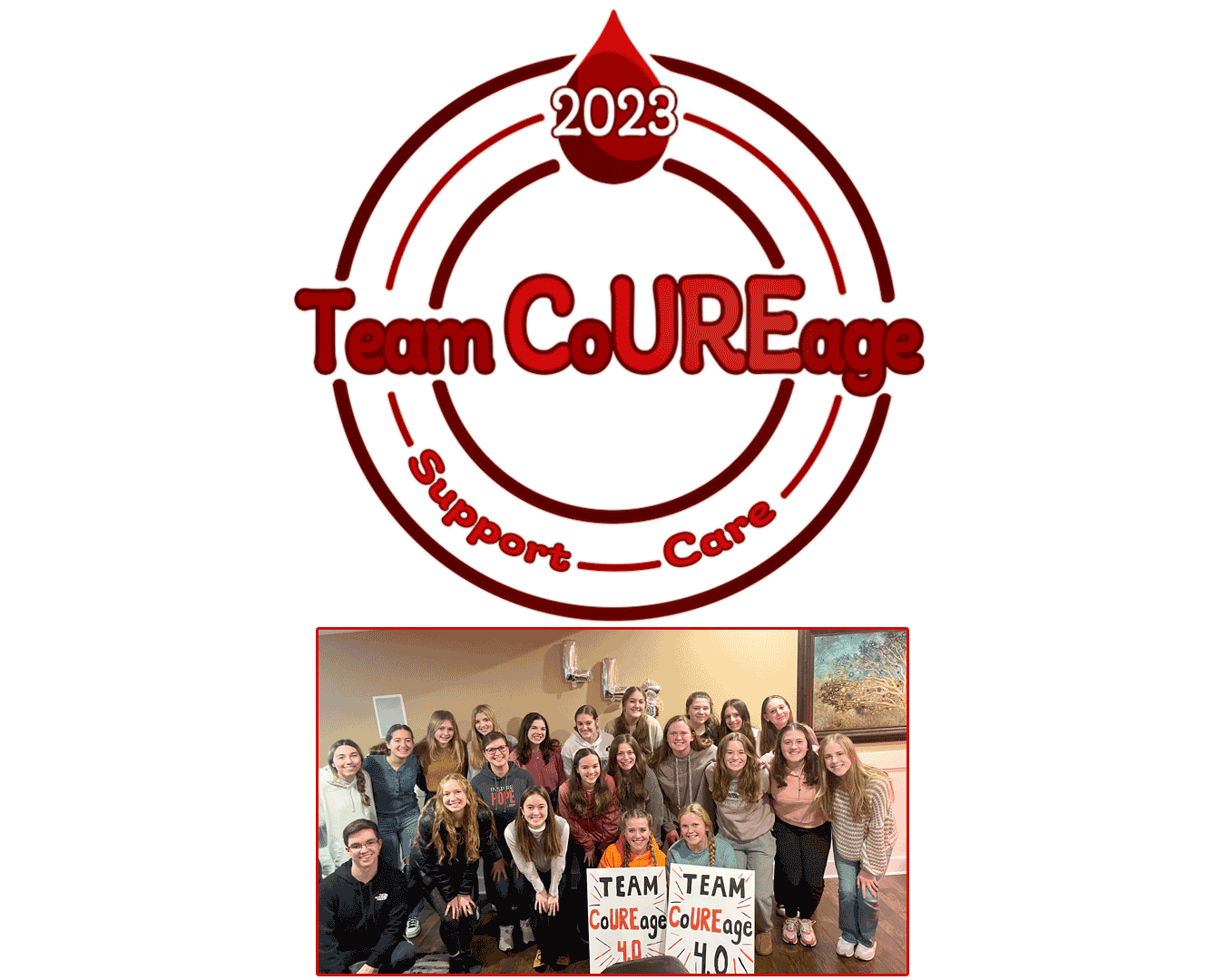
    Loveland, Ohio – Team CoUREage 4.0 is a Loveland High School fundraising team for the Leukemia and Lymphoma Society. Emma Steiner, Marcel Mangan, and Orhan Ozbudak were the leaders of a team of over 25 members with a goal throughout a 7-week campaign that ran from February 1st to March 25th to raise as much money and awareness as possible for blood cancer research. Their goal was to raise $100,000.

    They raised $214,301 to help fund cancer research and to support cancer patients. This is a record for fundraising for an individual team in Ohio.

    At the gala Saturday night at the Great Wolf Lodge in Mason it was announced that a total of $805,365 was raised by all teams.

    Emma Steiner said, “My connection to the Leukemia and Lymphoma Society began when a favorite middle school teacher of mine, and now mentor, lost her aunt due to Leukemia.” Steiner is a junior at Loveland High School.

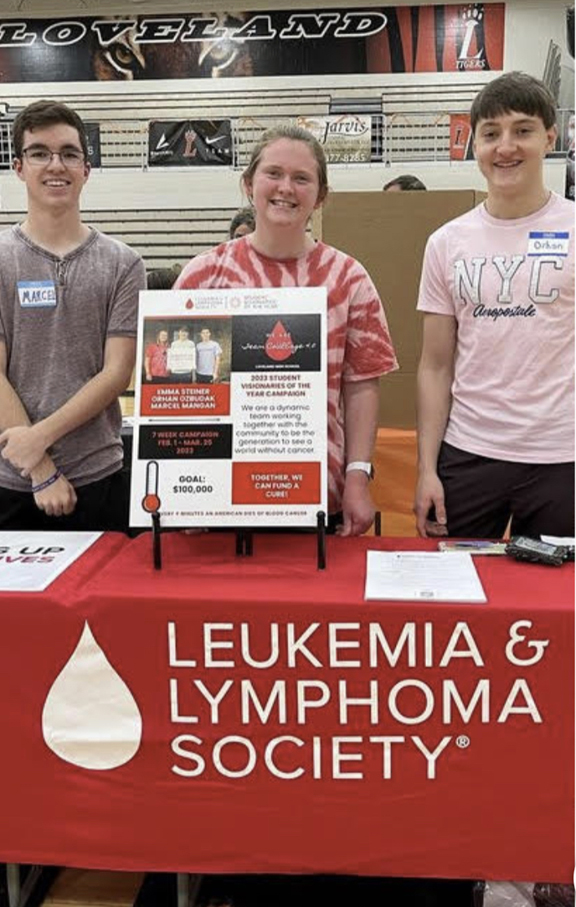
    Marcel Mangan, Emma Steiner, and Orhan Ozbudak

    Steiner was asked to join Loveland’s Team CoUREage last year. She said, “While fundraising, I got to hear so many touching stories of people affected by blood cancer.” That was more than enough to make her want to accept the nomination to be a candidate for this year’s campaign. “Although I don’t have a direct connection to blood cancer, my grandpa passed away from cancer last year, and I fight so that other families don’t have to experience what my grandpa went through.”

    LLS’s Student Visionaries of the Year campaign is a seven-week competition among high schools across the Cincinnati area. Loveland was one of 15 teams raising money for blood cancer research, advocacy, patient support, and ultimately, a cure. However, it is not just a competition among these 15 teams, rather it is a combined effort to help LLS find a cure.

    The trio built this year’s campaign using the community as its foundation. Since last August, they have been building partnerships with local businesses securing sponsorships, auction items, and organizing events. So far, they have over 10 events planned to help them raise money for the Leukemia and Lymphoma Society.

    They surpassed their goal with secured sponsorships with local businesses, community donations, events, and t-shirt sales. One of the biggest ways that the team fundraised is through donations received by each of their 30 team members.

    Team CoUREage 4.0

    The goal is to not only raise money for blood cancer but also to raise awareness in our Loveland community about Leukemia and Lymphoma.

    Background Info about LLS: 

    LLS is uniquely able to report on the many advances and accomplishments that have occurred since their founding in 1949. From cutting-edge research and precision medicine innovations to legislative victories that improve access to therapies for cancer patients, LLS plays a leading- and often pioneering- role in the fight against blood cancers. Since 2000, approximately 40 percent of all U.S. Food & Drug Administration (FDA) approved cancer drugs were for blood cancer, and some are now used to treat other forms of cancer and non-malignant diseases. A “win” for blood cancers, therefore, is a win for the cancer community overall.

  • Emma Steiner, Marcel Mangan, Orhan Ozbudak have $100,000 goal with a cure for Leukemia and Lymphoma as their target

    Emma Steiner, Marcel Mangan, Orhan Ozbudak have $100,000 goal with a cure for Leukemia and Lymphoma as their target

    by David Miller

    Loveland, Ohio – Emma Steiner said, “My connection to the Leukemia and Lymphoma Society began when a favorite middle school teacher of mine, and now mentor, lost her aunt due to Leukemia.” Steiner is a junior at Loveland High School.

    Steiner and Loveland High School juniors, Marcel Mangan, and Orhan Ozbudak are the candidates for Team CoUREage 4.0, a fundraising team raising money for The Leukemia and Lymphoma Society’s Student Visionaries of the Year Campaign. The 2023 campaign runs through March 25th. There are 30 team members.

    Marcel Mangan, Emma Steiner, and Orhan Ozbudak

    Steiner was asked to join Loveland’s Team CoUREage last year. She said, “While fundraising, I got to hear so many touching stories of people affected by blood cancer.” That was more than enough to make her want to accept the nomination to be a candidate for this year’s campaign. “Although I don’t have a direct connection to blood cancer, my grandpa passed away from cancer last year, and I fight so that other families don’t have to experience what my grandpa went through.”

    LLS’s Student Visionaries of the Year campaign is a seven-week competition among high schools across the Cincinnati area. Loveland is one of 15 teams raising money for blood cancer research, advocacy, patient support, and ultimately, a cure. However, it is not just a competition among these 15 teams, rather it is a combined effort to help LLS find a cure. 

    The trio has built this year’s campaign using the community as their foundation. Since last August, they have been building partnerships with local businesses securing sponsorships, auction items, and organizing events. So far, they have over 10 events planned to help them raise money for the Leukemia and Lymphoma Society. 

    Visionaries look to the future—and see infinite possibility.
    They challenge the status quo—and make the impossible possible. They boldly imagine a better world – and lead the charge to create it.

    Members of Team CoUREage 4.0 are all Visionaries that are hard at work fundraising for the Leukemia and Lymphoma Society. LLS was built on the same vision – of a better world – one without blood cancers. 

    Their Loveland goal is to raise $100,000 over the next 7 weeks. They hope to reach it through secured sponsorships with local businesses, community donations, events, t-shirt sales, and the Grand Finale Celebration. One of the biggest ways that the team will fundraise is through donations received by each of their 30 team members.

    Team CoUREage 4.0

    Orhan Ozbudak said, “Throughout my life, I hope to be an avid philanthropist. Ever since my youth, I have participated in many philanthropic events and hope to continue these types of activities into the future. One of my dreams is to create businesses that illuminate warmth and help people.” He added that When Marcel and Emma invited him to join them he knew this was an opportunity to positively impact not only people affected by blood cancer but also the world. “Even though I was hesitant to be a candidate at first, I realized that I am very thankful to participate in the Student Visionaries of the Year Campaign as a candidate.”

    The goal is to not only raise money for blood cancer but also to raise awareness in our Loveland community about Leukemia and Lymphoma. “Any donation helps, and brings us closer to our goal,” said Steiner.

    Marcel Mangan said, “My connection to LLS began last year when the two past candidates, Grace Dressell and Claire Zeigler, had asked me to be a member of their campaign.” He explained that initially, he was hesitant due to not having a direct connection to leukemia or lymphoma, but after researching the stories of those who have had to deal with these blood cancers he felt it necessary to join. “The most touching story that I heard was about a girl named Emily Love who had been diagnosed with leukemia when she was only 1 years old. Luckily she recovered after 3 years and was able to live a normal life, but sadly those years of her childhood can never be given back to her. After hearing her story I joined the 2022 campaign, and I’ve been a part of it ever since. I just hope that my fundraising can help make a positive impact on those suffering from leukemia or lymphoma.”

    Background Info about LLS: 

    LLS is uniquely able to report on the many advances and accomplishments that have occurred since their founding in 1949. From cutting-edge research and precision medicine innovations to legislative victories that improve access to therapies for cancer patients, LLS plays a leading- and often pioneering- role in the fight against blood cancers. Since 2000, approximately 40 percent of all U.S. Food & Drug Administration (FDA) approved cancer drugs were for blood cancer, and some are now used to treat other forms of cancer and non-malignant diseases. A “win” for blood cancers, therefore, is a win for the cancer community overall.

    More 

    • Research done by the Leukemia and Lymphoma Society especially helps those with blood cancer but it also makes improvements for all kinds of cancer!
    • There will be a raffle for a parking spot at Loveland High School during school lunches
      • Students can also purchase t-shirts during their lunch and buy tickets for raffle baskets
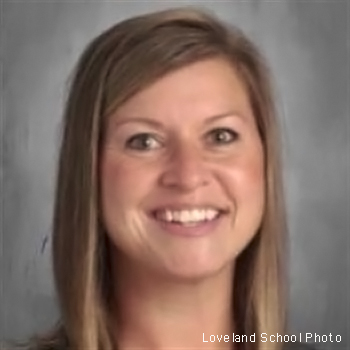
    Katie Rose

    Teacher-mentor, Katie Rose said, “My ‘why’ is my Aunt Tina Eubanks, who died of Acute Myeloid Leukemia only three weeks after being diagnosed at the age of 53.” Rose had been fundraising for LLS through Pennies for Patients with Loveland Middle School Student Council for many years and would always tell people, “You never know when cancer will touch your family”. Another of her aunts is currently battling both lung and liver cancer. Sadly, this cancer diagnosis is her third – lymphoma and rectal cancer being two she defeated. “People often ask why I work so hard to fundraise. The answer is simple. As long as there is breath in my lungs and blood in my veins, I will do whatever it takes to help those who are impacted by cancer.”

    Rose who is a Social Studies Teacher at Loveland Middle School said, “Cancer needs to be eradicated and LLS is the organization making the greatest strides in funding research and advancing new drugs to help those in need. I live a life of service, and by teaching my current and former students the importance of giving back and how to raise money for a worthy cause allows me to fulfill my life’s purpose.” 

    How YOU can support Team CoUREage 4.0

    1. Make a charitable donation using the team’s online fundraising page: https://events.lls.org/soh/svoycincy23/tcoureage4
    2. Purchase a t-shirt: T-Shirt Order Form
    3. Follow on social media:         

    Instagram: @lovelandteamcoureage4.0        

    Twitter: @teamcoureage4                      

    1. Donate an auction basket or item or become a Grand Finale sponsor (contact Emma Steiner 513-630-5610)
    2. Attend events and mention Team CoUREage 4.0 when ordering. Most events will have raffle baskets.

    Orhan Ozbudak said, “I am very appreciative of all the progress we have made and can’t wait to see what our team will accomplish throughout this journey. Hopefully, our efforts will also serve to inspire people to carry on this positivity.”

    “Thank you to all of the businesses that are sponsoring our campaign, and thank you to all of the people in Loveland who have shown continuous support for our fundraiser,” said Emma Steiner.

    Marcel Mangan summed up the campaign by saying, “Although we hope to raise a large amount of money for the Leukemia and Lymphoma Society, we also hope to spread the importance of LLS throughout Loveland, but also the greater Cincinnati area as a whole.”

    2/1-2/21Buffalo Wild Wings at 11363 Montgomery Rd. 10% giveback on dine-in or carry-out all day if you mention “Team L”
    EVERY SUNDAY2/5, 2/12, 2/19, 2/26, 3/5, 3/12, 2/19Bishop’s Quarter at 212 W Loveland Ave. 10% Giveback
    2/8Raising Cane’s at 3901 Montgomery Rd., 2 pm-9 PM
    2/13Cartridge Brewing at 1411 Grandin Rd. 4 pm-10 pm
    2/22Ramsey’s Trailside at 200 W Loveland Ave.
    2/23MPH Brewing at 7880 Remington Rd. 4 pm-10 pm. 10% Giveback on food and drink
    2/27Dewey’s Pizza at 11338 Montgomery Rd. 4 pm-9 pm
    3/4Athlete Instincts Fitness Fundraiser at 774 Loveland-Miamiville Rd. 10:30 am. $10 to sign up, text Jen Steiner 513-289-6393 to sign up
    3/10Cappy’s Wine & Spirits at 309 W Loveland Ave. 5 pm-11 pm. LIVE MUSIC starts at 7:30 pm
    3/12 Nisbet Park – Text Jen Steiner 513-289-6393 to sign-up
    3/15The Work’s Brick Pizza Oven at 20 Grear Millitzer Place. ALL DAY
  • [SHORT SURVEY] Do Ohio parents believe that humans or computers should grade their children’s written essays on Standardized tests?

    [SHORT SURVEY] Do Ohio parents believe that humans or computers should grade their children’s written essays on Standardized tests?

    Loveland-area resident Alice Culbertson, graduate student in Education at Xavier University, is conducting a research study that asks the following question: “Do Ohio parents believe that humans or computers should grade their children’s written essays on standardized tests?” Below is some general information about the topic of human vs. computerized scoring, followed by a short survey for parents to share their opinions on this issue. 

    If you are an Ohio parent who has had at least one child take a standardized test in an Ohio school any time during grades 3-12, you are encouraged to complete a short survey to share your opinions on this issue.

    Every year, millions of school children in America take state-mandated standardized tests. To manage the cost of such large-scale testing, many of the questions follow a multiple-choice format because computers can score the answers quickly and cost-effectively. Some questions, however, require written essay responses that are graded by humans, a slower and more expensive process. In an effort to reduce the time and cost associated with human scoring, several testing firms are working with technology companies to produce automated essay scoring (AES) software that can score essays as well as humans can.

    One of the leading proponents of AES is Mark D. Shermis, Dean and Professor, School of Education, University of Houston–Clear Lake, who has conducted several studies in which computers were shown to score essays with comparable results to human scoring. Les Perelman, research affiliate at the Massachusetts Institute of Technology (MIT), former professor of writing and composition, and a vocal opponent of AES, has also conducted research in which computer scoring proved to be less accurate than human scoring. 

    Shermis, AES software developers, and testing companies claim that the Artificial Intelligence (AI) has the capability to grade essays correctly and consistently. Perelman and primary, secondary, and post-secondary educators maintain that computers are incapable of evaluating a number of important elements of writing such as logic, tone, organization, and creativity, and should therefore not be used to grade essays. 

    Pros of Computerized Scoring cited by Shermis and other Proponents of AES

    • Several studies have shown that computers gave virtually identical scores to those given by humans on the same set of essays.
    • Computerized scoring can save time and money spent on testing, and test results can be returned to families and schools more quickly.
    • Humans who score essays are temporary employees who only need a bachelor’s degree in any subject, and the ability to adhere to a rubric (a chart that shows them how to score the essays).

    Pros of Human Scoring cited by Perelman and other Opponents of AES

    • Several studies have shown that computers can be fooled into giving high scores to poorly written essays based solely on the length and key words contained within the essay.
    • Human scorers are able to evaluate important elements of writing that computers cannot, such as tone, logic, organization, and creativity.
    • Computers can only score simplistic essays with scores comparable to those given by humans, meaning that test questions would have to be “dumbed down” in order to be accurately scored by a computer. 

    There is virtually no research documenting how parents feel about the prospect of computers grading their children’s written essays.
    The question of whether computers should score essays is a growing area of contention among educators, software firms, and testing companies across the country. Largely absent in this debate, though, is a sector of the population that has a personal stake in standardized testing scoring: the parents of those students who take the tests, whose educational paths may be affected by the scoring outcomes. While research has shown that parents have had differences of opinion as to whether their children benefit from standardized tests in general, there is virtually no research documenting how parents feel about the prospect of computers grading their children’s written essays.

    If you are an Ohio parent who has had at least one child take a standardized test in an Ohio school any time during grades 3-12, you are encouraged to complete a short survey to share your opinions on this issue. Simply click the link below to access the survey. Please feel free to share this link with any other Ohio parents. Thank you!

    https://kwiksurveys.com/s/VJ8A5d3V#/0   

    All survey respondents will remain confidential, and the results of this survey are for classroom purposes only and will not be published. Results of the study will be available after January 2, 2018, and may be obtained by emailing a request for results to culbertsona@xavier.edu.

  • Loveland-Symmes Fire Department awarded two grants

    Loveland-Symmes Fire Department awarded two grants

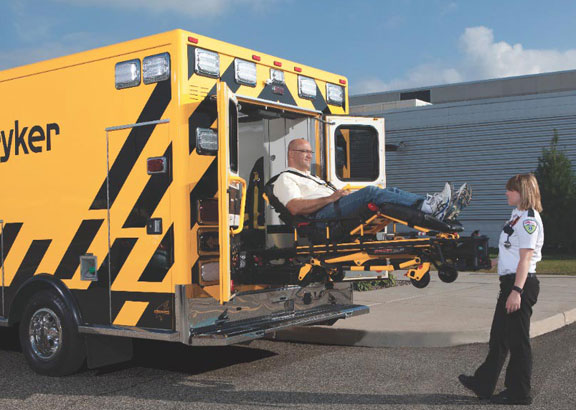
    Stryker Powerpro XT Cot Systems will give firefighters and paramedics assistance with the lifting of patients up to 700 pounds

    Photo above is a sample of the Stryker Powerpro XT Cot System

    Loveland, Ohio – The Ohio Bureau of Workers’ Compensation has awarded a Safety Intervention Grant (SIG) to the Loveland-Symmes Fire Department (LSFD) for assistance with purchasing two Stryker Powerpro XT Cot Systems.

    The Safety Intervention Grant is available to any Ohio state-fund or public employer who wishes to purchase equipment to substantially reduce or eliminate injuries associated with a particular task or operation. The Stryker Powerpro XT Cot Systems will give firefighters and paramedics assistance with the lifting of patients up to 700 pounds from the ground to a rolling transport level.

    Lieutenant Kyle Riley, EMS Lieutenant for the Loveland-Symmes Fire Department said, “The awarded grant funds provide our firefighters with a major equipment upgrade that will provide a safer and more effective system. This will help them provide the highest quality service to our customers, while reducing the potential for injury to our personnel.”

    The SIG Grant was a matching grant and it was nearly $40,000.00

    According to the press release issued by the Department, “The Loveland-Symmes Fire Department is continuously seeking methods to improve the emergency medical services that are provided to their residents. The funds received from the SIG will be utilized to purchase essential EMS equipment that will improve the Loveland-Symmes Fire Department’s ability to provide critical care to their customers, while reducing the risk of injury to our members.”

    PRIORITY ONE EMS GRANT

    The purpose of the State Board of Emergency Medical, Fire, and Transportation Services Grant Program, administered by the Ohio Department of Public Safety, Division of Emergency Medical Services, is to improve and enhance EMS and trauma patient care in Ohio through the provision of grant funding for equipment, training, and research. There are six types of grants (Priorities 1-6) available. The amount awarded for each priority is determined by the State Board of Emergency, Medical, Fire, and Transportation Services and by the amount of funds available during the award year.

    The Priority One Grant was for $3,075.00.

    Deputy Chief Michael Books, Chief of EMS for the Loveland-Symmes Fire Department said, “The Priority One Grant is a grant offered by the State of Ohio to assist fire departments with the purchase of equipment, supplies, and personal protective equipment (PPE) that would not normally be able to be purchased.”

    According to the press releases issued by the Department, “The Loveland-Symmes Fire Department is continuously seeking methods to improve the emergency medical services that are provided to their residents. The funds received from the SIG will be utilized to purchase essential EMS equipment that will improve the Loveland-Symmes Fire Department’s ability to provide critical care to their customers, while reducing the risk of injury to our members.”


    Wards Corner Chiropractic & Sports Rehab

     
    Loveland chiropractor Douglas Portmann, DC at Wards Corner Chiropractic & Sports Rehab is one of the best chiropractors in the Loveland area.