This amended order, reopens self-service food stations in restaurants, bars, banquet and catering facilities, and services, as long as the following conditions are met:
Customers must wear facial coverings while using self-service food stations or in line for self-service food stations. Those unable to wear a facial covering must be served by an employee.
Buffet tables/salad bars must be spaced a minimum of 6 feet away from customer seating/tables, and lines must not extend into seating areas.
Customer flow at buffet tables/salad bars must move in one direction with a beginning point and ending point, and customers must maintain at least 6 feet of social distancing while in line. Directional signage must be posted indicating where the customer line begins.
Hand sanitizer must be placed at self-serve food stations, including at the front of the line and end of the line of buffet tables/salad bars, and used by customers prior to, and after, serving themselves.
At least 6 feet of social distancing must be maintained between seated customers and customers in line for a buffet/salad bar and monitored by employees.
Serving utensils must be replaced or cleaned and sanitized at least hourly. It is recommended that customers use disposable napkins, tissues, wax paper, etc., when handling serving utensils, and operators of self-service food stations are encouraged to make them available. A trash receptacle should be conveniently located.
Use of individually packaged condiments is recommended instead of shared or bulk condiment dispensers.
Commonly touched surfaces must be cleaned and sanitized frequently.
While in operation, self-serve areas must be continually monitored by staff who are trained in food safety, including monitoring customer hand sanitizing practices at the self-service food station.
Food must be protected from contamination, including sneeze guards on self-serve equipment.
Signage must be placed at self-service food stations requiring customers to use hand sanitizer before and after serving themselves, and to maintain at least 6 feet of social distancing while in line. The signage should recommend that customers use disposable napkins, tissues, wax paper, etc., when handling serving utensils. A sample sign is available on Ohio’s coronavirus website at https://coronavirus.ohio.gov/wps/portal/gov/covid-19/responsible-restart-ohio/Posters-and-Signs (food service operations and retail food establishments may choose to develop their own signage).
The order goes into effect on February 11, 2021 at 11:59 p.m.
Hamilton County, Ohio – Sheriff Jim Neil reports that beginning Thursday at 10 PM, the Hamilton County Sheriff’s Office has begun enforcement of the “Statewide Curfew” issued by the Ohio Department of Health. (Read the Health Order below)
Neil said in a press release, “We’re asking all citizens and businesses to comply with the order. Restaurants and bars must stop serving in person customers at 10 PM during the curfew period. Takeout, however, can remain open beyond 10 PM. Violators will receive a verbal warning to comply with the order. After being verbally warned, the violator(s) will be cited under 3701.352, Ohio Revised Code, Misdemeanor of the 2nd degree.”
Sheriff Jim Neil
The Neil noted that the curfew does not include the following:
Individuals going to and from work
Those who have an emergency
Those who need medical care
Grocery shopping
Going to the pharmacy
Picking up carryout or a drive-thru meal. Delivery is also permitted
Yes, you can still take your dog outside or go for a walk My goal as Sheriff of Hamilton County is to keep my deputies and the general public safe
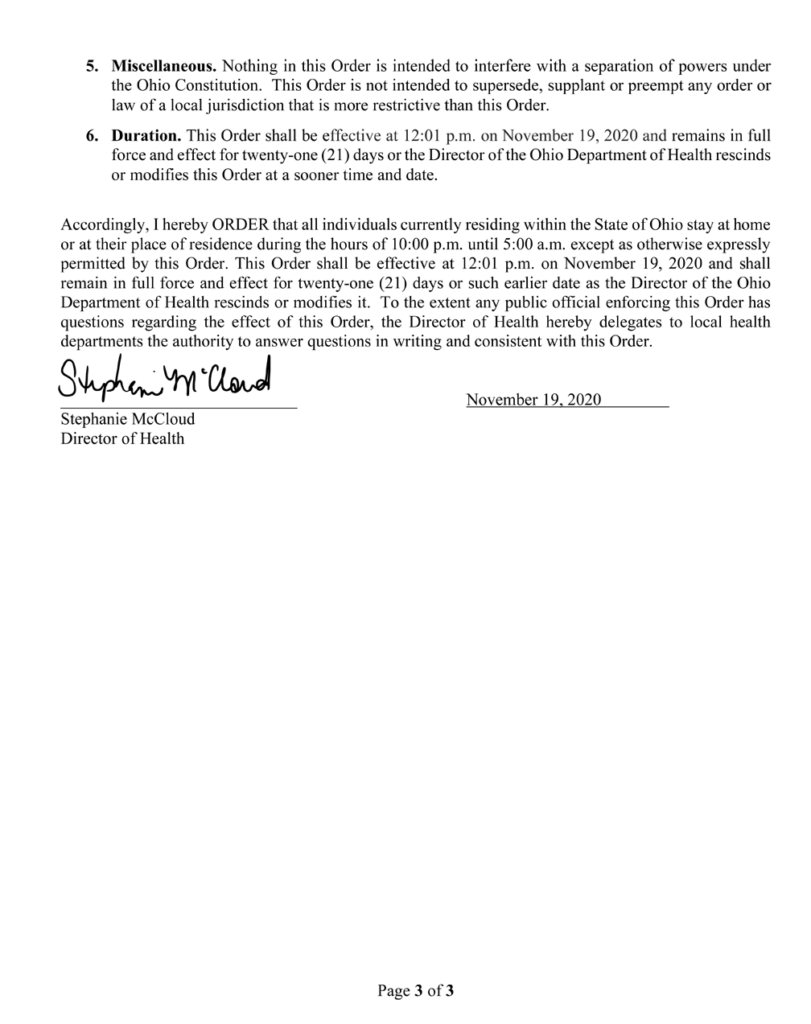
Health Order Signed Encouraging Ohioans to Stay Home
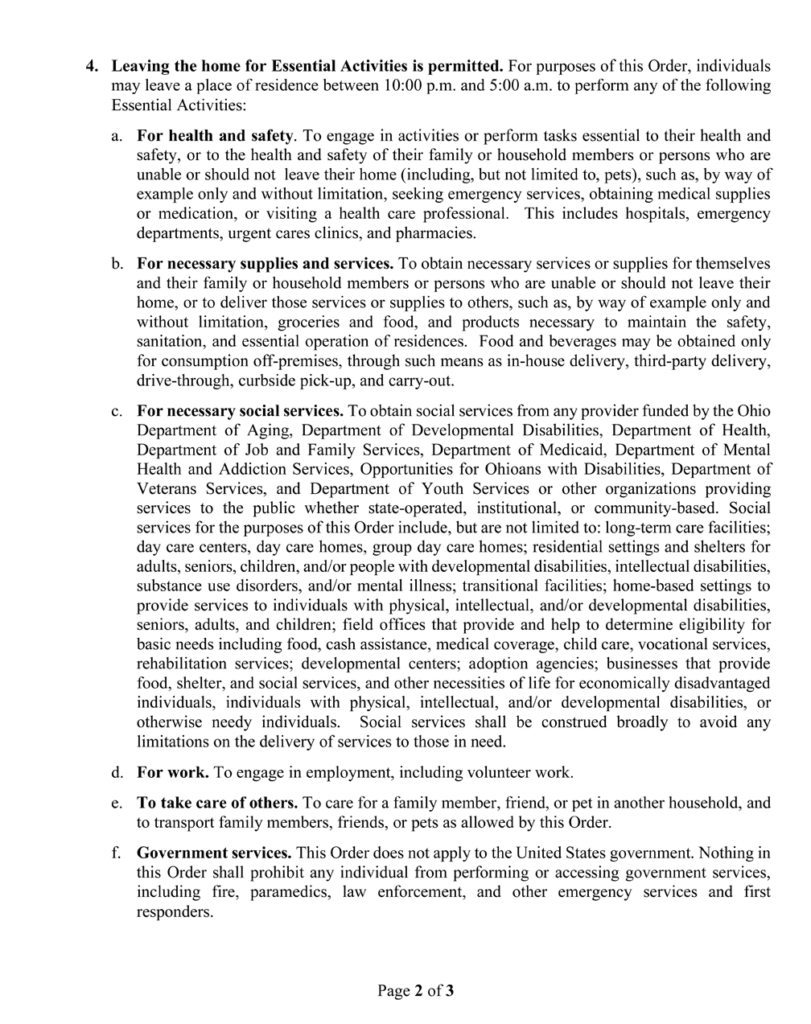
(COLUMBUS, Ohio)—Ohio Governor Mike DeWine on Thursday announced that Ohio Department of Health Director Stephanie McCloud signed a health order encouraging people to stay at home during specified hours unless they are working or engaged in an essential activity.
“As COVID-19 continues to spread in Ohio, we need a stronger response to minimize the impact on Ohio’s healthcare and hospital capacity and ensure healthcare is available to those that need it,” said Governor DeWine. “With this order we are discouraging get-togethers and gatherings to minimize the spread of the virus while minimizing the economic impact of a complete shutdown.”
According to DeWine the specifications in this order include:
Individuals within the state must stay at a place of residence during the hours of 10 PM and 5 AM except for obtaining necessary food, medical care, or social services or providing care for others.
This order doesn’t apply to those that are homeless. Individuals whose residences are unsafe or become unsafe, such as victims of domestic violence, are encouraged to leave their homes and stay at a safe, alternative location.
The order does not apply to religious observances and First Amendment protected speech including activity by the media.
The order permits travel into or out of the state and permits travel required by law enforcement or court order, including to transport children according to a custody agreement, or to obtain fuel.
Individuals are permitted to leave a place of residence during the hours of 10 PM and 5 AM for the following essential activities:
Engaging in activities essential to their health and safety or the health and safety of those in their households or people who are unable to or should not leave their homes, including pets. Activities can include but are not limited to seeking emergency services, obtaining medical supplies or medication, or visiting a health care professional including hospitals, emergency departments, urgent care clinics, and pharmacies.
To obtain necessary services or supplies for themselves and their family or members of their household who are unable or should not leave their home, to deliver those services or supplies to others. Examples of those include but are not limited to, obtaining groceries and food. Food and beverages may be obtained only for consumption off-premises, through such means as delivery, drive-through, curbside pickup and carryout.
To obtain necessary social services.
To go to work, including volunteer work.
To take care of or transport a family member, friend, or pet in their household or another household.
Desperate to slow the spread of coronavirus, Ohio Gov. Mike DeWine on Tuesday announced a new curfew intended to decrease person-to-person contacts and new infections.
The move was greeted with skepticism in some quarters.
DeWine said that starting at 10 p.m. on Thursday, there will be a 21-day statewide curfew from 10 p.m. to 5 a.m. Bars, restaurants and retail stores will have to close. But there will be exceptions for pharmacies, grocery stores, food delivery, drive-through and pickup service.
Technically, people who violate the curfew could be charged with a second-degree misdemeanor, punishable by 90 days in jail and a $750 fine. But as he has with other covid-related health orders, DeWine said he he’s not eager to see people charged.
“We do not expect law enforcement to go pull people over because they’re out beyond 10 o’clock,” he said. “But if they’re seeing something going on, this is a way they can walk up and say, ‘Hey guys, you’re here… there’s a curfew. Why don’t you just go home?’”
The governor added, “No one’s been charged under these health orders,” he said. “That doesn’t mean they couldn’t be, but they haven’t so far.”
The curfew comes as Ohio experiences its most alarming spike in coronavirus infections and hospitalizations since the start of the pandemic early this year.
On Tuesday, state health authorities reported 7,079 new cases over the past 24 hours, a 36% increase over the 21-day average. They also reported 368 new coronavirus hospitalizations, only a little less than the state record of 386 set on Nov. 10.
The swelling numbers have placed Ohio hospital staffs in a “precarious situation,” said Bruce Vanderhoff, chief medical officer for the Ohio Department of Health. He said medical workers are fatigued from fighting the disease since March and they have to balance that work with living in communities and with families where the virus is increasingly prevalent.
DeWine said his goal was to reduce the number of person-to-person contacts and thereby stop the virus from spreading. He asked Ohioans to voluntarily do that through such measures as condensing the number of trips they make to the grocery and buying more when they do. At the same time, he urged people to do what they can to remotely maintain emotional connections.
However, critics noted that the curfew doesn’t go as far as one imposed in the spring. For example, the earlier order imposed limits on how many people can be in stores when they’re open.
Asked what scientific basis he used in issuing the order, DeWine said, “We know the basic science. The basic science is fewer contacts, less spread.”
The likely effectiveness of the curfew was disputed by at least one scientist in the field. Kent State epidemiologist Tara C. Smith tweeted that she didn’t know any professionals who thought it would work.
I haven't met a single public health official who thinks these types of curfews/ 10pm shutdowns will be particularly helpful. Maybe they're out there somewhere–anyone want to explain it to me? I don't know where they're getting their advice from. https://t.co/ZH7OXYhrY3
DeWine, however, might have felt the curfew was as far as he could go. It had the support of the Ohio Restaurant Association, likely meaning that there was some negotiation behind it.
Also, DeWine is a member of a party led by president who in October visited Circleville and said the media were hyping the virus to hurt his reelection chances. The president predicted the media would stop covering coronavirus on Nov. 4 — the day after the election.
Covid skepticism runs so deep in elements of the Republican Party that at the same time that DeWine was announcing the curfew, Ohio Senate President Larry Obhof, R-Medina, was testifying in favor of his bill to repeal an earlier health order requiring bars to stop serving at 10 p.m.
At the exact time @GovMikeDeWine continues to defend/explain his new curfew health order, State Sen. President @LarryObhof is testifying on his bill to reinstate Ohio's normal bar hours
Would rescind the state order prohibiting sales after 10 p.m./consumption after 11 p.m. pic.twitter.com/y0P2ZaCyYS
For his part, DeWine said he hopes the curfew will “push more people toward home.”
“I think if we do these things it gives us a shot at slowing (the coronavirus) down,” the governor said. “Most of what we’re doing and the decisions I’m making are between two bad choices.”
Marty Schladen has been a reporter for decades, working in Indiana, Texas and other places before returning to his native Ohio to work at The Columbus Dispatch in 2017. He’s won state and national journalism awards for investigations into utility regulation, public corruption, the environment, prescription drug spending and other matters.
At the end of September, Ohio averaged under 1,000 new cases per day; this week, Ohio hit a record high of more than 6,500 new cases reported in a single 24-hour period.
At the end of September, Ohio averaged under 1,000 new cases per day; this week, Ohio hit a record high of more than 6,500 new cases reported in a single 24-hour period.
In a statewide address to Ohioans Wednesday evening, Ohio Governor Mike DeWine called on citizens to recommit to their individual efforts to prevent coronavirus spread as Ohio moves through its most intense, widespread, and dangerous surge of cases to date.
Ohio is currently facing a record number of coronavirus-related hospitalizations and intensive care admissions, with nearly 3,000 people in the hospital, including more than 700 people in the ICU.
During the first week of November alone, 104 Ohioans infected with the coronavirus died.
To reinforce the necessity of wearing masks and slowing virus spread, Governor DeWine announced two forthcoming orders:
Revised Mask Order
DeWine said, “To protect frontline workers and customers, the Ohio Department of Health will reissue Ohio’s mask order and add the following provisions:
Each store will be required to post a sign outlining face-covering requirements at all public entrances to the store;
Each store will be responsible for ensuring that customers and employees are wearing masks; and
A new Retail Compliance Unit, comprised of agents led by the Ohio Bureau of Workers’ Compensation, will inspect to ensure compliance.
A first violation will result in a written warning and a second violation will result in closure of the store for up to 24 hours.
New Social Gathering Order
Ohio’s April order that limits public events and private gatherings of more than 10 people is still in effect, however, there has been rampant spread of the virus as a result of banquets, wedding receptions, and social gatherings following funerals according to DeWine.
“To address the tragedies that have resulted from such events, the Ohio Department of Health will issue an order that will place significant new restrictions on these social activities,” DeWine said.
Specifically, open congregate areas will no longer be permitted to open, and everyone will be required to be seated and masked unless they are actively consuming food or drinks.
Bars, restaurants, and fitness centers may remain open, but this will be reassessed one week from tomorrow for potential closure.
“If the current trend continues and cases keep increasing, we will be forced to make these closures,” said DeWine. “I am very well aware of the burden this will place on employees and owners, but these are places where it is difficult or impossible to maintain mask-wearing, which we know now is the chief way of slowing this virus.”
Concern for healthcare workers
“With this new wave of COVID-19, the onset of flu season, and an already-exhausted group of healthcare workers, there are serious concerns that there won’t be enough people to fully staff our healthcare facilities in the next few weeks,” said DeWine. “If we don’t change this, Ohio won’t be able to provide appropriate care for COVID patients or for Ohioans who require other emergency care for things like accidents, strokes, and heart attacks. Hospitals will again be forced to postpone important, but less urgent, care.”
Although testing capacity in Ohio has nearly doubled, the number of people testing positive for the coronavirus has increased almost four times. At the end of September, Ohio averaged under 1,000 new cases per day; this week, Ohio hit a record high of more than 6,500 new cases reported in a single 24-hour period.
“As we wait for the vaccine, which could come as soon as December, we have so much to protect,” said DeWine. “What each Ohioan does in his or her own life impacts every citizen and every place we desperately want and need to keep open– our schools, nursing homes, hospitals, and businesses.”
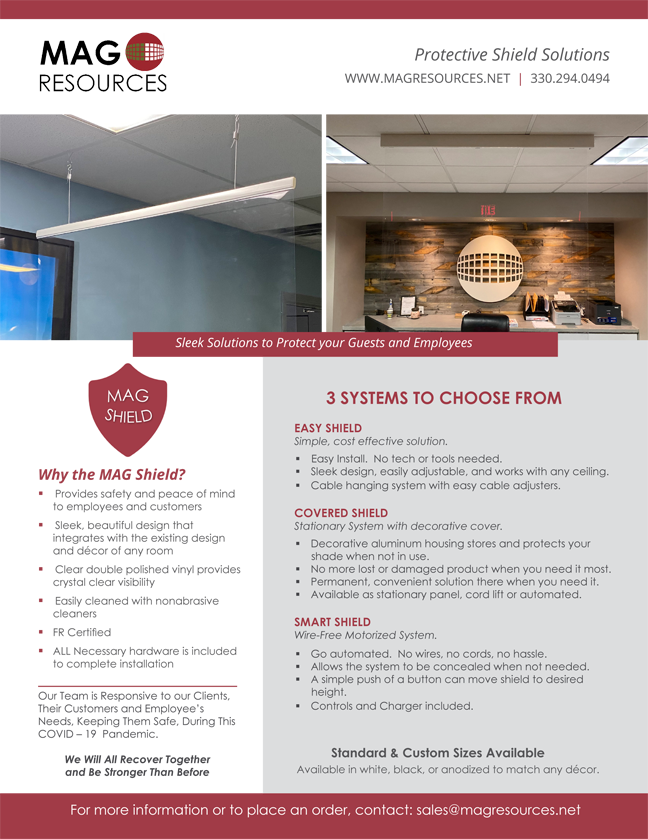
Barberton, Ohio – “We have recently introduced a new product to assist many Market Segments with the re-opening of their businesses from the COVID-19 Pandemic, including Restaurants, Hospitality, Retail, etc. This is a clear vinyl shade to use in any guest/employee contact area,” said Don Burgstahler from Mason.
MAG Resources – A small business in Barberton, OH has introduced a product to help small businesses open safely. MAG has come out with a protective shield solution, MAG Shield, to provide safety for your customers and employees. MAG being a national supplier to many major National Accounts across the United States, quickly realized a product would be needed to help many market segments including Hospitality, Restaurants, Health Care, Offices, Retail, and many others that experience Customer/ Employee contact.
MAG has come up with a product that is certified to be in your commercial buildings. “Our product carriers a fire-retardant certificate (NFPA 701), which is required in the commercial atmosphere. We have implemented these in our own office building to help separate shared working environments to maintain employee/customer safety,” said Burgstahler. “The MAG shield is a clear vinyl shade that unlike many of the solutions now has many design options to help integrate with your facilities design.”
“We are offering three different systems to assist with different installation requirements and budgets. Each product doing their part to help provide ultimate safety.”
The following businesses and operations remain closed as of May 15, 2020, as part of Ohio’s plan to prevent the spread of COVID-19:
K-12 schools.
Childcare services (permitted to reopen May 31).
Restaurants and bars dine-in service.
Carry-out and delivery services are permitted.
Outdoor dining is permitted.
Dine-in service permitted May 21.
Older adult day care services and senior centers.
Adult day support or vocational habilitation services in congregate settings.
Rooming and boarding houses, and workers’ camps.
Entertainment/recreation/gymnasium sites.
Includes, but is not limited to:
All places of public amusement, whether indoors or outdoors, such as:
Laser tag facilities, roller skating rinks, ice skating rinks, arcades, indoor miniature golf facilities, bowling alleys, indoor trampoline parks, indoor water parks, arcades, and adult and child skill or chance game facilities remain closed.
Gambling industries. (Horse racing is permitted without spectators May 22.)
Auditoriums, stadiums, arenas.
Movie theatres, performance theatres, and concert and music halls.
Public recreation centers and indoor sports facilities.
Parades, fairs, festivals, and carnivals.
Amusement parks, theme parks, outdoor water parks, children’s play centers, playgrounds, and funplexes.
Aquariums, zoos, museums, historical sites, and similar institutions.
Country clubs and social clubs.
Spectator sports, recreational sports tournaments and organized recreational sports leagues. (Non-contact and limited-contact sports leagues are permitted to reopen May 26.)
Health clubs, fitness centers, workout facilities, gyms, and yoga studios (permitted to reopen May 26).
Swimming pools, whether public or private, except swimming pools for single households. (Public pools and club pools regulated by local health departments are permitted to reopen May 26.)
Residential and day camps.
Campgrounds, including recreational camps and recreational vehicle (RV) parks (permitted to reopen May 21).
Excludes people living in campground RVs with no other viable place of residence.
Excludes people living in cabins, mobile homes, or other fixed structures that are meant for single families and where preexisting residential activity already has been established. (E.g., for people who have part-time preestablished residences at campgrounds for the summer months.)
For answers to your COVID-19 questions, call 1-833-4-ASK-ODH (1-833-427-5634).
Your mental health is just as important as your physical health. If you or a loved one are experiencing anxiety related to the coronavirus pandemic, help is available 24 hours a day, seven days a week. Call the COVID-19 CareLine at 1-800-720-9616.
Columnist Cassie Mattia is a resident of Historic Downtown Loveland.
Loveland, Ohio – As you enter the City of Loveland the first thing you expect to experience is Love, hence the sign when entering Loveland says “The Sweetheart of Ohio,” but what a lot of people don’t expect to experience when visiting Loveland for the first time is all of the history, the nature and the one of a kind businesses. For the longest time Jean Kresge, who has resided in Loveland since 1993, wanted to keep Ohio’s little slice of heaven a secret, but as new living establishments, restaurants, unique shopping spots and nightlife were added into the historical city people couldn’t help but notice that Loveland was quickly becoming the ideal vacation or staycation destination. So what do all vacation destinations need? A perfect getaway spot and well, Jean Kresge just couldn’t ignore the opportunity to introduce “June Bug” to those looking to make everlasting memories.
Kresge moved from Atlanta to the Loveland area and began working as the President of The Creative Worx Inc, which was a family-owned business that featured creative designs made by her mother, June Kresge.
“My mother designed jeweled dog collars, leashes, and horse halters. We patented, licensed, and took products to market with a major distributor,” Kresge explained.
Kresge eventually began working for Cisco Systems, where she has now worked for over 11 years as a Project and Program Manager. Though Kresge admits her job has been demanding throughout the years, as she has led the build-out of hundreds of high-end Video Conferencing Studio and TelePresence solutions for fortune 100 companies across the Globe, nothing could have prepared her for the hard work that she put into making “Junebug” what it is today.
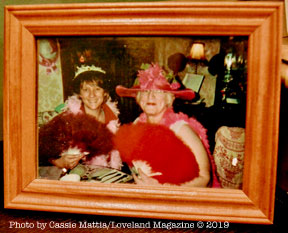
A photo of Jean and June Kresge is in the “Junebug” cottage.
“After my mother, June Kresge passed away with complications from frontal lobe dementia in late 2015, I saw a ‘for sale by owner’ sign on the bike trail pointing to the cut-through street just past the bridge crossing over to the trail from Nisbet Park. I met the owner, Jen Gruber, and agreed to a quick purchase the very next day,” Kresge explained, “I wouldn’t recommend making major decisions or purchases like this for at least a year after experiencing a death, but the whole process was a cathartic and healthy way to deal with the immense grief. I wanted to honor the memory of my mother. The house was built in 1908 by a nurse who made home visits to tend to the sick in Loveland. She was a single mother with two kids and purchased the property next door for her parents using the same basic footprint. There are 2 other very old farmhouses on the street that have been in their families for generations,” Kresge said.
When purchasing the historic cottage, Kresge, of course, knew there would need to be some renovations, as the property was extremely old, but she had no idea how both physically, mentally and financially demanding it would be to renovate the cottage from the ground up. Kresge reflected on what her mother had once predicted, which was Loveland was going to grow exponentially. With that in mind, Kresge decided to make the cottage an Airbnb and name it “Junebug” in memory of her mother June.
“I had not intended to make ‘Junebug’ an Airbnb, it was a financial necessity to cover a two-year-long renovation. I had stayed at an Airbnb before in Cape Cod and thought it might be a good and affordable way for me to supplement income in retirement, and not put all my eggs in the stock market,” Kresge said.
After Kresge made the decision to make “Junebug” an Airbnb, she wanted to be sure that every part of “Junebug” represented a piece of her mother.
“My mom liked to go ‘junkin’ for treasure’s, so every piece of the cottage was either purchased at antique auctions or was one of my Mom’s hand me downs,” Kresge said, “My mother would have been proud that ‘Junebug’ is a refuge and a healing space, as she was a bit of a physic healer who loved opening her house to friends, family, and even strangers on holiday’s. She said ‘everybody hugs a fat lady,’ before they crossed the front door. ‘The more the merrier,’ she used to say,” Kresge added.
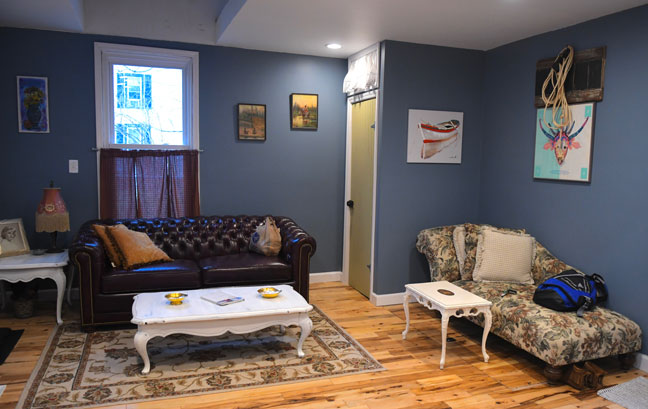
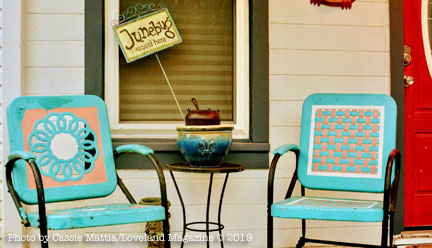
Luckily, Kresge extended the offer to me to stay at “Junebug,” for a weekend so I could experience the historic cottage myself. I packed up my belongings, my 2 dogs and my boyfriend and made the short journey from Loveland Station Apartments to “Junebug!” As I approached the cottage I immediately noticed the whimsical charm Kresge had told me about. The porch was covered in colorful rustic antiques along with 2 signs that read, “Junebug sold here.” Walking up the path to the cottage I not only felt a sense of warmth but also happiness. Kresge had told me she had hosted guests from all over the world and that they always left the cottage with stronger bonds because of the feeling the cottage gave them. That ambiance continued as I walked into the cottage. As soon as I opened the door it was hard for my mouth not to drop at what I saw. Original wooden floors, wood panel ceilings, stained glass windows, quality vintage furniture and of course beautiful pieces handcrafted by June Kresge herself. The cottage was also fully equipped with anything and everything I could possibly need! Cooking supplies, coffee, wine glasses, toiletries, books, games, food, Wifi as well as a computer and of course if you’re into binging on Netflix, Kresge had that set up on a gigantic flat screen TV along with Hulu, Prime Video and Apple TV. The added bonus for me? The spacious backyard for my dog children! I felt such happiness watching my dogs run around with my boyfriend while I relaxed on the elevated wooden porch that overlooked the backyard. Although I didn’t get to use every amenity because it was raining and cold the weekend I stayed at “Junebug,” the shed in the backyard had bicycles and fishing poles that guests could use! With Downtown Loveland and the Little Miami Bike Trail being within walking distance to “Junebug,” I loved the idea of being able to hop on a bike to go enjoy all Loveland had to offer. I could definitely see why people that had experienced “Junebug” kept returning. The weekend at “Junebug” was everything I had imagined it to be and everything Kresge had promised it would be. Oh, and did I mention “Junebug” had a massage chair?! I don’t want to spoil all the surprises “Junebug” holds, but I will say that I couldn’t have asked for a better getaway.
The house was built in 1908 by a nurse who made home visits to tend to the sick in Loveland. She was a single mother with two kids and purchased the property next door for her parents using the same basic footprint. There are 2 other very old farmhouses on the street that have been in their families for generations,” Kresge said.
I asked Kresge what her favorite part about opening “Junebug” to the public was and after staying the weekend I wasn’t surprised by her answer.
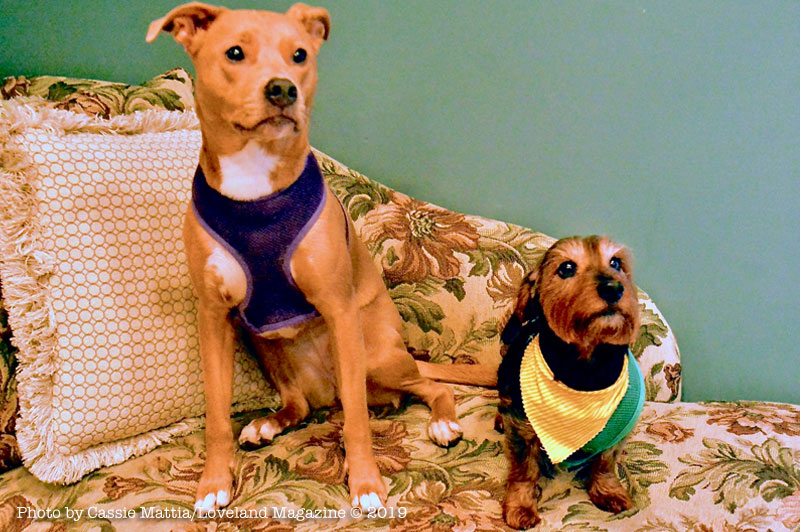
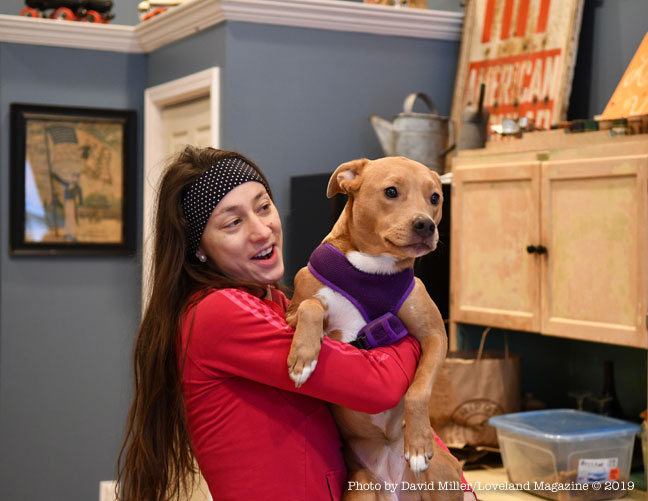
Jean invited me to bring my family to Junebug and Nala enjoyed her “staycation” 2-minutes from the Loveland Bike Trail, Nisbet Park, Historic Downtown, and the State and National “Scenic” Little Miami River. Nala also enjoyed her freedom and playing in the fenced-in back yard.
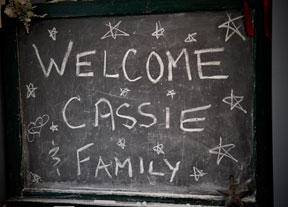
“I like to go the extra mile with southern hospitality to make people feel extra special. I love it when people relax to the point that they spend more time in the cottage than they anticipated. I often notice guests invite friends and family to come to visit the cottage versus going to their place,” Kresge said, “I especially like their first and lasting impressions. Many times I’ll get an immediate text about how awesome the cottage is and at the end of their stay I’ll get personal notes about their magical experience which really warms my heart and makes all the hard work worth it. I’ve been blessed with awesome guests who have all provided 5-star ratings for the overall experience which is ranked by accuracy, cleanliness, communication, check-in, location, and value! The guest comments provided afterward help me realize I’ve created something really special and I already have a lot of repeat customers,” Kresge said, “Guests really love seeing their names on the blackboard, the warm and cozy bed and comfortable studio feel, chefs kitchen, luxury bathroom, high tech amenities, fenced in backyard, outdoor seating areas, hammock, and access to bicycles and fishing poles in the shed. They love it that they can walk to the end of the street and be in complete nature or historic downtown in just a couple of minutes. My next door neighbor is Woody ‘the Norm’ of Loveland, a retired postman, and native that volunteers at the Farmer’s Market. He is an awesome neighbor. It’s really impossible to pick a favorite guest, but I guess the most memorable was hosting a young newlywed couple who celebrated their wedding night here. Thanks to guest referrals, the cottage is now being recommended by several downtown businesses, like Schildmeyer’s funeral home,” Kresge added.
“Junebug” has definitely made its way into the hearts of many. Kresge says since Memorial Day last year she has hosted over 35 guests with 70 percent occupancy for peak season. So just what does Kresge see for the future of “Junebug?” Well besides filling people with the joy and healing spirit of her mother when they stay at her Airbnb, she has quite the vision for “Junebug.”
“I would like to promote more guest discounts with local businesses, provide low-cost alternatives to guest hosting daytime events and parties, and accept donations to help organizations like battered women heal at ‘Junebug’ and get back on their feet,” Kresge said, “I would like to add a private master suite off the back deck, finish the loft to open this cozy space to guests and install a major storm drain system to protect this historic home from the next big flood.”
CDC is advising that U.S. consumers not eat any romaine lettuce, and retailers and restaurants not serve or sell any, until we learn more about the outbreak. This investigation is ongoing and the advice will be updated as more information is available.
Consumers who have any type of romaine lettuce in their home should not eat it and should throw it away, even if some of it was eaten and no one has gotten sick.
This advice includes all types or uses of romaine lettuce, such as whole heads of romaine, hearts of romaine, and bags and boxes of precut lettuce and salad mixes that contain romaine, including baby romaine, spring mix, and Caesar salad.
If you do not know if the lettuce is romaine or whether a salad mix contains romaine, do not eat it and throw it away.
Wash and sanitize drawers or shelves in refrigerators where romaine was stored. Follow these five steps to clean your refrigerator.
Restaurants and retailers should not serve or sell any romaine lettuce, including salads and salad mixes containing romaine.
Write down what you ate in the week before you started to get sick.
Report your illness to the health department.
Assist public health investigators by answering questions about your illness.
Advice to Clinicians
Antibiotics are not recommended for patients with E. coli O157 infections. Antibiotics are also not recommended for patients in whom E.coli O157 infection is suspected, until diagnostic testing rules out this infection.
Some studies have shown that administering antibiotics to patients with E. coli O157 infections might increase their risk of developing hemolytic uremic syndrome (a type of kidney failure), and the benefit of antibiotic treatment has not been clearly demonstrated.
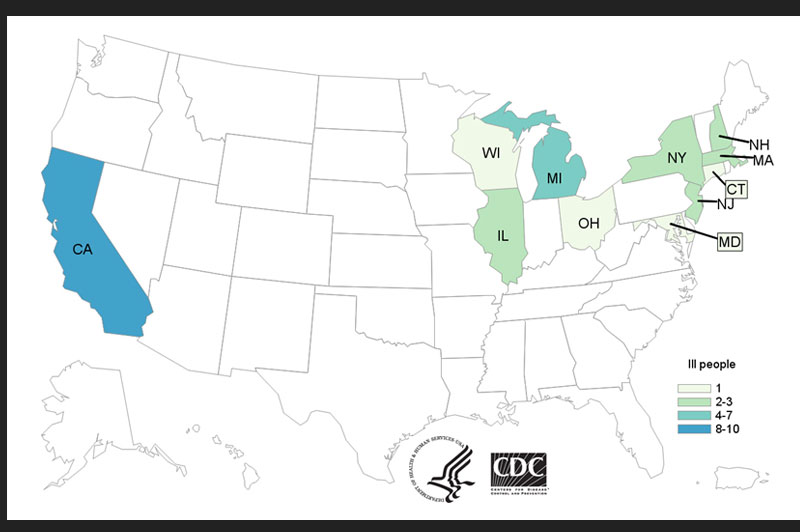
Thirty-two people infected with the outbreak strain of Shiga toxin-producing E. coli O157:H7 have been reported from 11 states.
Illnesses started on dates ranging from October 8, 2018 to October 31, 2018.
Thirteen people were hospitalized, including one person who developed hemolytic uremic syndrome, a type of kidney failure. No deaths have been reported.
The Public Health Agency of Canada has identified 18 ill people infected with the same DNA fingerprint of E. coli O157:H7 bacteria in two Canadian provinces: Ontario and Quebec.
Epidemiologic evidence from the United States and Canada indicates that romaine lettuce is a likely source of the outbreak.
Ill people in this outbreak were infected with E. coli bacteria with the same DNA fingerprint as the E. coli strain isolated from ill people in a 2017 outbreak linked to leafy greens in the United States and to romaine lettuce in Canada. The current outbreak is not related to a recent multistate outbreak of E. coli O157:H7 infections linked to romaine lettuce.
CDC is advising that consumers do not eat any romaine lettuce because no common grower, supplier, distributor, or brand of romaine lettuce has been identified.
This investigation is ongoing, and CDC will provide more information as it becomes available.
People usually get sick from Shiga toxin-producing E. coli (STEC) 2–8 days (average of 3–4 days) after swallowing the germ.
Some people with a STEC infection may get a type of kidney failure called hemolytic uremic syndrome (HUS).
E. coli infection is usually diagnosed by testing a stool sample.
Antibiotics are not recommended for patients with suspected E. coli infections until diagnostic testing can be performed and E. coli infection is ruled out. Some studies have shown that administering antibiotics to patients with E. coli infections might increase their risk of developing HUS, and a benefit of treatment has not been clearly demonstrated.
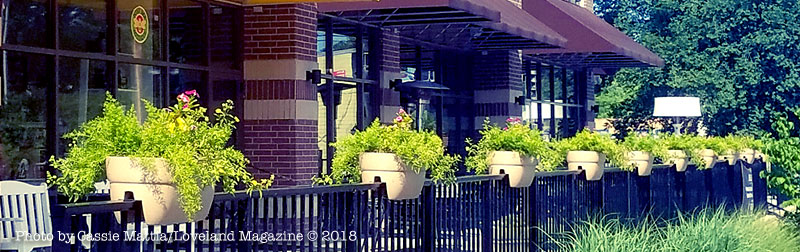
As one explores the many wonders of Downtown Loveland there are so many things to take in; historic architecture, picturesque scenery, phenomenal restaurants, charming antique shops and a brand new luxury apartment community cleverly named Loveland Station. Railroads were a prominent feature of Loveland’s foregone years and a historic train station is adjacent to Loveland Station.
Loveland Station, located at the corner of West Loveland Ave. and 2nd Street, only one block from the Little Miami Scenic River and right next to the Loveland Bike Trail, came onto the Downtown scene in 2015. This beautifully structured 3 floor apartment complex including 94 units and nearly 200 residents was developed by Jim Cohen, CMC Property President, in hopes that the complex would open more doors for future developments and provide Loveland with more uses for its outstanding amenities.
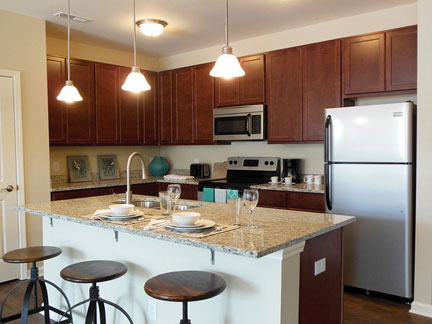
Loveland Station encompasses upscale finishes and the popular “open concept living” attracting two of the largest demographics in the country, millennials and baby boomers. Each unit includes an open kitchen with granite counter tops, brushed nickel features throughout the unit, garden bathtubs, full size washer and dryer connections, cable and 9 foot ceilings. In addition to all of the upscale features included in these luxurious units more than half of the units also include a balcony that overlooks Downtown Loveland and gigantic walk-in closets! Resident Sean Clark commented on the luxury finishes saying, “the apartments are very nice with big bathrooms, granite counters and great appliances.”
A look into one of Loveland Stations luxurious units fully equipped with an open kitchen and bar top with beautiful granite counters and stainless steel appliances.
Unlike most modern apartments, Loveland Station offers a number of floor plans. The Station offers One Bed One Baths ranging between 700 and 836 square feet pricing between 945 and 1,135 dollars as well as Two Bed Two Baths ranging between 943 and 1415 square feet pricing between 1,195 and 1,705 dollars. The Loveland Station community also offers Three Bed Two Bath units, which are 1,455 square feet and price between 1,675 and 1,735 dollars. When residents were asked about the floors plans they gave nothing but rave reviews. “The property is immaculately maintained. The floor plan is open and spacious and everything I need is right there,” resident Cori Drenning said.
Alex Boyd has lived at Loveland Station for 9 months and uses the business center for Young Entrepreneur Club Meetings.
One of the biggest bonuses of living in the Loveland Station community according to residents is the amenities offered within the complex as well as the amenities surrounding the complex. “You have direct access to the bike trail and river. There’s also an awesome business center that I occasionally rent for Young Entrepreneur Club Meetings,” tenant Alex Boyd said. Alex has lived at Loveland Station for 9 months and is a very successful entrepreneur, having opened his own business called the Vapor Studio located in Maineville.
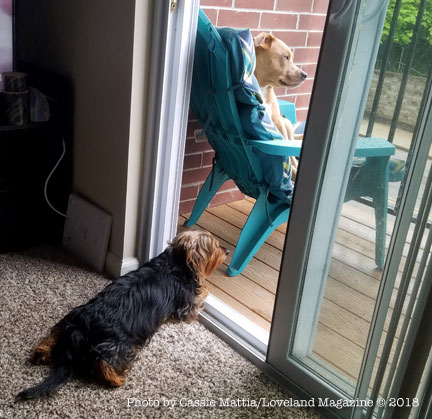
My dog’s Dean and Nala enjoying the spacious balcony within a 2 bedroom 2 bath floor plan.
The pet-friendly complex definitely doesn’t fall short on amenities giving residents access to a state of the art 24 hour fitness center, a pristine business center and lounge with free Wi-Fi, trash valet, complimentary bike storage and garages with remote controlled access. Within the Loveland Station complex residents can enjoy several local retailers and restaurants, such as Graeters, The Casual Pint, Bella’s, Busy Bee Boutique and Vertical Drop that incorporate the community’s themes of family, fitness and romance. “Loveland Station is a cool place with lots of entertainment within walking distance. If dining and nightlife is your thing, it’s definitely worth looking into living here,” resident Steve Beamer said.
Although the Loveland Station didn’t get the best response from the community at first due to concerns such as the complex not blending in with the areas historic landscaping and traffic congestion, the Loveland station has proven to be nothing but a positive addition to the area creating additional jobs, tax revenues and an economic boost for the city. Loveland Station Property Manager, Jessica McCallum couldn’t agree more.
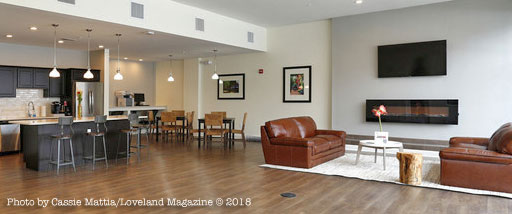
The Station’s state of the art business center and resident lounge.
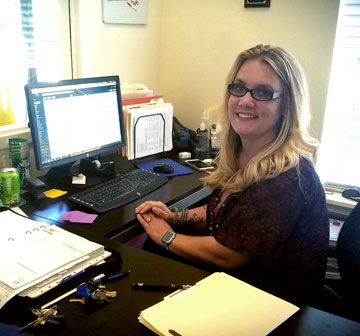
“Our company is all about the residents! I really enjoy getting to know all of our residents and their families, even their furry family members! I just love when they bring their dogs to the office for a special treat! I think that knowing my residents names makes them feel good. I look at Loveland Station as part of my extended family, that goes for all of Loveland Station, the people who work here, who live here, and the retail workers as well,” Jessica said.
Loveland Station Property Manager, Jessica McCallum answers residents emails on the drop of a dime!
Creating that Work-Live-Play atmosphere within the Loveland Station complex that new Downtown Loveland residents are seeking, according to Jessica, has aided in the complex’s success placing the Station community at 100 percent occupancy with quite a waiting list for the next available unit. “I love the people here! They make managing the Loveland Station so easy,” Jessica said with pride.
The Loveland Station Complex has brought a whole new “Suburban Urban” vibe to Downtown Loveland as well as a noticeable positive impact on the economy and a plethora of opportunities for the community.
For more information on The Loveland Station you can contact the property at 513-285-3980 Monday through Friday from 9 AM to 5:30 PM or Saturday and Sunday from 10 AM to 4 PM. You can also visit the Loveland Station’s Facebook for pictures and videos of the immaculate property.
Cassie Mattia is a resident of Historic Downtown Loveland, Ohio and lives at Loveland Station
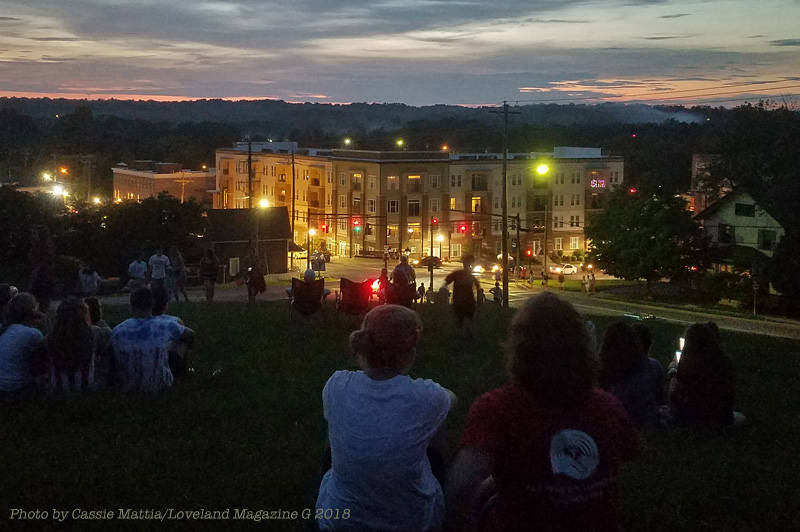
The crowd waiting for 4th of July fireworks that will soon be bursting in the air over Historic Downtown Loveland.
Upon move in day one can feel so many emotions, anxiety, excitement and uncertainty to name a few. The day I moved to Downtown Loveland I felt all those emotions and much more. Would I like living in the “Historic District,” where the theme of the town was to “Live, Laugh and Love?” Would I fit into such a close knit community? Would I be able to become more of an “outdoors women” with all the parks, lakes and bike trails at my fingertips? To my pleasant surprise Downtown Loveland’s small town vibe with a big city feel was exactly what I needed!
When people unfamiliar with Loveland ask me to describe what it’s like to live Downtown I simply explain to them that Downtown Loveland to me is like an historic adventure with a modern twist.
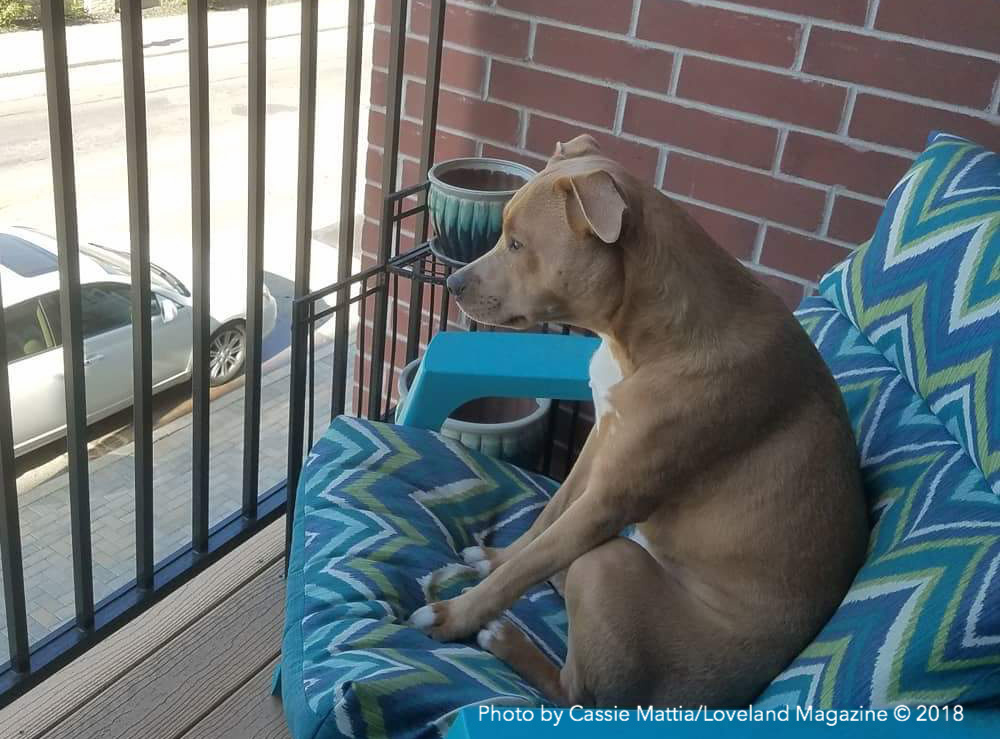
My pup Nala on the balcony – taking in Historic Downtown.
The historic Loveland adventure began with Colonel Thomas Paxton founding the small town in 1795. A number of years after in 1848 Paxton’s cousin, William Ramsey bought all 189 acres of the small town for a mere $7,300 and named it after the infamous James Loveland. In the present day Downtown Loveland has a number of ways they share and display their deep historic roots with the community, one being the Loveland Museum. Loveland’s community also pays tribute to several acts of American Heroism with beautiful memorials such as the Firefighters’ Memorial and the Veterans’ Memorial.
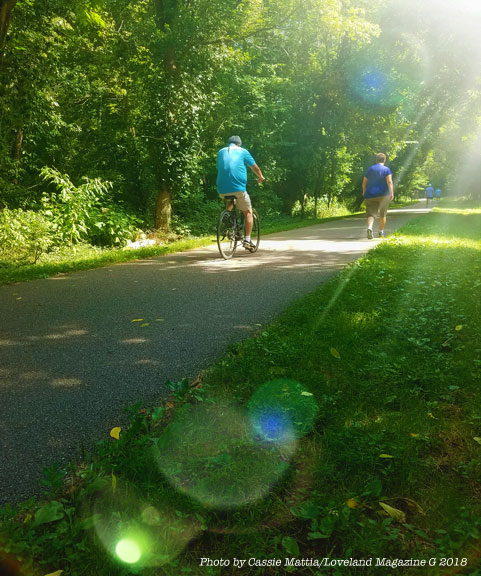
Along the “Loveland Bike Trail” that runs parallel to the Little Miami River and through Historic Downtown Loveland. The Little Miami is designated a State and National “Scenic” river.
One of most sought after historical landmarks that locals and out of towners come to enjoy is the Little Miami Bike Trail, established in 1984. The scenic trail goes on for 78 miles spanning across 5 counties while the Little Miami River goes on for 111 miles. Many Loveland locals and guests partake in activities such as canoeing, kayaking and bike riding, in which local businesses such as Loveland Canoe and Kayak and Loveland Bike Rental make it easy to rent out canoes, kayaks and bikes. If you’re not necessarily the type that enjoys biking or canoeing the Little Miami River offers its own little slice of paradise right off the bike trail where adults, children, and pets can cool off in the river or get a tan on the sandy banks.
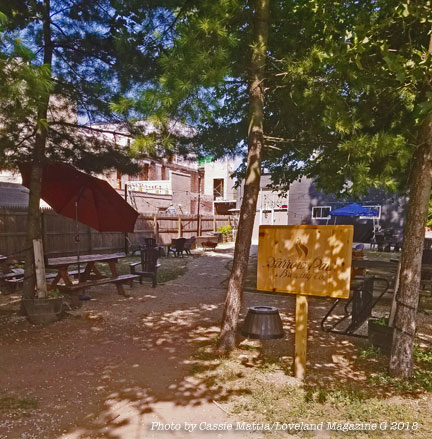
The narrow path off the Loveland Bike Trail that leads to the 5-barrel brewhouse and taproom of Narrow Path Brewing Co.
Also located on the bike trail is Nisbet Park where children can enjoy the playground and families can host picnics or special events under the large shelters, an amphitheater where local bands get the opportunity to celebrate their talents, and several unbelievable restaurants all sporting that “modern twist.” Though I have made it my mission to try all the local cuisine in Downtown Loveland some of my modern must tries are Fresh Press, Narrow Path Brewing Company, and Trailside Smokehouse while some of my historic Loveland go to’s are Bella’s, Paxton’s Grill, and The Works. For those like me that have a bit of a sweet tooth after eating dinner some must visit dessert spots are the Loveland Dairy Whip, Graeter’s, and Loveland Sweets.
One of my historic Loveland go to’s is Bella’s.
Downtown Loveland has erupted over the past several years bringing the local resident count to nearly 13,000. New local business openings and restaurants as well as historic hot spots have really made an impact on the community making Downtown Loveland not only the place to be but also the place to live. Being that I am a new resident I have explored the ins and outs of Downtown Loveland’s shopping, restaurants, events and art culture. Some great annual events that take place in Downtown Loveland are the Farmer’s Market, The Independence Day Celebration, and
Christmas in Loveland. A few of the most culturally sound venues I recommendis the Loveland Stage Company, an award winning community theater, and Whistle Stop Clay Works, where local artist Bonnie McNett held a “Pottery
A glass of Bella’s wine.
Affaire” last month. Of course one of several perks of living in Downtown Loveland is the shopping. There are several local unique shopping spots that are definitely worth seeing such as The Copper Pearl, Old is New Antiques, JackRabbit, Bond Furniture, and Plaid Room Records.
After nearly 6 months of living in Downtown Loveland I can honestly say that the anxiety and uncertainty I once felt no longer exists. As I look out into the beautiful city every night from my balcony I truly realize that Lovelandis a hidden gem.
Cassie Mattia is a resident of Loveland, Ohio’s Downtown Historic District
Loveland Sweets is a purveyor of hand-crafted chocolates, caramels, marshmallows, and ice creams. Our house-made candies are prepared in small batches in Historic Downtown Loveland, Ohio.








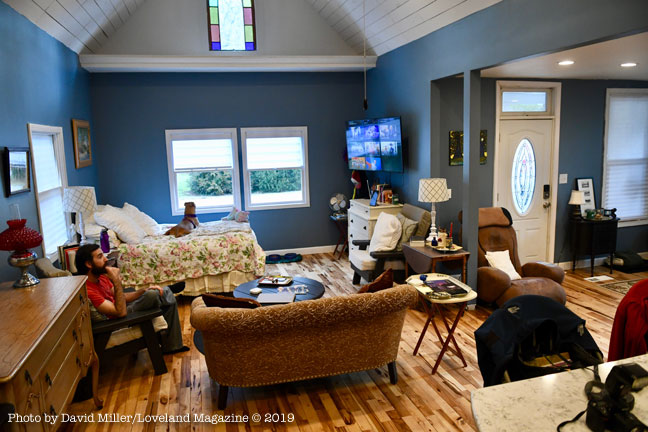
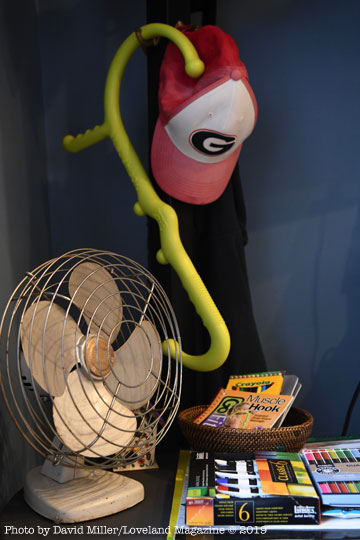 When purchasing the historic cottage, Kresge, of course, knew there would need to be some renovations, as the property was extremely old, but she had no idea how both physically, mentally and financially demanding it would be to renovate the cottage from the ground up. Kresge reflected on what her mother had once predicted, which was Loveland was going to grow exponentially. With that in mind, Kresge decided to make the cottage an Airbnb and name it “Junebug” in memory of her mother June.
 Luckily, Kresge extended the offer to me to stay at “Junebug,” for a weekend so I could experience the historic cottage myself. I packed up my belongings, my 2 dogs and my boyfriend and made the short journey from Loveland Station Apartments to “Junebug!” As I approached the cottage I immediately noticed the whimsical charm Kresge had told me about. The porch was covered in colorful rustic antiques along with 2 signs that read, “Junebug sold here.” Walking up the path to the cottage I not only felt a sense of warmth but also happiness. Kresge had told me she had hosted guests from all over the world and that they always left the cottage with stronger bonds because of the feeling the cottage gave them. That ambiance continued as I walked into the cottage. As soon as I
  opened the door it was hard for my mouth not to drop at what I saw. Original wooden floors, wood panel ceilings, stained glass windows, quality vintage furniture and of course beautiful pieces handcrafted by June Kresge herself. The cottage was also fully equipped with anything and everything I could possibly need! Cooking supplies, coffee, wine glasses, toiletries, books, games, food, Wifi as well as a computer and of course if you’re into binging on Netflix, Kresge had that set up on a gigantic flat screen TV along with Hulu, Prime Video and Apple TV. The added bonus for me? The spacious backyard for my dog children! I felt such happiness watching my dogs run around with my boyfriend while I relaxed on the elevated wooden porch that overlooked the backyard. Although I didn’t get to use every amenity because it was raining and cold the weekend I stayed at “Junebug,” the shed in the backyard had bicycles and fishing poles that guests could use! With Downtown Loveland and the Little Miami Bike Trail being within walking distance to “Junebug,” I loved the idea of being able to hop on a bike to go enjoy all Loveland had to offer. I could definitely see why people that had experienced “Junebug” kept returning. The weekend at “Junebug” was everything I had imagined it to be and everything Kresge had promised it would be. Oh, and did I mention “Junebug” had a massage chair?! I don’t want to spoil all the surprises “Junebug” holds, but I will say that I couldn’t have asked for a better getaway.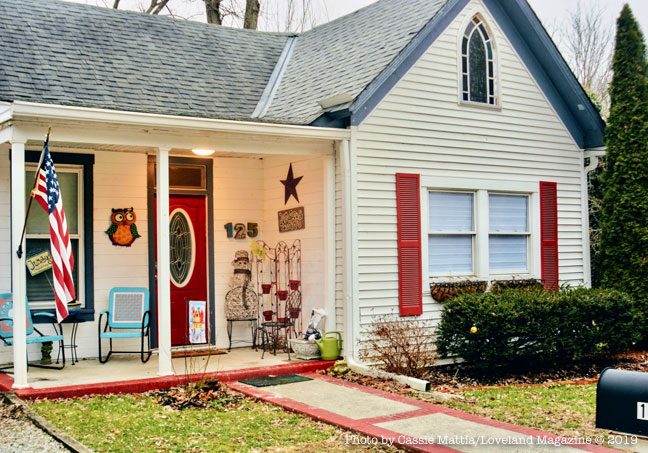
 really warms my heart and makes all the hard work worth it. I’ve been blessed with awesome guests who have all provided 5-star ratings for the overall experience which is ranked by accuracy, cleanliness, communication, check-in, location, and value! The guest comments provided afterward help me realize I’ve created something really special and I already have a lot of repeat customers,” Kresge said, “Guests really love seeing their names on the blackboard, the warm and cozy bed and comfortable studio feel, chefs kitchen, luxury bathroom, high tech amenities, fenced in backyard, outdoor seating areas, hammock, and access to bicycles and fishing poles in the shed. They love it that they can walk to the end of the street and be in complete nature or historic downtown in just a couple of minutes. My next door neighbor is Woody ‘the Norm’ of Loveland, a retired postman, and native that volunteers at the Farmer’s Market. He is an awesome neighbor. It’s really impossible to pick a favorite guest, but I guess the most memorable was hosting a young newlywed couple who celebrated their wedding night here. Thanks to guest referrals, the cottage is now being recommended by several downtown businesses, like Schildmeyer’s funeral home,” Kresge added.