Tag: Sam Randazzo

  • [BREAKING] Ex-First Energy executives, Ohio utility regulator charged by state in bailout and bribery scandal

    [BREAKING] Ex-First Energy executives, Ohio utility regulator charged by state in bailout and bribery scandal

    From left to right: Former PUCO Chair Sam Randazzo, former FirstEnergy CEO Chuck Jones, former FirstEnergy VP Michael Dowling. (Mugshots from the Summit County Sheriff’s Office. Graphic by WEWS.)

    BY:  AND  Ohio Capital Journal

    Ohio law enforcement authorities on Monday filed numerous felony charges against two former First Energy executives and a former top utility regulator in what has been called the biggest bribery and money-laundering scandal in Ohio history.

    Ohio Attorney General Dave Yost announced scores of felony charges against a former regulator who also has been charged federally, and against two people who haven’t — former top executives for Akron-based FirstEnergy whom the company admitted paid more than $60 million in bribes between 2016 and 2020 in exchange for a $1.3 billion ratepayer bailout.

    Charged were Sam Randazzo, former chairman of the Public Utilities Commission. Already facing felony charges in federal court, the state indictment charges him with 22 more, including grand theft, bribery, and money laundering. The indictment accuses him of taking bribes from FirstEnergy from 2010 until just before he became chairman of the commission in 2019.

    Also charged were former FirstEnergy CEO Chuck Jones and Vice President Michael Dowling. Between them, they face 22 felony charges similar to those faced by Randazzo.

    “This indictment is about more than one piece of legislation,” Yost said Monday. “It is about the hostile capture of a significant portion of Ohio’s state government by deception, betrayal, and dishonesty.”

    The state charges that were announced Monday didn’t deal with much of the activity addressed in the federal case. They instead focused on the relationship between Jones, Dowling, and Randazzo between 2010 and early 2019, when they paid him $4.33 million just as he was becoming the state’s top utility regulator.

    The House Bill 6 scandal

    Back in 2019, former Ohio House Speaker Larry Householder took $61 million in bribes in exchange for legislation to give FirstEnergy a $1 billion bailout, named House Bill 6, all at the expense of the ratepayers.

    The scheme was revealed in three main ways — two separate whistleblowers and a phone wiretap.

    In March 2023, a jury found Householder and former Ohio Republican Party leader Matt Borges guilty beyond a reasonable doubt for their involvement in the racketeering scheme that left four men guilty and another dead by suicide.

    In late June that year, federal judge Timothy Black sentenced Householder to 20 years in prison. Borges got 5 years. The two surviving defendants took plea agreements early on, helping the FBI, and are still awaiting their sentencing. The feds are asking for 0-6 months for them.

    Until Monday, only federal indictments had been handed out.

    HB 6 mainly benefited FirstEnergy’s struggling nuclear power plants, but those provisions were later repealed. There are aspects of the bill still in place, though.

    The Ohio Valley Electric Corporation (OVEC) got a handout from the scheme. It expanded a bailout of the OVEC plants and required Ohioans to pay for two 1950s-era coal plants— one in the Southern area of the state and the other in Indiana. The main beneficiaries of this are American Electric Power Company (AEP), Duke Energy and AES Ohio.

    Despite this scandal becoming public years ago, ethics laws in the state have not changed to prevent schemes like this from happening.

    There are numerous bipartisan efforts to repeal HB 6 totally and to put forward ethics laws. None are going anywhere, it seems.

    Monday’s indictments

    AG Yost was joined by Summit County Prosecutor Sherri Bevan Walsh and Sheriff Kandy Fatheree for the announcement Monday.

    “The crimes committed by these individuals impacted the pocketbooks of every hard working Ohioan and further shook our faith in the institutions and organizations that we count on to represent us and to provide us with essential services,” Fatheree said. “Today, we take another important step in ensuring that justice is served for these crimes and that those who took advantage of the public’s trust are held accountable.”

    FirstEnergy as a company has already admitted in a deferred prosecution agreement to bribing public officials in Ohio, including a $4.3 million bribe to Randazzo. Jones and Dowling allegedly paid this to him.

    Randazzo pleaded not guilty to the federal charges against him in December.

    The Sustainability Funding Alliance of Ohio and IEU-Ohio Administration Company are also named in the filing. Randazzo controlled each of them, and they were allegedly shell companies created to further his criminal activity.

    Reactions

    While Monday was probably not the best day for Randazzo, Jones and Dowling, it was a great day for whistleblower Tyler Fehrman.

    Fehrman is the Republican operative-turned-FBI informant who is credited with exposing this mass public corruption at the Statehouse — and he is cheering the AG and Summit County for these arrests.

    “These guys deserve to have everything taken away from them,” Fehrman said. “They deserve it.”

    Borges attempted to bribe Fehrman, and threatened him, to be a part of the scandal — even at one point telling him that if he snitches, Borges would “blow up his house.”

    That conversation was actually set up and recorded by the feds. Instead of staying quiet, Fehrman testified, helping the jury to return guilty verdicts in the federal trial.

    Fehrman ended up having to change careers and flee the state due to fears of retaliation — and because he was ostracized — but now he gets to watch as the scheme continues to unravel.

    “You can hide your actions in the dark for a little bit,” Fehrman said Monday. “But the sun always rises and the truth always comes out. Every time one of these guys gets indicted, especially the people that made it possible for Matt and Larry to have the opportunity to do what they did to me — to see them get in trouble, it’s extremely vindicating.”

    He agreed with Yost’s statement that there can be no justice without holding the check-writers and the masterminds accountable.

    Case Western Reserve University law professor Mike Benza believes these charges are going to be hard to fight. When asked the best possible scenario for them, other than pleading guilty, he said their best bet could be to argue this is politics as usual.

    “It seems that the focus from the defense side is going to be much like the focus from Householder and Borges — this is just how things get done in Columbus,” Benza said. “This is just the normal sausage-making of public policy and it may not be pretty and you may not like it, but this is the reality and it doesn’t equal corruption.”

    Clearly, that wasn’t a winning argument in federal court.

    Part of the reason why it may have worked so poorly in Black’s federal courtroom is because Householder went against the advice of the vast majority of criminal defense attorneys and decided to testify in his defense.

    The now-convicted felon used the bribe money to put himself and his allies into power, demolishing and threatening anyone in his path, as well as paying off credit card debt and renovations to his home in Florida.

    Benza believes Randazzo, Jones, and Dowling are facing difficult days ahead.

    “Randazzo is probably going to be looking at dying in prison,” Benza responded. “Jones and Dowling are probably in that same boat.”

    Ferhman is hoping for more indictments, including high-profile names.

    “The clock is ticking for the other people that were involved,” Fehrman said.

    He named Gov. Mike DeWine Lt. Gov. Jon Husted as people of interest for him.

    DeWine has been complying with a subpoena he received in a civil case connected to the scandal, he said.

    FirstEnergy investors are suing for being negatively impacted financially by the scandal. They have subpoenaed documents from DeWine, and they’re scheduling a sworn deposition with Husted.

    In a one-on-one interview with the governor, DeWine was asked if he was nervous about the scandal, or, more importantly — if was he worried for Husted. DeWine said no to both.

    Randazzo has been named as the mastermind behind HB 6, due to him being one of the creators of it — according to the feds. But DeWine was how he came into power.

    DeWine was asked in the same interview if he regretted naming Randazzo the state’s top utility regulator.

    “Oh, look, if I knew what I know now, if I knew that — I certainly would not have appointed Sam Randazzo to that position,” DeWine responded.

    DeWine said he was the best person for the job, claiming that he wasn’t aware that Randazzo was FirstEnergy’s handpicked man.

    “While our office was not privy to the indictment and have not yet reviewed it, the indictment alleges very serious acts,” DeWine’s spokesperson Dan Tierney said Monday afternoon. “Our office has full faith in the criminal justice system to adjudicate these serious allegations in an appropriate manner.”

    ________________

    Marty Schladen
    MARTY SCHLADEN

    Marty Schladen has been a reporter for decades, working in Indiana, Texas and other places before returning to his native Ohio to work at The Columbus Dispatch in 2017. He’s won state and national journalism awards for investigations into utility regulation, public corruption, the environment, prescription drug spending and other matters. MORE FROM AUTHOR

    Morgan Trau
    MORGAN TRAU

    Morgan Trau is a political reporter and multimedia journalist based out of the WEWS Columbus Bureau. A graduate of Syracuse University’s S.I. Newhouse School of Public Communications, Trau has previously worked as an investigative, political and fact-checking reporter in Grand Rapids, Mich. at WZZM-TV; a reporter and MMJ in Spokane, Wash. at KREM-TV and has interned at 60 Minutes and worked for CBS Interactive and PBS NewsHour. MORE FROM AUTHOR

  • Former Ohio public utilities chairman Sam Randazzo indicted by federal grand jury for bribery, embezzlement

    Former Ohio public utilities chairman Sam Randazzo indicted by federal grand jury for bribery, embezzlement

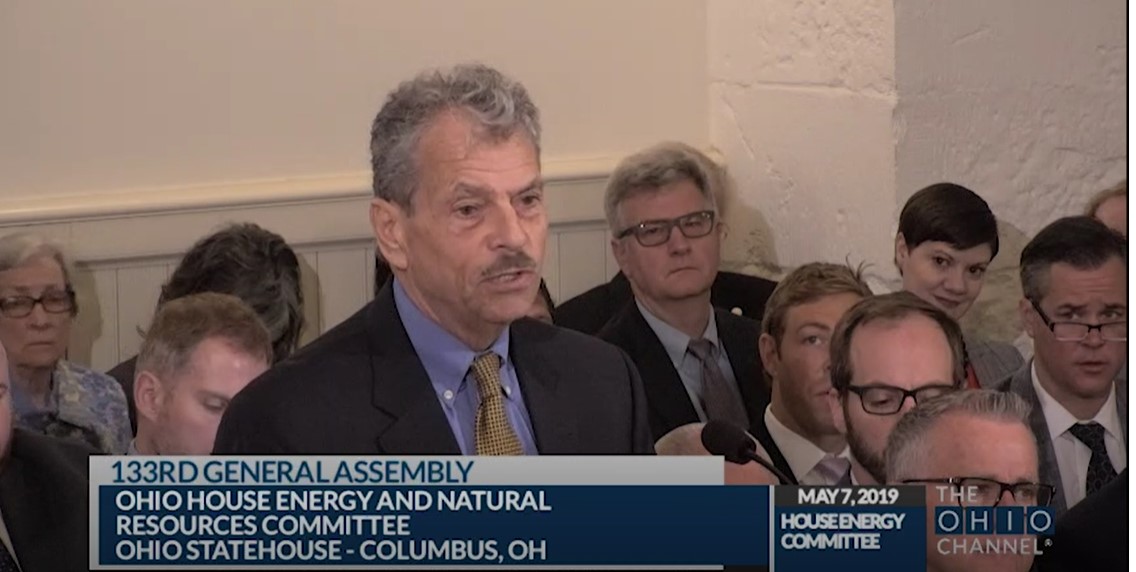
    Then-PUCO Chair Sam Randazzo testifies as an interested party regarding House Bill 6 on May 7, 2019. Source: Ohio Channel.

    BY:  Ohio Capital Journal

    The former chairman of the Public Utilities Commission of Ohio has been indicted by a federal grand jury on bribery and embezzlement charges, the U.S. Attorney’s Office for the Southern District of Ohio announced in a news release Monday.

    Sam Randazzo, 74, of Columbus, self-surrendered at U.S. District Court in Cincinnati Monday morning, the release said. Randazzo is charged in an 11-count indictment that was returned on Nov. 29 and he was scheduled for an initial appearance later Monday.

    The charges stem from an ongoing investigation into what federal prosecutors have called the biggest political bribery scandal in state history, where Akron-based FirstEnergy paid more than $60 million in 2018 and 2019 to get the legislature to pass and protect a $1.3 billion bailout that was mostly intended to benefit FirstEnergy.

    Former House Speaker Larry Householder, R-Glenford, in June was sentenced to 20 years in federal prison after a jury found him guilty of racketeering for his role in the scheme. Former Ohio GOP Chairman Matt Borges was sentenced to five years in the same case.

    FirstEnergy fired two of its top executives, CEO Chuck Jones and Vice President Michael Dowling. And it signed a deferred prosecution agreement admitting wrongdoing and committing to pay a $230 million fine.

    Jones, Dowling and Randazzo denied wrongdoing, but in the agreement, FirstEnergy said the executives paid Randazzo a $4.3 million bribe just as Ohio Gov. Mike DeWine was nominating him to be the top Ohio regulator overseeing FirstEnergy.

    “Public officials — whether elected or appointed — are tasked with upholding the highest level of integrity in their duties and responsibilities. Such service to the public must be selfless, not selfish,” said U.S. Attorney Kenneth L. Parker in Monday morning’s release. “Through the indictment unsealed today, we seek to hold Randazzo accountable for his alleged illegal activities.”

    FirstEnergy said the payment was made through Randazzo’s “consulting company in return for (Randazzo) performing official action in his capacity as (Public Utilities Commission of Ohio) Chairman to further FirstEnergy Corp.’s interests” and that “it was under no legal obligation to make the payment … ”

    Randazzo was the PUCO chairman from April 2019 until November 2020, when he resigned.

    Randazzo faces one count of conspiring to commit travel act bribery and honest services wire fraud, two counts of travel act bribery, two counts of honest services wire fraud, one count of wire fraud and five counts of making illegal monetary transactions.

    According to the indictment, Randazzo allegedly received more than $4.3 million from an energy company and its affiliates to provide favorable official actions for the company through PUCO proceedings.

    For example, it is alleged that in November 2019, Randazzo included language in a PUCO Opinion and Order that would address an issue for the energy company that was slated to happen in 2024.

    “Stock is gonna get hit with Ohio 2024. Need Sam to get rid of the ‘Ohio 2024 hole,’” an energy executive text message read. Another executive messaged, in part: “I spoke with Sam today. Told me 2024 issue will be handled next Thursday.” The next Thursday, the PUCO decision included language alleviating the 2024 issue.

    A March 2020 text message from an executive mentions that Randazzo “will get it done for us but cannot just jettison all process.” The message references specific official actions before continuing: “…a lot of talk going on in the halls of PUCO about does he work there or for us? He’ll move it as fast as he can.”

    It is alleged that Randazzo received the bribe money from the energy company through his consulting business, Sustainability Funding Alliance of Ohio, Inc. (SFA), which was registered in Ohio in March 2010. SFA filings name Randazzo as the president and sole representative of the business and lists Randazzo’s home address as the business address.

    The charging document alleges that Randazzo also used his consulting business, SFA, to carry out an embezzlement scheme, funneling to himself at least a million dollars meant for an association of large, industrial energy users in Ohio.

    Randazzo was the general counsel of the industry group for multiple years, including from 2010 until his PUCO appointment, and at times served as the industry group’s executive director. Randazzo controlled the industry group’s bank accounts.

    It is alleged Randazzo entered into settlements with companies on behalf of the industry group and kept portions of the settlement payments for himself.  As one method to conceal his alleged embezzling, Randazzo allegedly created a fictitious member of the industry group that received payments along with legitimate members.

    For example, in March 2019, it is alleged Randazzo attempted to conceal his embezzling by wiring approximately $1.1 million between bank accounts under his control.

    If convicted as charged, the defendant could face up to 20 years in prison.

    In the release, FBI Cincinnati Special Agent in Charge J. William Rivers said the indictment outlines an alleged scheme in which a public regulatory official ignored the Ohio consumers he was responsible for protecting, instead taking a bribe from an energy company seeking favors.

    “The FBI will remain vigilant in investigating allegations of corruption at all levels of government and hold those who violate the law accountable for their actions,” he said.

    Last week, it was revealed that plaintiffs in a civil suit related to the massive bribery and money-laundering scandal have subpoenaed documents from DeWine and they’re scheduling a sworn deposition with Lt. Gov. Jon Husted.

    Ohio Consumers’ Counsel Maureen Willis in a statement Monday called the indictment an important step to bring justice to Ohio utility consumers.

    “It underscores the need for near-term reform of the PUCO selection process that led to his appointment as Chair of the PUCO,” she said. “OCC’s calls for reform so far have gone unanswered. Ohioans deserve better from the public officials in this state.”

  • Ohio Gov. Mike DeWine and Lt. Gov. Jon Husted subpoenaed in civil suit over bailout scandal

    Ohio Gov. Mike DeWine and Lt. Gov. Jon Husted subpoenaed in civil suit over bailout scandal

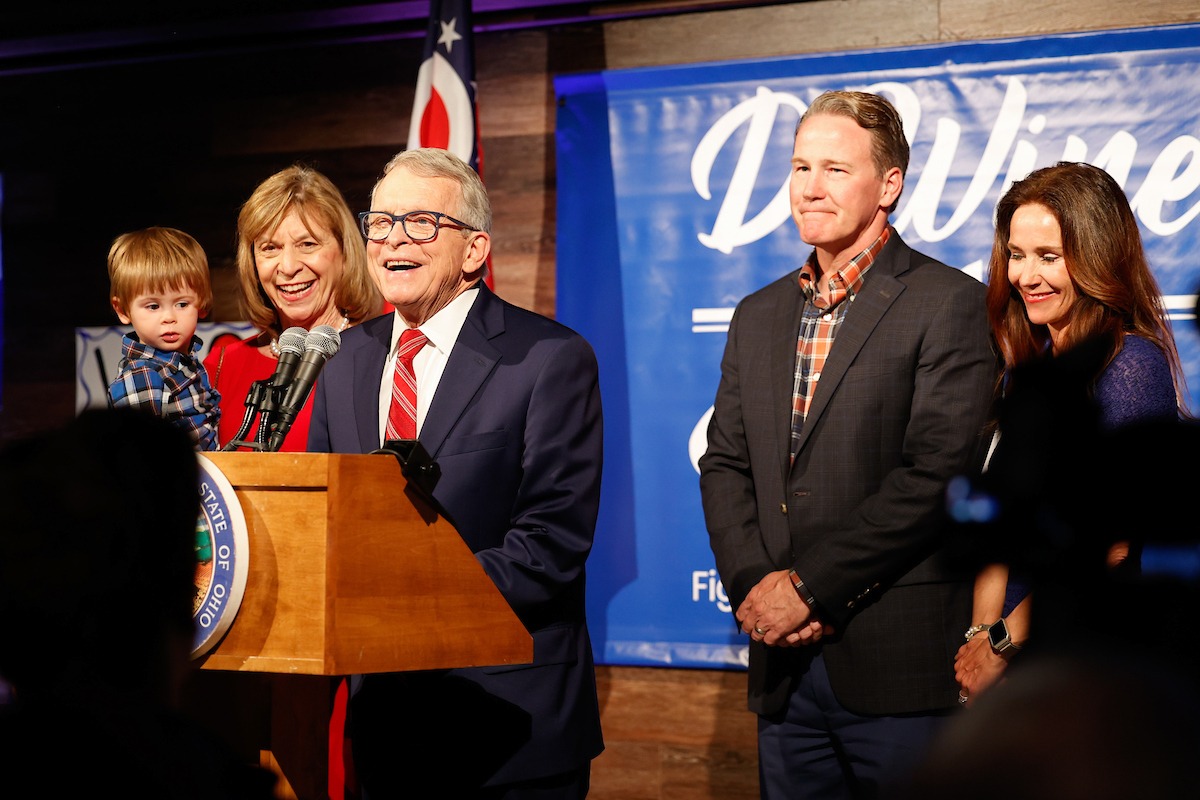
    COLUMBUS, OH — MAY 03: Ohio Gov. Mike DeWine joined on stage by First Lady Fran DeWine, grandson Calvin, Lt. Gov. Jon Husted and Second Lady Tina Husted to celebrate DeWine winning the Republican Party nomination for governor in the Ohio primary election, May 3, 2022, at the DeWine-Husted campaign headquarters, Columbus, Ohio. (Photo by Graham Stokes for the Ohio Capital Journal. Republish photo only with original article.)

    BY:  

    Plaintiffs in a civil suit related to a massive bribery and money-laundering scandal have subpoenaed documents from Ohio Gov. Mike DeWine and they’re scheduling a sworn deposition with Lt. Gov. Jon Husted.

    There have been four criminal convictions so far in the scandal and U.S. Attorney Kenneth L. Parker has said the investigation is continuing. However, there is no indication that DeWine or Husted is an object of it.

    Even so, members of the DeWine-Husted administration were significant players in the scandal and DeWine’s nominee to head up the Public Utilities Commission of Ohio could be a target of the probe.

    The demands for documents and testimony come in a class-action suit that big investors in Akron-based FirstEnergy filed against the company over its involvement in the scheme. Between 2017 and 2020, the company paid out more than $60 million to gain a $1.3 billion ratepayer bailout that was mostly intended to prop up two failing nuclear plants in Northern Ohio.

    Among those already convicted are former Ohio House Speaker Larry Householder, R-Glenford, who was sentenced to 20 years in prison for his role in what federal authorities said might be the biggest bribery and money-laundering scheme in Ohio history. Former state Republican Chairman Matt Borges in June was sentenced to five years for his role.

    However, others who played prominent roles in the scandal are yet to be charged.

    They include former FirstEnergy CEO Chuck Jones and former Vice President Michael Dowling, who directed the money to make Householder speaker in 2018 and then pass and and protect House Bill 6, the corrupt bailout legislation. They also include Sam Randazzo, DeWine’s first nominee to chair the Public Utilities Commission of Ohio.

    Jones, Dowling and Randazzo deny wrongdoing, but in a deferred prosecution agreement, FirstEnergy said Jones and Dowling paid Randazzo a $4.3 million bribe just as DeWine was selecting Randazzo to be FirstEnergy’s top regulator. In that post, Randazzo helped write the corrupt bailout bill and he helped FirstEnergy avoid a scheduled audit known as a “rate case” that was slated for 2024.

    Large investors such as pension and investment funds are suing FirstEnergy over the scandal, arguing that the company violated securities laws by not disclosing its reckless conduct. And then, when the feds made arrests in July 2020, its stock value plummeted — as did their investments.

    The plaintiffs in the civil case have been battling with Randazzo — who is not a defendant — since April over whether he has complied with judges’ orders to produce documents relevant to the $4.3 million in FirstEnergy money he received just before he began regulating the company.

    A magistrate judge and a special master in the case have consistently rebuked Randazzo for not cooperating more fully, with the most recent instance coming last week. Randazzo appealed up the food chain, asking Magistrate Judge Kimberly Jolson not to hold him to a disclosure order from the special master, Shawn K. Judge.

    The plaintiffs in the civil case asked Jolson to make Randazzo comply with Judge’s order to cough up more information. As part of the filing, they provided a table of depositions they’ve scheduled or are in the process of scheduling. To prepare for some, they presumably could use the information and documents they’re demanding of Randazzo.

    One deposition they’re scheduling is of Randazzo himself, which has a “target period” of March 4 to March 29.

    Another is of Husted, the lieutenant governor, which has a target period of Feb. 28 to March 19. Dave Anderson of the Energy and Policy Institute first flagged the document that listed Husted’s deposition.

    Hayley Carducci, Husted’s spokeswoman, on Tuesday said Husted is cooperating.

    “We’re aware of the civil investor lawsuit against First Energy,” she said in an email. “The Lt. Governor has already provided public records pertaining to this, and we will continue to comply as we have done in the past. There’s no new information to disclose.”

    As with Randazzo, Husted is not a defendant in the civil case.

    DeWine also has recently received a subpoena for documents in the civil case.

    “We’re reviewing it with counsel for what can be provided,” Press Secretary Dan Tierney said in an interview. “Our office is subject to the public records act and in a sense this is no different.”

    Tierney pointed out a distinction between the class-action suit and the case which has already convicted Householder and Borges and proceedings that could charge others.

    “This is a civil case and anybody has a right to bring a civil case if they want,” Tierney said of the proceeding in which the governor’s documents had been subpoenaed. “The civil process is where people say they’ve been damaged and they want the court to award damages. That is far different than the criminal case in which the federal government said public integrity laws had been violated.”

    He added, “It still remains in the criminal case that nobody in our office or the lieutenant governor’s office has been questioned or subpoenaed or had any legal filings like that.”

    Even in the absence of such requests, DeWine and his administration were involved several ways in the drafting and passage of the corrupt utility bailout:

    • He nominated Randazzo to head up the PUCO a day after it was publicly revealed that FirstEnergy had paid a group controlled by Randazzo millions of dollars over the years. “Forced DeWine/Husted to perform battlefield triage,” FirstEnergy CEO Jones said in a text message to Dowling. “It’s a rough game.”
    • While he was still a FirstEnergy lobbyist, Dan McCarthy set up Partners for Progress, a 501(c)(4) “dark money” group through which Jones, Dowling and others funneled millions into the conspiracy. DeWine hired McCarthy as his legislative affairs director and kept him in that post for a year after Householder and the others were arrested.
    • HB 6, the bailout legislation, was highly controversial as Householder jammed it through the legislature, other lawmakers testified at his trial. Even so, DeWine signed it the day it passed and when Householder was arrested, the governor’s first position was to keep the law in place — and part of it still is. DeWine reversed himself a day later, calling to repeal and replace the subsidies.

    Morgan Trau contributed to this report.


    Marty Schladen
    MARTY SCHLADEN

    Marty Schladen has been a reporter for decades, working in Indiana, Texas and other places before returning to his native Ohio to work at The Columbus Dispatch in 2017. He’s won state and national journalism awards for investigations into utility regulation, public corruption, the environment, prescription drug spending and other matters.

    MORE FROM AUTHOR

  • More signs that criminal investigation into Ohio utility bailout continues

    More signs that criminal investigation into Ohio utility bailout continues

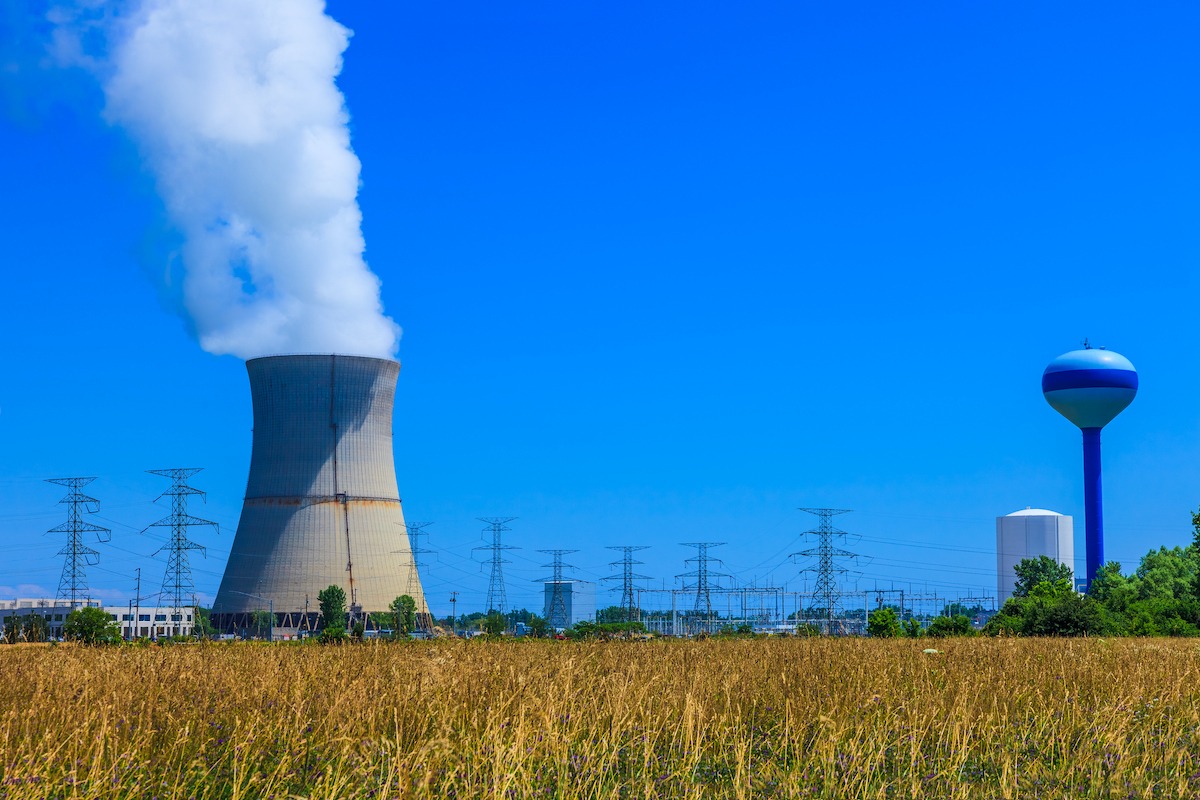
    Davis-Besse Nuclear Power Station with electricity pylons, Ohio. Getty Images.

    BY:  Ohio Capital Journal

    Five have been charged and four have been convicted in a massive bribery and money-laundering scandal, but there were more signs this week that the federal criminal investigation is continuing.

    In court documents filed in a separate case on Monday, a special master said that a major player in the conspiracy — Akron-based FirstEnergy — continues to cooperate with federal prosecutors. The same documents order the major beneficiary of the conspiracy, a former FirstEnergy subsidiary, to do more to cooperate in a federal class-action suit.

    Former House Speaker Larry Householder, R-Glenford, and former GOP Chairman Matt Borges in June were respectively sentenced to 20 and five years in federal prison for their roles in the conspiracy. Two others have pleaded guilty and await sentencing, while a third who was charged died by suicide.

    In the conspiracy, FirstEnergy and its then-subsidiary paid more than $60 million from 2017 to 2019 to make Householder speaker so he could pass and protect a $1.3 billion bailout. Of that sum, the vast majority was intended to prop up two nuclear plants owned by the subsidiary, then called FirstEnergy Solutions.

    Over the course of a six-week trial in Cincinnati early this year, prosecutors put on evidence that FirstEnergy found itself in a precarious state because its heavy investments in coal and nuclear-powered generation were being undercut by cheap natural gas. Top executives with the company — including then-CEO Chuck Jones and Vice President Michael Dowling — desperately sought a ratepayer bailout to prop up the nuclear plants so they could spin them off and get most of the liability associated with closing and cleaning them up off their books.

    In 2019, as Householder was shepherding the bailout through the legislature, FirstEnergy Solutions was in bankruptcy and emerged in February 2020. It had a new name, Energy Harbor, and it was no longer a subsidiary of FirstEnergy.

    Five months later, the FBI arrested Householder and the others. Then large pension and investment funds sued FirstEnergy, saying the reckless, undisclosed conduct of its top executives caused investors to lose billions when that conduct hit the public fan.

    FirstEnergy signed a deferred prosecution agreement admitting wrongdoing and agreeing to pay a $230 million penalty to the government. But that didn’t get it off the hook in the multiple civil suits it’s faced, including the class action filed in the Southern District of Ohio by large investors.

    As part of the suit, those investors have been battling FirstEnergy for communications and other information that might implicate officials other than Jones and Dowling, who were fired.

    They’re also battling Sam Randazzo. He isn’t named in the suit, but FirstEnergy said he took a $4.3 million bribe from Jones and Dowling just as Gov. Mike DeWine nominated Randazzo to chair the Public Utilities Commission of Ohio at the beginning of 2019. The class-action plaintiffs say Randazzo might be sitting on text messages and other communications relevant to the conspiracy.

    Jones, Dowling and Randazzo deny criminal wrongdoing in the scandal, but U.S. Attorney Kenneth L. Parker in June said that the investigation was continuing. On Monday, Special Master Shawn Judge also said in a court filing that the investigation continues — and that FirstEnergy is cooperating.

    “During this jury trial, the government highlighted Jones’s and Dowling’s purported relationships with Householder and involvement in the conspiracy,” Judge wrote, referring to the criminal trial earlier this year. “And multiple representations before the Court suggest that FirstEnergy’s cooperation with government investigations is ongoing.”

    Judge is helping to referee the numerous discovery disputes in the class-action case. In this instance, he ordered Energy Harbor to provide almost everything the FirstEnergy investors wanted.

    As a now-independent company, Energy Harbor said it’s not a defendant in the civil case, so it shouldn’t be put to the trouble and expense to provide the information the pension and investment funds are demanding.

    But Judge noted that while it was still a FirstEnergy subsidiary, the company “​​contributed $43 million of the $60 million paid to Householder and his affiliates in exchange for the official action of passing (the bailout law) and defending it from a repeal referendum.”

    In addition, Judge wrote, the subsidiary’s lobbyist, Juan Cespedes, helped direct some of those funds and pleaded guilty to his role in the racketeering conspiracy.

    Judge then ordered Energy Harbor to provide the plaintiffs with the information they requested, but reduced the time period the required documents span by several months.


    Marty Schladen
    MARTY SCHLADEN

    Marty Schladen has been a reporter for decades, working in Indiana, Texas and other places before returning to his native Ohio to work at The Columbus Dispatch in 2017. He’s won state and national journalism awards for investigations into utility regulation, public corruption, the environment, prescription drug spending and other matters.

    MORE FROM AUTHOR

  • Money paid, favors done. Messages detail relationship between Ohio regulator and energy executives

    Money paid, favors done. Messages detail relationship between Ohio regulator and energy executives

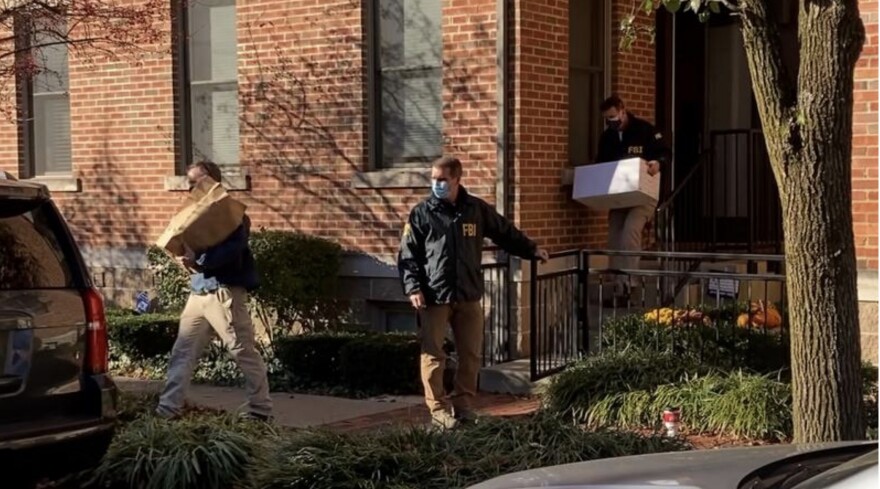
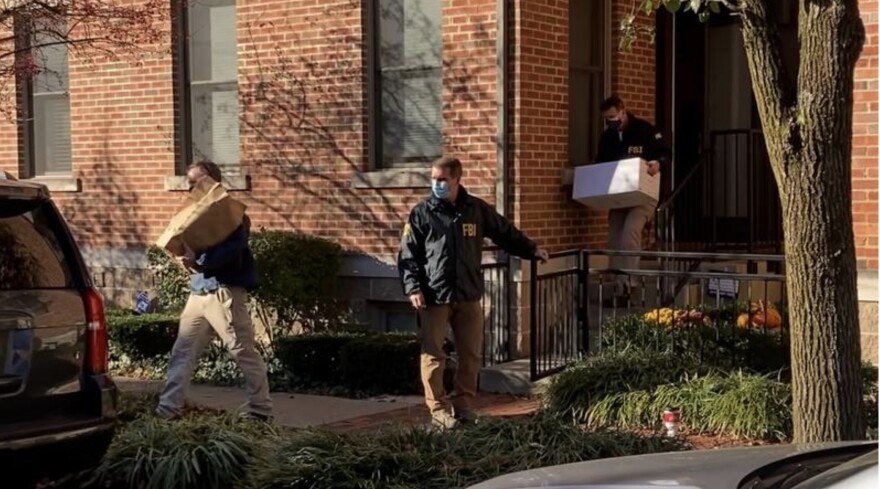
    FBI agents remove boxes of materials from PUCO Chairman Sam Randazzo’s condo in Columbus Nov. 17, 2020. Photo courtesy of Daniel Konik/Statehouse News Bureau.
    BY:  Ohio Capital Journal

    In early 2019, news of financial ties between Akron-based FirstEnergy and the man incoming-Gov. Mike DeWine had named to lead the Public Utilities Commission of Ohio began to spread. And as it did, FirstEnergy’s top executives feared they wouldn’t have a regulator they could control, according to documents filed in federal court late last week.

    “Great. Now we have none on the list” of nominees, then-CEO Chuck Jones texted Vice President Michael Dowling. Jones later added, ruefully, “Always need a backup plan.”

    As it happened, the nominee, Sam Randazzo, ended up being appointed to the commission after being paid $4.3 million by FirstEnergy. He proceeded to help draft a law providing the utility with a $1.3 billion bailout. The company spent another $60 million to pass and then to protect it from a citizen-initiated repeal in what law-enforcement officials have called one of the biggest bribery and money-laundering scandals in state history.

    Randazzo, Jones and Dowling haven’t been charged in the scandal, but after a jury trial that convicted two others, two guilty pleas, and a suicide, the three men could be the next targets as federal authorities continue their probe.

    If authentic, the communications filed on Friday indicate that the three met in Randazzo’s Columbus condo in December 2018. And they appear to show that the FirstEnergy executives agreed to pay Randazzo a large sum in exchange for favors when Randazzo became the state’s chief regulator.

    Another communication 23 months later — just after the FBI searched the condo in November 2020 — shows Randazzo providing a friend “the number for my home which the FBI does not have.”

    Demanding records

    Lawyers for Randazzo, Jones and Dowling didn’t immediately respond to requests for comment Monday, but attorneys for the former executives have said in separate court filings that they believe the feds are investigating their clients.

    The documents filed in federal court on Friday are part of a huge class-action suit against FirstEnergy, Jones, Dowling and a number of other defendants.

    In a deferred prosecution agreement, FirstEnergy in 2021 agreed to pay $230 million and admitted wrongdoing, including by bribing Randazzo. But the class-action plaintiffs — large pension and investment funds — are arguing that the company violated securities law by not disclosing its corrupt conduct. And, they argue, the company lost much of its value when that conduct came to light, leaving investors holding the bag.

    Randazzo has denied wrongdoing and he isn’t a defendant in the case, but the class-action plaintiffs want him to produce all communications relating to how he spent the $4.3 million he got from FirstEnergy just as he was poised to become its most powerful regulator.

    The plaintiffs have been accusing Randazzo since April of foot-dragging. They obtained the messages they filed Friday from a third party and are pointing to them as examples of Randazzo’s lack of cooperation.

    Early arrangements

    The earliest of the messages was on Dec. 18, 2018, and it appears that the three men had recently met in the residence that the FBI later searched.

    “Got it, Sam,” Dowling, then the FirstEnergy vice president, texted Randazzo. “Good seeing you as well. Thanks for the hospitality. Cool condo.”

    The “got it” was in response to a column of numbers Randazzo sent that appear to indicate that he was expecting payments from FirstEnergy through 2024:

    • 2019 — 1,633,333
    • 2020 — 600,000
    • 2021 — 600,000
    • 2022 — 600,000
    • 2023 — 600,000
    • 2024 — 300,000

    A seventh entry said “Total 4,333,333” — an amount equal to what FirstEnergy said was a bribe.

    The following day, Jones, the CEO, told Randazzo that he wouldn’t have to wait that long for the money, according to the filings. Jones also made it clear that he expected access to Randazzo.

    “We’re going to get this handled this year, paid in full, no discount,” the message says. “Don’t forget about us or Hurricane Chuck may show up on your doorstep! Of course, no guarantee he won’t show up sometime anyway.”

    Randazzo’s response seemed to be meant to reassure — and he linked the money to favors.

    “Made me laugh — you guys are welcome anytime and anywhere I can open the door,” he said. “Let me know how you want me to structure the invoices. Thanks.”

    Connections

    But on Jan. 30, 2019, problems popped up with Randazzo’s nomination.

    FirstEnergy’s nuclear-owning subsidiary, FirstEnergy Solutions, was going through bankruptcy and it had listed the Sustainability Funding Alliance of Ohio on one of its disclosures. Randazzo controlled the group and FirstEnergy had paid him millions through it in the past. Now the press was on to the matter.

    “Chuck — Sam Randazzo is going to pull out of the PUCO process ASAP and it’s related to a disclosure on a (FirstEnergy Solutions) bankruptcy filing,” Dowling texted Jones, according to the documents filed Friday. “Reporters called (FirstEnergy) today inquiring about the relationship between (FirstEnergy Solutions) and a group called the Sustainability Funding Alliance of Ohio. You can guess the rest.”

    That’s when Jones lamented not having a “backup plan” in the event that Randazzo was not seated on the utility commission. Dowling agreed.

    “This is awful,” he wrote. “The FirstEnergy Solutions bankruptcy filing names that group and Sam names the same group on a financial disclosure statement. Unreal. I don’t know why it was listed in the (FirstEnergy Solutions) bankruptcy filing. The payments we made year-end ’18 came from (FirstEnergy) Corp. Services.”

    Dowling was ready to throw Randazzo under the bus if the connection proved to be an embarrassment to the incoming DeWine administration.

    “They’re going to be mad at Sam (and hopefully not us) for not disclosing the financial relationship,” Dowling wrote. “That’s Sam’s responsibility.”

    A day later, however, the financial connection between FirstEnergy and Randazzo apparently wasn’t sufficiently embarrassing and he was picked to head up the PUCO.

    “A bullet grazed the temple,” Dowling told Jones, according to one of the texts filed last week.

    “Forced DeWine/Husted to perform battlefield triage,” Jones responded, referring to Lt. Gov. Jon Husted. “It’s a rough game.”

    A still rougher game

    In a trial held in Cincinnati from late January to mid-March, prosecutors put on witnesses and displayed communications describing Randazzo’s 2019 role in drafting House Bill 6, the bailout bill. Not only did it provide $1 billion to prop up two failing nuclear plants FirstEnergy was spinning off, it charged ratepayers about $100 million a year to insulate the company from an economic downturn. For FirstEnergy, it was easy money, in other words.

    In June, U.S. District Judge Timothy Black sentenced former Ohio House Speaker Larry Householder, R-Glenford, to 20 years in prison for orchestrating the racketeering scandal. Former state GOP Chairman Matt Borges got five years for his role.

    By November of 2019, HB 6 was on the books after FirstEnergy and a subsidiary plowed $36 million into a brutal, dishonest effort to turn back a citizen-initiated repeal. But the FirstEnergy executives weren’t done with Randazzo.

    On Nov. 10, 2019, Jones texted a coal executive that another cloud loomed for FirstEnergy.

    “And the (FirstEnergy) rescue project is not over,” Jones said, according to documents filed as part of the class-action suit. “At (Edison Electric Institute) financial conference. Stock is gonna get hit with Ohio 2024. Need Sam to get rid of the ‘Ohio 2024’ hole.”

    That was an apparent reference to a requirement that FirstEnergy file a “rate case” with the PUCO in 2024. In such a proceeding, regulators assess a utility’s operations and make a judgment about whether its rates and revenues are reasonable.

    FirstEnergy was apparently afraid they wouldn’t be. On Nov. 21, 2019, just 11 days after Jones expressed his concerns, the PUCO under Randazzo’s leadership issued an order saying it was “no longer necessary or appropriate” to require FirstEnergy to file a rate case.

    The next day, Jones wanted to express his appreciation to Randazzo. He did so by sending the erstwhile regulator a list of prices for six energy stocks that day. FirstEnergy stocks were up 1.5%. The next highest was Avangrid, which was up 0.86%.

    “Thank you!!” Jones wrote.

    Randazzo replied, “Ha — as you know, what comes up may come down… Thanks for the note. Spoke to Mike (Dowling) last night.”

    Then Jones said, “My Mom taught me to say Thank you.”

    Flying high

    By the start of 2020, things seemed to be going well for those who orchestrated the bailout.

    FirstEnergy Solutions would emerge from bankruptcy in February as a separate company, Energy Harbor. The class-action plaintiffs argue that one of FirstEnergy’s major goals in the scheme was to prop up the nuclear plants, get them off their books and shed the liability of having to pay for a decades-long process to close and clean up after them.

    At the same time, FirstEnergy was funneling millions more dark-money dollars into an effort to get the state’s legislature to put a constitutional amendment on the ballot. It would change the state’s term-limits so Householder could stay speaker for another 16 years — and presumably continue to do the utilities’ bidding.

    But then in July 2020, it all crashed down.

    On July 21, the FBI arrested Householder, Borges and other conspirators. By the next day, FirstEnergy stock had lost 34% of its value, the class-action plaintiffs contend.

    FirstEnergy fired Jones and Dowling the following October. And then in November, 2020, Randazzo was forced to resign from the PUCO after the FBI searched his condo.

    “Pretty stressful few days which started Monday at 6:00 when 10-12 FBI agents with their guns drawn announced their arrival at our home,” Randazzo emailed a friend on Nov. 21, according to the documents filed by the class-action plaintiffs. “But, Carol and I are handling it and doing better each day. Neighbors, friends (like you) family, PUCO staff and people I have worked for over the years have been great. Roger Sugarman (his attorney) is my new hero. So onward!”

    Then Randazzo encouraged the friend to call him on the number he believed that the FBI didn’t have.

    _________________________

    Marty Schladen
    MARTY SCHLADEN

    Marty Schladen has been a reporter for decades, working in Indiana, Texas and other places before returning to his native Ohio to work at The Columbus Dispatch in 2017. He’s won state and national journalism awards for investigations into utility regulation, public corruption, the environment, prescription drug spending and other matters.

    MORE FROM AUTHOR

  • Federal judge blasts disgraced Ohio House speaker as a “bully,” sends him straight to jail

    Federal judge blasts disgraced Ohio House speaker as a “bully,” sends him straight to jail

    Former House Speaker Larry Householder, R-Glenford. Source: Ohio General Assembly.

    BY:  Ohio Capital Journal

    CINCINNATI — Former Ohio House Speaker Larry Householder spent possibly his last moments as a free man around 2:30 p.m. Thursday and they couldn’t have been pleasant.

    U.S. District Judge Timothy Black gave the Glenford Republican the maximum possible sentence of 20 years and then ordered blue-shirted U.S. Marshals to immediately take him into custody. He rose, put his hands behind his back, the marshals cuffed him and led the once-powerful pol away.

    But before that humiliation, the judge blistered Householder for being the ringleader of a racketeering scandal in which Akron-based FirstEnergy paid him more than $59 million in bribes in exchange for a $1.3 billion bailout, most of which was intended to save two failing nuclear plants in Northern Ohio.

    Ratepayers could have used that money for things like education, health care or to start businesses, the judge said.

    “You handed that money to suits in private jets,” Black said.

    The judge made the speech and imposed the sentence after saying Householder clearly perjured himself during his criminal trial, which lasted from late January until mid-March.

    In it, Householder claimed to barely know FirstEnergy executives as federal prosecutors put on a mountain of evidence that Householder flew on their corporate jets, sat in their luxury boxes and dined in fancy restaurants as they plowed tens of millions of the corporation’s dollars into dark-money accounts.

    “You conned the people of Ohio and you tried to con the jury, too,” Black said in his gravely voice as Householder, clad in a gray suit and red tie, slumped his bulk back in his chair.

    The money from FirstEnergy and one of its subsidiaries was used to elect fellow Republicans in 2018 who would vote to make Householder speaker in early 2019. More than $500,000 of it was used to pay off Householder’s credit card bills, settle a lawsuit and to repair a house he owned in Florida.

    Tens of millions more went to pass the corrupt bailout — House Bill 6 — and to fund a thuggish campaign to thwart a citizen-initiated repeal.

    Earlier in the hearing, Assistant U.S. Attorney Emily Glatfelter said Householder used FirstEnergy’s dark money to crush a “citizen veto” and “because of this House Bill 6 remains in effect today.”

    That’s also because Republican supermajorities in Ohio’s gerrymandered legislature have refused to repeal the corrupt law even after arrests were made, and as they try to make it virtually impossible for citizens to initiate amendments to the Ohio Constitution.

    Also arrested in the scandal were lobbyists Juan Cespedes and Jeffrey Longstreth — who cooperated with prosecutors within days of their arrests — and Neil Clark, who died by suicide. Former Ohio GOP Chairman Matt Borges is slated for sentencing at 11 a.m. today, Friday.

    Steven Bradley, Householder’s attorney, sought leniency for his client. Referring to the possibility of a 20-year sentence, he said “That is effectively a life sentence for Larry Householder given his age and health situation.”

    Householder is 64 and overweight.

    Bradley argued that his client was around 60 when the racketeering conspiracy began in late 2016 and that prior to that, Householder did “innumerable” good deeds “for decades.” A 20-year sentence would “effectively give no consideration” to those good deeds, Bradley said.

    But when he spoke on his own behalf, Householder appeared to do more to harm his case than to help it, just as he did at trial.

    “My greatest commitment is to my creator… My next commitment is to my family,” he read from a prepared statement as he stood at the podium.

    Householder said that in the course of 38 years of marriage, “I can count on one hand” the number of nights he spent away from his wife, Taundra. Householder also described the crushing pain they suffered when they lost a four-year-old daughter.

    But then he pushed his claims past the point of plausibility.

    He said Taundra was planning to retire from her teaching position and next year, when he turns 65, he wanted to retire as well, saying he planned to “hang up my suit and tie.”

    Householder made that statement in the same courtroom where, only three months earlier, prosecutors put on testimony and displayed bank records and written messages from early 2020 that showed FirstEnergy and AEP putting money into dark money groups intended to fund an effort to change the state’s term limits so Householder could stay in office for as long as 16 more years.

    The former House speaker also implied that he wanted a lenient sentence not for himself, but for his family. Taundra, he said, would be alone while “I’ll be in a cold cell hours away.”

    But what might really have set Judge Black off was Householder’s profession of selfless public service.

    “My life has been a total and full dedication to making life better for those I serve,” he said.

    Black described voters who put out Householder yard signs, donated their hard-earned money to his campaigns, and pushed a button for him in the voting booth.

    “I’m not talking about some corporation or the (former FirstEnergy CEO) Chuck Joneses of the world,” Black said. Householder’s constituents who supported him “were saying, ‘I’m choosing to trust you,’ and you betrayed that trust,” the judge said.

    Black used Householder’s own words to give the lie to his claims. He quoted several recordings of Householder that were surreptitiously made during the conspiracy and played at trial.

    “If you’re going to fk with me, I’m going to fk with your kids,” Householder said in one of them.

    “Bottom line, you were a bully,” the judge said.

    If the federal racketeering statute didn’t cap sentences for a single count at 20 years, sentencing guidelines would have recommended life for the former House speaker, Black said. One reason for that is because Householder’s use of a mountain of hidden corporate money to elect a legislature, pass an exponentially bigger bailout for the company, and to crush a citizen repeal is “an assault on democracy,” the judge said.

    Black explained the special harm done by public corruption like that committed by Householder and his co-conspirators. To do so, he quoted former President Theodore Roosevelt, who ironically advocated the citizen-initiated amendment process in Ohio that Householder’s former Republican colleagues in state government are now trying to gut.

    “There can be no crime more serious than bribery,” Roosevelt said in a 1903 message. “Other offenses violate one law while corruption strikes at the foundation of all law.”

    When Borges, the former GOP chair, is sentenced today, it’s unclear what he’ll face. His involvement in the conspiracy was considerably less than Householder’s, but Judge Black showed that he’s not much in the mood for leniency when it comes to Ohio’s corrupt political culture.

    Also uncertain is when — or if — others might be charged.

    Former FirstEnergy CEO Chuck Jones and Vice President Micheal Dowling — as well as former FirstEnergy Solutions President John Kiani — directed the flood of corporate dollars into the Householder-controlled dark money groups, according to prosecutors.

    And FirstEnergy admitted in a deferred prosecution agreement that it paid  a $4.3 million bribe to Sam Randazzo just as Gov. Mike DeWine was appointing him to chair the Public Utilities Commission. Randazzo the helped draft the corrupt bailout law, according to trial testimony.

    On the steps of the Potter Stewart U.S. Courthouse just after the sentencing, U.S. Attorney Kenneth Parker was asked when or whether those men or others might be charged.

    “We continue to look through evidence and we continue to listen to recordings and speak to individuals, so if something’s there we’re going to go there, too, and address it,” he said.


    Marty Schladen
    MARTY SCHLADEN

    Marty Schladen has been a reporter for decades, working in Indiana, Texas and other places before returning to his native Ohio to work at The Columbus Dispatch in 2017. He’s won state and national journalism awards for investigations into utility regulation, public corruption, the environment, prescription drug spending and other matters.

    MORE FROM AUTHOR

  • As Borges delay is denied, former FirstEnergy execs say “no doubt” the feds are after them

    As Borges delay is denied, former FirstEnergy execs say “no doubt” the feds are after them

    Litigation, prosecutions in massive corruption scandal move forward

    BY:  Ohio Capital Journal

    Judges denied two delays in recent days that would have been key to a bribery and money laundering scandal that took place in Ohio between 2017 to 2020. Lawyers in one suit called it “one of the largest corruption and bribery schemes in U.S. history.”

    Denial of a delay in one court case means that a player will still be sentenced late next month.

    In denying the other, the judge in that case agreed with two former FirstEnergy executives who said federal law enforcement has them in its crosshairs. But she ordered that they be questioned under oath anyway.

    One of those denied was former Ohio Republican Party Chairman Matt Borges, who on March 9 was convicted of racketeering along with former Ohio House Speaker Larry Householder, R-Glenford. Two others who were also charged in 2020 pleaded guilty and a third died by suicide.

    Borges and Householder played very different roles in a scheme to use more than $60 million from Akron-based FirstEnergy to make Householder speaker at the start of 2019 so Householder could pass and protect a $1.3 billion ratepayer bailout that mostly benefited FirstEnergy. But both made heavy use of funds that were passed through 501(c)(4) “dark money” accounts that enabled them to disguise its FirstEnergy source.

    Householder directed the effort in 2018 to elect friendly representatives who would make him speaker. He led the 2019 legislative fight to pass the bailout. And he engineered the nasty, dishonest battle to beat back an attempted repeal.

    Borges’ role was much more limited. He acted as a go-between with statewide officials such as Attorney General Dave Yost and Secretary of State Frank LaRose — and he paid a worker on the repeal campaign $15,000 as the worker shared inside information about its likelihood of success.

    Even though Householder’s role in the scandal was much bigger than that of Borges, each faces a sentence of up to 20 years in prison on the one count of racketeering of which he was convicted. Householder is scheduled to be sentenced in the Potter Stewart U.S. Courthouse in Cincinnati on June 29. Borges was scheduled for sentencing the next day.

    But after his conviction, Borges asked the court for extra time to file post-trial motions asking that his conviction be thrown out. U.S. District Judge Timothy Black agreed, giving him until April 24.

    Borges didn’t file anything by that deadline. But on May 15, Borges again asked permission to file post-trial motions. He argued that his conviction was on much shakier ground in light of two decisions handed down on May 11 by the U.S. Supreme Court: Ciminelli vs. United States and Percoco vs. United States.

    Judge Black, however, on Monday agreed with Assistant U.S. Attorney Emily Glatfelter that the legal theories those decisions dealt with were “neither charged, nor argued, nor instructed” in Borges’ case. Black added that it’s important to keep the case moving.

    “Finally, this case has been litigated, tried, and a verdict returned. Defendant Borges is now scheduled for sentencing on June 30, 2023. Disrupting the schedule would needlessly undermine the interests in judicial efficiency and finality,” the judge wrote.

     Former FirstEnergy CEO Charles “Chuck” Jones. Source: FirstEnergy, via Flickr 

    Similarly, a separate federal judge declined to postpone sworn depositions of the two former FirstEnergy executives who directed more than $60 million in corporate cash to Householder-controlled dark money groups that fueled the scandal. She did so even as she acknowledged that former CEO Chuck Jones and former Vice President Michael Dowling “fear they are next in line for indictment” and don’t want to incriminate themselves in their depositions.

    U.S. Magistrate Judge Kimberly Jolson is helping to manage the administration of a massive class-action suit against FirstEnergy, Jones and Dowling over the Householder scandal. Investors say the recklessness of the scheme cost them big — especially when it came to light and stock values plummeted.

    Alleging federal securities fraud, lawyers for pension funds and other investors have said in court filings, “FirstEnergy and its most senior executives bankrolled one of the largest corruption and bribery schemes in U.S. history.”

    Judge Jolson already slapped Sam Randazzo — Gov. Mike DeWine’s chairman of the Public Utilities Commission of Ohio — for not producing documents related to the $4.3 million FirstEnergy paid him just as DeWine was nominating Randazzo. Even though he was supposed to be regulating the utility, Randazzo, who has not been charged, helped draft the corrupt bailout law.

    Last Friday, Jolson also rejected attempts by Jones and Dowling — the former FirstEnergy executives — to delay sworn depositions to September or even later. The depositions had been scheduled for this week and next, but plaintiffs and defendants agreed to a short delay while Jolson considered the request.

    In asking to hold off until Sept. 8, Jones and Dowling said that having to give a deposition under oath put them in a position in which they were damned if they did, and damned if they didn’t.

    Answering questions could put them in criminal jeopardy, but if they took the Fifth, the jury in the class-action case is free to conclude they have something bad to hide, Jones and Dowling argued. They added that it’s certain that the feds are coming after them.

    “Although the defendants in (the Householder trial) have been found guilty (but are yet to be sentenced) and charges have not yet been brought against Jones or Dowling, there can be no doubt that the government’s investigation into Jones and Dowling remains ongoing,” their motion said.

    Judge Jolson replied that she had to weigh those concerns against those of FirstEnergy investors, who already have been fighting the case for nearly three years.

    Jones and Dowling “say the stay is temporary, (but) their grounds supporting the stay could extend for months or even years,” Jolson wrote. “Presently, they request that the depositions be delayed until at least September 8, 2023. (Jones and Dowling) have chosen this date because it is the first date on which investigations and proceedings conducted by PUCO might resume—after a third six-month stay of those proceedings was recently granted at the request of” federal prosecutors.

    The judge added it didn’t help the former executives’ argument that they haven’t been indicted yet because waiting until that question is resolved is a recipe for further delay.

    Jolson said she understood the executives’ dilemma.

    “In sum, there is substantial overlap between the issues in this case and the criminal investigation surrounding the Householder case,” she wrote. “And (Jones and Dowling) are faced with legitimate concerns regarding the invocation of their Fifth Amendment rights.”

    Jolson added, however, that granting a delay would privilege the former executives who funded the corrupt bailout scheme over the aggrieved investors and the public.

    “A stay of these key depositions at this moment — with no clear end in sight — would throw a wrench into the works of discovery and impede or even halt the litigation,” she wrote. “It would privilege the interests of (Jones and Dowling) above those of Plaintiffs, the public (whose interests are particularly implicated given that this is a class action), and the Court.”


    Marty Schladen
    MARTY SCHLADEN

    Marty Schladen has been a reporter for decades, working in Indiana, Texas and other places before returning to his native Ohio to work at The Columbus Dispatch in 2017. He’s won state and national journalism awards for investigations into utility regulation, public corruption, the environment, prescription drug spending and other matters.

    MORE FROM AUTHOR

  • Former Ohio speaker, GOP chair found guilty of racketeering

    Former Ohio speaker, GOP chair found guilty of racketeering

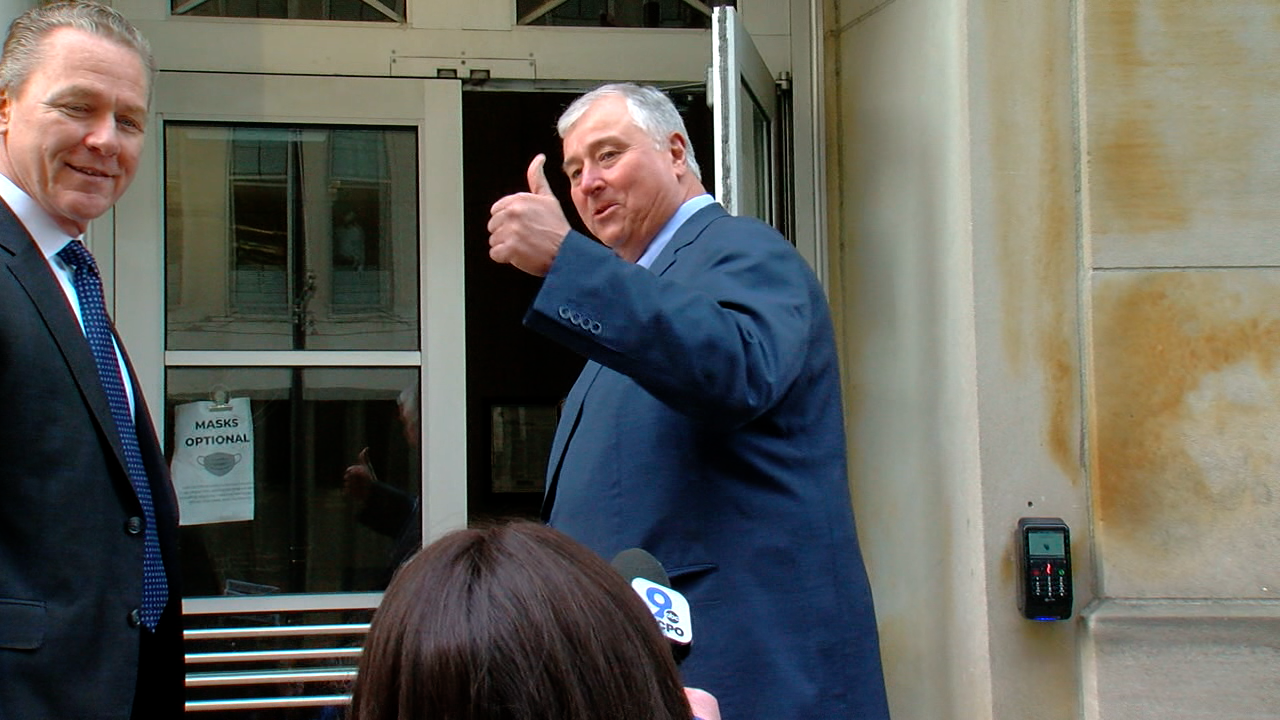
    Former Ohio House Speaker Larry Householder gives the thumbs up as he enters the courthouse where he is expected to testify Wednesday, March 1, 2023. Photo from WEWS.

    BY: MARTY SCHLADEN – MARCH 9, 2023 2:03 PM Ohio Capital Journal

    CINCINNATI — After more than nine hours of deliberation, a jury on Thursday found former Ohio House Speaker Larry Householder and state Republican Chairman Matt Borges guilty of felony racketeering charges in connection with a billion-dollar utility bailout that was passed in 2019.

    Both men face maximum sentences of 20 years in what prosecutors said was likely biggest bribery and money laundering scandal in Ohio history. U.S. District Judge Timothy Black will schedule a sentencing hearing.

    After the verdict, one of Householder’s attorneys, Steven Bradley, confirmed what observers have suspected almost from the start of testimony.

    “Of course we’re going to appeal the verdict,” he told reporters minutes after the jury left the courtroom. Householder stood off to the side in a blue business suit, clutching a camouflage trucker cap.

    He affirmed that he would continue to fight the charges.

     Convicted felon Larry Householder outside the federal courthouse in Cincinnati where a jury found him guilty of racketeering. Photo by Marty Schladen, Ohio Capital Journal.

    “This is just the first step in the process,” Householder said. “Stay tuned.”

    As part of the racketeering scheme, Akron-based FirstEnergy and other utilities paid tens of millions into an effort to elect friendly lawmakers in 2018 who would vote to make Householder speaker the following year. Immediately after taking the speaker’s gavel, Householder worked furiously to pass a $1.3 billion bailout, the vast majority of which benefited FirstEnergy subsidiary FirstEnergy Services.

    The company was being dragged down by losses from its nuclear and coal plants and executives were seeking a bailout. While it got more than $1 billion out of the deal, Householder got political power as well as more than $500,000 personally, jurors found. Borges played a smaller role, but he paid a $15,000 bribe to help defeat an attempt to repeal the bailout and he received more than $100,000 in funds that originated with FirstEnergy, prosecutors said.

    The verdict could have far-reaching implications for the use of “dark money” — funds paid into 501(c)(4) organizations that don’t have to reveal the sources of their funding. In the wake of the 2010 U.S. Supreme Court decision Citizens United v FEC, the use of such funds has become ubiquitous in state and national politics.

    Thursday’s verdict might start to start to draw some boundaries around such expenditures.

    In the case of the Ohio bailout, a financially strapped Householder found common cause with a financially ailing FirstEnergy. After paying billions to prop up a subsidiary with failing and nuclear and coal plants, the parent corporation in 2016 decided to send the subsidiary into bankruptcy. They wanted a ratepayer subsidy for the failing nuclear and coal plants so they could be sold off after the subsidiary emerged from bankruptcy.

    FirstEnergy’s top executives were seeking a bailout at the same time a financially strapped Householder was seeking a return to the Ohio speakership. Their relationship grew in luxurious settings that belied the financial problems besetting both.

    Householder attended a World Series game in November 2016 in the FirstEnergy box in Cleveland with CEO Chuck Jones. Two months later, Householder flew to Donald Trump’s inauguration aboard FirstEnergy’s private jet and stayed in the same $500-a-night hotel as Jones. Prosecutors showed the jury photos of Householder’s son and a FirstEnergy executive in the back of a limousine just outside a fancy steakhouse dinner.

    Within weeks of the inauguration, Householder’s underling set up Generation Now, a 501(c)(4) dark money group into which FirstEnergy almost immediately started pouring what would become tens of millions of dollars.

    The money was used to fund support staff for candidates who would vote to make Householder speaker and to finance attack ads against their opponents.

    When opponents started gathering signatures to repeal the bailout law, House Bill 6, FirstEnergy poured $36 million into an effort to block it. Householder took control of the push to block the repeal, while Borges assisted — both by pressuring Attorney General Dave Yost and by paying $15,000 for inside information about the petition campaign.

     Center, former Ohio Republican Party chair, and statehouse lobbyist, Matt Borges with his attorneys outside of the federal courthouse. Photo courtesy of WEWS.

    That money was used to finance a torrent of misleading, anti-China ads and a petition-blocking effort that in some cases devolved into outright battery, witnesses testified.

    And because it was dark money, the public couldn’t know that it was FirstEnergy that was financing the gargantuan fight to pass and protect a much larger bailout from which it benefited — until federal law enforcement stepped in. During the trial, investigators from the FBI described how they used accountants, informants, subpoenas and wiretaps to unravel the tangle of dark money groups and political-action committees that were used to obscure the origins of the funds that were used in the scheme.

    “Today was a victory for the people of Ohio,” U.S. Attorney Kenneth L. Parker said on the steps of the Potter Stewart U.S. Courthouse shortly after the verdict. Parker declined to answer whether further indictments can be expected in the case — including for Jones and other FirstEnergy executives who paid the money that the jury on Thursday determined to be bribes.

    Also unknown is whether Gov. Mike DeWine’s first appointee to chair the Public Utilities Commission of Ohio, Sam Randazzo, will be charged. Randazzo took $4.3 million from FirstEnergy shortly before being nominated to the post and once nominated, he helped write the bailout law, House Bill 6. He resigned shortly after the FBI searched his Columbus condo in 2020.

    The verdict might be sending shock waves around Capitol Square and other power centers because defense attorneys for Householder and Borges argued that the conduct described by prosecutors was perfectly legal — politics as usual.

    In a statement, Parker offered a different take.

    “As presented by the trial team, Larry Householder illegally sold the statehouse, and thus he ultimately betrayed the great people of Ohio he was elected to serve,” the U.S. attorney said. “Matt Borges was a willing co-conspirator, who paid bribe money for insider information to assist Householder. Through its verdict today, the jury reaffirmed that the illegal acts committed by both men will not be tolerated and that they should be held accountable.”

    Outside the courthouse, Householder said that he will go back to his Perry County farm to plant a garden and fish with his kids while federal authorities complete a pre-sentence report and a sentencing hearing is scheduled.

    That his attorneys plan to appeal has been suspected almost since testimony began on Jan. 23. On Feb. 1, they undertook the risky gambit of accusing Judge Black of being biased against their client in open court.

    They also took a risk by placing Householder on the stand to testify in his own behalf. During cross examination, Assistant U.S. Attorney Emily Glatfelter confronted Householder with numerous inconsistencies and apparent falsehoods.

    Householder was asked just after the verdict if he thought the decision to testify was a mistake. He said it wasn’t

    “I waited two-and-a-half years to tell my story,” he said. “I wanted the opportunity to speak.”

  • Ohio utility regulator front and center in massive bailout scandal

    Ohio utility regulator front and center in massive bailout scandal

    FBI agents remove boxes of materials from PUCO Chairman Sam Randazzo’s condo in Columbus Nov. 17, 2020. Photo courtesy of Daniel Konik/Statehouse News Bureau.

    BY: MARTY SCHLADEN – Ohio Capital Journal

    CINCINNATI — Ohio’s utility regulator is at the center of a massive bribery and money laundering scandal that has been the focus of a trial here since late last month. In 2019, its chairman and a very recent senior official played a central role in writing corrupt bailout legislation that would give more than $1 billion in subsidies to companies the Public Utilities Commission of Ohio was supposed to be regulating.

    But did their role in the process violate any PUCO rules? The answer is unclear.

    When it comes to being a consumer watchdog, the PUCO doesn’t have the best track record. 

    Since 2008, it has granted more than $1 billion in electric rate increases that were later declared illegal by the Ohio Supreme Court. But, thanks to the way the increases — or “riders” — were written, there’s no way to force utilities to return those ill-gotten gains to ratepayers.

    In at least one of those instances, a regulator might have known the rate hike was illegal when he voted to grant it.

    In June of 2019 — as Akron-based FirstEnergy was funneling millions through dark-money groups to pass the bailout that is the subject of the trial here — the Supreme Court struck down an increase that had already paid the company a non-refundable $460 million. Asim Haque, who months earlier was chairman of the PUCO, sent a FirstEnergy executive a text suggesting that Haque knew the increase was illegal when he voted for it. Haque then said he was just kidding.

    Then, just last month, the PUCO approved an increase of more than 50% in fixed rates for Columbia Gas without making the company go through a formal process to show that it needs the money. That means that after five years throughout much of Ohio, it likely will cost nearly $60 a month just to have gas service  — regardless of whether you live in a 500 square-foot apartment or if you live in a mansion on a five-acre lot. Any payments for gas itself will be in addition to that amount.

    It doesn’t appear that Columbia owner NiSource needed the money. Last year, before the PUCO allowed the rate hike, NiSource’s profits came in $217 million — or 41% — higher than expected. Then, a month after the increase was granted, NiSource announced it was increasing its profit forecast for 2023.

    In a press release, the company boasted of “strong regulatory execution” — including by winning the fixed-rate increase from the PUCO.

    And then there’s House Bill 6, the 2019 law that is the subject of the trial in federal court here that has been ongoing since Jan. 23.

    Former Ohio House Speaker Larry Householder and former Ohio Republican Party Chairman Matt Borges are on trial for their participation in what prosecutors say is likely the biggest bribery and money laundering scandal in Ohio history. They allege that $61 million that mostly came from FirstEnergy was used to make Householder speaker in 2019, and then to pass and protect the $1.3 billion bailout. Most of that money was intended to prop up FirstEnergy’s failing nuclear and coal plants.

    No current or former PUCO employees have been charged in the scandal. But, to put it charitably, the conduct of at least two of them was puzzling — given that the agency’s mission is to protect ratepayers who don’t have a choice about buying the utilities’ products.

    In January 2019, Householder won the speakership and was beginning his push for a FirstEnergy bailout. At the same time,  FirstEnergy lobbyist Ty Pine sent PUCO senior advisor Pat Tully’s resume to Jeff Longstreth, Householder’s right-hand man, according to testimony in the trial. Within weeks, Tully had moved from his PUCO job to one as senior advisor for energy policy in the House Republican Caucus.

    Sam Randazzo, a former FirstEnergy consultant, was confirmed as Gov. Mike DeWine’s nominee to chair the utility commission in April 2019. When he nominated Randazzo, DeWine brushed off warnings that his nominee had “opaque and undisclosed” ties to FirstEnergy.

    In the Householder trial, Tully testified that while Randazzo was still a nominee, he met with Tully, Householder and Rep. Nino Vitale R-Urbana. From there, Tully worked with Randazzo to help draft the utility bailout, HB 6, and to reconcile it with draft legislation submitted by FirstEnergy. The bill secured final passage in July 2019 — months after Randazzo had taken the helm at the utility commission.

    In other words, Ohio’s top utility regulator helped write a law that gave a billion-dollar bailout to a company he was supposed to be regulating on the ratepayers’ behalf. And he was heading an agency that over the previous decade had awarded electric utilities more than $1 billion in illegal, non-refundable rate hikes.

    Randazzo would later resign after the FBI in 2020 raided his Columbus condo. And in a deferred prosecution agreement, FirstEnergy admitted that it paid him $4.3 million just before he became PUCO chairman.

    But does the PUCO have any rules against the role Randazzo played in drafting HB 6? 

    Asked if the agency had a policy prohibiting a commissioner from helping write legislation affecting a utility he or she is supposed to be regulating, spokesman Matt Schilling initially seemed to say that it did not.

    “The PUCO is a state agency and will always be responsive to requests for information or technical assistance to the Ohio General Assembly on matters related to utilities and commercial transportation,” Schilling said in an email last week.

    But in answer to a follow-up, Schilling seemed to say something different. He was asked if that means PUCO believes there was nothing inherently improper about its chairman helping to draft legislation creating subsidies for utilities the agency regulates.

    “No, I never stated anything like that,” Schilling replied. “The PUCO does not comment on ongoing proceedings or court cases.”

    So what about commission employees doing as Tully did when he had a FirstEnergy lobbyist passing out his resume? After all, you might pull punches as a regulator if you’re hoping to land a job with one of the companies you’re supposed to be regulating.

    Schilling’s response might not be very reassuring. He cited a law that “prohibits Commission employees from seeking employment with utilities regulated by the Commission.”

    But Schilling also sent along agency guidance that contains a pretty big loophole.

    “Although this law prohibits Commission employees from soliciting Commission-regulated utilities for employment, it does not prevent employees from considering employment opportunities with these utilities in instances in which the utility approaches the employee,” it said.

    It seems that, after the fact, it might be difficult for the PUCO to figure out who approached whom when an employee jumps ship for a well-paid utility job. And its protections against conflicts of interest during the hiring process don’t seem ironclad.

    “However, if you are contacted by a utility concerning a possible job offer, you must immediately advise your supervisor of the contact so that your supervisor can limit your duties to matters which do not involve the utility in question while any discussions are taking place,” the guidance said.

    In Tully’s case, he didn’t end up directly on FirstEnergy’s payroll. But he did help write a law that the company paid more than $60 million for.

  • FirstEnergy exec tried to keep DeWine aide’s name off of $10M transaction

    FirstEnergy exec tried to keep DeWine aide’s name off of $10M transaction

    BY: MARTY SCHLADEN – Ohio Capital Journal

    In October 2019, as a battle raged over an attempt to repeal a $1.3 billion utility bailout, a FirstEnergy executive worked to keep the name of a senior aide to Gov. Mike DeWine off of a $10 million infusion of corporate cash into the fight. 

    The executive, Vice President Michael Dowling, did so even after an assistant told him it would violate IRS rules to not list the DeWine aide on the transaction, according to text messages presented Tuesday in the federal corruption trial of former Ohio House Speaker Larry Householder and lobbyist Matthew Borges. The men are accused of racketeering in a scheme to use $61 million from FirstEnergy in exchange for the massive bailout, most of which went to prop up the company’s failing nuclear and coal plants in order to make them attractive to buyers.

    DeWine has denied involvement in the arrangement even though he met with FirstEnergy executives and visited one of its nuclear plants in 2018 as he was seeking the governorship and FirstEnergy was lavishly funding Householder’s effort to elect sympathetic Republicans who would then vote to make him speaker. For his part, DeWine received $23,000 from the Akron-based utility for his campaign and his inaugural celebration, according to Ohio Citizen Action. He vowed to donate the money to charity following revelations of the scandal.

    The governor appointed as chairman of the Public Utility Commission of Ohio a former FirstEnergy consultant who was paid $4.3 million by the utility just before taking his seat on the commission. Even though he was supposed to be regulating the utility, the official, Sam Randazzo, played a role in writing the bailout legislation, according to documents released by the Ohio House. 

    In early 2019, DeWine also appointed FirstEnergy lobbyist Dan McCarthy to be his legislative affairs director, meaning McCarthy was in charge of representing DeWine’s interests before the General Assembly.

    In early 2017, while McCarthy was still working for FirstEnergy, Householder and his son, along with FirstEnergy CEO Chuck Jones and others, flew corporate jets to Washington, D.C. for fancy dinners and Donald Trump’s inaugural

    Just after that, McCarthy formed a 501(c)(4) group called Partners for Progress. Also known as a “dark money” group, it received $5 million from FirstEnergy within a few weeks of when McCarthy founded it.

    In an affidavit supporting Householder’s arrest, FBI Special Agent Blane Wetzel said Partners for Progress was “designed to conceal the nature, source, ownership, and control of the payments” from FirstEnergy and associated companies. Through the rest of 2018, McCarthy continued as president of Partners for Progress as it pumped FirstEnergy money into a Householder-controlled dark money group and funded the effort to make Householder speaker.

    The following year, McCarthy resigned that role to work for DeWine in the legislature as Householder shepherded the bailout legislation, House Bill 6. When a final version passed in July 2019, DeWine signed it the same day.

    But opponents quickly started a campaign to circulate petitions to put a repeal on the ballot. That prompted FirstEnergy to pump even greater sums into a “decline to sign” campaign aimed at thwarting the petitions.

    It funded xenophobic mailers and broadcast ads claiming without evidence that the repeal effort was a Chinese plot.

    “Who is knocking at your door?” began a mailer read in court Tuesday. “Foreign enemies have infiltrated our energy grid,” it added and said, ominously, that circulators of repeal petitions “are asking for your information.”

    In October 2019, executives with FirstEnergy and its generation-owning subsidiary seemed panicked that the repeal effort might succeed and they were planning to pump $10 million more into the effort to stop it — through Partners for Progress, the dark money group started by McCarthy, who was now a DeWine aide.

    Dowling, the FirstEnergy vice president, seemed to think it wouldn’t be a good look for the name of a DeWine official to show up on paperwork accompanying the huge transaction.

    “Please make sure Dan McCarthy’s name is not on the filing,” Dowling said in a text message to Partners for Progress Treasurer Michael Vanburen that was presented in court Tuesday.

    Vanburen replied that even though McCarthy was no longer president of the dark money group, IRS rules required that his name be on the filing. Dowling didn’t accept that.

    “There must be a creative way to handle this,” he said. “It’s important that (McCarthy’s) name not be listed.”

    Asked if DeWine asked that McCarthy’s name not be used in paperwork regarding the money transfers, Press Secretary Dan Tierney in an email said, “No. Dan McCarthy resigned from Partners for Progress in December 2018. Dowling’s comments, as you have relayed them to me, do not match the timeline of McCarthy’s affiliation with Partners for Progress.”

    DeWine seems to have been in touch with FirstEnergy executives around the time of the repeal effort. Later in October 2019, FirstEnergy CEO Jones texted Vice President Dowling to say, “DeWine’s on board. I talked to him on Wednesday.”

    According to Jones, they talked about whether the repeal HB 6 effort would gather enough valid signatures to get the measure on the ballot.

    “He said their valid rate was less than 30%,” Jones said of DeWine.

    For his part, Tierney said, “The Governor does not have any recollection of such a conversation.”

    In a later text conversation, Jones said he’d received similar assurances from Secretary of State Frank LaRose.

    After arrests were made in the House Bill 6 scandal, DeWine staunchly defended McCarthy and kept him in his administration for more than a year, until Sept. 24, 2021.

    “As far as I know, Dan McCarthy has been well-respected for many, many years, long before he started working for me as our legislative director and I have faith in his integrity,” DeWine said in early 2021 as questions about the role McCarthy’s dark money group played in the bribery and money laundering scandal continued.

    In another trial-related matter, U.S. District Judge Timothy Black on Tuesday said that he had released a second juror, this time for testing positive for COVID. An earlier juror had been released for refusing to wear a mask.

    That brings the number of alternate jurors to two for a trial that is expected to last into early March.