Tag: Sam Randazzo

  • Texts, calendars, emails link DeWine to FirstEnergy’s bribery scandal

    Texts, calendars, emails link DeWine to FirstEnergy’s bribery scandal

    BY: JAKE ZUCKERMAN – Ohio Capital Journal

    Gov. Mike DeWine and his administration played a hands-on role passing an allegedly pay-for-play nuclear bailout and appointing an industry-friendly regulator who has since been accused of taking a $4.3 million bribe, documents and messages show.

    Calendar records show DeWine, a Republican, met repeatedly to discuss energy policy with FirstEnergy Corp. officials and at least once with GOP House Speaker Larry Householder, who has been criminally accused of taking a separate, multimillion-dollar bribe from the company to pass the bailout.

    Despite a cautionary letter from environmental groups and a 198-page dossier from his former campaign staffer warning against the move, DeWine appointed Sam Randazzo in 2019 to the head of the Public Utilities Commission of Ohio. FirstEnergy last summer admitted it paid Randazzo a $4.3 million bribe. Randazzo has not been charged with a crime and denies wrongdoing.

    Newly released text messages show FirstEnergy executives describing an open line with the administration on the selection and inside support from Ohio’s chief executive.

    “When the Gov Elect asked me about attributes, I listed integrity, work ethic, creativity, thick skin, circumspection in public statements,” FirstEnergy’s then CEO texted Randazzo about the open PUCO seat in December 2018, just before DeWine took office.

    “You fit all of those.”

     Former FirstEnergy CEO Charles “Chuck” Jones. Source: FirstEnergy, via Flickr

    In one text, FirstEnergy executive Mike Dowling credits DeWine and Lt. Gov. Jon Husted with performing “battlefield triage” to save Randazzo’s appointment before a key vote. Both DeWine and Husted have previously denied that a redacted version of the text message that appeared in criminal documents referred to them.

    Federal prosecutors accused House Speaker Larry Householder of secretly controlling a nonprofit that took $60 million from FirstEnergy. He allegedly used the money to enrich himself personally and politically and to ensure the passage of House Bill 6, which provided a massive bailout to two nuclear plants owned at the time by FirstEnergy. Householder was charged with racketeering and awaits trial. Two alleged conspirators pleaded guilty.

    FirstEnergy admitted last summer to the $60 million payment as well as a separate $4.3 million bribe to Randazzo just before he started as Ohio’s top utility regulator. The payment topped off $22 million in consulting fees to Randazzo since 2010 from the company.

    Court documents from prosecutors reveal no focus on DeWine, who has not been charged with any crime. However, a review of records turned over in subpoenas, public records requests for his official calendars by the Energy and Policy Institute, text messages attached to regulatory filings, and others show DeWine and his staff repeatedly influencing and shepherding HB 6 into law.

    On the campaign trail in July 2018, DeWine visited one of the nuclear plants that would receive a bailout, his official calendar shows. A month later, he met with FirstEnergy executives at their Akron headquarters. In October of that year, DeWine met with FirstEnergy at a fundraiser for Republican governors.

    FirstEnergy contributed about $1 million in total to DeWine’s campaign, political organizations supporting it, and to another nonprofit supporting his daughter’s campaign for county prosecutor, according to the Dayton Daily News.

    After winning a close race, DeWine, Husted, Jones and Dowling celebrated over dinner at The Athletic Club in Columbus. The next day, Jones sent Randazzo the text message (above) indicating they discussed the open PUCO seat.

    In January of 2019, the FirstEnergy officials texted one another trying to fill not just one but two open PUCO seats, all the while mentioning phone calls with “DeWine guys” about it.

    “That’s their plan but nothing certain until Sam’s [Randazzo’s] meeting [with DeWine],” Jones texted Dowling. “Four people in DeWine world, you, Sam, and I know about this.” The PUCO seats would eventually be filled by Randazzo with another commissioner renewed.

    Dowling relayed to the other two men a message from Josh Rubin — a DeWine 2018 campaign adviser and a FirstEnergy lobbyist. He said once Randazzo takes office, DeWine will “lean on him on everything.”

    Several texts focus on HB 6. The bill (and eventual law) would bail out FirstEnergy’s nuclear plants, subsidize two coal plants owned by other Ohio utility companies, and create a “decoupling” mechanism that effectively put ratepayers on the hook to guarantee certain revenue streams of FirstEnergy’s. Prosecutors estimate the bill as worth about $1.3 billion to the company.

    Two days before the bill was introduced, DeWine’s calendar shows a slot for an “Energy Discussion” at the governor’s residence. Later that month, after the bill was repeatedly criticized during an opponent testimony hearing at the statehouse, DeWine, Husted, Randazzo and various staffers all met up at 5 p.m. for what the governor’s calendar calls a “Nuclear Bailout Bill Discussion.”

    Over the next month, DeWine’s calendars show two entries for energy policy meetings, plus a call with Householder about HB 6, and another call on the bill.

    On June 9, 2019, DeWine showed signs of wavering.

    “Sam, what do we know about whether nuclear plants need this boost?” DeWine, using his personal email, wrote to Randazzo. “One editorial suggested testimony was not conclusive.”

    Dowling paid a visit to the governor’s residence the next day. Randazzo responded to DeWine’s email on June 11, casting doubt on the studies referenced in the editorials.

    On July 1, Dowling texted Jones.

    “Just had a long conversation with JHusted just now,” he said, going on to explain that Husted sought to extend the length of the bailout. “All is well.”

    Court records contain another text from Jones stating that “State Official 2,” later confirmed to be Husted, joined with others in “fighting to the end” for a beefier bailout.

    After a long slog, lawmakers passed HB 6 on July 23, 2019. DeWine signed it into law mere hours later.

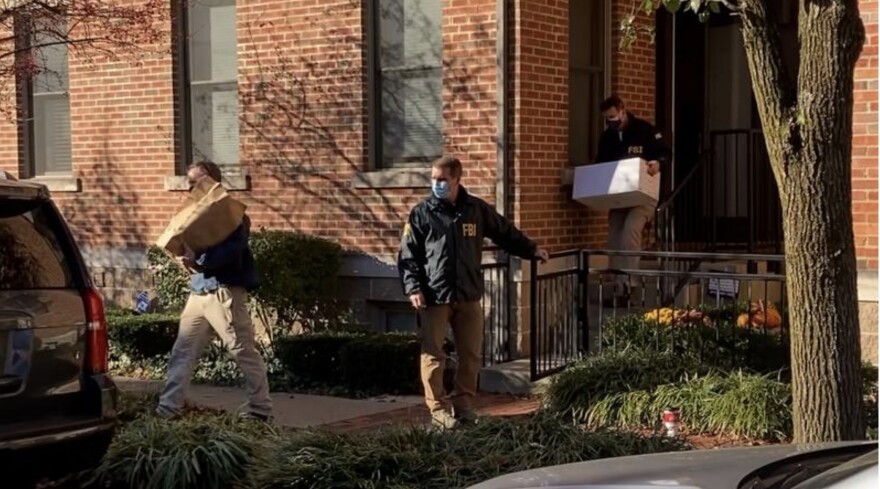
     FBI agents remove boxes of materials from PUCO Chairman Sam Randazzo’s condo in Columbus Nov. 17, 2020. Photo courtesy of Daniel Konik/Statehouse News Bureau.

    Loyalty to staff and HB 6

    As the FBI made its first arrests, DeWine began a pattern of defending HB 6 on the merits and showing unflinching loyalty to his staffers, some of whom have ties to FirstEnergy.

    Householder, his political strategist, a prominent GOP lobbyist, and two FirstEnergy lobbyists were arrested and charged with racketeering in connection with HB 6 on July 21, 2020. The next day, DeWine stood by the law he signed.

    “Because people did bad things does not mean that the policy is not a good policy,” he said.

    He reversed himself the next day and called for a repeal of the bill.

    In October, FirstEnergy fired Jones, Dowling, and fellow executive Dennis Chack as it waged an internal investigation. The company fired another two executives days later “due to inaction and conduct that the Board determined was influenced by the improper tone at the top.”

    At this point, the public remained unaware of the multimillion-dollar financial arrangement between the embattled FirstEnergy and Randazzo. However, on Nov. 16, 2020, FBI agents were seen raiding Randazzo’s condo and removing boxes of material from inside. The next day, FirstEnergy submitted a little-noticed securities filing outlining the $4.3 million payment.

    Despite the images of FBI agents entering Randazzo’s condo, DeWine publicly defended his appointee.

    “We have no indication he’s under investigation or he’s the target of an investigation. We’ll wait until we find additional facts,” he said in a Nov. 17, 2020 news conference. “Look, the FBI many times will indicate if someone is a target. They have not indicated he’s a target. I have no reason to think he’s a target. I don’t know. So, we’re waiting for additional information, quite candidly. I hired him. I think he’s a good person. If there is evidence to the contrary, then we’ll act accordingly, but not going to act without facts.”

    Randazzo would resign three days after that statement.

    Mid-summer 2021, FirstEnergy signed a deferred prosecution agreement with the U.S. Department of Justice. The company agreed to pay a $230 million penalty and cooperate with investigators to avert a charge of honest services wire fraud.

    The agreement contained a lengthy set of facts from the company, stating it paid the $64 million in bribes in exchange for official action from Householder and Randazzo.

    Days after the agreement was announced, DeWine held a press conference on anti-hazing legislation. Reporters asked questions afterward about the agreement, including a line that refers to “State Official 1” and “State Official 2” lobbying to ensure Randazzo’s appointment. DeWine said he’s “not aware” of anyone in his administration, including himself, appearing in the document. Husted, in a statement, said he too “does not believe” he’s referenced in the document.

    Texts obtained by the Ohio Consumers’ Counsel from FirstEnergy and attached to a regulatory filing contain the unredacted version of the text, identifying DeWine and Husted by name.

    In 2017, a lobbyist named Dan McCarthy created a nonprofit entity called Partners for Progress to engage in “advocacy in support of nuclear power,” tax records show. FirstEnergy would later admit to paying $25 million to Partners for Progress, some $15 million of which went to Householder’s nonprofit.

    DeWine hired McCarthy as his legislative director in 2019, around the time McCarthy stepped down from the organization’s board. In February 2021, after media reports identified McCarthy’s role with Partners for Progress, DeWine defended McCarthy.

    “As far as I know, Dan McCarthy has been well-respected for many, many years, long before he started working for me as our legislative director, and I have faith in his integrity,” DeWine said.

    McCarthy resigned in September 2021.

    DeWine response

    In a phone interview, DeWine spokesman Dan Tierney said the OCC-obtained text messages and meetings listed by the Ohio Capital Journal contain no new information.

    The texts, he said, in fact show the lack of a role from DeWine and Husted within the scandal. He said prosecutors have not subpoenaed him or any of his employees.

    “This all along has been a Larry Householder scandal and a FirstEnergy scandal,” he said.

    When asked whether DeWine, a former prosecutor and attorney general, detected any sense of impropriety during all his contacts with Householder and FirstEnergy leading up to the passage of House Bill 6, he declined comment.

    Husted offered a similar comment through a spokeswoman, stating that “there is nothing new here” in the texts, emails and meetings.

    “This kind of advocacy is well within his responsibilities as a public official, and, as we know, the bill was ultimately passed with bipartisan support,” he said.
  • Utility regulator accused of taking a bribe helped write bill targeting watchdog

    Utility regulator accused of taking a bribe helped write bill targeting watchdog

    FBI agents remove boxes of materials from PUCO Chairman Sam Randazzo’s condo in Columbus Nov. 17, 2020. Photo courtesy of Daniel Konik/Statehouse News Bureau.

    BY: JAKE ZUCKERMAN Ohio Capital Journal

    Ohio’s former top utility regulator, who was accused of taking a $4.3 million bribe, quietly spent months helping write a sweeping energy bill that targeted a state watchdog agency that advocates for Ohio’s residential electric customers, records show.

    Emails that the Public Utilities Commission of Ohio gave in response to two FBI subpoenas show its former chairman, Sam Randazzo, conferred with the bill sponsor and helped draft legislative language. The bill would have limited the reach of the Ohio Consumers’ Counsel and given often-hostile state legislators control of its board.

    The OCC appears at PUCO cases and advocates for residential ratepayers’ interests, which often run counter to those of investor-owned utility companies and industrial-scale energy customers. The agency’s efforts have led to millions in refunds to consumers, including $306 million from FirstEnergy Corp. last year to settle a lawsuit against the company for charging an unlawful profit margin on its customers.

    Akron-based FirstEnergy told prosecutors last summer that it paid a business owned by Randazzo $4.3 million before his 2019 appointment in exchange for “official actions.” The company also said it gave a nonprofit secretly controlled by then-GOP House Speaker Larry Householder $60 million to help pass House Bill 6 — energy legislation worth an estimated $1.3 billion to FirstEnergy. Householder has pleaded not guilty and awaits trial. Randazzo has not been charged with a crime.

    Records released earlier this year showed some of Randazzo’s behind-the-scenes lobbying work on HB 6. The records released last week show his influence spanned further.

    In May 2020, Rep. Nino Vitale, R-Urbana, introduced the text of House Bill 246. The bill would have narrowed the scope of cases the OCC can join and subject the agency to “any reasonable conditions that the commission deems necessary to avoid duplication, repetition or delay.” It also gives state lawmakers appointment power over six of nine seats on the OCC’s board.

    The legislation contained a sweep of other changes as well, including creating new ways for utilities to set their prices, modifying setback rules for wind farms, and allowing the Ohio Power Siting Board to create new setback requirements for solar energy sites.

    In the six months before Vitale unveiled the bill, Randazzo and PUCO staff met with Vitale, drafted elements of the legislation, and helped edit Vitale’s introductory testimony to lawmakers, the subpoenaed emails show. The emails don’t show Randazzo addressing the OCC provisions directly. But in a statement through his attorney, Randazzo equivocated when asked if he drafted or advised on the section.

    “If so but having no recollection of either writing or advising any such language, it would only have been as the result of a request from the legislature,” he said. “It is likely that the utilities had input.”

     Sam Randazzo, then a private sector attorney, testifies before the PUCO in March 2018. Source: The Ohio Channel.

    The PUCO released the emails after the Ohio Capital Journal filed a public records request and an eventual lawsuit seeking them.

    Around Thanksgiving of 2019, Randazzo asked to meet with Maura McClelland, a policy adviser and attorney at the PUCO, to meet and discuss the language of the bill’s “ratemaking piece.”

    HB 246 created a new option for utilities to set prices called “alternative rate plans.” According to nonpartisan analysts with the state Legislative Service Commission, the plans can take into account aspects of fair energy pricing that the current model misses like efforts for energy efficiency or cash flow problems from the companies.

    “In general, alternative rate plans could lead to higher prices paid by ratepayers,” the LSC analysts wrote. “But presumably, PUCO would only approve those higher costs after examining aggregate effects in accomplishing its policy objectives.”

    HB 246 would also allow the PUCO to consolidate parties that it determines have “sufficiently common interests” to speed up cases.

    In a memorandum opposing the bill, the Ohio Manufacturers’ Association said the legislation would block its members from meaningful participation at the PUCO. The manufacturers argued the bill in several areas consistently gives utilities the upper hand over their customers, especially via the ratemaking proposal.

    “The bill is opaque and no clear reasoning exists for why its proposed changes are needed,” the memorandum states.

    Roger Sugarman, an attorney representing Randazzo, said via email that neither Randazzo nor the PUCO were the driving force behind the bill. He said he couldn’t determine if the LSC’s analysis is correct without more details.

    “Without knowing what type of alternative rate plan, or the object of your question and the statutory conditions required to secure PUCO approval, it is not possible to evaluate the LSC analysis,” he said. “In general, rate applications filed by utilities, whether alternative or traditional, lead to higher rates; the question is usually about how much higher.”

    He said some pieces of the bill wouldn’t have affected much change versus current law. Plus, the bill all but died after its first hearing. Randazzo’s time “was occupied by more pressing and important things than HB 246.”

    FBI agents arrested Householder and charged him with racketeering in June 2020. He awaits trial. Agents raided Randazzo’s condo months later. In July 2021, FirstEnergy signed a deferred prosecution agreement with the U.S. Department of Justice. It agreed to pay a $230 million penalty and cooperate with the ongoing investigation into HB 6 to possibly avert a charge of wire fraud.

    In a statement of facts paired with the agreement, FirstEnergy said it paid companies controlled by Randazzo $4.3 million in exchange for official action. The company said it hired Randazzo as a consultant and paid him a total of about $22 million since 2010.

    Before starting in state government, Randazzo represented industrial scale energy users before the PUCO. He spent years fighting against Ohio energy policies that forced utilities to include more renewable energy in their mixes or make their customers’ homes more energy efficient. He also represented subsidiaries of both CenterPoint Energy and Dominion Energy as a lobbyist, as well as a group of citizens opposing a wind farm in Huron County.

    Vitale drew significant media attention via outrageous claims including that Bill Gates invented the novel coronavirus or that Gov. Mike DeWine was bringing “FEMA Concentration Camps” to Ohio in relation to the pandemic. (Randazzo said his position on COVID “pulled in a very direction” than Vitale’s.)

    Vitale also, perhaps more subtly, helped guide HB 6 from legislation to law. He co-sponsored the bill and chaired the House Energy and Natural Resources committee that reviewed it. He first won office with $7,700 in financial backing from Householder’s campaign committee. He voted for HB 6 in 2019 and against repealing it after Householder’s arrest. He was one of 21 lawmakers who voted against expelling Householder from office.

    Vitale didn’t respond to a phone call or emails to his personal and official accounts.

     State Rep. Nino Vitale, R-Urbana. Photo from Ohio House website.

    “As you all know, anyone can be indicted for anything. Anything,” he said in a floor speech last year defending Householder.

    “However, that person deserves to go in front of a jury of their peers and prove their case. They might be guilty, they might not … That’s what makes us different from a communist country.”

    Federal prosecutors alleged that Householder secretly controlled a nonprofit organization that received $60 million from FirstEnergy. He used the money to elect a slate of candidates who would vote him into the House Speaker’s office and in turn support HB 6. He’s also accused of spending the money for personal use. Two alleged conspirators, including Householder’s former political adviser, have pleaded guilty.

    When the anti-OCC bill dropped, few knew or suspected of either Randazzo’s financial ties with FirstEnergy or his lobbying work on the bill. However, after Householder’s arrest and the raid on Randazzo’s home, some raised interest in ensuring the bill’s quick death.

    “This bill is a danger to anyone in Ohio who pays a utility bill and it remains on the Ohio House docket as a direct attack on the OCC and all Ohio residential utility customers,” wrote former Democratic State Senator Leigh Herington in a November 2020 op-ed in the Columbus Dispatch.

    He suggested the legislation was simple retaliation for the OCC’s opposition to House Bill 6 and another bill that allows FirstEnergy a more favorable accounting formula to determine if its collections from customers are “significantly excessive.” (The OCJ previously reported Randazzo lobbied on that legislation as well.)

    Utility companies spend big and wield considerable sway in Ohio politics. As Herington noted, the OCC has seen its size dwindle over the years. Its budget dropped from $9.3 million in 2011 to $5.5 million in 2020.

    The OCC also suggested the bill was retaliatory in nature due to its opposition to HB 6. Vitale’s bill, the agency said in a resolution, would “weaken the independence” of the board as well as its “utility watchdog role.”

    A PUCO spokesman said the emails only show the PUCO working on language related to the agency and the state Power Siting Board. He said he didn’t know why Randazzo and Vitale communicated through personal email accounts.

    “The PUCO does not take a position on proposed legislation,” he said. “We will always be responsive to inquiries from members of the General Assembly as they go through the legislative process.”

  • Judge boots lawyers from FirstEnergy bribery suit for failure to ‘diligently prosecute’

    Judge boots lawyers from FirstEnergy bribery suit for failure to ‘diligently prosecute’

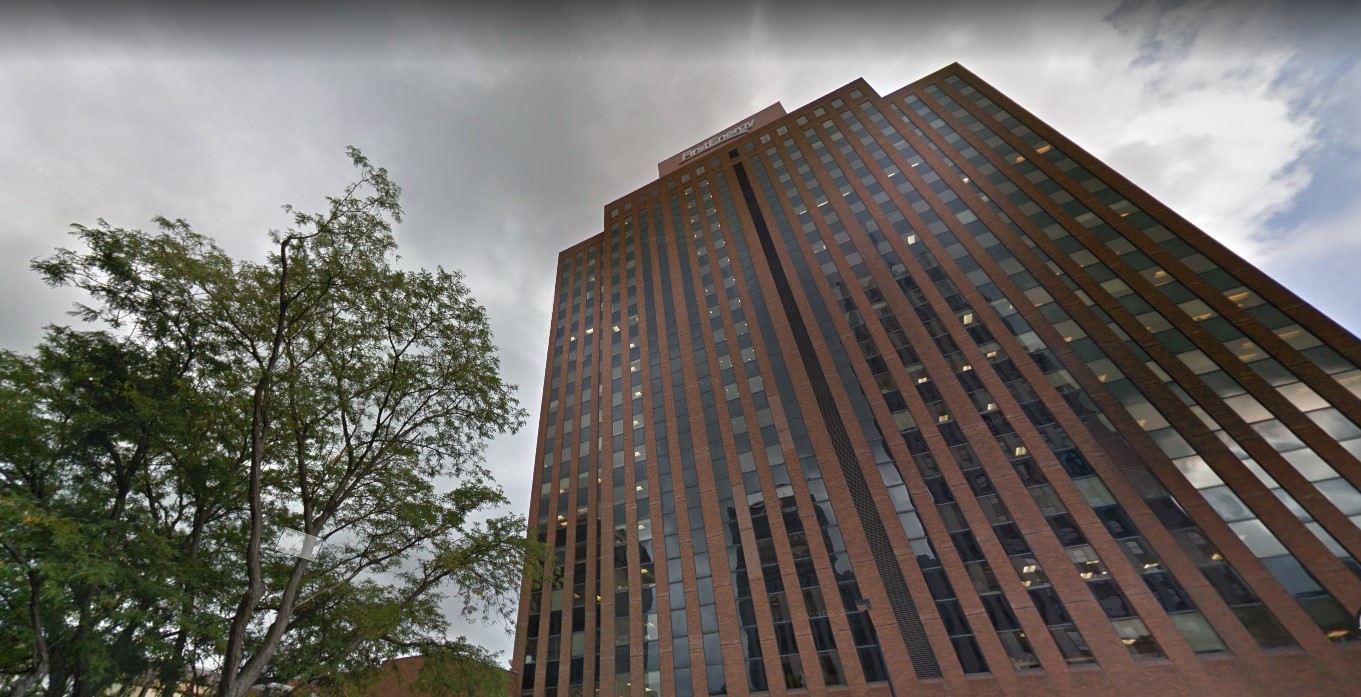
    FirstEnergy’s headquarters in Akron. Source: Google Maps.

    BY: JAKE ZUCKERMAN – Ohio Capital Journal

    In an unusual move in a high-profile lawsuit, a federal judge booted lawyers from a lawsuit they filed against FirstEnergy Corp. for their failure to “diligently prosecute” the case against the scandal-mired company.

    U.S. District Judge John Adams said Wednesday he would appoint counsel on behalf of the shareholders who sued the company in connection with what federal prosecutors have called the largest bribery scandal in state history.

    Both the shareholders and FirstEnergy publicly announced that they’d reached a settlement in March that called for insurers to pay the company $180 million and for the ouster of six board members. One federal judge preliminarily approved the settlement in May, but said he had no authority over the two other judges overseeing the related cases.

    Adams has for months lambasted the plaintiffs for agreeing to settlements without deposing witnesses, reviewing evidence, and shirking other typical fact-finding efforts.

    “As the parties have made clear that they do not intend to prosecute the matter before this Court, the Court will appoint counsel,” he said Wednesday. “Consistent with the Court’s authority to oversee this derivative action to its conclusion, the Court will appoint counsel that will be willing to diligently prosecute this matter and seek approval from this Court of any potential resolution, if one is reached.”

    The lawsuit traces back to the 2019 passage of Ohio House Bill 6 — an energy policy overhaul worth about $1.3 billion to FirstEnergy. In 2020, federal prosecutors arrested then-Ohio House Speaker Larry Householder and accused him and four allies of secretly accepting about $60 million from FirstEnergy and using it for personal enrichment, political gain, and to engineer passage and enactment of HB 6.

    Last summer, FirstEnergy Corp. admitted in federal court to the operation, also stating it paid Sam Randazzo, then Ohio’s top utility regulator, a $4.3 million bribe. FirstEnergy paid a $230 million penalty in connection with the filing and agreed to cooperate in related criminal investigations to possibly avert a federal charge of wire fraud.

    Householder has pleaded innocent and awaits trial. Two of four alleged conspirators have pleaded guilty. One died by suicide. Randazzo has not been charged with a crime and denied wrongdoing.

    FirstEnergy’s shareholders filed a derivative action against the company. This entails the shareholders suing the board of directors on behalf of a corporation for an alleged breach of duties, according to the Legal Information Institute at Cornell University. This allows shareholders to benefit as a derivative of the company’s corrective action.

    Adams called on a clerk to post the order in the court’s “News & Announcements” page. Interested lawyers can write him to express interest by July 25.

    His colorful outbursts have pockmarked the lawsuit. In the first hearing after the proposed settlement was announced, Adams demanded someone in the case answer a simple question: “Who paid the bribe?”

    After repeated attempts went nowhere, Adams told a lawyer for the plaintiffs that the attorney was wasting his time. Adams then stormed from the bench, according to an Akron Beacon Journal report.

    He later threatened to dismiss lawyers from the case if someone didn’t answer his question. An attorney for the plaintiffs later identified the alleged orchestrators of the bribery operation — two FirstEnergy executives — for the first time publicly.

    Last week, he denied a request from both the company and its shareholders that he dismiss the case, which could have cleared the way for the settlement. He cited uncomplete exchange of evidence between parities, no testimony under oath from any defendants, and an incomplete forensic examination to identify “possible missing communications” from FirstEnergy CEO Charles Jones’ phone.

    He also noted that of the $180 million, the settlement allows plaintiff’s lawyers to seek nearly $49 million in fees. Thus, he said it’s “hardly surprising” that they’d prefer the case handled by a judge who’s warmer to the settlement proposal.

    Two attorneys representing the shareholders did not respond to inquiries.

    A FirstEnergy spokeswoman declined to comment, citing pending litigation.

  • Judge rejects bid to settle FirstEnergy bribery suit with shareholders elsewhere

    Judge rejects bid to settle FirstEnergy bribery suit with shareholders elsewhere

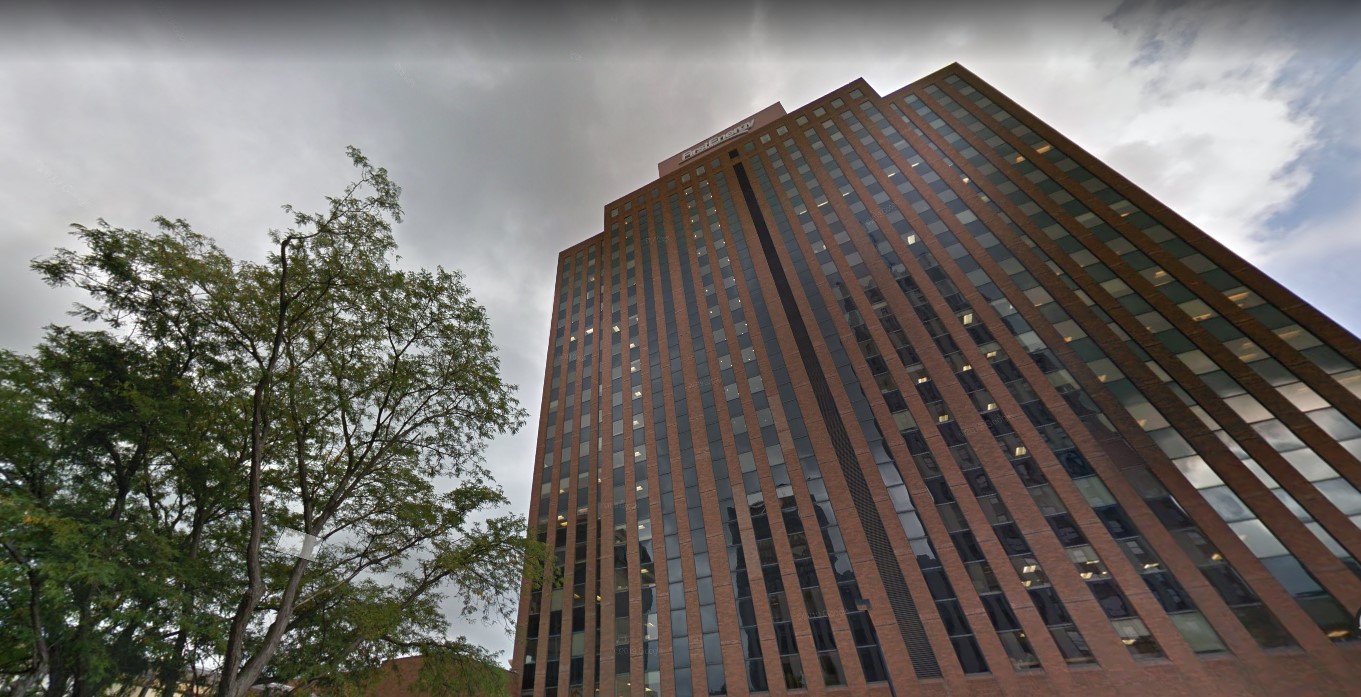
    FirstEnergy’s headquarters in Akron. Source: Google Maps.

    BY: JAKE ZUCKERMAN – Ohio Capital Journal

    A federal judge in Akron has refused to dismiss a lawsuit between FirstEnergy Corp. — which has admitted that it bribed two top Ohio politicians with $64 million — and some of its shareholders.

    U.S. District Judge John R. Adams denied a motion Tuesday, filed jointly by the company and its investors, asking him to dismiss the case in light of a proposed settlement preliminarily agreed to by another federal judge.

    Adams accused the parties of “forum shopping,” or looking for a friendly judge given his previous skepticism of the settlement. He also implicitly accused FirstEnergy of protecting its former CEO’s riches, and the plaintiff’s lawyers of cashing in without properly investigating the company’s scheme.

    The lawsuit traces back to the 2019 passage of state House Bill 6, which included several provisions favorable to FirstEnergy worth an estimated $1.3 billion to the company. This included a massive, ratepayer funded bailout for nuclear plants it owned at the time.

    FirstEnergy admitted in a deferred prosecution agreement last summer that it engaged in the bribery operations, with money flowing from the company to entities controlled by Ohio House Speaker Larry Householder and Public Utilities Commission of Ohio Chairman Sam Randazzo. Householder awaits trial and has pleaded innocent. Randazzo has not been charged and maintained his innocence.

    The agreement required the company to admit to a lengthy proffer of facts, cooperate with ongoing criminal probes, and pay a $230 million penalty to avoid a criminal charge of wire fraud.

    Shareholders have brought three derivative suits against the company over their losses incurred by the scandal — one in state court and two in federal court. In March, FirstEnergy announced it reached a settlement with the shareholders. It called for the company to oust six board members and receive $180 million from company insurers.

    U.S. District Judge Algenon L. Marbley preliminarily approved the settlement in May but said he had no authority over other judges’ cases.

    In Adams’ order Tuesday, he expressed incredulity at the lack of investigative efforts from the plaintiffs and the lack of consequences for some of the defendants.

    The shareholders’ lawyers have claimed, defending the proposal, that this would be the largest settlement of its type in Ohio.

    Big whoop, Adams said.

    FirstEnergy already paid a $230 million penalty, he said. The case record indicates shareholders lost more than $1 billion in value when the news of the initial criminal arrests in the scandal broke and the company’s share price plummeted. The insurance payout is a fraction of these losses. He noted that the small army of plaintiffs’ lawyers on the case could take a sizable chunk of the proposed settlement.

    “Given that counsel is permitted under the settlement to seek up to $48,600,000 in attorney fees, it is hardly surprising that the parties would seek out what they believe to be a more favorable forum,” he said.

    He also noted a finding in a recent regulatory audit that found FirstEnergy could have reclaimed some of the $55 million it paid to then-CEO Chuck Jones during the roughly three-year span of the criminal allegations. Though the company fired Jones, it never invoked the contractual provision allowing it to reclaw the compensation, the audit found.

    In his order, Adams also cited uncomplete exchange of evidence between parities, no testimony under oath from any defendants, and an incomplete forensic examination to identify “possible missing communications” from Jones’ phone.

    While FirstEnergy as a company faces criminal consequences, its executives to date have not. The deferred prosecution agreement the company entered, meanwhile, doesn’t specifically identify who organized the bribery operation.

    Earlier this year, Adams refused to allow any settlement — and at one point stormed off during a hearing — until someone in the case admitted who specifically orchestrated the bribery operation. Counsel representing plaintiffs identified both Jones and fellow executive Mike Dowling as the central operators. The two men are named defendants in the shareholder lawsuit.

    John Camillus, an attorney and “liaison counsel” for some of the plaintiffs, declined to comment.

    A FirstEnergy spokeswoman declined to comment.

    Follow OCJ reporter Jake Zuckerman on Twitter

  • Both FirstEnergy and its shareholders seek secrecy around company’s bribes

    Both FirstEnergy and its shareholders seek secrecy around company’s bribes

    BY: JAKE ZUCKERMAN – Ohio Capital Journal

    Both FirstEnergy Corp. and its shareholders argued to a federal judge that they shouldn’t be forced to publicly disclose which executives ordered the payment of political bribes that the company admitted to in a related criminal case.

    The two parties are awaiting judicial approval of a proposed settlement from a derivative lawsuit filed by FirstEnergy’s shareholders. The settlement would call for FirstEnergy’s insurers to pay the company $180 million for damages incurred via the company’s role in what prosecutors have described as the largest public corruption manifestation in state history.

    In an agreement with prosecutors reached in July 2021, FirstEnergy as a company admitted to a $60 million bribery scheme anchored by the then-Speaker of the Ohio House, and another $4.3 million bribe to Ohio’s then top utility regulator.

    The statement of facts in that agreement, however, anonymizes the FirstEnergy officials involved in the scandal. The agreement also called for FirstEnergy to pay a $230 million penalty and cooperate with investigators to possibly avert a charge of wire fraud against the company.

    Delaying any possible approval in the shareholder’s derivative case, U.S. District Judge John A. Adams asked the shareholders’ attorneys last week to state who at FirstEnergy ordered the bribe payments,

    Jeroen van Kwawegen, an attorney representing the plaintiffs, demurred and didn’t answer the question, prompting Adams to cut short the hearing. Adams then issued an order calling for any “interested parties” to either provide an answer to his question or offer a good reason why they can’t divulge the information. He threatened the lawyers with contempt and possible expulsion from the case for failure to answer.

    The shareholders, in arguments submitted Wednesday, offered to privately tell the judge who at FirstEnergy ordered the bribes. They said they couldn’t do so publicly because doing so would breach confidentiality rules associated with discovery (the pre-trial evidence exchanging process) and mediation.

    The shareholders’ lawyers said their obligations are to their clients and to FirstEnergy itself — not the public.

    “Such public disclosure could also be harmful to FirstEnergy considering the myriad related criminal and civil proceedings, the ongoing regulatory investigations, and the securities class action pending in the Southern District of Ohio where FirstEnergy is a defendant,” they wrote.

    Kwawegen attached emails attached to the filing showing he asked lawyers FirstEnergy and its former executives if they’d agree to voluntarily disclose some of the information. He was rejected by the company, its former CEO Chuck Jones, Dennis Chack, and Mike Dowling (whose lawyer said they are not inclined to provide a “blanket waiver” but asked for specifics). Jones, Chack and Dowling were all fired in October 2020 amid an internal investigation.

    FirstEnergy made similar arguments. The lawsuit and settlement, its lawyers said, are aimed to recover for harm done to the company because of its actions. Any public accountability, they argued, “risks harm to the interests of FirstEnergy and its stockholders, which is exactly the opposite of what a derivative litigation is supposed to do.”

    Notably silent on the issue: federal prosecutors. They didn’t weigh in either way before the court. A spokeswoman for U.S. Attorney for the Southern District of Ohio Kenneth Parker didn’t respond to an inquiry.

    The derivative lawsuit traces back to the passage of House Bill 6 in 2019. The energy overhaul legislation, among other provisions, provided a massive bailout of two nuclear power plants owned at the time by a FirstEnergy subsidiary. Federal prosecutors said the legislation was worth $1.3 billion to the company.

    To ensure it passed and thwart a referendum attempt to repeal it, FirstEnergy admitted to providing $60 million to a nonprofit secretly controlled by then House Speaker Larry Householder, R-Glenford. Householder allegedly used the funds to elect a slate of candidates that would support his bid to become the House Speaker, engineer the bill’s passage, thwart a repeal effort, and enrich himself personally. He has pleaded not guilty and awaits trial, scheduled for January 2023.

    FirstEnergy also admitted to secretly paying $4.3 million to energy attorney Sam Randazzo just before Gov. Mike DeWine named him chairman of the Public Utilities Commission of Ohio. Randazzo has not been accused of a crime and has denied wrongdoing.

  • Utility regulators block watchdog’s requests for info about a buried audit of a $460 million fund

    Utility regulators block watchdog’s requests for info about a buried audit of a $460 million fund

    Photo by Getty Images.

    BY: JAKE ZUCKERMAN – Ohio Capital Journal

    An administrative judge blocked a watchdog’s attempt to obtain an audit that the Ohio utility regulatory agency’s former chairman, who has been accused of taking a $4.3 million bribe, allegedly tried to squash before publication.

    The ruling, released Friday evening, is a setback for the Ohio Consumers’ Counsel, a state funded agency representing residential ratepayers in utility cases. The OCC has pushed for investigations of FirstEnergy, especially since the company admitted to playing a central role in a massive public corruption scandal.

    The OCC asked the Public Utilities Commission of Ohio to grant it a subpoena to obtain a copy of any draft audit into a $458 million charge from FirstEnergy that started in 2017 collected called the “Distribution Modernization Rider.” The OCC also sought to depose an auditor who worked on report.

    The Ohio Supreme Court blocked FirstEnergy from continuing to charge customers for the DMR, two years after it was first applied on monthly bills. The court said the PUCO unlawfully failed to ensure the money is actually spent on modernizing the grid. A subsequent PUCO investigation was inconclusive as to whether the DMR monies were used to fund the bribery operations.

    The Supreme Court’s order questioned the value of leaving intact the audit when it overturned the rider, finding the reviews fail to properly protect ratepayers from the “possible misuse of DMR funds.” Additionally, the justices reasoned that any findings of misuse of the funds would be moot given the court had already blocked the charge and a state law blocked the court from ordering refunds unless PUCO explicitly allows for them, which it did not. The PUCO later nixed the audit, citing the court’s thinking.

    The OCC has previously obtained a text message from FirstEnergy’s CEO referencing former PUCO Chairman Sam Randazzo “burning the DMR final report.”

    The text partially came to light when FirstEnergy entered into a deferred prosecution agreement with the U.S. Department of Justice to possibly avert a charge of wire fraud. The company agreed to pay a $230 million penalty. It also admitted to paying Randazzo $22 million over nine years, including $4.3 million just before he started as PUCO chairman. The company also admitted to a separate $60 million bribery scheme ran through the state Legislature to pass House Bill 6 in 2019.

    Randazzo has not been charged with a crime and has maintained his innocence. The PUCO has received two subpoenas in connection with the investigation.

    PUCO Attorney Examiner Gregory Price denied both the OCC’s requests. He said the facts are clear that no such draft report exists in any form. Additionally, the question of FirstEnergy’s political spending is being “thoroughly addressed” in other PUCO cases.

    Price ruled OCC’s reliance on the Randazzo text shows its “obvious interest in investigating potential wrongdoing” as opposed to matters it “actually has jurisdiction over.”

    In December 2020, about two months after federal agents raided Randazzo’s home, the PUCO opted to resume the audit into the DMR. However, this time it hired Daymark Energy Advisors. That audit, released earlier this year, was inconclusive as to whether the DMR funds were used to fund the HB 6 campaign. FirstEnergy, the auditors said, pooled funds from all its 11 utilities in one pot, creating an “inability” for the auditors to track the funds.

    Price, however, said the final report “appears to fully address whether [FirstEnergy] properly expended the DMR funds.”

    In records the PUCO provided to federal prosecutors, Price is copied onto email threads regarding policy meetings before and after the passage of House Bill 6. As was first reported by Cleveland.com, one email shows Price was invited to one such meeting days before the House passed the bill.

    Other investigations into FirstEnergy, Randazzo and other alleged conspirators continue. Former House Speaker Larry Householder is expected to stand trial on a racketeering charge in connection with the scandal this fall. He recently asked a court to dismiss the charge against him. That motion has not yet received a ruling.

    Meanwhile, FirstEnergy shareholders have filed a class action lawsuit against the company as well.

  • FirstEnergy paid $4.3 mil to top energy regulator and reaped the benefits, court docs state

    FirstEnergy paid $4.3 mil to top energy regulator and reaped the benefits, court docs state

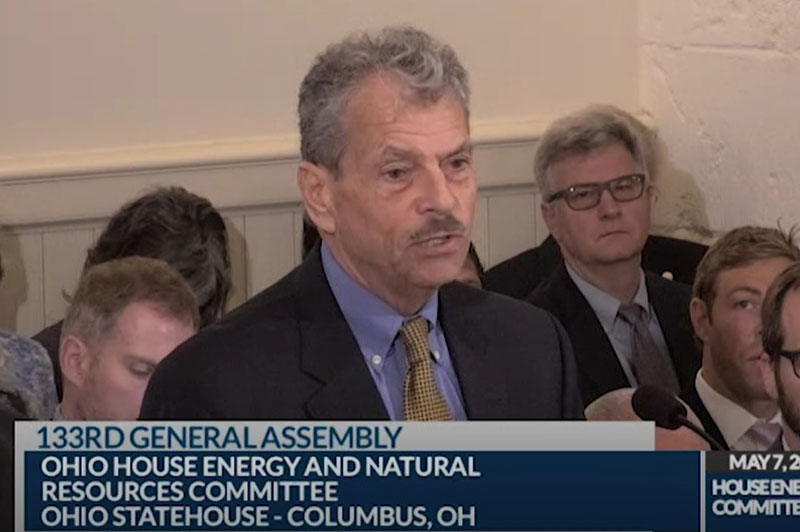
    Then-PUCO Chair Sam Randazzo testifies as an interested party regarding House Bill 6 on May 7, 2019.

    Source: Ohio Channel.

    “HB 6 F(***) ANYBODY WHO AINT US,” the executive wrote.

    BY: JAKE ZUCKERMAN and Ohio Capital Journal

    An energy lobbyist who Gov. Mike DeWine appointed as the state’s top regulator of public utilities received $22 million from FirstEnergy Corp. in the decade before his appointment — including $4.3 million paid just before assuming the post and specifically to execute official duties to benefit the Akron-based utility — court documents revealed Thursday.

    Sam Randazzo, who resigned as chairman of the Public Utilities Commission of Ohio after federal agents raided his Columbus home, used his PUCO chairmanship to scuttle a requirement that FirstEnergy undergo a rate review set for 2024, which company executives believed would hurt its bottom line, the documents state.

    FirstEnergy entered into a deferred prosecution agreement — in which the U.S. Department of Justice could drop the charge if the company meets certain conditions including a $230 million criminal penalty — on one count of wire fraud.

    It also agreed to a stipulation of facts detailing its nearly $61 million in payments to an account the former speaker of the Ohio House allegedly controlled and spent to pass House Bill 6, legislation worth an estimated $1.3 billion to the company.

    Thursday’s filing, however, is flush with new details about FirstEnergy’s long relationship with Randazzo, dating back to a contract in 2010 and a consulting deal inked in 2013.

    The agreement states one FirstEnergy executive texted another on Nov. 15, 2019 that Randazzo is “going to make the requirement [for a rate review] to file go away, but I do not know specifically how he plans to do it.” The document doesn’t directly identify the executives.

    On Nov. 21, 2019, PUCO issued an order finding it is “no longer necessary or appropriate” that three utilities owned by FirstEnergy file a new case when its current rate structure expires in 2024.

    Executive 1 thanked Randazzo via text the next day, according to prosecutors, attaching an image showing the company’s stock price increasing.

    An email for Randazzo on file with the Supreme Court is no longer in operation. In a statement obtained by the Cincinnati Enquirer, he said he executed his duties as chairman lawfully and denied performing any action to advance FirstEnergy’s interests. He said all payments to him were made under his consulting agreement with the utility.

    “In the fall of 2020, it became clear that issues surrounding House Bill 6 and a public attack on my background and character had escalated to a point that made it impossible for me to effectively perform my duties at the PUCO,” he said, explaining his choice to step down.

    According to prosecutors, Executive 1 and Executive 2 met Randazzo at his condo in late December 2018 to discuss remaining $4.3 million on his consulting agreement and a job posting for a PUCO seat. FirstEnergy had no legal requirement to make the payment but did so anyways.

    When a related court filing divulged Randazzo’s company accepted payments from FirstEnergy, executives worried the disclosure would torpedo the appointment. However, it only “grazed the temple,” they said, and forced “State Official 1” and “State Official 2” to perform “battlefield triage.”

    The governor nominates PUCO commissioners off a shortlist from a nomination council. A DeWine spokesman did not answer specific inquiries, including whether the governor is one of the unmentioned state officials.

    “As I have consistently said, we understood that Sam Randazzo had worked for manufacturing companies, energy companies, and consumers, and that he had done work for First Energy. Sam Randazzo was a well-known subject-matter expert in energy issues,” the governor said in a statement. “If, as stated in the court documents, Sam Randazzo committed acts to improperly benefit First Energy, his motives were not known by me or my staff.”

    Haley Carducci, a spokeswoman for Lt. Gov. Jon Husted, didn’t specifically answer whether Husted is one of the two state officials.

    “The Lt. Governor has not been contacted by any federal law enforcement officials regarding this case, so we have no reason to believe that he is mentioned in this document,” said Husted spokeswoman Haley Carducci.

    Along with Randazzo’s help on the regulatory side, the agreement states that he helped craft and review language of House Bill 6 including a “decoupling” provision, which created a ratepayer backed guarantee of FirstEnergy’s revenues at 2018 levels, a good year for the company. The bill also bailed out two nuclear plants owned by a former FirstEnergy subsidiary; bailed out two coal plants owned by a spread of different utility companies; and gutted the state’s renewable energy and efficiency standards.

    Randazzo has deep ties to the fossil fuel energy industry. He worked as a lobbyist and lawyer for the Industrial Energy users Ohio, which represents interests of energy-intensive manufacturing and commercial business before the PUCO.

    Lobbying records show he represented Greenwich Neighbors United, which fought off a potential wind farm development in Huron County; the Ohio Gas Company; and Vectren Corp., a natural gas company.

    As a donor, he contributed more than $282,000 to state candidates over 23 years, according to an analysis from the National Institute on Money and Politics. More than $194,000 went to Republicans, $36,000 to Democrats, and $48,000 to candidates of unspecified parties.

    When his name appeared on a short list of potential candidates for DeWine to choose, a spread of environmental groups wrote a letter outlining “serious concern” for Randazzo’s “extreme bias” against clean energy.

    “Mr. Sam Randazzo has worked earnestly to dismantle Ohio’s energy efficiency resource standard and renewable portfolio standard (RPS) since 2012 via multiple pieces of legislation,” they wrote. “He was supportive of the legislation that froze Ohio’s standards for two years, worked behind the scenes with the study committee that issued a faulty report allegedly assessing the costs and benefits of the RPS and EERS, and even continued to push the repeal and weakening of these standards after Governor Kasich’s veto of a bill that would have essentially eliminated the standards.”

    The Ohio Consumers Counsel, a state agency that represents residential ratepayers before PUCO, issued a statement after news broke of the filing.

    “The public got some justice today regarding the Ohio House Bill 6 scandal and FirstEnergy,” said agency director Bruce Weston. “But justice is also a longer road that requires state reforms to curb the utilities’ political influence that is costing Ohioans money on their utility bills.”

    Rep. David Leland, D-Columbus, said the information about Randazzo places the scandal right on DeWine’s doorstep.

    “This, combined with the significant money FirstEnergy gave to his campaign makes it clear that Governor DeWine needs to come clean to the people of Ohio about his role in this historic scandal,” he said.

    Catherine Turcer, director of Common Cause Ohio, which frequently advocates for anti-corruption and campaign finance reform legislation, said the entire episode highlights that current law allows some political entities to spend enormous sums of money without ever disclosing the source.

    “Clearly, Ohio legislators also need to create greater transparency so that voters can ‘follow the money’ and determine who is funding political spending by all entities including nonprofits. It’s not yet too late for us to pass new laws that will shine a light on ‘dark money,’” she said. “However, our state legislative leaders need to act with urgency and make transparency and accountability a top priority — or Ohioans will undoubtedly face yet another embarrassing scandal.”

    Shortly after HB 6 passed, a FirstEnergy executive texted Randazzo, according to prosecutors. Attached was an edited image of Randazzo’s face atop Mount Rushmore, with FirstEnergy executives and lobbyists alongside him on the iconic monument.

    “HB 6 F(***) ANYBODY WHO AINT US,” the executive wrote.

  • FirstEnergy admits it controlled dark money group started by DeWine aide

    FirstEnergy admits it controlled dark money group started by DeWine aide

    BY: MARTY SCHLADEN and Ohio Capital Journal

    Columbus, Ohio – The mammoth scandal surrounding a 2019 energy bailout appeared to creep closer on Thursday to the administration of Ohio Gov. Mike DeWine.

    FirstEnergy said in a deferred prosecution agreement that the man DeWine appointed to lead the Public Utility Commission of Ohio took a $4.3 million payment and then acted on behalf of the Akron-based power company instead of as the state’s top regulator. 

    That man, Sam Randazzo, has resigned. 

    But FirstEnergy also helped control a 501(c)(4) “dark-money” group started by a senior DeWine aide while he was still a FirstEnergy lobbyist, the agreement showed. The company passed a torrent of money through the secretive group as part of a successful $61 million effort to buy a $1.3 billion, ratepayer-funded bailout, the document FirstEnergy signed off on said.

    While Acting U.S. Attorney Vipal J. Patel slammed the dark money group, DeWine and the aide, Legislative Affairs Director Dan McCarthy, didn’t respond to requests for comment. DeWine has staunchly defended McCarthy since the scandal broke almost exactly a year ago.

    Patel held a press conference in Cincinnati on Thursday to announce that his office had entered into a deferred prosecution agreement with FirstEnergy. The company will pay $230 million and, if it lives up to the terms of the agreement, will have a charge of conspiracy dismissed.

    Former Ohio House Speaker Larry Householder, R-Glenford, has been charged in the case. He was stripped last year of his speakership and he was ejected from the House earlier this year.

    Two of Householder’s associates charged in the case have pleaded guilty and a third, Neil Clark, took his own life in March.

    For its part, FirstEnergy fired CEO Chuck Jones and two other executives and is conducting an investigation of its own.

    In Cincinnati Wednesday, Patel stressed that the investigation is continuing. But he wouldn’t comment on matters other than the agreement with FirstEnergy. 

    DeWine aide McCarthy hasn’t been charged and last summer, he denied wrongdoing. But Partners for Progress, the dark-money group he founded, was a topic of the prosecution agreement.

    Then still a FirstEnergy lobbyist, McCarthy founded it, “weeks after certain FirstEnergy Corp. senior executives traveled with (Householder) on the FirstEnergy Corp. jet to the presidential inauguration (of Donald Trump)  in January 2017,” the agreement said.

    The prosecution agreement added, “Although Partners for Progress appeared to be an independent 501(c)(4) on paper, in reality, it was controlled in part by certain former FirstEnergy Corp. executives, who funded it and directed its payments to entities associated with public officials. 

    “For example, FirstEnergy Corp. executives directed the formation of Partners for Progress and decided to incorporate the entity in Delaware, rather than Ohio, because Delaware law made it more difficult for third parties to learn background information about the entity. Certain FirstEnergy Corp. executives were also involved in choosing the three directors of Partners for Progress, two of whom were FirstEnergy Corp. lobbyists.”

    Millions would flow through Partners for Progress while McCarthy was its president and tens of millions more would later run through it and into the furious effort to pass the bailout after McCarthy resigned to become DeWine’s legislative affairs director in early 2019.

    The prosecution agreement also appears to refer to McCarthy as “Official Aide 1”  as he worked on DeWine’s behalf to help pass the bailout that DeWine would sign later that year.

    It cites emails among energy executives saying that Official Aide 1 and others were “fighting” to extend the term of a bailout of two failing nuclear reactors in Northern Ohio.  It also cites a text-message discussion between a FirstEnergy executive and the aide about language that would make the bailout harder to challenge in a referendum.

    And in the press conference, Patel said the scandal would never have happened if not for the dark-money group of which McCarthy was president and another, Generation Now, which has pleaded guilty.

    “This effort would not have been possible — both in the nature and the amount of the money provided — without the use of 501(c)(4)s,” Patel said.

    The acting U.S. attorney called the scheme, and even the name of McCarthy’s former dark-money group, dishonest.

    “These are supposed to be, according to the (tax) code, social welfare organizations. You all see a lot of social welfare going on? I don’t,” Patel said, adding, “What about these names? Partners for Progress? What are the partners here? The conspirators? What’s the progress? Passage of (the energy bailout) through bribery?”

    While DeWine’s office didn’t respond to questions on Thursday, the governor in February defended his legislative affairs director.

    “As far as I know, Dan McCarthy has been well-respected for many, many years, long before he started working for me as our legislative director and I have faith in his integrity,” DeWine said.

    For Dayton Mayor Nan Whaley, a Democrat challenging DeWine in the 2022 election, that’s not good enough.

    “Today’s charges make clear that this corruption case reaches the highest levels of government in Ohio,” she said in a statement. “Enough is enough. It’s time for Gov. DeWine to come clean about his knowledge and involvement in this scandal.”

  • Consumer protection? New DeWine regulatory chief says most overcharges can’t be refunded

    Consumer protection? New DeWine regulatory chief says most overcharges can’t be refunded

    Getty Images

    By Marty Schladen and Ohio Capital Journal

    Gov. Mike DeWine’s latest appointee to lead Ohio’s scandal-plagued utility regulator last week raised concerns among some lawmakers and consumer watchdogs. She claimed that her agency has only a very limited ability to make electric companies refund billions in improper charges to ratepayers.

    There was always going to be scrutiny when Jenifer French made her first appearance last Wednesday before the Ohio Senate and Public Utilities Committee. 

    DeWine appointed her in March to chair the Public Utilities Commission of Ohio. DeWine’s first appointee, Sam Randazzo, resigned in November after the public learned that a lobbyist believed to be Randazzo got a $4.3 million payment from Akron’s FirstEnergy just as Randazzo took over as Ohio’s top utility regulator. 

    For its part, FirstEnergy last year fired its top executives after discovering the payment to Randazzo — and after federal prosecutors accused it of being at the center of a $61 million bribery scandal that resulted in a $1.3 billion bailout that greatly benefited FirstEnergy and associated companies.

    French, a former Franklin County Common Pleas judge, told the Senate committee that she wanted to use her background to restore public confidence in the agency. 

    But Sen. Mark Romanchuk, R-Ontario, wanted to get down to specifics.

    “You mentioned something about public trust and public trust, I believe, is fixing this refund problem,” he said. “Since 2009, there has been about about $1.5 billion that has been deemed improper at the court and that money was not refundable back to the ratepayers — the people who paid that money.”

    Romanchuk was referring to charges that the PUCO allowed, but that the Ohio Supreme Court later struck down as illegal. 

    The funds include $456 million FirstEnergy got, supposedly to modernize the utility grid. But at least some of the money was placed into a pool that FirstEnergy’s out-of-state utilities could borrow from. 

    Allowing electric companies to pocket improper proceeds from ratepayers is not a business-friendly practice, Romanchuk told French.

    “That was $1.5 billion that was pulled out of our economy, and I would argue that’s not a good thing as we compete with other states and other countries around the world,” he said.

    French replied, in essence, that while her agency has the power to allow rate increases, it has scant power to get the money back when the increases are ruled to be illegal. 

    At issue is why the PUCO, when it grants rate increases, doesn’t routinely say they’ll have to be refunded if the courts strike them down or if the utilities don’t use the money as they promise.

    “My understanding is that there are very limited circumstances in which the PUCO can set rates that are capable of being refunded at the end,” French said. “For the most part, it’s the call of the legislature.”

    Romanchuk disputed that. He pointed to a 2019 Ohio Supreme Court decision saying that if the PUCO had built a refund mechanism into the “rider” that allowed FirstEnergy to collect $456 million, it could have forced the company to pay it back when an audit showed the money wasn’t used for its stated purpose.

    The decision said that a 1953 law “bars any refund of recovered rates unless the tariff applicable to those rates sets forth a refund mechanism… FirstEnergy’s tariffs for the modernization charge, however, contain no refund mechanism.”

    French said she was unfamiliar with that decision. 

    A year before, the court said something similar in a case in which FirstEnergy was allowed to make yet another upcharge. In that case, the PUCO was asking that the company refund $43 million in “imprudent” purchases of renewable energy credits.

    Referring back to its 1957 Keco Industries v Cincinnati decision, the court said that refunds would amount to illegal “retroactive ratemaking” because the fees the utilities ended up collecting would differ from those filed in the original tariffs. In other words, once a rate is legally set, the PUCO can’t change it willy-nilly, the decision said.

    But the 2018 decision additionally said this: “FirstEnergy also asserts that the plain language of (the 1953 law) bars any refund in this case because the ($43 million) rider did not specify a refund process. We agree.”

    So why wouldn’t refunds be legal under Keco if a provision for them is a part of the original order?

    French said it was her understanding of the Keco case that unless a rate increase was of a special type — a “reconciled rider” — the only way refunds can happen is if the General Assembly changes the law.

    “If it is not provided for in a law… or a reconciled rider, refunds would require a statutory change,” she said. “I think the Supreme Court was very clear about that. If there are opportunities for us by statute to be permitted to determine whether a rider is refundable or not, certainly that is something we would look into.”

    That rationale can be hard to understand. In emails, PUCO spokesman Matt Schilling was asked why his agency doesn’t routinely make a refund mechanism part of any rate increase.

    He said the decisions to which French and Romanchuk were referring relied on two separate authorities. French was talking about the Keco decision, while Romanchuk was talking about a decision based on the 1953 statute, Ohio Revised Code 4905.32.

    Neither, however, uses the term “rider” and none of the subsequent Supreme Court decisions Schilling provided contains the term “reconciled rider.”

    The state’s official consumer watchdog, the Ohio Consumers’ Counsel, said nothing stops the PUCO from building refund mechanisms into rate hikes that are later ruled to be unlawful.

     “In the words of former Supreme Court Justice Paul Pfeifer, it ‘boggles the mind’ that Ohio consumers are denied refunds of utility charges after the court finds a PUCO order to be improper,” spokesman J.P. Blackwood said in an email. He added that PUCO commissioners seem to be substituting their own judgement for that of the Supreme Court. 

    “That PUCO commissioners have protected utilities more than consumers by not making certain charges refundable, further shows that the selection process for PUCO commissioners needs reform,” he said. 

    Last Wednesday, Sen. Teresa Fedor, D-Toledo, put those sentiments more succinctly.

    “It’s time for the board members of the PUCO to start siding with the citizens of Ohio,” she said.

  • Open Government and Consumer Advocates Urge More Transparent Application Process for PUCO Applicants

    Open Government and Consumer Advocates Urge More Transparent Application Process for PUCO Applicants

    On December 21, a collection of open government and consumer advocates and former Statehouse reporters who championed open and accountable government called on Governor Mike DeWine to require additional financial disclosure from applicants to the Public Utilities Commission of Ohio (PUCO). 

    Their letter calls for the governor to require all finalists to disclose all work they have done with utilities, their consultants, and lobbyists over the past 10 years including the nature of the work performed and the amount of compensation received.

    “Ohio’s financial disclosure requirements are simply inadequate,” said Catherine Turcer, executive director of Common Cause Ohio. “We are urging Governor DeWine to require more robust disclosure for the applicants before he considers appointing one of them to the Public Utilities Commission. Ohioans should be able to ‘follow the money’; such disclosure will help Governor DeWine identify conflicts of interest and could help head off future problems.”

    Faith in the PUCO was shaken by last month’s revelation that FirstEnergy made a mysterious payment of $4 million to an official tasked with regulating the company.  This filing with the Security and Exchange Commission revealed that this $4 million payment in 2019 was to terminate “a purported consulting agreement” that had been in place since 2013.  

    Although the November 19th filing did not name the recipient of the money, Sam Randazzo fits the description of someone who “subsequently was appointed to a full-time role as an Ohio government official directly involved in regulating” FirstEnergy.  Randazzo was appointed chairman by Gov. Mike DeWine on February 4, 2019. The filing came after the FBI raided Mr. Randazzo’s condo as part of its ongoing investigation into corruption at the Statehouse.

    A check of Randazzo’s financial disclosure statements lists no $4 million payment from anyone. It does, however, show that he was paid an unknown amount by the Sustainability Funding Alliance of Ohio, a company he incorporated in 2010. The Sustainability Funding Alliance also turned up in a 2018 bankruptcy filing among the companies used by FirstEnergy’s generation subsidiary, FirstEnergy Solutions. It is precisely these kinds of self-dealings and conflicts of interest that could and should be exposed with more financial stringent disclosure requirements for future PUCO applicants. We should not need the FBI to expose after-the-fact the financial ties and machinations of PUCO applicants.   

    Signatories to the letter include Douglas Jones, Director Emeritus National Regulatory Research Institute; Tom Roberts, NAACP Ohio Conference; Brandi Slaughter, Ohio Council of Churches; Jen Miller, League of Women Voters of Ohio; Catherine Turcer, Common Cause Ohio; Joe Hallett, Toledo Blade, The Plain Dealer, Columbus Dispatch 1985-2014; T.C. Brown, The Plain Dealer 1989-2006; Ted Wendling, The Plain Dealer 1999-2006; Will Skora, Open Cleveland; Jim Underwood, Horvitz Newspaper, The Plain Dealer 1985-1993.

    Former PUCO Commissioners Ashley C. Brown, J. Michael Biddison, and Todd Snitchler also sent a letter today to Gov. DeWine urging the Public Utilities Commission to launch a Commission Ordered Investigation (COI).

    Click here for a letter that Common Cause Ohio sent to the current members of the PUCO requesting that they provide additional financial disclosure to the public. 

    To read the letter from open government and consumer groups and advocates to Gov. DeWine, click here.

    To read the letter from former PUCO members to Gov. DeWine, click here.