Loveland, Ohio – Homeowners in Glen Lake subdivision, Tom Vargo, and Mack Fey continue to voice the problem of a collapsing storm drain between their homes. Out of seven storm drains in the subdivision, two are labeled as ‘private’, the one landing in between Vargo and Fey’s houses being one of them.
Vargo maintains that the City keeps the other five in working order.
This particular storm drain catches runoff water from about 8-10 houses in the immediate neighborhood. Since March, the two have been communicating with the City of Loveland to understand why it is private and steps to fix it.
One temporary solution would be to add an insert to prevent the ground from caving in which would end up costing Fey and Vargo $20,000 of their own money for a 114 feet worth of storm drain from their backyard to the street. Vargo and Fey don’t believe they should shell out that kind of money now when in the past City Hall had stepped up to the plate and admitted responsibility. Twice under previous administrations, the public works department has made repairs.
In terms of what they would like to see happen, Vargo commented, “I would say first and foremost, I would like to get [the collapsing storm drain] fixed. I’m just afraid that somebody’s going to get hurt. Mack has grandchildren, I have grandchildren, they do come out and run around, now, we watch them, but, still know you can’t watch them every second they’re out here, so I would like to get it fixed but I really think… we need to talk. We need to figure out why the City is not fixing the sinkhole. Just because it’s private? Is that the City’s only claim to fame here?”
After months of contacting the City Hall, Vargo and Fey still don’t have the answers they are looking for. City Manager Dave Kennedy told the homeowners he would visit, even suggesting it and would bring the City engineer with him. The visit never happened and now, the only communication Vargo and Fey have received is from the City’s attorney.
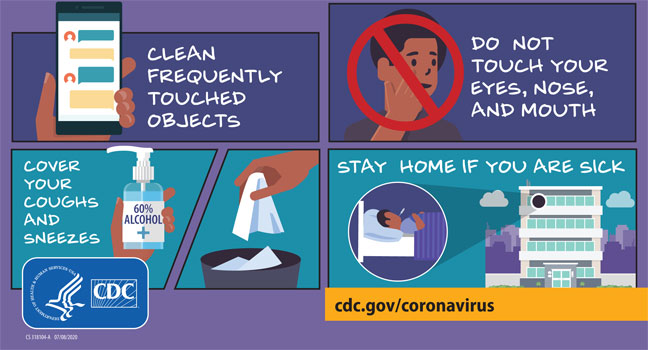
Columbus, Ohio – Lance D. Himes, interim director of the Ohio Department of Health (ODH), is calling on Ohio teens and young adults to take precautions to protect themselves and others against the dangers of COVID-19.
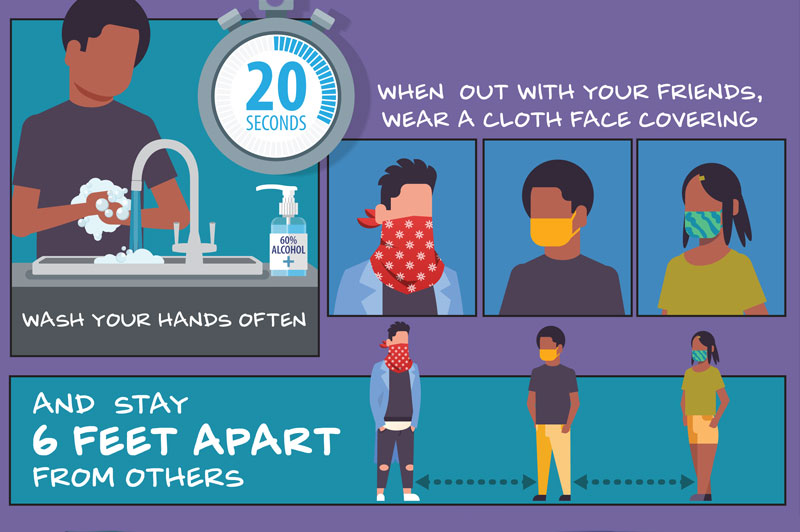
Himes said it is essential that young people stay home and away from others if they are sick, adhere to 6-foot social distancing, and wear facial coverings when they go out. Avoid gathering in large crowds, huddling in groups, and sharing hugs or drinks.
“Young people have given up a great deal since this pandemic first hit and are eager to get back to normal,” Himes said. “I thank them for their sacrifices and urge them to create a new normal in which they find ways to safely socialize, wear masks, keep a safe distance, and look out for one another.”
ODH has prepared guidelines for parents and others for talking with young people about COVID-19. The guidelines include tips for preventing the spread and navigating new social norms. The Centers for Disease Control and Prevention also has produced a series of fact sheets for young adults:
The average age of people with COVID-19 in Ohio has been steadily decreasing, showing that more and more young people are being exposed, and have become ill. Even those who don’t experience symptoms or only mild ones can unknowingly carry the disease and pass it to parents, grandparents, or other family and friends who may become seriously ill.
“Teens and young people must do everything in their power to protect themselves, their families and friends, and all Ohioans against this very real and very serious threat,” Himes said.
Taking steps to prevent COVID-19 also shows appreciation and offers protection for essential workers who provide healthcare and deliver food, packages, and other items. Further, reducing the spread of the pandemic is critical to prevent hospitals from becoming overcrowded. Overcrowded hospitals and overburdened healthcare workers make it more difficult to care for patients in critical need—a grandparent suffering from COVID-19, an aunt having complications delivering a baby, a father with chest pain, or a friend hurt in a car crash.
“Teens and young people must do everything in their power to protect themselves, their families and friends, and all Ohioans against this very real and very serious threat,” Himes said. “You will save lives, prevent suffering, and help tame a pandemic that places all of us at risk.”
Active children and adults, people with heart and lung disease, including asthma, and older adults should reduce prolonged or heavy outdoor exertion.
Air Quality Forecast is 105 AQI for Thursday, July 17
The Southwest Ohio Air Quality Agency has issued an Air Quality Alert for Friday, July 17 for Butler, Clermont, Hamilton, and Warren counties in Ohio; Boone, Campbell, and Kenton counties in Kentucky; and Dearborn County in Indiana.
You can help protect those most vulnerable
• Take the bus, carpool, bike or walk instead of driving
• Refuel your vehicle after 8 p.m.; do not top off when refueling and tighten the gas cap
• Avoid idling your vehicle
• Combine trips or eliminate unnecessary vehicle trips
• Keep your vehicle maintained with properly inflated tires and timely oil changes
• Avoid use of gasoline-powered lawn equipment on Air Quality Advisory days
• Avoid use of oil-based paints and stains on Air Quality Advisory days
• Never burn leaves or other yard trimmings
• Always burn clean, seasoned wood in outdoor fire pits, fireplaces and wood stoves
• Do not use fire pits or fireplaces for non-essential home heating on Air Quality Advisory days
• Conserve electricity
You can check the current air quality by clicking on this image and entering a ZIP Code.
If you find that having this type of local news adds value to your quality of life, kindly consider contributing to the cost of producing it.
Mihaela Manova is a Loveland Magazine writer and is “Covering Climate Now” as an Editor for Loveland Magazine
By Mihaela Manova
I
n recent months, as advocacy towards a better future of equality skyrocketed, Instagram feeds exploded with links, pictures, and disgust towards the treatment of Black Americans in 2020, (the year of change in every way possible). While cheering on #BlackLivesMatter ( while of course donating/advocating/signing petitions) and the people involved in creating this new world, a topic within this movement has popped up repeatedly. And this topic is education. Education towards cultures, races, sexes, and especially the history of how some are born with privilege while others are not.
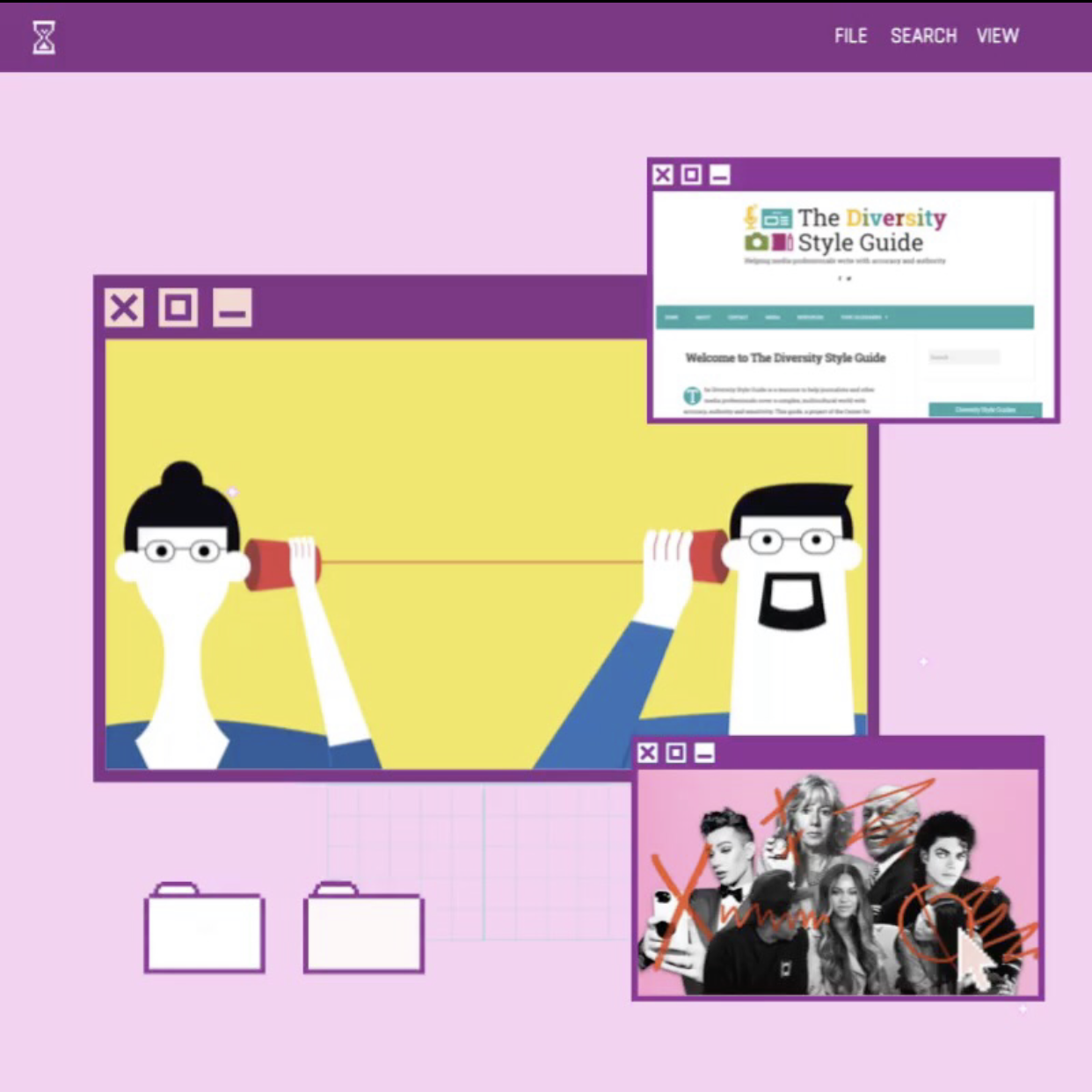
As an aspiring journalist who still has much to learn, I came across the Diversity Style Guide for journalists, an online dictionary with the intent to provide “accuracy, authority, and sensitivity” to complex topics that need to be covered. The themes included cover every parameter of race, sexuality, gender, immigration, etc. and are useful to journalists in being truthful and especially, cultured.
Here is what I learned.
“This is not a guide to being politically correct.”
What is The Diversity Style Guide?
To start off, this guide was developed as a project of the Center for Integration and Improvement of Journalism at the San Francisco State University. According to the website, it “brings together definitions and information from more than two dozen style guides, journalism organizations and other resources.” Historically, this resource was developed in the 1990s by CIIJ’s News Watch program which then paved the way for a newly updated one (this one).
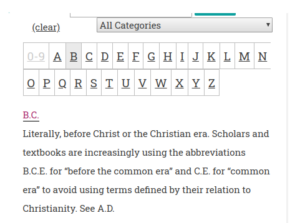
Conglomerated into this one guide, its contents include terminology related to “race/ethnicity, disability, immigration, sexuality and gender identity, drugs and alcohol, and geography.” An exemplar here shows the structure of how the guide works, alongside a glossary for easy use.
(From top to bottom) The glossary organizes each topic in alphabetical order, with the terms and definitions placed in a “dictionary” type of style.
While easy to use, the guide does have its disclaimer. “This is not a guide to being politically correct. Rather, it offers guidance, context and nuance for media professionals struggling to write about people who are different from themselves and communities different from their own.” In other words, one definition cannot portray and explain a complex topic, but the definition itself will offer guidance for those who are writing about it. The actual meanings and definitions of each term are prepared in a way that are taken directly from a credible source, linking those sources at the bottom of each entry’s definition.
Led by Rachele Kanigel, this free resource is managed and monitored by a team of professionals who help with the writing and editing of all definitions.
Why we need it today.
As of the past few weeks, people (both journalists and non-journalists) have scrambled to report on various news, most importantly the #BlackLivesMatter movement and the suppressed news stories that call justice for Elijah McClain and Breonna Taylor.
Posts were made for people to learn how to be proper allies, learn history and definitions of derogatory terms, to be told to stand up for Black Americans when you are in your place of privilege. Now, as a part of a needed, everlasting education on how we need to continue to stand together and fight for racial justice, we must open our minds and eyes to what is happening around us, even if it is not happening to us directly.
As an effort to continue the movement after the Instagram feeds turn back to selfies and beach photos, as journalists and people who provide commentary on the internet, we need to make an effort in understanding and spreading credible information pertaining to a person’s culture, race, sexuality, etc.
Good uses vs the bad
As a source like this can increase the right way to report people or events, there are two categories that companies, brands, or even publications fall under. Performative or genuine allyship to movements. Now, as this may seem more recent, a source like this online dictionary can define what Pride month is (for example), with then brands taking initiative to promote themselves in a genuine or fake manner.
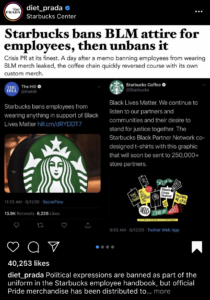
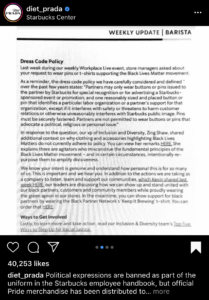
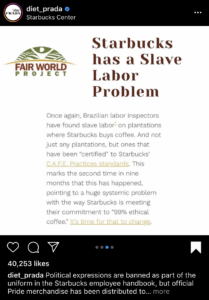
Take another example, a social media source under the name of DietPrada, exposing industry titan Starbucks for promoting #BlackLivesMatter after banning employees for wearing anything in support of that movement. In turn, social media users condemned them for their wishy-washy behavior when concerning this serious movement. In the same post, DietPrada reports of past misdeeds that the company has been practicing in an addition to the breaking news.
Here are their posts:
One of DietPrada’s posts, talking about the hypocrisy of industry titan Starbucks.
Details of Starbucks dress code policyThe past of Starbucks
From our own staff
Tying this back to our own local town, we as journalists need to practice education on behalf of the pieces that we write and especially about the events/people we portray. We have asked our Loveland Magazine Staff a couple questions about the use of this style guide and the need for better awareness on the internet.
David Miller, Editor in Chief, Loveland Magazine
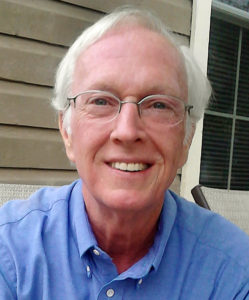
David Miller
Q: During your years in the publication, have you witnessed an evolution of more knowledge from writers (about sensitive topics) in the publication?
DM: My entrance probably came when my daughters were in high school and I realized I wanted them to have the same opportunities as men. I also specifically remember my younger daughter taking runs on the Loveland Bike Trail, knowing she probably should not be running alone and thinking “boys” at this age were safe. But why not girls”? It was those kinds of things, those common ordinary everyday pleasures that “girls” were deprived of.
I began asking myself and others, “Why do we call adult women, girls? Why do adult women call themselves, girls?”
Words are so very important. I’ve tried to remove the word “girl” from our pages as much as possible when we should be saying “women” or “young women”. It’s never been about being politically correct, but about opportunity and making our community in many ways, safer and not diminishing accomplishments and potential.
In our sports writing especially I am moving along slowly but surely to remove diminishing language. I bristle when I hear the term “Lady Tigers” but never “Gentlemen Tigers.” For instance, when referring to the sport of soccer, the mostly male dominated industry of sports writing whether it come from media sources or the male dominated league or conference leadership, we would see references to Loveland Tigers when referencing the men’s team, but Lady Tigers when referencing the women’s team. It seems diminishing.
We have changed the language to simply Women’s Soccer and Men’s Soccer. When receiving press releases about team up-dates, why are the men’s teams always listed first? We started being intentional and made sure we were mixing the order. If we would see an announcement about “Most Valuable Players Announced,” we have to be aware of the male dominated industry will invariably list the male recipient first.
Appropriate wording is that someone died by suicide. I have intentionally used phrases or language that might help lessen the stigma of mental illness.
There has been much discussion about whether the w in White and the b in Black should be capitalized. Actually that very discussion last month from a trusted colleague led me to the Diversity Style Guide from the Center for Integration and Improvement of Journalism at San Francisco State University. That is why I asked the staff at Loveland Magazine to review it for possible adoption by our newspaper.
One’s internal, deeply held sense of one’s gender is what we will respect. We will use gender-neutral pronouns. I have never shied away from asking the direct question about a person’s preference when the occasion or need arises.
“For transgender people, their own internal gender identity does not match the sex they were assigned at birth. Most people have a gender identity of man or woman (or boy or girl). For some people, their gender identity does not fit neatly into one of those two choices. Unlike gender expression, gender identity is not visible to others. See gender expression.” – The Diversity Style Guide
Here are two other things I have learned along my journey. The word Gypsy (sometimes capitalized as a proper noun when referring to the ethnic group and sometimes spelled Gipsy) has negative connotations and many Romani people see it as a racial slur. In general, it’s best to use Romani or Roma people when referring to the ethnic group unless people self-identify as Gypsies. The term gyp, which means to cheat or swindle, likely comes from Gypsy and is seen as a negative stereotype of Roma as swindlers and thieves and will not be used in Loveland Magazine.
The “R” word has long been banned from Loveland Magazine.
We will use and allow terms such as mentally disabled, intellectually disabled, developmentally disabled. Likewise, words like “Libtard” which is a blend of the word liberal and this slur will never be allowed in Loveland Magazine.
Cassie Mattia, Writer and Associate Editor
Cassie Mattia
Q: With your experience in the world of journalism, does having knowledge of knowing terms that are specific to (gender, sexuality, race, etc), make a journalist different from the standard?
CM: In my personal experience as a journalist that has experienced this world on multiple platforms, I think having knowledge of what terms to use specifically in regards to gender, sexuality, and race is definitely an added bonus! I would say the standard for a journalist in this day and age is that they know and use the terms correctly. Quite often many journalists get scrutinized for not using the proper terms in regards to gender, sexuality, and race, but in my opinion, if they were never taught the correct terms how can they be held accountable for using the wrong language?
If the journalist is taught these correct terms earlier such as in high school, college, and post-college within their careers then I think we can hold that standard across the boards. I taught myself at a young age what the appropriate language to use is when speaking about gender, sexuality, and race, but if I hadn’t taught myself these things I may have at one time or another offended someone within my writing by accident.
In order to reach the standard of knowledge in regards to gender, sexuality, and race teachers, professors, and even parents need to start teaching the future journalists of the world early about the correct use of gender, sexuality, and race terms!
Often attention comes to celebrities and recent influencers whose dark pasts have been uncovered by various people. Twitter, for example, is notorious for digging old posts and matching them up with views that celebrities/influencers have had those years, ones who would include racial or homophobic slurs.
In most times, the digging results in unfavorable circumstances for both the individual and their fans, who for the most part are offended or disappointed at their favorite person. To look objectively on this issue, our newest writer, Claire Beseler, answered a couple of questions relating to this topic.
Claire Beseler, Writer
Q: In the current media cycle of influencers and celebrities being cancelled due to ignorance and past acts of racism, homophobia, etc. is it better for them to be forced to be educated or just resort to them being cancelled? What are our thoughts on “cancel” culture?
Claire Beseler
CB: It’s much better to educate someone for doing something wrong or offensive than to “cancel” them. Most of the time, people aren’t being offensive on purpose especially if someone is part of the majority and un-oppressed, they may not know what some people find offensive. Everyone is human and makes mistakes, and we as a generation using social media should not resort to calling people out in such an ugly way, but rather learn to forgive, educate, and forget. One example of this that I keep thinking about is when Kevin Hart was set to host the 2019 Oscars. Some homophobic tweets resurfaced from 2009 causing a lot of drama.
As a member of the LGBTQ+ community, I can take offense to some of those statements but the time gap can really justify some things. America and the world 10 years ago was so insanely different than now. Gay marriage was not even legalized yet and those types of jokes were “deemed ok” by most of society. The fact that people were trying to cancel him for things that were said a decade ago just isn’t right to me. He apologized, and the world should have just moved on and let him host the Oscars, but he was so beaten down and bullied that he dropped out.
People can change and forgiveness and lessons should be given out before such aggressive “cyber-cancelling.”
The one time I believe cancel culture is ok to use is when someone does something wrong, gets called out, but then continues to be offensive or do the wrong thing even after people educate them. But even before cancelling those kinds of people, comes respectful listening and trying to educate them instead of all jumping on this bandwagon of putting down others because they made a mistake.
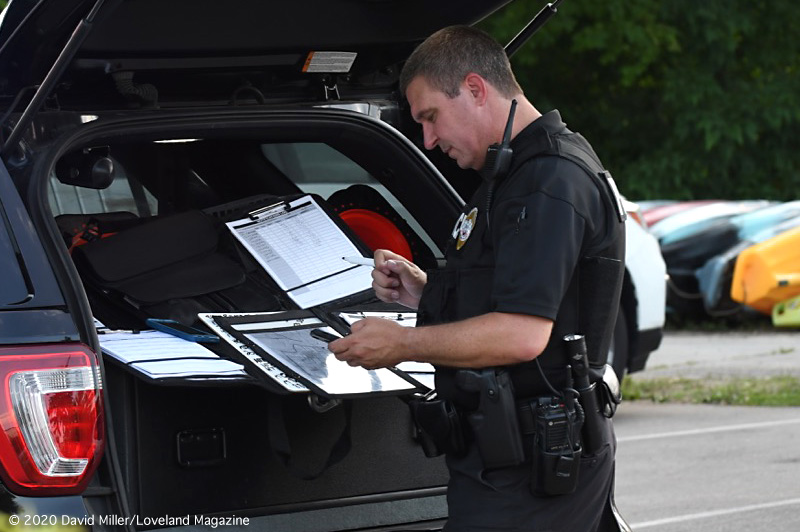
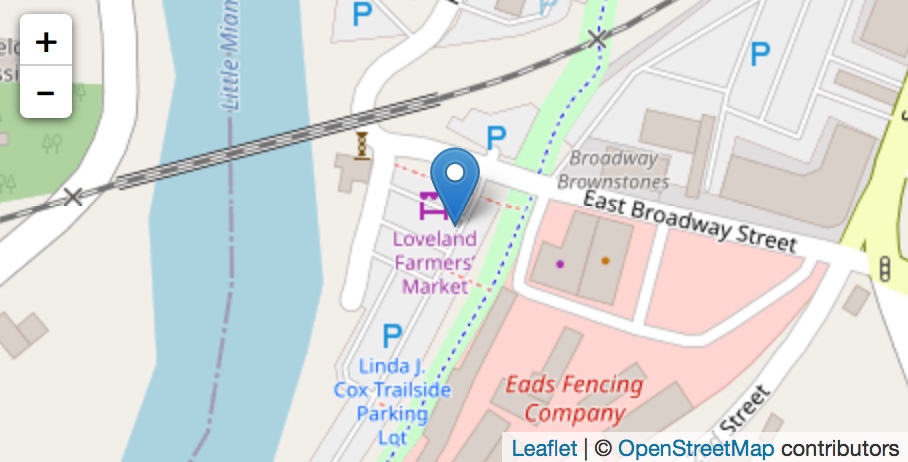
Pictured above is Loveland Police Chief Sean Rahe at a command Center he set up in the Linda Cox Parking lot in Historic Downtown.
Loveland, Ohio – A manhunt unfolded yesterday from Downtown Loveland into Miami Township that yielded results leading to the arrest of a man wanted on a felony warrant for domestic violence.
The pursuit started around 6 PM in Loveland when a Loveland officer spotted the suspect, as a passenger vehicle.
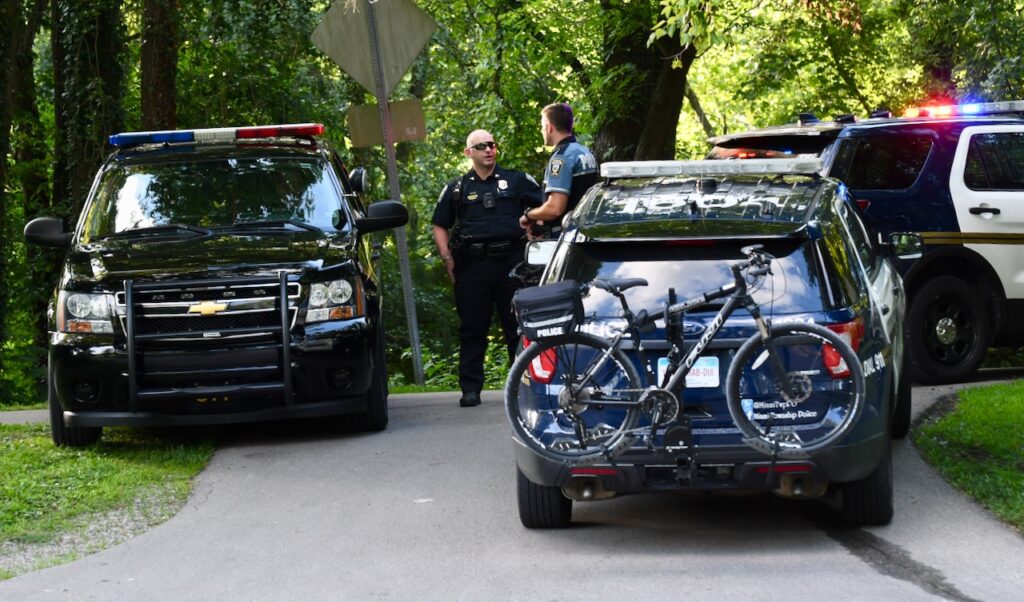
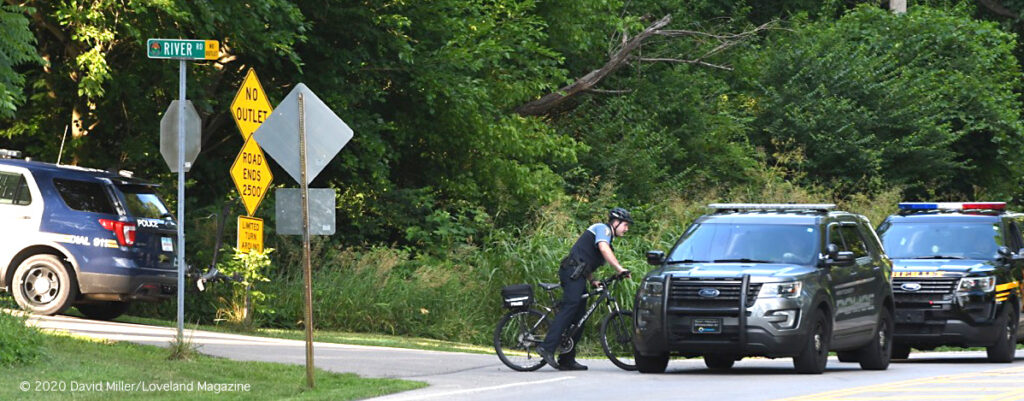
This photo was taken around 8 PM last evening across the road from Miami Riverview Park near to where the suspect was later apprehended.
Loveland Magazine asked Loveland Police Chief Sean Rahe around 8 PM for an update when the search from Historic Downtown Loveland into Miami Township seemed to be winding down.
ccc
Rahe told Loveland Magazine today, “We did catch him about 9:20 PM” near Miami Riverview Park. The park is at 587 Branch Hill Loveland Road.
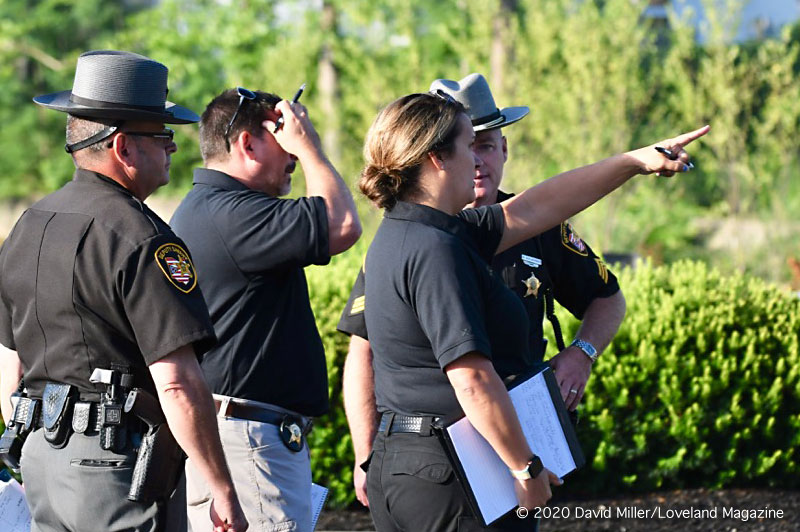
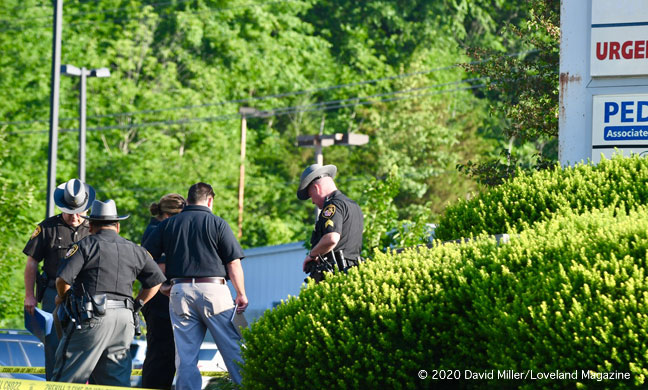
Police from many jurisdictions assisted: Hamilton Township, Mason, Montgomery, Clermont County Sheriff, and Miami Township. Police canines searched along the Loveland Bike Trail as well as nearby subdivisions and neighborhoods.
The search centered around the Loveland Bike Trail going South from Historic Downtown Loveland toward Branch Hill.
ccc
Many police were also stationed on the opposite bank of the river on East Kemper Road.
ddd
Officers on bikes also assisted.
ccc
This photo was taken around 8 PM last evening across the road from Miami Riverview Park near to where the suspect was later apprehended.
According to two eyewitnesses at the Loveland Farmer’s Market, the car sped dangerously into the Linda Cox Parking lot while the market was in session. A market volunteer called 911 because of the dangerous driving and because 4 people ran from the car, through the parking lot, and South into the wooded area.
Active children and adults, people with heart and lung disease, including asthma, and older adults should reduce prolonged or heavy outdoor exertion.
Air Quality Forecast is 105 AQI for Wednesday, July 15
The Southwest Ohio Air Quality Agency has issued an Air Quality Alert for Tuesday, July 15 for Butler, Clermont, Hamilton, and Warren counties in Ohio; Boone, Campbell, and Kenton counties in Kentucky; and Dearborn County in Indiana.
You can help protect those most vulnerable
• Take the bus, carpool, bike or walk instead of driving
• Refuel your vehicle after 8 p.m.; do not top off when refueling and tighten the gas cap
• Avoid idling your vehicle
• Combine trips or eliminate unnecessary vehicle trips
• Keep your vehicle maintained with properly inflated tires and timely oil changes
• Avoid use of gasoline-powered lawn equipment on Air Quality Advisory days
• Avoid use of oil-based paints and stains on Air Quality Advisory days
• Never burn leaves or other yard trimmings
• Always burn clean, seasoned wood in outdoor fire pits, fireplaces and wood stoves
• Do not use fire pits or fireplaces for non-essential home heating on Air Quality Advisory days
• Conserve electricityYou can check the current air quality by clicking on this image and entering a ZIP Code.
If you find that having this type of local news adds value to your quality of life, kindly consider contributing to the cost of producing it.
Symmes Township, Ohio – Captain Tory Smith the District Three Commander assigned to Symmes Township told Loveland Magazine this morning, “I did have a conversation with our CIS personnel late in the day yesterday and they have indicated that there appears to be nothing suspicious at this time. There are/were no signs of foul play and there was no evidence to suggest that the person was struck by a vehicle. It is believed that the individual suffered from some sort of medical emergency.”
The Hamilton County Sherriff’s office investigated a body discovered in the landscaping at the CVS Pharmacy at East Kemper and Loveland Maderia Road around daylight yesterday morning.
The Hamilton County Criminal Investigative Section responded and the body was taken from the scene by the Hamilton County Coroner.
Loveland Magazine will not be releasing the name of the deceased.
Columbus, Ohio – The coronavirus is raging in Ohio, but the state’s Republican leaders seem disinclined to enforce rules intended to protect against it. (How does Hamilton County avoid Level 4 Alert)
Attorney General Dave Yost won’t say whether he’ll support enforcement of new orders to wear masks in the state’s hardest-hit counties. And the official who issued them, Gov. Mike DeWine, has made several statements indicating that he doesn’t want to see anybody punished for not following measures intended to slow the spread of the deadly disease.
Mike Samet the Public Information Officer for Hamilton County Public Health told Loveland Magazine on Friday that from an enforcement perspective, as a county agency, the Health Department is not able to issue citations. “Nobody wants to be the mask police. This is education over enforcement, he said. Samet added that he wants people to understand why masks are important now, not punish them for non-compliance.
Ohio set a record for new cases Friday — 1,525 — after seeing them trend sharply upward over the past few weeks. The case count was nearly triplethe three-week average of 531.
Gov. Mike DeWine, has made several statements indicating that he doesn’t want to see anybody punished for not following measures intended to slow the spread of the deadly disease.
The news comes as six other states — Alabama, Idaho, Missouri, Montana, Oregon and Texas — set new single-day records of their own on Thursday. It also was the sixth day out of the past 10 in which the United States set one-day records for new cases of the coronavirus, which now has killed more than 3,000 in Ohio and more than 130,000 nationwide.
Also last week, a New York Times data analysis showed that the disease in the United States is taking on a disturbing racial dimension, with Blacks and Latinos around three times as likely as whites to get the new coronavirus.
The World Health Organization and the U.S. Centers for Disease Control both have said that widespread mask wearing would reduce the spread of the disease. One study indicated that if 80% of people wore them, the spread would plummet to one twelfth what it would be if nobody did.
Yet Yost, the state’s top law-enforcement officer, last week didn’t respond to questions about whether he supports enforcement of last week’s orders that people in Ohio’s 12 hardest-hit counties must wear masks inside public buildings.
In late March, Yost ordered that many abortions be halted in Ohio, arguing that the move was intended to conserve healthcare resources in the face of the coronavirus pandemic.
In June, he urged a municipal court to drop charges against a couple accused of opening their Cambridge-area restaurant in defiance of an earlier, DeWine-issued health order that it remain closed.
Then earlier this week, Yost said that the Columbus city government doesn’t have the power to enforce mask orders in state buildings — places where many Republican lawmakers have refused to wear them.
On Monday, a spokeswoman for Yost explained that the attorney general can’t have any official involvement in cases relating to health orders unless asked by local prosecutors. “We don’t have the authority,” the spokeswoman, Bethany McCorkle, said in a text message.
She added, however, that Yost has worn a mask since before there was a health order and encourages others to do the same.
The attorney general and his staff haven’t responded to subsequent questions about the order DeWine issued on Wednesday evening requiring masks in the worst-hit counties.
David Pepper (Photo from Ballotpedia)
Ohio Democrats are already up in arms about Republican legislative leaders’ refusal to share details about the spread of coronavirus in the Statehouse and surrounding office towers. David Pepper, the party chairman, on Friday slammed the attorney general for his apparent reluctance to support the enforcement of mask orders.
“As far as Dave Yost is concerned, refusing to enforce health orders is just one more example that the Ohio GOP has become the party of Donald Trump, Nino Vitale and John Becker,” Pepper said in a text message. “Sadly Ohio COVID cases are spiking because of it.”
“Even though initially it appeared that Mike DeWine was being guided by scientists and public health experts, it seems that politics and the desires of the business community are driving more of the governor’s decision making now,” party chairman David Pepper said.
President Donald Trump has repeatedly downplayed the pandemic, floated unproven cures for it and refused to appear in public wearing a mask. Among his other statements, Ohio Rep. Nino Vitale, R-Urbana, last Tuesday took to Facebook to urge Ohioans to stop even getting tested for coronavirus. And Ohio Rep. John Becker, R-Union Township, has introduced legislation that would strip state officials of the power to enforce any health order.
Meanwhile, in the absence of much support from his party, DeWine has said he doesn’t plan to use his authority under his mask order to arrest people for not following it.
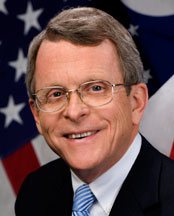
Ohio Governor Mike DeWine
“We’re not talking about throwing people in jail,” DeWine said during a press conference Thursday. “This is a law to advise people what to do.”
DeWine has enjoyed overwhelming, bipartisan support over his handling of the coronavirus. But at least for Ohio’s top Democrat, patience might be wearing thin.
“Even though initially it appeared that Mike DeWine was being guided by scientists and public health experts, it seems that politics and the desires of the business community are driving more of the governor’s decision making now,” Pepper said. “Even with fewer cases, even West Virginia and Kentucky are being more proactive in addressing the pandemic.”
The Ohio Capital Journal is a hard-hitting, independent, nonprofit news organization dedicated to connecting Ohioans to their state government and its impact on their lives. The Capital Journal combines Ohio state government coverage with relentless investigative journalism, deep dives into the consequences of policy, political insight and principled commentary.
Active children and adults, people with heart and lung disease, including asthma, and older adults should reduce prolonged or heavy outdoor exertion.
Air Quality Forecast is 101 AQI for Tuesday, July 14
The Southwest Ohio Air Quality Agency has issued an Air Quality Alert for Tuesday, July 14 for Butler, Clermont, Hamilton, and Warren counties in Ohio; Boone, Campbell, and Kenton counties in Kentucky; and Dearborn County in Indiana.
You can help protect those most vulnerable
You can help the situation locally by not using fire pits, lighting campfires, charcoal grills, or setting off fireworks.
If you conserve electricity by turning out lights and unplugging unused appliances and electronics during the alert it will reduce the demand for coal-burning power plants in our region.
Take the bus, carpool, bike, or walk instead of drive.
Refuel your vehicle after 8 p.m.; do not top off when refueling and tighten the gas cap.
Do not idle your vehicle; exhaust contributes considerably to ozone formation.
Combine trips or eliminating unnecessary vehicle trips.
Keep your vehicle maintained with properly inflated tires and timely oil changes.
Avoid use of gasoline-powered lawn equipment on Air Quality Alert days.
Avoid use of oil-based paints and stains on Air Quality Alert days.
Never burn leaves or other yard trimmings.
Suspend use of fire pits, campfires and charcoal grills on Air Quality Alert days.
Conserve electricity by turning out lights and unplugging unused appliances and electronics.
You can check the current air quality by clicking on this image and entering a ZIP Code.
If you find that having this type of local news adds value to your quality of life, kindly consider contributing to the cost of producing it.


![[Video Interview] City Hall: Is the collapsed sewer a public or homeowner problem?](https://lovelandmagazine.com/wp-content/uploads/2020/07/feature-vargo.jpg)

 You can help protect those most vulnerable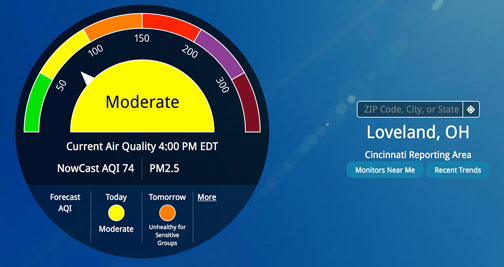




 The
The