Tonya Schaeffer, M.Ed, LPCC-S is a co-owner of Hope Restored Counseling Services, LLC in the West Loveland Historic District at 600 West Loveland Avenue. She can be reached at 513-683-HOPE (4673)
by Tonya Schaeffer
According to National Institute of Mental Health, suicide is a major public health problem and a leading cause of death in the United States. The effects of suicide go beyond the person who acts to take his or her life – it can have a lasting effect on family, friends and communities.
Are Suicide Rates Increasing?
The American College Health Association (ACHA) states that the suicide rate among young adults, ages 15-24, has tripled since the 1950’s.On average, there are 129 suicides per day in the U.S. More males die from suicide than females (approximately four male deaths by suicide for each female death by suicide). However, females attempt suicide three times more often than males.
Some risk factors for suicide include: previous attempts; depression and other mental health disorders; family history of a mental health or substance disorder; family history of suicide; drug and alcohol abuse; family history of violence, including physical or sexual abuse; impulsivity and or poor self control; hopelessness; medical illness; firearms in the home; and being exposed to others’ suicidal behavior, such as a family member, peer or media figure.
There are many other factors that could lead to suicide, too. Even among people who have risk factors for suicide, most do not attempt it. It remains difficult to predict who will act on suicidal thoughts.
The following behaviors may be a sign that someone is thinking about suicide: talking about wanting to die or wanting to kill themselves, sharing feelings of hopelessness, or feeling empty or numb. Other behaviors include planning or looking for a way to kill themselves, such as searching online for ideas, stocking up on pills or newly acquiring potentially lethal items (firearms or ropes). In addition, talking about being a burden to others, giving away important possessions, displaying extreme mood swings, or suddenly changing from very sad to very calm or happy are telltale signs.
Often in my office, a parent might be confused about how serious they should take their child talking about suicide. They might think their child is just seeking attention. However, suicidal thoughts or actions are a huge red flag that the person is in distress and an alert they need help. Any warning sign or symptom of suicide should not be ignored. Threatening to die by suicide is not a typical response to stress and should not be taken lightly.
Addressing Some Common Myths of Suicide
If I talk about suicide, then it might put the idea in their head.
This is not true! Several studies examining this concern have demonstrated that asking people if they are having suicidal thoughts or behaviors does not induce or increase such thoughts or experiences. Asking someone directly, “Are you thinking of killing yourself,” can be the best way to identify someone at risk for suicide. Another myth is people believing that talking to the person directly can’t make a difference to them. Talking to the person can help tremendously – it opens up a line of communication. Ignoring or minimizing a person’s feelings, thoughts or actions surrounding suicide is not advisable.
Most of the time a family member or friend are the first people to notice the warning signs of suicide. If someone tells you they are going to kill themselves, do not leave them alone, and do not promise anyone you will keep their suicidal thoughts a secret. It is important to have a plan in place to make sure the individual is as safe as possible. But, you should seek professional help as soon as possible.
As a mental health professional, suicide is a major concern and we are quite often assessing for it. The amount of request for services related to suicide has increased dramatically over the years.
If you have someone in your life who you believe is suicidal, don’t wait to reach out for help.This is not something to take lightly. In fact, if they are displaying risk factors and have a plan, take them to a local emergency room to be assessed. All too often people are seeing warning signs and reach out to us for services, and due to demand we can’t accommodate them in their time of need.
Resources
If you know someone in crisis, you can also call the toll-free NATIONAL SUICIDE PREVENTION LIFELINE at 1-800-273-TALK (8255), 24 hours a day, 7 days a week. The service is available to everyone. The deaf and hard of hearing can contact the LIFELINE via TTY at 1-800-799-4889. All calls are confidential.
Contact social media outlets directly if you are concerned about a friend’s social media updates, or dial 911 in an emergency.
The Crisis Text Line is another resource available 24 hours a day, 7 days a week. Text “HOME” to 741741.
Tonya Schaeffer, M.Ed, LPCC-S is a co-owner of Hope Restored Counseling Services, LLC in the West Loveland Historic District at 600 West Loveland Avenue. She can be reached at 513-683-HOPE (4673)
Suicide Deaths Increased by 45% Among All Ohioans and by 56% Among Youth Ages 10-24 From 2007-2018
Columbus, Ohio – In a report issued by the Ohio Department of Health (ODH) on November 13, in Ohio, five people die by suicide every day, and one youth dies by suicide every 33 hours, according to a new report released by the ODH. In 2018, there were 1,836 suicides in Ohio and the highest suicide rate – the number of suicide deaths per 100,000 population – was among adults 45-64 years old. Males are disproportionately burdened by suicide across the lifespan, and their suicide rate is nearly four times the rate among females.
One youth dies by suicide every 33 hours
“One of the goals of my RecoveryOhio initiative is to address mental illness and other issues that contribute to suicide,” said Ohio Governor Mike DeWine. “If you know someone is struggling, you may be able to help save someone’s life by recognizing the warning signs and steps to take.”
“Suicide in Ohio and nationally is a growing public health epidemic, particularly among young people,” said ODH Director Amy Acton, MD, MPH. “Suicide is the leading cause of death among Ohioans ages 10‐14 and the second leading cause of death among Ohioans ages 15‐34.”
Warning signs of suicide include:
A major change in mood or behavior, appearing consistently unhappy/depressed, irritable, withdrawn from family or friends
Poor grades in school or other bad performance in extra-curricular activities
High-risk behaviors, including the use of alcohol or other substances
Problems with concentration, and changes in energy level, appetite or sleep schedule
Expressing feelings of hopelessness or not wanting to live anymore
History of depression or family history of depression
National Suicide Prevention Life line (1-800-273-8255) or the Crisis Text Line (text “4hope” to 741 741)
If someone you know is showing signs of suicide, here are some things you can do:
Ask directly about thoughts of suicide (asking about suicide does not increase the risk of suicide but does open up conversation)
Listen to what they need
Keep them safe by keeping lethal means away from them
Call 911 if necessary
Help them connect with ongoing support, such as a local crisis line, the National Suicide Prevention Life line (1-800-273-8255) or the Crisis Text Line (text “4hope” to 741 741)
Check back the next day to see how they are doing
Encourage them to seek out a counselor for more help
Other highlights of the ODH report include:
From 2007 to 2018 the number of suicide deaths increased nearly 45% in Ohio.
Suicide rates are highest among white, non-Hispanic males.
From 2007 to 2018 the number of suicides among youth ages 10-24 increased by 56%, and the suicide rate increased by 64%. In 2018, 271 of Ohio’s suicide deaths were in this age group.
From 2014 to 2018 the suicide rate among black non-Hispanic males increased nearly 54%.
From 2007 to 2018 the suicide rate among older adults age 65+ increased nearly 48%.
Governor DeWine created the RecoveryOhio initiative and a RecoveryOhio Advisory Council that includes a diverse group of individuals who have worked to address mental illness and substance use issues in prevention, treatment, advocacy, or support services; government; private industry; law enforcement; healthcare; learning institutions; and faith organizations. In an initial report, the council issued more than 70 recommendations in the areas of stigma, parity, workforce development, prevention, harm reduction, treatment and recovery supports, and data and outcomes measurement. Information and resources on where to get help are available at RecoveryOhio.gov.
The Ohio Department of Mental Health and Addiction Services offers suicide prevention information and resources on its website at mha.ohio.gov.
The speaker will be sharing insights into boys and how to build on their innate character strengths. The public is encouraged to attend.
Loveland, Ohio – The 2018-2019 focus and priority of the Loveland Middle and Intermediate Parent Teacher Student Association (M/INT PTSA) is the social and emotional health of students in 5th through 8th grades. To accomplish their goal, they have invited experts to contribute to their newsletter and speak at public seminars.
Their April program will be a focus on boys. The speaker will be sharing insights into boys and how to build on their innate character strengths. The public is encouraged to attend.
The presentation will be at the Loveland Middle School Media Center on April 9, between 7 PM and 8 PM. (See Map below)
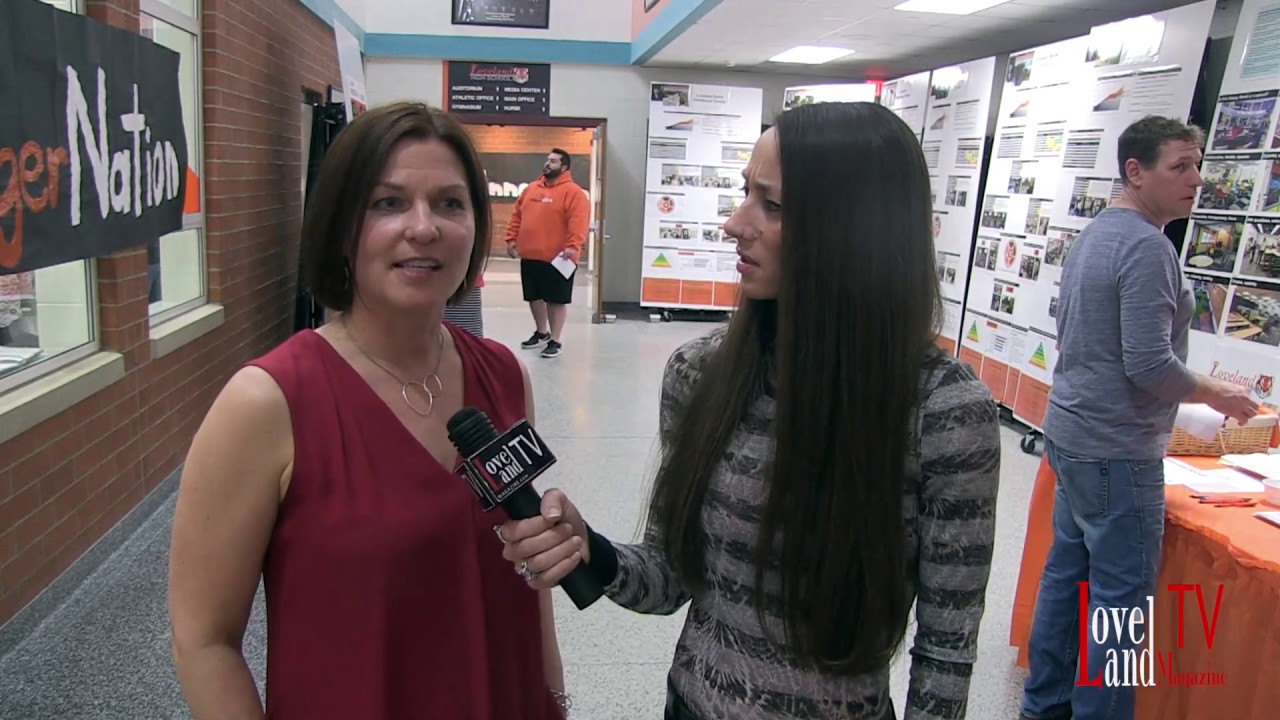
Columnist Cassie Mattia caught up with Megan Graff last week at Loveland High School when the District held their student-led, State of the Schools event.
Graff is President of the M/INT PTSA and talked to LOVELAND MAGAZINE TV about how the organization is tackling the “big hurdles for our kids today” such as Internet safety, suicide, depression, and anxiety.
If you are a Service member or Veteran in crisis or you’re concerned about one, there are specially trained responders ready to help you, 24 hours a day, 7 days a week, 365 days a year. The Veterans Crisis Line connects Service members and Veterans in crisis, as well as their family members and friends, with qualified, caring VA responders through a confidential toll-free hotline, online chat, or text-messaging service.
Act Now
Dial 1-800-273-8255 and Press 1 to talk to someone.
Send a text message to 838255 to connect with a VA responder.
We can all help prevent suicide, but many people don’t know how to support the Veteran or Service member in their life who is going through a difficult time. A simple act of kindness can help someone feel less alone. Explore the #BeThere site for ways to show support.
“Behind the Scenes” provides a look into one of the three Veterans Crisis Line call centers, where qualified, caring responders answer the calls of Veterans, Service members, and their families and friends in times of crisis. In the video, VA responders, some of them Veterans themselves, share their stories and experiences in providing vital support and referrals for Veterans and their loved ones. The Veterans Crisis Line connects members of the military community with trained VA responders through a confidential, toll-free hotline, online chat, and text-messaging service.
Cassie Mattia lives in Historic Downtown Loveland, Ohio.
If we don’t protect our youth who will? In May, Ohio Paul Zeltwanger and Thomas Brinkman proposed House Bill 658, which states:
“If a government agent or entity has knowledge that a child under its care or supervision has exhibited symptoms of gender dysphoria or otherwise demonstrates a desire to be treated in a manner opposite of the child’s biological sex, the government agent or entity with knowledge of that circumstance shall immediately notify, in writing, each of the child’s parents and the child’s guardian or custodian. The notice shall describe the total circumstances with reasonable specificity.”
gen·der dys·pho·ri·a
ˈjendər disˈfôrēə/
noun
MEDICINE
The condition of feeling one’s emotional and psychological identity as male or female to be opposite to one’s biological sex. How to pronounce gender dysphoria.
In plainer language House Bill 658, also known as the “Parent’s Rights Bill,” would make any school administrator or teacher who allows or offers gender dysphoria (the condition of feeling one’s emotional and psychological identity as male or female to be opposite to one’s biological sex) treatment, including resources on sex and gender or counseling, for a minor “without the written, informed consent of each of the child’s parents and the child’s guardian or custodian” they could be charged with a felony in the fourth degree. The parents of the student according to the bill would get the ultimate decision whether their child gets access to treatment, including educational materials, counseling or medical services.
If this House Bill is implemented it could have detrimental consequences for teachers and even more importantly for those students affected. Teachers are there to lend their students a helping hand educationally and emotionally in order to prepare them for what’s to come once they are out on their own, why take this from them?
A teacher’s take on House Bill 658
I spoke to one Loveland teacher who wishes to remain anonymous, a mom of a teenager. I’ll call her Susan. She told me that for many students their home life is a wreck and out of control with issues of poverty, broken families, and domestic abuse. “For many of my students, the only adult in their life that can be trusted may be their teacher. Teachers who lend an ear and can be trusted can be an enormous help that often reflects on their academic achievement. We care for the whole child.”
Susan told me that for many students their home life is a wreck and out of control with issues of poverty, broken families, and domestic abuse. “For many of my students, the only adult in their life that can be trusted may be their teacher.”
Susan told me that she just overheard a conversation between her daughter and a friend about a classmate they thought was transgender. “I wondered, do they know what that means? Are they friends with this young person? How do my kid and others treat her? Because I am a teacher, would I be required to file a report with the District? These are all questions that ran through my head as a mom and a teacher.”
Susan said she wants to protect and support all of her kids, her biological ones and the ones that are “her’s” for a school year. “I want to be able to do that freely and openly and with my heart.” She said that some of her students desperately need someone they can trust in their life and the last thing they need is another person that will let them down because politicians want school staff charged as felons if they don’t report that the student herself, or a classroom teacher, principal, gym teacher, bus driver, or classmate may be questioning her gender identity.
Susan asked, “Just what stereotypes am I going to be expected to police?
HB 658 is a harmful bill that takes aim at some of our most vulnerable — transgender youth — by forcing school officials to serve as ‘gender police’ and out them or risk getting a felony.” – Alana Jochum
LGBTQ advocacy
“HB 658 is a harmful bill that takes aim at some of our most vulnerable — transgender youth — by forcing school officials to serve as ‘gender police’ and out them or risk getting a felony,” said Alana Jochum, executive director of LGBTQ advocacy group Equality Ohio. Jochum told NBC News. “This exposes young people to discrimination, harassment, and bullying.”
Jochum couldn’t be more correct if you really take a look at the alarming statistics. One study done by the Cincinnati Enquirer showed that 64% of LGBTQ youth in Ohio heard “negative comments” about their gender identity or sexual orientation from their family and in result, according to another study done by National Transgender Discrimination, 41% attempted suicide. Though many transgender students
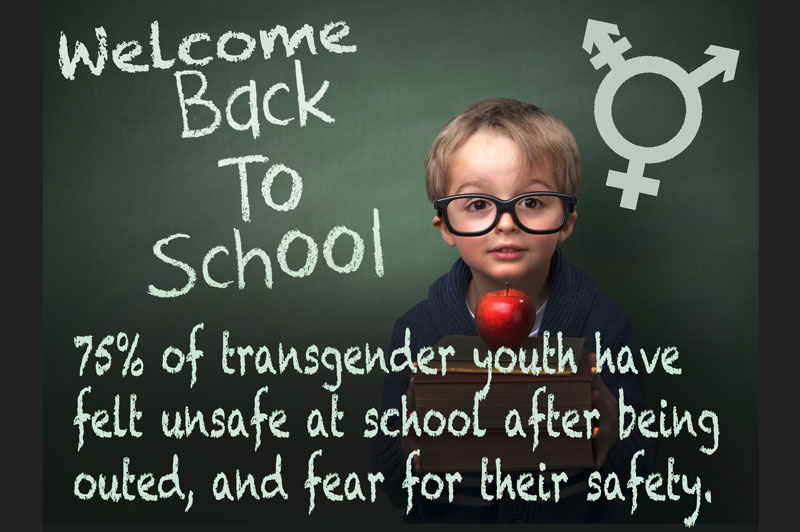
75% of transgender youth have felt unsafe at school after being outed and have lower GPA’s due to missing school in fear of their safety.
have experienced negative comments, violence has become the most popular form of dealing with transgender youth. Disturbingly enough 19% of transgender youth, according to the National Center for Transgender Equality, experience the majority of violent abuse in their home from their own family members. Along with dealing with all the dissension from family members 75% of transgender youth, according to a national survey done by GLSEN (pronounced “glisten”), have felt unsafe at school after being outed and in result have lower GPA’s due to missing school in fear of their safety. With all the facts at hand, The Ohio Education Association who represents 125,000 teachers and support professionals, have openly opposed the bill.
Violence has become the most popular form of dealing with transgender youth.
Kathryn Lorenz is the Loveland Board of Education Vice President
While researching House Bill 658 I managed to only get a response from two local representatives of the Loveland School Board, one being Kathryn Lorenz, the Board Vice President and the other being Loveland School Board Member, Ned Portune. Lorenz’s response was, “In the case of House bill 658, we would have to say that we do not yet have enough information, nor have we met as a board for a few weeks, so we do not yet have a Board statement to make.”
Ned Portune is a member of the Loveland School Board
Portune added that he, “…simply has not been fully informed at this point on HB 658 to have an educated opinion. There are several items in your statement that would certainly give me a gut reaction, and opinion on, if true as presented. But I need time to fully review the Bill, its implications and existing laws to have any formal statement.”
School Superintendent Amy Crouse, High School Principal Peggy Johnson, and assistant principals at the High School did not respond.
Studies show most transgender youth are fully aware of their gender identity by age 4.
After attempting several times to contact both Representatives Paul Zeltwanger and Thomas Brinkman through email and phone about House Bill 658, I, unfortunately, got no response. It wasn’t hard to find Brinkman’s opinion on the issue in several other publications though, voicing to WCPO, “Parents have the right to decide what is best for their children,” and telling WOSU Public Media, “And if somebody doesn’t like it, you’re emancipated at age 18 and you can go do whatever the heck you want.” Seems pretty harsh considering the transgender population represents about 0.3% (700,000) of Americans and studies show most transgender youth are fully aware of their gender identity by age 4. Are we encouraging parents and administrators to discard their students or child’s gender identity in fear of social rejection? Do these children not deserve to live an authentic life?
Fran Hendrick, PCC has offices at Wildflower House in the West Loveland Historic District.
House Bill 658 is expected to be presented to the Ohio General Assembly in the Fall and will be without a doubt one of the most controversial bills to date. Many have opinions on this issue one being Fran Hendrick, a respected and highly educated clinical counselor who specializes in assisting women and girls who are experiencing depression or anxiety triggered by a crisis or major life change. When I presented Fran with House Bill 658 and asked what her opinion was she had a lot to say and rightfully so considering one of her life missions, according to Fran’s website franhendrick.com, is to “gently help you find and shelter your spark (the essence of who you are at your core) and grow it so that it illuminates your person and is radiated through words, actions and decisions, big and small, that make up your daily life.”
In a culture such as ours, it is a matter of life and death for transgender youth to decide if and when to trust another person with their reality. – Fran Hendrick, PCC
“Being a parent takes great courage, even more so when your child presents you with something that you’re unfamiliar with – or even afraid of. In a perfect world, a child who feels somehow ‘different’ from their peers (‘their’ is deliberately gender-neutral), they could consult their parents, who would strive to deeply understand the child’s experience, would provide accurate empathy, and would go on a crash course to learn everything they could about the unfamiliar issue. And, so very fortunate for their children, there are many parents like these.
But in the real world, an adolescent boy saying to his father, ‘Dad, I think I’m a girl’ is very likely to encounter disgust, rejection, rage, or even violence, not empathy and understanding.
While the intent of this bill, giving benefit to grave doubt, could be a deeply uninformed and misguided attempt to protect children, that seems unlikely. My sense is that in truth it is more about attempting to hand parents the power to say no to their child’s gender identity,” Hendrick said, “But gender identity – and sexual orientation, for that matter – are not matters of choice. And in a culture where transgender people are assaulted and even murdered at a rate higher than their cisgender counterparts,where transgender youth are summarily shunned and rejected by their own parents (the rate of homelessness is, not surprisingly, very high), where the suicide rate that results from these atrocious facts is far higher than for other youth – in a culture such as ours, it is a matter of life and death for transgender youth to decide if and when to trust another person with their reality, and, most importantly, whom to trust.
To be “outed” for the choice to trust; or to be prosecuted for trying to be help – these are not protections. Actions like these support bigotry, and increase isolation and despair. – Fran Hendrick, PCC
To be “outed” for the choice to trust; or to be prosecuted for trying to be help – these are not protections. Actions like these support bigotry, and increase isolation and despair. Stopping a teacher from helping such a student, one who is likely alone with the reality of their gender identity, who stands to be emotionally and psychologically rejected, or even physically abused, by their own family is, quite simply, a cruelty. This, I strongly believe, is not what the overwhelming majority of parents want for their own or anyone else’s children. This is bad enough. However, this bill opens the door to much more far-reaching damage than this.”
Is he to be turned in to the gender police?
The talented young male artist who despises sports – is he to be turned in to the gender police? The girl who chooses overalls and a t-shirt rather than a dress and a mani-pedi –what of her? The sponsors of the bill have explicitly said that teachers should be required to inform on them, as well. We have an essential responsibility to ensure that proposed legislation protects vulnerable people from the bigotry endemic in our society.This legislation explicitly deprives them of protection.”
Ultimately what it comes down to is ensuring that our children are and feel safe when going to school. Teachers and administrators are the ones that take on the responsibility of creating that fun, loving and supportive atmosphere so that our children get the best opportunities in life. Passing a bill such as House Bill 658 only presents another obstacle that both teachers and administrators have to overcome. Don’t these professionals have enough obstacles to conquer as is?
Both Justin Haake and Tonya Schaeffer who are Professional Clinical Counselors for Hope Restored Counseling Services in Loveland couldn’t agree more.
Justin Haake is a Licensed Professional Counselor at Hope Restored Counseling Services in Loveland and works primarily with adolescents and adults, specifically during transitional periods in life.
Haake said, “For some, teachers and school administrators may be the only people in schools that feel safe for students to reach out to.Imagine the fear of asking for support, knowing that you’ll either be outed or put the teacher or administrator at risk of a felony.”
Schaeffer said, “From my perspective, this would most likely increase the level of bullying and possible harm to these students.There is already so much shame and stigma attached with Transgender people, and they need as much support as they can get,”
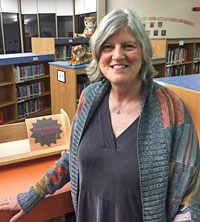
Tonya Schaeffer is a Licensed Professional Clinical Counselor and co-owner of Hope Restored Counseling Services in Loveland.
Schaeffer added, “Support is out there.In fact, we are offering a psycho-educational group starting in September that offers education, support and a safe environment for Transgender students to express themselves.” She said they hope to offer a similar group to parents who are trying to understand what their child is going through, explore what the parents are experiencing and provide support. “We currently serve the LGBTQ community, and we are expanding those services.I recently read a statement that it is estimated that 41% of trans men and women have attempted suicide. I don’t believe this bill would help–it seems like it could only hurt.”
Susan, the mom and teacher said, “I am thankful I live in a community where support services like those provided by Hope Restored, and Fran Hendrick at Wildflower House are nearby for my students and their families.”
Transgender youth have so many mountains to climb within their own scientific makeup and allowing a bill like House Bill 658 to go through in hindsight is taking away their basic rights as Americans and human beings.
“GLSEN (pronounced “glisten”) was founded in 1990 by a small, but dedicated group of teachers in Massachusetts who came together to improve an education system that too frequently allows its lesbian, gay, bisexual, transgender, queer and questioning (LGBTQ) students to be bullied, discriminated against, or fall through the cracks.”
We can all help prevent suicide. The Lifeline provides 24/7, free and confidential support for people in distress, prevention and crisis resources for you or your loved ones, and best practices for professionals.
You can #BeThe1To help someone in crisis.
You don’t have to be a mental health professional to help someone in your life that may be struggling. Learn the Lifeline’s 5 steps that you can use to help a loved one that may be in crisis.
CAPS 24 hour Consultation and Crisis Helpline: Evenings, weekends, and other times when we are closed, you may call our direct number at 513-556-0648 and press 1, to speak with a counselor 24/7. For more information on services for students in crisis
National Suicide Prevention Lifeline: 1-800-273-TALK (8255)
NAMI: National Alliance on Mental Illness is the largest grassroots mental health organization dedicated to improving the lives of individuals with mental health concerns. www.nami.org
Suicide Prevention Phone Apps
LifeBuoy – This unique app is designed specifically to assist suicide survivors after a recent attempt. It offers a daily mood diary, suggestions for decreasing social isolation, and other ways to monitor increased warning signs of suicidality. (iP)
Virtual Hope Box – This app provides help with emotional regulation and coping with stress via personalized supportive audio, video, pictures, games, mindfullness exercises, positive messages and activity planning, inspirational quotes, coping statements, and other tools. (iP,A)
ReliefLink – This award-winning suicide prevention app assists users with tracking daily mood/thoughts, creating a safety plan, locating the nearest hospitals, and obtaining quick-access to coping methods. (iP)
National Hotlines
A Friend Asks – This app offers tips for getting help for a friend (or yourself). Helpful information includes what to do RIGHT NOW as well as what NOT to do. (iP,A)
Freshmen class hear Nick Jackson’s #IAmSPEAKLOVE presentation
It was a presentation for Tigers by a Tiger
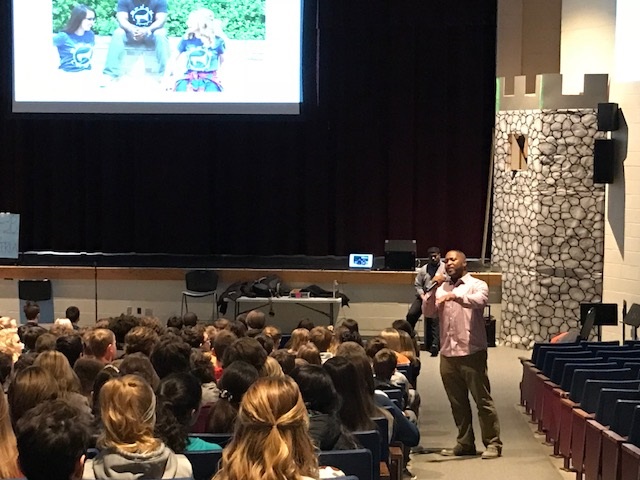
Loveland, Ohio – Tuesday, March 20, Loveland High School (LHS) freshmen heard a message of love from LHS Class of 1998 Graduate Nick Jackson. The #IAmSPEAKLOVE message has been presented to almost one million students internationally, and helps students focus on respect and positive student-teacher communication, mental health issues and awareness, and suicide, self-harm and bullying prevention.
“This was a unique opportunity for our high school freshmen to hear from one of our own,” said LHS Counselor Jamie Gordon. “Mr. Jackson presents a powerful message with breakout sessions we knew would be a perfect fit for our district My Voice, My Choice campaign. We are so excited he was able to return back home to join us!”
The belief that ‘Love Wins’ was birthed within the walls of Loveland High School.
“Coming back to Loveland and speaking in the main auditorium was an absolute honor,” said Jackson. “My parents and the parents of my friends worked extremely hard for our families to afford the opportunities that Loveland has to offer. The belief that ‘Love Wins’ was birthed within the walls of Loveland High School, and during the presentation as a community we cried together, we laughed together and we – in unison – took one more step towards mental health and wholeness.”
The Loveland My Voice, My Choice campaign is designed to create a culture of kindness for students at all grade levels. Each year, each building in the district works to spread the My Voice, My Choice message in a variety of ways, including student recognition.










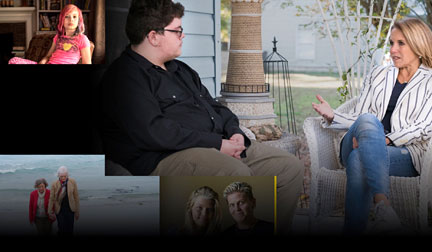 If you would like to explore the topic of Transgender youth and adults even further please check out “