Tag: suicide

  • University of Cincinnati, Cincinnati Children’s part of statewide mental health research initiative

    University of Cincinnati, Cincinnati Children’s part of statewide mental health research initiative

    News release from UC News

    SOAR Study to identify risk and resiliency factors to improve behavioral health outcomes

    headshot of Tim TedeschiBy Tim Tedeschi


    The University of Cincinnati and Cincinnati Children’s Hospital are part of a collaborative research initiative designed to identify contributors to the ongoing epidemic of persistent emotional distress, suicide and drug overdose in the state of Ohio.

    The SOAR Study investigates the role of underlying biological, psychological and social factors.

    The Ohio Department of Mental Health and Addiction Services (OhioMHAS) is funding this statewide research project with an initial $20 million grant. Like other areas of the country, Ohio has seen a rise in mental illness, suicide and deaths related to drug overdose over the past decade, and the COVID-19 pandemic exacerbated these problems.

    “The causes of these diseases remain largely a mystery to clinical experts and the public,” said LeeAnne Cornyn, director of OhioMHAS. “The SOAR Study has the potential to help future generations better understand risk factors, effective mitigation strategies and techniques to build resiliency — in short, the study has the potential to curb disease and save lives.”

    SOAR is studying Ohioans in their local communities, using an integrated “bring science to the people” approach. It is creating a statewide medical research and development ecosystem to drive continued advances in mental health, substance use prevention and treatment interventions.

    The SOAR Study has two parallel but connected projects.

    Better understanding biomarkers of risk and resilience among Cincinnatians is in line with our department’s vision to advance the understanding and treatment of psychiatric disorders. – Cal Adler, MD

    Focusing on breadth, the SOAR Wellness Discovery Survey is engaging as many as 15,000 people across all 88 Ohio counties. Researchers want to uncover how strengths and skills may be related to overcoming adversity. Those strengths will inform researchers about which factors to focus on to develop new treatments. This portion is underway, with more than 300,000 postcards mailed out to residents statewide.

    Focusing on depth, the SOAR Brain Health Study will comprehensively study as many as 3,600 Ohioans in family groups to examine the biological, psychological and social factors that help explain response to adversity, with longer-term goals of personalizing individual care.

    The SOAR Study will engage a multidisciplinary team of experts from UC and Cincinnati Children’s Hospital, Ohio State University, Bowling Green State University, Central State University, Kent State University, Nationwide Children’s Hospital, Northeast Ohio Medical University, Case Western/University Hospital-Cleveland, Ohio University, University of Toledo and Wright State University.

    CALEB ADLER WITH UC LAB COAT PSYCHIATRY
    Cal Adler, MD. Photo/University of Cincinnati.

    Faculty and staff in UC’s Department of Psychiatry and Behavioral Neuroscience will enroll approximately 500 Ohioans who will complete study procedures such as MRIs, EEGs, neuropsychological assessments, biospecimen collection and questionnaires.

    “Better understanding biomarkers of risk and resilience among Cincinnatians is in line with our department’s vision to advance the understanding and treatment of psychiatric disorders,” said Cal Adler, MD, professor, vice chair of research, co-director of the Division of Bipolar Disorders Research, director of the Center for Imaging Research in the Department of Psychiatry and Behavioral Neuroscience at UC’s College of Medicine and a UC Health physician. “We have already begun to enroll Ohio families and anticipate engaging over 200 participants over the next year.”

    “This important SOAR Study builds on our long-standing academic health mission, and we are proud to champion this vital research to help all Ohioans,” said John J. Warner, MD, chief executive officer at The Ohio State University Wexner Medical Center and executive vice president at Ohio State. “Mental health care is health care, and this study will help us inform prevention and treatment strategies to advance patient-centered care and influence the way we train our future care providers.”

    Leaders of the study say SOAR aims to do for addiction, mental illness and mental health what Framingham Heart Study researchers did for heart disease and heart health. Launched in 1948, the multigenerational Framingham Heart Study has enrolled more than 15,000 study participants over 75 years, resulting in major life-saving advancements about heart disease risk factors.

    “Our approach with the SOAR Study will allow us to identify the factors that can be modified to reduce risk and build resilience,” said SOAR Study principal investigator K. Luan Phan, MD, professor and chair of the Department of Psychiatry and Behavioral Health at Ohio State. “We won’t be able to ‘bend the curve’ on the growing number of deaths of despair, such as those from addiction and suicide, until we go upstream to better understand their etiology. SOAR is the first statewide, multigenerational comprehensive study in the nation that will offer a new roadmap for developing better treatments and cures that will improve and save lives.”

    Impact Lives Here

    The University of Cincinnati is leading public urban universities into a new era of innovation and impact. Our faculty, staff and students are saving lives, changing outcomes and bending the future in our city’s direction. Next Lives Here.

    If you are interested in participating in this study, please reach out to the UC study coordinator, Rachel, at 513-558-5319.

    If you or someone you know is struggling with thoughts of suicide, call or text the Suicide and Crisis Lifeline at 988.
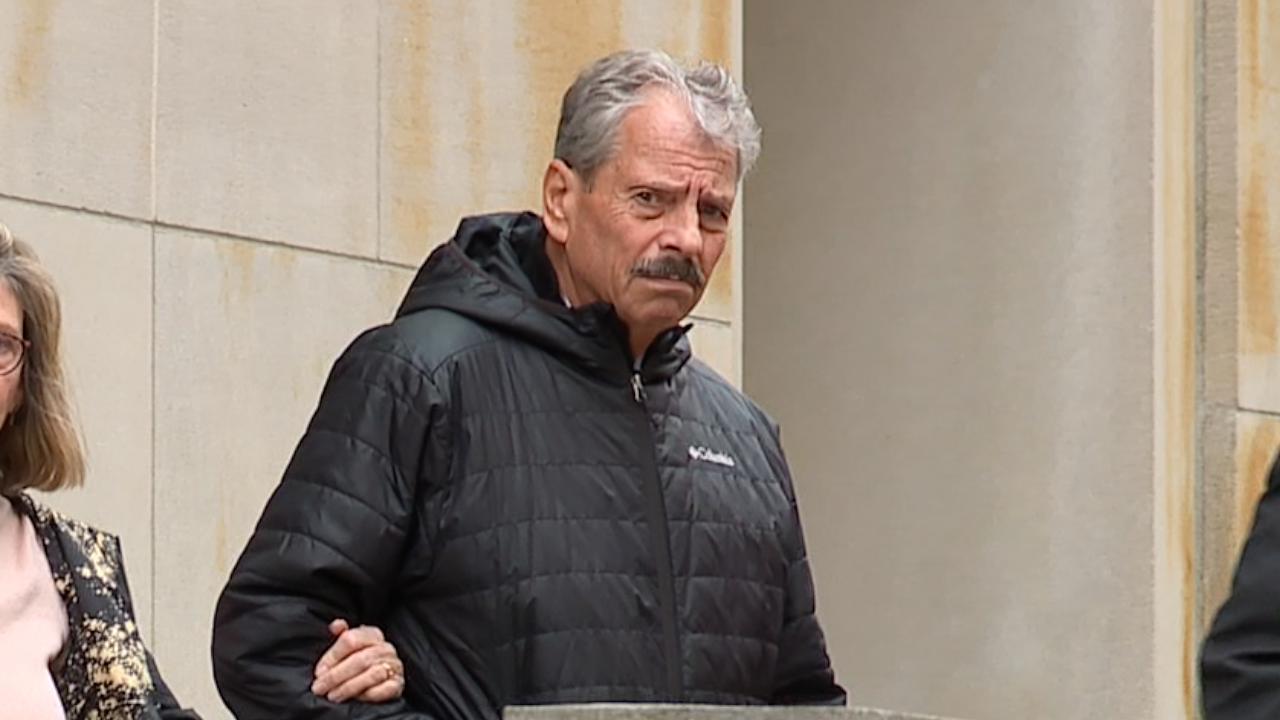
  • Indicted former Ohio utility chair Sam Randazzo reported dead by suicide

    Indicted former Ohio utility chair Sam Randazzo reported dead by suicide

     Former Public Utilities of Ohio Chair Sam Randazzo at court. (Photo by WEWS.)

    BY:  – Ohio Capital Journal

    Sam Randazzo, Gov. Mike DeWine’s first pick to chair the Public Utilities Commission of Ohio, has died by suicide, the Columbus Dispatch is reporting.

    Randazzo’s body was found Tuesday in a Franklin County warehouse he owned, the paper reported. A spokesman for Franklin County Coroner Nathaniel Overmire couldn’t immediately be reached.

    Randazzo — a 74-year-old energy consultant turned regulator — was charged both in state and federal court over his role in a massive utility scandal that broke in July 2020, along with other alleged misdeeds. In the bribery scandal, Akron-based FirstEnergy paid more than $60 million in bribes between 2017 and 2020 in exchange for a $1.3 billion ratepayer bailout.

    DeWine picked Randazzo to be the state’s top regulator after a decade of shady dealings between Randazzo and FirstEnergy, his state indictment says. They include secretly being a paid consultant for FirstEnergy while also serving as general counsel to industrial energy users who were trying to get a better deal from FirstEnergy, the document says.

    Randazzo also secretly skimmed millions from settlements FirstEnergy paid the big users to get them to go along with rate hikes for everybody else, the indictment says.

    Just before DeWine nominated Randazzo to chair the PUCO in early 2019, FirstEnergy’s top executives paid him $4.3 million — a payment that FirstEnergy later conceded was a bribe.

    DeWine’s chief of staff reportedly knew about the payment before Randazzo was nominated, but it’s unclear how much she, DeWine, and others in the administration knew about the more than $10 million Randazzo was paid by FirstEnergy over the years. She was slated to testify at the former regulator’s state trial.

    As PUCO chairman, Randazzo helped draft the bailout legislation and did a number of other lucrative favors for FirstEnergy, court documents and testimony have shown.

    After a lengthy federal trial last year, former House Speaker Larry Householder, R-Glenford, was sentenced to 20 years in prison for his role in the scandal. Former Ohio GOP Chairman Matt Borges was sentenced to five years for his.

    Two others pleaded guilty and await sentencing. Another defendant, lobbyist Neil Clark, died by suicide.


    Marty Schladen
    MARTY SCHLADEN

    Marty Schladen has been a reporter for decades, working in Indiana, Texas and other places before returning to his native Ohio to work at The Columbus Dispatch in 2017. He’s won state and national journalism awards for investigations into utility regulation, public corruption, the environment, prescription drug spending and other matters.

    Ohio Capital Journal is part of States Newsroom, the nation’s largest state-focused nonprofit news organization.

    MORE FROM AUTHOR

  • [Commentary] Suicide is on the rise in Ohio

    [Commentary] Suicide is on the rise in Ohio

     (Photo by Quentin Young/Colorado Newsline.)

    Rob Mooreby Rob Moore – Ohio Capital Journal

    This article is about suicide. If you or someone you know needs support now, call or text 988 or chat 988lifeline.org.

    Five Ohioans die of suicide every day.

    This is just one of the many data points released in a new publication released last week by the Health Policy Institute of Ohio. This data snapshot focuses on the prevalence of suicide in Ohio and how incidence has changed over time.

    Below are some of the top findings from the release.

    Suicide is a leading cause of death for working-age Ohioans.

    Over 1,400 Ohioans died from suicide in 2022, the most recent year we have data for. This makes suicide the fifth-leading causes of death for working-age Ohioans, behind unintentional injuries like drug overdose and motor vehicle crashes, cancer, heart disease, and COVID-19.

    Ohio’s suicide death rate is 15 deaths per 100,000 people, just slightly above than the national rate of 14.5 deaths per 100,000 people.

    Suicide victims are disproportionately white, male, working-age, and Appalachian.

    In 2022, 17 white Ohioans died from suicide per 100,000 population, higher than the rate of 12 for Black Ohioans, 10 for Hispanic Ohioans, and 7 for Asian Ohioans. Men were also four times likely to die from suicide than women. This is despite the fact that women attempt suicide at a rate 70% higher than men.

    Suicide rates were highest in 2022 for working-age adults, higher than the rate for young adults, retirement-age adults, and children. Suicide was most common in Appalachian counties, with 15 of Ohio’s 22 counties with the highest suicide rates located in Appalachia.

    Suicide is on the rise–for nearly everyone.

    Since 2007, suicide rates have increased for men and women, white, Black, and Hispanic Ohioans, and Ohioans in every age group. The only major demographic group that has seen a flat suicide trend are non-Hispanic Asian or Pacific Islander Ohioans.

    Risk factors for high school students are also becoming more common.

    Compared to 2019, female Ohio high school students were more likely in 2021 to feel sad or hopeless, seriously consider suicide, make a plan to commit suicide, or attempt suicide. While more male high-school felt sad or hopeless and seriously considered suicide over that time period, fewer made a plan or attempted suicide. The increase in suicide plans and attempts among female students was much larger than the decrease among male students.

    The increase in suicide rate is driven by firearms.

    Suicide deaths involving a firearm increased 60% from 2007 to 2022. This accounted for 75% of the total increase in suicides over that time period. The remainder of the increase was driven mostly by an increase in deaths by suffocation and other causes. Deaths by poisoning decreased over that time period.

    Suicide is a hard social problem to make progress against. That being said, the Health Policy Institute of Ohio suggests interventions to improve mental health to prevent suicide attempts.

    A 2016 evidence review published in the American Journal of Psychiatry concluded legislation reducing firearm ownership lowers firearm suicide rates. It also acknowledged, however, that court interpretations of the second amendment to the U.S. Constitution have made most legislative options for reducing firearm ownership politically unfeasible in the United States.

    The researchers however, say targeted initiatives like gun violence restraining orders, smart gun technology, and gun safety education may be able to reduce risk for current gun owners. These sorts of approaches do not have a strong evidence base yet, but they at least give us something to tackle this difficult problem.

    If you or someone you know needs support now, call or text 988 or chat 988lifeline.org.


    Rob Moore
    ROB MOORE

    Rob Moore is the principal for Scioto Analysis, a public policy analysis firm based in Columbus. Moore has worked as an analyst in the public and nonprofit sectors and has analyzed diverse issue areas such as economic development, environment, education, and public health. He holds a Master of Public Policy from the University of California Berkeley’s Goldman School of Public Policy and a Bachelor of Arts in Philosophy from Denison University.

    MORE FROM AUTHOR

  • Ohio launching $20 million, decade-long study to improve behavioral health outcomes

    Ohio launching $20 million, decade-long study to improve behavioral health outcomes

    Getty Images illustration of therapy session.

    The study seeks to better understand the root causes of mental illness, substance use disorders, and suicide.

    BY:  Ohio Capital Journal

    This story is about suicide. If you or someone you know needs support now, call or text 988 or chat 988lifeline.org.

    The state of Ohio is embarking on a decade-long study to better understand the root causes of mental illness, substance use disorders, and suicide.

    The Ohio Department of Mental Health and Addiction Services is providing a $20 million grant to fund the State of Ohio Action for the Resiliency (SOAR) study, Ohio Gov. Mike DeWine announced during a press conference Friday.

    “Currently, there’s a lot that we don’t know and the SOAR study is a huge step forward in advancing our understanding of mental health and substance use disorders,” said Ohio State University President Ted Carter. “This study will provide key data that will shape the future of mental health across Ohio and beyond.”

    “There’s nobody that is not affected by this,” Carter said. “There’s somebody that you know in your family, your community, your neighborhood that is affected by this.”

    The study will go for at least a decade with the hope it will continue for decades to come and will look at generations of families from all across Ohio who are affected by mental illness and substance abuse disorders, DeWine said. Funding for the SOAR study comes from the state’s two-year operating budget.

    “We know mental illness and substance use disorders are preventable, treatable, and people can and do recover,” said Ohio Department of Mental Health and Addiction Services Director LeeAnne Cornyn.

    The SOAR study has two main projects — the SOAR Wellness Discovery Survey and the SOAR Brain Health Study.

    The wellness study will study as many as 15,000 people across Ohio’s 88 counties to learn how skills may help overcoming adversity. The brain health study will look at 3,600 Ohioan in families to help look at the biological, psychological, and social factors that help people handle adversity.

    “There’s still an awful lot to know about mental health,” DeWine said. “And candidly, the research in this field has not been as robust as it has been in other areas. … It will give us a complete picture of each participant to uncover why, for example, two people in similar circumstances or with similar health have very, very different outcomes.”

    Ohio State University will lead the study and is partnering with hospitals and universities around the state: Bowling Green State University, Central State University, Kent State University, Nationwide Children’s Hospital, Northeast Ohio Medical University, Case Western Reserve University, University Hospital in Cleveland, Ohio University, the University of Cincinnati, Cincinnati Children’s Hospital, University of Toledo and Wright State University.

    The SOAR study will be led by Dr. Luan Phan, chair of the Department of Psychiatry and Behavioral Health at the Ohio State University College of Medicine.

    “Our approach … is to identify the factors that can be modified to reduce risk and build resilience in the face of stress, trauma and adversity,” Phan said. “It’s important to identify what we don’t know — the root causes, the risks, the preventive factors of mental illness, to explain what, I feel, are fairly simple, but fundamental questions: who gets ill? Why did they get ill? How do they get ill? And when do they get ill?”

    Researchers hope this study will do for mental health what the Framingham Heart Study has done for heart disease.

    The Framingham Heart Study was initiated by the United State Public Health Service in 1948 to investigate the risk factors for cardiovascular disease. It has enrolled more than 15,000 study participants.

    “Ohio represents a microcosm of our country,” Phan said. “What we learn here can be disseminated and scaled broadly. Other states will not only copy and adopt what we have done, they will be compelled to do so.”

    Suicide and opioid overdose deaths

    Nineteen Ohioans die prematurely every day from unintentional overdose and suicide, Phan said.

    Opioid overdose deaths increased by more than 300% since 2010 in Ohio, said Dr. John Warner, CEO of Ohio State University Wexner Medical Center.

    Suicide deaths in Ohio increased 8% to 1,766 deaths from 2020 to 2021 — meaning five Ohioans die by suicide every day, according to Ohio Department of Health’s Suicide Demographics and Trends 2021 report.

    The 988 Suicide & Crisis Lifeline received 8,793 calls from Ohio area codes from July 2022 to May 2023, according to the Ohio Department of Mental Health and Addiction Services.

    During that same time, there was an average of 2,014 texts and 2,007 chats per month to 988 from Ohio area codes.

    Follow OCJ Reporter Megan Henry on X.


    Megan Henry
    MEGAN HENRY

    Megan Henry is a reporter for the Ohio Capital Journal and has spent the past five years reporting in Ohio on various topics including education, healthcare, business and crime. She previously worked at The Columbus Dispatch, part of the USA Today Network.

    MORE FROM AUTHOR

  • [VIDEO INTERVIEW] Ben’s Way a new initiative of the Ben Morrison Fund

    [VIDEO INTERVIEW] Ben’s Way a new initiative of the Ben Morrison Fund

    David Miller is the Managing Editor of Loveland Magazine

    Listen to the emotional account as Tori Morrison tells you how she finally summed up the emotional courage to meet the man who received Ben’s liver and kidneys

    by David Miller

    On September 22, Tori Morrison and Kate Jackson came to the LOVELAND MAGAZINE TV studio at the Simpson Farmhouse to talk about a new initiative of the Ben Morrison Fund. Morrison is the President and Treasurer of the Fund and Jackson is a member of the Board.

    The fund was established after Morrison lost her son Ben and his battle with his hidden mental health problems. Ben took his life by suicide in 2021. To honor Ben and help erase the stigma of pain and struggles with mental health, the fund was established to fight for others and fight against that stigma to help make sure no one feels alone.

    __________________

    “Ben’s continuing legacy will not be one of loss, but as a lifesaver through organ donation, as a loyal friend and stalwart teammate and a man of deep compassion for others.  His legacy will go on through the Ben Morrison Fund and through those of us who serve that cause and carry him with us to take care to light the way out of darkness for others and spark hope to always continue your story.”

    __________________

    The Ben Morrison Memorial Fund is committed to providing scholarships to graduating seniors from Loveland High School. They are dedicated to erasing the stigma of mental health struggles, opening conversations, and offering lifelines to help save the lives of young people in crisis.

    The Ben Morrison Memorial Fund is a 501(c)(3) nonprofit organization.

    In this interview, my guests will tell you about Ben and the life of giving and kindness he led, most of it not obvious to his mother Tori. She tells how “onery” Ben could be, typical of teenagers not allowing parents to know their true selves.

    Tori tells you that when Ben got his driver’s license she encouraged him to sign up to be an organ donor and asked him if he would. Ben would never answer her, his cantankerous nature was a tease. Tori and Ben’s father never knew he had signed the form until in the hospital after Ben took his life they asked them if it would be OK to harvest some of Ben’s organs. Realizing then that to their surprise Ben wanted that too, without hesitation they agreed.

    Listen as Tori reveals for the first time how the donor process works and how she became emotionally strong enough to agree to meet the man who received Ben’s liver and kidneys.

    Tori has now determined, because of the suggestion by Kate, that the current Loveland High School students don’t know what attributes Ben had that so enamored his class and teammates to him, and Ben’s Way would be a good vehicle to keep his legacy alive.

    • Ben spoke up for others.

    • He was unselfish.

    • A leader, and protector.

    • A young person who led by example and modeled hard work and resilience.

    • Ben treated others with acceptance, kindness, and encouragement.

    These attributes were revealed to them through the applications and actual words of the students who applied for the 21 scholarships the fund has awarded. Kate tells a story about being inspired after witnessing a young student one day that reminded her of Ben in the kind way he was treating a “special needs” child. Kate says, “Well number one, this is something Ben would do, and number two, this child should be recognized for doing something so positive in a world that’s not always so positive.” The child had done something, Ben’s way.

    Watch Tori and Kate tell you how Ben’s Way will transform life and lives at Loveland High School.

    __________________

    Ben may have been one of those unrecognized/uncounted victims of the COVID-19 Pandemic

    Covid was hard for Ben, as for all those seniors. He didn’t get his final lacrosse season, prom, graduation, or grad parties, and life changed in so many ways.  He didn’t know what his next chapter should be. But later that year, he decided to become a Firefighter and go to community college. He didn’t get to start those chapters. For some reason we will never know, maybe a bad day, a moment of self-doubt, an offhand comment that cut too deep, some inner turmoil or unspoken conflict, our Ben, a boy who never expressed depression nor showed signs of any form of struggle with mental illness, was suddenly and without explanation gone from our lives forever.

    __________________

    Kate Jackson was a football “Team Mom” and her son was a teammate of Ben when they played for Loveland High School. Ben also competed in lacrosse. Jackson said, “Ben was an important part of my son’s life and an important part of my life and Tori became likewise an important part of my life.”

    ______________

    Become a Ben’s Way Sponsor

    As a sponsor of Ben’s Way, you will help us bring this initiative to more schools. Students that are chosen will receive a $25 gift card.

    if you would like to sponsor Ben’s Way at a school, or you would like to bring Ben’s Way to your school, please send an email to BensWayInitiative@gmail.com

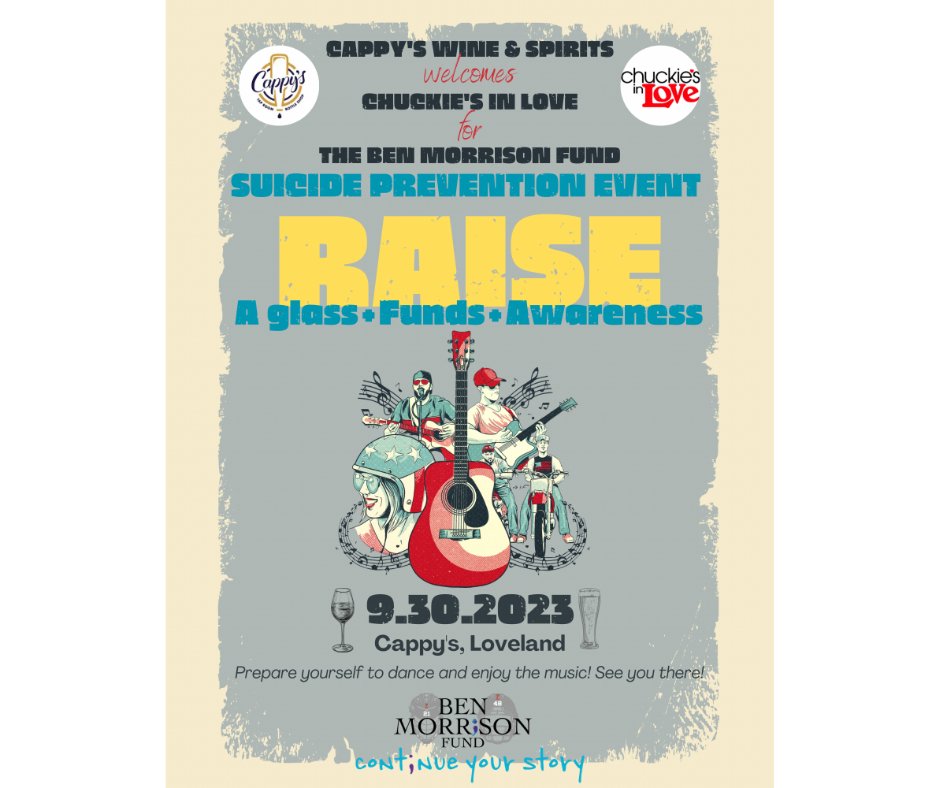
    On Saturday, September 29 Cappy’s Wine and Spirits is hosting a fundraiser for the Ben Morrison Fund featuring the Chuckies in Love band playing the “ultimate throwback tunes, bringing you the iconic sounds of the 70s & 80s”.

    Watch Chuckies in Love…

    Become a Ben’s Way Sponsor

    As a sponsor of Ben’s Way, you will help us bring this initiative to more schools. Students that are chosen will receive a $25 gift card.

    if you would like to sponsor Ben’s Way at a school, or you would like to bring Ben’s Way to your school, please send an email to BensWayInitiative@gmail.com

    Follow the Ben Morrison Memorial Fund on Facebook

  • “Table of Discussions” Brings Prevention, Healing, and Hope for Mental Health Awareness Month

    “Table of Discussions” Brings Prevention, Healing, and Hope for Mental Health Awareness Month

    Cassie Mattia

    Loveland, Ohio – “Don’t be afraid to put yourself first sometimes and get the help you need if it’s needed,” mental health advocate, Elly Steinbrunner said when asked what encouraging message, she wanted to send to those struggling with their mental health.

    On my latest episode of “Table of Discussions” I invited Gina Marek, creator of the Fave Five App, Tori Morrison, who started a non-profit called the Ben Morrison Memorial Fund, and Elly Steinbrunner, a former member of the Loveland Hope Squad to my table to talk about Mental Health Awareness Month.

    During the episode, Gina and Tori talk about how losing their sons to suicide encouraged them to advocate and educate those in the community about mental health. In this Loveland Magazine TV interview, both Gina and Tori offers advice about suicide prevention, eliminating the stigma of depression, and mental illness. Since the conception of the Fave Five app and the Ben Morrison Memorial Fund, Gina and Tori have been able to provide a wealth of information for parents, caregivers, and peers.

    Elly, who recently graduated from Loveland High School, shared her perspective on why mental health struggles are climbing so rapidly among her generation and how being a member of the Loveland High School Hope Squad allowed her to not only help so many young people, but also educate her peers about mental health.

    Join me, Gina Marek, Tori Morrison, and Elly Steinbrunner as we talk about Mental Health Awareness on my latest episode of “Table of Discussions! Watch as these three impactful women offer life-saving tips to those families and youth struggling with the mental health crisis.

    “It’s totally free, no-nonsense, and took less than three minutes to start adding my trusted friends who I would want to contact if I needed help. The people in my life who I would trust with my life,” Loveland Magazine Managing Editor David Miller said after downloading Gina Marek’s My Fave Five app to his iPhone.The Ben Morrison Fund

    The Ben Morrison Memorial Fund is committed to providing scholarships to graduating seniors from Loveland High School. We are dedicated to erasing the stigma of mental health struggles, opening conversations, and offering lifelines to help save lives of young people in crisis.

    The Ben Morrison Memorial Fund is at 501(c)(3) non-profit organization. Fed id 86-2896878. 

    Visit “The Ben Morrison Fund” on Facebook.

    My Fave Five – the Mobile App

    The MY FAVE FIVE Mobile App helps you identify, connect, and build relationships with trusted people in your life.

    Get the APP TODAY to set up your personalized network of support or offer it to someone and be one of their FAVES – just one is a GIFT!

    Visit “My Fave Five” on Facebook.

    Loveland Hope Squad

    The HOPE Squad program is a school-based peer support team that partners with local mental health agencies. Peers select students who are trustworthy and caring individuals to join the Hope Squad. Squad members are trained to watch for at-risk students, provide friendship, identify suicide-warning signs, and seek help from adults.

    HOPE Squad members are NOT taught to act as counselors but are educated on recognizing suicide warning signs and how to properly and respectfully report concerns to an adult. Once invited to be a HOPE Squad member, students must get a permission form signed by their parents and go through training.

    Goal:

    Hope Squads seek to reduce self-destructive behavior and youth suicide by training, building, and creating change in schools and communities.

    Objectives:

    Train:

    1. Hope Squads will train students and staff in schools to recognize suicide-warning signs and act upon those warnings to break the code of silence.

    2. Hope Squads will train students and staff to identify adolescents with undetected, untreated, or emerging mental disorders.

    Build:

    1. Hope Squads will build positive relationships among peers and faculty in schools to facilitate acceptance for students seeking help.

    2. Hope Squads will build strong relationships with local mental health agencies and communities while educating students, parents, and school staff about available community mental health resources.

    Change:

    1. Hope Squads will work to change the school culture regarding suicide by reducing stigmas about suicide and mental health.

    2. Hope Squads will work to change community perceptions of mental health by creating awareness about suicide and the tools available to prevent suicide.

    __________________________

    Call or text the Suicide & Crisis Lifeline (para ayuda en español, llame al 988)

    __________________________

    Sunday, August 6
    1:30 PM @ Hickory Woods Golf Course
    Lunch at the turn and dinner will be provided.
    We look forward to seeing you again this year.

    Please email teamforben@gmail.com for additional sponsorship opportunities or any questions you may have.

    Loveland High School Hope Squad takes lead role in creating mural

    [Photos] The theme was “Teal Out” for My Fave Five, The Ben Morrison Fund, and Loveland High School’s Hope Squad

    Columnist Cassie Mattia is a resident of Historic Downtown Loveland and the Public Relations Coordinator at Butler County Board of DD. Cassie was awarded the Little Miami River Chamber Alliance 2021 Young Business Professional of the Year. She is the President and Publisher of Loveland Magazine.

    Watch Cassie’s previous Table of Discussions episodes!


  • Jeopardy champion Ohioan, others testify against anti-LGBTQ health care bill

    Jeopardy champion Ohioan, others testify against anti-LGBTQ health care bill

    Amy Schneider, Dayton native and Jeopardy! champion, leaves the Ohio House Families, Aging and Human Services Committee after testifying against House Bill 454. Schneider, who is a trans woman, said the bill would be “tragic” for Ohio children. Photo: Susan Tebben, OCJ

    BY: SUSAN TEBBEN – Ohio Capital Journal

    A packed and stuffy Families, Aging and Human Services committee room was flanked by multiple overflow rooms, where applause could be heard after parents, trans advocates and individuals implored the committee not to approve of House Bill 454, a bill created by committee member state Rep. Gary Click, R-Vickery.

    One of the testimonies came from Dayton native Amy Schneider, a trans woman who went on to become a Jeopardy! super champion, and has used her platform to support her fellow LGBTQ+ community members.

    “To be given the chance in Ohio, where I spent 30 years of my life, to have a chance to make a difference and have a chance to actually, if nothing else, slow down these laws and give trans kids a little bit longer to be safe, then I’ve just got to do it,” Schneider told the OCJ before she gave her testimony to the committee.

    In her testimony, she sought not to demonize those who support the bill, but to ask that they do what they claim is the main goal of the bill: protecting children.

    “But if you do share that goal, then passing this bill would be a tragic mistake,” Schneider said. “Because far from protecting children, this bill would put some of them in grave danger, a danger that not all them would survive.”

    https://youtube.com/watch?v=5sRGUicLu6Q%3Ffeature%3Doembed

    Several of those that testified, including Schneider, called gender-affirming care “life-saving” care, in that it would help suicide rates among trans individuals, and the overall mental health of those attempting to live as they want to live.

    “With this bill, I wouldn’t be able to appear as I want to appear to the public with a form that would greatly appeal to me,” said 15-year-old Cass Steiner, who appeared alongside her mother, Kat. “This would likely send me, and everyone else who is expecting treatment, into another deep depression.”

     State Rep. Gary Click, R-Vickery, looks on as the House Families, Aging and Human Services Committee, of which he’s a member, listens to testimony against his bill restricting gender-affirming care, House Bill 454. The bill did not see a vote on Wednesday.
    Photo: Susan Tebben, OCJ

    In the middle of two hours of testimony, Click introduced a substitute version of the bill, that he said was an attempt to “meet in the middle” of opposition and support.

    In the new version, puberty blockers or hormone therapy is allowed for minors, but only after a doctor confirms that the child “has received on a routine basis and for at least a two-year period counseling related to gender dysphoria, mental health and the risks of gender transition,” according to the sub bill’s analysis by the Legislative Service Commission.

    A doctor must also screen for other things that “may be influencing the minor’s gender dysphoria,” including depression, autism or ADHD, and “ensure that these comorbidities are treated and stabilized for at least two years.”

    Along with conducting other physical, sexual, mental and emotional abuse screenings, a second doctor must be consulted and agree to the treatment plan.

    Asked twice how the two-year time frame was decided on, Click told reporters it was “discussed by some other folks who came up with that and I thought that sounded reasonable.”

    He did not specify who he consulted with to come to that amount of time.

    The substitute bill also seeks to keep track of the number of medical and therapy appointments the minor attended before a physician recommended hormones or puberty blockers, any mental health conditions before being diagnosed with a “gender-related condition” and any follow-up the minor received after treatment.

    The bill also requires physicians to report “the number of minors who resumed identification with their biological sex,” and “the number of minors for whom the physician previously prescribed drugs or hormones who have not been prescribed those hormones or drugs for one year or more,” according to the LSC analysis.

    https://youtube.com/watch?v=WUIJG2_rhU8%3Ffeature%3Doembed

    That information would be reported on a yearly basis to the General Assembly and to the Ohio Department of Health.

    Like the abortion ban that is currently held up in court, violating HB 454 could put doctor’s medical licenses at risk, and the state Attorney General would be authorized to bring against anyone violating the bill, should it become law.

    The bill was not voted on during Wednesday’s committee meeting, with chair Susan Manchester, R-Waynesfield, adjourning the meeting immediately after the last witness of the day finished.

    It’s not clear what the fate of the bill will be from here, with the General Assembly’s session ending at the end of December. More hearings could be scheduled, which Click supports because he said there are more people to hear from, particularly those who have been “damaged” by gender-affirming care.

    He said the testimony he heard on Wednesday wasn’t anything he hadn’t heard before, but it didn’t change his mind on the bill.

    “(Children) have to have that period to work through this to make sure this isn’t a phase, it’s not a social contagion … we want to give them that legitimate chance to work through this,” Click said.

    He said he won’t “write anything off” in terms of new amendments to the bill, but he feels the bill has come as close to “the middle” as possible.

    “There are proponents of this bill who are not happy with some of the concessions that we made, and of course the opponents aren’t happy with the fact that we didn’t make enough,” Click said.

    For Schneider, she sees attempts to keep trans folks from getting the care they need as a negative response to success and progress the trans community has had over the last few decades. Progress that will continue, she says.

    “The momentum will continue to be on our side and there’s this pain right now, but this is just sort of the last gasp of that resistance,” Schneider said.

  • Kids can find anything, including that new gun

    Kids can find anything, including that new gun

    Kids can find anything, including that new gun you got for Christmas.

    If you choose to keep guns and ammunition in your house, it’s important to store them safely. Learn how to safely store your guns and ammunition.

    Below is a message from MassGeneral for Children

    How Should I Store My Guns and Ammunition with Children in the House?

    There are many important steps in storing your guns and ammunition. Here is how you can safely store your guns and ammunition at home:

    • Store your guns in a locked gun safe. Keep the gun safe hidden from your child and other family members.
    • Unload all ammunition before storing your guns in a locked gun safe. The National Rifle Association (NRA) recommends that guns be stored unloaded until you need to use them.
    • Keep your ammunition in a locked safe that is separate from your gun safe. Storing your ammunition away from your guns will lower the risk of your child or other family members putting the ammunition into the gun.
    • Put a different lock on each gun. Store the keys out of reach of your child and other family members.
    • Check your guns every time you take them out and put them back in storage. Make sure another family member hasn’t left ammunition in the gun or left anything unlocked.
    • Talk to your child early and often about gun safety. Tell him/her not to touch the guns or ammunition if he/she knows where they are stored.

    Facts about gun dangers and owning a gun

    • There are guns in 4 out of every 10 homes with children in the United States.
    • Children as young as 3 are strong enough to pull the trigger on a gun. 1 out of every 4 children has held a gun without their parents knowing.
    • Every other day in the United States, 1 child under age 10 is killed or hurt by a gun by accident.
    • Every day in the U.S., on average 9 children are killed by a gun and 20 children are taken to the hospital for injuries from guns.
    • Many people buy guns for protection. But, gun owners are more likely to hurt or kill themselves or other family members than intruders.
    • The most common cause of death from guns in the United States is suicide. Every year, about 22,000 people take their lives with guns. Gun owners are 3 times more likely to die from homicide (being killed by another person) than those who don’t own guns.

    How Can I Talk to My Child About Gun Safety?

    • Talk with your child as early and as often as possible. Your child needs to hear about gun safety many times so he/she remembers the information.
    • Get your partner on the same page. Your children should get the same information from both you and your partner. Discuss with your partners what you will tell your children about gun safety.
    • Have the talk in a quiet place without distractions.
    • The talk should be a serious conversation, not a lecture. Ask your child what he/she knows so you can clear up any misunderstandings.
    • Encourage your child to ask questions. Children and teens of all ages are naturally curious about guns. Just because your child doesn’t ask a question doesn’t mean he/she doesn’t have a question in mind. Answer questions honestly and in a way your child can understand.
    • Tell your child never to touch your gun(s) or ammunition without you around. Tell your child to never point a gun at anyone, and to always assume that a gun is loaded and can be fired.
    • If your child sees or finds a gun, tell him/her to stop what he/she is doing and tell an adult. You should also tell your child to never touch or pick up a gun or ammunition.

    Most importantly, set a good example for your children

    Children learn how to behave from adults around them. If your child sees you modeling safe, responsible behavior around guns, he/she has a better chance of behaving safely and responsibly around guns.

    Make sure everyone in your home is properly trained in gun safety

    You and your family can learn about gun safety at a gun and firearms training school. Here are some gun and firearm schools in Massachusetts:

    I Own a Gun, but I Want to Get Rid of It. How Can I Do That?

    Getting rid of guns can help protect your children and family from accidents caused by guns. Here are some tips on getting rid of your gun:

    • Take your guns, ammunition and other weapons to your local police station. All police departments take back guns, ammunition and other weapons without question or fear of you getting in trouble.
    • Ask different police stations in your area about gun buy-back programs. With gun buy-back programs, you can get money or gift cards when you return your guns or other weapons.

    Where Can I Learn More About Gun Safety?

  • A Discussion on Suicide Prevention

    A Discussion on Suicide Prevention

    Dr. Courtney Cinko, is a child and adolescent psychiatrist at Cincinnati Children’s

    From Cincinnati Children’s Young & Healthy Podcast

    According to the National Alliance on Mental Illness, suicide is the second leading cause of death among people aged 10-34. September is Suicide Prevention and Awareness Month, and it is imperative to have conversations about mental illness and mental health. In this week’s episode, we discuss suicide prevention with Dr. Courtney Cinko, a child and adolescent psychiatrist at Cincinnati Children’s. Our conversation includes who is at risk for suicide, red flags parents should look for, how to have a conversation about suicide, resources, and so much more.   

    To schedule an appointment with the Division of Child and Adolescent Psychiatry, please visit: https://www.cincinnatichildrens.org/service/p/psychiatry/programs  

    To learn more about MindPeace, please visit: https://mindpeacecincinnati.com/  

    For additional resources for suicide prevention, please visit: https://www.cincinnatichildrens.org/patients/suicide-prevention  

    National Suicide Prevention Lifeline: 1-800-273-8255 

  • Wounded Heroes Documentary Brings Hope to Our Military, First Responders, and Everyone Battling Post Traumatic Stress

    Wounded Heroes Documentary Brings Hope to Our Military, First Responders, and Everyone Battling Post Traumatic Stress

    Wounded Heroes Documentary is a film dedicated to saving the lives of our veterans and anyone suffering from Post Traumatic Stress. The life saving film will officially be released for the public to view via streaming services TOMORROW. 

    It is tragically reported that more than 20 veterans commit suicide a day, with the suicide rate for veterans being 1.5 times that of the general public. Some veterans who battle Post Traumatic Stress take as many as 18 prescriptions daily, many describe these drugs as a band-aid over a wound that will never heal.  When award winning filmmaker, Michael Gier learned of these statistics he went on a mission to find successful treatments and programs to help veterans battling PTS. 

    In the film, Veterans detail their raw and honest struggles with PTS, suicide and describe how these new treatments ultimately saved their lives. Wounded Heroes Documentary will be available to view beginning this Friday, March 5, on Amazon Video, iTunes, Google Play, and Vimeo On Demand.

    New film shines a light on bold new alternative non-drug treatments and programs that heal the wounds of PTS

    Wounded Heroes.jpg

    In the Wounded Heroes Documentary due out March 5th, 2021, PTS sufferers are finally getting their voices heard as they speak out about their mistreatment by the healthcare system, the medications that are making them worse, and the amazing new proven therapies that are giving them back their lives.

    An alarming statistic by the Department of Veterans Affairs report anywhere from 17 to 22 veteran suicides every single day.

    Many feel it does not need to be that way.

    After learning about this statistic and the serious side effects of overmedicating veterans, California filmmaker, Michael Gier, went on a mission to find successful alternative non-drug treatments that restore lives from the destruction of PTS.

    “Post-Traumatic Stress among our veterans is a serious problem,” said Gier. “Most are given prescription medications, or drug cocktails as many call them, some of these prescriptions are black labeled with serious side effects.”

    Gier, who traveled all over the country interviewing veterans, military brass, politicians, doctors, and other experts, said many veterans feel medication is just a band-aid over a wound that will never heal.

    “Our veterans deserve so much more than just a band-aid and that is what inspired me to create this film,” said Gier. 

    Wounded Heroes Host Screenshot.jpg

    Wounded Heroes Documentary is a 3-year passion project, funded primarily by Michael Gier and his wife Terri Gier, and features life changing options that give those suffering from PTS hope, potentially saving lives.

    “These men and women served our country for years and the best we can do is give them drugs; some as many as     eighteen different prescriptions, forty pills a day?!” said Gier. “I knew there had to be better options.”

    Wound SS 2.png

    In the film, Gier interviews health care professionals who are using alternative therapies that have been successfully proven to dramatically decrease their patients’ medication or help them become completely PTS prescription free.  

    Gier said by creating the film he wanted to bring as much awareness as possible about these life changing treatments and that everyone suffering from PTS needed to know there were other options out there for them. 

    “These aren’t just therapies that can help our soldiers and veterans,” said Gier. “Firefighters, police officers, and first responders all deal with PTS, and even more people from all walks of life are being affected by Covid-19. These can benefit them too.” 

    Veterans reported the alternative treatments helped change their lives significantly for the better and went from contemplating suicide to finding happiness and gratitude in their daily lives.

    Wounded SS 3.png

    “I feel alive again, I feel rejuvenated, I feel like a soldier again.” -Kyle Green, US Army 1998 – 2008

    “I’m happier today then I’ve ever been in my entire life.”  – Chuck Gardea, US Air Force 1989 – 2015, Firefighter/Paramedic 1998 – 2015

    “I didn’t even know this kind of happiness was possible.”  – Sherri Waters, US Army

    “You can change your life around. And there is light at the end of the tunnel, I am proof.” -Antonio Zavala, French Foreign Legion 1985 – 1990 / US Army 1992 – 2006

    Dr. Shauna Springer, Ph.D., known as “Doc Springer” in the military community, is one of the nation’s leading experts on trauma, military transition, and close relationships. She has become a trusted Doc to countless warfighters across the country and has gained the respect of warriors of all ranks. Her unique role has given her a deep understanding of warrior culture, and the warfighter.

    Dr. Springer is a proud advocate of the film.  

    “The feeling that Post-Traumatic Stress is a “life sentence” is killing warriors – and people across America. Many have given up, but they need to know that Wounded Streaming .pngthere is life beyond trauma – not just survival, but a good life – a connected, emotionally fulfilling life. Wounded Heroes presents this life changing story of hope,” said Dr. Springer.

    Wounded SS 4.png

    The Wounded Heroes Documentary will be available for streaming across multiple platforms including Amazon, iTunes, Google, and more starting March 5th, 2021.

    Visit www.woundedheroesdocumentary.com to learn more and join the grassroots effort to help spread the word and impact countless lives.