Tag: Susan Tebben

  • U.S. House Republican cuts to Medicaid, food assistance would impact hundreds of thousands in Ohio

    U.S. House Republican cuts to Medicaid, food assistance would impact hundreds of thousands in Ohio

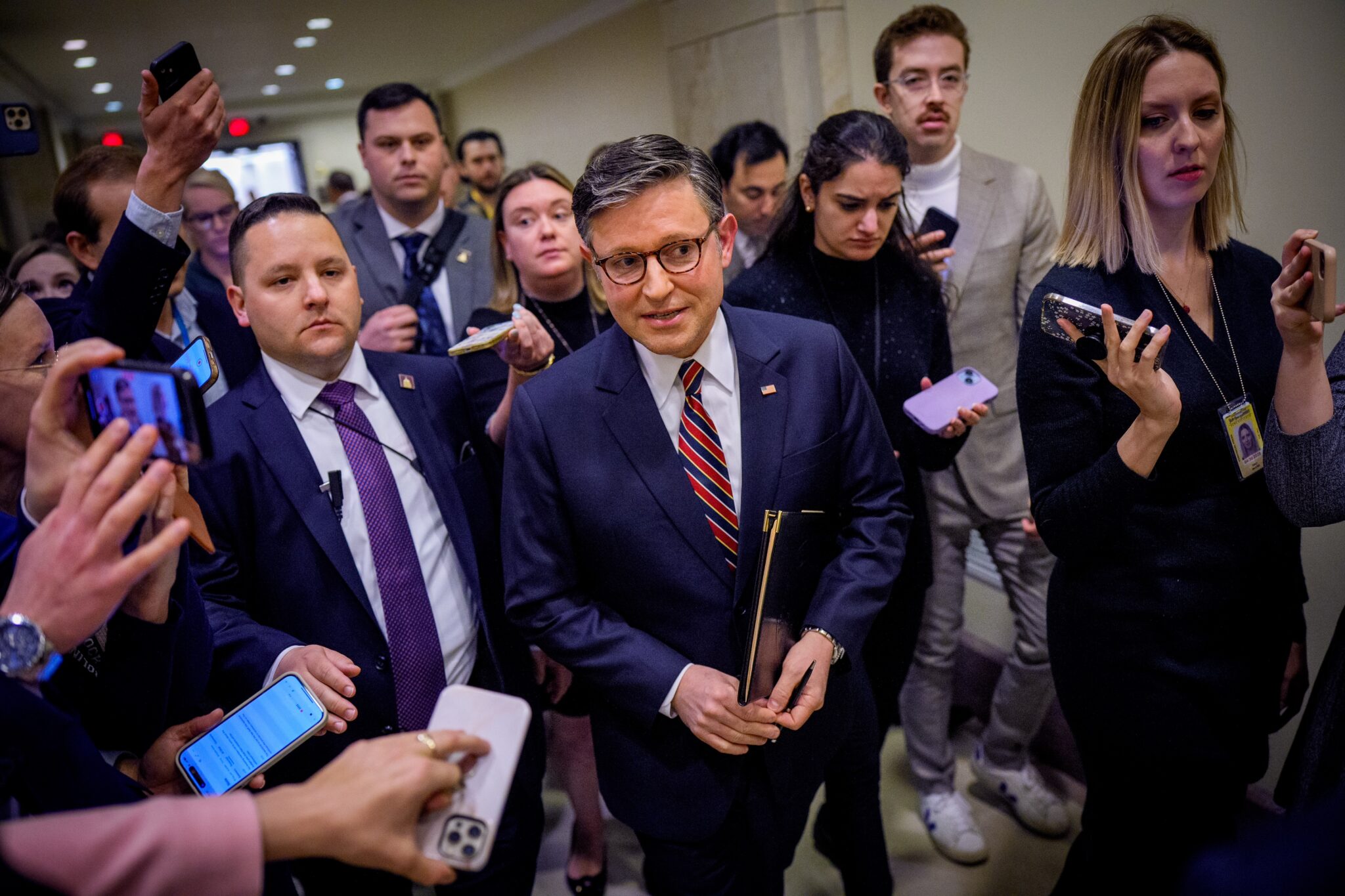
    U.S. Speaker of the House Mike Johnson, R-La., speaks to reporters as he leaves a news conference following a House Republican Conference meeting at the U.S. Capitol on April 8, 2025, in Washington, D.C. (Photo by Andrew Harnik/Getty Images)

    By:  Ohio Capital Journal

    The U.S. House Republican budget bill could spell significant losses for low-income families in Ohio, specifically those in need of food assistance and those on Medicaid.

    Advocates for Medicaid and anti-hunger leaders have said reductions and eliminations connected to the two programs would negatively affect Ohioans as a whole, as well as the state’s economy and spending power.

    Only one Republican U.S. representative from Ohio voted against the congressional budget bill, passed early Thursday with a vote of 215-214. U.S. Rep. Warren Davidson, posted on X, formerly Twitter, Thursday morning that he supported “many things in the bill,” but that “deficits do matter and this bill grows them now.”

    “The only Congress we can control is the one we’re in,” he wrote, alongside a bar graph showing the Congressional Budget Office’s analysis of the bill’s deficit effect. “Consequently, I cannot support this big deficit plan.”

    U.S. Rep. Joyce Beatty, D-Ohio, stood with all other Democrats in voting against the bill, saying in a statement after the vote that the bill is “a cruel and catastrophic budget that rips health care, food and opportunity from Ohioans and millions of other Americans just to bankroll bigger and better tax breaks for billionaires.”

    Medicaid

    Beatty’s statement said the bill, which now moves to the U.S. Senate, includes “the largest cut to Medicaid in American history,” at $698 billion, and $267 billion from the Supplemental Nutrition Assistance Program (SNAP) over the next decade.

    “In Ohio, that means potentially substantial new costs shifted onto our state, and fewer hospitals, fewer nursing homes, fewer services for our most vulnerable neighbors,” according to Beatty. “It’s not just bad math – it’s moral failure.”

    Ohio would see direct impact from the bill in its own state operating budget, currently being drafted by the General Assembly.

    The Ohio House’s version of the bill kept a provision proposed by Republican Gov. Mike DeWine in his executive budget to eliminate the state’s Medicaid expansion group if the federal government reduced the contribution it makes to the program.

    Currently, the federal government pays 90% of the Medicaid funding in Ohio, with the state covering the other 10%.

    In the Ohio House’s version of the budget bill, Ohio would eliminate Group VIII — another name for the Medicaid expansion group that covers more than 700,000 Ohioans who live above the income requirements for traditional Medicaid but are still in need of assistance — if the federal government’s share of the funding dips below 90%.

    GET THE MORNING HEADLINES.


    Medicaid advocates and experts have said losing this expansion group would cause Ohio’s uninsured rate to go up, and those dropped from the program to seek self-pay medical options, or skip care all together, causing the health of the state to suffer.

    According to Ohio child advocacy group Groundwork Ohio, nearly 48% of Ohio children younger than six rely on Medicaid for health coverage, and the program covers about 50% of all births in the state.

    The Center for Community Solutions found in a recent study that Medicaid covers 2 in 5 children in the state, as well as 1 in 5 working-age adults, and 1 in 10 adults aged 65 and older. The largest group covered in Ohio’s Medicaid program, 53.2% of cases, is families and children.

    SNAP funding

    The national Food Research & Action Center said the cuts would represent a nearly 30% reduction in SNAP funding, and would increase each state’s share of spending for the food assistance.

    “The bottom line is this bill would end up costing America,” wrote Crystal FitzSimons, president of FRAC, in a statement. “Rural communities would be disproportionately impacted. We would see higher rates of hunger and poverty, increased health care costs, reduced academic outcomes, less productivity and an economy that will be hit hard.”

    The Congressional Budget Office said the cuts, particularly to Medicaid and SNAP, would create a 2% decrease in household income nationwide in 2027 for the 10% of Americans in the lowest income brackets, going to 4% by 2033. Households in the highest income brackets, however, could see raises.

    The loss of SNAP funding, along with Medicaid, would reduce access to services that “are vital for everyday Ohioans in every Congressional district,” according to Joree Novotny, executive director of the Ohio Association of Foodbanks.

    Novotny said the current proposal would shift nearly $500 million in SNAP costs per year onto the state of Ohio.

    “That’s about the same as all the state general revenue spent to operate the entire Ohio Department of Job and Family Services each year,” Novotny said.

    The food banks and other anti-hunger advocates are already asking the state to support bipartisan legislation that would create supplemental benefits for SNAP participants in Ohio.

    Ohio House Bill 178, which has received two hearings in the House Community Revitalization Committee, would require the Ohio Department of Job and Family Services to provide “supplemental benefits to households receiving (SNAP) benefits if the household includes a member who is 60 years of age or older and receives a monthly SNAP benefit that is less than $50.”

    The supplements would cost the state $12.5 million in fiscal year 2026, and $21.4 million in 2027, according to a fiscal analysis of the bill.

    In supporting the bill, Hope Lane-Gavin, director of nutrition policy and programs for the state association of food banks said the average SNAP benefit in Ohio is $171 per month per person, or less than $6 per person per day.

    The federal minimum SNAP benefit is $23 per month, according to Lane-Gavin. There are about 70,000 households with adults 60 or older as the head of them in which the household receives less than $50 per month.

    “Access to SNAP benefits can reduce food insecurity, increase medication adherence and contribute to health care savings,” she told the committee.

    If SNAP funding changes drastically, food banks will not be able to fill the gap, even as they served more than 230 million meals in 2024, according to Novotny. The language in the budget would force state governments including Ohio’s to “make impossible choices.”

    “This cost shift wouldn’t just hurt families, it would impact local grocery stores, farmers and food suppliers, threatening jobs and access to fresh food in communities across Ohio,” Novotny said.

    Susan Tebben
    Susan Tebben

    Susan Tebben is an award-winning journalist with a decade of experience covering Ohio news, including courts and crime, Appalachian social issues, government, education, diversity and culture. She has worked for The Newark Advocate, The Glasgow (KY) Daily Times, The Athens Messenger, and WOUB Public Media. She has also had work featured on National Public Radio.

    Ohio Capital Journal is part of States Newsroom, the nation’s largest state-focused nonprofit news organization.

    MORE FROM AUTHOR

  • Ohio public health one of the worst funded in the country, faces further cuts in state budget

    Ohio public health one of the worst funded in the country, faces further cuts in state budget

    (Mario Tama/Getty Images)

    By:  Ohio Capital Journal

    A new analysis of state public health systems shows Ohio’s has some of the worst funding support in the nation, and that funding could go down even more in the newest state budget.

    Using 2021 data from the State Health Access Data Assistance Center, the Health Policy Institute of Ohio found that the state spent $24 per person on public health, “far less than most other states.”

    “Overall, Ohio’s investment in public health is lower than many other states at both the state and local levels,” the institute stated.

    According to the data, only 12 states are worse than Ohio for state public health funding, with the worst being Missouri, at $6.54 per person in 2021. The highest ranked was the District of Columbia, at $370.56 in per-capita spending that year.

     Source: Health Policy Institute of Ohio 

    Public health involves everything from vaccine awareness and health education to food and water safety.

    While health outcomes are influenced by clinical care like primary care check-ups, health behaviors and the social, economic, and physical environment make up a bigger part of the health outcome influences, according to policy briefs by the institute.

    “Public health workers focus on stopping health problems before they start,” the HPIO stated in a recent policy brief. “For example, public health workers prevent injuries and deaths by providing parents with information about how to correctly install infant car seats, distributing drug overdose reversal medication and raising awareness of senior fall prevention programs.”

    Other public health roles include nurses at school-based health centers, restaurant inspectors, public assistance program nutritionists, epidemiologists who look at health trends like infant mortality, and workers who conduct home visits as part of the Help Me Grow program.

    That program, along with infant vitality programs are portions of the state budget that may see cuts, even as public health advocates ask the state to support the sector more than it already does.

    In the Ohio House’s version of the state budget, $22.5 million would be cut from the Help Me Grow program in fiscal year 2027, representing a 26% reduction. Infant vitality programs would see cuts of more than $2 million each in 2026 and 2027, a nearly 10% cut. The programs, both housed under the Ohio Department of Children and Youth, are still awaiting final numbers, as the Ohio Senate takes up its budget discussions. A final draft will then be developed by both chambers, before it’s sent to the governor by July 1.

    GET THE MORNING HEADLINES.


    The House version of the budget leaves local health department support unchanged, with that support set at the same $2.379 million the line item received in 2024 and this year. State funding for infectious disease prevention and control within the Ohio Department of Health will also receive relatively the same amount of funding as it received in 2024, though the House version drops the budget slightly from the estimated 2025 funding. The 2025 estimate by the state has funding at $5.2 million, and the House set funding for 2026 and 2027 at $4.9 million per year.

    In Ohio, 2023 annual financial reports from the Ohio Department of Health and the Association of Ohio Health Commissioners showed 72% of local health department revenue comes from the local level, including local government funds, public health levies in some areas and fees. Federal funding distributed by the state makes up 16% of the revenue, 6% is from other state sources, and 5% comes from direct federal funding to local departments. Local health departments only receive 1% of their revenue via state subsidy, according to the data.

     Source: Health Policy Institute of Ohio

    The Health Policy Institute’s review of 2024 Ohio Department of Health data shows it receives half of its revenue from federal sources, 31% from the state and 19% came from the federal response to the COVID-19 pandemic.

    With $979 million in state fiscal year 2024, the state used that revenue almost equally across three topics: disease prevention, implementation of the federal Women, Infant and Children (WIC) program, and services related to COVID-19 and other infectious diseases, according to an HPIO policy brief on public health basics. These three topics each took 22% to 23% in ODH expenditures.

    Another 11% went to family and community health services, 6% went to maternal and infant vitality, 5% to administrative services, 4% to “quality assurance” for long-term care facilities, 4% for public health preparedness information and 2% for “other family and community health services” passed through local health districts.

    Public health initiatives yield an average return on investment of $14 for every dollar spent, through improved health outcomes, reduced health care costs and increased productivity, according to the institute’s public health analysis.

    Among other policy recommendations, the instituted urged continued or even increased support for the federal Public Health Infrastructure Grant would be important to “strengthen the public health workforce, foundational capabilities and data systems through the end of 2027.”

    The public health sector has faced struggles like high turnover, high burnout rates in existing employees and a lack of adequate pay.

    “Consistent delivery of these services across the state depends upon an adequate public health workforce,” the HPIO stated.


    Susan Tebben
    Susan Tebben

    Susan Tebben is an award-winning journalist with a decade of experience covering Ohio news, including courts and crime, Appalachian social issues, government, education, diversity and culture. She has worked for The Newark Advocate, The Glasgow (KY) Daily Times, The Athens Messenger, and WOUB Public Media. She has also had work featured on National Public Radio.

    Ohio Capital Journal is part of States Newsroom, the nation’s largest state-focused nonprofit news organization.

    MORE FROM AUTHOR

  • Ohio House budget would cut all elected members of the State Board of Education, limit board to five

    Ohio House budget would cut all elected members of the State Board of Education, limit board to five

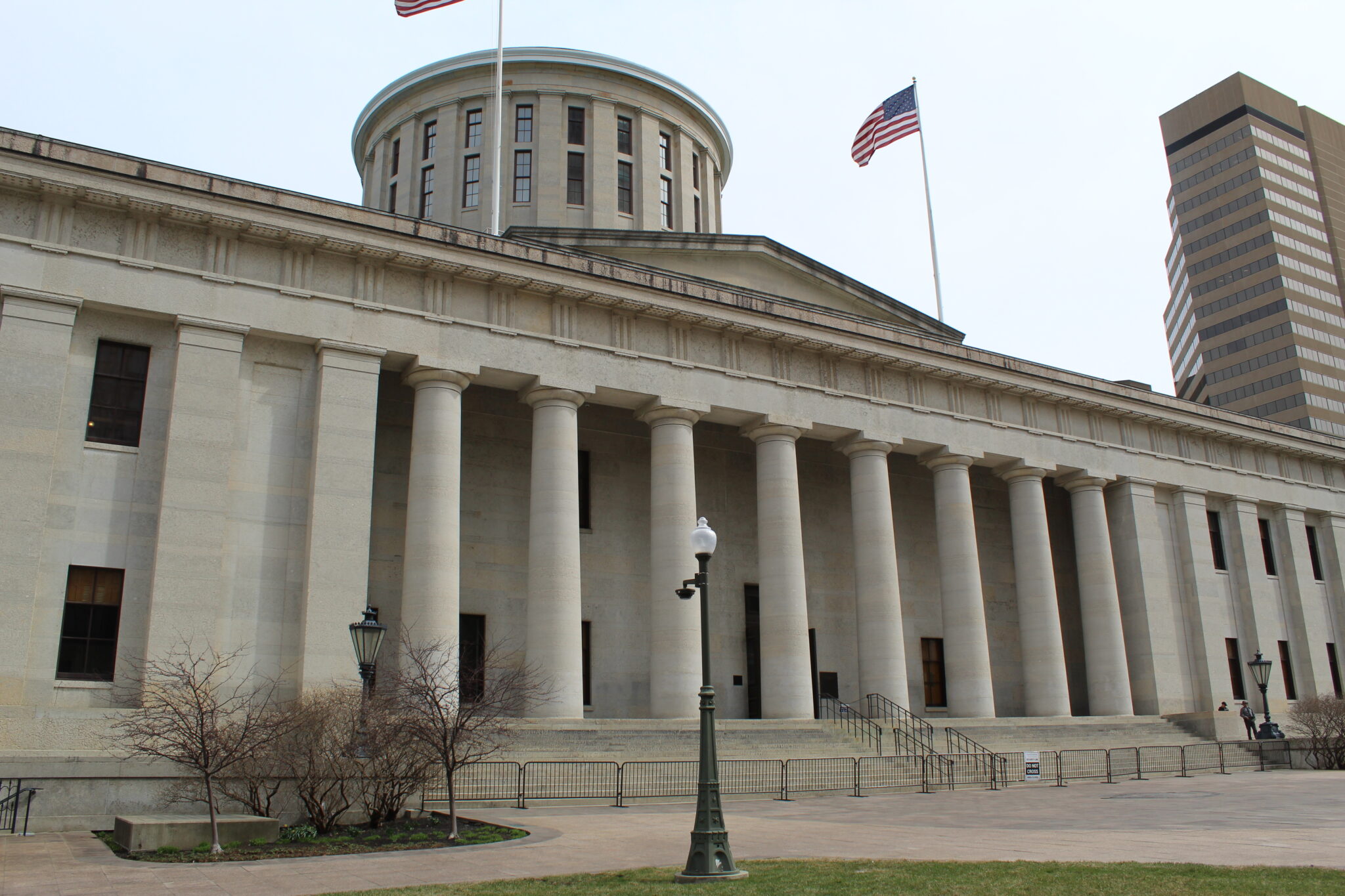
    The Ohio Statehouse. (Photo by David DeWitt, Ohio Capital Journal.)

    By:  Ohio Capital Journal

    A provision in the version of the two-year state budget passed by Ohio House Republicans would eliminate elected members from the State Board of Education. This comes after the last budget stripped the board of most of its power.

    The budget passed by the House last week would reduce the board membership from 11 elected members and eight governor-appointed members to five, all appointed by the governor.

    When the terms of the current elected board members expire or the positions become vacant in another way, the seats would be eliminated. Three of the governor-appointed spots would also.

    The House budget also changes the requirements for appointed board members to require “at least one member to represent each of a rural, suburban, and urban school district, a community school and a chartered nonpublic school.”

    According to budget documents, the reduction would save Ohio about $50,000. Board members received an average of $3,500 in compensation in 2024, according to state data.

    The budget is now in the hands of the Senate.

    The House changes come along with a proposal that public education advocates say would cut public school funding and eliminate the Fair School Funding model that has been in place for the last four years. The existing model calls for $666 million, but the House budget would cut that by roughly two-thirds, to $226 million.

    The board’s budget could be coming from a separate fund, rather than its own licensure fund on which it’s been relying since the last budget cycle limited their power within the state education system.

    With the establishment of the Ohio Department of Education and Workforce two years ago, the board’s powers were largely stripped away and what powers remained were centered on teacher licensure and territorial disputes. It was strongly opposed by board members and members of  the public.

    The last two years have been a financial struggle after the change to the teacher licensure fund as well. Superintendent of Public Instruction Paul Craft came to legislators with funding requests, telling lawmakers and the board that the uncertainty of the teacher licensure fund could harm the board’s bottom line, when staffing and expense cuts had been exhausted.

    GET THE MORNING HEADLINES.


    The fund’s revenue surges at certain points of the year, when teachers get or renew their licenses. The rest of the year, the board has to live on the funds provided by the state.

    With the start of a new budget cycle, Craft asked for additional state support to help with the costs of annual background checks for school staff. He also asked to eliminate the video assessment portion of the Ohio Teacher Residency Program to save more than $1 million.

    The House’s budget eliminates the teacher licensure fund, with the board’s operating expenses paid from the Occupational Licensing and Regulatory Fund. The fund already exists to pay into assistance funds for nursing education, certified public accountant education and veterinary student debt.

    A Legislative Service Commission analysis of the budget changes noted that the moving to the occupational licensing fund “may provide greater financial stability” for the board, because that fund “serves as a shared operating fund for many occupational licensing and regulatory boards and commissions.” They are supported by license fees, fines, penalties and “other assessments” put in the fund by those boards and commissions.

    The House also added $2 million from the General Revenue Fund in each fiscal year for the educator background check service, called the Retained Applicant Fingerprint Database (or Rapback).

    While a spokesperson for the board of education said it was “premature” to comment on the reduction in board members at this point, he said the House changes to the funding, along with the elimination of the video teacher assessment, could mean good things for the board.

    “We were actually very happy with the financial side of things,” said board spokesman Alex Goodman.

    Appropriations based on the House draft would give the board $16.3 million in fiscal year 2026, and $16.8 million in fiscal year 2027.

    A spokesperson for the House majority caucus did not comment specifically on the elimination of elected officials in the budget, but said the funding changes “reflect the recent restructuring of the board’s responsibility for licensing and conduct of educators.”

    “Aligning with the funding of nearly all other licensing boards, this shift addresses the long-standing status of the state board as somewhat of an outlier,” said Olivia Wile, caucus press secretary. “It promotes consistency across the system and is expected to be advantageous over time, potentially reducing the pressure for increased licensing fees in the future.”

    Goodman said board leaders are already preparing to testify to the Senate the budget process moves to that chamber over the next month.


    Susan Tebben
    Susan Tebben

    Susan Tebben is an award-winning journalist with a decade of experience covering Ohio news, including courts and crime, Appalachian social issues, government, education, diversity and culture. She has worked for The Newark Advocate, The Glasgow (KY) Daily Times, The Athens Messenger, and WOUB Public Media. She has also had work featured on National Public Radio.

    Ohio Capital Journal is part of States Newsroom, the nation’s largest state-focused nonprofit news organization.

    MORE FROM AUTHOR

  • Hunger assistance, student meal support, take hits in final Ohio House budget draft

    Hunger assistance, student meal support, take hits in final Ohio House budget draft

    By:  Ohio Capital Journal

    Anti-hunger advocates saw a mixed bag with the final Ohio House version of the state budget, and they’re hoping to claw back some losses via the Senate’s draft.

    The House’s budget was approved by the chamber on Wednesday with only five Republicans voting against it.

    It maintained some reductions to a children’s hunger initiative, and gave food banks across the state only “core funding,” without an increase that they say they need as the number of people asking for food continues to increase. And federal food assistance through the Supplemental Nutrition Assistance Program (SNAP) often doesn’t cover the needs of Ohio residents.

    The final House budget draft still includes SNAP work requirements and regulations, some of which were in Gov. Mike DeWine’s executive budget, and some were added by the House.

    GET THE MORNING HEADLINES.


    The Children’s Hunger Alliance will still fight against cuts to its programs as the budget moves to the Senate. DeWine’s proposal asked for $3.75 million each year in federal Temporary Assistance for Needy Families (TANF) funds to be given to the alliance. The House reduced that amount to $2.5 million.

    The cut could cause major problems for children in Ohio who need the help, according to the alliance. They include 2.8 million fewer meals and a doubling of the number of schools on a waitlist to join the program.

    The hunger alliance’s president and CEO, Michelle Brown, said Columbiana and Athens counties would lose 150,000 meals in an Appalachian region that sees significant food insecurity already.

    “We are urging the Senate to honor their commitment to children and by increasing CHA’s funding by $2.5 million over the biennium, to restore flat funding as proposed by the governor,” the alliance said in a statement after the House budget was passed.

    The Hunger Network in Ohio criticized not only the hunger program cuts, but also cuts to the Fair School Funding Plan and the Housing Trust Fund. The network pressed the Senate to “adopt fiscally responsible investments to create a stronger Ohio that prioritizes Ohio neighbors who are struggling to make ends meet.”

    The House-passed version of the bill didn’t include a provision of DeWine’s budget that would have provided free breakfast or lunch to school districts that participate in federal school meal programs and have a student population with at least 25% eligible for free or reduced-priced meals.

    The measure removed from the budget by the House used the federal Community Eligibility Provision, something that also could be up for cuts on the federal end. The provision allows schools to participate based on the percentage of students in a school district who participate in other assistance programs like SNAP and TANF. Currently, schools are eligible if they have up to 40% participation in such programs.

    Earlier this year, a congressional committee proposed changing the eligibility level for the provision. It would raise the participation percentage to 60%, a change that hunger relief advocates said could impact more than 280,000 Ohio children, and millions nationwide.

    The House budget did retain DeWine’s language on the state’s school meal programs. It would reimburse districts to allow those eligible for reduced-priced meals to receive them for free. The previous state operating budget included $4 million for that purpose.

    For the Ohio Association of Foodbanks, an earmark from TANF dollars of up to $24.5 million a year made it from the governor’s budget proposal to the House’s draft. The association is expected to use the money for food distribution, summer meal programs, SNAP outreach and even free tax filing services, according to budget documents. The provision also mentions “capacity building” equipment as part of the earmarked funding.

    But the group still sees the need to fight for more on the Senate side, especially amid increasing demand and potential cuts to federal food assistance. The U.S. House passed a budget on Thursday, with funding cuts that could number in the trillions. They could include at least $880 billion in programs such as the SNAP program.

    The Center on Budget and Policy Priorities stated at least $230 billion in federal cuts have been proposed through 2034 from the U.S. House Agriculture Committee, overseers the SNAP program, and reductions could come “largely or entirely” from SNAP.

    Data from the Ohio Department of Job and Family Services noted nearly 1.5 million SNAP recipients in the state as of last month.

    The association’s executive director, Joree Novotny, said the group plans to ask the Senate to add $4.93 million per fiscal year to help offset rising food costs and allow the food banks to continue to source food locally.

    “Since 2020, food prices have surged by nearly 24%, meaning the same level of funding buys significantly less, both in consumers’ grocery carts and in our own purchasing power as a statewide hunger relief network,” Novotny said in a statement. “…With modest additional support, Ohio’s foodbanks will continue to stretch every dollar to maintain access to healthy foods when seniors and working families are forced to turn to us for help.”

    YOU MAKE OUR WORK POSSIBLE.

    _______________
    Susan Tebben
    Susan Tebben

    Susan Tebben is an award-winning journalist with a decade of experience covering Ohio news, including courts and crime, Appalachian social issues, government, education, diversity and culture. She has worked for The Newark Advocate, The Glasgow (KY) Daily Times, The Athens Messenger, and WOUB Public Media. She has also had work featured on National Public Radio.

    Ohio Capital Journal is part of States Newsroom, the nation’s largest state-focused nonprofit news organization.

    MORE FROM AUTHOR

  • Ohio public libraries, State Library of Ohio, brace for funding uncertainty, hope for budget relief

    Ohio public libraries, State Library of Ohio, brace for funding uncertainty, hope for budget relief

    President Donald Trump signed an executive order March 14, 2025, imposing dramatic cuts on seven federal agencies, including the Institute of Museum and Library Services. (Catherine McQueen/Getty Images)

    By:  Ohio Capital Journal

    Public libraries in Ohio have taken on many identities over the last 25 years, from literature distributors and internet hubs, to social services researchers and providers of basic needs like free food. But funding has stagnated, failing to match growing demands.

    The Toledo Lucas County Public Library works to cultivate reading skills and technology access. But along with those services, the system works with partners to distribute meals to children in the community. It also hosts a small business and non-profit team, a program that has provided training, education, research services, technology and physical space, equating to more than $3.1 million in value to entrepreneurs and businesses, according to Jason Kucsma, executive director and fiscal officer for the library system.

    “Folks tend to think of their libraries as where they grew up and had their story times,” Kucsma told the Capital Journal. “But we’re part of the public infrastructure.”

    Libraries are also jumping in as potential funding cuts and actual job cuts to agencies like the IRS and the Social Security Administration leave Ohioans with questions and a lack of answers.

    “When it comes to federal agencies, that’s probably something we’re going to see more of,” said Michelle Francis, executive director of the Ohio Library Council.

    Ohio libraries are in the thick of it with tax season going strong, as they partner with organizations like the AARP to help people finish their filings.

    “We can’t keep up with the demand for tax services,” Kucsma said. “Once we open that up, those slots fill up pretty quickly.”

    In one year, Ohio public libraries saw visits from enough people to fill Ohio Stadium 434 times, according to council data.

    However, over the last 25 years, the funding from the state hasn’t always matched the influx of roles libraries have included in their portfolio.

    State funding

    The Public Library Fund, which is the state’s funding source for all public libraries dropped by $27 million last year, putting the funding at the same level it was 25 years ago.

    “When you’re funding libraries at the same level you were 25 years ago, but yet the demand, the expectation is growing, something’s gotta give,” Francis said.

    The local libraries have significant support from their communities in the form of property tax levies, but there are still 48 library systems of the 251 in the state that rely solely on state funding for their main revenue, according to Francis.

    “We see our relationship with the state as one where when we receive funding from the Public Library Fund, it goes straight to those services on the local level,” she said.

    GET THE MORNING HEADLINES.

    The state also provided $4.5 million to the State Library of Ohio in the last budget, money which supports the research areas of the library, including conservation of things like the official photograph of the Ohio House from 1890, documents about the state dating back to 1876 and even a celebration of the 35th birthday of the United States


    The SLO gets some funding from libraries with which the it collaborates, but the biggest chunk, $5.4 million, comes from the federal Institute for Museum and Library Services.

    “We’ve been here for 200 years, we have to plan like we’re going to be here for 200 more years,” Knapp said.

    Without help from both the federal and state sides, the library is going to have trouble, particularly with its current facility.

    In asking for a one-time increase in the 2026 operating budget of $525,000, Mandy Knapp, who heads the state library, told the Ohio House Workforce and Higher Education Committee their current facility is “no longer suitable” with the work needed to remediate HVAC issues threatening the preservation of “one-of-a-kind and rare materials” that include medieval manuscripts and writings from state political leaders.

    “Due to the condition of our facility, we are unable to correctly preserve and care for these materials,” Knapp told the committee in February.

    Federal funding

    Along with the battle for state funding, the state library is facing potential cuts on a federal level after an executive order from President Donald Trump listed the Institute of Museum and Library Services as part of a group of governmental entities to be “eliminated to the maximum extent consistent with applicable law,” and ordered to “reduce the performance of their statutory functions and associated personnel to the minimum presence and function required by law,” according to the executive order, which was released March 14.

    Among the other entities listed for elimination with the library-services agency were the United States Interagency Council on Homelessness, the Minority Business Development Agency, the Community Development Financial Institutions Fund, the Woodrow Wilson International Center for Scholars in the Smithsonian Institution, and the United States Agency for Global Media and the Federal Mediation and Conciliation Service.

    The museum and library services institute provides funding to libraries and museums nationwide, including the State Library of Ohio. The library was praised by Francis and Kucsma as an entity that provides statewide benefits from those federal funds, including resource-sharing, summer learning programs, reading programs for the blind and deaf, and the Ohio Digital Library, which helps local libraries big and small provide audiobooks and e-books.

    “These resources are not large amounts of money, but they go to help support projects and programs that the people of Ohio benefit from every day,” Francis said.

    As of Friday afternoon, the State Library of Ohio hadn’t heard whether or not its funding would be cut, specifically the Grants to States Program, which is where the state library receives most of its funding.

     Source: State Library of Ohio 

    The $5.4 million from the federal Institute of Museum and Library Services is a drop in the bucket among the trillions of dollars the U.S. Congress handles, as Knapp looks at it.

    “It’s like finding $20 in your wallet that you didn’t know was there, that’s what it is to Congress,” she said.

    But for the State Library and the local libraries who work with it, that money is the difference between needed partnerships – digital services, consortiums for smaller libraries, the conservation of historic materials including parts of the state’s founding history – and being reduced to one singular role as a research library without the ability to help fellow libraries.

    “It would totally and utterly devastate the State Library of Ohio,” Knapp said.

    As it happens, the Toledo Lucas County Public Library was one of the recipients of the National Medal for Museum and Library Services, given out by the Institute of Museum and Library Services to “institutions that make significant and exceptional contributions to their communities.”

    Part of that contribution includes opening its meeting rooms to local governments and elected officials. At Toledo’s libraries, 27% of their meeting space usage in the last year was government-related, according to Kucsma, something the library encourages as a way to “meaningfully engage with people.”

    “As we see people’s trust in general institutions erode, especially in the last 10 years, that hasn’t happened with people’s trust in libraries,” Kucsma said. “I think it’s only grown.”

    Gov. Mike DeWine’s executive budget proposal had an increase to the Public Library Fund from 1.7% to 1.75%. But Francis said “we still have a long way to go with the budget,” and they plan to push even harder to show the importance of public libraries.

    “I’m optimistic that (legislators) see the value,” Francis said.

    YOU MAKE OUR WORK POSSIBLE.

    ____________
    Susan Tebben
    Susan Tebben

    Susan Tebben is an award-winning journalist with a decade of experience covering Ohio news, including courts and crime, Appalachian social issues, government, education, diversity and culture. She has worked for The Newark Advocate, The Glasgow (KY) Daily Times, The Athens Messenger, and WOUB Public Media. She has also had work featured on National Public Radio.

    Ohio Capital Journal is part of States Newsroom, the nation’s largest state-focused nonprofit news organization.

    MORE FROM AUTHOR

  • Student meals once again subject of Ohio bill

    Student meals once again subject of Ohio bill

    Photo by Amanda Mills/Centers for Disease Control and Prevention.

    By:  Ohio Capital Journal

    Another bill has entered the Ohio General Assembly in an attempt to address student hunger in schools, this time in the form of a Democratic measure that would still hold households accountable for student meal debt, but keep the child from feeling the consequences.

    State Reps. Darnell Brewer, D-Cleveland, and Ismail Mohamed, D-Columbus, introduced House Bill 97 in a Tuesday hearing of the Ohio House Education Committee. The bill would require public schools to provide a meal to any student and bars districts from requiring “chores” or other activities from students due to outstanding meal debt. The bill also requires the Ohio Department of Education and Workforce to “provide guidance” to districts and schools about the collection of student meal debt.

    “It’s a really common-sense solution to something that has been happening for so long and has such a negative impact on kids,” Mohamed told the committee on Tuesday.

    Brewer and Mohamed pointed to statistics in their testimony to the committee that show more than 1.6 million Ohioans are considered food insecure, with 1 in 6 children in the state living in poverty in 2023.

    Brewer said ideally, the “most sustainable and compassionate way” to address the problem would be with mandatory participation in the federal Community Eligibility Provision – a program that allows schools with large numbers of low-income children to serve free breakfast and lunch to all students in the school – or with a universal breakfast and lunch program in the state.

    The Community Eligibility Provision’s future is uncertain as federal budget reconciliation continues. Back in January, a document from the U.S. House Ways and Means Committee listed potential cuts to the national budget through reconciliation, which included raising the threshold for school districts to qualify for the provision.

    Eligibility is based on the amount of households in a school and district that receive Supplemental Nutrition Assistance Program (SNAP) and Temporary Assistance for Needy Families (TANF) funding. The document release in January proposed raising the eligibility from 40% of students in a school who receive the program assistance, to 60%.

    The Food Research & Action Center has said the changes to the provision, which it found served more than 23 million children nationwide in the last school year, would “worsen childhood hunger, hurt struggling families and create unnecessary burdens for schools and districts.”

    “Community eligibility is a proven success, ensuring tens of millions of students have access to nutritious meals while easing burdens on families and schools,” said Crystal FitzSimons, interim president of FRAC in a Tuesday statement on the provision’s uncertainty. “Instead of cutting community eligibility, (federal) lawmakers should be expanding it to allow more high-need schools and districts to adopt the options.”

    Ohio-specific data on the impact of the provision from the Food Research & Action Center and the Center on Budget and Policy Priorities found the cuts would mean 728 schools in the state would not be able to provide free school meals, and more than 287,000 children would no longer have access to free meals through the provision.

    GET THE MORNING HEADLINES.


    Columbus Public Schools alone would see 110 schools and more than 44,000 students impacted by the changes, if implemented.

    The sponsors said Ohio’s H.B. 97 wasn’t a way to allow parents and guardians to be released from the debt they owe, considering districts have to pay the debt whether the parents are accountable or not.

    “We’re not letting the parents get away with the debt, what we’re saying in this bill is that the student will still be served,” Brewer said.

    The bill is a way to get food that is already ready to be served to the students to those kids without the recognition that a student is part of the federal National School Lunch Program, or any other program that provides students from low-income households access to lunch at no cost or a reduced cost.

    “All it does is just refocus where our priorities lie,” Mohamed said.

    Schools would be prohibited from discarding a meal because the student isn’t able to pay for it, and it would ban “publicly identifying or stigmatizing a student who cannot pay for a meal or owes a meal debt,” according to an analysis of H.B. 97 by the Legislative Service Commission.

    Guidance from the ODEW about school debt would include “best practices” and information on the establishment of an online system to allow payment of the debt, under the bill.

    The bill comes shortly after comments were made by House Speaker Matt Huffman, R-Lima, rebuffing efforts to create a universal school breakfast and lunch program. According to reporting from the Statehouse News Bureau, Huffman made comments last week that a program like that would have a “huge amount of waste,” and many Ohio parents can pay for breakfast and lunch already.

    A member of Huffman’s own party is part of a bipartisan effort that would do just that, and the public has expressed support for such a program. The legislature seemed to be somewhat swayed as well, at least in the previous state operating budget, when eligibility for free lunches was raised to include those who qualified for reduced-price lunches. It fell short of hopes for a universal meal program, but was praised as progress when the measure was implemented in the budget.

    State Sen. Bill Blessing, R-Colerain Twp., who is a co-sponsor of the bipartisan bill to create a universal school meal program, said he wants to push for the language of his bill to appear in the new state budget, which is currently in the legislature, pushing toward a July 1 deadline.

    YOU MAKE OUR WORK POSSIBLE.

    _________________
    Susan Tebben
    Susan Tebben

    Susan Tebben is an award-winning journalist with a decade of experience covering Ohio news, including courts and crime, Appalachian social issues, government, education, diversity and culture. She has worked for The Newark Advocate, The Glasgow (KY) Daily Times, The Athens Messenger, and WOUB Public Media. She has also had work featured on National Public Radio.

    Ohio Capital Journal is part of States Newsroom, the nation’s largest state-focused nonprofit news organization.

    MORE FROM AUTHOR

  • Local Ohio public school leaders tell lawmakers that full funding is critical for their districts

    Local Ohio public school leaders tell lawmakers that full funding is critical for their districts

    (Stock photo from Getty Images)

    By:  Ohio Capital Journal

    Local public school leaders from all around the state filled the Ohio House Education Committee’s hearing room on Tuesday to explain to lawmakers how full state funding is critical to their districts.

    Christopher Edison, superintendent of Pymatuning Valley Local School District, described the pride in the district’s diversity and resilience. At the Northeast Ohio district, 76% of the students are considered economically disadvantaged and there’s been an increase in the need for specialized services. Edison also highlighted the successes in academic achievement, career and workforce readiness, and mental health supports at the district.

    “However, the sustainability of these programs is increasingly at risk due to rising operational costs,” Edison told the committee in Tuesday testimony. “Inflation has significantly increased expenses for essential resources such as transportation, instructional materials, and staffing.”

    Without an increase in base funding, Pymatuning’s ability to “maintain and expand these successful initiatives is severely threatened,” Edison said.

    GET THE MORNING HEADLINES.


    Hits have already come to districts because of inflation and increasing costs not reflected in the funding model that looks to see its final funding phase-in this year, if the legislature includes it in the operating budget set to be passed by July 1.

    Montgomery County’s Northmont City Schools — a district with rural, suburban, and urban areas — has seen state funding cuts and defeats of school levies that resulted in the need to cut more than 40 district positions in May 2023, and the closure of one of their elementary schools, according to Superintendent Tony Thomas.

    “I understand that members of the General Assembly passed a budget two years ago that increased funding across the state, and we are thankful,” Thomas told the education committee. “But unfortunately for Northmont, those dollars are not reaching our school buildings and we are doing more with less.”

    It’s stories like these that the Fair School Funding Plan workgroup, which was created along with the state’s public school funding model, is hoping will flood both the education and finance committees, along with the offices of state legislators, to inform them about the importance of proper public school funding in Ohio.

    “It’s our responsibility to ensure that every member of the Ohio legislature and the General Assembly be made fully aware of these facts, their implications, and the legislative decisions that led to these circumstances as they contemplate this important budget,” said Mike Hanlon, Jr., superintendent of Chardon Local Schools, and Fair School Funding Plan workgroup member.

    The workgroup met recently, along with more than 600 other education community members, to discuss upcoming legislative meetings about the budget, what the governor’s proposal would mean for districts, and how to engage with lawmakers.

    “In my visits to Columbus … one message was very clear with the legislators that we met with: ‘We need to hear from constituents on the issue of school funding,’” Hanlon said.

    Members of the workgroup said they’ve heard another message from the lawmakers: resources are limited in the budget.

    In the governor’s executive proposal, the Fair School Funding Plan’s final phase-in was included, but inputs that would account for inflation costs at districts were not, something the governor’s office has “remained silent” on in all budgets that included the public school funding plan, workgroup members said.

    “First and foremost, this is not our ideal proposal from the governor,” said Jared Bunting, CFO and treasurer of the Athens City School District. “However, this is in line with what the governor has done in the past and we’re thankful that the governor has included the Fair School Funding Plan in his budget, even though it falls woefully short of our expectations.”

    In the governor’s budget for the next two years, the budget would decrease funding for traditional public schools by 0.9%, according to a workgroup analysis. Community and STEM schools will receive an 11.3% increase in the governor’s proposal, while joint vocational school districts receive a 14.1% increase. Voucher programs including the EdChoice private school program would see a 15.8% increase.

    “So 90% of the students in the state are seeing a reduction in funding,” Bunting said, referring to the enrollment numbers in the state, which show the vast majority of students attend traditional public schools.

    Alternately, last year, the state funded private school voucher scholarships with nearly $1 billion in one year, according to the Ohio Department of Education and Workforce.

     Source: Ohio Fair School Funding Plan Workgroup

    School administrators on the workgroup noted that the funding simulations used in the governor’s budget proposal show an intention to “continue to update capacity each year without any input updates.”

    Without inputs to account for rising costs and inflation, the state not only won’t meet the workgroup’s ideal of a 50% state share of education costs, but will drop below the share of funding before 1995, when the Ohio Supreme Court first ruled in DeRolph v. State of Ohio that the state’s education funding violated the state constitution, falling short of the “thorough and efficient” system of schools directed in the founding document.

    With talk of addressing property taxes in Ohio, something that school funding has relied on for decades, workgroup members said updating cost inputs could help with that issue as well.

    “When we talk about property tax relief, we would like to argue that … updating all inputs consistently is a form of property tax relief to our community members,” said Jenni Logan, treasurer for the Sycamore Community Schools.

    Now, as the budget process continues, educators, and administrators not only plan to push for proper education supports in committees considering the budget document, but also want to get district stories to all legislators, including newly elected GA members, who haven’t had a front-row seat to the public school funding model fight.

    Those who are new to school funding are also faced with “competing interests in other areas that are not related to school funding,” according to Hanlon. He said legislators who talked to him said they “haven’t heard from anyone” on school funding.

    “As a result, it’s very likely that they need to hear from us, and from someone that they trust and are confident in, that will provide them with the necessary facts to shape their understanding of school funding,” Hanlon said.

    YOU MAKE OUR WORK POSSIBLE.

    ________________
    Susan Tebben
    Susan Tebben

    Susan Tebben is an award-winning journalist with a decade of experience covering Ohio news, including courts and crime, Appalachian social issues, government, education, diversity and culture. She has worked for The Newark Advocate, The Glasgow (KY) Daily Times, The Athens Messenger, and WOUB Public Media. She has also had work featured on National Public Radio.

    Ohio Capital Journal is part of States Newsroom, the nation’s largest state-focused nonprofit news organization.

    MORE FROM AUTHOR


  • Hamilton County judge blocks Ohio law regulating abortion remains

    Hamilton County judge blocks Ohio law regulating abortion remains

    Photo by Getty Images.

    By:  Ohio Capital Journal

    A Hamilton County judge blocked a 2020 Ohio law on Thursday that required the burial of fetal or embryonic remains after an abortion.

    Hamilton County Judge Alison Hatheway ruled in favor of abortion clinics in the lawsuit, filed in 2021, saying Senate Bill 27 has “unconstitutional provisions” that “cannot be severed,” therefore the only solution is to permanently block the law from going into effect.

    “If S.B. 27 were allowed to go into effect, it would severely impede access to abortion resulting in delayed or denied health care,” Hatheway wrote in her decision.

    The state had not offered any points to support the argument that S.B. 27 is the “least restrictive means to advance the individual’s health in accordance with widely accepted and evidence-based standards of care,” she ruled.

    “As the (clinics) argue, it is clear why the state has been silent on this issue,” Hatheway wrote. “S.B. 27 simply does nothing to serve patient health.”

    The lawsuit was filed by Planned Parenthood in Ohio and other state clinics, who emphasized that they follow regulations to dispose of surgical abortion tissue just as any other medical facilities do for disposal of medical waste.

    The ODH was required under the law to create a “notification form” for the pregnant person informing them of “the right to determine the final disposition of fetal remains and the available methods and locations,” along with a parental consent form for minors and reporting documents on disposal.

    Clinics told the court the law would create “an impossible situation” because it was set to go into effect before rules from the Ohio Department of Health were established.

    GET THE MORNING HEADLINES.


    S.B. 27 included misdemeanor criminal charges for clinics who didn’t follow ODH rules and regulations on burial and cremation of surgical abortion tissue, which is anything created “as a product of human conception,” according to the bill.

    The Senate bill says nothing about regulation for the same tissue produced from miscarriage or IVF embryos, something the judge noted in her ruling.

    “S.B. 27 serves only to target and discriminate against individuals seeking procedural abortions and their health care providers,” she wrote.

    Hatheway had temporarily blocked the law multiple times, including in Feb. 2022, when she said the clinics were “substantially likely to succeed” in the lawsuit due to the Ohio Constitution’s confirmation that “freedom of choice in health care is a fundamental right.”

    That ruling was released even before a constitutional amendment was added in Nov. 2023, to add reproductive rights including abortion to the state’s founding document.

    In April, after the constitutional amendment was approved by 57% of Ohio voters, an amended complaint was filed with an argument using the new amendment.

    “This law clearly violates the Ohio Constitution, as its sole purpose was to impose severe burdens on abortion patients and providers, and to shame patients in seeking care,” Jessie Hill, cooperating attorney for the ACLU of Ohio, said in a statement after the ruling was announced.

    The state could be appeal the decision to a higher court, but it’s unclear whether that will be pursued by the state. The anti-abortion lobby Ohio Right to Life, however, said they are anticipating a challenge.

    “We fully expect our pro-life Attorney General Dave Yost to appeal this inappropriate decision,” said Ohio Right to Life President Mike Gonidakis in a statement. “The American people are exhausted by what is happening at the federal judiciary and now within our state courts. The role of the courts is to interpret the law and not to make law.”

    A spokesperson for Yost said the AG’s office is “reviewing the decision and will consider all options regarding next steps.”

    YOU MAKE OUR WORK POSSIBLE.

    _______________
    Susan Tebben
    Susan Tebben

    Hamilton County judge  is an award-winning journalist with a decade of experience covering Ohio news, including courts and crime, Appalachian social issues, government, education, diversity and culture. She has worked for The Newark Advocate, The Glasgow (KY) Daily Times, The Athens Messenger, and WOUB Public Media. She has also had work featured on National Public Radio.

    Ohio Capital Journal is part of States Newsroom, the nation’s largest state-focused nonprofit news organization.

    MORE FROM AUTHOR

  • Ohio House begins discussions of state education budget proposed by governor

    Ohio House begins discussions of state education budget proposed by governor

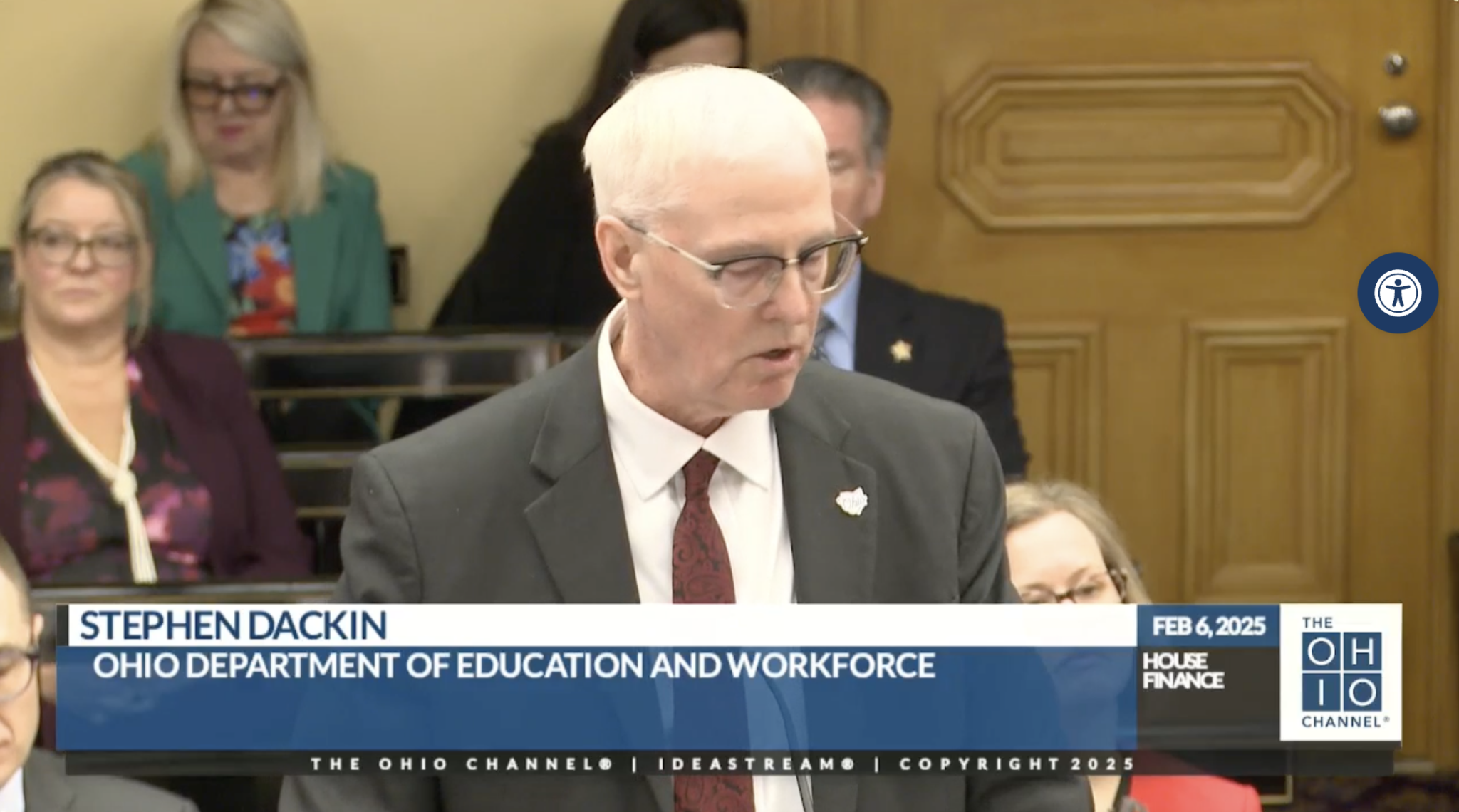
     Ohio Department of Education and Workforce Director Stephen Dackin speaks to the Ohio House Finance Committee on a new education operating budget. Photo courtesy of Ideastream/The Ohio Channel

    By:  Ohio Capital Journal

    Hearings have begun in the Ohio House Finance Committee to dissect Gov. Mike DeWine’s executive budget proposal, including a lengthy discussion on Thursday with regard to the education provisions included in it.

    “This budget takes the next steps toward fulfilling our key policy priorities,” said Ohio Department of Education and Workforce Director Stephen Dackin.

    DeWine’s proposal recommends $12.4 billion in funding to state schools in fiscal year 2026, and another $12.6 billion in 2027. That recommendation includes the final two years of a public school full fair funding formula that has been a point of contention for legislative leaders, particularly House Speaker Matt Huffman, who has called the funding model “unsustainable.”

    The governor’s proposal also gives community schools an increase in per-pupil funding and “continues access to Ohio’s five scholarship programs,” including the state’s private school voucher program.

    Many members of the House Finance Committee asked about the foundational funding for state school districts, for which the executive budget recommends a state share of 35%, with no adjustment for inflation to the “inputs” of the education costs in the formula.

    Some Republicans on the committee questioned the continued use of the Cupp-Patterson funding formula (also called the Fair School Funding Plan), along with the burden of property taxes in their districts used to pay for schools.

    “The school funding formula is inadequate and it’s inequitable,” claimed state Rep. Tom Young, R-Washington Twp. “We do not award the merit of outcomes in the funding formula.”

    While Dackin said he is “a fan of performance-based funding,” he reemphasized comments DeWine made about the overall budget when he introduced it: that the document was a starting point from which to build the final budget, with room for adjustments.

    Dackin also pushed back on concerns from Democratic members about a lack of oversight for private schools receiving significant state monies compared with the oversight public schools receive.

    “The concern for a lot of people is, what are we getting for those dollars, because we have very little oversight in how that money is being used at these schools,” said House Minority Leader Allison Russo, D-Upper Arlington.

    Dackin said there is “some measure” for schools accepting scholarship money, but he has a higher measure that he takes into account.

    “Every day, parents make a decision where to send their kids, and parents make decisions based on a variety of issues,” Dackin told the committee. “The ultimate accountability is where the parents send their kids.”

    Literacy

    Literacy is a main tenet of the governor’s education proposal, with objectives that included continuing the ReadOhio program and implementation of an Ohio Literacy Coaching Model by the Department of Education and Workforce, and further training on the Science of Reading model.

    “The department supports the use of high-quality core and intervention instructional materials, provides educator professional development and supports literary coaches who provide targeted support to schools and districts,” the budget document states.

    GET THE MORNING HEADLINES.


    The executive budget notes nearly 72,000 teachers and administrators have completed one of six “Science of Reading Professional Development pathways” as of Jan. 15 of this year, and 84 “literary coaches” were used during the 2024-2025 school year in 93 school districts in Ohio.

    Dackin told the finance committee reading is a “lynchpin skill” that is vital to successful outcomes for Ohio’s students.

    “I feel like that is our moral obligation as adults, to make sure that (bad outcomes don’t) happen in Ohio,” Dackin said. “I see no reason why Ohio can’t lead the country in literacy rates, zero.”

    The science of reading is also a priority in executive budget proposals for the Ohio Department of Children and Youth. DeWine noted a goal to improve state kindergarten readiness through a 40% increase in the number of children in licensed early care and education settings “with a curriculum aligned to the science of reading and early learning and development standards,” according to the budget document.

    Included in the plans from the governor to increase the numbers is the expansion of the Childcare Choice Voucher Program.

    A spokesperson for the governor did not elaborate on what would be expanded about the program, but a representative of the Department of Children and Youth said the program currently uses monthly payments directly to approved licensed child care providers. Families apply for the voucher through their local county Job and Family Services Department, and eligibility for the program is determined by income, family size, and job or education status.

    Families with children enrolled in licensed child care programs and monthly incomes between 146% and 200% of the federal poverty level are eligible for the voucher program, according to Kari Akins, of the children and youth department. For a family of four, that’s between $45,552 and $62,400 a year.

    Federal education uncertainty

    The Lyndon Baines Johnson Department of Education Building pictured on Nov. 25, 2024. (Photo by Shauneen Miranda/States Newsroom)  

     The Lyndon Baines Johnson Department of Education Building pictured on Nov. 25, 2024. (Photo by Shauneen Miranda/States Newsroom)

    Legislators brought up a possible federal issue during the discussions of the executive budget: whether the U.S. Department of Education will be able to provide the usual funding, or whether the department will even exist in the near future, based on President Donald Trump’s potential executive order and comments that he plans to dismantle the department.

    “We hear occasionally, from time to time in the news that there might be consideration in Washington, D.C., to change the (U.S.) Department of Education,” said state Rep. Adam Bird, R-New Richmond. “I’m curious as to whether you’ve heard whether any changes to the U.S. Department of Education might come with changes to funding for Ohio schools.”

    Dackin had a simple answer to the committee.

    “We don’t know, to be honest,” Dackin said. “We’ve received no guidance at this point, no direction from the US DOE on anything related to funding.”

    Prior to the budget discussion, Dackin joined education administrators from 10 other states in a Jan. 28 letter to “Administrator McMahon,” seemingly the currently-unconfirmed Trump nominee for Secretary of Education, Linda McMahon, asking the new administration to “prioritize … policies that trust and empower state educational agencies to shape education systems that meet the unique needs of their students.”

    Those priorities include state control of education funds and “guidance aligned with congressional intent that defers to state law and policy,” according to the letter, provided by the the Department of Education and Workforce.

    “We know that the department must work with Congress to achieve many of these changes to (the Elementary and Secondary Education Act) but, in the meantime, please defer to state and local decision-making as much as possible in your actions,” stated the letter, signed by Dackin and administrators from North Dakota, Alaska, Idaho, Wyoming, Florida, Utah, Mississippi, Indiana, Arkansas, Iowa and South Carolina.

    The executive budget will continue through hearings in education and finance committees within the Ohio House before a legislative budget document is created, and the Ohio Senate begins its own consideration. A final budget is due by July.

    YOU MAKE OUR WORK POSSIBLE.

    _________________
    Susan Tebben
    Susan Tebben

    Susan Tebben is an award-winning journalist with a decade of experience covering Ohio news, including courts and crime, Appalachian social issues, government, education, diversity and culture. She has worked for The Newark Advocate, The Glasgow (KY) Daily Times, The Athens Messenger, and WOUB Public Media. She has also had work featured on National Public Radio.

    Ohio Capital Journal is part of States Newsroom, the nation’s largest state-focused nonprofit news organization.

    MORE FROM AUTHOR

  • Child care cost-sharing model brought back to the Ohio General Assembly

    Child care cost-sharing model brought back to the Ohio General Assembly

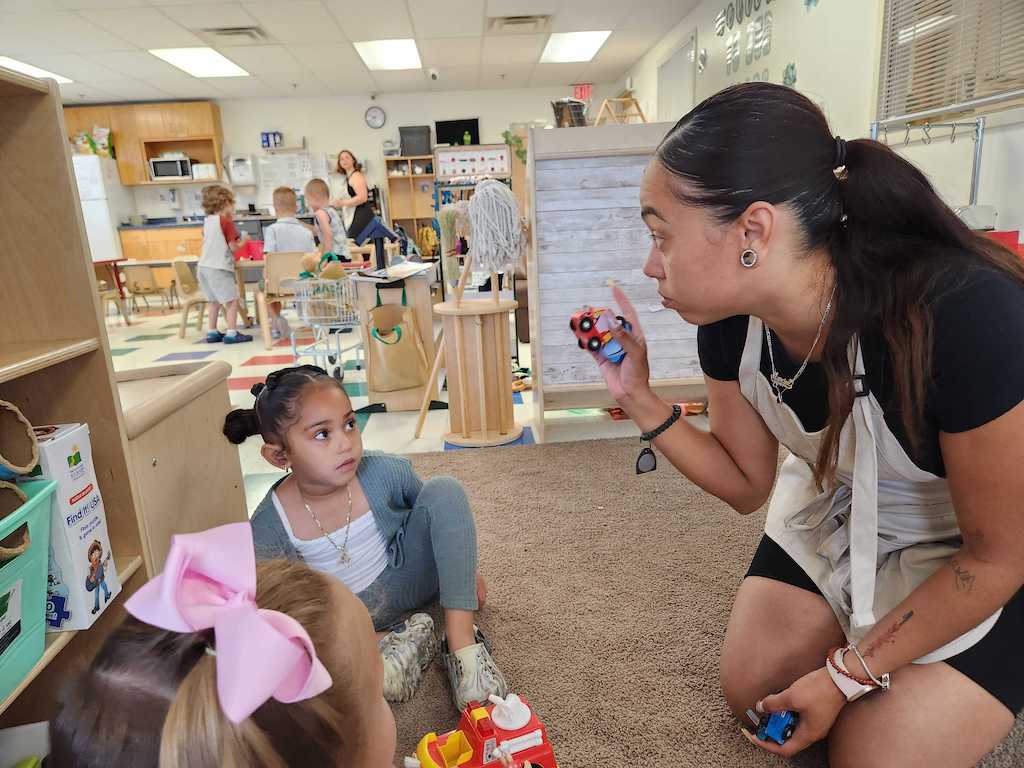
    Child care worker Marci Then helps her daughter, Mila, 4, put away toys. (File photo by Elaine S. Povich/Stateline.)

    By:  – Ohio Capital Journal

    Ohio lawmakers are trying again with measures to attack the child care crisis that advocates are warning continue to hurt the state’s families and economy, including with a bill that spreads the cost of child care out among employers, employees, and the state.

    State Rep. Mark Johnson, R-Chillicothe, reintroduced a bill he said came “late in the game” last year, giving it an uphill battle to passage as the Republican supermajority sought to close up the General Assembly term with other priorities.

    But Johnson’s bill is now Ohio House Bill 2, and has been introduced very early in the new General Assembly, with its first hearing in the House Children and Human Services Committee held on Tuesday.

    This bill, and its companion bill led in the Ohio Senate by state Sen. Michele Reynolds, R-Canal Winchester, looks to direct $10 million to a “Child CareCred Program” within the Ohio Department of Children and Youth, to be distributed “on a first-come, first-served basis,” according to Johnson.

    The bill models its child care program after Ohio’s TechCred program, which incentivizes employers to enroll employees in skill-building programs and connect them with credential providers in exchange for reimbursement.

    The child care program would create an application process for employers who identify needs within their employees for child care assistance.

    A program that engages the employer, the employee, and the state is Johnson’s way to address what he and child advocates say is a crisis that only hurts Ohio’s economy more the longer it goes on.

    The average cost for child care has gone up on a yearly basis, and a 2024 report from Care.com found 1 in 5 American households are paying $36,000 annually on care for their children.

    “This financial strain has forced many parents, especially mothers, to reduce their working hours, or leave their jobs entirely to manage child care responsibilities,” Johnson said.

    GET THE MORNING HEADLINES.


    In some areas of the state, workforce participation rates are as low as 50%, according to Johnson, who said that while there are other reasons for a low participation rate, child care is a major reason parents are unable to work or are choosing to leave their jobs.

    “If we want to remain known as a business-friendly state, we need to address the child care crisis,” the representative told the House committee on Tuesday.

    Johnson mentioned the proposal by Gov. Mike DeWine in his proposed executive budget, released on Monday, to increase eligibility for publicly funded child care from 145% to 200% of the federal poverty level. But Johnson said that by just increasing the eligibility level “we are rewarding employers who pay meager wages.”

    The Children and Human Services Committee chair, state Rep. Andrea White, R-Kettering, is no stranger to pushing the legislature to address the child care issue, having successfully championed a wide-ranging bill in the last General Assembly that directs different state agencies to study processes and programs on everything from infant mortality to child care programs such as Head Start.

    Though she’s still hoping to see the funding that was left out of her bill come in the new operating budget, White isn’t done addressing aspects of child care and child welfare.

    On Tuesday, White and fellow Republican state Rep. Sharon Ray, R-Wadsworth, introduced House Bill 7. The legislation seeks to “increase the number of stable, safe family foster homes and long-term kinship care options by providing publicly funded child care for children in the foster care system in these placements,” White told the committee.

    Ray said that about 14,300 children are in foster care in the state, with 4,000 of those placed with a relative or family friend in kinship care.

    “Across the board we have a need for more foster families, whether very young children or teens,” Ray said. “Let’s take the objections off the table by removing the things that get in the way for current and potential foster and kinship parents, so that more loving, caring families can say yes to our children.”

    Both bills will see further hearings to allow supporters and opponents to give their opinions of the bills before they are voted on by the committee, and if approved, moved forward to votes of the full House.

    YOU MAKE OUR WORK POSSIBLE.

    _______________
    Susan Tebben
    Susan Tebben

    Susan Tebben is an award-winning journalist with a decade of experience covering Ohio news, including courts and crime, Appalachian social issues, government, education, diversity and culture. She has worked for The Newark Advocate, The Glasgow (KY) Daily Times, The Athens Messenger, and WOUB Public Media. She has also had work featured on National Public Radio.

    Ohio Capital Journal is part of States Newsroom, the nation’s largest state-focused nonprofit news organization.

    MORE FROM AUTHOR