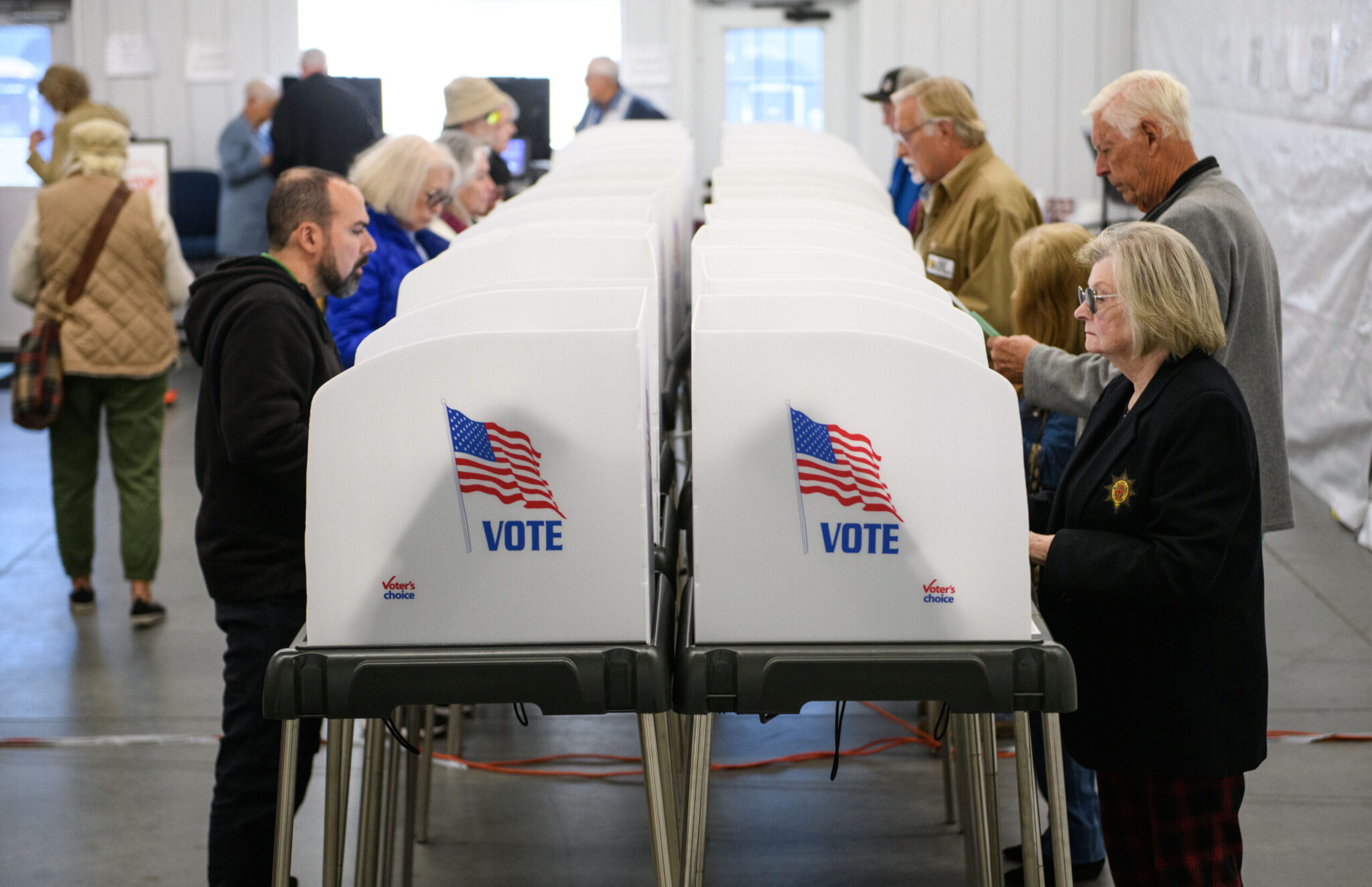
As part of a group “working to restore faith in public elections,” two former Ohio elected officials are urging Ohioans to trust the process, and accept the results.
Former U.S. Representative Zack Space and former Ohio Secretary of State Ken Blackwell participated in a Wednesday panel discussion at the University of Cincinnati on election integrity and trust in the electoral process. The discussion was part of UC’s “Digital Futures Flashpoint” series.
Space, a Democrat, said he and the Republican Blackwell don’t agree on their choice of presidential candidate in the November election, or their choice in Ohio’s U.S. Senate race, or even on certain policies.
“But we agree on this: if you cast your vote … you can rest assured that it will be counted,” Space said.
Blackwell – who served in the George H.W. Bush administration, was an honorary co-chair of the George W. Bush campaign in 2004 and was a part of former President Donald Trump’s transition team in 2016 – said the strength of the elections system in Ohio should be believed.
“We need to turn up the volume to help people believe their vote does matter,” Blackwell said. “We can detect flaws in the system and fix flaws in the system. That’s something we do well in Ohio.”
In Blackwell’s tenure as Ohio’s secretary of state from 1999 to 2007, he dealt with his own share of election controversies and questions. With regard to an investigation into “irregularities reported in the Ohio presidential election” in 2004, U.S. House Rep. John Conyers, Jr., the ranking Democrat on the House Judiciary Committee, said “there were massive and unprecedented voter irregularities and anomalies in Ohio.”
Several counties were hampered by broken voting machines, not enough voting machines, and a directive by Blackwell on provisional ballots.
“In many cases these irregularities were caused by intentional misconduct and illegal behavior, much of it involving Secretary of State J. Kenneth Blackwell, the co-chair of the Bush/Cheney campaign in Ohio,” Conyers wrote.
GET THE MORNING HEADLINES.
State Democrats sued about a directive issued by Blackwell for that election that kept ballot boards from giving ballots to voters who were in the wrong precinct. A U.S. District judge blocked the directive, but an appellate court ruled in favor of Blackwell, throwing out certain provisional ballots.
Blackwell addressed the criticism over the long lines on Wednesday, saying the problem, particularly in Montgomery County, was a campaign that had engaged university students to vote, to the point where polling places were not prepared with enough machines, and long lines ensued.
Though he faced much criticism at the time, on Wednesday, he changed the narrative.
“The reality was it was a very positive sign,” Blackwell said, saying the increased voter turnout and the success of the student engagement was a good thing.
For this election year, Blackwell and Space are putting their heads together as part of the Democracy Defense Project, a bipartisan coalition of former elected officials from Arizona, Georgia, Michigan, Nevada, New Hampshire, Pennsylvania, Wisconsin and Ohio.
“An erosion of faith in our democracy and the proliferation of politicians undermining election integrity to bolster their own campaign, reputation or party’s influence have caused false narratives about ‘stolen elections’ to take root,” according to the project’s website. “The mistrust that many voters have for our electoral system puts our democracy at grave risk.”
The targets of the group include boosting confidence in election results and improving voter participation, according to the DDP website.
While the Ohio members of DDP agree that it is unlikely America will know the results of the presidential election next Tuesday night, with close calls and litigation anticipated, they urged the public to have faith in the election through the work that local boards of elections do and the protections in place for votes.
“There is a point by which the challenges are resolved and if it doesn’t go your way, you have to accept it,” Blackwell said.
YOU MAKE OUR WORK POSSIBLE.
_______________
Susan Tebben
Susan Tebben is an award-winning journalist with a decade of experience covering Ohio news, including courts and crime, Appalachian social issues, government, education, diversity and culture. She has worked for The Newark Advocate, The Glasgow (KY) Daily Times, The Athens Messenger, and WOUB Public Media. She has also had work featured on National Public Radio.
Ohio Capital Journal is part of States Newsroom, the nation’s largest state-focused nonprofit news organization.
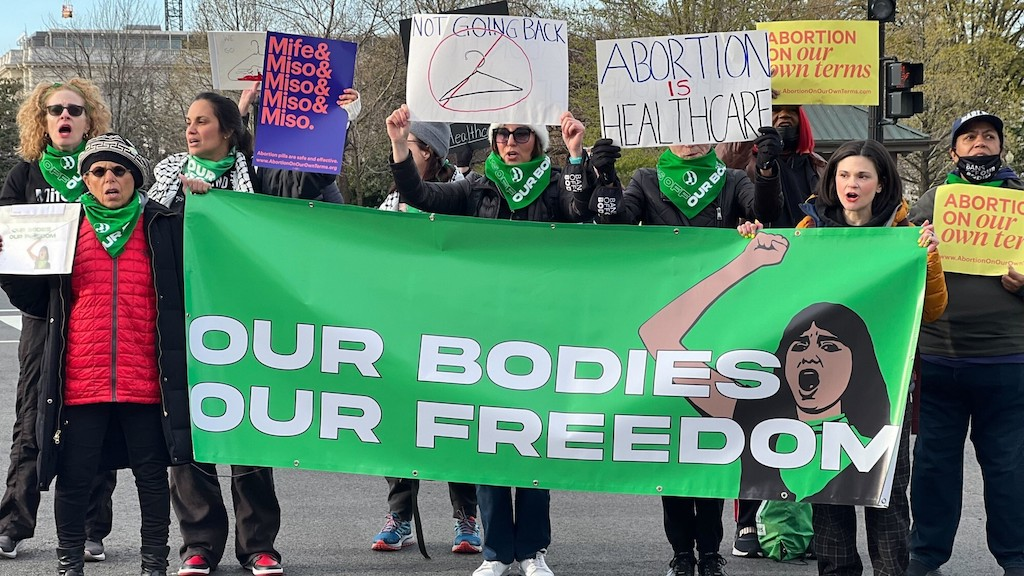
The U.S. Supreme Court ruling in Dobbs v. Jackson Women’s Health Organization in June 2022 ended federal abortion rights. (Photo by Sofia Resnick/States Newsroom.)
The Ohio Attorney General’s Office says state has 30 days to “determine next steps.” The law will remain struck down unless Attorney General Dave Yost appeals the decision
A Hamilton County judge has permanently overturned Ohio’s six-week abortion ban that had been tied up in court since its inception in 2019, but was put into effect for several months after Roe. v. Wade was overturned.
Hamilton County Judge Christian A. Jenkins had already temporarily stopped enforcement of the law when the case entered his courtroom in the fall of 2022 several months after the Dobbs decision overturning national abortion rights established in Roe.
Thursday’s decision means the law is struck down unless the Ohio Attorney General decides to appeal the decision.
In November 2023, Ohio voters passed a reproductive rights amendment with 57% support.
“Ohio’s Attorney General evidently didn’t get the memo,” Jenkins wrote. “For even after a large majority of Ohio’s voters … presumably both women and men — approved an amendment to the Ohio Constitution protecting the right to pre-viability abortion on November 8, 2023, the Attorney General urges this court to leave ‘untouched’ all but one provision of the so-called ‘Heartbeat Act’ clearly rejected by Ohio voters.”
Hours after the Dobbs decision came down in June 2022, Ohio Attorney General Dave Yost asked a federal court reinstate the six-week abortion ban law, which was approved by the court quickly after the request was made. The ban included no exceptions for rape or incest.
GET THE OHIO CAPITAL JOURNAL MORNING HEADLINES.
Just as quickly, though, the law was then shoved back into court by abortion rights advocates. At first, advocates asked the Ohio Supreme Court to rule on the case, but after a period of inaction by the state’s high court, they chose to challenge the law locally, specifically in Hamilton County.
With the approval of the reproductive rights amendment in Ohio, attorneys had a new avenue to challenge the six-week ban. They used the language — which allowed abortion to the point of fetal viability, a determination to be made by the pregnant person’s physician, rather than at a point determined by state law — as a tipping point for arguments that the six-week ban was now unconstitutional. Fetal viability typically comes in a range between 24 to 26 weeks.
Yost pushed back, saying the reproductive rights amendment could not be used to negate any law or provision that was remotely related to abortion rights.
However, he also acknowledged it would be quite a battle to argue that the six-week ban did not violate the new constitutional amendment.
In a legal analysis on the reproductive rights amendment before the vote, that has often been used against him in the year since, Yost said the amendment “will make it harder for Ohio to maintain the kinds of law already upheld as valid prior to last year’s decision in Dobbs.”
“In other words, the Amendment would give greater protection to abortion to be free from regulation than at any time in Ohio’s history,” Yost wrote.
He went on to say that “many Ohio laws would probably be invalidated,” and that “others might be at risk to varying degrees.”
That included the so-called Heartbeat Act, according to him.
“Ohio would no longer have the ability to limit abortions at any time before a fetus is viable,” he wrote. “Passage of Issue 1 would invalidate the Heartbeat Act, which restricts abortions (with health and other exceptions) after a fetal heartbeat is detected, which is usually at about six weeks.”
Even so, Yost attempted to argue in the case that certain provisions included in the law should be allowed to stand.
Jenkins disagreed, saying the state constitution “now unequivocally protects the right to abortion” and that “to give meaning to the voice of Ohio’s voters, the Amendment must be given full effect, and laws such as those enacted by (Senate Bill) 23 must be permanently enjoined.”
He said that if Ohio courts adopted the state’s arguments, Ohio doctors who provide abortion care would continue to be at risk of felony criminal charges, $20,000 fines, medical license suspensions and renovations, and civil claims for wrongful death.
“Patients seeking abortion-care would still be required to make two in-person visits to their provider, wait twenty-four hours to receive abortion care, receive state-mandated information designed to discourage abortion and have the reason for their abortion recorded and reprinted,” Jenkins wrote. “Unlike the Ohio Attorney General, this Court will uphold the Ohio Constitution’s protection of abortion rights. The will of the people of Ohio will be given effect.”
ACLU of Ohio cooperating attorney Jessie Hill, who led the legal challenge in the case, called the ruling “momentous” and a show of “the power of Ohio’s new Reproductive Freedom Amendment in practice.”
Dr. Sharon Liner, medical director for Planned Parenthood Southwest Ohio Region and one of the parties in the case, said the ruling was “an important step in the right direction for access.”
“The permanent blocking of the six-week ban brings us one step closer to getting our patients the access they deserve,” Liner wrote in a statement.
A spokesperson for Yost’s office said in a Friday morning statement that the state has up to 30 days to “determine next steps.”
“This is a very long, complicated decision covering many issues, many of which are issues of first impression,” spokesperson Hannah Hundley told the Capital Journal.
Ohio Right to Life and the Center for Christian Virtue were contacted and have not yet provided a response.
Asked if Gov. Mike DeWine had any comment on the ruling, a spokesperson stated, “No.”
Susan Tebben
Susan Tebben is an award-winning journalist with a decade of experience covering Ohio news, including courts and crime, Appalachian social issues, government, education, diversity and culture. She has worked for The Newark Advocate, The Glasgow (KY) Daily Times, The Athens Messenger, and WOUB Public Media. She has also had work featured on National Public Radio.
Ohio Capital Journal is part of States Newsroom, the nation’s largest state-focused nonprofit news organization.
Opponents of Ohio’s Issue 1 redistricting reform claim it would be bad for communities of color. Supporters of the proposal to replace politicians with a citizens commission point to the ways the current maps crack and pack Black voters.
The Issue 1 proposal would replace the current Ohio Redistricting Commission made up of seven elected officials with a 15-member commission made up of citizens.
The current commission includes the Ohio governor, auditor, and secretary of state, along with four lawmakers — one from each party in each chamber of the legislature. The 15-member citizens commission being proposed would be made up of five Republicans, five Democrats, and five independents, selected by a bipartisan panel of former judges.
Voting yes on Issue 1 would create the 15-member Ohio Citizens Redistricting Commission. Voting no on Issue 1 would keep the current Ohio Redistricting Commission.
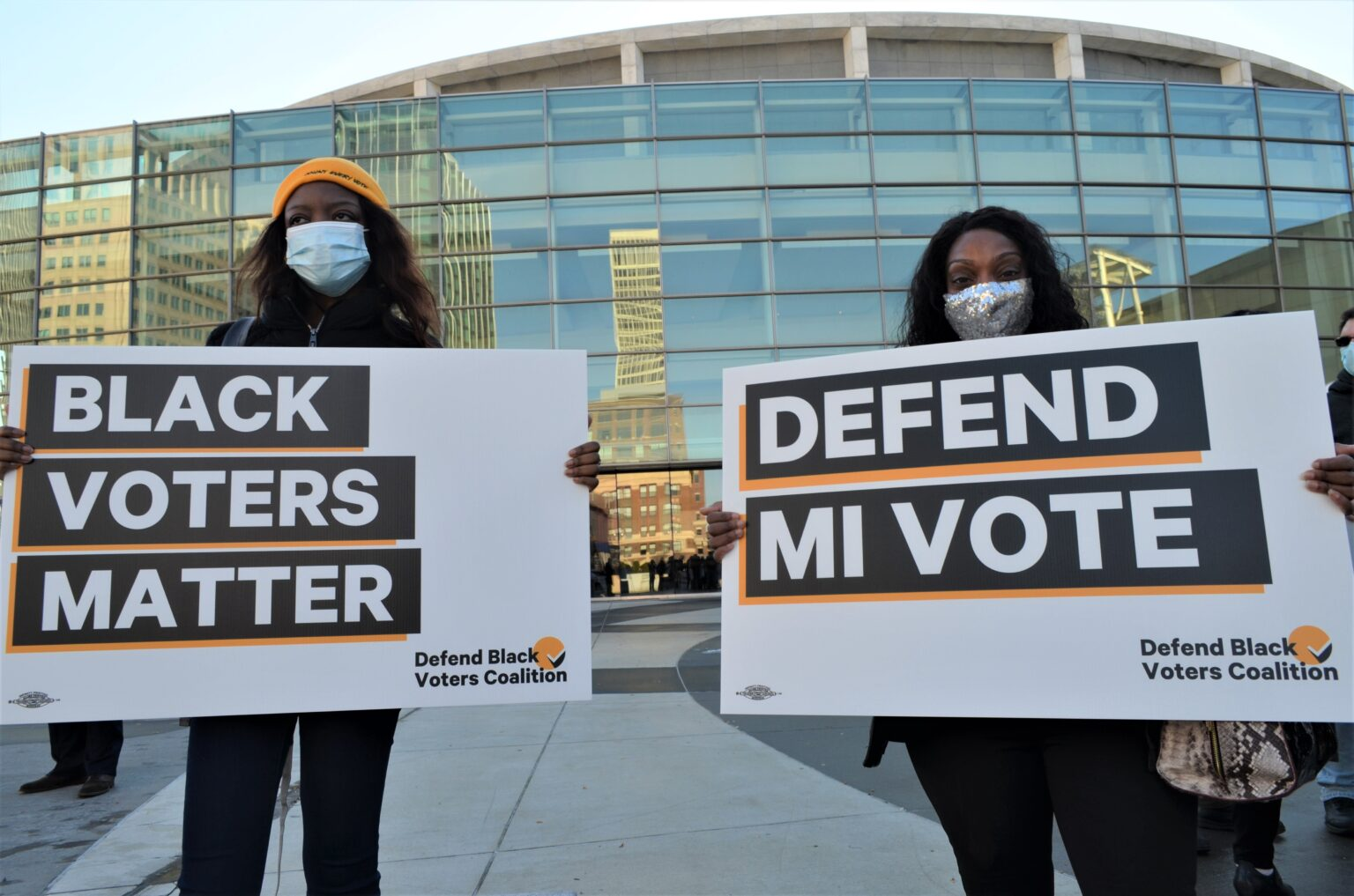
Arguments for and against the ballot initiative have been targeted at communities of color, with both sides saying minority representation will be affected by the results of Issue 1.
In a press conference at the Ohio Statehouse, state Sen. Michele Reynolds, R-Canal Winchester, brought former legislator John Barnes and two other Ohioans to urge voters to reject the ballot measure, claiming the changes “could fragment cohesive minority voting blocks, diluting our political influence.”
“I am deeply concerned about the disastrous effects that Issue 1 will have on the Black state legislative and congressional districts in Ohio,” said Reynolds, who is one of five Black members of the 33-member Ohio Senate, and the only Republican.
One of the Democratic members, state Sen. Catherine D. Ingram, who is also vice president of the Ohio Legislative Black Caucus, responded to Reynold’s press conference by saying Issue 1 “would ensure fair maps are drawn and expand opportunities for greater representation across our state, beyond the areas that have historically confined us.”
“For generations, Black Americans have faced disenfranchisement, and gerrymandering adds an additional barrier to our adequate representation,” Ingram said in a statement.
Issue 1 would create a 15-person citizens redistricting commission to replace the current commission. After a vetting process by a bipartisan panel of judges, the selected citizen commissioners would be required to hold public hearings and conduct the drawing of Statehouse and congressional maps in a transparent process, and create maps that receive a majority vote of the commission.
Drawing the maps would require adherence to federal laws like the Voting Rights Act and the statewide partisan preferences of the voters of Ohio.
The current process
In 2021 and 2022, Republican partisans on the commission produced five Ohio Statehouse maps and two U.S. Congressional district maps that were struck down as unconstitutionally gerrymandered by a bipartisan majority on the Ohio Supreme Court.
Despite the fact that the congressional map was never revised to correct the errors found by the state’s highest court, it is the map being used for the 2024 election.
A recent League of Women Voters of Ohio analysis of the current congressional map found that in Massillon, what’s considered a “large politically cohesive African American population” was split between the 6th and 13th Congressional districts.
“Rather than keeping this clear community of interest united in one congressional district, mapmakers sliced Massillon into two pieces, specifically cutting off areas with large concentrations of minority voters from each other,” according to research analysis done by University of Cincinnati professor David Niven.
Niven called the one-third of Stark County voters put in the 6th district “castaway voters,” citing research that said being a “castaway” voter “inhibits political information flows, mobilization and ultimately, representation.”
“The political consequences of landing on the other side of those lines are powerful,” Niven wrote.
The boundary-drawing of certain current congressional districts are “inexplicable” and “drawn in service of confusion not representation,” according to Niven’s research.
The 1st district, for example, borders the 8th district in a “textbook gerrymandering maneuver — dividing a neighborhood and town and causing confusion on who lives in which district, serving no legitimate purpose,” Niven wrote.
“Here’s a congressional district where people on the southern end of the district live in the shadow of Ohio’s third largest city with all its urban needs and opportunities, and people on the northern end have a local government that advertises when someone loses their mittens in the park,” Niven stated.
Cracking and packing
Voting rights advocates tend to agree with this assessment, saying the splitting of communities means less visibility, and less visibility means a lack of attention from people who purport to represent them.
“What we’ve seen with supermajorities is communities are left out of conversations,” said Deidra Reese, director of voter engagement for the Ohio Organizing Collaborative and supporter of Issue 1. “Those issues that are coming from communities that have a smaller presence in those bodies just don’t get to have those issues elevated.”
Important issues in communities of color, like in other communities, can include things like health care, economic issues, gun law reform and hunger. Without competitive districts that create the need for representatives and senators to engage with constituents of all kinds, Reese said legislation won’t match what is needed.
“When you shut the door on people when you pass policies … it’s a disservice and what happens is African Americans just don’t get representation,” Reese said.
Infant and maternal mortality rates were noted as a big concern for Black communities, which see disproportionate rates compared to their white counterparts.
The LWV analysis showed some congressional districts combine those two vastly different mortality rates, like the 9th, 12th and 2nd districts. The 9th district holds Lucas County, with one of the highest rates of infant mortality and Wood County, one of the lowest. The 12th district includes the high rates in Holmes County, and the low rates in Guernsey County. Ohio’s 2nd district has Lawrence County’s high infant mortality rates and Scioto County’s low rates.
“Again, this data begs an essential question,” the LWV study ponders, “How could any elected leader craft policy solutions for their constituencies, when the needs within their sprawling, contorted districts are so far apart?”
Kayla Griffin, president of the Cleveland branch of the NAACP, said the fact that the district maps are still unfair despite previous legislative redistricting reforms in 2015 and 2018 leaves questions about how closely the process was even followed by the elected officials on the Ohio Redistricting Commission.
“I think that becomes a serious problem that erodes the trust and the democracy that we have,” Griffin said.
An even bigger problem that Griffin and other advocates are dealing with is the concern from many Black voters that their vote doesn’t hold weight under the current maps, and therefore won’t make much different in the November general election.
Those talking to voters are trying to focus on the wins, most notably the rejection of a constitutional amendment to make it harder to amend the state’s founding document, and the approval of a ballot initiative that enshrined reproductive rights into that same constitution.
“That is how our vote counts, that is how our voices are heard.” Griffin said. “I’m letting folks know that we can do this again.”
YOU MAKE OUR WORK POSSIBLE.
__________________
Susan Tebben
Susan Tebben is an award-winning journalist with a decade of experience covering Ohio news, including courts and crime, Appalachian social issues, government, education, diversity and culture. She has worked for The Newark Advocate, The Glasgow (KY) Daily Times, The Athens Messenger, and WOUB Public Media. She has also had work featured on National Public Radio.
Ohio Capital Journal is part of States Newsroom, the nation’s largest state-focused nonprofit news organization.
“The annual cost of care for two children in a center is 93% more than the average rent payment and 28% more than the average mortgage payment in Ohio,” the study stated.
A new analysis looking at child care in several states, including Ohio, shows big costs and staffing shortages, but also some proactive actions taken by states to prepare for the expiration of pandemic-era federal funding.
The Century Foundation released a new report showing “a wave of increasing prices, economic damage, staffing shortages and reduced wages for early childhood educators,” and a “dire need for investment at the state and federal levels in child care to lower costs for working families,” according to a release announcing the report.
“The annual cost of care for two children in a center is 93% more than the average rent payment and 28% more than the average mortgage payment in Ohio,” the study stated.
Julie Kashen, director of women’s economic justice at the Century Foundation said the report showed what many parents are contending with every day: “finding and affording child care is taking a huge toll on families’ budgets and remains a big source of stress.”
“At the same time, we’re seeing these are solvable problems: when elected leaders listen to parents and invest in care, it makes a difference,” Kashen said in a statement.
The states chosen in the study were Ohio, New York, Pennsylvania, Virginia and Wisconsin, due to the “outsized political attention right now in light of the 2024 election,” the study stated.
Taking all of the states together, the Century Foundation study showed 30 to 40% of child care programs in the five states would have been forced to close without the ARPA “stabilization grants” distributed to the child care sector.
“These challenges existed long before anyone had heard of COVID-19, but were exacerbated by the pandemic and made better by the ARPA funds,” the study stated.
The end of pandemic-era funding began in September of 2023, with the Century Foundation estimated that more than three million children nationally would lose access to child care. Ohio was reported to have 6,265 child care programs which received ARPA grants, with 33% that would have closed without them, according to the most recent study by the Century Foundation.
The foundation previously projected more than 130,000 Ohio children would lose child care, and more than 2,000 child care programs expected to close because of the so-called “child care cliff.”
While the study of ARPA funding usages in Ohio showed the state having only spent 2/3 of its supplemental Child Care Development Block Grant from the ARPA monies “left room for longer term investments,” the state’s child care sector is still “in a precarious state.”
Between 2019 and 2023, Ohio’s child care employment levels fell by 26%, 11% of the state’s programs were lost in that period and 10% of the licensed programs have disappeared since 2019.
Citing state data, the study found “worsening” supply shortages. The data showed that in 2024, Ohio had 30%, or 2,700, fewer providers compared to 2018 levels.
Alongside the decreases came a 25% increase in the price of child care since 2019, with the average annual price for an infant listed as $12,351 in the foundation’s most recent study.
Child care has been a hot topic in Ohio, with advocacy groups and families throughout the state sounding the alarm of the state of child care, including its inaccessibility and high costs. The child care sector’s issues could have longterm impacts on the entire state economy, amounting to billions in impacts, according to policy advisors and advocates brought together by the Federal Reserve Bank of Cleveland.
Before they left for a summer break that will continue until after the November general election, the Ohio General Assembly saw the introduction of several bills aimed at addressing the child care system in the state, thought it’s unclear whether those bills will see passage before the end of the current GA in December. If they aren’t passed through by the end of the year, all bills would have to be reintroduced in 2025.
Susan Tebben
Susan Tebben is an award-winning journalist with a decade of experience covering Ohio news, including courts and crime, Appalachian social issues, government, education, diversity and culture. She has worked for The Newark Advocate, The Glasgow (KY) Daily Times, The Athens Messenger, and WOUB Public Media. She has also had work featured on National Public Radio.
Ohio Capital Journal is part of States Newsroom, the nation’s largest state-focused nonprofit news organization.
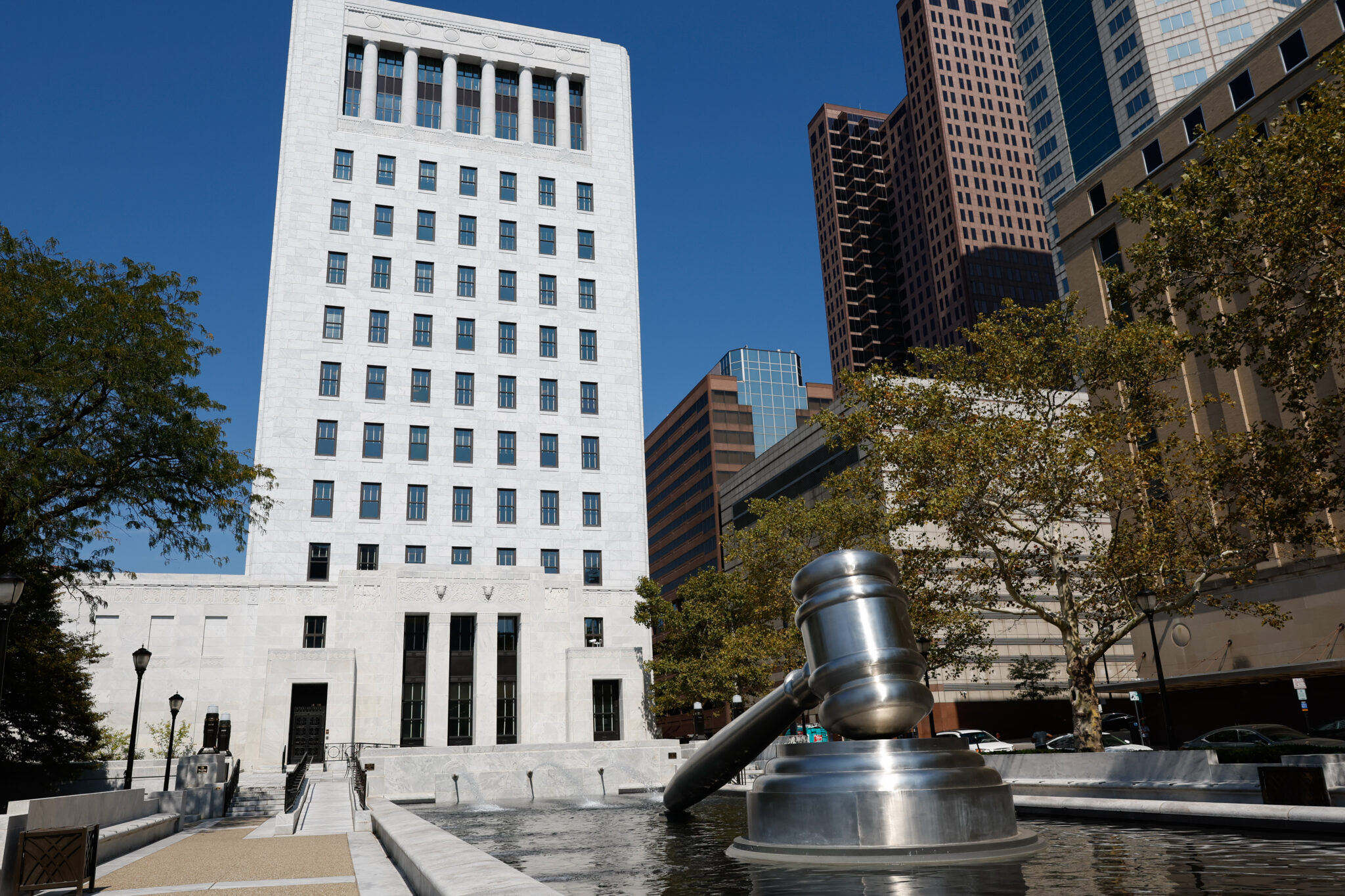
The Gavel outside the Supreme Court of the State of Ohio, September 20, 2023, at 65 S. Front Street, Columbus, Ohio. (Photo by Graham Stokes for Ohio Capital Journal. Republish photo only with original article.)
Republican majority rejects 6 of 8 changes requested by anti-gerrymandering advocates proposing the amendment
The Ohio Supreme Court largely approved ballot summary language for November’s Issue 1 anti-gerrymandering amendment on Monday, sending the language back to the Ohio Ballot Board for two revisions.
A 4-3 Republican majority rejected 6 of 8 revisions requested by anti-gerrymandering advocates, while Democratic justices on the court said that was inadequate and that the summary needed “a nearly complete redrafting.”
The summary was written by Ohio Secretary of State Frank LaRose, who opposes the amendment, and approved 3-2 by the Ohio Ballot Board, which is chaired by LaRose. LaRose is also a member of the current Ohio Redistricting Commission that the amendment proposes to replace with citizen commissioners.
While the court allowed most of the summary language in a decision released Monday night, it ordered the board to include in the summary “language that accurately conveys” that “the public would have the right to express itself to the new redistricting commission” under the terms of the amendment, written by anti-gerrymandering coalition Citizens Not Politicians.
“Distilled, the proposed amendment would provide the rights of public participation in the redistricting process through meetings, hearings and an online public portal, and would forbid communication with the commission members and staff outside the public-meeting and portal context,” the court wrote.
The other change ordered by the court compels the ballot board to make it clear that judicial review of the amendment is not limited to a “proportionality standard.”
The current seven-member Ohio Redistricting Commission includes the Ohio House Speaker and Ohio Senate President, along with the governor, secretary of state, auditor of state, and two minority party legislative leaders.
If approved by the voters, the amendment would replace the politician commission with the Ohio Citizens Redistricting Commission, which would have 15 members made up of five Republican citizens, five Democratic citizens, and five independents.
The summary language does not change the text of the proposed redistricting reform or what the amendment would actually do; it’s just the summary language used to describe the amendment on voter ballots.
An average of Ohio voter preferences over the last 10 years including 2022 show a 56-43 Republican-to-Democratic preference of Ohio voters, but Republicans control supermajorities of 67 out of 99 Ohio House seats and 26 out of 33 Ohio Senate seats. Ohio voters were forced to vote under unconstitutionally gerrymandered districts in 2022 after Republicans on the Ohio Redistricting Commission ran out of time to produce constitutional maps and a split federal court ruled the maps that were declared gerrymandered by a bipartisan majority on the then-Ohio Supreme Court had to be used.
Republican politicians on the Ohio Redistricting Commission battled with the bipartisan court majority for nearly two years over the maps in 2021 and 2022, with five Statehouse maps and two U.S. Congressional district maps being rejected as unconstitutionally gerrymandered. The swing vote in those cases, Republican Supreme Court Justice Maureen O’Connor, was forced to retire due to age. She is now leading the Citizens Not Politicians amendment effort.
One provision challenged by Citizens Not Politicians but allowed by the court states the amendment would “repeal constitutional protections against gerrymandering approved by nearly three-quarters of Ohio electors participating in the statewide elections of 2015 and 2018, and eliminate the longstanding ability of Ohio citizens to hold their representatives accountable for establishing fair state and legislative and congressional districts.”
Citizens Not Politicians attorneys argued mention of the vote margin and method were not necessary, and the court said challengers laid out arguments that the language was “tantamount to an argument against adopting the proposed amendment.”
But the court majority found that “at worst” including the vote margin and method could be “questioned on relevance grounds” not on “accuracy grounds.”
“This information is factually accurate, and relators have not shown that the information would ‘mislead, deceive or defraud the voters,’” the court majority stated in their decision.
The court also allowed language added by state Sen. Theresa Gavarone during the Aug. 16 board meeting, which states the amendment would “establish a new taxpayer-funded commission of appointees required to gerrymander the boundaries of state legislative and congressional districts to favor the two largest political parties in the state of Ohio.”
Justices dismissed Citizens Not Politicians arguments that the language leads voters to believe the amendment would “require gerrymandering,” despite the fact that the amendment states it would ban partisan gerrymandering.
The court said “the fact that the proposed amendment announces that it would ‘ban partisan gerrymandering,’ … is of little assistance in ascertaining whether the ballot language’s use of the word ‘gerrymander’ is improper.”
The court explored various definitions of “gerrymandering” in coming to its decision, finding that the requirement the amendment uses to dictate the drawing of Statehouse and congressional maps “falls within the meaning of ‘gerrymander.’”
“Because the board’s use of the term ‘gerrymander’ is consistent with dictionary definitions and how the United States Supreme Court has used the term, it does not mislead, deceive or defraud voters,” the decision stated.
The court did not order any changes to the ballot title, though that was included in the changes requested by Citizens Not Politicians.
“We conclude that the secretary did not err in crafting the ballot title,” the court wrote.
While all the justices agreed to the changes, they were split on how many changes needed to be made.
In his concurrence, Justice Patrick Fischer claimed “gerrymandering, though in a bipartisan manner, is absolutely ‘required under the proposed amendment,” and that the state constitution “would dictate” that independent and third-party voters would have their voice “removed from Ohio’s political world.”
Justice Michael Donnelly agreed to the decision that ordered changes to the ballot language, but “vehemently” disagreed “that those corrections are even remotely adequate to prevent the ballot language as a whole from being misleading.”
He and Justice Melody Stewart joined Justice Jennifer Brunner in an opinion that agreed to the changes, but said the majority opinion “reflects an abject failure of this court to perform an honest constitutional check on the ballot board’s work.”
“We should be requiring a nearly complete redrafting of what is perhaps the most stunningly stilted ballot language that Ohio voters have ever seen,” Brunner wrote.
She went on to say the ballot board language “is tantamount to performing a virtual chewing of food before the voters can taste it for themselves to decide whether they like it or not.”
The Ohio Secretary of State’s office said the ballot board will meet to make the revisions on Wednesday morning.
Reactions
Citizens Not Politicians released a statement saying they disagreed with “much of the decision” but agreed with the court’s “repudiation of the politicians on the ballot board for violating the Ohio Constitution.”
Ballot Board chair Frank LaRose released his own statement, calling the court’s decision “a huge win for Ohio voters, who deserve an honest explanation of what they’re being asked to decide.”
Former Ohio Redistricting Commission co-chair and Auditor of State Keith Faber said the court was “thoughtful in its approach and they got it right.”
Senate President Matt Huffman and Gov. Mike DeWine have both spoken against the measure publicly.
Faber’s fellow co-chair Senate Minority Leader Nickie Antonio said while the decision “enables Ohioans to make a more informed choice by addressing some of the most deceptive language, other misleading and argumentative language still remains.”
Susan Tebben
Susan Tebben is an award-winning journalist with a decade of experience covering Ohio news, including courts and crime, Appalachian social issues, government, education, diversity and culture. She has worked for The Newark Advocate, The Glasgow (KY) Daily Times, The Athens Messenger, and WOUB Public Media. She has also had work featured on National Public Radio.
Ohio Capital Journal is part of States Newsroom, the nation’s largest state-focused nonprofit news organization.
A July 1 rally of Citizens Not Politicians at the Ohio Statehouse. (Photo by Graham Stokes for Ohio Capital Journal. Only republish photo with original story.)
Advocates pushing an anti-gerrymandering amendment in Ohio to remove politicians from mapmaking in favor of a citizen commission said the state’s ballot board should be forced to start over on summary language for the November proposal.
Attorneys said the proposed amendment would ban partisan gerrymandering “by setting forth robust redistricting criteria to ensure fair maps, selection standards to ensure the new commission’s impartiality and accountability, and transparency measures to ensure public information and participation,” according to a merit brief filed Thursday.
But they say the summary language written by Ohio Secretary of State Frank LaRose and adopted by a majority of the Ohio Ballot Board on Aug. 16 “would have voters believe exactly the opposite.”
The Ohio Ballot Board decides what language voters will see on their ballots when they go to vote, but that summary language does not change what the proposed amendment would actually do. In a 3-2 vote, the Ohio Ballot Board approved summary language that supporters of the anti-gerrymandering amendment say is intentionally misleading and biased against the amendment. They have filed a lawsuit with the Ohio Supreme Court opposing the summary language.
The merit brief is part of that lawsuit filed by Citizens Not Politicians, the group who has led the charge for the anti-gerrymandering amendment. The lawsuit asks the state’s highest court to order changes to the summary language made by the ballot board, chaired by Ohio Sec. of State LaRose.
The proposed amendment signed by more than 535,000 verified Ohio voters would replace the current Ohio Redistricting Commission made up of seven politicians, including LaRose, with a 15-member citizens commission made up of Republicans, Democrats, and independents.
Citizens Not Politicians Attorney Don McTigue pointed to a change made by state Sen. Theresa Gavarone, R-Bowling Green, during the ballot board’s meeting, in which she changed the word “manipulate” to “gerrymander” when describing the methods of redrawing congressional and statehouse district lines within the amendment.
“Earlier this year, Attorney General Dave Yost certified that the Amendment’s summary was ‘fair and truthful,’” McTigue wrote. “That summary states, consistent with the amendment’s plain text, that the amendment would ‘ban partisan gerrymandering.’”
The brief emphasizes what the original complaint filed on Aug. 19 asserted, which is that the opinion of whether or not the proposed amendment “offers better policy than the existing system” should be left up to the voters in November.
“The Ballot Board’s job is to provide ballot language that gives voters the facts so that they can make up their own minds,” the brief states.
That language should follow constitutional rules dictating the language and the title, something the LaRose language doesn’t do, according to Citizens Not Politicians.
The Ohio Constitution states ballot language “shall properly identify the substance of the proposal to be voted upon,” and the language “shall not be held invalid unless it is such as to mislead, deceive or defraud the voters.”
The Ohio Revised Code says the secretary of state or the ballot board is required to “give a true and impartial statement of the measures in such language that the ballot title shall not be likely to create prejudice for or against the measure.”
The title of the redistricting amendment, as approved by the board majority, is “to create an appointed redistricting commission not elected by or subject to removal by the voters of the state.”
“The Ballot Board’s attempt to put a thumb on the scale against the amendment is a thumb in the eye of Ohioans who expect their representatives on the Board to carry out their mandatory duties impartially,” McTigue wrote.
The Ohio Attorney General has filed an answer to the complaint, but the filing has already received criticism from the Democratic members of the ballot board, who say they were not consulted on the legal document, nor have they been given outside counsel to speak on their behalf, despite the fact that the the two Democrats, state Sen. Paula Hicks-Hudson and state Rep. Terrence Upchurch, voted against the ballot board language.
Hicks-Hudson and Upchurch ended up filing a brief themselves on Wednesday night, in which they did not fight arguments that the ballot board “as a whole violated its constitutional duty,” and said the “chosen ballot title is inaccurate, biased, argumentative and misrepresents the proposed amendment’s procedures for removing commissioners who fail to comply with their duties.”
McTigue said the court “has never hesitated to strictly enforce the legal requirements for the text that appears on the ballot, in recognition of Ohioans’ century-old right to amend their constitution and laws through direct democracy.”
“The court should do the same here, by directing (the ballot board) to start over and adopt ballot language and a ballot title that are consistent with their clear legal duties.”
The Ohio Supreme Court was asked just last year to make changes to a ballot board-approved summary, in that case for the reproductive rights constitutional amendment that would eventually pass with 57% of the vote.
The coalition that sued took issue with ballot language that used the phrases “unborn child” and “reproductive medical treatment,” along with using the phrase “the citizens of the State of Ohio” rather than just “the State of Ohio” when speaking of the prohibitions against “indirectly burdening, penalizing or prohibiting abortion.”
In a similar way to the redistricting amendment author’s arguments that the LaRose language could mislead voters as to the intentions of the proposed amendment, the lawsuit against the reproductive rights amendment summary said it could mislead voters about the rights the amendment created, the restrictions in the amendment, discretion when it comes to fetal viability and state regulation of the amendment.
The Ohio Supreme Court said they agreed “that the ballot language approved by the ballot board misleads the average voter about whose actions the amendment restricts.”
“But the ballot language is not defective in any other respect,” the court wrote.
The court asked the ballot board only to change the phrase “citizens of the State of Ohio” to “State of Ohio,” and approved the rest.
Justice Michael O’Donnelly wrote in his concurring opinion that it was “unfortunate that advocacy seems to have infiltrated a process that is meant to be objective and neutral.”
Susan Tebben
Susan Tebben is an award-winning journalist with a decade of experience covering Ohio news, including courts and crime, Appalachian social issues, government, education, diversity and culture. She has worked for The Newark Advocate, The Glasgow (KY) Daily Times, The Athens Messenger, and WOUB Public Media. She has also had work featured on National Public Radio.
Ohio Capital Journal is part of States Newsroom, the nation’s largest state-focused nonprofit news organization.
Ohio’s State Board of Education will still be living lean on a bare-bones budget, but an influx of cash from the state will keep it going through the fiscal year.
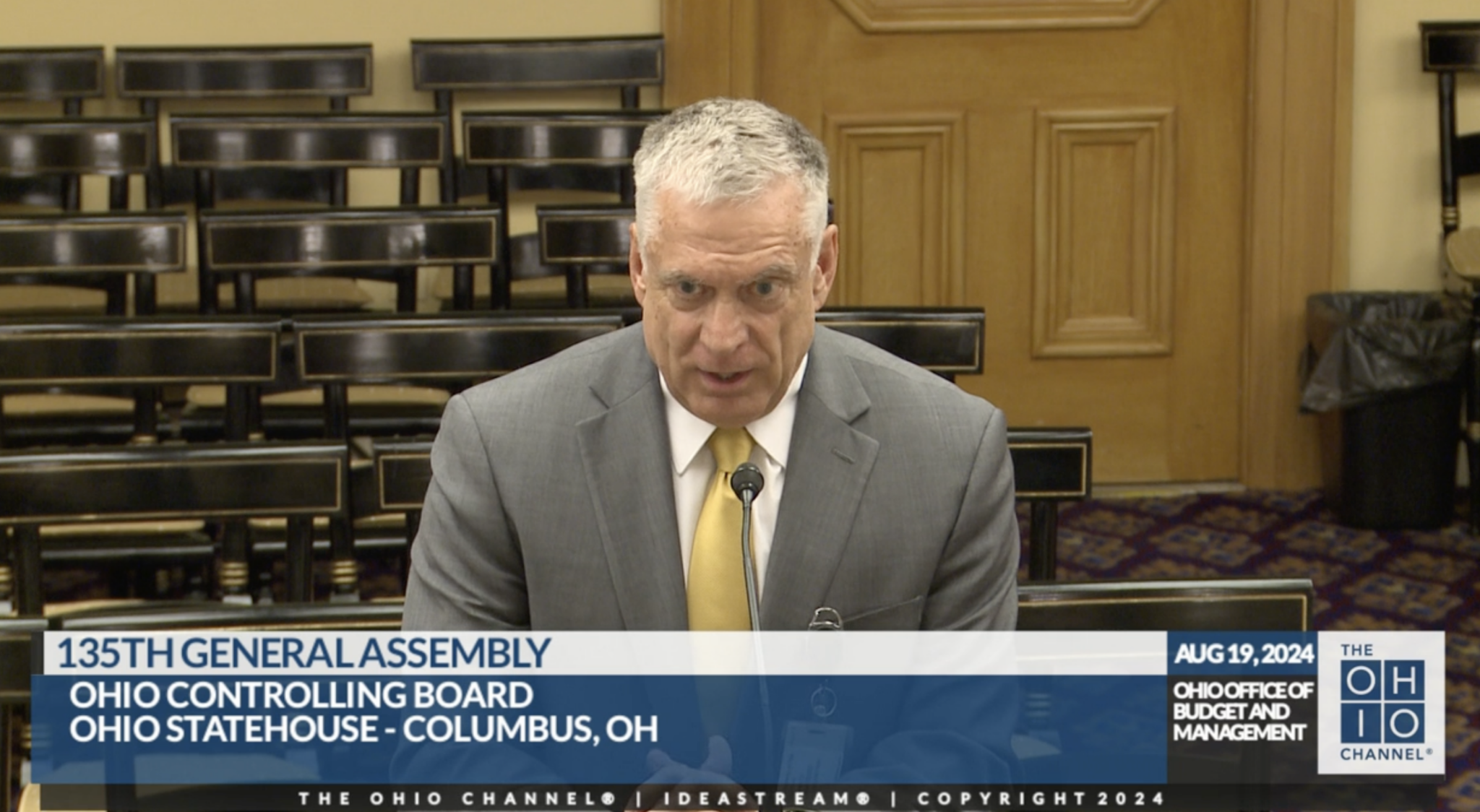
The Ohio Controlling Board, which directs appropriations and funding to state agencies, approved a $4.66 million emergency funding request last week for the board of education, to avoid having to raise teacher licensure fees and to cover a $3 million shortfall that may have impacted school staff background checks.
“4.66 (million) is a number that gets us through this fiscal year,” State Superintendent of Public Instruction Paul Craft told the Capital Journal. “We’re still going to have some tough times.”
The controlling board approval was amended from the original request made by the state’s Office of Budget and Management, which asked for only $1.85 million after working with the board of education on service sharing and funding cuts to get them through the year.
“We completely were supportive of what OBM was doing,” Craft said. “That certainly keeps us where we are right now, which is extremely tight.”
The funding they receive from the licensure fund isn’t year-round revenue, causing blocks of time during the year when the board has to sustain itself on very little incoming funds.
“While we continue to strive for operational savings, because the majority of the revenue for this fund is received in the spring, the fund is projected to run a deficit starting this fall and continue until spring, when it will be back in a positive position,” the request to the controlling board stated.
The split from the ODEW caused the board to reduce staffing by almost 20%, which included payroll and budget personnel, Craft told the Controlling Board at their Aug. 19 meeting to consider the emergency funds.
“(Payroll and budget) are now being done as shared services through the Office of Budget and Management,” Craft said. “None of the money we requested brings back any of those staff.”
The SBOE has also reduced board meetings to one day, instituted freezes on travel expenses and out-of-state conference costs. But the emergency funding is still needed to make sure teacher licensure fees can stay at their current rates, and the contract for Retained Applicant Fingerprint Database (RAPBACK) background checks can be paid.
“I’ll tell you, I’ve never seen an agency in my 35 years in state government and military that’s running as lean as we are,” Craft said. “I’m so proud of what our staff has done in terms of making sure that Ohio’s 1.6 million kids interact with educators every day who are well-qualified and who show good moral character and judgment.”
Some legislators on the controlling board expressed hesitation in using the funds from the controlling board’s “emergency purpose fund,” with state Sen. Shane Wilkins, R-Hillsboro, worrying that approving the emergency funds could cause the agency to come back next year for a request of the same amount.
“For me, I would feel better if I knew, ‘hey, we really gave this a shot, the $1.8 (million original request) is not going to cut it,’” he said at the controlling board meeting.
State Sen. Bob Hackett, R-London, questioned the need to push the funds specifically for the background checks, when Craft said the background checks would continue with or without the funding, and with the SBOE in contact with the Ohio Attorney General to find a solution to the funding shortage impacting the background check service.
“It doesn’t really change our day-to-day at all,” Craft told Hackett and the controlling board. “On the other hand, I’ve signed (memorandums of understanding) with these agencies, and it would make me sleep better at night knowing that I agreed to these and they’re being made whole.”
In offering the amendment that raised the funding provided for the SBOE to $4.66 million, state Rep. Jay Edwards, R-Nelsonville, said discussions have been going on for months about a solution to the SBOE funding issues. With the work the SBOE has already done to make cuts, the proposed funding number went from $10 million down to the $4.66 million that was eventually approved. He said it was incumbent upon state leaders make sure the funds were there to hold teacher licensure fees at current levels and maintain background checks.
“The people that have been part of the discussion have heard that we will figure out how to pay for the background checks later,” Edwards said. “I don’t think it’s responsible of the people who hold the purse strings to allow the background checks to be figured out later.”
He said the “mistake that was done during the budget … of the transfer to the Department of Education and Workforce,” should be corrected, not to mention he didn’t want “to be hearing from angry school teachers” if licensure fees increased.
“We’re a conservative legislature that is constantly trying to cut taxes and cut fees and cut regulations for people out there,” Edwards said. “I don’t think teachers are getting rich in our state, I don’t want to see us raising teacher licensure fees.”
Ohio House Democrats, including controlling board member state Rep. Beryl Brown Piccolantonio, D-Gahanna, said the funding “is a crucial lifeline that staves off a potential 75% increase in mandatory licensure fees.”
“I look forward to addressing the remaining SBOE budget uncertainty on a more permanent basis in the next budget,” Piccolantonio said in a statement.
Craft said the funding approval now allows the SBOE and the OBM to work together over the course of the fall to put together a plan for next year, as they await the governor’s executive budget plan and the state operating budget numbers.
“It’s pretty early in the process and we’re looking at some other approaches, but this should get us through,” Craft told the Capital Journal.
Susan Tebben
Susan Tebben is an award-winning journalist with a decade of experience covering Ohio news, including courts and crime, Appalachian social issues, government, education, diversity and culture. She has worked for The Newark Advocate, The Glasgow (KY) Daily Times, The Athens Messenger, and WOUB Public Media. She has also had work featured on National Public Radio.
Ohio Capital Journal is part of States Newsroom, the nation’s largest state-focused nonprofit news organization.
An Ohio law requiring a 24-hour waiting period before abortion services will not be enforced as a lawsuit seeking to eliminate the law entirely sees its way through court, a judge ruled on Friday.
Franklin County Court of Common Pleas Judge David C. Young not only put a temporary pause on the 24-hour waiting period, but also a minimum of two in-person visits and certain information about abortion that the state required doctors to provide before an abortion.
That information includes the “probable gestational age of the zygote, blastocyte, embryo or fetus” and “nature and purpose of the particular abortion procedure to be used,” according to state law.
Young cited the newest amendment to the state constitution as reason to rule in favor of the clinics and physicians.
“The plain language of the amendment clearly sets forth the applicable legal standard,” Young wrote. “This language is easily understood and clear.”
The decision comes following an oral argument hearing last week, in which Young heard from the Ohio Attorney General’s Office representing the state, and an attorney for abortion clinics and a physician party in the case.
The state said by legal definition, the “status quo” should be maintained in a preliminary injunction, and according to the AG’s office’s arguments, that would leave state law as it is and the regulations in place. The office of Ohio Attorney General Dave Yost issues a release Friday saying they plan to appeal the ruling and that they disagree with the judge that the waiting period and extra appointments constitute a burden.
According to Jessie Hill, attorney for the parties attempting to eliminate the laws, the status quo is now the constitutional amendment that placed reproductive rights including abortion into the Ohio Constitution after being passed by 57% of Ohio voters last November.
The amendment bars any state laws that “burden, penalize, prohibit, interfere with or discriminate” against abortion care and abortion providers.
The state also argued that the Dr. Catharine Romanos didn’t have standing to sue because there were no specific patients under Romanos’ care connected to the lawsuit.
Young ruled that the new reproductive rights amendment “confers rights” to Romanos “because she is a person assisting individuals exercising their reproductive rights.”
“The challenged statutes interfere with Dr. Romanos’s ability to provide high quality, trauma informed abortion care, they negatively impact Dr. Romanos’s relationship with pregnant patients and cause emotional distress,” the ruling wrote.
The judge also cited Attorney General Dave Yost’s legal analysis of the amendment, written before the measure’s passage as an effort to explain the impact of the amendment on abortion regulation in the state.
“Prior to the amendment passing, Attorney Yost agreed with Plaintiffs’ argument as to the applicable legal standard,” Young wrote. “Now, instead of following the plain language of the amendment, defendants argue that the pre-Dobbs legal standard applies.”
But Young said the “pre-Dobbs standard” – referring to abortion standards prior to the U.S. Supreme Court’s decision to undo national abortion legalization and return the decision to the states – is “unpersuasive.”
“Defendants attempt to create ambiguity where it does not exist,” the judge wrote. “The people of Ohio voted to enshrine their reproductive freedom in the constitution through the clear language of the amendment. Doing so followed the path set forth by the (U.S.) Supreme Court in Dobbs.”
Hill called the Franklin County decision “an historic victory for abortion patients and for all Ohio voters who voiced support for the constitutional amendment to protect reproductive freedom and bodily autonomy.”
“This decision is the first step in removing unnecessary barriers to care,” Hill wrote in a statement with the ACLU of Ohio.
Susan Tebben
Susan Tebben is an award-winning journalist with a decade of experience covering Ohio news, including courts and crime, Appalachian social issues, government, education, diversity and culture. She has worked for The Newark Advocate, The Glasgow (KY) Daily Times, The Athens Messenger, and WOUB Public Media. She has also had work featured on National Public Radio.
Ohio Capital Journal is part of States Newsroom, the nation’s largest state-focused nonprofit news organization.
Ohio Gov. Mike DeWine announced he was positive for COVID-19 on Tuesday, noting the rising levels of the virus throughout the state.
DeWine’s office announced the governor had tested positive Tuesday morning, after experiencing “mild, cold-like symptoms … including sneezing and a runny nose.”
Under the advice of his doctor, DeWine’s office said he has started a round of Paxlovid, an anti-retroviral used to treat COVID-19.
The press release from the governor said the predominant COVID-19 variant going around in the country is KP.3.1.1., in the omicron family of the virus, and cases have been increasing for months, DeWine’s office stated.
“COVID-19 cases and wastewater detections of COVID-19 have been on the rise in Ohio since late June,” DeWine’s office stated in the release. “Though hospitalizations, which are a good indicator of disease severity, have risen modestly in much of the United States, they are not currently rising in Ohio.”
The CDC estimated the KP.3.1.1. variant represented 36.8% of all cases in the U.S. in the two weeks ending Aug. 17.
State data shows a rise in hospitalizations due to COVID, with 238 reports in the last week, and a three-week average of 190. In the last three weeks, hospitalizations have gone from 141 to 192, up to the most recent report of 238.
The Ohio Department of Health said case levels “have not approached those of earlier this year,” for example in January when there were 41,344 cases reported, and “certainly not anywhere near the levels seen during the last major surge” of January 2022, according to a spokesperson for the department.
While the omicron variants are attributed to the recent rise, press secretary Ken Gordon said “there is no evidence that these variants are causing more severe levels of disease.”
“That said, COVID remains a very real health threat, and any increase in cases reaffirms the importance of staying up to date with vaccination,” Gordon wrote in a statement.
According to the most recent reports from the ODH, which releases COVID data once a week, reported cases in the last week were up to 7,347, a number that has steady risen to a three-week average of 6,656 cases.
In November of 2020, months after shutdowns began in the country and DeWine had implemented closures of restaurants and bars but before vaccines were available, the governor had announced additional mask order enforcement and was again debating closing restaurants and other public facilities. On the day he announced further mask enforcement measures, the state saw a new record for COVID cases: 7,101.
Nationally, the CDC reported 18.1% COVID-19 test positivity for the week ending Aug. 10, up from 17.9% the previous week. As of that same week, 1.9% of all deaths in the United States were due to COVID-19, up from 1.6% the week before.
The governor’s office encouraged Ohioans to update their COVID vaccines when they are available this fall, and for those who haven’t been vaccinated or have not received the most recent booster dose to “talk to their health care provider about the current vaccine.”
As of August. 15, less than 12% of Ohioans had updated their COVID-19 vaccine. The CDC recommends everyone six months or older to receive an updated vaccine “to protect against the potentially serious outcomes of COVID-19 this fall and winter whether or not they have ever previously been vaccinated with a COVID-19 vaccine.”
“To date, hundreds of millions of people have safely received a COVID-19 vaccine under the most intense vaccine safety monitoring in United States history,” the CDC said in a release.
According to the ODH, the U.S. Food and Drug Administration could approve an updated vaccine “as soon as this week,” after which the CDC will give specific recommendations.
“It’s reasonable to anticipate the new vaccine may start to be available to the public in September,” the ODH stated.
Susan Tebben
Susan Tebben is an award-winning journalist with a decade of experience covering Ohio news, including courts and crime, Appalachian social issues, government, education, diversity and culture. She has worked for The Newark Advocate, The Glasgow (KY) Daily Times, The Athens Messenger, and WOUB Public Media. She has also had work featured on National Public Radio.
Ohio Capital Journal is part of States Newsroom, the nation’s largest state-focused nonprofit news organization.
Attorneys challenging Ohio’s 24-hour abortion waiting period and minimum in-person visit regulations made their arguments last Friday as to why enforcement of the laws should be paused as they fight to get them eliminated entirely.
Jessie Hill represented the ACLU of Ohio, the Planned Parenthood Federation of America, abortion clinics, and a physician in the Franklin County case, and said the constitutional amendment passed last November that legalized reproductive rights statewide “is expansive and clear,” protecting the rights that she says the state laws hinder.
“Being prevented from doing something that you want to do and have a legal entitlement to do is injury, if prevented by a law that provides sanctions,” Hill told Judge David Young during a preliminary injunction hearing.
Based on arguments heard at Friday’s hearing, the judge will decide whether a 24-hour waiting period and a minimum of two in-person visits will continue to be required before abortion services can be provided as the lawsuit continues.
The law challengers are entitled to a preliminary injunction “because the challenged requirements facially discriminate against abortion patients and providers,” Hill said.
Hill claimed that the state does not disagree that the courts must apply the amendment to “test” other laws in place regarding abortion. She went on to cite the legal analysis Ohio Attorney General Dave Yost released prior to the November election, in which he explained the impact the amendment would have on abortion services throughout the state.
In that analysis, which Yost wrote was “designed only to describe what the legal effects of Issue 1 will be on our state,” he listed several laws that “I expect will most certainly be challenged at some point,” and said the amendment “would create a new standard… and will make it harder for Ohio to maintain the kinds of law already upheld as valid prior to (2022’s) decision in Dobbs.”
“In other words, the amendment would give greater protection to abortion to be free from regulation than at any time in Ohio’s history,” Yost wrote.
The 24-hour waiting period was one law listed in his legal analysis and potentially impacted by the amendment, along with “informed consent” laws.
“It is possible to foresee a court decision that said a waiting period was a ‘burden,’ but that informed consent is not,” Yost wrote. “If so, neither provision would be likely to survive the ‘exclusive scrutiny’ test.”
Yost also notes that the state “can regulate only for the purpose of” advancing a pregnant individual’s health.
“That means that the state cannot regulate for any other purpose or interest at all, no matter how mild the regulation,” Yost wrote. “So the long-recognized interests in fetal life or in medical ethics cannot be protected, making the laws previously upheld on those grounds no longer valid, even if the interests rise to the level of ‘compelling.’”
The attorney general has since changed his tune, fighting against lawsuits that seek to undo the laws, and saying abortion clinics can’t challenge laws like the 24-hour waiting period regulation.
The Attorney General’s Office argued Friday that taking away enforcement of the laws would be the opposite of the goal of a preliminary injunction, which is to keep the “status quo,” according to Amanda Narog, senior legal counsel for the AG’s office.
“We’re talking about upwards of three decades of law that has regulated the conduct of abortions in this state,” Narog told the judge.
But Hill pushed back, saying the status quo had changed when voters approved the reproductive rights constitutional amendment and it went into effect in December 2023. Therefore, of course the laws they consider in violation of the amendment would be challenged.
“That was the whole purpose of the amendment,” Hill said.
The state “can regulate the practice of medicine in Ohio,” Narog argued, and pointed to Hill’s arguments that physicians provide informed consent (in abortion care and in any other sector of medicine) because of their medical training, and will continue to do so no matter what the law states.
The attorney general’s office didn’t fight back against the language of the amendment and its weight in the state, even as Narog argued that the 24-hour waiting period and the in-person requirements should stay in place.
“It is well known that women have a right to a pre-viability abortion under the Ohio Constitution,” Narog said. “There’s no reason to think that women can’t do it.”
Young did not give a timeline on when he might render his decision on the preliminary injunction or a motion to dismiss that the state filed.
Susan Tebben
Susan Tebben is an award-winning journalist with a decade of experience covering Ohio news, including courts and crime, Appalachian social issues, government, education, diversity and culture. She has worked for The Newark Advocate, The Glasgow (KY) Daily Times, The Athens Messenger, and WOUB Public Media. She has also had work featured on National Public Radio.
Ohio Capital Journal is part of States Newsroom, the nation’s largest state-focused nonprofit news organization.