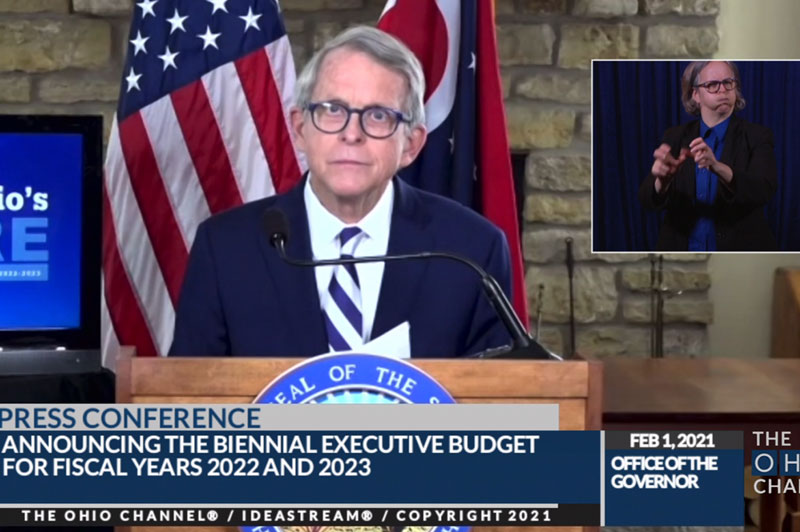
Gov. Mike DeWine signed the $74 billion, two-year state budget into law, keeping in place nearly all of its signature policy positions and spending priorities while once again nixing an effort by Republican lawmakers to counter his administration’s methods of handling the deadly COVID-19 pandemic.
The governor also vetoed an attempt by Republican lawmakers to give their party’s legislative leaders sole power to intervene in any potential redistricting lawsuits. The governor wrote in his veto message that this removal came at the request of Attorney General Dave Yost; voter rights groups and Democrats had also urged for the veto of this provision.
As governor, DeWine has the power to issue “line-item vetoes” blocking specific provisions of the budget while signing his approval to the rest.
In total, DeWine issued 14 such line-item vetoes among the more than 2,400-page budget bill. Lawmakers have the power to override any of these vetoes.
Among the vetoes: A provision to vacate public health violations from businesses that were issued over the course of the pandemic. The budget item would have expunged all COVID-19 health violations, ended disciplinary actions in progress and ordered the state to repay any fines collected. Bars and restaurants which had their liquor licenses revoked — in some cases due to flagrant and repeated violations of the public health orders — would’ve had it reinstated.
Gov. Mike DeWine signed the $74 billion, two-year state budget on Wednesday evening. Photo courtesy the governor’s office.
In his veto statement, DeWine wrote that “Ohio law should not reward businesses and individuals that violated orders and rules adopted to protect Ohioans from the spread of COVID-19 by excusing their actions.”
DeWine also vetoed provisions related to Medicaid program rates; an exemption of private schools from College Credit Plus laws; and quality controls of community schools.
Unanswered veto requests
While voter rights organizations scored a victory with the veto of the redistricting lawsuits provision, they were unsuccessful in pushing for vetoes of several other budget items condemned as being “anti-democratic.”
This includes the budget eliminating the Citizen’s Education Fund and instituting a prohibition on elections officials collaborating with any “nongovernmental” entity for voter education purposes.
There were other veto wishes that went unfulfilled. Democrats in the Ohio Senate wanted to see the governor remove the elimination of a cap on the number of EdChoice income-based vouchers awarded in Ohio and an income tax credit for private school tuition.
Democrats in the Ohio House of Representatives, meanwhile, joined the Ohio Environmental Council in sharing concerns about budget language they fear would lead to oil and gas drilling in public park lands.
Reproductive rights groups wanted to see DeWine take out provisions threatening the future of two Ohio abortion clinics. Innovation Ohio, a left-leaning policy group, was among the organizations drawing attention to the budget’s “medical practitioner conscience clause” allowing medical professionals to refuse treatment of patients if doing so would violate their personal moral or religious beliefs. Advocates believe this could lead to LGBTQ+ Ohioans being refused treatment.
Policy Matters Ohio, a left-leaning think tank, called on the governor to remove proposed tax cuts that research has shown will largely benefit the state’s wealthiest earners.
However, DeWine championed the 3% income tax cut in a news release announcing the budget signing.
The Ohio Capital Journal will continue to provide coverage on the two-year state budget and the governor’s vetoes.
Ohio lawmakers approved a bill Thursday to allow college athletes to profit off their name, image and likeness, with Republicans adding an unrelated provision to ban transgender girls from competing in women’s high school and college sports.
The last-minute addition of a provision dealing with the transgender sports ban set off a chaotic debate on the Ohio House of Representatives floor. Republican lawmakers defended the amendment as necessary to preserve the integrity and fairness of women’s athletics. Democrats condemned the effort as anti-LGBTQ+ and as being rushed through without a full legislative process.
Republicans are trying to amend a ban on trans kids participating in women’s high school sports into an unrelated bill allowing college athletes to get paid for their name and likeness.
“This issue is best addressed outside of government, through individual sports leagues and athletic associations, including the Ohio High School Athletic Association, who can tailor policies to meet the needs of their member athletes and member institutions,” the governor said in a statement.
The House provision was added to an otherwise bipartisan bill about college athletics which recently passed the Ohio Senate in a unanimous vote.
The House vote was 57-36, with one Republican joining the full Democratic caucus in voting against.
Within hours, the Senate rejected the changes and worked to again pass legislation dealing with athletes benefiting from their personal “name, image and likeness” — without the transgender athletes amendment. Senators added this “NIL” language to an unrelated bill and included in a section dealing with the legalization of sports gambling.
The ball, so to speak, is back in the House’s court.
Legislation to let college athletes benefit from their personal “name, image and likeness” — without losing their sports eligibility — has gained momentum in states throughout the country.
Under the Ohio Statehouse proposals, college athletes would be able to sign endorsement deals with brands so long as the sponsorships do not conflict with deals already in place at their collegiate programs.
“The example I would give is, if the school is a Nike school and the student gets an Adidas contract, they should be able to have that,” state Sen. Niraj Antani, R-Miamisburg, who first introduced the legislation, explained last week. “But they’re not going to be able to wear Adidas during a practice or during a media session that is an official team activity on or off campus.”
With some states having already passed NIL bills, figures such as Ohio State University athletic director Gene Smith and head football coach Ryan Day have urged lawmakers to act quicklyso that programs like the Buckeyes would not face a competitive disadvantage with recruiting.
As lawmakers consider the issue on a state-by-state basis, the National Collegiate Athletic Association is considering its own sweeping changes at the national level.
The House amendment was introduced by state Rep. Jena Powell, R-Arcanum, who has repeatedly argued for the need to ban transgender girls from playing women’s sports. She and fellow Rep. Reggie Stoltzfus, R-Paris Twp., are sponsors of the “Save Women’s Sports Act” which calls for the same ban as in Thursday’s amendment.
Powell earlier criticized President Biden for selecting a Dr. Rachel Levine, who is transgender, to be the nation’s assistant health secretary.
A string of House Democrats spoke out against the amendment, including Minority Leader Emilia Strong Sykes, D-Akron, who called it a “poison pill” added to an otherwise agreeable bill.
Rep. Juanita Brent takes issue with the amendment and calls it "a crying shame" pic.twitter.com/7UwNbR4GWx
“This awful, terrible, disgusting, vile, worse-than-the-sticky-stuff-on-the-bottom-of-my-shoe amendment is in a bill that could have helped so many,” Sykes complained, noting it comes during Pride Month celebrating LGBTQ+ Ohioans.
This story has been updated to include a statement from the governor.
Vinton County in rural Southeast Ohio was the last county in the state to record a positive case of COVID-19.
It also appears to be the first without any cases remaining — at least for the time being.
The sparsely-populated Vinton County has not been as hard hit by the pandemic as in other places of Ohio, and the recent data is the most optimistic yet.
Over the past few weeks, not a single resident in Vinton County has tested positive for COVID-19. There has likewise not been a hospitalization since May 20.
When the state health department published its most recent chart of county-by-county case rates, the one named for former Congressman Samuel Finley Vinton ranked the lowest. During the two-week period of May 19 through June 2, Vinton County didn’t recorded any new cases of the virus.
Thus, the case rate was an even zero — the first county to achieve that since the early days of the pandemic.
The next challenge? Boosting the county’s vaccination rate
Vinton County has a history of figuring out creative solutions to problems. When the county suffered as a food desert, local officials secured grant funding to allow fresh produce to be sold at gas stations and at a drive-thru convenience store.
Decades ago, the construction of a man-made lake threatened the survival of a historic covered bridge. The local agricultural society decided to save it, so a group of laborers spent two days moving the 25-ton bridge across the county. It now rests on the Vinton County Fairgrounds, where guests travel through it each July to reach the front entrance.
Health officials are continuing to work toward getting residents vaccinated.
The case rate may be promising, but the vaccination rate is hardly so. Only 30% of Vinton County residents have received at least one shot of the COVID-19 vaccine.
The county lags behind the state percentages in every single age category, most alarmingly with the older demographic.
Across the whole state, 77% of Ohioans aged 60 or older had received at least one shot as of June 4. In Vinton County, the number was just 59%.
Part of the problem is geographic access. Vinton County has no hospital and only a few other medical care facilities. The health department is offering walk-in appointments at its location in the county seat of McArthur; there have also been shots offered at a local pharmacy and at a primary care clinic within the small village.
Outside of McArthur, though, options have been limited. Vinton County is one of the least densely-populated counties in Ohio, and it is also among the most forested. Many residents live in very rural areas, traveling significant distances outside of the county for medical services and other errands in places like Chillicothe and Athens.
We had another great day visiting vaccination sites in Ohio. The teams in Monroe, Morgan, and Vinton counties are doing great work to spread awareness about the vaccine and to vaccinate those who wish to receive a shot.
The trip to and from the Vinton County Health Department, which now offers walk-in vaccine appointments, can require a round trip of more than an hour. That’s if fortunate enough to have transportation in the first place. There is little in the way of public transit in rural Ohio; those without vehicles or are too old to drive rely on transportation services provided by private companies as well as the senior citizens center in McArthur. Volunteers for the latter spend their free time driving elderly passengers to various appointments, grocery stores and
If it’s difficult for some residents to get to McArthur, health officials therefore strive to meet people where they are.
Cassie Carver, a public health nurse for the Vinton County Health Department, said the department has been active in promoting the vaccine in the community. Officials have traveled to schools, churches and workplaces like area sawmills to educate on the importance of getting vaccinated.
The health department recently hosted a mobile vaccination clinic at a farmers market in the smaller village of Hamden. Carver said the department plans to conduct more outreach during the upcoming summer months.
Five Ohioans who have been vaccinated against COVID-19 are about to win $1 million through a new vaccine lottery program, but a Republican lawmaker wants to call the whole thing off.
State Rep. Jena Powell, R-Arcanum, is drafting legislation that would prevent the state from administering any vaccine lottery program.
Hundreds of thousands of Ohioans have already signed up for the Vax-A-Million lottery, which will begin May 26 and include five weekly drawings of $1 million prizes. Participants must be at least 18 years old and have received at least their first dose of the Pfizer-BioNTech, Moderna or Johnson & Johnson COVID-19 vaccine.
State Rep. Jena Powell, R-Arcanum
There is a separate lottery program for those between the ages of 12 and 17, with the teenage winners receiving a full ride scholarship to any Ohio college or university.
The prize money will come from federal relief funds that have already been allocated to the Ohio Department of Health.
There is some early evidence that vaccinations have ticked upward since that announcement, and two other states have now introduced their own version of a vaccine lottery.
The Vax-A-Million program has received plenty of attention since Gov. Mike DeWine first announced the drawings last week. The reaction from Ohio lawmakers has been universally negative; legislators from both political parties have condemned the idea as an ill-conceived waste of taxpayer money.
“As elected leaders, we’re obligated to take seriously our duty to be good stewards of taxpayer dollars,” House Minority Leader Emilia Strong Sykes, D-Akron, said in a recent statement. “Using millions of dollars in relief funds in a drawing is a grave misuse of money that could be going to respond to this ongoing crisis. Ohioans deserve better than this. I do hope people continue to get the vaccine and help our state reach herd immunity so our economy and way of life can thrive again.”
State Rep. Haraz Ghanbari, R-Perrysburg, issued a statement calling for “additional accountability” from the Ohio General Assembly regarding the Vax-A-Million program.
Bills normally require a 3-month waiting period until being enacted. Powell’s legislation includes an emergency clause for it to go into effect immediately in order to “prevent the COVID-19 vaccination lottery from taking place.”
Along with prohibiting Vax-A-Million, Powell proposes to redirect the funding used for these drawings toward either children’s mental health initiatives or to small business relief grants.
Gov. Mike DeWine is pictured during a statewide address on the pandemic. He announced a Vax-A-Million vaccine lottery in order to spur Ohioans to get their COVID-19 shots Photo courtesy the Ohio Channel.
The Ohio Capital Journal left a message with Powell’s office seeking more information about the legislation, which has not yet been formally introduced. Given the normal timeframe of the legislative process, the likelihood of this halting the Vax-A-Million drawings appears to be a longshot.
Powell has been among the harshest critics of DeWine’s handling of the COVID-19 pandemic, repeatedly characterizing his aggressive steps taken to prevent the virus from spreading as curbing Ohioans’ freedoms. She has blasted attempts to mitigate the pandemic, from masks to social distancing, and spent much of 2020 undercutting the state health department’s messaging — even as the virus raged in her native Darke County late last year.
Powell represents Darke and Miami counties in the Ohio House of Representatives’ 80th District. Both counties lag behind the statewide vaccination rate.
As of Friday, nearly 44% of Ohioans had received at least one dose of the COVID-19 vaccine. Just 29% of those in Darke County had received one along with 36% in Miami County, according to Ohio Department of Health (ODH) data.
“Ohioans don’t want giveaways to mask (DeWine’s) horrible policy for the past year,” Powell wrote on Facebook, “they want freedom.”
Ohio’s redistricting process is in a state of turmoil, with a delay in Census data leading the state to worry about there not being enough time to adequately draw new legislative maps.
Republicans and Democrats have both presented plans for how Ohio can deal with these delays. In essence, legislative leaders from both parties want to push back the deadline for completing the new maps that will be in place starting in the 2022 elections.
But the sides propose two very different ways to achieve that goal.
The next few days will be critical as Ohio lawmakers determine the preferred way of moving forward. The results from this week could have lasting implications for Ohio’s legislative government over the coming decade.
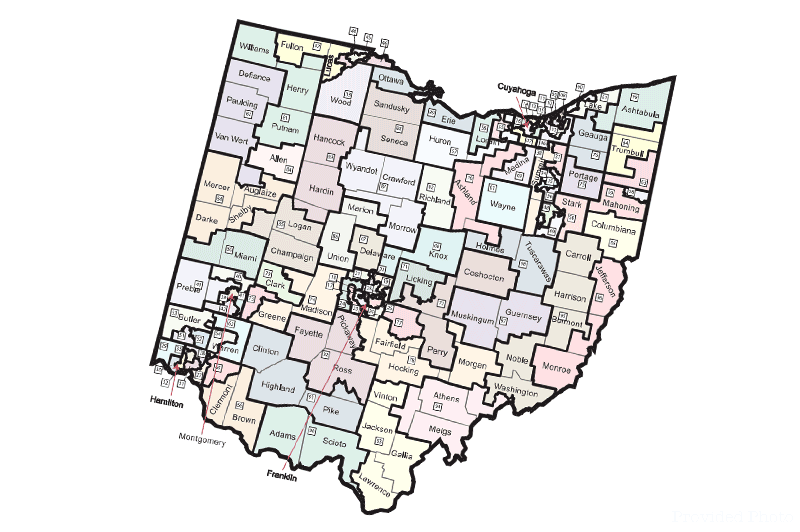
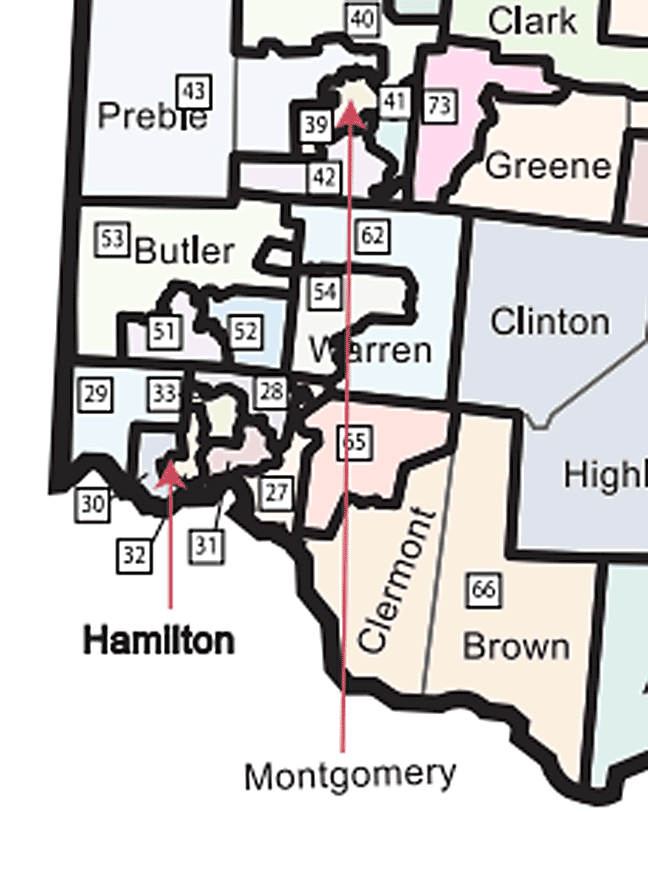
The current district map for the Ohio House of Representatives.
Not how Ohio voters drew it up
Each decade, Ohio redraws its federal legislative seats in the U.S. House of Representatives and state legislative seats in both the Ohio Senate and Ohio House of Representatives.
This is done to reflect changes in population and coincides with the U.S. Census, which is also conducted every 10 years.
After the last redistricting effort a decade ago, Ohio voters chose to reform the process for this year and the decades to follow. In short, voters approved a new system which puts a greater emphasis on transparency and bipartisanship.
These new plans — for federal and state maps — were approved via constitutional amendments on the 2018 and 2015 ballots, respectively.
These plans set specific deadlines to meet during the redistricting process.
Ohio voters could not have anticipated a global pandemic would occur at the same time the U.S. Census Bureau conducted its decennial count of American residents. The pandemic not only made the count more difficult, but has led to delays in processing and distributing census data used by officials to draw new legislative districts.
The Census Bureau announced this redistricting data will be provided to states by Sept. 30.
That’s a major problem — Ohio would therefore miss its redistricting deadlines:
This flow chart shows the new process for redrawing Statehouse districts. Circled is the deadline in question due to the delay in U.S. Census data.
This flow chart shows the new process for redrawing congressional districts in Ohio. Circled is the deadline in question due to the U.S. Census data delay.
Plan A involved a federal lawsuit from Attorney General Dave Yost seeking to get the redistricting data released earlier. The case was quickly dismissed. Now the two parties are offering some ideas for Plan B.
Back to the drawing board
If the government won’t release data early enough to match Ohio’s deadlines, officials here propose shifting the deadlines back to account for the late data.
This is not an easy fix. The 2021 deadlines were approved by voters and are thus embedded in the Ohio Constitution.
Senate President Matt Huffman, R-Lima, suggests the state get approval from voters to move back the deadlines as part of a one-time fix for this unique circumstance.
State Sen. Matt Huffman, R-Lima. Screenshot courtesy the Ohio Channel.
The next opportunity to get a constitutional amendment before Ohio voters would be the Aug. 3 special election.
Both chambers of the Ohio General Assembly (House and Senate) would have to pass a joint resolution to place the constitutional amendment on the August ballot. A three-fifths majority is required in each chamber for passage.
The deadline for filing this joint resolution with the Ohio Secretary of State’s Office is 90 days before the August election — that’s this Wednesday, May 5.
It’s possible, but the Republican leadership would need to work quickly. As of Monday morning a joint resolution has not yet been formally introduced.
An amendment requires a majority statewide vote to pass.
House Democratic Minority Leader Emilia Strong Sykes. Source: Ohio General Assembly.
Democratic leaders in the General Assembly say there are better options for handling the census delays than a hurried constitutional amendment attempt.
House Minority Leader Emilia Strong Sykes, D-Akron, and Senate Minority Leader Kenny Yuko, D-Richmond Heights, outlined their party’s own take on Friday for how to move forward.
“Constitutional amendments should be our final options,” Sykes argued, “not our first.”
The Democrats believe the best option is to ask the Ohio Supreme Court for an extension of the deadlines as other states, including Michigan, have done.
Senate Minority Leader Kenny Yuko is pictured at the Ohio Statehouse in 2018. Source: The Ohio General Assembly.
“I think (the Supreme Court) could understand that the people have spoken loud and clear, twice already, asking us to put an end to gerrymandering,” Yuko said. “What we’re proposing will do just that.”
While both plans call for extending the redistricting deadlines, neither party is suggesting to push back the 2022 primary election day to keep the full timeline intact.
All On The Line Ohio, a left-leaning organization which advocates for a fair mapmaking process, is calling for the primary election to get pushed back by a few weeks.
Sykes and Yuko said the Democrats would be introducing a plan to ensure the public has an adequate chance to provide input during what could be a truncated redistricting timeline.
DISTRICT MAPS
Every 10 years, following the decennial census, Ohio General Assembly and Congressional districts are redrawn to reflect changes in the state’s population in two parallel, but separate processes. The goal of each is to preserve the important one person-one vote principle – that all citizens are equally represented at the Statehouse and in the United States Capitol.
These maps were drawn based on data from the 2010 U.S. Census and are in effect from 2012-2022.
The Secretary of State’s office provides, for reference purposes, historical district maps dating back to 1972. Click here to request a ZIP file of these maps(opens in a new window). The file will be e-mailed to you. For up-to-date county district information, contact your county Board of Elections.
Loveland, Ohio – Ohio took a step closer toward a constitutional school funding model with the passage Wednesday of a two-year operating budget in the Ohio House of Representatives, a sweeping bill that also proposes an across-the-board income tax cut, a broadband internet expansion plan and more spending to aid businesses struggling from the pandemic.
The House passed a two-year, $74.4 billion budget for Fiscal Years 2022 and 2023 by a vote of 70 to 27.
Democrats took issue with certain portions of the budget, but its education funding reforms helped lead a dozen of them to ultimately join the Republican majority in approving the bill.
The budget now heads to the Ohio Senate, which will negotiate its own version over the coming months. Members of both legislative chambers will eventually hash out disagreements before a final version is sent to Gov. Mike DeWine for approval this summer.
“We are investing in Ohio’s priorities and Ohio’s future,” said Rep. Scott Oeslager, R-North Canton, who serves as the House budget chairman as he has for several previous budget cycles.
Oeslager said the ongoing pandemic has presented a wide array of challenges for Ohio, and the ongoing needs associated with the crisis are evident. He complimented House members for crafting a “balanced, responsible and truly meaningful” budget.
This budget does not include any federal spending from the American Rescue Plan. Speaker Bob Cupp, R-Lima, said Ohio has not yet received this relief funding and a forthcoming committee would determine how best to spend it.
Here are budget highlights as approved by the Ohio House of Representatives.
Education funding model overhaul
Amesville Elementary in the Federal Hocking School District. Photo from district website. Lawmakers approved a new education funding model in the House budget passed on Wednesday.
It has been more than 24 years since the DeRolph v. State decision was handed down by the Ohio Supreme Court, which ruled Ohio’s state funding model does not provide an equal opportunity for all students to learn and is therefore unconstitutional.
Lawmakers were tasked with determining a more equitable, constitutional funding model — something they have failed to accomplish in the decades since.
Cupp has led a renewed push to reform the funding system in recent years and said after Wednesday’s vote he was glad this budget achieves that goal.
The House-approved budget includes a nearly $2 billion increase in school funding, with most districts expected to receive more funding over the next six years. (A spreadsheet showing the funding estimates for each individual district in Ohio was published by The Columbus Dispatch.)
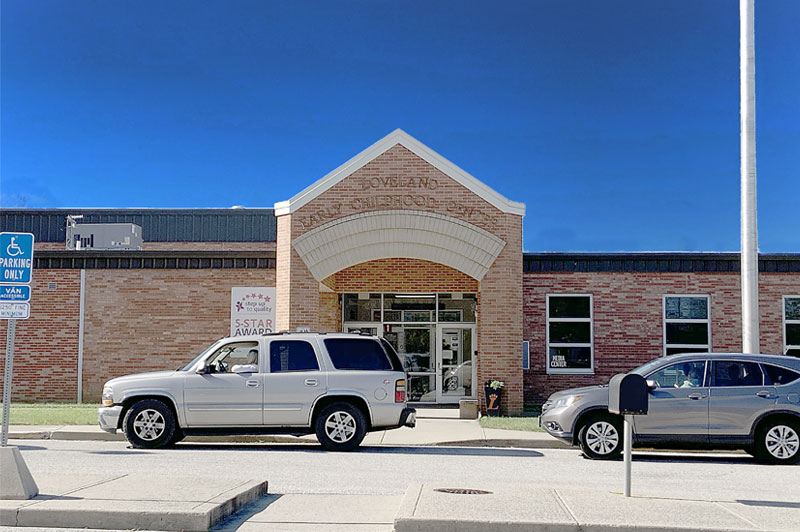
The Loveland City School District may receive $941,996 additional State tax dollars according to the Columbus Dispatch.
Cupp said he did not want to speculate on potential disagreements the Senate may have with this funding plan, but hoped there would be more productive conversations between members of the two chambers on this subject.
“We think they will agree that it is a very good plan going forward,” he said.
Detailed Ohio Capital Journal reporting on the education reforms included in this budget is forthcoming.
More spending for COVID-19 relief, and vacating penalties for public health violations
The budget includes relief spending to benefit a variety of Ohio businesses.
Millions of dollars would go toward helping entertainment venues, bars, restaurants and hotels. Additionally, there is a “New Business Relief Grant” program to specifically help those businesses that opened after Jan. 1, 2020.
Republicans also inserted a budget provision that would vacate all public health violations incurred by Ohio businesses since March 2020.
A number of Ohio bars, including several on the island village of Put-In-Bay, were cited in 2020 for violating COVID-19 health orders. The House budget would expunge these violations and repay any fines levied against businesses. Photo from the Ohio Investigative Unit.
Businesses that have faced penalties for violating public health orders, such as not enforcing mask and distancing mandates, would have their violation records expunged. Any disciplinary actions currently in progress would be halted.
The state would be forced to repay any fines levied and reinstate licenses revoked. The Legislative Service Commission (LSC) estimates this would amount to $100,000 in fines repaid to health order offenders.
Cupp defended this provision by saying Ohio businesses failed to abide by public health orders because the virus was an “unknown” phenomenon in 2020.
“The restrictions were new, they were different, and a lot of businesses sort of got caught up in this administrative web. As we work our way out of the pandemic, we think it’s important to take another look at (the violations) and to give them some sort of the benefit of the doubt…,” Cupp said.
Tax cuts
Another main portion of the bill involves income tax cuts and deductions.
There is a 2% personal income tax cut for all earners, which LSC estimates would save taxpayers around $380 million in the coming two years.
“Once more, the wealthy and big businesses will fare far better than working families under this budget,” said Rep. Michael Skindell, D-Lakewood, who unsuccessfully proposed taking out the tax cut and diverting it to other priorities.
Those earning under $40,000 per year would receive virtually no benefit from this tax cut, the study found. Ohioans earning between $40,000-61,000 per year would see their taxes cut by an average of $7 over the course of an entire year.
The top 1% of Ohio earners, those making more than $490,000 per year, would comparatively see their taxes cut by an average of $612 each year.
Skindell said the tax cut shows a “huge disparity and continues the tax shift in this state.”
Separately, the House budget institutes an income tax deduction on capital gains earnings for Ohio-based “venture capital operating companies.” Such investors could deduct all of their earnings from investments in Ohio businesses and 50% of earnings from investments in businesses elsewhere.
LSC estimated this provision may cost the state tens of millions of dollars per year in income tax revenue lost.
Broadband internet expansion
The House budget includes $190 million in funding toward new broadband internet expansion projects. (Photo by Leonardo Fernandez Viloria/Getty Images).
Ohio lawmakers have worked toward a bipartisan effort this year of expanding broadband internet access in the state.
The budget allocates $190 million over the next two years toward grants to pay for new broadband expansion infrastructure projects.
Other pieces of the budget
Here are some other noteworthy provisions from the budget bill:
The governor had proposed changing antiquated language in Ohio law to clearly state all couples can adopt children (LGBTQ couples are legally allowed to in Ohio). The governor suggested changing the phrase “husband and wife” to read “legally married couple,” but Republican lawmakers took out this change to leave the original language in place.
The budget allocates millions of dollars for firefighting equipment and training, along with millions more for a law enforcement training program.
The budget provides $25,000 to Ohio domestic violence groups to give clients travel vouchers, gas cards and ridesharing credits.
Millions of dollars will go toward the Foundation for Appalachian Ohio, as well as money for workforce development around the state and in Appalachian communities.
The budget includes greater investments for maternal/infant health programs.
The budget does not include several major proposals from the governor, including gun safety reforms and a $50 million public relations campaign for Ohio.
Dr. Amy Acton, the former state health director who led Ohio’s pandemic response in its early months, announced Tuesday she will not enter the race to fill Republican Rob Portman’s seat in the U.S. Senate.
Acton was considered to be a potential leading candidate for the Democratic Party primary.
In a provided statement, Acton called it a “tremendous honor” to be considered for the race, but ultimately decided against committing t o a campaign.
“While I am not entering the race for U.S. Senate, I recognize there is a genuine longing for a fresh approach to leadership that is honest, collaborative, and empowering,” Acton wrote.
Acton was a little-known member of Gov. Mike DeWine’s cabinet until being thrust into the spotlight as the novel coronavirus spread throughout the country early last year.
She became a regular presence alongside DeWine at the daily coronavirus press conferences, using her experience as a former public health professor to clearly — and sometimes cleverly — describe the new virus to the general public.
Among the many health orders signed by Acton in those initial weeks were the shutdown of school buildings (Ohio was the first state in the U.S. to do so) and the postponement of the March primary election.
Acton was lauded throughout the state and in many national publications for taking aggressive steps to mitigate the spread of COVID-19. A Facebook fan club page grew to more than 100,000 members and Acton was even depicted on a bobblehead.
Within weeks, though, Acton begun facing an onslaught of criticism from those who argued the continued shutdown of certain businesses were devastating Ohio workers and owners.
A state senator posted to Facebook he would not let Acton, who is Jewish, turn Ohio into Nazi Germany. Another lawmaker repeatedly referred to her as a “dictator” and a “globalist.” Protestors gathered at Acton’s house on numerous occasions, with some bringing weapons and one man carrying an anti-Semitic sign.
Acton announced her sudden resignation as state health director in June. She stayed on for a few months as a paid, behind-the-scenes advisor to the governor on health issues.
By August, she was out of state government entirely. Acton returned to the Columbus Foundation, where she had worked previously before becoming state health director. She has rarely appeared in public or given interviews about the pandemic since then.
Portman surprised many by announcing in January he would not seek reelection to the U.S. Senate next year.
Acton was quickly viewed as a possible Democratic contender for the seat. Within weeks, she confirmed plans to step down from the Columbus Foundation in order to consider joining the race.
The 314 Action Fund, a political action committee dedicated to supporting scientists as political candidates, planned to spend millions of dollars backing an Acton campaign. The group commissioned a poll which found that two-thirds of Ohio Democrats viewed Acton favorably. Respondents gave her a slight edge over U.S. Rep. Tim Ryan, D-Niles, who is reported to be planning a run for the seat.
In the end, Acton decided against embarking on a career in elected politics. In the statement, she described there being a new hope felt in Ohio as the state emerges from a deadly pandemic that has killed more than 18,700 residents to date.
“The opportunity for repairing and reimagining is at hand: a rebirth for ourselves, our relationships, and for the institutions of our civil society,” Acton wrote. “What happens next isn’t the sole province of our elected officials. It is up to all of us. We must co-create an Ohio that ensures the enduring cultural values of kindness and justice for all.”
Republicans campaigning to replace Portman so far include former state party chair Jane Timken, former state treasurer Josh Mandel and entrepreneur Bernie Moreno.
A number of other Ohio politicians are believed to be eyeing the seat, including U.S. Rep. Steve Stivers, R-Upper Arlington; state Sen. Matt Dolan, R-Chagrin Falls; Republican author and venture capitalist J.D. Vance; and House Minority Leader Emilia Strong Sykes, D-Akron.
The possibility of expanded passenger rail service in Ohio has some residents brainstorming how it might impact their lives.
A Columbus resident imagines being able to take a train to Chicago, a place they haven’t been “in ages.” A baseball fan from Dayton thinks he’d be able to attend games at Cleveland’s Progressive Field more often. A bicyclist considers the possibility of riding cross-state to another city then taking the train back.
These opportunities would still be years away from taking shape. The Biden administration wants to get the ball rolling on this idea as part of a $2 trillion infrastructure and jobs proposal made public on Wednesday.
The sweeping plan calls for making a variety of improvements to America’s transportation grid. The administration also wants improvements made to drinking water systems; high-speed broadband for all Americans; and rehabbing projects for millions of homes, commercial buildings, schools, hospitals, child care facilities, and federal buildings.
President Biden, a longtime Amtrak rider and supporter, wants to invest tens of billions of dollars to build new train routes throughout the country. His plan separately calls for more than $100 billion in spending toward repairing and modernizing other public transit systems.
In order to pay for this infrastructure package, Biden wants to raise the corporate tax rate and prevent companies from writing off expenses accrued from offshoring jobs.
Most notably for Ohioans is a proposal to build new Amtrak routes connecting Cincinnati, Columbus and Cleveland. The initial concept is to have three round trips per day, with stations in other communities placed along the route (such as Dayton).
Amtrak currently operates several routes which travel along the north and south edges of the state and its growth plan calls for increasing service along these routes. Additional routes connecting the Ohio’s largest cities would be a significant development, transit advocates and local officials believe.
“This is bold,” said Stu Nicholson, executive director of the transportation advocacy group All Aboard Ohio. “This is a huge, bold move in terms of both infrastructure overall and transportation in particular.”
It has been 40 years since Ohio last saw passenger trains on the “Three-C Corridor.” Bringing it back, Nicholson said, will have major tourism and economic ramifications for the state.
“Three trains a day doesn’t seem like a lot, but it’s three trains more than we have now,” Nicholson added.
City councils in Cincinnati, Columbus, Cleveland, Dayton and elsewhere have all passed resolutions in recent months supporting Amtrak rail expansion.
How Ohioans think they might benefit from expanded rail service
A zoomed-in look at Amtrak’s proposed service map impacting Ohio. Dark blue lines indicate existing services, while light blue and yellow lines indicate new or enhanced rail service.
The Ohio Capital Journal sought input from Ohioans on these proposals and asked on social media what they might use expanded passenger rail for.
Andrew Gutierrez, a resident of Cincinnati, said it would help with seeing family members during the holiday season.
“It would definitely make travel less stressful seeing in-laws in Cleveland, especially during the winter,” Gutierrez responded. “Maybe not quicker, but it’s at least an option.”
Leslie Hughes also said she would utilize passenger rail to travel from Franklin County to other states to see relatives.
“As a newly retired person, visiting family by train in nearby states would give me great hope for enjoying my later years,” she said.
I like the idea. It comes down to the execution – can intercity rail service be a reasonable, affordable, rapid alternative to personal cars or planes.
Columbus-Cleveland would be a game changer for football season. Columbus folks going to more Browns games, Cleveland folks going to more Buckeyes games. I’d love to not worry about getting behind the wheel after a game at First Energy 🍻
I’m in the Cleveland are and would love it if there could also be a feeder train to/from Athens and Columbus so that my OU student daughter could come home more.
These infrastructure proposals come as Gov. Mike DeWine signed the two-year, $8.3 billion Ohio transportation budget into law on Wednesday. The governor had originally suggested massive cuts to state funding for public transportation, but lawmakers restored the funding to pre-pandemic levels.
DeWine acknowledged Thursday that “we certainly have infrastructure needs” in Ohio, but said he hadn’t given a full look to Biden’s proposals.
Unlike highways, public transportation has no dedicated revenue stream within the state budget, meaning this investment is dependent on lawmakers’ decision-making every two years when a new transportation budget is approved.
As reported, the funding approved in this budget helps benefit the many urban and rural transit systems throughout Ohio. They will also receive federal relief funding approved by Congress that is meant to recoup losses sustained during the pandemic.
The Ohio Department of Transportation’s 2015 Transit Needs Study outlined that a vastly larger investment into public transit is necessary to fully improve and maintain the state’s transit offerings.
A recent state infrastructure report card from the American Society of Civil Engineers graded Ohio’s infrastructure as being a C-, with the “ Transit” category receiving a D grade.
It cost the state of Ohio more than $1 million to send hundreds of troops to the Ohio Statehouse last month to protect against acts of political violence.
All told, taxpayers spent millions of dollars to pay for enhanced security in Columbus and Washington, D.C. following the Jan. 6 events at the U.S. Capitol.
After the deadly insurrection at the nation’s capital, DeWine mobilized around 1,000 troops to D.C. to help with security for President Joe Biden’s inauguration. DeWine also authorized 480 troops to be stationed at the Ohio Statehouse during planned protests on inauguration week.
Military vehicles were placed around the Ohio Statehouse in mid-January. Photo by Jake Zuckerman.
The Ohio State Highway Patrol, normally in charge of protecting the Statehouse grounds, also ramped up security last month.
The cost of stationing troops in Columbus, as approved by the Ohio Controlling Board on Monday, was $1,035,000. Most of this amount ($695,000) went to payroll, with the remainder spent on food, travel costs and other supplies.
The deployment of Ohio troops in D.C. cost more than $2.1 million, but this is paid for by the federal government, according to Stephanie Beougher, the public information officer for the Ohio National Guard.
Public officials had worried about the potential for violence as online extremists turned their attention from the U.S. Capitol to the 50 state capitals. The Ohio Statehouse and other government buildings in downtown Columbus were closed for four days.
Protesters caused more than $150,000 in damage at the Statehouse last May and more than $1 million in damage to nearby businesses and offices. In response, the governor deployed Ohio National Guard troops to Columbus and Cleveland at an eventual cost of $3.2 million.
A Republican state senator recently proposed a bill to install security cameras at the Statehouse and increase the penalties for arson and vandalism.
David DeVillers, the U.S. Attorney whose office has led the prosecution of former Ohio House Speaker Larry Householder, will soon be replaced, Sen. Sherrod Brown confirmed on Thursday.
DeVillers was appointed to the position by President Donald Trump and confirmed by a Republican-led U.S. Senate in 2019. Brown told reporters that both U.S. Attorney positions in Ohio would be replaced with Democrats regaining control of the White House and U.S. Senate.
The U.S. Attorney for the Northern District of Ohio already resigned earlier this month. DeVillers will be staying on until a successor is appointed and confirmed, according to Brown’s office.
While it is common for presidents to replace federal attorneys upon taking office, some had called for the Biden administration to keep DeVillers in his post.
“Every president is entitled to, with Senate approval, his own team of federal prosecutors,” wrote Mark Weaver, a former deputy attorney general of Ohio, in a Columbus Dispatch guest column last month. “However, as Ohioans know, DeVillers is leading an aggressive and much-needed effort to stem the tide of pernicious public corruption that shatters faith in government.”
Brown has issued a call for applicants to the U.S. Attorney position, with the web page stating he “will be working to recommend candidates to the Biden Administration.”
DeVillers became the face of the Householder prosecution when he appeared at a press conference to announce racketeering charges against the speaker and four of his political operatives. The five were arrested July 21 as part of an alleged $61 million bribery scheme to get a $1.3 billion nuclear bailout bill enacted in 2019, which DeVillers described as being “likely the largest bribery and money-laundering scheme ever in the state of Ohio.”
Two of those charged have since pleaded guilty, while the others (including Householder) have pleaded not guilty and await trial.
More recently, DeVillers pledged justice would be served against anyone from the Southern District of Ohio who committed crimes during the attempted U.S. Capitol insurrection:
Make no mistake… Federal crimes were committed today at our nation’s Capital building. Anyone who traveled from the Southern District of Ohio with the intent to commit such crimes will be prosecuted in the Southern District of Ohio.