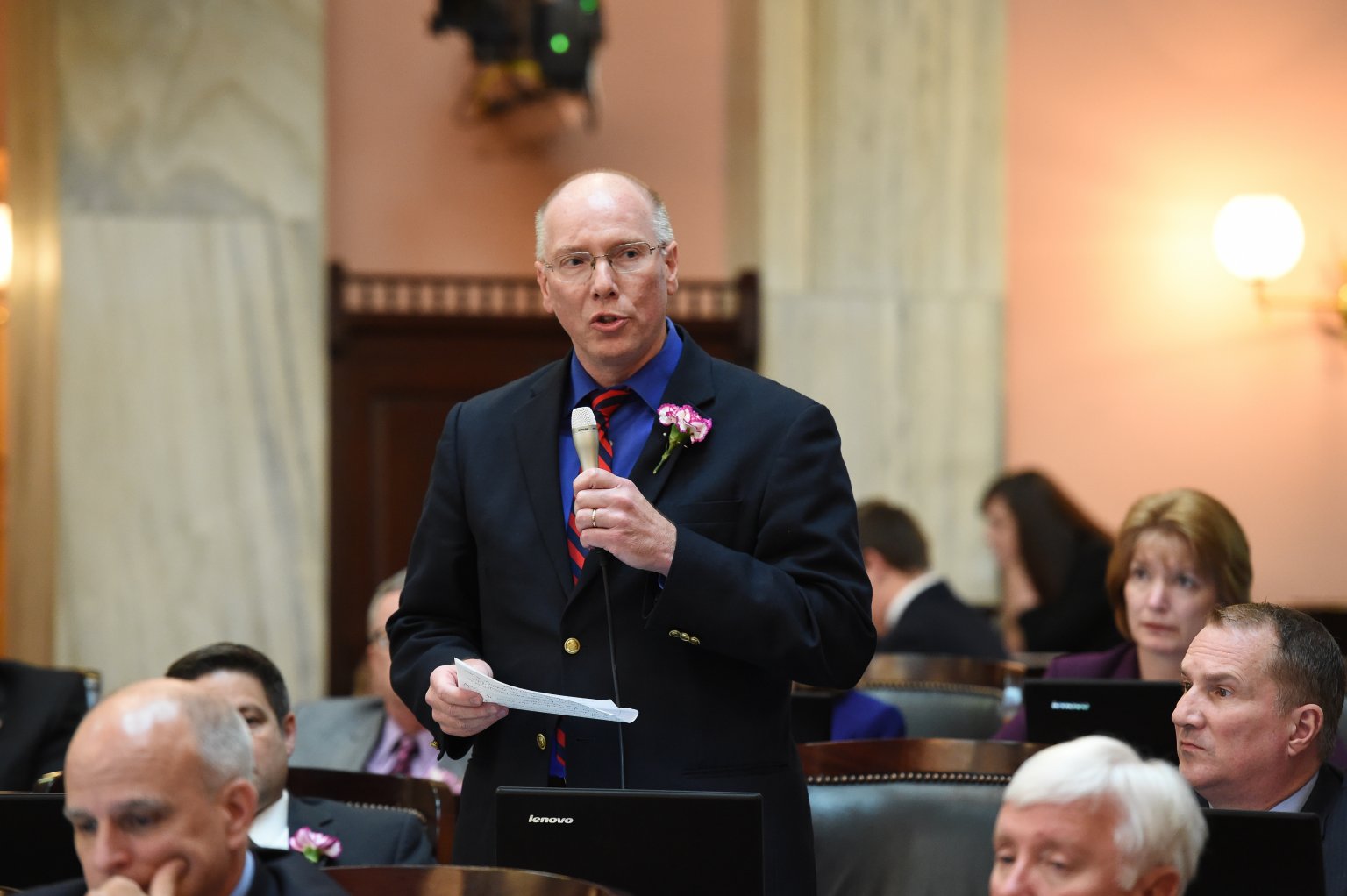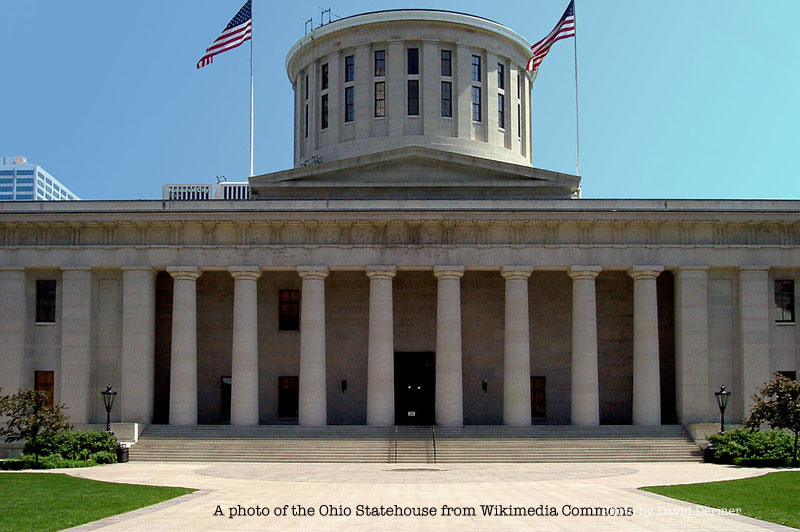
Tag: Tyler Buchanan

  • Unfinished business: 5 legislative priorities in Ohio pushed to 2021

    Unfinished business: 5 legislative priorities in Ohio pushed to 2021

    By Tyler Buchanan and Ohio Capital Journal

    Columbus, Ohio – The 133rd Ohio General Assembly wrapped up its term with a flurry of lame-duck activity last week, closing out a challenging year of legislating amid a global pandemic. 

    Lawmakers hurried to get priority bills passed and sent to Gov. Mike DeWine’s desk for a signature before the two-year term ended. There were, however, a number of major legislative projects that did not get passed.

    Here are some of the priorities falling to the 134th General Assembly, which starts in January:

    What to do with House Bill 6?

    After months of deliberation about House Bill 6, lawmakers have decided to punt any repeal or replacement effort to 2021.

    HB 6 is the $1.3 billion nuclear bailout bill at the center of what has been called the largest corruption scheme in state history. 

    In the days after Speaker Larry Householder and four other political operatives were arrested in July, one thing was clear: Ohio lawmakers needed to do something about the tainted bill. 

    DeWine, who signed the bill into law in 2019, called for its repeal. Householder was removed as House Speaker. His replacement, Rep. Robert Cupp, R-Lima, said one of the first priorities of his speakership would be addressing HB 6. 

    Davis Bees Nuclear Power Station with electricity pylons, Ohio. Getty images.

    Cupp did create a new “House Select Committee on Energy Policy and Oversight,” which met nine times between September and December to hear testimony on various attempts to repeal HB 6.

    Members could not come to an agreement on how to best approach HB 6; some wanted a full repeal, others wanted only certain portions replaced and a few defended the whole bill as being good public policy, even if it did come about through sordid means. 

    Two of those involved have already pleaded guilty in federal court; the cases against Householder and two others are ongoing.

    Householder was reelected to another term and it remains to be seen if the chamber will take a vote in 2021 to expel him. When Cupp was elected as speaker in July, he indicated such a vote would wait until after the new term starts.

    School spending reform will take more time

    The Ohio Supreme Court ruled the state’s school funding model was unconstitutional back in 1997. Decades later, lawmakers are still working to figure out a constitutional and equitable substitute.

    A bipartisan funding overhaul passed the House in early December, but did not make it through the Senate. 

    Sen. Matt Dolan, R-Chagrin Falls, who chairs the Senate Finance Committee, wrote in a December letter “there is not enough time in the legislative session for the Senate to have the in-depth hearings this bill deserves.” Dolan suggested the new formula could be passed as a piece of the next state budget, which will be decided in the first half of 2021.

    Republicans still concerned about pandemic authority

    For all the condemnation leveled against Ohio’s pandemic response by Republican lawmakers in 2020, the legislature achieved little this year in the way of curbing the government’s executive powers.

    Between May and December, Republicans introduced numerous bills targeting the pandemic authority of the governor and the Ohio Department of Health (ODH). Only a few of them passed, and DeWine followed through on a pledge to veto any bill restricting ODH’s ability to issue health orders meant to stem the spread of COVID-19.

    DeWine vetoed a bill over the summer which would have reduced the penalties for violating a public health order. Lawmakers did not seek a veto override. 

    Gov. Mike DeWine is pictured during his statewide address on Wednesday, Nov. 11. Photo courtesy Ohio Channel.

    More recently, DeWine vetoed a bill to prevent ODH from issuing widespread quarantine orders (it also would’ve given lawmakers authority to vote down any public health orders). Despite protests and pressure from conservative lawmakers to override the veto, such a vote was not taken during the lame-duck session.

    Late in the term, lawmakers debated efforts to make future health orders more fair to business owners, should they be necessary. At other points this year, legislators said they wanted to address the state’s pandemic authority for future crises beyond the coronavirus. Those efforts may come up again in 2021.

    Campaign finance and election reform

    These were two hotly-debated topics this year in large part because of the presidential election cycle and the House Bill 6 scandal.

    As the Ohio Capital Journal has reported, lawmakers proposed a wide array of improvements to the state’s election system over the past term — from automated voter registration to online absentee ballot requests. Some legislators expressed worry about approving reforms during an election year, which may provide an opportunity for reforms to be heard during an “off year” like 2021. 

    The HB6 scandal involved allegations of bribery money being funneled through “dark money” groups in order to influence Ohio elections and public policy. These groups are registered nonprofits which are not required to disclose who funds them. 

    Ohio Secretary of State Frank LaRose, whose office oversees campaign finance in the state, came out in favor of improved transparency when it comes to “dark money groups.” He supported legislative efforts which followed Householder’s arrests to require such groups to publicly disclose their financial activity. 

    Secretary of State Frank LaRose is flanked by state Reps. Gayle Manning and Jessica Miranda during a press conference in support of HB 737.

    A bipartisan bill proposing reforms to the state’s campaign finance system did not receive a hearing in 2020, but these efforts may carry over to the new term.

    Split opinions on criminal justice reform

    There was much attention paid to the legislature’s work to reform the Ohio criminal justice system, with plenty of disagreements leading to mixed results.

    Lawmakers passed Senate Bill 1, which expands access to drug treatment programs in lieu of convictions and broadens the description for criminal records that may be sealed. 

    A separate bill to reclassify low-level drug offenses from felonies to misdemeanors passed the Senate last June, but was not taken up for a vote during the House’s lame-duck session. The bill sought to divert drug offenders into treatment rather than criminal punishment.

    Despite bipartisan support in the Statehouse and among civil rights groups, the bill remained controversial among law enforcement groups and prosecutors. The Ohio State Bar Association came out against the bill, arguing in testimony that some drug offenders “must have serious consequences hanging over their heads like the threat of a felony and prison time” in order to commit to a treatment program. 

    Rep. Bill Seitz, R-Green Twp., a supporter of the bill who will serve as Majority Floor Leader next term, told The Cincinnati Enquirer that work will continue in 2021 on criminal justice reform.
  • Ohio’s minimum wage to rise by 10 cents per hour in 2021

    Ohio’s minimum wage to rise by 10 cents per hour in 2021

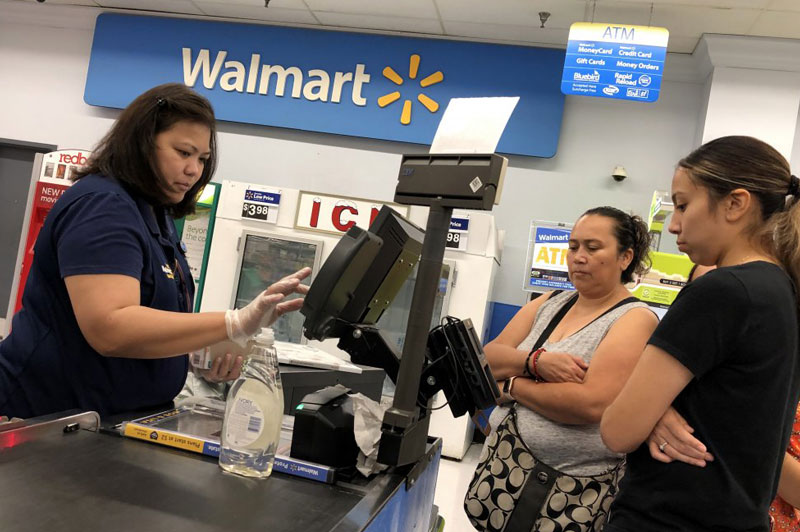
    Customers look on as a Walmart cashier rings up their purchases at a Walmart store. Photo by Justin Sullivan/Getty Images.

    By Tyler Buchanan and Ohio Capital Journal

    The Ohio minimum wage will rise by 10 cents to $8.80 per hour in 2021.

    That will be the wage for non-tipped employees. Tipped workers will earn $4.35 per hour plus tips in 2021.

    Ohio workers under the age of 16 will make the federal minimum wage, which is $7.25 per hour.

    Ohio’s minimum wage rises gradually each year to match the rate of inflation, per a state constitutional amendment implemented in 2007. The minimum wage that year was $6.85; it has gone up nearly $2 in the 14 years since.

    Michael Shields, a researcher with the left-leaning think tank Policy Matters Ohio, said this increase is not enough to help low-income Ohioans still suffering from the pandemic.

    There were several unsuccessful attempts this legislative term (which ends next week) to increase the Ohio minimum wage. 

    A 2019 bill from state Rep. Brigid Kelly, D-Cincinnati, called for increasing the wage to $12 per hour and then going up by $1 per year until it reached $15 per hour. Tipped workers would have risen to $6 per hour, going up by 50 cents per year until it reached $7.50 per hour. From there, wages would have risen gradually as is presently done.

    State Sens. Cecil Thomas, D-Cincinnati, and Hearcel Craig, D-Columbus, offered a similar bill in the Ohio Senate. These two bills would have allowed local governments to set even higher minimum wages. 

    Later in 2019, Democratic state Reps. Lisa Sobecki of Toledo and Kent Smith of Euclid introduced a bill to raise the minimum wage for all workers (regular, tipped and juvenile) to $10.55 per hour in 2021. The wages would’ve then risen gradually in years after that.

    None of the above bills made substantial legislative progress. 

    There was also an effort in early 2020 to place a referendum raising the minimum wage on the November ballot. Organizers suspended the campaign, saying coronavirus shutdowns made it difficult to secure the signatures necessary to place the referendum on the ballot.

  • History Thursday: Ohio headlines from the last year Ohio State-Michigan didn’t play

    History Thursday: Ohio headlines from the last year Ohio State-Michigan didn’t play

    By Tyler Buchanan and Ohio Capital Journal

    A winter without an Ohio State-Michigan football game is, well, it’s like hot soup without a spoon. It’s like an Ohio highway without orange barrels. 

    “I know that life in Ohio is not complete without the glory of Ohio State football and other football,” President Trump told supporters in Circleville.

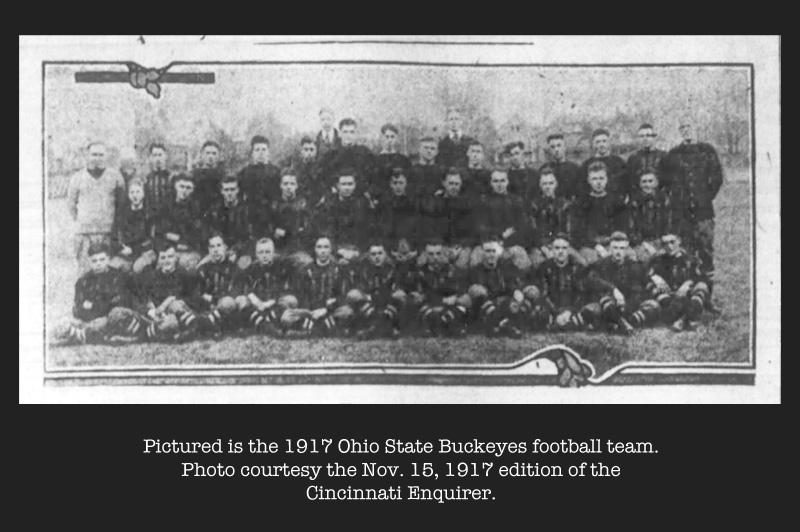
    The rivalry is older than the Circleville Pumpkin Show. The two teams first played in 1897 and competed in most years over the next decade or two, though they took several years off during World War I.

    Starting in 1918, though, the Buckeyes and Wolverines faced off in every season thereafter. Until this year. A yearly tradition that began the year of the Spanish flu pandemic ends the year of the COVID-19 pandemic. 

    The streak of playing 102 years in a row predates Kewpee burgers in Lima and Skyline chili in Cincinnati. It predates the construction of the Cedar Point causeway in Sandusky and the Terminal Tower in Cleveland.

    It even predates the founding of the NFL in Canton.

    Life was different in 1917, the last year the two teams didn’t play. Let’s look at a few news storylines from that year:

    Darke County newspaper: Ohio lawmakers are stupid

    The Greenville Journal in western Ohio offered a rather provocative headline on March 15, 1917: “General Assembly Noted As Peculiar.” The subheadline: “Legislature, Taken in the Aggregate, Is Below Average Ohio Body in Intellectual Force.”

    Newspapers weren’t nearly as polite back then.

    Dr. Clarence Maris, a Columbus physician and political writer, offered an explanation as to why the 1917-18 Ohio General Assembly was, in his view, lacking in intelligence. 

    “(M)any of the Democrats elected in normally Republican counties or senatorial districts were thought by the party managers to have no chance for election,” Maris wrote,” and men were put up to be sacrificed, but the (Woodrow) Wilson peace wave carried them into office.”

    Maris went on to list a number of legislative projects undertaken by the legislature to back up his claim. In defense of Ohio’s lawmakers from the 1910s, Maris made a lot of wild claims. A decade later, the New York Times quoted him as saying Ohio State University was rife with communism and that the “youth movement” at OSU was controlled by Moscow. 

    Ohio overhauls its statewide health authority

    The above Greenville Journal paper had another noteworthy article on March 15 in a separate column called “News Culled In The Capital.”

    The Ohio House of Representatives had just voted to abolish the state board of health. Instead, lawmakers wanted to have a singular state health commissioner run the show, which would be aided by an advisory council. Governor James Cox supported the move. 

    The reason for this change? The Marion Star reported the health board “has been in the limelight repeatedly during the last year because of internal dissensions.”

    The Lima Times-Democrat reported that “too much bickering” from the seven health board members made them the “subject of considerable criticism.” The newspaper continued: “The health commissioner, to be chosen by the council, with the governor’s approval, will be endowed with administrative and executive powers.”

    The new law specified the commissioner had to be a physician and be skilled in sanitary science. The term would be for five years. Dr. A. W. Freeman of Cincinnati was chosen in September 1917 to be the first state health commissioner.

    New Cleveland Indians pitcher paid a pretty penny

    Team owner Jim Dunn made a big bet in signing pitcher Joe Wood ahead of the 1917 season.

    This illustration of “Smoky” Joe Wood printed in a 1917 edition of the Sandusky Star-Journal.

    After all, Dunn paid $15,000 for his prized new hurler. 

    “Smoky” Joe Wood, formerly of the Boston Red Sox, didn’t pitch in 1916. But the Tribe hoped he would return to form in ‘17.

    “Tris Speaker, Wood’s former teammate and close friend, has said that he believes Joe is in as good of shape as he ever was,” the Sandusky Star-Journal reported. “But of course till Wood shows the goods on the diamond the deal is completely a gamble.”

    For reference, a century later, Cleveland Indians star Carlos Santana was paid $20,333,333 for the 2019 season. He came to bat 686 times that year, earning $29,640 per plate appearance.

    In essence, Santana earned “Smoky” Joe Wood’s 1917 salary twice over every time he stepped in to hit.

  • Lawmakers seek Ohio moratorium on evictions, foreclosures

    Lawmakers seek Ohio moratorium on evictions, foreclosures

    State Reps. David Leland, D-Columbus, and Jeffrey Crossman, D-Parma

    By Tyler Buchanan and the Ohio Capital Journal

    Ohioans struggling to pay their rents or mortgages may head into 2021 without the housing protections and public assistance that have carried them through much of the pandemic this year.

    A federal moratorium on evictions is about to expire. Two other relief programs helping unemployed Americans are set to run out. There are believed to be thousands of Ohioans who are in immediate risk of eviction due to unpaid rent, with many low-income earners still working reduced hours or remaining out of work entirely. 

    Back in March, two Democratic lawmakers proposed a statewide moratorium on eviction and foreclosure actions so long as Ohio stayed under a state of emergency amid the COVID-19 pandemic. The economy has rebounded somewhat from historic unemployment in the spring, but the virus outlook looks grim as the state heads into the cold winter months.

    State Reps. David Leland of Columbus and Jeffrey Crossman of Parma believe the moratorium is needed now more than ever. 

    “This is not just a humane thing to do,” Leland said in a committee hearing on the bill Thursday morning, “it’s not just asking you to embrace the holiday spirit. Instead, as we survey the landscape after these tumultuous nine months and ahead of next year’s budget negotiations, this is a way to save numerous low-income Ohioans’ from unimaginable hardship.”

    “The urgency of this legislation is really right now,” Leland continued.

    Under House Bill 562, landlords could still file eviction actions, but courts would be prevented from acting on them while the state of emergency is in place. Law enforcement officers could not carry out eviction orders either. Courts would not be able to conduct any business pertaining to foreclosures and must halt all pending foreclosure actions.

    This moratorium would apply to residential and commercial properties.

    Nearly two-dozen Democrats and one Republican have supported the bill as cosponsors.

    iStock / Getty Images Plus

    ‘Last remnants of the safety net’

    The large-scale CARES Act signed into law in March has provided trillions of dollars of relief, but many of its programs benefiting Ohio tenants have already run out or are about to. 

    This includes the Pandemic Emergency Unemployment Compensation and the Pandemic Unemployment Assistance programs, which have helped those who have lost work during the crisis. Both programs end the day after Christmas.

    In September, the Centers for Disease Control and Prevention (CDC) issued a nationwide moratorium on evictions for residential properties. It prohibits U.S. landlords and property owners from evicting a tenant for unpaid rent. 

    That moratorium is set to expire on New Year’s Eve.

    “Just as covid cases are exploding and our hospitals are filling, and just as the coldest parts of winter are setting in, hundreds of thousands of Ohioans are set to be stripped of the last remnants of the safety net Congress put in place back in March,” Leland said.

    Ohioans struggled to pay their housing costs even with that safety net in place. A survey from this past summer found more than a half-million residents could not pay rent in June 2020.

    Now these same residents potentially face 2021 without the CDC moratorium and without relief assistance — unless Congress acts again to pass a relief bill to close the gaps left by the still struggling economy.

    A total of $50 million from the CARES Act was allocated for emergency rental assistance in October. But advocates say more is needed.

    “Unless the Senate stops blocking any meaningful relief, we’re really worried about what’s going to happen in 2021,” said Marcus Roth, a spokesman for the Coalition on Housing and Homelessness in Ohio, last month.

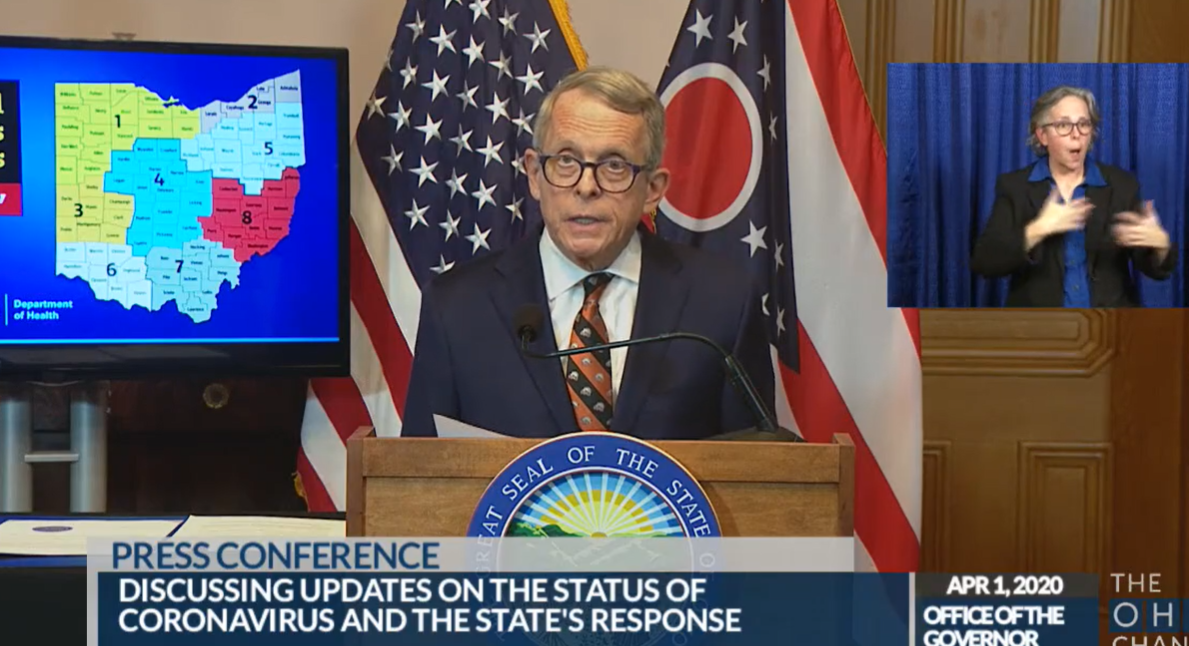
    That’s also the hope of Gov. Mike DeWine, who again called on Congress to pass a relief bill during his COVID-19 press conference on Thursday. 

    DeWine was asked if he supported the CDC extending its eviction moratorium into 2021. 

    “I’d have to take a look at that. I don’t know,” DeWine answered. “But look, this is a problem. This is a problem and is something that we are in fact focused on.”

    Lt. Gov. Jon Husted argued that a moratorium alone does not address the costs faced by property owners and suggested such action should be paired with further government relief.

    “There’s still somebody that has a mortgage to pay on that facility, who has a default that could potentially happen with their lender, which creates a whole chain of events and series of events,” Husted said. “So there has to be a financial solution to go along with any moratorium so that we don’t create a chain reaction in the system that causes additional problems.”

    Unintended consequences to a moratorium?

    In committee, state Rep. D.J. Swearingen, R-Huron asked the HB 562 sponsors about the “unintended consequences” of continuing a moratorium in Ohio. Swearingen noted that property owners still have costs such as repairs and that smaller banks may not be able to carry so many unpaid loans.

    State Rep. D.J. Swearingen, R-Huron

    Crossman acknowledged those concerns but said the ramifications of doing nothing would have a greater impact on individuals.

    “I think we just have to ask ourselves, who’s in a better position to bear the burden here? The individual who is not making any income trying to keep their family fed and clothed and in a housing situation during the middle of a pandemic, particularly if they don’t have a job, or a lender who can maybe take a two- or three-month pause from getting their mortgage payments?”

    Crossman said the latter is in “a far better position financially” to handle the issue. 

    Lawmakers also heard testimony from Dan Acton, a lobbyist for the Ohio Real Estate Investors Association who spoke in opposition to passing an Ohio moratorium. He said his organization consists of a few thousand “smaller” real estate investors who typically own single-family housing units.

    He claimed these property investors operate on “razor-thin profit margins.” When tenants do not pay their rent bills, Acton said, this reduces the “profits for a property owner that could otherwise be used to reduce the overall debt on a property or make improvements.”

    “The pandemic and the resulting eviction moratoria and payment delays are leaving our members on the brink of failure,” Acton said, arguing it would be “dangerous” for the government to “interfere” with a private leasing contract. 

    Leland said a moratorium is not meant to be a “long term-solution,” but would allow Ohioans to stay in their home until winter passes, the economy rebounds and a vaccine is made available.

    Separately, Leland and fellow Democratic Rep. Juanita Brent of Cleveland also sponsored House Bill 744 that would allocate around $270 million from the state’s “rainy day fund” to pay for a new COVID-19 Emergency Rental Assistance Program. No action has been taken on this bill.

  • Ohioan reports being recruited for plot targeting Gov. DeWine at his home

    Ohioan reports being recruited for plot targeting Gov. DeWine at his home

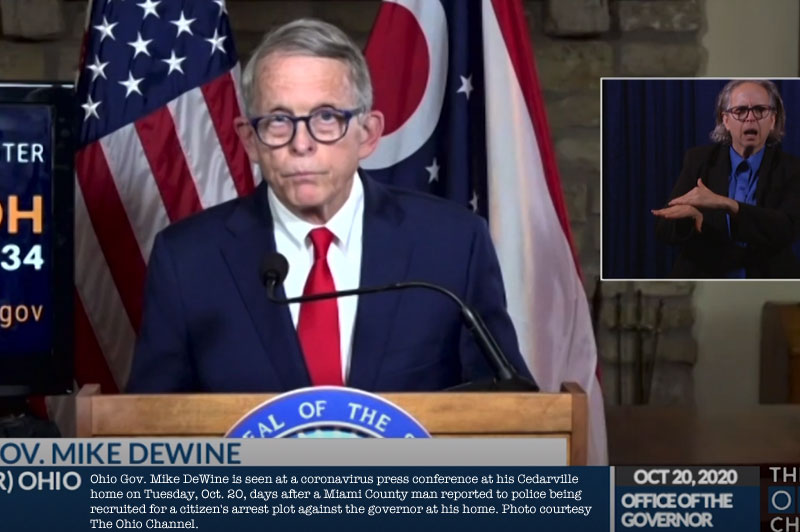
    Piqua, Ohio – A Miami County resident reported to police being recruited to take part in a citizen’s arrest of Gov. Mike DeWine at his Cedarville home a week ago, but the plot evidently never materialized.

    The plot is alleged to have involved Renea Turner, a former write-in candidate for governor who ran against DeWine in 2018. A state representative says he recently met with Turner prior to the alleged call and she inquired about the governor’s home, the Ohio Capital Journal has learned. 

    The Ohio State Highway Patrol, which handles security for the governor and his residences, was notified of the report by local law enforcement and is investigating. 

    At a press conference Friday afternoon to discuss allocation of CARES Act funding in Ohio, DeWine told reporters he was unaware of the alleged plot and had not been briefed on it to that point.

    This report to police came just a week after 13 men were arrested for reportedly planning to kidnap Michigan Gov. Gretchen Whitmer and it follows months of protests against DeWine and state health officials. 

    According to a Piqua Police Department report from Oct. 16, a citizen told an officer about being called earlier that morning by Turner, a Springfield native who is an outspoken critic of DeWine. Turner reportedly asked if they wanted to take part in an attempt to arrest the governor at his home later that weekend and try him for allegations of tyranny.

    The Ohio Capital Journal initially declined to identify Turner as the alleged caller, as law enforcement would not confirm if she had been under investigation or charged with a crime and she could not be reached by the Ohio Capital Journal for comment.

    The Ohio State Highway Patrol has been made aware of the police report but would not say if an investigation has been launched.

    Since the original publication of this story, Turner has spoken on the record with cleveland.com about the call, which she confirmed took place. She told the outlet that she did speak to the Miami County person about placing DeWine under house arrest, but reportedly denied discussing any specific plans. 

    The Capital Journal is not identifying the person who reported the incident to police after the person asked to remain anonymous for safety reasons, having already followed up with Piqua law enforcement about a threat made against them online.

    The person who reported the call told Ohio Capital News that the plot stemmed from anger toward the governor’s response to the COVID-19 pandemic. The person said they too are a critic of DeWine and claimed to have recently filed a citizen affidavit seeking criminal charges against the governor. State Rep. John Becker, R-Union Twp., who has led an impeachment effort against DeWine in the Statehouse, has urged Ohioans to submit such affidavits about the governor.

    “Do I think (DeWine) needs to be arrested? Absolutely,” the person said. “But all that needs to happen within the confines of the law.”

    They claimed they were initially excited when receiving the call last Friday, thinking the conversation would be about the ongoing search from DeWine critics to find a prosecutor willing to bring charges against him.

    “(The caller) said ‘no, we the people, we’re going to arrest him,’” the source said.

    According to this person, the caller described several supposed penalties for a citizen’s trial on tyranny — permanent exile or execution.

    According to this person, the caller described several supposed penalties for a citizen’s trial on tyranny — permanent exile or execution.

    Soon after the call, they decided to contact the police.

    “If I don’t do something about this and something happens, I’m either legally culpable or at least I’m going to feel bad,” they said. “Not that I have any love lost between me and Gov. Mike DeWine. Again, I think he needs to be in prison. But again, if (the caller) had done something … I would have felt ethically responsible, right?”

    State legislator says Turner recently asked about DeWine’s home in private chat

    Becker told the Capital Journal he met with Turner a few weeks ago in Columbus at her request to speak about theoretical criminal charges against the governor. While his focus has been on locating a willing prosecutor, he said Turner spoke about finding a county sheriff to make the arrest.

    “I just kind of shrugged my shoulders and said, ‘good luck with that,’” Becker recalled.

    Then came an unusual change in subject: Turner wanted to know more about the governor’s residence in Cedarville. Becker said Turner asked whether the personal residence constituted public property during DeWine’s term as governor.

    “It was kind of a strange question,” Becker said.

    John Becker aided Turner by providing information about DeWine’s residence and if it constituted public property.

    After the conversation ended, Becker asked Turner’s question to the Legislative Service Commission, a nonpartisan group which gives private law research to lawmakers. He learned the home remains a private residence, and passed that information along to her.

    Becker did not hear again from Turner after that. Earlier this week, he heard from the Miami County resident about the alleged plot. The person told him about Turner and Becker recognized her name from their recent meeting.

    Becker said he informed the Statehouse’s sergeant at arms about the situation when returning to work earlier this week. He later posted a YouTube video about the incident, referring to the person who reported the call to police as a “hero.”

    Becker confirmed to the Capital Journal he was contacted by the Ohio State Highway Patrol on Friday. The lawmaker said he described to the Patrol his interactions with Turner and the Miami County resident.

    Piqua Police Chief Rick Byron told the Capital Journal on Thursday the citizen’s report was turned over to the Patrol.

    “At this point, we have not followed up with them and have no plans to do so,” Byron said, noting the alleged caller is not from Piqua and therefore his department does not have jurisdiction. “We’re pretty confident that (the Patrol is) going to handle this situation.”

    Dan Tierney, a spokesperson for the governor’s office, referred questions about the situation to the Patrol.

    In a brief statement on Thursday, Lt. Tiffany Meeks told the Capital Journal: “For security, the Patrol does not discuss threats or security operations involving the governor.” The Patrol later confirmed to the Dayton Daily News it was “currently investigating the incident.”

    Cleveland.com quoted Turner on Friday as saying officials with the Patrol came to her home that morning “to check out my temperament and what my plans are.”

    Since the report was made on Oct. 16, the governor has hosted three press conferences at his Cedarville home: his traditional virus-related updates on Oct. 20 and 22, and the CARES Act press conference with legislative leaders on Friday.

    After this story was first published, reporters asked DeWine during his CARES Act press conference about his reaction to the alleged plot.

    “I don’t know the details of the so-called plan,” he said. “I can’t really comment on that.”

    Asked if he was shocked to learn about such a plot, DeWine answered: “No. I’m not shocked by it. At this point in my life, not much shocks me anymore. It’s a sad thing.”

    This is the latest in a series of alleged plots targeting political leaders in 2020 for their responses to the pandemic. In Michigan, state and federal law enforcement foiled a plot to kidnap and try Gov. Whitmer, with seven of the men being charged under the state’s anti-terrorism law. 

    Police in that case have alleged the Whitmer plot was hatched in a meeting held in Dublin, Ohio this summer. The same groupof men also hoped to target Virginia Gov. Ralph Northam. 

    There is no known connection between these plots and the one reported in Piqua.

    Turner is former governor candidate

    Turner, of Springfield in Clark County, campaigned for governor as a write-in candidate in 2018. 

    Turner encountered DeWine on the campaign trail, later posting a picture of themselves together to social media. A post on her Facebook page claims she pretended to be a supporter of DeWine’s, then told him after the picture was taken she was actually campaigning against him.

    Turner received 185 votes in the 2018 general election, including one from the person who later reported her call to Piqua police. 

    Turner has shared several posts from state Rep. Nino Vitale, R-Urbana, who has made headlines throughout 2020 for posting falsehoods about the virus — such as an April claim that it may have been created by Bill Gates. 

    Turner received 128 more votes as a write-in candidate for Springfield mayor in 2019 before turning her attention back to DeWine amid the coronavirus pandemic. 

    Her social media pages are littered with conspiracy theories involving the virus, government microchips and vaccine mandates. Many of the posts have been flagged by Facebook as spreading misinformation.

    Turner has shared several posts from state Rep. Nino Vitale, R-Urbana, who has made headlines throughout 2020 for posting falsehoods about the virus such as an April claim that it may have been created by Bill Gates. 

    Turner shared one post by Vitale from May 18, in which he accused DeWine of “giving himself total dictatorial power.” Vitale also falsely suggested the governor knew about the virus in March 2019, many months before the novel coronavirus was ever discovered. 

    In July, Turner posted photos of herself protesting health orders at the Ohio Statehouse with a signs referring to the governor as Hitler. 

    Turner took to the Statehouse again on Thursday, proclaiming she had removed the governor from office through a self-issued declaration. A video shared to Facebook shows Turner taking an oath of office, with a signed sheet of paper claiming her to be the next governor of Ohio. 

    Turner did not address the Thursday incident in her interview with cleveland.com.

    ‘It’s wrong morally, it’s wrong legally’

    DeWine reiterated on Friday that the plot against Whitmer was “despicable” and added he denounced any effort by people to subvert the legal system and target public officials.

    “We are seeing people out there who believe that,” the governor said. “We have an obligation, each one of us as elected officials, opinion leaders, to denounce that and say ‘that is wrong.’ It’s wrong morally, it’s wrong legally, it’s anti-democratic, it’s anti-everything this country stands for.”

    While DeWine has enjoyed widespread, bipartisan support throughout 2020 for his response to the pandemic, his administration has also been the subject of intense condemnation. Four legislators have endorsed his impeachment, and dozens of others have supported various bills seeking to limit the executive’s power to handle an infectious disease.

    Ohio Gov. Mike DeWine in a Zoom call with reporters in August outside his Cedarville home. Screenshot by Marty Schladen, Ohio Capital Journal.

    Repeated protests at the Statehouse led DeWine to move his press conferences from Capitol Square to a government building elsewhere due to “security reasons,” WKYC reported in April.

    That same month, Cleveland.com reported that Ohioans protesting the state’s public health orders were seen “driving by DeWine’s Greene County house, filming it and counting cars.” The outlet quoted a DeWine spokesperson as saying security officials were aware of this surveillance but could not comment further.

    In May, protesters repeatedly targeted the home of Dr. Amy Acton, who was then serving as director of the Ohio Department of Health. There were reports that some of the protesters were armed with guns, and one person was photographed carrying an anti-Semitic sign. Not long after, Acton resigned as state health director.

    In May, protesters repeatedly targeted the home of Dr. Amy Acton, who was then serving as director of the Ohio Department of Health. There were reports that some of the protesters were armed with guns, and one person was photographed carrying an anti-Semitic sign. Not long after, Acton resigned as state health director.

    The state has been without a permanent health director in the months since. A replacement was announced in September, but the person selected withdrew from consideration after learning of the harassment leveled against Acton. The Ohio Department of Health continues to be led by an interim director.

    Also in May, Democratic House Minority Leader Emilia Sykes reported a phone call to police threatening to kill her father, state Sen. Vernon Sykes, if she did not “step aside” politically.


    (This story was edited by Loveland Magazine)


    Tyler Buchanan

    Tyler Buchanan is an award-winning journalist who has covered Ohio politics and government for the past decade. A Bellevue native and graduate of Bowling Green State University, he most recently spent 6 1/2 years as a reporter and editor of The Athens Messenger and Vinton-Jackson Courier newspapers. He is a member of the BG News Alumni Society Board and was a 2019 fellow in the Kiplinger Program in Public Affairs Journalism.
  • Early voting in Ohio began yesterday. Here’s where you can go to vote

    Early voting in Ohio began yesterday. Here’s where you can go to vote

    By Tyler Buchanan with Ohio Capital Journal and David Miller with Loveland Magazine

    Yesterday was the first day Ohioans could cast their ballots for the 2020 General Election.

    For those not wanting to wait for Election Day on Nov. 3, or have concerns about voting in-person due to the pandemic, Ohio offers several other ways to vote early.

    Voting by mail

    Ohioans can vote by mail if they first request an absentee ballot. Those ballots were being mailed out to voters beginning on Tuesday and they should be received soon.

    The ballots are to be mailed back to a voter’s county board of elections office or taken to the local offices.

    If you haven’t yet requested a ballot, there is still time. Click here for a copy of the form. 

    Voting by drop box

    Ohioans who requested an absentee ballot can drop off their ballot rather than mailing it.

    Each county has a drop box located at its board of elections office.

    The boxes must be secure and available to voters for 24/7 access.

    Clermont County – 76 S. Riverside Drive in Batavia

    Hamilton County – 4700 Smith Road in Norwood

    Warren County – 520 Justice Drive in Lebanon

    Ohioans can drop off both absentee ballot requests and their ballots themselves to these boxes. Boards of elections have been given rigid guidelines requiring that both a Democratic and Republican election official be present when the box’s contents are retrieved. The boxes are emptied once per day.

    Drop box access is available through 7:30  PM on election night.

    The below map displays the location of each elections office throughout Ohio. 

  • The search continues for a new state health director, DeWine says

    The search continues for a new state health director, DeWine says


    Tyler Buchanan

    Tyler Buchanan is an award-winning journalist who has covered Ohio politics and government for the past decade. A Bellevue native and graduate of Bowling Green State University, he most recently spent 6 1/2 years as a reporter and editor of The Athens Messenger and Vinton-Jackson Courier newspapers. He is a member of the BG News Alumni Society Board and was a 2019 fellow in the Kiplinger Program in Public Affairs Journalism.
  • GOP lawmaker Rep. John Becker wants to see if DeWine can be criminally charged

    GOP lawmaker Rep. John Becker wants to see if DeWine can be criminally charged

    State Rep. John Becker, R-Union Twp (Photo from Ohio House website)
    vvvv

    vvvv

    With his impeachment effort against the governor making little progress, state Rep. John Becker pulled up his email and brainstormed a late-night solution.

    It was almost 2 a.m. when Becker typed out a request to the Legislative Service Commission, a nonpartisan group that conducts law and policy research for lawmakers. 

    Becker is among the biggest critics of DeWine in the state legislature

    “I believe that Governor DeWine is in violation of (Ohio Revised Code) 2921.45,” Becker wrote in the Sept. 1 email. “What is the process for criminal charges to be filed? Can the (Attorney General) do that? Other options?”

    Still waiting for an answer, Becker sent another 2 a.m. request a few days later. He sought more “legislative history and legal case law” involving the 2921.45 section of code.

    The law states: “No public servant, under color of his office, employment, or authority, shall knowingly deprive, or conspire or attempt to deprive any person of a constitutional or statutory right.” Violators are guilty of a first-degree misdemeanor, punishable by up to 180 days in jail and a $1,000 fine. 

    Becker is among the biggest critics of DeWine in the state legislature and views the governor’s response to COVID-19 as amounting to a “constitutional crisis.” The decision to delay primary election voting, the temporary closure of some businesses, the mask mandate — to Becker, these are the instances of DeWine assuming “dictatorial powers” and violating Ohioans’ constitutional rights.

    Becker wants to see if DeWine can face criminal punishment for his pandemic response.

    “My goal is to get the state opened up and the abuse of power to come to an end,” Becker said to the Ohio Capital Journal.

    Impeachment and criminal charges?

    Throughout 2020, DeWine has relied on a separate section of state law which gives the Ohio Department of Health authority to make “special or standing orders … for preventing the spread of contagious or infectious diseases.” 

    On Aug. 24, Becker announced he had drafted articles of impeachment against DeWine. Three fellow Republican legislators immediately gave support for impeachment: Reps. Nino Vitale of Urbana, Candice Keller of Middletown and Paul Zeltwanger of Urbana.

    There have been a slew of lawsuits and legislative challenges to that authority. Becker sponsored one of the first bills seeking to limit the power of the state health director and many other Republican-sponsored bills have followed. DeWine has vowed to veto any such bill which interferes with the state’s pandemic response. 

    On Aug. 24, Becker announced he had drafted articles of impeachment against DeWine. Three fellow Republican legislators immediately gave support for impeachment: Reps. Nino Vitale of Urbana, Candice Keller of Middletown and Paul Zeltwanger of Urbana.

    “For my colleagues, it’s put up or shut up,” Becker said. 

    Becker claims there was support for impeachment from at least one Republican member who wound up not joining as a sponsor.  

    There was swift backlash from Ohio Republican leaders the day articles were drafted, which Becker thinks quashed any desire for others to join the effort.

    “Nobody wants to touch it,” Becker said. 

    Becker had planned to officially file the articles a week or so after drafting them, but instead is holding off. Once they are filed, no one else can sign on as a sponsor. He’s holding out hope that legislative sentiments may change before the end of 2020. 

    It would take a majority vote from the Ohio House of Representatives to impeach DeWine, then a two-thirds vote from the Ohio Senate to convict him. With only four representatives currently on board, they are 46 supporters short.

    Speaker of the House Bob Cupp, R-Lima, has come out against the impeachment effort, saying that policy disagreements do not rise to the level of removing the governor. 

    “For my colleagues, it’s put up or shut up,” Becker said.

    In a recent YouTube video, Becker acknowledged his colleagues believe the disagreements should be resolved legislatively rather through impeachment. 

    “Frankly I agree,” Becker said. “Legislation was the way to do it and we have tried that, and the governor has promised to veto everything that we’ve put out there attempting to roll back his power.”

    Beyond impeachment, Becker alleges the governor has committed a number of crimes. Among them: that DeWine illegally canceled and rescheduled the primary election.

    Hours before the polls were set to open Ohio Department of Health Director Dr. Amy Acton signed an order preventing the polling places from opening. DeWine and Acton feared holding an in-person election would lead to the virus spreading.

    Ohio primary election dates are set by the state legislature. Lawmakers unanimously approved a new primary election plan involving an all-mail vote conducted throughout all of April. Becker voted for that plan.

    Becker also alleges the mask mandates at churches, public places and businesses are in violation of Ohioans’ civil liberties.

    Becker also alleges the mask mandates at churches, public places and businesses are in violation of Ohioans’ civil liberties. 

    In May, the U.S. Supreme Court denied a request that it block a California law restricting crowd sizes at church services.

    Chief Justice John Roberts, an appointee of President George W. Bush, wrote in the majority opinion that the church restrictions were level with social distancing requirements at other public gatherings. Given the lack of treatment, cure, vaccine or sufficient knowledge about the new disease, he wrote, it’s too early to deem the restrictions unconstitutional.

    “Although California’s guidelines place restrictions on places of worship, the restrictions appear consistent with the Free Exercise Clause of the First Amendment,” he wrote.


    Tyler Buchanan

    Tyler Buchanan is an award-winning journalist who has covered Ohio politics and government for the past decade. A Bellevue native and graduate of Bowling Green State University, he most recently spent 6 1/2 years as a reporter and editor of The Athens Messenger and Vinton-Jackson Courier newspapers. He is a member of the BG News Alumni Society Board and was a 2019 fellow in the Kiplinger Program in Public Affairs Journalism.