Tag: U.S. Supreme Court

  • The bedeviling details: Roe decision leaves Ohio health providers scrambling

    The bedeviling details: Roe decision leaves Ohio health providers scrambling

    BY: MARTY SCHLADEN – Ohio Capital Journal

    Abortion foes celebrated victory in a 50-year fight on June 24, when the U.S. Supreme Court overturned Roe v Wade and allowed states to severely restrict — or even eliminate — women’s access to abortion. But for those who care for pregnant women, the ideological victory posed a swarm of burdensome questions they haven’t begun to answer.

    Jason Sayat, a Central Ohio OB-GYN, said the Friday the decision came down started as any other. He and his colleagues juggled a full office load with duties in the labor-and-delivery ward. 

    “Then we were hit with the information that Roe v Wade was reversed,” he said, describing how through the rest of the day they dealt with not just patients’ medical conditions, but also their fears about what the cancellation of a constitutional right to abortion meant for them.

    Within hours, the confusion increased when Attorney General Dave Yost filed a motion to lift an injunction against a 2019 Ohio law prohibiting abortions after six weeks of pregnancy — a point at which as many as a third of women don’t even know they’re pregnant

    Sayat said “it really put things dramatically and quickly into focus in terms of how these restrictions were well in place within hours.”

    The six-week ban is far from the only abortion restriction that could be coming down the pike in Ohio. One lawmaker says she has the votes and support of Gov. Mike DeWine to ban almost all abortions, even in the case of rape or incest.

    The flurry of anti-abortion laws and proposals has Ohio’s major health systems on their heels. 

    Individual practitioners such as Sayat, who declined to name his employer, are saying they need to know that Ohio health systems will have their backs in the months ahead. But he said that as of last week, “we’re still waiting for directives.”

    He explained that while the political debate over abortion tends toward the simplistic, caring for pregnant women in the real world is anything but.

    For example, Ohio’s six-week law allows later abortions if there’s a “medically diagnosed condition that so complicates the pregnancy of the woman as to directly or indirectly cause the substantial and irreversible impairment of a major bodily function.” But who determines whether those conditions have been met? The Department of Health? The police?

    “What this has all come down to is the violation or disruption of personal medical decision-making between the decisions of the patient and their trusted health care team or physician,” Sayat said. “It’s so individualized and complex that laws like this can’t apply to that. It’s not as black-and-white.”

    And, he said, in situations where continuing a pregnancy is incompatible with the health of the mother, doctors and patients need to be able to make decisions “without fear of reprimand or imprisonment on felonious charges.”

    The American Medical Association didn’t mince words in the wake of the Supreme Court decision overturning Roe v Wade.

    The organization “is deeply disturbed by the U.S. Supreme Court’s decision to overturn nearly a half century of precedent protecting patients’ right to critical reproductive health care — representing an egregious allowance of government intrusion into the medical examination room, a direct attack on the practice of medicine and the patient-physician relationship, and a brazen violation of patients’ rights to evidence-based reproductive health services,” AMA President Jack Resneck Jr. said the day of the decision. “States that end legal abortion will not end abortion—they will end safe abortion, risking devastating consequences, including patients’ lives.”

    Ohio’s major hospital systems — operating in a state dominated by anti-abortion officeholders — have been much more cautious in their public statements. 

    The Capital Journal last week asked them four questions:

    • Will your organization provide out-of-state abortion care to your employees should they need it?
    • Will it defend practitioners making medically sound decisions — for example, terminating a pregnancy to protect the mother — to the fullest extent should they be accused of violating current or future restrictions on abortion in Ohio?
    • Are you concerned that current or future restrictions might make it more difficult to attract and retain talented practitioners?
    • Does your organization believe that, in restricting abortion, lawmakers and the courts are inserting their religious beliefs into the doctor-patient relationship?

    Many responded by saying they don’t have any answers yet. Tausha Moore of Toledo-based ProMedica gave a typical response.

    “Regarding your inquiry, we are in the process of evaluating recent changes to better understand the impact they will have on health care in the communities we serve,” she said in an email.

    Marti Leitch of Ohio State’s Wexner Medical Center made a similar statement.

    “Ohio State is closely examining the decision from the Supreme Court and changes in state law,” she said. “If necessary, the medical center and College of Medicine will make adjustments to be in compliance with the law.”

    Dorsena Drakeford of Cleveland’s MetroHealth also said her system is also reviewing the situation.

    Amanda Nageleisen of the University of Cincinnati Health System also said it was continuing to review the situation, but “We remain deeply committed to the sanctity of the patient-health care provider relationship and will balance patients’ and health care providers’ interests in accordance with all federal and state laws.”

    It appears that a big question the state’s hospital systems are grappling with involves ending pregnancies when they’re deemed medically necessary.

    “While OhioHealth hospitals and clinics have not and do not provide elective termination procedures, we acknowledge that there are times when the life and safety of a patient may be threatened by acute medical complications, even early in pregnancy,” spokeswoman Stephanie Stanavich said in an email. “We will continue to offer care to our patients within the confines of any new regulatory landscape and always within the best practice standards of care.”

    As the big hospital systems formulate their policies, Sayat, the OB-GYN, said he hopes they keep practitioners in mind.

    “I think that the biggest part is that we as providers need to feel supported and feel like we have the resources to navigate the complexity of scenarios we’re presented with,” he said.
  • Ohio Supreme Court denies attempt to stop abortion ban

    Ohio Supreme Court denies attempt to stop abortion ban

    BY: SUSAN TEBBEN – Ohio Capital Journal

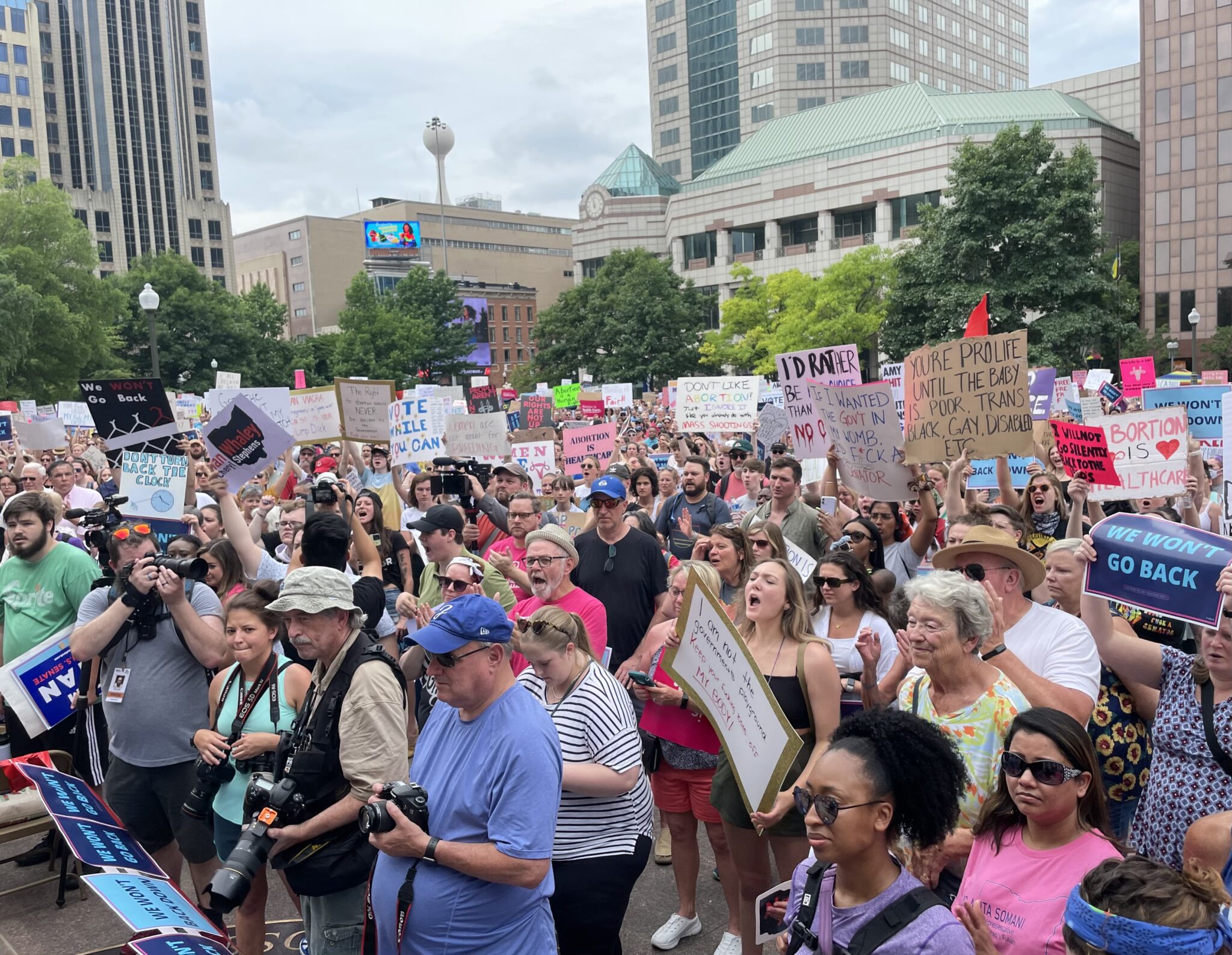
     Protesters gathered at the statehouse to voice opposition to the Dobbs decision overturning Roe v. Wade. (photo by Nick Evans)

    The Ohio Supreme Court has denied an attempt by abortion clinics to stop a six-week abortion ban from being enforced.

    In a Friday ruling, the court denied a motion for an emergency stay of Senate Bill 23, legislation signed into law in 2019 that banned abortion up to six-weeks gestation.

    The lawsuit is still ongoing, but denial of the emergency stay means abortion clinics won’t be able to conduct abortions past six weeks as the case continues. The announcement did not indicate whether the denial was unanimous.

    The court asked for responses by Thursday to the lawsuit’s request to stay the law, and received briefs from state officials, prosecutors and academics.

    In a “friend of the court brief” filed Thursday, professors of public health, sociology, epidemiology and public affairs from The Ohio State University and the University of Cincinnati joined with the ACLU and Planned Parenthood in pushing for an end to Senate Bill 23, which was implemented on Friday, hours after the U.S. Supreme Court overturned Roe v. Wade.

    “Instead of reflecting the Ohioan majority view that supports abortion rights, SB 23 caters to the minority fraction of Ohioans that are unsupportive of these rights,” the brief states.

    The researchers cite polling data on support of abortion rights from three different universities: Suffolk University, Baldwin Wallace University and Quinnipiac University. All of the surveys found a majority of survey-takers supported abortion rights, and the professors argued that the polls proved that public opinion is on the side of abortion rights.

    “While abortion attitudes arise out of complex combination of interlocking feelings toward gender, religion, politics, morality, science and many other facets, SB 23 allows from none of this nuance,” the professors wrote.

    Prosecutors from Cuyahoga County and Franklin County aren’t going to stand in the way of the lawsuit. Both Michael O’Malley and Gary Tyack filed documents with the court saying they “do not oppose” granting an emergency stay of the law.

    O’Malley previously signed on to a letter with other national prosecutors and attorneys pledging not to enforce abortion bans following the Supreme Court decision.

    Attorney General Dave Yost also responded to the lawsuit, calling the request for emergency stay of the law “substantively and procedurally flawed,” citing the Roe v. Wade ruling last week in Dobbs v. Jackson Women’s Health Org.

    “With this holding, the court extricated itself from having to repeatedly decide policy matters that the Constitution leaves to the states and the political branches,” Yost wrote.

    Any contention that Ohio’s constitution holds the right to abortion is “indefensible,” the attorney general stated, “no matter the theory of constitutional interpretation one might embrace.”

    Follow OCJ Reporter Susan Tebben on Twitter.

  • Ohio Attorney General Yost files for 6-week abortion ban as Roe is overturned

    Ohio Attorney General Yost files for 6-week abortion ban as Roe is overturned

    Advocates pledge renewed fight for abortion access

    BY: SUSAN TEBBEN AND NICK EVANSOhio Capital Journal

    As Ohio Attorney General Dave Yost filed court motions to enact Ohio’s six-week abortion ban, a motley bunch of protesters gathered near the Ohio Statehouse on Friday in a tiny sliver of shade cast by the William McKinley statue.

    They held signs declaring “abortion is healthcare” or “abortion is a human right.” Another read “our democracy, it is broken.”

    Ohio Attorney General Dave Yost. (Photo by Justin Merriman/Getty Images)

    Cheri Wells stood next to her one-year-old daughter, Lux, who was strapped into a stroller.

    “I brought my daughter down here because this absolutely has everything to do with her, too,” she said.

    “It’s taking away her rights to overturn Roe vs. Wade, as well,” she said. “I mean, it’s all about controlling women, period.”

    Advocates surge ahead

    Advocacy groups and leaders for and against abortion spoke out on the U.S. Supreme Court’s ruling overturning the nationwide right to abortion included in Roe v. Wade.

    Religious and anti-abortion groups praised the decision that overturned abortion legalization that had been in place since the early 1970s, and continued their push for prohibitions in Ohio.

    “Ohio Right to Life encourages our pro-life legislative majorities and Governor DeWine to be ambitious and end abortion once and for all in our great state,” said anti-abortion lobby Ohio Right to Life’s president Michael Gonidakis.

    The anti-abortion groups have state leaders on their side, as Gov. Mike DeWine promised backing for the six-week ban that has been tied up in federal court, and Attorney General Yost put the wheels in motion for that ban to become effective.

    In a motion filed less than an hour after the Dobbs decision was released by the U.S. Supreme Court, Yost’s office asked to dissolve the injunction that kept the state abortion ban from going into effect in 2019 when it was passed by the Ohio General Assembly.

    “Because there exists no just reason for delay, defendants respectfully request this court immediately dissolve the preliminary injunction and dismiss this case,” Yost wrote in the motion to the U.S. District Court for the Southern District of Ohio.

    Later Friday night, a court granted the motion, and Gov. Mike DeWine signed an executive order permitting the Ohio Department of Health to set rules for the law.

    Those in the pro-abortion realm are not sitting on their laurels after the much-anticipated decision came through.

    In a Friday afternoon press call, members of Planned Parenthood of Ohio said while the ruling had been expected, even before a draft opinion leaked to the public, the results were no less devastating.

    “Ohioans should not have to figure out how to safely provide health care for themselves,” said Iris Harvey, president and CEO of Planned Parenthood of Greater Ohio. “It’s an attack on your rights, an attack on your privacy and your freedom.”

    Though abortion is now legal at six weeks rather than 20 weeks after a missed period, pro-abortion advocates maintained a message that until a court rules or another ban is put in place, abortion is still legal in the state of Ohio.

    Case Western Reserve University law professor Jessie Hill, who has worked on cases defending reproductive rights, said there “are still legal moves to be made” and lawyers intend to continue pursuing options.

    One way in which Hill said abortion advocates can move forward is by giving advice that is protected under the First Amendment.

    “The state can not, as a general matter, ban truthful, factual information,” Hill said.

    Working within the state’s legal system is also in the playbook to keep abortion legal.

    “Our in-state strategy ensures that we protect the Ohio Supreme Court, which has been a backstop for securing reproductive justice,” said Rhiannon Carnes, co-founder and co-executive director of the Ohio Women’s Alliance Action Fund.

    The group is working with partners to “implement harm reduction measures to ensure that people who need an abortion can obtain the essential health care they deserve,” according to a statement by the OWA. A “voter education plan is also” being launched as the August 2 primary and November general election approach.

    “We are all coming together to build independent political power against those stigmatizing abortion and forcing their political objective on our lives and bodies,” Carnes said in the statement.

    One Small Step

    In the Ladies Gallery at the Ohio Statehouse, a group of anti-abortion activists held a press conference to applaud the Dobbs decision. The room, set aside to honor the achievements of women in Ohio politics, regularly hosts events of all kinds, but the setting wasn’t lost on the speakers.

    Beth Vanderkooi of Greater Columbus Right to Life described abortion as a “systemic injustice” meant to discriminate against women.

    “True advocates for women’s rights would work together to bring down these injustices rather than tell women that their path to equality, to liberty and to freedom, rests on the dismembered bodies of their dead children,” she said.

    The organizers sought to cast Friday’s decision as a watershed achievement for civil rights, comparing it to the reversal of Dredd Scott and Plessy and invoking the words of Martin Luther King, Jr. They also propped it up as a landmark historical event on the order of the moon landing or D-Day.

    “It’s one small step for babies,” Created Equal vice president Seth Drayer insisted, “one massive leap for humankind, because Dr. King famously said that injustice anywhere is a threat to justice everywhere.”

    While abortion advocates prepare for their next moves, Created Equal’s president Mark Harrington said their fight was far from over. Invoking Winston Churchill, he called the Dobbs decision “the end of the beginning.”

    That posture certainly means advocating for greater restrictions or even the elimination of abortion at the state level, but given Justice Clarence Thomas’ suggestion that the court should next revisit rulings on the legality of same-sex marriage and relationships, as well as contraceptives, some worry the right to an abortion is far from the only one under threat.

    Despite promising continued action, Harrington distanced his organization from Thomas’ remarks.

    “The idea that one justice which we may or may not agree with on these other issues, says that from the bench in his opinion, doesn’t really matter unless the court actually has a case,” Harrington said. “And there’s no future that I can see where that’s actually going to occur in the short term.”

    While Harrington and others who spent years fighting abortion look to the future with the wind in their sails, people like Cheri Wells are looking ahead with uncertainty. The leak of Justice Samuel Alito’s draft opinion in Dobbs may have undercut the shock of the decision, but the despair is just as deep.

    “For some reason, in the back of my mind,” she said, “I thought someone was gonna save us.”

  • Ohio abortion bans on the way following death of Roe

    Ohio abortion bans on the way following death of Roe

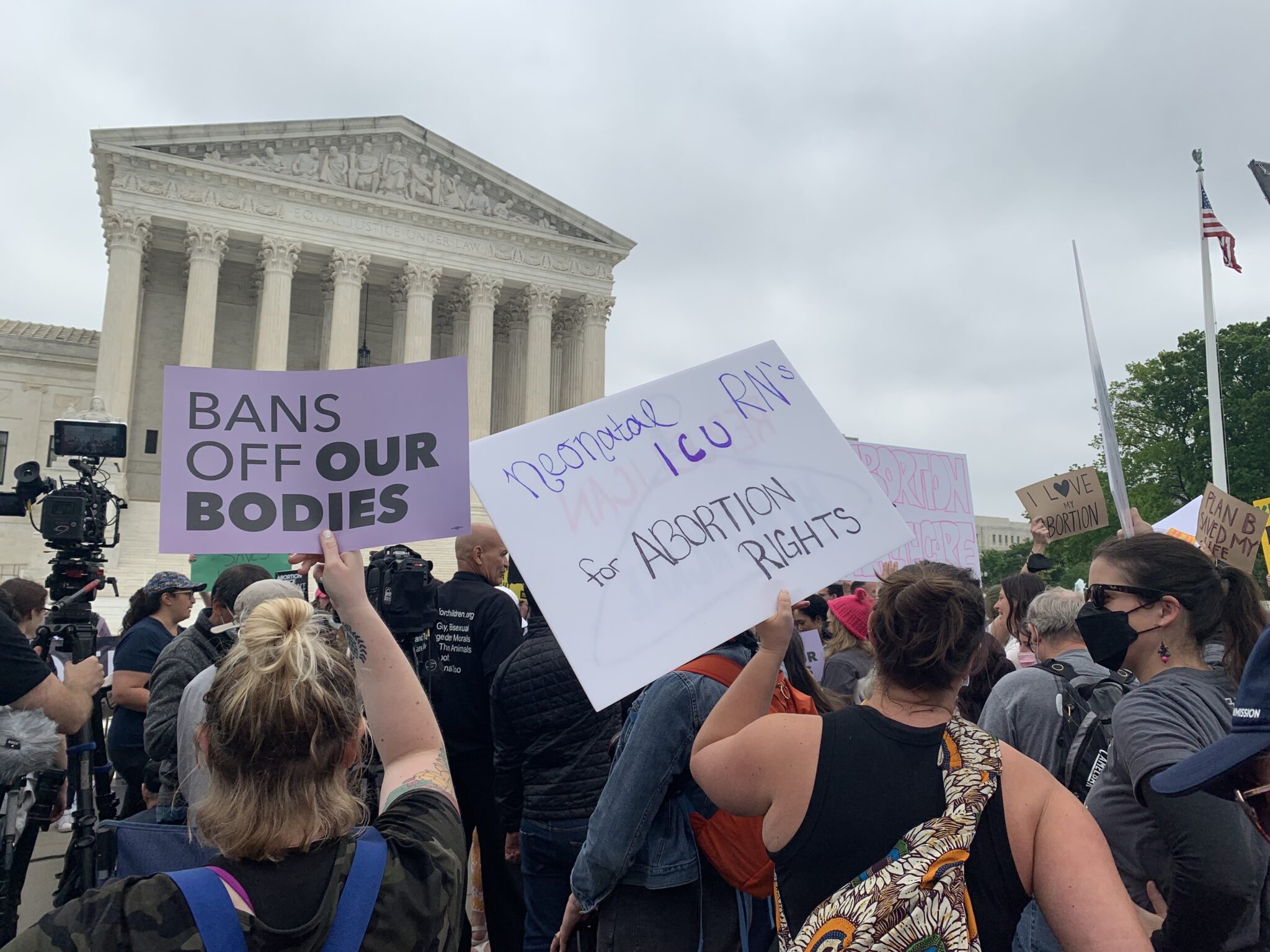
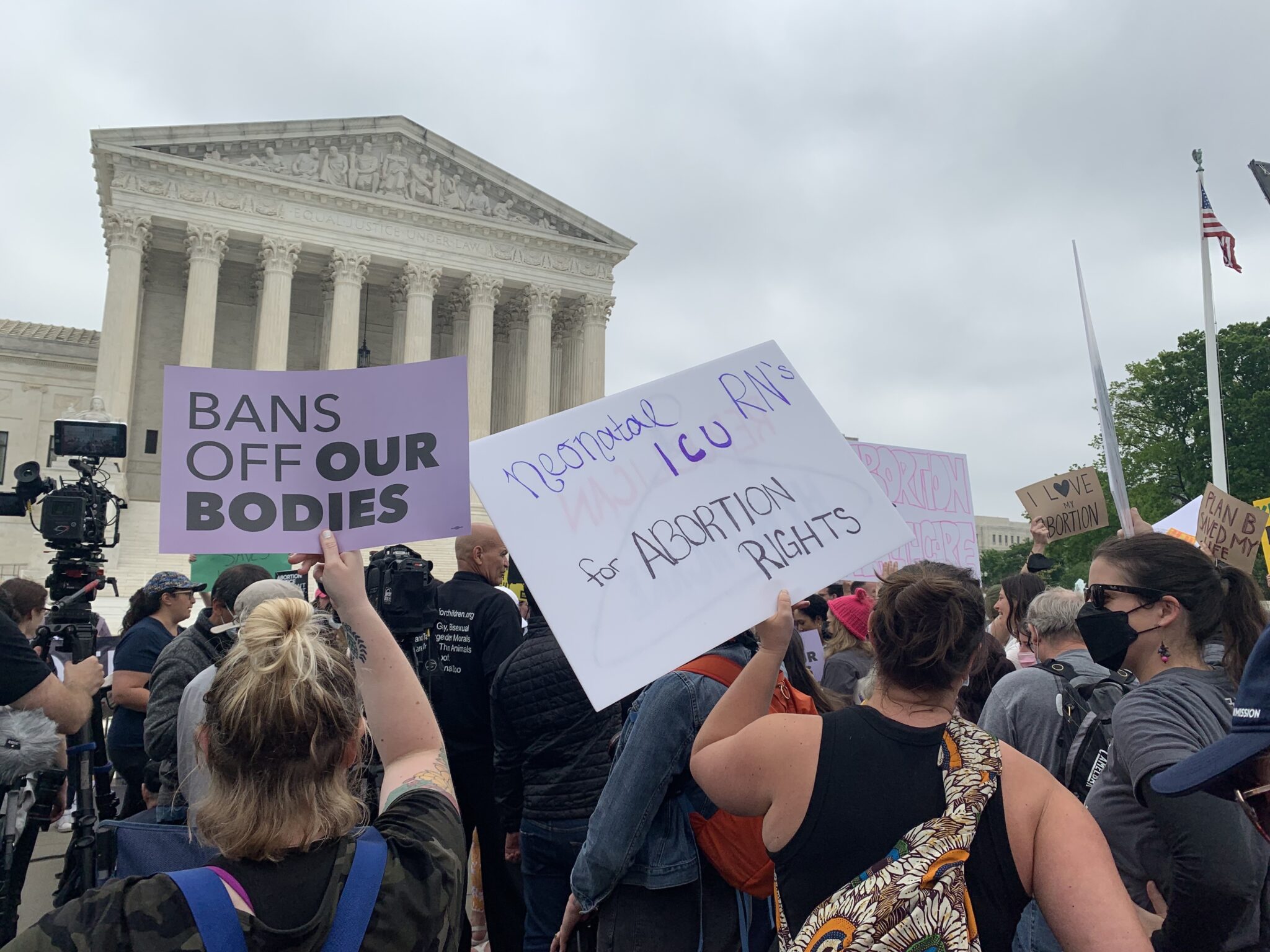
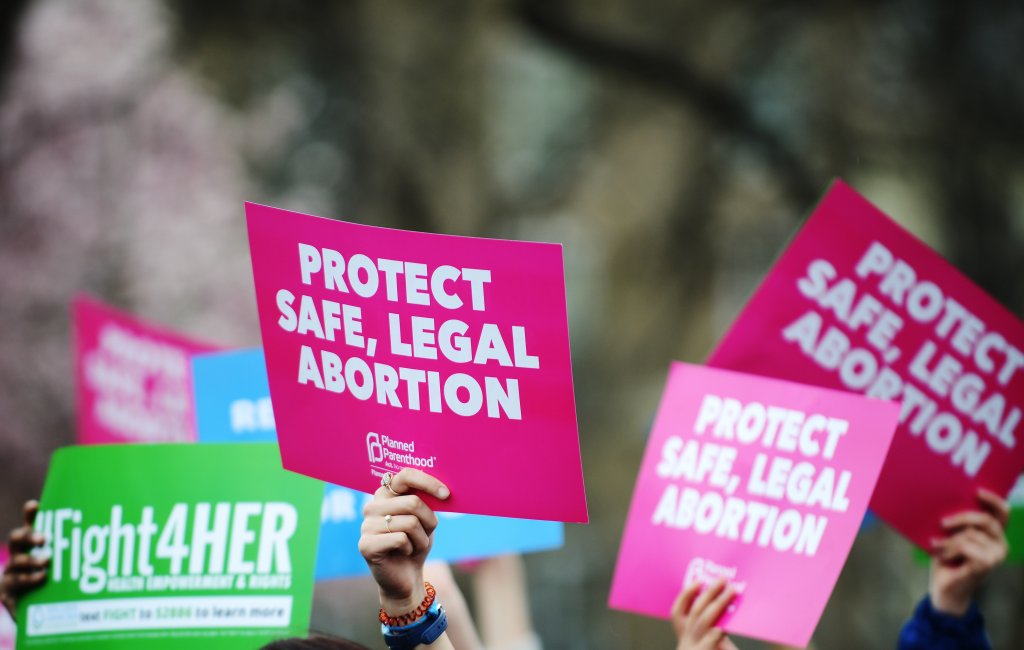
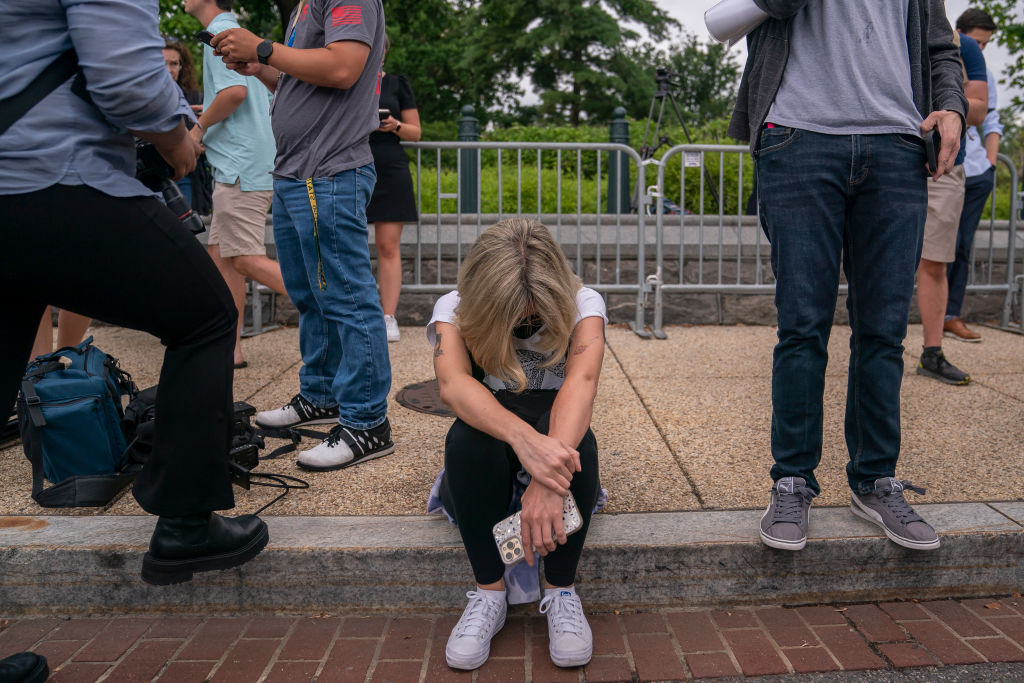
    Abortion rights activists protest outside the U.S. Supreme Court. Photo by Jane Norman, States Newsroom.

    BY: SUSAN TEBBEN – Ohio Capital Journal


    Now that Roe v. Wade has been overturned by the U.S. Supreme Court, the Ohio legislature is set up to move forward with abortion bans in the state.

    The U.S. Supreme Court ruled Friday morning that “The Constitution does not confer a right to abortion; Roe and Casey are overruled; and the authority to regulate abortion is returned to the people and their elected representatives.”

    Legislative leaders said they were prepared to wait until the decision was released before moving forward with legislation to eliminate abortion services. As of Friday night, abortion is legal in Ohio up to six weeks into a pregnancy.

    “The most important thing that Ohioans need to know today is that abortion is still legal in Ohio,” said Kellie Copeland, executive director of Pro-Choice Ohio. “There are nine clinics across the state and several in neighboring states that can safely and legally provide abortion care for patients. Today’s ruling is devastating, but it is not the end.”

    Gov. Mike DeWine agreed that it would be “prudent” to wait until the Dobbs decision was made, and implement the previously-passed six-week abortion ban before moving on to new legislation.

    “While noting those conditions, the Governor has expressed support for additional legislation depending on the details of the Dobbs decision,” a spokesperson for DeWine told the OCJ.

    The Ohio Policy Evaluation Network, a group of researchers working with The Ohio State University, the University of Cincinnati and Case Western Reserve University, said in a fact-sheet that it expects Ohio to ask for immediate implementation of the six-week abortion ban enacted in 2019.

    The ban does not include exceptions for rape or incest, and only allows doctors to present an “affirmative defense,” legal arguments that could only come into play after a doctor has been charged with an offense, if the life of the pregnant person was at risk at the time of the abortion. The defense only works if the abortion happened in a hospital, and does not allow for risks that involve mental health.

    Columbus-area OB/GYN Dr. Anita Somani said a ban at six weeks could eliminate the chance of an abortion before a pregnant person is aware of the pregnancy.

    “If you don’t know you’re six-weeks pregnant, and you find out at eight or 10 weeks, then you have to look at going to a neighboring state,” Somani said. “At that point, you have to have money and time, as a patient, when you may have other children or just can’t afford it.”

    The most recent abortion trigger ban, House Bill 598, was introduced by state Rep. Jean Schmidt, R-Loveland, would make abortion a fourth-degree felony, and promotion of abortion a misdemeanor offense.

    The charges are targeted at the medical professionals providing the abortions, and provides no exemptions for cases of incest or rape. “Affirmative defenses” would be allowed in cases where the pregnancy presented a serious risk to the pregnant person.

    Civil lawsuits could also be filed against physicians who perform abortions under the bill, and medical licenses could be at risk.

    Senate President Matt Huffman celebrated the decision as “a long overdue turning point in our nation’s history.”

    “I look forward to reviewing the specific details in the opinion, so that as we move forward, any legislation we pass in the Ohio Senate follows the guidance of the court, protecting life, and upholding the Constitution,” Huffman said.

    House Speaker Bob Cupp said in a Friday statement that the “process of reviewing the decision is underway, including what steps should be taken at the state level and the timeline for doing so.”

    “We will be working closely with Governor DeWine, Attorney General Dave Yost and our colleagues in the Ohio Senate on this matter,” Cupp’s statement read.

    DeWine has been consistently pro-life in his support of legislation and funding choices, including an executive order that allocated $3 million in Temporary Assistance for Needy Families (TANF) dollars to organizations who assisted pregnant Ohioans without promoting abortion as an option.

    Attorney General Dave Yost said the decision “returns abortion policy to the place it has always belonged: to the elected policy branches of government.”

    “Roe was poorly reasoned, a doctrine of shifting sands that invited perpetual litigation,” Yost said in a statement.

    Meanwhile, the impacts of abortion bans in the state could create significant health care barriers and increased transportation costs to access care, according to researchers. These impacts could disproportionately impact low-income communities and people of color.

    Iris Harvey, CEO and president of Planned Parenthood of Greater Ohio, said the Supreme Court decision will give politicians power over Ohio bodies, including how they receive care.

    “This dangerous and chilling decision can have devastating consequences in Ohio, forcing people to travel hundreds, sometimes thousands, of miles for care or remain pregnant,” Harvey said in a statement.

  • U.S. Supreme Court overturns right to abortion in landmark decision

    U.S. Supreme Court overturns right to abortion in landmark decision

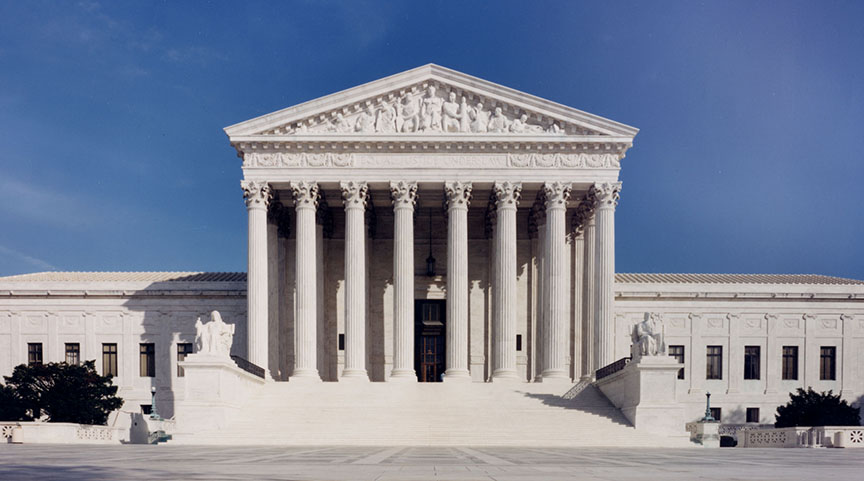
    The U.S. Supreme Court. Photo from Supreme Court website.

    BY: JENNIFER SHUTT – Ohio Capital Journal

    WASHINGTON — The U.S. Supreme Court on Friday overturned the 1973 Roe v. Wade ruling that established abortion as a constitutional right.

    The decision by five of the Court’s nine justices will allow each state to set its own abortion laws, leading to a patchwork of access throughout the country. The result is expected to be an uptick in the number of women traveling out of state for abortions, as well as unsafe abortions in states where the medical procedure will now be banned or heavily restricted.

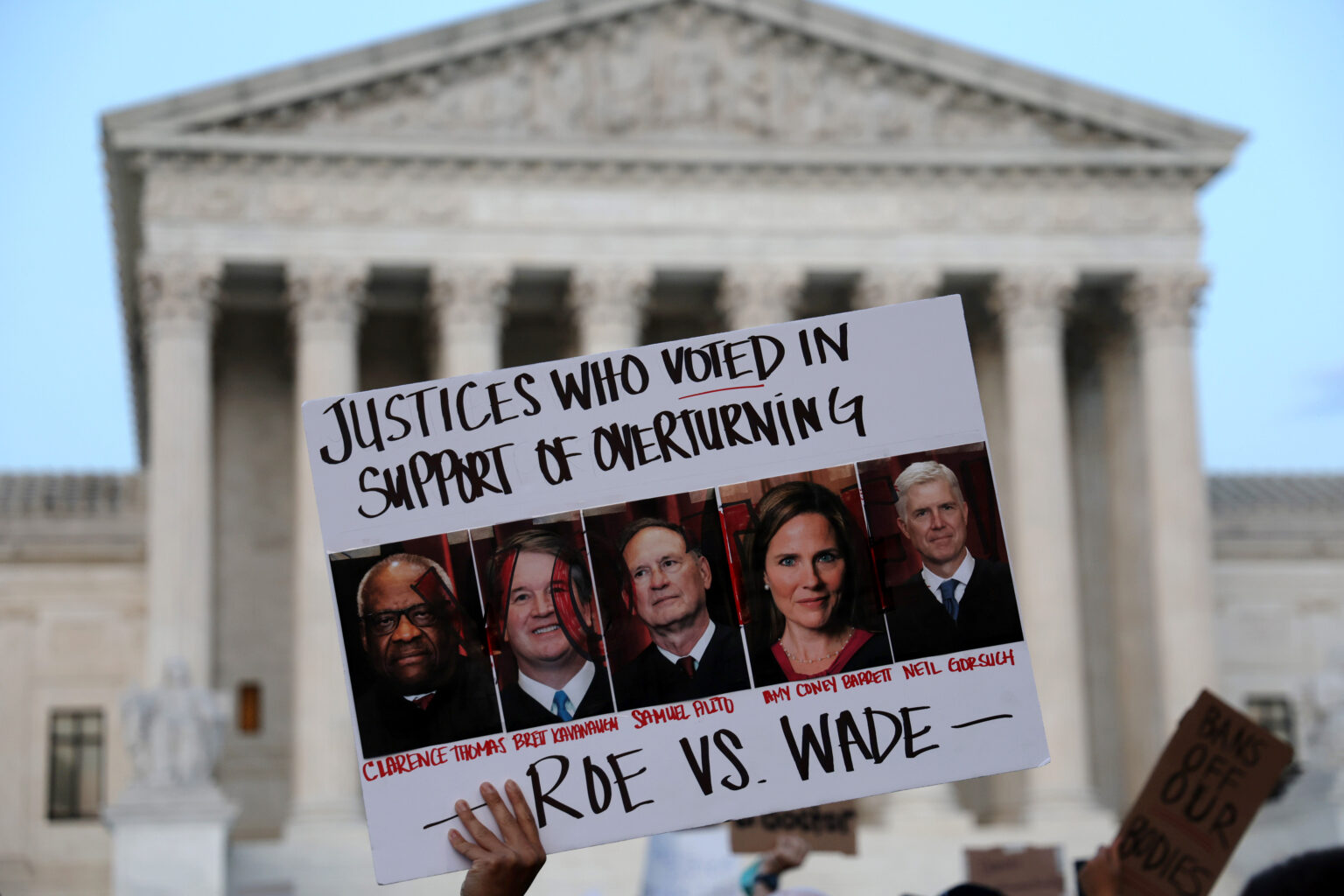
    “We hold that Roe and Casey must be overruled,” Justice Samuel Alito wrote in his opinion, joined by Justices Clarence Thomas, Neil Gorsuch, Brett Kavanaugh and Amy Coney Barrett.

    Chief Justice John Roberts filed a separate opinion concurring in the judgment about the Mississippi law at the center of the case, making that a 6-3 ruling, but not about overturning the constitutional right to an abortion, making that a 5-4 ruling.

    “The Constitution makes no reference to abortion, and no such right is implicitly protected by any constitutional provision, including the one on which the defenders of Roe and Casey now chiefly rely — the Due Process Clause of the Fourteenth Amendment,” Alito continued.

    “That provision has been held to guarantee some rights that are not mentioned in the Constitution, but any such right must be ‘deeply rooted in this Nation’s history and tradition’ and ‘implicit in the concept of ordered liberty.’”

    Justice Stephen Breyer wrote the dissent in the case for himself, Elena Kagan and Sonia Sotomayor.

    “With sorrow — for this Court, but more, for the many millions of American women who have today lost a fundamental constitutional protection — we dissent,” he wrote.

    The new status of abortion access on a state-by-state basis, Breyer wrote , “says that from the very moment of fertilization, a woman has no rights to speak of. A State can force her to bring a pregnancy to term, even at the steepest personal and familial costs.”

    Breyer later added, “Whatever the exact scope of the coming laws, one result of today’s decision is certain: the curtailment of women’s rights, and of their status as free and equal citizens.”

    Twenty-two states have laws that would restrict when and how a patient can terminate a pregnancy, according to the Guttmacher Institute, a reproductive health and rights organization.

    Arizona, Michigan and Wisconsin are among the 10 states that have pre-Roe abortion bans that are now expected to take effect. Thirteen states — including Idaho, Louisiana, Missouri and Tennessee — have laws enacted since Roe that will be “triggered” by the court’s decision.

    A dozen states, including Maine, Maryland, Nevada and Washington, have laws that would protect abortion access up to the point of viability, usually 22 to 24 weeks into a pregnancy.

    Colorado, the District of Columbia, New Jersey, Oregon and Vermont have laws that protect abortion access throughout a pregnancy, according to the Guttmacher Institute.

    Thomas targets birth control, same-sex marriage

    Justice Thomas wrote his own concurring opinion, arguing that since the court has overturned the constitutional right to an abortion, which was grounded in the 14th Amendment and the due process clause, other cases that have been rooted in the same right to privacy could all be reconsidered.

    Those include:

    • The Griswold v. Connecticut case from 1965 that said states couldn’t bar married couples from making private decisions about birth control use.
    • The Lawrence v. Texas case from 2003 that said states couldn’t criminalize consensual sexual relations between same-sex partners.
    • The Obergefell v. Hodges case from 2015 that legalized same-sex marriage.

    “For that reason, in future cases, we should reconsider all of this Court’s substantive due process precedents, including Griswold, Lawrence, and Obergefell,” Thomas wrote.

    Thomas also wrote of the Dobbs case that “The resolution of this case is thus straightforward. Because the Due Process Clause does not secure any substantive rights, it does not secure a right to abortion.”

    Reaction pours in

    The Center for Reproductive Rights, which brought the case to the Supreme Court, rebuked the Republican-nominated justices for ending the right to an abortion.

    “The Court’s opinion delivers a wrecking ball to the constitutional right to abortion, destroying the protections of Roe v. Wade, and utterly disregarding the one in four women in America who make the decision to end a pregnancy,” said Nancy Northup, president and CEO of the Center for Reproductive Rights.

    “Utter chaos lies ahead, as some states race to the bottom with criminal abortion bans, forcing people to travel across multiple state lines and, for those without means to travel, carry their pregnancies to term — dictating their health, lives, and futures. Today’s decision will ignite a public health emergency,” Northup continued.

    Susan B. Anthony Pro-Life America, an anti-abortion group, celebrated the decision, while its president called for “an entirely new pro-life movement” to begin.

    “Today’s outcome raises the stakes of the midterm elections. Voters will debate and decide this issue and they deserve to know where every candidate in America stands,” Marjorie Dannenfelser said in a statement. “Federal as well as state lawmakers must commit to being consensus builders who advocate for the most ambitious protections possible.”

    Mississippi ban

    The court heard two hours of arguments in December in Dobbs v. Jackson Women’s Health Organization, which arose after Mississippi enacted a law that banned the vast majority of abortions after 15 weeks of pregnancy.

    U.S. Solicitor General Elizabeth B. Prelogar, who argued on behalf of the federal government as a “friend of the Court,” said that the “real-world effects of overruling Roe” and the 1992 Planned Parenthood v. Casey decision that affirmed the right to an abortion “would be severe and swift.”

    “Nearly half of the states already have or are expected to enact bans on abortion at all stages of pregnancy, many without exceptions for rape or incest,” Prelogar said. “Women who are unable to travel hundreds of miles to gain access to legal abortion will be required to continue with their pregnancies and give birth, with profound effects on their bodies, their health and the course of their lives.”

    Mississippi Solicitor General Scott G. Stewart argued the nine justices should not only uphold Mississippi’s 2018 law, which had yet to go into effect, but overturn the two cases that have kept abortion access legal for nearly 50 years.

    “Roe versus Wade and Planned Parenthood versus Casey haunt our country,” he said. “They’ve poisoned the law.”

    Abortion rights history

    The Supreme Court first ruled that a pregnant person has a constitutional right to abortion in the 1973 Roe v. Wade case that stemmed from a Texas woman being unable to access an abortion in her home state. The decision was 7-2.

    Justice Harry Blackmun wrote that the right to an abortion stemmed from the right to privacy under the 14th Amendment. But the court ruled that a person’s fundamental right to terminate their pregnancy must be weighed against the government’s interest in protecting the person’s health and potential life.

    The court established a trimester framework that determined when and how governments could impose regulations on abortion access.

    In the 1992 Planned Parenthood v. Casey case, a 5-4 ruling, the court upheld a constitutional right to an abortion. But the decision overturned the trimester framework, instead setting viability, about 22 to 24 weeks into a pregnancy, as the line for government regulation.

    The court said a person had a right to an abortion before viability without undue interference from the government. After reaching a point of viability, states can regulate abortion as long as it doesn’t affect a person’s health or life.

    In the plurality opinion, Justice Sandra Day O’Connor wrote that “Some of us as individuals find abortion offensive to our most basic principles of morality, but that cannot control our decision. Our obligation is to define the liberty of all, not to mandate our own moral code.”

    In a dissenting opinion, Justice Thomas wrote for himself, Antonin Scalia and two others that they would have overturned Roe v. Wade, saying the issue in the case was “not whether the power of a woman to abort her unborn child is a ‘liberty’ in the absolute sense; or even whether it is a liberty of great importance to many women. Of course it is both.”

    “The issue is whether it is a liberty protected by the Constitution of the United States. I am sure it is not,” he wrote.

    Will court survive a ‘stench’?

    During oral arguments in December in the Mississippi case the justices ruled on Friday, Justice Sotomayor expressed concern over how the court overturning cases that established abortion access as a constitutional right would impact its reputation.

    “Now, the sponsors of this bill, the House bill in Mississippi, said we’re doing it because we have new justices. The newest ban that Mississippi has put in place, the six-week ban, the Senate sponsor said we’re doing it because we have new justices on the Supreme Court,” Sotomayor said.

    “Will this institution survive the stench that this creates in the public perception that the Constitution and its reading are just political acts?”

    Justice Kagan questioned whether the court overruling Roe and Casey would lead Americans to view the court as “a political institution that will go back and forth, depending on what part of the public yells the loudest or changes to the court’s membership.”

    And Justice Breyer read from a decision the entire Supreme Court issued in Casey about when and how justices should overturn watershed cases to avoid a situation that “would subvert the Court’s legitimacy.”

    “They say overruling unnecessarily and under pressure would lead to condemnation, the Court’s loss of confidence in the judiciary, the ability of the Court to exercise the judicial power and to function as the Supreme Court of a nation dedicated to the rule of law,” Breyer read.

    The Mississippi law at the center of the argument allowed abortions after 15 weeks in cases of “severe fetal abnormality” or medical emergency, but it did not include exceptions for rape or incest.

    At the time Mississippi Gov. Phil Bryant signed the bill in March 2018, the 15-week threshold was the earliest abortion ban in the nation.

    That has since changed, with several states enacting laws restricting abortion below that benchmark, including an Oklahoma law that makes abortion a felony punishable by up to 10 years in state prison, a maximum fine of $10,000, or both.

    Abortion rights organizations have filed lawsuits to stop many of those new laws from going into effect on the basis that they violated the constitutional right to an abortion that the court undid this week.

    Politico leak

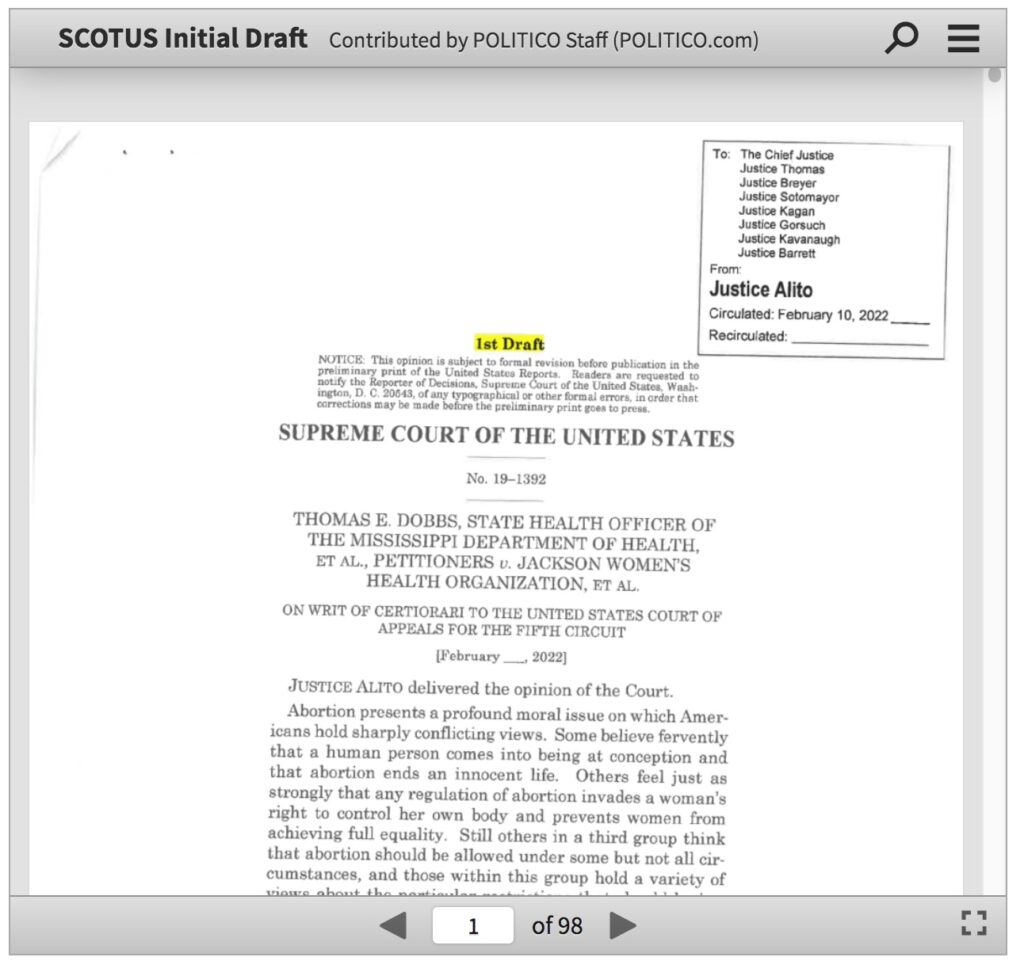
    The Supreme Court majority opinion released Friday is similar to a draft version, led by Justice Alito, that was leaked to Politico in early May.

    The leak was broadly criticized by Republicans, who at the time didn’t want to talk about the implications of the court overturning Roe, while Democrats rebuked the conservative justices for the expected decision.

    Senate Majority Leader Chuck Schumer, a New York Democrat, held a floor vote in May on a bill that would have codified a nationwide right to an abortion.

    That legislation couldn’t get past the chamber’s 60-vote legislative filibuster.

    Maine Sen. Susan Collins and Alaska Sen. Lisa Murkowski, both Republicans who expressed frustration with how the Trump-nominated justices portrayed their view of Roe as a settled precedent during their confirmation processes, voted against the bill.

    West Virginia Democratic Sen. Joe Manchin did as well.

    Manchin said in a statement Friday that he was “deeply disappointed that the Supreme Court has voted to overturn Roe v. Wade.”

    “I trusted Justice Gorsuch and Justice Kavanaugh when they testified under oath that they also believed Roe v. Wade was settled legal precedent and I am alarmed they chose to reject the stability the ruling has provided for two generations of Americans,” Manchin continued.

    Click to read the Abortion Lay Timeline

  • U.S. Senate to try again on abortion rights after bombshell disclosure of draft opinion

    U.S. Senate to try again on abortion rights after bombshell disclosure of draft opinion

    Abortion rights activists protest outside the U.S. Supreme Court Tuesday. Photo by Jane Norman, States Newsroom.

    BY: JENNIFER SHUTT – Ohio Capital Journal

    WASHINGTON — U.S. Senate Democrats on Tuesday pledged a new vote codifying the right to an abortion after publication of a draft court ruling that showed the Supreme Court on track to overturn the landmark Roe v. Wade abortion decision.

    Democrats, who likely won’t have the votes to advance that bill, also predicted that abortion will emerge as a major issue in the upcoming midterm elections for members of Congress.

    Their comments came as abortion rights supporters across the United States reeled in reaction to the disclosure of the initial draft U.S. Supreme Court opinion, led by Justice Samuel Alito and leaked to Politico. While the court ruling is not final until published, the draft states that earlier abortion decisions “must be overruled.”

    Senate Majority Leader Chuck Schumer, a New York Democrat, said Tuesday he plans to release a new bill this week that senators will vote on next week to codify Roe v. Wade.

    But in the evenly divided Senate, it will run into problems getting past a legislative filibuster that requires 60 votes for legislation to advance.

    Were Roe v. Wade to be struck down by the court, which is dominated 6-3 by conservatives, the question would be left up to states, and more than two dozen Republican-led states have been racing to enact abortion bans and restrictions.

    Supreme Court Chief Justice John Roberts said the draft, published on Monday night, was authentic, though he cautioned it wasn’t the final opinion, and said he’d directed the Marshal of the Court to investigate the leak.

    Republicans called for the Justice Department to also investigate how the draft made its way to two journalists, saying the leak was a violation of the court’s judicial process.

    Roberts said the leak of the document was wrong.

    “Court employees have an exemplary and important tradition of respecting the confidentiality of the judicial process and upholding the trust of the Court,” Roberts said in the statement. “This was a singular and egregious breach of that trust that is an affront to the Court and the community of public servants who work here.”

    The court is expected to release its official ruling in the case, Dobbs v. Jackson Women’s Health Organization, within the next two months, though many organizations have long expected the six conservative justices to at least pare back the constitutional right to an abortion.

    Democratic senators on Tuesday said a final decision undoing the constitutional right to an abortion the Supreme Court established five decades ago would be unacceptable and harmful to women.

    Montana Democratic Sen. Jon Tester said letting each state, once again, set its own abortion laws would be a “step in the wrong direction.”

    “I think that a woman’s right to choose, a woman’s right to make their own health care decisions is really fundamental to who we are as a nation,” Tester said.

    Washington Democratic Sen. Patty Murray criticized the conservative justices for moving to undo nationwide protections for people seeking to terminate a pregnancy.

    “We do not want this to become a country where women are forced to remain pregnant no matter their personal circumstances and yes, we are talking about situations like rape and incest,” Murray said.

    “A country where extreme politicians will control patients’ most private decisions. A country where for the very first time ever the next generation of women will have fewer rights than their mothers.”

    Michigan Sen. Gary Peters, chair of the Democratic Senatorial Campaign Committee, said abortion rights will become a “major issue” in November’s midterms elections.

    “We’ve seen legislation being passed in state legislatures across the country to limit reproductive freedom for women. But there was always the belief that Roe versus Wade was there,” Peters said. “If Roe versus Wade is overturned, it’s a completely different ballgame.”

    60 votes needed

    In the Senate, Democrats would need 60 senators to vote to get past the legislative filibuster and actually pass legislation codifying abortion access throughout the country. Those votes would be required to end debate and move on to final passage, which is a simple majority vote.

    Peters, asked if Democrats could somehow get to a 60-seat majority in the midterm elections, said “it would be pretty difficult to get there.”

    While the entire U.S. House — an increasing number of whom represent gerrymandered districts — will be up for reelection in November, just one-third of the U.S. Senate will face voters.

    This year that will be 35 seats, with 14 occupied by Democrats and 21 filled by Republicans.

    The Cook Political Report with Amy Walter rates five of those races — Arizona, Georgia, Nevada, Pennsylvania and Wisconsin – as “toss up.” Florida, North Carolina and Ohio are classified as “lean Republican.”

    Senators’ positions 

    Georgia Sen. Raphael Warnock said he’s going to “do everything” he can to “support reproductive rights.”

    He’s one of many Senate Democrats who support eliminating the filibuster.

    “No Senate procedure should get in the way of basic civil rights — voting rights, reproductive rights,” Warnock said.

    Arizona Democratic Sen. Mark Kelly isn’t as convinced that the Senate should change its procedures, but didn’t rule out backing a change to how bills are processed.

    “If there is a proposal to change the rules, I will make a decision on what is in the best interest of the country and the folks I represent in Arizona,” Kelly said.

    Fellow Arizona Democratic Sen. Kyrsten Sinema doesn’t back such a change and neither does West Virginia Democratic Sen. Joe Manchin III.

    That means Senate Democrats don’t have the votes during this Congress to codify abortion rights or change the rules to make it easier to pass abortion rights legislation.

    If Democrats lose control of the Senate following the midterm elections, Republicans are expected to keep the filibuster in place.

    Minority Leader Mitch McConnell, a Kentucky Republican, said Tuesday he would “absolutely” commit to keeping it intact.

    “We don’t want to break the Senate and that’s breaking the Senate,” he said.

    McConnell declined to answer questions on how a final Supreme Court decision overturning Roe v. Wade would affect women throughout the country or whether he’d bring legislation to the floor to address federal abortion laws.

    “All of this puts the cart before the horse,” he said.

    National Republican Senatorial Committee Chairman Rick Scott, a Florida Republican senator, declined to say if the Supreme Court overturning abortion as a fundamental right would affect the election.

    “I think this is an important issue to many people, but so is inflation, so is crime, so is the border,” Scott said. “So, these are important to people and people are gonna be passionate about this. And we ought to be passionate about what we believe in.”

    Scott — who infuriated many fellow GOP senators earlier this year when he released an 11-point plan without leadership approval — declined to say if the GOP would try to pass a bill banning abortion nationwide if they gain control of the Senate in the midterms.

    “We’ll worry about that next year,” Scott said.

    ‘Inconsistent’ justices

    While many Senate Republicans oppose abortion rights and would support the Supreme Court overturning Roe v. Wade, two expressed frustration with the possibility.

    Maine Republican Sen. Susan Collins — who voted to confirm Neil Gorsuch and Brett Kavanaugh, but not Amy Coney Barrett— said in a statement that “If this leaked draft opinion is the final decision and this reporting is accurate, it would be completely inconsistent with what Justice Gorsuch and Justice Kavanaugh said in their hearings and in our meetings in my office.”

    Collins declined to answer reporters’ questions throughout the morning, simply saying she’d released a statement.

    Alaska GOP Sen. Lisa Murkowski — who supported Gorsuch and Barrett, but not Kavanaugh — told reporters that certain justices voting to overturn precedent would erode her confidence in the court.

    “If in fact this draft is where the Court ends up being, it has rocked my confidence in the court. That is because I think there were some representations made with regards to precedent and settled,” said Murkowski. “Comments were made to me and to others about Roe being settled and being precedent.”

    When the Senate took a procedural vote in February on a House-passed bill that would codify the right to an abortion, Collins, Murkowski and Manchin all voted against moving to final passage.

    Schumer said he expects a new vote could be different from the one taken just over two months ago.

    “It’s a different world now, the tectonic plates of our politics on women’s choice and on rights in general are changing,” Schumer said.

    “Every senator, now under the real glare of Roe v. Wade being repealed by the courts, is going to have to show which side they’re on. And we will find the best way to go forward after that. But don’t think that what happened two (months) ago will be exactly the same.”

  • Abortion ‘trigger bill’ coming to Senate committee

    Abortion ‘trigger bill’ coming to Senate committee

    BY: and Ohio Capital Journal

    A piece of legislation meant to go into effect if federal abortion rights protections are overturned will start its path through the Ohio legislature this week.

    Senate Bill 123 is set to appear in the Ohio Senate Health Committee on Wednesday morning.

    If passed, the bill would then await court challenges of the U.S. Supreme Court’s Roe v. Wade decision, the ruling that legalized abortion nationwide. If challenges to Roe were successful, Ohio could then quickly ban abortion.

    There is an exception in the bill for abortions when there is serious risk to the pregnant person’s life, but written certification of the necessity is required, and “appropriate neonatal services for premature infants must exist at the facility where the physician performs or induces the abortion.”

    Currently, abortion is legal in the state of Ohio up to 22 weeks gestation.

    The proposed legislation would also ban “as the crime of promoting abortion” possessing, selling or advertising “drugs, medicine, instrument or device to cause an abortion”

    “Promoting abortion” is one of a few crimes defined under the bill, and would be a first-degree misdemeanor if passed. “Abortion manslaughter” would be a crime under the bill, treated as a first-degree felony punishable with a minimum of four to seven years in prison for “purposely taking the life of a child born by attempted abortion who is alive when removed from the…uterus.”

    As with other attempted legislation on abortion in the state, the punishment primarily lands on the physicians, leaving those having the abortions legally cleared and even able to file a wrongful death lawsuit if an abortion is performed in violation of the proposed legislation.

    A physician could have their license revoked if found guilty of “abortion manslaughter,” “criminal abortion,” or “promoting abortion.”

    The language regarding “abortion manslaughter” is reminiscent of language in a different abortion-related bill seeking to punish doctors after “botched abortions.” That bill seeks to prohibit inaction by doctors in the case of “failed” abortions, however, state data shows failed abortions are very rare.

    Of abortions reported at 19 weeks or more gestation in the state’s most recent data — which was available at the time the botched abortion bill was presented — only one pregnancy was found to be viable.

    The Senate legislation isn’t the first “trigger ban” that has been introduced in the General Assembly in the recent past. Last spring, a House bill was introduced by former state Rep. John Becker, also aiming to take effect if Roe v. Wade was overturned.

    Abortion-rights advocates are planning to rally together at the Ohio Statehouse at 12:30 p.m. on Tuesday, the day before the committee meets to consider the trigger ban.

    “With the stark reality that Ohio could be the next state where abortion is entirely inaccessible, now is the time to show up and fight for our communities,” said Aileen Day, communications for Planned Parenthood Advocates of Ohio, in a statement.


    Susan Tebben is an award-winning journalist with a decade of experience covering Ohio news, including courts and crime, Appalachian social issues, government, education, diversity and culture. She has worked for The Newark Advocate, The Glasgow Daily Times, The Athens Messenger, and WOUB Public Media. She has also had work featured on National Public Radio.

  • House bill would ‘null’ and ‘void’ gun laws, court rulings that lawmakers oppose

    House bill would ‘null’ and ‘void’ gun laws, court rulings that lawmakers oppose

    By Jake Zuckerman and Ohio Capital Journal

    Fourteen House Republicans signed onto legislation that would allow the state of Ohio to nix federal gun laws and court rulings that legislators deem to violate the Second Amendment to the U.S. Constitution.

    House Bill 62 would declare any federal law, executive order, administrative action, or court ruling to be “null, void, and of no effect in this state” if it infringes upon the Second Amendment.

    Legal acts that would qualify as infringements under the bill (the “Second Amendment Safe Haven Act”) include any of the following if they could “reasonably be expected to create a chilling effect.”

    • Any tax on guns, gun parts, or ammunition not common to other goods and services
    • Any registering or tracking of guns
    • Any registering or tracking of gun owners
    • Any act forbidding the possession, ownership, use or transfer of guns or ammo by law-abiding citizens
    • Any act ordering the confiscation of guns

    The bill also prohibits law enforcement from enforcing any federal laws, court rulings, or orders that would qualify as infringements under the bill. If they do, they “shall be liable to the injured party in an action at law.”

    It would prohibit a defense known as “qualified immunity,” which state employees claim as a defense for carrying out their official job duties.

    Exactly how HB 62 would play out is unclear.

    For instance, President Joe Biden last week announced planned executive actions to limit the proliferation of “ghost guns” made of homemade parts without traceable serial numbers. This would likely qualify as an infringement under HB 62, even if the U.S. Supreme Court were to rule the executive action was constitutional. Judges or law enforcement tasked with enforcing the law would be caught in a legal pickle.

    Analysts with the Legislative Service Commission, a nonpartisan arm of the legislature that reviews legislation, determined the bulk of the law “may be vulnerable to challenge” under the Supremacy Clause of the U.S. Constitution, which gives federal law precedence over state law.

    Rob Sexton, legislative director of the Buckeye Firearms Association, said the bill reflects a General Assembly trying to get out in front of what they see as a looming barrage of gun control bills coming from Biden and a Democratically controlled federal government.

    However, he offered lukewarm support of the bill and said courts would likely need to work out its contours.

    “BFA supports what they’re trying to do,” he said. “We’re not sure exactly what the best way is to achieve this, that provides real protection for gun owners form federal overreach. But we’re definitely supportive of what it is they’re trying to accomplish.”

    The bill is sponsored by GOP state Reps. Mike Loychik, of Bazetta, and Diane Grendell, of Chesterland.

    “Especially with the current climate and rhetoric at the federal level, the preservation of our second amendment is now more crucial than ever before and it is my intent to protect this right for the people of Trumbull County,” Loychik said in a news release.

    State lawmakers don’t get to pick and choose which federal laws will apply to our state, said Kristine Woodworth, volunteer with the Ohio chapter of Moms Demand Action, which advocates against gun violence.

    If the recent rash of mass shootings across the country and the daily gun deaths right here in Ohio doesn’t wake up our state and federal lawmakers to the need for common-sense gun safety, I don’t know what will.” – Kristine Woodworth, volunteer with the Ohio chapter of Moms Demand Action

    “This bill also includes provisions that threaten local law enforcement and officials with lawsuits, fines, and the loss of employment simply for doing their job.

    “The majority of people in Ohio support common-sense public safety measures like background checks because they keep guns out of the hands of dangerous people who we can all agree shouldn’t have them, like domestic abusers, people with violent criminal records, and people prohibited from owning a gun for mental health reasons. If the recent rash of mass shootings across the country and the daily gun deaths right here in Ohio doesn’t wake up our state and federal lawmakers to the need for common-sense gun safety, I don’t know what will.”

    Gun advocates in Ohio are still coming off a high from a major win in the past several General Assembly sessions and have other long-sought policy aims in the hopper.

    On Thursday, a House committee is scheduled to begin its review of separate gun legislation that would remove licensure requirements for Ohioans 21-and-older to carry a concealed weapon.

    This comes after Gov. Mike DeWine signed into law “stand your ground” legislation earlier this year that removes the requirement to reasonably seek to retreat before responding to a perceived attack with deadly force. Other wins in the past two decades include establishing a concealed carry program, weakening requirements to obtain licensure within the program, and passing a state law that prohibits cities and counties from passing gun control legislation of their own.

  • Ohio abortion ban with felony charges back in the works, targeting Roe v. Wade

    Ohio abortion ban with felony charges back in the works, targeting Roe v. Wade

    By Susan Tebben and Ohio Capital Journal

    The battle on abortion in Ohio will only be stopped by the U.S. Supreme Court or a change in the U.S. Constitution, according to reproductive law experts and those once again pushing for abortion bans.

    Two state legislators have introduced a bill making abortion procedures a felony, which marks the second time in as many years that a bill was introduced hoping for the overturning of Roe v. Wade, the national Supreme Court decision that said abortion was legal nationwide.

    A physician accused of “causing or inducing an abortion” would face an official charge of “criminal abortion,” which would be a fourth-degree felony under the new Senate Bill, introduced recently in the Ohio Senate.

    If signed into law, the bill would not take into effect until either the U.S. Supreme Court overturns the 1973 decision in Roe. V. Wade, which legalized abortion nationwide, or an amendment to the U.S. Constitution “upholds Ohio’s authority under the federal system to prohibit abortion,” according to a statement from bill cosponsor state Sen. Kristina Roegner’s office.

    “I believe that when the U.S. Supreme Court considers a challenge to Roe, they will realize that the original decision from 1973 was seriously flawed, and return the authority regarding abortion to the states,” Roegner said in the statement.

    Nearly a year ago to the day, former state Rep. John Becker introduced similar legislation, which would have barred state funds from being disbursed for abortion-related services and created a first-degree felony charge of “abortion manslaughter.”

    Becker’s bill never received a hearing, and therefore never moved in the 133rdGeneral Assembly. Currently, abortions are legal in Ohio up to 22 weeks gestation.

    Both bills have an exception in the event that “the abortion was necessary to prevent the death of the pregnant woman,” according to language in the current bill.

    Ohio is one of a few states trying to pass anti-abortion laws and create a review of Roe v. Wade.

    The abortion fight in the state has been going on since Roe v. Wade was decided, but a law professor who also works on abortion challenges says the last few years have been more active than most.

    “I think there’s almost nothing that’s beyond the pale right now,” said Professor Jessie Hill of Case Western Reserve University.

    Hill is also cooperating attorney for the ACLU, which has five lawsuits against state abortion measures going on simultaneously, including one filed this weekchallenging a law on burial and cremation after surgical abortions. Since Hill returned to Ohio in 2001, she’s only seen efforts to regulate abortion ramp up year after year.

    “All of a sudden these bills started passing, and in the last few years they’ve been more and more extreme,” Hill said, adding that gerrymandering creating a Republican-leaning legislature contributed to the increase in anti-abortion legislation.

    Anti-abortion groups are lining up to support the bill, with lobby group Ohio Right to Life calling the legislation “powerful and life-affirming.”

    “For the first time since abortion was legalized, we have a pro-life majority on the (U.S.) Supreme Court,” said Mike Gonidakis, president of Ohio Right to Life. “Roe v. Wade hangs by a thread. Ohio must be prepared for what comes next.”

    Planned Parenthood’s Ohio chapter said the newest bill restricts access to care rather than making lives better.

    “S.B. 123 is the latest egregious attack on abortion access from leaders in the Ohio General Assembly who are only focused on eliminating legal access to abortion, to the neglect of everything else – including the pandemic.”

    Hill sees a constitutional amendment as a long shot, with a requirement of support from 75% of states in order to make that happen.

    Targeting a U.S. Supreme Court decision is a bigger possibility, and even if the high court decides not to overturn the decision as a whole, Hill says cutting back the protections included in Roe v. Wade is something not often considered as the debate continues.

    “I think it’s an under-appreciated possibility that the court is not really interested in overturning Roe v. Wade, but that they would reduce it to almost nothing,” Hill said.

    The new Ohio bill will now be assigned to a House committee for hearings and consideration.

  • Virtual BED-Time Book Talk

    Virtual BED-Time Book Talk

    For Children 5-8 and caregivers

    Monday, January 11

    7:00 PM – 7:30 PM

    Loveland, Ohio – Join for a BED (Books Engaging Discussion) Time book talk centering on diverse characters and underrepresented experiences. Co-sponsored by the Loveland Diversity Advisory Board and the Library.

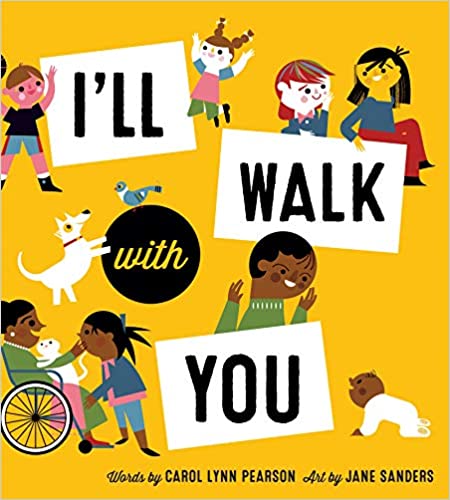
    This Month’s Books are: Just Ask by Sonia Sotomayor and I’ll Walk With You by Carol Lynn Pearson

    Just Ask!
    Be Different, Be Brave, Be You

    In this creative non-fiction story, Sonia and her friends plant a garden, and each one contributes in his or her own special way, in a book that celebrates the many differences among humans. In this warm and inclusive story by U.S. Supreme Court Justice Sonia Sotomayor, inspired by her own childhood diagnosis of diabetes, readers join along as differently abled kids use their strengths to work together and learn about each other.

    I’ll Walk With You
    by Carol Lynn Pearson

    Help little ones learn to show love for the people around them, no matter how they look, sound, pray, love, or think. Beloved author of The Lesson and Will You Still Be My Daughter, Carol Lynn Pearson is known for her heartfelt, sometimes tear-jerking poetry and stories. Her newest title, illustrating her popular song written for children in 1987, will enchant children with a sweet, tender poem about loving and accepting others, no matter what they look like, where they come from, or what their age and abilities are. Carol Lynn Pearson is the author of more than forty books and plays, including Goodbye, I Love You and I’ll Always Be Your Daughter She has been a guest on The Oprah Winfrey Show,” and “Good Morning, America,” and was featured in People Magazine. She lives in Walnut Creek, California.”

    Library card and REGISTRATION is required.

    Get a library card

    Log In to register

    This event is offered on:

    Virtual Book Talk: BED Time Book Talk Monday, February 8, (7:00 PM – 7:30 PM)

    Virtual Book Talk: BED Time Book TalkMonday, March 8, (7:00 PM – 7:30 PM)

    Virtual Book Talk: BED Time Book Talk Monday, April 19, (7:00 PM – 7:30 PM)

    Virtual Book Talk: BED Time Book Talk Monday, May 10, (7:00 PM – 7:30 PM)

    Virtual Book Talk: BED Time Book Talk Monday, June 14, (7:00 PM – 7:30 PM)

    Virtual Book Talk: BED Time Book Talk Monday, July 12, (7:00 PM – 7:30 PM)

    Virtual Book Talk: BED Time Book Talk Monday, August 9, (7:00 PM – 7:30 PM)