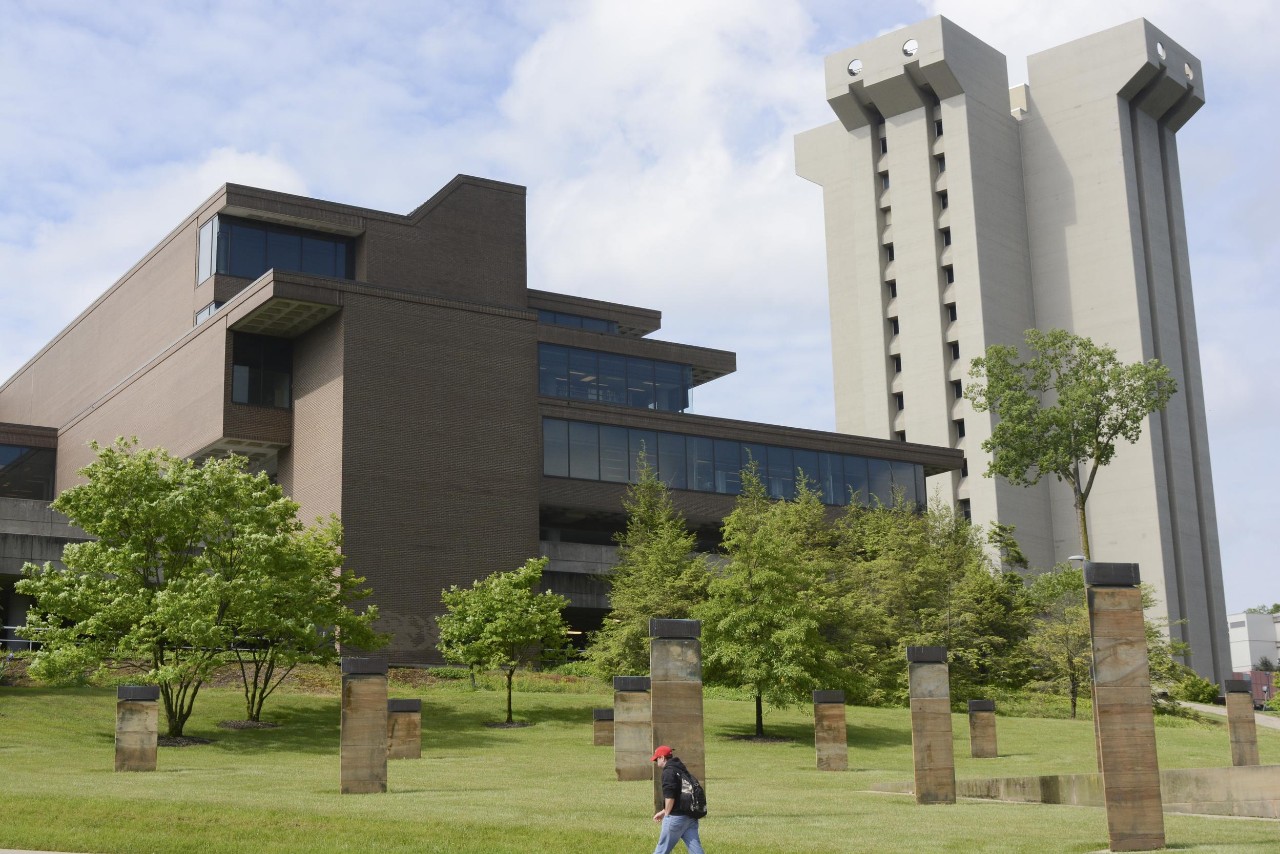
There are mixed feelings about what has been dubbed by some as the ugliest building on a U.S. college campus.
But now, despite all of the opinions, the iconic Crosley Tower may come down. Its demise has been forecast for years.
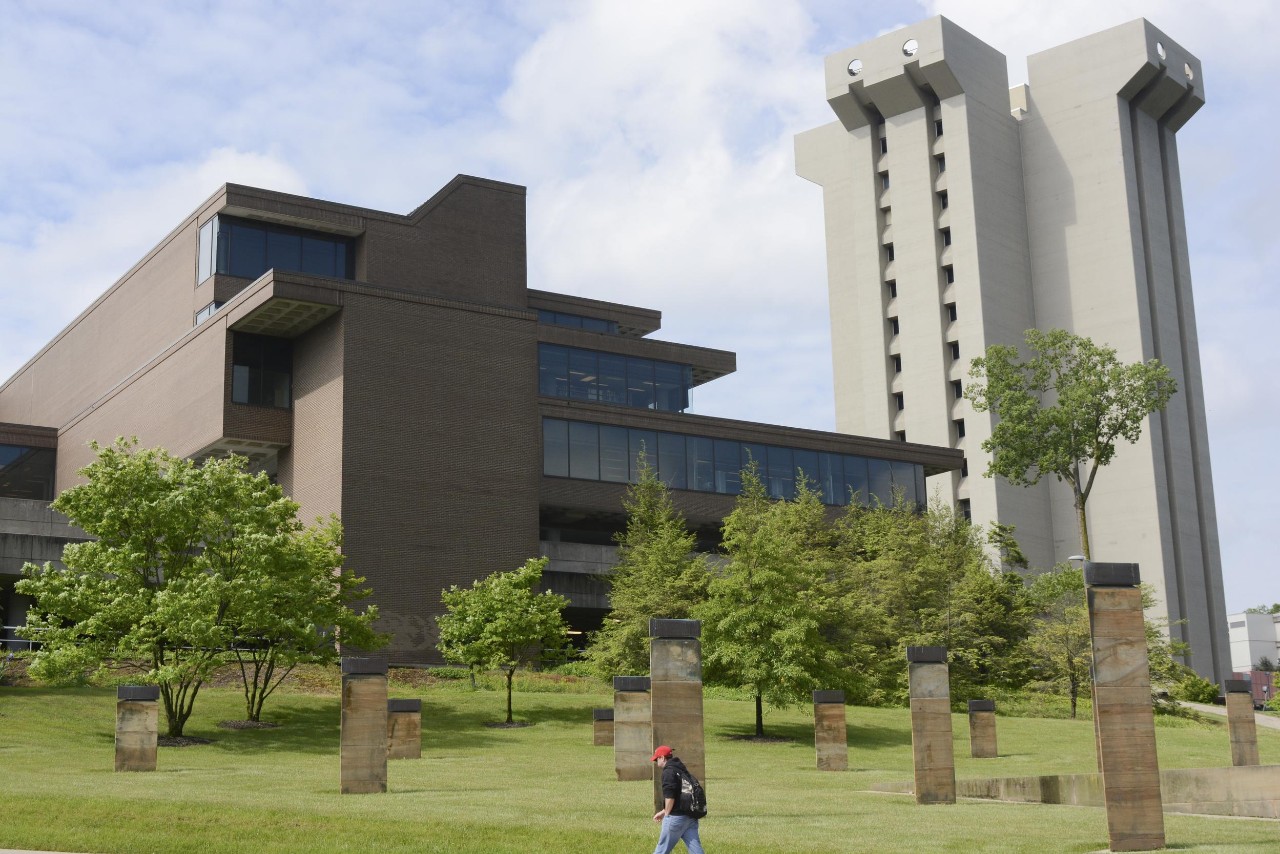
Crosley Tower is a among UC’s most iconic structures. Photo/UC Marketing + Brand.
The UC Board of Trustees approved $47.3 million at its meeting on April 22 to fund remediation and demolition of Crosley Tower and adjacent Clifton Court garage. Floor by floor demolition is expected to begin January 2026 and be complete by the end of that calendar year.
Designed in the Brutalist style of architecture and “crafted from a single pour of concrete, this 16-story building looks more like a Disney villain’s lair than a part of the University of Cincinnati’s campus,” according to a story in Architectural Digest.
The magazine ranked Crosley Tower among the seven ugliest university buildings in the nation, beating out “ugly” structures at the University of Tennessee, Louisiana State University and the University of Iowa.
Trustees previously approved $2.6 million for the design of the demolition of Crosley Tower in October 2023. These additional funds will allow for the completion of the demolition. The tower was named after UC alum Powel Crosley Jr. and opened in 1969 as a lab and research building.
The imposing structure was completed in 1969 with crews pouring concrete continuously round-the-clock for 18 days and nights. Crosley Tower is the second-largest building in the country made of continuously poured concrete, eclipsed only by the Hoover Dam.
The ugliest building on campus, but everyone kind of loves it.
It’s the source of a few UC urban legends. There’s even a student organization, Crosley Tower Appreciation Club, devoted to the building.
Clara Weber and fellow UC student Nikara Schehr show off their gingerbread replica of Crosley Tower at their co-op employer Rockwell Group’s holiday party design competition. Photo/provided
A trio of UC students on co-op recently paid tasty tribute to the tower. Clara Weber, Lily Gormley and Nikara Schehr from UC’s College of Design, Architecture, Art, and Planning used Crosley Tower for their inspiration during a gingerbread house competition while on co-op at Rockwell Group, an award-winning architecture firm in Manhattan, New York.
They were given 90 minutes to build an edible structure during an employee mixer.
Crosley is “the ugliest building on campus but everyone kind of loves it,” explains Weber, whose team used graham crackers to build a replica.
The experience was also a chance for the UC students to show off their ambition as architect David Rockwell mingled with employees.
UC planners determined Crosley Tower is not a candidate for renovation due to foundation and concrete age as well as adaptability limits to an outdated layout that no longer serves programmatic needs.
The University of Cincinnati’s Joseph Broderick, MD, was featured in a Medscape article commenting on new treatments and advancements in the field of poststroke recovery research.
New research is challenging the idea that regaining limb mobility more than 6 months after a stroke was nearly impossible, including studies of noninvasive brain stimulation that pairs with physical rehabilitation to modulate disrupted neural networks.
Broderick noted determining the correct dose of stimulation will be key, as too much stimulation “can cause side effects that you don’t want.”
Other researchers are focused on using robotic therapy or interactive virtual reality (VR) gaming to help strengthen limbs and encourage patients to stick to their exercise regimen. Broderick noted that interventions like VR have a limitation of not being able to address language or vision deficits caused by stroke.
“There are limits to what we can recover from,” said Broderick, professor in UC’s Department of Neurology and Rehabilitation Medicine in the College of Medicine, director of the UC Gardner Neuroscience Institute and a UC Health physician.
Moving forward, Broderick said gene therapy could potentially help “spark motor recovery” in patients.
University of Cincinnati/Lindner Center of Hope researchers have received a $2.3 million grant to join the Breakthrough Discoveries for Thriving with Bipolar Disorder (BD²) Integrated Network, a collaborative research and clinical care model with a mission to improve care, interventions and outcomes for people living with bipolar disorder.
UC joins the University of California San Diego, The University of Texas at Austin and The Feinstein Institutes for Medical Research as four new institutions joining the six inaugural institutions in the network.
Working in partnership with clinicians, researchers and people living with bipolar disorder, the BD² Integrated Network was established to expand knowledge of bipolar disorder while accelerating the translation of that knowledge into clinical care. An international site will be announced in the coming weeks.
“These new sites significantly expand the BD² Integrated Network and propel our collaborative model forward. This is another step toward realizing our mission to shorten the time it takes for research to improve treatment and care for those living with bipolar disorder,” said Cara Altimus, PhD, managing director for BD² and senior director at the Milken Institute.
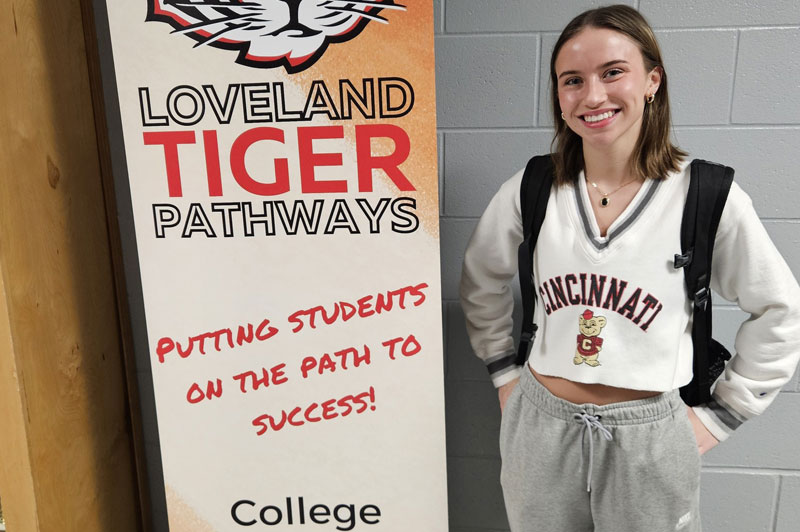
Loveland, Ohio – Loveland High School student Lillianne Fehrenbach has earned a spot in UC’s Hoffman Honors Scholars Program. This program is designed to foster global citizenship, leadership, and service learning and it supports students with a full ride scholarship.
About Hoffman Honors Scholars
The Hoffman Honors Scholars Program (HHS) is a prestigious program designed to foster global citizenship, leadership, and service learning. Students in the program represent three UC colleges: The College Conservatory of Music, Carl H. Lindner College of Business, and The College of Arts and Sciences.
All Hoffman Honors Scholars will be encouraged to participate in educational, service, and networking events aimed to help students thrive and build connections at the University of Cincinnati.
Student Requirements in Hoffman Honors Scholars Program
Maintain aminimum 3.0 grade point average.
Be a full-time, degree-seeking undergraduate student.
Be enrolled in one of the three HHS colleges: A&S, CCM, or LCB. Changing majors to another college will result in a loss of eligibility.
Attend both the Welcome Reception and Welcome Retreat in August of your first year.
Participate in at least30 hours of community service per academic year, with 15 hours committed to a Cincinnati Hoffman Partner.
Hofman Partners:
Cincinnati Museum Center
ALS Associated Clinics and Organizations
Civic Garden Center of Cincinnati
Cincinnati Nature Center
Cincinnati Zoo and Botanical Gardens
Cincinnati Ballet
Participate in at least 2 leadership building activities per semester, which may include:
Ethics training workshops
Warren Bennis Leadership Institute Workshops
Etiquette Workshops
Strengths Training events
Career or resume workshops
Study abroad preparation meetings
Meeting with Nationally Competitive Awards
Build a community of interdisciplinary learners from across campus by participating in at least three Hoffman Honors Scholars community events per semester, such as:
Semester Celebrations
Community Dinners
Hoffman service project days
Performances and shows at CCM
Field trips to partner institutions (e.g., Cincinnati Museum Center, Civic Garden Center, Cincinnati Nature Center, Cincinnati Zoo and Botanical Gardens, etc.).
Meet with the HHS program advisor at least once per academic semester (not required if students are out on coop)
Join the University Honors Program and be a member in good standing.
Complete the Gateway to University Honors course in your first year.
Scholarship Benefits
The scholarship includes the following for up to eight academic (non-coop) semesters.
Full tuition to the University of Cincinnati
Room and board
On campus room and board
Off campus room and board stipend as determined by financial aid each year
Book stipend
Study abroad funding support
Study Abroad Funding
Continuous Support
We are committed to ensuring that every Hoffman Honors Scholar receives the support they need to thrive. By working individually with students, we aim to provide a seamless and rewarding experience throughout their time at UC.
Hoffman Honors Scholars will receive up to $5000 in scholarship funding for Study Abroad that can be applied to future credit-bearing study abroad opportunities.
The University of Cincinnati and Cincinnati Children’s Hospital are part of a collaborative research initiative designed to identify contributors to the ongoing epidemic of persistent emotional distress, suicide and drug overdose in the state of Ohio.
The SOAR Study investigates the role of underlying biological, psychological and social factors.
The Ohio Department of Mental Health and Addiction Services (OhioMHAS) is funding this statewide research project with an initial $20 million grant. Like other areas of the country, Ohio has seen a rise in mental illness, suicide and deaths related to drug overdose over the past decade, and the COVID-19 pandemic exacerbated these problems.
“The causes of these diseases remain largely a mystery to clinical experts and the public,” said LeeAnne Cornyn, director of OhioMHAS. “The SOAR Study has the potential to help future generations better understand risk factors, effective mitigation strategies and techniques to build resiliency — in short, the study has the potential to curb disease and save lives.”
SOAR is studying Ohioans in their local communities, using an integrated “bring science to the people” approach. It is creating a statewide medical research and development ecosystem to drive continued advances in mental health, substance use prevention and treatment interventions.
The SOAR Study has two parallel but connected projects.
Better understanding biomarkers of risk and resilience among Cincinnatians is in line with our department’s vision to advance the understanding and treatment of psychiatric disorders. – Cal Adler, MD
Focusing on breadth, the SOAR Wellness Discovery Survey is engaging as many as 15,000 people across all 88 Ohio counties. Researchers want to uncover how strengths and skills may be related to overcoming adversity. Those strengths will inform researchers about which factors to focus on to develop new treatments. This portion is underway, with more than 300,000 postcards mailed out to residents statewide.
Focusing on depth, the SOAR Brain Health Study will comprehensively study as many as 3,600 Ohioans in family groups to examine the biological, psychological and social factors that help explain response to adversity, with longer-term goals of personalizing individual care.
The SOAR Study will engage a multidisciplinary team of experts from UC and Cincinnati Children’s Hospital, Ohio State University, Bowling Green State University, Central State University, Kent State University, Nationwide Children’s Hospital, Northeast Ohio Medical University, Case Western/University Hospital-Cleveland, Ohio University, University of Toledo and Wright State University.
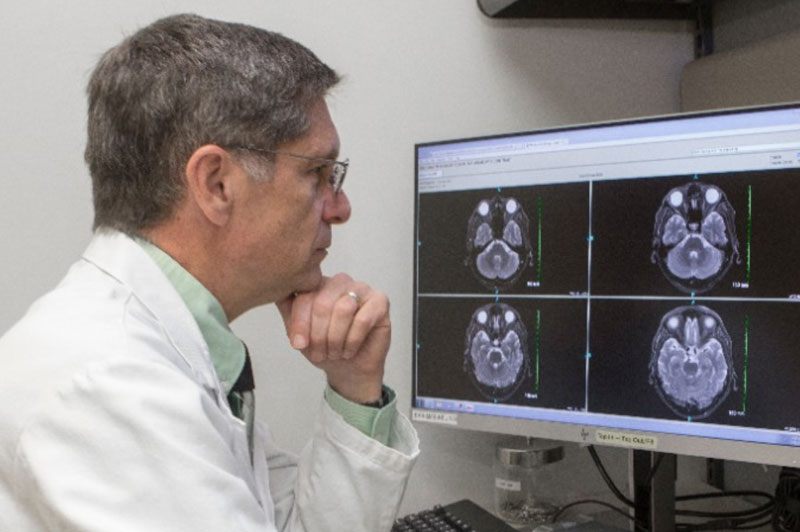
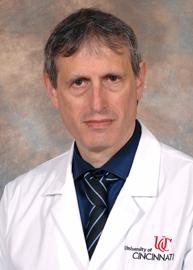
Cal Adler, MD. Photo/University of Cincinnati.
Faculty and staff in UC’s Department of Psychiatry and Behavioral Neuroscience will enroll approximately 500 Ohioans who will complete study procedures such as MRIs, EEGs, neuropsychological assessments, biospecimen collection and questionnaires.
“Better understanding biomarkers of risk and resilience among Cincinnatians is in line with our department’s vision to advance the understanding and treatment of psychiatric disorders,” said Cal Adler, MD, professor, vice chair of research, co-director of the Division of Bipolar Disorders Research, director of the Center for Imaging Research in the Department of Psychiatry and Behavioral Neuroscience at UC’s College of Medicine and a UC Health physician. “We have already begun to enroll Ohio families and anticipate engaging over 200 participants over the next year.”
“This important SOAR Study builds on our long-standing academic health mission, and we are proud to champion this vital research to help all Ohioans,” said John J. Warner, MD, chief executive officer at The Ohio State University Wexner Medical Center and executive vice president at Ohio State. “Mental health care is health care, and this study will help us inform prevention and treatment strategies to advance patient-centered care and influence the way we train our future care providers.”
Leaders of the study say SOAR aims to do for addiction, mental illness and mental health what Framingham Heart Study researchers did for heart disease and heart health. Launched in 1948, the multigenerational Framingham Heart Study has enrolled more than 15,000 study participants over 75 years, resulting in major life-saving advancements about heart disease risk factors.
“Our approach with the SOAR Study will allow us to identify the factors that can be modified to reduce risk and build resilience,” said SOAR Study principal investigator K. Luan Phan, MD, professor and chair of the Department of Psychiatry and Behavioral Health at Ohio State. “We won’t be able to ‘bend the curve’ on the growing number of deaths of despair, such as those from addiction and suicide, until we go upstream to better understand their etiology. SOAR is the first statewide, multigenerational comprehensive study in the nation that will offer a new roadmap for developing better treatments and cures that will improve and save lives.”
Impact Lives Here
The University of Cincinnati is leading public urban universities into a new era of innovation and impact. Our faculty, staff and students are saving lives, changing outcomes and bending the future in our city’s direction. Next Lives Here.
If you are interested in participating in this study, please reach out to the UC study coordinator, Rachel, at 513-558-5319.
If you or someone you know is struggling with thoughts of suicide, call or text the Suicide and Crisis Lifeline at 988.
David Miller is the Managing Editor of Loveland Magazine
by David Miller
Loveland, Ohio – Today in the gym of Loveland High School (LHS), six student athletes signed their letter of intent to accept college scholarships and play their sport at the next level.
Athletic Director Rich Bryant introduced the students and their family, and read a short bio of the student’s accomplishments while at LHS.
Congratulations to the following student athletes who will be continuing their athletic and academic careers at the collegiate level:
Cody Hustead – Bluffton – Football
Mya Veeneman – Ohio Northern University – Soccer
Averi Case – University of Cincinnati – Cheer
Vinny DeSalvo – Transylvania University – Baseball
David Miller is the Managing Editor of Loveland Magazine
by David Miller
Loveland, Ohio – On National Letter of Intent Day in the Chuck Schmidt Gymnasium at Loveland High School, Athletic Director Rich Bryant officiated the Winter Athletic Signing Day ceremony.
Congratulations to the following student-athletes who will be continuing their athletic careers at the collegiate level:
Alexis Bullock – Soccer-Warner University
Drew Murnan– Cheer-University of Cincinnati
Drew Holman– Football-Ashland University
Julius Vorbroker– Football-Thomas More University
Zach Gleason– Lacrosse-University of Detroit Mercy
Sebastian Jordan – Lacrosse-Mount Vernon Nazarene University
National Signing Day is traditionally the first day that a high school senior can sign a binding National Letter of Intent for a collegiate sport with a school that is a member of the National Collegiate Athletic Association (NCAA) in the United States.*
Research from the University of Cincinnati shows that exposure to PFAS may delay the onset of puberty in girls. The research was published in the journal Environmental Health Perspectives.
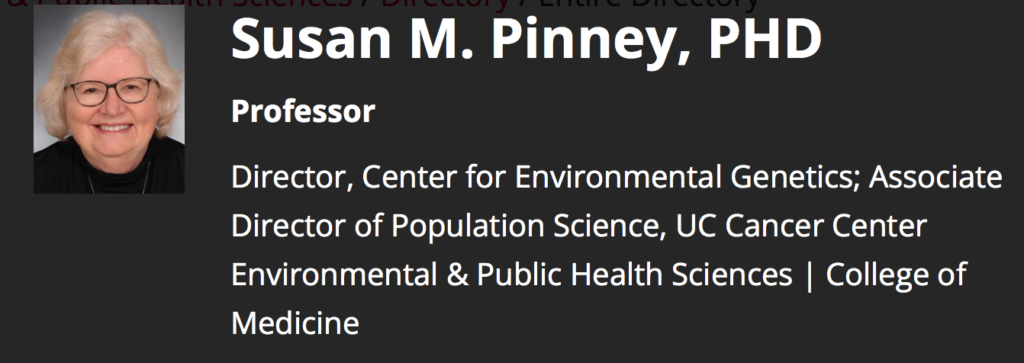
This study is the first longitudinal research that included the component of the role hormones play in the delay, according to Susan Pinney, PhD, of the Department of Environmental and Public Health Sciences in the UC College of Medicine and corresponding author of the study.
She says the delay of puberty in girls can lead to negative long-term health outcomes, including a higher incidence of breast cancer, renal disease and thyroid disease.
“Puberty is a window of susceptibility,” Pinney says. “Environmental exposures during puberty, not just to PFAS, but anything, have more of a potential for a long-term health effect. What these have done is extended the window of susceptibility, and it makes them more vulnerable for a longer period of time.”
The published research describes the findings from studying a total of 823 girls who were 6 to 8 years old when they were enrolled in the study — 379 were in the Greater Cincinnati area, the other 444 were in the San Francisco Bay Area. Researchers wanted to start the girls in the study before they hit the beginning of breast development. Then they followed them with exams every six to 12 months to see when they experienced the first signs of breast development and pubic hair.
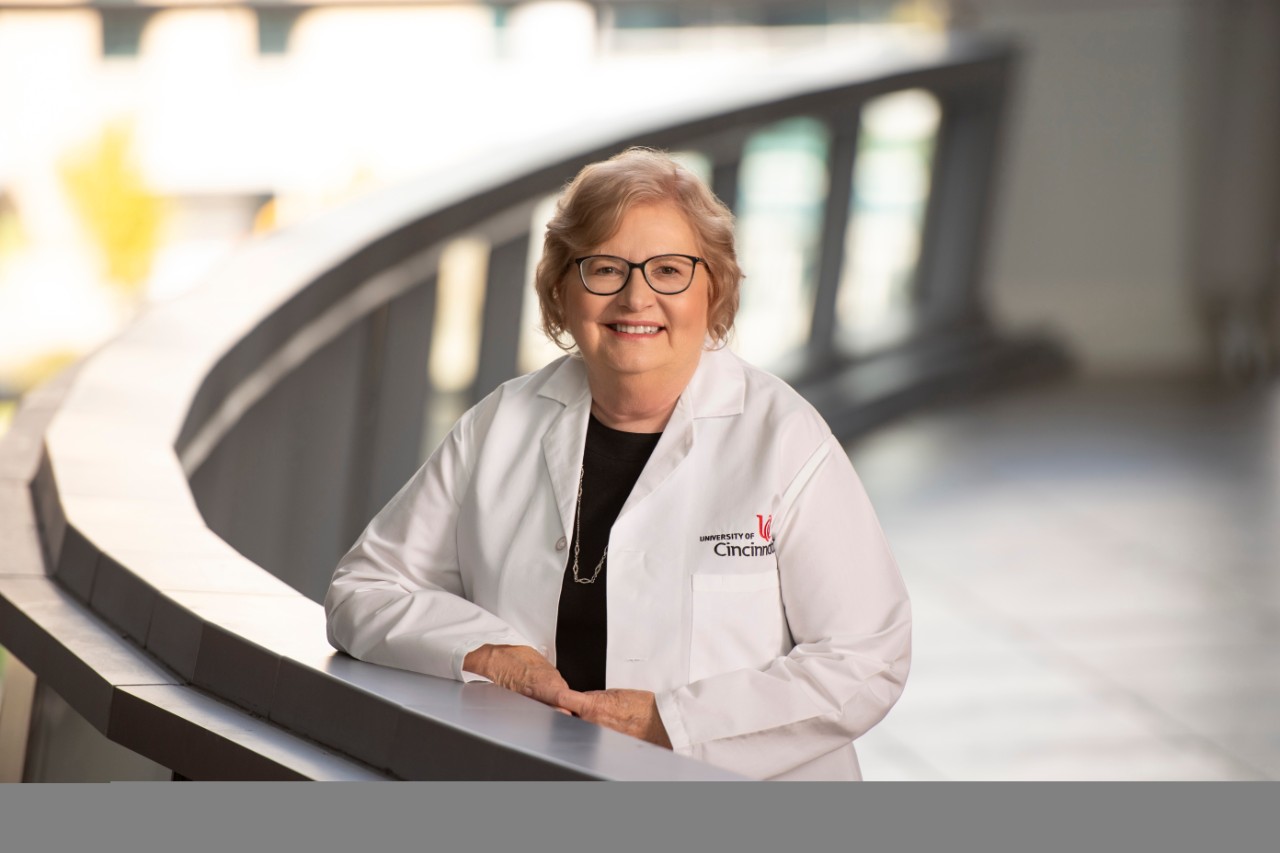
Susan Pinney, PhD, of the Department of Environmental and Public Health Sciences/Photo/Colleen Kelley/UC Marketing + Brand
The results found that 85% of the girls in the two cohorts had measurable levels of PFAS. Pinney says this PFAS research is unique because the hormone component was included and they discovered evidence of decreased hormones. The hormones that were decreased with PFAS exposure were consistent with findings of the delay of the onset of puberty.
“The study found that in girls with PFAS exposure puberty is delayed five or six months on average but there will be some girls where it’s delayed a lot more and others that it wasn’t delayed at all,” Pinney says. “We are especially concerned about the girls at the top end of the spectrum where it’s delayed more.”
The study also found that over 99% of the girls in the two cohorts had measurable levels of PFOA, one of the most important of the PFAS.
Pinney points to several factors playing a role in PFAS exposure in Greater Cincinnati. The Ohio River is the main source of drinking water in the area and a DuPont plant near Parkersburg, West Virginia, released PFAS into the river for decades which flowed downstream to major water intakes on both sides of the river near eastern Hamilton County. PFAS were also present in firefighting foam and there is a firefighting training ground near those same water intakes.
Pinney, who has studied this topic for years in collaboration with the now-retired Frank Biro, MD, of Cincinnati Children’s Hospital and the Department of Pediatrics at the UC College of Medicine, says this and other studies raise the question of, considering the known dangers of PFAS, how did we get to this point? She points to the fact that the United States doesn’t follow the “precautionary principle” which is the principle that the introduction of a new product or process whose ultimate effects are disputed or unknown should be resisted.
“The evidence of PFAS being dangerous goes all the way back to the 1980s when chemists were doing studies, noticed that PFAS had the same chemical structure as other dangerous chemicals and they reported on it,” Pinney says. “It’s taken a very long time for us to recognize it as a human toxin. Meanwhile, all of these toxins got into our environment, and it’s going to take a long time before they leave.”
Pinney says one of the reasons is that PFAS do not degrade. Studies are being done to explore methods of breaking up the chemicals.
“It seems to take a long time to convince regulators about the health effects of PFAS,” she says. “We as scientists need to be more forceful with regulators and say, ‘Hey guys, you read the same science we read.’
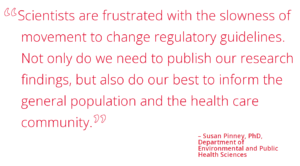
“The whole thing has been a learning experience for me. Scientists are frustrated with the slowness of movement to change regulatory guidelines. Not only do we need to publish our research findings, but also do our best to inform the general population and the health care community. Efforts toward environmental cleanup have begun but it is very costly.”
Featured image at top: vitranc/iStock
Republished with permission of the author. Bill David Bangert is the Public Information Officer for the University of Cincinnati.
Dr. Susan M. Pinney received her PhD from the University of Cincinnati and is a professor of Epidemiology at UC. She conducts a variety of large molecular epidemiology studies, with research focused on the genetic epidemiology of lung cancer, environmental factors that influence the age at pubertal milestones, and health effects of uranium exposure. Since 1990 she has been the Research Director of the Fernald Community Cohort with data and biospecimens collected over 18 years.
The Ohio Senate passed a bill Wednesday that would create “intellectual diversity” centers at Ohio State University, the University of Toledo, Miami University, Cleveland State University, and the University of Cincinnati.
The party line vote came after an amendment was added during the Senate session that tacks on Miami, Cleveland State, and Cincinnati to Senate Bill 117. The bill now moves to the House for committee consideration.
SB 117 would create the Salmon P. Chase Center for Civics, Culture, and Society at Ohio State University’s College of Public Affairs and the Institute of American Constitutional Thought and Leadership at the University of Toledo’s College of Law. It would also now create centers for civics, culture and society at Miami, Cleveland State and Cincinnati.
“The (Ohio State) center will educate students by means of free, open and rigorous intellectual inquiry, to seek truth, equip students with the skills they need to reach their own informed conclusions in matters of social and political importance,” said Sen. Jerry Cirino, R-Kirtland, one of the bill’s sponsors.
SB 117 amendment
Many Senate Democrats slammed SB 117 and the amendment during Wednesday’s session.
“SB 117 is forcing the installation of conservative think-tanks at our public universities across the state of Ohio and they are using taxpayer money to do it,” said state Sen. Bill DeMora, D-Columbus.
“The amendment is atrocious,” said Sen. Catherine Ingram, D-Cincinnati.
Miami and Cleveland State were not aware of the potential amendment adding them to the bill before Wednesday afternoon’s Senate Session.
“They had absolutely no idea,” Senate Minority Leader Nickie Antonio, D-Lakewood, told reporters when she reached out to her alma mater Cleveland State. “They did not ask for it … and are very concerned about this being imposed on them.”
State Sen. Kent Smith, D-Euclid, did something similar with his alma maters Miami and Cleveland State, and both institutions of higher education said this was the first time they were hearing about the amendment.
“Committees are the best forums for thoroughly studying bills,” he said.
Senate President Matt Huffman said making the amendment on the Senate floor was not ideal.
“Certainly that’s not the best way to do these things,” he said to reporters. “I don’t like substantive floor amendments. We’re at a lengthy legislative break. Secondly, the House in their negotiations of essentially, at least for the moment, have rejected the concept of this higher education reform that we want to have. And so what we really want to do is tee these things up.”
The amendments also clarified that both these centers are “independent academic units in their respective universities,” Cirino said.
COLUMBUS, Ohio — JUNE 15: Senate Majority Floor Leader Rob McColley, R-Napoleon, speaks during the Ohio Senate session, June 15, 2023, at the Statehouse in Columbus, Ohio. (Photo by Graham Stokes for Ohio Capital Journal)
He introduced the bill in May along with Sen. Rob McColley, R-Napoleon — arguing that university faculty are predominantly liberal.
But McColley insisted Wednesday that SB 117 is not a conservative takeover of higher education.
“There is not a single letter, there is not a single word, there is not a single phrase that requires this to teach conservative principles,” he said. “The University of Toledo Law is supportive of this. The Ohio State University does not oppose this either.”
State Sen. Andrew Brenner, R-Delaware, said college students do want these centers, but are afraid to speak out.
“If they speak out, they are afraid it might impact their academic career,” he claimed.
The bill would give UT $1 million in fiscal year 2024 and $2 million in fiscal year 2025 for the Institute, and Ohio State $5 million in fiscal years 2024 and 2025 for the Center.
The bill’s amendment would each give Miami, Cleveland, and Cincinnati $2 million each fiscal year to support the centers, Cirino said.
McColley clarified that what’s in the proposed budget when it comes to SB 117 doesn’t include the three new universities that were added to the bill through Wednesday’s amendment.
The Ohio House has pushed back on the higher education bills being added to the budget.
“We’re maybe not going to get 117 in the budget,” Huffman said. “You don’t know what the deal is until there’s a deal. So we’re just putting 117 forward as a bill.”
Senate Bill 83, also introduced by Cirino and which would overhaul higher education, was added to the budget by the Senate.
Among other things, SB 83 would ban university staff and employees from striking, college students would be forced to take certain American history courses, professor tenure would be based around “bias,” and mandatory diversity, equity and inclusion training would be prohibited, with only specific exemptions.
“The House are not fans of 83,” Huffman said. “I think we’ve offered a pretty good higher education package that they rejected.”
While the constitutional deadline for Ohio Gov. Mike DeWine to sign the budget is Friday, it seems unclear at this point if that is actually going to happen.
“I’m optimistic and I think we’ll see what happens on Friday,” Huffmann said.
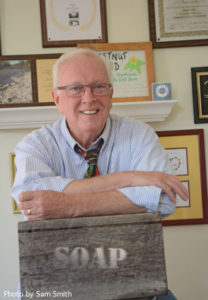
Lee Strang
Professor Lee Strang is the John W. Stoepler Professor of Law & Values at the University of Toledo Law School. (Photo from University of Toledo website.)
UT Law Professor Lee Strang first got the idea for the Institute of American Constitutional Thought and Leadership in 2019 after visiting the Georgetown Center for the Constitution and Princeton University’s James Madison Program.
Megan Henry is a reporter for the Ohio Capital Journal and has spent the last five years reporting on various topics including education, healthcare, business and crime at The Columbus Dispatch, part of the USA Today Network.
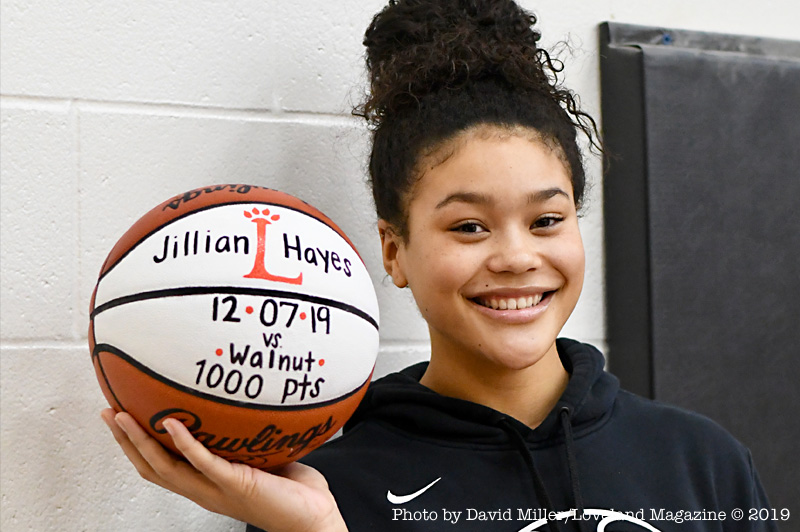
Former Loveland High School Women’s basketball star and current University of Cincinnati star Jillian Hayes and Aubrie Rasheed an Oregon State soccer player join together in their latest podcast, The Truth About NIL. The NCAA NIL rule allows college athletes to get paid.
HALF AN ATHLETE W/ JIL AND AUBS
Episode 1: The Truth About NIL
Join us on our 1st episode “The Truth About NIL,” where we talk about the gender gap in the world of NIL.


 By Cedric Ricks and U.C. News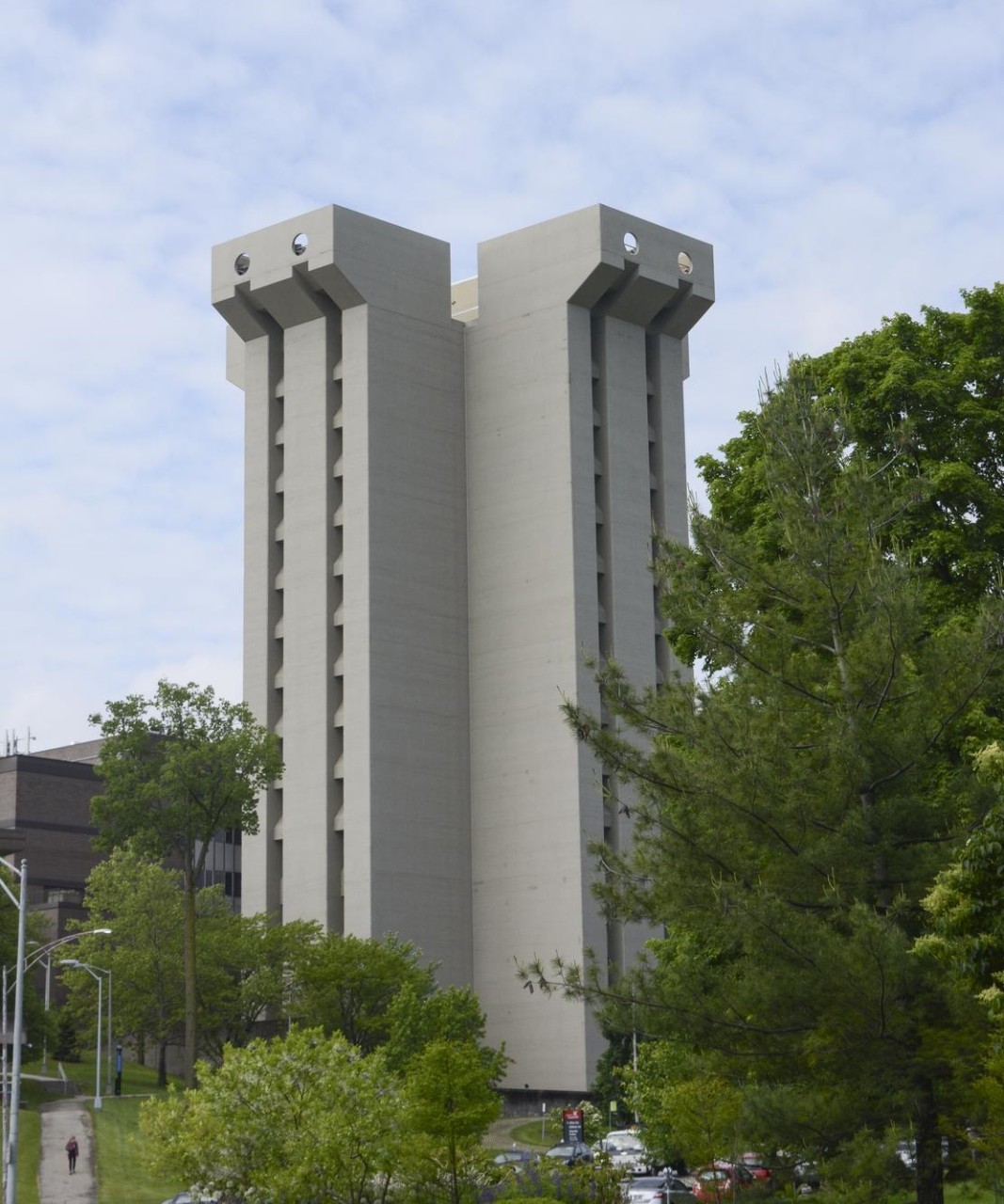




![[Video] Spring Athletic Signing Day at Loveland High School](https://lovelandmagazine.com/wp-content/uploads/2024/04/spring-athletic-signing-2024.jpg)

![[VIDEO] Winter athletic National Signing Day at Loveland High School](https://lovelandmagazine.com/wp-content/uploads/2024/02/national-signing-day-loveland-high-school.jpg)


 By
By 
 Pinney points to several factors playing a role in PFAS exposure in Greater Cincinnati. The Ohio River is the main source of drinking water in the area and a DuPont plant near Parkersburg, West Virginia, released PFAS into the river for decades which flowed downstream to major water intakes on both sides of the river near eastern Hamilton County. PFAS were also present in firefighting foam and there is a firefighting training ground near those same water intakes.
 Republished with permission of the author. Bill David Bangert is the Public Information Officer for the University of Cincinnati.