Tag: Vaccination

  • ‘5G towers,’ ‘magnetization’, other conspiracies flourish at hearing on vaccine bill

    ‘5G towers,’ ‘magnetization’, other conspiracies flourish at hearing on vaccine bill

    By Jake Zuckerman and Ohio Capital Journal edited by Loveland Magazine

    Columbus – A doctor warned that vaccinated people might be magnetized and pose a health risk to unvaccinated people around them.

    A pastor said vaccines contain ingredients like formaldehyde and fetal cells.

    A nurse sought to prove the truth of “magnetic vaccine crystals.”

    These statements — none of which are true — came during the Ohio House Health Committee’s review Tuesday of House Bill 248, a broad weakening of state vaccination laws. The five-hour hearing, limited to proponent testimony, devolved into a forum of fear-stoking, speculation, and conspiracy theorizing around the COVID-19 vaccines.

    Dr. Sherri Tenpenny, a board-certified physician from the Cleveland area, repeatedly raised unfounded claims of deaths, strokes and other “horrendous side effects” from the vaccine. The Center for Countering Digital Hate identified Tenpenny as one of a dozen of the most prolific anti-vaccination disinformers “who play leading roles in spreading digital misinformation about Covid vaccines.”

    At one point, Tenpenny made a claim to lawmakers, with no evidence behind it, that vaccinated people are somehow magnetized.

    “They can put a key on their forehead, it sticks. They can put spoons and forks all over them and they can stick, because now we think there’s a metal piece to that,” she said. “There’s been people who have long suspected that there was some sort of an interface, yet to be defined interface, between what’s being injected in these shots and all of the 5G towers.”

    Shortly thereafter, Tom Renz, a lawyer, testified in support of the bill as well. Renz has filed lawsuits in states around the U.S. crying foul of an array of government practices related to COVID-19 and vaccination.

    He filed one such case in Ohio, which he withdrew after U.S. District Judge James Carr called Renz’s arguments nearly “incomprehensible” and his supporting evidence “a jumble of alleged facts, conclusory and speculative assertions, personal and third-party allegations, opinions, and articles of dubious provenance and admissibility.”

    Renz, like several other witnesses, accused health officials of secretly profiting from vaccines while covering up their dangers.

    House Bill 248, co-sponsored by 16 House Republicans, would prohibit any of the following institutions from mandating, incentivizing, or “otherwise requesting” their employees, customers or students get vaccinated: businesses, hospitals, nursing homes, colleges, day-care centers, and insurers.

    It also:

    • Prohibits a person from mandating, requiring, or otherwise requesting that an individual receive a vaccine.
    • Compels public schools, which already accept exemptions for non-medical and medical reasons, to emphasize vaccine exemptions “in the same timing and manner, including text size and font, as it provides notice of the requirements.”
    • Blocks businesses from separating patrons by vaccination status or asking whether they’ve been vaccinated.

    Rep. Jennifer Gross, R-West Chester, the bill’s lead sponsor, has said she isn’t opposed to vaccination, but people should have the right to choose.

    “This is not a scientific bill,” she said last month. “This is a freedom bill.”

    Several public health experts have warned in interviews that the legislation will likely lead to sagging vaccination rates, and in turn, outbreaks of infectious disease.

    In the last two weeks, Gov. Mike DeWine, Ohio Department of Health Director Stephanie McCloud, and ODH Medical Director Dr. Bruce Vanderhoff declined to comment on the legislation.

    At a press call last week, a physician joined Vanderhoff for a largely unrelated press conference encouraging vaccination against COVID-19. When asked by a reporter about the bill, she didn’t share Vanderhoff’s reticence.

    “I’ll be very direct and say this bill threatens how we take care of children, and how we keep them healthy, and how we keep them alive,” said Dr. Patty Manning-Courtney, the chief of staff at Cincinnati Children’s Hospital.

    “To limit and restrict the ability to require vaccinations in schools or to check vaccination status, it’s almost unthinkable in a pediatric community to think that one of the best tools we have at prevention would be limited, restricted, or discussed in a way that is negative.”

    Similarly, a “vaccine coalition” of business groups along with the largest medical groups and associations in the state — including the Ohio Chamber of Commerce, the Ohio Hospital Association, the Ohio Children’s Hospital Association, Anthem, OhioHealth, and others — issued a public letter warning the legislation puts all children at risk.

    “At its core, this proposal would destroy our current public health framework that prevents outbreaks of potentially lethal diseases, threaten the stability of our economy as it recovers from a devastating pandemic, and jeopardize the way we live, learn, work and celebrate life,” the coalition wrote.

    An item that fully escaped the committee’s attention: during the hearing itself, the CDC published an early release of a report analyzing COVID-19 infections by age group and vaccination status.

    The researchers found occurrences of COVID-19 infection, hospitalization and death plummeted among Americans aged 65-and-up (about 82% of whom are vaccinated) compared to those aged 18-49 (about 42% of whom are vaccinated).

    The finding builds on mounting evidence of the COVID-19 vaccines’ safety and efficacy.

    The legislation drew immense support including more than 800 pieces of written testimony. The hearing room was virtually full, requiring two overflow rooms for supporters. At a lunch recess, a man stood outside the statehouse passing out faux vaccination cards with a vulgarity on the flip side.

    “Mandatory vaccines and masks are a joke … much like this card!” it states.

    In an interview after the hearing, House Health Chairman Scott Lipps, R-Franklin, said it’d be tough but possible to see the bill passed out of committee before lawmakers break for summer recess at the end of the month.

    He indicated looming amendments might narrow the bill, possibly restricting its focus solely to the flu or COVID-19 vaccine as opposed to its current form of all vaccinations.

    “If you could trim this bill down, you could pass it,” he said.

    During the hearing, Lipps tried to steer witness testimony and lawmakers’ inquiries toward the philosophical questions about the role of government in public health as opposed to litigating the safety and efficacy of vaccines. The attempts were largely unsuccessful with both proponents and opponents.

    He distanced himself from Tenpenny’s remarks.

    “I do believe Representative Gross requested Dr. Tenpenny to speak, and she got a little off balance, I think she got a little outside the lines of what we were intending or hoping to keep her in,” he said. “I hope that didn’t harm her credibility, but I think some committee members walked away with big questions.”

  • Covid ‘doesn’t discriminate by age’: Serious cases on the rise in younger adults

    Covid ‘doesn’t discriminate by age’: Serious cases on the rise in younger adults

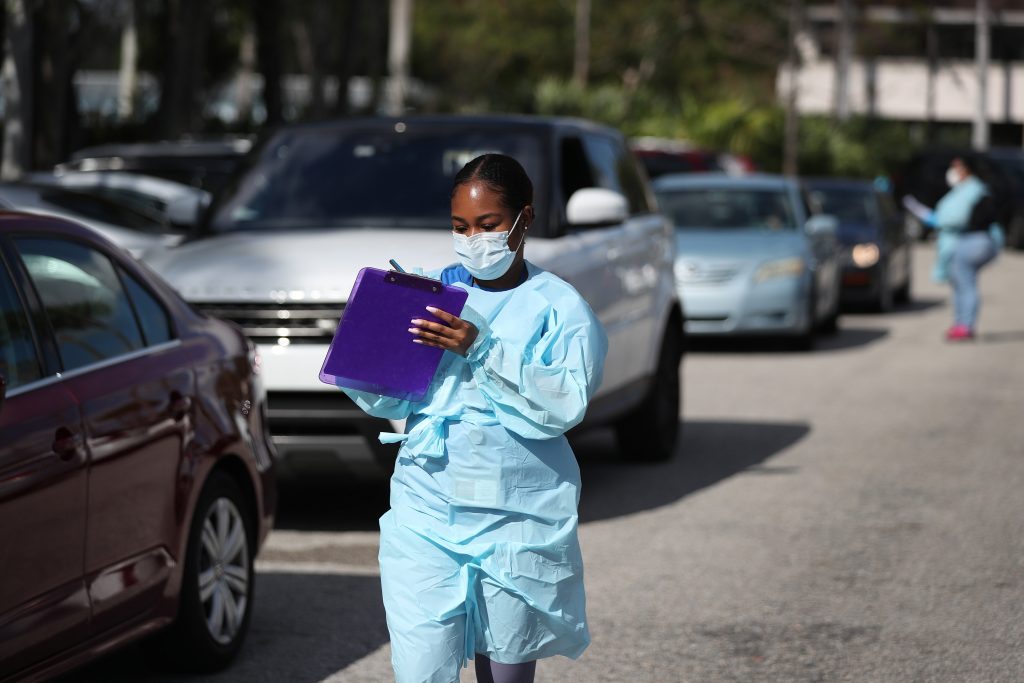
    Photo of drive-through COVID-19 screening by Joe Raedle/Getty Images.

    Guest Column By Will Stone, Kaiser Health News

    After spending much of the past year tending to elderly patients, doctors are seeing a clear demographic shift: young and middle-aged adults make up a growing share of the patients in covid-19 hospital wards.

    It’s both a sign of the country’s success in protecting the elderly through vaccination and an urgent reminder that younger generations will pay a heavy price if the outbreak is allowed to simmer in communities across the country.

    “We’re now seeing people in their 30s, 40s and 50s — young people who are really sick,” said Dr. Vishnu Chundi, a specialist in infectious diseases and chair of the Chicago Medical Society’s covid-19 task force. “Most of them make it, but some do not. … I just lost a 32-year-old with two children, so it’s heartbreaking.”

    Nationally, adults under 50 now account for the most hospitalized covid patients in the country — about 36% of all hospital admissions. Those ages 50 to 64 account for the second-highest number of hospitalizations, or about 31%. Meanwhile, hospitalizations among adults 65 and older have fallen significantly.

    About 32% of the U.S. population is now fully vaccinated, but the vast majority are people older than 65 — a group that was prioritized in the initial phase of the vaccine rollout.

    Although new infections are gradually declining nationwide, some regions have contended with a resurgence of the coronavirus in recent months — what some have called a “fourth wave” — propelled by the B.1.1.7 variant, first identified in the United Kingdom, which is estimated to be somewhere between 40% and 70% more contagious.

    As many states ditch pandemic precautions, this more virulent strain still has ample room to spread among the younger population, which remains broadly susceptible to the disease.

    The emergence of more dangerous strains of the virus in the U.S. — including variants first discovered in South Africa and Brazil — has made the vaccination effort all the more urgent.

    “We are in a whole different ballgame,” said Judith Malmgren, an epidemiologist at the University of Washington.

    Rising infections among young adults create a “reservoir of disease” that eventually “spills over into the rest of society” — one that has yet to reach herd immunity — and portends a broader surge in cases, she said.

    Fortunately, the chance of dying of covid remains very small for people under 50, but this age group can become seriously ill or experience long-term symptoms after the initial infection. People with underlying conditions such as obesity and heart disease are also more likely to become seriously ill.

    “B.1.1.7 doesn’t discriminate by age, and when it comes to young people, our messaging on this is still too soft,” Malmgren said.

    Hospitals Filled With Younger, Sicker People

    Across the country, the influx of younger patients with covid has startled clinicians who describe hospital beds filled with patients, many of whom appear sicker than what was seen during previous waves of the pandemic.

    “A lot of them are requiring ICU care,” said Dr. Michelle Barron, head of infection prevention and control at UCHealth, one of Colorado’s large hospital systems, as compared with earlier in the pandemic.

    The median age of covid patients at UCHealth hospitals has dropped by more than 10 years in the past few weeks, from 59 down to about 48 years old, Barron said.

    “I think we will continue to see that, especially if there’s not a lot of vaccine uptake in these groups,” she said.

    While most hospitals are far from the onslaught of illness seen during the winter, the explosion of cases in Michigan underscores the potential fallout of loosening restrictions when a large share of adults are not yet vaccinated.

    There’s strong evidence that all three vaccines being used in the U.S. provide good protection against the U.K. variant.

    One study suggests that the B.1.1.7 variant doesn’t lead to more severe illness, as was previously thought. However, patients infected with the variant appear more likely to have more of the virus in their bodies than those with the previously dominant strain, which may help explain why it spreads more easily.

    “We think that this may be causing more of these hospitalizations in younger people,” said Dr. Rachael Lee at the University of Alabama-Birmingham hospital.

    Lee’s hospital also has observed an uptick in younger patients. As in other Southern states, Alabama has a low rate of vaccine uptake.

    But even in Washington state, where much of the population is opting to get the vaccine, hospitalizations have been rising steadily since early March, especially among young people. In the Seattle area, more people in their 20s are now being hospitalized for covid than people in their 70s, according to Dr. Jeff Duchin, public health chief officer for Seattle and King County.

    “We don’t yet have enough younger adults vaccinated to counteract the increased ease with which the variants spread,” said Duchin at a recent press briefing.

    Nationwide, about 32% of people in their 40s are fully vaccinated, compared with 27% of people in their 30s. That share drops to about 18% for 18- to 29-year-olds.

    “I’m hopeful that the death curve is not going to rise as fast, but it is putting a strain on the health system,” said Dr. Nathaniel Schlicher, an emergency physician and president of the Washington State Medical Association.

    Schlicher, also in his late 30s, recalls with horror two of his recent patients — close to his age and previously healthy — who were admitted with new-onset heart failure caused by covid.

    “I’ve seen that up close and that’s what scares the hell out of me,” he said.

    “I understand young people feeling invincible, but what I would just tell them is — don’t be afraid of dying, be afraid of heart failure, lung damage and not being able to do the things that you love to do.”

    Will Younger Adults Get Vaccinated?

    Doctors and public health experts hope that the troubling spike in hospitalizations among the younger demographic will be temporary — one that vaccines will soon counteract. It was only on April 19 that all adults became eligible for a covid vaccine, although they were available in some states much sooner.

    But some concerning national polls indicate a sizable portion of teens and adults in their 20s and 30s don’t necessarily have plans to get vaccinated.

    “We just need to make it super easy — not inconvenient in any way,” said Malmgren, the Washington epidemiologist. “We have to put our minds to it and think a little differently.”

    This story is part of a partnership that includes NPR and KHN.

    Subscribe to KHN’s free Morning Briefing.

  • Ohio Department of Health urges earlier vaccination as flu season approaches

    Ohio Department of Health urges earlier vaccination as flu season approaches

    With the approach of flu season, the Ohio Department of Health (ODH) is recommending all Ohioans 6 months and older get a flu shot as soon as possible. The Centers for Diseases Control and Prevention (CDC) is urging vaccination by the end of October.

    Flu activity traditionally begins to increase in October.

    Flu activity traditionally begins to increase in October and can last as late as May, with cases typically peaking between December and February. CDC recommends a yearly flu vaccine as the best protection against seasonal flu viruses. Flu vaccines have been updated this year to better match circulating flu viruses.

    Flu vaccines have been updated this year to better match circulating flu viruses.

    “Flu vaccination can help keep you from getting sick, missing work or school, and prevent flu-related hospitalization and death,” said Sietske de Fijter, State Epidemiologist and Chief, Bureau of Infectious Diseases. “Getting your flu shot helps protect all, including older adults, very young children, pregnant women, and people with certain long-term health conditions who are more vulnerable to serious flu complications.” Symptoms of influenza can include fever, cough, sore throat, body aches, headache, chills, and fatigue.

    “If you are sick with the flu, stay home from work or school to prevent spreading it to others,” said de Fijter.

    Although most people fully recover from the flu, some experience severe illness like pneumonia and respiratory failure, and the flu can sometimes be fatal. People who think that they may have the flu and are pregnant, have an underlying medical condition, or who are extremely ill should contact their healthcare provider immediately.

    Other effective ways to avoid getting or spreading it include: washing hands frequently or using alcohol-based hand sanitizer; covering coughs and sneezes with tissues or coughing or sneezing into elbows; avoiding touching eyes, nose and mouth; and staying home when sick and until fever-free for 24 hours without using fever-reducing medication.

    Flu vaccines are offered by many doctor’s offices, clinics, health departments, pharmacies and college health centers, as well as by many employers and some schools. While vaccination provides the greatest protection against the flu, other effective ways to avoid getting or spreading it include: washing hands frequently or using alcohol-based hand sanitizer; covering coughs and sneezes with tissues or coughing or sneezing into elbows; avoiding touching eyes, nose and mouth; and staying home when sick and until fever-free for 24 hours without using fever-reducing medication.

    CDC recommends that healthcare providers administer prescription antiviral medication as a second line of defense as soon as possible to patients with confirmed or suspected flu who are hospitalized, have severe illness, or may be at higher risk for flu complications.

    More information about influenza and flu activity in Ohio is available at www.flu.ohio.gov.


    New classes starting September 4th at Sangha Yoga in Historic Downtown

    Advertisement Sangha Yoga Studio in Loveland is offering 60 minute AM Yoga classes on Tuesday and Thursday mornings, beginning September 4th at 9:30 AM.


  • Sycamore and Country Day systems are experiencing high levels of influenza

    Sycamore and Country Day systems are experiencing high levels of influenza

    The Loveland District has not noticed any unusual flu-related illnesses, “Outside of a normal school year during flu season.”

    Schools in the Sycamore and Country Day systems are experiencing high levels of influenza (flu) and influenza-like illnesses, according to Hamilton County Public Health surveillance. Sycamore has reported 40 cases, while Country Day has reported 80.

     “As we all know, we are in the midst of a tough flu season,” says Hamilton County Health Commissioner, Tim Ingram.  “It’s important to remain vigilant and practice good prevention techniques, especially for seniors, the very young and school-aged children.”

    Vicki Falconi-Young, the District Nurse at Loveland High School told Loveland Magazine this morning that the District has not noticed any unusual flu-related illnesses, “Outside of a normal school year during flu season.”


    Hamilton County Public Health recommends:

    1. Get a flu vaccination
    2. Take everyday preventive actions, including:
      1. Stay away from sick people;
      2. Avoid touching your eyes, nose and mouth;
      3. Cough or sneeze into a tissue or your elbow;
      4. Wash hands frequently – clean hands prevent the spread of illness;
      5. Stay home if you are ill. In schools, separate sick children from the rest of the school population until they are able to get home. Keep children and staff home until they are without fever for 24 hours.
      6. For schools, clean and disinfect frequently-touched surfaces such as desks, door handles, keyboards, etc.
    3. Take antiviral drugs if your doctor prescribes them.

    According to the Health District, “It’s not too late to get vaccinated. As long as flu viruses are circulating, vaccination should continue throughout the flu season, even in February or later. There are many reasons to get a flu vaccine.”

    1. While flu vaccine can vary in how well it works, it is the best way to prevent flu illness and serious flu complications, including those that can result in hospitalization.
    2. Even with vaccine effectiveness in the range of 30 to 60 percent, flu vaccination prevents millions of illnesses and tens of thousands of flu-related hospitalizations each year.

    For more information on seasonal influenza and its prevention, visit hcph.org.


    Wards Corner Chiropractic & Sports Rehab

      Loveland chiropractor Douglas Portmann, DC at Wards Corner Chiropractic & Sports Rehab is one of the best chiropractors in the Loveland area
  • Flu activity in Ohio elevated to “Widespread”

    Flu activity in Ohio elevated to “Widespread”


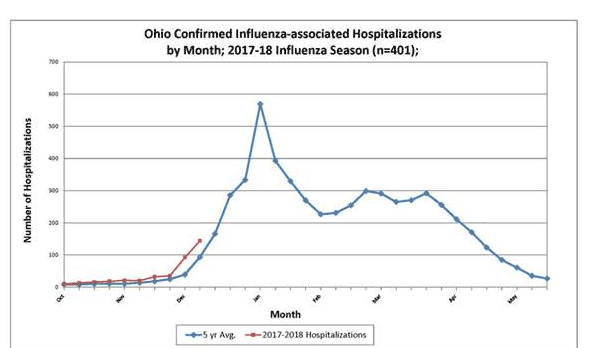
    New Flu-Associated Hospitalizations Continue to Trend Above Five-Year Average

    • The Ohio Department of Health issued a news release on Dec. 8 about rising flu activity, and the geographic spread being elevated to “regional.” 
    • Flu activity in Ohio has now been elevated to “widespread,” the highest level. During last year’s flu season, flu activity in Ohio didn’t reach “widespread” geographic spread until mid-January.
      • During the week ending Dec. 9 (most recent data available), there were 144 new flu-associated hospitalizations in Ohio, compared to 92 the week prior, and 29 during the same week last year. So far this flu season, there have been 401 flu-associated hospitalizations.
    • New flu-associated hospitalizations continue to trend above the five-year average (see below).
    • The Ohio Department of Health and the Centers for Disease Control and Prevention recommend that everyone six months and older get a flu shot as soon as possible.  It is not too late to get a flu shot. Vaccination is the best protection against seasonable flu viruses.


    513-683-1052
    215 Loveland-Madeira Rd

    Loveland, Ohio 45140