Tag: vote

  • Ohio Issue 1 and Issue 2 carry massive significance for younger voters

    Ohio Issue 1 and Issue 2 carry massive significance for younger voters

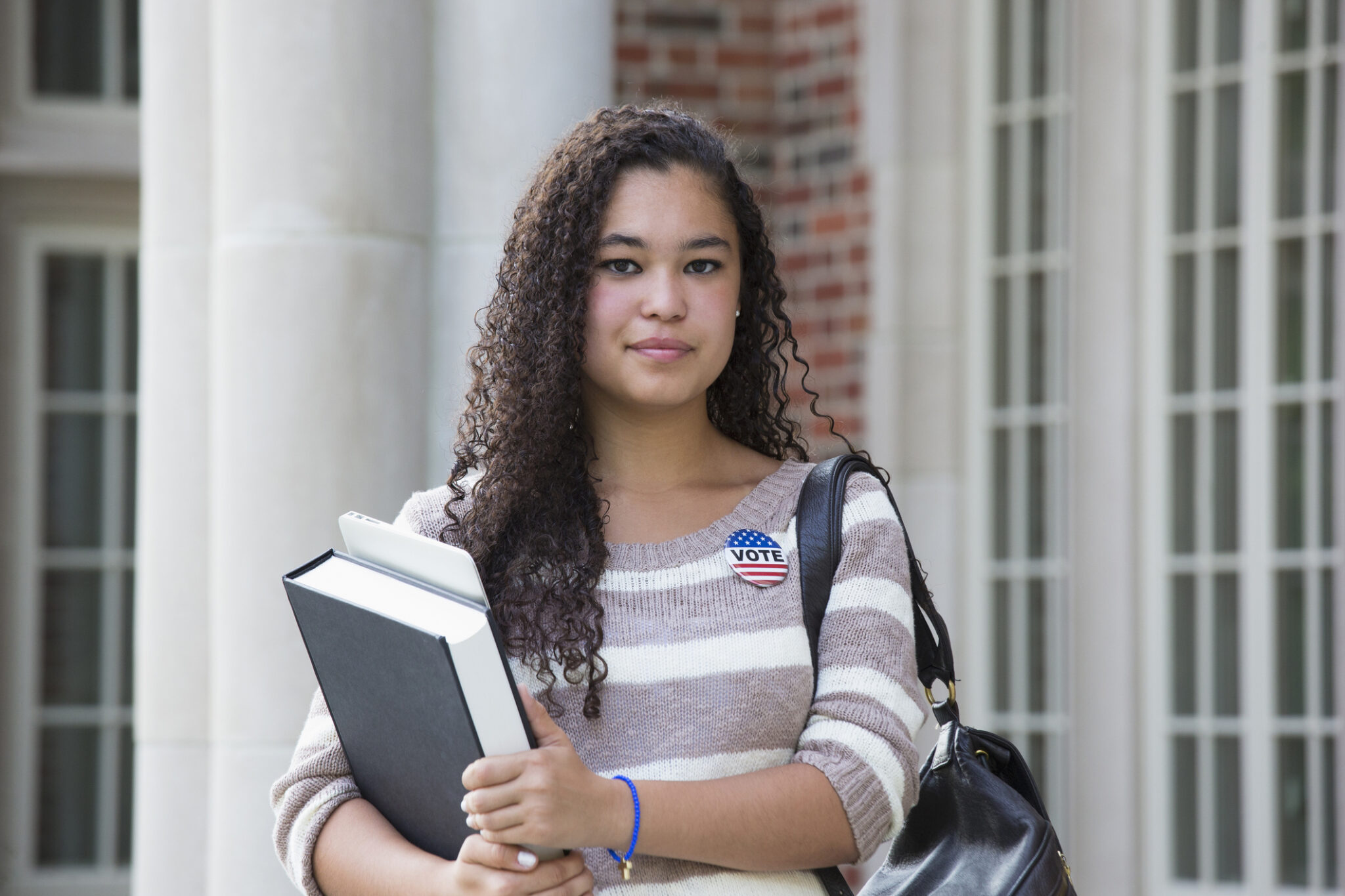
    A college student voter. Getty Images.

    COMMENTARY

    Gen Z and millennial voters could play an important role in deciding fate of reproductive rights amendment and marijuana law

    by David DeWitt

    For Gen Z and millennial Ohio voters, Issue 1 and Issue 2 are critically important. Whether we vote and how we vote will shape what kind of rights and freedoms we have for ourselves and our loved ones well into the future.

    Issue 1 would establish a state constitutional right to “make and carry out one’s own reproductive decisions,” including decisions about abortion, contraception, fertility treatment, miscarriage care, and continuing pregnancy.

    Issue 2 would create a new state law to legalize and regulate recreational marijuana for adults aged 21 and above, including cultivation, processing, sale, purchase, possession, and home growth.

    Tussling over legal access to abortion care and the criminalization of marijuana has shaped American politics for decades, and they stand as two issues where the consequences of law and policy fall heaviest on younger people.

    In an average of births in Ohio between 2019 and 2021, 4.9% were to women under the age of 20, and 2.5% were to women ages 40 and older, while 92.6% were to women ages 20 to 39, according to the March of Dimes.

    Using Ohio Department of Health statistics for 2022, patients 17 and under received 2.5% of abortions performed, and patients over age 40 received 3% of abortions performed, while patients between the ages of 18 and 40 received 94.5% of abortions performed.

    According to the FBI Crime Data Explorer — which does not sort by type of drug involved in state-by-state data — 60% of drug violations in Ohio in 2022 were charged against people between the ages of 20 and 39, a far higher percentage than any other age group. Nationwide, it wasn’t until 2020 that other drugs took over marijuana possession as the No. 1 reason for a drug-related arrest. Nevertheless, more than 315,000 people across America were arrested for marijuana possession in 2020, accounting for 27.5% of drug-related arrests. Also in 2020, Black Americans accounted for about 38.8% of marijuana possession arrests despite representing just 13.6% of the population.

    Younger voters are notoriously unreliable at showing up to vote during non-presidential elections, much less odd-number year elections. Even during presidential elections they show up to the polls at lower rates than other age groups.

    The 2020 presidential election, for instance, had the highest turnout of the 21st century, with 66.8% of citizens 18 years and older voting, but for voters ages 18 to 24, only 51.4% cast ballots, according to U.S. Census Bureau reports. In 2018, Americans ages 18 to 29 made up 11% of voters and 30% of non-voters, according to Pew Research Center. In 2022, they made up 10% of voters and 27% of non-voters.

    This Nov. 7 in Ohio, the stakes are highest for millennial and Gen Z voters. What kind of present and future do we want for ourselves and for Ohio?

    What rights do we want to establish in the constitution, or would we rather leave it up to the politicians to determine our generations’ access to reproductive medical care?

    What kind of freedom do we think adults 21 and over should have from criminal marijuana charges, or should Ohio continue to saddle adults with drug offense records over cannabis possession?

    Voting is our most precious and fundamental right, the spigot from which all of our other rights and freedoms flow. Gen Z and millennial generation voters must participate in these critical decisions, or we are relinquishing significant power over our lives to others who do not bear the same burdens of impact.

    As the writer David Foster Wallace observed, “In reality, there is no such thing as not voting: you either vote by voting, or you vote by staying home and tacitly doubling the value of some Diehard’s vote.”

    Early voting in Ohio has begun. Here is everything voters need to know:

    When do I vote?

    For early, in-person voting, vote at your local county board of elections on these days:

    • Oct. 26-27: 8:00 a.m. – 5:00 p.m.
    • Oct. 30: 7:30 a.m. – 7:30 p.m.
    • Oct. 31: 7:30 a.m. – 8:30 p.m.
    • Nov. 1-3: 7:30 a.m. – 7:30 p.m.
    • Nov. 4: 8:00 a.m. – 4:00 p.m.
    • Nov. 5: 1:00 p.m. – 5:00 p.m.

    Citizens can no longer vote on Nov. 6, the Monday before the election.

    Mailed absentee ballots must be postmarked by Nov. 6.

    On Election Day Nov. 7, vote at your polling location. Find your polling place by clicking or tapping here.

    Polls are open from 6:30 a.m. to 7:30 p.m. on Election Day. If you are in line at the time polls close, stay in line, because you can still cast your ballot.

    If absentee ballots are not returned by mail, they must be received by your board of elections by 7:30 p.m. on Election Day.

    What do I need to vote?

    In order to cast a ballot, voters must have an unexpired Photo ID such as a passport or driver’s license. Previously, voters were able to use non-photo documentation such as bank statements, government checks or utility bills to vote. That is no longer the case under a new law passed in Ohio last year. Student IDs are not considered valid under that law.

    CLICK HERE for more information on ID requirements.

    Here is the list of acceptable types of valid photo ID:

    • Ohio driver’s license
    • State of Ohio ID card
    • Interim ID form issued by the Ohio BMV
    • A US passport
    • A US passport card
    • US military ID card
    • Ohio National Guard ID card
    • US Department of Veterans Affairs ID card

    More information for voters

    To check your voter registration status, find your polling place, view your sample ballot and more, head to the Ohio Secretary of State’s VoteOhio.gov website.


    David DeWitt
    DAVID DEWITT

    OCJ Editor-in-Chief and Columnist David DeWitt has been covering government, politics, and policy in Ohio since 2007, including education, health care, crime and courts, poverty, state and local government, business, labor, energy, environment, and social issues. He has worked for the National Journal, The New York Observer, The Athens NEWS, and Plunderbund.com. He holds a bachelor’s degree from Ohio University’s E.W. Scripps School of Journalism and is a board member of the E.W. Scripps Society of Alumni and Friends. He can be found on Twitter @DC_DeWitt

    MORE FROM AUTHOR

  • Ballot measure making it harder to amend Ohio’s Constitution facing second lawsuit

    Ballot measure making it harder to amend Ohio’s Constitution facing second lawsuit

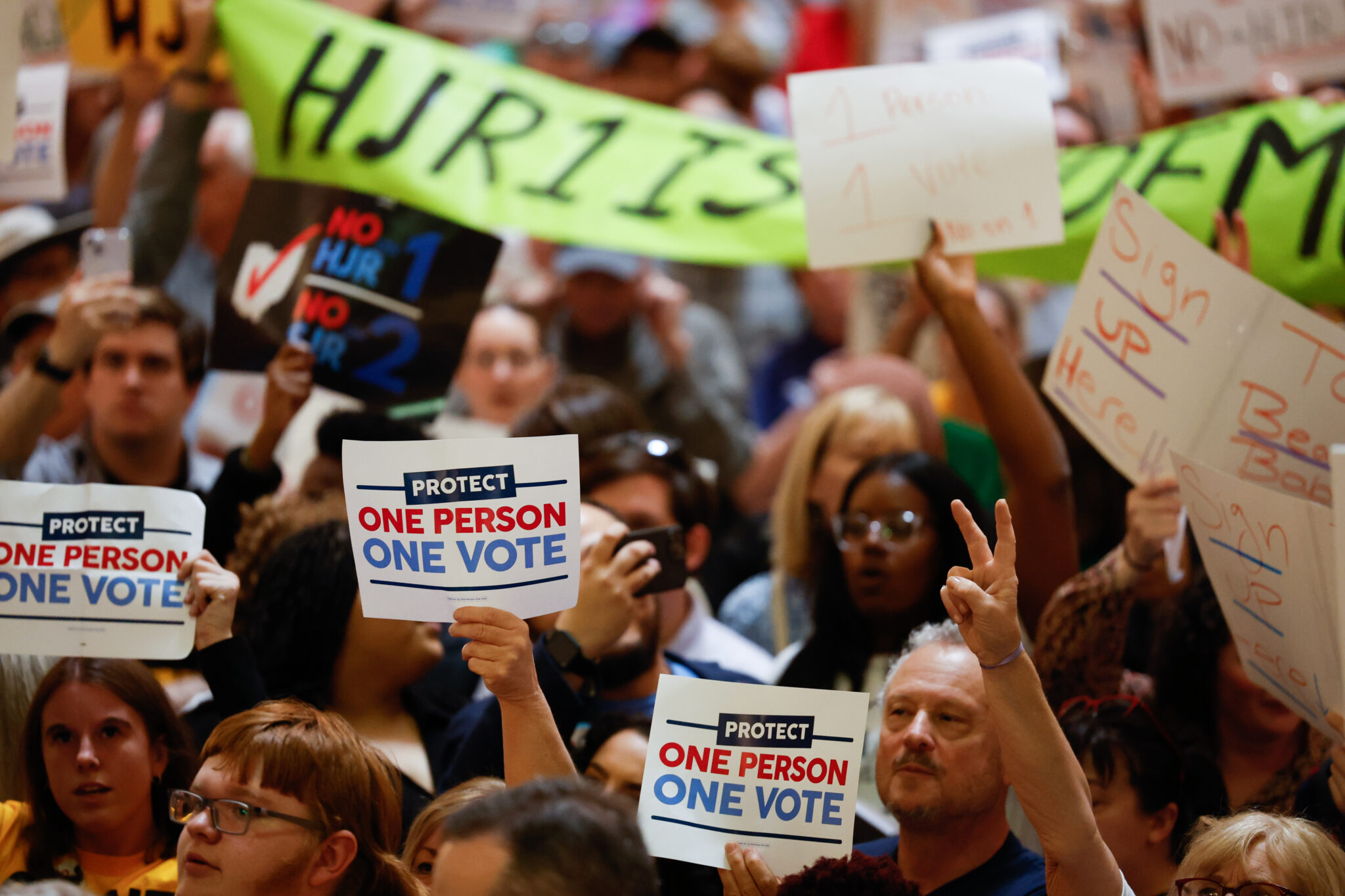
    The organization One Person One Vote has filed a second lawsuit, challenging the language recently approved by the Ohio Ballot Board

    BY:  – 

    The organization One Person One Vote has filed a new Supreme Court case related to an August amendment proposal looking to make it more difficult to change Ohio’s constitution. The organization has already challenged lawmakers’ attempt to place the question, which would raise the bar for voters to pass amendments from 50% to 60%, on the August special election ballot. The latest complaint has to do with the ballot language Ohioans will see when they cast their vote.

    The filing claims the ballot board adopted “a misleading, prejudicial ballot title and inaccurate, incomplete ballot language that improperly favor the Amendment in flagrant violation Ohio’s Constitution and laws and this Court’s jurisprudence.”

    The plaintiffs want to court to order revisions or substitute the full text of the amendment as the ballot language.

    The Ballot Board’s language

    It’s the board’s job to cut through the legalese and craft a neutral, easily understood description of what a given proposal will do. The secretary of state leads the five-member body, and due to constraints on members’ partisanship, the secretary effectively holds the deciding vote.

    At a hearing last week, an attorney for One Person One Vote brought up numerous critiques of the proposed language. The drafts made no mention of existing constitutional standards, employed words like “elevate” to cast the changes in a positive light, and even included factual inaccuracies about signature gathering.

    Nevertheless, the majority Republican board approved the language along party lines without any changes.

    The court challenge

    In its complaint, One Person One Vote elaborated on the shortcomings it identified in the ballot board hearing. Again, the group’s chief complaint had to do with the language identifying only the end result, rather than how the amendment changes existing law.

    Instead of explaining the threshold for approving constitutional amendments would rise from a simple majority to a 60% supermajority, the ballot board’s language only identifies the 60% threshold.

    “As a consequence, a voter might take the ballot language to mean that the people of Ohio do not presently get to vote on proposed amendments at all,” the complaint reads, “and might even understand the amendment itself to create that right in the first instance.”

    “Such a blatantly misleading omission contravenes fifty years of this Court’s precedents,” it adds.

    In addition to setting a higher threshold for passage, the amendment requires organizers collect signatures from all 88 counties instead of the 44 required now. It also eliminates a period in which organizers can collect additional signatures if their first submission falls short.

    The complaint found fault in how the ballot language explains both of those provisions, as well.

    One Person One Vote criticized the ballot language for saying the amendment “specif(ies)” that there won’t be a cure period, rather than explaining the amendment would eliminate it.

    On signature collection, the group argued the ballot language “does not clear even the minimal bar of factual accuracy.” It describes the requirement as 5% of a county’s eligible voters instead of the 5% who voted in that county in the previous gubernatorial election.

    “This is a considerable difference,” the complaint noted, “amounting in Hamilton County, for example, to a difference of nearly 15,000 signatures using 2022 figures.”

    Ask and outlook

    The plaintiffs want the court to direct the board to come up with new ballot language. They argue the new version must “must fully and accurately describe the status quo,” including that it has been the standard since 1912. Alternatively, they argue, the board could submit the proposed amendment’s text in full to voters.

    They also call on the court to direct Secretary LaRose to come up with a new title. “Elevating the standards,” they argue “implies that Ohio’s standards to amend its Constitution are currently too low.” The choice of ‘elevating’ rather than value neutral words like change or modify creates a “prejudicial” impression among voters.

    One Person One Vote claims they’re entitled to a rewrite because state law prohibits the ballot title and language misleading voters. The group notes the court’s case law establishes a three-part test. Voters have a right to know what they’re voting on, language that would persuade for or against the proposal is prohibited and the cumulative effect of any deficiencies dictates whether the language is valid.

    A spokesman for Secretary LaRose declined to weigh in on the lawsuit, saying only that “we don’t comment on litigation.”

    Follow OCJ Reporter Nick Evans on Twitter.

    ________________________

    Nick Evans
    NICK EVANS

    Nick Evans has spent the past seven years reporting for NPR member stations in Florida and Ohio. He got his start in Tallahassee, covering issues like redistricting, same sex marriage and medical marijuana. Since arriving in Columbus in 2018, he has covered everything from city council to football. His work on Ohio politics and local policing have been featured numerous times on NPR.

    MORE FROM AUTHOR

  • Vote for Paxton’s!

    Vote for Paxton’s!

    Loveland, Ohio – Paxton’s Grill located in Loveland’s Historic Downtown says they are honored to be one of three finalists in the Cincy Magazine’s Best of the East competition and would love your vote.

    Paxton’s is competing under the “Fast Casual” category and it takes just a few minutes and keystrokes to complete an entry. You can vote once a day through Sunday, January 8th.

  • Marcia Neumann: Reason to vote no on school operating levy

    Marcia Neumann: Reason to vote no on school operating levy

    by Marcia Neumann

    Marcia Neumann resides within the school district and the City of Loveland limits in Hamilton County.

  • Why we need to support Loveland students this election season

    Why we need to support Loveland students this election season

    by Allison Kiehl

    Since the failure of the 2020 tax levy in support of Loveland City Schools, it’s no secret that there has been a divide in the Loveland community. Through that election and for weeks after, vote yes and vote no signs dotted homeowners’ front lawns and businesses as if a symbol of pride for people on both sides of the issue.

    This divisive spirit was reinvigorated back in August of 2022 when the district once again announced that a school levy tax would be displayed on this year’s midterm ballot.

    Make no mistake, there were problems with the levy when it was presented back in 2020 that led to its doomful demise led to its failure rate of over 60%.

    Recognizing that voters were not ready to build a new campus at Grailville, the Board placed a 6.95 mill operating-only levy on the March 2020 ballot, however, it also failed by a wide margin.

    The school district has faced the repercussions of budget constraints. This most noticeably led to the loss of staff members and revoking of bussing for high school students, among other consequences.

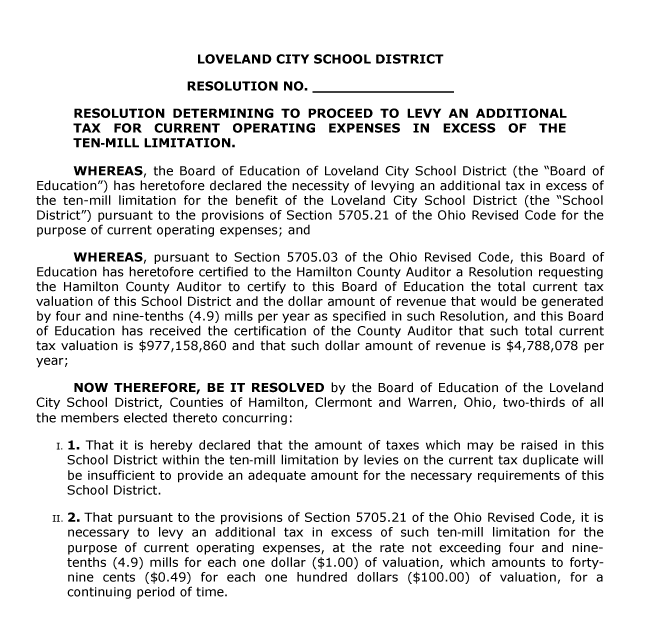
    However, the past failures then need to pave a pathway to success for this year’s initiative: a 4.9 mill operating levy for Loveland City Schools.

    This initiative is about the school’s current operational funding. It is about the individual students and teachers who would face the repercussions of further budget cuts including the looming potential of even more courses and staffing cuts within the district.

    “The state of Ohio is the only state without any inflationary adjustment for education funding. In order to maintain local control, we must either ask our community for additional funding or make substantial cuts,” reads the school’s website. “Before making cuts, and eliminating programs, we feel it is important to give the voters an opportunity to approve additional funding.”

    While the district has confirmed that if the levy does not pass, it will be “eliminating programs,” there is no confirmation as to what those programs will be. However, based on national trends, the possibility of the loss of music education within Loveland City Schools is a real, yet alarming prospect.

    According to the Arts Education Data Project, only 83% percent of schools in their area of research, which includes Ohio, have music programs offered to students. Nationally, the project projects there are over 2 million students without access to arts education.

    This number of students and schools without access to music education is expected to only go up, as The Trinity Voice reports that there has been a steady decline in music programs nationwide.

    After the fall of the 2020 levy, the music department suffered, by losing staff members and the remaining educators being burdened with additional responsibilities. Classes were cut, and students lost out on opportunities that have previously been offered.

    For example, guitar classes are one of the music electives that fell victim to budget cuts. Neither beginning or advanced guitar opportunities are available to students.

    Voters should not and cannot let this happen again because the students of Loveland deserve the very best education that the community can offer. They deserve to participate in music classes if not for the experience, then to gain the proven benefits of social-emotional learning, improved mental health, and increased test scores.

    According to the Journal of Research in Music Education, students ages who are involved with music are also better students. They generate higher standardized testing in studies conducted in both elementary school and secondary schools.

    More importantly, student participation in music is proven to make students happy. Research conducted by California State University San Marcos with middle and high school choir students at a mid-sized suburban school district.

    Students reported they liked the accepting class climate, the community and connections made between their classmates and teacher, and the subject matter’s activities that improve the student’s mood by making them happy and decreasing their stress, all aspects that increased their mood and success in school.

    According to the research, the independent variable of whether students joined the choir positively affected the dependent variable of whether students experienced an impact in their success in school.

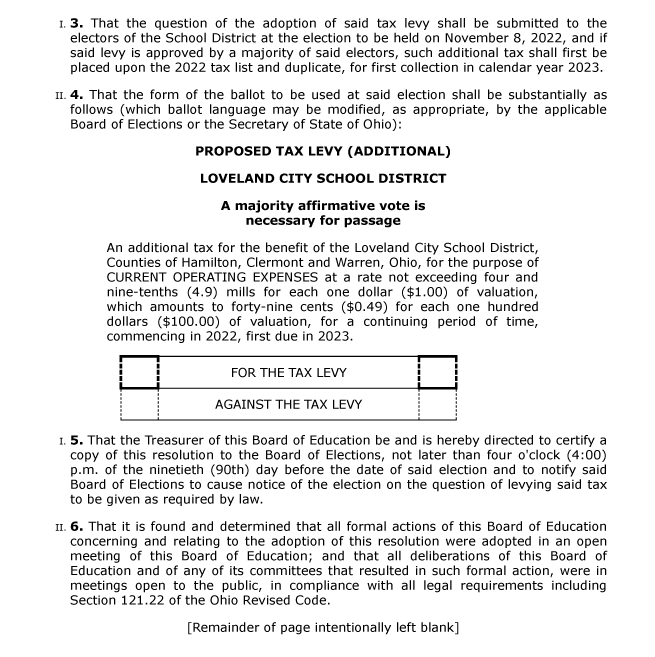
    Whatever opinions the community holds about the levy, it is important to understand the ballot language and what the initiative requires of the community. The ballot language of Issue four for 2022 reads as follows:

    “An additional tax for the benefit of the Loveland City School District for the purpose of current operating expenses at a rate not exceeding 4.9 mills for each one dollar of valuation, which amounts to $0.49 for each one hundred dollars of valuation, for a continuing period of time, commencing in 2022, first due in the calendar year 2023.”

    The levy is asking 4.9 mills for each dollar of valuation from the community, which is the smallest school levy that voters in Hamilton County will decide on this season. The money goes primarily toward staff salaries and benefits, along with various operating costs, according to Loveland City Schools.

    That cost varies depending on the household within the Loveland District, however, according to Redfin, the average home value within Loveland is around $300,000. Based on that average, the levy would cost the homeowner a little over $500 per year.

    The opposition to the levy speaks of issues with transparency, trust, and timing. However, if this levy does not pass, the students will be facing real consequences of “substantial budget cuts” as soon as the upcoming school year.

    For more information on what will be on your ballot this November or to find an in-person voting location nearest to you, please HERE for Hamilton County, HERE for Warren County, and HERE for Clermont County.

    This Election Day, November 8, at the polls, vote with students in mind. Your vote is one more ballot to help support music education and supports the students of Loveland City Schools because, we as a community, cannot sit back and watch further repercussions of failed-levy budget cuts.

  • Board of Education to consider Operating Levy on Tuesday

    Board of Education to consider Operating Levy on Tuesday

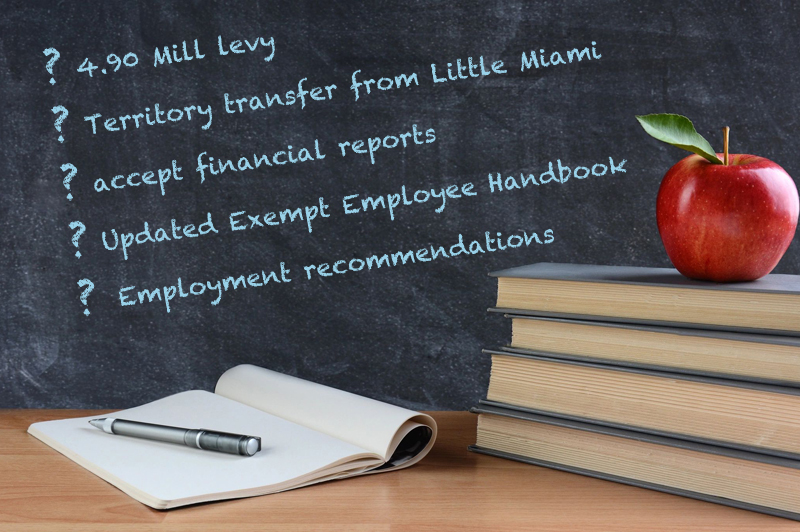
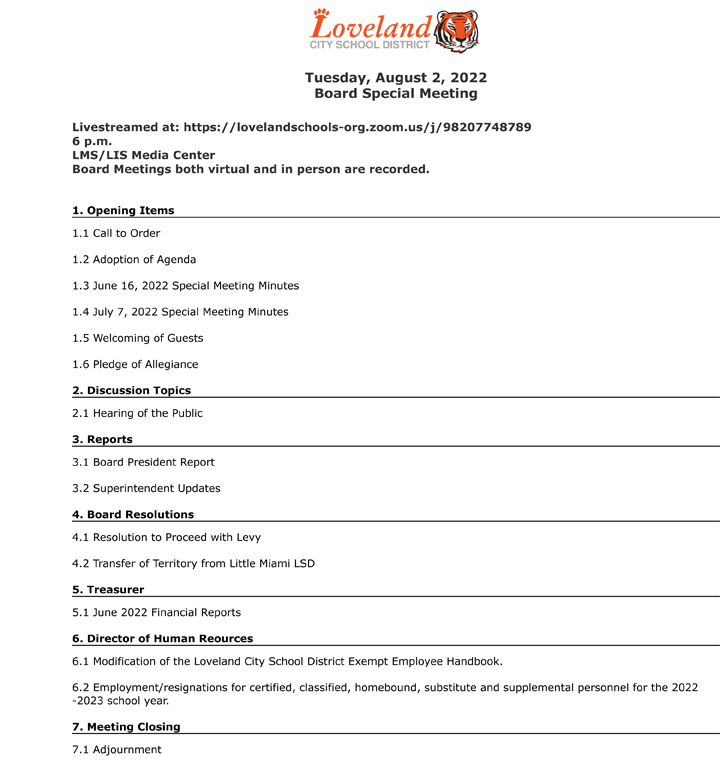
    Loveland, Ohio – A “Special Meeting” of the Loveland City School District Board Of Education will be held in the LIS/LMS Media Center at 757 South Lebanon Road on Tuesday August 2 at 6 PM. Among the agenda items that will be discussed is placing a 4.90 Mill levy on the ballot for the General Election on November 8.

    Background

    Loveland School Board approves first step to place operating levy on Fall ballot

    MORE:

    Also on the agenda is a discussion of accepting a territory transfer from the Little Miami School District, accepting financial reports, acting on an updated Exempt Employee Handbook, and acting on employment recommendations.

    In accordance with Policy 0169.1, public participation may be permitted at scheduled business meetings of the Board. “Hearing of the Public” will be included on the agenda of this meeting.

    The draft agenda:

  • City Council set for emergency vote on purchase of Mobil Gas Station in Historic Downtown

    City Council set for emergency vote on purchase of Mobil Gas Station in Historic Downtown

    by David Miller

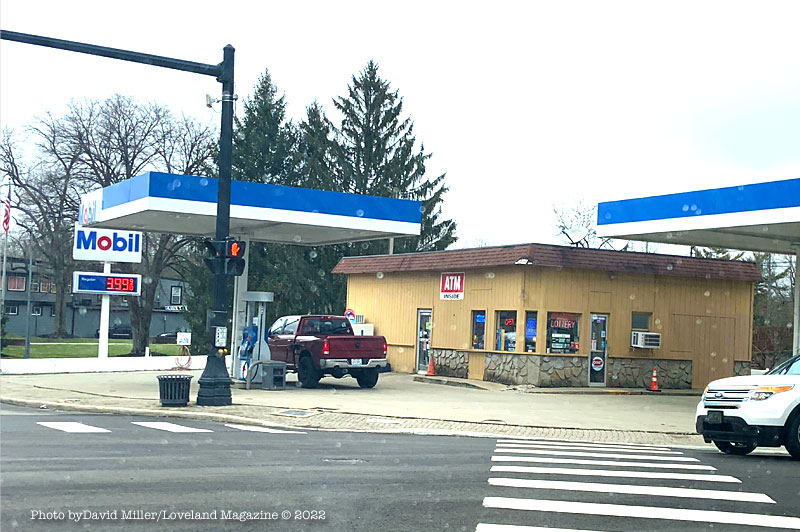
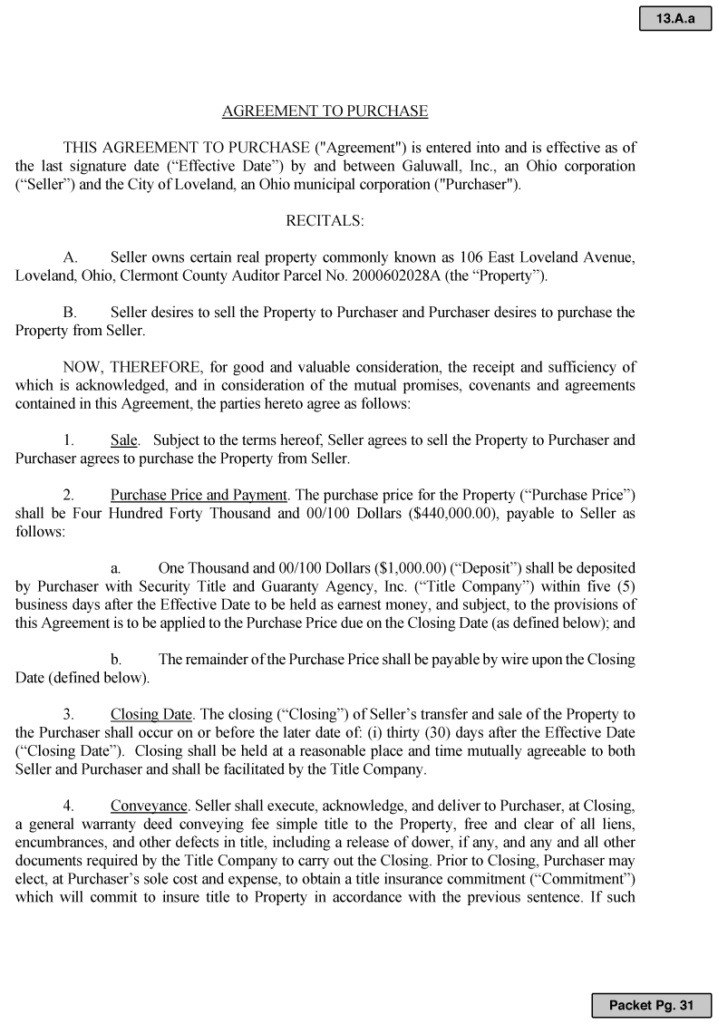
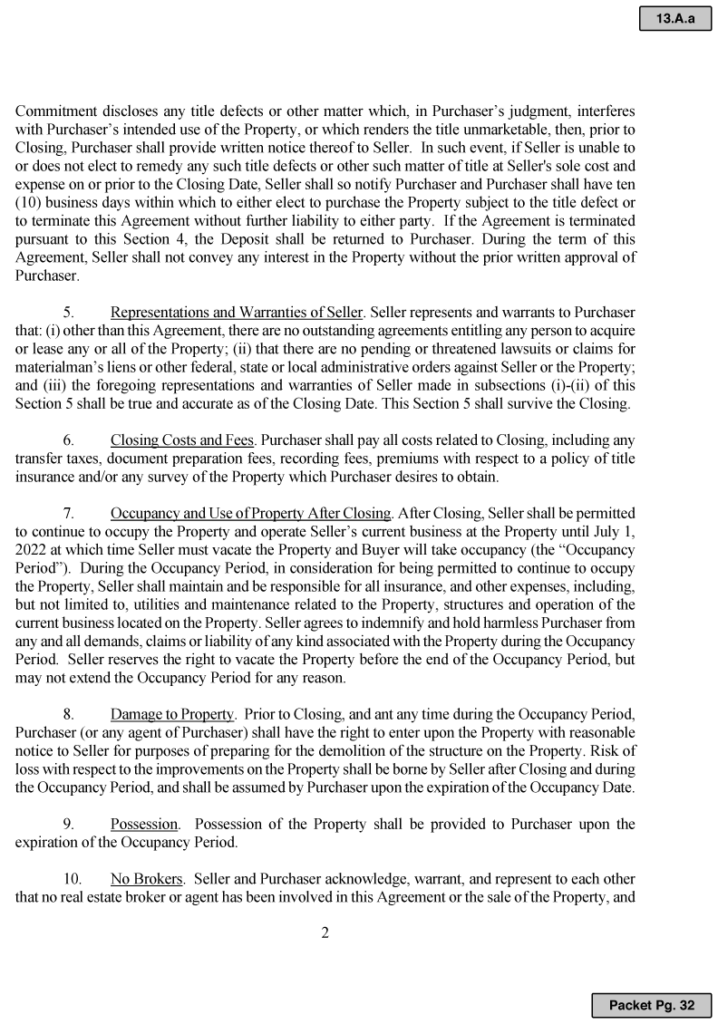
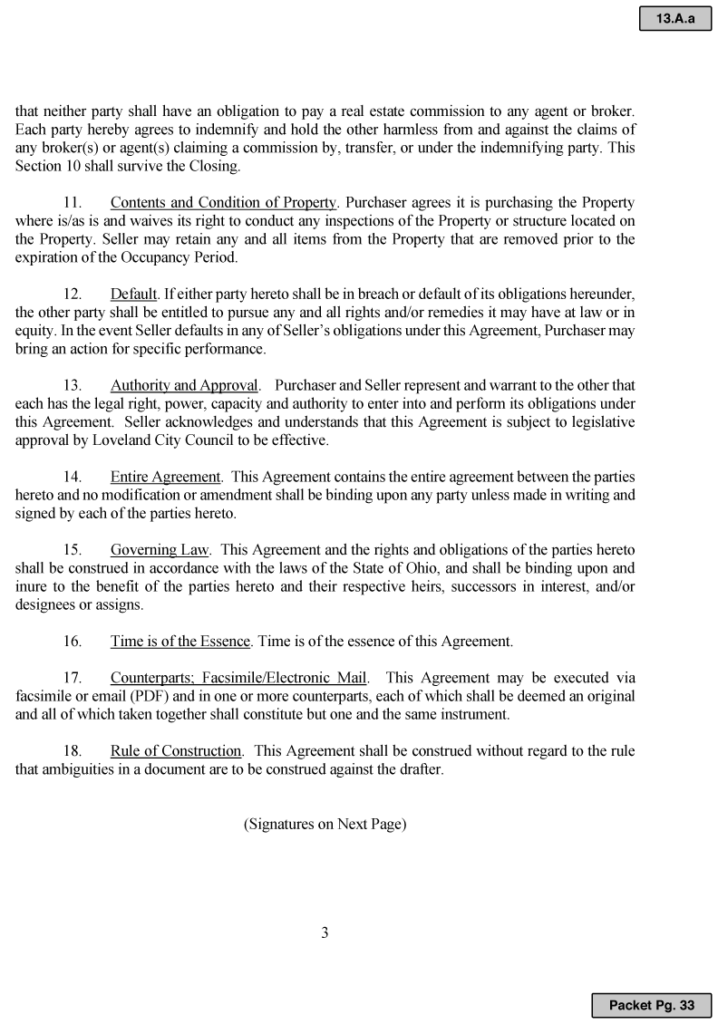
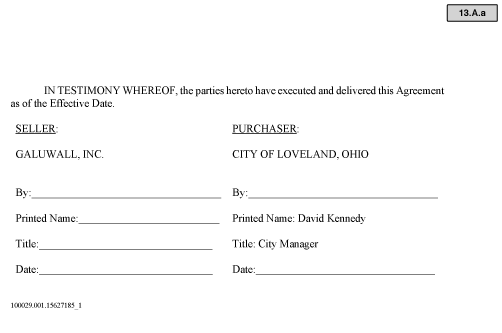
    Loveland, Ohio – At Tuesday’s meeting, Council will hear the first reading of an ordinance to purchase the Mobil Gas Station at the corner of West Loveland and State Route 48.

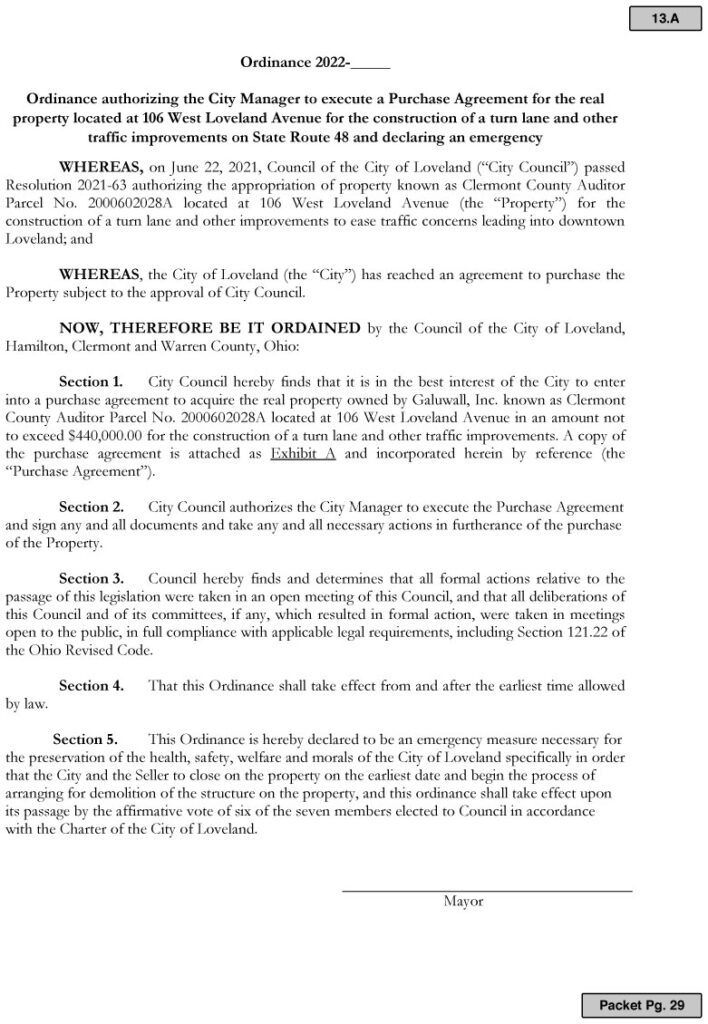
    The ordinance will authorize the City Manager to execute a purchase agreement for the property located at 106 West Loveland Avenue for the construction of a turn lane and other traffic improvements on State Route 48 – “and declaring an emergency”.

    The ordinance says the final purchase is not to exceed $440,000.00.

  • Open letter to Loveland City Hall about proposed parking garage from Citizens for Rights of the Ohio River Watershed

    Open letter to Loveland City Hall about proposed parking garage from Citizens for Rights of the Ohio River Watershed

    Dear Loveland City Council Members,

     Citizens for Rights of the Ohio River Watershed (CROW) is an organization that advocates for rights of communities dwelling within the watershed to protect the health, biodiversity, and safety of the Ohio River Watershed ecosystem. Government permits that put the fragile balance of this ecosystem at risk not only affect the functioning of the watershed as a living system, they deprive local communities from exercising their democratic rights to protect their own health and safety.  

    CROW joins the Sierra Club Miami Group in urging Loveland City Council to hold a public hearing before Loveland City Council takes a vote on the proposed downtown parking garage. Addressing the parking situation in Loveland should rightfully include all stakeholders in the discussion. 

    Some questions to consider:

    1. The Little Miami State Park, located within the beautiful and historic Little Miami River valley, has been designated as a federal and state scenic river. It is protected because of its high water quality, panoramic setting, and the many historic sites that can be found along its banks. In accordance with the provisions of chapter 1547 of the Ohio Revised Code, the Miami Valley Scenic Park has an Advisory Council representing local interests. Has this Advisory Council been consulted about the ecological viability of this proposed structure? 

    2. The Little Miami River traverses an ecologically vulnerable flood plain. Trail volunteers report the never-ending battle of keeping the trail free of conditions that cause flooding on parts of the trail-clogged culverts, erosion caused by bridge embankments, and other obstacles that interrupt the flow of water away from the trail surface. Even a few inches of rainfall can cause permanent flood damage. With the ground’s inability to absorb or impede the flow of water, the consequences can be disastrous. We can further expect Increased microbursts and flooding due to climate change. If you have done a geotechnical survey to study the subsurface conditions of the soil, was this survey conducted before or after a rainfall? Has a thorough environmental impact study been done? How many trees will need to be cut down to make room for this structure? Trees increase the permeability of the forest soils, preventing erosion and flooding. Other potential environmental impacts: Contamination due to increased particulate matter, increased noise pollution in Loveland, the potential increase in stormwater runoff from asphalt surfaces and bulldozed ground, and the laying down of detention basins, new water and sewer lines.

    3. If we really need a parking lot for bikers, have alternative proposals for downtown parking been considered? Since the garage would be 100 feet from the Little Miami River bike trail, presenting a potential environmental risk, why not locate the parking garage 1000 feet away from the flood plain? Bikers are fit enough to drop their bikes at the trail head and park their cars 1000 feet away. 

    The Citizens for Rights of the Ohio River Watershed (CROW) appreciate your consideration of our concerns, our questions, and our request. 

    Signed: Jeanne Nightingale, Jessica Schultz, Jim Schenk, Bill Cahalan, Deborah Jordan, Mary Aguilera, Susan Vonderhaar, Nikki Orlemann, Lynn Hamamoto, Frank Collins, Sue Brungs

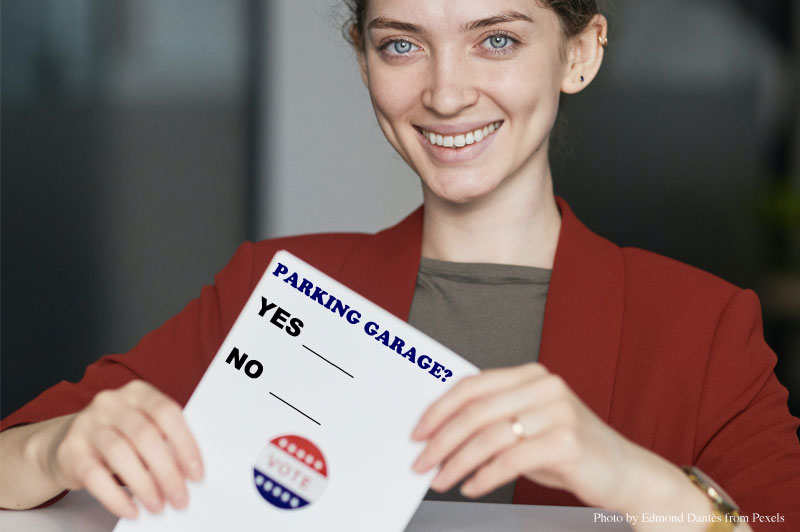
  • Let Loveland Heal – Create a Referendum for the Garage

    Let Loveland Heal – Create a Referendum for the Garage

    by Lauren Enda

    Loveland is a vibrant, bustling, and prosperous city. Which is why the question of increased parking space is an issue. People come to Loveland to live and visit because it is quaint and unique. Another asset that Loveland enjoys is an educated, engaged, and energized resident population. This is an asset that many towns would covet and that could be used to great advantage. Sadly, however, the mayor’s council continues to deny residents a vote on the parking garage, keeping them from actively participating in their own city. Instead of seeking a clear mandate through referendum to go forward with the plan, the council claims that all decisions, regardless of impact and cost, belong squarely with them. This lack of respect for residents’ role in Loveland’s future causes controversy and encourages mistrust of authority. A referendum would take away the controversy completely – the voters would have their say and all questions about the soundness of a garage and discord between residents on either side of the issue would simply dissolve.

    The council could easily calm this discord and start to heal the damage caused by the garage proposal. By creating a referendum for the garage, the council sends a clear, strong, unequivocal message that they care what voters think; that they listen to the will of the people; that they trust the residents to make wise, thoughtful decisions. There is a bonus to the referendum for newly elected council members. By voting in favor of the referendum, the new members would prove beyond doubt that they are living up to their campaign promises to listen to residents.

    Whether in favor of the garage or opposed to the garage, every resident in Loveland should have a voice in this momentous decision. And Loveland residents should not have to force the council into the referendum by collecting signatures. The path of pitting residents against council by collecting signatures to force a referendum is beneath Loveland city council and its constituency. This would only cause further distrust and anger among residents, which is not in Loveland’s best interest.

    According to Councilmember Bateman’s statement on 23 November 2021, democratic principles are alive and well in Loveland. This comment was seconded by Mayor Bailey. A referendum is your chance to prove it. Create a referendum and let democracy take its course. There is literally nothing to lose and everything to gain.

    Almost everyone agrees that the parking situation in Loveland needs attention. Let’s create a parking committee. Loveland has almost 20 committees and not one of them is tasked with parking. Let’s invite residents to investigate options and alternatives that will be cheaper, more flexible, and less intrusive. Let’s work together to gather data, define the problem, and come up with a range of solutions that can be openly discussed and debated. Working on this project could bring people together instead of causing strife.

    Myriad solutions are possible: institute valet parking; purchase an old-fashioned retro shuttle to get visitors to locations in downtown; increase use of Nature Preserve parking; use Loveland’s beautiful parks for events and gatherings instead of having every event in the downtown area. All of these could be accomplished for a fraction of what the garage would cost and keep our town quaint and unique. Each of these solutions would also greatly reduce traffic into the downtown area. Let’s take a breath, think outside the “parking garage” box, and have a conversation. Let’s work together to get it right.

    The decision on whether to build the proposed garage is too important to get wrong. And it isn’t important enough to tear the city apart.

    Do the right thing. Heal the conflict. Put the garage on a referendum.

    Lauren Enda lives in Loveland at Hidden Creek

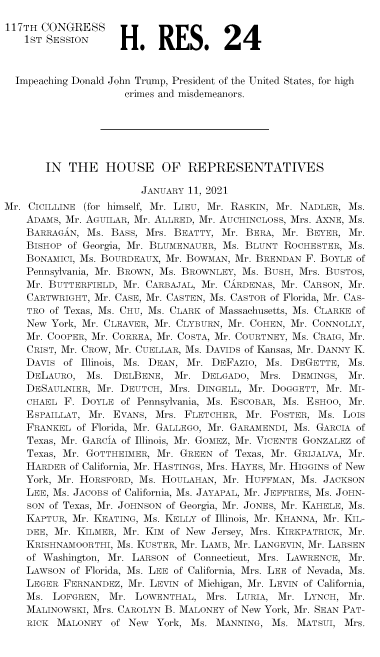
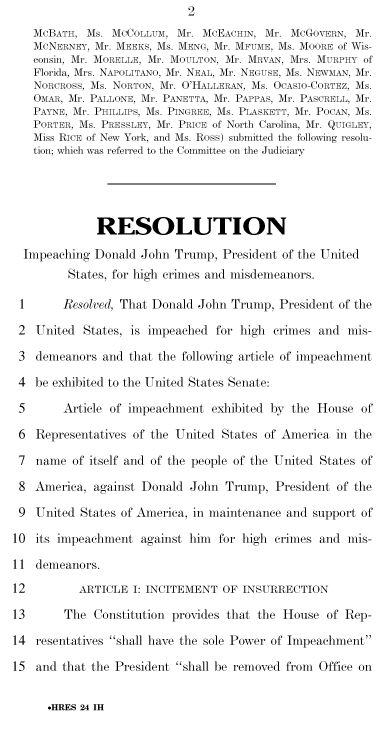
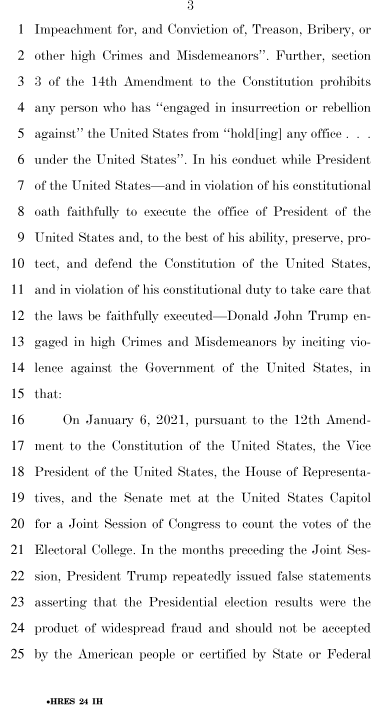
  • President impeached: Chabot and Wenstrup vote “NO”

    President impeached: Chabot and Wenstrup vote “NO”

    Loveland, Ohio – The Republican U.S. House members representing the Loveland area, Steve Chabot and Brad Wenstrup, voted today not to impeach President Donald Trump.

    The President was however impeached for the second time. Today’s vote was:

    231 YES

    197 NO

    5 NO VOTE

    Ten Republicans joined Democrats in voting for impeachment.

    Today’s vote was the second time in 14 months the Democratic-led U.S. House of Representatives has voted to impeach the president.

    Senate Leader, Mitch McConnell has said that he supported the impeachment, however he has neither said whether he will vote for removing the President from office or when he will allow a Senate vote.

    Chabot was one of the few Republicans who spoke today against impeachment during the House session. He did not address the allegations made against the President. He said he was against “snap impeachments”.

    Here are Chabot’s remarks:

    Wenstrup released the following statement after voting today against House Democrats’ articles of impeachment against President Trump:

    EDITOR’S NOTE AND CORRECTION (1/15/21 9 PM):

    Chris Krepich with Congressman Brad Wenstrup’s office contacted Loveland Magazine and informed us that the story we published “President impeached: Chabot and Wenstrup vote “NO” and dated 1/13/2021 “contains an old quote from Congressman Wenstrup regarding a different impeachment.” We apologize to the Congressman and our readers.

    Here is the correct statement:

    Washington, January 13, 2021

    WASHINGTON, D.C.—Today, Congressman Brad Wenstrup (OH-02) issued the following statement after voting against an article of impeachment against the President:

    “President-elect Joe Biden will be sworn in as the 46th President of the United States after running on a promise of uniting the country. Putting the country through another impeachment process in the last week of the President’s term in office will only further divide us. Public officials across the political spectrum need to collectively lower the temperature of our nation. We would best serve our constituents and the country by ensuring an orderly and peaceful transfer of power, rather than forcing through the House a rushed and inherently political impeachment.

    “Democratic leadership has stated they may delay transmitting the article of impeachment to the Senate for up to 100 days, and the Senate has already stated they cannot take up an impeachment trial until after President-elect Biden has been sworn in. Impeachment is a grave power; it must not be exercised in haste.

    “Investigations into the tragic events of January 6th are still ongoing. The facts of the day have not been fully uncovered. However, it is already clear that many came to Washington, D.C., prepared for violence before any words were spoken at the morning rally. It would be prudent to wait for all of the facts to come to light if we are to properly evaluate the gravity of the situation. If Members of Congress want to build a serious and credible case against President Trump, they should wait until we have a complete, factual understanding of what transpired. Given these concerns and limitations, I cannot support this impeachment that is markedly short of due process.

    “In the wake of these events, our nation – all of us – must take a deep breath and do some soul searching. Every individual American needs to take a long look in the mirror and examine what we say, how we say it, and the actions we take.

    “Last Wednesday’s extremely egregious events did not happen in a vacuum. Our country has seen escalating political violence in recent years, and individuals are responsible for the actions they take. Unfortunately, I am no stranger to that political violence, having survived the politically-motivated shooting by a far-left extremist inspired by Bernie Sanders on a baseball field four years ago. I chose then to not – and still do not – hold Senator Sanders responsible.

    “Ultimately, everyone is responsible for their own actions. I said that then, I said that during the riots of the past summer, and I say that again now.

    “Nobody should be encouraging or excusing violent riots of any sort, whether they gripped our cities last summer or infiltrated our Capitol last week. We cannot continue to say things like, ‘You create a crowd. And you push back on them’; ‘you have to go to the streets and be as violent as Antifa, BLM’; and, ‘People do what they do.’ Our words matter, and we cannot give encouragement or acceptance of violent behavior.

    “President Trump’s actions and words during the violence last Wednesday were inappropriate. He failed to quickly and unequivocally condemn the violence wrought upon the Capitol, which was bravely defended by our selfless Capitol Police Officers. Today, the President’s legacy is already entrenched in the minds of every American, as is the legacy of all those who have called for or committed violence in America.

    “The course we are on today will only cause more division rather than the unity we need. I will continue to work toward a more perfect union with peace, prosperity, liberty, and justice for all.”

    ###


    Tyler Buchanan with the Ohio Capital Journal said this afternoon that Chabot voted against certifying the Electoral College count of Pennsylvania, citing baseless claims that widespread fraud led President-elect Joe Biden to win that state. Chabot’s vote was made just a few hours after insurrectionists stormed the U.S. Capitol, a riot that left five dead.

    Marty Schladen reports in the Ohio Capital Journal that Ohio Gov. Mike Dewine called up the National Guard yesterday preparing for a possible attack on the Ohio Statehouse. Threats have been made that armed protests are planed for this Sunday and in conjunction with the Jan. 20 inauguration

    DeWine said he was activating 500 members of the Ohio Guard to protect the Statehouse and the U.S. Capitol. The Ohio Capital is currently being boarded up to prevent unauthorized entrance. The FBI reports that armed-protests are planned in all 50 states.

    You can report suspicious activities and crime by contacting your local FBI office 24 hours a day, seven days a week. You can also submit a tip electronically at tips.fbi.gov. You can contact the local FBI field office at:

    2012 Ronald Reagan Drive
    Cincinnati, OH 45236
    cincinnati.fbi.gov
    (513) 421-4310

    SUBMIT A TIP

    Schladen reports that DeWine said he would activate more members of the Guard if its commander recommends it or if Ohio mayors request a Guard presence in their cities. It “would certainly be our worst fear,” if Capitol Square in Columbus comes to resemble the scene in D.C. last week, the governor said.

    Contact your local FBI office or submit a tip electronically if you have information about:

    • Possible acts of terrorism, including violence, funding, or recruitment;
    • Persons sympathetic to terrorists or terrorist organizations;
    • Suspicious activities that you believe threaten national security, especially suspicious activities that involve foreign powers or foreign organizations;
    • Racial or hate crimes;
    • Organized crime activities;