Tag: warren county latest stories

  • Clermont County takes steps to improve water quality at Harsha Lake/East Fork State Park

    Clermont County takes steps to improve water quality at Harsha Lake/East Fork State Park

    Williamsburg, Ohio – Clermont County has taken another step in its effort to lessen harmful algal blooms (HABs) at Harsha Lake: Designing a system to capture storm water rich with fertilizer nutrients that feed the blooms.

    The Board of County Commissioners on July 18 approved a two-year, $42,400 contract with Sustainable Streams of Louisville to design a passive wetland system in Williamsburg for Harsha Lake source water protection.

    Boating on Harsh Lake

    According to the Centers for Disease Control, HABs are the rapid growth of cyanobacteria that can cause harm to animals, people, and the local ecology. A HAB can look like foam, scum, or mats on the surface of the water and can be different colors. Particularly large HABs can result in beach closures and prevent recreational use.
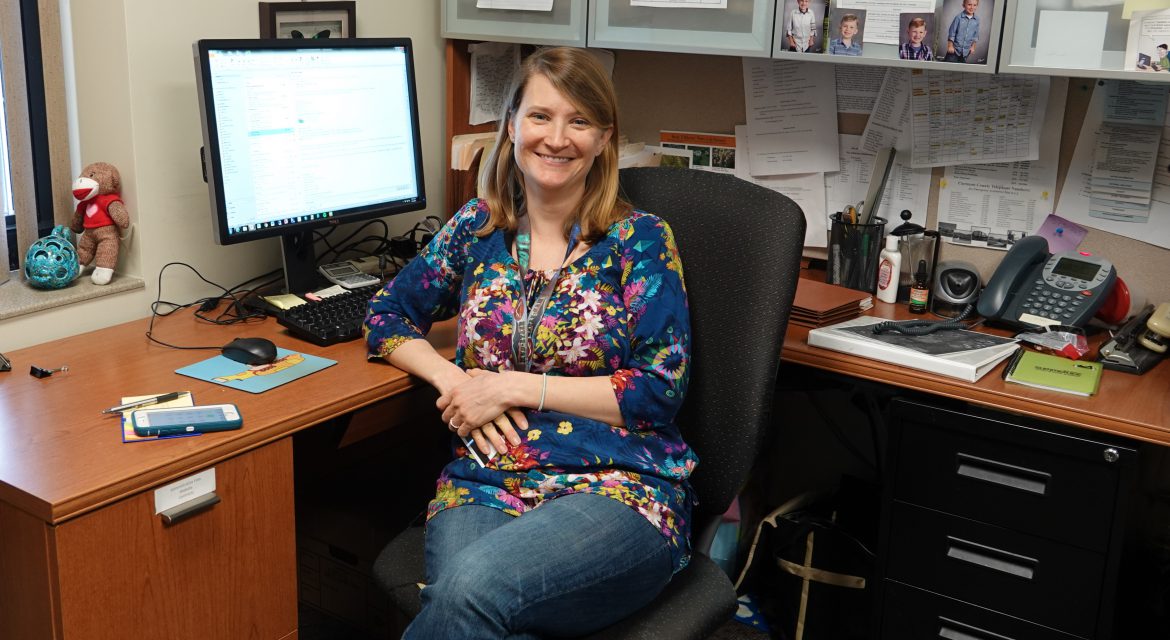
    Hannah Lubbers, Director, Clermont County Office of Environmental Quality (Photo Provided)

    “Wetlands have a natural ability to remove nutrients from surface water,” said Hannah Lubbers, Director, Clermont County Office of Environmental Quality. “Our study of a small scale constructed wetland in Jackson Township indicated they can be a cost effective method of reducing nutrient pollution.”

    Installation of wetlands, in combination with other agricultural and urban best management practices (BMPs), is part of the sourcewater and watershed protection programs being implemented by the East Fork Water Quality Cooperative (EFWC).

    Partners of the cooperative, including Clermont Soil and Water Conservation District, the County Commissioners, and the USEPA, aggressively pursue grant funding to improve local water quality and to date have directed over $2.25-million dollars to the watershed, including $215,500 set aside for construction of the wetland in Williamsburg. The EFWC partners also combine agency resources and technical services to advance watershed efforts.

    “Harsha Lake is a valuable resource for county residents and we are working hard to preserve that resource,” Lubbers said. “The Williamsburg project will provide invaluable water quality data and information to aid watershed efforts across the region and Ohio.”


    About William H. Harsha Lake

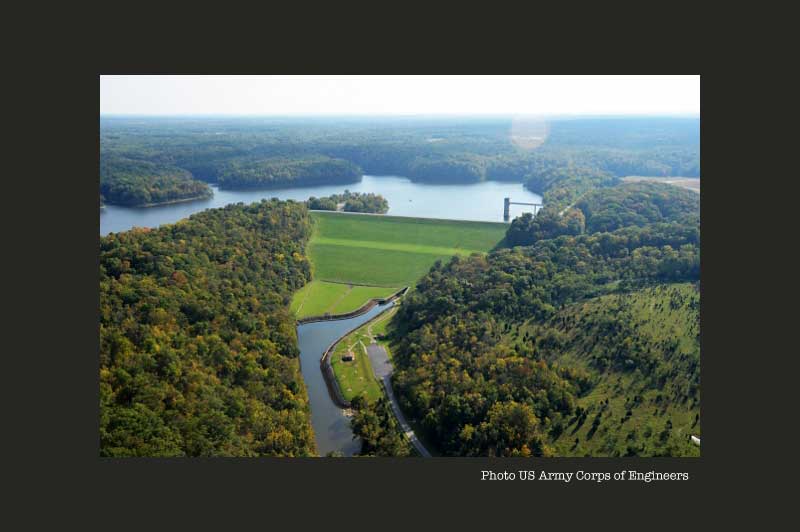
    Located on the East Fork of the Little Miami River in central Clermont County, William H. Harsha Lake and East Fork State Park offer outstanding boating, hiking, hunting, fishing, camping and other outdoor recreation activities.  William H. Harsha Lake is a multipurpose project for flood reduction, water supply, recreation, and wildlife habitat.  Originally called East Fork Lake, the dam and lake were renamed in 1981 to honor retired congressman William H. Harsha.  Mr. Harsha was elected to Congress in 1960 and served until his retirement in 1981.  He was instrumental in getting the funding appropriated to construct the project. MORE

  • District to host back-to-school information sessions

    District to host back-to-school information sessions

    Loveland, Ohio – The Loveland City School District will be hosting both virtual and in-person meetings to share the reopening plans for the 2020-2021 school year. (In unanimous vote Loveland Board of Education approves reopening plan)

    District and building administrators will be present to answer parent questions.

    The in-person sessions are reserved for families of current Loveland students.


    Wednesday, July 29   Students in grades 7-12

    11:30 AM until 1 PM  VIRTUAL MEETING via YouTube Live: https://youtu.be/idOPdhoSi8g

    Submit your questions in advance via this Google form.


    Wednesday, July 29   Students in grades 7-12

    6 until 8 PM  IN-PERSON MEETING in Loveland Intermediate School Cafeteria

    Presentation and Q and A.

    Sign up in advance at the following link in order for the District to maintain appropriate numbers (half of the normal capacity) and physical distancing: https://www.signupgenius.com/go/8050c45a8ac2faaf49-backtoschool

    Masks or facial coverings are required. Temperature checks will be given prior to entry into the meeting.


    Thursday, July 30   Students in grades PK-6

    11:30 AM until 1 PM  VIRTUAL MEETING via YouTube Live: https://youtu.be/-0z4eb_teFU

    Presentation and Q and A.

    Please submit your questions in advance via this Google form.


    Thursday, July 30   (students in grades PK-6): 

    6 until 8 PM  IN-PERSON MEETING in Loveland Intermediate School Cafeteria

    Presentation and Q and A.

    Sign up in advance at the following link in order for the District to maintain appropriate numbers (half of the normal capacity) and physical distancing: https://www.signupgenius.com/go/8050c45a8ac2faaf49-backtoschool1

    Masks or facial coverings are required. Temperature checks will be given prior to entry into the meeting.


    The District says that recordings of the meetings will be posted on the district website.

  • Pandemic, Pivot, Prosper – Panel of business leaders

    Pandemic, Pivot, Prosper – Panel of business leaders

    Advertisement
    Join us next week on July 30 for this powerful panel of business leaders who pivoted to make smart and impactful business decisions during the height of the pandemic shutdown.


    Virtual attendance option available!!

    Pandemic, Pivot, Prosper

    A Panel Discussion from Regional Business Leaders who took bold steps to pivot during the beginning of the pandemic.

    Coronavirus has made it critical for businesses to shift their business models and get creative. See how these regional business leaders pivoted their business to increase profits, impact their communities, and continue to see the benefits of those decisions.

    Panel Facilitated by Jack Peters, Executive Director of Advisor Development, Horter Investment Management.

    Please note that masks and social distancing are required at this event.

    Panel sponsored by FocusCFO and LMRCA. Drink ticket and giveaways included.

    Meet the Panelists:

    David Kennedy

    David has been the Loveland City Manager for six years, after serving as the Village Administrator of New Richmond Ohio for twenty five years.  His education includes a Bachelor Degree in Urban Planning form Miami University (Oxford) and a Master’s Degree in Community Planning from the University of Cincinnati.  He was born and raised on the west side of Cincinnati and has been married to Mary Jo for 30 years.  They have two Children, Anna and Jacob.

    Patrick Thompson

    Nurtur Salon began in 2006 at their current Lane Avenue location with less than 15 employees and a dream. Patrick Thompson, owner of Nurtur Salon as well as several Aveda Institutes (most notably Aveda Institute of Columbus) had a vision to deliver an unparalleled experience in a comfortable, non-judgmental environment. Nurtur Salon still strives (and excels) at this cultural mission to this day, even with three salon locations and 100 employees.  In 2012 Nurtur expanded from their original Upper Arlington location into a second location in the Grandview community with enormous success. In October 2015, Nurtur expanded into a third location in the Brewery District. In addition to this growth, Nurtur is proud to celebrate its tenth consecutive years as one of Salon Today Magazine’s Top 200 Salons. This speaks to their dedication to Nurtur’s team, guests, and community. With business growing at all their locations and their reputation in the beauty industry going strong, Nurtur has set their sights on a goal to open more salons in Columbus!

    Pete DeLois

    Pete DeLois is a family man through and through.  When he opened Recreations Outlet in 1989, it was with the intention of bringing joy to the families in his community.  For the past 30 years, Pete and his team at Rec Outlet have been hard at working building fun all over Ohio and the surrounding areas.  By specializing in only the highest quality wooden swing sets, top of the line basketball goals, and the safest trampolines on the market, customers know they can trust the expertise of the Rec Outlet team.

    Pete graduated from Kent State University in 1983 with a degree in Criminal Justice.  Prior to opening Recreations Outlet, he owned Invisible Fence of Cincinnati and Columbus from 1983 to 1995.  He loves baseball, racquetball, and all things food, but his passion will always be for his family.

  • Here is how the Great Oaks campuses will open in the Fall

    Here is how the Great Oaks campuses will open in the Fall

    Here is how the Great Oaks campuses will open in the Fall.

    Please note:  The following information applies only to high school students at Great Oaks campuses.

    Our community, and the world, continues to adapt to the ongoing pandemic. In all that we do at Great Oaks, the safety and health of our students, staff and visitors is our highest priority. Whenever students, staff and visitors are together in a Great Oaks building, we expect that social distancing (at a minimum of 6 feet) is practiced, face coverings will be worn by all, and the buildings and equipment will be frequently cleaned and sanitized. We also encourage such healthy personal habits as regular hand-washing. 

    The following information reflects the most recent planning; information can change if circumstances change.

    Update July 20, 2020

    Academic classes will be held online

    In order to maximize the amount of hands-on, career-technical education available to students, all in-person classes will be in the career lab with the career-technical instructor.  English, mathematics, social studies, and science classes will be held remotely.  Students will spend all day two days per week in their career-technical program.

    As part of this schedule, students will have time to meet individually with academic instructors while on campus, which will support their online learning.  It also means that the same group of students will stay in the same room—their career lab—for the full day, reducing the number of times per day needed to sanitize rooms as we would if students changed classes for multiple periods daily.

    Students will attend the campus on Mondays and Thursdays as part of the A group, or Tuesdays and Fridays as part of the B group.  During the remaining three days, students will work remotely on academic work and other homework, with Wednesday set aside for one-on-one remote assistance.

    This schedule will run for the first quarter, until October 16.


  • School Board gives go-ahead for $66K “Pandemic Preparedness and Planning” services

    School Board gives go-ahead for $66K “Pandemic Preparedness and Planning” services

    On whether schools will open on the date planned, Dr. Crouse said,

    “It’s sort of a dance there on whether we will be able to do that fully at first or whether we have to roll into that.”

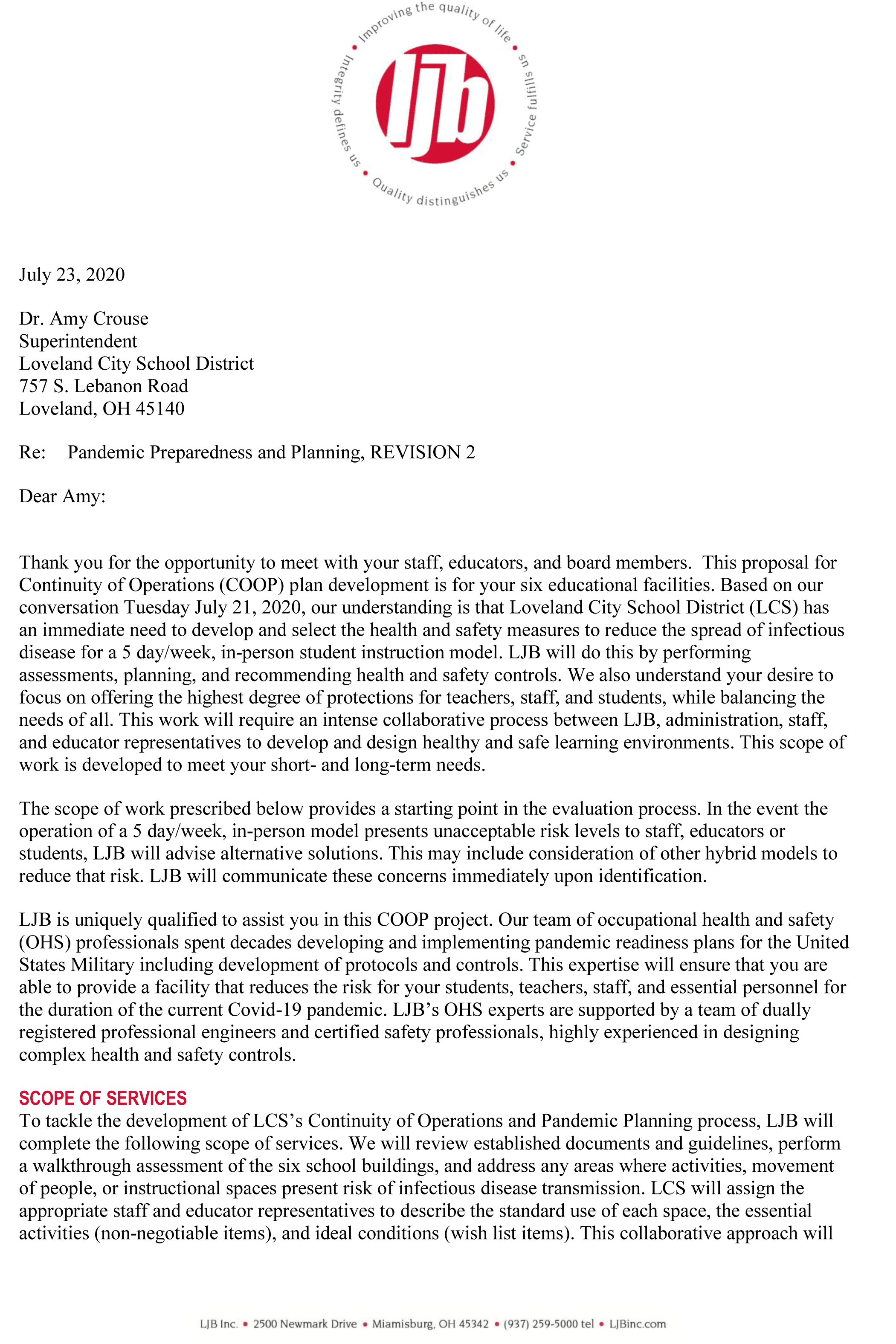
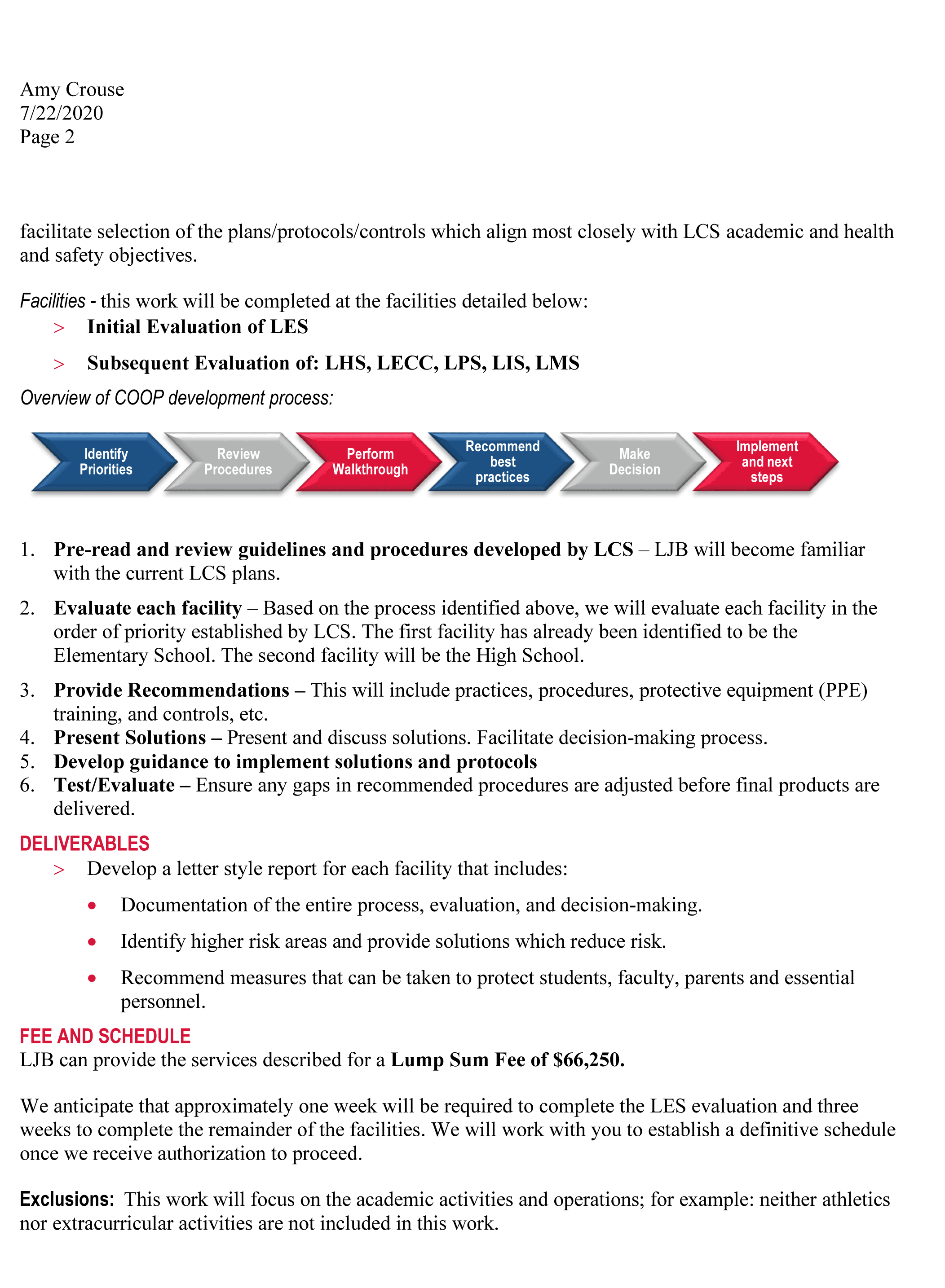
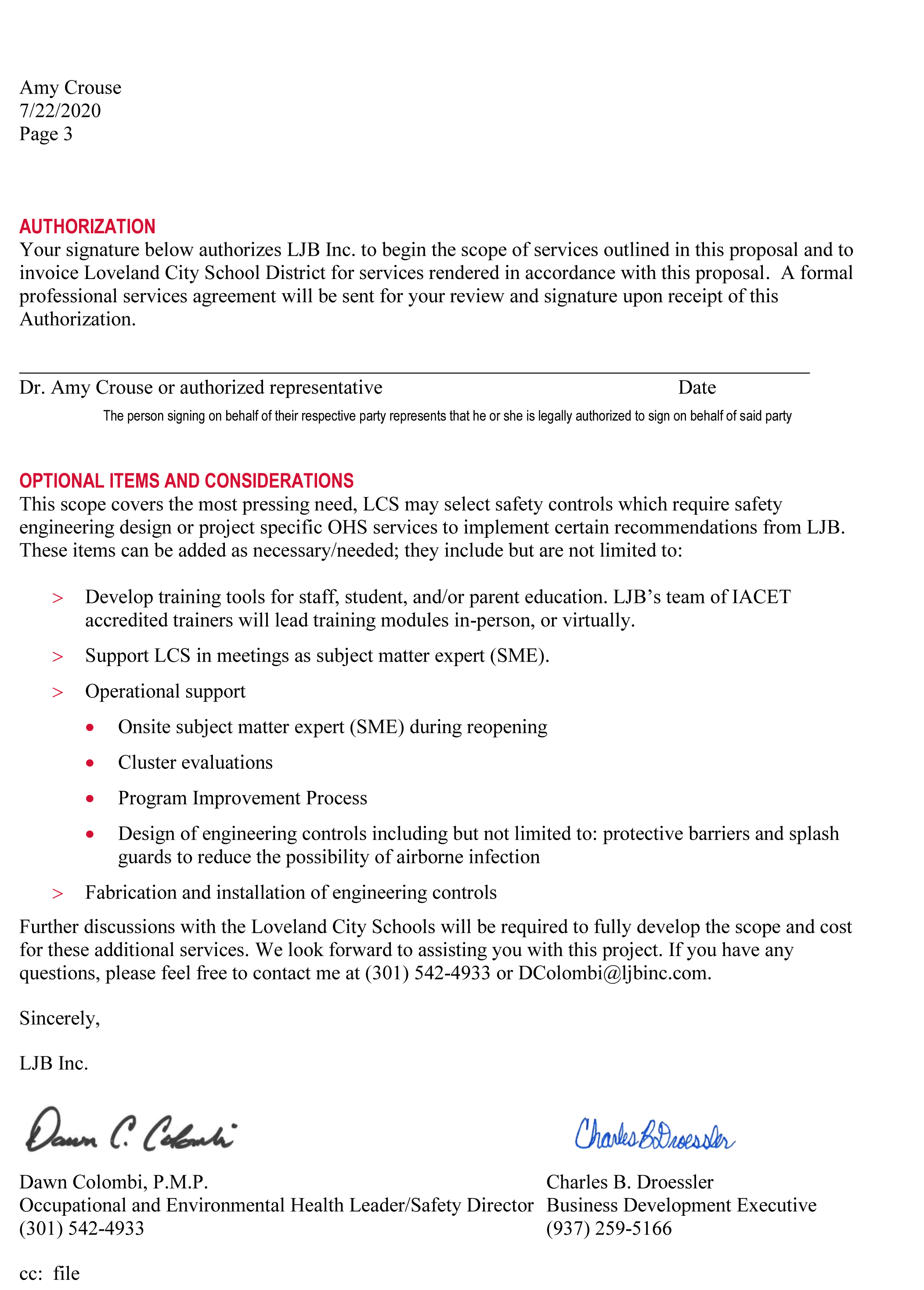
    Loveland, Ohio – With a unanimous vote this afternoon in a Special Meeting the Loveland School Board gave authorization to the administration to sign a proposal from LJB Inc. for “Pandemic Preparedness and Planning” services.

    LJB will provide the services for a “lump sum fee” of $66,250.

    The “terms of the contract” were not available for the Board and after questions from Eileen Washburn about them, Superindent Dr. Amy Crouse said she did not understand the question. After further discussion by Washburn who asked about a cancellation clause and other things in a typical contract, Board President Dr. Kathy Lorenz pointed them to a sentence in the proposal that said, “A formal professional services agreement will be sent for your review and signature upon receipt of this Authorization.”

    Kevin Dougherty said it would be standard to negotiate terms. Crouse said she doesn’t currently have it, “But I can provide that to you.”

    Dr. Crouse said that after the first week of the study, which will be of the Elementary School, there may be a need to have further discussion about whether classes can begin as scheduled.

    The complete study will take four weeks and will begin on Monday, July 27.

    At a previous Special Meeting on Wednesday, July 15, with a unanimous vote, the Loveland Board of Education approved a reopening plan for the Loveland City School District for the 2020-2021 school year. Preschool, kindergarten, and 1st through 12th grades will attend 5 days per week at “full capacity” (no “all-day” kindergarten) with the option of choosing to attend school online.

    The first day of instruction for all students is scheduled to be Wednesday, August 26.

    Michele Pettit asked if after the study of the Elementary building was complete would the opening of instruction go as planned or would there have to be a delay.

    Crouse answered, “It’s sort of a dance there on whether we will be able to do that fully at first or whether we have to roll into that.”

    Crouse also talked about the unknowns of COVID 19 spread in the community.

    Crouse told the Board that it is likely that there will be times throughout the year that they will not be able to provide in-person learning, and the study will provide guidance for that.

    Loveland Magazine will up-date this story when the “Terms” of the contract are known.

    The meeting was live-streamed and you can still view it here: https://youtu.be/KcKJMKUCiMU


  • Be in the know: Read the statewide facial covering order signed today

    Be in the know: Read the statewide facial covering order signed today

    News for individuals, schools, businesses, and institutions

    Columbus, Ohio – Ohio Governor Mike DeWine announced that the following order has been signed today by Ohio Department of Health Interim Director Lance Himes: Director’s Order Statewide facial coverings 07.23.20

  • [VIDEOS] Re-zoning for 28-Unit condo project passes Planing Commission muster

    [VIDEOS] Re-zoning for 28-Unit condo project passes Planing Commission muster

    Two signs erected by citizens opposed to re-zoning adjacent to their homes on St. Route 48 in North Loveland

    Loveland, Ohio – A 28-unit condo project Zicka Homes hopes to build on St. Rt. 48 will now go before City Council after a 3 to 2 split-decision from the Planning and Zoning Commission Tuesday night.

    Chairman Al Kressler, Vice-Chair Mark Redmond, and Brian O’Neill voted in favor of the re-zoning.

    Michael Kady, and Tim Butler voted, “No”. Butler is the City Council representative on the Commission.

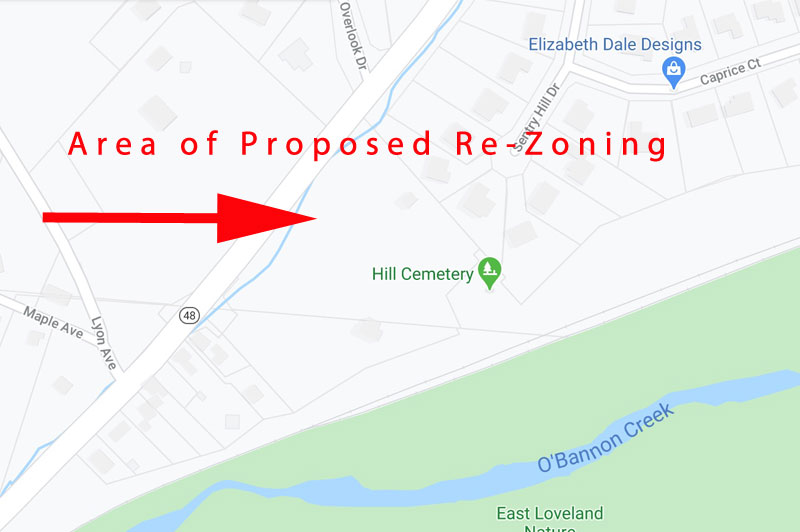
    The applicant is requesting a re-zoning of 5.529 acres of vacant land from the current zoning of Residential–Medium Density to Residential–Multi-Family. The proposed development is south of the Sentry Hill subdivision on North Second Street (St. Rt. 48).

    Tuesday’s vote came after a public meeting that was held on June 24 and the discussion was tabled until the Commission could seek legal advice inquiring if what they wanted to do was legal. They wanted to know if they approved rezoning the property whether they could add a stipulation that the zone change would be null if Zicka did not begin construction after a certain period of time.

    They received the go-ahead in a memo from the Assistant City Manager written on July 21 that said, “Should the Commission grant the rezone request, the Commission can place a restriction that says the zone change would expire if construction on a project did not commence within a specific time frame/date. A restriction can also be made that the zone change is specific to the applicant and cannot be transferred to another applicant or third-party. In case the applicant did not meet these criteria, the zone change would automatically revert to the initial zoning of R-MD.”

    Residents pointed out to the Commission that although Zicka intends to build attached condominiums if they back away like they did previously with a proposal to build single-family homes on the site, apartments could go on the re-zoned land.

    It is not clear at press time the exact language the Commission adopted but resident David Stanton said it was for 18-months.

    You can watch the interview David Miller conducted with Stanten after the vote on Tuesday.


    The zoning map change will now go before City Council. They will hold another public meeting, where they can vote to affirm the recommendation, reject it, or modify it.

    Any ordinance council passes becomes law within 30 days unless passed as emergency legislation. A change to Loveland’s zoning map is always subject to a citizen-led referendum petition drive if enough signatures can be collected.

    In the LOVELAND MAGAZINE TV videos below, you can watch residents speaking against the rezoning at the public hearing on June 24, and the applicant making his case.

    Two additional people spoke against the development, Andy Friesner and Maria Mausarella.

    No residents spoke in favor of the re-zoning during the public hearing.

    You can see the entire proposal that the Commission debated here: Blossom Hill Project.

    Residents have a Web Site at https://no-rezoning.com/voice-your-opinion and the tag line:

    Stanton told Loveland Magazine that he is disappointed in the vote and that the Commission did not follow the standards for zoning map amendments. “The City is not listening to its citizens and not following the rules that they have adopted for making a zoning change.” He said that he can find no support in the community for the development. During the Public Hearing on June 24 Stanton presented the Commission a statement against the re-zoning with 90 signatures.


  • Clermont County seeks items for COVID-19 time capsule

    Clermont County seeks items for COVID-19 time capsule

    Clermont County, Ohio – Clermont County residents can help preserve history by contributing their thoughts in writing and other remembrances to a COVID-19 pandemic time capsule. The project is co-sponsored by the Board of County Commissioners and the Coalition for a Drug-Free Clermont County.

    The time capsule will be placed in Municipal Court during a ceremony later this year.

    “We’ve been impressed at how Clermont County residents have come together during this extremely challenging period in our history,” Commissioner Claire Corcoran said. “We will honor their efforts with this special time capsule. We want people in the future to better understand the difficulties that people faced, and how they worked to overcome them.”

    Mary Wolff, director of the Coalition for a Drug-Free Clermont County, added: “We’re very excited to have the community join us in this positive endeavor, helping preserve history for future Clermont County residents. I can’t wait to see what people provide for the time capsule.”

    The time capsule will be placed in Municipal Court during a ceremony later this year with representatives from County Government and the Coalition for a Drug-Free Clermont County. Plans call for opening the capsule in 10 years.

    You can help preserve this time in history by submitting photos and writeups via email to mboehmer@clermontcountyohio.gov. Clermont County residents also may mail items to COVID-19 Time Capsule, 101 East Main St. 3rd Floor, Batavia, OH 45103.

    Here are some prompts the County provided to help those wanting to submit something in writing:

    • What does the COVID-19 pandemic mean to you?
    • What are you excited about?
      What are you nervous about?
    • Write a note to the future you.
  • Common Cause: Strong campaign finance disclosure rules would have stopped Householder in his tracks

    Common Cause: Strong campaign finance disclosure rules would have stopped Householder in his tracks

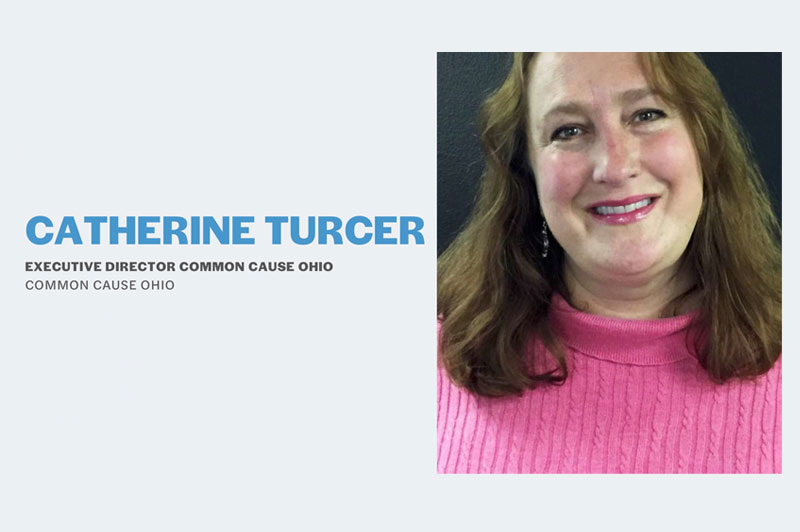
    In reaction in Ohio’s Speaker of the House Larry Householder being arrested by the FBI as part of a $60 million pay-to-play scheme, Common Cause Ohio Executive Director Catherine Turcer released the following statement:

    “This pay-to-play scandal would have been stopped in its tracks if Ohioans were able to see who was behind efforts to influence their opinions and votes — if they could “follow the money.”  We shouldn’t need an FBI investigation to connect the dots. If we had strong campaign finance disclosure rules,  Larry Householder would not have been able to pervert our political system the way that he did.

    This scheme began with his quest for power — his election as Speaker of the Ohio House of Representatives — and revolves around the passage of the nuclear and coal bailout of a FirstEnergy subsidiary, House Bill 6.

    Householder allegedly took millions of dollars at the same time he pushed legislation to bail out non-competitive coal and nuclear plants with more than $1 billion in public money, gut subsidies for renewable energy, and roll back clean energy standards.

    Ohioans have a right to an accountable government and to know who is trying to influence lawmakers, their votes, and opinions. The federal investigation into Generation Now and today’s arrest of Speaker Householder are just the latest example of why the Ohio legislature needs to take immediate action to increase campaign finance disclosure. 

    It’s past time for the Ohio legislature to take action to increase transparency of political spending and stop allowing ‘dark money’ to distort the democratic process. The source of campaign funding information helps voters examine the motivation of ads they see on TV and the internet. Shining the light on ‘dark money’ will also encourage those funding these egregious ads to be more accountable.

    Common Cause and its members will work with Republican and Democratic allies to find a path for strong money in politics transparency reform. Ohio voters deserve nothing less.”

    xxxxx

    Common Cause Ohio is a non-profit, non-partisan advocacy organization that works to strengthen public participation in our democracy and ensure that public officials and public institutions are accountable and responsive to citizens. Through a powerful combination of coalition building, lobbying and litigation, grassroots organizing, policy development, research and public education, we spotlight local, state and national issues that affect every Ohioan.

  • Additional CARES Act funding available for Ohio Cultural Nonprofits

    Additional CARES Act funding available for Ohio Cultural Nonprofits


    Available to assist nonprofit organizations that serve the public by offering programs in history, literature, philosophy, or other humanities topics.

    Columbus, Ohio – Ohio Humanities announced the availability of additional OH CARES funding to help cultural nonprofit organizations affected by COVID-19 health crisis.  According to Pat Williamsen, Ohio Humanities executive director, up to $60,000 is available to assist nonprofit organizations that serve the public by offering programs in history, literature, philosophy, or other humanities topics.  Grants of up to $5,000 will be awarded through a competitive application process.

    Funded by the Coronavirus Aid, Relief, and Economic Security Act (CARES Act), the grants will help Ohio’s cultural community maintain staffing and provide programming for audiences affected by continuing pandemic restrictions. OH CARES grants may be used for digital programming, humanities education staff, and supplies to maintain the safety of employees and patrons. Organizations that received OH CARES grants in the first round of funding are ineligible.

    Do you belong to or support a Loveland organization that may be eligible?

    Applications for OH CARES II grants will be available beginning on Friday, July 31; the deadline for submission will be Friday, August 14.  A webinar about this funding initiative will be held on July 29 at 10 a.m. To register for the webinar, go to ohiohumanities.org/CARES.

    The CARES Act, passed by Congress on March 27, included $75 million of emergency funding for the National Endowment for the Humanities (NEH). Forty percent of that amount was distributed to the 56 state and territorial humanities councils to support local relief efforts. In late March, NEH reported that the anchors of the creative economy such as museums and historical societies were reporting losses of $1 billion every month as facilities were closed and educational programs were canceled.

    Art museums, local historical societies, preservation societies, and other organizations that preserve and promote Ohio history, heritage, and culture.

    Announcing the emergency appropriations available through the CARES Act, NEH Chairman Jon Parrish Peede observed, “To the extent that healing is to come during and after this pandemic, it will be through humanities fields from philosophy to literature to history to religious studies—through the act of documenting, preserving, sharing, and reflecting— that our communities will move toward a greater sense of wholeness.”

    In its first call for OH CARES grants, Ohio Humanities awarded $690,000 to 91 organizations throughout Ohio. Recipients included art museums, local historical societies, preservation societies, and other organizations that preserve and promote Ohio history, heritage, and culture.

    Ohio Humanities staff are available by email to help applicants navigate the application process to access emergency funding. Ohio Humanities will continue accepting grant applications for regular projects at deadlines listed at http://www.ohiohumanities.org/grants-2/.

    Additional information about OH CARES funding can be found at ohiohumanities.org/CARES.