Month: October 2024

  • Take the Ohio Developmental Disabilities Council survey

    Take the Ohio Developmental Disabilities Council survey

    It is the mission of the Ohio Developmental Disabilities Council (DD Council) to create change that improves independence, productivity and inclusion for people with developmental disabilities and their families in community life. DD Council receives federal funding for innovative advocacy, capacity building and systems change activities. These activities are designed to contribute to a coordinated system of services, supports and other assistance that is centered around and driven by individuals with developmental disabilities and their families.

    Ohio DD Council’s work is driven by its Five-Year State Plan. The plan is developed by input from people with disabilities, family members and interested stakeholders from around the state. All projects described in the plan adhere to DD Council’s philosophy that people with developmental disabilities have the right to be productive, interdependent members of their communities and of society at large. You will also find that the projects that fall under each committee represent activities related to Sections of the DD Act that governs what we do.

    2027-2031 State Plan Survey

    We are in the early stages of developing our next Five-Year State Plan for 2027-2031, and our first step is to gather public input through our survey. The survey is available in English, Spanish, and Somali. Use the links below to access the survey.

  • Governor DeWine Appoints Little to Clermont County Municipal Court

    Governor DeWine Appoints Little to Clermont County Municipal Court

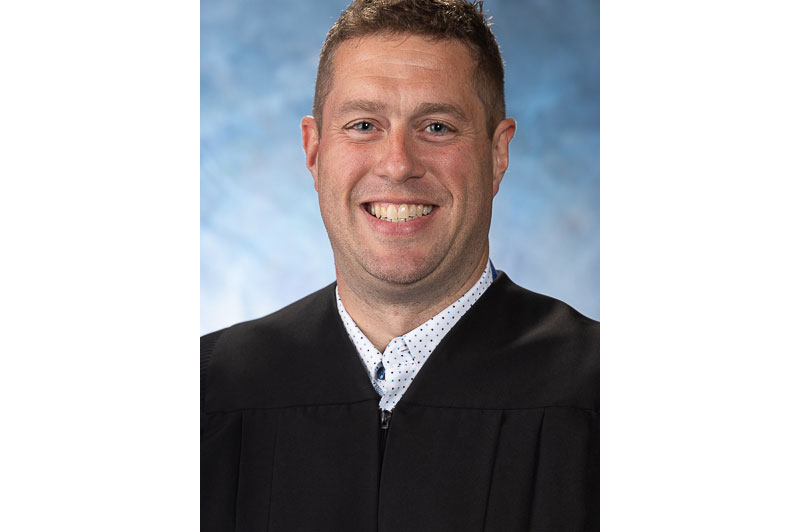
    Clermont County, Ohio – Ohio Governor Mike DeWine has announced the appointment of Nathan M. Little to the Clermont County Municipal Court.

    Little, of Cincinnati, will assume office on November 11, 2024, and will be taking the seat formerly held by Judge Jesse Kramig, who resigned. He will serve the remainder of the unfinished term and will need to run for election in November 2025 to retain the seat.

    Little began his law career in 2008 as a law clerk for the Law Offices of Attorney Vincent A. Salinas in Cincinnati, a position he held until 2009. He is now co-owner of Middletown Title Agency, a partner at the Law Firm of Combs, Schaefer, Ball & Little in Middletown, and serves as a magistrate for the Clermont County Court of Common Pleas, Domestic Relations Division.

    In 2004, Little received a bachelor’s degree from the University of Cincinnati. He earned his juris doctorate from the University of Dayton School of Law in 2009.

    In his community, Little serves on the executive board of the Clermont County Court Special Advocate (CASA) program. He is also a volunteer with the Inter Parish Ministry (IPM) Food Pantry and the Ronald McDonald House Charities of Greater Cincinnati. Additionally, he is a member of the Ohio Association of Magistrates and the Federalist Society at the University of Dayton School of Law. Little also serves as a deacon at Felicity Christian Church.

  • You can help choose the “City Tree”

    You can help choose the “City Tree”

    Loveland, Ohio – The City of Loveland’s Tree & Environment Committee is exploring the idea of establishing an official City Tree. City Hall says that this would be similar to how the State of Ohio named the Buckeye as its official tree and the designation would help support the city’s ongoing recognition as a Tree City USA by the Arbor Day Foundation.

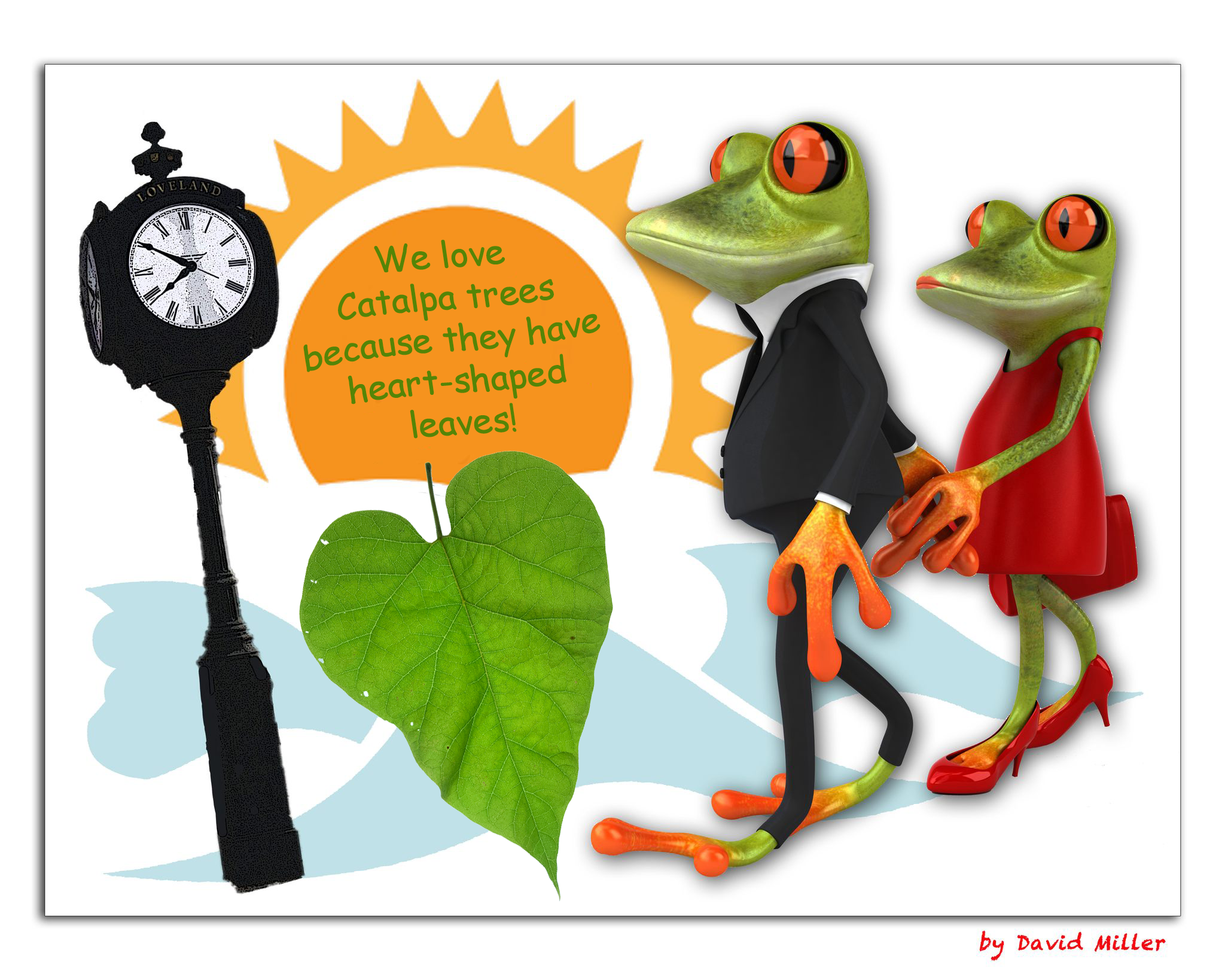
    Jeremiah and Joy Hoyt, the Loveland Magazine mascots especially love Catalpa trees because of their huge, heart-shaped leaves that are big enough to hop on and take a ride down the lazy Little Miami River on, but it didn’t make the short list.

    The committee has narrowed down the options to a “regionally appropriate” short list. Residents can vote by November 30 for their preferred tree:

    American Sycamore (Platanus occidentalis)

    Many regard this as the quintessential “river tree.” Given the community’s relationship with the Little Miami River, it makes sense for this tree to be part of the vote. The immense size this species can attain will inspire anyone to fall in love with its stark white columns and the rivers they adorn.

    Eastern Redbud (Cercis canadensis)

    This species is certainly prevalent as a wild and planted tree in the Loveland region. The heart-shaped leaves are certainly attractive and fit with the “LOVEland” theme. Additionally, this is an important pollen/nectar source for spring pollinators, such as bumble bee queens seeking to establish their nests for the season. The flowers are a delightful edible, and these trees do well in Loveland’s alkaline soils.

    White Oak (Quercus alba)

    When it comes to ecologically important trees, White Oak is high on the list. The pollen, foliage, and acorns are critical sources of food for a wide variety of wildlife. Additionally, oaks host lots of edible and interesting mushrooms. Culturally, this has been a highly valued tree for its wood. One regionally important use for the wood has been to make barrels that hold whiskey/bourbon. It’s the tannins in the wood that help provide the smoky taste that bourbon lovers are so fond. Finally, the growth form of White Oak is considered iconic and highly sought after. In the open, they grow quite wide making them excellent shade trees, as well as climbing trees for kids and adventurous adults alike.

    SUBMIT YOUR VOTE

  • These Apps Help People With Disabilities Travel More Easily

    These Apps Help People With Disabilities Travel More Easily

    WIRED has published this story for the disability community about how technology can be a most valuable travel companion. These apps and services make it easier and safer to get around a new city.

    Technology makes travel easier by allowing us to research and map out our travel plans. But for the disability community, technology can be the most valuable travel companion. The following apps and sites help people with disabilities make smart and safe choices so they can get out in the world and explore more than ever.

    Read on at:

  • New Episode: The Queen City Sports Podcast by Chris Ball & Mark Raines

    New Episode: The Queen City Sports Podcast by Chris Ball & Mark Raines

    by Chris Ball

    Loveland, Ohio – You’re in luck, as the Queen City Sports Podcast has arrived a day early! The Bengals played in primetime last week, and Joe Burrow scampered for a 47-yard touchdown to open up the scoring against the New York Giants. But things got a little rockier for the offense after that before the final minutes when Chase Brown iced it for a 17-7 victory. Chris and Mark discuss what Sunday night’s performance means for the team going forward and whether the defense has finally turned a corner now that their line is fully healthy. The guys also talk about the Bearcats’ big road win against UCF and whether the Michigan Wolverines can slow down Illinois’ potent passing attack, and if Jack Tuttle is up to the task of making Michigan’s passing game a factor.


    Have a listen and don’t forget to leave your comments and feedback!

    _______________________

    Hey readers… have an opinion about sports? How about a topic you’d like to see written about in Loveland Magazine or a thought about one of our articles?

    Just need to vent and get out your frustration about the Reds, Bengals, or any other sports issues?

    Feel free to share with an email to lovelandmagazinesports@gmail.com!

    We would love to hear from our readers, and we thank you for your support and engagement.

    Also, don’t forget to follow us at The Loveland Sports Desk at the below links:

    For Facebook, click here.

    For X, click here.

    For Instagram, click here


    Christopher Ball is a longtime Loveland resident and an attorney. He graduated from Loveland High School in 2003 and was a member of the football team before going on to become a coach’s assistant at DePauw University in Greencastle, Indiana. He has been following and rooting for the Reds and Bengals since the early 1990s and has been through the many ups and downs that fandom has wrought over the years.

  • LaRose shares ‘exclusive announcement’ on election integrity with anti-abortion group

    LaRose shares ‘exclusive announcement’ on election integrity with anti-abortion group

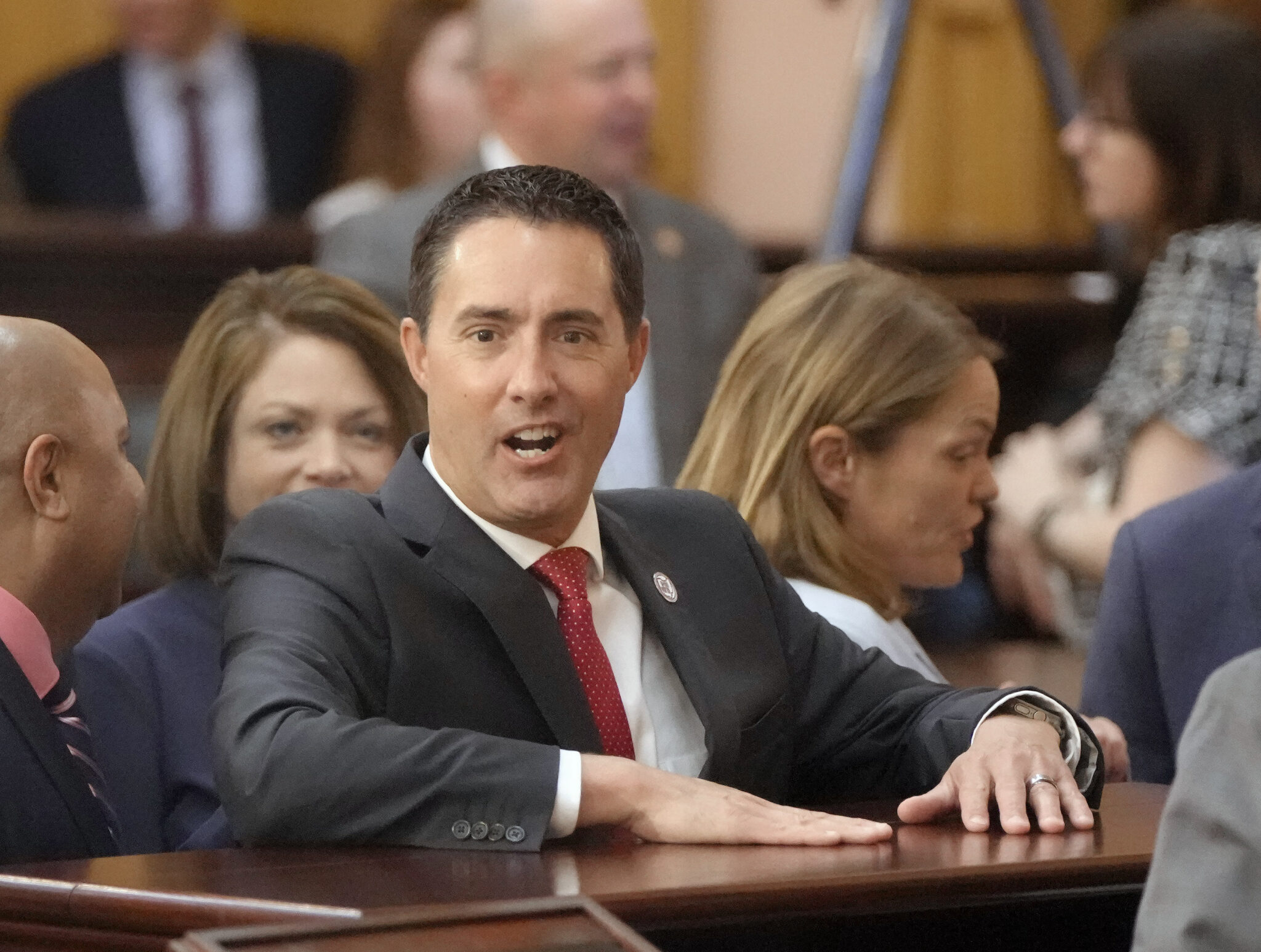
    Ohio Secretary of State Frank Larose mingles before the 2024 State of the State address in the Ohio House chambers at the Ohio Statehouse. (Pool photo by Barbara J. Perenic, Columbus Dispatch.)

    By:  Ohio Capital Journal

    Ohio elections chief last year allowed the group to manipulate ballot language

    Ohio Secretary of State Frank LaRose has provided an announcement on election integrity “exclusively” to anti-abortion Ohio Right to Life, the group said in a Monday press release. It contains a link to a YouTube video in which LaRose talks about how Ohio elections are safe because the nuts and bolts of the process are overseen at the local level by officials from both parties.

    Last year, LaRose consulted with Ohio Right to Life and other anti-abortion groups as he and his office worked on ballot language for an abortion-rights amendment they all vehemently opposed.

    LaRose’s office didn’t respond to questions for this story.

    In the video, the secretary of state repeated his saying that in Ohio, “it’s easy to vote and hard to cheat.” And he lays out several reasons why it’s hard at least for voters themselves to cheat.

    LaRose explains that county boards of election are each run by two Republicans and two Democrats and that voting machines are “airlocked,” meaning they’re never connected to the internet and thus not vulnerable to hacking. LaRose added that even access to the machines has to be on a bipartisan basis.

    “The voting machines are under bipartisan surveillance and they’re kept in a storage system with dual locks and keys that require a Republican key to open the door and a Democratic key to make sure that both parties are present,” he said.

    LaRos later added, “We take election integrity seriously here in Ohio.”

    By LaRose’s own reckoning, just 0.0005% of the ballots cast in Ohio’s 2020 presidential election were “potentially illegal.” Meanwhile, LaRose has also argued that former President Donald Trump had a legitimate point about voter fraud.

    As of last year, LaRose had forwarded 521 cases of possible noncitizen voting for prosecution over five years. That resulted in just one prosecution for voter fraud.

    In addition, in the video he recorded for Right to Life, LaRose said that audits comparing electronic vote results to paper backups have been correct more than 99.9% of the time since he took office at the beginning of 2019.

    Despite the lack of a statistical case that there’s a problem, LaRose has taken aggressive steps that he says will protect election integrity.

    For example, he’s purged hundreds of thousands of Ohioans from the registration rolls. Many were eligible voters who were purged for not voting in recent cycles even though critics point out that there’s no constitutional basis to argue that just because a citizen hasn’t voted in some past elections he or she is ineligible.

    A progressive watchdog group, Dēmos, found that LaRose’s office has some of the worst practices for ensuring that eligible voters aren’t improperly purged from the Ohio rolls. And civil rights advocates say Ohio’s purges disproportionately target voters of color, who tend not to vote for the GOP, LaRose’s party.

    On the issue of citizen-proposed constitutional amendments, as chair of the Ohio Ballot Board, LaRose has significant control over the description of an amendment that appears on the ballot — in other words, what voters read when they enter the voting booth.

    He’s under intense fire this year for the language he used to describe the Issue 1 amendment aimed at removing elected officials from the process of drawing maps of Ohio’s legislative and congressional districts in favor of a citizens commission.

    In 2021 and 2022, LaRose and the other Republicans on the Ohio Redistricting Commission ignored seven bipartisan rulings by the Ohio Supreme Court that said the maps they drew violated earlier anti-gerrymandering amendments that were passed by huge majorities of Ohioans.

    The proposed amendment that will appear on the November 2024 ballot is meant to be more water-tight than the earlier ones by removing politicians from the process, replacing them with citizens, and retaining a ban on partisan gerrymandering. But LaRose wrote ballot language that opponents say is intended to sway voters against the amendment, which LaRose publicly opposes.

    Last year, LaRose was similarly accused of manipulating ballot language against Ohio’s reproductive rights amendment when he consulted with Ohio Right to Life and other anti-abortion groups in drafting the ballot language. Nevertheless, Ohio voters passed the reproductive rights amendment by 14 points.

    ____________

    Marty Schladen
    Marty Schladen

    Marty Schladen has been a reporter for decades, working in Indiana, Texas and other places before returning to his native Ohio to work at The Columbus Dispatch in 2017. He’s won state and national journalism awards for investigations into utility regulation, public corruption, the environment, prescription drug spending and other matters.

    Ohio Capital Journal is part of States Newsroom, the nation’s largest state-focused nonprofit news organization.

    MORE FROM AUTHOR

  • Benjamin Marcum and Brandon Wilson sworn in as Loveland police officers

    Benjamin Marcum and Brandon Wilson sworn in as Loveland police officers

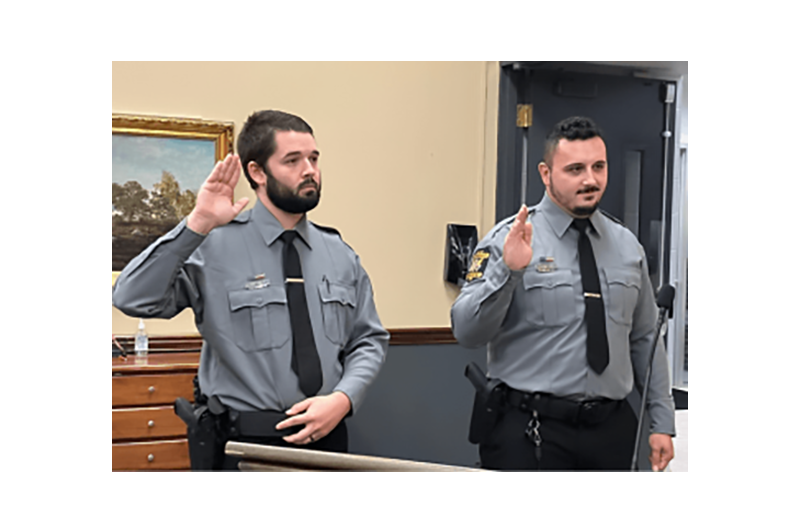
    Benjamin Marcum and Brandon Wilson

    (City of Loveland photo)

    Loveland, Ohio – “We are excited to have these officers on board. They are two great additions to our police department,” Chief Michael Gabrielson said.

    Benjamin Marcum and Brandon Wilson were introduced at the City Council meeting on Oct. 8, 2024.

    Marcum began his law enforcement career in 2019 as an officer with Clay Township in Montgomery County. Most recently, he served as a ranger with Five Rivers Metro Parks in Dayton, Ohio. Marcum grew up in Troy, Ohio, and holds a Bachelor of Science in Criminal Justice from the University of Cincinnati.

    Likewise, Wilson comes to LPD by way of Colerain Township and the Village of Woodlawn Police Departments. Wilson is a Cincinnati native and graduated from Lockland High School. He brings experience in patrol and criminal investigations to LPD.

  • Demolition of historic home in Loveland’s Historic District under appeal

    Demolition of historic home in Loveland’s Historic District under appeal

    This story was updated on 10-17 and now includes the feasibility report of the house being restored that was submitted by John Hill.

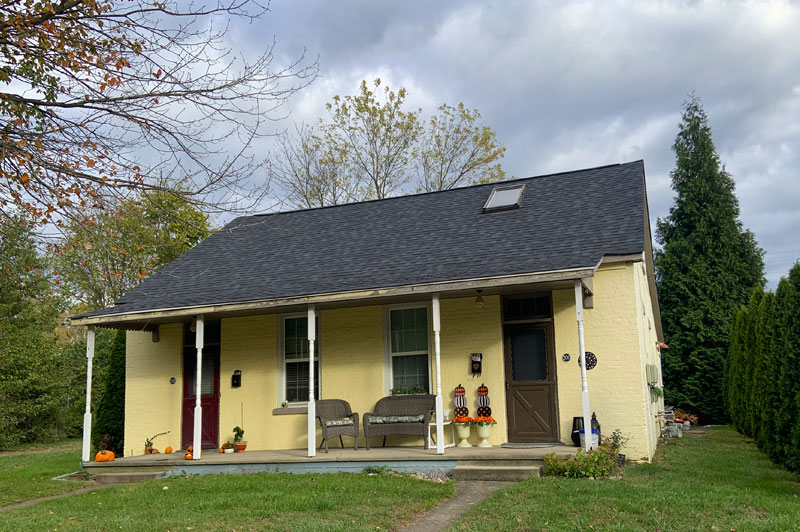
    Loveland, OhioThe demolition of a historic home in Loveland’s Historic District is under appeal by resident Deidre Hazelbaker. The home is at 200 Railroad Avenue. The Historic Preservation and Planning Commission voted on October 2 to allow John Hill, through his Infuse Holdings LLC to demolish the building with a history dating to at least 1915. The demolition request comes as part of a six-unit, 3-story apartment development Hill has proposed facing Loveland, Nisbet park along the Loveland Bike Trail.

    Hazelbaker  filed her appeal on October 4 to the Loveland Board of Zoning Appeals. Her appeal will be heard at City Hall on October 30 at 5:30 PM.

    The building at 200 Railroad Avenue, constructed on or before  1915, is designated a “Contributing” structure within Loveland’s historic district because it “holds significant historical value and is representative of the early 20th-century architecture typical of the area.” Any building constructed within the period of significance of the Historic Preservation and Planning District that contributes to its historic associations and architectural qualities qualifies for special consideration before a demolition permit can be considered.

    One of the reasons Hazelbaker cited in her appeal is that the, “…decision to approve the demolition did not include a comprehensive feasibility study to explore alternatives such as rehabilitation or adaptive reuse. Without a detailed analysis of potential preservation options, the decision to demolish was made prematurely and without fully understanding the preservation potential of this historic structure.”

    The appeal Hazelbaker filed continues by saying, “Granting this appeal and reversing the demolition decision would preserve the essential character of the neighborhood. The current structure, with its historical details and architectural elements, contributes to the visual appeal and heritage of Loveland. Its loss would alter the district’s character significantly and detract from the community’s identity.”

    The governing document of the Preservation Commissions states in its preamble, “Unfortunately, Loveland has lost a number of downtown buildings over the years; consequently it is imperative every effort is taken to preserve the remaining historic buildings to allow future generations to experience the character of Loveland’s rich history.”

    ___________

    BACKGROUND STORY

    Six, three-story apartments proposed adjacent to Nisbet Park on Loveland Bike Trail

    ___________

    Hazelbaker cites:

    The building at 200 Railroad Avenue is listed as a “contributing” building within Loveland’s historic district. Built on or before 1915, this multi-family home shows early 20th-century architectural styles and reflects Loveland’s development as a railroad town. As noted in the June 26, 2024, meeting, the building’s historical value is documented and adds to the character and heritage of the district. Demolishing this building would remove a piece of Loveland’s history and could set a bad precedent for other historically important structures.

    During the previous Commission meeting, many community members shared concerns that tearing down this building would disrupt the look and feel of Railroad Avenue. The proposed new construction does not fit in with the scale and style of the surrounding historic homes, which could hurt the overall feel of the district. Allowing this demolition would send the wrong message to future developers that upkeep and preservation don’t matter, leading to a slow loss of the district’s unique character.

    The Commission did not present a thorough study exploring ways to fix or restore 200 Railroad Avenue. A study by an independent group could have offered clear options for repairing and preserving the building instead of tearing it down. Without this information, the decision to approve demolition was made too soon and without understanding the potential to save this historic property.

    ___________

    Below is the report John Hill submitted, intended to detail the condition of the structure and mechanical systems in relation to the feasibility of this house being restored to a habitable domicile that is current with modern building codes.

    Hazelbaker believes the Commission should undertake an independent and impartial review and not rely on one prepared by the person who wants the demolition to proceed.

    [pdf-embedder url=”https://lovelandmagazine.com/wp-content/uploads/2024/10/John-Hill-Report.pdf” title=”John Hill Report”]

    ______________

    The purpose of the Loveland Historic Preservation Regulations is to preserve, protect and perpetuate places, buildings, structures and other objects having special historical, community or aesthetic interest or value, all for the following reasons:

    • a) To safeguard the heritage of the City by preserving sites and structures which reflect elements of the City’s cultural, social, economic, political, archaeological history or architectural history;
    • b) To stabilize and improve property values;
    • c) To protect and enhance the City’s attractions to residents, tourists and visitors, and serve as a support and stimulus to business and industry;
    • d) To enhance the visual, aesthetic, historic character, diversity and interest of the City;
    • e) To foster civic pride in the beauty and notable accomplishments of the past;
    • f) To promote the use and preservation of historic and archaeological sites and structures for the education and general welfare of the people of the City;
    • g) To strengthen the economy of the City;
    • h) To take whatever steps as may be necessary to safeguard the property rights of the owners whose
      property is declared to be a Historic Structure or is located in the area designated as a Loveland Historic District, and act in an advisory role to city officials and departments of Loveland’s governmental system.
    • i) Review all certificates of appropriateness application as defined by the Secretary of the Interior’s Standards’ for Rehabilitation

    READ: HISTORIC PRESERVATION & PLANNING DISTRICT DESIGN REVIEW GUIDELINES

    The Historic Preservation and Planning Commission approves the appropriateness of the demolition, construction, preservation, restoration, and rehabilitation of any home, commercial structure, or new construction within the designated historic district.


  • Division of Liquor Control Highlights Local Option Law Processes Ahead of Election Day

    Division of Liquor Control Highlights Local Option Law Processes Ahead of Election Day

    COLUMBUS, Ohio – When Ohioans go to cast their vote on Nov. 5, they may see more than political contests on the ballot. Voters in various Ohio communities may also see items related to local option election laws. These issues can determine a number of alcohol-related items, including whether a particular business is able to sell a certain type of alcohol at a specific location, whether they can engage in regular (Monday – Saturday) sales, or whether they can sell alcohol on Sundays.

    With Election Day less than a month away, the Ohio Department of Commerce Division of Liquor Control has developed an online Local Option Election Guide to help the media and public understand these issues, and explain why voters may see alcohol-related questions on the ballot. The guide is available at com.ohio.gov/LocalOptionGuide.

    “We realize that alcohol-related issues on the ballot can sometimes catch individuals off guard,” said Paul Kulwinski, DOLC Director of Licensing. “We developed this guide to help inform and prepare voters in the event they see these particular issues on their ballot so they can make an informed decision on Nov. 5.”

    For certain types of liquor permits, the location where alcohol sales will occur must be “wet” for the specific types of sales (i.e., beer, wine, spirits, etc.). Those permits dictate how those items can be sold, such as via carryout or on-premises consumption. When the precinct in that area is not wet (commonly known as “dry”), a business can put a question to the voters within that precinct that can ask to either make the entire precinct wet or just the specific location.

    Following the repeal of Prohibition in 1933, a new regulatory system was enacted to ensure the safe consumption of alcoholic beverages and an orderly, competitive marketplace. Some parts of the regulatory system include permit quotas, objection rights by local governments, a three-tier system consisting of manufacturers, distributors, and retail outlets, and local option (wet/dry) laws. Local option elections give the voters within their precincts a voice as to what types of alcohol get sold, including where, when, and how.

    Due to the complexity of local option elections, an experienced liquor attorney is always recommended for businesses or localities when navigating this process.

  • The Candy Police Are Back

    The Candy Police Are Back

    Loveland, Ohio – The Loveland Police Department and the Hamilton Township Police want to make Halloween a special day for children and adults with special needs.

    If you reside within the City of Loveland or Hamilton Township and have a loved one living with a disability or special needs, you can request an officer to visit. The “Candy Police” will deliver candy or a special treat on Oct. 31 from 5 until -8 PM.

    If you’d like to sign up, contact LPDrecords@lovelandoh.gov or (513) 583-3000 through Oct. 25 and provide the following:

    • Your loved one’s name
    • Your loved one’s address
    • Your name
    • Your phone number

    If you would like to donate candy or treats drop them off the Loveland Safety Center (126 S Lebanon Road) through Oct. 25.