Year: 2024

  • Loveland High School’s Teaching Professions Academy with student Genna Scherpenberg

    Loveland High School’s Teaching Professions Academy with student Genna Scherpenberg

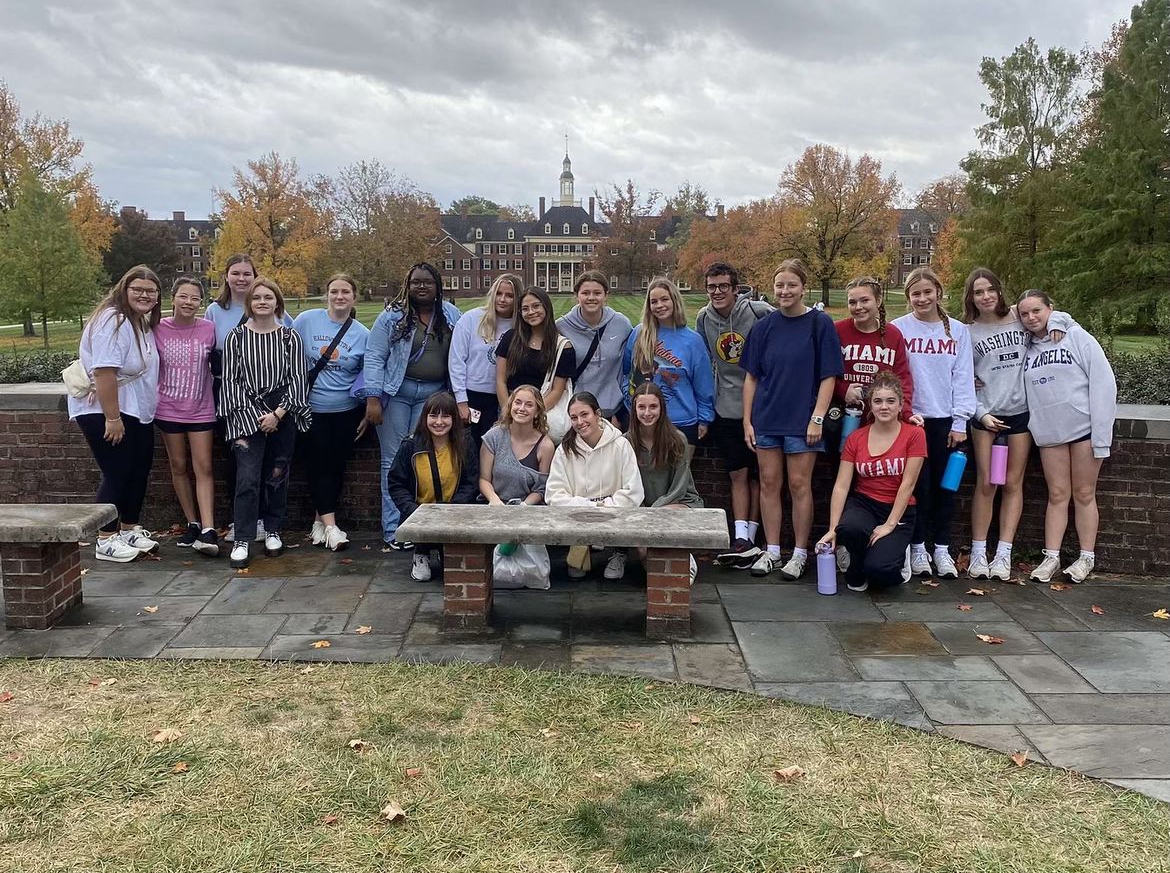
    The Loveland High School Teaching Professions Academy recently visited Miami University in Oxford (Photo by Elizabeth Potts)

    by Claire Mirkowski-Purdy

    Loveland, Ohio – One of the greatest aspects of Loveland High School is its Teaching Professions Academy (TPA). All students are welcome to take TPA classes. The most popular one this year is Child Development in which students learn how to properly take care of newborns and toddlers.

    Loveland’s TPA is partnered with Great Oaks, bringing genuine classroom-like experiences to high schoolers. Every TPA class is a CCP (College Credit Plus) class as well, giving students the opportunity to earn college credit for their TPA classes. Every TPA class is taught by Elizabeth Potts, a marvelous teacher who makes every aspect of TPA possible.

    A lifelong friend of mine, Genna Scherpenberg, has been taking TPA classes since her junior year. Scherpenberg explained that as a senior, she was able to earn her Para-Pro License, to be able to teach any student with a learning disability.

    TPA also goes on a surplus of noteworthy field trips. For example, TPA went on a field trip in October to the Muñoz Foundation for the GAME PLAN Youth Leadership Seminar. There were many opportunities for students to speak in small and large group discussions, and listen to speeches from Brandon Saho and Cincinatti’s Healing Center. This field trip was a great way for all TPA students to get a boost in leadership and teaching experience. Scherpenberg told me that there was a Cincinatti Reds player there too.

    Aside from TPA’s extraordinary field trips, students can also visit nearby colleges. There are scheduled visits each year for TPA students. This year, so far, they have visited Miami University and Xavier University. They are scheduled for a visit to University of Cincinnati soon too.

    Genna Scherpenberg has also been given an exemplary internship, teaching and helping third and fifth graders. During high school hours, Scherpenberg leaves third bell to visit her third graders, and during seventh bell she visits her fifth graders.

    Scherpenberg has had numerous enlightening experiences that only TPA could offer. According to Scherpenberg, her favorite thing about TPA is “its flexibility, and the ability to be able to choose to do what we want, since the class gives us a lot of leadership.” Between internships, earning a Para-Pro Lisense, getting college credit and attending seminars, it is clear that Loveland High School would not be the same without its Teaching Professions Academy.

  • Accessibility Tools for all: People with a disability, Caregivers, Restaurant/Retail, Schools, and City Hall

    Accessibility Tools for all: People with a disability, Caregivers, Restaurant/Retail, Schools, and City Hall

    Loveland, Ohio – Accessible Ohio and Loveland Magazine encourage all of us to prioritize accessibility from the start, promote inclusiveness, and ensure everyone can experience Loveland equitably.

    Accessible Ohio Specialists provide consultation to Ohio businesses, venues, attractions, and communities across the state.

    The services, programs, and partnerships of Accessible Ohio aim to help Ohioans live with greater independence and create a dependable foundation for their lives.

    The Accessible Ohio initiative, also consults with Ohio businesses, venues, attractions, and communities to identify barriers and establish goals for accessibility.

    We encourage people with a disability, caregivers, restaurants, retail outlets, local businesses, schools, and City Hall to use these resources to make our city more accommodating and welcoming for all of us.


  • Trump taps vaccine skeptic RFK Jr. to lead Department of Health and Human Services

    Trump taps vaccine skeptic RFK Jr. to lead Department of Health and Human Services

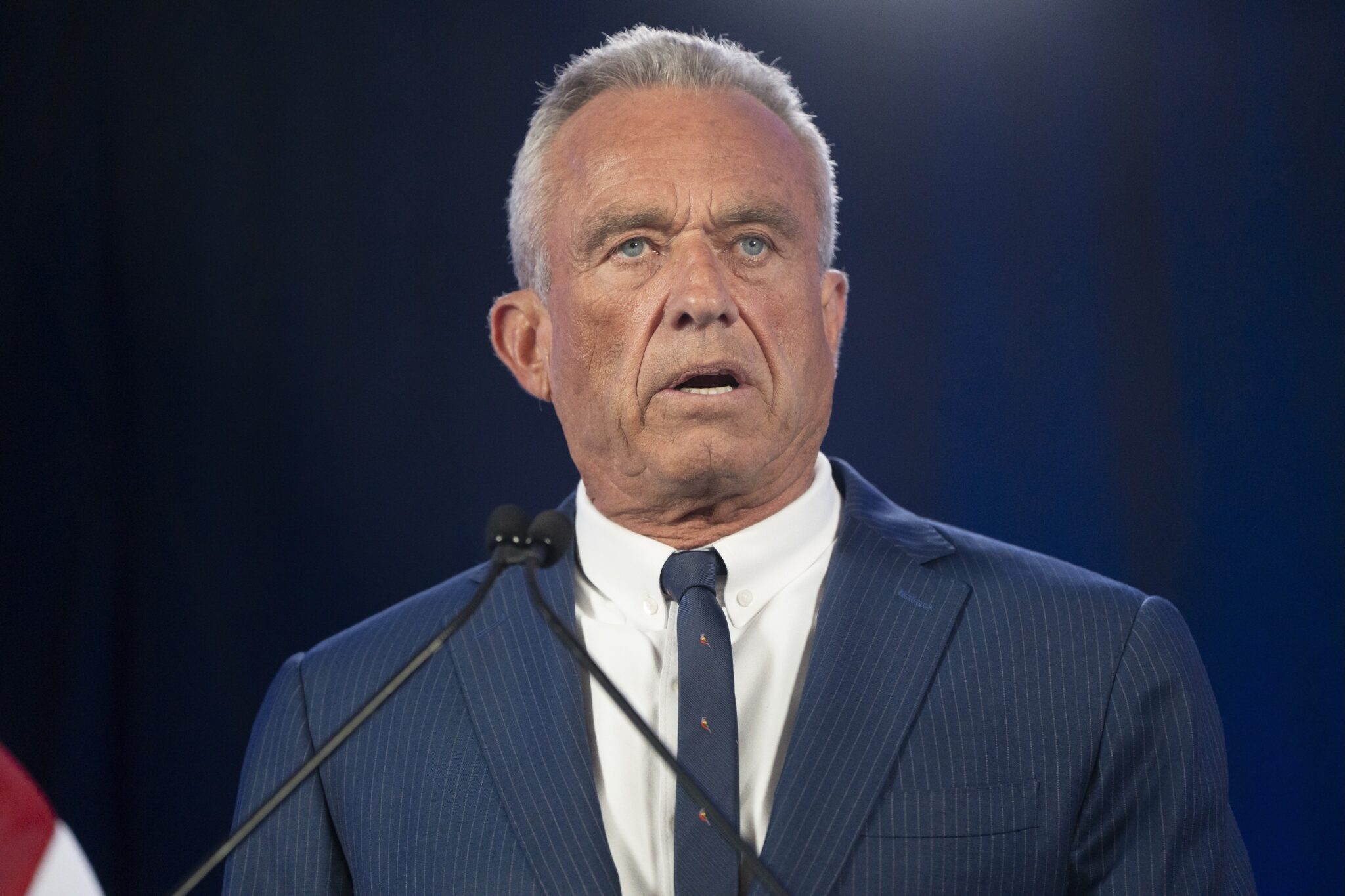
    Robert F. Kennedy Jr. gives remarks at the Renaissance Phoenix Downtown Hotel on Aug. 23, 2024 in Phoenix, Arizona. (Photo by Rebecca Noble/Getty Images)

    By:  Ohio Capital Journal

    WASHINGTON — President-elect Donald Trump announced Thursday he plans to nominate Robert F. Kennedy Jr. to head the Department of Health and Human Services, another controversial candidate who could face a challenging confirmation process in the U.S. Senate given his non-scientific beliefs about public health, including his anti-vaccine stance.

    “I am thrilled to announce Robert F. Kennedy Jr. as The United States Secretary of Health and Human Services (HHS),” Trump posted on social media. “For too long, Americans have been crushed by the industrial food complex and drug companies who have engaged in deception, misinformation, and disinformation when it comes to Public Health.

    “The Safety and Health of all Americans is the most important role of any Administration, and HHS will play a big role in helping ensure that everybody will be protected from harmful chemicals, pollutants, pesticides, pharmaceutical products, and food additives that have contributed to the overwhelming Health Crisis in this Country.”

    HHS receives about $116.8 billion in discretionary federal funds and about $1.7 trillion in mandatory spending each year and houses several big-name public health agencies, including the Administration for Strategic Preparedness and Response or ASPR, the Centers for Disease Control and Prevention, the Centers for Medicare & Medicaid Services, the Food and Drug Administration, the National Institutes of Health and the Substance Abuse and Mental Health Services Administration.

    Kennedy ran in this year’s presidential election as an independent candidate, often repeating inaccurate information about vaccines and spreading other conspiracy theories about public health.

    He has no background in science, research, or medicine. He graduated from Harvard University before going on to receive a law degree from the University of Virginia Law School.

    He pleaded guilty to felony heroin possession in Rapid City, S.D., in February 1984, before receiving two years of probation, which ended a year early. He volunteered with the Natural Resources Defense Council as part of that probation.

    Kennedy spent much of his career as an environmental lawyer and published several books.

    After ending his own presidential bid this year, Kennedy endorsed Trump and campaigned frequently for him.

    Criticism of the nomination began quickly after news broke Thursday, though far-right Republicans are expected to celebrate the nomination.

    Lisa Gilbert, co-president of the watchdog nonprofit organization Public Citizen, released a written statement saying, “Kennedy is a science-denying, morally-bankrupt conspiracy theorist who will endanger people’s lives if placed in a position of authority over health. The U.S. Senate should unanimously reject this nomination.”

    Louisiana Republican Sen. Bill Cassidy, ranking member on the Health, Education, Labor, and Pensions Committee, released a written statement that he’s interested in learning more about Kennedy during the confirmation process.

    “RFK Jr. has championed issues like healthy foods and the need for greater transparency in our public health infrastructure,” Cassidy wrote. “I look forward to learning more about his other policy positions and how they will support a conservative, pro-American agenda.”

    Washington state Democratic Sen. Patty Murray, a senior member of the HELP panel that will hold the confirmation hearing, wrote in a statement that Kennedy “could not be more dangerous — this is cause for deep concern for every American.”

    “There is no telling how far a fringe conspiracy theorist like RFK Jr. could set back America in terms of public health, reproductive rights, research and innovation, and so much else,” Murray wrote. “The consequences here are not theoretical or superficial — health care access, coverage, research, and public health are life or death issues for people — and the COVID pandemic was an all too recent, all too painful reminder.”

    Kentucky Republican Sen. Rand Paul congratulated Kennedy on social media, writing “Congratulations to @RobertKennedyJr on his nomination as Secretary of Health and Human Services. Finally, someone to detox the place after the Fauci era. Get ready for health care freedom and MAHA!”

    Colorado’s Democratic Gov. Jared Polis, a former member of Congress who previously criticized Kennedy’s anti-vaccine stance as a way to bring back polio and measles, cheered his nomination in a lengthy social media post.

    “I hope he leans into personal choice on vaccines rather than bans (which I think are terrible, just like mandates) but what I’m most optimistic about is taking on big pharma and the corporate ag oligopoly to improve our health.”

    Polis added another post about an hour later, writing that science “must remain THE cornerstone of our nation’s health policy and the science-backed decision to get vaccinated improves public health and safety.”

    “But if as a country we follow the science we would also be far more concerned about the impact of pesticides on public health, ag policy on nutrition, and the lack of access to prescription drugs due to drug high prices,” Polis added. “This is why I am for a major shake-up in institutions like the FDA that have been barriers to lowering drug costs and promoting healthy food choices. Lest there by any doubt, I am vaccinated as is my family. I will hold any HHS Secretary to the same high standard of protecting and improving public health.”

    _______

    Jennifer Shutt
    Jennifer Shutt

    Jennifer covers the nation’s capital as a senior reporter for States Newsroom. Her coverage areas include congressional policy, politics and legal challenges with a focus on health care, unemployment, housing and aid to families.

    Ohio Capital Journal is part of States Newsroom, the nation’s largest state-focused nonprofit news organization.

    MORE FROM AUTHOR

  • Ohio Republicans propose requiring proof of citizenship for voting, removal of dropboxes

    Ohio Republicans propose requiring proof of citizenship for voting, removal of dropboxes

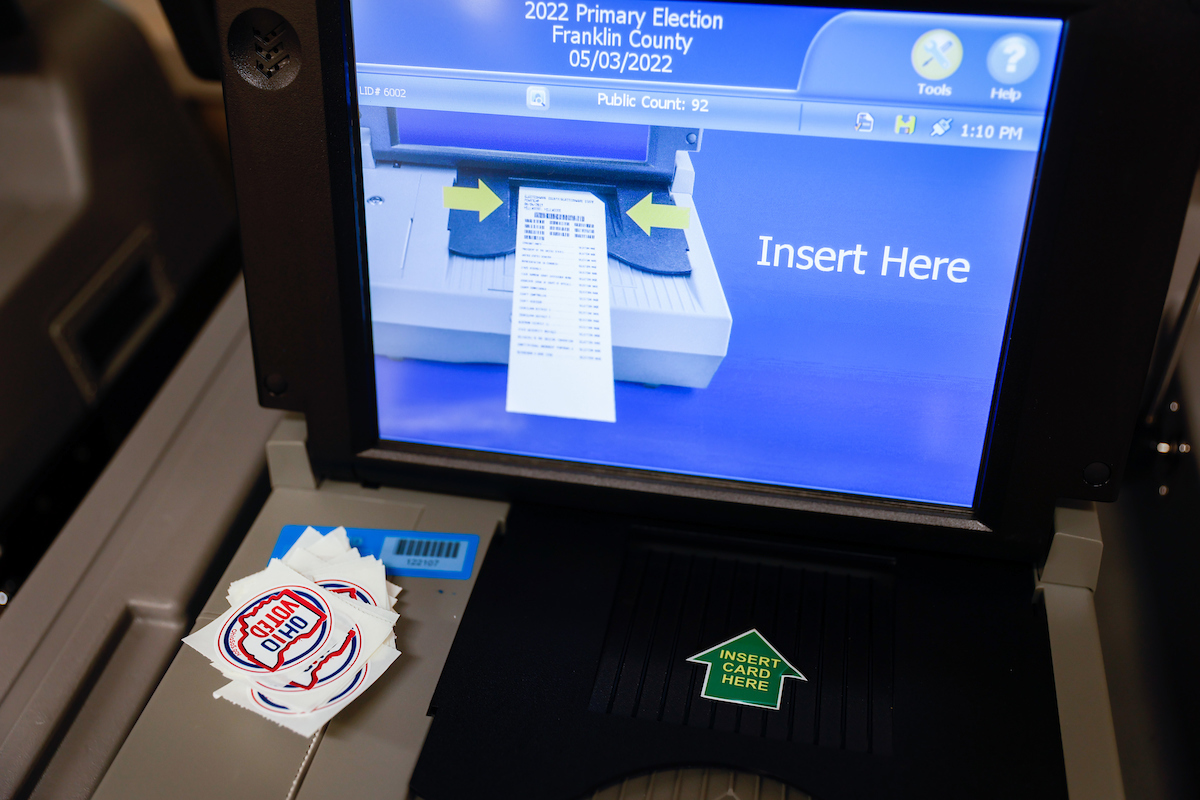
     A ballot counter machine. (Photo by Graham Stokes for the Ohio Capital Journal. Republish photo only with original story.)

    November’s election went off without a hitch and it was a great day for the GOP, but some members still want additional voting restrictions

    By:  Ohio Capital Journal

    Another election has come and gone in Ohio with no reports of widespread fraud. That hasn’t stopped a handful of Republican state senators from advancing legislation to place new restrictions on how Ohioans cast their ballots.

    State Sen. Niraj Antani, R-Miamisburg, has put forward a bill requiring Ohioans show proof of citizenship to register to vote or update their existing registration. Sens. Theresa Gavarone, R-Bowling Green, and Andrew Brenner, R-Delaware, filed another bill imposing proof of citizenship requirements, and the elimination of ballot drop boxes.

     COLUMBUS, OH — FEBRUARY 22: State Sen. Niraj Antani, R-Miamisburg. (Photo by Graham Stokes for Ohio Capital Journal) 

    That state legislation takes its cue from efforts at the federal level backed by U.S. House Speaker Mike Johnson. That proposal, known as the SAVE Act, had little chance of passage with Democrats in control of the U.S. Senate. Now, with a Republicans in control of all three branches of government, it stands a better chance of passing.

    It’s already illegal to register or vote as a non-citizen at the state and federal level. Despite that threat of criminal prosecution, backers still worry current law allows voters to register with little more than a promise.

    It appears that approach has worked exceptionally well, though. Actual reviews of the voter rolls have found cases of actual fraud are vanishingly rare and nowhere close to enough to affect the outcome of races.

    What’s more, the effort to protect voting by demanding citizenship documentation, risks disenfranchising eligible citizens. One University of Maryland study estimated 21 million Americans don’t have ready access to the required documents. After Kansas imposed similar requirements about a decade ago, more than 30,000 voters had their registration suspended or canceled.

    GET THE MORNING HEADLINES.

    Proof of citizenship

    Both measures lay out the same list of documents for verifying citizenship. A U.S. Passport, birth certificate or naturalization certificate will all work, but they lean heavily on existing records held by the Bureau of Motor Vehicles. Lawmakers seem to envision a system in which most initial registrations or updates get verified behind the scenes, with county boards checking with the BMV that it received citizenship documents when a voter got their license.

     COLUMBUS, Ohio — JUNE 07: State Sen. Andrew Brenner, R-Delaware. (Photo by Graham Stokes for Ohio Capital Journal) 

    For people whose information doesn’t match, for instance due to a name change, marriage or divorce, they’ll need to provide a court order or marriage certificate.

    In a press release, Brenner framed their proposal as strengthening laws and adding protections “so that Ohioans continue to know there is a reliable system in place when they cast their vote.”

    Gavarone insisted Ohio remains the “gold standard” for election integrity, but that her bill “addresses areas of the election law we can improve, including an extra layer of protection to enforce our state constitution’s citizenship requirement.”

    “This is a simple fix that strengthens trust and integrity in our institutions,” she added.

    But the proposals could actually see Ohio sacrificing simplicity in the name of security. Federal law does not require proof of citizenship to vote, and so even if lawmakers approve some version of the requirement, they can only really apply it to state forms and state elections. As in Arizona, Ohio voters would still be able to register with federal forms, but they would only be able to vote in federal elections, and ineligible to sign initiative petitions.

    Dropboxes

    While Antani’s proposal sticks to the citizenship requirements, Brenner and Gavarone go a step further and outlaw the use of ballot drop boxes. Although there have been no credible allegations of voter fraud tied to drop boxes, they have been a persistent bugaboo for skeptics.

     COLUMBUS, Ohio — MAY 31: State Sen. Theresa Gavarone, R-Bowling Green. (Photo by Graham Stokes for Ohio Capital Journal) 

    In the most recent election, Ohio Secretary of State Frank LaRose imposed rules effectively limiting their use to individual voters dropping off their own ballot. In an August letter, he urged state lawmakers to consider removing drop boxes altogether.

    Apparently Brenner and Gavarone were listening.

    Their legislation restricts ballot drop-offs to hand delivery — explicitly prohibiting board from accepting ballots “returned by personal delivery to an unattended receptacle.”

    According to the Secretary of State’s early vote dashboard, voters aiming to get their ballot in early were far more likely to vote early in person or mail in their absentee ballot. The roughly 181,000 ballots returned by drop box represented less than 7% of the total. Mail ballots and early in person ballots accounted for 31% and 59% respectively.

    Gavarone justified the drop box rollback with reference to incidents in Oregon and Washington where incendiary devices were placed in drop boxes.

    Follow Ohio Capital Journal Reporter Nick Evans on Twitter.


    Nick Evans
    Nick Evans

    Nick Evans has spent the past seven years reporting for NPR member stations in Florida and Ohio. He got his start in Tallahassee, covering issues like redistricting, same sex marriage and medical marijuana. Since arriving in Columbus in 2018, he has covered everything from city council to football. His work on Ohio politics and local policing have been featured numerous times on NPR.

    Ohio Capital Journal is part of States Newsroom, the nation’s largest state-focused nonprofit news organization.

    MORE FROM AUTHOR

  • Ricky Mulvey shares 2024 Signal Award for best money and finance podcast

    Ricky Mulvey shares 2024 Signal Award for best money and finance podcast

    Dylan Lewis on the left and Loveland Native Ricky Mulvey on the right with their Signal Award (Photo shared to FaceBook)

    NEW YORK, Former Loveland Magazine columnist and talking head Rickey Mulvey shared the the Signal “Listener’s Choice Award” (the voting contest) and Gold (the judge’s award) for Money & Finance shows presented in New York on October 29th. The show is Motley Fool Money.

    Mulvey is a Loveland, Ohio native and a graduate of Loveland High School.

    The mission of The Signal Awards is to, “Recognize the podcasts that define culture.”

    Motley Fool Money won in the category, “Specifically focused on financial matters including, but not limited to, the business of finance, markets, investment banking, and personal investing and personal finance.”

    The co-hosts of Motley Fool Money are Mulvey, Dylan Lewis, and Mary Long. “Motley Fool Money is a daily podcast for stock investors that offers a long-term perspective on business news. A daily podcast with weekday episodes that provide a long-term perspective on business news, and weekend shows that offer investing classes and longer-form interviews.”

    The Signal Award and The Listener’s Choice Award. Garnered more than 170,000 public votes in just two weeks, from nearly 75,000 fans around the world

    ______________

    The Signal Awards revealed the Winners for its Third Annual honors, recognizing the podcasts that define culture. Mainstream and independent, underground and above the fold, The Signal Awards’ 2024 Winners represent a diverse, discerning range of storytellers across both the content spectrum and creator ecosystem. Series and hosts and who earned the dual-honors of both a Signal Award Gold and Listener’s Choice Award include: All There Is with Anderson Cooper.

    “The Signal Awards is an opportunity to recognize the immense influence that authentic storytelling and discussion have on our culture at large,” said Jemma Rose Brown, General Manager of The Signal Awards. “With more and more podcasts becoming so integrated into listeners’ lives, there is a bigger need for a discerning voice to cut through, and make sure that great work can rise to the top. The most effective way to define excellence in this hyper-diverse medium is to look at what nourishes or challenges us, and changes our perspective on the world. All of this year’s winners have made an impact worth celebrating.”

    Other Gold winners ranged from Oprah’s Super SoulThe Bald and the Beautiful with Trixie and Katya, and Next Question with Katie Couric.

    __________________

    Ricky Mulvey interviews Walter Isaacson on Elon Musk

    __________________

    Ricky Mulvey reports from Obama rally in 2012

    This LOVELAND MAGAZINE HD VIDEO is from September 17, 2012, at a campaign rally held in Seasongood Pavilion of Cincinnati’s Eden Park by President Barak Obama.

  • Transgender Ohioans and allies are asking Gov. Mike DeWine to veto bathroom ban bill

    Transgender Ohioans and allies are asking Gov. Mike DeWine to veto bathroom ban bill

    By:  Ohio Capital Journal

    Transgender Ohioans, allies and educators are calling on Ohio Gov. Mike DeWine to veto a transgender bathroom ban bill.

    The Ohio Senate voted along party lines to concur Senate Bill 104 Wednesday during their first session back from break. The Ohio House added House Bill 183 (the bathroom bill) to Senate Bill 104 and passed S.B. 104 in June during the last House session before going on break.

    DeWine will have 10 days to sign the bill into law or veto it once he receives it, but he has previously indicated he would sign the bill.

    If the bill is signed into law, it would require Ohio K-12 schools and colleges to mandate people use the bathroom or locker room that aligns with their gender assigned at birth. It would also prevent students from sharing overnight accommodations with people of the opposite sex from their sex assigned at birth for K-12 schools.

    “Trans students are just like students everywhere,” Equality Ohio Executive Director Dwayne Steward said in a statement. “They just want to feel safe and secure in their schools. S.B. 104 is a dangerous bill that puts vulnerable trans youth at risk for abuse and harassment.”

    Anne Anderson, the mom of a transgender high school student, said her family plans on moving out of Ohio because of the anti-transgender legislation.

    “I’m not going to let my daughter suffer through their bigotry,” she said. “My daughter is the shell of a person she once was because of all of this.”

    Anderson said her daughter did not want to go to school the morning after the Senate passed S.B. 104.

    “She will not be going in the boys bathroom,” Anderson said. “It’s just not happening.”

    The American Medical Association officially opposes policies preventing transgender individuals from accessing basic human services and public facilities consistent with gender identity.

    GET THE MORNING HEADLINES.


    “This bill ignores the material reality that transgender people endure higher rates of sexual violence and assaults, particularly while using public restrooms, than people who are not transgender,” Jocelyn Rosnick, policy director for the American Civil Liberties Union of Ohio, said in a statement. “All Ohioans deserve to access the facilities they need, in alignment with their gender identity, without fear of harassment or bullying.”

    Slightly more than half of transgender and nonbinary youth in Ohio considered suicide in 2022, according to the Trevor Project.

    Several organizations are encouraging people to contact DeWine and ask him to veto S.B. 104.

    “Governor DeWine can veto this anti-trans bathroom bill,” Christina Collins, executive director of Honesty for Ohio Education, said in a statement. “It is necessary now more than ever to show our trans community that this is not the will of the people but rather the disposition of extremists in our state legislature that do not represent our communities.”

    Mallory Golski with Kaleidoscope Youth Center said she is hearing people wonder if they will need to start carrying around their birth certificates.

    “It leaves it up to individual school districts to create their own policy, so there’s a lot of uncertainty of what if one school district does it one way and one does it another,” she said. “Will I be penalized for using the bathroom that is allegedly the wrong bathroom?”

    Another question she is hearing is who would enforce the policy?

    “Is it that local community’s law enforcement?” Golski asked. “Is it the principal?”

    People have told her DeWine’s voicemail has been full a couple of times since S.B. 104 passed.

    “It’s clear that Ohioans are overwhelmingly contacting the governor and urging him to veto this legislation,” Golski said.

    Transgender people will always be part of Ohio, said TransOhio Executive Director Dara Adkison.

    “Ohio is a state that held over a hundred prides this year, with thousands and thousands in attendance, that is Ohio,” Adkison said in a statement. “To trans Ohioans and our allies remember that this is our state too, do not seed its story to a bigoted minority.”

    Ohio Federation of Teachers President Melissa Cropper said there are real safety issues that need to be addressed.

    “There is no epidemic of student assaults in bathrooms and locker rooms,” Cropper said in a statement. “There is however an epidemic of gun violence in our schools and communities; firearms are the leading cause of death for American children and teens.”

    State Sen. Jerry Cirino, R-Kirtland, originally introduced S.B. 104 to revise the College Credit Plus Program. Sen. Andrew Brenner, R-Delaware, is also a sponsor of the bill. State Reps. Beth Lear, R-Galena, and Adam Bird, R-New Richmond, introduced the bathroom bill last year.

    Follow OCJ Reporter Megan Henry on X.

    YOU MAKE OUR WORK POSSIBLE.

    __________________
    Megan Henry
    Megan Henry

    Megan Henry is a reporter for the Ohio Capital Journal and has spent the past five years reporting in Ohio on various topics including education, healthcare, business and crime. She previously worked at The Columbus Dispatch, part of the USA Today Network.

    Ohio Capital Journal is part of States Newsroom, the nation’s largest state-focused nonprofit news organization.

    MORE FROM AUTHOR

  • New Episode: The Queen City Sports Podcast by Chris Ball & Mark Raines

    New Episode: The Queen City Sports Podcast by Chris Ball & Mark Raines

    by Chris Ball

    Loveland, Ohio – After a week hiatus, the podcast is back! Unfortunately, the first half of it is devoted to breaking down a heartbreaking loss for the Bengals and a head-scratching defeat for Bearcat football. But there is plenty of positivity too as Cincinnati and Joe Burrow remain right in the thick of the playoff hunt. Sunday night’s game against the Las Angeles Chargers, though, represents a real turning point as to whether those postseason hopes still have any life left in them. The Bearcats, meanwhile, have to regroup for two big games against Iowa State and Kansas State as they fight to get to bowl eligibility. Mark also covers the early season start for the ‘Cats in basketball, while Chris talks a little about what has propelled the Cleveland Cavaliers to their 13-0 start.

    Have a listen and don’t forget to leave your comments and feedback!

    _______________________

    Hey readers… have an opinion about sports? How about a topic you’d like to see written about in Loveland Magazine or a thought about one of our articles?

    Just need to vent and get out your frustration about the Reds, Bengals, or any other sports issues?

    Feel free to share with an email to lovelandmagazinesports@gmail.com!

    We would love to hear from our readers, and we thank you for your support and engagement.

    Also, don’t forget to follow us at The Loveland Sports Desk at the below links:

    For Facebook, click here.

    For X, click here.

    For Instagram, click here


    Christopher Ball is a longtime Loveland resident and an attorney. He graduated from Loveland High School in 2003 and was a member of the football team before going on to become a coach’s assistant at DePauw University in Greencastle, Indiana. He has been following and rooting for the Reds and Bengals since the early 1990s and has been through the many ups and downs that fandom has wrought over the years.

  • Abortion opponents back measure barring local support programs

    Abortion opponents back measure barring local support programs

    Getty Images

    The bill would claw back public funding for expenses like transportation, lodging or lost wages for people seeking reproductive healthcare

    By:  Ohio Capital Journal

    State lawmakers in Ohio want to prohibit local governments from using public dollars in support of abortion. They’re casting a wide net.

    Legislation sponsored by state Rep. Josh Williams, R-Sylvania, bars public funds from being given directly or indirectly to an organization that provides abortions that aren’t necessary to protect the life of the mother.

    In addition, the bill prohibits funding going to any group providing services for people seeking such abortions like transportation, housing or wage reimbursement. Williams’ measure also takes an apparent swing at public employees by explicitly including paid time off as a prohibited expenditure.

    The bill uses a claw back provision as its enforcement mechanism. If a municipality expends funds in violation of the act, the state would reduce its share of the local government fund appropriation. Dollars withheld under the law would then be directed to a new fund supporting crisis pregnancy centers.

    Williams’ bill requires local governments to report relevant spending on a monthly basis. If they don’t report — or don’t report accurately — they risk losing their entire local government fund appropriation.

    GET THE MORNING HEADLINES.

    Proponents

    In the House Government Oversight committee, the usual representatives of the anti-abortion movement showed up to testify in favor of Williams’ bill.

    Will Kuehnle from the Catholic Conference of Ohio argued, “In no circumstance should state dollars, even by subsidy, bring about the termination of a human life.”

    He highlighted programs like one in Columbus granting half a million dollars to support women seeking abortions by reimbursing travel and childcare costs rather than the procedure itself. The appropriation was made with federal dollars from the American Rescue Plan, and it was approved by Columbus City Council shortly after the U.S. Supreme Court overturned Roe v. Wade triggering Ohio’s earlier 6-week abortion ban to snap into effect.

    In his sponsor testimony, Williams cited initiatives in other cities as well — all backed by federal rather than state dollars, and none of which paid for medical procedures.

    Kuehnle insisted if the city wants to offer assistance like paying for travel it should be spending that money supporting mothers rather than people seeking abortions. He argued in many circumstances, people seek an abortion because they’re not receiving some critical service from their community.

    “What this bill seeks to do is to take every dollar that we can give to a woman in need and make sure that’s where it’s going,” he said.

    Notably, while the measure punishes cities for supporting services connected to some abortions, it doesn’t actually provide services to pregnant people or young parents. Although some crisis pregnancy centers provide things like diapers, their primary mission is to discourage abortion.

    Emma Martinez from Ohio Right to Life criticized the same Columbus grant and cast her organization’s support for Williams’ bill in moral terms.

    “This legislature has drafted numerous laws that not only protect taxpayers from paying for abortions, but also that protect taxpayers’ conscience rights,” she argued.

    And Nilani Jawahar from the Center for Christian Virtue emphasized the legislation’s punitive approach to local governments.

    “This legislation is simple,” she said. “Counties and municipalities may spend their money as they please, but if they receive state funds for a specific purpose and they choose to spend it funding elective procedures, they are demonstrating to the state that they do not need that money, and therefore the state has a right to withhold it and direct it to where it may be put to better use.”

    Skeptical Democrats

    The measure’s proponents were met with pushback from the committee’s Democratic members.

    State Rep. Latyna Humphrey, D-Columbus, emphasized unintended consequences. Cutting off funds to entities that provide elective abortions risks cutting off access to other healthcare services those organizations provide, like screening for sexually transmitted infections.

    “You all understand that health care is a necessity, specifically in communities where there are health care deserts.” Humphrey pressed Kuehnle. “So I understand you all don’t believe in abortions, but entities like Planned Parenthood and others do provide health care services outside of that.”

    Meanwhile, Rep. Dani Isaacsohn, D-Cincinnati, asked Jawahar how lawmakers could square the bill’s approach with Ohio voters’ support for protecting reproductive rights in the vote for Issue 1.

    “What I’m asking is, how would you summarize the will of the voters as expressed in Issue 1 last year?” he said. “What did the voters express with Issue 1’s passage last year?”

    After a bit of back-and-forth Jawahar replied, “I’m not here to talk about the will of the voters, I’m here to talk about this bill and why we support it.”

    Follow Ohio Capital Journal Reporter Nick Evans on Twitter.

    YOU MAKE OUR WORK POSSIBLE.


    Nick Evans
    Nick Evans

    Nick Evans has spent the past seven years reporting for NPR member stations in Florida and Ohio. He got his start in Tallahassee, covering issues like redistricting, same sex marriage and medical marijuana. Since arriving in Columbus in 2018, he has covered everything from city council to football. His work on Ohio politics and local policing have been featured numerous times on NPR.

    Ohio Capital Journal is part of States Newsroom, the nation’s largest state-focused nonprofit news organization.

    MORE FROM AUTHOR

  • Ohio transgender bathroom ban bill heads to Gov. Mike DeWine’s desk

    Ohio transgender bathroom ban bill heads to Gov. Mike DeWine’s desk

    (Getty Images)

    Ohio transgender bathroom ban bill heads to Gov. Mike DeWine’s desk

    Southwest Ohio lawmakers, Senator George Lang and Representative Jennifer Gross are Cosponsors of the legislation.

    By:  Ohio Capital Journal

    A bill that would ban transgender students from using school bathrooms and locker rooms that align with their gender identity is going to Ohio Gov. Mike DeWine’s desk.

    The Ohio Senate voted to concur on Senate Bill 104 in a 24-7 party-line vote Wednesday afternoon. The Ohio House wove House Bill 183 (the bathroom ban bill) into S.B. 104 and passed the bill before going on break at the end of June.

    Once DeWine receives S.B. 104, he will have 10 days to sign the bill into law or veto it.

    “We have no new comments today,” DeWine’s press secretary Dan Tierney said in an email Wednesday afternoon. “As far as receipt, sometimes that can take a week or more.”

    The bill would require students at Ohio K-12 schools and colleges use the bathroom or locker room that aligns with their gender assigned at birth. It would not prevent a school from having single-occupancy facilities. The bill would not apply to someone helping a person with a disability or a child younger than 10 years old being assisted by a parent, guardian or family member.

    About 3% of high school students identify as transgender, according to recent data from the Centers for Disease Control and Prevention.

    The American Medical Association officially opposes policies preventing transgender individuals from accessing basic human services and public facilities consistent with gender identity.

    State Sen. Jerry Cirino, R-Kirtland, introduced S.B. 104, which revises the College Credit Plus Program, and he spoke about the House adding the bathroom bill to his bill.

    “It revolves around safety, security and, I think, common sense,” he said. “It protects our children and grandchildren in private spaces where they are most vulnerable. It is us using our legislative authority to ensure schools are, in fact, safe environments. After all, bathrooms, showers, changing rooms should all be safe places for our students.”

    Senate Democrats spoke in opposition to weaving the bathroom ban into S.B. 104.

    “We could not wait one week, not one single week before we start attacking children once again in this legislative body,” said state sen. Bill DeMora, D-Columbus.

    State Sen. Kent Smith, D-Euclid, said S.B. 104 started off as a good piece of legislation “that got turned into something that’s certainly not what was intended when this chamber last heard it.”

    “Lame duck often takes good legislation and makes it terrible,” he said.

    If the bill becomes law, Ohio Senate Minority Leader Nickie Antonio, D-Lakewood, said it “is destined for litigation.”

    “I am in disbelief that this is a top priority on our first session back from recess,” Antonio said. “This bill is not about bathrooms. It’s about demonizing those who are different, and our children are watching and listening to the fearmongering.”

    State Reps. Beth Lear, R-Galena, and Adam Bird, R-New Richmond, introduced H.B. 183 last year and it has received lots of pushback from the LGBTQ+ community. More than 100 people testified against the bill in committee.

    GET THE MORNING HEADLINES.


    Nearly a third of LGBTQ+ students said they were prevented from using the bathroom that aligned with their gender, and 26% were stopped from using the locker room that aligned with their gender, according to Ohio’s 2021 state snapshot by GLSEN, which examines the school experiences of LGBTQ middle and high school students.

    When looking specifically at transgender and nonbinary students, 42% were prevented from using the bathroom that aligned with their gender and 36% couldn’t use the locker room that aligned with their gender, according to the Ohio GLSEN report.

    A 2019 study published in the journal Pediatrics reported transgender youth are at greater risk of sexual violence when they are unable to use the bathroom that aligns with their gender.

    About a quarter of the 3,673 trans and nonbinary middle and high school students surveyed in the United States reported being sexually assaulted in the last 12 months, according to the 2019 study. The number went up to 35% among students who attended schools that limited their bathroom and locker room access.

    Other states with bathroom bans

    Arkansas, Idaho, IowaKentuckyOklahoma, Tennessee, AlabamaLouisianaMississippiNorth Dakota, Florida, and Utah all have laws on the books that ban transgender people from using the bathroom that aligns with their gender identity in schools.

    These laws, however, have been challenged in Florida, Oklahoma, Idaho, and Tennessee. The U.S. Court of Appeals for the 9th Circuit blocked Idaho’s law last year.

    North Carolina was the first state to limit bathroom access to transgender people in 2016, but the law was repealed in 2017 and ultimately settled in federal court in 2019. The law cost the state hundreds of millions of dollars.

    “Everybody deserves to pee”

    LGBTQ+ advocates held a press conference in opposition to the bathroom bill before the Senate session.

    “Everybody deserves to be able to pee, and everyone deserves to pee,” said Dara Adkison, executive director of TransOhio.

    This bill would directly affect transgender college student Leo Duru.

    “What if I was forced to use the bathroom of my assigned sex at birth, a women’s restroom?” Duru said. “As a 21-year-old trans man, I can’t believe adult students would be subjected to restroom policies decided by politicians forcing teachers, professors and administrators to invade trans students’ personal privacy.”

    Mallory Golski with Kaleidoscope Youth Center shared concerns she hears from students who are already worried about using the bathroom in school.

    “I realized that it’s not uncommon for them to feel fatigued or even dizzy at times during (swim) practice, because they’re often dehydrated,” she said. “It is not because they’re not thirsty or because they don’t know the reason that they should be drinking water. It’s because they don’t feel comfortable or safe using the gendered restrooms at school.”

    Organizations are calling on DeWine to veto S.B. 104.

    “Everyone should be able to use the bathroom without being the target of bullying – from their peers, and especially from state legislators,” Kaleidoscope Executive Director Erin Upchurch said in a statement.

    “This bill has nothing to do with student safety and everything to do with political opportunism,” Ohio Federation of Teachers President Melissa Cropper said in a statement. “There is no epidemic of student assaults in bathrooms and locker rooms.”

    This is the second bill related to transgender issues that has gone to DeWine’s desk so far this General Assembly. Last December, DeWine vetoed House Bill 68, the ban on gender-affirming care for trans youth, but the House and Senate quickly voted to override his veto.

    Antonio is not optimistic DeWine will veto S.B. 104.

    “I don’t expect that,” Antonio said. “I think this bill was framed in a way that was very, very different.”

    DeWine previously indicated he would sign the bill.

    Follow OCJ Reporter Megan Henry on X.

    YOU MAKE OUR WORK POSSIBLE.

    ______________
    Megan Henry
    Megan Henry

    Megan Henry is a reporter for the Ohio Capital Journal and has spent the past five years reporting in Ohio on various topics including education, healthcare, business and crime. She previously worked at The Columbus Dispatch, part of the USA Today Network.

    Ohio Capital Journal is part of States Newsroom, the nation’s largest state-focused nonprofit news organization.

    MORE FROM AUTHOR

  • Bengals vs. Chargers: Can Cincinnati Bounce Back With Everything at Stake?

    Bengals vs. Chargers: Can Cincinnati Bounce Back With Everything at Stake?

    by Chris Ball

    Loveland, Ohio – Watching the Bengals’ second half lead evaporate last week against the Baltimore Ravens felt very familiar. The first 30 minutes of that contest showed so much of what makes Cincinnati football special. Joe Burrow was locked in, the defense was keeping Lamar Jackson from having an explosive game, and they were up by 14 in the third quarter on the road.

    Then, it all came crashing down. Up two touchdowns the Bengals forced a Ravens punt. They looked to add to their lead, but Chase Brown had the ball ripped out of his hands. Baltimore recovered and then went on to score, and we all know how the game played out from there.

    That being said there were some positives to take away from that game. The defense played much better in spurts and showed that they are capable of containing a good team, even if it was for just one half. Cincinnati again proved that it refuses to give up even when things look bleak. Ja’Marr Chase’s two fourth-quarter touchdowns (including one for 70 yards) are plenty of evidence of that.

    It was a heartbreaking loss, but one that by still does not yet represent the final nail in the Bengals’ playoff hopes just yet. As outlined by the folks over at Stripe Hype Cincinnati’s chances of making the postseason still stand at around 36 percent. The game against the Chargers on Sunday Night Football this week, though, represents a major fork in the road for this team. According to the projections, “with a win over the Chargers, Cincinnati’s playoff odds will jump up to 53 percent, which means that it would be more likely than not that they would qualify for postseason play at that point. However, with a loss the Bengals’ playoff odds would drop down to 22 percent.” That is a major swing in odds that underscores the importance of this week’s game.

    With that in mind it’s important to take a look at the Chargers and what matchups the Bengals could potentially exploit in order to keep the playoff odds in their favor.

    The Chargers offense is towards the bottom third in the league in several categories. They are 21st in yards per game and 19th in points. They are about even in terms of how effective they are through the ground and in the air, coming in 22nd in passing yards per game and 19th in rushing.

    Justin Herbert throws for just 209 yards per game (22nd in the league) but his QBR is 11th. This is largely because he has completed 66 percent of his passes and has only one interception to his credit against 11 touchdowns. It’s clear how the Chargers plan on winning games. It’s the Jim Harbaugh way that I am personally very familiar with after watching so many of his games in Ann Arbor as head coach of the Wolverines. His teams are stingy with turnovers and play monster defense. This both controls the clock and allows the Chargers to dictate the pace of the game.

    And that defense is every bit as good as advertised. The numbers are daunting. Los Angeles allows the fewest yards per game in the league (302) and the fewest points per game (13). While other defenses may have better numbers in terms of stopping the rush or the pass, the Chargers are a more complete defense in that they are in the top 10 in the league in shutting down both. Only 23.2 percent of the Chargers’ opponent’s drives end in a score of some kind, again, tops in the league.

    The Bengals offensive line has increasingly struggled these past few weeks and the task does not get any easier on Sunday night. The Chargers are tied for fourth in total sacks. When you combine that with one of the best pass defenses in terms of expected points contributed (2nd in the league at 26.1) it could be very difficult for this line to hold up long enough for Burrow to connect with his wide receivers, talented though they may be.

    The Chargers offense doesn’t put points up in bunches. They don’t necessarily have major weapons at the receiver position. Ladd McConkey is their leading pass catcher and averages just 54 yards per game (compare that to Ja’Marr Chase’s 98 yards per game). Running back J.K. Dobbins is solid, putting up 74 yards per game with a 4.8 yards per carry figure.

    You can be sure that Jim Harbaugh knows the Bengals’ weaknesses on defense, which include in the secondary and against the run. Those flaws play well into the Chargers’ gameplan and don’t really matchup well with what Los Angeles’ main goal will be: to keep Ja’Marr Chase and Joe Burrow off the field for as much of the game as possible. Then, when they are on the field, suffocate them and bottle them up in any way they can.

    Another loss might realistically end this season for the Bengals, and the Chargers will be looking to put Cincinnati to bed Sunday night in front of a national audience. If Burrow and the offense can stay patient, exploit the opportunities that present themselves (there may not be many), and count on their defense to buckle down in the red zone and perhaps force some field goal attempts rather than touchdowns, this team can walk away with a win on the west coast.

    And if they do, the numbers could certainly swing their way.

    ———————-

    Hey readers… have an opinion about sports? How about a topic you’d like to see written about in Loveland Magazine or a thought about one of our articles?

    Just need to vent and get out your frustration about the Reds, Bengals, or any other sports issues?

    Feel free to share with an email to lovelandmagazinesports@gmail.com!

    We would love to hear from our readers, and we thank you for your support and engagement.

    Also, don’t forget to follow us at The Loveland Sports Desk at the below links:

    For Facebook, click here.

    For X, click here.

    For Instagram, click here


    Christopher Ball is a longtime Loveland resident and an attorney. He graduated from Loveland High School in 2003 and was a member of the football team before going on to become a coach’s assistant at DePauw University in Greencastle, Indiana. He has been following and rooting for the Reds and Bengals since the early 1990s and has been through the many ups and downs that fandom has wrought over the years.