Year: 2024

  • What Ohio’s new GOP Senator and prominent Trump ally see ahead in 2025

    What Ohio’s new GOP Senator and prominent Trump ally see ahead in 2025

    By:  Ohio Capital Journal

    Senator-elect Bernie Moreno and former presidential candidate Vivek Ramaswamy are touting the Trump’s policy proposals in softer tones

    At an Ohio Chamber of Commerce conference last week Trump allies struck a conciliatory tone at odds with the increasingly hostile rhetoric of the president-elect. Donald Trump has promised sweeping deportations, to mobilize police or even military force against a perceived “enemy within,” and to serve as a kind of avatar of “retribution” on behalf of his supporters.

    But to hear Senator-elect Bernie Moreno and former presidential candidate Vivek Ramaswamy tell it, the incoming Trump administration will be an open hand rather than a closed fist. Their message? “Give him a chance,” instead of woe to the vanquished.

    “I’m confident that he is eager to harness the learnings of that first term to go even further in this second term than anybody imagined even in uniting the nation,” Ramaswamy said of Trump.

    In the very next breath he added the caveat, “Maybe not through words, through cheap verbiage — that doesn’t really unite people. But action does. Success is unified.”

    Moreno offered a similar ‘tired of winning’ message, and committed to establishing a presence for his office in places that didn’t vote for him.

    But even if both men struck a softer tone, that shift in tenor appears to be extent of the changes they expect. There was little to suggest they believe Trump will moderate on his stated policy priorities.

    GET THE MORNING HEADLINES.

    A mandate

    After ousting three-term Democratic Sen. Sherrod Brown, and in light of Republican gains across the country, Moreno argued his party has “a mandate to lead.” But he was also circumspect.

    “Look, I did not win the vote in Franklin County,” he said. “I did not win the vote in Cuyahoga County, Hamilton, Lucas, Summit, Athens or Montgomery — not that I’m keeping track.”

    “But that means that’s my fault,” Moreno added. “I look at that as my failure. I failed to explain to the people in those counties why I would best represent them, and I will fix that over the next six years.”

    He argued you won’t find a more pro-immigration Republican than him, “but I’m not pro-invasion.” Moreno said he wants to see a system that prioritizes people who add to the economy and don’t bring down wages, and suggested the country could even expand the number of visas and temporary work permits. But he said there should be “zero tolerance” for illegal immigrants.

    Moreno said he’d work to “drive down the cost of everything.” The recipe, he argued, is to “massively cut” federal spending and to expand energy production.

    “For those of you who care about the planet, like I do, us building coal mines here, and coal fired plants and natural gas is better for the planet because we do it safer, cleaner and much more efficiently than any other place on earth,” Moreno argued. He added that although there’s room for solar and wind, without subsidies they wouldn’t be viable sources.

    The U.S. is already the world’s largest producer of oil and natural gas, and the fourth largest producer of coal — all of which benefit from federal subsidies.

    Moreno argued we need a “renaissance of automobile manufacturing” in the United States, and that the way to do it is eliminating subsides for purchasing electric vehicles or mandates on EV production or fuel efficiency.

    But while he expressed skepticism toward government intervention in energy production or automobile manufacturing, one place he doesn’t want to see federal officials step back is the Intel project in Licking County. Trump has criticized the CHIPS Act legislation that helped spur the project along, and Moreno acknowledged “maybe I don’t love the exact way the bill is structured.” He’d be more comfortable with tax incentives than grants, Moreno explained.

    All the same, he argued, “the federal government made promises to Intel (that) they’ve not kept. The federal government said they’d give them billions of dollars in exchange for an investment. Not one cent of federal money has flowed into Intel.”

    “We cannot lose that project,” Moreno said, adding “too many businesses in central Ohio are relying on that project to go forward.”

    He emphasized the national security implications of bringing semiconductor production on shore and said he’d press the commerce secretary personally if necessary to get money flowing.

     Republican presidential candidate Vivek Ramaswamy delivers remarks at the Faith and Freedom Road to Majority conference at the Washington Hilton on June 23, 2023 in Washington, DC. (Photo by Drew Angerer/Getty Images) 

    Rooting for them

    Ramaswamy founded a biotech startup before gaining prominence in conservative circles as an author criticizing “woke” politics. He launched a longshot presidential campaign that saw his star rise even further, and he’s now seen as a possible Trump administration appointee or a future candidate for statewide office in Ohio.

    He told the crowd he’s “rooting” for Democrats to step away from the cultural issues he’s railed against and argued the country would be stronger for it with both parties “pushing the other to be the best version of itself.” He argued for restoring a political discourse where “we can disagree like hell as Americans and still get together at the dinner table.”

    “And if you give them a chance,” he said, “even if you’re on the left, I’m confident that that is the America that Donald Trump and our fellow Ohioan and good friend J.D. Vance, I think, are going to work hard to revive from the top and set an example for this country.”

    But if Democrats don’t, he warned, they could be headed for “the dustbin of history.”

    Ramaswamy readily defended one of Trump’s biggest policy promises.

    “If we had the largest influx of illegals into this country in American history, it stands to reason that we ought to have the largest mass deportation in American history,” he insisted. “That’s not xenophobic, that’s not racist. That’s what it means to stand for the rule of law in the United States of America.”

    He criticized independent federal agencies as a “fourth branch of government.” In truth, agencies generally are part of the executive branch of government, with top staff selected by the president. Their authority in a particular field like employment (National Labor Relations Board), trade (Federal Trade Commission) or communications (Federal Communications Commission) is delegated to them by an act of Congress.

    But Ramaswamy argued a pair of recent Supreme Court rulings offer “a one-two punch” that could severely restrict their ability to act.

    “It is a century-long sin in the United States of America,” he said, “that we now have a historic and generational opportunity to correct.”

    Follow OCJ Reporter Nick Evans on Twitter.


    Nick Evans
    Nick Evans

    Nick Evans has spent the past seven years reporting for NPR member stations in Florida and Ohio. He got his start in Tallahassee, covering issues like redistricting, same sex marriage and medical marijuana. Since arriving in Columbus in 2018, he has covered everything from city council to football. His work on Ohio politics and local policing have been featured numerous times on NPR.

    Ohio Capital Journal is part of States Newsroom, the nation’s largest state-focused nonprofit news organization.

    MORE FROM AUTHOR

  • Gas Leak Shuts Down Loveland-Madeira Road from Hopewell Road to Cottonwood Drive

    Gas Leak Shuts Down Loveland-Madeira Road from Hopewell Road to Cottonwood Drive

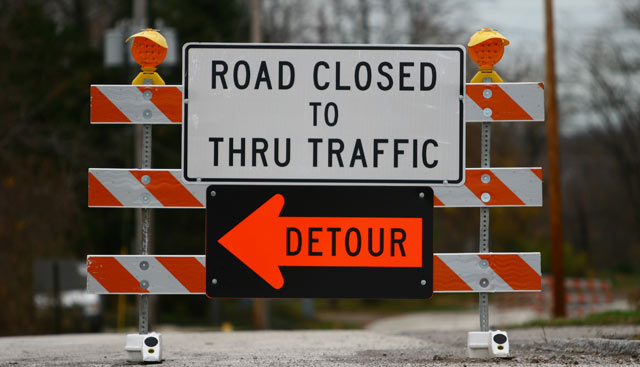
    Loveland, Ohio – A gas leak has shut down Loveland-Madeira Road from Hopewell Road to Cottonwood Drive. Businesses are closed along this stretch of roadway. There is no access to I-275 from Loveland-Madeira Road.

    The Loveland-Symmes Fire Department, Duke Energy, and the Loveland Police Department are on the scene. Duke is making the repairs. Duke advises the repairs will cause an extended delay and the road is estimated to remain closed through the evening.

    The closure is due to a reported gas leak that occurred mid-morning on Nov. 11 in Symmes Township.

  • Loveland Magazine file photos of past flooding at the location where12 single family homes are proposed

    Loveland Magazine file photos of past flooding at the location where12 single family homes are proposed

    Loveland, Ohio – This photo album contains Loveland Magazine file photos of past flooding at the location where12 single family homes are proposed on Riverside Drive in the West Loveland Historic District. The development shares 540 feet of frontage along the Little Miami River. The site will be elevated by bringing in earth to bring it above flooding elevation.

    Photo taken on Nov 7, 2024

    The Loveland Planing and Zoning Commission had scheduled a meeting to discuss the plan, however the meeting was postponed at the last minute and is expected to be re-scheduled.

    For Background:

    Schildmeyer family propose 12 single family homes for Riverside Drive in the West Loveland Historic District


  • The Nutcracker Holiday Art Show at Loveland Artists Studios on Main November 15-25

    The Nutcracker Holiday Art Show at Loveland Artists Studios on Main November 15-25

    Opening Night Reception is Friday, Nov. 15, from 6-9 PM

    Loveland, Ohio – “You truly won’t believe the amazing nutcrackers that our Loveland artists have created. There are more than 50 truly unique works of art,” says President of the Art League of Loveland, Johanna Kremer. “We’ve highlighted several of our premier artists and their pieces, such as Tom Post’s Leonardo DaVinci “Prepping Supper”.

    Teresa Nieberding and her Jazz Singer nutcracker

    Teresa Nieberding donated all these vintage nutcrackers to the artists to unleash their creativity in memory of a dear artist friend of hers who shared a love of nutcrackers. When her friend died, she bequeather all her unfinished nutcrackers, and this is Teresa’s way of “paying it forward.”

    Some of the artists are also holding Nutcracker classes during this holiday art show. Kremer said, “The classes will be taught by some of our best artists.”

    Tom Post’s Leonardo DaVinci “Prepping Supper”

    DJ Berard created a Picasso nutcracker


    Gayle Hixson’s hand-painted and hand-sewn Jester
    Monica Achberger’s “Starry Night” gal! (Her hat depicts an actual star constellation!)

    View this gallery of Nutcracker art…

  • Panel of Ohio lawmakers from both parties talk next moves for legislature in lame duck and beyond

    Panel of Ohio lawmakers from both parties talk next moves for legislature in lame duck and beyond

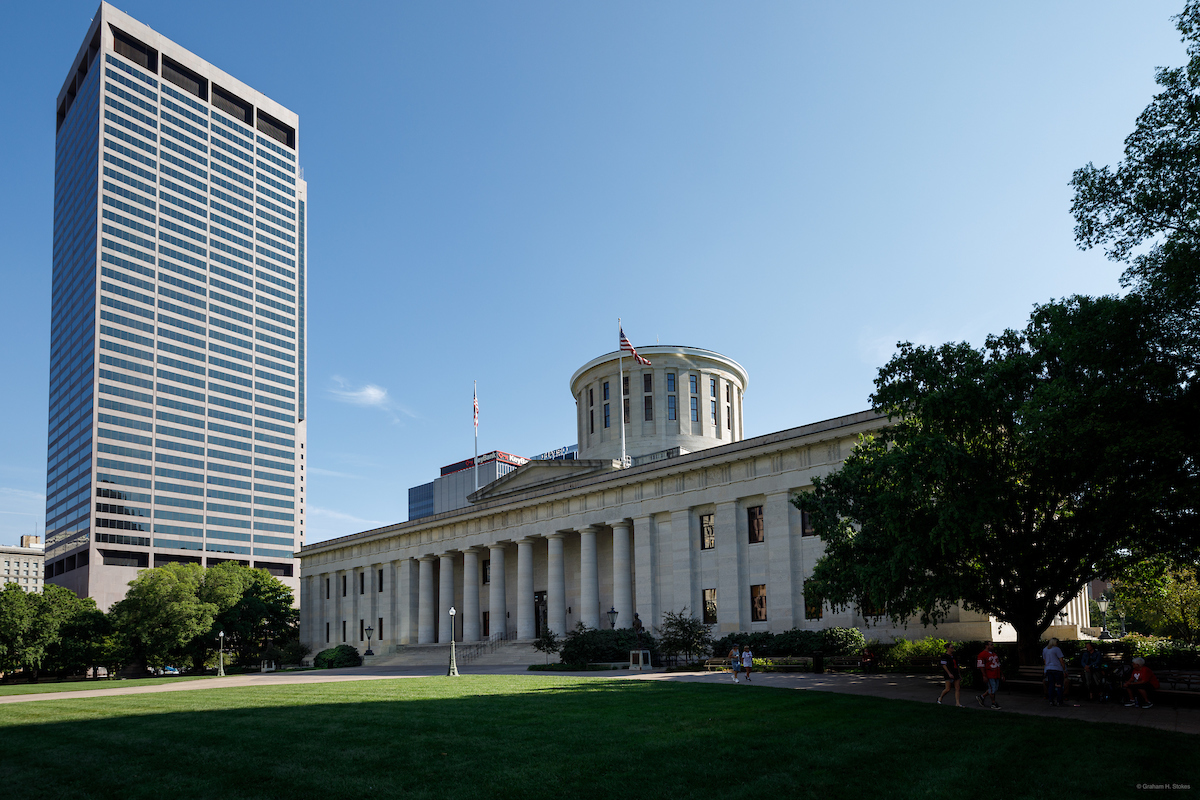
    The Oho Statehouse, Columbus, Ohio. (Photo by Graham Stokes for the Ohio Capital Journal. Only republish photo with original story.)

    By:  Ohio Capital Journal

    Following an election which brought two more Democrats to the Ohio Senate and Ohio House each, but struck down redistricting reforms and maintained Republican supermajorities, lawmakers are planning their next moves when it comes to policy.

    The Ohio General Assembly has two more months of its current term before the year begins with a state operating budget to be developed and approved, and other policy priorities to address without federal COVID funding boosts the GA had in previous years.

    Four members of the legislature met at a Thursday post-election event hosted by the Ohio Chamber of Commerce to discuss the way forward in addressing topics like education and property taxes, while balancing a need for economic goals alongside social issues.

    Lame duck

     The Ohio Chamber of Commerce’s Rick Carfagna, far left, speaks with state Sen. Bill DeMora, state Rep. Scott Oelslager, state Rep. Dani Isaacsohn and state Sen. Rob McColley during a Thursday panel on the future term of the Ohio General Assembly. (Photo by Susan Tebben/Ohio CapitalJournal) 

    State Sen. Rob McColley, R-Napoleon, sat alongside fellow Sen. Bill DeMora, D-Columbus, and state Reps. Dani Isaacsohn, D-Cincinnati, and Scott Oelslager, R-North Canton, at the panel discussion.

    All the men said bipartisanship should be an aim for the legislature, despite the Republican supermajority, and they all anticipated the usual late nights as the upcoming lame duck legislative session ties up loose ends by the end of the year.

    “I can tell you, it won’t be fun,” McColley told his colleagues. “Don’t fall asleep at your desk.”

    The Ohio House has four sessions scheduled between now and the end of December, with another three “if needed” sessions set aside, just in case. The Ohio Senate has scheduled five sessions for the rest of 2024.

    “I’m actually hopeful we don’t have any sessions, so we can’t screw the state over like we normally do with lame duck every two years,” DeMora said at Thursday’s chamber event.

    But DeMora and others do have some bipartisan-sponsored bills to push before they must be reintroduced at the beginning of the new GA.

    Specifically for DeMora, he hopes to see passage of a bill mandating insurance coverage for children’s hearing aids, along with an election worker protection bill.

    Isaacsohn said he wants to see relief in the area of property taxes, calling it “outrageous” that there hasn’t been legislative movement to stem the “skyrocketing” taxes without impacting local schools who rely on those taxes.

    “It’s what our constituents are calling our offices about, it’s what people are feeling,” Isaacsohn said. “And it should not come at the expense of our public schools.”

    McColley agreed that property taxes are something the legislature “needs to take a serious look at.”

    “I do think Ohioans who are looking at it would be fine if it was just simply more predictable and easy to understand as to how these property tax rates are calculated, and maybe even if there was a cap on the level of increase that can happen going forward,” McColley said.

    Redistricting and the general election

    The results of Tuesday’s election did not go unspoken by the four legislators. Isaacsohn said it was worth mentioning that the Democrats picked up two more seats in an Ohio Senate that is still strongly held by a Republican majority, and McColley used the fact that Democrats made gains in an otherwise GOP-dominated election as an argument for the current redistricting system in Ohio.

    “That is, in my opinion, largely as a result of – not only were there candidates and good races won – but primarily the redistricting bipartisan unanimous map that we came up with in the last cycle,” McColley said.

    Tuesday’s elections results mean Republican supermajorities go from 67-32 in the Ohio House to 65-34, and from 26-7 in the Ohio Senate to 24-9.

    In unofficial results as they stand now from Tuesday night, President-elect Donald Trump won Ohio 55-44. In an average of the results for the statewide races for President, U.S. Senate, and the three Ohio Supreme Court races, Republican candidates earned 54.22% of Ohioans’ votes, while Democrats earned 44.76%.

     Senate Majority Floor Leader Rob McColley, R-Napoleon, speaks at the Ohio Redistricting Commission meeting, September 20, 2023. (Photo by Graham Stokes for Ohio Capital Journal) 

    McColley was on the Ohio Redistricting Commission when the most recent Statehouse map was adopted – the sixth revision made by the commission in two years – and he said the creation of that map with bipartisan support was proof that a map could be drawn that was “something that may have been intended when the initial amendments were passed in 2015 and 2018.”

    The two Democrats on the commission have said they agreed to the map adoption because if they didn’t Republicans said they would’ve drawn something even more unfavorable to Democrats, and in hopes that voters would end the ORC’s map-making with Issue 1 this year.

    Oelslager agreed with McColley, saying Ohioans’ the defeat of Issue 1 on Tuesday with 54% of the vote “sent a clear message that they did not want to change the process.”

    Isaacsohn pushed back, saying the fact that every single incumbent who ran was reelected in the House and the Senate shows “something is off there.”

    “Every incumbent should not win in any year for any party. That’s not a healthy democracy,” Isaacsohn said. “There is no way that 132 of them are doing a good enough job and that voters don’t want a change there.”

    He added that even with the “red wave year all over the country, including in Ohio,” the voter trends still didn’t match the partisan makeup drawn into the Statehouse maps by the ORC.

    “We should continue to at least be honest with ourselves about how disproportionate and imbalanced the partisan makeup of the legislature is,” Isaacsohn said.

    DeMora mirrored arguments made by Citizens Not Politicians and other supporters after Issue 1 was defeated, saying some of the Ohioans who voted against the measure were “confused” by summary ballot language approved by the Ohio Ballot Board, and actually supported the measure itself.

    Moving forward, McColley and Oelslager said conversations could begin within the legislature as to what changes could be made to the state’s redistricting process, including if Gov. Mike DeWine’s preference that the state look to something like the process Iowa has could go forward.

    Iowa’s process relies on legislative and gubernatorial approval of maps drawn by a nonpartisan governmental group, in Ohio’s case, possibly the Ohio Legislative Service Commission.

    “I do think there will probably be discussions about whether we can improve upon our existing process, and that may very well involve discussions around who sits on the commission,” McColley said.

    Funding the state

    As for policy decisions in the new year, legislators are hopeful to put forth a budget that addresses the basic needs of Ohioans, even if they disagree on what those basic needs are.

    “From a general standpoint, (the Republican caucus) will continue our philosophy of doing all we can to make Ohio a good place to raise a family, begin a business, have a culture where people take a look at our great place and say ‘I want to come there,” Oelslager said.

    Those priorities for Oelslager include the three biggest budget items they see for the state: health care, education and the state’s prisons system.

    As far as education, Oelslager said implementing the Fair School Funding Plan is “again part of the discussion for renewal,” but so, too, is the EdChoice private school voucher program, “and I’m sure that’ll be part of the K-12 education proposal,” he said.

    Priorities may remain largely the same as in other years for the GOP, but the revenues with which to pay for those policies will be impacted by the fading-out of federal funding from the COVID-19 pandemic.

    “This could be a different budget cycle depending on how a lot of this plays out,” McColley said. “Obviously, the economy’s in a little bit different shape now than it was two years ago, four years ago, six years ago.”

    Policy priorities in the new year

    McColley said the Senate still plans to work on reducing tax burdens, de-regulation “across the board” and expansion of “education options” for Ohioans.

    DeMora had what he saw as an easy fix for the money problems that could show up in the state over the next few years.

    “I can find a billion dollars in the budget if we get rid of vouchers,” DeMora said. “We’ll have a billion dollars more to spend in the budget right there.”

    Earlier this year, the Ohio Department of Education and Workforce found that the state spent $970.7 million on private school scholarship programs in the 2024 fiscal year, the first year of eligibility for nearly all Ohio students.

    Other money sources could come from recreational marijuana sales and the expansion of gaming, DeMora said, if the governor was willing to support it.

    “We’re going to see if the governor is more into fiscal responsibility or if his opposition to both gaming and marijuana is going to not have him look at those two sources of funding for the state when all this federal money is no longer here,” DeMora said.

    Isaacsohn said it wasn’t a bad idea to grab the revenue possible from those sources, but when taxes could be raised on the richest Ohioans instead, he didn’t see the logic.

     Ohio State Rep. Dani Isaacsohn (D-Cincinnati) speaking at a press conference. (Photo by Morgan Trau, WEWS.) 

    “Instead of taxing the wealthiest people, we are going to try and raise revenue by hoping people gamble more or do more substances,” Isaacsohn said. “That’s an odd choice, I think, for policymakers to make.”

    One thing that will arise despite discussions about the need for more economic goals in the legislature is “cultural issues,” which McColley and Oelslager defended as issues that are important to their constituents.

    The Ohio Chamber’s Senior Vice President of Government Affairs, Rick Carfagna, moderated the Thursday panel, and said there’s been “this opportunity cost of time, energy and resources that seems to have been spent on divisive social issues at the expense of economic policies.”

    He asked legislators if there was a path to refocus on those issues. McColley said it’s possible to do both.

    “Frankly, some of these social issues, people look to us and say what other avenue or what other remedy do I have if my state government is not willing to step in and take care of these things,” McColley said.

    He said the law that Ohio passed to keep transgender students from playing sports with the group that aligns with their gender identity played into a “central campaign issue,” both nationally and at the state level, one that he said voters supported.

    “That’s something that I would say Ohioans want to see happen by and large,” McColley said.

    The Washington Post reported Tuesday that Republican spent at least $215 million on anti-trans ads during the 2024 campaign cycle.

    YOU MAKE OUR WORK POSSIBLE.

  • Ohio Republican lawmaker wants to prohibit selling intoxicating hemp products

    Ohio Republican lawmaker wants to prohibit selling intoxicating hemp products

    Getty Images

    By:  Ohio Capital Journal

    State Sen. Steve Huffman, R-Tipp City, introduced a bill that would ban the sale of intoxicating hemp products in Ohio.

    The Republican lawmaker introduced Senate Bill 326 on Thursday. State lawmakers are set to return to the Ohio Statehouse next week for the start of lame duck.

    S.B. 326 defines intoxicating hemp products as containing more than 0.5 of a milligram of delta-9 THC per serving, two milligrams of delta-9 THC per package, or 0.5 of a milligram of total non-delta-9 THC per package, according to the bill’s language.

    “This act is hereby declared to be an emergency measure necessary for the immediate preservation of the public peace, health, and safety,” the bill said. “The reason for such necessity is to protect Ohioans, especially Ohio’s youth, from untested, unregulated dangerous tetrahydrocannabinol (THC) products. Therefore, this act shall go into immediate effect.”

    Marijuana, which is legal in Ohio, is not included as an intoxicating hemp product, according to the bill’s language. Ohio recreational marijuana sales recently topped $143.4 million since sales started three months ago, according to the the Ohio Department of Commerce Division of Cannabis Control.

    The 2018 Farm Bill says hemp can be grown legally if it contains less than 0.3% THC. Intoxicating hemp products can come in many forms including edibles, beverages, vaping cartridges or oils, among other things.

    Delta-9 THC is the main naturally occurring intoxicating part of the cannabis plant and people typically experience a high after consuming or smoking delta-9 THC beyond a certain threshold.

    Under S.B. 326, the Ohio Investigative Unit would enforce this piece of legislation if it were to become law, with the assistance of the Ohio Department of Public Safety.

    GET THE MORNING HEADLINES.


    The Ohio Department of Commerce Director (who is currently Sheryl Maxfield) could impose an administrative penalty against someone who sells intoxicating hemp products — $10,000 for a first violation, $25,000 for a second violation and $50,000 for a third violation.

    Violating the proposed law would be a first degree misdemeanor on a first offense and a fifth degree felony for a second offense, according to the bill’s language. It would be a fifth degree felony if someone sold intoxicating hemp to someone under 21.

    Other hemp legislation

    This is not the first bill Huffman has introduced this year that has to do with hemp products.

    State Sen. Kirk Schuring, R-Canton, and Huffman introduced S.B. 278 in May that would ban selling adult-use hemp products to people under 21. The bill would also require stores to keep adult-use hemp products behind the counter and ID customers who want to purchase those products.

    Over in the House, State Rep. Sara Carruthers, R-Hamilton, introduced House Bill 642 over the summer which would require the Ohio Director of Agriculture to issue recommendations for adult-use hemp products.

    These bills all come after Ohio Gov. Mike DeWine called on lawmakers earlier this year to prohibit or regulate delta-8 THC products. Delta-8 is made from hemp, but since it has 0.3% THC or less, it is not currently regulated. There is no age restriction when it comes to purchasing delta-8 products.

    Seventeen states have banned delta-8 and seven more have restrictions around it, according to the National Cannabis Industry Association.

    Follow OCJ Reporter Megan Henry on X.

    YOU MAKE OUR WORK POSSIBLE.

    _____________
    Megan Henry
    Megan Henry

    Megan Henry is a reporter for the Ohio Capital Journal and has spent the past five years reporting in Ohio on various topics including education, healthcare, business and crime. She previously worked at The Columbus Dispatch, part of the USA Today Network.

    Ohio Capital Journal is part of States Newsroom, the nation’s largest state-focused nonprofit news organization.

    MORE FROM AUTHOR

  • A Call for Transparency in Loveland City Government

    A Call for Transparency in Loveland City Government

    Dear Editor,

    I am writing to express my deep concern regarding the recent decision by Loveland City to deny the validity of case #2024-03: 200 Railroad Avenue HPPC Appeal based upon a 3rd party filing by a concerned Loveland resident. (Demolition of home in Loveland Historic District causing uproar)

    Ironically, as we debate the future of historic buildings and the little yellow house on Railroad Avenue, a ten year anniversary of the groundbreaking on Loveland Station Apartments approaches (November 12, 2014).

    Just barely a decade ago, Loveland residents woke up to a massive three-story apartment complex near the train crossing in our historic two-story whistle stop town, constructed even at the expense of losing our iconic train whistle. Transparency was nowhere to be found, and residents were left angered and baffled how it happened. Some even called to tear the buildings down.

    As elected officials, Loveland City Council members are entrusted with the responsibility of representing the interests of all Loveland residents, especially when they show up at public meetings. We vote for them; at the very least, we expect transparent processes.

    However, in the instance of the Board of Zoning Appeals Meeting on October 30th, we left silenced and frustrated, feeling fooled by the process. (BZA dismisses appeal making way for demolition of historic home)

    We asked only for an appeal to a zoning decision to demolish this historic house in question. Yet the City, under solicitor Joe Braun, denied several concerned citizens at the scheduled public appeal meeting an opportunity to contribute factual evidence as to the historic value of the home. From our perspective, the process failed.

    It is crucial that our elected officials remain responsive to the concerns of their constituents. By actively listening to the community and considering their input on historical and architectural significance of buildings to the city, the City Council can make informed decisions that benefit both present and future generations. But they didn’t listen at all.

    The City’s decision to allow the appeal to precede so far as to set a specific date for the appeal review and then, at that meeting, subsequently invalidate the appeal on technical grounds was not only unfair but suggests strategic timing to obstruct an open process.

    This action effectively limited the opportunity for other residents to submit further appeals prior to the deadline, undermining the very essence of a transparent and democratic processes.

    Residents showed up prepared because they believe the 200 Railroad Avenue building is a significant piece of Loveland’s history. Indeed, it was acknowledged by Council Member Neal Oury at the October 22nd Loveland City Council meeting that the original brick structure remains standing and sound.

    In fact, it is the only remaining brick structure just a few yards from the Little Miami Railroad tracks on Railroad Avenue.

    Residents who showed up to the appeal meeting wanted to know what we’re demolishing of our remaining history as a whistle stop town. They want thoughtful deliberation as part of a transparent process. Instead, the City appeared non-responsive.

    It is essential that the City conducts public meetings in a fair and impartial manner. By disregarding the concerns of residents and limiting public participation in a zoning appeal process, the City has once more set itself up for hard questions reminiscent of seven years past.

    This public doubt stems from the Loveland Station Apartments development followed by the era of Mayor Mark Fitzgerald and the attempt to replace the current Loveland City Hall with a FOUR story, multipurpose building in a public-private deal, as much as we would like to forget. Residents were angry, yes, and the city hall project was kicked aside—for now.

    The maneuver to deny the appeal on October 30th, while deft, was strangely reminiscent of 2017 when failure of transparent process went so far that (then) resident Neal Oury called for a public recall of mayor Fitzgerald before announcing his own candidacy for a Loveland City Council seat. But it didn’t stop there. Transparent process failed so miserably that in 2017, a resident filed a sunshine lawsuit against the City of Loveland.

    How can we take a step back?

    A better way forward than denying the appeal process would have included 1) any council members with longterm friendship with the owner or developer recuse himself from votes on the question of demolition, and 2) residents given an actual opportunity to present their research findings at a newly scheduled Zoning Appeals Meeting.

    Why not slow down and get it right? I urge the City Council to not dig in but instead to reverse its decision to deny the appeal on October 30th before razing the historic house.

    Moving forward, I hope this latest pubic disappointment serves as a reminder to Council to prioritize transparency and open communication with residents, especially when making special zoning decisions that involve any plans for multi-unit buildings. (Six, three-story apartments proposed adjacent to Nisbet Park on Loveland Bike Trail)

    By fostering a more inclusive and participatory decision-making process, Loveland City Council can better ensure that residents remain mutually supportive of their many hours of earnest public service.

    Sincerely,

    Halie Rebeccaschild

  • 66% of Hamilton County voters approved the Developmental Disabilities Services levy for five more years

    66% of Hamilton County voters approved the Developmental Disabilities Services levy for five more years

    by Leia Snyder

    Thanks to your hard work and commitment to the people we serve, 66% of Hamilton County voters approved the Developmental Disabilities Services levy for five more years. The renewal of this levy means that HCDDS can continue supporting people with developmental disabilities to live, work, learn, and fully participate in their communities.

    Many people were instrumental to the success of this levy, and I want to take a moment to specifically point out a few of our essential supporters.

    We could not have done this without the help of our amazing provider community, who dedicated time, funding, and so much effort to this campaign.

    I also want to thank all of our staff for their dedication to our mission every day. The wide margin of community support for our levy shows that Hamilton County voters continue to recognize and value the high-quality services we provide.

    And finally, I want to give a big thank you to all of the people and families we serve who helped by volunteering, spreading the word, and being ambassadors for HCDDS and this levy.

    Thank you all, and congratulations!

    Sincerely,

    Leia Snyder, Hamilton County DD Services Superintendent

  • Stephanie Quehl of DOITFORJACK appears on Scripps Network to talk about fentanyl crisis

    Stephanie Quehl of DOITFORJACK appears on Scripps Network to talk about fentanyl crisis

    Loveland, Ohio – The Scripps Network proclaims, “The siren is sounding for the fentanyl crisis.” Acclaimed journalist Caren Zucker speaks with educators, law enforcement officials and family members of those lost to the drug and tries to answer the obvious question: what can we do to help end the fentanyl crisis in America?

    Loveland resident Stephanie Quehl of DOITFORJACK was invited to Atlanta to participate in a fentanyl awareness production with the Scripps Network.

    Producer Caren Zucker, who lost her son Jonah to fentanyl, along with former ABC White House Correspondent John Donvan, and ABC News Executive Producer Jon Meyersohn, pulled together a group of individuals from around the country in the fentanyl awareness community to participate in a conversation about this critical topic.

    Stephanie Quehl lost her son to a fentanyl poisoning.

    This production is an informative and poignant presentation of how fentanyl impacts everyone. Please take the time to watch “To Save A Life: A National Fentanyl Alarm.”

    Learn more about the Jack Quehl Foundation and all they do from their Loveland based organization:

  • Ohio Gov. DeWine won’t name names, but preparing to fill U.S. Senate vacancy

    Ohio Gov. DeWine won’t name names, but preparing to fill U.S. Senate vacancy

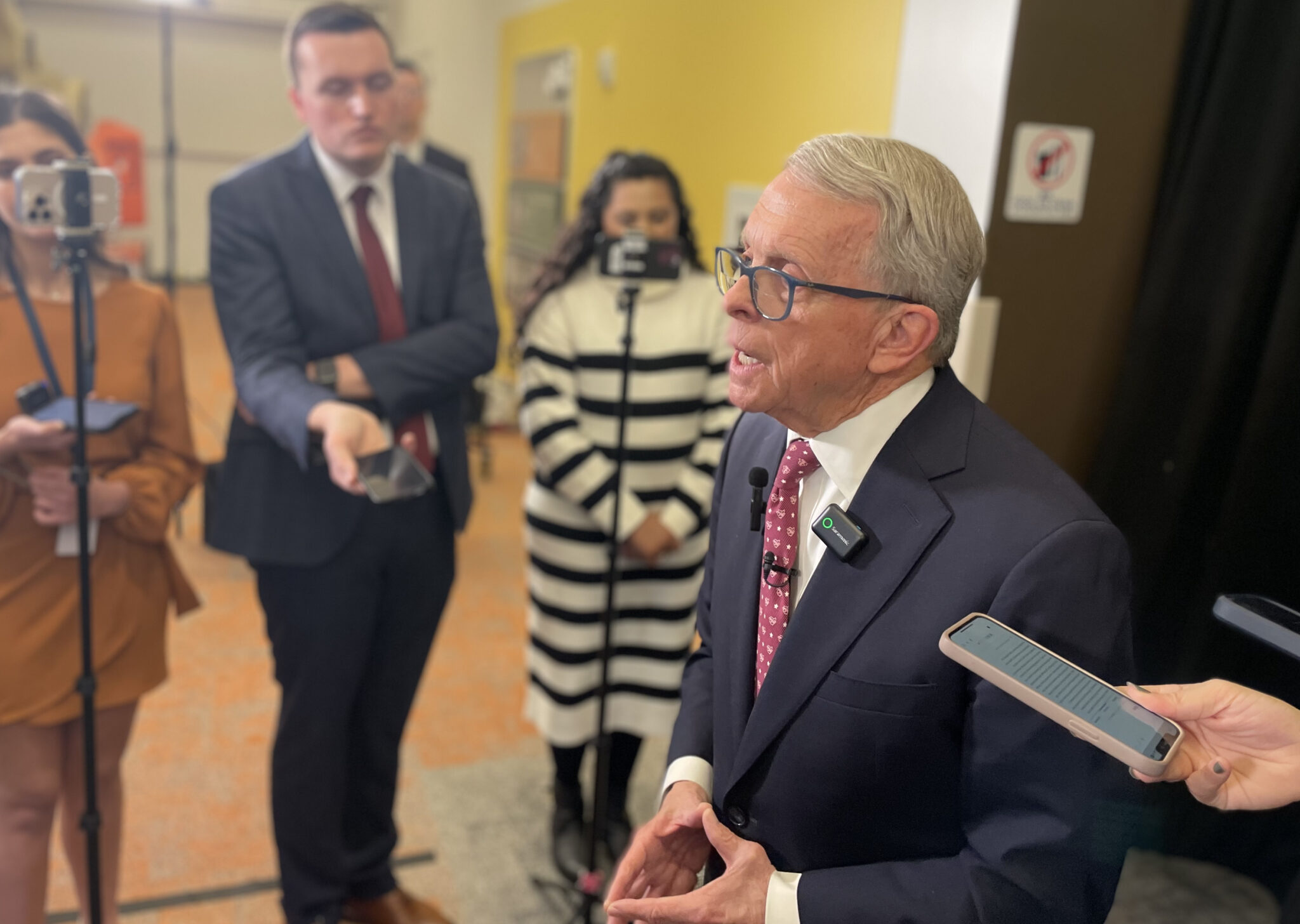
    Gov. Mike DeWine speaking to reporters. (Photo by Nick Evans, Ohio Capital Journal.)

    By:  Ohio Capital Journal

    Ballots in some districts are still being tallied, but the broad strokes of the 2024 election are clear, and the results mean Ohio Gov. Mike DeWine has a big decision to make. J.D. Vance is jumping from U.S. Senator to Vice President-elect leaving a vacancy DeWine needs to fill.

    Whoever he chooses will serve for the next two years, with the opportunity to defend the seat in the next federal election in 2026. And since Vance was elected in 2022, his replacement would have to turn around and do it all over again in 2028.

    “It’s got to be someone who wants to spend the next four years not just doing the job, but running for office,” DeWine explained at post-election conference hosted by the Ohio Chamber of Commerce.


    On the other hand, incumbency means DeWine’s appointee could enter the race with a bit of wind in their sails.

    And DeWine has important strategic factors to consider. The Republican party currently controls each state office in Ohio. But in each case — Governor, Lt. Governor, Attorney General, Secretary of State, Auditor and Treasurer — the politicians occupying those offices are term-limited. That means a broad array of open seats, and several experienced candidates who can make a case reasonable for their nomination to a new post.

    That game of musical chairs could easily tip into an intraparty knife fight. DeWine’s pick for the U.S. Senate could help keep it from getting out of hand.

    But it’s not clear if that will work. One potential recipient, Attorney General Dave Yost, has already said he’d turn down the nomination. Yost is eyeing a run for governor, as is Lt. Gov. Jon Husted.

    With DeWine’s political career likely nearing an end, it’s also one of his last opportunities to put his stamp on Ohio politics. In the most recent U.S. Senate primary, the governor endorsed state Sen. Matt Dolan, R-Chagrin Falls, instead of the eventual victor, U.S. Senator-elect Bernie Moreno.

    While DeWine has yet to give any indication as to who he is considering as a replacement to fill Vance’s Senate seat, but there are several potential names that have been circulating among strategists.

    How the governor views things

    At the Ohio Chamber conference, DeWine refused to discuss names but laid out the considerations that will drive his decision making. He noted with 12 years’ experience in the U.S. Senate himself, he wants to appoint someone “who actually does get things done.”

    GET THE MORNING HEADLINES.


    DeWine also said he’s not interested in a placeholder.

    “I want someone who will hold that seat — I hope for a long time,” DeWine said. “I think it’s in the interest of the state for them to do that.”

    And in addition to someone willing to mount back-to-back statewide campaigns, he’s concerned with finding someone who’s capable of actually winning those races.

    “Someone who can win a primary,” DeWine described, “because they will be faced with a primary in two years. They’re going to be in the primary election in less than that, and also someone who can win the general election.”

    After two contentious Republican U.S. Senate primaries it may be difficult to balance all of those priorities. But even if the final decision is challenging, DeWine said he won’t suffer from a lack of viable choices.

    “Well, yesterday I got a lot of calls,” DeWine said with smile. “Look, we have great people in the state of Ohio who could serve very well in the United States Senate. So, we’re just going through the process of starting to think about this and see who would be the best person.”

    As far as who he’s sounding out for opinions, DeWine said “certainly” Vance’s opinion about who should replace him matters.

    “Frankly I’m reaching out to a lot of people, I’m not going to talk about names, again,” DeWine said, “But I’m consulting a lot of people who I know are not interested, but who might have ideas about who should be.”

    Although Yost has publicly said he’s not interested, that news may not have reached the governor. Asked whether anyone has taken their name out of the running he said, “well, I don’t know about that.”

    “But I wouldn’t tell you anyway,” he quipped.

     Ohio U.S. Senator-elect Bernie Moreno addressing an Ohio Chamber of Commerce crowd. (Photo by Nick Evans, Ohio Capital Journal.) 

    What Moreno wants in a colleague

    A few hours after DeWine spoke, Senator-elect Bernie Moreno took the stage, and described how he wants to promote Ohio businesses in the Senate and earn the trust of voters who didn’t support him. He’s hoping whoever DeWine selects will be a partner in that effort.

    Like DeWine, Moreno said he has thoughts on who’d be a good pick but declined to go into specifics. He also stressed that the decision is ultimately the governor’s to make and that he and DeWine are “100% on the same page” about the kind of person who should get the nod.

    After what he described as “a grueling two years,” Moreno said finding an effective campaigner is very important.

    “It’s got to be somebody who has a proven record of actually doing the work,” he said. “Because if you are too lazy to campaign, you’re probably going to be too lazy to be an effective senator.”

    He added it’s important that the appointee really believes in Trump’s agenda rather than someone who would say you agree with it “and then stab us in the back in Washington, D.C.”

    Moreno said he wants to work alongside someone who’s decent and works well with others — he mentioned the job isn’t an executive role and will require a collaborative approach. And lastly Moreno hopes the governor avoids “publicity seeker(s).”

    “Because you have to be able to trust each other,” he said, “and you can’t be somebody who’s just constantly trying to make a name, out for themselves, and is looking at the next steppingstone.”

    “It’s a weighty job,” Moreno added. “I mean, 11, 12 million people look to you and say, hey, I want you to represent me properly.”

    Follow OCJ Reporter Nick Evans on Twitter.


    Nick Evans
    Nick Evans

    Nick Evans has spent the past seven years reporting for NPR member stations in Florida and Ohio. He got his start in Tallahassee, covering issues like redistricting, same sex marriage and medical marijuana. Since arriving in Columbus in 2018, he has covered everything from city council to football. His work on Ohio politics and local policing have been featured numerous times on NPR.

    Ohio Capital Journal is part of States Newsroom, the nation’s largest state-focused nonprofit news organization.

    MORE FROM AUTHOR