Year: 2024

  • What will happen to J.D. Vance’s Ohio U.S. Senate seat?

    What will happen to J.D. Vance’s Ohio U.S. Senate seat?

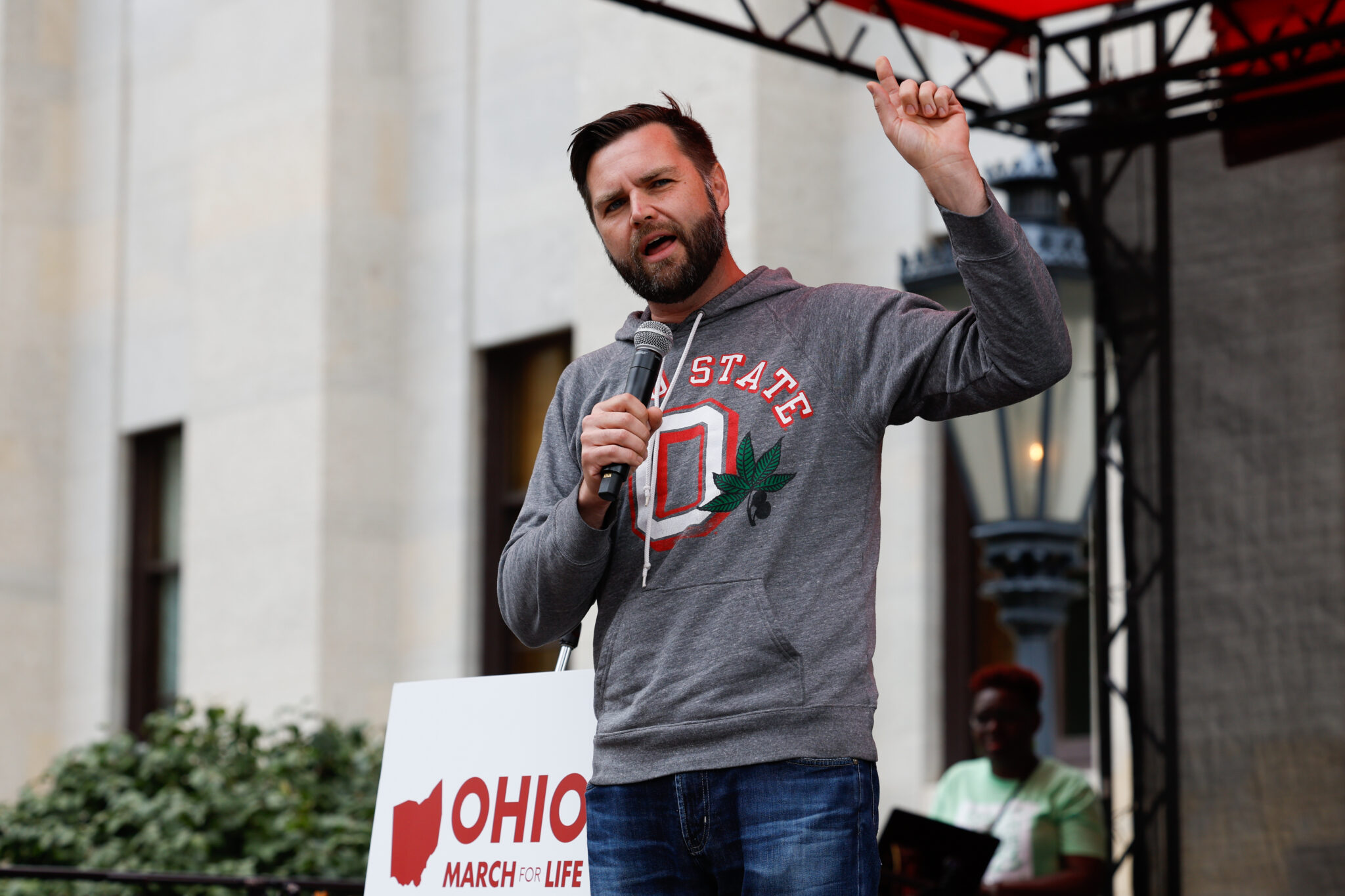
     COLUMBUS, Ohio — OCTOBER 06: Republican Ohio U.S. Sen. J.D. Vance speaks during the Ohio March for Life rally against November’s Issue 1 reproductive rights amendment, October 6, 2023, outside the Statehouse in Columbus, Ohio. (Photo by Graham Stokes for Ohio Capital Journal. Republish photo only with original article.)

    By:  Ohio Capital Journal

    Ohio U.S. Sen. J.D. Vance will become the next vice president, thus creating a vacancy in the U.S. Senate.

    Former President Donald Trump and his running mate Vance defeated Vice President Kamala Harris and Minnesota Gov. Tim Walz in the presidential election that was called Wednesday morning by the Associated Press. Vance will have to resign from his Senate seat before being sworn in as vice president during Inauguration Day on Jan. 20.

    It is now up to Ohio Gov. Mike DeWine to pick a Republican to fill Vance’s open Senate seat until a special election is held in 2026. Whoever DeWine appoints must run in the 2026 special election if they want to keep their seat.

    Vance is currently serving his first term in the U.S. Senate after being elected over Democratic Rep. Tim Ryan in 2022. Whoever wins the 2026 special election will serve the remainder of Vance’s term, which expires in 2028.

    DeWine has yet to give any indication as to who he is considering as a replacement to fill Vance’s Senate seat, but there are several potential names that have been circulating including state Sen. Matt Dolan, Lt. Gov. Jon Husted, Republican National Committee Committeewoman for Ohio Jane Timken, former Republican presidential candidate Vivek Ramaswamy, and Ohio Sec. of State Frank LaRose, among others.

    Republican Bernie Moreno defeated incumbent Democratic U.S. Sen. Sherrod Brown in a hotly contested Senate race on Tuesday. Some have speculated whether Brown might seek the Ohio U.S. Senate seat in 2026.

    Follow OCJ Reporter Megan Henry on X.


    Megan Henry
    Megan Henry

    Megan Henry is a reporter for the Ohio Capital Journal and has spent the past five years reporting in Ohio on various topics including education, healthcare, business and crime. She previously worked at The Columbus Dispatch, part of the USA Today Network.

    Ohio Capital Journal is part of States Newsroom, the nation’s largest state-focused nonprofit news organization.

    MORE FROM AUTHOR

  • Planing and Zoning Commission meeting tonight is rescheduled

    Planing and Zoning Commission meeting tonight is rescheduled

    Loveland, Ohio – The Loveland Planing and Zoning Commission meeting that was scheduled for tonight, “…is being rescheduled. The rescheduled date will be posted.”

    Background:

    Schildmeyer family propose 12 single family homes for Riverside Drive in the West Loveland Historic District

    Across Riverside Drive from Loveland Museum Center and the Tufts Schildmeyer Family Funeral Home

  • Schildmeyer family propose 12 single family homes for Riverside Drive in the West Loveland Historic District

    Schildmeyer family propose 12 single family homes for Riverside Drive in the West Loveland Historic District

    The Loveland Planing and Zoning Commission meeting that was scheduled for tonight, “…is being rescheduled. The rescheduled date will be posted.”


    This story has been up-dated to reflect that the Planing and Zoning meeting begins tonight at 6 PM and not 6:30 PM.

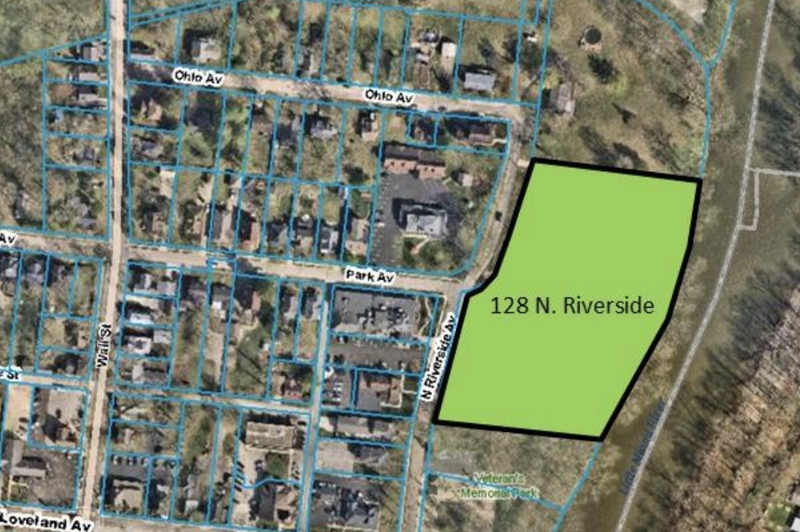
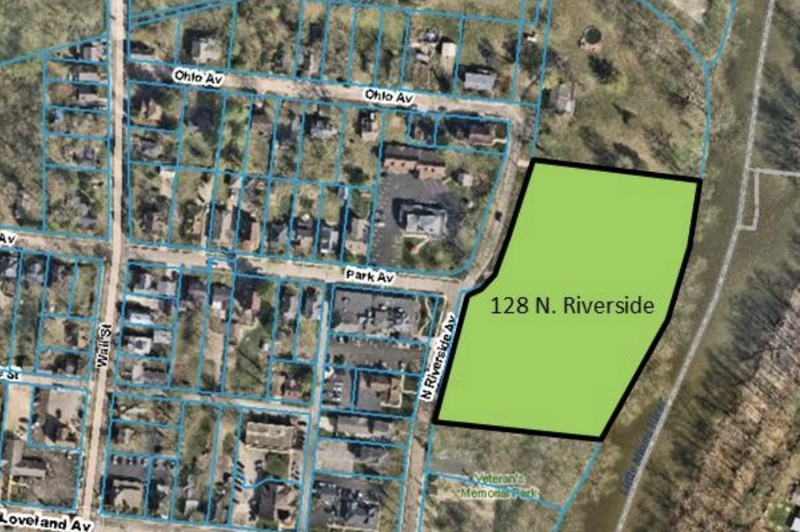
    Loveland, Ohio – 12 single family homes are being proposed for Riverside Drive in the West Loveland Historic District. An application has been submitted by Traditions Building and Development Group. The proposed Special Planning District is located at 128 North Riverside Drive and includes twelve (12) single-family detached dwelling units (24’ x 56’ 3-Story Homes) with minimum lot size of 0.114 acres or 4,966 sq. ft. The owner is Schildmeyer Holdings.

    You can read the plan as summited in the .PDF below.

    The development shares 540 feet of frontage along the Little Miami River with a shared driveway to garages in the rear. The site will be elevated by bringing in earth to bring it above flooding elevation.

    The Loveland Planing and Zoning Commission will meet tonight, November 7th at City Hall at 6 PM to consider the proposal.

    The 12 proposed homes are across Riverside Drive from the Loveland Museum Center and the Tufts Schildmeyer Family Funeral Home.


    [pdf-embedder url=”https://lovelandmagazine.com/wp-content/uploads/2024/11/2024-11-07-Planning-Zoning-Commission-Full-Agenda-1876.pdf” title=”2024-11-07 Planning & Zoning Commission – Full Agenda-1876″]

  • Paxton’s Grill and Ramsey’s Trailside want to salute your service

    Paxton’s Grill and Ramsey’s Trailside want to salute your service

    Loveland, Ohio – Veterans Day is Monday, November 11th and Paxton’s Grill and Ramsey’s Trailside want to serve those who served our country!

    All Veterans eat FREE on Monday, November 11th at both of these Loveland restaurants.

    “Please join us and we will proudly salute your service!”

    The restaurant group will also salute your service at SwingLine in Madeira.
  • November 5, 2024 General Election Results

    November 5, 2024 General Election Results

    Loveland, Ohio


    President and Vice President

    Ohio Unofficial results

    Kamala D. Harris and Tim Walz

    2,476,003
    43.88%


    Donald J. Trump and JD Vance

    3,116,579
    55.23%


    Clermont County Unofficial results for President and Vice President

    Donald J. Trump 75,731 67.09%

    Kamala D. Harris 35,593 31.53%

    Hamilton County Unofficial results for President and Vice President

    Kamala D. Harris 107,213 64.17%

    Donald J. Trump 58,120 34.79%

    Warren County Unofficial results for President and Vice President

    Kamala D. Harris 46,444

    Donald J. Trump 89,676

    National Projected Presidential Results

    CNN: At 5:45 PM, CNN projects that former President Donald Trump will defeat Vice President Kamala Harris in a historic political comeback, recapturing the White House following an election loss in 2020.

    ______________

    U.S. Senate

    Candidate Votes % of Votes
    Sherrod Brown (D) 2,592,539
    46.42%
    Stephen Faris (WI)*  0
    0.00%
    Don Kissick (L) 189,377
    3.39%
    Bernie Moreno (R) 2,803,634
    50.19%
    David Allen Pastorius (WI)*  0
    0.00%
    Nathan Russell (WI)*  0
    0.00%
    Tariq K. Shabazz (WI)*  0
    0.00%
    Total Votes Cast 5,585,550


    Clermont County Unofficial results for U.S. Senate

    Rep Bernie Moreno REP 69,487 – 62.39%

    Dem Sherrod Brown DEM 37,267 – 33.46%

    Hamilton County Unofficial results for U.S. Senate

    Sherrod Brown DEM 107,151 – 64.62%

    Bernie Moreno REP 55,176 – 33.28%

    Warren County Unofficial results for U.S. Senate

    Bernie Moreno REP 83,535 – 61.03%

    Sherrod Brown DEM 48,640 – 35.54%

    Representative to U.S. Congress

    Greg Landsman (D) 208,650
    54.44%
    Orlando Sonza (R) 174,621
    45.56%
    Samantha Meadows (D) 94,751
    26.50%
    Alexander David Schrank (WI)*  2
    0.00%
    David J. Taylor (R) 262,843
    73.50%
    Warren Davidson (R) 233,439
    62.97%
    Vanessa Enoch (D) 137,284
    37.03%

    Ohio Senate

    Thomas Cooke (D) 60,083
    36.98%
    George Lang (R) 102,393
    63.02%


    Louis W. Blessing III (R) 106,572
    56.88%
    Ty Hogan (D) 80,807
    43.12%


    State Representatives

    24th District

    Dani Isaacsohn (D) 26,518
    72.32%
    John Sess (R) 10,150
    27.68%

    25th District

    Jim Berns (R) 6,275
    15.99%
    Cecil Thomas (D) 32,974
    84.01%

    26th District

    John Breadon (R) 18,410
    30.87%
    Sedrick Denson (D) 41,229
    69.13%

    27th District

    Rachel Baker (D) 38,651
    55.61%
    Curt C. Hartman (R) 30,858
    44.39%

    28th District

    Karen Brownlee (D) 34,891
    55.84%
    Regina Collins (WI)*  5
    0.01%
    Jenn Giroux (R) 27,588
    44.15%

    29th District

    Cindy Abrams (R) 32,333
    57.56%
    Joe Salvato (D) 23,842
    42.44%

    30th District

    Stefanie A. Hawk (D) 19,139
    31.21%
    Mike Odioso (R) 42,179
    68.79%
    Jean Schmidt (R) 41,545
    63.46%
    Katie Vockell (D) 23,924
    36.54%


    Adam C. Bird (R) 42,034
    75.44%
    Tracey D. McCullough (D) 13,682
    24.56%


    Laura Marie Davis (D) 19,324
    27.47%
    C. Michelle Teska (R) 51,017
    72.53%


    Cleveland Canova (D) 23,149
    37.46%
    Adam Mathews (R) 38,642
    62.54%


    ___________

    Ohio Justice of Supreme Court

    Candidate Votes % of Votes
    Michael P. Donnelly (D) 2,361,841
    44.30%
    Megan E. Shanahan (R) 2,969,872
    55.70%
    Total Votes Cast 5,331,713


    Ohio Justice of Supreme Court

    Candidate Votes % of Votes
    Joseph T. Deters (R) 2,941,873
    55.20%
    Melody J. Stewart (D) 2,387,351
    44.80%
    Total Votes Cast 5,329,224
    Candidate Votes % of Votes
    Lisa Forbes (D) 2,401,109
    44.93%
    Daniel R. Hawkins (R) 2,943,297
    55.07%
    Total Votes Cast 5,344,406


    Ohio State Issue 1 To create an appointed redistricting commission not elected by or subject to removal by the voters of the state

    Selection Votes % of Votes
    YES 2,478,017
    46.22%
    NO 2,883,705
    53.78%
    Total Votes Cast 5,361,722


    Clermont County Unofficial results for Issue 1

    No 71,503 – 65.63%

    Yes 37,450 – 34.37%

    Hamilton County Unofficial results for Issue 1

    YES 99,224 – 61.27%

    NO 62,733 – 38.73%

    Warren County Unofficial results for Issue 1

    NO 83,831 – 63.05%

    YES 49,124 – 36.95%

    Clermont County

    Milford Exempted Village School District Levy 1% Earned Income Tax

    Against the Tax 14,848 – 58.08%

    For the Tax 10,715 – 41.92%

    Proposed Tax Levy (Additional) Miami Township

    Against the Tax Levy 14,407 – 56.62%

    For the Tax Levy 11,037 – 43.38%

    County Commissioner Full Term Commencing 01/03/2025

    Dem Jennifer Mazzuckelli 33,550 – 31.50%

    Rep David L. Painter 72,971 – 68.50%

    County Commissioner Full Term Commencing 01/02/2025

    Rep Bonnie Batchler 72,908 – 68.13%

    Dem Brad Combs 34,108 – 31.87%

    Clerk of the Court of Common Pleas

    Rep Allen M. Freeman 72,880 – 68.43%

    Dem Elizabeth J. Jones 33,626 – 31.57%

    Coroner

    Rep Brian Treon 82,947 – 100.00%

    County Engineer

    Rep Jeremy Evans 83,193 – 100.00%

    County Recorder

    Dem Diane Fisher 33,277 – 31.18%

    Rep Tim Rudd 73,447 – 68.82%

    County Treasurer

    Rep Jeannie M. Zurmehly 81,991 – 100.00%

    Prosecuting Attorney

    Rep Mark J. Tekulve 80,354 – 100.00%

    Sheriff

    Rep Christopher E. Stratton 80,002 – 100.00%

    Judge of the Court of Common Pleas Full Term Non-partisan Commencing 01/01/2025

    Kevin T. Miles 68,962 – 100.00%

    Judge of the Court of Common Pleas (1-2-25)

    Jason Nagel 70,689 – 100.00%

    Judge of the Court of Common Pleas (1-3-25)

    Victor M. Haddad 69,035 – 100.00%

    Judge of the Court of Appeals Full Term Commencing 02/09/2025

    Rep Melena Siebert 81,576 – 100.00%

    Member of the State Board of Education Board of Education District 5

    Mary E. Binegar 51,186 – 61.67%

    Hava Laudon 31,816 – 38.33%

    Hamilton County

    Issue 34 PROPOSED TAX LEVY (RENEWAL) General Fund

    FOR THE TAX LEVY 243,607 – 63.23%

    AGAINST THE TAX LEVY 141,689 – 36.77%

    35 PROPOSED TAX LEVY (RENEWAL) A renewal of a tax for the benefit of Hamilton County for the purpose of providing funds for community developmental disabilities programs, including the operations and maintenance of schools, workshops, clinics, residential facilities, and such other services

    FOR THE TAX LEVY 255,715 – 66.31%

    AGAINST THE TAX LEVY 129,937 – 33.69%

    Judge of the Court of Appeals (1st District) (02/09/2025)

    Sean M. Donovan (R) 172,280 – 45.23%

    Terry Nestor (D) 208,580 – 54.77%

    Judge of the Court of Appeals (1st District) (02/10/2025)

    Marilyn Zayas (D) 212,544 – 56.01%

    Stacy Lefton (R) 107,630 – 49.08%

    Judge of the Court of Appeals (1st District) (02/11/2025)

    Candace Crouse (D) 210,775 – 55.83%

    M. Elizabeth Polston (R) 166,779 – 44.17%

    Judge of the Court of Appeals (1st District) (02/12/2025 )

    Robert A. Goering (R) 179,554 – 47.23%

    Rich Moore (D) 200,653 – 52.77%

    County Commissioner (1/2/2025)

    Kyle Dupler (Libertarian) 16,302 – 4.24%

    Jonathan Pearson (R) 155,667 – 40.52%

    Alicia Reece (D) 212,213 – 55.24%

    County Commissioner 1/3/2025

    Denise Driehaus (D) 216,919 – 56.61%

    Adam Koehler (R) 153,647 – 40.10%

    Leandro A Llambi (Libertarian) 12,585 – 3.28%

    County Auditor

    Tom Brinkman (R) 170,735 – 44.81%

    Jessica E. Miranda (D) 210,276 – 55.19%

    Prosecuting Attorney

    Connie Pillich (D) 196,668 – 51.06%

    Melissa Powers (R) 188,467 – 48.94%

    Clerk of the Court of Common Pleas

    Mary Hill (R) 159,349 – 42.01%

    Andrew Olding (Libertarian) 16,176 – 4.26%

    Pavan V. Parikh (D) 203,830 – 53.73%

    Sheriff

    Charmaine McGuffey (D) 217,557 – 55.99%

    Jim Neil (R) 170,976 – 44.01%

    County Recorder

    Scott Crowley (D) 213,707 – 56.95%

    David W. Heimbach (R) 161,550 – 43.05%

    County Treasurer

    Jeff Baker (R) 164,443 – 43.36%

    Jill Schiller (D) 214,838 – 56.64%

    County Engineer

    Eric J. Beck (R) 238,001 – 100.00%

    Coroner

    Lakshmi Kode Sammarco (D) 291,538 – 100.00%

    Judge of the Court of Common Pleas General Division (Nonpartisan Contest) (01/01/2025)

    Katie Casch 166,650 – 51.62%

    Steve Simon 156,181 – 48.38%

    Judge of the Court of Common Pleas General Division (Nonpartisan Contest) 04/01/2025 – (Vote for not more than 2)

    Robert C. Winkler 158,640 – 26.36%

    Virginia Tallent 139,080 – 23.11%

    Bernard Mundy 122,812 – 20.41%

    Leslie Ghiz 91,142 – 15.14%

    Chris Lipps 90,135 – 14.98%

    Judge of the Court of Common Pleas General Division(Contest (Vote for not more than two)

    Bernard Mundy 122,812 – 20.41%

    Virginia Tallent 139,080 – 23.11%

    Robert C. Winkler 158,640 – 26.36%

    Leslie Ghiz 91,142 – 15.14%

    Chris Lipps 90,135 – 14.98%

    Warren County

    12th District Court of Appeals

    Melena Siebert 98,458

    County Commissioner (2-2-2025)

    David Young 98,587

    County Commissioner (2-2-2025)

    Shannon Jones 96,847

    Prosecuting Attorney

    David Fornshell 97,731

    Clerk of Common Pleas Court

    Breighton Smith 96,284

    Sheriff

    Barry Kent Riley97,283

    Recorder

    Linda Oda 96,690

    Treasure

    Randy Kuvin 96,092

    Engineer

    Kurt Weber 96,536

    Coroner

    Russell Uptegrove 96,796

    Judge of Common Pleas Court General Division

    Donald E. Oda, II 89,013

    Judge of County Court

    Robert S. Fischer 39,766


  • Loveland High School’s Payton Brown, Macy Steiner, and Caitlyn Ferrer on mission end to blood cancer

    Loveland High School’s Payton Brown, Macy Steiner, and Caitlyn Ferrer on mission end to blood cancer

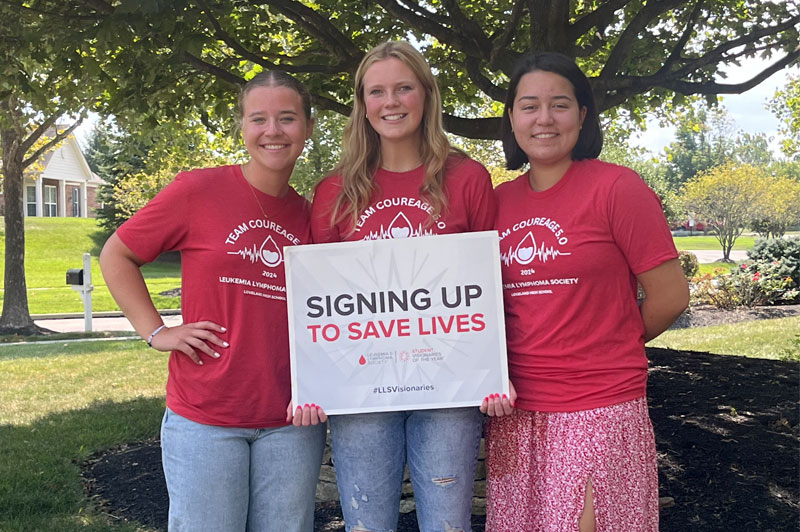
    Payton Brown, Macy Steiner, and Caitlyn Ferrer

    (photo by Jen Steiner)

    Claire Mirkowski-Purdy

    by Claire Mirkowski-Purdy

    Loveland, Ohio – Payton Brown, Caitlyn Ferrer, and Macy Steiner are ready to take on Team CoUREage 6.0 and make it the best year yet! After last year’s Team CoUREage 5.0’s amazing successes, the young women are ready to help put an end to blood cancer.

    [Exclusive Video] LHS’s Kathryn Zervos, Leah Schwab, and, Lola Jones raise $95,243 for Leukemia & Lymphoma Society

    Caitlyn is very immersed in science and math and would love to make this part of her career once this year is over. Payton and Macy are also very interested in helping the Leukemia and Lymphoma Society (LLS) once Team CoUREage 6.0 is over as well.

    Team CoUREage is a campaign run by high schoolers to help fund LLS research. The campaign has been run for six years, and any donation given to this year’s campaign will be given to crucial blood cancer research as well as anyone currently affected with blood cancer.

    This year’s LLS campaign has many diverting events planned in Loveland and Loveland High School such as give-back nights, bake sales, auctions, and much more. All are welcome to attend.

    As of right now, before the campaign has launched, Payton, Caitlyn, and Macy have networked locally and have helped prepare current members of the team for the campaign’s launching. Once the 7-week campaign has launched, they will reach out to any local businesses for more fundraising opportunities.

    If you are interested in taking action now to help Team CoUREage 6.0, you can use your Kroger rewards account to do so. Kroger will give a portion of their profit off your bill to LLS.  If you’re using a desktop computer: go to kroger.com, log in, and scroll down to community rewards. Type: The Leukemia & Lymphoma Soc. Team CoUREage 6.0 or enter AQ467 to add the team to your rewards. If you’re using the mobile Kroger app: open the app, log in, click on the top right three lines, scroll down to rewards, click on community rewards, and then find the Team CoUREage 6.0 organization.

    The LLS campaign starts on January 23rd. Every money collection deadline is March 13th and the money collection finale is March 14th.

  • E+O Kitchen coming to Historic Downtown Loveland, Ohio

    E+O Kitchen coming to Historic Downtown Loveland, Ohio

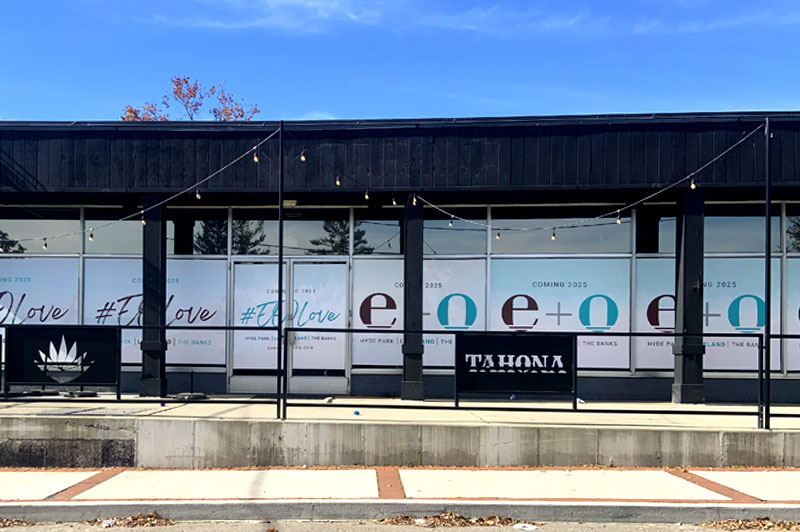
    Loveland, Ohio – You may have seen the graphic on the outside of the former Tahona location in Historic Downtown Loveland. E+O Kitchen has begun remodeling and say the anticipated opening day will be announced soon. They have Cincinnati locations in Hyde Park and the Banks.

    E+O Kitchen describes themselves as follows:

    By combining unique Latin-Asian flavors and luxurious coastal vibes, E+O provides a premier dining experience designed to unearth the beauty that lies between Earth and Ocean.

    The E+O Experience is defined by many things; world-class ingredients & superior flavors, a commitment to excellent service & the warm, inviting, ambiance guests have come to know and love. Be sure to check out our new location, coming soon to Loveland!

    MENU

  • University of Akron poll shows comfortable lead for Trump in Ohio, dead heat U.S. Senate race

    University of Akron poll shows comfortable lead for Trump in Ohio, dead heat U.S. Senate race

    Getty Images.

    The 2024 Buckeye Poll depicts sharp partisan divisions, but U.S. Sen. Sherrod Brown continues to draw votes from Republicans

    By: Ohio Capital Journal

    A University of Akron Bliss Institute poll released Thursday found Donald Trump running ahead of Kamala Harris in Ohio by seven points, and U.S. Sen. Sherrod Brown holding a slight advantage against his Republican challenger Bernie Moreno.

    The findings are part of the school’s 2024 Buckeye Poll conducted from Sept. 12 to Oct. 24. The survey included 1,241 registered voters with a margin of error of +/- 2.8 percentage points.

    Digging into the details, pollsters noted the wide gender gap many expect to see in the presidential contest nationally didn’t really show up at the state level. They even note Trump holds a nominal 1-point lead among women, although that’s well within the margin of error and 3% remain undecided.

    The poll found independents in Ohio lean toward Trump in the presidential race, but almost a quarter of that group is still undecided. In the Senate race a third of independents still hadn’t made up their mind.

    The survey also sheds light on stark divides in voters’ vision of the country. Partisans on both sides are far apart on issues like economic policy, immigration, abortion, and trans rights.

     U.S. Senator Sherrod Brown speaks to a supporter at a Democratic Party campaign event for Franklin County voters. (Photo by Graham Stokes for Ohio Capital Journal. Republish photo only with original article.) 

    Presidential race

    The Buckeye Poll found 51% of respondents support Donald Trump compared with 44% backing Kamala Harris. Those results include respondents leaning toward a particular candidate — 4% in Trump’s case and 6% for Harris, while another 5% of voters were backing a third party or remained undecided. Trump’s seven-point advantage is beyond the poll’s margin of error, and roughly in line with his actual performance in Ohio in 2016 and 2020, which he won by eight points each time.

    “We’re not surprised at all by the numbers in the presidential race showing Donald trump with a healthy lead over Harris at seven points,” Bliss Institute director and political scientist Cherie Stachan said.

    The poll also broke down respondents’ partisanship on a spectrum running from ‘strong’ to ‘lean’-ing for both parties with independents in the middle. Among voters who identified as independents, 39% are backing Trump as compared to 24% supporting Harris. Another 23% said they were backing neither.

     VANDALIA, OHIO – MARCH 16: Ohio Senate candidate Bernie Moreno greets former President Donald Trump in Vandalia earlier this year. (Photo by Scott Olson/Getty Images) 

    U.S. Senate race

    Strachan described the contest between Brown and Moreno as a “margin of error race.” The Buckeye Poll’s topline result had Brown leading Moreno 46% to 44% — neck and neck given the poll’s margin for error.

    “The one thing that is interesting about the Senate race,” she said, “is that you do have, still, at least in this poll, enough people willing to split their ticket and support the incumbent senator for whatever reason to make it a margin of error race.”

    Based on the overlaps they saw in the poll, Brown earned about three points from respondents who support Trump, but nevertheless plan to vote for the Democratic senator.

    It’s notable, Strachan said, that “Trump’s endorsement has not pushed that challenger over the edge — Moreno has not solidified all of the Republicans despite the Trump endorsement.”

    That shows up a bit in the quality of their responses in the Senate race. Voters’ preferences were a bit squishier, with significantly more ‘lean’ voters than in the presidential race. Brown got strong support from 37% of respondents with another 9% leaning his way. But for Moreno, 30% of respondents said they’re strong supporters, and 14% said they’re only leaning his way.

    “I think that’s just another signal that he may have done some things that may have not been as successful in persuading people that he’s a good candidate,” Strachan said, “or that he’s a candidate that people feel comfortable supporting.”

    As an anecdotal example, she pointed to television ads. Although Moreno and outside groups supporting him have spent heavily attacking Brown, they’ve spent substantially less promoting Moreno — a relative newcomer politically. According to FEC data, independent groups have plowed more than $114 million into attacking Brown, but less than $66 million supporting Moreno.

    GET THE MORNING HEADLINES.

    Polarization

    The Buckeye Poll found Republicans and Democrats sharply divided on several major policy issues. On abortion, immigration, and trans-rights the parties are mirror images of one another in terms of support or opposition.

    Strachan noted those cleavages have become so pronounced and widespread in recent years that political scientists describe the phenomenon as negative partisanship: “I dislike the other side more than maybe I like my own,” Strachan described. “The animosity toward the other side is driving us to stay in our partisan silos more than liking our own.”

    That’s part of what makes Brown’s continued appeal across party lines significant, even if that appeal has put him in a statistical tie.

    “In American politics writ large, it’s becoming increasingly harder to pull off what Brown is doing and getting those voters to split their ticket.”

    Follow OCJ Reporter Nick Evans on Twitter.


    Nick Evans
    Nick Evans

    Nick Evans has spent the past seven years reporting for NPR member stations in Florida and Ohio. He got his start in Tallahassee, covering issues like redistricting, same sex marriage and medical marijuana. Since arriving in Columbus in 2018, he has covered everything from city council to football. His work on Ohio politics and local policing have been featured numerous times on NPR.

    Ohio Capital Journal is part of States Newsroom, the nation’s largest state-focused nonprofit news organization.

    MORE FROM AUTHOR


  • What are ghost guns?

    What are ghost guns?

    Photo by Vvzvlad/Wikimedia Commons

    From Everytown for Gun Safety

    Understanding ghost guns requires knowing some basic facts about how guns are constructed. Frames and receivers are the core building blocks of firearms. In a pistol, the frame is the bottom half of the gun, housing the trigger and the magazine. The frame also provides a foundation for the slide and barrel (i.e., the parts a bullet passes through when fired). In a semi-automatic rifle, the receiver houses the trigger parts and magazine and attaches to other parts.

    In recent years, companies have used advances in technology to manufacture and sell “firearm parts kits” and “easy-to-complete frames or receivers.” These kits made it simple for anyone with basic tools and internet access to make a do-it-yourself, homemade gun from easy-to-obtain building blocks. These kits—often called “ghost guns”—were previously available for purchase with no background check and no questions asked.

    A ghost gun has three key, related characteristics:

    1. It is unserialized;
    2. It is untraceable; and
    3. Its building blocks are acquired without a background check.

    Most ghost guns are made from “unfinished” frames and receivers. Unfinished frames and receivers are often marketed as “80 percent” complete. That number suggests a buyer needs to do only 20 percent of the work for the frame or receiver to be assembled into an operable firearm. In reality, these parts can be finished in an hour or so or less.

    For years, ghost guns represented the fastest-growing gun safety threat to our communities. Felons, minors, and others who are prohibited from buying firearms were able to acquire ghost guns by simply ordering them over the internet and having them delivered to their doorsteps. They can do so without a background check or verifying their identity, circumventing existing laws.

    Ghost guns do not have records or serial numbers. This lack of identification has “severely undermine[d]” law enforcement’s ability to trace guns used in crimes back to their last point of sale to determine their owners. Ghost guns, with their lack of serial numbers, impair “law enforcement’s ability to apprehend violent individuals who may pose an ongoing threat to public safety.” According to the Bureau of Alcohol, Tobacco, Firearms and Explosives (ATF), law enforcement agencies recovered 1,758 ghost guns to the ATF for tracing in 2016. In 2021, the number recovered was 19,344—an over 1,000-percent increase.

  • Ohio economists strongly agree that sliding-scale public benefits are best

    Ohio economists strongly agree that sliding-scale public benefits are best

    Photo by Scott Heins/Getty Images.

    By:  Ohio Capital Journal

    It seems like it should be common sense: When you provide a benefit only up to a certain, hard income level, it creates a cliff that gives a strong disincentive for a person to try to earn more.

    The Ohio Department of Job and Family Services recently took steps away from that approach and a panel of economists strongly agreed with the move.

    Previously, Ohioans were eligible for the state’s Supplemental Nutrition Assistance program, or SNAP, only if they earned 130% or less of federal poverty guidelines. For a family of four, that’s $40,560.

    Earlier this month, the Department of Job and Family Services adjusted that, stepping down food stamp benefits along a sliding scale until a family is making 200% of federal poverty guidelines, or $62,400 for a family of four.

    “Fear of losing food benefits can be a deterrent to taking a new job, working more hours, or even accepting a promotion,” ODJFS Director Matt Damschroder said in a statement announcing the change. “Instead of an all-or-nothing approach, we are creating a sliding scale that encourages people to earn more by slowly reducing their benefits as their income grows. This provides an incentive to accept promotions and pay raises knowing they won’t immediately lose benefits.”

    A panel of Ohio economists appear to heartily agree, according to a survey that was released on Oct. 28. They were asked about “benefits cliffs,” or providing them at a certain level then abruptly cutting them off once an income threshold is reached.

    GET THE MORNING HEADLINES.

    Asked if benefit cliffs “caused by strict income requirements for public benefits create significant barriers to career advancement for low-income workers,” all 19 economists agreed, according to the survey conducted by Scioto Analysis.

    “People make an economically rational decision, at least in the short run, to turn down raises or promotions that result in loss of a much more significant public benefit,” Bill Lafayette of Regionomics said in the comments section of the survey.

    The economists were somewhat more mixed when asked if the changes enacted by ODJFs would “lower barriers to work for low-income people.”

    Thirteen agreed, while six were uncertain or had no opinion.

    “Eliminating the ‘benefits cliff’ is an efficient policy that reduces disincentives to work,” wrote Kevin Egan of the University of Toledo. “Moreover, it is a fair policy change to gradually reduce SNAP benefits so no households find themselves in such an unfair position.”

    But Kay Strong, an independent economist, said barriers to work extend well beyond facing benefits cliffs.

    “Barriers to work for low-income workers don’t occur solely on the supply side of the market,” she said. “Employers create barriers through their choice of workers, scheduling of workers, and willingness to assist employees over and around occasional personal obstacles that hinder workers.”

    YOU MAKE OUR WORK POSSIBLE.

    ____________
    Marty Schladen
    Marty Schladen

    Marty Schladen has been a reporter for decades, working in Indiana, Texas and other places before returning to his native Ohio to work at The Columbus Dispatch in 2017. He’s won state and national journalism awards for investigations into utility regulation, public corruption, the environment, prescription drug spending and other matters.

    Ohio Capital Journal is part of States Newsroom, the nation’s largest state-focused nonprofit news organization.

    MORE FROM AUTHOR