Miami Township, Ohio – Mercy Health Mobile Mammography offers women screening mammograms in 15 minutes. This screening is covered by most health plans. For the best coverage, please verify that Mercy Health and The Jewish Hospital are in-network providers with your insurance carrier. You may be eligible for financial assistance.
Loveland, Ohio– On Thursday, October 24 the LIFE Food Pantry held an open house and ribbon cutting to officially open their new location. The Food Pantry’s new location is at 677 Loveland-Madeira Road and still in the same shopping plaza, at the other end by ACE Hardware.
In this LOVELAND MAGAZINE TV video you can watch the ribbon cutting and take a brief tour of the new store.
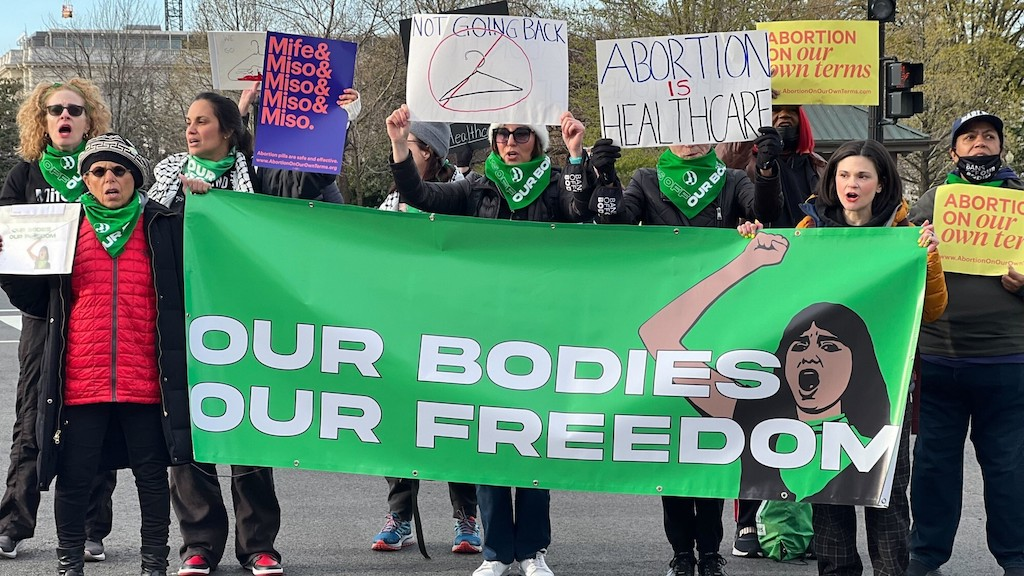
The U.S. Supreme Court ruling in Dobbs v. Jackson Women’s Health Organization in June 2022 ended federal abortion rights. (Photo by Sofia Resnick/States Newsroom.)
The Ohio Attorney General’s Office says state has 30 days to “determine next steps.” The law will remain struck down unless Attorney General Dave Yost appeals the decision
A Hamilton County judge has permanently overturned Ohio’s six-week abortion ban that had been tied up in court since its inception in 2019, but was put into effect for several months after Roe. v. Wade was overturned.
Hamilton County Judge Christian A. Jenkins had already temporarily stopped enforcement of the law when the case entered his courtroom in the fall of 2022 several months after the Dobbs decision overturning national abortion rights established in Roe.
Thursday’s decision means the law is struck down unless the Ohio Attorney General decides to appeal the decision.
In November 2023, Ohio voters passed a reproductive rights amendment with 57% support.
“Ohio’s Attorney General evidently didn’t get the memo,” Jenkins wrote. “For even after a large majority of Ohio’s voters … presumably both women and men — approved an amendment to the Ohio Constitution protecting the right to pre-viability abortion on November 8, 2023, the Attorney General urges this court to leave ‘untouched’ all but one provision of the so-called ‘Heartbeat Act’ clearly rejected by Ohio voters.”
Hours after the Dobbs decision came down in June 2022, Ohio Attorney General Dave Yost asked a federal court reinstate the six-week abortion ban law, which was approved by the court quickly after the request was made. The ban included no exceptions for rape or incest.
GET THE OHIO CAPITAL JOURNAL MORNING HEADLINES.
Just as quickly, though, the law was then shoved back into court by abortion rights advocates. At first, advocates asked the Ohio Supreme Court to rule on the case, but after a period of inaction by the state’s high court, they chose to challenge the law locally, specifically in Hamilton County.
With the approval of the reproductive rights amendment in Ohio, attorneys had a new avenue to challenge the six-week ban. They used the language — which allowed abortion to the point of fetal viability, a determination to be made by the pregnant person’s physician, rather than at a point determined by state law — as a tipping point for arguments that the six-week ban was now unconstitutional. Fetal viability typically comes in a range between 24 to 26 weeks.
Yost pushed back, saying the reproductive rights amendment could not be used to negate any law or provision that was remotely related to abortion rights.
However, he also acknowledged it would be quite a battle to argue that the six-week ban did not violate the new constitutional amendment.
In a legal analysis on the reproductive rights amendment before the vote, that has often been used against him in the year since, Yost said the amendment “will make it harder for Ohio to maintain the kinds of law already upheld as valid prior to last year’s decision in Dobbs.”
“In other words, the Amendment would give greater protection to abortion to be free from regulation than at any time in Ohio’s history,” Yost wrote.
He went on to say that “many Ohio laws would probably be invalidated,” and that “others might be at risk to varying degrees.”
That included the so-called Heartbeat Act, according to him.
“Ohio would no longer have the ability to limit abortions at any time before a fetus is viable,” he wrote. “Passage of Issue 1 would invalidate the Heartbeat Act, which restricts abortions (with health and other exceptions) after a fetal heartbeat is detected, which is usually at about six weeks.”
Even so, Yost attempted to argue in the case that certain provisions included in the law should be allowed to stand.
Jenkins disagreed, saying the state constitution “now unequivocally protects the right to abortion” and that “to give meaning to the voice of Ohio’s voters, the Amendment must be given full effect, and laws such as those enacted by (Senate Bill) 23 must be permanently enjoined.”
He said that if Ohio courts adopted the state’s arguments, Ohio doctors who provide abortion care would continue to be at risk of felony criminal charges, $20,000 fines, medical license suspensions and renovations, and civil claims for wrongful death.
“Patients seeking abortion-care would still be required to make two in-person visits to their provider, wait twenty-four hours to receive abortion care, receive state-mandated information designed to discourage abortion and have the reason for their abortion recorded and reprinted,” Jenkins wrote. “Unlike the Ohio Attorney General, this Court will uphold the Ohio Constitution’s protection of abortion rights. The will of the people of Ohio will be given effect.”
ACLU of Ohio cooperating attorney Jessie Hill, who led the legal challenge in the case, called the ruling “momentous” and a show of “the power of Ohio’s new Reproductive Freedom Amendment in practice.”
Dr. Sharon Liner, medical director for Planned Parenthood Southwest Ohio Region and one of the parties in the case, said the ruling was “an important step in the right direction for access.”
“The permanent blocking of the six-week ban brings us one step closer to getting our patients the access they deserve,” Liner wrote in a statement.
A spokesperson for Yost’s office said in a Friday morning statement that the state has up to 30 days to “determine next steps.”
“This is a very long, complicated decision covering many issues, many of which are issues of first impression,” spokesperson Hannah Hundley told the Capital Journal.
Ohio Right to Life and the Center for Christian Virtue were contacted and have not yet provided a response.
Asked if Gov. Mike DeWine had any comment on the ruling, a spokesperson stated, “No.”
Susan Tebben
Susan Tebben is an award-winning journalist with a decade of experience covering Ohio news, including courts and crime, Appalachian social issues, government, education, diversity and culture. She has worked for The Newark Advocate, The Glasgow (KY) Daily Times, The Athens Messenger, and WOUB Public Media. She has also had work featured on National Public Radio.
Ohio Capital Journal is part of States Newsroom, the nation’s largest state-focused nonprofit news organization.
Loveland, Ohio – With their victory over the Cleveland Browns, the Bengals are within one game of .500. But they face a very tough test this week against a Philadelphia Eagles team that is playing much better than Cincinnati’s recent opponents. On this week’s episode of the Queen City Sports Podcast, Chris and Mark break down exactly what the Bengals need to do to keep their momentum rolling this Sunday, because it’s a must-win game. The guys also hit on the Bearcats’ big win versus Arizona State and a titanic matchup this weekend against Deion Sanders’ Colorado team. And Bearcat basketball is almost back! Mark gives us the latest from their scrimmage against Ohio State. To wrap it up, Chris discusses the real possibly that if he loses to Michigan State this weekend, the Wolverines’ head coach Sherrone Moore might not make it out of this season with his job.
Have a listen and don’t forget to leave your comments and feedback!
_______________________
Hey readers… have an opinion about sports? How about a topic you’d like to see written about in Loveland Magazine or a thought about one of our articles?
Just need to vent and get out your frustration about the Reds, Bengals, or any other sports issues?
Christopher Ball is a longtime Loveland resident and an attorney. He graduated from Loveland High School in 2003 and was a member of the football team before going on to become a coach’s assistant at DePauw University in Greencastle, Indiana. He has been following and rooting for the Reds and Bengals since the early 1990s and has been through the many ups and downs that fandom has wrought over the years.
Loveland, Ohio – Mark your calendars for October 26, when Loveland High School’s Robotics teams visit the Dayton Air Force Museum. The two FTC Robotics teams will be there, ready to answer all of your questions regarding Robotics. Stop by anytime, from 10 AM – 3 PM, the team members will be happy to see you.
Alongside having any Robotics questions answered, there will be opportunities to learn about specific Vex robots and the processes to create them. As we are on the brink of Halloween and candy will also be given out.
If you are unable to attend on October 26th, don’t fret. There will be many more opportunities to have irreplaceable encounters with Loveland High School’s Robotics teams this year.
Loveland, Ohio – With Halloween right around the corner, it only seems right to take YOU our readers to the Simpson Farm Asylum where you will once again meet Skeletor the Halloween Movie Guru!
Everyone loves a good scary movie, especially during Halloween, but at times it can be tough selecting the one that will be sure to chill you to the bone! Skeletor, who hibernates all year at the Simpson Farm Asylum, located at Loveland Magazine’s office, awakens in October to celebrate all things spooky and to share what 5 Halloween movies you should watch in preparation for the 31st.
Follow me down to the Simpson Farm Asylum where we will meet Skeletor for the 2021 Top 5 Halloween Movies! Turn off the lights, snuggle under your favorite blanket, grab a bag of candy, and prepare to be creeped out!
Skeletor’s 2021 Top 5 Halloween Movies and Where to Find Them!
Nightmare on Elm Street, 1984, Supernatural Slasher, Rated R, Watch on HULU or HBO MAX
The Hills Have Eyes, 2006 remake, Horror, Rated R, Watch on AMAZON PRIME VIDEO
Goosebumps The Series, 1995, Children’s Anthology Horror Television Series, Rated PG, Watch on NETFLIX
Fear Street The Trilogy, 2021, Horror Film Series, Rated R, Watch on NETFLIX
Child’s Play, 2019 remake, Slasher, Rated R, Watch on HULU or AMAZON PRIME VIDEO
Here is a collection of still photos from the Skeletor video shoot taken by David Miller.
Loveland Area Trick or Treating will take place between 6 PM and 8 PM on Friday, October 31st!
Take a Look at my Skeletor Photo Album!
Did you miss Skeletor last year? Click below to watch Skeletor’s 2020 Top Halloween Movie Picks!
Ohioans for a Healthy Economy Action Fund recently started running an attack ad against the three Democratic candidates running for Ohio Supreme Court.
A conservative group heavily funded by Republican megadonor Richard Uihlein — who has supported candidates who falsely denied the results of the 2020 election — donated half a million dollars to a PAC with ties to the Ohio Chamber of Commerce over the summer, according to recently published Federal Election Commission data.
The Fair Courts America PAC gave $500,000 to Ohioans for a Healthy Economy Action Fund back in August, the Super PAC affiliated with Ohioans for a Healthy Economy, Inc which recently started running an attack ad against the three Democratic candidates running for Ohio Supreme Court.
“Criminals let loose. Destroying lives. Even our children aren’t safe because Melody Stewart, Michael Donnelly and Lisa Forbes put their agenda above our safety,” the voice over says in the ad.
Incumbent Democratic Justice Donnelly is being challenged by Republican Hamilton County Court of Common Pleas Judge Megan Shanahan.
Incumbent Democratic Justice Stewart is being challenged by incumbent Republican Justice Joseph Deters, who decided not to run for his current seat and instead chose to go up against Stewart for a full six-year term.
Democratic Judge Forbes, of the Eighth District Court of Appeals, and Republican candidate Dan Hawkins, of the Franklin County Court of Common Pleas, are competing for Deters’ open seat, a term that expires on Dec. 31, 2026.
“Fair Courts America is basically just moving its money to this group in Ohio, which is then spending on the ads,” said Evan Vorpahl, a senior researcher at True North Research.
Republicans currently have a 4-3 majority on the Ohio Supreme Court. Depending on the outcome of the election, the Democrats could flip the court or the Republicans could strengthen their hold on the court.
Fair Courts America and Richard Uihlein
Fair Courts America formed in February 2022 and has spent millions of dollars on various state Supreme Court races — including Alabama, Wisconsin, Pennsylvania, Kentucky and Illinois.
Fair Courts America is affiliated with Richard Uihlein’s Restoration of America. Uihlein also donated $333,000 to Fair Courts America on two occasions recently — Aug. 28 and Sept. 19.
Fair Courts America and Restoration of America did not respond to questions sent by the Capital Journal.
Last year, he donated more than a million dollars to the failed campaign that was trying to make it harder to amend the state’s constitution. He helped finance the majority of the group “Protect Our Constitution” during last year’s August Special Election. 57% of Ohioans voted against the measure that would have raised the threshold to amend the state’s constitution to 60%.
Uihlein is a big funder of Club for Growth Action, which has run millions in ads backing Bernie Moreno for Senate and helped fund a Super PAC that supported Ohio Secretary of State Frank LaRose’s failed Senate primary campaign earlier this year.
Uihlein is opposed to abortion and has invested in many anti-abortion causes, Vorpahl said.
GET THE OHIO CAPITAL JOURNAL MORNING HEADLINES.
“For someone like Uihlein, Ohio and the Ohio Supreme Court seem right for the picking,” said Jessica Dickinson, the Ohio Fair Courts Alliance’s Outreach and Elections Manager. “I think especially since we’ve had partisan labels to the ballot … even though the abortion amendment passed, they’ve really been making those inroads into Ohio.”
“Powerful people have always tried rigging the rules in their favor, and they are targeting state and federal courts,” Vorpahl said. “They’re trying to take America backwards and control who we can be, who we can love, how we can care for our bodies, our families and the world. And they’re ultimately just trying to put their thumbs on the scales of justice with their fortunes.”
Uihlein has contributed to some extreme causes in recent years. The Chicago Tribune reported he was a big contributor to the “March to Save America” rally that took place before the deadly attack on the U.S. Capitol on Jan. 6, 2021.
A Daily Beast report published in November 2022 said Uihlein and his wife Elizabeth have donated almost $2 million to Republicans since the Jan. 6 insurrection and more than 80% of those candidates denied or questioned the 2020 election results.
Richard and Elizabeth started Uline — a shipping, packaging and industrial supplies company that started in their basement in 1980. Richard is the CEO and their company has more than 9,000 employees.
Ohioans for a Healthy Economy
COLUMBUS, Ohio — APRIL 20: The Ohio Chamber of Commerce in Columbus, Ohio. (Photo by Graham Stokes for Ohio Capital Journal)
Ohioans for a Healthy Economy Action Fund seems to be a shell group for the Ohio Chamber of Commerce, Dickinson and Vorpahl said.
The address listed for Ohioans for a Healthy Economy Action Fund is the same as the address for the Ohio Chamber of Commerce, according to a Federal Election Commission form.
The Ohio Chamber of Commerce and Ohioans for a Healthy Economy Action Fund also did not respond to questions sent by the Capital Journal.
Ohioans for a Healthy Economy Action Fund also ran ads during the 2018, 2020 and 2022 Ohio Supreme Court races, Dickinson and Vorpahl said.
The Ohio Chamber of Commerce endorsed Deters, Shanahan and Hawkins for Ohio Supreme Court.
“It’s about keeping their preferred judges on the bench,” Dickinson said. “Business entities and billionaires in these corporations want to keep the court’s current majority because it’s good for business.”
Megan Henry is a reporter for the Ohio Capital Journal and has spent the past five years reporting in Ohio on various topics including education, healthcare, business and crime. She previously worked at The Columbus Dispatch, part of the USA Today Network.
Ohio Capital Journal is part of States Newsroom, the nation’s largest state-focused nonprofit news organization.
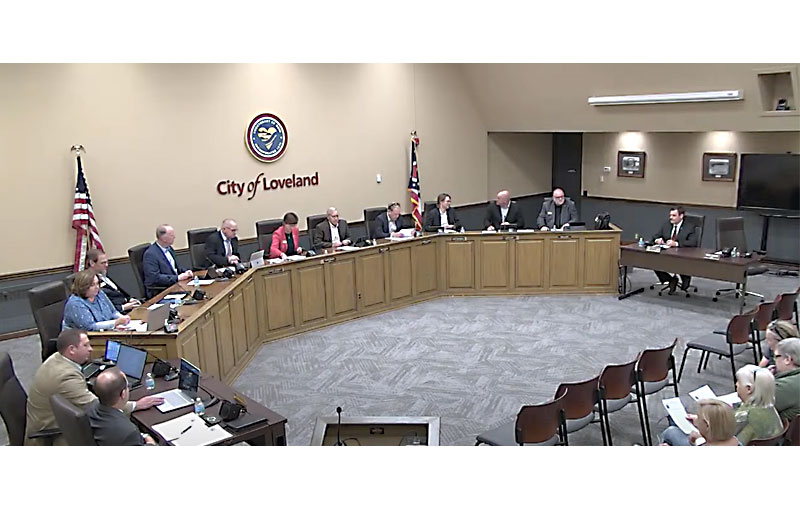
Loveland, Ohio – After residents spoke at Tuesday’s council meeting about the demolition of a house in the Downtown Historic District, Mayor Kathy Bailey raised her rhetoric to the level of describing the “firestorm” in opposition to the demolition on social media as “pitchforks and torches” to “run us out of office.”
Speaking in open forum at the 30:20-minute mark of this video during Tuesday night’s Loveland City Council meeting, Sherry Hamlin cast doubt on the cost of renovating the home submitted by the developer. She sees a need for an independent evaluation and would also like to see a comprehensive review of the history associated with the home.
Former City Councilmember Todd Osborne told Council there is a procedural problem with how the Historic Preservation and Planning Commission can approve the demolition of a historic structure. He said that the public currently has very little opportunity to weigh in. He said that, “the public is shut out of the process.”
At the 39:45 mark, Councilmember Neal Oury said the the building does not have, “Any distinctive attributes or characteristics that make it historic.”
Mayor Kathy Bailey followed Oury by saying there is “firestorm” of misinformation on social media about the demolition because residents are linking it to a proposal for six, three-story apartments adjacent to Nisbet Park on Loveland Bike Trail.
She said that the three-story apartment complex that would replace the home has not yet been discussed by the Historic Preservation and Planning Commission.
_____________
The Mayor said that there was been no plan submitted to the Historic Preservation and Planning Commission for consideration for an apartment complex on Railroad Avenue. She said that the Commission has “not looked at it” and “not discussed it”
The fact is that the Commission has a plan in front of them for Loveland Apartments proposed by John Hill Construction and the proposal was discussed at both their June 26th and October 2nd meetings.
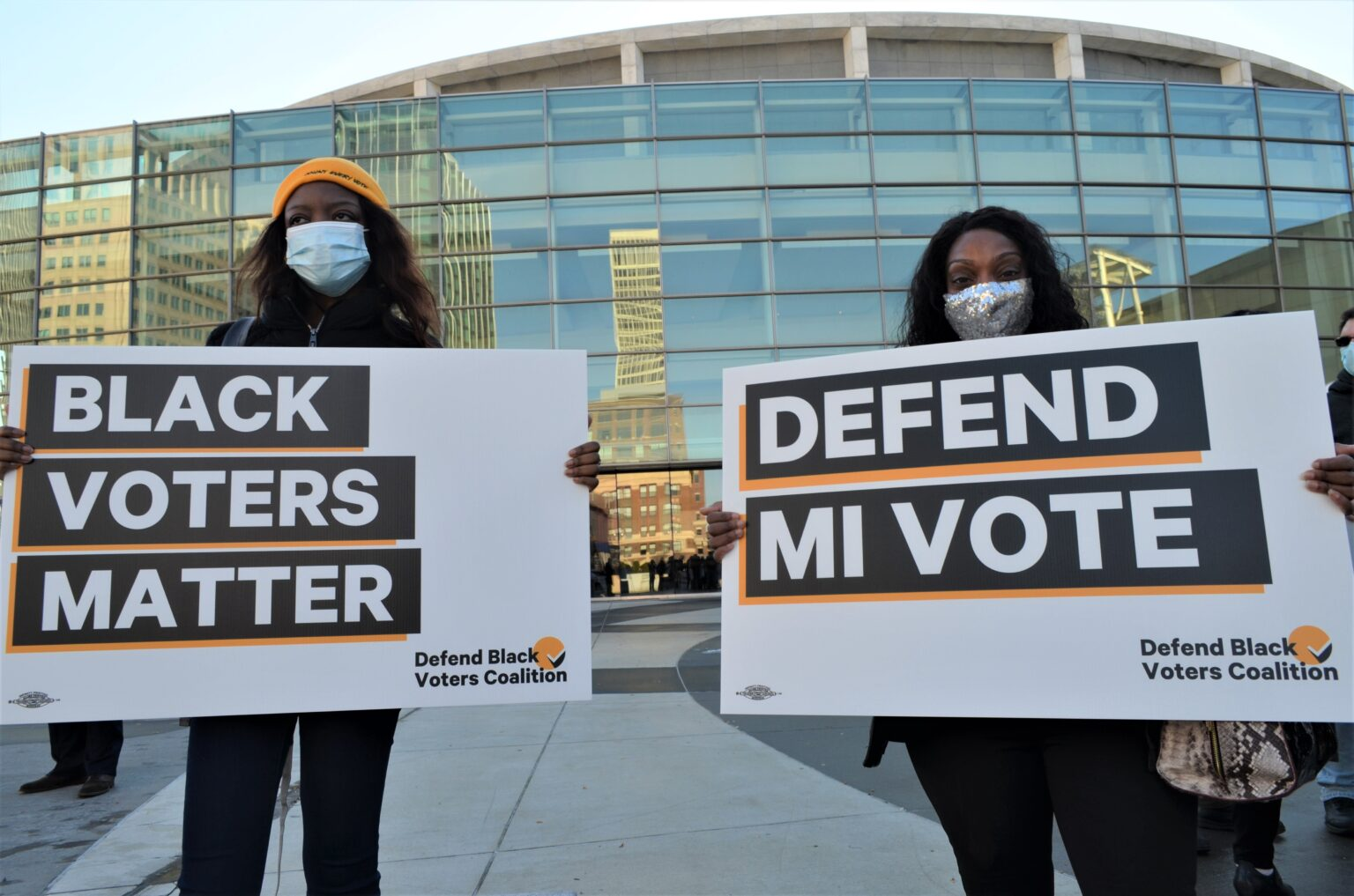
Opponents of Ohio’s Issue 1 redistricting reform claim it would be bad for communities of color. Supporters of the proposal to replace politicians with a citizens commission point to the ways the current maps crack and pack Black voters.
The Issue 1 proposal would replace the current Ohio Redistricting Commission made up of seven elected officials with a 15-member commission made up of citizens.
The current commission includes the Ohio governor, auditor, and secretary of state, along with four lawmakers — one from each party in each chamber of the legislature. The 15-member citizens commission being proposed would be made up of five Republicans, five Democrats, and five independents, selected by a bipartisan panel of former judges.
Voting yes on Issue 1 would create the 15-member Ohio Citizens Redistricting Commission. Voting no on Issue 1 would keep the current Ohio Redistricting Commission.
Arguments for and against the ballot initiative have been targeted at communities of color, with both sides saying minority representation will be affected by the results of Issue 1.
In a press conference at the Ohio Statehouse, state Sen. Michele Reynolds, R-Canal Winchester, brought former legislator John Barnes and two other Ohioans to urge voters to reject the ballot measure, claiming the changes “could fragment cohesive minority voting blocks, diluting our political influence.”
“I am deeply concerned about the disastrous effects that Issue 1 will have on the Black state legislative and congressional districts in Ohio,” said Reynolds, who is one of five Black members of the 33-member Ohio Senate, and the only Republican.
One of the Democratic members, state Sen. Catherine D. Ingram, who is also vice president of the Ohio Legislative Black Caucus, responded to Reynold’s press conference by saying Issue 1 “would ensure fair maps are drawn and expand opportunities for greater representation across our state, beyond the areas that have historically confined us.”
“For generations, Black Americans have faced disenfranchisement, and gerrymandering adds an additional barrier to our adequate representation,” Ingram said in a statement.
Issue 1 would create a 15-person citizens redistricting commission to replace the current commission. After a vetting process by a bipartisan panel of judges, the selected citizen commissioners would be required to hold public hearings and conduct the drawing of Statehouse and congressional maps in a transparent process, and create maps that receive a majority vote of the commission.
Drawing the maps would require adherence to federal laws like the Voting Rights Act and the statewide partisan preferences of the voters of Ohio.
The current process
In 2021 and 2022, Republican partisans on the commission produced five Ohio Statehouse maps and two U.S. Congressional district maps that were struck down as unconstitutionally gerrymandered by a bipartisan majority on the Ohio Supreme Court.
Despite the fact that the congressional map was never revised to correct the errors found by the state’s highest court, it is the map being used for the 2024 election.
A recent League of Women Voters of Ohio analysis of the current congressional map found that in Massillon, what’s considered a “large politically cohesive African American population” was split between the 6th and 13th Congressional districts.
“Rather than keeping this clear community of interest united in one congressional district, mapmakers sliced Massillon into two pieces, specifically cutting off areas with large concentrations of minority voters from each other,” according to research analysis done by University of Cincinnati professor David Niven.
Niven called the one-third of Stark County voters put in the 6th district “castaway voters,” citing research that said being a “castaway” voter “inhibits political information flows, mobilization and ultimately, representation.”
“The political consequences of landing on the other side of those lines are powerful,” Niven wrote.
The boundary-drawing of certain current congressional districts are “inexplicable” and “drawn in service of confusion not representation,” according to Niven’s research.
The 1st district, for example, borders the 8th district in a “textbook gerrymandering maneuver — dividing a neighborhood and town and causing confusion on who lives in which district, serving no legitimate purpose,” Niven wrote.
“Here’s a congressional district where people on the southern end of the district live in the shadow of Ohio’s third largest city with all its urban needs and opportunities, and people on the northern end have a local government that advertises when someone loses their mittens in the park,” Niven stated.
Cracking and packing
Voting rights advocates tend to agree with this assessment, saying the splitting of communities means less visibility, and less visibility means a lack of attention from people who purport to represent them.
“What we’ve seen with supermajorities is communities are left out of conversations,” said Deidra Reese, director of voter engagement for the Ohio Organizing Collaborative and supporter of Issue 1. “Those issues that are coming from communities that have a smaller presence in those bodies just don’t get to have those issues elevated.”
Important issues in communities of color, like in other communities, can include things like health care, economic issues, gun law reform and hunger. Without competitive districts that create the need for representatives and senators to engage with constituents of all kinds, Reese said legislation won’t match what is needed.
“When you shut the door on people when you pass policies … it’s a disservice and what happens is African Americans just don’t get representation,” Reese said.
Infant and maternal mortality rates were noted as a big concern for Black communities, which see disproportionate rates compared to their white counterparts.
The LWV analysis showed some congressional districts combine those two vastly different mortality rates, like the 9th, 12th and 2nd districts. The 9th district holds Lucas County, with one of the highest rates of infant mortality and Wood County, one of the lowest. The 12th district includes the high rates in Holmes County, and the low rates in Guernsey County. Ohio’s 2nd district has Lawrence County’s high infant mortality rates and Scioto County’s low rates.
“Again, this data begs an essential question,” the LWV study ponders, “How could any elected leader craft policy solutions for their constituencies, when the needs within their sprawling, contorted districts are so far apart?”
Kayla Griffin, president of the Cleveland branch of the NAACP, said the fact that the district maps are still unfair despite previous legislative redistricting reforms in 2015 and 2018 leaves questions about how closely the process was even followed by the elected officials on the Ohio Redistricting Commission.
“I think that becomes a serious problem that erodes the trust and the democracy that we have,” Griffin said.
An even bigger problem that Griffin and other advocates are dealing with is the concern from many Black voters that their vote doesn’t hold weight under the current maps, and therefore won’t make much different in the November general election.
Those talking to voters are trying to focus on the wins, most notably the rejection of a constitutional amendment to make it harder to amend the state’s founding document, and the approval of a ballot initiative that enshrined reproductive rights into that same constitution.
“That is how our vote counts, that is how our voices are heard.” Griffin said. “I’m letting folks know that we can do this again.”
YOU MAKE OUR WORK POSSIBLE.
__________________
Susan Tebben
Susan Tebben is an award-winning journalist with a decade of experience covering Ohio news, including courts and crime, Appalachian social issues, government, education, diversity and culture. She has worked for The Newark Advocate, The Glasgow (KY) Daily Times, The Athens Messenger, and WOUB Public Media. She has also had work featured on National Public Radio.
Ohio Capital Journal is part of States Newsroom, the nation’s largest state-focused nonprofit news organization.
Attorney General Dave Yost is suing Boeing’s board of directors on behalf of two Ohio pension funds, seeking accountability for a pattern of safety and compliance failures that have harmed the company and its investors.
“The safety failures at Boeing are endangering lives and threatening the financial security of shareholders,” Yost said. “Running a safe, respectable company starts with the people at the top – and it’s time for them to be held accountable.”
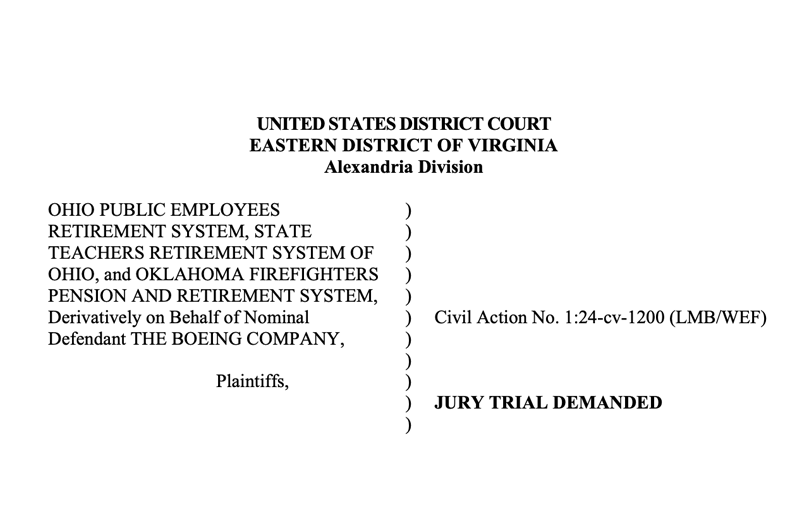
Yost’s office – representing the Ohio Public Employees Retirement System and the State Teachers Retirement System of Ohio – accuses Boeing board members of breaching their fiduciary duties by failing to properly oversee the company.
The lawsuit asserts that board members and senior management, including former Boeing CEO Dave Calhoun, failed to implement adequate safety measures or to address whistleblower concerns about the company’s production processes.
Boeing’s safety and compliance failures culminated in a near catastrophe involving a Boeing 737 Max 9 aircraft earlier this year. An Alaska Airlines flight carrying 177 passengers was forced to make an emergency landing on Jan. 5 after a panel of the aircraft blew off shortly after takeoff.
The lawsuit contends that board members and senior management know about the ongoing unsafe practices but even today fail to address them, choosing instead to prioritize profits over safety and regulatory compliance.
“The failure of Boeing’s directors and officers to implement and oversee Boeing’s safety and compliance functions in good faith led to incalculable damage to Boeing’s relationships with its regulators, customers, lenders, potential employees, and the flying public,” the lawsuit says.
Yost is seeking to compel Boeing’s board of directors to improve safety and oversight of the company. The lawsuit is pending before the U.S. District Court for the Eastern District of Virginia.