Legislation to make improvements to systems ranging from infant care to early childhood education throughout the state of Ohio was passed by the Ohio General Assembly on Wednesday.
“We raised awareness, and we are asking to up our game next year,” said co-sponsor state Rep. Andrea White, R-Kettering, when the House concurred in Senate amendments late on Wednesday night.
Co-sponsor state Rep. Latyna Humphrey, D-Columbus, called it “a good step in the right direction,” and said supporters would be pushing for the funding in the budget.
“We want people to know that we’re not done,” Humphrey said.
Other amendments to the bill eliminated doula services for the Ohio Department of Rehabilitation and Corrections, and though advocates were disappointed to see funding removed, they expressed hope that next year’s budget would include items to help move forward with improvements to infant and maternal mortality and community resource engagement to bring about better child outcomes in the state.
The bill still contains a directive for an Ohio Department of Medicaid-led study regarding “reimbursement of evidence-based peer-to-peer programming that supports infant vitality,” and a requirement that the Ohio Department of Children & Youth streamline it’s processes, including central intake and referral to focus on home visiting programs and “encourage early prenatal and well-baby care” as well as parenting education.
The ODCY will also be required to “rate” licensed child daycare centers and family daycare home operations for Head Start or Early Head Start in the same rating system as Step Up to Quality.
The bill had bipartisan co-sponsors, unlike other child care bills that seem doomed as the lame duck session comes to an end, including a Democrat-led bill that would have created a tax credit similar to the federal tax credit seen during the COVID pandemic, and a Republican proposal to split costs for child care in Ohio between employers, employees and the state.
Susan Tebben is an award-winning journalist with a decade of experience covering Ohio news, including courts and crime, Appalachian social issues, government, education, diversity and culture. She has worked for The Newark Advocate, The Glasgow (KY) Daily Times, The Athens Messenger, and WOUB Public Media. She has also had work featured on National Public Radio.
Ohio Capital Journal is part of States Newsroom, the nation’s largest state-focused nonprofit news organization.
The Ohio Senate Finance Committee approved long-awaited changes to child welfare processes and agencies in the state, but the bill no longer includes appropriations to fund provisions in the measure.
Ohio House Bill 7 moved on from the committee on Tuesday, and may see a full Ohio Senate vote on Wednesday. The session on Wednesday could be one of the last of the year, meaning if the bill didn’t see passage, it would need to be reintroduced as new legislation in the new year.
The bill would also need renewed approval from the Ohio House before the end of the year, since the Senate committee made changes to the original bill. Committee members and advocates are hoping some of the funding no longer included in the bill as it is now may end up in next year’s state operating budget.
H.B. 7, a bipartisan-sponsored bill, aims to address child welfare from pregnancy to early childhood education. The bill contains a host of goals, including aims to modernize the state’s use of the Women, Infants and Children (WIC) nutrition assistance program, a pilot grant program “to assist in the development of comprehensive child care programs like Early Head Start,” the increased use of home visits to boost infant outcomes and bring more resources to address poor infant and maternal mortality rates statewide. The bill even touches on issues like mental health and child homelessness.
According to Danielle Firsich, director of public policy for Planned Parenthood Advocates of Ohio and Planned Parenthood of Greater Ohio, 13 Ohio counties are classified as “maternal health care deserts,” though the maternal and infant mortality rates are “entirely preventable with affordable, widespread and comprehensive public health services.”
“The most common pregnancy-related deaths include delay or lack of diagnosis, failure to screen, inadequate assessment for risk and inadequately trained/unavailable personnel,” Firsich wrote in testimony to the committee, citing Ohio Department of Health data.
The original bill asked for an appropriation of $34 million over two fiscal years, but appropriations were left out of the bill when it was passed by the finance committee. Committee Chair Sen. Matt Dolan, R-Chagrin Falls, said discussions about funding are “better left” to discussions next year, when the overall state operating budget will see its biannual approval.
Dolan said there were “no subjective decisions made” on the programs in the bill, just a re-tailoring that he said will make it clear that agencies who provide new strategies or corrections related to child care and health will need to approach the legislature with cost proposals, instead of the funding coming ahead of time.
“There’s no mandate that we are going to be responsible for paying in this bill,” Dolan said.
Sen. Paula Hicks-Hudson, D-Toledo, also said a provision that would have established a program with the state Department of Rehabilitation and Corrections to provide doula services to inmates in a prison nursery program was also removed. Hicks-Hudson said that was a step back from an opportunity “to move the needle” on progress when it comes to infant and maternal outcomes.
GET THE MORNING HEADLINES.
Amendments made to the bill during Tuesday’s committee hearing also removed the ability for tele-health home visits for those participating in the Help Me Grow program, a program through the Ohio Department of Children & Youth that provides services like home visits, developmental screenings and resource connections.
In the program’s 2024 annual report, the ODCY reported more than 51,000 system referrals for home visits in the that fiscal year, and more than 45,000 system referrals for early intervention to meet developmental milestones through the Help Me Grow program. Home visit referrals were up 2.5% from the previous year, with 51% of those receiving home referrals identifying as Black/African American, according to the annual report.
Referrals for early intervention saw increases, particular in referrals from early care or child care programs (up 21%) and from WIC (up 17%).
But Dolan said there are “concerns” that the Help Me Grow program is not working, something the legislature may look into improving in the new year.
Despite the lack of appropriations, proponents of the bill who testified on Tuesday said the measure still represents a step forward in filling gaps and responding to the needs of Ohio’s children and families.
Danielle Tong, executive director of CelebrateOne, a Columbus initiative to reduce infant mortality and improve conditions for families, said she knows all too well the costs around stays in the neonatal ICU, and the educational delays that can impact a child, as the mother of a child born premature eight years ago.
“I’m going through that right now with my own son, and I have resources to support that, but what about the Ohioans who don’t,” she asked the committee.
She and CelebrateOne see H.B. 7 as a “crucial” bill for “supporting and elevating the health of the families that look to us and our partners for health.”
The collaborative aspect of the bill is a progressive one, according to Caitlin Feldman, policy director for the child welfare advocacy group Groundwork Ohio.
“By encouraging agencies to work together more effectively, this bill strengthens the connections between comprehensive screening and service referrals, reducing the risk of families falling through the cracks,” Feldman said.
The bill has the potential to address challenges, despite the fact that the approach of the budget year means “many of the transformative investments included in the original bill are not possible at this time.”
Feldman and others like the Ohio Psychological Association praised the provisions that direct the Ohio Department of Medicaid to “explore and establish reimbursement pathways” for mental health needs in Ohio’s youngest children.
“This represents a critical step toward addressing a long-standing gap in how our systems recognize and respond to the mental health needs of infants, toddlers and their families,” Feldman said.
YOU MAKE OUR WORK POSSIBLE.
Susan Tebben
Susan Tebben is an award-winning journalist with a decade of experience covering Ohio news, including courts and crime, Appalachian social issues, government, education, diversity and culture. She has worked for The Newark Advocate, The Glasgow (KY) Daily Times, The Athens Messenger, and WOUB Public Media. She has also had work featured on National Public Radio.
Ohio Capital Journal is part of States Newsroom, the nation’s largest state-focused nonprofit news organization.
President-elect Donald Trump has vowed to ban DEI from federal offices. And Vice President-elect JD Vance, an Ohio senator, in June 2024 introduced the “Dismantle DEI Act” to eliminate all DEI programs from the federal government. He argued, in part, that DEI “breeds hatred and racial division.”
For example, despite Kamala Harris’ achievements as vice president and California attorney general, some Republicans targeted her as a “DEI hire” during her recent presidential run. And after the Francis Scott Key bridge collapse in Baltimore in March 2024, Utah State Representative Phil Lyman blamed Wes Moore, Maryland’s first Black governor, for prioritizing DEI over security.
I believe all these attacks, both political and corporate, promote a distorted and incomplete story about DEI.
The empirical evidence is clear
There is no one-size-fits-all approach to advancing DEI initiatives. The common goal is to create spaces within an institution where everyone feels valued and respected and can thrive.
A 2020 Gallup poll found that 24% of Black and Latino employees have experienced discrimination at work, compared with 15% of white employees.
DEI efforts to identify and solve such issues include surveys, employee interviews and comparing practices across different organizations. They also entail assessments of systems, policies and research, and developing initiatives to address areas that need improvement.
Employee and student surveys, for example, can measure the sense of belonging within an organization and help leaders identify areas in need of improvement.
Evidence suggests that successfully implementing DEI is central to professional and societal well-being and success in a multicultural society.
After the Francis Scott Key bridge collapse in Baltimore in March 2024, a Republican lawmaker from Utah blamed Maryland Gov. Wes Moore, center, for prioritizing diversity over security. AP Photo/Mark Schiefelbein
Recent research by the author Melinda Epler, for example, shows a clear connection between employees’ sense of safety, belonging and satisfaction and how much their employer prioritizes DEI. Scientists also find that diversity is key to creative, productive and efficient scientific teams.
And other research indicates that employees are more innovative and work harder when teams are made up of people with different experiences. This is why many employers value employees who can solve problems while working with people who have diverse backgrounds in terms of race, gender, religion, age and other factors.
The outcome can be lucrative for companies: On U.S. and global executive staffs, studies show, efforts to improve DEI result in increased profits. Companies with at least one woman on their board, for example, financially outperform those with only men on their boards.
Diversity standards
Despite the many ways leaders of an organization can work to cultivate an inclusive and respectful culture, DEI critics tend to portray this work in simplistic terms.
For example, two Stanford University academics misrepresented DEI efforts recently. In an August 2024 op-ed in The New York Times, they presented DEI as mainly consisting of one-time trainings that divide groups into oppressors and the oppressed.
Narrowly defining DEI in such simplistic ways ignores the bridge-building involved in DEI efforts and makes it easier to repeat the single story that DEI has failed.
In her 2009 TED Talk on the danger of the “single story,” novelist Chimamanda Adichie said single stories, or narratives that only present one perspective, are based on stereotypes and incomplete information. They result in false assumptions and generalizations.
“To create a single story is to show a people as one thing, as only one thing, over and over again,” Adichie said. “And that is what they become.”
Adichie’s warnings about the single story sheds light on the effects of attacks on DEI. Reducing DEI to simplistic “us vs. them” approaches or to a focus on “oppressor vs. oppressed” misses much of the work.
Yet the more societal problems Republicans in power blame DEI for – from racism to inflation – the more believable the story of DEI failure becomes. The absence of quick, easy solutions for historical racial and socioeconomic inequities are presented as further proof of DEI’s failure.
Teaching a fuller story
DEI is not easy to do well. But as a DEI practitioner and scholar, I find working to create inclusive spaces through curiosity, learning and dialogue can be transformative.
The more institutions do to support welcoming, supportive spaces – where people’s differences are respected – the healthier and more successful everyone is as individuals and organizations.
In 2022, my team in the Office of Transformational and Inclusive Excellence developed a Religious Observances and Inclusive Scheduling calendar. We did so to recognize religious pluralism in our university community.
Research shows that employees are more innovative and work harder when teams are made up of people with different experiences. FG Trade Latin/Gerry Images
We followed up with educational posters in 2023. The next year, we launched an educational video series featuring students discussing their religious practices. We partnered with the university’s communications office and athletics office to create and show these videos at university athletic events, such as football and basketball games.
In January 2024, the office I lead at Miami University partnered with several other departments to launch what we called a Constructive Dialogue Initiative. The goal of this new project is to provide all students with concrete skills and opportunities to communicate across social and cultural differences and to decrease polarization. Students first engage with short online modules from the Constructive Dialogue Institute. They then apply strategies learned online to facilitate in-person, peer-to-peer dialogues.
Our pilot program showed very positive results. Among the nearly 100 student leaders who participated, 78% felt less polarized.
This work is important for universities, where research shows retention and graduation rates are tied to students’ sense of belonging.
Collaboration and communication across differences are central to successful DEI efforts.
This is why we launched the DEI in Leadership Certificate in 2022. That same year, the project won an international Telly Award, which recognizes excellence in video.
Those who have participated in the certificate have included leaders and employees in the health, legal, human resources, criminal justice and nonprofit sectors across the U.S.
The narrow, single story of DEI failure promoted by critics makes it very difficult to recognize the value of these efforts.
Simplistic single stories can be appealing. They do not reflect reality, though. The fuller story presents a much more useful way to advance shared goals — as a society that is deserving of systems in which everyone can be included and valued.
A Republican bill in the state Senate would automatically shut down low-performing Ohio public schools.
State Sen. Andrew Brenner, R-Delaware, introduced Senate Bill 295 over the summer, which would revise the state’s automatic school closure language. The bill has a fourth hearing scheduled Tuesday in the Senate Education Committee.
The bill defines a poor performing school as a school, serving grades four and older, that has performed in the bottom 5% among public schools based on their Performance Index Score for three consecutive years. A school would also be considered a poor performing school if they are in the bottom 10% based on their Value-Added Progress for three consecutive years.
“It is my hope that this bill will help to standardize the law surrounding school closures for public and community schools and help ensure that each student in Ohio receives the best education possible,” Brenner said.
“We right now have an existing law where charter schools can be shut down if they don’t perform, and just the threat of that has actually forced the turn around with many of these charter schools,” Brenner said.
Seventeen people submitted opponent testimony against S.B. 295 during last week’s committee meeting. Only one person submitted supporter testimony.
“Because the requirements for closure or restructuring are based upon bottom percentages, there will always be schools that meet the criteria, even if those schools are meeting state standards,” Ohio Federation of Teachers President Melissa Cropper said in her testimony. “As low performing schools are closed, other schools that are higher ranked will now be in the bottom 5% even if they show no decline in their own rating. This cut-off is arbitrary and its potential effect is that eventually well-performing schools will also be subject to closure.”
GET THE MORNING HEADLINES.
As an alternative to closing, Brenner said a school can replace the principal and 60% of their licensed staff, but Cropper wonders where the replacement educators would come from.
“There is already a shortage of teachers and other licensed personnel in schools and positions in low performing schools are especially hard to fill,” she said. “This will also create a further disincentive for teachers to teach in challenging schools.”
Ohio Education Association President Scott DiMauro said the bill would harm students.
“S.B. 295 proposes a heavy handed and overreaching state approach to local schools that receive low ratings on state report cards,” he said in his opponent testimony.
The Ohio Department of Education and Workforce uses 1 to 5 star ratings in half increments based on five categories: achievement, progress, early literacy, gap closing and graduation. 10% percent of Ohio school districts are below state standards, according to the latest state report cards ODEW released earlier this year.
Schools and school districts that receive one star need “significant support to meet state standards.”
“S.B. 295 does not do this,” DiMauro said. “Instead of offering significant support, S.B. 295 proposes significant punishments that will most likely destabilize schools where many great things are happening, even if those successes are not revealed on data printouts of standardized test scores.”
Sen. Catherine Ingram, D-Cincinnati, asked where the students would go if their school closed.
“The school would be closed and all the students would have to go to another school, which is what happens right now in our charter school law,” Brenner said.
The two-year General Assembly ends this week, so any bills that don’t pass will die and would have to be reintroduced in the next General Assembly.
Megan Henry is a reporter for the Ohio Capital Journal and has spent the past five years reporting in Ohio on various topics including education, healthcare, business and crime. She previously worked at The Columbus Dispatch, part of the USA Today Network.
Ohio Capital Journal is part of States Newsroom, the nation’s largest state-focused nonprofit news organization.
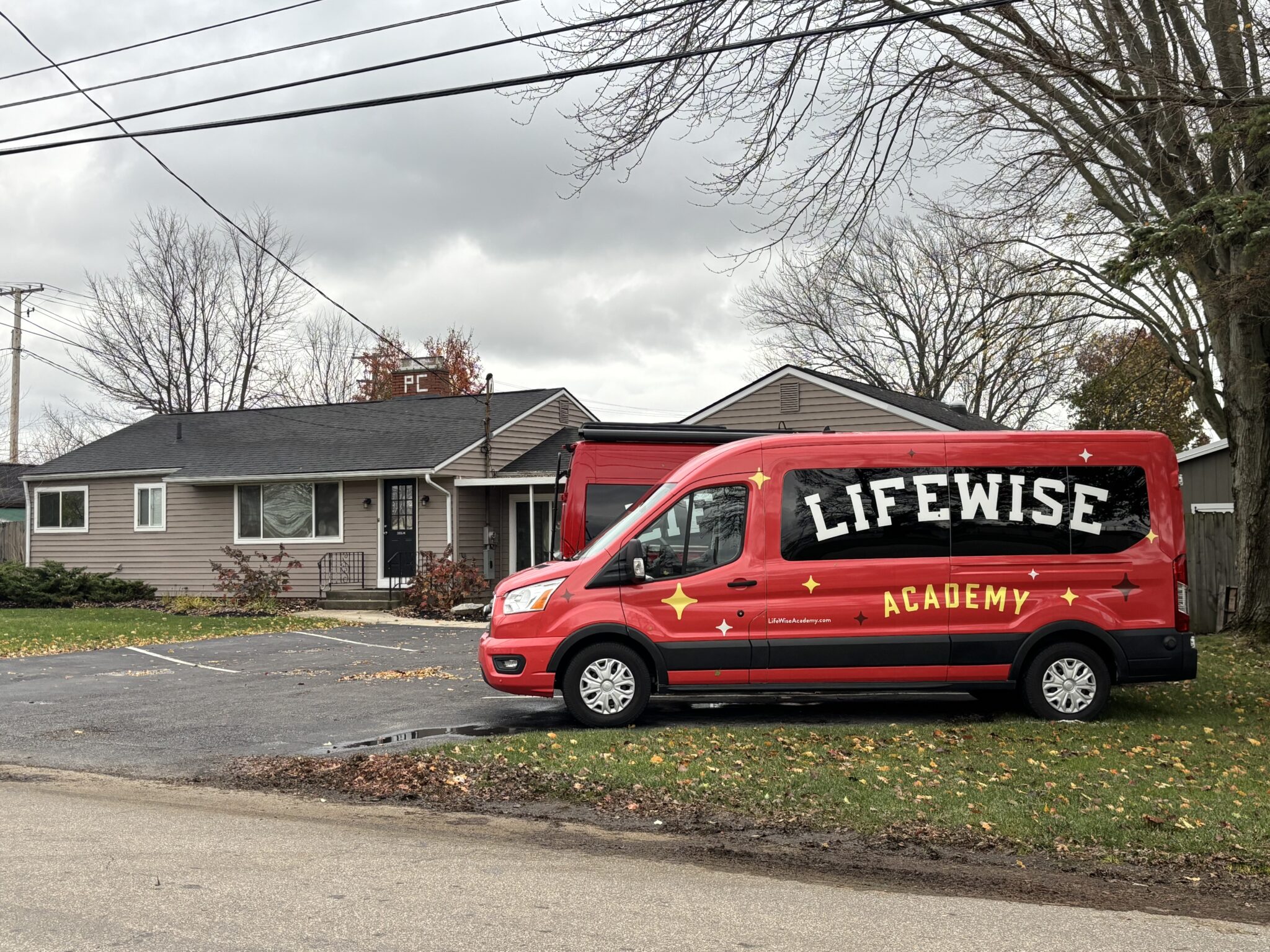
LifeWise Academy is a Hilliard-based religious instruction program that started in 2019 and now enrolls 50,000 students across 29 states. (Photo by Megan Henry, Ohio Capital Journal.)
Ohio Senators have added a public school mandatory religious release time policy bill to a piece of legislation that would force educators to out a students’ sexuality to their parents.
The amendment to require Ohio public school districts to put a policy in place to release students for religious instruction was added to House Bill 8 during last Tuesday’s Senate Education Committee Meeting. The two Democrats on the committee, Catherine Ingram and Vernon Sykes, voted against the amendment.
“A school district shall, rather than may, have a policy governing religious release time instruction,” said state Sen. Sandra O’Brien, R-Ashtabula.
Ohio law currently permits school district boards of education to make a policy to let students go to a course in religious instruction, but this would change the wording in the Ohio Revised Code from “may” to “shall” — meaning this would be a mandate for Ohio school districts.
State Reps. D.J. Swearingen, R-Huron, and Sara Carruthers, R-Hamilton, introduced H.B. 8, which passed in the Ohio House last year. The bill would require public schools to let parents know about sexuality content materials ahead of time and give them the option to request alternative instructions.
GET THE MORNING HEADLINES.
It would also ban any sexuality content from being taught to students in kindergarten through third grade. The bill defines sexuality content as “oral or written instruction, presentation, image, or description of sexual concepts or gender ideology.”
Senate Minority Leader Nickie Antonio, D-Lakewood, said H.B. 8 is not what Ohio needs.
“It’s certainly not what the children and the teachers and the parents of Ohio need,” she said. “I think we need to maintain the ability of children to be able to talk to teachers, social workers, counselors, with some confidentiality, and parents need to be able to be involved with their children, but also know that sometimes children need somebody to talk to.”
There were 62 parental-rights bills in 24 states last year, according to FutureEd, an independent think tank at Georgetown University’s McCourt School of Public Policy.
More amendments were added to H.B. 8 during Wednesday’s Senate Education Committee meeting.
“This amendment creates exceptions for disclosure requirements where they would conflict with federal law,” O’Brien said. “It also clarifies that nothing in House Bill 8 prohibits mandatory reporting under state law. Lastly, the amendment clarifies that nothing in House Bill 8 prohibits or limits career and academic mentoring between a teacher and student.”
Religious release time
The amendment language was taken from two companion bills regarding religious release time — Senate Bill 293 and House Bill 445. Hundreds of people have submitted opponent testimony against both bills, which are in committee.
Two central Ohio school districts, Westerville and Worthington, recently rescinded their religious release time policy. Both districts formerly allowed LifeWise Academy to take public school students off-campus for Bible classes during school hours.
The United States Supreme Court upheld released time laws during the 1952 Zorach v. Clauson case, which allowed a school district to have students leave school for part of the day to receive religious instruction.
Release time in the middle of the school day is problematic, Antonio said.
“It disrupts the flow of (students) dealing with their studies,” she said. “I think it needs to be on an individual school district basis to make those kinds of decisions.”
About 170 people submitted opponent testimony against the newly amended H.B. 8 at Tuesday’s Senate Education Committee. H.B. 8 was up for a possible committee vote, but no vote was taken. The bill has had six hearings in the Senate Education Committee.
The two-year General Assembly wraps up at the end of the month, so any bill that doesn’t pass will die and would have to be reintroduced in the next General Assembly. The final House and Senate sessions of the year are currently scheduled for next week.
A bill that would expand fracking leases in state public lands, parks, and wildlife areas from three years to five is going to Ohio Gov. Mike DeWine’s desk for his signature.
Once he receives the bill, DeWine will have 10 days to sign the bill into law or veto it.
State Reps. Dick Stein, R-Norwalk, and Patrick Brennan, D-Parma, introduced House Bill 308 last year and it originally defines nuclear energy as green energy in Ohio.
Ohio has two nuclear reactors — Davis–Besse Nuclear Power Station in Northwest Ohio and the Perry Nuclear Power Plant in Northeast Ohio.
The bill passed the Ohio House this summer, with ten Democrats voting against it.
The Ohio Senate added a few amendments to the bill — including one that increases a standard lease for fracking under state parks to five years. The current law is three years.
“We need to continue to frack, and allowing the extension of that is also important,” Sen. Andrew Brenner, R-Delaware, said during last week’s Senate session.
State Sen. Kent Smith, D-Euclid, had many issues with the bill.
“This is perhaps the least popular thing that we will do in the entire General Assembly,” Smith said. “Why are we extending the lease in this amendment again without public consideration?”
The U.S. Department of Energy defines renewable energy as coming from “unlimited, naturally replenished resources, such as the sun, tides, and wind.”
“This bill would designate nuclear energy as green energy, which is kind of mystifying to me, because it’s clearly not,” Smith said. “It has so much radioactive waste, it’s clearly not clean. It’s certainly not renewable.”
H.B. 308 passed last week in the Ohio Senate with a 24-6 vote. Sen. Catherine Ingram was the only Democrat to vote for the bill.
House concurrence
The Ohio House voted 65-26 to concur with the changes made to the bill later that same day. Brennan voted against concurrence on his own bill, saying he hoped it would play out in conference committee.
“I remain steadfast in favor of nuclear expansion in the state of Ohio,” he said. “… I am not anti-fracking, but I believe our state parks are sacrosanct,” he said. “I think when we created our state parks, we created a contract with the people that we would leave our state parks alone. I’m just a purist when it comes to our state parks.”
Only three Democrats voted for concurrence — state Reps. Richard Dell’Aquila, Joe Miller, and Elgin Rogers, Jr.
GET THE MORNING HEADLINES.
State Rep. Don Jones, R-Freeport, lives where fracking takes place in eastern Ohio and said the fracking process has been refined over the years.
“You will never know where fracking has occurred,” he said. “We’re not going to damage our state parks. We’re not going to hurt our state parks.”
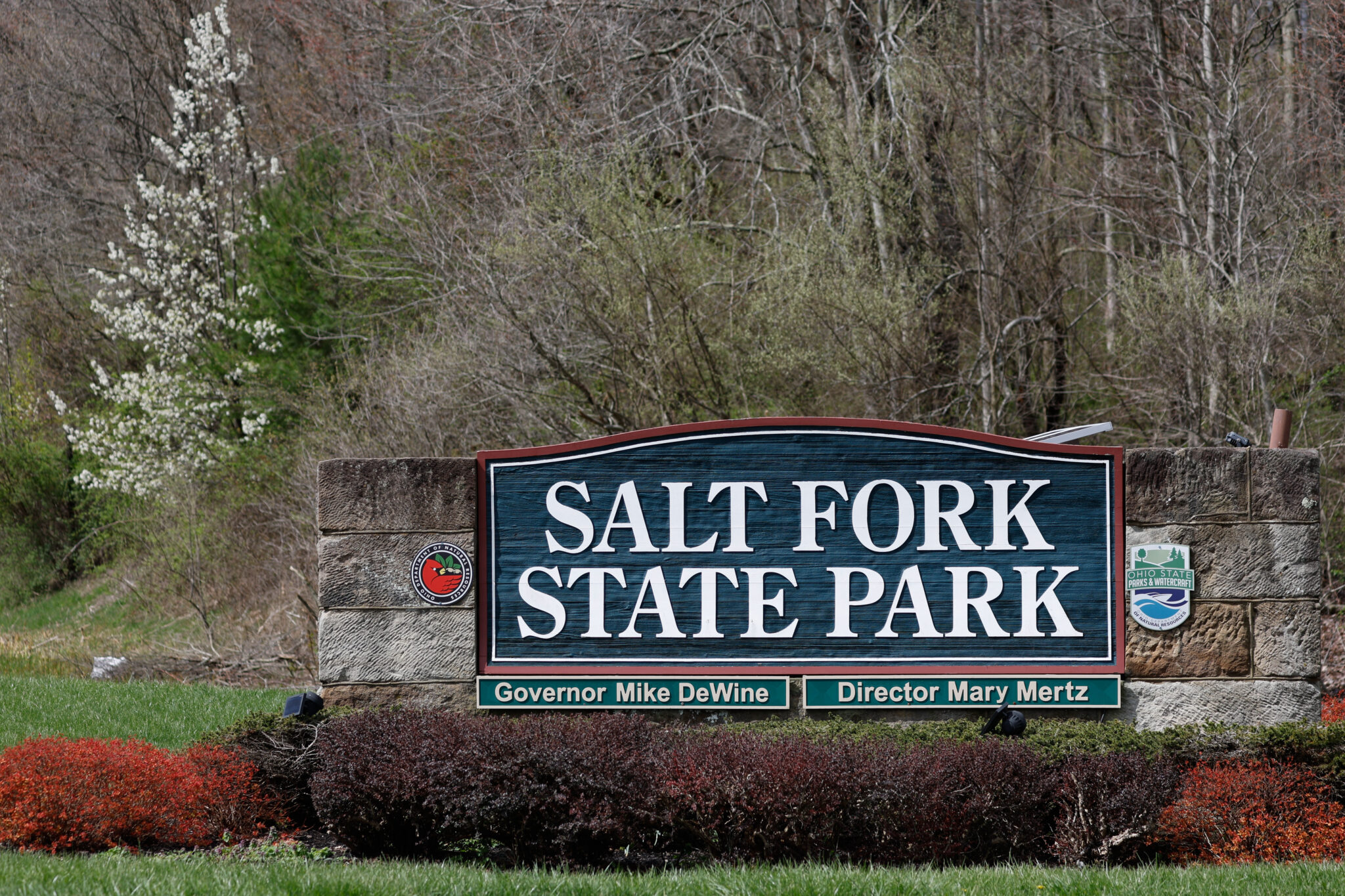
The Ohio Oil and Gas Land Management Commission has selected various bidders to frack Salt Fork State Park, Valley Run Wildlife Area and Zepernick Wildlife Area. The vote on this bill comes days after OGLMC selected an Oklahoma-based company to lease about 30 acres of land in Egypt Valley in Belmont County for fracking.
“This expansion of fracking is going to industrialize our beautiful parks and transform them into places people avoid, not enjoy,” Cathy Cowan Becker, steering committee member of Save Ohio Parks, said about H.B. 308.
Former Ohio Gov. John Kasich signed a law allowing drilling companies to frack in state parks in 2011. Potential drillers need to get permission from the Oil and Gas Commission, but Kasich never appointed anyone to the committee.
A fracking amendment was added to a bill during the last lame duck two years that passed and Gov. Mike DeWine signed it into law in January 2023. The law requires the Ohio Department of Natural Resources to allow fracking for natural gas in Ohio’s public land and state parks.
“Ohio legislators have once again sold out our state parks and public lands to the oil and gas industry through an amendment to an unrelated bill during the lame duck session, with no notice or chance for public testimony,” Becker said.
Megan Henry is a reporter for the Ohio Capital Journal and has spent the past five years reporting in Ohio on various topics including education, healthcare, business and crime. She previously worked at The Columbus Dispatch, part of the USA Today Network.
Ohio Capital Journal is part of States Newsroom, the nation’s largest state-focused nonprofit news organization.
Loveland, Ohio– The Mighty Coding Monkeys and Rookie teams 66554 Chicken Submarine, 66935 Underwater Coders, and 67024 Duckie Nuggies competed at the Lakota Ohio FIRST LEGO League Challenge Regional robotic tournament on Sunday.
Team 60480 Mighty Coding Monkeys won the Engineering Excellence Award and is advancing to the Loveland District Tournament. Rookie teams 66554 Chicken Submarine, 66935 Underwater Coders, and 67024 Duckie Nuggies also competed and represented Loveland well with new personal high scores and great judging performances.
The Loveland District Tournament will be held on January 18 at the Loveland Intermediate School and there will be 4 Loveland teams competing.
Columbus, Ohio – Ohio Governor Mike DeWine and Ohio Board of Pharmacy Executive Director Steven Schierholt announced today that Ohio’s prescription drug monitoring program, known as the Ohio Automated Rx Reporting System (OARRS), will begin alerting healthcare providers about patients who have experienced a non-fatal drug overdose. These alerts are intended to improve care coordination and promote access to medication for opioid use disorder and other tools to prevent fatal overdoses.
“The goal of this alert is to give us an extra chance to save someone’s life,” said Governor DeWine. “The research shows us that people who have recently experienced a non-fatal overdose are at a higher risk to overdose again in the near future, and that they often have regular interactions with the healthcare system – including pharmacists and prescribers. This new alert system will be a valuable tool allowing our healthcare providers the opportunity to educate and offer treatment and prevention options to these individuals before a tragedy occurs.”
The data provided to OARRS is being reported by Ohio hospitals via the Ohio Department of Health because of a rule change announced by Governor DeWine earlier this year. Using this data, the OARRS system will now flag for prescribers and pharmacists of any patient who experienced a non-fatal drug overdose and was discharged from an Ohio emergency department on or after April 8, 2024. The alerts will only be available for OARRS users who are prescribers and pharmacists.
“Data from state prescription drug monitoring programs, such as OARRS, continues to be an invaluable resource for healthcare providers,” said Ohio Board of Pharmacy Executive Director Steven W. Schierholt. “With this alert, we are encouraging prescribers and pharmacists to engage with their patients and offer proven interventions that will prevent fatal drug overdoses in the future.”
Among Ohioans who died in 2022 from an unintentional drug overdose, at least 32% experienced a prior non-fatal overdose. Among the same population, 26% received a prescription for a controlled substance from a healthcare provider within 60 days of their death. These interactions with the healthcare system reinforce the need to ensure high-risk patients have access to interventions such as overdose reversal medications (e.g., naloxone) and medication for opioid use disorder.
Established in 2006, OARRS is a statewide database that collects information on all prescriptions for controlled substances that are dispensed by pharmacies or furnished by prescribers in Ohio. To assist healthcare providers in using this new alert, the Board of Pharmacy has developed training materials that can be accessed by visiting: Pharmacy.Ohio.gov/NFOD.
According to DeWine, “This new alert system is another example of Governor DeWine’s ongoing and comprehensive efforts to prevent overdose deaths and fight drug addiction. Ohio’s coordinated efforts are achieving encouraging results.”
Governor DeWine recently announced newly verified data from the Ohio Department of Health (ODH), demonstrating that Ohio experienced a 9% decline in the number of overdose deaths last year.
ODH’s 2023 Ohio Unintentional Drug Overdose Report also shows that Ohio has now outperformed national overdose death trends for two years in a row. In 2023, Ohio’s 9% decrease in overdose deaths was better than the 2% decrease seen nationwide. In 2022, Ohio’s 5% decrease in overdose deaths was better than the 1% increase seen nationwide.
An Ohio Supreme Court decision could bring about challenges to those hoping to keep pharmaceutical companies accountable for the opioid crisis, and others who hope to file claims of a “public nuisance.”
The Ohio Supreme Court ruled that lawsuits in Ohio can’t claim pharmaceutical chains “caused a public nuisance” by selling opioids, in a recently released decision which could have impacts on a $650 million judgment for two Ohio counties.
“It really only impacts litigation in Ohio, but it does reach a broad conclusion about the ability of plaintiffs to assert public nuisance claims,” said Sharona Hoffman, professor of law and bioethics at Case Western Reserve University.
The Ohio Supreme Court was asked to determine whether “common-law public nuisance claims arising from the sale of a product” are precluded by the Ohio Product Liability Act, a part of Ohio law used for claims such as manufacturing defects, design defects, and failures to give warnings about risks or hazards in products.
Plaintiffs in the case argued that the dispensing of opioids lies outside the purview of the OPLA, which has more to do with the design, manufacture, marketing, promotion, and sale of a product.
GET THE MORNING HEADLINES.
Justice Joe Deters was joined by Chief Justice Sharon Kennedy, Justice Patrick DeWine, and Justice Jennifer Brunner in ruling that those types of public nuisance claims are indeed eliminated by the OPLA.
“This is straightforward: product-liability claims brought at common law – such as the counties’ claims – have been abrogated,” Deters wrote.
The counties Deters references in the majority opinion are Lake and Trumbull counties, where the state supreme court’s ruling may cause the U.S. Sixth Circuit Court to deny a judgment in favor of the counties. In 2022, $650.9 million was awarded to them for a “public nuisance” perpetrated by national companies including CVS Health, Walmart, and retail pharmacy Walgreens Boot Alliance in exacerbating the opioid crisis in those counties.
After a federal jury made their decision finding the chains responsible, U.S. District Judge Dan Polster ordered the $650 million judgment, saying the companies’ actions brought on addiction, overdose and a strain on community resources related to the opioid crisis.
The Sixth Circuit asked the Ohio Supreme Court to interpret state law regarding public nuisance claims and the Ohio Product Liability Act, and with the state’s highest court’s interpretation of state law leaning in favor of the pharmaceutical chains, those millions may be up in smoke.
“Now that the Ohio Supreme Court has done that, the Sixth Circuit will apply the answer to the case before it and probably deny the counties’ recovery,” Hoffman told the Ohio Capital Journal.
Justices Melody Stewart and Michael Donnelly agreed with the majority decision in part, but Stewart argued that the counties were not asking for compensatory damages as part of their product liability claim, rather “equitable relief,” which the justice said meant the claim was not barred by the OPLA.
“The equitable relief awarded by the federal court was designed, and has been used, to abate the nuisance caused by the flood of opioids into the market, not to compensate the counties for the loss of life or economic consequences of opioid addiction,” Stewart wrote in her opinion.
Deters used the majority opinion to recognize that the opioid crisis “has touched the lives of people in every corner of Ohio,” and the damage from the crisis “undoubtedly has far-reaching consequences for their communities and for the state as a whole.”
“Creating a solution to this crisis out of whole cloth is, however, beyond this court’s authority,” Deters wrote. “We must yield to the branch of government with the constitutional authority to weigh policy considerations and craft an appropriate remedy.”
The General Assembly has spoken “plainly and unambiguously” that public nuisance claims are not that remedy, he added.
Co-counsel for the plaintiff in the case said the ruling “will have a devastating impact on communities and their ability to police corporate misconduct.”
“We have used public nuisance claims across the country to obtain nearly $60 billion in opioid settlements, including nearly $1 billion in Ohio alone, and the Ohio Supreme Court’s ruling undermines the very legal basis that drove this result,” said Peter H. Weinberger, co-liaison counsel in the case and trial counsel to Lake and Trumbull counties, in a statement.
Weinberger said the fight will continue, and the parties in the case “remain steadfast in our commitment to holding all responsible parties to account as this litigation continues nationwide.”
“This ruling is not the end of these cases … and our team will continue to fight for these counties through other legal avenues,” Weinberger said.
Susan Tebben
Susan Tebben is an award-winning journalist with a decade of experience covering Ohio news, including courts and crime, Appalachian social issues, government, education, diversity and culture. She has worked for The Newark Advocate, The Glasgow (KY) Daily Times, The Athens Messenger, and WOUB Public Media. She has also had work featured on National Public Radio.
Ohio Capital Journal is part of States Newsroom, the nation’s largest state-focused nonprofit news organization.
WASHINGTON — President Joe Biden Thursday commuted the sentences of roughly 1,500 people who were placed in home confinement during the coronavirus pandemic, and granted pardons for 39 individuals with convictions for nonviolent crimes.
“America was built on the promise of possibility and second chances,” Biden said in a statement. He noted many of the 1,500 were serving long sentences that would be shorter under current laws, policies and practices.
As the Biden administration winds down, it’s the largest single-day grant of clemency in modern day history.
The president added that his administration will continue to review clemency petitions before his term ends on Jan. 20. There are more than 9,400 petitions for clemency that were submitted to the White House, according to recent Department of Justice clemency statistics.
“As President, I have the great privilege of extending mercy to people who have demonstrated remorse and rehabilitation, restoring opportunity for Americans to participate in daily life and contribute to their communities, and taking steps to remove sentencing disparities for non-violent offenders, especially those convicted of drug offenses,” Biden said.
Those 39 people who received pardons included 67-year-old Michael Gary Pelletier of Augusta, Maine, who pleaded guilty to a nonviolent offense, according to the White House, which provided brief biographies of the pardoned individuals.
After his conviction, Pelletier worked for 20 years at a water treatment facility and volunteered for the HAZMAT team, assisting in hazardous spills and natural disasters. He now grows vegetables for a local soup kitchen and volunteers to support wounded veterans.
Another pardon was granted to Nina Simona Allen of Harvest, Alabama.
Allen, 49, was convicted of a nonviolent offense in her 20s, the White House said. After her conviction, she earned a post-baccalaureate degree and two master’s degrees and now works in the field of education. Additionally, she volunteers at a local soup kitchen and nursing home.
Hunter Biden pardon
The clemency action came after the president gave a full pardon for his son, Hunter Biden, on gun and tax charges and any other offenses, from 2014 until December. The president previously stated he would not pardon his son, but changed his mind because he said his son was constantly targeted by Republicans.
Additionally, advocates and Democrats have pressed Biden to exert his clemency powers on behalf of the 40 men on federal death row before President-elect Donald Trump returns to the White House. Democrats have pushed for this because Trump expedited 13 executions of people on federal death row in the last six months of his first term.
The co-executive directors of Popular Democracy in Action, a progressive advocacy group, Analilia Mejia and DaMareo Cooper, said in a joint statement that Biden should “not stop now.”
“Thousands more of our people who have been wronged by an unjust system are still waiting for freedom and compassion,” they said.
Those with nonviolent offenses who were pardoned by the president, according to the White House:
Alabama
Nina Simona Allen
California
Gregory S. Ekman
Colorado
Johnnie Earl Williams
Connecticut
Sherranda Janell Harris
Delaware
Patrice Chante Sellers
District of Columbia
Norman O’Neal Brown
Florida
Jose Antonio Rodriguez
Illinois
Diana Bazan Villanueva
Indiana
Emily Good Nelson
Kentucky
Edwin Allen Jones
Louisiana
Trynitha Fulton
Maine
Michael Gary Pelletier
Maryland
Arthur Lawrence Byrd
Minnesota
Kelsie Lynn Becklin
Sarah Jean Carlson
Lashawn Marrvinia Walker
Nevada
Lora Nicole Wood
New Mexico
Paul John Garcia
New York
Kimberly Jo Warner
Ohio
Duran Arthur Brown
Kim Douglas Haman
Jamal Lee King
James Russell Stidd
Oklahoma
Shannan Rae Faulkner
Oregon
Gary Michael Robinson
South Carolina
Denita Nicole Parker
Shawnte Dorothea Williams
Tennessee
James Edgar Yarbrough
Texas
Nathaniel David Reed III
Mireya Aimee Walmsley
Lashundra Tenneal Wilson
Utah
Stevoni Wells Doyle
Virginia
Brandon Sergio Castroflay
Washington
Rosetta Jean Davis
Terence Anthony Jackson
Russell Thomas Portner
Wisconsin
Jerry Donald Manning
Audrey Diane Simone
Wyoming
Honi Lori Moore
Last updated 1:50 p.m., Dec. 12, 2024
Ariana Figueroa
Ariana covers the nation’s capital for States Newsroom. Her areas of coverage include politics and policy, lobbying, elections and campaign finance.
Ohio Capital Journal is part of States Newsroom, the nation’s largest state-focused nonprofit news organization.