Year: 2024

  • Clermont County Mental Health and Recovery Board Receives $1 Million Grant to Support a Crisis Receiving Center

    Clermont County Mental Health and Recovery Board Receives $1 Million Grant to Support a Crisis Receiving Center

    Batavia, Ohio – The Clermont County Mental Health and Recovery Board has received a $1 million grant to support its efforts to help fight addiction by delivering needed crisis services, Dr. Lee Ann Watson, the Executive Director of the Clermont County Mental Health and Recovery Board announced.

    The grant from the OneOhio Recovery Foundation will go toward increasing access to behavioral health services by providing a no-wrong door access point for Clermont residents experiencing a behavioral health crisis, Dr. Watson said.

    “While our Board has recognized that the lack of a Crisis Receiving Center has been a major gap in the behavioral health continuum of care in Clermont County for many years, we have simply not had the funding to address the need,” said Dr. Watson. “The OneOhio funding Recovery Foundation grant will allow us to meet this vital need in Clermont County.”

    The grant is part of an inaugural round of approximately $51 million in funding made available by the Foundation as part of its mission to combat the opioid epidemic by supporting prevention, treatment and recovery programs and services in our communities. The grant money was funded by 55 percent of settlement funds that Ohio is receiving from the pharmaceutical industry as a consequence of its role in the national opioid epidemic.

    The grant received by the Clermont County Mental Health and Recovery Board reflects the Foundation’s commitment to supporting organizations on the frontlines of the addiction epidemic by advancing efforts that foster more resilient, healthier communities across Ohio.

    “Across Ohio, organizations like the Clermont County Mental Health and Recovery Board are working day in and day out to strengthen their communities that have been impacted by the opioid epidemic,” said Alisha Nelson, Executive Director of the OneOhio Recovery Foundation.

    “We’re pleased to partner with the Clermont County Mental Health and Recovery Board to support their efforts to save lives, rebuild families affected by addiction, and foster strong and resilient places to live,” Nelson added.

    The recipients announced as part of the Foundation’s first grant cycle were chosen after a review process that included evaluation by the local OneOhio Regional Board, the OneOhio Expert Panel and the Foundation’s Board of Directors.

    Grant recipients have “demonstrated a strong commitment to addressing the opioid crisis”. The funded initiatives are evidenced-based and align with Ohio’s approved abatement strategies, including prevention, recovery supports, services for impacted families and children, and many more.

    A complete list of recipients can be found at OneOhioFoundation.com/GrantAwards.

    The Foundation had an overwhelming response to the 2024 Regional Grant application process, with more than a half-billion dollars in funding requests submitted for the $51 million available this cycle. Organizations and leaders seeking to submit applications in the future can sign up on the Foundation’s website here to receive updates.

    About OneOhio Recovery Foundation

    OneOhio Recovery Foundation is a private, non-profit foundation created under the leadership of Gov. Mike DeWine and Attorney General Dave Yost, and other state and local leaders, with the mission of advancing Ohio’s addiction prevention, treatment, and recovery efforts now and into the future.

    The Foundation is governed by a 29-member board from across Ohio and is funded by 55 percent of settlement funds that Ohio is receiving from the pharmaceutical industry as a consequence of its role in the national opioid epidemic. Funds support local efforts to prevent and combat addiction and are also invested to support those efforts for the long term.

  • Ohio Board of Pharmacy launches tool to help those living with disabilities

    Ohio Board of Pharmacy launches tool to help those living with disabilities

    By:  Ohio Capital Journal

    The Ohio Board of Pharmacy on Monday launched a tool to help people with low vision, hearing loss, or who face language barriers find pharmacies that can serve them.

    For many, the pharmacy is the most frequent point of contact with the healthcare system. Pharmacists can consult about their medications and help them manage chronic conditions such as hypertension and diabetes.

    The new website will help people with accessibility challenges find pharmacies that can serve their specific needs.

    For example, for patients with low vision can find pharmacies that provide oversize-font labels, prescription readers and braille labels.

    It can point those with hearing loss to pharmacies that have video-relay services and teletypewriters. And it can tell non-English speakers where to find pharmacies with translation services for Spanish, Chinese, Nepali, Somali, and other languages.

    GET THE MORNING HEADLINES.


    In a statement, Board of Pharmacy Executive Director Steven W. Schierholt said the new webpage is an attempt to make pharmacy services more widely accessibility.

    “The launch of this convenient online search tool highlights the Board’s ongoing commitment to ensure pharmacy services are accessible to all Ohioans,” he said. “The Board is hopeful that this new webpage will help patients and their loved ones quickly identify pharmacies offering services they need to keep them healthy and safe.”

    However, working against accessibility is a wave of pharmacy closures. For the better part of a decade, independent and small-chain pharmacies have said that huge prescription middlemen — CVS Caremark, OptumRx and and Express Scripts — have been driving them from the field with low reimbursements, fees and clawbacks.

    More recently, large chain pharmacies have been closing in droves.

    CVS is at the end of a three-year process in which it closed 900 pharmacies across the country. Walmart last year asked 16,000 of its pharmacists to cut their hours.

    Bankrupt Rite Aid this year announced the closures of hundreds of stores in Ohio and Michigan. And Walgreens this year said it would close “a significant portion” of 2,000 underperforming stores. That prompted Dave Burke, executive director of the Ohio Pharmacists Association, to say he was worried that pharmacy is becoming an untenable business.

    “If Walgreens can’t make a go of this in 25% of their locations, my fear is that this becomes a much larger problem where other people who provide pharmacy services exit the market in whole or in  part,” he said in September.

    The Federal Trade Commission is investigating whether the giant health conglomerates that own the three big pharmacy middlemen are engaged in anticompetitive practices.

    YOU MAKE OUR WORK POSSIBLE.

    ___________
    Marty Schladen
    Marty Schladen

    Marty Schladen has been a reporter for decades, working in Indiana, Texas and other places before returning to his native Ohio to work at The Columbus Dispatch in 2017. He’s won state and national journalism awards for investigations into utility regulation, public corruption, the environment, prescription drug spending and other matters.

    Ohio Capital Journal is part of States Newsroom, the nation’s largest state-focused nonprofit news organization.

    MORE FROM AUTHOR

  • Life Food Pantry raised over $21,000 through Cincinnati Gives campaign

    Life Food Pantry raised over $21,000 through Cincinnati Gives campaign

    Loveland, Ohio – Cincinnati Gives has officially come to an end, and the LIFE Food Pantry says they are thrilled to share the results. They share on FaceBook, “Thanks to your amazing generosity and encouragement, we raised over $21,000 to support LIFE Food Pantry—and earned a $1,000 bonus along the way!”

    This was their first year participating in the competition, and they are “overwhelmed” with gratitude for the amazing support they’ve received from our community. “Your generosity and enthusiasm remind us why we do what we do—working together to make a difference for those in need.”

  • New Episode: The Queen City Sports Podcast by Mark Raines and Jeff Brown

    New Episode: The Queen City Sports Podcast by Mark Raines and Jeff Brown

    by Chris Ball

    Loveland, Ohio – Mark Raines and returning special guest Jeff Brown talk about a very important week for Bearcat Basketball. That’s right, it’s time for the Crosstown Shootout. Mark and Jeff have it covered from every angle (perhaps slightly favoring UC in the analysis, but judge that for yourself). The guys also delve deeply into the Bengals’ much-needed 27-20 win over the Cowboys on Monday Night Football. They also discuss the ways in which the Cincinnati, and Joe Burrow, can get Tee Higgins back on the team in 2025 and even beyond. It’s another masterclass episode from these two, so enjoy!


    Have a listen and don’t forget to leave your comments and feedback!

    _______________________

    Hey readers… have an opinion about sports? How about a topic you’d like to see written about in Loveland Magazine or a thought about one of our articles?

    Just need to vent and get out your frustration about the Reds, Bengals, or any other sports issues?

    Feel free to share with an email to lovelandmagazinesports@gmail.com!

    We would love to hear from our readers, and we thank you for your support and engagement.

    Also, don’t forget to follow us at The Loveland Sports Desk at the below links:

    For Facebook, click here.

    For X, click here.

    For Instagram, click here


    Christopher Ball is a longtime Loveland resident and an attorney. He graduated from Loveland High School in 2003 and was a member of the football team before going on to become a coach’s assistant at DePauw University in Greencastle, Indiana. He has been following and rooting for the Reds and Bengals since the early 1990s and has been through the many ups and downs that fandom has wrought over the years.

  • Groundbreaking Quantum Computing major approved by Miami University Board of Trustees

    Groundbreaking Quantum Computing major approved by Miami University Board of Trustees

    Next step is approval by Ohio Department of Higher Education

    Oxford, Ohio – During its regular meeting on Friday, Dec. 13, the Miami University Board of Trustees approved the new Quantum Computing major, the first of its kind for an Ohio institution.

    Following approvals from University Senate and the Board of Trustees, the next step is approval from the Ohio Department of Higher Education.

    “It is with great enthusiasm that we successfully complete another phase in the approval process for our Bachelor of Science in Quantum Computing degree,” Miami President Gregory Crawford said. “This has been developed with great input from researchers from Cleveland Clinic and members of the industry, and we look forward to delivering an innovative and comprehensive curriculum and continuing to build partnerships within quantum computing.”

    The Quantum Computing degree is expected to launch in August 2025 and is believed to be not only the first in Ohio, but the first of its type nationwide to focus on the software aspects of quantum computing.

    Beena Sukumaran, the Dinesh & Ila Paliwal Dean of the College of Engineering and Computing, said the groundbreaking Quantum Computing degree program would equip graduates with the knowledge and skills to navigate this exciting and growing field.

    “By offering a unique blend of disruptive computing skills as applied to a specific application area, including the health sciences, this degree program is poised to create a new generation of trailblazers that can apply advanced computational skills to solve the world’s most challenging problems,” Sukumaran said.

    Quantum computing is a multidisciplinary field which combines properties of mathematics, computer science, and physics. Quantum computers are able to solve complex problems faster than a classical computer by determining several solutions in parallel rather than sequentially.

    By developing Ohio’s first specialized degree program, Miami will provide research experiences in quantum computing that will cultivate the scientific and entrepreneurial talent needed to create companies, elevate businesses, and advance organizations that leverage quantum computing.

    A new generation of students will obtain expertise across a spectrum of computing platforms, from classical systems to advanced high-performance and quantum computing techniques (i.e., disruptive computing). The new degree will keep Ohio at the forefront of the quantum computing industry, establish a quantum computing pipeline in the state, and attract, retain, and anchor quantum computing talent in Ohio.

    “Quantum technology is a rapidly expanding market globally,” President Crawford said. “Miami’s bachelor’s degree in Quantum Computing will help address workforce needs in Ohio as well as provide economic resilience through innovation in quantum technology.”

  • Clermont County announces solicitations for consultant to manage animal shelter and kennel expansion

    Clermont County announces solicitations for consultant to manage animal shelter and kennel expansion

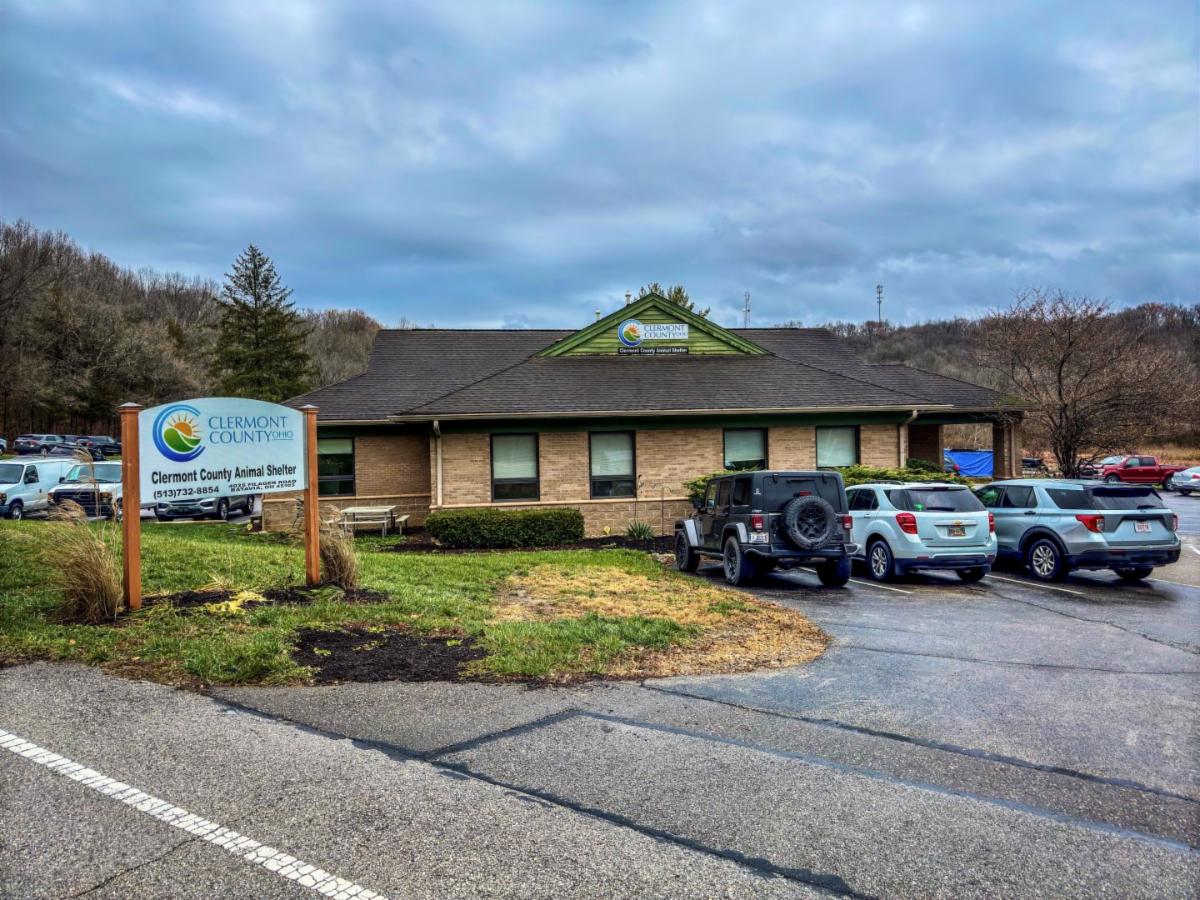
    Clermont County, Ohio – Clermont County officials today announced an upcoming solicitation for proposals to hire a consultant to manage the Clermont County Animal Shelter as well as a request for bids to expand outdoor kennel capacity and new volunteer policies and procedures.

    “These recommendations are part of a comprehensive plan to improve our physical facilities and daily operations to ensure our dogs continue to receive top-quality care,” said Angie Livesay, Deputy Assistant County Administrator and Acting Kennel Administrator.

    Livesay outlined the recommendations to the Board of Clermont County Commissioners during its regular meeting Wednesday, Dec. 11. The board voted unanimously to approve the recommendations for the bid proposals.

    Under the proposed new management structure, all current and future staff at the shelter will remain county employees. The consultant would provide a contracted resident management team for daily operations under the policy direction of the commissioners.

    Livesay was appointed by the commissioners to serve full time as Acting Kennel Administrator in July 2024.

    The legal notice of the “Request for Proposals for Clermont County Dog Kennel Management” will be posted on the county’s website next Thursday, Dec. 19. Proposals will be due Thursday, Jan. 9, 2025.

    In addition, the county announced that it will begin advertising a request for bids from contractors to expand the shelter’s outdoor kennel capacity to add 61 kennels up from the current 23. The legal notice for the expansion project will be posted to the county’s website.

    Livesay also recommended a comprehensive update to the shelter’s policy for volunteers. The board will review the policy and vote on it at the Dec. 18 meeting.

    A copy of the policy will be posted on the county’s website once it is finalized and approved by the commissioners.

  • Lynn Oury is 2025 Loveland Valentine Lady

    Lynn Oury is 2025 Loveland Valentine Lady

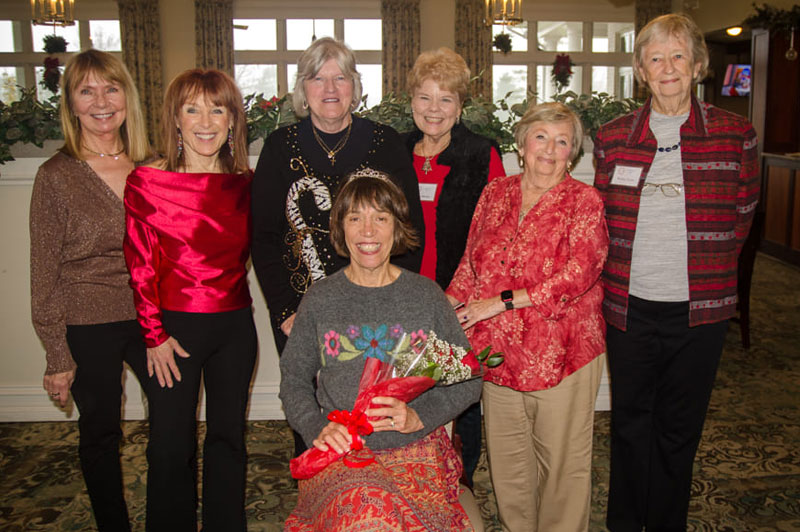
    Photo by Nancy Hartmann Downing on FaceBook

    Editor’s Note: This story has been corrected to reflect that Lynn Oury is not a lifetime Loveland resident.

    Loveland, Ohio – Loveland Valentine Ladies serve the community of Loveland Ohio. They are chosen by community nomination, then picked by a committee from the Little Miami River Chamber Alliance.

    Lynn Oury has been selected as the 2025 Loveland Valentine Lady. She is a former teacher at the Loveland Early Childhood Center.

    _________

    The Valentine Program began in 1972 and has grown over the years to include a variety of Valentine community activities, as well as our nationally-known cachet stamping and postmark program.

    Valentine Ladies are women who have distinguished themselves in community, school, or family endeavors. Being nominated for Valentine Lady is quite an honor!

    The Valentine Lady is the ambassador for the Chamber’s Valentine Program, and visits area businesses, nursing homes and schools, among her duties as Valentine Lady.

    2024: Becky Giver

    2023: Donna Barnes

    2021-2022:  Jeannie Shumaker

    2020:  Debbie Murray

    2019:  Dr. Kathy Lorenz

    2018:  Kay Bolin

    2017:  Carol Williams

    2016:  Laurie Gordon

    2015:  Sue Lundy

    2014:  Janis Fogle

    2013:  Marge Henderson

    2012:  Jan Ranard

    2011:  Avery (Winkie) Foster

    2010:  Bonnie Larson

    2009:  Linda Cox

    2008:  Kay Napier

    2007:  Sue Newburger

    2006:  Peggy Goodwin

    2005:  Lu Boike

    2004:  Helen Gosch

    2003:  Kathryn Undercoffer

    2002:  Patricia Furterer

    2001:  Marirose Stiver

    2000:  Anne Fowler

    1999:  Winona Franz

    1998:  Barbara Dee

    1997:  Bobbie Books

    1996:  Jo Ann Richardson

    1995:  Mary McDonnell

    1994:  Margaret Keifer

    1993:  Kathryn Sidney

    1992:  Doris Osborne

    1991:  Martha Hockman

    1990:  Rose Wene

    1989:  Pat Randolph

    1982-88:  Ruth Jackson (Doris’s daughter)

    1982:  Doris Pfiester

  • [A Holiday Toolkit] Supporting Mental and Behavioral Health During the Holiday Season

    [A Holiday Toolkit] Supporting Mental and Behavioral Health During the Holiday Season

    A message from OneOhio Recovery Foundation and Substance Abuse and Mental Health Services Administration

    Your presence can be a present for someone this season. Support and following up with loved ones are just some of the actions we can all take to help others who may be in crisis.

    Helping someone with mental health, drug, or alcohol use can be hard. If someone in your life is struggling, having a supportive conversation can be a big step for both of you. You can’t force someone to get care, so, the best thing you can do for a person is to be there for them and listen without judgment.

    If you or someone you know is struggling or in crisis, help is available. Call or text 988 or chat 988lifeline.org. You’ll be able to speak with a trained crisis counselor any time of day or night.

    Holiday Stress – Coping Tips

    Is the holiday stress getting to you? Believe in the magic of #SelfCare. It’s ok to focus on yourself, your self-care, and your overall health and wellness this season.

    How to Cope

    Has it gotten harder to get through each day? If you’re having issues with mental health, drugs, or alcohol or waiting for treatment to start, here are some small steps you can take.

    Reach out if you’re in crisis

    If you or someone you know is struggling or in crisis, help is available. Call or text 988 or chat 988lifeline.org. You’ll be able to speak with a trained crisis counselor any time of day or night.

    Accept where you are now

    Know that where you are is okay. Healing isn’t a straight line—there will be ups and downs along the way. Speak to yourself with kindness, as though you’re speaking to a friend.

    Try some of the things below to help your body and mind. Taking care of yourself is healing yourself. Self-care is different for everyone, so you may have to try a few things before finding what works for you.

    Take care of your body

    • Get enough sleep—if you can, stick to a regular schedule
    • If it’s safe, spend time outside
    • Play sports you enjoy or other types of exercise—even if it’s just stretching or walking

    Take care of your mind

    • Write or draw your feelings
    • Take a few deep breaths to calm your mind and slow your heart rate
    • Take a break from news or social media if it causes you stress
    • Explore your interests and hobbies
    • If you can, follow a regular schedule each day and build in time to take breaks
    • Celebrate large and small successes

    Connect with people for support

    • When you feel ready, think about asking for help
    • Join a support group or connect with an online community that’s a safe space
    • Talk to people who care about you and won’t judge you—and be open to their advice
    • If you’re in a safe relationship, be open with your partner about what you’re going through
    • Get involved with a sports team, school activity, or a religious or spiritual organization
    • Volunteer for a cause you care about

    If you find yourself in crisis — or you just need to talk to someone — call or text 988 for help.

    If you’ve experienced a traumatic event or disaster, find additional coping tips.

    Loneliness and Grief

    It’s OK not to feel merry and bright. This season can bring up feelings of loneliness and grief. Hope, help and healing are within reach. Reach out to someone to speak about what’s weighing on you.

    Coping with Bereavement and Grief

    Bereavement and grief are individual, yet universal experiences that nearly everyone faces within their lifetime. Everyone experiences loss in their own personal way. Many can navigate grief with the support of those who are already in their lives, but others may need more help. There are resources and organizations available to ensure individuals receive the appropriate care they need. The type of support required can be influenced by the nature and timing of the loss, the specific resources available, and many other factors.

    Understanding Bereavement and Grief

    In the simplest of terms, bereavement is a period of grief and mourning after a loss, while grief is a person’s emotional response to a loss. Below are more comprehensive definitions based on the opinions of several experts in the field.

    Bereavement

    The overarching experience of coping with loss and change. It is the emotional and psychological condition experienced after a loss, typically due to death, but it can also apply to non-death-related losses. Bereavement often encompasses both inward and outward expressions of grief and the cultural, social, and personal practices that help individuals process and adjust to the loss, often through rituals and support from loved ones. It usually involves a period of grieving.

    Grief

    The emotional, mental, and/or physical response to a loss, often due to death but also encompassing other life changes, such as the end of relationships, loss of identity, or illness. Sometimes people experience periods of grief in anticipation to a loss. Grief is deeply personal and can occur differently in everyone, shaped by the nature of the relationship, the degrees of support, circumstances of the loss, cultural influences, and individual coping mechanisms as well as other considerations. While it can be an intense experience, it is considered a natural human reaction to loss that generally subsides over time for most people.

    Additional definitions provided by the National Cancer Institute and the American Psychological Association for bereavement and grief.

    Examples of how grief can be expressed:

    • Sadness
    • Anger
    • Guilt
    • Confusion
    • Relief
    • Anxiety
    • Numbness
    • Helplessness
    • Fatigue
    • Loss of appetite
    • Sleep disturbances
    • And many more…

    Strategies for coping with grief and loss:

    • Support from friends, family, and/or other known community members
    • Cultural, social, religious, faith, or other beliefs or rituals
    • Local or virtual grief support groups
    • Community-based or virtual grief counseling services
    • Grief peer support services
    • Artistic expression
    • Physical movement and exercise
    • Outreach to a mental health professional

    Prolonged Grief Disorder (PGD)

    Although most people experience periods of grief and bereavement after the death of an individual without long-term mental health concerns, some may experience symptoms that could benefit from additional help. In 2022, the American Psychiatric Association added Prolonged Grief Disorder (PGD) to the DSM-5-TR after clearly distinguishing PGD as its own distinct diagnosis. Major features of the criteria for PGD include, but are not limited to:

    • Intense yearning or thoughts about the deceased
    • Significant and persistent degree of distress
    • Significant decrease in functioning
    • Symptoms that last more than one year in adults and six months in children and youth

    PGD is only one form of grief that can cause extraordinary challenges for individuals. People can also experience other difficult grief reactions. People who are, or think they are, experiencing PGD or are having an especially hard time processing their grief, may seek clinical care, such as individual or group psychotherapy to support them through their loss. Many may also find other supports, such as grief peer support, helpful with this experience.

    Alcohol, Substance Use, and Recovery

    Has it gotten harder to get through each day? If you’re having issues with mental health, drugs, or alcohol or waiting for treatment to start, here are some small steps you can take.

    Reach out if you’re in crisis

    If you or someone you know is struggling or in crisis, help is available. Call or text 988 or chat 988lifeline.org. You’ll be able to speak with a trained crisis counselor any time of day or night.

    Accept where you are now

    Know that where you are is okay. Healing isn’t a straight line—there will be ups and downs along the way. Speak to yourself with kindness, as though you’re speaking to a friend.

    Try some of the things below to help your body and mind. Taking care of yourself is healing yourself. Self-care is different for everyone, so you may have to try a few things before finding what works for you.

    Take care of your body

    • Get enough sleep—if you can, stick to a regular schedule
    • If it’s safe, spend time outside
    • Play sports you enjoy or other types of exercise—even if it’s just stretching or walking

    Take care of your mind

    • Write or draw your feelings
    • Take a few deep breaths to calm your mind and slow your heart rate
    • Take a break from news or social media if it causes you stress
    • Explore your interests and hobbies
    • If you can, follow a regular schedule each day and build in time to take breaks
    • Celebrate large and small successes

    Connect with people for support

    • When you feel ready, think about asking for help
    • Join a support group or connect with an online community that’s a safe space
    • Talk to people who care about you and won’t judge you—and be open to their advice
    • If you’re in a safe relationship, be open with your partner about what you’re going through
    • Get involved with a sports team, school activity, or a religious or spiritual organization
    • Volunteer for a cause you care about

    If you find yourself in crisis — or you just need to talk to someone — call or text 988 for help.

    If you’ve experienced a traumatic event or disaster, find additional coping tips.

    Seasonal Affective Disorder (SAD)

    Is the weather outside frightful? For some, the shorter days and colder temperatures can bring on symptoms of a type of depression. Is it just the ‘winter blues’ or seasonal affective disorder (SAD)? Seasonal affective disorder, or SAD, is a condition in which some people experience a significant mood change when the seasons change. SAD is not considered a separate disorder but is a type of depression.

    Causes

    Seasonal Affective Disorder (SAD) is triggered by changes in seasons. This form of depression usually occurs during the fall and winter months when there is less sunlight, and the days get shorter. SAD usually lifts during the spring and summer months.

    Symptoms

    Not everyone with SAD has the same symptoms, but they can include:

    • Sad, anxious, or “empty” feelings
    • Feelings of hopelessness, guilt, worthlessness, or helplessness
    • Loss of interest or pleasure in activities you used to enjoy
    • Fatigue and decreased energy
    • Difficulty concentrating, remembering details, and making decisions
    • Thoughts of death or suicide
    • Oversleeping
    • Overeating, particularly with a craving for carbohydrates
    • Weight gain
    • Social withdrawal (feeling like “hibernating”)
    • Difficulty sleeping
    • Lack of appetite
    • Irritability and agitation

    Testing for SAD

    Talk to your health care provider or mental health specialist if you are concerned and think you may be suffering from SAD.

    Get Help

    SAD may be effectively treated with a specific type of light therapy for many. Antidepressant medicines and talk therapy may also be needed reduce SAD symptoms, either alone or combined with light therapy. Additionally, vitamin D supplements may improve symptoms.

    Learn how to talk about mental health to help you speak to a loved one who you may think is experiencing any mental health concerns.


  • Festive Christmas Brass Concert at Loveland Stage Company

    Festive Christmas Brass Concert at Loveland Stage Company

    “Enjoy beloved holiday classics performed by an extraordinary ensemble of student, amateur, and professional brass musicians from Greater Cincinnati and Northern Kentucky.”

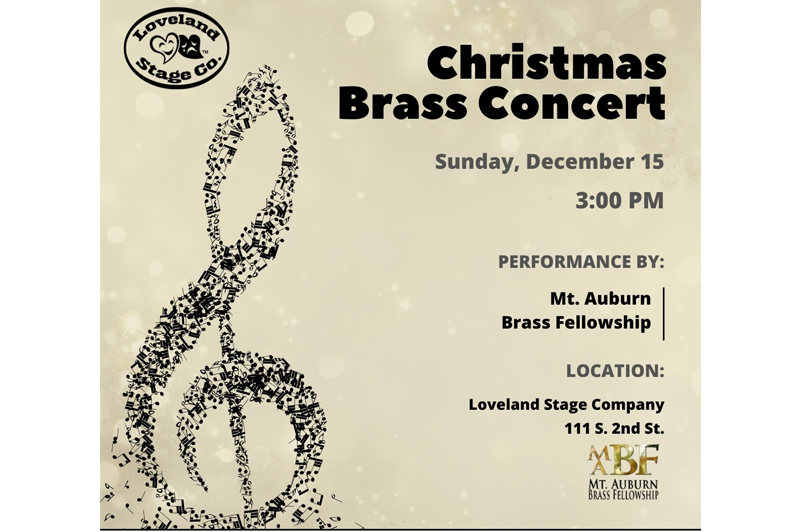
    Loveland, Ohio – Cincinnati’s community Brass Choir will present their annual Christmas concert in conjunction with Loveland High school percussionists. The ensemble will be conducted by Kirby Cain and will feature holiday classics.

    Founded in 1994 and sponsored by Mt. Auburn Presbyterian Church, the Brass Fellowship brings together student, amateur and professional brass musicians from the Greater Cincinnati and Northern Kentucky area.

    Members of the brass ensemble come from many vocations including music, education systems, and the law, but all share a passion for music. The Brass Fellowship strives to unearth the rich literature of over 400 years of brass choir music and regularly present it to the public at the highest level of musicianship possible.

    The concert is Sunday December 15th, at 3 PM at the Loveland Stage Company.

    All proceeds for this concert will benefit the HVAC fundraiser for the Loveland Stage Company.

    Tickets available at the door for a suggested donation of $10.

  • ‘It’s become a tradition’ for Coates and Miami RedHawks

    ‘It’s become a tradition’ for Coates and Miami RedHawks

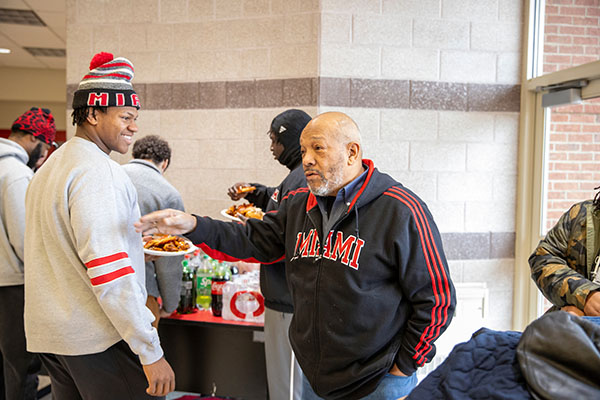
    Rodney Coates, right, talks with members of the Miami University football program on Wednesday, Dec. 11, during a luncheon at the Gross Student-Athlete Development Center organized by Coates to celebrate Miami’s bowl berth. The luncheon has become an annual tradition.

    Oxford, Ohio/Miami University – As members of the Miami University football team filed into – and later out of – the Gross Student-Athlete Development Center on Wednesday afternoon, many offered handshakes and words of appreciation to Rodney Coates.

    The thanks weren’t only for the meal provided, an annual tradition Coates first organized about a decade ago to celebrate when the RedHawks earn a bowl bid, but also for the role Coates plays each year.

    Coates, professor of Global and Intercultural Studies, teaches as part of the Summer Bridge Program, which helps many student-athletes prepare for the academic experience.

    “It’s above and beyond to feed us for a bowl game, but really more so than that what we appreciate is Dr. Coates’ relationship,” said Chuck Martin, head coach of Miami football. “It’s very unique. He’s helped our kids so many different ways. He really helps our kids get ready for college.

    “I couldn’t put a price tag on what he does for our kids.”

    A former Miami football player inspired the initial lunch. The player had a long-term spinal injury, and that resonated with Coates.

    “I said, ‘We need to celebrate it. Not wait for things to happen,’” Coates said. “Let’s make it something really special where Miami comes together to say thank you for what you’ve done. That’s how it started.”

    Coates has taught at Miami since 1990. He received the Distinguished Educator Award from the College of Arts and Science in 2021, as well as the President’s Medal that year.

    Coates has worked with the Summer Bridge Program for more than a decade.

    “Professor Coates is incredibly supportive of our outstanding student-athletes here at Miami,” Miami President Gregory Crawford said. “He works tirelessly with our student-athletes both in and outside the classroom. His December football luncheon is a cherished tradition, celebrating their success and showing our gratitude for all they contribute to Miami and our community.”

    After winning eight games this season and advancing to the Mid-American Conference championship game, the RedHawks will play Colorado State in the Snoop Dogg Arizona Bowl presented by Gin & Juice By Dre and Snoop on Dec. 28 in Tucson, Arizona.

    Kickoff is 4:30 PM at Arizona Stadium. The game will be broadcast on The CW Network.

    This is the fifth straight bowl appearance for the RedHawks and eighth in the last nine years, which has meant several Coates luncheons for many players.

    “As soon as I hear about it, it’s circled on the calendar,” said John Young, a senior offensive lineman.

    “It’s a way for all of us at the end of the year to get together for a couple of last meals,” added senior offensive lineman Reid Holskey. “It’s kind of good to have these moments with the guys who are here right now.”

    David Sayler, Miami’s director of athletics, called the luncheon “a bonding moment.”

    “It’s really nice for the football student-athletes to see deans, the President’s Office, and everybody else who supports it helping provide food for them,” Sayler said. “It’s really a nice gesture and doesn’t go unappreciated by the players.”

    Dec. 28 marks the 16th overall bowl appearance for Miami, beginning with the 1948 Sun Bowl (a 13-12 victory over Texas Tech).

    The last five years have included stops in the LendingTree Bowl (2020), the Frisco Football Classic (2021), the HomeTown Lenders Bahamas Bowl (2022), and the Avocados from Mexico Cure Bowl (2023).

    During that stretch, Martin became Miami’s all-time winningest coach.

    “We’ve done this a few times now,” Coates said. “It’s become a tradition amongst them (the team) too.”

    Established in 1809, Miami University is located in Oxford, Ohio, with regional campuses in Hamilton and Middletown, a learning center in West Chester, and a European study center in Luxembourg.