Year: 2024

  • Jewish groups, Ohio Attorney General, support bill to define anti-semitism

    Jewish groups, Ohio Attorney General, support bill to define anti-semitism

    The Ohio Holocaust and Liberators Monument is seen on the Statehouse grounds. (Photo courtesy of the official Ohio Statehouse website.)

    By:  Ohio Capital Journal

    Religious groups and advocates across the state signaled their support for a bill that would cement a definition of anti-semitism into Ohio law.

    In a recent meeting of the Ohio Senate Judiciary Committee, state-level and national groups praised Senate Bill 297, a GOP-led bill that was introduced in June.

    S.B. 297 seeks to insert a definition of anti-semitism into the Ohio Revised Code, one that was adopted by the International Holocaust Remembrance Alliance in 2016.

    “Antisemitism is a certain perception of Jews, which may be expressed as hatred toward Jews,” the definition states. “Rhetorical and physical manifestations of antisemitism are directed toward Jewish or non-Jewish individuals and/or their property, toward Jewish community institutions and religious facilities.”

    The definition is already in use by Ohio’s state agencies, along with departments, boards and commissions, including public colleges and universities, after Gov. Mike DeWine released an executive order in 2022 encouraging its use.

    GET THE MORNING HEADLINES.


    What the legislation would add is “contemporary examples” identified by the IHRA to support the anti-semitism definition.

    “The scope and utility of the IHRA definition lie in the examples it provides, which capture not only traditional anti-Jewish hatred and Holocaust denial but also modern antisemitism that targets the State of Israel based on its Jewish foundations and character,” said William Daroff, the CEO of the Conference of Presidents of Major American Jewish Organizations, during the Senate Judiciary Committee meeting.

    In support of the bill, Daroff cited Anti-Defamation League data, which showed an increase in “antisemitism incidents” of more than 300% since Oct. 7, 2023, when the militant group Hamas attacked Israel, causing the deaths of 1,200 people, including 46 Americans, according to the U.S. Department of State.

    “Time and again, time and again, and time and again, especially since October 7, those with responsibility, those with authority to act on incidents, have said ‘I don’t know if this rises to the level of actual antisemitism,’” said Howie Beigelman, president and CEO of Ohio Jewish Communities. “This definition provides that for them.”

    GET THE MORNING HEADLINES.


    The bill would also expand the criminal offense of “ethnic intimidation” to add “riot and aggravated riot committed by reason of the race, color, religion or national origin of another person or group of persons,” according to an analysis by the Ohio Legislative Service Commission.

    Ohio law considers a riot five or more people participating “in a course of disorderly conduct” with certain purposes, such as committing a misdemeanor offense, intimidation of a public official or employee or “to hinder, impede or obstruct the orderly process of administration or instruction at an educational institution.”

    A riot rises to the level of “aggravated riot” when a group of five or more people commit or help in the commission of a felony or violent offense, or when a deadly weapon is used.

    The state’s chief law officer agreed with those wanting to see the bill passed. Ohio Attorney General Dave Yost submitted written testimony in favor of the measure, saying it is “astonishing that such legislation is necessary in America today, but, sadly, such a definition is needed.”

    “The targeting of Jews has consistently been reported as the most likely of all religious groups to be victimized, and the rates of these despicable acts are on the rise,” Yost wrote.

    He said the IHRA definition “has become the authoritative definition for use by governments and international organizations across the globe.”

    Supporters of the bill also expressed confidence that while the bill would ensure antisemitism is identified in the state, First Amendment rights would still be assured.

    “However, when that hatred morphs into a crime or other action covered by a school or work policy, only then can penalties be assessed,” Beigelman said in his testimony to the committee.

    In order for the measure to become law, it will need to be passed by the committee, then sent to the floor for approval before the end of the month, which also marks the end of the current General Assembly.

    Should the bill not go through before then, it will need to be reintroduced in the new year, and go through the committee process once again.

    YOU MAKE OUR WORK POSSIBLE.

    __________
    Susan Tebben
    Susan Tebben

    Susan Tebben is an award-winning journalist with a decade of experience covering Ohio news, including courts and crime, Appalachian social issues, government, education, diversity and culture. She has worked for The Newark Advocate, The Glasgow (KY) Daily Times, The Athens Messenger, and WOUB Public Media. She has also had work featured on National Public Radio.

    Ohio Capital Journal is part of States Newsroom, the nation’s largest state-focused nonprofit news organization.

    MORE FROM AUTHOR

  • Ohio Dems try to repeal laws conflicting with reproductive rights amendment during lame duck

    Ohio Dems try to repeal laws conflicting with reproductive rights amendment during lame duck

    By:  Ohio Capital Journal

    Ohio Democratic lawmakers are asking the state legislature to undo laws on the books that they say conflict with the reproductive rights amendment passed by voters in 2023 that’s now part of the Ohio Constitution.

    Several of those laws have been struck down by judges, either temporarily as a lawsuit continues or in official court rulings, but the laws remain part of the Ohio Revised Code.

    Sponsors of the bills say the constitutional amendment passed last year negates these laws, therefore necessitating the repeal of regulations that require 24-hour waiting periods for abortions and transfer agreements of certain distances for physicians and hospitals who work with abortion clinics, for example.

    “We, the legislature, should not be making choices for all women in the state,” said state Rep. Beth Liston, D-Dublin. “The people of Ohio have said they want these decisions for themselves.”

    Republicans hold a 67-32 majority in the Ohio House and a 25-7 majority in the Ohio Senate, and state Republican leaders opposed the amendment.

     State Rep. Beth Liston, D-Dublin, speaks at a rally to protect abortion rights. (Photo from General Assembly website.) 

    Liston and fellow state Rep. Anita Somani, D-Dublin, both of whom are physicians, brought House Bill 343 to the House Public Health Policy Committee in hopes of “simply ensuring that all of our state laws are now in agreement with that amendment.”

    “Removing these barriers to care will reduce delays in care and actually allow health care providers to serve their patients properly,” Somani told the committee on Wednesday. “We have a health care access problem in Ohio and restrictive laws like these are part of the problem.”

    H.B. 343 wasn’t the only bill Somani presented to the Public Health Policy Committee in an effort to protect reproductive rights.

    House Bill 502, which also saw its first hearing in the committee on Wednesday, would protect access to “assistive reproductive technology,” which includes in-vitro fertilization. Fertility treatments were also listed as one of the rights covered by the constitutional amendment approved by 57% of Ohio voters last year.

    But an Alabama Supreme Court case from this year has caused nationwide concerns about the future of IVF and embryos saved by individuals going through fertility treatments. State supreme court justices in that case ruled that frozen embryos could still be considered children, an issue that has come to be known as “personhood” as federal and state-level entities debate fetal viability and regulation as a whole.

    The “personhood” issue is not foreign to Ohio, which saw a 2022 bill in which state Rep. Gary Click, R-Vickery, said “the unborn” is a “class of people” who have “erroneously been denied their constitutional rights.”

    Click said his legislation would consider a “zygote, embryo or whichever depersonalizing term you choose” a “human with potential” from the moment of fertilization.

    That bill died in the previous General Assembly, though Click has not ruled out bringing the idea back in a future GA.

    Back in March, after the Alabama decision came about, Senate President Matt Huffman, who will soon become Ohio’s House Speaker, said there hadn’t been “any discussion by any member of my caucus or anybody else as far as in the state of Ohio as far as I know” regarding “personhood” or IVF regulations.

    GET THE MORNING HEADLINES.


    But Somani said protection of the technology around IVF “should be explicitly stated in state law so that there is no confusion about the legality of the practice.”

    “We don’t want to make the same mistakes as other states,” she told the committee on Wednesday. “Equating embryos with people confuses those who practice evidence-based medicine and the reproductive care that they can provide.”

    The sponsors cited CDC statistics which showed 2,226 births in Ohio in which IVF was used in 2021. In that same year, more than 86,000 births nationally were attributed to IVF, with 42% of adults saying they have used fertility treatments or know someone who has, according to the CDC.

    “Experiencing infertility can be a mentally, emotionally and physically exhausting journey and we as lawmakers should not be doing anything to increase that stress,” Somani said.

    H.B. 502 would also prevent health care providers from “being compelled to release patient records to third parties, including out-of-state entities or law enforcement,’ and allow lawsuits from individuals who feel their privacy rights are violate with regard to medical information.

    The bill’s co-sponsor, state Rep. Beryl Brown Piccolantonio, D-Gahanna, acknowledged the tight timeline the bill is now under with less than a month before the current General Assembly ends, and all unapproved bills must be reintroduced in the new year. But, she said she hoped the committee would allow supporters of the bill to speak on IVF’s importance, especially with the possible impact of the Alabama Supreme Court ruling.

    “This decision has significant implications for reproductive rights and the legal status of embryos, influencing legislation and public policy across multiple states, including Ohio,” Piccolantonio said.

    YOU MAKE OUR WORK POSSIBLE.

    ____________
    Susan Tebben
    Susan Tebben

    Susan Tebben is an award-winning journalist with a decade of experience covering Ohio news, including courts and crime, Appalachian social issues, government, education, diversity and culture. She has worked for The Newark Advocate, The Glasgow (KY) Daily Times, The Athens Messenger, and WOUB Public Media. She has also had work featured on National Public Radio.

    Ohio Capital Journal is part of States Newsroom, the nation’s largest state-focused nonprofit news organization.

    MORE FROM AUTHOR

  • Republican bill would require Ohio school districts post their Pledge of Allegiance policy

    Republican bill would require Ohio school districts post their Pledge of Allegiance policy

    Getty Image

    By:  Ohio Capital Journal

    Republican lawmakers want to require Ohio school districts to make their Pledge of Allegiance policy publicly available.

    State Reps. Gail Pavliga, R-Portage County, and Tracy Richardson, R-Marysville, introduced House Bill 657 over the summer and testified in support of their bill Tuesday during the Ohio House Primary and Secondary Committee Meeting, calling it a transparency bill.

    “Many of you grew up reciting the Pledge of Allegiance in school and may be surprised to discover that not all schools and classrooms in Ohio are currently learning or reciting the Pledge,” Richardson said. “Some parents too are unaware that their children are not being taught this important practice. Parents have a right to know.”

    The bill would not require students to recite the Pledge of Allegiance, it would just require school districts to post the policy on their website.

    “Very little would need to be done by each school district, the policy already exists, and most schools already have a website,” Pavliga said.

    The United States Supreme Court ruled in 1943 that students are not required to recite the Pledge of Allegiance at public schools if it goes against their religious beliefs. This case came after Jehovah’s Witnesses students were expelled from their West Virginia school for not reciting the Pledge of Allegiance. At the time, West Virginia Board of Education required public school students to salute the flag and Jehovah’s Witnesses do not say the Pledge of Allegiance because it conflicts with their Bible teachings around worshipping God.

    Learning the Pledge of Allegiance teaches students to respect the flag, Richardson said.

    “Reciting it builds unity and nationalism by affirming our commitment to our values,” she said. “At a time when many seem polarized, it is a meaningful tradition that brings all Americans together.”

    GET THE MORNING HEADLINES.


    As a former teacher, State Rep. Sean Patrick Brennan, D-Parma, said it broke his heart when students would not take part in the Pledge of Allegiance.

    “I don’t think it was because of a religious exemption,” he said. “I think it was simply apathy.”

    He asked Pavliga and Richardson how school districts and parents can motivate students to want to recite the Pledge of Allegiance.

    “I think that, as we bring more awareness to this issue, that I think that you will see more parents being more vocal with their children and with the school district,” Pavliga said. “And I think it will start and spark some discussions.”

    State Reps. Jodi Whitted, D-Madeira, asked the bill’s sponsors if they have received questions from parents who were unable to find their school district’s policy on the Pledge.

    “No, it was something that we had talked about, and just felt that the time was right to be able to have it out there,” Pavliga said. “And we’re kind of a bit shocked by the fact that the school system might have a policy in place, but they weren’t required to publish it.”

    If the bill were to become law, a school district that already has their Pledge of Allegiance policy posted on their website would already be in compliance, Pavliga said.

    The current General Assembly will finish at the end of the month, meaning any bills that don’t pass will die and would have to be re-introduced next General Assembly.

    Follow OCJ Reporter Megan Henry on X.

    YOU MAKE OUR WORK POSSIBLE.

    ______________
    Megan Henry
    Megan Henry

    Megan Henry is a reporter for the Ohio Capital Journal and has spent the past five years reporting in Ohio on various topics including education, healthcare, business and crime. She previously worked at The Columbus Dispatch, part of the USA Today Network.

    Ohio Capital Journal is part of States Newsroom, the nation’s largest state-focused nonprofit news organization.

    MORE FROM AUTHOR

  • Prevent Blindness Ohio Accepting Applications for  Vision Research Fellowship

    Prevent Blindness Ohio Accepting Applications for Vision Research Fellowship

    Prevent Blindness Ohio (PBO) is seeking applications for its 2025 Young Investigator Student Fellowship Awards for Female Scholars in Vision Research. The Fellowship Program is intended to provide support for female scientists committed to pursuing biomedical, behavioral or clinical research careers relevant to the mission of Prevent Blindness – to prevent blindness and preserve sight.

    Grants are for the summer 2025 session. Awards will range from $3000-$5000 depending upon the availability of funds. The deadline for receipt of applications is Feb. 15, 2025. Applicants must be post-baccalaureate students enrolled in a master’s or doctorate program during the summer of 2025, female, citizens or permanent residents of the United States, and conducting their research with a recognized academic institution in the State of Ohio.

    Applications from diverse fields in the health sciences including, but not limited to ophthalmology, optometry, nursing, genetics, public health, nutrition, gerontology, and biomedical engineering, are appropriate to the goals of this fellowship award. Prevent Blindness encourages fellowship applications that investigate public health issues related to the burden of eye-related health and safety topics.

    To download the application, go to: https://ohio.preventblindness.org/young-investigator-student-fellowship-awards-female-scholars-vision-research/

    For more information about the Fellowship contact Prevent Blindness Ohio at 800-301-2020 ext.112 or e-mail lauras@pbohio.org.

    The Female Fellowship Awards Program is supported by grants including the Sarah E. Slack Prevention of Blindness Fund-Muskingum County Community Foundation.

    About Prevent Blindness Ohio

    Founded in 1908, Prevent Blindness is the nation’s leading volunteer eye health and safety organization dedicated to fighting blindness and saving sight. The Ohio Affiliate of Prevent Blindness serves all 88 Ohio counties, providing direct services to 1,000,000 Ohioans annually and educating millions of consumers about what they can do to protect and preserve their precious gift of sight. For more information or to contribute, call 800-301-2020 or donate here. Visit us at pbohio.org. Follow us on Facebook: facebook.com/pbohio/ and X: twitter.com/PB_Ohio

  • OOD Works Podcast: Understanding Social Security Disability Benefits Updates for 2025

    OOD Works Podcast: Understanding Social Security Disability Benefits Updates for 2025

    Decisions on whether Ohioans are eligible for Social Security disability benefits are crucial for people looking to create a dependable foundation for their lives. Staff with the Division of Disability Determination (DDD) of Opportunities for Ohioans with Disabilities (OOD) understand those needs and the importance of quickly processing cases and delivering accurate decisions. In agreement with the Social Security Administration (SSA), DDD determines medical eligibility for Ohioans who apply for Social Security disability benefits.

    In this episode of the OOD Works podcast, Robert Fenn and Brandon Smith, SSA Public Affairs Specialists, explain the changes to Social Security disability benefits in 2025. The discussion is a valuable resource for anyone looking to understand and navigate Social Security benefits and provides a comprehensive overview of the upcoming changes.

  • Sandy Hook Remembrance: 12 Years of Life-Saving Progress in Ohio

    Sandy Hook Remembrance: 12 Years of Life-Saving Progress in Ohio

    Ohio has had 109 mass shootings since 2020, and guns are the leading cause of death for children in the state. But gun violence is not inevitable. In fact, several families of victims from one of our nation’s worst school shootings are proving that gun violence is preventable when you know the signs.

    December 14, 2024 marks the 12th Remembrance of the Sandy Hook Elementary School shooting, a tragedy that took the lives of 20 first-grade children and six educators. This event galvanized people across the U.S. and completely reshaped the gun violence prevention movement.

    Sandy Hook Promise, a national nonprofit that was founded weeks after the tragedy by the loved ones of several victims, is honoring the legacy of those who were killed by emphasizing the transformation that has emerged since the 2012 tragedy.

    Today, millions of Americans are taking action to protect schools, homes, and communities by understanding how to recognize the warning signs of violence and get help. They have also been working together to write and pass bipartisan polices that expand access to mental health treatment, deepen school safety programming to address the root causes of violence, and much more. These actions have been making a tremendous impact and saving lives across the country.

    In Ohio, for example:

    • More than 1 million youth and adults across 4,173 Ohio schools have participated in the Know the Signs programs.
    • Nearly 6,000 students are involved in 187 SAVE Promise Clubs throughout the state, helping create positive school cultures where everyone looks out for one another.
    • Click here to learn more about how Ohio can be a leader in school safety by supporting the passage of secure storage laws and other bills.
  • Weathering the Storm: Once a Loveland icon, Kings Ford Celebrates 110 Years in Business

    Weathering the Storm: Once a Loveland icon, Kings Ford Celebrates 110 Years in Business

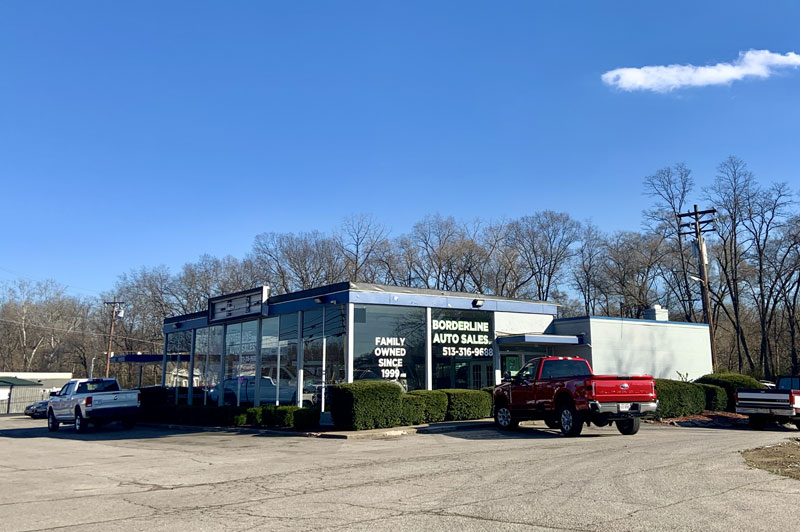
    The former RS Ford dealership at 421 Loveland-Madeira Road in Loveland is now the home to Borderline Auto Sales

    Loveland, Ohio – The year 1915 was a big one for the still-fledgling automotive industry. There were 2.4 million registered cars and trucks on the road, a number that would jump to 3.6 million in 1916.

    In Detroit, the Ford Motor Company built its’ one millionth car at the River Rouge plant. Chevrolet Motor Company, which had been founded in 1911 and only began manufacturing cars two years later, built 13,600 cars in 1915, a production increase of more than 160 percent over the previous year.

    C.R. Patterson & Sons in Greenfield, Ohio became the first and only African American-owned car company in history.

    Meanwhile, just 52 miles east, Victor Shumard opened his second Ford agency in Loveland, Ohio.

    Quite a bit has happened since the Loveland Ford Agency officially opened, including changes to the name, ownership and location of the business.

    But first, Victor Shumard had to deal with a flood.

    Historic Flood Leads to New Beginnings

    Victor Shumard was born in 1870, the second son of a well-known local horse and wagon harness businessman in Milford, Ohio. Victor’s father, Thomas, had founded the “T. M. Shumard & Sons” harness factory in 1879.

    In 1903, Thomas Shumard split the company, relocating his equipment business to nearby Lockland, Ohio, and leaving the operations of his harness business in Milford to his sons, Victor and Lee.

    In 1912, Victor Shumard founded a Ford agency to compliment the family’s transportation business, operating from the 5 Water Street building in downtown Milford near the Little Miami River.

    But catastrophe soon struck. On March 24, 1913, storms and flooding overran the Little Miami River, decimating the towns of Milford, Loveland, Miamiville, and South Lebanon. The Great Flood of 1913 is still considered one of Ohio’s greatest natural disasters. Shumard’s building at 5 Water Street was barely saved from being washed away.

    In the wake of the disaster, a new steel bridge was constructed in Loveland and real estate was offered at a discount. Ever the businessman, Shumard opened his Loveland Ford Agency at its new location at 211 Riverside Drive in 1915.

    Many Ownership Changes Over the Years

    Shumard, who was a prolific entrepreneur with expanding business investments in downtown Milford, sold the Loveland Ford Agency and its facility to another local automobile dealer, Charles Wilson by 1923. The dealership would change hands four more times before Robert (Bob) Ring and Jerry Storm took ownership in 1979. Aside from his Loveland Ford dealership, the many transportation businesses and automotive dealerships that Shumard founded during his lifetime would all eventually divest; the last closure occurred as recently as 2009 when the Pontiac agency he founded in the 1930s lost its manufacturer brand, leaving the franchise today known as Kings Ford the sole survivor to carry on his entrepreneurial legacy.

    “Although the franchise has changed ownership several times through the years, the past 45 years has been the longest stretch of any singular ownership group or family,” says Joe Ring, Kings Ford Inc.’s COO and minority member. “Ironically, the briefest ownership of the franchise is attributed to its founder [Victor Shumard].”

    “In 1979, my father – Bob Ring – leveraged all his assets and took an enormous risk with his business partner Jerry Storm when they purchased the store from its previous owner, Russ Warner,” Ring explains.  “Warner sold because he was predicting difficult times ahead, and he was right – my father barely made it during the first four years of ownership when the economy went into recession and interest rates rose above 20%. The fact they survived at all during those trying times, and the store would eventually thrive over the following decades, is a testament to their perseverance and vision.”

    The franchise would remain at this new location at 421 Loveland Madeira Road for 35 years, the facility Warner constructed remained in use as an automotive repair shop and showroom for used vehicles; for 65 years of automotive use and now home to Borderline Auto Sales.

    In 1995, Kings Ford, Inc. relocated to what has now grown into one of the nation’s largest auto malls – Kings Automall in Cincinnati – which houses approximately 7,000 new and used vehicles from 18 new vehicle manufacturer brands at one location.

    A New Period of Stability, Growth

    Joe Ring, also known as the local franchise historian, says, “The move from Loveland to Kings Automall saw explosive growth across revenues and especially expenses that was at times overwhelming for Bob; I don’t know that my father could have survived had his daughter, Carol Fuller, and her husband, Doug Fuller, not joined the leadership team in 1995 as a part of the transition. Together, the number of fierce storms they successfully weathered – before I joined the store in my current role as COO in 2014 – was many.”

    Today, the Kings Ford dealership is owned and operated by Bob Ring’s daughter, Carol, who serves as president. Kings Ford is proud to be one of the few WBENC-Certified, woman-owned new vehicle dealerships in the state of Ohio. “During our 110-year franchise history, six different male majority owners have operated our franchise,” Ring says. “Two years ago, we turned a chapter in the franchise history with our first female majority owner and operator.”

    The other constant has been a dedication to community, sponsoring charities and community events throughout the years. “We are passionate about high school trade skills development to support our industry’s automotive technician needs and we support several local high school automotive institutes,” Carol Fuller says.

    As the second oldest continuously operating Ford franchise in the state of Ohio (the title of oldest belongs to Chapman Ford of Marysville, Ohio), Kings Ford will be celebrating its 110th anniversary of the dealership by decorating the store interior with historic images of the franchise and issuing a franchise history pamphlet. By 2025, they also plan to finalize publishing a full online chronicle of the franchise history – already mostly complete – on their company website at www.kingsfordinc.com/history.

    “Our family assumed ownership of the franchise in its 64th year, but we’ve collected many years of memories of its history during our 45 years of ownership, and we are excited to share them with our customers and community,” Fuller says.

  • New Episode: The Queen City Sports Podcast by Chris Ball & Mark Raines

    New Episode: The Queen City Sports Podcast by Chris Ball & Mark Raines

    by Chris Ball

    Loveland, Ohio – After a very fun Thanksgiving hiatus, the podcast returns! Chris and Mark start off with a tiny bit of good news (if you are a Wolverine or anti-Ohio State fan) as Michigan pulled off an inexplicable upset of the Buckeyes this past weekend, 13-10. The guys discuss Ryan Day’s dubious game plan and how it led to one of the more memorable upsets of the year and extended the four game winning streak for the Wolverines in The Game. Then, things turn a bit more depressing as Mark guides us through the Bearcats’ football loss to TCU and the basketball squad falling short against Villanova. Mark also sheds some light on the good things we can expect from the ‘Cats on the gridiron next year, as their season is now over. But Cincinnati’s basketball season is just opening up and there is plenty to be exited about on that front, despite falling to Villanova last game.

    Then, of course, the guys get into the Bengals’ most recent game against the Steelers. Both Chris and Mark lament having to watch Old Man Russell Wilson throw for over 400 yards against a defense that has been DOA for about 6 weeks now. They also talk about the upcoming game against Dallas and whether perennial backup Cowboys’ quarterback Cooper Rush is going to add his name to the laundry list of players who have embarrassed this Bengals defense.

    So tune in this week, and we apologize for having to cut this episode a bit short due to some technical issues. Rest assured that next week’s episode will be error-free!

    Have a listen and don’t forget to leave your comments and feedback!

    _______________________

    Hey readers… have an opinion about sports? How about a topic you’d like to see written about in Loveland Magazine or a thought about one of our articles?

    Just need to vent and get out your frustration about the Reds, Bengals, or any other sports issues?

    Feel free to share with an email to lovelandmagazinesports@gmail.com!

    We would love to hear from our readers, and we thank you for your support and engagement.

    Also, don’t forget to follow us at The Loveland Sports Desk at the below links:

    For Facebook, click here.

    For X, click here.

    For Instagram, click here


    Christopher Ball is a longtime Loveland resident and an attorney. He graduated from Loveland High School in 2003 and was a member of the football team before going on to become a coach’s assistant at DePauw University in Greencastle, Indiana. He has been following and rooting for the Reds and Bengals since the early 1990s and has been through the many ups and downs that fandom has wrought over the years.

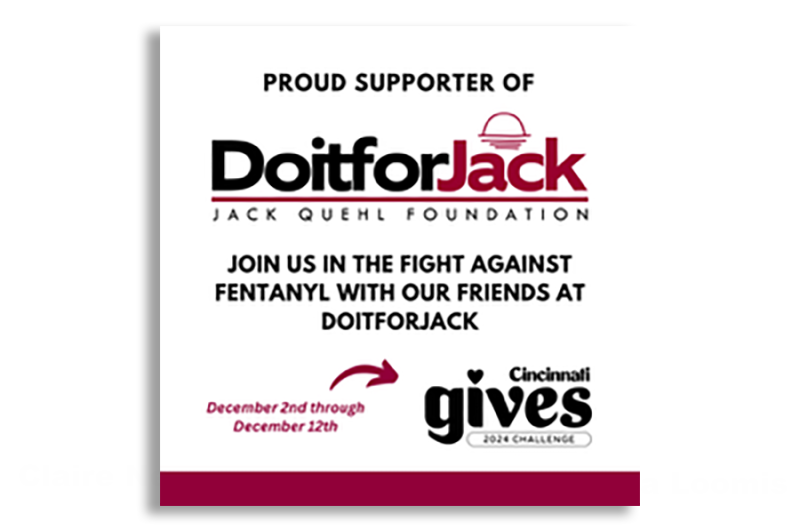
  • Please help Loveland’s DOITFORJACK Foundation’s participation in Cincinnati Gives Challenge

    Please help Loveland’s DOITFORJACK Foundation’s participation in Cincinnati Gives Challenge

    Loveland, Ohio – DOITFORJACK is participating in Cincinnati Magazine’s Cincinnati Gives challenge. It is active now through December 12th at 5 PM.

    They have set an aggressive goal of 100,000 this year!

    The Cincinnati Gives Challenge offers a unique opportunity for the Loveland community to come together to support causes that matter. For DOITFORJACK, this is more than a fundraiser- it’s a chance to turn heartbreak into hope and take meaningful action against the fentanyl crisis.

    DOITFORJACK’s mission is to raise awareness about the dangers of fentanyl, educate communities, and save lives by sharing Jack’s story—a story rooted in love and a determination to prevent other families from experiencing similar loss.

    You can make a difference and save lives by giving today!

    Visit https://www.cincinnatigives.org/organization/Do-It-For-Jack to donate!

  • Watch as Zoning Commission moves forward with plan to build 12 homes on State and National Scenic Little Miami River

    Watch as Zoning Commission moves forward with plan to build 12 homes on State and National Scenic Little Miami River

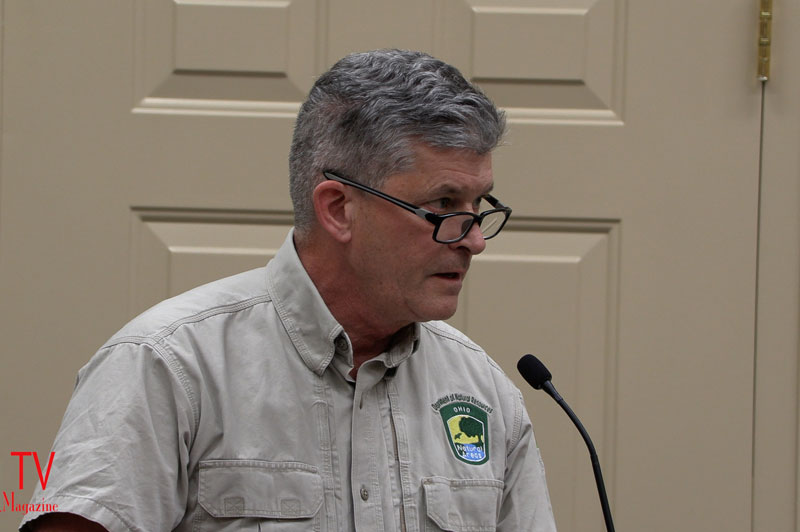
    Aaron Rourke, the Assistant Regional Scenic Rivers Program Manager of the Division of Natural Areas & Preserve said, “The goose that laid the golden egg here, is the State and National Scenic Little Miami River.”

    This story was up-dated at 6:15 AM on December 6 to reflect that the vote the Commission took during the meeting was to move forward with the SPD process by holding a formal Public Meeting on the plan at an as yet to be determined future date.

    Loveland, Ohio – Richard Fisher spoke first and apparently had the wrong impression after hearing the Chairman of the Planning and Zoning Commission, Mark Redmond’s opening remarks. Fisher said, “I know you are not approving anything” tonight.

    During the Open Forum Fisher added that he hopes down the line, wherever this goes, that people keep in mind that we just went through a “pretty big game changing election” in which people said that we want elected officials to listen to us.

    However at the end of nearly one hour and 15 minutes of discussion and hearing from the public, the commission determined that the Schildmeyer proposal met all the conditions required to re-zone their property into a Special Planing District which would remove all current and existing zoning regulations by creating a new zoning map with its own set of regulations.

    Redmond, Andy Bateman, and David Parker voted that the proposal met the requirements of establishing a Special Planing District. Rob Weisgerber voted that it did not. Member Brian O’Neill was absent from the meeting.

    The vote was to move forward with the SPD process by holding a formal Public Meeting on the plan at a yet to be determined future date.

    No one from the public spoke in favor of the plan moving forward. Terry Schildmeyer, representing the family and Douglas Hinger with Traditions Building and Development Group testified in favor of their plan.

    Speaking about the importance of protecting the State and National Scenic Little Miami River, Aaron Rourke, the Assistant Regional Scenic Rivers Program Manager of the Division of Natural Areas & Preserve said, “The goose that laid the golden egg here, is the State and National Scenic Little Miami River.”

    The development shares 540 feet of frontage along the Little Miami River at 128 North Riverside Drive in the West Loveland Historic District. The site will be elevated by bringing in earth to bring it above flooding elevation.

    Loveland Magazine file photo of past flooding

    Rourke works for the Ohio Department of Natural Resources.

    Loveland Magazine file photo of past flooding

    The proposed Special Planning District would be located at 128 North Riverside Drive and includes twelve (12) single-family detached dwelling units (24’ x 56’ 3-Story Homes) with minimum lot size of 0.114 acres or 4,966 sq. ft. The owner is Schildmeyer Holdings. The 12 proposed homes would be across Riverside Drive from the Loveland Museum Center and the Tufts Schildmeyer Family Funeral Home.

    ____________

    In order to adopt an SPD, one or more of the following conditions exist, or will exist, within the proposed SPD:
       (a)   A concentration of retail and service oriented commercial establishments serving as a principal business activity center for the community.
       (b)   Land that is occupied by substantial natural characteristics worthy of preservation or which are historic aids to the identification of residential communities which help residents relate to their communities and to relate the social organization of communities to their physical environments.
       (c)   Lands which permit for ingenuity, imagination, and design efforts on the part of builders, architects, site planners, and developers that can produce residential developments which are in keeping with overall land use intensity and open space objectives of the Comprehensive Plan while departing from the strict application of use, setback, height, and minimum lot size requirements contained in the Zoning Code.

    ____________

    [pdf-embedder url=”https://lovelandmagazine.com/wp-content/uploads/2024/11/2024-11-07-Planning-Zoning-Commission-Full-Agenda-1876.pdf” title=”2024-11-07 Planning & Zoning Commission – Full Agenda-1876″]