Year: 2024

  • Loveland Schools will close on day of solar eclipse

    Loveland Schools will close on day of solar eclipse

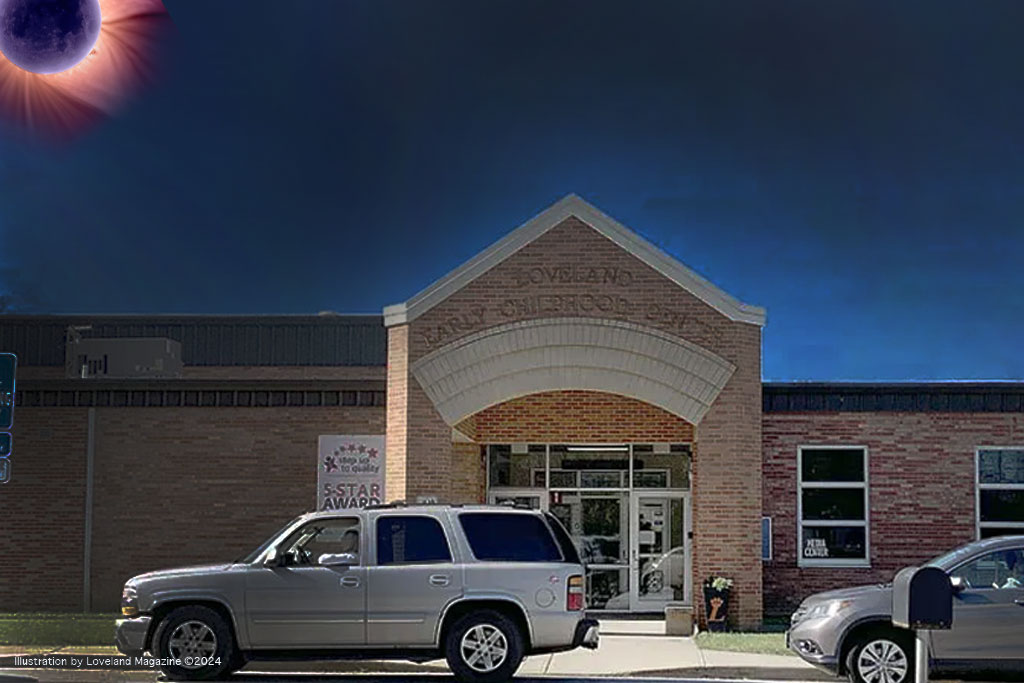
    Loveland, Ohio – There will be no school for students on Monday, April 8 for students in the Loveland City School District. A partial solar eclipse will cross over Loveland that day and Superintendent Mike Broadwater has announced, “The timing of the eclipse presents a safety challenge. The eclipse will stretch over a period of about two hours around afternoon dismissal time. Students would be on buses, walking, or driving home when the eclipse hits its peak, making it very challenging for students to view this once-in-a-lifetime event safely”.

    Broadwater continued, “I understand that a change to the schedule may be an inconvenience for families, which is why we’ve made this decision now, to give everyone time to prepare. Staff will still report to work on April 8 and use the time for professional development and training.”

  • The first Black Ohio lawmaker was also the first Black author to write a history of Black Americans

    The first Black Ohio lawmaker was also the first Black author to write a history of Black Americans

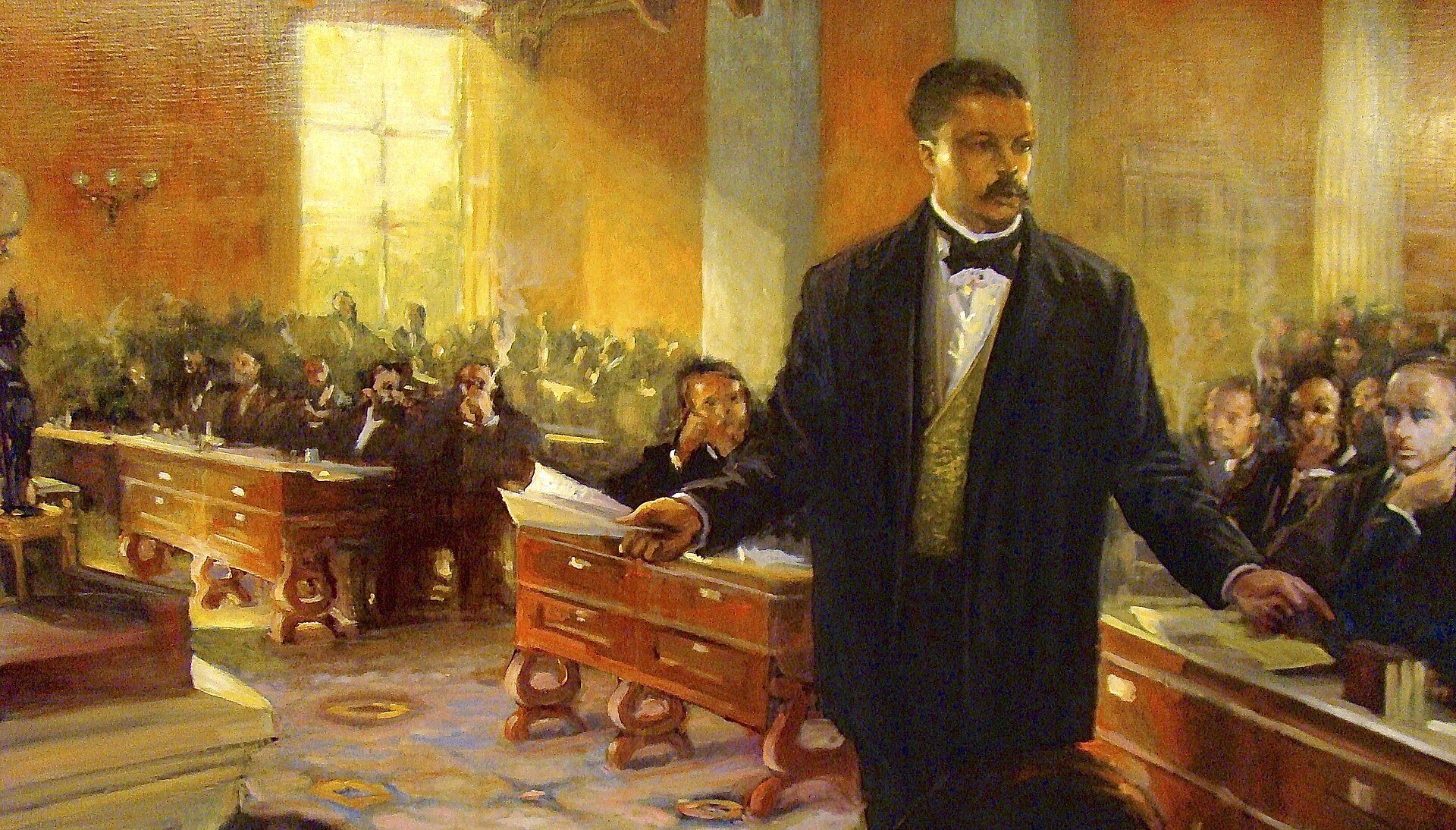
    Painting of George Washington Williams addressing the Ohio State Legislature. Williams was the first African-American elected to the Ohio State Legislature, serving one term 1880 to 1881. (Photo from the Ohio Statehouse.)

    The original 1619 project: George Washington Williams authored the two-volume “History of the Negro Race in America from 1619 to 1880”

    David DeWittby David DeWit

    On the first floor inside the limestone edifice of the Ohio Statehouse sits the George Washington Williams Memorial Room, adorned with two oil paintings and a large, bronze bust of Ohio’s first Black lawmaker: George Washington Williams, who served 1880-81, in Ohio’s 64th General Assembly.

    A soldier, Baptist minister, lawyer, politician, and journalist, Williams accomplished perhaps his most remarkable achievement when he authored the first academic history of Black people in America from their own perspective — the two-volume, “History of the Negro Race in America from 1619 to 1880: Negroes as Slaves, as Soldiers, and as Citizens.”

    The volumes were published in 1882 and 1883 following Williams’ term in the Statehouse. In 1888, he published, “A History of the Negro Troops in the War of the Rebellion, 1861–1865.”

    A deeply impressive autodidact, Williams says in the introduction to his history that he retired from public duties to focus on completion of the work, consulting more than 12,000 volumes, with more than a thousand of them included in its bibliography. He exhausted the state library of Ohio before moving on to the Library of Congress and New York Historical Society, and traveling southward to interview Black veterans for first-hand accounts when his inquirers of formal sources were rebuffed.

    “I have been possessed of a painful sense of the vastness of my work from first to last,” Williams wrote, adding that he conceived the work to give America more correct ideas about the nature of Black people and to inspire Black people in their efforts of citizenship by giving them the history of their people so many desired. “The single reason that there was no history of the Negro race would have been a sufficient reason for writing one.”

    Williams makes clear that his aim of the book is an honest and truthful discussion of history: “Not as the blind panegyrist of my race, nor as the partisan apologist, but from a love for ‘the truth of history’ I have striven to record the truth, the whole truth, and nothing but the truth,” Williams wrote. “I commit this work to the public, white and black, to the friends and foes of the Negro, in the hope that the obsolete antagonisms which grew out of the relation of master and slave may speedily sink as storms beneath the horizon.”

    Nearly a century-and-a-half later, America is beset by know-nothings and philistines intent on subverting and destroying the truth, the whole truth, and nothing but the truth about our collective American history. They project their personal inability to face unpleasant facts onto our society and education system at-large — to decree that they somehow are the arbiters of what knowledge the public is allowed to learn in our universities and libraries, and what knowledge we are not. Gravely exceeding a governmental assault on free speech — which is quite bad enough, and unconstitutional — they seek to police freedom of thought and expression itself, a despicable insult to our Enlightenment Era intellectual heritage.

    The life and work of George Washington Williams

    Born free in Pennsylvania, George Washington Williams ran away at 14-years-old to join the Union Army, fighting some of the later battles of the Civil War. In a sort of unofficial defense of the Monroe Doctrine and the forces of democracy, Williams then joined other American soldiers fighting under the Republican Army of Mexico to overthrow Emperor Maximillian. Afterward, Williams returned to America to serve for five years in the U.S. Army before going to college at first Howard University and then the Newton Theological Institution near Boston, becoming their first Black graduate.

    Ordained a Baptist minister, Williams served pastoral duties in Boston and then D.C., where with the support of Frederick Douglass and William Lloyd Garrison he published eight volumes of a Black newspaper called The Commoner. He then moved his family to Cincinnati, Ohio, where he served as a pastor and studied law under Alfonso Taft and was admitted to the bar. It’s from there he went on to the Ohio Statehouse and then his work as historian. Williams spent his last decade discovering and warning about the horrors of colonization in the Congo and Sierra Leone before dying of tuberculosis in the United Kingdom in 1891. He was 41 years old.

    Williams’ history of Black Americans begins from his Christian ministerial perspective: Painstakingly debunking the 19th Century propaganda that used the Bible to attempt to dehumanize Black people with scripture. He then traces the history and etymology of the term “Negro” itself and where it comes from and who it’s been used to describe, before overviewing colonization and then finally reaching 1619 itself, which marks the beginnings of race-based chattel slavery in America.

    In his first volume, Williams then studiously compares and contrasts the Black experience under the laws in the various colonies and later states, both before and after the American Revolution. His second volume deals with Black American experience in the 19th Century, and — given his veteran experience — is particularly heavy with insight and detail on combat experiences.

    For his efforts, W.E.B. DuBois called Williams “the greatest historian of the race” after discovering his work as a Fisk University undergraduate.

    In 1883, Williams wrote the editor of the Boston Herald: “I am now earnestly endeavoring to organize an American negro historical society. The negroes of this country are making very credible history now, and it should be preserved. … I have learned by experience the necessity of such an organization.”

    So Ohio’s first Black lawmaker, and the first Black author of an academic study of Black American history, was also one of the first, most vocal advocates for preserving, protecting, and sharing Black history.

    My personal disgust with ignorant political attempts to whitewash and destroy the Black history movement birthed by Williams is only matched by my commitment to defending it.

    __________

    Not everything that is faced can be changed but nothing can be changed until it is faced.

    – James Baldwin


    David DeWitt
    DAVID DEWITT

    Ohio Capital Journal Editor-in-Chief and Columnist David DeWitt has been covering government, politics, and policy in Ohio since 2007, including education, health care, crime and courts, poverty, state and local government, business, labor, energy, environment, and social issues. He has worked for the National Journal, The New York Observer, The Athens NEWS, and Plunderbund.com. He holds a bachelor’s degree from Ohio University’s E.W. Scripps School of Journalism and is a board member of the E.W. Scripps Society of Alumni and Friends. He can be found on Twitter @DC_DeWitt

    MORE FROM AUTHOR

  • Newest, silliest fun race around: The Leprechaun Chase!

    Newest, silliest fun race around: The Leprechaun Chase!

    Promoted Post

    Loveland, Ohio – Just when you thought they were done, the makers of the Amazing Charity Race announce the newest, silliest fun race around: The Leprechaun Chase!

    Saturday, March 16th, starting at 8:30 AM, teams of 2 will use a map of Loveland to the Leprechauns and pots of gold around the city. Four teams will start every 3 minutes. Once you find a Leprechaun, they will give you a piece of gold that will help you solve the final Irish riddle. You must collect all gold pieces and go as fast as you can to the finish line, where the Leprechauns will be waiting for you to solve the riddle.

    Once solved, you can bask in a feeling of accomplishment and enjoy an Irish breakfast from Ramsey’s Trailside Cafe and post-race laughs. The distance is around a 5K and will be completed all on foot. Runners and walkers are welcome, and it will be a timed event.

    Proceeds from the race benefit the Loveland Legacy Foundation.

    $100 per team of 2. – Kids aged 8-13 need to team up with an adult. 14 and over can run with anyone 14 and over.

    Sign up by February 29th to guarantee your shirt size!

    ENTER TO SOLVE THE FINAL IRISH RIDDLE

  • We are beyond grateful for your generous contributions to our “Need a New Laptop” campaign

    We are beyond grateful for your generous contributions to our “Need a New Laptop” campaign

    We love our Readers,

    Click and read about the campaign

    We are beyond grateful for your generous contributions to our “Need a New Laptop” campaign. Your support means the world to us, and we cannot express enough gratitude for your kindness.

    Thanks to your donation, we will now be able to fulfill our mission of providing low-cost resources to those in our community who need them most. Your contribution will not only enable us to continue our work but also enhance our efficiency and productivity significantly.

    Your support was matched dollar for dollar for the purchase of our new laptop – as promised by our generous and awesome backer.

    Supporters like you truly make a difference in Loveland, and we are humbled by your generosity and commitment to our cause.

    Once again, thank you from the bottom of our hearts for your support.

    With heartfelt appreciation,

    David and Cassie


  • Construction begins on new parking lot in Historic Downtown Loveland, Ohio

    Construction begins on new parking lot in Historic Downtown Loveland, Ohio

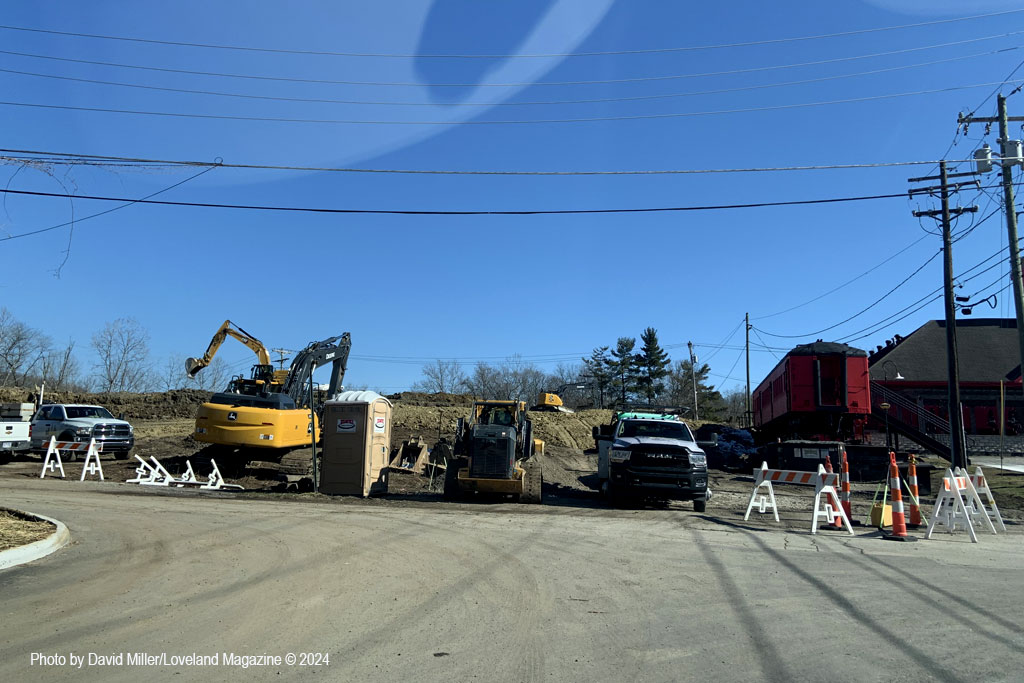
    The new surface lot in Historic Downtown is next to the historic R.R. car at the Works Pizza.

    Loveland, Ohio – The City of Loveland is moving forward to add more parking to its Historic Downtown business district. 

    The surface parking lot, located off First Street behind City Hall and adjacent to the Works Pizza, will have 147 spaces. These spaces will add to Historic Downtown’s current 535 public parking spaces. The parking will be free in this new lot.

    Image provided by City Hall

    In addition, the project includes sidewalks to create a pedestrian connection between State Route 48, Harrison Avenue at the Loveland Bike Trail.

    Previously awarded grant monies will be used to construct the lot. The city has secured $1.15 million in state and federal funding: a $900k grant from the Ohio Capital Budget and a $250k grant from the Appalachian Regional Commission.

    Originally, the plan was to build a 270-space parking garage, which now is estimated to have cost more than $7 million, according to a press release issued by the City

  • Corruption tax? Policy expert says that’s basically what Ohio utility consumers have been paying

    Corruption tax? Policy expert says that’s basically what Ohio utility consumers have been paying

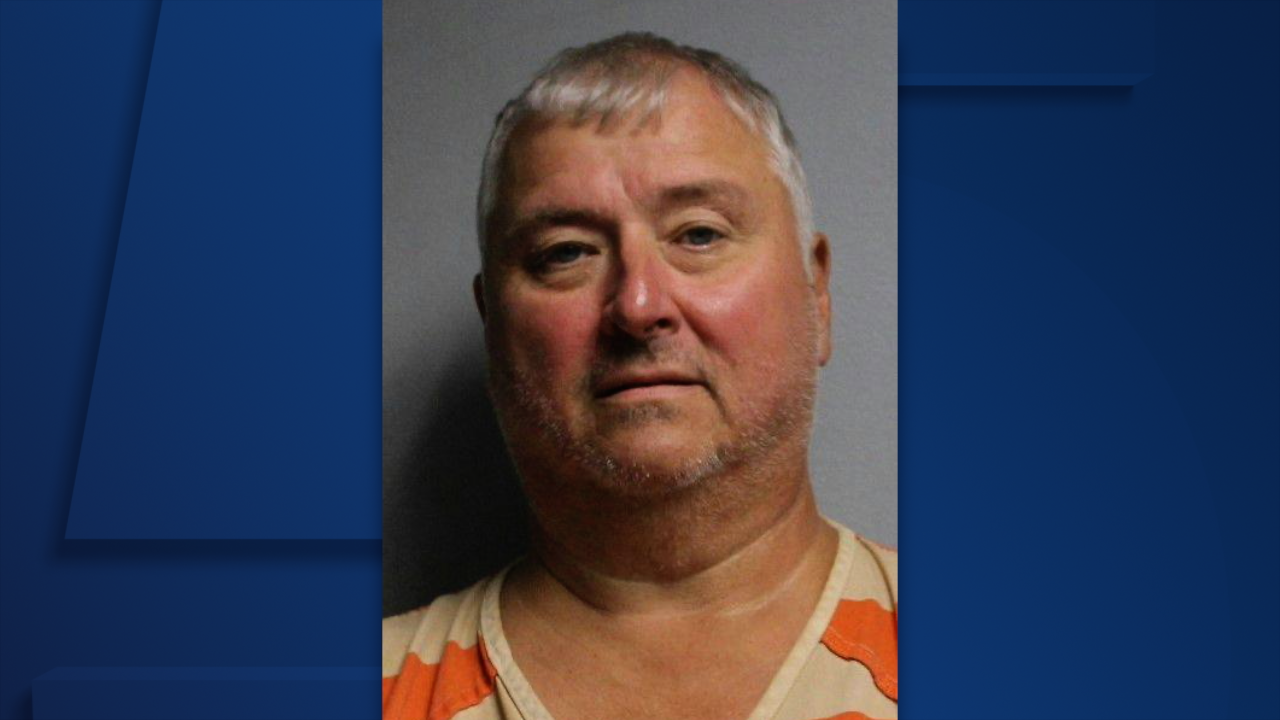
    Mugshot of former Ohio House Speaker Larry (Photo from the Butler County Jail.)

    BY:  Ohio Capital Journal

    Many politicians — especially conservatives — are loath to approve anything that could be construed as a tax increase.

    But since 2009, Ohio’s leadership has gone along with a number of questionable rate hikes demanded by regulated utilities. They’ve functioned in the same manner as tax increases — regressive ones with unsavory origins.

    There were new state charges earlier this month in Ohio’s massive FirstEnergy bribery scandal. They brought new attention to the issue, but that scandal is hardly the only time Ohio utilities have been able to impose questionable rate increases on their unsuspecting customers.

    In the scandal, Akron-based FirstEnergy paid more than $61 million in bribes in exchange for the 2019 passage and protection of a $1.3 billion ratepayer bailout. As a consequence, former House Speaker Larry Householder, R-Glenford, is serving a 20-year federal prison sentence.

    The state charges filed this month against two top FirstEnergy executives and the state’s top regulator pertain to those crimes. But they also describe more than a decade’s worth of additional shady increases in which payoffs played a central role.

    They accuse Sam Randazzo — whom Ohio Gov. Mike DeWine later appointed to be top regulator — of secretly helping FirstEnergy make huge, secret payments to powerful energy users. In exchange, the charges say, the industrial users dropped their opposition to rate increases FirstEnergy wanted to impose on all its customers.

    The payments might not have been illegal, but they functioned as kickbacks all the same.

    The Columbus Dispatch on Sunday reported that in 2008 then-Gov. Ted Strickland, a Democrat, tried to negotiate an end to the shady practice, but then-House Speaker Jon Husted killed the attempt, a former aide to Strickland told the paper. Husted is now DeWine’s lieutenant governor and is said to be planning a run in the 2026 Ohio Republican primary to be governor in his own right.

    Those increases are in addition to a whole slew of other rate hikes that Ohio’s erstwhile regulator has granted, but the state Supreme Court later ruled to be illegal. They total more than $1.5 billion worth altogether. Even though the gains have been ruled unlawful, utilities have gotten to keep them because the Public Utilities Commission of Ohio keeps granting such increases without building in a refund mechanism in the event they’re struck down.

    Jenifer French, DeWine’s appointment to replace the disgraced Randazzo, has repeated PUCO staff claims that such refund mechanisms are illegal. But the legal case seems dubious and watchdogs and lawmakers from both parties dispute it.

    So Ohio ratepayers have shelled out billions in illegal electric payments and untold millions more as the consequence of shady kickbacks to powerful companies. Those who allowed such payments are responsible for what is the functional equivalent of a tax increase, said Rob Moore, principal of Scioto Analysis, a Columbus firm that applies economics to questions of public policy.

    One reason they work the same as a tax is because one has little choice in 2024 about paying for electrical service, he said.

    “You can’t get away from it,” Moore said. “You’re going to have to pay something for electricity.” He later added, “That’s functionally no different from a tax.”

    And it’s one that falls extra-hard on the poor.

    Disconnected electricity and gas can destroy perishable food while also taking away the ability to cook it. For those who are struggling, finding money and getting to the store for one batch of food can already be a challenge. Having to do it again after arranging a reconnection can be even more difficult.

    Disconnection also can be used as a rationale for children’s services to break up a family, the Energy News Network reported in 2022.

    The news outlet reported that as part of a story about nearly 200,000 disconnections by Ohio electric utilities at the height of the coronavirus pandemic. Advocates asked the PUCO for relief, but the regulatory agency said it was powerless to act.

    Moore said that if you view utilities as the practical equivalent of a tax, it’s a regressive one.

    “In general, lower-income people pay more of their income on utilities than upper-income people,” he said.

    Moore cited a 2013 report by the U.S. Energy Information Agency saying that households in the bottom 20% of incomes made 6% of their total expenditures on home energy, while those in the top 20% paid half that.

    Energy-insecure households are likely to be poorer still. The agency last year reported that they paid 27% more in real terms than everybody else — $1.24 per square foot vs. 98 cents.

    As with the state and local tax burden, the extra costs Householder, the PUCO and others have imposed on Ohio seem to be falling most heavily on those least able to pay it.

    “Basically, he just levied a tax and lined his pockets with it,” Moore said of the former speaker.


    Marty Schladen
    MARTY SCHLADEN

    Marty Schladen has been a reporter for decades, working in Indiana, Texas and other places before returning to his native Ohio to work at The Columbus Dispatch in 2017. He’s won state and national journalism awards for investigations into utility regulation, public corruption, the environment, prescription drug spending and other matters.

    MORE FROM AUTHOR


  • Reds’ Matt McLain To Miss 5-7 Days Due to Oblique Injury

    Reds’ Matt McLain To Miss 5-7 Days Due to Oblique Injury

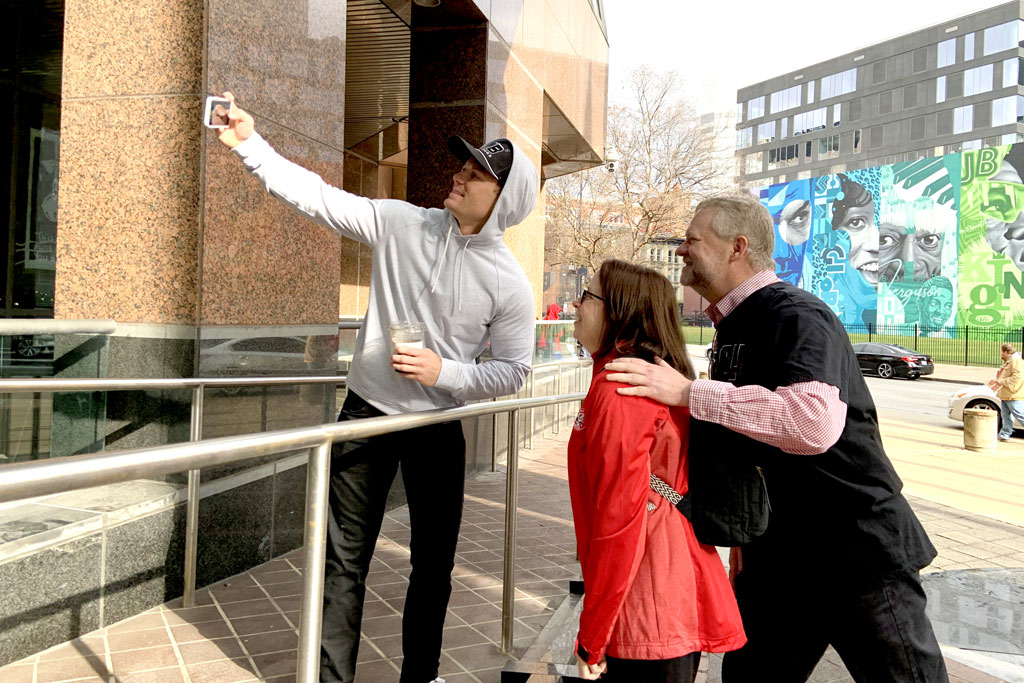
    Matt McLain taking a selfie with two fans before going into the Duke Energy Center for Redsfest in December. (Loveland Magazine File Photo © 2024)

    An Early Injury Is Another Reminder of Why The Reds’ Depth Is Critical

    by Chris Ball,

    On Tuesday we learned that their second baseman Matt McLain would miss 5-7 days with an oblique injury, the same ailment that saw him miss time last season. The good news is that McLain’s MRI did not show any significant damage and he isn’t expected to miss opening day.

    Still, another preseason injury is a reminder that this Reds team has done plenty to address its depth moving forward. That includes in the infield where Jonathan India’s return means that if someone like McLain goes down, there will be a quality player ready to shift into that spot and ensure the team doesn’t miss a beat in the interim. 

    There are legitimate questions in 2024 about which Reds players get the majority of the playing time and which ones are asked to accept a smaller or a platoon role, or even spend time back in the minor leagues, at least to start the season. Having so many talented guys is not a bad problem to have at the end of the day. However, that is for the most part best expressed if the team is fully healthy. 

    If there are any number of injuries, whether serious or just of the nagging variety, that depth may end up saving the season. That is the ultimate luxury of having players who may be playing out of position at times, but who can slip back into their more comfortable roles, should injuries call for it. 

    That sort of security should make Reds fans feel much better about the upcoming season, even when key guys like McLain get a little banged up.


    Christopher Ball is a longtime Loveland resident and an attorney. He graduated from Loveland High School in 2003 and was a member of the football team before going on to become a coach’s assistant at DePauw University in Greencastle, Indiana. He has been following and rooting for the Reds and Bengals since the early 1990s and has been through the many ups and downs that fandom has wrought over the years.

  • See if you dare: The exclusive screening of Anthony Cousins  new film “Frogman”

    See if you dare: The exclusive screening of Anthony Cousins new film “Frogman”

    Promoted Post

    Loveland, Ohio – Join us with co-writer and director Anthony Cousins and others from the new film Frogman (2023). The exclusive screenings are the first in the region and takes place right in Loveland where the events unfolded. This found footage movie follows a young man named Dallas (Nathan Tymoshuk) who takes a picture of Frogman while on vacation. He goes back to look further and finds more than he bargained for.

    Winner of several awards including best found footage, this is a must watch for fans of horror, cryptids and sci-fi.
    Review: I usually dislike found footage films, but wow – Frogman is good. – B&S About Movies
    The film is not rated but should be considered viewable for mature teens and adults. Run time is 80 minutes. The movie has an 8.2 rating out of 10 on IMDB.com. There will be copies available for sale and associated merch.
    Tickets are available in advance. If there are seats remaining, tickets will be available at the door for $20.

    BUY TICKETS

    Entry to movie does NOT provide access to the Frogman Festival which is a separate ticketed event held on Saturday, March 2 from 9:30 AM to 6 PM, also at the Oasis Conference Center.
  • [Video] Ribbon cutting at Body Alive Loveland Lagree Grand Opening

    [Video] Ribbon cutting at Body Alive Loveland Lagree Grand Opening

    David Miller is the Managing Editor of Loveland Magazine

    by David Miller,

    Loveland, Ohio – On Friday, February 16, Loveland Magazine attended the grand opening for Body Alive Loveland Lagree, located on Loveland Madeira Road, right next to Starbucks. Owners Adam Engel and Isaac Spence, both 2010 Loveland High School grads, showed us exactly what Body Alive Loveland Lagree has in store for the fitness community. The President of Loveland Magazine Cassie Mattia got the opportunity to take the first workout of the day with trainer Samantha Johns, where she experienced what exactly the Lagree Method is. We are so pleased to welcome Body Alive Loveland Lagree to the Loveland community.

    Stay tuned for the full-length interview with Adam, Isaac, and Samantha along with Cassie in action taking the first Lagree workout!
    Loveland Magazine President and Publisher Cassie working out in the first Body Alive Loveland Lagree class on February 16.
  • [Videos] Jada Klempt & Joey Fulton live at Bishop’s Quarter

    [Videos] Jada Klempt & Joey Fulton live at Bishop’s Quarter

    Loveland, Ohio – Jada Klempt and Joey Fulton entertained at Bishop’s Quarter in Historic Downtown Loveland on February 9, 2024.