The former Clermont County prosecutor is asking for a refund after a former state legislator asked him to investigate the Ohio governor for terrorism.
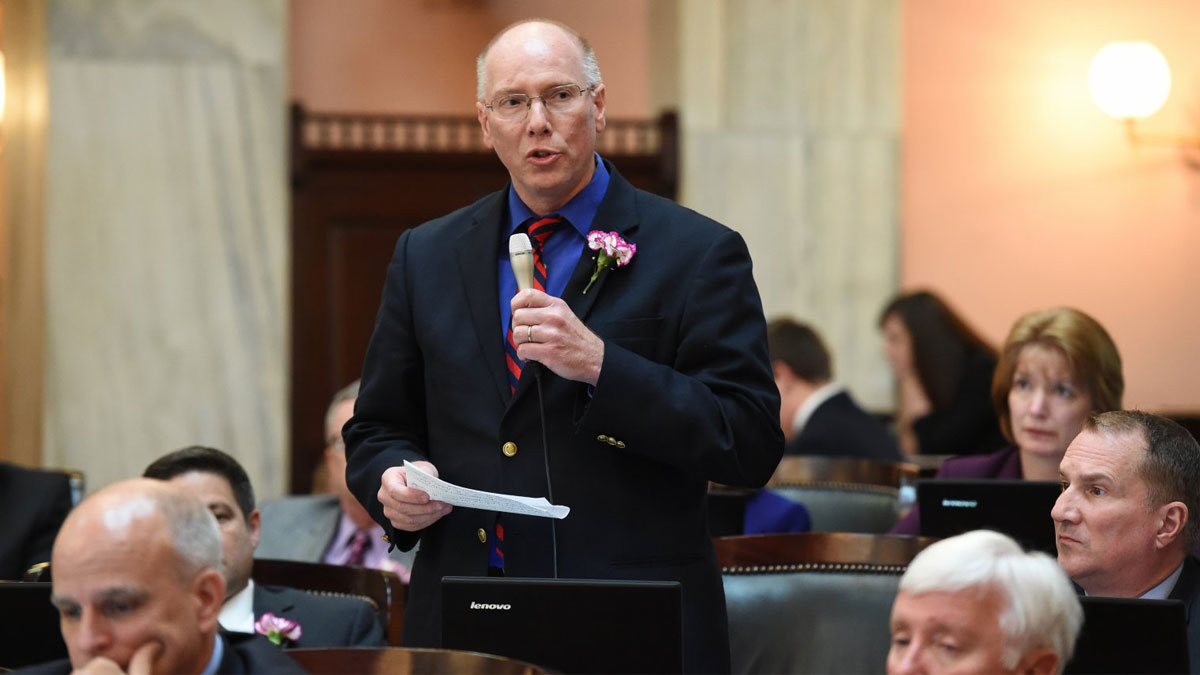
Ohio Attorney General Dave Yost told the 12th District Court of Appeals that he, too, thinks former state Rep. John Becker should pay “reasonable attorney fees” after filing an affidavit asking for seven felonies and three misdemeanors to be leveled against Gov. Mike DeWine.
Yost wrote in a brief to the court that an alternative to the approximately $4,000 reimbursement from Becker could be to “order Becker to spend a day observing criminal trials in open court, so that he can better understand the gravity of the matters for which prosecutorial and judicial resources must be preserved.”
Court documents say Becker, who left the legislature due to term limits, filed a “private citizen affidavit” last September, accusing DeWine of engaging in a pattern of corrupt activity, terrorism, inducing panic, making a terroristic threat, complicity and conspiracy. He also alleged that DeWine had committed bribery, coercion, interference with civil rights and “patient abuse or neglect.”
All of these charges were leveled against the governor “for his handling of the ongoing COVID-19 pandemic throughout the state of Ohio, but more specifically, within Clermont County,” according to court documents.
The case was referred to then-county prosecutor D. Vincent Faris because of the felony charges. After reviewing the affidavit that same day, Faris told the county clerk “I…do not find a basis for the filing of a complaint pursuant to this private citizen’s affidavit.”
Two days later, Becker’s attorney asked to see the records related to the investigation Faris had done, and after receiving all the documents the prosecutor’s office said they had, asked the court to compel Faris to “act in accordance with his clear legal duty.”
The “extremely short time frame” of Faris’ investigation and lack of investigatory records, Becker said, proved the prosecutor “did not conduct an ‘actual,’ ‘meaningful’ and ‘legitimate’ investigation into his allegations” against the governor.
Faris argued to the court that several of Becker’s allegations were “so vague” that they made further investigation “futile.”
The appeals court found that Faris had conducted an investigation, and that the time of an investigation isn’t set in Ohio Revised Code, adding that the time involved depends on the type of allegations made.
“(Ohio Revised Code) requires the prosecutor to conduct an ‘investigation,’ not an ‘investigation that takes longer than five hours and results in the production of voluminous investigatory records’ as Becker suggests,” the court wrote in their decision.
The court ruled that Faris is allowed to hold a hearing to impose “sanctions” on Becker, saying Becker’s conduct in the case “goes beyond a mere disagreement with the arguments presented by an opposing party.”
“Considering the record in this case, it is clear that the only ‘investigation’ that would satisfy Becker is one that would result in Prosecutor Faris issuing a warrant for Governor DeWine’s arrest and subsequent prosecution,” the court wrote. “But Prosecutor Faris is not required to bend the law in order to satisfy one man’s efforts to grandstand and garner media attention for himself to score political points with his (now former) constituents.”
A date for the hearing on sanctions against Becker was not specified in the court’s decisions.
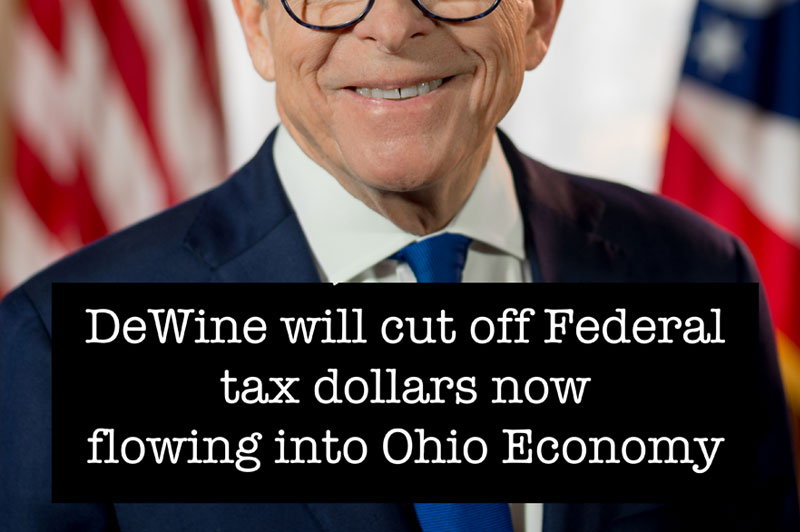
Citing fears that a $300-a-week federal unemployment supplement was keeping Ohioans from returning to the workforce, Gov. Mike DeWine on Thursday announced that he would end it.
However, the governor was unable to cite any data showing that businesses’ trouble finding workers was due to the supplement and not other dislocations caused by the coronavirus pandemic.
Ohio will join 13 other Republican-led states in cutting off the payments to hundreds of thousands of Americans even though the benefit is shouldered entirely by the federal government. DeWine said he will wait until June 26 to terminate the supplement so those who haven’t already been vaccinated can do so before re-entering the workforce.
The governor said he was undertaking the move because Ohio unemployment is near pre-pandemic levels and employers around the state are complaining that they can’t find needed workers. He said that problem is made worse because the extra $300 a week made some Ohioans calculate that it’s a better deal to just stay home.
“The federal assistance is in some cases certainly discouraging people from going back,” DeWine said.
That theme has been echoed by other Republican governors as they justify ending the benefit. DeWine’s move also was applauded by the National Federation of Independent Business, which has received hefty funding from the billionaire Koch family and in the past has fought laws requiring paid sick leave.
“Ohio’s economy is growing and growing faster than our neighboring states. We need a robust workforce to maintain our positive trajectory,” Roger Geiger, NFIB’s Ohio executive director, said in a statement. “The time for additional unemployment payments is over. We appreciate Ohio Gov. Mike DeWine for recognizing that now is the time to strongly encourage everyone to get back to work.”
But some independent experts have said the issue is more complex. They believe problems with child and adult care, ongoing disruptions in certain industries and other dislocations caused by the pandemic are keeping many on unemployment.
Republican governors are “misguided in their thinking about why people aren’t returning to work,” Rebecca Dixon, executive director of the National Employment Law Project, told the Washington Post last week. “There are all of these ways our care infrastructure is not back up.”
The argument that increased benefits are keeping people out of the workforce also doesn’t seem to be supported by the most recent employment numbers, Paul Krugman, a Nobel Prize-winning economist and self-described liberal, wrote Monday in the New York Times.
One would expect a $300-a-week supplement to most impact the behavior of low-wage workers. But Krugman pointed out that the April jobs report shows low-wage jobs like leisure and hospitality growing robustly while better-paid work in professional and business services actually fell.
Asked whether he had data showing that federal supplements are keeping large numbers of Ohioans on the unemployment rolls, DeWine said, “If you look at why jobs are not being filled, I’m sure it’s multiple reasons. But whenever you go in and the market is distorted in that sense, you have certain consequences when you do that and should do that when you have a crisis.
“And we’re coming out of the crisis economically… This couldn’t go on forever. The federal government was going to end this — unless they change their mind — they were going to end this in September. We’re moving it up a little bit. We think that’s the appropriate thing.”
Dayton Mayor Nan Whaley, who is seeking the Democratic nomination for governor, released a statement saying she emphatically does not believe that ending the federal benefit early is the appropriate thing.
“As we come out of this crisis, the problem facing Ohioans is the same one we had before coronavirus: wages are too low,” she said. “One good job should be enough, and for too many of our friends and neighbors, it isn’t. Mike DeWine is turning down money that could help Ohioans because he’s worried about politics. When I’m governor, I’ll be worried about paychecks.”
Loveland, Ohio – The emphasis of Loveland’s camps will be learning the fundamentals of each sport and having fun. We believe that in order to reach your full potential as a future Tiger you must have a solid foundation of fundamentals. Campers will be given a variety of individual methods of practicing that will enable all to practice at home on their own. We hope you first and foremost have an enjoyable experience. Go Tigers!
Please register all campers for the grade they will be entering for the 2021-2022 school year (Spring Camps will be for the 2020-2021 year).Please Pre-register for all camps!Walk-up registration is available if there is space available.Camps are rain or shine.
Loveland, Ohio – A photo essay by Loveland Magazine photographer Alex Eicher of the romantic Loveland High School Prom held aboard a B&B Riverboat on a picturesque Ohio River cruise on Saturday, May 8th.
Government officials are setting new expectations related to COVID-19 vaccines at institutions for people with disabilities and similar rules are under consideration for group homes as well.
Long-term care facilities like nursing homes and intermediate care facilities for individuals with intellectual disabilities must educate residents and staff about COVID-19 vaccines and offer shots to them under the interim final rule being published by the Centers for Medicare & Medicaid Services in the Federal Register this week.
In addition, the facilities are required to report the COVID-19 vaccination status of both residents and staff to the Centers for Disease Control and Prevention on a weekly basis.
In an effort to increase the number of Ohioans who currently have not taken a COVID-19 vaccine to get vaccinated, Governor DeWine announced a series of statewide drawings to help incentivize vaccinations.
Ohioans under the age of 18 who are eligible to receive a COVID-19 vaccine will be entered into a drawing for a four-year full scholarship to any of Ohio’s state colleges and universities, including full tuition, room, and board.
Ohioans aged 18 and older will be entered into a weekly drawing with a prize of up to $1 million.
A total of five weekly drawings for each prize will take place, with the first winners being announced on May 26th. Winners must have received at least one dose of a COVID-19 vaccine by the date of the respective drawing.
The drawings will be administered by the Ohio Department of Health, with technical assistance from the Ohio Lottery Commission, and will be funded through existing allocations to the Ohio Department of Health of unexpended coronavirus relief funds.
Further details and contest rules will be announced by the Ohio Department of Health and the Ohio Lottery Commission next week during a briefing to news media.
Since passing a bill in March to give themselves power to rescind public health orders, Republican lawmakers in Ohio have been counting the days until that power went into effect.
They may not need to use it.
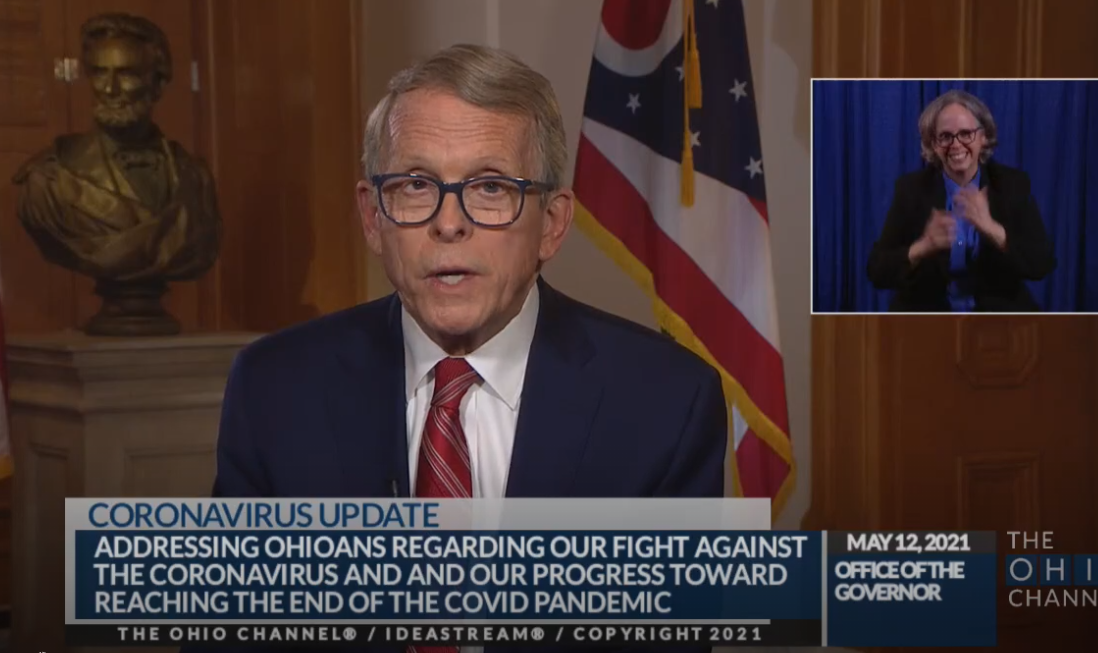
In a Wednesday evening address outlining Ohio’s next steps in handling the pandemic, Gov. Mike DeWine announced “it is time” to remove those health orders.
DeWine said all pandemic orders would be removed on June 2, except for those involving nursing homes and assisted living facilities.
Republican legislators, who have battled with the DeWine administration since the early months of the pandemic, effectively gave the governor little choice. He had until late June to remove the health orders — or else they would remove them.
DeWine had already committed to removing the orders once Ohio reached a low threshold of new cases: an average of 50 cases per 100,000 residents over the course of a two-week time frame. While the state has made progress toward that goal in recent weeks, it’s remained unclear when exactly the target figure would be hit.
Amid pressure from the legislature, DeWine said the positive impact of the COVID-19 vaccines meant Ohio could remove the health orders even without having reached the target.
“There comes a time when individual responsibility simply must take over,” he said.
Senate Bill 22 goes into effect on June 23. It will give lawmakers the ability to rescind health orders and the state of emergency declaration through passing a concurrent resolution.
Hours before DeWine was set to speak, state Rep. Scott Wiggam, R-Wooster, announced plans to introduce a resolution to remove all of Ohio’s existing COVID-19 health mandates.
“The issue of removing the health orders is a very important one for our caucus,” House Speaker Bob Cupp, R-Lima, told reporters on Wednesday before the governor’s speech.
“There’s a strong sentiment that the health orders need to be dissolved,” he added.
Cupp declined to answer questions as to whether he’s spoken with the governor recently about the health order situation.
Throughout the pandemic, Republicans have accused the executive branch of overstepping its legal bounds in enforcing various COVID-19 health restrictions. Members have bristled at the governor for not adequately considering the inputs of lawmakers. DeWine has defended his administration’s aggressive stance as being necessary to combat a pandemic that, to date, has led to more than 19,400 deaths across the state.
The Republican supermajorities within the Ohio General Assembly have repeatedly attempted to curb the authority of the state health department.
Only a few of those bills have made it to the governor’s desk, each time leading to a DeWine veto.
While the GOP caucuses could not muster a veto override in 2020, things looked more favorable for this term when the party gained several seats in last November’s elections.
The legislature moved quickly to pass SB 22. A day after the governor vetoed it, members met again on March 24 to override that veto. The bill was passed without an emergency clause, meaning it would take 90 days for it to go into effect. Senate President Matt Huffman, R-Lima, telegraphed plans that day to use the powers of SB 22 as early as possible.
Loveland, Ohio – Hamilton County Health is asking for your help to shape health practices for Hamilton County.
Maybe you’ll even win $100 to shop at Amazon! They say that you are a “valued community member” and have invited you to participate in the 2021 regional Community Health Needs Assessment (CHNA) Provider Survey.
Are you satisfied with the services they provide for Loveland and its residents?
The CHNA is completed every three years to better understand the overall health of our community. The data collected from this assessment is used to identify top health issues, and to support or expand existing community health initiatives to address them. The online survey asks basic questions about your health, what makes being healthy easy or hard, and how our community is supporting your health.
The online survey will be open until May 30 and is available in Arabic, English, French, Nepali, and Spanish.
All respondents will remain anonymous.
At the end of this survey, you will be able to enter a drawing for one of two $100 Amazon gift cards.
Paper surveys can be made available upon request. Contact Elizabeth Pafford at epafford@measurementresourcesco.comto request paper copies of the survey, or for help with any technical issues you experience with the online survey.
Columbus, Ohio – Ohio Governor Mike DeWine issued a statement Monday evening following the approval by the Food and Drug Administration’s to administer the Pfizer COVID-19 vaccine to those ages 12-15.
DeWine said, “I am encouraged that the FDA has already updated Pfizer’s Emergency Use Authorization to include youth ages 12-15. Following a recommendation, as soon as Wednesday, from the Advisory Committee on Immunization Practices (ACIP) and the CDC, Ohio will immediately expand vaccine eligibility to youth ages 12-15 and provide appropriate guidance for parents, guardians, and vaccine providers across the state. Vaccinations are our way back to a more normal life.”
Watch the virtual press conference with the FDA to discuss the authorization of the Pfizer-BioNTech COVID-19 vaccine for use in adolescents.
Below is the Press Release issued today by the FDA
Today, the U.S. Food and Drug Administration expanded the emergency use authorization (EUA) for the Pfizer-BioNTech COVID-19 Vaccine for the prevention of coronavirus disease 2019 (COVID-19) caused by severe acute respiratory syndrome coronavirus 2 (SARS-CoV-2) to include adolescents 12 through 15 years of age. The FDA amended the EUA originally issued on Dec. 11, 2020 for administration in individuals 16 years of age and older.
“The FDA’s expansion of the emergency use authorization for the Pfizer-BioNTech COVID-19 Vaccine to include adolescents 12 through 15 years of age is a significant step in the fight against the COVID-19 pandemic,” said Acting FDA Commissioner Janet Woodcock, M.D. “Today’s action allows for a younger population to be protected from COVID-19, bringing us closer to returning to a sense of normalcy and to ending the pandemic. Parents and guardians can rest assured that the agency undertook a rigorous and thorough review of all available data, as we have with all of our COVID-19 vaccine emergency use authorizations.”
From March 1, 2020 through April 30, 2021, approximately 1.5 million COVID-19 cases in individuals 11 to 17 years of age have been reported to the Centers for Disease Control and Prevention (CDC). Children and adolescents generally have a milder COVID-19 disease course as compared to adults. The Pfizer-BioNTech COVID-19 Vaccine is administered as a series of two doses, three weeks apart, the same dosage and dosing regimen for 16 years of age and older.
The FDA has determined that Pfizer-BioNTech COVID-19 Vaccine has met the statutory criteria to amend the EUA, and that the known and potential benefits of this vaccine in individuals 12 years of age and older outweigh the known and potential risks, supporting the vaccine’s use in this population.
“Having a vaccine authorized for a younger population is a critical step in continuing to lessen the immense public health burden caused by the COVID-19 pandemic,” said Peter Marks, M.D., Ph.D., director of the FDA’s Center for Biologics Evaluation and Research. “With science guiding our evaluation and decision-making process, the FDA can assure the public and medical community that the available data meet our rigorous standards to support the emergency use of this vaccine in the adolescent population 12 years of age and older.”
The EUA amendment for the Pfizer-BioNTech COVID-19 Vaccine was issued to Pfizer Inc. The issuance of an EUA is not an FDA approval (licensure) of a vaccine. The EUA will be effective until the declaration that circumstances exist justifying the authorization of the emergency use of drugs and biologics for prevention and treatment of COVID-19 is terminated, and may be revised or revoked if it is determined the EUA no longer meets the statutory criteria for issuance or to protect public health or safety.
FDA Evaluation of Available Safety Data
The available safety data to support the EUA in adolescents down to 12 years of age, include 2,260 participants ages 12 through 15 years old enrolled in an ongoing randomized, placebo-controlled clinical trial in the United States. Of these, 1,131 adolescent participants received the vaccine and 1,129 received a saline placebo. More than half of the participants were followed for safety for at least two months following the second dose.
The most commonly reported side effects in the adolescent clinical trial participants, which typically lasted 1-3 days, were pain at the injection site, tiredness, headache, chills, muscle pain, fever and joint pain. With the exception of pain at the injection site, more adolescents reported these side effects after the second dose than after the first dose, so it is important for vaccination providers and recipients to expect that there may be some side effects after either dose, but even more so after the second dose. The side effects in adolescents were consistent with those reported in clinical trial participants 16 years of age and older. It is important to note that as a general matter, while some individuals experience side effects following any vaccination, not every individual’s experience will be the same and some people may not experience side effects.
The Pfizer-BioNTech COVID-19 Vaccine should not be given to anyone with a known history of a severe allergic reaction, including anaphylaxis—to any component of the vaccine. Since its authorization for emergency use, rare severe allergic reactions, including anaphylaxis, have been reported following administration of the Pfizer-BioNTech COVID-19 Vaccine in some recipients.
FDA Evaluation of Available Effectiveness Data
The effectiveness data to support the EUA in adolescents down to 12 years of age is based on immunogenicity and an analysis of COVID-19 cases. The immune response to the vaccine in 190 participants, 12 through 15 years of age, was compared to the immune response of 170 participants, 16 through 25 years of age. In this analysis, the immune response of adolescents was non-inferior to (at least as good as) the immune response of the older participants. An analysis of cases of COVID-19 occurring among participants, 12 through 15 years of age, seven days after the second dose was also conducted. In this analysis, among participants without evidence of prior infection with SARS-CoV-2, no cases of COVID-19 occurred among 1,005 vaccine recipients and 16 cases of COVID-19 occurred among 978 placebo recipients; the vaccine was 100% effective in preventing COVID-19. At this time, there are limited data to address whether the vaccine can prevent transmission of the virus from person to person. In addition, at this time, data are not available to determine how long the vaccine will provide protection.
Ongoing Safety Monitoring
As part of the original EUA request, Pfizer Inc. submitted a plan to continue monitoring the safety of the vaccine as it is used under EUA. This plan has been updated to include the newly authorized adolescent population, and includes longer-term safety follow-up for participants enrolled in ongoing clinical trials, as well as other activities aimed at monitoring the safety of the Pfizer-BioNTech COVID-19 vaccine and ensuring that any safety concerns are identified and evaluated in a timely manner.
It is mandatory for Pfizer Inc. and vaccination providers to report the following to the Vaccine Adverse Event Reporting System for Pfizer-BioNTech COVID-19 Vaccine: all vaccine administration errors, serious adverse events, cases of Multisystem Inflammatory Syndrome and cases of COVID-19 that result in hospitalization or death.
In 1991, Sheridan High School freshman Nathan DeRolph thought Ohio’s education funding formula would change before he entered college.
He and his parents had filed a lawsuit against the state that would eventually make it to the Ohio Supreme Court, fighting against the overreliance on property taxes built into public school funding.
“I kind of naively, I think, thought by the time I’m a senior in high school, this will all be wrapped up and hopefully there will be a new funding plan in place, and generations after me won’t have to deal with the same challenges,” DeRolph said.
Three decades later, he just watched his daughter graduate from high school, under the same funding system his family fought against, through multiple supreme court decisions.
The Ohio legislature still has not overhauled the system, as ordered by the state’s high court decisions.
“Over 30 years, that’s 3 million kids that have been through a broken system, and we can’t afford to have another 30 years of the same broken system,” DeRolph said.
He and his father, Dale, told a virtual forum hosted by the League of Women Voter’s and the Children’s Defense Fund Ohio that they see hope in the new push to include a funding formula overhaul in the latest biennial budget.
The overhaul being considered for the new budget was already set up after years of work by now-Speaker Bob Cupp and former state Rep. John Patterson.
The overhaul, which started this year as a separate piece of legislation carried over from the last General Assembly, would lessen the weight of property taxes on the funding formula, basing 40% of the formula’s funding on the income levels of the district.
In the previous budget, the present school formula only took on a small part of district funding, as 82% of Ohio’s districts weren’t a part of the formula found to be unconstitutional.
“What that means is districts were either not getting enough money that the formula says they should have gotten, or they’re getting more money than the formula says they should receive,” said Tom Hosler, superintendent of Perrysburg Schools, and a member of a workgroup that has spent years searching for a solution to the education system.
Hosler said the $6,020 per student that is the current base cost — the most basic amount it takes to educate a child — is a result of “patchworking” and “fixing things on the fly” rather than a comprehensive dissection of Ohio districts.
“Why $6,020? We don’t know,” Hosler said. “We don’t know how it got there and we…have no idea how those dollars are to be spent or allocated, or how they came to us. It’s just the number.”
The need for a new funding model also comes from continually increasing education costs, and the inability for the current education model in the state to keep up, according to Steve Dyer, director of government relations for the Ohio Education Association.
That includes the ratio of local to state share of education within the funding model.
“2020 was the highest local share of education costs we’ve had since 1985,” Dyer said during the forum.
Comparing the amount of non-human services budget being allocated for primary and secondary education, data cited by Dyer showed the state is committing 6% less than was distributed in 1975.
When it comes to privatization of education, or the inclusion of private schools and charter schools in the public school funding via the EdChoice voucher program, Dyer said districts get about $1.6 billion less than they did before the voucher programs were paid for through district budgets.
That $1.6 billion matches up with the increase in property taxes the state has seen since 2003, when the Ohio Supreme Court issued its final ruling on the DeRolph.
“It’s not rocket science,” Dyer said. “If the state isn’t picking it up, local taxpayers are, or our kids are suffering with fewer resources or fewer opportunities.”
The state budget is currently being considered by the Ohio Senate, and a final version is due by July.