Loveland, Ohio – Did you know that up to 40 percent of food grown and imported into the United States is wasted? Solid Waste Management Districts across Southwest Ohio are working with foodservice businesses and institutions to implement wasted food management practices that save money, benefit society, build customer loyalty, and improve the environment.
At a virtual workshop, the Center for EcoTechnology (CET) will provide an introduction to implementing wasted food prevention, donation, and diversion programs in institutional kitchens. Participants will participate in two breakout sessions and will have a chance to meet with local service provider experts.
It cost the state of Ohio more than $1 million to send hundreds of troops to the Ohio Statehouse last month to protect against acts of political violence.
All told, taxpayers spent millions of dollars to pay for enhanced security in Columbus and Washington, D.C. following the Jan. 6 events at the U.S. Capitol.
After the deadly insurrection at the nation’s capital, DeWine mobilized around 1,000 troops to D.C. to help with security for President Joe Biden’s inauguration. DeWine also authorized 480 troops to be stationed at the Ohio Statehouse during planned protests on inauguration week.
Military vehicles were placed around the Ohio Statehouse in mid-January. Photo by Jake Zuckerman.
The Ohio State Highway Patrol, normally in charge of protecting the Statehouse grounds, also ramped up security last month.
The cost of stationing troops in Columbus, as approved by the Ohio Controlling Board on Monday, was $1,035,000. Most of this amount ($695,000) went to payroll, with the remainder spent on food, travel costs and other supplies.
The deployment of Ohio troops in D.C. cost more than $2.1 million, but this is paid for by the federal government, according to Stephanie Beougher, the public information officer for the Ohio National Guard.
Public officials had worried about the potential for violence as online extremists turned their attention from the U.S. Capitol to the 50 state capitals. The Ohio Statehouse and other government buildings in downtown Columbus were closed for four days.
Protesters caused more than $150,000 in damage at the Statehouse last May and more than $1 million in damage to nearby businesses and offices. In response, the governor deployed Ohio National Guard troops to Columbus and Cleveland at an eventual cost of $3.2 million.
A Republican state senator recently proposed a bill to install security cameras at the Statehouse and increase the penalties for arson and vandalism.
Columbus, Ohio – The U.S. Department of Housing and Urban Development today awarded more than $2.7 billion in funding to nearly 2,900 public housing authorities (PHAs) in all 50 states, as well as the District of Columbia, Guam, Puerto Rico, and the U.S. Virgin Islands to make capital investments in their public housing units. This includes $104 million to 49 PHAs throughout the state of Ohio. View all grants announced today.
The grants announced today are provided through HUD’s Capital Fund Program, which offers annual funding to all public housing authorities to build, renovate, and/or modernize the public housing in their communities. Housing authorities can use the funding to complete large-scale improvements such as replacing roofs or making energy-efficient upgrades to the heating system and installing water conservation measures.
See the funding for Ohio public housing authorities below.
The biggest-ever bipartisan coalition on Thursday announced a renewed effort to repeal the death penalty in Ohio.
State Sen. Nickie Antonio, D-Lakewood, and Sen. Steve Huffman, R-Tipp City, hosted a virtual press conference to announce that they and three other Republican and four Democratic senators so far have said they will co-sponsor the repeal legislation. The measure also has bipartisan support in the House.
Antonio has long advocated to end Ohio’s troubled death penalty. But Huffman, a physician, is new to the cause. He explained that he still believed in stiff penalties for “the worst of the worst,” but replacing death sentences with life in prison without the possibility of parole would fulfill that goal.
“Like so many in Ohio, I once supported capital punishment,” he said. “But through prayer and reflection I’ve come to believe that it is the wrong policy for the state of Ohio. I’ve been heading in this direction for decades. Life is precious.”
Public opinion has been shifting as well. In 2014, 68% of Ohioans supported the death penalty, but a poll conducted late last year indicated that the number had almost flipped. Now, 60% of Ohioans support a repeal.
Traditionally a state with a relatively large number of executions, there haven’t been any in Ohio since July 2018. Since he took office in early 2019, Gov. Mike DeWine has stayed all scheduled deaths, first because a federal judge likened the state’s execution method to torture, and then because the makers of the intravenous drugs have refused to supply them.
Antonio said the practical difficulties, and changing public opinion, make this an opportune time to repeal the death penalty.
“I think that there’s a shift in the country that we’re also seeing reflected in the state,” she said. “We also have a governor who has put a moratorium on executions right now. There’s more difficulty to — I think it’s an oxymoron — ‘humanely’ execute someone… so there’s all these things.”
In addition to Antonio and Huffman, Sens. Niraj Antani, R-Miamisburg, and Sandra Williams, D-Cleveland, joined the press conference. Also joining were Reps. Jean Schmidt, R-Loveland, Bride Rose Sweeney, D-Cleveland, Adam Miller, D-Columbus and Kristina Roegner, R-Hudson.
In the face of the growing momentum, DeWine, a Republican, was asked later in the day if he’d sign a repeal bill in the event that one made it to his desk. He didn’t commit himself, but he seemed open to it.
“My thinking on the death penalty has certainly evolved,” DeWine said. “But it is the law and as long as the law stays on the books it is something I would expect the General Assembly at some point to take up and I’ll certainly weigh in as they move a bill forward.”
Antani described how he was a Republican outlier when he signed onto the anti-death penalty cause six years ago, but he was confident more GOP colleagues would join up as they came to see that it was consistent with conservative principles. He said he predicted, “Our party will see that this is a pro-life issue. Our party will see this as (an anti-) big-government issue.”
Addressing the latter issue, Antani and many others cited the growing number of people who have been sent to death row only to be exonerated.
Also on Thursday, the Death Penalty Information Center added 11 people to its list of people who have been exonerated after being sent to death row.
“The data now show that for every eight people who have been put to death in the U.S. since executions resumed in the 1970s, one person who had been wrongfully convicted and sentenced to death has been exonerated,” the group said in a statement.
Hannah Kubbins, executive director of Ohioans to Stop Executions, said that in the Buckeye State, the ratio is one exoneration for every five executions.
Williams noted that in addition to wrongful convictions, the death penalty is disproportionately applied to people of color. Ohio has prohibited using the penalty against people with mental disabilities, but that’s not enough, she said.
“Instead of piecemealing the state’s policy on the death penalty, we should really end it all,” she said.
Schmidt said meeting people who were wrongfully sent to death row is what reshaped her thinking.
“This has been a long journey for me,” she said. “Twenty years ago I served in this very Statehouse as a state legislator and I fought to keep the death penalty, but I evolved.”
That thinking could be widespread. Antonio said that as she talks about repeal with colleagues of both parties, she’s “gotten very little pushback” and expects to sign up many more sponsors.
Huffman said it might take time for some of his colleagues, but he expects they’ll get there.
“I think there’s a lot of people that are continuing to think about it and, especially in the Senate, they know that it’s out there and they know that public opinion is to get rid of it,” he said. “I think that they’re continuing to form their thoughts, but I believe that the majority are leaning toward getting rid of the death penalty.”
More than 500,000 Americans have died from COVID-19, but that’s not scaring Catherine Stein.
As the pandemic’s death toll rises and the scientific consensus has crystalized regarding how COVID-19 spreads and how to prevent it, Stein, who teaches infectious disease epidemiology at Case Western Reserve University, remains defiant.
COVID-19, she wrote in January 2021, is “not the scary killer the media and government portray it to be.”
The Centers for Disease Control and Prevention, the World Health Organization, the American Medical Association, state health departments, and the rest have it all wrong, according to Stein.
On blogs, research posts published by anti-vaccine political groups, and in testimony to state lawmakers, Stein insists that COVID-19 simply isn’t that bad.
She claims that the Ohio Department of Health pads its case counts; the Ohio Hospital Association inflates hospitalization numbers it provides to ODH; health officials fear monger via flawed projection models; the death count only looks bad because of the rate of people dying of COVID-19 who have preexisting medical conditions; and other assertions downplaying COVID-19.
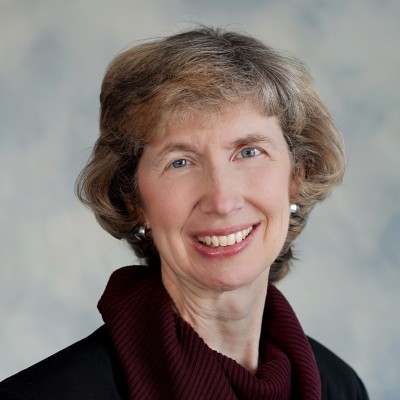
Catherine Stein. Source: Case Western Reserve University
ODH’s COVID-19 dashboard — which provides daily updates on cases, hospitalizations, infections, vaccinations, testing and more — has been “inaccurate, inconsistent, and confusing,” Stein alleged to lawmakers in June.
Stein’s take on COVID-19, among the leading killer of Ohioans since its emergence, is unmistakably at odds with the greater public health community, nearly all of whom oppose various legislative attacks on the health department that Stein lends her expertise to support.
Case Western Reserve University, where Stein has worked since 2004, emphasized she does not speak on behalf of the university. A spokesman declined to provide any professor from the school of medicine or public health to back Stein’s remarks up.
She is currently conducting research funded by the National Institute of Allergy and Infectious Diseases, the National Institute of Health, and the Gates Foundation, according to the university.
She teaches introduction to epidemiology, infectious disease epidemiology, and other courses.
Her role as a COVID-19 skeptic raises key questions: Where does academic freedom end and counter-factualism begin? Who is an expert and who isn’t?
What do you do with health misinformation during a pandemic in a society that cherishes and protects the freedom of speech?
When lawmakers advanced legislation last year to give themselves the ability to strike down health orders, the Ohio State Medical Association, the Ohio Hospital Association, the state chapter of the American Academy of Pediatrics, an association representing Ohio’s health commissioners, and more all testified in opposition to the idea.
They argued it would politicize public health and allow lawmakers — many of whom refuse to wear masks and regularly downplay the severity of the pandemic — to strike down key public health tools like mask mandates or bar and restaurant capacity limits.
Conversely, Stein emailed several lawmakers to submit testimony in support of the bill. She argued that masks don’t work; the “emphasis on case counts is inappropriate;” and that “this continued focus on fear and likely inflated numbers is doing nothing but hurting families;” and cites research from Health Freedom Ohio, an anti-vaccine group that has refocused its advocacy on COVID-19 issues.
“I refuse to live in fear of a virus with a >99% survival rate,” she wrote in an email to lawmakers, obtained via public records request.
“This fear narrative must stop.”
Email from Catherine Stein to lawmakers, obtained via public records request.
The emails are from a personal account, though they list her as an associate professor at Case Western.
Stein broke from the medical experts and testified in support of different versions of legislation written to allow lawmakers to vote down public health orders. She spoke in support of the bills alongside affiliates of HFO and the Ohio Advocates for Medical Freedom, another anti-vaccine group that has similarly refocused on COVID-19.
In a January 2021 blog post published by All In Ohio, an online hotbed of anti-mask and anti-public health activism and organizing, Stein invoked a piece of misinformation that public health officials have combatted since the coronavirus was first detected — that it’s just the flu.
“People get sick, but these statistics very much resemble influenza,” Stein said. “There have been years with even higher influenza hospitalization rates, even exceeding hospital capacity, but those didn’t get media attention or invoke shutdowns of businesses and church closures.”
The comparison between COVID-19 and the flu is baseless. The CDC estimates that between 12,000 and 61,000 Americans die of the flu in a given year. The U.S. is nearing 500,000 COVID-19 deaths since the pandemic began.
Similarly, no statewide public health order closed churches in Ohio, though many churches chose to do so internally.
About 954,000 Ohioans have been diagnosed with COVID-19. Nearly 50,000 have been hospitalized with the disease. Nearly 17,000 have died.
COVID-19 data comes from public and private labs, hospitals, health departments, urgent care centers and governments across the globe. More than 110 million people worldwide have contracted COVID-19, 2.44 million of whom have died, according to data from Johns Hopkins University.
Historically, epidemiological data on pandemics are usually underestimated, not overestimated. Thus, the CDC tracks “excess deaths” — the rate of mortality above an estimated normal rate of death in a population — to gauge pandemics’ death tolls. Undiagnosed cases, provider issues, data submission issues and more can all warp official counts of cases and deaths.
Stein’s outlook on COVID-19 is on the fringe of the public health community, according to Angy El-Khatib, president of the Ohio Society for Public Health Education.
“You can debate methods of dealing with the issue at hand, but to deny there is an issue at hand is just negligence to me,” she said.
Beyond fighting a wily new virus and its emerging mutations, El-Khatib said, health care workers now also must combat a deluge of COVID-19 misinformation as it proliferates online. She said it’s sad to hear a public health professional is worsening things.
“There’s no denying that the misinformation is out there, and it’s affecting and delaying our response to the pandemic,” she said.
Dr. Cathy Slemp, a former state health officer and bureau of infectious disease director in West Virginia, reviewed Stein’s testimony and writings. She said they seem to reflect her political opinions.
Dr. Cathy Slemp (LinkedIn photo)
“I’d be concerned about both many of the data interpretations made and the website materials cited,” she said. “Few have been nor would they stand up to scientific peer review.”
The university distanced itself from Stein’s comments.
“The views Associate Professor Stein expressed regarding Senate Bill 311 neither reflect nor align with those of Case Western Reserve,” said William Lubinger, a Case spokesman, in a written statement.
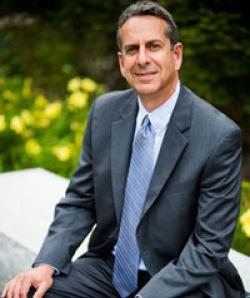
William Lubinger, a Western Reserve University spokesman (University photo)
He said all university faculty are free to express their personal perspective as individuals.
However, the university requires students on campus to wear masks, while Stein peddles bunk claims that masks could “adversely affect the health of the mask wearer.”
Stein did not respond to multiple interview requests.
When she reached out in May 2020 to Sen. Kristina Roegner, who sponsored Senate Bill 311, Stein was a familiar name. She testified in support of the “heartbeat bill” Roegner sponsored in 2019, which bans abortions six weeks after gestation.
“I’m not sure you realized this, but my actual career is as an infectious disease epidemiologist,” she wrote.
“I believe the response to COVID-19 has been absolutely wrong at the state level and I will happily testify in favor of your bill.”
Loveland, Ohio – Here’s a great opportunity for public service for individuals with interests in weather and communication: Take a 2-hour virtual class led by a National Weather Service meteorologist to become a Skywarn Weather Spotter.
Skywarn spotters volunteer to become the “eyes and ears” of the National Weather Service. Spotters serve their community by acting as a valuable source of information when dangerous storms approach.
Classes are free, open to the public, and require registration via the links provided in each course description below. Each class covers techniques and safety for severe weather spotting. Once you attend a class, you will receive instructions for filling out online registration forms to officially become a trained spotter and can report severe weather to your NWS office.
During the webinar, a National Weather Service meteorologist will teach you how to properly identify and report significant weather events that have an impact on the safety of your community, such as damaging winds, hail, heavy rain, and tornadoes. At this time, there are no in-person spotter training courses scheduled for the 2021 spring season.
The National Weather Service encourages anyone with an interest in public service and access to communication, such as amateur radio, to participate as a Skywarn storm spotter. Volunteers include police and fire personnel, dispatchers, EMS workers, public utility workers, and other concerned private citizens. Individuals affiliated with hospitals, schools, churches, nursing homes, or who have a responsibility for protecting others are also encouraged to become a spotter.
Help is available 24/7 through the Clermont County Crisis Hotline at 528-SAVE (7283). The Hotline is staffed by trained and licensed mental health providers who can assist with connection to needed services. There is also a crisis text line that can be accessed 24/7. Text the keyword “4hope” to 741 741.
Ongoing stress due to the pandemic has contributed to increased calls to the Clermont County 528-SAVE Crisis Hotline over the past several months. The Clermont County Crisis Hotline has seen a 21-percent increase in the number of calls in the fiscal year that ended June 30, 2020, as compared to the previous 12 months. The hotline has also seen an increase in the number of suicidal/crisis calls.
“The long-term impact of the COVID-19 pandemic is starting to take its toll,” said Lee Ann Watson, associate director, Clermont County Mental Health & Recovery Board. “This has been a challenging time for nearly everyone, especially those with possible underlying behavioral health concerns.”
Clermont County has the second-highest suicide rate in Southwest Ohio and is 13th in the state per 100,000 for suicide deaths. Fortunately, there has not been an increase in suicide deaths in 2020. People appear to be reaching out for help more than in previous years. But there is still a reason for concern. While the suicide deaths have decreased in 2020, one death by suicide is too many.
Watson asks people to recognize warning signs and know how to reach out for help. It is important to know the warning signs and the resources to seek help because likely people who are depressed and at risk for suicide are not often motivated to seek help. Losses such as the end of a relationship, death of a loved one, or loss of employment, all of which are situations that can be occurring during COVID-19, can increase the risk for depression.
Common Warning Signs of Acute Suicide Risk
The following are not always communicated directly or outwardly:
Threatening to hurt or kill him or herself, or talking of wanting to hurt or kill him/herself; and or,
Looking for ways to kill him/herself by seeking access to firearms, available pills, or other means; and/or,
Talking or writing about death, dying or suicide, when these actions are out of the ordinary.
Additional Warning Signs:
Increased substance (alcohol or drug) use
No reason for living; no sense of purpose in life
Anxiety, agitation, unable to sleep or sleeping all of the time
Feeling trapped – like there’s no way out
Hopelessness
Withdrawal from friends, family, and society
Rage, uncontrolled anger, seeking revenge
Acting reckless or engaging in risky activities, seemingly without thinking
Dramatic mood changes
Giving away prized possessions or seeking long-term care for pets
(Source: American Association of Suicidology)
Help is available 24/7 through the Clermont County Crisis Hotline at 528-SAVE (7283). The Hotline is staffed by trained and licensed mental health providers who can assist with connection to needed services. There is also a crisis text line that can be accessed 24/7. Text the keyword “4hope” to 741 741.
High-risk groups: Men, those 65 and older Middle-aged men and individuals over the age of 65 comprise high-risk groups in Clermont County, similar to national trends. Men have always had a higher rate of suicide death than females, but the number of males dying from suicide has significantly increased. During 2019, 37-percent of the suicide deaths were men between the ages of 40-59. This is a 100-percent increase in the number of deaths in 2019 of this age group compared to 2018. In 2020, 88 percent of the suicide deaths were men. Of those, 23 percent were aged 40-49, and 26 percent were aged 60-69.
While it is often difficult for men to reach out for help, it is important for men to remember that now more than ever “it is ok not to be ok” and that feeling overwhelmed is not a sign of weakness. Seeking help is a sign of strength. Mental health professionals are available to assist with the specific needs and concerns of men. Further, a 2019 study published in the Journal of Mental Health found that receiving support from a trusted and respected friend can be an effective suicide prevention strategy for men. Forming connections with other people who are going through the same thing can also be helpful.
The Clermont County Suicide Prevention Coalition is working to decrease suicide in our County through increasing knowledge of warning signs, and availability of treatment. If you are interested in joining the Coalition, please contact Lee Ann Watson at (513) 732-5400.
Number of overdose deaths decline; meth use increases
With regard to unintentional fatal overdose deaths, Clermont County has seen a decrease in deaths over the past three years.
The decrease in deaths can be partially attributed to the widespread distribution of Naloxone to county residents. While the overdose deaths have decreased, nonfatal overdoses are still occurring in Clermont County, albeit less than in previous years.
Regarding non-fatal overdoses, the County was ranked 16th in the state in 2019 for the number of Naloxone administrations (387 doses; Ohio EMS, 2019). This ranking is based on the number of administrations, not by population. For the first three quarters in 2020, Clermont is ranked 17th in the state for the number of Naloxone administrations (315; Ohio EMS, 2020). The number of administrations is underreported since not all the EMS departments in Clermont County report the use of Naloxone, and the figures do not include the Naloxone utilized by law enforcement.
Clermont County saw a surge in nonfatal overdoses in the summer months of 2020, but the overdoses have now decreased to lower than in the previous year. There continue to be “hot spots” in Clermont County where overdoses are occurring: Union Township; New Richmond and Felicity.
The use of stimulants, particularly methamphetamine, has substantially increased in Clermont County. The degree of complexity related to stimulant misuse has impacted the county. A large portion of the homicides in 2019 was related to stimulant misuse. Individuals on meth can have extreme paranoia and often aggressive behavior, and difficult to engage in treatment.
The CCMHRB’s substance use disorder treatment provider has seen an increase in treatment admissions for stimulant misuse in the last year (14 percent), and the local hospital also reports an increase in the rate of admissions to the Emergency Department (ED) and the behavioral health unit due to meth misuse.
Individuals who are brought into the ED under the influence of meth most often have to be admitted to the behavioral health unit. Those stays are often long since it is taking several days for the individual to clear.
Clermont County Children’s Protective Services has also reported a substantial increase in the number of children in custody due to stimulant use disorders. In 2019, more than 30 percent of the cases were related to methamphetamine. The number of cases has increased in 2020 as reported by CPS.
Stimulant misuse differs greatly from opioid misuse. Due to the nature of the drug, individuals actively using stimulants are often not able to engage in discussions related to treatment, and therefore outreach to attempt to engage them in treatment is not successful as it has been for individuals using opioids. Further, many individuals with a stimulant use disorder do not believe they have an addiction, and therefore do not voluntarily enroll in treatment. The CCMHRB’s contract substance use disorder treatment provider reports that in 2019, 21 percent of clients identified stimulants as their primary drug of choice, while 34 percent identified opioids as their primary drug of choice.
Clermont County, Ohio – On Tuesday, March 9 OhioMeansJobs of Clermont County will present its first Virtual Job Fair. This event is hosted by the BCW|Workforce, operated by the Workforce Investment Board of Butler, Clermont, and Warren Counties, along with OhioMeansJobs (OMJ) and REDI Cincinnati, (a JobsOhio Network Partner).
This virtual career fair will be offered at no cost to employers and job seekers and will focus on the manufacturing, healthcare, and logistics & distribution sectors. Participating employers and job seekers will be offered an immersive virtual career fair experience — all from the comfort of a computer or mobile device.
Right Click to save the Coupon
There will be hundreds of jobs available in Clermont County from companies like Huhtamaki, HealthSource of Ohio, Cintas, Amazon, Home Instead Senior Care, Milacron, and more.
For more information, including an updated list of employers, contact Eric Plummer at OhioMeansJobs at eric.plummer@jfs.ohio.gov.
The next Virtual Job Fair currently is scheduled for May 4, 2021.