Author: Loveland Magazine

  • A year into pandemic, DeWine says Ohio on the right path to lift restrictions but can’t ease up yet

    A year into pandemic, DeWine says Ohio on the right path to lift restrictions but can’t ease up yet

    Gov. Mike DeWine is pictured during a statewide address. Photo courtesy Ohio Channel.

    By Marty Schladen and Ohio Capital Journal

    A year ago Wednesday, the coronavirus pandemic officially started in Ohio when the decision was made to cancel The Arnold sports festival. 

    On Thursday, Gov. Mike DeWine gave a primetime address to tell Ohioans that a return to normal is in sight — so long as they don’t become complacent.

    “No marathoner pulls out on purpose at the 25th mile marker,” DeWine said.

    The governor made some news during the speech. He announced that he would lift all remaining health orders once the number of coronavirus cases drops to 50 per 100,000 Ohioans.

    That might seem distant, with Wednesday’s rate standing at 179 per 100,000. But DeWine noted that the rate has been falling rapidly, from 445 on Feb. 23 and 731 on Dec. 3.

    “Ohio is on the right path to get us to 50,” DeWine said.

    However, such drops can’t be counted on to continue. Federal health officials reported this week that daily numbers appear to be hitting a plateau at levels that might seem low after the past several months, but were perceived as quite high last summer.

    Also concerning is that at least six worrisome variants of the virus are struggling to gain a foothold. Some are more transmissible, others more lethal and still others less susceptible to the three vaccines that have been approved in the United States.

    DeWine’s unusual primetime speech was to mark the one-year anniversary of Ohio’s fight against the disease.

    “None of us then fully understood the battle ahead,” he said. “This has been a tough year. Many of you have lost a parent. grandparent, sibling, spouse. Some of you have even lost a child. Some of you have lost your job. Some of you have lost your business.”

    It also was to announce the metrics by which he’ll decide to lift remaining health orders.

    But it also seemed a repudiation of two other Republican governors’ announcements in recent days that they were lifting all of their orders — including ones requiring mask wearing in indoor public spaces. Texas Gov. Greg Abbott and Mississippi Gov. Tate Reeves both made such announcements on Tuesday, prompting widespread condemnation from public health experts and from President Joe Biden.

    Anthony Fauci, the leading communicable disease expert in the country, said the daily number of new cases needs to be one-sixth of what it is now before ending mask mandates should be considered.

    DeWine didn’t mention other states, but he made it clear that Ohio’s mask mandate would remain in place for the time being. As he touted the rapidly growing number of vaccines coming into Ohio, he said, “We have one battle-tested tool that has worked so well and that is the mask.”

    The governor also appealed to Ohioans’ community spirit — a spirit that critics have said is lacking in Abbott and Reeves’ approach to the pandemic.

    “It’s been a difficult year,” DeWine said. “But we did what Ohioans always do. We rallied together. We sacrificed. We showed the world our Ohio grit. Our communities have come together.”
  • U.S. Senate passes coronavirus relief aid; bill now returns to the House

    U.S. Senate passes coronavirus relief aid; bill now returns to the House

    By Ariana Figueroa and Ohio Capital Journal

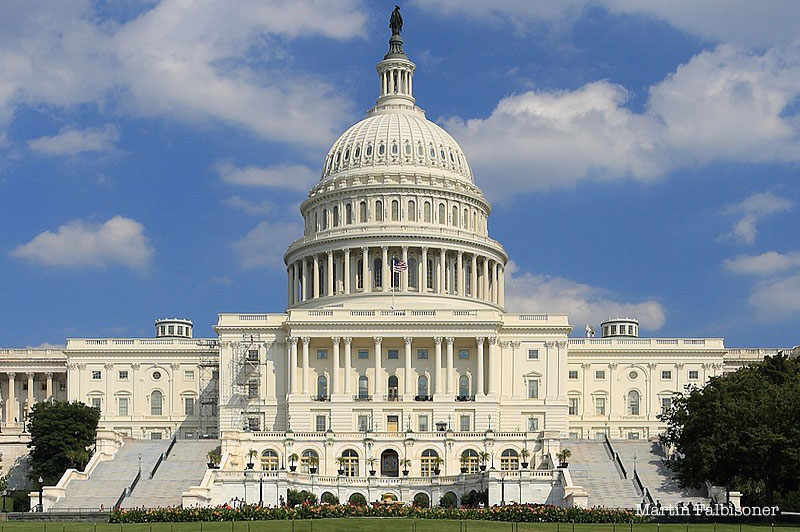
    Washington, DC – The U.S. Senate passed President Joe Biden’s nearly $2 trillion stimulus plan Saturday afternoon after wrangling over an amendment to trim unemployment benefits derailed the bill’s passage for nearly an entire day.

    Ohio Democratic U.S. Sen. Sherrod Brown supported the bill while Ohio Republican U.S. Sen. Rob Portman voted against it.

    The Senate version, which does not include a federal minimum wage hike and puts limits on the funding for state and local governments, will now make its way to the House for review. Democrats are rushing to pass the relief package so it reaches the president’s desk before the March 14 deadline for unemployment benefits expire, in order to give states plenty of time to avoid missing those payments.

    No Republicans voted for the House bill last week. The bill passed the Senate along party lines, 50-49. A tie-breaking vote from Vice President Kamala Harris was not needed because Sen. Dan Sullivan (R-Alaska) had to leave the Capitol after a family emergency.

    “This bill will deliver more help to more people than anything the federal government has done in decades,” Senate Majority Leader Sen. Charles Schumer said in a statement on passage of the bill.

    House Majority Leader Rep. Steny Hoyer (D-Md.) said in a statement that the House would take up the bill on Tuesday.

    The Senate version of the relief package earmarks $10 billion of the $350 billion in aid to state, local governments, territories and tribes to go toward a state’s infrastructure projects such as improving broadband access. The Senate also set restrictions on how the money can be used, saying cities and states can’t use it to pay down pension costs or pay for new attempts to cut taxes.

    The bill would provide $130 billion toward helping schools reopen, $14 billion for vaccine distribution and billions more for childcare through a temporary expansion of the child tax credit. The bill also includes a narrower eligibility for individual stimulus checks of $1,400, where individuals making $80,000 and joint tax filers at $160,000 would be phased out.

    The Senate version provides for $300 weekly unemployment benefits — lower than the $400 a week in the House bill — through Sept. 6. It also makes the first $10,200 of unemployment insurance nontaxable for households with incomes under $150,000.

    It was the unemployment benefits package that stalled the Senate on Friday. More than 400 amendments were introduced to the Senate version of the bill, but as lawmakers were preparing to vote on the first — Sen. Bernie Sanders’ (I-Vt.) proposal to increase the federal minimum wage — Sen. Joe Manchin (D-WVa.) raised objections to an unemployment amendment.

    Sen. Tom Carper (D- Del.) had offered an amendment that kept federal unemployment benefits at the current $300 a week but extended the benefits through October, and made the first $10,200 nontaxable.

    A competing amendment from Sen. Rob Portman (R-Ohio) also kept benefits to $300 a week, but also cut off the extension in mid-July.

    Both sides were attempting to win over Manchin, a moderate Democrat and a crucial swing vote in the 50-50 Senate.

    Democrats struck a deal with Manchin after a nine-hour impasse, and passed the amendment 50-49 around 1:30 a.m. Saturday.

    “The President has made it clear we will have enough vaccines for every American by the end of May and I am confident the economic recovery will follow,” Manchin said in a statement.

    “The President supports the compromise agreement, and is grateful to all the Senators who worked so hard to reach this outcome,” White House Press Secretary Jen Psaki said in a statement after the deal. “It extends supplemental unemployment benefit into September, and helps the vast majority of unemployment insurance recipients avoid unanticipated tax bills.”

    Sen. Ben Cardin (D-Md.) told reporters on Capitol Hill Friday that it was  unclear what the House will do.

    “Will the House take it? I don’t have the answer to that,” he said.

    Progressives in the House are already expressing disappointment that the Senate reduced unemployment benefits and stripped out a raise of the federal minimum wage.

    “I’m frankly disgusted with some of my colleagues and question whether I can support this bill,” Rep. Bonnie Watson Coleman (D-N.J.) wrote in a tweet.

    Sanders’ amendment to increase the federal minimum wage to $15 an hour over a five-year period was defeated 42 to 58. The House included the wage hike in its version even after the Senate parliamentarian ruled that including the provision violated procedural rules, which are being used to approve the stimulus package with a simple majority of 51 votes instead of the 60 typically required by the Senate filibuster.

    The current federal minimum wage is $7.25 an hour, for an annual salary of about $15,000, and has not been raised since 2007.

    “The result of that is half of our people are now living paycheck to paycheck and many in fact are working for wages that are much too low in order to take care of their families,” Sanders said.

    Experts and researchers predict that a gradual increase in the federal minimum wage to $15 an hour would help lift nearly a million people out of poverty and benefit low-income workers across the country, particularly in the South.

    Debate over the relief package was also delayed on Thursday by Sen. Ron Johnson (R-Wisc.) who required Senate clerks to read aloud the 628-page bill — a procedure that senators typically waive. Senate clerks started reading the bill Thursday at 3:20 p.m. and finished early Friday morning at 2:04 a.m.

    Johnson told reporters on Capitol Hill Thursday that he planned to have members of his party submit hundreds of amendments to prevent Democrats from rushing to pass the bill in the hopes of wearing them down in order to trim the $1.9 trillion package.

    “All I’m trying to do is make a more deliberative process on this abusive and obscene amount of money,” he said Thursday.

    GOP Senators filed more than 400 amendments. Of those amendments, only three were adopted into the bill. Democrats introduced eight amendments, of which five were passed.

  • State testing bill passes committee without stopping exams this year

    State testing bill passes committee without stopping exams this year

    By Susan Tebben and Ohio Capital Journal

    An Ohio House committee passed a bill regarding state education testing on Wednesday, with the bill looking quite different than its original version. It now extends the period for testing and reporting of grades.

    The bill changed significantly because of a decision made last week by the U.S. Department of Education that will not allow blanket waivers of federal testing in schools.

    The federal agency said, however, that tests can be shorter and participation can be less than the usual 95% requirement, according to a letter from the agency. Schools can also request that test scores not be counted against them.

    Wednesday’s bill passed through the House Primary and Secondary Education Committee along party lines.

    Before the committee favorably passed the bill, several amendments were inserted into the bill to make up for the moot federal waiver measure.

    “These are all changes to help schools and students be held harmless as much as possible,” said cosponsor Kyle Koehler, R-Springfield.

    The bill doesn’t stop state testing, but extends the testing period, including for versions of English, math, science and social studies.

    The third-grade English/Language Arts testing period will not be extended from its deadline of April 23, according to Koehler.

    “The reason that is, is because those third-grade reports are used to promote kids to the fourth grade,” Koehler said.

    The deadline for reporting the third-grade ELA tests is extended from June 15 to June 28 as part of the bill, and reporting for report cards will be moved from Sep. 15 to Oct. 14.

    ELA tests for fourth grade through 12th grade will be extended one week, similar to tests in other subjects.

    Math tests will continue, and the bill’s cosponsor, state Rep. Adam Bird, R-New Richmond, said Ohio has a unique circumstance that forces them to continue math testing. Because Ohio allows integrated math studies that can’t be separated for testing purposes, those tests couldn’t be waived, he said.

    The only state test that has been eliminated is American History, which some legislators took issue with, partly because they felt if one test could be eliminated, others could be as well.

    “We can waive state testing; we chose one, American History, which right now in our climate is probably the most important one that is taught and tested in our buildings,” said state Rep. Lisa Sobecki, D-Toledo.

    Removed from the bill was a provision regarding the ACT and SAT because many schools have already administered those exams.

    The Ohio Department of Education was asked about virtual testing ahead of Wednesday’s committee meeting, according to chair Gayle Manning, R-North Ridgeville.

    “These discussions we’ve had with ODE, there’s no way of doing virtual testing,” Manning said.

    State Rep. Joe Miller, D-Amherst, has expressed in the multiple committee hearings his disapproval of standardized testing as a whole, but said he’d be willing to compromise if the test administration could be expanded further, to include summer tests, for example.

    Miller was skeptical about the amount of parents who are placing stock in these state tests over individual evaluations in schools, negating a study of more than 700 parents done by non-profit education organization Ohio Excels, who testified at a previous committee meeting that eight out of 10 parents they surveyed wanted to use state testing as a benchmark for achievement.

    “I think you’ll find that not eight out of 10 parents care about the end score of these tests, and you’ll probably get a 30% to 40% participation rate on these exams,” Miller said.

    Koehler said he’s received push-back from both sides on the bill and keeping the testing, but said quick passage of the bill would move it along in the legislative process for more discussion in the Senate, and at least bring some relief, rather than leaving school districts to resolve the issues.

    “If I could come up with another 90 days to do that, that would be great, but unfortunately last (week), the federal government did something that caused an issue with that,” Koehler said.

    Several former teachers on the committee focused on the underlying flaws in state testing, which they said could have been further exposed if sponsors of the bill had done more to halt testing.

    “I don’t know that any of these tests are going to give us any information beyond what we already know,” said state Rep. Mary Lightbody, D-Westerville. “That we have a lot of problems in administering and in providing education for our students that adequately supports them.”

    Supporters of the bill said while it has its issues brought on by the federal complications, those that have had in-person instruction want to see their progress in the way they’re used to seeing it every year, especially when there is no punishment attached.

    “Let’s keep the kids in mind and put the differences aside about whether we’re going to do really well or we’re not going to do well,” said state Rep. Don Jones, R-Freeport. “Because let’s face it, in any given year, students are going to succeed and students are going to fail.”

    The bill now moves on for a full House vote.

  • “I think I might miss it.”

    “I think I might miss it.”

    Ricky Fairrow from the Landen Lake neighborhood took these photos with a 360 camera and the caption, “Bye Bye Snow. I think I might miss it ?”.

  • Hamilton County reports new developments in the battle against COVID-19

    Hamilton County reports new developments in the battle against COVID-19

    Loveland, Ohio – The U.S. Food and Drug Administration issued an emergency use authorization (EUA) for the third vaccine for the prevention of coronavirus disease 2019 (COVID-19), according to the Hamilton County Department of Health. The EUA allows the Janssen (Johnson & Johnson) COVID-19 Vaccine to be distributed in the U.S for use in individuals 18 years of age and older. The vaccine is administered as a single dose, which will allow vaccination for more people while also providing opportunities for vaccination for groups requiring special consideration, such as the homebound.

    Expanded Vaccine Eligibility
    In response to this significant increase in the amount of vaccine coming into Ohio, Governor DeWine outlined the individuals who are included in Phase 1C and Phase 2 of Ohio’s vaccination plan which will go into effect on March 4.

    Phase 1C:
    Ohioans with certain occupations and with certain medical conditions not addressed in previous phases.

    Medical Groups Eligible in 1C
    Type 1 diabetes, Pregnant women, Bone marrow transplant recipients, and ALS (Lou Gehrig’s Disease)

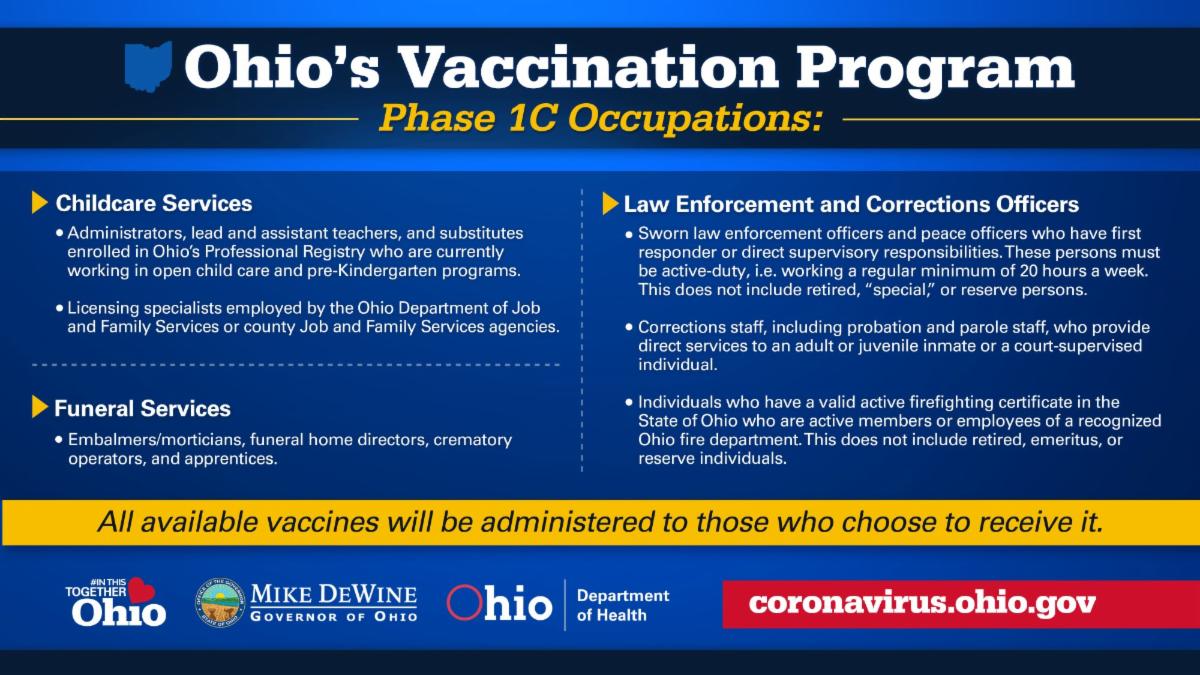
    Occupations Eligible in 1C (see full description in the graphic below)
    Childcare Services, Funeral Services, Law Enforcement, and Corrections Officers
    Follow the hyperlink to read the full press release from the Ohio Department of Health on the expanded vaccine eligibility criteria

    Phase 2:
    Because the risk of more severe reactions and outcomes of COVID-19 increase with age, Phase 2 will open vaccinations based on age, beginning with Ohioans ages 60 and older.

    IF YOU ARE NEWLY ELIGIBLE PER THE EXPANDED GUIDELINES ABOVE:
    The Health Department is asking that you register on their website. They have added these occupations and conditions to the registration that were not previously included.

    Click HERE to re-register*

    If you already registered and do not have a newly eligible occupation or condition per the above you DO NOT need to re-register.*

    Reduced Restrictions
    Last week, Governor Mike DeWine announced that sporting and entertainment events will be able to reopen with 25 percent maximum indoor capacity and 30 percent maximum outdoor capacity, provided they follow established precautions such as mandatory mask wearing for employees and customers, spectator pathways that allow for social distancing, and seating in groups in six-foot intervals of no more than six people from the same household.

    General admission (lawns, standing room, infields) will be permitted if masks are worn and if six-foot distancing can be marked and maintained.  New guidance for proms, banquets, wedding receptions, fairs, festivals, and parades is forthcoming.
    *If you are needing a vaccine appointment please do not unsubscribe. Unsubscribing will disable our ability to contact you for appointments.
    VISIT THE HCPH COVID-19 PAGE
  • Those with low to moderate incomes who live in Greater Cincinnati qualify for tax help

    Those with low to moderate incomes who live in Greater Cincinnati qualify for tax help

    Loveland, Ohio – ‘Tis the season for preparing taxes, and United Way of Greater Cincinnati not only wants to help Loveland residents save money, but it also needs volunteers to help generate those savings. 

    United Way helped 8,000 people avoid more than $2 million in tax filing fees last year while collecting more than $12 million in refunds.

    “Many hard-working people in our region either don’t get the refund they deserve or they lose some of their refund by paying someone to do their taxes, even forfeiting some of their return to get it quickly,” said Moira Weir, president and CEO of United Way of Greater Cincinnati. “We have skilled tax preparers who not only help you get all the money you should, but they can file and get your refund in a matter of days. Don’t pay someone to do what we can do for free.”

    Those with low to moderate incomes who live in the Greater Cincinnati area qualify. In limited cases, income restrictions may apply based on total income and family size.  

    Filers save approximately $250 in prep fees. They can receive more, too. Tax professionals ensure those who qualify for the Earned Income Tax Credit receive their full refund and, this year, make sure they qualify for stimulus payments.

    In-person or Virtual

    United Way partners with the Internal Revenue Service and many local sites. There are more filing options than ever this year, with several in-person and virtual ways to complete taxes. Please check out United Way’s free tax prep webpage for complete information on free tax prep. You’ll also find a list of tax prep sites so you can select the one nearest you.

    United Way needs volunteers to help those sites run smoothly

    Greeters/screeners help community members — in a safe, socially distanced environment — complete intake paperwork to start the preparation process. Volunteers are the first point of contact and ensure taxpayers complete the intake process, are in-scope of free tax services, and bring all required documents to complete their return.

    This role is crucial to ensuring a smooth and efficient flow at each of our tax sites. Volunteers must pass an Intake/Interview & Quality Review exam and Volunteer Standards of Conduct exam. Visit the free tax prep webpage to learn more and click here to volunteer.

  • Loveland school buildings Closed Friday 3/5 for vaccination clinic

    Loveland school buildings Closed Friday 3/5 for vaccination clinic

    Loveland, Ohio – In order to accommodate a second vaccine clinic day for staff, Friday, March 5 will be an “asynchronous” learning day for Loveland City School District students and staff.

    This means school buildings will be closed; however, students will be given assignments to complete at home on that day and teachers will be available via email to assist them during normal school hours.

  • Take a look: Do you know about Garrett Morgan

    Take a look: Do you know about Garrett Morgan

    by Barbara Kyles

    Do you know about the black inventor of traffic lights, gas masks & more…?

    The African History tells us that Garrett Morgan “was a groundbreaker for African American inventors with his patents, he invented many including hair straightening product, a breathing device, a revamped sewing machine and an excellent traffic signal.”

    Take a look and welcome to Black history…

    https://www.facebook.com/theafricanhistory/posts/245250230495132
  • [Save this date] Loveland’s Spring brush disposal program

    [Save this date] Loveland’s Spring brush disposal program

    Loveland, Ohio – Two times each year, the City of Loveland Public Works Department picks up brush for residents. You do not need to call to schedule your brush pick-up since the crew drives a route throughout the entire City limits.

    The 2021 spring brush pickup program will begin on Monday, March 22. Brush must be placed in the grass near the roadside no later than Sunday night, March 21.

    Guidelines

    The City as published the below guidelines established for the brush pick-up program:

    • Brush must be placed at the curb or edge of roadway. Do not place brush in the roadway, gutter, ditches, or on sidewalks. Do not block fire hydrants.
    • Limbs cannot exceed 10 inches in diameter at the cut section.
    • Limbs should be placed at the curb with the cut section facing the street and all limbs should be facing the same direction. This makes it easier and faster to handle.
    • No leaves, pine needles, grass clippings, or other yard waste will be collected.
    • Small twigs and sticks should be bundled with twine in bundles 12 inches in diameter. Twigs or sticks can also be placed in a container at the curb, but no other yard waste should be in the containers. Please, no loose piles of sticks and debris.

    You may also view Illustrated Brush Pick-Up Instructions (PDF).

    Note

    • Any material not meeting these requirements cannot be collected and will be left at the curb.
    • Outside the regular pick-up schedule, residents are encouraged to come to City Hall to get a free voucher to drop off any yard waste to Evans Landscaping.
    • Wood chips will be available again this year. Anyone in the City who would like a full load of wood chips should call 513-707-6115.
  • John Stowell and Andrew McAfee appointed as Clermont park commissioners

    John Stowell and Andrew McAfee appointed as Clermont park commissioners

    Clermont County Probate Judge James A. Shriver has appointed two new members to the Clermont County Board of Park Commissioners. John Stowell, a long-time resident of Miami Township, and Andrew McAfee, a lifetime resident of Union Township, have joined David Anspach, who has served on the board since 1997. This year, Anspach will serve as chairman and Stowell as vice chairman.

    Stowell and McAfee fill the seats left open by long-time board members Ken Stewart and William Stearns, both of whom retired at the end of 2020.  All three commissioners serve three-year terms without pay and provide stewardship over Clermont County’s six parks, three nature preserves, the Williamsburg-Batavia bike trail and several green spaces.

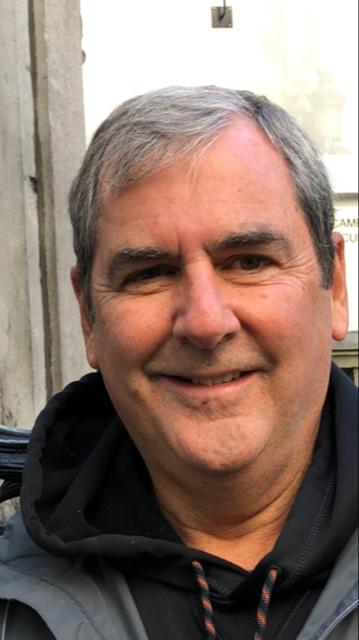
    Stowell (left) is retired from Duke Energy where he served in a number of executive positions, including leading the company’s government affairs, energy and environmental policy and international policy groups. In his 28 years with the company, he worked with Congress to help shape the Clean Air Act of 1990 and repeal the Public Utility Holding Company Act of 1935. He is originally from Buchanan, Mich., and is a 1975 graduate of Michigan State University, where he majored in journalism. He lives in Miami Township just outside of Loveland with his wife Marlene. They have two grown children, Maria and Stephen.

    Stowell, who describes himself as an avid bicyclist and outdoors lover, said he was anxious, upon his retirement, to contribute toward improving the community. The opening on the park board, he said, provided that opportunity.

    “My goal as a board member is to help and improve and grow our outstanding county park system,” he said. “I am particularly excited about our latest addition at Grailville, which will bring recreational and educational opportunities to residents in the northern part of our county.”

    McAfee (left) is the Director of Government Affairs for the Clermont County Chamber of Commerce. Prior to joining the Chamber, he was Congressman Brad Wenstrup’s Field Representative in Clermont County and, during the recent election, took a leave of absence to serve as his campaign manager.

    Adopted as a baby from Honduras, McAfee is a lifelong resident of Clermont County and resides in Union Township. He is a graduate of Glen Este High School, the University of Cincinnati, and is currently working towards a Master’s in Public Administration at Eastern Kentucky University.

    McAfee’s interest in Clermont County parks goes back to his childhood.
    “Growing up, I was a frequent visitor of the parks throughout Clermont County,” he said. “During the stay-at-home order early last year, I really got to know all of the parks even better as an alternative to the gym. When I saw the opportunity to join the board, I thought it would be a great way to protect and promote the parks that I have grown to love throughout my life.

    “As a young professional in Clermont County, I’m really looking forward to working with the parks team on ways to promote and highlight all of the great things our parks have to offer, especially to millennials and young families. We have so much to offer here in Clermont County and I cannot wait to help showcase all of our great parks!”