Author: Loveland Magazine

  • Updates on Ohio’s response to the COVID-19 pandemic

    Updates on Ohio’s response to the COVID-19 pandemic

    Ohio Governor Mike DeWine and Lt. Governor Jon Husted today provided the following updates on Ohio’s response to the COVID-19 pandemic:

    WEATHER DELAY UPDATE

    Due to last week’s winter weather, the delivery of some Pfizer vaccines and all Moderna vaccines were delayed. Some providers used second doses that they had already received to avoid clinic cancelations. Those second doses will be backfilled with the shipments they receive this week.

    Additional delayed shipments of Pfizer and Moderna will arrive between today and Wednesday.

    For providers who canceled appointments last week, Governor DeWine is urging them to expand their appointment schedules to include evening and weekend hours to catch up.

    PROGRESSION OF VACCINE ELIGIBILITY

    Governor DeWine provided information on the progression of vaccine eligibility in Ohio. Because those ages 65 and older make up approximately 87 percent of all COVID-19 deaths in Ohio, no additional age groups are eligible for the vaccine at this time. Once the demand for the vaccine has been met for those 65 and older, those ages 60 and older will become eligible. After a period of vaccination for this age group, those ages 55 and older will become eligible, followed by those ages 50 and up.

    Individuals in specific small groups that could have an increased risk of exposure to the virus may also potentially be included in the 60 and older vaccination phase.

    PHASE 1B MEDICAL CONDITIONS

    Last week, vaccine eligibility opened up to those Ohioans born with or who have early childhood conditions that are carried into adulthood, which put them at higher risk for adverse outcomes due to COVID-19.  Today, Governor DeWine asked Ohio hospitals and doctors with access to the vaccine to begin to proactively reach out to these patients with the specific medical conditions outlined in Phase 1B to schedule vaccination. 

    OTHER PRIORITY POPULATIONS

    In Ohio’s eight state-operated developmental centers, more than 91 percent of residents have accepted their first vaccine. 

    More than 14,000 Ohioans living with developmental and intellectual disabilities who also have a certain health condition they were born with or developed in childhood and carried into adulthood have also received their first dose of vaccine.

    Ohio is working to complete the vaccination of residents and staff in congregate settings for residential treatment facilities, mental health residential care facilities, and recovery housing.

    CURRENT CASE DATA

    In total, there are 955,378 confirmed and probable cases of COVID-19 reported in Ohio and 16,874 confirmed and probable COVID-19 deaths. A total of 49,492 people have been hospitalized throughout the pandemic, including 7,044 admissions to intensive care units. In-depth data can be accessed by visiting coronavirus.ohio.gov. 
  • DeWine’s nursing home visitation report

    DeWine’s nursing home visitation report

    Governor Mike DeWine today issued the following statement on nursing home visitation:

    The number of new COVID-19 cases in Ohio’s nursing homes has dropped significantly to 343 new cases last week compared to the peak of 2,832 new cases in December.

    As the number of nursing-home cases continues to drop due to vaccinations in long-term facilities, Governor DeWine today reminded nursing home staff and families of nursing home residents about the status of visitation in Ohio’s nursing homes. Visitation is permitted at nursing homes in Ohio if the facilities meet the federal Centers for Medicare and Medicaid Services (CMS) criteria to allow visits:

    • No new onset of COVID-19 cases in the last 14 days;
    • The facility is not currently conducting outbreak testing; and
    • CMS reports the COVID-19 county positivity rate at less than 10 percent.

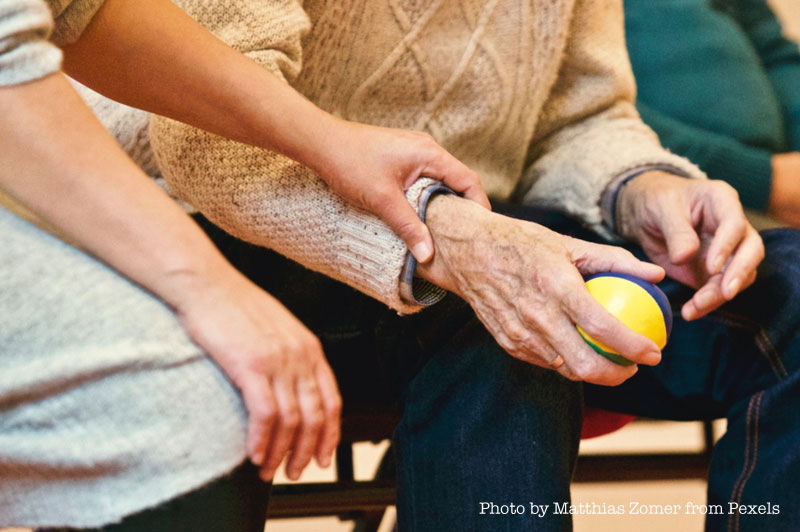
    Compassionate care visits, which are special visits in which a family member or other visitor provides comfort, support, and assistance to a resident whose well-being is suffering or at risk, are always permitted regardless of the criteria above.

    Governor DeWine sent a letter today to all nursing homes in Ohio reminding them to check their county positivity rate every week to determine their visitation status and to remind them to allow for compassionate care visits. 

    Ohio’s nursing home facilities are required to report their visitation status to Ohio’s Long-Term Care Visitation Dashboard.

    If you have a loved one in need of a compassionate care visit but are having trouble scheduling a visit, contact Ohio’s Office of the State Long-Term Care Ombudsman at OhioOmbudsman@age.ohio.gov or 1-800-282-1206.

  • Breaking News w/video discussion: COVID variant detected in Hamilton County

    Breaking News w/video discussion: COVID variant detected in Hamilton County

    Commonly known as the UK variant

    Loveland, Ohio –Hamilton County Public Health has been informed that surveillance discovered a COVID-19 variant in Hamilton County.  Officially labeled as B.1.1.7 lineage, the variant is commonly known as the UK variant.  Hamilton County is one of at least 11 Ohio counties known to have a variant detected.

    HCPH has completed contact tracing on the patient, who has resolved symptoms and cleared the standard isolation period.  The variant was detected during routine surveillance of tests submitted to the Center for Disease Control (CDC).  The actual test took place on January 30.

    According to the CDC:

    • This variant is estimated to have first emerged in the UK during September 2020.
    • Since December 20, 2020, several countries have reported cases of the B.1.1.7 lineage, including the United States.
    • This variant is associated with increased transmissibility (i.e., more efficient and rapid transmission).
    • In January 2021, scientists from UK reported evidence that suggests the B.1.1.7 variant may be associated with an increased risk of death compared with other variants.
    • Early reports found no evidence to suggest that the variant has any impact on the severity of disease or vaccine efficacy.

    “We’ve known about these variants for some time,” says Hamilton County Health Commissioner Greg Kesterman.  “From a prevention standpoint, the response remains the same:  wear a mask; maintain at least six feet of physical distance; wash hands often; and stay home when you are ill.  Also, consider taking vaccine when you are eligible.”  

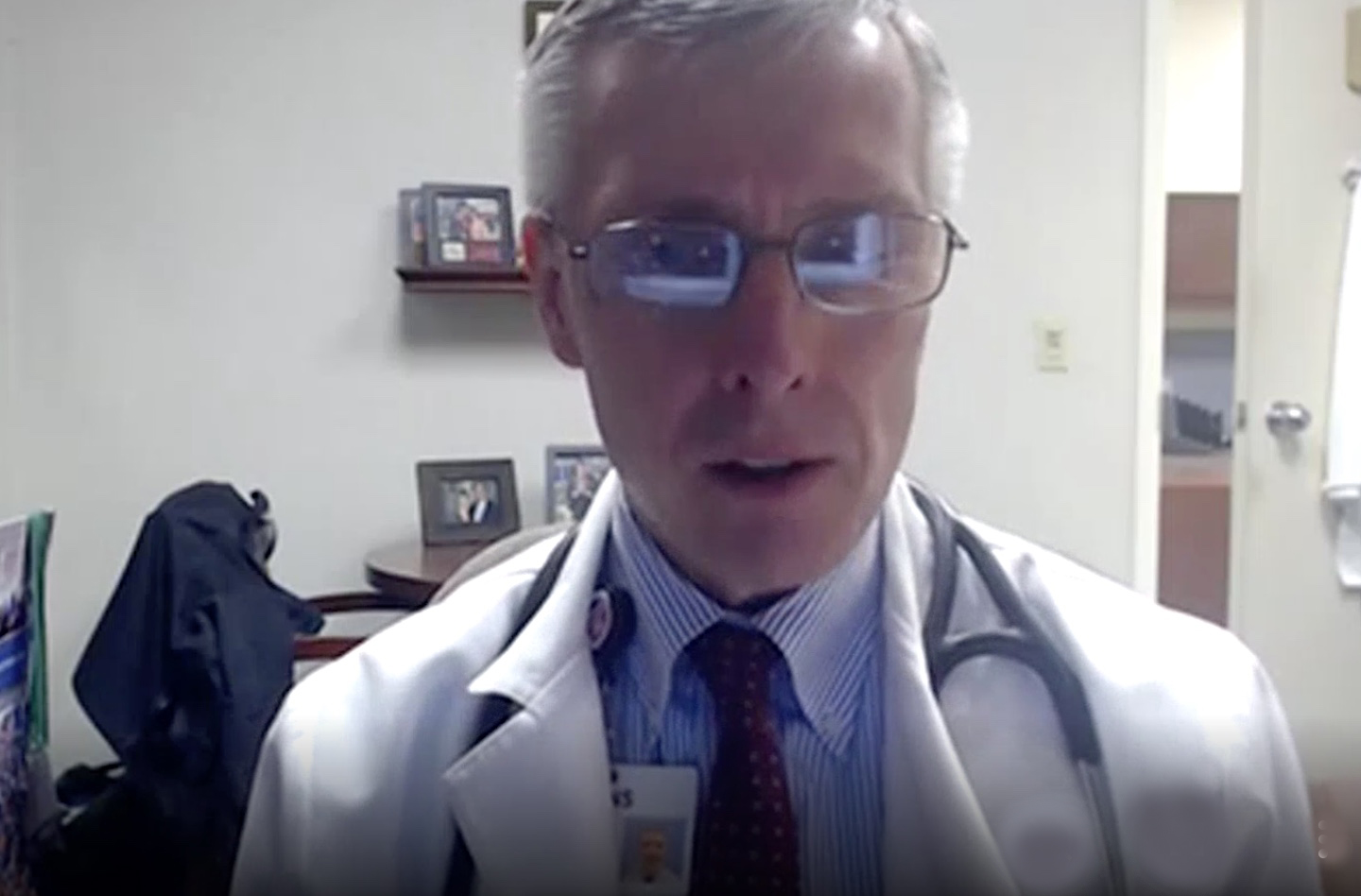
    Here is a discussion of the variant, its prevention, and treatment with Hamilton County Public Health Medical Director Dr. Stephen Feagins.

  • YouTube censors Ohio House hearing video for COVID-19 misinformation

    YouTube censors Ohio House hearing video for COVID-19 misinformation

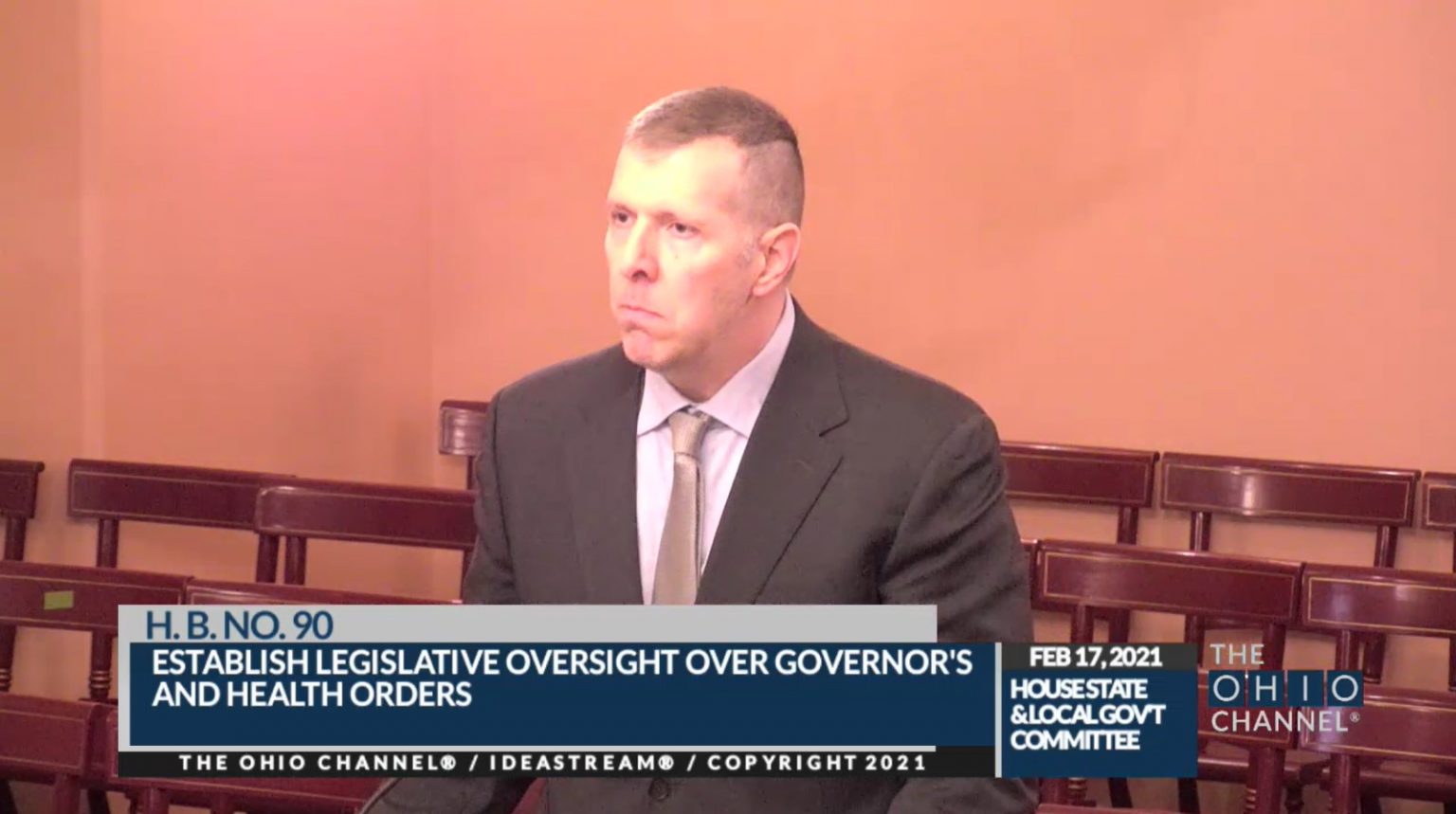
    Tom Renz speaks to the House State and Local government Committee Feb. 17. Source: Ohio Channel.

    By Jake Zuckerman and Ohio Capital Journal

    Columbus, Ohio – The opening testimony Wednesday in support of a legislative effort to allow lawmakers to vote down public health orders went far enough off the rails for YouTube to remove footage of the speaker.

    Tom Renz, an attorney for Ohio Stands Up, filed a lawsuit in federal court in September seeking to overturn any and all health orders related to the COVID-19 pandemic. A federal judge last week deemed the arguments nearly “incomprehensible” and ordered Renz to show cause for why he shouldn’t dismiss the suit for procedural errors.

    The Ohio Advocates for Medical Freedom, an anti-vaccine activism group aligned with Renz, posted to YouTube footage of Renz’s 35-minute, oftentimes rambling testimony to the House State and Local Government Committee.

    The video was soon taken down for violating YouTube’s terms of service.

    “We have clear Community Guidelines that govern what videos may stay on YouTube, which we enforce consistently, regardless of speaker,” said Ivy Choi, a spokeswoman for Google, which owns YouTube.

    “We removed this video in accordance with our COVID-19 misinformation policy, which prohibits content that claims a certain age group cannot transmit the virus. We do allow material with sufficient educational, documentary, scientific or artistic (EDSA) value.”

    The policy states videos cannot spread medical misinformation that contradicts local health authorities’ or the World Health Organization’s medical information about COVID-19.

    In his testimony, Renz baselessly claimed no Ohioans under the age of 19 have died of COVID-19. Data from the Ohio Department of Health shows 10 children in the age group have died of the disease during the pandemic.

    Similarly, Renz said children can neither contract nor spread COVID-19. He even claimed the CDC says this as well, which is untrue. CDC guidance states children can contract and spread the coronavirus.

    While it’s unclear which specific COVID-19 misinformation from Renz sparked YouTube’s decision, there’s a lot to choose from.

    Renz’s testimony was a firehose of COVID-19 conspiracy theorizing: He said unspecified entities “provide funding for people to find a COVID-19 death;” the ODH “whitewashes” its coronavirus data; that PCR testing, which public health officials consider to be a premier diagnostic, is “garbage” or “absolutely useless.”

    He claimed the lockdown orders of the spring to be “the most drastic curtailment of rights ever taken in American history.” The statement was made without acknowledgement to the enslavement of Black Americans, the mass detention of Japanese Americans to internment camps during World War II, the forced relocation of Native Americans, or any number of national atrocities through American history.

    While YouTube removed the footage, Ohio Republican lawmakers praised Renz for the testimony.

    Chairman Scott Wiggam, who has falsely proclaimed that Donald Trump won the 2020 presidential election, praised Renz for bringing “the other side of the data” to the table.

    Rep. Diane Grendell, who without evidence accused ODH of publishing “corrupted” data to a panel of state senators in November, also praised Renz.

    Footage of the hearing is still publicly available on the Ohio Channel, and OAMF has since re-uploaded it to Rumble, which has looser content guidelines.

    Renz made the statement supporting House Bill 90, which would allow lawmakers to vote down public health orders related to the pandemic. A similar version of the proposal passed the Senate earlier this week.

    The lawsuit against ODH was Renz first filing in federal court after passing the bar on his fifth attempt, according to records from the Ohio Supreme Court.

    His “about me” page for his website claims lists no prior legal experience besides serving as a clerk on the Indian Supreme Court. However, in a prior interview, he said he did not remember when he served on the court and said he did not speak Hindi.

    Renz declined to answer questions about his testimony.”

    “This should not be right and left and we should not be fighting over facts,” Renz told lawmakers. “The question I would ask to the people who are saying that I’m incorrect or lying, is who are you working for and how much are you getting paid? Because inevitably, I’m finding they typically are working for someone or getting paid somewhere.”

  • Never needed? Senate president predicts little opposition to nuclear bailout repeal

    Never needed? Senate president predicts little opposition to nuclear bailout repeal

    By Marty Schladen and Ohio Capital Journal

    A billion-dollar nuclear subsidy was the subject of an intense fight in 2019 and great controversy since. But the president of the Ohio Senate this week predicted that a repeal will make it through the House, Senate and that Gov. Mike DeWine will sign it.

    The reason: The company that owns the nuclear reactors no longer wants the money, he said. And that raises serious questions about whether the subsidies were needed in the first place.

    The subsidy was the product of House Bill 6. The legislation was passed in 2019 after a nasty fight which led to federal criminal charges against then-House Speaker Larry Householder, four associates and a dark-money group. 

    Prosecutors said $61 million from Akron-based First Energy and associated groups was used in the corrupt effort to pass the bailout. Two of Householder’s associates and the dark money group have pleaded guilty, FirstEnergy’s CEO was fired and Gov. Mike DeWine’s appointee to chair the Public Utility Commission of Ohio has resigned as part of the scandal. 

    Despite intense calls for a full repeal of HB 6, it remains in place — although a Franklin County Judge has temporarily stopped collection of the money by the owner of the nuclear plants, FirstEnergy successor Energy Harbor.

    DeWine and others have said they want a repeal, but they want to continue to subsidize the Northern Ohio nuclear plants for environmental reasons.

    “We were for nuclear power,” he said Tuesday, referring to his initial support for HB 6. “Nuclear power was the only way in this state, today, that we can have very much non-carbon production. It’s the only way we can do it.”

    But early this month, Sens. Jerry C. Cirino, R-Kirtland, and Michael Rulli, R-Salem, introduced legislation, Senate Bill 44, to get rid of the subsidies. On Wednesday it received a hearing by the Senate Energy and Public Utilities Committee.

    Despite the governor’s statements, Senate President Matt Huffman, R-Lima, said he expects the repeal legislation to become law.  

    “I think that provision will likely get passed out of the Senate and I think it will pass out of the House and get signed by the governor,” Huffman told the governing board of the Ohio Consumers’ Counsel, the state’s official utility watchdog. “When I say the House and the governor, I’m not speaking for them, nor have I spoken to them about this. But if a large company that got a subsidy in a dubious way… says ‘We don’t want it,’ that seems to me to be a pretty easy call.”

    Energy Harbor, the owner of the plants, didn’t respond to requests for comment on Wednesday. But Huffman was apparently referring to a December 2019 ruling by the Federal Energy Regulatory Commission and Energy Harbor’s response to it. 

    The ruling said, in essence, that the company that would become Energy Harbor would have to cut its prices if it was going to sell its subsidized nuclear energy onto the massive grid that serves all or part of 13 states, including Ohio. 

    It would “threaten the competitiveness” of the long-term, or “capacity,” marketplace if companies like Energy Harbor could sell subsidized power on the same basis as power that wasn’t subsidized. So Energy Harbor and the others have to discount it according to a formula, the ruling said.

    Recent developments appear to be a sharp reversal from 2019.

    As proponents pushed HB 6, they threatened that closure of the Ohio nuclear plants was imminent if they didn’t get a bailout — and quickly. But Huffman’s statements on Tuesday indicate that Energy Harbor has no plans to shutter the plants even now that it isn’t getting the money. 

    “I don’t want the nuclear power plants to close,” he said. “However, it’s been made clear to me that the plants will not close if this subsidy is removed. In fact, they’re better off because of machinations at another level. In fact, these subsidies will likely harm these power plants.”

    There’s other evidence that Energy Harbor’s pre-bankruptcy predecessor, FirstEnergy Solutions, might not have been as broke as it claimed in 2019. 

    Shortly after emerging from bankruptcy in early 2020, it did an $800 million stock buyback. Such buybacks typically raise stock values, in this case enriching shareholders just months after pleading poverty and winning a $1 billion bailout from Ohio ratepayers.

    The federal ruling also raises questions about whether it was wise even to start the bailout fight, which has caused so much damage in Ohio. On June 29, 2018, more than a year before DeWine signed HB 6 into law, FERC issued a ruling strongly foreshadowing what it later did: effectively erase the subsidies bailout supporters had gained if they wanted to sell power into the long-term market.

  • Beware of scammers claiming to be Ohio Homeland Security and Loveland Police

    Beware of scammers claiming to be Ohio Homeland Security and Loveland Police

    Loveland, Ohio – The Loveland Police Department reported today on Facebook that a resident received a phone call claiming to be from the federal attorney general in Washington DC. “They told the resident their Social Security number had been compromised and asked for the number to confirm it so they could clear false reports.” The resident hung up on the scammer, however, they called back a few minutes later claiming to be a Loveland police officer with the police number on the caller ID.

    The post concluded with:

    “Our officers will NOT call under such circumstances. Do NOT give your personal information. A reminder that the Loveland Police Department will also never solicit donations over the phone or mail.”

    https://www.facebook.com/LPDfamily/posts/1785871101593296

    Beware of Scammers Claiming to be Ohio Homeland Security

    OHS Phone Number Spoofed; Don’t Fall for Telephone Scams

    COLUMBUS – The Ohio Department of Public Safety has received reports of a possible scam being perpetrated on Ohioans today from scammers claiming to be from Ohio Homeland Security (OHS).

    Ohio residents have reported receiving phone calls from scammers claiming to be from OHS and informing the call recipients that their identity had been stolen. Caller ID on these calls indicate the calls originated from the OHS main line 614-387-6171, but they did not; the Ohio Homeland Security main line was spoofed. Spoofing is when a caller deliberately falsifies the information transmitted to your caller ID display to disguise their identity. 

    “If you receive these calls, don’t fall for this scam,” said Ohio Homeland Security Executive Director Brian Quinn. “Hang up immediately and report it to either your local law enforcement or the Statewide Terrorism Analysis and Crime Center (STACC) at 1-877-647-4683.”

    Ohio Homeland Security, a division of the Ohio Department of Public Safety, does not investigate personal identity theft and would not make these kinds of phone calls to Ohio residents.

    Do not fall victim to telephone scams. Tips to protect yourself from telephone scams include:

    • Register your phone number with the National Do Not Call Registry.
    • Be wary of callers claiming that you’ve won a prize or vacation package.
    • Hang up on suspicious phone calls.
    • Be cautious of caller ID.
  • Health department epidemiologist resigns after state discovers 4000 omitted COVID-19 deaths

    Health department epidemiologist resigns after state discovers 4000 omitted COVID-19 deaths

    By Jake Zuckerman and Ohio Capital Journal

    An epidemiology investigator resigned last week and the head of the Bureau of Infectious Diseases was reassigned after the state health department discovered it undercounted Ohio’s COVID-19 death toll by about 34%.

    Karthik Kondapally resigned from the Ohio Department of Health, said Arundi Venkayya, the department’s chief communications officer, in an email last Friday.

    Likewise, Sietske de Fijter, the former chief of the Bureau of Infectious Diseases, has been reassigned to an unspecified position in the Bureau of Health Improvement and Wellness. She will also no longer serve as chief epidemiologist.

    She will be replaced at the bureau by Kristen Dickerson, who previously served as the manager for statewide health, wellness and special programs at the Bureau of Workers’ Compensation.

    Venkayya did not respond when asked whether the changes were made in connection with ODH’s announcement last week that a human error reconciling two mortality data sets led to the omission of about 4,000 deaths from COVID-19.

    She did not directly answer who will take over as the state epidemiologist.

    “These changes are very recent and we are working through the process,” Venkayya said.

    ODH Director Stephanie McCloud, herself a recent transplant from the Bureau of Workers’ Compensation, briefed reporters on the death discrepancy Thursday.

  • Along with health department, state auditor missed 4,000 COVID-19 deaths during

    Along with health department, state auditor missed 4,000 COVID-19 deaths during

    Ohio Auditor of State Keith Faber. (Official photo)

    The precise nature of Faber’s audit remains shrouded in mystery

    By Jake Zuckerman and Ohio Capital Journal

    The Ohio State Auditor’s months-long investigation into the state health department’s COVID-19 data practices failed to detect the 4,000 newly discovered COVID-19 deaths announced by the Ohio Department of Health last week.

    Auditor Keith Faber’s staff have declined to fully explain how they missed the deaths — which sprung Ohio’s death toll from about 12,000 to 16,000 — or what specifically auditors are investigating.

    Both ODH and Faber’s auditors alike missed a broad swath of pandemic mortality as Ohio, like every other U.S. state, looked for an appropriate policy response for an infectious disease that principally spreads through person-to-person interaction.

    The health department said it first identified a death data problem Feb. 2 before identifying and announcing the finding Feb. 10. Faber’s staff learned about the 4,000 newly discovered deaths that day.

    Faber spokeswoman Allie Dumski claimed last week that the federal Health Insurance Portability and Accountability Act prevented auditors from accessing one of the two databases ODH uses to track COVID-19 deaths.

    She later clarified ODH denied “full access” to the database — the Ohio Disease Reporting System (ODRS). She said auditors “would not have been able to identify this miscount” without full access to the database, i.e. the identities of COVID-19 cases.

    “As part of our audit, we requested full access to the ODRS database and ODH refused that, citing HIPAA and additional conditions of confidentiality related to the data set,” she said.

    ODH Communications Director Arundi Venkayya said the health department cooperated in full with state auditors.

    “ODH provided full access to the ODRS database in the form of a CSV file that was downloaded to ODH computers prior to the Auditor’s onsite visit,” she said.

    Faber’s staff, according to Venkayya, relayed to ODH that this format would be acceptable.

    Upon request, Venkayya also shared emails from state auditors who were seemingly pleased with the data ODH shared.

    “We have had very good cooperation in completing the data analysis component of the audit and, if we’ve not already finished, we were working on finishing up the death certificate examination,” wrote Betsy Bashore, a Faber staffer, in a Jan. 11 email about the audit.

    “As part of our audit process, we typically meet with our client agency to discuss findings to date. We had delayed this with the transition but really would like to get one scheduled as soon as possible. These usually involve leadership and department heads, particularly those people we have interacted with over the past 4 months.”

    Faber did not respond to repeated interview requests over the last week.

    Dumski, responding to the ODH emails, said auditors received anonymized data to protect individual identities. This would have prevented auditors from reconciling ODRS data with death certificate data to uncover the uncounted deaths, she said.

    ODH Director Stephanie McCloud said last week the department started missing most of the 4,000 newly discovered deaths when a November death surge took off. The error, she said, traces back to a single employee’s failure to reconcile the ODRS data with a separate set of death certificate data.

    ODH posts the ODRS data — stitched together from reports from labs, health departments, hospitals and care providers — on its website. It also regularly reconciles it with death certificate data, which is more accurate but less timely than the disease database.

    As the death surge took off, cases started getting missed by this lone employee who failed to notify his superiors, McCloud said.

    Since the news broke, an epidemiology investigator with the department resigned, and the ODH Bureau of Infectious Diseases chief was reassigned.

    The precise nature of Faber’s audit remains shrouded in mystery.

    He announced the probe in July, stating auditors would “examine case numbers of COVID-19.” Confirming the accuracy of the data, he said, will provide “valuable feedback to key policy makers and increased confidence for all Ohioans on how to best mitigate the spread and impact of this virus.”

    The news came amid rumors, amplified by conservatives in media and politics, that health departments were inflating COVID-19 data for political gain. The Ohio House went as far as to pass a “Truth in COVID-19 Statistics” bill. No evidence has been presented to suggest ODH’s data is somehow fraudulent.

    An online survey on the auditor’s website fielded documentation that would indicate an overcount of COVID-19 infections, as opposed to an undercount of deaths. The survey sought respondents who received “test results that were later reversed” or “results for tests the individual did not take.”

    Faber touted the audit at a rally for then-President Donald Trump, who regularly downplayed COVID-19 and claimed its death toll is “exaggerated,” and at a political fundraiser this summer as well.

    His office denied a public records request for survey data and supporting documentation. However, a spokeswoman said if there were any “alarming” findings, auditors would work with ODH to address the issue immediately for the benefit of public health.

    The survey closed Jan. 23. The audit is slated for release in March.

  • [Video] Loveland Middle School COVID 19 protocol explained

    [Video] Loveland Middle School COVID 19 protocol explained

    Loveland, Ohio – David Knapp, the Principal of the Loveland Middle school explains in this video the COVID 19 protocol in his building.

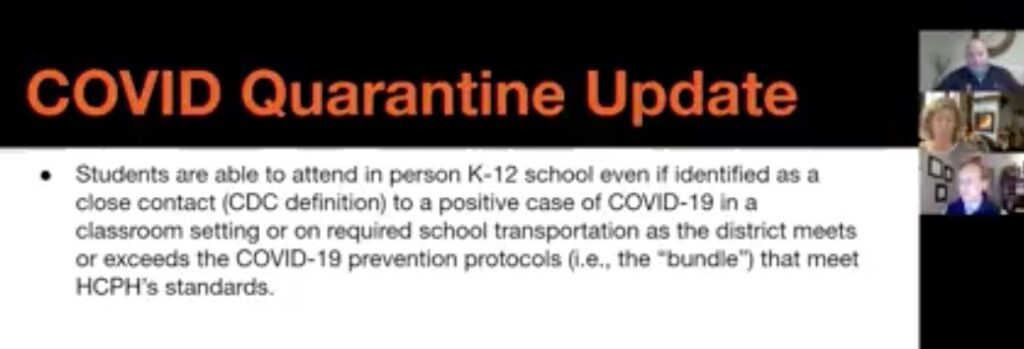
    Watch the video… (Look for the COVID Quarantine Update)

    The video was published by the Loveland MINT PTSA.

  • Loveland Schools closed today

    Loveland Schools closed today

    Loveland, Ohio – The Loveland City School District has canceled classes today.