


Loveland, Ohio – Loveland Resident Dan Timmerman took this photo of Historic Downtown Loveland this morning with the full moon in the background while walking his dog. Dan was on his way to the Loveland Bike Trail that he calls the “Loveland Dog Walking Trail.”
Author: Loveland Magazine
-

Health order signed reducing curfew by one hour
Loveland, Ohio – Ohio Governor Mike DeWine announced yesterday that Ohio Department of Health Director Stephanie McCloud signed a health order pushing back the statewide curfew one hour, changing the start time of the curfew to 11 p.m. The new hours begin January 28, 2021 at 12:01 p.m. and lasts through February 11, 2021, at 12:01 p.m. The change is being made because Ohio hospitalizations for COVID-19 have remained below 3,500 for seven consecutive days.
Specifications in this order include:
- Individuals within the state must stay at a place of residence during the hours of 11:00 p.m. and 5:00 a.m. except for obtaining necessary food, medical care, or social services or providing care for others.
- This order doesn’t apply to those that are homeless. Individuals whose residences are unsafe or become unsafe, such as victims of domestic violence, are encouraged to leave their homes and stay at a safe, alternative location.
- The order does not apply to religious observances and First Amendment protected speech including activity by the media.
- The order permits travel into or out of the state and permits travel required by law enforcement or court order, including to transport children according to a custody agreement, or to obtain fuel.
Individuals are permitted to leave a place of residence during the hours of 11:00 p.m. and 5:00 a.m. for the following essential activities:
- Engaging in activities essential to their health and safety or the health and safety of those in their households or people who are unable to or should not leave their homes, including pets. Activities can include but are not limited to seeking emergency services, obtaining medical supplies or medication, or visiting a health care professional including hospitals, emergency departments, urgent care clinics, and pharmacies.
- To obtain necessary services or supplies for themselves and their family or members of their household who are unable or should not leave their home, to deliver those services or supplies to others. Examples of those include but are not limited to, obtaining groceries and food. Food and beverages may be obtained only for consumption off-premises, through such means as delivery, drive-through, curbside pickup and carryout.
- To obtain necessary social services.
- To go to work, including volunteer work.
- To take care of or transport a family member, friend, or pet in their household or another household.
- To perform or obtain government services.
- Individuals within the state must stay at a place of residence during the hours of 11:00 p.m. and 5:00 a.m. except for obtaining necessary food, medical care, or social services or providing care for others.
-

Mary Makley Wolff to lead statewide suicide prevention effort
Miami Township, Ohio – Mary Makley Wolff has been named associate director for the Ohio Suicide Prevention Foundation, starting Feb. 8.
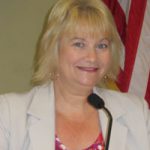
Mary Makley Wolff (Provided Photo) Wolff, a Miami Township trustee, for the past six years has served as director of the Coalition for a Drug Free Clermont County.
“I’m proud of the work we are doing building the coalition in Clermont County, including getting funding for years 1-5 and now 6-10,” Wolff said. “And now I’m looking forward to helping build a robust statewide suicide prevention coalition.”
Wolff sees parallels between her work for the drug free coalition and the suicide prevention foundation.
“We want to make sure our communities are responding as best as they can, now that we are in the COVID-19 era,” Wolff said. “It’s such a rough time for people with the isolation associated with the pandemic.” Strong communities have strong community-level prevention activities and policies happening everywhere.
For example, Wolff said teens are getting shamed if they test positive and cause a whole team to quarantine. They can find themselves under attack on social media.
“We know social media is both good and bad,” Wolff said. “It provides connection, but cyber-bullying and too much screen time make a problem worse.”
Her main focus at first in the new job includes: Seeking grants for capacity building and furthering a partnership with the Voinovich School at Ohio University and Ohio Mental Health and Addiction Services to build an understanding of how to build a coalition. She will assist OU and local staff in building an advocacy group among coalitions to see if policy or law changes need amending so more people may be helped.
With assistance, 30 partners across the state had developed the first Statewide suicide prevention plan. The plan focuses on prevention, intervention, and “postvention.”
Postvention involves helping survivors or family members who lost someone.
“We’re really good immediately after a tragedy,” Wolff said. “It’s the weeks and months later when people have stopped bringing the casseroles and the survivor or family member has to grapple with this alone that provides the biggest challenges.”
The plan identified three key groups with the strongest need: veterans, older male adults, and youth.
“But we want to build a network inclusive of everybody,” Wolff said “I’m really looking forward to it. It builds off of work have done with the drug prevention coalition. We all need to be prevention people: Faith community, law enforcement, educators…. We’ve got to share the message of being healthy and safe.”
For those interested in helping locally with either the Coalition for a Drug Free Clermont County or the Clermont County Suicide Prevention Coalition contact Lee Ann Watson, associate director of the Clermont County Mental Health and Recovery Board at 732-5200.
-

Where you can go in Clermont County to get the COVID-19 vaccination
Submitted by Clermont County Public Health
Where can you get vaccinated?
Under Ohio’s vaccine plan, older adults can receive the vaccine according to the following schedule.January 18 – Ohioans 80 years of age and older
January 25 – ages 75 and older and those with severe congenital or developmental disabilities
February 1 – ages 70 and older
February 8 – ages 65 and older.Clermont County has several vaccine providers in the county where you can make an appointment.
HealthSource of Ohio
register online at www.healthsourceofohio.org
or call 513-732-5081Kroger pharmacy
register online at www.kroger.com/ohiocovidvaccine
or call 866-211-5320Meijer pharmacy
to register, text COVID to 75049 or visit https://clinic.meijer.com/
or call the pharmacy directly for assistance registering
Miami Township Meijer – 513-576-5510
Eastgate Meijer – 513-943-5710Mercy Health – Clermont Hospital
call 1-866-624-0366 to schedule an appointmentClermont County Public Health
to get on the waiting list and be contacted when an appointment is available, visit: https://ccphohio.org/covid-19-vaccine-info/ For assistance signing up for the waiting list or questions about COVID-19, call the Clermont County COVID-19 hotline at 513-735-8500. -

Caleb Peterson appointed Clermont Dog Warden
Batavia, Ohio – Caleb Peterson has been appointed Dog Warden by the Board of County Commissioners. Peterson pledged to operate the Clermont County Animal Shelter as a no-kill facility, according to a release by the County.

Caleb Peterson Commissioner David Painter said, “Clermont County has a unique need to ensure that we do everything that we can to save the lives of animals unless it is absolutely medically non-viable, or because of temperamental disposition the dogs can’t be retrained, and after an attempt has been made to be able to rehome these animals.”
Peterson said, “A 90-percent save rate would qualify as a no-kill shelter and that is absolutely the goal and how we intend to move forward.”
Peterson served as Senior Animal Services Officer for the city of Memphis, Tenn., for more than two years before relocating to the area with his wife, doing a residency at Cincinnati Children’s Hospital Medical Center. He supervised 15 other officers while investigating allegations of cruelty, neglect and abandonment.
He holds a Bachelor of Arts in Religious Studies from the University of Tennessee.
-
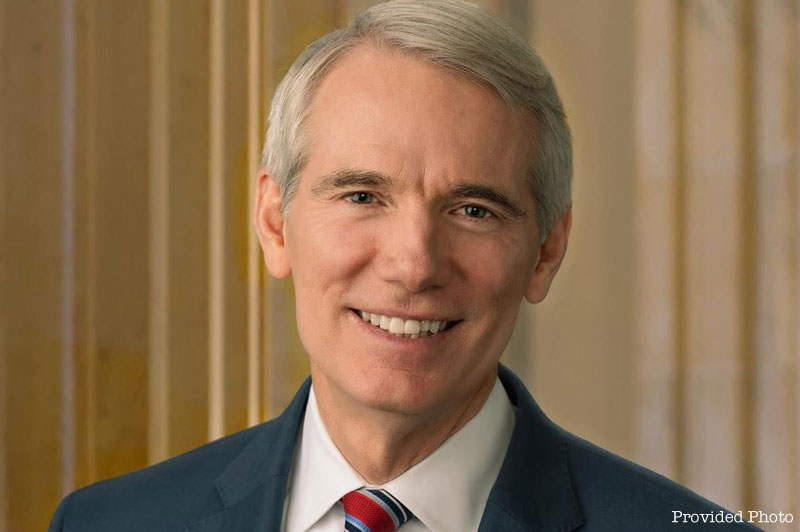
For years, Portman navigated the shifting political climate. Now he wants out
By Tyler Buchanan and Ohio Capital Journal edited by Loveland Magazine
Rob Portman of Ohio will not be seeking reelection to the U.S. Senate, with the Cincinnati Republican citing increased polarization in American politics as a reason to not campaign for a third term
The surprise announcement on Monday morning set off an early-week scramble for politicians of both parties to consider a run at the open seat in 2022.
In a statement, Portman said he intends to use his final two years in the U.S. Senate to “get a lot done,” pledging to work with the newly-inaugurated Biden administration on the COVID-19 pandemic response and other legislative priorities.
“I feel fortunate to have been entrusted by the people of Ohio to represent them in the US Senate,” Portman said in a statement, calling it “an honor” to have served the Buckeye State.
The departure will cap off a decades-long career in public service for Portman, 65, a moderate in both policy and style who has navigated a rightward shift within the Republican Party in recent years.
An ‘increasingly polarized country’

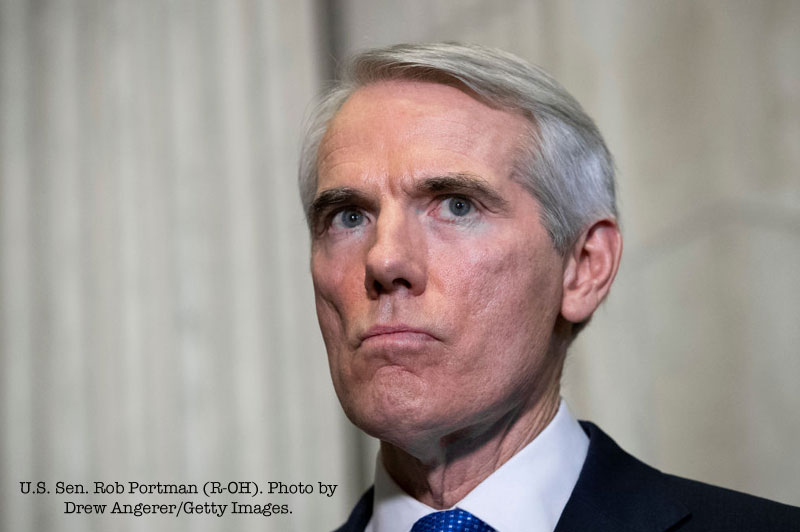
U.S. Sen. Rob Portman (R-OH). Photo by Drew Angerer/Getty Images. Portman said Monday that “it has gotten harder and harder to break through the partisan gridlock and make progress on substantive policy, and that has contributed to my decision.”
He called America “an increasingly polarized country” with both parties being pushed toward ideological extremes, making this “a tough time to be in public service.”
“This is not a new phenomenon, of course, but a problem that has gotten worse over the past few decades,” his statement added.
It is certainly a much different political climate than when Portman first entered politics more than four decades ago. As a student of Dartmouth College, Portman interned for Cincinnati Congressman Bill Gradison.
He would return to New Hampshire in 1980 to work on the presidential campaign of George H. W. Bush, sparking a close relationship with the Bush family that continued in the years that followed.
Portman went on to study law and Bush won the presidency in 1988. He hired Portman to serve as an associate White House counsel and later as a liaison to Congress.
When Gradison resigned from his seat in 1993, Portman defeated a number of Republicans in a special election primary. He then proved his financial prowess in his first general election, raising 16-times as much as his Democratic opponent to win the seat.
Portman developed a reputation as an amicable policy wonk who could be a great asset for Republican campaigns. He once again helped out the Bushes by becoming a surrogate and fundraiser for George W. Bush’s presidential run in 2000. One Cincinnati event organized by Portman brought in $1 million for the Bush campaign.
The Ohioan made a name for himself as an expert debate prepper. Starting in 2000, Portman portrayed Democratic politicians in mock debates for four straight presidential cycles.
He was the “stand-in” for Joe Lieberman against vice presidential candidate Dick Cheney that first year, also assisting New York Republican Rick Lazio by portraying Hillary Clinton during a 2000 election for U.S. Senate.
Portman would go on to play John Edwards against Bush in 2004 and Barack Obama in both the 2008 and 2012 presidential campaigns, sparring against John McCain and Mitt Romney.
Portman’s coveted debate work was a combination of studious preparation, political knowhow and an innate acting ability, The Guardian quoted a McCain advisor as saying in 2012.
He remained a loyal ally to the Bush administration while in Congress. In 2005, Bush appointed him to serve as U.S. trade representative and later named him director of the Office of Management and Budget.
Portman stepped down as budget chief in mid-2007. He had been commuting home on weekends for over a decade — since being first elected to Congress — and expressed a desire to head back to Ohio. In leaving Washington, Portman did not rule out a future run for governor or senator.
“There’s no finer man in public service than Rob Portman,” President Bush said upon his departure.
Back to Ohio, then back to D.C.
Returning to Ohio, Portman learned to toe the line between a political center and the more hardline elements of his party.
In February 2008, Portman was invited to speak at a Cincinnati rally for McCain’s campaign. Preceding him on stage was conservative radio host Bill Cunningham, who referred to Obama as a “hack” and made disparaging comments about former Secretary of State Madeleine Albright’s looks.
Cunningham even invoked Portman and his wife Jane’s names in making a crude joke about the homosexuality of Massachusetts Congressman Barney Frank.
“Willie,” Portman said in taking the mic, “you’re out of control again. So, what else is new? But we love him. But I’ve got to tell you, Bill Cunningham lending his voice to this campaign is extremely important.”
After the event, McCain denounced Cunningham’s comments and apologized for them. Portman told reporters: “I was backstage so I didn’t hear everything (Cunningham) said.”
Portman jumped back into electoral politics in 2010 in announcing a run for U.S. Senate.
“My concern is that Washington doesn’t seem to get it,” he told columnist E.J. Dionne Jr.
An election cycle centered on outsider politics and the Tea Party movement could have proven to be a challenge for a former Bush appointee. Instead, he benefited from there a Democratic senate primary; a weakened Ohio economy putting pressure on his eventual opponent, Lt. Gov. Lee Fisher; and the Portman trademark of prolific fundraising.
Portman raised more than $13 million for the race and cruised to a comfortable victory in a fortuitous election year for Ohio Republicans. The party took back the governor’s seat and rising stars such as Jon Husted and Josh Mandel were elected to their first statewide offices.
Portman outperformed them all, winning the highest percentage and largest total of votes.
From possible Romney VP to Trump supporter
Early in his first term, Portman was vetted for the vice presidential slot on Mitt Romney’s 2012 ticket.
This LOVELAND MAGAZINE TV video is from an appearance by Sen Rob Portman introducing Rep. Paul Ryan at a campaign rally at Miami University in August of 2012 after Ryan was selected over Portman to be Mitt Romney’s running mate. Portman was previously on the short list of national pundits to get the nod for Romney’s pick. Portman’s biggest strength — experience — also proved to be a hindrance. The Romney campaign was skeptical about choosing someone with close connections to the George W. Bush administration.
It was believed Portman could help the ticket carry Ohio, but the Romney camp found little evidence to back up that conclusion. In February 2012, a Quinnipiac University survey of Ohio voters found that President Obama polled slightly ahead of Romney. The poll also asked how Ohioans would vote if Portman was named as Romney’s VP pick — Obama actually gained a percentage point.
Romney ended up going in a different direction.
In 2013, Portman made headlines for becoming the first sitting GOP senator to endorse the legalization of same-sex marriage. He said this support followed his son coming out as gay two years before.
More a workhorse than showhorse in D.C., Portman primarily stayed out of the spotlight during Obama’s two terms. A Quinnipiac Poll from May 2016 found that 42% of registered voters in Ohio said they didn’t know enough about Portman to form an opinion about him.
That was after he had already served a dozen years in the U.S. House of Representatives, two years in the Bush administration and five years as a U.S. Senator.

Ohio U.S. Sen. Rob Portman with Senate Majority Leader Mitch McConnell. Photo by Mark Wilson/Getty Images. During the Republican presidential primary, Portman first chose to endorse fellow Ohioan John Kasich. He later backed Trump for the general election before rescinding his support after an Access Hollywood tape was published showing Trump in 2005 boasting of grabbing women’s genitals without their consent. Portman said he would vote for vice presidential candidate Mike Pence instead.
Portman is often ranked as one of the most bipartisan senators, in that he frequently co-sponsors bills that are sponsored by Democratic lawmakers. It is also true that Portman became a reliable vote in favor of Trump’s policies as president.
An analysis from the website FiveThirtyEight found that Portman voted in line with Trump’s positions 88% of the time — a higher amount than other Trump allies such as Tom Cotton and Lindsey Graham. It is nearly the identical voting record percentage as Rep. Jim Jordan, R-Urbana, who is considered one of Trump’s top supporters on Capitol Hill.
Portman voted in favor of the Trump tax cuts and sought a repeal of the Affordable Care Act, though he broke with the president in not wanting a repeal without a replacement in place. He voted for Trump’s cabinet members and the Supreme Court nominations of Neil Gorsuch, Brett Kavanaugh and Amy Coney Barrett.
The latter vote was in contrast to Portman’s own legislative precedent he outlined in 2016. When a Supreme Court seat opened up in February of that year, Portman advocated for waiting to confirm a replacement in order to allow “the American people to weigh in on who should make a lifetime appointment that could reshape the Supreme Court for generations.”
When Justice Ruth Bader Ginsburg died six weeks before the 2020 election, Portman reversed course and urged the Republican-led Senate to confirm Barrett.
Portman avoided criticizing the president and dodged questions related to Trump’s conduct, telling reporters he was unfamiliar with the controversies in question. In one exchange, he evaded questioning by saying he was late for lunch.
The president’s Access Hollywood tape all but forgotten, Portman served as a co-chair for Trump’s 2020 reelection campaign and was named a co-captain of its Victory Finance Committee. He joined the president’s daughter for a MAGA rally in Youngstown a week before Election Day.
Nevertheless, Portman was one of the first Republicans in Congress to acknowledge Biden’s victory as being legitimate. He did not object to Biden’s presidential electors as several other Ohio Republicans did and has stated there was no evidence of widespread voter fraud.
Who will run for the open seat?
There is a long list of Democratic and Republican names already identified as potential candidates for the seat.
For Republicans, this announcement provides a newfound opportunity for those who were not otherwise planning to run in a contested primary for the seat. Among those who have already expressed interest or are rumored to be eyeing a campaign include Lt. Gov. Jon Husted; former state treasurer Josh Mandel; Rep. Jordan; Rep. Bill Johnson, R-Marietta; Attorney General Dave Yost; former Rep. Jim Renacci; and others.
Ohio Democrats had created a “Defeat Rob Portman Fund” following the Justice Barrett nomination fight and now have a much different path to winning the seat. Rep. Tim Ryan, D-Niles, tweeted Monday he was “looking seriously” at running, with other possible candidates including Dayton Mayor Nan Whaley, Cincinnati Mayor John Cranley; Ohio House Minority Leader Emilia Sykes of Akron; Dr. Vin Gupta of the Toledo area, and others.

U.S. Rep. Tim Ryan (D-Ohio) said Monday he was “looking seriously” at running for U.S. Senate in 2022. Some 2022 election ratings predicted Ohio would not be competitive with Portman on the ballot. Kyle Kondik, a political analyst for the University of Virginia’s Center for Politics, believed a Portman race in 2022 would be “potentially competitive” but was likely to lean in the incumbent’s favor.
Kondik tweeted Monday the race remains favored toward the Republican Party, but the shake-up provides an opening to Democrats “under (the) right circumstances.”
Still two years remaining in term
As the dust settles from Portman’s announcement, it remains to be seen how the Republican will approach his final two years in office now that he is unencumbered by any electoral considerations.
Such is the major question, said David Niven, an associate professor of political science at the University of Cincinnati who is a former Democratic Party speechwriter.
Niven outlined two models for how the next two years could go for Portman: Jeff Flake and Lamar Alexander.
Flake, an Arizona Republican, was a vocal Trump critic and frequently spoke his mind after announcing he would not run for reelection in 2018. (Trump responded in kind, and Flake was recently censured by the Arizona Republican Party.)
Alexander, a Tennessee Republican, decided in 2018 not to run for reelection for the 2020 cycle and remained a Trump ally for the rest of his term.
Niven said the next two years will give a clear sense of Portman’s true political leanings without another race in front of him.
The first major test could be the upcoming impeachment trial. While other Republicans in the senate have condemned the impeachment effort — Marco Rubio of Florida called it “stupid” — Portman has adopted a more tempered, open-minded approach.
Portman has said Trump “bears some responsibility for what occurred” during the Jan. 6 insurrection attempt at the U.S. Capitol. In that statement, he said about an impeachment trial: “I will do my duty as a juror and listen to the cases presented by both sides.
Portman, familiar with the delicate negotiation process between the White House and Capitol Hill from his time with the first Bush administration, may play an important role with the current U.S. Senate’s relationship with President Biden.
“In these next two years, I will continue to be actively engaged,” Portman said in his Monday statement, “doing my best to provide hope as we try to get through the devastating coronavirus pandemic and doing my best to help bring our great country together, to help us heal, so we address the many challenges we face together.”
-
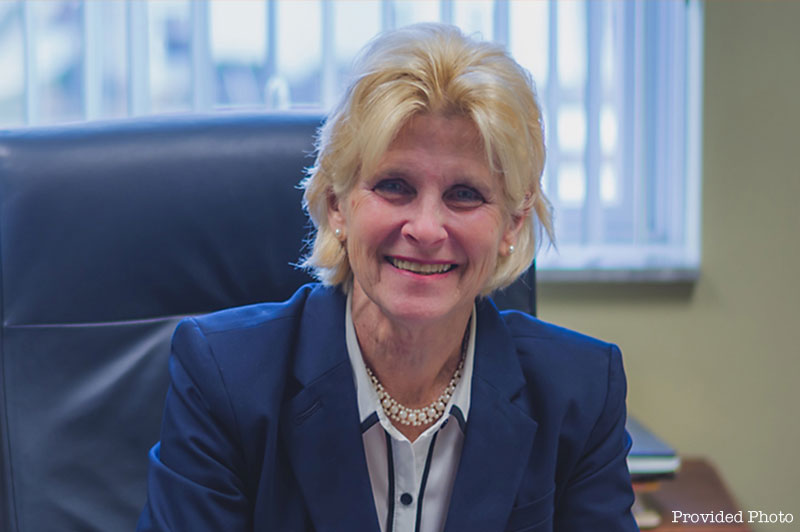
Corcoran chosen as Clermont County Commission president
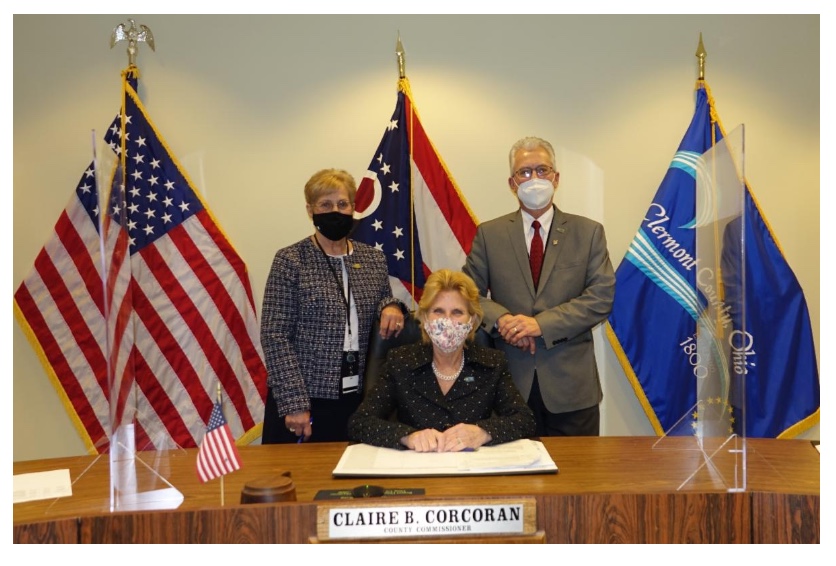
Bonnie Batchler, Claire Corcoran, and David Painter Batavia, Ohio – Claire Corcoran (middle in photo) on Jan. 11 was elected President of the Board of County Commissioners by commissioners Bonnie Batchler and David Painter, who was chosen as Vice President.
The board established Wednesdays as well as the second and fourth Mondays of the month (for the first six months) as their regular meeting days.
She brings 19 years of experience as a Pierce Township trustee, the past eight as president of the Clermont County Township Association.
Her background also includes a 14-year stint as the EMS Chief of the Pierce Township Volunteer Fire Department. She also serves on the Board of Directors for Clermont County Community Services and the Senior Service Housing Board. She is a member of the Clermont County Law Enforcement Appreciation Selection Committee and the Ohio Public Works Commission grant committee.
Batchler fills a position vacated after three-term Commissioner Ed Humphrey decided not to seek re-election.
Batchler said public safety remains a top priority. She cited her years in public safety and the fact that two of her daughter-in-laws are police officers.
Transportation and economic development also rank high on her priority list.
“You’ve got to have good roads to have good economic development,” she said. “I have been amazed at what the county has been able to do with economic development this past year, with Nestle Purina and other openings. Just look at what will happen when the pandemic is not around.”
In addition to her career in public services, Batchler possesses 43 years of experience working in private industry. After seven years at Cintas, she embarked on a 36-year career at Senco Products. She retired as a Senior Credit Analyst.
She grew up in the town of Bethel. In May, she celebrates 26 years of marriage to her husband Mike, owner of Batchler Heating Services. They have two children and seven grandchildren.
-
Sen. Rob Portman announces he will not run for re-election in 2022
By Tyler Buchanan and Ohio Capital Journal
Sen. Rob Portman announced Monday he would not be running for a third term in the U.S. Senate in 2022.
The Cincinnati Republican said he intends to use his final two years in public office to “get a lot done,” noting a hopefulness of working with the Biden administration on the COVID-19 pandemic response and other legislative priorities. This would cap off a decades-long career in public service for Portman, 65, who previously served as U.S. Representative as well as budget chief and U.S. trade representative under President George W. Bush.
Portman’s announcement opens the door for a Republican primary in 2022 and for Democrats to face another non-incumbent instead of a well-financed incumbent who won his 2010 and 2016 Senate elections comfortably.
“I feel fortunate to have been entrusted by the people of Ohio to represent them in the US Senate,” Portman said in a statement, calling it “an honor” to have served.
Various Ohio political figures issued statements Monday in support of Portman. Gov. Mike DeWine called the senator a “key partner” during the pandemic response and Secretary of State Frank LaRose described him as being “what our founders hoped for in a public servant when they wrote our Constitution — a statesman.”
Sen. Sherrod Brown, an Ohio Democrat who has served alongside Portman since 2011, noted the two have not always agreed with each other on policy but have “always been able to put our differences aside to do what’s best for Ohio.”
A more detailed report from the Ohio Capital Journal on Sen. Portman’s announcement is forthcoming.
-

by Tyler Buchanan and Ohio Capital Journal
David DeVillers, the U.S. Attorney whose office has led the prosecution of former Ohio House Speaker Larry Householder, will soon be replaced, Sen. Sherrod Brown confirmed on Thursday.
DeVillers was appointed to the position by President Donald Trump and confirmed by a Republican-led U.S. Senate in 2019. Brown told reporters that both U.S. Attorney positions in Ohio would be replaced with Democrats regaining control of the White House and U.S. Senate.
The U.S. Attorney for the Northern District of Ohio already resigned earlier this month. DeVillers will be staying on until a successor is appointed and confirmed, according to Brown’s office.
While it is common for presidents to replace federal attorneys upon taking office, some had called for the Biden administration to keep DeVillers in his post.
“Every president is entitled to, with Senate approval, his own team of federal prosecutors,” wrote Mark Weaver, a former deputy attorney general of Ohio, in a Columbus Dispatch guest column last month. “However, as Ohioans know, DeVillers is leading an aggressive and much-needed effort to stem the tide of pernicious public corruption that shatters faith in government.”
Brown has issued a call for applicants to the U.S. Attorney position, with the web page stating he “will be working to recommend candidates to the Biden Administration.”
DeVillers became the face of the Householder prosecution when he appeared at a press conference to announce racketeering charges against the speaker and four of his political operatives. The five were arrested July 21 as part of an alleged $61 million bribery scheme to get a $1.3 billion nuclear bailout bill enacted in 2019, which DeVillers described as being “likely the largest bribery and money-laundering scheme ever in the state of Ohio.”
Two of those charged have since pleaded guilty, while the others (including Householder) have pleaded not guilty and await trial.
More recently, DeVillers pledged justice would be served against anyone from the Southern District of Ohio who committed crimes during the attempted U.S. Capitol insurrection:
-

Lillianne Rohling, Sophia Stokes win scholastic art and writing awards
by David Miller
Loveland, Ohio – Seniors Lillianne Rohling and Sophia Stokes were recently honored with a Gold Key Scholastic Art Award. The two attend Loveland High School and competed in the Southern Ohio, Northern Kentucky, and Southeastern Indiana Art Region.

Lillianne Rohling’s mixed media work “Empty” and the painting “Touch” by Sophia Stokes will be eligible to compete for national honors in New York City.

Loveland High School students Lauren Hents, Ruthie Timman and Zak Griffiths were also honored with the Silver Key in the Scholastic Writing Awards.

In addition, Rohling was recognized for her art portfolio “On Earth.” The works of all the southwest regional winners can be viewed in a virtual exhibition hosted by the Art Academy of Cincinnati here.

https://www.artandwriting.org/ The Scholastic Art Awards is a 97-year-old national art competition that lets students compete with others in their region and then with other students nationally. The program fosters creativity and provides a platform for young people to gain recognition and compete for scholarship funds.