Author: Loveland Magazine

  • The “Cure Starts Now” says Grant Wolf’s twin Julia Wolf

    The “Cure Starts Now” says Grant Wolf’s twin Julia Wolf

    by David Miller

    David Miller is the publisher of Loveland Magazine

    Loveland, Ohio – “We now know from The Cure Starts Now that $50,000 could fund an entire research grant in Grant’s honor,” said Grant Wolf’s mom Sara. “Pretty wonderful we are so close to that after two days.”

    At Grant’s funeral, his 7-year-old twin sister Julia really wanted to tell Sara an idea that she came up with to celebrate their birthday. “She’s been worried about how to have a birthday without Grant here with her,” said Sara. Grant Wolf passed away on January 22 at the age of after a courageous battle with Medulloblastoma.

    That night, she shared she wanted to do two things – give stuffed dogs to kids with cancer, what she and Grant loved to play together, and raise money for brain cancer research. “She set the goal at $240 and we have watched the total grow, and grow and grow,” said Sara

    Julia Grant (Provided Photo)

    Grant had an amazing team of doctors and nurses at Cincinnati Children’s and in Augusta Georgia, but when a child relapses with Medulloblastoma, treatment options are limited, his mom said. “We don’t want this to be the story for other families in the future.”

    Julia told Loveland Magazine, “Grant was really funny. He loved playing dogs and sports. He was the best twin brother.” She says she really wanted to do something about finding a cure for cancer so that no other kid has to go through these tough times.

    “Thank you to everyone who donated. Thank you so so much,” said Julia.

    Mom added, “We are amazed at the response to her birthday fundraiser but with the love of Grant’s ‘Wolf Pack’ behind us, we shouldn’t really be surprised at all.”


    Hi this is Julia,

    In one week it is my birthday. In honor of Grant, my 7-year-old twin who passed away from brain cancer we are having a fundraiser to find a cure for cancer and give kids with cancer stuffed dogs.

    Grant loved stuffed dogs and sports. He made a great brother and friend. On February 11th it is our 8th birthday. This is my idea of what to do for Grant on our birthday.

    My mom and I bought 30 dogs to donate to Carley at Proton so she can give them to other kids with cancer like Grant.

    I am asking if you can donate $8 by our 8th birthday to remember Grant and help cure cancer too. The Cure Starts Now wants to cure brain cancer and I do too.

    Love,

    Julia

    CLICK TO DONATE NOW


    Grant Wolf passed away on January 22, 2021 at the age of 7 after a courageous battle with Medulloblastoma.

    He was the beloved son of Michael & Sara (Dowden) Wolf. Loving brother of Matthew and Julia. Cherished grandson of Steve and Joan Wolf and Stephen and Marcy Dowden. Devoted nephew of Doug and Laura Ruschman, Greg and Angie Dowden, and Chris and Lynn Dowden. Adored cousin of Hannah, Emily, Luke, Marshall, Maggie, and Colin.

    Grant never met a sport he did not like. He was often found in his driveway or front yard playing baseball or basketball with his brother or on the golf course with his dad. He and his twin sister shared a love of stuffed dogs, and they have quite the collection. His mom has been his constant comfort and companion to countless hospital stays and appointments. He loved building roller coasters, golf courses, and sports fields out of any materials that he could find around the house. Grant’s smile and bravery even in the toughest of times this past 16 months have inspired many to find joy in challenging times and to never give up. 

    Family and friends visited the family from 5-8 PM on Tuesday, January 26 at St. Columban Catholic Church in Loveland.  

    Mass of Christian Burial was private at the Gate of Heaven Cemetery. The Mass can be viewed HERE.

    A procession to Gate of Heaven from St. Columban traveled through Downtown Loveland to Loveland Madeira Road. Hundreds of friends, including Grant’s teachers, his Principal, and fellow students gathered throughout the town, many at the Loveland Primary and Elementary Campus where Grant went to school.


  • Federal Student Aid debt relief extended for students, borrowers, and parents

    Federal Student Aid debt relief extended for students, borrowers, and parents

    The office of Federal Student Aid of the U.S. Department of Education has released this information about extending COVID Emergency Relief Flexibilities for students, borrowers, and parents until least through Sept. 30, 2021.


    At the U.S. Department of Education (ED) office of Federal Student Aid, we are actively monitoring the coronavirus/COVID-19 emergency.

    COVID Emergency Relief Flexibilities Extended At Least Through Sept. 30, 2021

    We will continue to update this page as more information becomes available.

    • On March 20, 2020, the office of Federal Student Aid began providing the following temporary relief on ED-owned federal student loans: suspension of loan payments, stopped collections on defaulted loans, and a 0% interest rate.
    • On March 27, 2020, the Coronavirus Aid, Relief, and Economic Security Act (CARES Act) became law, providing for the above relief measures on ED-owned federal student loans through Sept. 30, 2020.
    • On Aug. 8, 2020, the COVID-19 emergency relief measures were extended on ED-owned federal student loans through Dec. 31, 2020.
    • On Dec. 4, 2020, the COVID-19 emergency relief measures were extended on ED-owned federal student loans through Jan. 31, 2021.
    • On Jan. 20, 2021, the COVID-19 emergency relief measures were extended on ED-owned federal student loans through Sept. 30, 2021.

    Below, we have answered questions about these COVID-19 emergency relief measures and the resulting flexibilities for federal student loans. You will also find answers to questions about preparing for payments to resume.

    Check out related articles! We’ll add links here as we publish articles.

    NOTE: You do not have to pay to get 0% interest or suspended payments for your student loans. Some companies may charge a fee to give you repayment help for federal student loans during the COVID-19 emergency. These companies are not affiliated with or endorsed by the U.S. Department of Education (ED). Learn more about avoiding student loan scams.


    For full details visit THIS WEBSITE:

  • Watch the trailer: THE MIMIC co-staring former Loveland resident Jake Robinson

    Watch the trailer: THE MIMIC co-staring former Loveland resident Jake Robinson

    Synopsis: Based on a true story, ‘the Narrator’ (Thomas Sadoski) is befriended by his young new neighbor (Jake Robinson), after he joins the local newspaper team.

    Obsessed with the idea that ‘the Kid’ may be a sociopath, ‘the Narrator’ goes to extreme lengths to uncover the truth about him. After unsettling rendezvous, the truth he finds is anything but what he expected.

    Starring: Thomas Sadoski, Jake Robinson, Austin Pendleton, Gina Gershon, Jessica Walter, M. Emmet Walsh, Jessica Keenan Wynn, and Josh Pais.

    Jake Robinson Biography

    Jake Robinson was born in Ohio on May 23, 1990. He was raised in the Cincinnati suburb of Loveland. While a teenager, Jake discovered his love of acting, performing in numerous school plays and musicals. Jake relocated to New York where he found work in several independent productions. He picked up greater screen roles after his breakthrough on The Carrie Diaries (2013).

    – IMDb Mini Biography By: A.R. Pennington

    Jake graduated from St. Xavier High School in 2008 and went on to attend Otterbein University in Westerville, OH, where he graduated in 2012 with a Bachelor’s of Fine Arts Degree in Acting.

    THE MIMIC will be screening in select US cinemas, and available on VOD beginning Friday, 5th February 2021.

  • Symmes Township Fire Department Achieves ISO 1 Classification

    Symmes Township Fire Department Achieves ISO 1 Classification

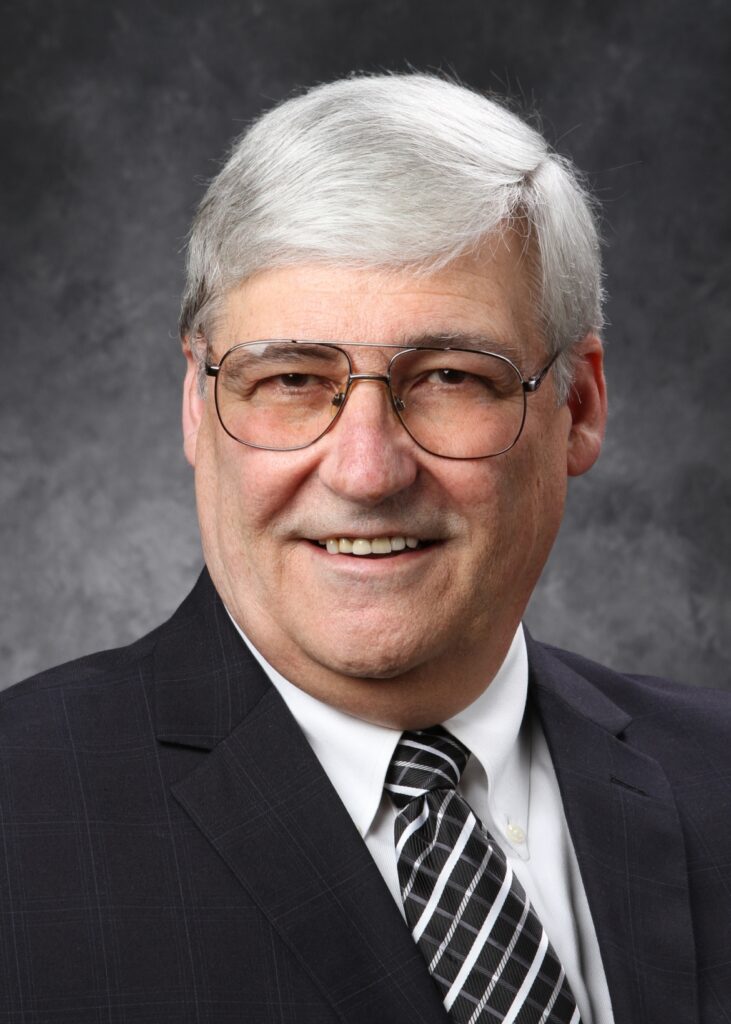
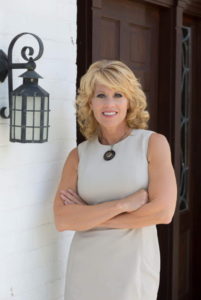
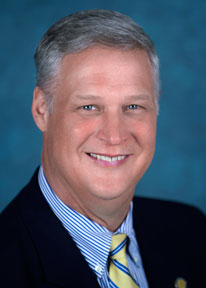
    Phil Beck, Jodie Leis, and Ken Bryant

    Symmes Township, Ohio – The Symmes Township Trustees (pictured above placing the new ISO classification placard on their 100’ Sutphen platform) announced to residents the improved ISO 1 classification for their community.

    Symmes Township provides fire, rescue, and emergency medical services through a joint fire service agreement with the neighboring City of Loveland. The Loveland-Symmes Fire Department (LSFD) provides this service as a career fire and EMS department operating from four (4) stations strategically located throughout the township and the city.

    Symmes Township Trustee President Ken Bryant (Provided Photo)

    The LSFD is dual accredited nationally through the Center for Public Safety Excellence (CPSE) and the Commission on Ambulance Accreditation (CAAS).

    Symmes Township Trustee President Ken Bryant stated, “We are incredibly proud of the LSFD for working so hard over many years to accomplish this goal. Our Loveland-Symmes firefighters and paramedics work tirelessly to save lives and property and to keep our residents, businesses, and visitors safe and are an integral part of our township.

    Mrs. Jodi Leis said, “It is our firefighters’ proactive involvement in nearly every aspect of our community that helps make Symmes Township a great place to live, work and play.”

    Symmes Township Trustee Jodi Leis (Provided Photo)

    “This accomplishment was only possible because of the work of our dedicated staff, the support and guidance of our elected officials, and the continued support of our residents.” stated Fire Chief Otto J. Huber. “The mission of the LSFD is to provide the most technologically advanced fire and EMS with the highest trained professionals, and to deliver that service to our residents with loyalty and compassion. Our members live that mission every day” the Chief added.

    Trustee Phil Beck said “As elected officials, we take the responsibility of providing emergency services to the residents as our highest priority. This improvement in our fire department’s rating brings added value to our residents which is the benchmark we try to achieve when making decisions on our residents’ safety and spending their tax dollars.”

    ISO is an independent organization that evaluates fire protection efforts in communities across the country. The organization collects information on communities and analyzes the data using its Fire Suppression Rating Schedule.

    This Fire Suppression Rating Schedule evaluates four primary categories of fire suppression – fire department, emergency communications, water supply, and community risk reduction. Fire services are ranked between 1 and 10.

    The Class 1 ISO rating will rank the Loveland-Symmes Fire Department as one of only 383 Fire Departments in the U.S. that are ISO 1 classified. To ensure the best is serving their community, LSFD’s chief fire officers and captains also hold credentials in their capacities through the Commission on Professional Credentialing (CPSE), the Ohio Fire Chiefs Foundation Executive Leadership Program, the National Fire Academy Executive Fire Officer Program, as well as, related professional leadership training and fire command certification programs.

    Township Administrator Kim Lapensee stated, “Building strong relationships with our neighbors along with our township’s strong efforts to manage with strategic planning while maintaining fiscal reasonability to the taxpayers shows how grassroots township government can and does work for the people.”

    Story from the Symmes Township monthly newsletter

  • Great Oaks notes Career Technical Education Month

    Great Oaks notes Career Technical Education Month

    Each year, thousands of southwestern Ohio students enroll in career-technical education (CTE) classes that lead to professional credentials in a career field by the time they finish high school.  These students become nurses, aviation technicians, website designers, veterinary assistants, personal trainers, dental assistants, fire fighters, and more.  Some take CTE classes in their own high school; others go to a regional career center serving their school district.  About half continue on to college, often with credits earned in high school.

    Great Oaks Career Campuses President/CEO Harry Snyder

    The research shows that CTE works.  American high school students in career-technical education (CTE) programs are more likely to graduate, according to the U.S. Department of Education.  Other studies show that those students are more likely to be satisfied with their education and earn higher wages when they graduate.  Adults who earn shorter-term CTE credentials can out-earn bachelor’s degree holders.  

    “CTE students have an impact while they’re still in school, and they make our community successful throughout their lives,” said Great Oaks Career Campuses President/CEO Harry Snyder.  He said that local experts, business owners, and other community leaders are graduates of CTE programs, including those offered at the four Great Oaks campuses.

    • Area businesses see value in CTE.  Over 1400 local leaders serve on Business and Industry Advisory Councils at Great Oaks, helping educators choose curriculum, purchase equipment, and share their knowledge with students.
    • CTE instructors are required to be experienced in their fields.  Computer programming courses are taught by accomplished computer programmers; practical nursing programs are led by veteran nurses; culinary students learn from local chefs.
    • CTE students learn using the equipment and tools they’ll use in their career field.  Aviation students at the Laurel Oaks Career Campus work on airplanes in a hangar in Wilmington; engineering students program robotic manufacturing equipment, and cosmetology students learn in fully-equipped salons at the school.
    • More than 200 Great Oaks students are currently on placement in local businesses, practicing skills from computer repair to automotive refinishing while still in school.
    • More than 90 satellite programs allow high school students to have unique experiences in Great Oaks classes without leaving their high school.  For instance, engineering students in Project Lead the Way, a Great Oaks satellite program at Milford High school, have designed and built prosthetic arms, devices to hold hockey sticks and violin bows, specialized masks, and other equipment to help children accomplish tasks and do more in their lives.
    • Cincinnati Zoo Director of Construction Management Gary Gilbert is a graduate of Diamond Oaks Career Campus. He’s one of 32 Distinguished Alumni of Great Oaks, a list that includes inventors, a fire chief, police chiefs, business owners, an Olympic gold medal winner, an Emmy nominee, and numerous educators.

    February is CTE Month each year, and local schools use that time to share facts about career-technical education.  For instance:

    “Career-technical education is so much more than the vocational classes of the past,” said Snyder.  “CTE graduates have professional credentials and options for great careers, pathways to college, and success in whatever they choose to do.”

  • Brackets are Released for Women’s High School Basketball Post-Season!

    Brackets are Released for Women’s High School Basketball Post-Season!

    by Cassie Mattia

    Loveland, Ohio – High School Winter sports are starting to wrap up their regular-season competition and prepare for the post-season as OHSAA officially released the Loveland Women’s Basketball Team first-round post-season matchup!

    The Tigers, who are still sitting in first place in the ECC (Eastern Cincinnati Conference) with an 11-2 record in the conference and a 15-4 record overall, have 3 regular-season games left all of them being important ECC matchups. On February 3rd the Tigers will face Lebanon on their court at 7 PM, on February 4th they will play Turpin at home at 7 PM, and on February 6th Loveland will compete at home against Winton Woods at 7:30 PM.

    Over the past couple weeks Loveland has captured some big ECC wins, beating Milford 45 – 39, West Clermont 59 – 27, and Kings 59 – 40. The Tigers suffered one upset during that time period against Little Miami, losing in quite the nail-biter 48 – 45.

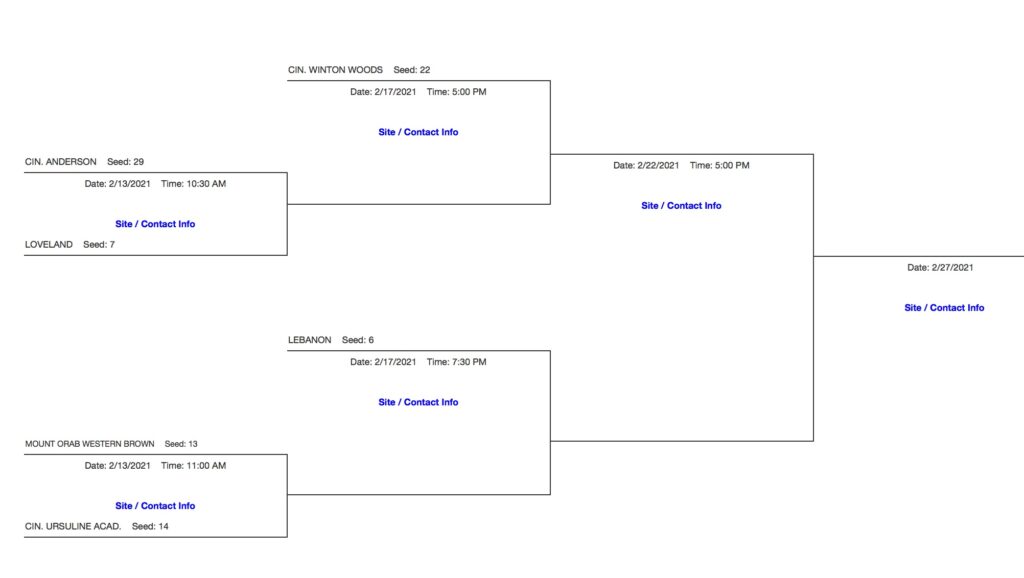
    The Ohio High School Athletic Association (OHSAA) recently released the Sectional/District brackets (see below) giving Loveland a 7th seed. The Tigers will be playing their opening tournament game against Cincinnati Anderson, a 29th seed, on February 13th at 10:30 AM at Harrison High School. If the Tigers grab a victory they will move on to play Cincinnati Winton Woods, a 22nd seed, on February 17th at 5 PM at Harrison High School.

    View all the State Tournament Brackets:

    The Loveland Women’s Basketball Team is not only having a very successful season with the potential to be the 2021 ECC Champs, but the Tigers also have several individuals in the top 10 in the ECC for their personal stats. Currently, Jenna Batsch is in 6th place for scoring averaging 14.1 points per game, and teammate Tess Broermann is in 8th place putting up 12.1 points per game. Broermann is also in 7th place in the ECC for Assists averaging 2.5 per game. Olivia Raby is sitting in 3rd place in the ECC for Blocks averaging 1.6 per game while Batsch is in 7th place averaging 1.3 per game. Batsch is also in 5th place in the ECC for Steals averaging 2.9 per game.

    To catch more of the Loveland Sports 411 With Me, Cassie Mattia, stay tuned!

  • What to know about Gov. DeWine’s proposed state budget

    What to know about Gov. DeWine’s proposed state budget

    Funding for Ohio schools would return to levels seen before the pandemic hit

    by By Tyler Buchanan and Ohio Capital Journal

    Ohio Gov. Mike DeWine outlined his administration’s proposed state budget on Monday, calling his plan “truly an investment into our future.”

    Acknowledging this as being an “extremely challenging time in Ohio,” DeWine nevertheless offered an optimistic view of the coming two years and said 2021 in particular would be a year of recovery. 

    The governor emphasized the need for targeted investments toward Ohio businesses, communities and workers as the state continues to deal with a pandemic that has left thousands dead and more than a million seeking unemployment aid at some point in the past year. 

    “We see a bright future ahead,” said Kimberly Murnieks, the state’s chief budget officer, in helping to roll out the budget plan.

    The proposal kicks off months of negotiating with the Ohio legislature, which is tasked with approving a state budget this summer.

    Here are some main takeaways of how the budget affects everyday Ohioans and some details about the next steps in the budget process:

    Big investments in small businesses, expanding broadband access

    At the centerpiece of DeWine’s budget proposal is a new economic recovery plan referred to as the “Investing in Ohio Initiative.”

    The one-time spending plan includes more than $1 billion toward business grants, community infrastructure projects and workforce development. 

    A total of $460 million in grants would go toward bars, restaurants, entertainment venues and other small businesses hit hard by the pandemic, DeWine said. Of this money, $20 million would be specially allocated for new businesses started since the beginning of 2020. 

    Lt. Gov. Jon Husted outlined a number of proposed investments toward improving the state’s workforce training opportunities, benefiting high school students and adult workers alike:

    Another major component of the Investing in Ohio Initiative is $250 million for broadband expansion throughout the state of Ohio. This is an “incredibly important” priority, Husted said, noting that Ohioans without adequate internet access at home have fewer education, health care and telework opportunities. 

    This proposed spending is made available, DeWine said, due to money saved by the state government during the pandemic as well as increased federal spending in Ohio that has freed up additional money. 

    There is one other aspect of the Investing in Ohio Initiative plan.

    DeWine wants $50 million public relations campaign 

    This is a component of the governor’s proposed recovery plan that turned some heads. 

    DeWine hopes to see the state embark on a $50 million marketing campaign to promote the virtues of Ohio to the rest of America.

    The idea, he said, is to convince residents and entrepreneurs living elsewhere to relocate to the Buckeye State. 

    “We want to position Ohio as the place to be,” DeWine said, saying the campaign should highlight the state’s cultures, cities, universities and workplace opportunities.

    No new taxes, but some new fees

    The governor and chief budget officer repeatedly made note of the effort to not propose any new taxes with this budget.

    It does, however, call for increasing some fees that Ohio residents have to pay at the Bureau of Motor Vehicles. The budget proposes a $10 increase on motor vehicle registration fees and a $2 increase on title fees. 

    This would raise millions of dollars benefitting the Ohio State Highway Patrol, which Murnieks said is in need of additional funding to pay for its operations and security responsibilities. (The Patrol provides security at the Ohio Statehouse.)

    Health and Education

    Public health should remain a major funding priority going forward as Ohio navigates the COVID-19 pandemic, DeWine said.

    He mentioned a particular need to invest in better data systems for health departments to process and report public health information. 

    The governor will talk in future detail about the proposed public health spending in his Tuesday pandemic press conference, Murnieks told reporters. 

    Gov. DeWine said his budget would allocate funding toward improving Ohio health departments’ ability to process data and information. The Ohio Department of Health’s COVID-19 dashboard is seen in a screenshot from Monday afternoon.

    The budget proposes a notable increase in state Medicaid spending. Murnieks said this is due to a rise in the number of Ohioans relying on Medicaid during the ongoing health crisis and an expected decrease in federal funding.

    Regarding education, DeWine did not include any changes with the K-12 funding formula in his budget proposal, noting that lawmakers are still debating the issue.

    In sum, funding for Ohio schools would return to levels seen before the pandemic hit. (OCJ covered the education budget proposals in a separate article which you can read here.)

    ‘Rainy day fund’ still untouched

    Throughout the pandemic, DeWine has said the state would not tap into its $2.7 billion “rainy day fund” unless it was absolutely necessary.

    The state opted against doing so for all of 2020, even while instituting hundreds of millions of dollars in cuts to public education last May. 

    Likewise, the state evidently has no intention of using that money in 2021. DeWine did not propose any funds be used from the rainy day fund in his budget proposal.

    Murnieks told reporters that it’s beneficial for Ohio to continue saving it for any future budget catastrophe. She said the state likely would have relied on this money had it not been for the funding assistance provided by the federal government. 

    What’s next?

    The state legislature will now start reviewing the budget proposal.

    The negotiating process begins in the two chambers’ Finance Committees. Eventually, the budget will come to a full vote in the Ohio House of Representatives and the Ohio Senate. Members from both chambers will then hash out any differences before a final budget bill heads to the governor’s desk for approval.

    The budget must be approved by the start of the new fiscal year (July 1), though it’s not uncommon for negotiations to continue past that date with a temporary budget in place.

    More information about the budget proposal is available online at budget.ohio.gov, with information about current state spending available at checkbook.ohio.gov.

  • Scandal-ridden FirstEnergy agrees to give up new upcharge

    Scandal-ridden FirstEnergy agrees to give up new upcharge

    By Marty Schladen and Ohio Capital Journal

    Many FirstEnergy customers weren’t recession-proofed when the coronavirus pandemic hit, but Akron-based FirstEnergy made sure that it was.

    Now, after firing its top management in the wake of a corruption-riddled 2019 law championed by the Akron-based company, FirstEnergy has agreed to stop collecting an upcharge that was part of it, Attorney General Dave Yost said Monday. As it currently stands, the charge is worth about $102 million a year to the company, Yost said.

    “A private company, probably as a matter of morality, shouldn’t be able to guarantee its profits against the marketplace by operation of the law,” Yost said in a virtual press conference.

    Yost last year sued FirstEnergy after federal authorities arrested then-House Speaker Larry Householder and four associates — two of whom later pleaded guilty — in connection with the 2019 passage of House Bill 6. The bill forced all Ohio utility customers to pay more than $1 billion over 10 years to bail out two failing nuclear reactors owned by a former FirstEnergy subsidiary. It also forces ratepayers to pay hundreds of millions propping up two aging, coal-fired power plants — including one that isn’t even in Ohio.

    Prosecutors say FirstEnergy and related groups funneled $61 million through 501(c)(4) “dark money” groups and into an effort to make Householder speaker and to pass and protect the utility bailout. U.S Attorney David DeVillers said it was likely the biggest bribery scandal in Ohio history.

    The bill also contained the mechanism that FirstEnergy agreed to stop collecting from on Monday. 

    In an email, FirstEnergy spokeswoman Jennifer Young said, “FirstEnergy’s Ohio utilities filed an application on Feb. 1 with the Public Utilities Commission of Ohio to end the collection of decoupling revenues permitted by HB 6. This will need to be considered and approved by the PUCO and is the first step toward a partial resolution with the Ohio Attorney General and other parties, subject to court approval. Working to constructively resolve this matter in cooperation with the Ohio Attorney General and other parties is part of decisive actions the board and management are taking to position FirstEnergy for the future and continue to deliver safe, reliable electric service to our customers. FirstEnergy’s leadership is committed to transparency and integrity in every aspect of its business.”

    Even by the standards of arcane utility regulation, “decoupling rider” can make the eyes glaze. But the context in which this one came about might make them pop.

    FirstEnergy’s board last year fired CEO Chuck Jones after an internal investigation found that the company in January 2019 had paid $4 million to a former lobbyist who had just taken a position with the state’s regulator — the Public Utilities Commission of Ohio. That’s when Gov. Mike DeWine appointed Sam Randazzo, a former FirstEnergy lobbyist, to chair the commission.

    Randazzo resigned after federal agents raided his Columbus house in November and DeWine is still looking for a successor. Even though he was supposed to be regulating utilities, emails released in January show that Randazzo played a role in shaping HB 6, the massive energy bill.

    Perhaps not coincidentally, bill’s decoupling rider guaranteed revenue for the company for which Randazzo had previously lobbied and from which Randazzo collected $4 million as he took his seat on the utility commission. 

    The decoupling mechanism was created in 2008 to offset electric company revenue losses due to energy efficiency programs. For example, if an electric company gives away or subsidizes things like LED light bulbs, such a rider would allow the company to recoup revenue it loses from selling less electricity. 

    The kicker with the FirstEnergy decoupling rider is that HB 6 gutted Ohio’s energy efficiency programs at the same time that it all but required the PUCO to approve it. The rider set the high-consumption year of 2018 as the baseline and allowed the company to upcharge its customers to meet that baseline.

    A tracker maintained by the state’s official utility watchdog, the Ohio Consumers’ Counsel, indicates that FirstEnergy has collected $27 million from the rider over the past year.

    “Two million consumers will be paying FirstEnergy about $310,722 per day in 2021, compared to about $51,259 per day in 2020,” consumer counsel spokesman J.P. Blackwood said in a statement issued before Monday’s news. “In other words, every day the legislature delays repealing HB 6, FirstEnergy gets another $310,722 from consumers. What a deal!”

    In a 2019 earnings call, then-First Energy CEO Jones seemed to think it was a good deal. He said the rider made the company “somewhat recession-proof.”

    In a statement issued after his press conference, Yost said the rider was the product of corruption plain and simple.

    “Under its now removed prior leadership, FirstEnergy built a feeding trough that it thought would guarantee it record profits year after year, filled with unearned money out of Ohioans’ pockets,” he said. “This agreement recognizes the corrupt influence used to guarantee a for-profit company above-market returns for years to come by operation of law.”

    Last Wednesday, as he introduced a bill to eliminate the decoupling charge, state Rep. Mark Romanchuk, R-Ontario, noted that it allowed FirstEnergy to lock in nearly $1 billion in annual revenue based on its best earnings in a decade. 

    “This transfers the risk of weather and economic conditions to the ratepayers,” Romanchuk said. “The nation and Ohio are currently experiencing an economic slowdown due to the pandemic. Because the decoupling rider did not account for weaker consumption due to economic conditions, the utility will continue to receive $978 million in distribution revenue at a time when businesses were shut down and families are struggling to make ends meet.”

    A judge has already stopped collection of nuclear bailout funds because of the criminal allegations against Householder and others. But that doesn’t mean FirstEnergy and other Ohio utilities haven’t profited from charges that were later declared to be unlawful.

    There’s no mechanism to recoup the $27 million FirstEnergy has already gotten from the decoupling rider. 

    That’s in addition to more than $1 billion collected from Ohio residents and businesses since 2009 that the state Supreme Court later ruled to be unlawful. Of that, more than $400 million was collected by FirstEnergy that was supposed to upgrade its distribution system but at least some of which was shared with out-of-state utilities.

    Yost said it’s up to the legislature to make well-connected utilities refund money from charges that are declared illegal.

    “It strikes me as fundamentally unjust,” he said. “The law is what it is and we’re stuck with the law until it’s changed.”

  • Luke Waddell Selected as Pre-season 2nd-Team All-American!

    Luke Waddell Selected as Pre-season 2nd-Team All-American!

    by Cassie Mattia

    Loveland, Ohio – Former Loveland High School Baseball and Football stand-out, Luke Waddell has again been awarded quite the preseason honor!

    On Monday afternoon D1Baseball announced Waddell, Georgia Tech Baseball’s shortstop, and captain would be apart of their Pre-season All-American Second-Team. Last season Waddell earned the Academic All-American honor and was a semifinalist for Shortstop of the Year in 2019.

    During the 2020 Georgia Tech Baseball season Waddell had a .300 batting average over the course of 16 games and in 2019 averaged a .419 on-base percentage. For both seasons Waddell averaged a .432 on-base percentage, a 10:1 at-bat to strikeout ratio, and the highest on-base streak on the team (39 games).

    Waddell is clearly a highly decorated collegiate student-athlete but just how does one get selected to D1Baseball’s All-American Pre-season Team?

    According to D1Baseball’s website, “D1Baseball’s editors and national writers select the preseason All-America teams with one guiding principle in mind: to identify the best and most valuable college baseball players for the 2021 season. Past performance and future potential factor into the deliberations, but the goal is neither to identify the best future major leaguers nor to reward the players who have put up the gaudiest numbers in past seasons (particularly since the level of competition varies significantly from one conference to another). The objective is to select the players who would provide the most value for a team that wanted to win the College World Series in 2021 — the players who are best equipped to perform against elite college competition this spring.”

    To see D1Baseball’s entire All-American Pre-season Second-team click the following link: https://d1baseball.com/season-preview/2021-d1baseball-second-team-preseason-all-americans/.

    After Georgia Tech Baseball’s 2020 season being shortened because of COVID-19, the Yellowjackets are more than ready to grab another Coastal Division Championship! The Yellowjackets have several 2020 Freshman All-Americans returning as well as several top-performing upperclassmen. The expectations for GT is high as they’re currently on 4 National Pre-Season Top-25 lists. D1Baseball ranked the Yellowjackets 15th, College Baseball Nation also ranked the team 15th, Perfect Game ranked them 19th, and Baseball America ranked GT 22nd.

    Congratulations Luke Waddell on all your outstanding collegiate accomplishments! We can’t wait to see you and the Yellowjackets succeed this year!

    Looking for more local sports news and updates? Stay tuned to the Sports 411 With Me, Cassie Mattia!

  • Poll: Big majority in Ohio support getting rid of the death penalty

    Poll: Big majority in Ohio support getting rid of the death penalty

    By Marty Schladen and Ohio Capital Journal

    Almost 60% of Ohioans support replacing the death penalty with life in prison without the possibility of parole, according to a poll conducted late last year and released on Thursday by the American Civil Liberties Union of Ohio and the advocacy group Ohioans to Stop Executions.

    In addition, a majority supports a full repeal, including 69% of Democrats and 53% of Republicans, according to the online poll of 600 registered voters conducted between Sept. 29 and Oct. 1 by the Tarrance Group, a firm with a B/C rating from FiveThirtyEight.com.

    The numbers represent a big swing in Ohio attitudes toward the death penalty. A Quinnipiac University poll indicated that in 2014, 68% of Ohioans supported the punishment.

    Ohio has had a rough go with executions since then.

    The same year, Dennis McGuire gasped, choked and struggled on his gurney for about 10 minutes before succumbing at the Southern Ohio Correctional Facility. The incident resulted in a years-long moratorium, but after executions were restarted, a federal judge ruled that the state’s execution method was tantamount to cruel and unusual punishment.

    That prompted incoming Gov. Mike Dewine to delay executions in January 2019.

    Then press accounts alerted drug makers that their products had ended up in the death chamber despite written warnings against the practice. Threats to stop supplying the state with drugs for any purpose prompted DeWine to delay all subsequent executions and say that lethal injection no longer appears to be viable in Ohio.

    The poll released Thursday might indicate that he won’t pay much of a political price for his actions.

    Jocelyn Rosnick

    “This poll in Ohio confirms what we’ve been hearing across the state — which is that voters oppose the death penalty,” Jocelyn Rosnick, Policy Director for the ACLU of Ohio, said in a statement. “Whether it’s due to racial disparity, fiscal or innocence concerns, people all across the state and across the aisle believe that it’s time for Ohio to cut ties with the death penalty. Ohio won’t be the first state to pass a full repeal, and we shouldn’t be the last.” 

    The death penalty everywhere in the United States has long been criticized for being disproportionately applied to people of color. The statement accompanying the poll noted that while people of color make up just 15% of Ohio’s population, they make up 56% of inmates on death row.

    That disparity might be reflected in the poll results.

    While 58% of white people surveyed said they supported replacing the death penalty with life in prison without possibility of parole, those rates rose to 64% for Blacks and 68% for Hispanics.

    The survey’s results and other recent events point to an obvious conclusion, said Hannah Kubbins, executive director of Ohioans to Stop Executions.

    “The momentum to repeal the death penalty is at an all-time high,” she said in a statement. “Just last month, Ohio lawmakers passed a bill that exempts individuals with a serious mental illness from receiving a death sentence. This development has sparked more conversations about how Ohio can build a more equitable criminal legal system. Furthermore, we know the death penalty is not an effective response to violence, and that it won’t prevent future violence or heal past violence.”