This story was up-dated at 12: 28 PM as we received a comment from Dr. Lorenz
Loveland, Ohio – Dr. Kathryn Lorenz was re-elected Board President last night at a meeting of the Loveland City School District Board of Education.
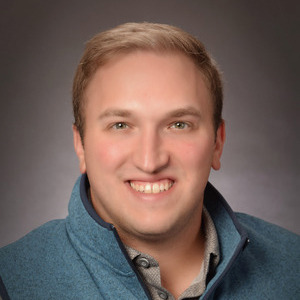
Kevin Dougherty (Provided Photo)
Kevin Dougherty was chosen by fellow Board members to replace Michele Pettit as Vice-President.
The Board postponed the previously announced executive session (for last night) to discuss the hiring of an interim Superintendent. The session will now be held on Tuesday, January 12 at 6 PM when they will have a “virtual” meeting. Dr. Amy Crouse resigned as Superintendent on December 17.
UP-DATE at 12:28 PM: Dr. Lorenz just sent Loveland Magazine this comment: “I am honored by the comments made by board members, suggesting that they would like me to continue facilitating the administrative work of board meetings. I know that all board members are equal and I know that the board President is simply the board member who helps by running the meetings and facilitating some communication with the district administration and the public at large.”
Who was Dr. Martin Luther King, Jr., really? Martin’s Dream answers this question and more as it brings this historical figure to life through the power of story, speech and song. Watch as Dr. King tells the story of his life, from his childhood in the Deep South all the way to the steps of the Lincoln Memorial, where he delivered his famous “I Have a Dream” speech.
Teachers, are you looking for MLK Day instructional material?
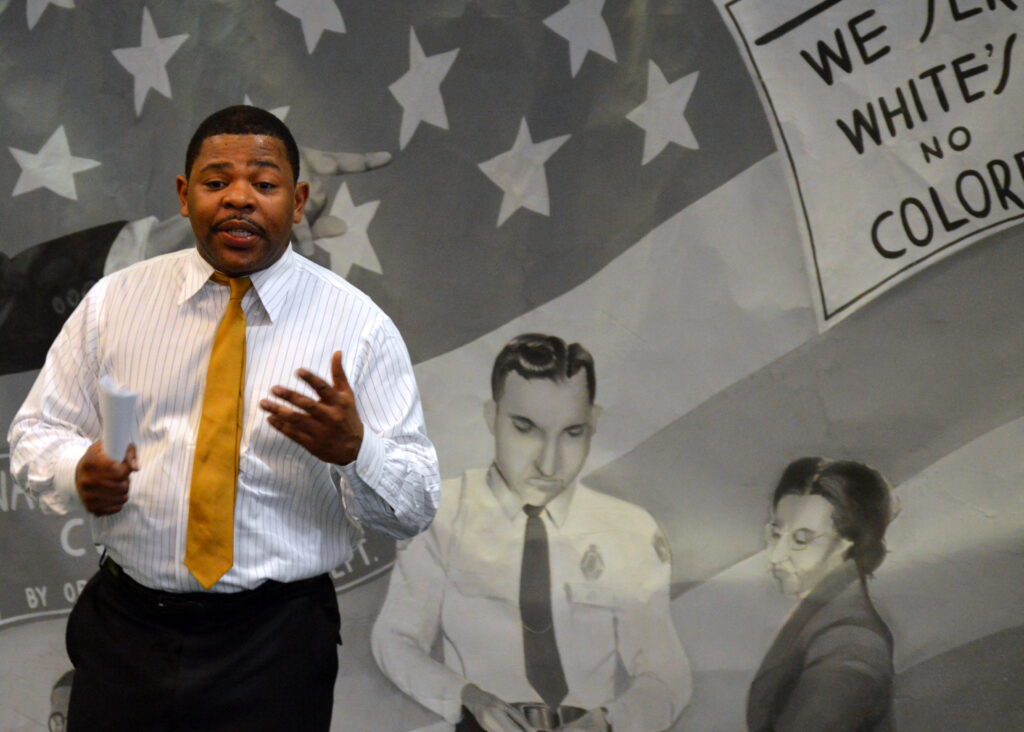
Photo by Lisa Mauch, courtesy of the Cincinnati & Hamilton County Public Library
Created and performed by the talented and charismatic Deondra Kamau Means, this one-man show explores the real person behind the pictures, a funny intelligent, passionate man whose faith, family and education made him one of the most revered people in our nation’s history.
Presented by The Children’s Theatre of Cincinnati. This performance was created for children in Grades 3-8.
The Children’s Theatre of Cincinnati has been creating lifelong memories for families with children and school audiences since 1919.
Register to receive a link to the on demand video, which can be viewed anytime from January 18-22. Links will be sent within 24 hours of registration. Registration ends January 21.
The Public Utility Commission of Ohio has restarted an audit of $465 million that Akron-based FirstEnergy collected from ratepayers in 2017 and 2018, supposedly to modernize the utility grid.
The state’s official watchdog, the Office of the Ohio Consumers’ Counsel, wants to know whether any of the money was used in a $61 million bribery scandal. That affair so far has resulted in a $1.3 billion nuclear bailout, the indictment of then-House Speaker Larry Householder and the guilty pleas of two of his associates.
But why the audit was called off in the first place also raises serious questions.
Leading the commission in voting to shut down the audit was Chairman Sam Randazzo. He resigned in November after FirstEnergy disclosed that it paid $4 million to someone just before he started regulating the utility in early 2019. Gov. Mike DeWine later said that Randazzo received the payment, but DeWine said he was unaware of it when he appointed the former FirstEnergy lobbyist to chair the PUCO.
For its part, FirstEnergy fired its CEO, Chuck Jones, when news of the payment came to light.
The Randazzo-led utility commission’s timing in stopping the audit might seem strange. It came just after the Ohio Supreme Court ruled in January 2020 that the charge FirstEnergy had been collecting was unlawful — seemingly a time when a regulator would want to know more about what happened with the funds.
A big reason why the court struck down the distribution-modernization charge: Despite allowing FirstEnergy to collect almost a half-billion extra dollars from ratepayers, the PUCO didn’t implement effective rules to ensure that FirstEnergy used the money to update the utility grid.
“Utility companies can be expected to respond to financial motivations, but not if the commission awards them money up front with no meaningful conditions attached,” the decision said. “The PUCO staff’s wishful thinking cannot take the place of real requirements, restrictions, or conditions imposed by the commission for the use of (distribution-modernization) funds.”
Not only did the PUCO call off the audit just as the charge was declared illegal, it did so as the auditors were making some interesting findings.
For example, it found that instead of using all the funds to improve its Ohio distribution system, FirstEnergy was placing some in a “Regulated Utility Money Pool,” from which out-of-state utilities could borrow.
To justify ending the audit — for which PUCO staff wanted more time — Randazzo and the other commissioners claimed that’s what the Supreme Court wanted.
“The court directed the commission to eliminate” the distribution-modernization charge, the PUCO wrote in its dismissal. “In support of this ruling, the court specifically objected to the usefulness of the proposed final review, questioning the lack of an effective remedy resulting from such review.”
However a reading of the Supreme Court’s opinion doesn’t mention any “specific objection” to the audit.
The relevant passage says that the auditors final report wouldn’t be available until after FirstEnergy had collected and spent the money.
“Thus, it is not clear what remedy would be available should the commission (or this court on appeal) find that FirstEnergy has misused DMR funds,” the ruling said.
One reason there’s no remedy, the court noted, is because when it allowed FirstEnergy to jack up its rates, the PUCO didn’t create any mechanism to refund the money to ratepayers if the charge is later declared unlawful or if it is shown the money was misused.
“FirstEnergy has been recovering (distribution-modernization) revenue since January 1, 2017, and the commission did not make the (revenue) subject to refund if FirstEnergy does not meet the required conditions,” the court wrote.
The $465 million FirstEnergy collected from the upcharge isn’t the only such money collected — and kept — by Ohio utilities. The consumer’s counsel reports that since 2009, $1.5 billion has been collected from Ohio ratepayers in upcharges that were later struck down by the courts.
As with the FirstEnergy charge, the PUCO didn’t create a mechanism to force other utilities to pay back the extra money they got back, either.
FirstEnergy objected to reopening that audit, but wouldn’t comment further Monday.
“Due to the ongoing PUCO audits, FirstEnergy is unable to provide additional information at this time,” spokeswoman Jennifer Young said in an email.
In a filing, the consumers’ counsel slammed the company’s objections.
“In an unfortunate display of corporate arrogance, the FirstEnergy Utilities are opposing an investigation by their state regulator, the PUCO, into utility consumer protection issues surrounding what has been described by a prosecutor as ‘likely the largest bribery scheme ever perpetrated against the state of Ohio,’” it said. “The PUCO has the authority under Ohio law to investigate the FirstEnergy Utilities and their owner, FirstEnergy Corp. FirstEnergy should get out of the PUCO’s way and cooperate.”
Nursing home workers are passing on their chance at early access to the COVID-19 vaccine, officials say, blowing a crosswind against a scarce supply of doses and a pandemic in a tailspin.
“I think in this case, [DeWine] is on target,” said Pete Van Runkle, executive director of an industry association representing Ohio’s long term care facilities.
“I talk to a lot of members on a regular basis. They are reporting a pretty low uptake among staff.”
Patrick Schwartz
Patrick Schwartz, a spokesman for Leading Age Ohio, an elder advocacy group, said he’s hearing mixed reports of some providers finding that 90% of staff chose to take the vaccine while others are “well below 50%.”
He attributed the shortfalls to misinformation and fear surrounding the potential for an adverse reaction to the vaccine.
“Many staff are simply ‘not yet ready,’ which will hopefully change as they see more and more colleagues vaccinated without side effects and confidence continues to build,” he said.
“By contrast, an overwhelming majority of residents seem willing to accept the vaccine, with many coming from the generation that saw polio and other deadly diseases wiped out by life-saving vaccines.”
The local Service Employees International Union surveyed its members on the issue, it said in a statement Monday.
The responses, according to SEIU 1199 President Becky Williams, indicate a trust problem between an exhausted, underpaid, underappreciated, and in many cases already-infected staff and health authorities.
She said this is a “substantial issue” that’s bigger than just the union and requires outreach and education from the state.
“Workers commented that the vaccine appeared rushed and unproven without enough data to show that it would be effective,” she said.
“Some workers are also concerned that the vaccine could cause fertility issues among women who may want to have a child. There are trust issues among frontline health care workers — some of which preceded the pandemic. These trust issues continue after so many nursing home workers have been on the frontlines of the pandemic without hazard pay and support such as needed personal protective equipment.”
Several news outlets have debunkedthisnotion of ‘fertility issues’ related to the vaccine. A quick scroll through the right Facebook group can deluge visitors with this and similar pieces of misinformation relating to the vaccine.
The Ohio Capital Journal called 13 state long-term care facilities Monday, who have each reported at least 100 COVID-19 cases among their residents, to discuss vaccination among their staffs. No administrators agreed to an interview.
Two vaccines (one from Moderna and one jointly from Pfizer and BioNTech) are currently approved for emergency use against COVID-19. They are both two-dose vaccines, taken several weeks apart.
Company data reviewed by the Food and Drug Administration shows both vaccines are about 95% effective preventing symptoms of COVID-19. While side effects (sometimes more intense than a standard flu vaccine) have been reported with both products, none of the vaccine trials have reported any serious safety concerns, according to information from Johns Hopkins University.
Before coming to market, both vaccines underwent large scale clinical trials over the course of months. They are now under review via continuous monitoring for problems and side effects from the FDA and the CDC.
The vaccine hesitancy comes as COVID-19 has infected 727,000 Ohioans, put about 39,000 in the hospital, and killed at least 9,143 since March.
At least 4,856 of those deaths occurred among residents of Ohio’s long-term care facilities.
There are several theories as to why nursing home workers would rebuff a vaccine dose, according to Tory Hogan, an Ohio State University professor who researches nursing homes and infection control.
She said some probably just don’t trust health authority; some have “been in the trenches” of the pandemic for a year now, prompting them to shrug off the unknown risk of vaccine for the better-known risk of infection; some probably just don’t want to be the guinea pigs.
“There has been so much misinformation about everything in this process,” she said.
Wood County Health Commissioner Ben Robison said he’s detected some vaccine hesitancy and refusal across all industries. However, some who deny at first are likely to come around.
“Anecdotally, we’ve heard among some of the populations we’re reaching with our vaccine, some have initially said no and then later said yes,” he said.
Some employers, especially in the health care industry, mandate the flu vaccine and other immunization. However, Van Runkle said the industry is already dealing with a widespread staffing shortage, only worsened by the pandemic.
He said most of Ohio’s nursing homes do not even mandate the flu vaccine. Mandating a COVID-19 vaccine would worsen staffing problems.
“We don’t need another reason for people not to work in our facilities,” he said.
A vaccine mandate would backfire
Hogan agreed that a vaccine mandate would backfire, and Williams, from SEIU, said education and outreach should drive universal vaccination.
The Ohio Department of Health has shipped 341,100 Moderna first-doses, as well as 9,750 Pfizer first-doses plus another 9,750 Pfizer second-doses, according to ODH spokeswoman Melanie Amato. Only about 162,942 Ohioans have started the vaccination process, which is prioritizing health care workers, first responders and nursing home staff and residents.
“We do not have visibility to how many staff members at a facility decline to be vaccinated,” said CVS Health Spokesman Charlie Rice-Minoso.
“While we aren’t provided with full staff rosters, based on feedback from our teams in the field we’re seeing more vaccine hesitancy among staff when compared with residents.”
Walgreens, another company administering the vaccines, did not respond to inquiries.
Looking at the bigger picture, Hogan said governments from the federal to local level need to do a better job understanding why some are declining vaccination. Similarly, she said they need to emphasize, as they did during the polio years, that vaccination is the patriotic thing for Americans to do.
“It takes consistently pushing the right message, the correct and accurate information,” she said. “That takes money, a federal response, all levels. We’re struggling with that a lot.”
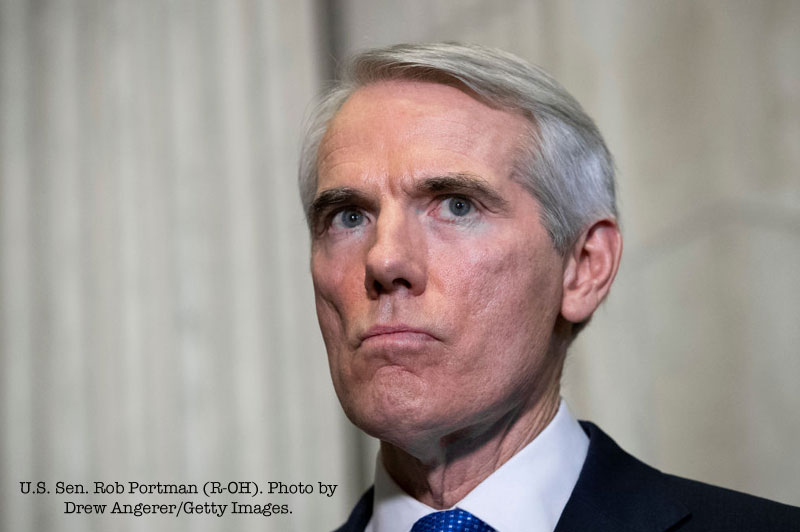
Sen. Rob Portman is rejecting a Congressional effort from fellow Republicans to overturn the presidential election, saying on Monday he “cannot support allowing Congress to thwart the will of the voters.”
Portman’s statement comes two days before members of Congress will meet on Wednesday to count the nation’s electoral votes, which were determined through last November’s election and later officially certified by each state. This is typically a ceremonial gathering, the final Constitutional requirement before the winning candidate is sworn-in as president on Jan. 20.
A group of Republicans in the U.S. Senate and the U.S. House of Representatives, citing unfounded allegations of voter fraud, have announced plans to vote against the electoral vote certifications for a number of swing states won by Democratic nominee Joe Biden.
Portman said Monday he would not be joining them.
“(A)fter two months of recounts and legal challenges, not a single state recount changed a result and, of the dozens of lawsuits filed, not one found evidence of fraud or irregularities widespread enough to change the result of the election,” a statement from Portman’s office reads. “This was the finding of numerous Republican-appointed judges and the Trump Administration’s own Department of Justice. Every state has now weighed in and certified its electoral slate based on its vote and the process set out in the Constitution.”
Portman acknowledged that “many Americans believe the election was unfairly decided.” An NPR/PBS NewsHour/Marist survey from December found that nearly 75% of Republicans believed the 2020 election results to be inaccurate.
Portman is advocating for a “blue ribbon bipartisan panel on election integrity” to look into “issues” from the 2020 election and make recommendations for future elections.
His statement mentions there were “instances of fraud and irregularities, as there are in every presidential election,” though it did not name any.
Back in 2016, Portman rescinded his support for Trump after the Access Hollywood tape surfaced in which Trump bragged in 2005 about groping women’s genitals. Portman, who in 2016 was running for reelection to the U.S. Senate, said he would be voting for Mike Pence instead.
Portman reversed again to become an ally of President Trump, even serving as a 2020 campaign co-chair in Ohio for his reelection effort.
Portman’s full statement on the Jan. 6 electoral college count can be read here.
Loveland, Ohio – The Loveland City School District announced today that they will relax COVID 19 quarantine guidelines and start using protocol announced on December 5 by Governor Mike DeWine
DeWine announced that Ohio was changing its guidance regarding quarantines following an in-classroom exposure in K-12 schools. The Ohio Department of Health said, “Moving forward, students and teachers exposed to a COVID-positive person in school are no longer required to quarantine as long as the exposure occurred in a classroom setting and all students/teachers were wearing masks and following other appropriate protocols.”
Loveland school students returned to the classroom today, Monday, January 4.
Here is the announcement issued by the District today:
Changes to K-12 School Quarantine Guidelines
Loveland Tiger Family,
We hope that you have had a safe and healthy winter break, and that your students have eagerly returned to their school activities!
As a result of the evidence of low in-school transmission rates of COVID-19, Governor Mike DeWine announced in his press conference last week that school districts will no longer have to quarantine students and staff who are in a “classroom setting” wearing masks and following other safety protocols that would have previously been named a close contact and had to stay home in quarantine for at least 10 days. Hamilton County Public Health, and under their direction the Loveland City School District, will follow this order.
For the purpose of this order, we wish to reiterate that the following:
Safety protocols to be adhered to include mask wearing, hand sanitizing and hand washing, maintaining social distance guidance, and continuing our thorough cleaning protocols – the “bundle”.
Where these protocols cannot be adhered to, students and staff may still need to quarantine following close contact with a person who is positive for COVID-19. For example, eating lunch prevents the wearing of a mask, and as such, close contact in this setting may require quarantining. However, as the district has worked hard to maintain social distancing in our cafeterias, we would expect that this would happen infrequently.
At this time, the district is waiting for guidance on whether or not students would need to quarantine for close contact on a bus. A future communication will clarify that issue. In the interim, Loveland will continue to quarantine close contacts for this setting.
Per the Governor’s order, this new quarantine guidance does NOT apply to close contacts that happen outside of the classroom setting. Students and staff who are identified as a close contact of a positive case outside of the classroom setting (for example, a family member, a teammate, or a close contact outside of school tests positive) will still need to follow the new CDC/ODH approved guidelines. This does include all athletics and extracurricular activities.
We will continue to communicate pertinent COVID-19 information with families as we did during the first semester:
Daily communications when a staff member or student tests positive within 48 hours of being at school if asymptomatic, or within 48 hours of having symptoms.
Personal communications from school when students are determined to be in close contact of a positive case, even if no longer required to quarantine.
Our COVID-19 Dashboard updated on Fridays and inclusive of at-school cases and quarantines (if applicable), as well as a separate tally of community cases that do not meet the definition of being at-school noted in the first bullet.
The district also announced that they have been notified of the following positive cases of COVID-19:
On 12/22/20, a student at Loveland Middle School, last at school on 12/14/20;
On 1/3/21, a student at the Loveland Early Childhood Center, last at school on 12/18/20;
On 1/4/21, a student at Loveland High School, last at school on 12/14/20; and
On 1/4/21, a student at Loveland High School, last at school on 12/16/20.
A state program to help those who can’t afford to bury their loved ones might see more action than usual, and cause the need for re-education for townships that have to pay for these burials.
The Indigent Burial and Cremation program works with townships and municipalities to reimburse some of the costs of funeral disposition. When a resident is found to fall below the federal poverty line, Ohio law requires that a local government pay for the burial or cremation.
But local government officials have said the program wasn’t used often in its last version, nearly two decades ago.
More recently, however, several townships have called the state’s Board of Embalmers and Funeral Directors to get information about the program, and there are currently 450 applications being processed, according to Cheryl Grossman, the board’s executive director.
“We look for that number to grow dramatically,” Grossman said.
While a death certificate isn’t required with the application for funding reimbursement, Grossman and others have said the ongoing opioid epidemic and the COVID-19 pandemic could cause the program to have increased use.
“The opioid crisis is not going away and in some places it’s only being exacerbated by the COVID-19 crisis,” said Heidi Fought, executive director of the Ohio Township Association.
The program was a part of the budget more than a decade ago, but budget cuts led to the elimination of it until the last budget bill, passed in July of 2019.
The new budget line item moved the program from the state Department of Job and Family Services to the Board of Embalmers and Funeral Directors and allowed the reimbursement of a total of $2 million.
Under the new version of the program, a township can get reimbursed for up to $1,000 in burial or cremation expenses for an adult, and up to $750 for a child. Those numbers are a slight increase from the previous program, where reimbursements were set at $750 for an adult and $500 for a child.
The Board of Embalmers and Funeral Directors seems to be the only state agency with information on the program. Representatives from the Ohio Department of Job and Family Services, the Department of Health, the Office of Budget and Management and the Auditor of State all referred questions about the use and payment of the program to the board.
“While the local governments in the Southeast Region receive some funding, it is usually sporadic and nominal,” said Denise A. Blair, assistant chief auditor in the Southeast Region for the Auditor of State. “It would not rise to the level of materiality that would be included in our scope.”
The OTA specifically lobbied to bring back the funding for the indigent burial program in the last budget, despite the rarity of a cut program returning to the state budget.
“The fact that it did come back does show that the need is there,” Fought said.
The need to re-educate townships on the existence of the program and how to be reimbursed for it is also there, because of the turnover over of local officials in the period between the program’s existence, according to Fought.
Only local government representatives can apply for the reimbursement, so individuals have to go through those government officials to get help with their funeral disposition.
The Ohio Township Association says the push to increase the program’s funding will continue, especially considering local governments are required to pay for indigent burials whether or not there is money in the program’s coffers to reimburse them.
“A local government entity must carry out this duty even if funds are no longer available through the program,” according to the embalming and funeral directors board page on the program.
The program is needed as a state program because poverty does not focus on one particular county, nor does the need for burials or cremations.
“Indigency knows no boundaries,” said Fought. “They’re in central Ohio or Cleveland or Cincinnati, they’re everywhere.”
Columbus, Ohio – Ohio’s 134th General Assembly opens today, and a key task for 2021 is congressional redistricting.
Voters approved a constitutional amendment in 2018 that creates a multi-step, transparent process for drawing congressional districts. New maps are made every 10 years.
Catherine Turcer, executive director for Common Cause Ohio, said the reforms were badly needed to prevent lines from being manipulated to favor one party.
“Map-making in the past was like the wild, wild West,” Turcer asserted. “They created a district that looks like a duck. The beak is in Lorain County, which is on Lake Erie, and the tailfeathers are on the Indiana border. So, there’s these really unusually-shaped districts.”
State legislative maps will also be redrawn under a new process this year.
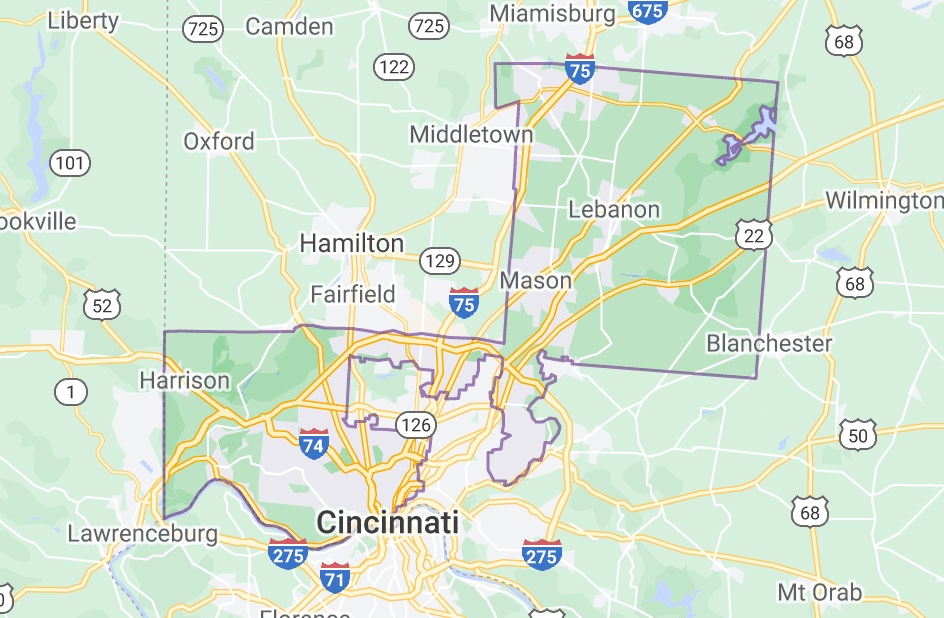
Ohio 1st U.S. Congressional District Map (Chabot)
Voters in 2015 approved creating the Ohio Redistricting Commission, a bipartisan group focused on creating maps that keep communities together and also increasing transparency.
Turcer explained the map-making process will be somewhat delayed, since the U.S. Census Bureau missed a Dec. 31 deadline to turn in the apportionment numbers used to determine congressional seats.
“We don’t have all the information that we would normally have,” Turcer maintained. “As we begin this process, we need to be patient, because we really want the census to do a good job. You want those numbers to be right, so that there’s fair representation across the country.”
Turcer contended gerrymandering has been a powerful political tool since 1812. And while the new rules encourage good behavior, she noted there are no guarantees.
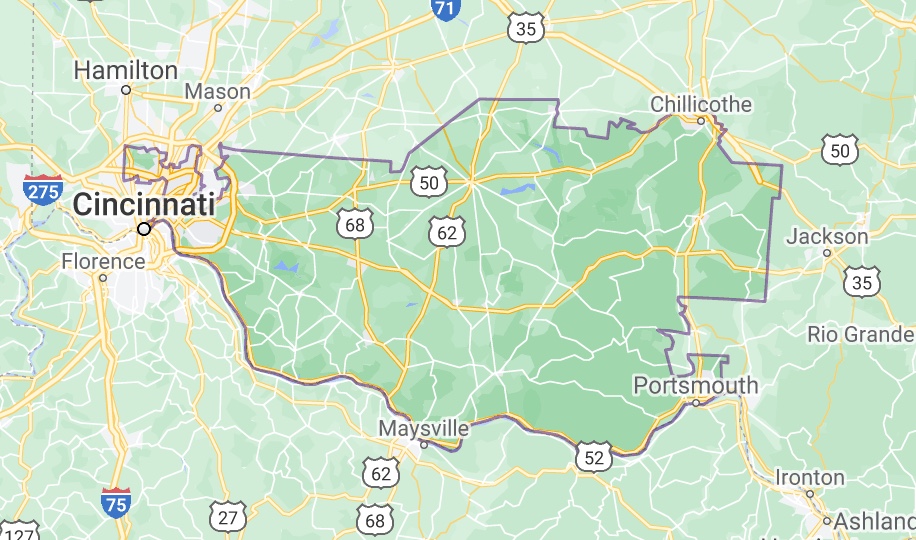
Ohio 2nd U.S. Congressional District Map (Wenstrup)
“We will need to watchdog the process and be as engaged as possible,” Turcer confirmed. “Because it’s much easier to do damage if people are not paying attention.”
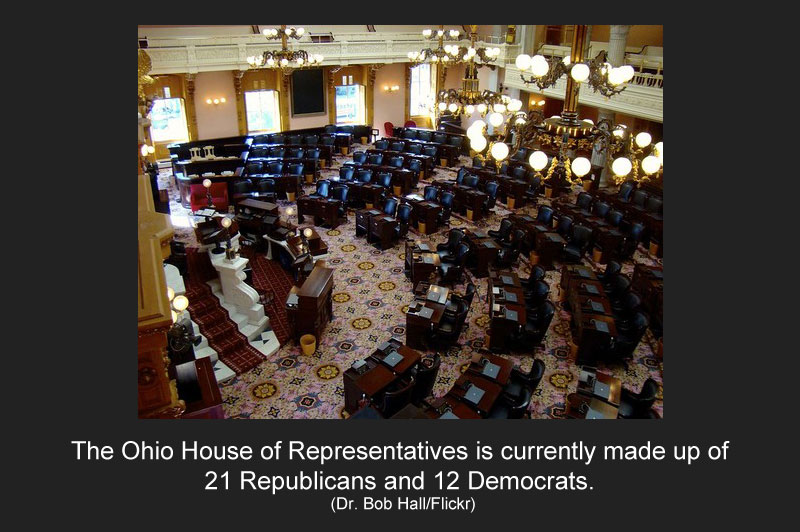
Ohio is expected to lose one of its 16 congressional seats, 12 of which are currently held by Republicans. And at present, the 33 state legislative districts are held by 21 Republicans and 12 Democrats.
This story was produced in association with Media in the Public Interest and funded in part by the George Gund Foundation.
Loveland, Ohio – Join for a BED (Books Engaging Discussion) Time book talk centering on diverse characters and underrepresented experiences. Co-sponsored by the Loveland Diversity Advisory Board and the Library.
In this creative non-fiction story, Sonia and her friends plant a garden, and each one contributes in his or her own special way, in a book that celebrates the many differences among humans. In this warm and inclusive story by U.S. Supreme Court Justice Sonia Sotomayor, inspired by her own childhood diagnosis of diabetes, readers join along as differently abled kids use their strengths to work together and learn about each other.
I’ll Walk With You by Carol Lynn Pearson
Help little ones learn to show love for the people around them, no matter how they look, sound, pray, love, or think. Beloved author of The Lesson and Will You Still Be My Daughter, Carol Lynn Pearson is known for her heartfelt, sometimes tear-jerking poetry and stories. Her newest title, illustrating her popular song written for children in 1987, will enchant children with a sweet, tender poem about loving and accepting others, no matter what they look like, where they come from, or what their age and abilities are. Carol Lynn Pearson is the author of more than forty books and plays, including Goodbye, I Love You and I’ll Always Be Your Daughter She has been a guest on The Oprah Winfrey Show,” and “Good Morning, America,” and was featured in People Magazine. She lives in Walnut Creek, California.”