Author: Loveland Magazine

  • Bill attacking Ohio health department’s COVID-19 power dies

    Bill attacking Ohio health department’s COVID-19 power dies

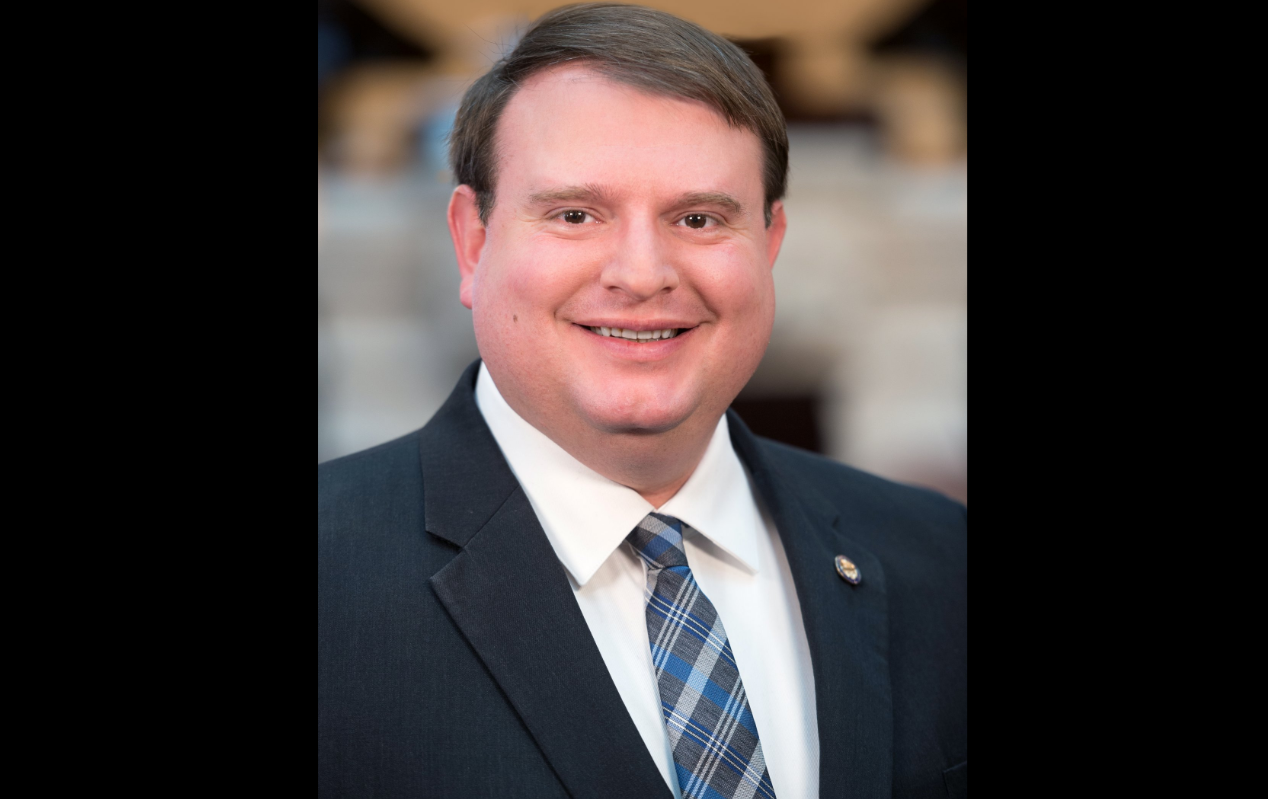
    Ohio Senate President Larry Obhof

    By Jake Zuckerman and Ohio Capital Journal December 23, 2020

    A legislative attempt to cripple the Ohio Department of Health’s legal authority to respond to pandemics died a quiet death Tuesday evening after the Senate President opted against attempting to override a gubernatorial veto.

    This puts a lid — for 2020, at least — on a months-long effort from Republicans to wrest “ultimate authority” in matters of quarantine and isolation from the ODH director, as it exists in state law.

    Senate Bill 311 would allow lawmakers to vote down public health orders, such as the statewide mask mandate.

    It would also prevent ODH from issuing a statewide or regional quarantine or isolation order against people who have not been exposed to or diagnosed with an infectious disease. Legal experts say this would preclude the health department from issuing stay-at-home orders, as it did this Spring.

    The legislation formed a wedge between Republican lawmakers and GOP Gov. Mike DeWine, who vetoed the bill earlier this month after calling the proposal a “disaster.” Lawmakers have pushed a string of different attempts to weaken ODH’s public health power since April.

    Lawmakers passed the bill despite opposition from the Ohio Hospital Association, the Ohio State Medical Association, and public health officials. They said the bill would weaken the state’s ability to respond to COVID-19, which has killed 8,252 Ohioans since March.

    Senate President Larry Obhof, R-Medina, spoke to reporters late Tuesday night after the final full voting session of the 133rd General Assembly. He said passing separate legislation designed to force ODH to treat large and small businesses more equitably in the event of another shutdown was a viable alternative to a veto override. The House would need to approve this by year’s end.

    The Senate passed SB 311 with 20 votes, leaving none to spare on the 3/5 majority needed to override. Four Republican senators — Matt Dolan, Peggy Lehner, Stephanie Kunze, and Kirk Schuring — joined with Democrats to oppose the bill.

    However, the political calculations change. A single vote flip wouldn’t have made much difference on passage but could torpedo the veto override outright, which must begin in the Senate per constitutional rules.

    It would also have needed 60 votes in the House, a more complex endeavor.

    The House passed SB 311 with 58 GOP votes, two shy of the override threshold. Three likely yes votes were absent at the time.

    However, activists have since worried about two Republicans they called “weak links” in the override chain — Reps. Gayle Manning and Dave Greenspan, both of whom voted against a more robust version of similar legislation this Spring.

    During interviews earlier this month, they both declined comment on whether they’d vote to override the veto.

    A rash of COVID-19 cases among House lawmakers also scuttles the whip count. At least seven House lawmakers have contracted COVID-19 in December. The Cincinnati Enquirer reported at least 13 House legislators were absent from voting Tuesday, including six Republicans.

    Obhof described the legislation passed Tuesday as a pragmatic compromise, although he still supports SB 311. He said the thinned-out House Republican caucus was a factor in his decision, but not the driving force.

    “The House hasn’t had 60 Republican members in in weeks,” he said. “That’s not why we didn’t pass it, but I think it is an important background fact when you see some members clamoring for that and demanding that.”

    The bill was the subject of tremendous pressure. House lawmakers accused Obhof of stalling on the bill. Activists, some of whom were armed, did as well when they showed up outside his home Sunday calling on him to pass the legislation.

    Any member can introduce similar legislation when the next General Assembly convenes next year, although the entire process would have to restart.
  • Loveland appoints new Director of Finance

    Loveland appoints new Director of Finance

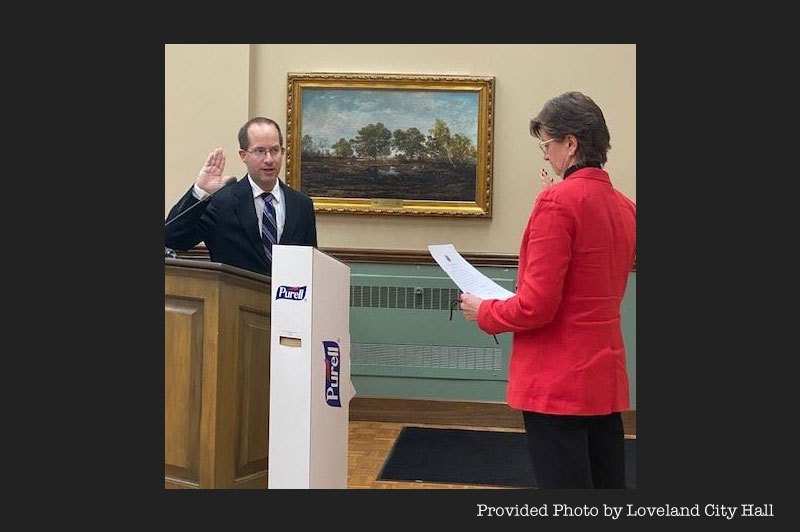
    Loveland, Ohio – At the December 15 City Council meeting, Mayor Kathy Bailey issued the oath of office to the City’s new Director of Finance, Mark Medlar.  

    Medlar, who was hired by the City Manager, began his employment began on December 14. 

    Medlar comes to the city via Butler County where he oversaw all financial functions of their water and sewer departments. He also served as a Management Analyst for the City of Cincinnati, where he provided financial analysis for various city departments.

    Background:

    Loveland Finance Director submits letter of resignation

  • This Christmas will be different

    This Christmas will be different

    This is Loveland High School graduate Gretchen Kessler’s latest video production for her choral group in Budapest. Shot and edited by her. … Oh, and her on a wooden Irish flute.

    Gretchen now lives in Budapest, Hungary. She has studied Film at Swansea and Ohio University.

    This Christmas will be different from the rest. We, the Song Factory Budapest, want to help keep the magical atmosphere of the holiday in spite of the current situation in your homes. This time our choir members contributed not only to the birth of their singing voices but also to the birth of our Bagossy Brothers Company Processing of the Evening Singing.

    Welcome with love, we wish you all a cozy, happy holiday!

    https://www.facebook.com/songfactorybudapest/videos/157446692386022/

    This Christmas will be different than previous ones.

    We, the Song Factory Budapest, would like to help the magical atmosphere of the holidays to be present in your homes, even in the midst of the current situation.

    This time, our choir members contributed not only their vocals but also their instrumental talents to this adaptation of Esti Ének by Bagossy Brothers Company.

    Please welcome our song, and we wish you all a very Merry Christmas!

    Transcription by Arranged by Benedek Hetei-BakóVoice / Mixed and Master by Cherny ‘Bogi’ KálmánVideo production by Gretchen KesslerWritten by Piano Arangement by Dancsó-Kovács ÁkosMusicians / Musicians:Éva Adravetz-Kadocsa-drum / drumDaniel Brouwer-guitar / guitarÁkos Dancó-Kovács – piano / pianoDeák Barnabás-bass guitar / bass guitarGretchen Kessler – Irish Flute / Irish FluteEszter Kamarás-violin / violinVeronika Mucsi-ukulele / ukuleleAgnes Santo – violin / violin

  • Watch the Loveland Stage Company’s Holiday Radio Show

    Watch the Loveland Stage Company’s Holiday Radio Show

    Loveland Magazine is in a holiday spirit because we were able to help keep local ARTSalive by lending our video equipment to the Stage Company for the recording of this show and being a year-round sponsor to make possible this production of:

    2020 LSC Holiday Radio Show

    By The Loveland Stage Company

    Recorded:  December 2, 2020
    Released:  December 11, 2020

    Scroll to the bottom to watch the show!

    Cast:

    Becky Jones
    Becky Jones – Storytelling of A visit from St Nicholas
    Becky is thrilled to participate in the LSC holiday show! She is the music director at Christ Presbyterian Church, the assistant band director at Loveland high school and teaches flute clarinet and sax privately. She loves playing in pit orchestras around town for fun! 
    When she isn’t teaching or playing, she spends time at her farm with her herd of dairy goats! She loves sharing the stage with her best buddy, Louie!
    Louie Jones
    Louie Jones
    Louie loves the Loveland Stage Company! This is his second performance with the company and is honored to be here with his friends. He wants to thank Michael and Jill for this opportunity to develop his onstage persona! He also hopes everyone has a great howliday!
    Caitlyn Sanderson
    Caitlyn Sanderson – Story of The First Holiday without a Family Member 
    Caitlyn is thrilled to be performing in her first radio show in LSC. She’s been with LSC for 4 years helping backstage, ushering shows, and going to Saturday’s Dance Class with Margie. She was recently in Gypsy as Agnes with LSC. She’s also involved with different theater groups such as Mason Community Players and Queen City Productions. When, she isn’t at the theater, she works full time as an Order Picker at The Hillman Group and spending time with her nephew and niece, Beau & June. She thanks her family and her co-workers for their support. Lastly, she would like to thank Michael & Jill, who allowed her to be part of the radio show. Caitlyn wants to dedicate the radio show to her Grandma Dolores who recently passed away last December.
    Dave Marcus
    Dave Marcus – Singing – Nothing But A Child 
    Dave is currently Vice President of LSC. He has been in a number of LSC productions including, Guys and Dolls, Fiddler on the Roof, White Christmas, and The Producers. Dave has a love of Celtic music and plays the guitar, mandolin, 4-string banjo, and octave mandolin in several bands around Cincinnati. He would like to wish everyone Happy Holidays and to stay healthy during these trying times.
    The Hubbard Family
    The Hubbard Family Band – playing/singing Christmas melodies. Arranged by Aiden Hubbard
    The Hubbard Family Band was first established in 2000 when Christopher and Melinda officially joined forces. They performed together at events around the country (mostly at the weddings of friends). In 2002, Aiden came singing into the world, and has never stopped. Gavin joined in at the end of 2004. In honor of these boys, the band recorded their first album – Lullabies That Will Hopefully Put Them To Sleep. But the band was not complete until 2007 when Mearen joined in. At age 5, Mearen overheard her parents say ‘All we need is a drummer!’ and she never looked back. In its current incarnation (Aiden – arranger, composer, vocals, electric ukulele; Gavin – saxophone; Mearen – percussion, vocals; Christopher – guitar, bass, voice of reason; Melinda – vocals, keyboard, videographer, general-keeping-it-togetherer), The Hubbard Family Band provided music and fun to family and friends via videos on Facebook during the pandemic shut down. We are thrilled to be at the Loveland Stage Company to share our love of music, family, and holidays with you.
    Jazz McMullen
    Jazz McMullen – Singing O Holy Night 
    Jazz is a Cincinnati Native and graduate of The School for Creative and Performing Arts, where he majored in Drama, Vocal Music and Musical Theatre. He is thrilled to continue his involvement with LSC in the Holiday Radio Show! Being no stranger to the stage, Jazz has appeared in such productions as; Dreamgirls (James “Thunder” Early), Parade (Newt Lee/Riley), Beauty and the Beast (Maurice), Little Shop of Horrors (Mushnik), The Whiz (Lion) and a host of others! “Give me your hands if we be friends and Robin shall restore amends.”
    Jill Gornet
    Jill Gornet – Announcer / Producer 
    Jill is excited to be co-producing The LSC Holiday Radio Show. She was co-producer for Bugsy Malone, Jr., Don’t Drink the Water and A Funny Thing Happened on the Way to the Forum. Jill won an Orchid as the producer of The Drowsy Chaperone. She was last seen on-stage at LSC in Memphis (Clara/ensemble), White Christmas (quintet/ensemble), Will Rogers Follies (quartet) and Fiddler on the Roof (Rifke/ensemble). Retired from USPS, she sings with Sharonville Chorus at retirement/assisted living homes. Jill would like to thank her family and friends for their love and support.
    Micheal Harris-Kiser
    Micheal Harris-Kiser – Announcer / Director / Producer
    Micheal is a multiple award-winning director, actor, and set designer. Studying acting at The American Academy of Dramatic Arts, Micheal has pursued his passion for theatre in various fields. He is co-founder of Stage and Steel in Pittsburgh, PA. He has performed with many groups throughout the city. His set designs have graced many a stage. He serves as president for the LSC board, as well as secretary for The Greater Cincinnati ACT board. He is delighted to continue bringing LSC Radio to you.
    Jenna Schroeder
    Jenna Schroeder – Story of Mary’s Journey 
    Jenna is a mom, writer, dancer and doula in Loveland. She enjoys participating in LSC’s productions whenever she gets a chance! Jenna is excited to share her rendition of the journey of Mary and Joseph during the holiday season with LSC’s radio program. Although it’s been a heavy year, she hopes her story will provide encouragement to everyone listening…that even out of hard places, beautiful things are born. She wishes you and yours, a very Merry Christmas!
    Lily Schroeder
    Lily Schroeder – singing Silent Night (with Jenna)
    Lily is an actor, singer, and dancer who is in Loveland Show Choir. She loves to read any book she can get her hands on and is excited to sing “Silent Night” on LSC’s radio station! She hopes you enjoy and that you have a merry Christmas!
    Mary Shumar
    Mary Shumar – Story of My Memorable New Years Eve
    Mary’s love of theatre dates back to children’s theatre classes in Canton, Ohio. At Marquette University, Mary worked in the costume shop and made time to perform in student productions. Her favorite role was Lucy in You’re a Good Man, Charlie Brown. As a “grownup,” Mary’s audience had been limited mostly to preschoolers, teacher trainees, and her three grandsons. Since moving to Loveland in 2018, she has enjoyed performing in both Mamma Mia and now the LSC Radio holiday show. It’s so much fun to be onstage and to spend time with theatre people! Mary wants to thank Micheal and Jill for assembling this happy group of performers to celebrate the holidays!
    Susan Shapiro
    Susan Schapiro – Story of Juggling Two Holidays in the Family
    Susan is delighted to be performing in her 8th LSC show. After a 41-year break from musical theater, she has been thrilled to perform in many LSC musicals, from Anything Goes to A Funny Thing Happened on the Way to the Forum, as well as in Eastside Players’ Mary Poppins, Oliver, and Into the Woods, in Footlighters’ Jekyll and Hyde, and most recently in Queen City Productions’ Titanic. This is her first and long-awaited experience with a radio show. A retired neonatologist, Susan also enjoys choral singing and is currently a member of the Forest-aires and Jubilant Singers. She thanks her family for their support, and trusts that everyone will love the 2020 LSC holiday show.
    Crew:
    Bob Kessler
    Bob Kessler – Tech Director
    Bob works as both a Director of Photography in the regional video community, and as an artist at Kessler Studios, a Loveland-based stained glass and mosaic firm. Bob has served as the Lighting Chair for the Loveland Stage Company since 2013, and has volunteered as Lighting Director on many plays at LSC: Cole: An Entertainment, Memphis, 9 to 5, Jekyll & Hyde, Fiddler On The Roof, I Remember Mama, Oklahoma!, and The Producers.
    John Nixon
    John Nixon – Music Director
    John’s musical experience stretches over a wide range of styles and eras from directing a Renaissance choral group in his native England to performing and recording on digital electronic instruments for modern-day musicals. John has worked with many of Cincinnati’s community theater groups as music director and orchestra member and is the recipient of numerous Orchid awards at local, regional and state levels. He directed the music and vocals for “Miss Saigon”, “Anything Goes”, “The Producers” and “A Funny Thing Happened On The Way To The Forum” and most recently “Cole” for Loveland Stage Company.
    Nancy Downing
    Nancy Hartman-Downing – Photography
    Nancy has been Owner/President of Cleveland Specialties Company since 1986, which designs and manufactures paperboard and plastic packaging products for the food and dairy industry. Her experience is in administration, sales, accounting and computer technology. She holds a B.A. in Business Administration from Baldwin-Wallace College. She currently serves as President for Loveland Woman’s Club. Nancy has been involved with LSC since 2006 doing fundraising, photography, publicity, ticket sales, program ad sales, as well as serving on the Board of Directors as Treasurer. She enjoys working with such a talented group and looks forward to continuing her involvement into the future.

    Donating to LSC

    With your donation, Loveland Stage Company is able to provide quality theater and performing arts experiences for the greater Cincinnati community.  Your donation allows us to make updates to our theater as well as produce some award winning theater.  Even $1 dollar goes far to help us provide our audience and community with a great performance.  The donations we receive go to our general fund, which supports the theater, including maintenance, licensing fees, technical upgrades, and productions.

    Thank you for generosity and support of community theater.

    Many companies offer matching grants for their employees participation in community theaters.  Ask your company if they offer one.  (For example, current or retired GE employees are eligible for the GE Foundation Matching Grant.)

  • Congress seals the deal on emergency relief after dispute over Fed lending settled

    Congress seals the deal on emergency relief after dispute over Fed lending settled

    Protesters take part in the AFL-CIO Workers First Caravan for Racial and Economic Justice near the U.S. Capitol on June 17, 2020 in Washington DC. The caravan circled the U.S. Capitol and national mall while honking their car horns to bring attention to their cause. | Drew Angerer/Getty Images.

    By Laura Olson and Ohio Capital Journal

    Washington D.C. — A deal on a coronavirus relief package finally emerged on Sunday night, after members of Congress resolved a days-long impasse over a provision sought by U.S. Sen. Pat Toomey of Pennsylvania to ensure that several temporary Federal Reserve lending programs will end this year.

    Working through that disagreement over the Fed was a key final piece to hammering out what’s expected to be a $900 billion aid bill, which would be the first major pandemic relief measure to reach the president’s desk since March.

    The Fed provision is just one piece of the massive bill that’s expected to include a $600 direct payment to Americans who received a check earlier this year; $300 a week in  emergency unemployment benefits; an extension of eviction protections; the suspension of student loan payments; additional loans for small businesses; and added funding for food assistance, child care support and coronavirus testing centers and vaccine distribution.

    The text of the bill was not yet available on Sunday night and a final vote is not expected until Monday at the earliest. According to Democratic leaders, it also will include an end to so-called surprise billing for emergency and scheduled health care; $25 billion in rental assistance for struggling families; an enhanced tax credit for low income housing; $82 billion for K-12 schools and higher education; an expansion of Pell Grants for low-income college students; and $7 billion to increase access to broadband.

    To give themselves more time to finish up the massive relief measure, which would be paired up with funding for the government for fiscal 2021, the House and Senate were set to vote late Sunday night on another stopgap spending bill that would prevent a government shutdown, this one running through Monday.

    “We have now reached agreement on a bill that will crush the virus and put money in the pockets of working families who are struggling,” House Speaker Nancy Pelosi (D-Calif.) and Senate Minority Leader Chuck Schumer (D-N.Y.) said in a statement Sunday night.

    Senate Majority Leader Mitch McConnell (R-Ky.) tweeted that an agreement was at hand.

    “As the American people continue battling the coronavirus this holiday season, they will not be on their own. Congress has just reached an agreement. We will pass another rescue package ASAP. More help is on the way,” tweeted McConnell.

    Negotiators in the Democratic-controlled House and Republican-controlled Senate had appeared close to a deal late last week. But those talks stretched on, with the disagreement over Toomey’s Federal Reserve provision cited as a final sticking point.

    Toomey, a Republican who was involved in crafting the CARES Act, said the legislation approved last spring allowed the Fed to create several temporary credit facilities because the financial markets were in danger of freezing up at the height of the economic crisis. Those programs were intended to be temporary and not a long-term expansion of the Fed’s authority, he added.

    But Democrats viewed the language he sought as too broad, and potentially too much of a restriction on the Fed’s power. That led to days of negotiations, and forced Congress to approve another short-term spending bill late Friday as lawmakers scrambled to save the aid package. That stopgap would expire at midnight Sunday.

    Toomey said Sunday morning that the final language was still being drafted, but was narrowed to clarify the programs that would end this year.

    “The Democrats made a fair point. That was too broad. And that might have captured facilities that we didn’t intend to capture,” Toomey told reporters. “So yes, it was narrowed down.”

    Negotiators were unable to resolve disagreements on two contentious provisions: additional aid to state and local governments, which was sought by Democrats, and a GOP-backed proposal to protect employers from COVID-19-related lawsuits by workers who get sick. Both were dropped.

    “We are disappointed that Republicans have refused to recognize the need to honor our heroic frontline workers by supporting robust funding for state and local governments.  State and local governments need much more funding to prevent senseless layoffs and critical service cuts.  The agreement does provide some new targeted funds for government functions that will help ease their budget burdens,” Pelosi sand Schumer said.

    President Donald Trump, who has largely been absent from the negotiations, tweeted late Saturday night, urging Congress to “GET IT DONE, and give (Americans) more money in direct payments.”

  • Clermont County Water Resources seeks feedback on possible rate increase

    Clermont County Water Resources seeks feedback on possible rate increase

    Clermont County, Ohio – The County wants to gauge public response to raising water rates $5.88 (due every two months) and asks residents to participate in a survey. Annual rate increases (for years 2021-2025) are projected to increase revenue 9.5 percent for water and 3 percent for sewer each year.

    Read the request from the County below:


    Clermont County Water Resources invites its customers to participate in a brief survey: https://www.surveymonkey.com/r/M5MFWQP Please respond by 4:30 p.m. Dec. 23. The survey only takes a few minutes to complete.

    In 2021, average residential water and sewer bills (due every two months) would increase by $5.88 under recommendations made by the NewGen Strategies & Solutions consulting firm at the Dec. 2 Board of County Commissioners meeting. Commissioners had a Q/A session on Dec. 8 and are expected to vote on final recommendations on Dec. 28.

    Annual rate increases (for years 2021-2025) are projected to increase revenue 9.5 percent for water and 3 percent for sewer each year and would help pay for ongoing replacement of an aging treatment, distribution and collection system as well as regular maintenance and operation.

    Clermont County by far has the lowest water and sewer rates in Southwest Ohio, according to NewGen. Rates for the City of Cincinnati more than double Clermont County’s. Sewer rates are currently less than the 1993 rates and the last water rate increase came in 2015.

    For a look at the presentation, please click here: Clermont County Recommendations Presentation (2020-12-02)

    You may also email comments to:      watersewer@clermontcountyohio.gov

    Or mail them to:

                    Clermont County Water Resources Department

                    4400 Haskell Lane

                    Batavia, OH 45103

                    Attn: Lyle Bloom

  • House passes ‘stand your ground’ expanding right to shoot to kill in self-defense

    House passes ‘stand your ground’ expanding right to shoot to kill in self-defense

    By Jake Zuckerman and Ohio Capital Journal

    The Ohio House passed legislation late Thursday evening that removes a legal requirement that people try to retreat from a confrontation before shooting to kill in perceived self-defense.

    The legislation, commonly referred to as “stand your ground,” passed in a 52-31 vote around 11:30 p.m.

    If passed into law, it rescinds what’s known as the “duty to retreat” from a confrontation before using a firearm in self-defense.

    In 2008, lawmakers removed the duty to retreat in a confrontation in one’s home or vehicle, a concept known as “castle doctrine.” Senate Bill 175 would expand the castle doctrine to almost any place where a person is lawfully present.

    If a person does shoot someone else and claim self-defense, the legislation says a court cannot consider the possibility of retreat when assessing whether that person used force in self-defense.

    House Republicans passed the bill despite opposition from law enforcement, prosecutors, and anti-gun violence activists. In doing so, they handed a major victory to the firearms lobby and gun owners’ associations. A small handful of Republicans joined Democrats in opposing the legislation.

    Rep. Kyle Koehler, R-Springfield, introduced the proposal as an amendment to an unrelated piece of gun legislation after his original bill stalled out in committee. The parliamentary move served to circumvent a committee vote.

    Koehler said it’s illogical to place a legal duty to evade a perilous situation on a gun owner who’s facing a threat from someone with no regard for the Ohio Revised Code.

    “If someone is bent on killing another individual, the laws we write on paper do not matter,” he said.

    Democrats said the policy incentivizes shootouts when avoiding violence is an option.

    Several of them, including four Black women from the caucus, said the legislation has major racial implications. A jury, they said, is more likely to take a white person’s claim of self-defense at face value than it might a Black person’s.

    Conversely, a Black person is more likely to be perceived as a threat than a white person, they said.

    “Black people are going to die disproportionately compared to white people,” said Rep. Stephanie Howse, D-Cleveland.

    Rep. Erica Crawley, D-Columbus, asked Koehler directly on the floor whether he had spoken to any Black people about their thoughts on the legislation. Koehler, in response, said he considers a Black child he’s helping raise anytime he acts as a lawmaker.

    The legislation still needs approval from the Senate, which hastily scheduled a Friday floor session (Thursday was thought to be the last lawmaking day of 2020). A Senate committee passed a stand your ground bill last week, but the full chamber has not yet voted on it.

    Gov. Mike DeWine remains an X-factor on the matter.

    After the 2019 Dayton shooting left nine dead and 27 injured, DeWine pushed for legislation to bolster the background check system used before a firearms purchase, toughen laws on people in possession of guns if they’ve lost the legal right to wield them, and expand a legal process for courts to temporarily seize guns from people in mental health crises.

    The legislation, barring a major shift among lawmakers, is all but dead for the session. DeWine told the Cincinnati Enquirer this week that lawmakers shouldn’t move on gun-rights expansions but didn’t say whether he’d veto stand your ground.

    After campaigning on the merits of the legislation, Rep. George Lang, R-West Chester Twp., abstained from voting. House Speaker Bob Cupp. R-Lima, attributed it to a potential “conflict of interest.”

    Lang owns a business that sells liability insurance for gun owners should they shoot to kill in self-defense. He operates the business along with two executives of Buckeye Firearms Association, a local gun-advocacy organization.

    One of those two, Dean Rieck, testified in support of the same legislation before a Senate committee last week.

    “If you honestly believe you are about to die, it is cruel and absurd to expect you to attempt escape, delaying your own self-defense and putting your life in even greater danger,” he said.

    The Ohio Association of Chiefs of Police have opposed the proposal, arguing it allows for gun violence where a non-violent escape is possible.

    Lou Tobin, a lobbyist with the Ohio Prosecuting Attorneys Association, has said the bill is predicated on inaccurate assumptions that prosecutors file homicide charges against people who justifiably use force in self-defense.

    Speaking to a Senate committee, he echoed a common criticism from Democrats that there is no crisis in the criminal justice system of unwarranted homicide charges against people who used force in self-defense. He called the proposal a solution “in search of a problem.”

    At least 25 states do not require retreat before shooting in self-defense, according to a May research brief from the National Conference of State Legislatures.

    In 2018, the Ohio House and Senate voted to override Gov. John Kasich on a similar issue, amending the law to place the burden of disproving a self-defense claim on the prosecution.

    That same year, guns killed 1,555 Ohioans, according to data from the CDC.

  • DeWine asked for gun control. Lawmakers gave him a ‘make my day’ bill

    DeWine asked for gun control. Lawmakers gave him a ‘make my day’ bill

    By Jake Zuckerman and Ohio Capital Journal

    The Ohio Senate passed a “stand your ground” bill Friday, sending to Gov. Mike DeWine a proposal that would rescind a requirement that gun owners first seek to elude a confrontation before responding with bullets.

    If passed, Senate Bill 175 would hand a major victory to gun advocacy groups like the National Rifle Association and the Buckeye Firearms Association who have pushed the proposal for years.

    Conversely, passage comes as a loss for prosecutors, law enforcement associations, and anti-gun violence activists who testified against the bill.

    The legislation landing on DeWine’s desk marks a major legislative loss for the governor, who put his political muscle behind a comparatively modest gun control package after a mass shooting in 2019 in Dayton left nine dead and 27 injured.

    Legislative leadership never put DeWine’s bill up for a vote. However, they fast-tracked stand your ground, circumventing any committee vote and passing the bill through both the state House and Senate in the dying hours of the legislative session.

    Should DeWine sign SB 175, he would remove from state law the “duty to retreat” from a confrontation, which compels people with a reasonable belief of a threat to bodily harm to reasonably try to escape a showdown before engaging with force.

    In 2008, lawmakers removed the duty to retreat in a confrontation in one’s home or vehicle, a concept known as the “castle doctrine.” Senate Bill 175 would expand the castle doctrine to almost any place where a person is lawfully present.

    If a person does shoot someone else and claim self-defense, the legislation says a court cannot consider the possibility of retreat when assessing whether that person used force in self-defense.

    “It’s just a very simple thing to take out of the law that will help average citizens should they come into a situation where they have to defend themselves,” said Sen. Terry Johnson, R-McDermott.

    Democrats criticized the proposal, saying it foments a showdown culture by alleviating people of a reasonable requirement to try to defuse a situation before escalating it.

    They also said the bill will disproportionately harm Black people, who are more likely to be perceived as threats and less likely to be taken at their word should they mount a claim of self-defense.

    “Removing the duty to retreat leads to the unnecessary escalation of tense situations,” said Sen. Cecil Thomas, D-Cincinnati.

    A handful of Republicans joined Democrats in opposition, notably including the judiciary chairman, Sen. John Eklund, R-Munson Twp.

    He said it doesn’t make sense to limit what a jury can or can’t consider (i.e. whether a shooter could have retreated first).

    Sen. Peggy Lehner, R-Kettering, gave a floor speech against the bill, arguing it sends a dangerous signal to Ohioans.

    “The symbolism is, don’t think for one minute that we’re going to back off from our love of guns, or back off in any way that suggests there might be limits to the Second Amendment,” she said.

    Sen. Bill Coley, R-Liberty Twp., spoke in support of the bill, characterizing it as a logical extension of the right to bear arms.

    “We are clarifying the rules of how that right will be properly executed in this state,” he said.

    Following passage, all eyes are on DeWine.

    “Instead of dealing with the multiple crises facing Ohio, Republicans in the legislature are doing everything they can to make our state less safe,” said Michael McGovern, a spokesman with ProgressOhio, a liberal policy group.

    “Now we will find out if Gov. DeWine is serious about addressing gun violence in Ohio. If he does not veto this bill, he loses all moral authority on this issue.”

    The Ohio chapter of Moms Demand Action, a gun control group formed after the Sandy Hook school shooting in Newtown, Conn., said anything short of a veto from DeWine is an “abdication of duty.”

    “Ohioans have been crystal clear, we don’t want to live in a state with Stand Your Ground. Gov. DeWine, this is your chance to do something — veto Stand Your Ground,” said Lisa Voigt, a volunteer with the Ohio chapter. “Stand Your Ground is not only dangerous, it’s also unnecessary — Ohio self-defense law already protects people in imminent danger with no other option. Stand Your Ground is about protecting vigilantes and people who would rather shoot than walk away from an argument and would put more lives — especially Black lives — at further risk of gun violence.”

    Rob Sexton, a Buckeye Firearms Association spokesman, said his organization has been pushing for stand your ground for about a decade. As Ohio has broadened its gun rights during that period, he said the counter-arguments that the new policies will lead to a “wild west” type culture have never panned out.

    “When it comes to duty to retreat, we’re really talking about evening the playing field for the victim,” he said.

    Speaking to reporters last week, DeWine signaled a distaste for the bill but didn’t specify whether he would veto SB 175. A DeWine spokesman could not immediately be reached for comment.

    A DeWine veto would likely be the end of the line for the bill. There aren’t enough votes for an override in either chamber; the legislative session wraps up at year’s end at which point all unfinished legislation is dead; and DeWine has 10 days (not counting Sundays or holidays) after receiving the bill before he must act on it.

    Stand your ground laws first gained traction in the 1980s, then nicknamed “make my day” laws after the iconic line from Clint Eastwood in the “Dirty Harry” film series. Eastwood utters the phrase after thwarting a diner robbery in a gunfight.

    Since then, at least 25 states have passed such laws, according to a policy brief from the National Conference of State Legislatures.

    In 2018, the Ohio House and Senate voted to override Gov. John Kasich on a similar gun policy issue, amending the law to place the burden of disproving a self-defense claim on the prosecution.

    That same year, guns killed 1,555 Ohioans, according to data from the CDC.

  • New Community Paramedicine Program Program for Miami Township

    New Community Paramedicine Program Program for Miami Township

    Miami Township, Ohio – This story is re-plublished here and first published in Miami Township’s “Inside Miami Township” Winter 2020 newsletter.


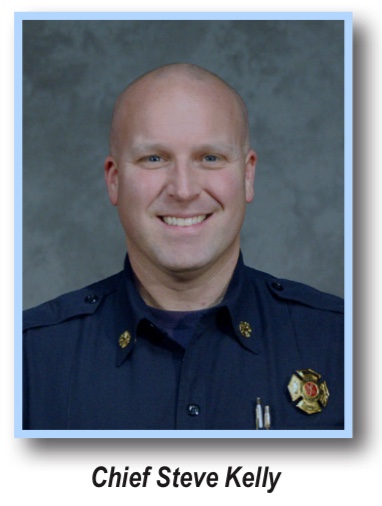
    by Steve Kelly, Fire & EMS Chief

    Steve.Kelly@MiamiTwpOH.gov

    Miami Township Fire & EMS officially launched their new Community Paramedicine Program in August. This program provides a proactive approach to healthcare and offers a higher level of service to our community that supports our existing 911 services.

    The purpose of this article is to educate and help answer the following questions: 

    • What is Community Paramedicine?
    • What local organizations are involved with this new program, and how is the Community Paramedicine program funded?
    • What were the steps involved to get us here? 

    • Most importantly, how is this new program benefiting the residents of Miami Township? 

    Community Paramedicine is a relatively new healthcare concept which gained traction around 2014 after the passing of the Affordable Care Act in 2010. The goal of community paramedicine is to fill gaps in local healthcare services, reduce hospital admissions, and un-needed emergency department usage. This is accomplished by identifying the particular needs of a community and developing ways to meet those needs. 

    The means to fulfill these needs may vary in different areas. The community paramedic’s roles are based on community needs assessments conducted for each jurisdiction and are unique to the citizens of that community. 

    Miami Township’s needs assessment revealed sixty percent of our EMS calls for service involve older adults over the age of 65. A majority of these emergencies are related to falls, respiratory distress, heart conditions, and various other medical aliments. It is no secret that as we age, the need for healthcare significantly increases, and our healthcare systems are being significantly impacted. 

    Another major element is the increasing numbers of baby boomers retiring and needing healthcare. 

    There is also a need for mental health and substance abuse disorders, which are addressed through the MiamiTownship Community Paramedicine program as well as an addiction response team that works jointly with the Clermont County Recovery Center. 

    Traditionally, the primary focus of EMS has been to assess and treat the acute medical and trauma patient and then transport to an emergency department where the patient could receive advanced definitive care. While essential, and a first line action, this is a reactive approach to emergency healthcare whereas community paramedicine is a proactive and preventative approach. 

    Locally, Miami Township has partnered with Mercy Health Anderson Hospital and Tri-Health Bethesda North Hospital. Both of these excellent hospitals are constantly seeking new ways of connecting and delivering better healthcare to the Southwest Ohio region in coordination with the Ohio Healthcare Initiative 2020. To that end, through a mutual desire to deliver an additional layer of customer service and fill healthcare gaps, a collaboration formed between our organizations. By creating the Community Paramedicine Pilot Program as a team, we established goals and objectives that would directly benefit the health and wellbeing of Miami Township’s residents. 

    The Community Paramedic position and pilot program is funded through multiple sources. Primarily, it is funded through our fire department operating budget and is supplemented from both the Mercy Health Foundation and the Berning Foundation through Tri- health Hospital. Both of these generous community- minded healthcare foundations reimburse Miami Township Fire & EMS based on the amount of time our Community Paramedic spends working on behalf of each hospital system. The journey to get to this point involved many hours of planning, education, and collaborative meetings with each hospital system. 

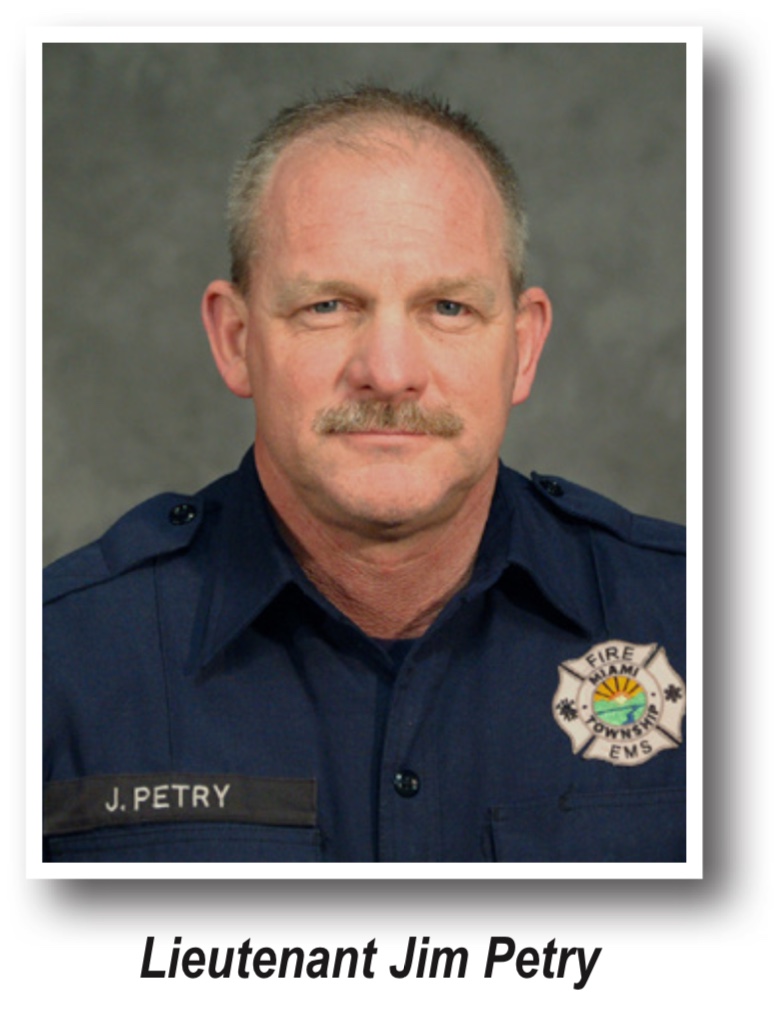
    Lt. Jim Petry started investigating how a community paramedic program would work in Miami Township and its potential to bring a higher level of customer service to our residents with varying healthcare needs. 

    In 2015, he attended multiple seminars, completed trainings through the International Fire Fighters Association, and in 2016 he completed a sixteen credit-hour Community Paramedic certification through Hennepin Community College. Throughout 2017, he completed the required 180 hours of clinical time working with Miami Township residents, and through shadowing nurses at Bethesda North in various specialty departments. During those encounters and at every opportunity, he presented this concept to everyone in the local hospitals and healthcare systems to lay a foundation for future success. 

    Like any important new concept, especially in the healthcare field, it took time to build the necessary relationships and partnerships throughout our area. Throughout 2018 and most of 2019, Chief Kelly and Lt. Petry met multiple times with administrative leaders in the Mercy and Tri-Health hospital systems. Many hours were spent reviewing protocols and discussing proposed contract language. Entering into 2020, all the planning, preparation, education, meetings, and valuable relationship building came to fruition, along with the full support of our Miami Township Trustees and the Community Paramedicine position began in a limited capacity. 

    Throughout the trial period of the pilot program, it became evident very quickly that this program was able to have a direct impact on our residents and was a valuable asset to improving the provision of healthcare programs across Miami Township. In August of 2020, Lt. Petry was assigned to this new program in a full-time capacity to be able to dedicate the required time and effort to continue to make it a success. 

    The Community Paramedic position brings an additional level of customer service which cannot be done through our regular shift firefighter/paramedics. They do a spectacular job of rendering professional medical care, showing heartfelt compassion at the time of a medical or fire related emergency, but due to our increasing volume of calls for service, they must quickly prepare for the next emergency. This new positon allows the Community Paramedic to spend quality time listening, evaluating, and advocating for the residents he encounters through our referral system. 

    The Community Paramedic conducts fall prevention evaluations and education, home safety assessments, medication education, and communicates directly with the resident’s primary care physician if needed, all in the privacy and convenience of their own home. 

    Through the trusted relationship with their associated hospital system, Mercy or Tri-Health, the Community Paramedic acts as an agent to connect them with the appropriate medical services. 

    When needed, they utilize and engage other available community resources like the Miami Township Police Department, Clermont Senior Services, the Council on Aging (COA), and any other organization who can assist with their needs. 

    The overarching goal of the Miami Township Community Paramedicine Program is to provide the best healthcare service and customer service possible through utilization of any available resource to meet the various needs of our residents. 

    If you would like to request a visit from our Community Paramedic or have questions about the program, please give us a call at 513-248-3700. 

  • Loveland Christmas Tree Removal

    Loveland Christmas Tree Removal

    Loveland, Ohio – The City of Loveland provides residents with an annual Christmas Tree removal service. The City makes it easy for you to get rid of those real trees with a curbside pickup.

    Collection takes place from January 4 to January 15.

    They ask that you please remove all decorations, lights, tree stands, and tree bags and place Christmas trees at your curb.


    If you find this kind of information useful and valuable to your quality of life, please consider making a monetary contribution so that Loveland Magazine can continue providing you with up-to-date and timely news stories.

    Loveland Magazine is FREE for everyone in our small hometown to read and we desperately want to keep it that way, especially in these hard times.

    However, a news platform is very expensive to maintain and we hope, that if you are able, you will provide the support we need to keep local news flowing to ALL in the community – your neighbors that simply cannot afford to pay to keep informed about life in our community. We feel a vibrant community is one that is an enlightened community – please help us keep YOU and EVERYONE ELSE up to speed.