Author: Loveland Magazine

  • Lovelander Sam Smith releases photo-essay book “Abandoned Cincinnati”

    Lovelander Sam Smith releases photo-essay book “Abandoned Cincinnati”

    Dust, shards of glass, gravel, and grit coat thick vines that spiral down empty stairs. They’re more than concrete and steel—as nature takes over abandoned buildings, they come alive. Through journalistic and experimental photographs, Sam Smith aims to capture the unique architectural character, mood, and mind of Cincinnati’s dilapidated buildings.

    The First German Reformed Church. Photo ©Sam Smith.

    Discover the rich history of Queen City’s vacant structures as they rose and fell. Step inside a 150-year-old ornate cathedral, a middle school auditorium, the skyscraper office of Cincinnati’s once largest employer, and a four-story furnace room that was used to manufacture ammunition for World War I. From an amusement park to a chemical research facility turned into a chop shop, disuse has brought brevity to these abandoned structures.


    A Triumph TR6, manufactured between 1968 and 1976, collects dust in an abandoned chemical testing facility. Photo ©Sam Smith.


    Stairs in a chemical testing facility. Photo ©Sam Smith.

    On Monday, September 28, Loveland High School Graduate Sam Smith will release his first book, Abandoned Cincinnati. The 92-page book features 8 dilapidated and forgotten spaces in the Cincinnati area and their histories. In addition, evocative and experimental images aim to capture the hard-to-describe but easy-to-experience mood of the building.

    Abandoned Cincinnati will have a “soft release” wherein it will arrive in various bookstores and businesses over the next few weeks.

    The book is available in local stores Hobbytown USA and Ohio Book Store Cincinnati. It will be available Beth Booksellers later this week.

    In the next few days it will arrive at Barnes and Noble, Costco and Amazon. Through next few weeks and months, the book will become available in more various local bookstores, museums and businesses.

    Order Abandoned Cincinnati at Barnes and Noble

    Order Abandoned Cincinnati on Amazon

    33% of Smith’s proceeds of Abandoned Cincinnati will go to Talbert House. Talbert House is an organization and shelter that houses and assists individuals struggling with addiction, housing and/or mental health.

    “Talbert House is an organization close to my heart, and they are doing great work in the community. Abandoned Cincinnati touches on issues of poverty and homelessness. To write a book based on Cincinnati’s history and not give back felt wrong,” Smith explained.
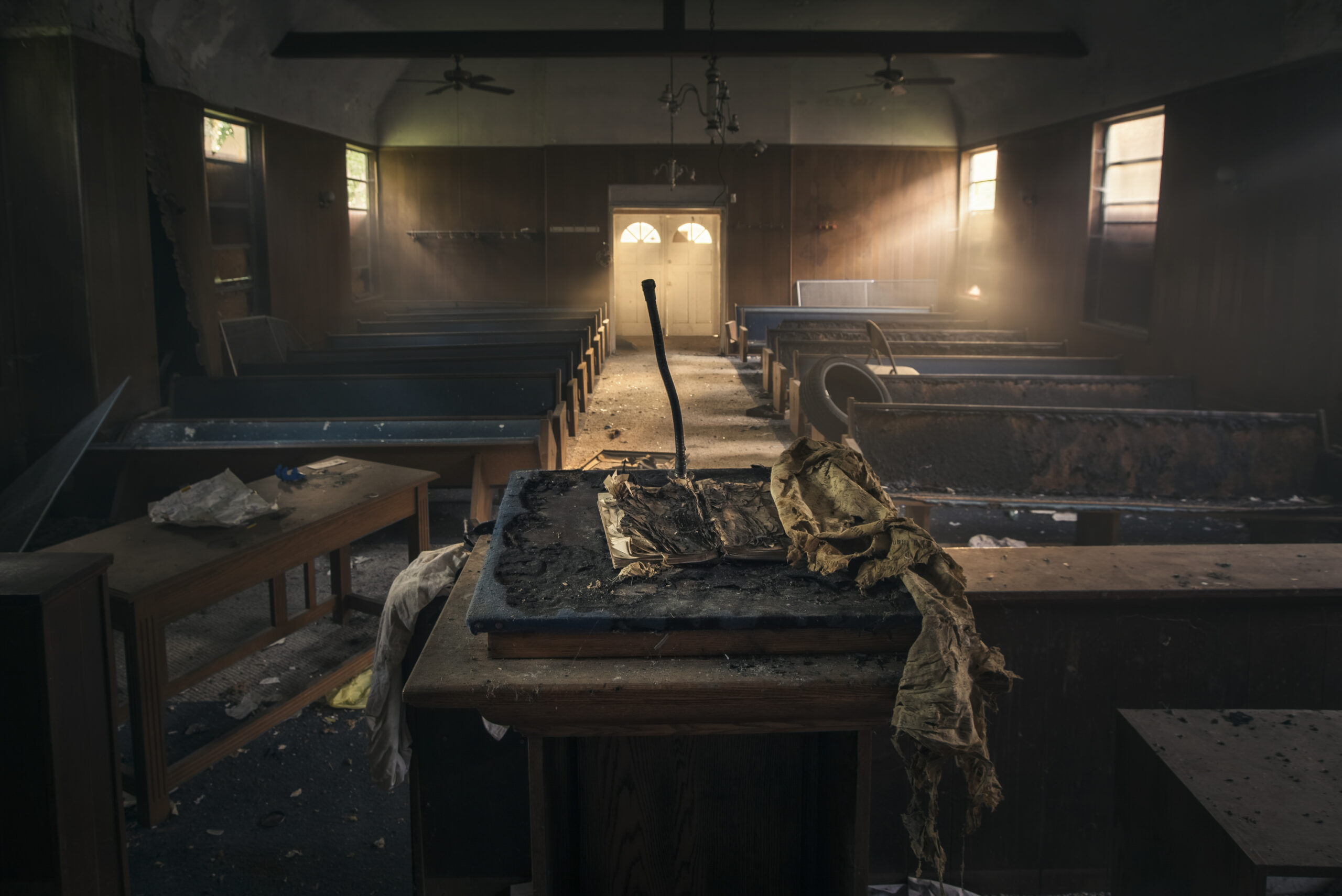

    Light streams through the First Predestinarian Church in Loveland. Photo ©Sam Smith.
    A burnt bible on an organ in Loveland’s First Predestinarian Church. Photo ©Sam Smith.


    Samuel Wright Smith is a photographer, filmmaker and animator located in Cincinnati and New York City. Smith grew up in Loveland and was surrounded by visual art from a young age, and it quickly became his life. 

    Decay became a central theme to his work, often touching on ideas of death and rebirth. Some images in Abandoned Cincinnati were taken by Smith as young as age thirteen.

    Garnering experience as a journalistic writer and photographer at Loveland Magazine through high school, his interest only grew. An appreciation for context and community began to enter Smith’s work. Through high school, he explored cinematography and filmmaking. He helped to create the Loveland High School film club and has made it a goal to support Loveland’s young artistic circle. His film and photography work has garnered awards and attention, such as three National Youth Film Festival selections and a nomination for best animated film.


    Light streams onto curtains in a YMCA. Photo ©Sam Smith.
    Beakers and graduated cylinders in a science room in an abandoned school.


    Sam Smith has made it his goal to share art that is both personal and universal. At only twenty-years-old, Sam Smith aims to continue on a path where he can share light and experience with others through art. Smith currently attends New York University and is studying film with a focus on animation.

    Smith will be raffling two free copies of Abandoned Cincinnati on the Loveland Magazine Facebook Page. 

    Sam Smith, author and photographer of Abandoned Cincinnati. Photo ©Isabella Huelsman.

    To see more of Sam Smith’s work, visit www.samwsmith.net, check out his vimeo and follow @samwsmith33 on Instagram.

     

  • Ohio schools ask state supreme court to support armed personnel

    Ohio schools ask state supreme court to support armed personnel

    Pictured is the Thomas J. Moyer Ohio Judicial Center where the Ohio Supreme Court meets. Photo courtesy Wikimedia Commons..

    Arguing for their right to arm school personnel, 17 schools from 11 counties in Ohio asked the Ohio Supreme Court to allow them to continue using firearms as an option for student safety.

    Susan TebbenSusan Tebben is an award-winning journalist with a decade of experience covering Ohio news, including courts and crime, Appalachian social issues, government, education, diversity and culture. She has worked for The Newark Advocate, The Glasgow Daily Times, The Athens Messenger, and WOUB Public Media. She has also had work featured on National Public Radio.

    The schools are asking for the state’s highest court to reverse an appeals court decision that said state law did not allow boards of education to allow armed personnel without training on the same level as police and security officers.

    Four of the schools came from Shelby County, two each represented Hardin and Montgomery counties, and one district each from Tuscarawas, Williams, Adams, Morgan, Noble, Coshocton and Portage counties were listed on a brief to the court.

    Boards of education or governing boards for all but one of the districts have authorized certain staff members to carry weapons within school zones as long as they have concealed handgun licenses.

    One school, Shelby County’s Jackson Center Local Schools, “is currently taking steps in the process of considering the authorization of staff members to become part of its school safety team and to carry a weapon into a school safety zone,” according to court documents.

    The school districts argue that Ohio Revised Code allows anyone to carry a firearm into a school safety zone with the written authorization from the board of education. But they argue, just as Madison Local Schools and Ohio Attorney General Dave Yost argued, the law does not require teachers or anyone other than police and security personnel to be trained to the standard of the Ohio Peace Officer Training Academy (OPOTA).

    “By its plain terms, this would apply to law enforcement but not to administrators, teachers, or support staff authorized to carry a firearm in a school safety zone,” the districts wrote in their brief to the court.

    The school representatives urged the court to recognize that decisions about student safety “are best left to locally-elected boards of education.”

    The schools said giving board of education the right to govern in varying ways is “simply federalism,” calling boards “laboratories of democracy.”

    Furthering that argument, the schools said boards were entrusted by the state and the legislature to “serve as a laboratory; and try novel social and economic experiments without risk to the rest of (Ohio),” quoting a U.S. Supreme Court decision in an unrelated case.

    Photo by Dan Galvani Sommavilla from Pexels

    They criticized the 12th District Court of Appeals decision in the case, saying the court took away the meaning of the Ohio law regarding firearms allowances in schools, and made “arming staff entirely impractical.”

    “As a result of the 12th District’s decision, if an Ohio school district desires to arm any administrator, teacher, or support staff, the district is left with two options: (1) hire a police officer to teach English; or (2) send an algebra teacher to the police academy,” the brief from the districts stated.

    The schools went so far as to say schools will be “less safe” if the supreme court agrees with the 12th District’s decision, because of the varying amount of resources from school to school. Hiring more school resource officers isn’t always in the budget, they wrote.

    They estimate a school resource officer’s salary to be $50,000 per year. They also say sending a school employee to FASTER, a training given by pro-gun lobby Buckeye Firearms Association and marketed specifically to teachers and school staff, costs “a couple thousand dollars.”

    “Unsurprisingly, the resource discrepancy between districts in Ohio is largely exacerbated between larger, suburban and urban districts and smaller, rural districts,” the brief states. “This money gap, though, has a direct impact on the ability of a school district to safely protect its students and staff.”

    The FASTER program is later called the state’s and country’s “preeminent active school shooter training program” more than once, and the districts say nearly 200 school districts in Ohio have been sent to it. The attorney writing on behalf of the districts, Jonathan Fox, is named as Buckeye Firearms Association member in a story on the BFA website.

    The court case is running parallel to proposed legislation that recently passed a state Senate committee regarding armed school personnel

  • Coronavirus death toll surpasses 100 in Ohio prisons

    Coronavirus death toll surpasses 100 in Ohio prisons

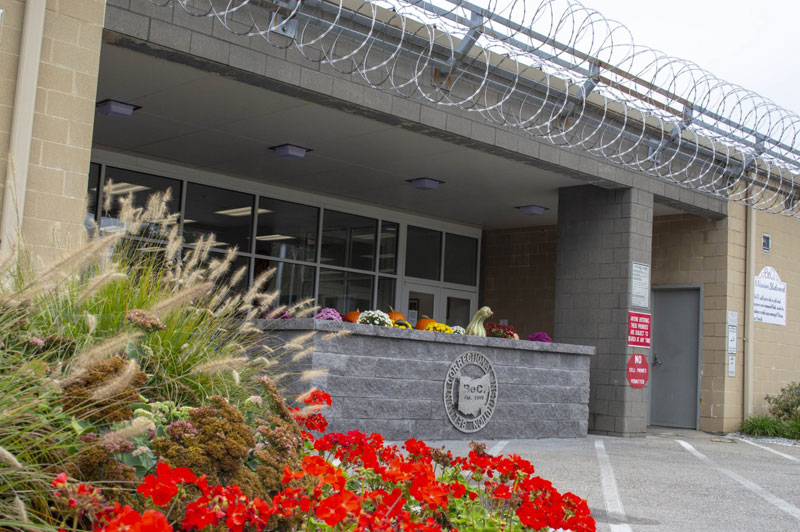
    Belmont Correctional Institution. Source: ODRC

    More than 100 inmates and workers in Ohio’s prison system have died from COVID-19, state data shows.

    Jake ZuckermanJake Zuckerman is a statehouse reporter. He spent three years chronicling the West Virginia Legislature for The Charleston Gazette-Mail after covering cops and courts for The Northern Virginia Daily.

    Five prison workers (three corrections officers and two nurses) and 96 inmates have died from the disease that has clobbered the Ohio Department of Rehabilitation and Correction since late March when it was first detected in the system.

    Nearly 6,200 inmates have contracted COVID-19, the disease caused by the new coronavirus, though the figure is likely an undercount. After mass testing at Marion and Pickaway correctional institutions detected infections in 80% of inmates, ODRC shifted its strategy away from blanket testing and toward symptom-based testing.

    An ODRC spokeswoman said 461 inmates with COVID-19 have been admitted to the hospital, but those people may have been admitted for other causes.

    The dead inmates were 66 years old, on average.

    At Marion, nearly 2,000 inmates have been infected, 12 of whom died.

    At Pickaway, nearly 1,400 inmates have been infected, 35 of whom died.

    The two prisons are the third and fourth largest COVID-19 clusters in the nation respectively, according to data from The New York Times.

    The virus hit prison workers in force as well, though with much lower morbidity rates. More than 1,100 prison workers were infected, and the union representing them alleged workers were provided insufficient protective equipment.

    Gary Daniels, a lobbyist for the ACLU, said there’s more than just a death toll. As more information emerges about long term damage from COVID-19, including “long haulers” who report debilitating symptoms even six months after infection, he questioned the health services ODRC is providing.

    According to the CDC, coronavirus infections can cause myocarditis (heart inflammation) among other long term symptoms. While the science is still emerging, the heart damage could explain reported long-term symptoms like shortness of breath, chest pain and heart palpitations.

    “How many people in Ohio prisons face this right now?” he said. “You’ve got these 100 people who have died, but that’s nowhere near the whole story.”

    The ACLU has pushed for a broad decarceration that would remove people convicted for drug possession or parole violations — at least temporarily.

    In February, there were nearly 49,000 inmates in Ohio prisons, which were populated well beyond their design capacity even before the pandemic. That figure decreased to slightly above 45,000 by August.

    “It does appear to have plateaued,” Daniels said. “Whether that continues, who knows. Our concern is that after a certain amount of time, we’re going to see that population rise.”

    In mid-May, four inmates filed a class action lawsuit in federal court seeking the forced depopulation of Ohio prisons.

    U.S. District Judge Edmund Sargus Jr., in a ruling last month, rejected motions to dismiss the lawsuit. In a blow to the inmates, however, he also struck down a request for a preliminary injunction. He has not ruled on the issue at large.

    Though it amounted to a loss for the inmates, Sargus signaled some sympathy for the conditions inside.

    “This Court agrees with the other district courts across the country who have found COVID-19 to be an objectively intolerable risk of harm to prisoners when it enters a prison,” Sargus wrote.

    Prisons and jails are near ideal places for the coronavirus to spread given the overcrowding, poor sanitation, and preexisting health complications inside.

    In April, the Ohio Supreme Court dismissed a lawsuit from an HIV-positive inmate who sought release due to COVID-19.

    At the time there were only 272 inmate infections. However, Justice Michael Donnelly wrote in an opinion that Ohio needs to take drastic action to prevent “catastrophe” looming down the line.

    “The whole of Ohio’s government needs to take serious, unprecedented steps to prevent the catastrophe of unmitigated spread of COVID-19 to the tens of thousands of prisoners in Ohio as well as to the tens of thousands of people who are prison employees along with those living in the households of prison employees,” he said.

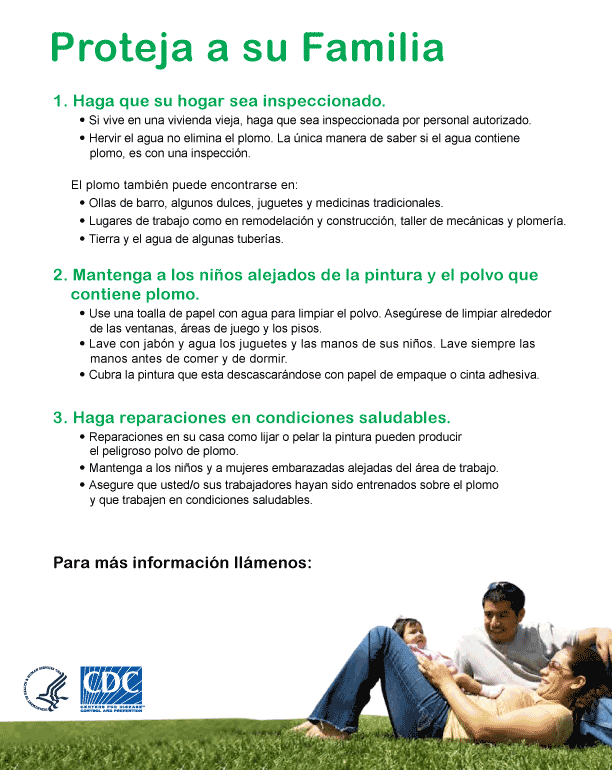
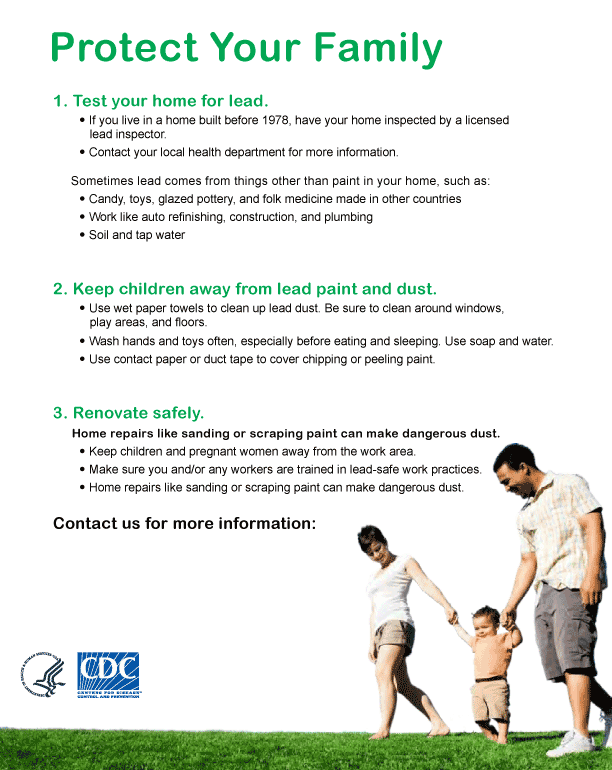
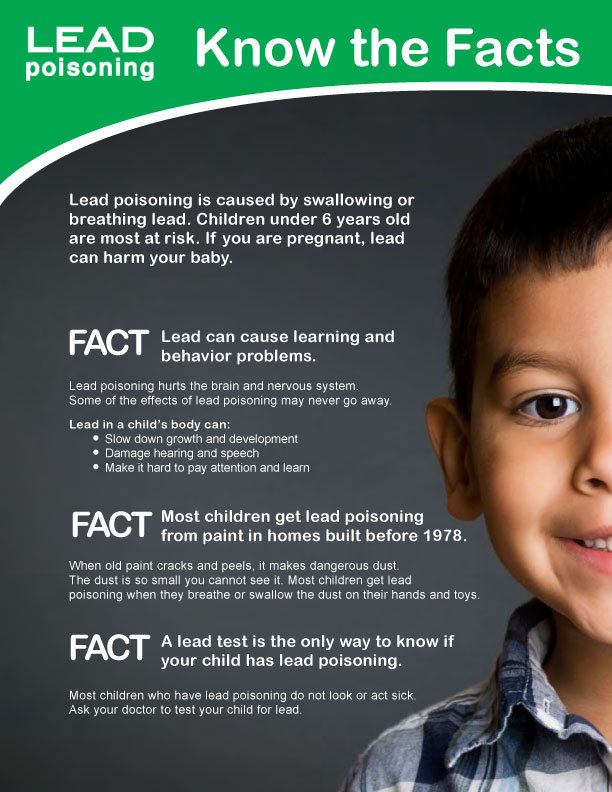
  • Hamilton County Public Health Awarded HUD Grant to protect children and families from lead-based paint

    Hamilton County Public Health Awarded HUD Grant to protect children and families from lead-based paint

    Hamilton County, Ohio – The U.S. Department of Housing and Urban Development (HUD) has awarded $2 million to Hamilton County Public Health (HCPH) to protect children and families from lead-based paint and home health hazards.  HCPH was one of 44 state and local government agencies in 23 states to receive funding and one of only 15 first-time grantees.  Hamilton County, through its Community Development Block Grant funds, is adding another $300,000 in matching funds for the program.

    In announcing the award, HUD stated that it is providing these grants through its Lead Based Paint Hazard Reduction (LBPHR) Grant Program to identify and clean up dangerous lead in low-income families’ homes. These grant includes funds from HUD’s Healthy Homes Supplemental funding to help communities with housing-related health and safety hazards in addition to lead-based paint hazards.

    “Hamilton County has a considerable number of properties in need of remediation,” according to Hamilton County Health Commissioner Greg Kesterman.  “The age of housing, coupled with a lack of maintenance, contribute to the danger of childhood lead poisoning due to unmitigated lead-based paint hazards.”

    HCPH addresses lead poisoning through its Childhood Lead Poisoning Prevention Program (CLPPP). The CLPPP includes outreach, education, and case management for children under six years of age that have been lead poisoned. Without financial support, properties with outstanding lead hazard control orders stand vacant for years, contributing to further disrepair and blight in the community. The funding will allow HCPH to perform lead-based paint remediation and abatement in 97 units in HCPH’s jurisdiction over the 42-month grant period.

    Lead Poisoning Prevention

    Waste Management conducts investigations of reports of lead poisoning in children under 6 years of age. Certified Lead Risk Assessors inspect homes for potential lead risks from exposure to lead-based paint, dust, soil, or water.

  • Five Loveland Seniors Named National Merit Commended Students

    Five Loveland Seniors Named National Merit Commended Students

    Loveland, Ohio – Loveland High School has announced seniors Katherine Amburgey, Jackson Crane, Ansley Richards, Calvin Spencer, and Meghan Tibbs have been named Commended Students in the 2021 National Merit Scholarship Program.

    The National Merit Scholarship Program recognizes students who demonstrate exceptional academic ability based on their performance on the PSAT taken during the junior year. These Commended Students placed among the top 50,000 scorers of more than 1.5 million students who entered the 2021 competition by taking the 2019 Preliminary SAT/National Merit Scholarship Qualifying Test (PSAT/NMSQT).

  • Advocates urge at-risk tenants to apply for eviction moratorium

    Advocates urge at-risk tenants to apply for eviction moratorium

    Advocates from the Coalition on Homelessness and Housing in Ohio are advising tenants facing eviction to act immediately to get protection under the Centers for Disease Control and Prevention’s new eviction moratorium.

    The CDC recently issued the first ever nationwide order temporarily banning the eviction of tenants who are unable to pay rent in order to help prevent the spread of coronavirus, a news release this week from COHHIO said. While the moratorium applies to many cases where people have fallen behind on their rent payments, tenants must follow specific steps in order to qualify, it emphasized.

    “This so-called moratorium is not automatic. Tenants need to submit a declaration demonstrating that they are eligible for the moratorium to cover them,” said COHHIO Executive Director Bill Faith. “If you’re behind on rent, don’t wait. See if local emergency rental assistance is available in your community, and file a declaration to make sure you don’t get evicted during this public health crisis.”

    Tenants earning less $99,000/year, or $198,000/year for joint tax filers, who are unable to pay full or partial rent due to a loss of income or extraordinary medical expenses are eligible for the CDC’s eviction moratorium, the release said. However, they must file a form certifying that they have tried to obtain government assistance to pay rent and will likely have to move in with another household or become homeless if they are evicted, it noted.

    Diane Yentel, president and CEO of the National Low Income Housing Coalition, noted that tenants still have to pay rent each month and could still get evicted when the order expires.

    “The very least the government ought to do in the middle of a global pandemic is assure each of us that we’re not going to lose our homes,” she said. “The CDC moratorium keeps people in their homes today, but the rent is still due and the debt that renters owe will build each month until the moratorium expires on Dec. 31. And at that point all the back rent and late fees will be due.”

    The release also noted that several communities have allocated funds to help at-risk residents pay the rent during this crisis, but assistance is limited and not available in many areas.

    “Furthermore, demand for emergency rental assistance will soon outstrip local resources as the pandemic-induced recession continues into the winter,” the release said, noting that neither U.S. Congress nor the Ohio General Assembly have created an emergency rental assistance program.

    Carlie Boos, executive director of the Affordable Housing Alliance of Central Ohio, said the CDC moratorium highlights the need for the state and federal governments to provide emergency rental assistance.

    “Allowing tenants to fall deeper and deeper into debt not only ruins Ohioans’ future – it puts the entire housing market at risk,” she said. “Our state and federal leaders must prioritize emergency rental assistance to stabilize both vulnerable families and our vulnerable economy.”

    The release advised that tenants who are behind on rent should immediately seek rental assistance and send a declaration form to their landlord, and the court if they have already received an eviction notice.

  • How an Ohio state senator and 33 family members caught COVID-19

    How an Ohio state senator and 33 family members caught COVID-19

    Senator Tina Maharath (Ohio Senate photo)

    Jake ZuckermanJake Zuckerman is a statehouse reporter. He spent three years chronicling the West Virginia Legislature for The Charleston Gazette-Mail after covering cops and courts for The Northern Virginia Daily.
    It started with a funeral.

    Tina Maharath, a Democratic state senator from Canal Winchester, attended a wake Aug. 9 after her brother-in-law’s funeral, who died of non-COVID-19 illness.

    Two of his family members, who Maharath said tested positive for COVID-19, came to the wake. Maharath described them as skeptical of the gravity of the COVID-19 pandemic.

    “Slowly, one by one, we started getting the phone calls from each one of our family members,” she said in an interview.

    Maharath comes from a big family — common, she said, among Laotians. Her husband has 19 siblings, she has 16. The new coronavirus, which causes COVID-19, left from the wake to invade 11 different family households, infecting 33 family members including a 9-month-old baby.

    As of Thursday, two have died: Maharath’s 44-year-old sister-in-law, who had been battling brain cancer for a year, and her sister-in-law’s father-in-law.

    Five family members were hospitalized, including one who Maharath said is likely to die soon from COVID-19. The five people hospitalized are between 34- and 76-years old. They were hospitalized anywhere from two to six weeks. Mahrath’s sister-in-law was ventilated for three weeks.

    All five had underlying health conditions like asthma, high blood pressure and diabetes, all common conditions in Ohio.

    The familial outbreak, Maharath said, is hopefully over. But uncertainty over longevity of symptoms or long term damage is frightening.

    “We’re concerned because of the five people who were hospitalized, they still have lingering symptoms too, and another sister-in-law who was pregnant, she has lingering symptoms too,” Maharath said. “I don’t have underlying conditions, I’m not pregnant. So why do I have symptoms?”

    Patient groups, calling themselves “long haulers,” have insisted they’ve been experiencing COVID-19 symptoms for month. The CDC has found COVID-19 can result in prolonged illness, even among younger and healthier adults.

    Six weeks out from the positive test result, Maharath said she still feels COVID-19’s symptoms. She said she feels dehydrated, experiences coughing spells, and headaches.

    Her lungs, she said, take most the heat.

    “I just feel weak,” she said. “My lungs feel like something is just punching them. Randomly, it feels like something is just stabbing my lungs.”

    Nearly 148,000 Ohioans have contracted COVID-19 according to state data, which officials believe to be an undercount. At least 4,715 have died.

    Maharath’s diagnosis drew headlines in August. On Wednesday, however, Maharath shared the story of the outbreak through her family in a floor speech opposing Senate Bill 311.

    The legislation, which Senate Republicans passed, would forbid the Ohio Department of Health from issuing anything like the stay-at-home order it issued in March, which closed “non-essential” businesses in an effort to slow the spread of the recently-detected coronavirus.

    It would also allow lawmakers — who have repeatedly expressed skepticism about the virus, ODH’s data tracking the virus, and non-pharmaceutical interventions to control the virus like masks and social distancing — to rescind ODH orders.

    However, a COVID-19 diagnosis did not prove to be a proxy vote against the legislation.

    Sen. Bob Peterson, R-Washington C.H., who contracted the disease earlier this month, voted in favor.

    Sen. Frank Hoagland, R-Adena, did as well. He contracted a mild case of the disease in August. According to a Herald Star report, Hoagland’s wife was hospitalized with the disease as well. Both his wife’s parents reportedly died from COVID-19.

    With what they hope to be the worst of the outbreak behind them, Maharath said her family is planning funerals for the deceased. They plan stricter social distancing and mask requirements.

    Maharath said she’s not planning to attend.

  • Loveland Young Professionals Gathering at the Loveland Museum Center

    Loveland Young Professionals Gathering at the Loveland Museum Center

    Advertisement

    Come join the Loveland Young Professionals for a fun evening of wine, appetizers and Loveland history! Did you know that the UC Bearcats nickname comes from a Loveland native? Or that the seeds of Las Vegas were planted here in Loveland OH?

    You don’t have to be a member of the organization to participate. Come on over on Thursday, Oct 1st at 6:30pm. It’s just $10 …. We’d love to have you!

    Loveland Museum Center

  • Snack & Learn Presentation: General’s Grant and Lee, before they were Titans!

    Snack & Learn Presentation: General’s Grant and Lee, before they were Titans!

    Advertisement

    Back by popular demand, civil war buff Rick Roesel returns to the Loveland Museum to share insights on the life experiences of General’s Grant and Lee, that made them great leaders during the turbulent times of the Civil War.

    This event is scheduled for Wednesday, Oct. 7th at 10:30am. The cost is $15 for non-museum members, and $10 for members. Reserve your space today by contacting the Loveland Museum Center. You won’t want to miss this!

    Pay with PayPal or send check and name(s) to LMC; 201 Riverside Ave.; Loveland, OH 45140.

    Pay with PayPal

    You can now pay for events and donations with PayPal! See the PayPal section on our Support page.

  • Loveland City Schools COVID-19 Updates

    Loveland City Schools COVID-19 Updates

    What Loveland community members need to know about Loveland City Schools’ COVID numbers as they begin week four of hybrid learning

    by Hannah Roberts Gwynne

    • As reported Friday September 18 on the LCS database, one bus driver was confirmed to have tested positive with one close student-contact reported. Additionally, there are two “community cases” reported on their site. These cases include Loveland residents who have reported a positive case to LCS. Students and staff who are isolated or quarantined will also be considered “community cases,” according to Dr. Amy Crouse, superintendent. “If isolation or quarantine has ended and individuals have returned to school, they will no longer be reported as a community case,” says Crouse.
    • In August, two unnamed Loveland High School student athletes tested positive for COVID-19 resulting in 136 people self-quarantining, according to Dr. Crouse. An official report of this incident was never sent out to the public. The two teams were the high school men’s football and women’s soccer teams. A total 23 staff members and 113 students were involved and required to quarantine. This data was made available on the Loveland City Schools (LCS) page around two months later in September right before Labor Day weekend. The school alerted the families involved at the time of the reported cases. Since classes were not in session in August, LCS only sent the information to the people who needed it, according to Crouse.
    • The amount of time that students and staff must quarantine depends on whether they have tested positive or just had exposure to a sick person, according to new health protocols listed on the Loveland Schools site. If a positive case were reported to an administrator at LCS, the required self-quarantine would only be 10 days, according to the protocols. However, if a person had been confirmed to be in contact (within six feet for 15 minutes or more), they must self-quarantine for 14 days. “Those are Hamilton County rules,” said Dr. Amy Crouse. “It’s not my decision, but it’s my understanding that it can take up to 14 days to show symptoms if you’re in close contact. Those are protocols developed by Hamilton County.” These rules correspond with CDC guidelines.
    • LCS plans on returning to full-capacity schooling in October. Students will return to five days a week.
    • In order to find the school’s COVID-19 data, go to Loveland City Schools home page, click the tab “Reopening Plan.” On the left-hand side, it will say “COVID-19 Data Update.” Click there. At the very bottom of that page, click the link to their document that tracks the numbers.