Loveland, Ohio– After confusion about whether COVID-19 data at Loveland City Schools would be made known to the public, a Health Order was issued by the Ohio Department of Health stating new guidelines that K-12 schools must follow.
Parents and guardians of children at Loveland City Schools are not required but “encouraged” to report COVID-19 cases in their household to an official at their child’s school, as stated in this order issued on September 3.
“(…) all schools that provide any kindergarten through grade twelve instruction shall maintain a reporting system for parents to report positive tests and/or cases of COVID-19,” states the order, given by Interim Health Director, Lance D. Himes.
“Parents or guardians of students and school staff who have been diagnosed with COVID-19 (…) are encouraged to notify their school no later than 24 hours after receiving confirmed diagnosis.” (emphasis added).
Although cases of COVID-19 are being tracked by Loveland City Schools now, it is difficult to get an accurate understanding of the true volume of potential cases. “Because we rely on people reporting that [information] to us, there isn’t a way for us to be accurate with those numbers,” says Superintendent Dr. Amy Crouse, referring to numbers reported by parents. “Parents don’t have to alert us, even though they’re encouraged.”
COVID-19 numbers are being tracked on the school’s site as well as the number of subsequent quarantines that would occur if a sick student exposed others to the illness.
“Right now,” says Crouse, “parents would call into their [child’s] building and report the illness to the school nurse or the district point of contact.”
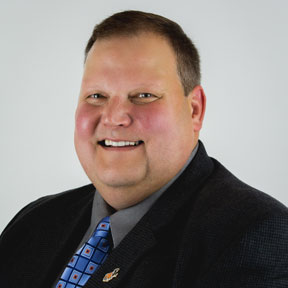
Eric Dool currently serves as the Loveland City School’s point of contact. Dool fulfills the new Health Order’s requirement that school districts name a “coordinator to facilitate reporting of case information.”
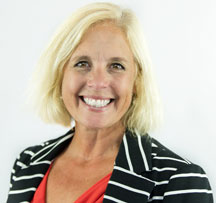
Loveland Superintendent Dr. Amy Crouse
“We are going off positives,” says Crouse, “Not if you’re quarantined by someone else.” Crouse is referring to children who have been exposed to COVID-19 outside of the classroom. “Cases will only be reported if the student has been at the school.”
Crouse uses a hypothetical example of a Loveland student contracting COVID-19 at an amusement park. If that child’s parent called in and reported a self-quarantine, Loveland Schools would not report it, according to Crouse. Additionally, if a positive test were reported in this same case by the parent, but the child had not been to classes, the case would not be reported on the Loveland School’s site.
Eric Dool is the School’s point of contact and coordinator to facilitate reporting of case information.
However, Crouse later retracted this statement and said that Loveland Schools would report the positive test in this case but would also report that there had been zero quarantines because the child had been in isolation already.
Is Loveland City Schools ready for a COVID-19 outbreak if the worse case scenario came to pass? “I think we’re very prepared,” Crouse states. However, she says, “We haven’t had a positive case since school has started. We have tried to learn from other districts. We were fortunate last week.” (emphasis added)
It is going on two weeks since classes have begun in Loveland City Schools and so far, zero cases of coronavirus have been reported since in-person classes began. (Loveland City School District COVID-19 Data Update)*
* In order to find the school’s COVID-19 data, go to Loveland City Schools home page, click the tab “Reopening Plan.” On the left-hand side, it will say “COVID-19 Data Update.” Click there. At the very bottom of that page, click the link to their document that tracks the numbers.
The federal government has approved a $300-a-week supplement for unemployed Ohioans, Lt. Gov. Jon Husted said on Tuesday. He added that people should start receiving the funds before the end of the month.
Given the amount the state is receiving — $717 million — and assuming that about 500,000 Ohioans are eligible, that’s enough for just under five weeks’ worth of benefits.
Federal policymakers have been struggling to come up with a coronavirus-related unemployment supplement since an earlier, $600-a-week one expired at the end of July.
The Democratically led U.S. House of Representatives in May passed a $3 trillion relief bill that would have extended the $600-a-week supplement. Senate Majority Leader Mitch McConnell, R-Kentucky, in July introduced a $1 trillion bill with a $200-a-week supplement, but he acknowledged that he didn’t have the votes to pass it.
Amid the impasse and dire predictions that many unemployed Americans would go hungry or homeless, President Donald Trump took executive actions freeing up $44 billion in disaster-relief funds for a supplement.
The benefits will be awarded retroactively to Aug. 1.
“We’re still set for mid to late September,” Husted said during a Tuesday press conference when asked when Ohioans will begin seeing the funds. “We have been approved for $717 million. That will be paid out until the money’s gone and at that point in time we would need to see an action from Congress appropriating additional money to continue that program.”
It’s unclear whether such action is forthcoming.
In negotiating with the White House last month, House Speaker Nancy Pelosi, D-Calif., and Senate Minority Leader Chuck Schumer, D-New York, agreed to come down to $2 trillion in their relief bill. But the Washington Post reported Tuesday that McConnell was moving in the opposite direction, planning to introduce a relief bill about half the size of his earlier one.
The governor called on Ohio schools to share information about who is eligible for the program with state officials.
“The goal is to ensure that every single child gets the benefit from this program,” DeWine said.
Marty Schladen has been a reporter for decades, working in Indiana, Texas and other places before returning to his native Ohio to work at The Columbus Dispatch in 2017. He’s won state and national journalism awards for investigations into utility regulation, public corruption, the environment, prescription drug spending and other matters.
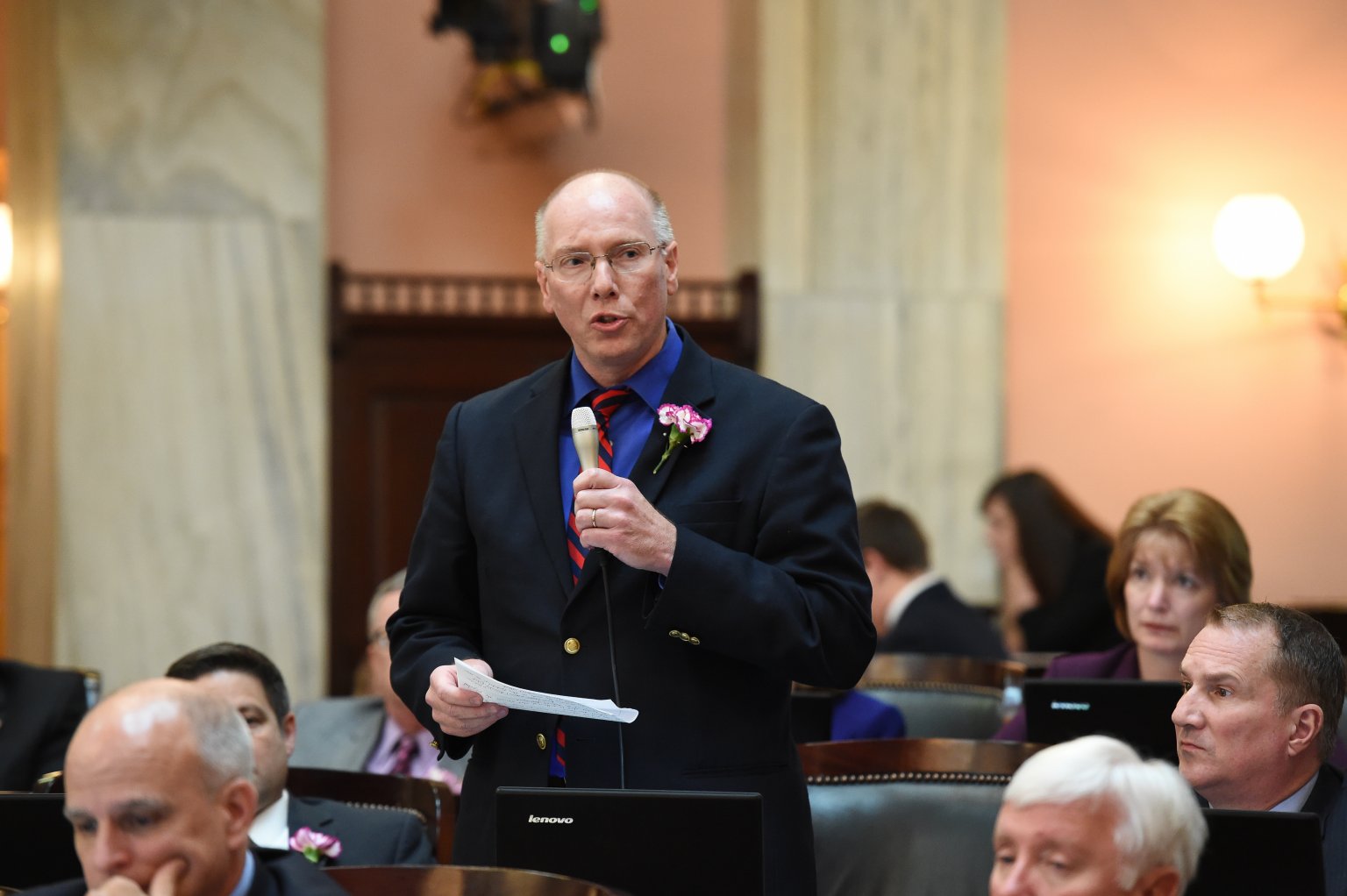
With his impeachment effort against the governor making little progress, state Rep. John Becker pulled up his email and brainstormed a late-night solution.
It was almost 2 a.m. when Becker typed out a request to the Legislative Service Commission, a nonpartisan group that conducts law and policy research for lawmakers.
Becker is among the biggest critics of DeWine in the state legislature
“I believe that Governor DeWine is in violation of (Ohio Revised Code) 2921.45,” Becker wrote in the Sept. 1 email. “What is the process for criminal charges to be filed? Can the (Attorney General) do that? Other options?”
Still waiting for an answer, Becker sent another 2 a.m. request a few days later. He sought more “legislative history and legal case law” involving the 2921.45 section of code.
The law states: “No public servant, under color of his office, employment, or authority, shall knowingly deprive, or conspire or attempt to deprive any person of a constitutional or statutory right.” Violators are guilty of a first-degree misdemeanor, punishable by up to 180 days in jail and a $1,000 fine.
Becker is among the biggest critics of DeWine in the state legislature and views the governor’s response to COVID-19 as amounting to a “constitutional crisis.” The decision to delay primary election voting, the temporary closure of some businesses, the mask mandate — to Becker, these are the instances of DeWine assuming “dictatorial powers” and violating Ohioans’ constitutional rights.
Becker wants to see if DeWine can face criminal punishment for his pandemic response.
“My goal is to get the state opened up and the abuse of power to come to an end,” Becker said to the Ohio Capital Journal.
Impeachment and criminal charges?
Throughout 2020, DeWine has relied on a separate section of state law which gives the Ohio Department of Health authority to make “special or standing orders … for preventing the spread of contagious or infectious diseases.”
On Aug. 24, Becker announced he had drafted articles of impeachment against DeWine. Three fellow Republican legislators immediately gave support for impeachment: Reps. Nino Vitale of Urbana, Candice Keller of Middletown and Paul Zeltwanger of Urbana.
There have been a slew of lawsuits and legislative challenges to that authority. Becker sponsored one of the first bills seeking to limit the power of the state health director and many other Republican-sponsored bills have followed. DeWine has vowed to veto any such bill which interferes with the state’s pandemic response.
On Aug. 24, Becker announced he had drafted articles of impeachment against DeWine. Three fellow Republican legislators immediately gave support for impeachment: Reps. Nino Vitale of Urbana, Candice Keller of Middletown and Paul Zeltwanger of Urbana.
“For my colleagues, it’s put up or shut up,” Becker said.
Becker claims there was support for impeachment from at least one Republican member who wound up not joining as a sponsor.
There was swift backlash from Ohio Republican leaders the day articles were drafted, which Becker thinks quashed any desire for others to join the effort.
“Nobody wants to touch it,” Becker said.
Becker had planned to officially file the articles a week or so after drafting them, but instead is holding off. Once they are filed, no one else can sign on as a sponsor. He’s holding out hope that legislative sentiments may change before the end of 2020.
It would take a majority vote from the Ohio House of Representatives to impeach DeWine, then a two-thirds vote from the Ohio Senate to convict him. With only four representatives currently on board, they are 46 supporters short.
Speaker of the House Bob Cupp, R-Lima, has come out against the impeachment effort, saying that policy disagreements do not rise to the level of removing the governor.
“For my colleagues, it’s put up or shut up,” Becker said.
In a recent YouTube video, Becker acknowledged his colleagues believe the disagreements should be resolved legislatively rather through impeachment.
“Frankly I agree,” Becker said. “Legislation was the way to do it and we have tried that, and the governor has promised to veto everything that we’ve put out there attempting to roll back his power.”
Beyond impeachment, Becker alleges the governor has committed a number of crimes. Among them: that DeWine illegally canceled and rescheduled the primary election.
Hours before the polls were set to open Ohio Department of Health Director Dr. Amy Acton signed an order preventing the polling places from opening. DeWine and Acton feared holding an in-person election would lead to the virus spreading.
Ohio primary election dates are set by the state legislature. Lawmakers unanimously approved a new primary election plan involving an all-mail vote conducted throughout all of April. Becker voted for that plan.
Becker also alleges the mask mandates at churches, public places and businesses are in violation of Ohioans’ civil liberties.
Becker also alleges the mask mandates at churches, public places and businesses are in violation of Ohioans’ civil liberties.
Chief Justice John Roberts, an appointee of President George W. Bush, wrote in the majority opinion that the church restrictions were level with social distancing requirements at other public gatherings. Given the lack of treatment, cure, vaccine or sufficient knowledge about the new disease, he wrote, it’s too early to deem the restrictions unconstitutional.
“Although California’s guidelines place restrictions on places of worship, the restrictions appear consistent with the Free Exercise Clause of the First Amendment,” he wrote.
Tyler Buchanan is an award-winning journalist who has covered Ohio politics and government for the past decade. A Bellevue native and graduate of Bowling Green State University, he most recently spent 6 1/2 years as a reporter and editor of The Athens Messenger and Vinton-Jackson Courier newspapers. He is a member of the BG News Alumni Society Board and was a 2019 fellow in the Kiplinger Program in Public Affairs Journalism.
In this video, Dan Peterson introduces auctioneer Jim Poe who shares some of the items that will be available at the MUSEUM CENTER ANTIQUES & COLLECTIBLES AUCTION.
The museum is still taking donations for auction items up until Sept. 17th.
Food from the Bearded Pig and beverages of all kinds available for purchase. Come out and enjoy the fun!
THURSDAY – SEPTEMBER 24
Auction begins at 6 PM, Preview begins at 5PM
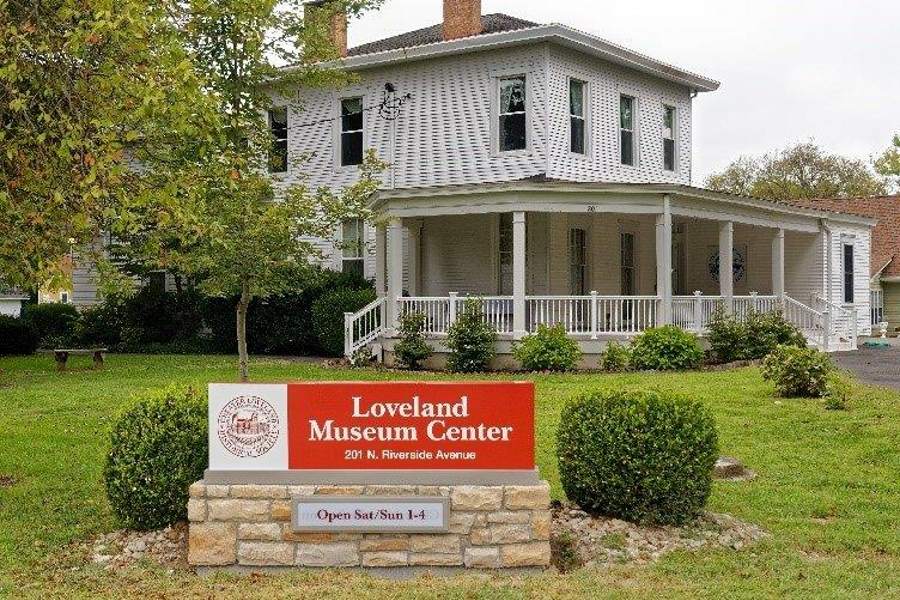
Jim Poe has agreed to host a fund-raising auction for the Museum Center.
We will be selling antiques, vintage items we cannot use or display, and items that members donate.
If you have items that are in good shape – vintage or gently used or even antiques that you would like to donate you can bring them by the museum over the next few weeks.
Here are some suggestions: Collectables up to the 1970’s Vintages items such as framed pictures, gently used household pieces, decorative pieces, collectable table linens, small furniture, glassware.We are NOT able to take upholstered furniture or Clothing.
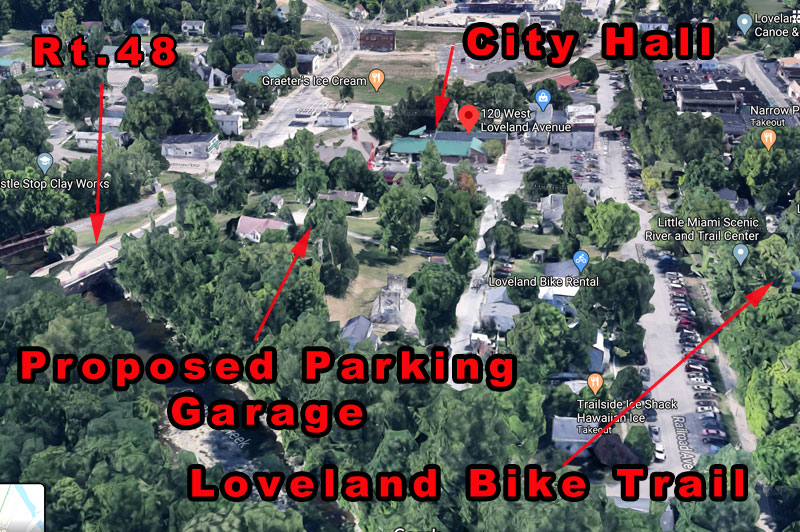
Loveland, Ohio – City Manager Dave Kennedy announced last Friday that the city received notification that it’s Appalachian Regional Commission (ARC) pre-application for $250,000 of grant funding for the downtown parking garage, was ranked as the #1 priority project within the Ohio Valley Regional Development Commission. With this ranking, the city has been invited to submit a full application.
Previously, the city’s grant application for the downtown parking facility was submitted to the Economic Development Administration (EDA). The total amount requested was $2,831,835.
On August 25, Kennedy recommended that Council authorize staff to move forward with a downtown parking fee study at a cost of $16,000. The study would inventory existing parking and the proposed parking facility. He noted that Desman Design Management would use the occupancy counts to identify peak parking needs for weekdays and then evaluate the differences in seasonal variations, summer, and weekend demands. They will identify and recommend street and lots for paid parking and recommend parking rates. The payment was approved by Council.
Read more about the planned parking garage in Historic Downtown Loveland:
Loveland, Ohio – The murderous 9/11 attack by terrorists against the United States will be remembered this Friday at 8 PM at the Police and Fire Memorial in Historic Downtown.
Two searchlights will be lit at dusk and a fireworks display will follow the ceremony.
The Police and Fire Memorial is located at 200 Harrison Avenue, in the same block as Nisbet Park along the Loveland Bike Trail.
In September of 2004, Vernon Michael, and son Don, place the 9/11 Memorial into the concrete foundation at the Loveland Police and Fire Memorial. Michael’s Pre-Cast Concrete manufactured the pedestal to the design specifications of David Camele (with tape measure). Sitting atop of the concrete base is a distorted and rusty piece of structural steel brought to Loveland from the scrap pile of the World Trade Center. Camele designed the memorial so the steel would “bleed rust” onto the fabricated concrete base. Camele, a Loveland resident also designed the Loveland Veterans’ Memorial in the West Loveland Historic District and the Joy of Youth Statute at the entrance to Loveland High School.
The September 11 attacks were a series of four coordinated terrorist attacks by the Islamic terrorist group al-Qaeda against the United States on the morning of Tuesday, September 11, 2001.
The guest speaker is Ret. Lt Bruce Hoffbauer who is the 2020 Republican candidate for Hamilton County Sheriff.
The evening is hosted by the Loveland Symmes Fire Department.
Please note that the Cleanup Day scheduled for Saturday, August 15th has been rescheduled
Symmes Township, Ohio – A Cleanup Day/One Stop Drop has been scheduled for Saturday, September 26th from 9 AM until 3 PM at Home of the Brave Park, 11605 Lebanon Road.
This one day event will offer residents a responsible and convenient way to get rid of trash and other items that they may not need.
In order to social distance and keep everyone safe, residents will be required to unload their own items.
Participants will include:
Goodwill – Bikes, dishes, glassware, toys, games, clothing, books, flat screen tvs and monitors. No furniture, large appliances or construction/building supplies are being accepted at Goodwill at this time. For questions, call 771-4800 Ext. 6273 or see link here.
Matthew 25 Ministries – Usable latex paint
Habitat for Humanity Cincinnati Restore – Furniture, cabinets, doors, lawn & garden, clean mattresses & box springs, electronics (stereos, DVD & CD players), appliances (large & small,) light fixtures and ceiling fans, hardware & tools, housewares, windows (thermal pane only) and digital televisions.
Symmes Township – Trash, tires, car batteries, scrap metal items and used motor oil.
No old appliances with Freon will be accepted this year due to a change in EPA guidelines.
For more information, contact the Township office at 683-6644.
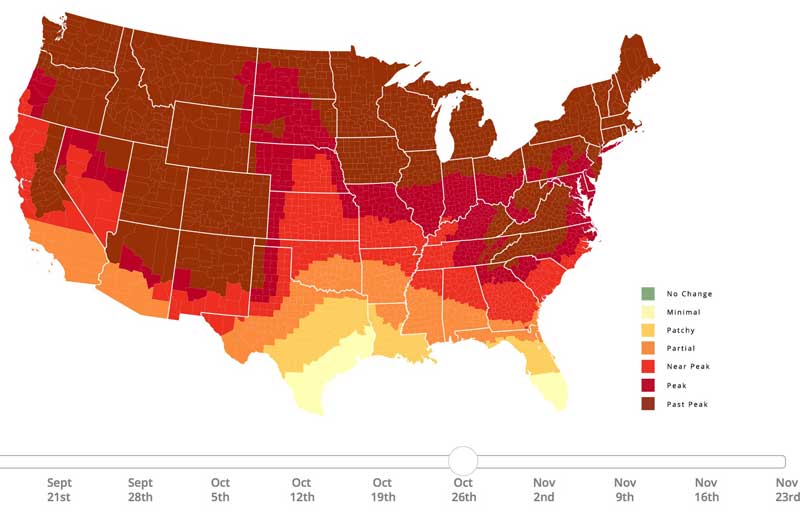
The Smoky Mountains National Park has released The 2020 Fall Foliage Map. They say it t is the “ultimate visual planning guide” to the annual progressive changing of the leaves.
According to the Interactive MAP, which has a slider so you can dial in areas around the country, Southwest Ohio will be approaching peak viewing of gorgeous, vibrant colors on October 26 and the peak is on November 2.
The Park says, “While no tool can be 100% accurate, this tool is meant to help travelers better time their trips to have the best opportunity of catching peak color each year.”
The MAP page will also answer popular questions about autumn tree foliage such as:
Ezz’s previously unreported friendship with Muhammad Ali
What’s it like having Muhammad Ali hang out at your apartment? Ezzard Charles II talks about it on Episode 5 of Total Fighter.
Ricky Mulvey is a former sportswriter and talking head at Loveland Magazine
Do you like history/boxing/Cincinnati/really good stories? If so—or even if not! — listen to Ricky Mulvey’s newly completed five-part podcast Total Fighter about the greatest light heavyweight fighter of all time – the Cincinnati Cobra, Ezzard Charles!
You are sure to enjoy the exclusive interviews, the excerpts of the blow-by-blow from actual fights, and the blow-by-blow of the span of the career – the highs, lows, and extremely admirable post-boxing life of Cincinnati’s heavyweight champion.
ccccc
You will enjoy the fast pace and excitement of Mulvey’s storytelling in this remarkable series about an important era in Cincinnati sports history.
cccc
A limited Podcast series about Ezzard Charles, Cincinnati’s heavyweight champion.
Total Fighter, is a narrative, nonfiction podcast about Ezzard Charles, Cincinnati’s heavyweight champion, and hosted by Loveland native Ricky Mulvey.
ccccc
The premier episode, “More Than a Gym Fighter” was a deep-dive into a very different Cincinnati. Go to a bustling Findlay Market in the 1940s, in between the pool tables and cigar smoke at the American Legion Hall in Newport, Kentucky for Charles’ first boxing match, and a Battle Royale in Lawrenceville, Georgia.
By Source, Fair use, https://en.wikipedia.org/w/index.php?curid=42512075
cccccc
Episode 5 and the season finale of Total Fighter is a deep dive into Ezz’s life after the heavyweight championship: from his series against Rocky Marciano to working at the DMV. Mulvey also explores his previously unreported friendship with Muhammad Ali.
This podcast shines a new light on the underrated Cincinnati Cobra; the greatest light-heavyweight of all time. The series will ultimately follow Charles to his match against Joe Louis, and the characters who followed him– his family and the mafia.
“The fifth episode of a five part series. Ezzard Charles learns that life as the heavyweight champ isn’t the dream he thought that it would be. This show covers Charles’ series against Rocky Marciano, and his friendship with Muhammad Ali. We also discuss the reasons why Cincinnati rejected its greatest fighter and how you make a living as an ex-heavyweight champion.”
Total Fighter features interviews and stories from Buddy LaRosa, founder of LaRosa’s Pizza, William Dettloff, author of “Ezzard Charles: a Boxing Life,” Frank Wettencamp, one of Ezz’s high school classmates, and more.
This show explores his complex character; why the name “Ezzard Charles” became an insult by Frank Sinatra and an inspiration to the composer George Russell.
You can first hear new episodes and updates right here on Loveland Magazine or by following Ricky Mulvey on Facebook, @rickymulvey on Instagram, and @rickssoslick on Twitter.
Abill to repeal Ohio’s nuclear bailout law has languished for more than a month so far, and signs suggest that House leadership may be angling to defer or stop such efforts as Election Day draws near. Lawmakers filed repeal bills soon after the arrest of former speaker Larry Householder (R-Glenford) and others in July.
Starting in January, House Bill 6 will require ratepayers to pay approximately $1 billion over the course of six years for subsidies that FirstEnergy had sought for two Ohio nuclear plants. Yet more is at stake, even beyond the $7 average increase in monthly energy spending that some advocates forecast as a result of the law.
This article written is by Kathiann M. Kowalski and provided by Eye on Ohio, the nonprofit, nonpartisan Ohio Center for Journalism in partnership with the nonprofitEnergy News Network. Please join our free mailing list or the mailing list forthe Energy New Network as this helps us provide more public service reporting.
The federal indictment claims that approximately $60 million for an alleged unlawful enterprise came from “Company A” and affiliates “in return for legislation that would save the operation of the Nuclear Plants” in the state. Federal prosecutors have charged Householder and others with an alleged conspiracy involving the unlawful solicitation and use of funds for the electionof sympathetic lawmakers, Householder’s rise to House speaker, passage of House Bill 6, and the defeat of a referendum effort last year. Federal prosecutors claim that the various actions violated the Racketeer Influenced and Corrupt Organizations Act.
Quotes in case materials indicate that FirstEnergy is Company A. Its subsidiary FirstEnergy Solutions, together with other affiliates, owned and operated the Davis-Besse and Perry nuclear plants. FirstEnergy Solutions emerged frombankruptcy earlier this year and became Energy Harbor.
Only about $3 million of the total could be traced from FirstEnergy Solutions and other entities before the federal complaint was released on July 21. The rest was dark money — funding to influence political action whose origin can’t readily be traced.
Rep. Mike Skindell (D-Lakewood) and Rep. Michael O’Brien (D-Warren) introduced HB 738 on July 29. Lawmakers in the group attempted on August 31 to file a motion to compel a floor vote. The effort was thwarted by the House clerk’s insistence on in-person signatures, even though electronic signatures have been accepted for other purposes during the COVID-19 pandemic.
House Speaker Robert Cupp (Photo by Ohio House of Representatives)
That same day new House Speaker Robert Cupp announced plans for a House Select Committee on Energy and Policy Oversight, to which that and other bills would be referred, but without a specific timeline. “Our goal is to have an open and thorough process for repealing House Bill 6 and replacing it with thoughtful legislation Ohioans can have confidence in,” Cupp said in a press release.
Skindell, who has decried HB 6 as a “corrupt piece of legislation,” said the new committee creation was basically just “a bureaucratic slowdown of the repeal process.”
“We don’t need to study it,” said Rep. David Leland (D-Columbus), referring to hundreds of hours of testimony on the bill from last year. “We need to repeal it. We need to send a strong message to everybody, loud and clear, that Ohio is not for sale.”
HB 738’s cosponsors include more than three dozen lawmakers from both the Republican and Democratic parties. Other lawmakers, however, have defendedthe law, including both co-sponsor Jaime Callender (R-Concord) and House Majority Floor Leader Bill Seitz (R-Cincinnati). There has also been some talk of a repeal with a delayed effective date, but Seitz said he opposes that as well.
Rep. David Leland (D-Columbus) (Photo by Ohio House of Representatives)
Backers of efforts to repeal HB 6 say public integrity demands swift and decisive action from lawmakers.
“Ohioans deserve honest government,” said Dan Sawmiller, Ohio energy policy director at the Natural Resources Defense Council. “The only way to provide confidence in that is to advance a full and complete repeal of House Bill 6 immediately.”
But the bill’s costs will also certainly play a part in the debates.
“Hardworking Ohioans will see their monthly utility bill increase an additional $7.01,” on average, said Miranda Leppla, vice president of energy policy for the Ohio Environmental Council. Other projected costs include health burdens from pollution, lost jobs, and lost economic opportunities.
Here’s a breakdown of projections.
dddd
Approximately $1 billion in ratepayer charges would subsidize the Davis-Besse and Perry nuclear plants in Ohio
The law authorizes $150 million per year from 2021 through 2027 for the two nuclear plants now owned by Energy Harbor, which is the renamed company that emerged from the FirstEnergy Solutions bankruptcy in February.
“There will be no significant impacts to FirstEnergy if HB 6 is repealed and not replaced,” said FirstEnergy spokesperson Mark Durbin. The company has said it is now independent of Energy Harbor and has denied any wrongdoing related to the alleged criminal conspiracy.
Yet FirstEnergy may already have reaped huge benefits from the law. As a major secured creditor of FirstEnergy Solutions when the bankruptcy case began, the company presumably had a business interest in a successful reorganization. Previously, FirstEnergy had said the plants would close without subsidies. And HB 6 arguably helped the company separate itself from most of its former financial burdens.
FirstEnergy also has at least an indirect interest in the ongoing financial viability of the nuclear plants. Under an April 2019 revision to the plan for reorganization, there might still be some financial exposure for environmental cleanup if Energy Harbor fails to meet its obligations.
dddd
Bill riders can subsidize up to $450 million for electricity from one 1950s-era coal plant in Ohio and another in Indiana
House Bill 6 authorizes charges of up to $1.50 per month through 2030 for utilities to pay for electricity from two Ohio Valley Electric Corporation coal plants. Customer charges for the OVEC plants could come to about $450 million.
HB 6 let utilities collect the OVEC riders starting in January. Customers of American Electric Power, Duke Energy and Dayton Power and Light had already been paying subsidies for those plants under prior rate plans. FirstEnergy Solutions’ bankruptcy had let it back out of its prior OVEC obligations, but FirstEnergy’s utility customers are now paying charges as well.
A repeal of HB 6 might not immediately invalidate the charges, according to attorneys Madeline Fleisher and Terrence O’Donnell at Dickinson Wright in Columbus. Some regulatory action might be necessary to revise utility rates, and regulators’ response is uncertain. Anything paid so far would not be refunded, based on prior Ohio Supreme Court rulings.
dddd
A handful of grandfathered solar projects would get $140 million
HB 6 authorized up to $20 million per year for a handful of solar projects that had already gotten permits. Charges for those projects don’t kick in until 2021. Other new solar or wind projects do not get any funds.
dddd
HB 6 added decoupling provisions to help make utilities “recession proof.”
Separate provisions in HB 6 allow utilities to ask regulators to let them collect revenues pegged to 2018 levels— at least until their next major rate plan. The 2018 rates generally included a rider for lost profits that utilities would otherwise have given up due to energy efficiency. But now utilities aren’t required to provide those programs after this year.
“From the standpoint of businesses and households affected by this, they could end up getting charged for energy efficiency and not receiving it,” said Noah Dormady, an energy and economic policy analyst at The Ohio State University. “In other words, they could be paying for efficiency but not receiving any of the benefits.” Utility rate plans, including those from 2018, also have some built-in cross-subsidies, which may flow to unregulated parent or affiliate companies.
The average additional decoupling charge for FirstEnergy customers is about $0.67 per month, according to the Ohio Environmental Council. FirstEnergy President and CEO Chuck Jones acknowledged that the decoupling provision helped cushion the impact of the 2020 pandemic when he gave this year’s first quarter results.
dddd
Bill charges for Ohio’s clean energy standards are removed, but so are cost savings
HB 6 removed any additional energy efficiency requirements after 2020. HB also scaled back the renewable energy portfolio standard so the top target to be achieved by 2026 is now 8.5% of annual electricity generation, instead of 12.5%. However, the baseline for calculating each year’s total generation now won’t count various large industrial users.
A May 22 memo from economist Russ Keller at the Ohio Legislative Service Commission claims that the cumulative cost savings from cutting customer charges for the clean energy programs would be about $2.36 billion through 2030. The memo was addressed to advisor Pat Tully of the House Majority Caucus.
“More charges were cut than were added,” said Seitz in defense of HB 6. Seitz has long sought to limit or gut Ohio’s renewable energy and energy efficiency standards.
Keller’s calculations left out any benefits that would have been gained from keeping the standards in place. Prior law imposed a cost-effectiveness requirement on charges for utilities’ energy efficiency programs. The programs had to save consumers more overall than their cost.
So, focusing only on the cost of those programs gives a “skewed and inaccurate view” of energy efficiency, Sawmiller said. “Energy efficiency has saved Ohioans over $7 billion to date. It’s a no-brainer.”
The Ohio Environmental Council and Environmental Law & Policy Center found that those savings averaged $7.71 per month, based on 2017 utility reports. And that amount doesn’t include additional savings due to energy efficiency’s impacts on the electricity market, which averaged another $2 per month, according to a 2019 report prepared for the organizations.
Using just the $7.71 savings figure, the Ohio Environmental Council estimates that the average residential customer’s net spending for electricity will be $7.01 more per month with HB 6 than without it.
dddd
Repeal backers say HB 6 will cause Ohio to lose jobs and economic opportunities
“HB 6 threatens the gains we’ve made in adding more than 114,000 good-paying clean energy jobs and the economic livelihood of Ohioans working in those jobs,” says Leppla. That number comes from data released in June by Environmental Entrepreneurs and the Clean Energy Trust.
The law “also threatens future growth of this critical sector and our fight against the ever-increasing impacts of climate change on Ohio communities,” Leppla continued. Companies in the clean energy sector would invest elsewhereinstead, advocates say.
The law also discourages investments from other companies that want renewable energy as part of their business goals, repeal backers add. Other legislative actions since 2012 have also had impacts, including a 2014 law that tripled property line setbacks for wind turbines.
If Ohio’s policies were welcoming to clean energy, the state could add 20,000 new jobs and attract $25 billion in investments over the course of two decades, according to a 2018 report by Synapse Energy Economics of Cambridge, Mass. Funding for that report came from the Environmental Defense Fund, with input from various businesses and research groups.
dddd
HB 6 will also have some health and environmental costs
“If Ohio’s renewable energy and efficiency standards aren’t reinstated, Ohioans will experience dirtier air, and we won’t receive the projected health benefits that these standards provide — prevention of over 44,000 asthma attacks, 4,400 heart attacks, over 2,800 premature deaths and more — all attributable to coal-plant pollution.” Leppla said.
The figures come from a 2015 report prepared for the Natural Resources Defense Council, Ohio Environmental Council, Environmental Law & Policy Center, and the League of Conservation Voters. Leppla noted that the subsidies make it easier for the Sammis coal plant to stay open past 2022.
dddd
What’s next?
For now, the timeline to repeal HB 6 — if at all — remains uncertain. And it’s unclear whether any definitive action will take place before in-person and mail-in voting starts in Ohio on October 6.
If a repeal doesn’t take place before voting starts, Leland said, “it sends a message that corruption is okay in Ohio.”
“Ohio, and the rest of the world, continue to grapple with a pandemic that is having devastating impacts on our economy, as well as our health,” Sawmiller said. “The state’s clean energy workers — and their families — should not be made to suffer in an effort to protect this legislation, which was passed through a process now mired in criminal investigations.”



 by Hannah Roberts Gwynne
 “Parents or guardians of students and school staff who have been diagnosed with COVID-19 (…) are encouraged to notify their school no later than 24 hours after receiving confirmed diagnosis.” (emphasis added).