The Ohio Senate Republican budget passed last week put forth a new vision for social safety net spending in Ohio.
The proposal suggests reduced spending on food banks, housing for pregnant women, affordable housing, and school meals for poor children. It also proposes making it harder for low-income people to get access to Medicaid, SNAP (formerly known as “food stamps”), and other public benefits.
These changes to the budget are used to fund income and commercial activity tax cuts.
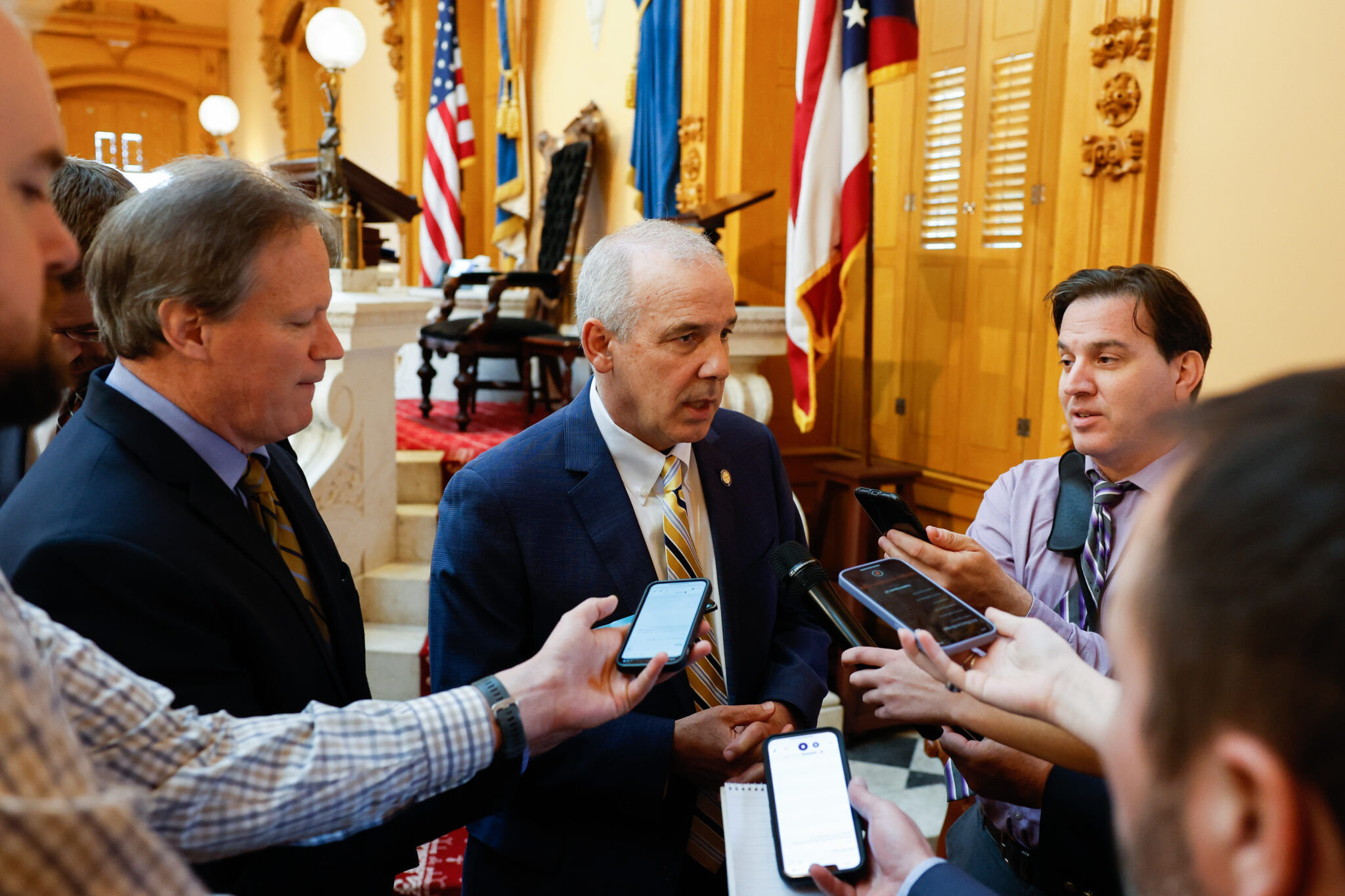
When Senate President Matt Huffman was asked about this range of cuts to social services, his explanation was that he is trying to “stimulate” a conversation about sustainability of the Temporary Assistance for Needy Families fund. He expressed worry that the fund would be insolvent in five years if spending and revenue continues at current levels for years into the future.
So let’s talk about it.
Temporary Assistance for Needy Families (often shortened to “TANF”) is a relatively small program that mainly provides income to very poor Ohioans. It is the successor to the Aid for Families with Dependent Children (AFDC) program. This was the program that had gained the dreaded label of “welfare” in the early 90s.
Many politicians did not like AFDC because it gave cash to low-income families. It became a massive dog whistle punching bag for the Reagan administration, who was able to vilify it to such effect that it was ultimately the Clinton administration that finished the program, following up on a campaign promise to “end welfare as we know it.”
And he did. The new TANF program was a block grant given out to states to not only provide cash assistance, but also to pilot a range of different programs focused on getting people to work.
Early on, this change was seen as a success. Poverty abated and employment, especially among single mothers, increased. But this was the 90s–a period of economic expansion.
The subsequent recession of the early 00s followed by the Great Recession of 2007 to 2009 exposed how these changes to the social safety net had made it less resilient and kicked out many of the supports previously in place to hold struggling families up.
While new programs from the 90s like the earned income tax credit are a good tool for supporting families who have work, they fail when structural problems make work unavailable on a massive scale.
All this is to say Huffman has a little bit of a point here. Block granting TANF took one of the most straightforward and effective income support programs in U.S. history and capped it, limiting its potential effectiveness greatly. Now the dollars available for supporting low-income families need to come from somewhere else.
Is the answer to this problem to cut social spending left and right and use that as a tool to fund income tax cuts and cuts to commercial activity? Probably not. If the plan put forth in the Senate is adopted, it will represent a massive transfer of income from the most needy Ohioans to those with the most resources already. Seems like a big cost to try to make a point.
ROB MOORE
Rob Moore is the principal for Scioto Analysis, a public policy analysis firm based in Columbus. Moore has worked as an analyst in the public and nonprofit sectors and has analyzed diverse issue areas such as economic development, environment, education, and public health. He holds a Master of Public Policy from the University of California Berkeley’s Goldman School of Public Policy and a Bachelor of Arts in Philosophy from Denison University.
Ohio ranks 29th among states in overall child well-being, according to the latest Annie E. Casey Foundation Kids Count Data Book.
Child care continues to pose challenges for working parents, and the new data showed average child care costs for one child in 2021 topped $10,000 per year.
Kelly Vyzral, senior health policy associate for the Children’s Defense Fund-Ohio, said women are five to eight times more likely than men to experience negative employment consequences related to caregiving. Lack of affordable child care also disproportionately affects families of color and immigrant families.
“We can’t expect parents — and many times this is especially relevant for single moms — we can’t expect them to go back to work, if they don’t have a safe place to leave their children,” Vyzral asserted.
In 2021, Bureau of Labor Statistics data shows Ohio hit a twenty-year low in the number of child care workers, with around 12,000 across 88 counties. According to the report, the nation’s already insufficient child care workforce dropped by more than a third in just two months at the beginning of the pandemic, and has since rebounded to 996,000 workers by April 2023, still far below pre-pandemic levels.
An executive order issued by President Biden this year aims to expand child care access by lowering costs and raising worker wages.
Vyzral acknowledged it is a start, and pointed out state lawmakers should continue to implement policies aimed at addressing the crisis.
“There’s money in the budget for those publicly funded child care centers,” Vyzral argued. “And there’s also scholarships for spots within those child care centers for workers. So for the people that are working in these day care centers, to send their children to day care, because they often in order to work, have to have some place to put their children.”
Nationwide, the average salary for a child care worker was around $29,000 per year or around $14 an hour in 2022, according to the Bureau of Labor Statistics.
Disclosure: The Annie E. Casey Foundation contributes to our fund for reporting on Children’s Issues, Education, Juvenile Justice, and Welfare Reform. If you would like to help support news in the public interest, click here.
Along party lines, the Ohio Supreme Court on Friday gave the green light to an attempt by Republican leaders of the state’s gerrymandered legislature to make it much harder for voters to amend the state Constitution. The court ruled in a 4-3 decision that it’s OK for the issue to be placed on the Aug. 8 ballot even though the legislature just outlawed such elections in January.
The Republican majority said that regardless of the law, the Ohio Constitution gives the legislature great latitude in deciding when elections will be held. In a dissent, the Democratic minority argued that while that might be the case, the legislature still has to follow the laws it has passed — and change the ones it doesn’t like.
Issue 1 would raise the percentage of votes needed to pass a voter-initiated amendment from 50% to 60%. It would also require that a given number of the hundreds of thousands of signatures needed to get an amendment on the ballot come from each of Ohio’s 88 counties instead of the current 44.
Republican leaders, including Secretary of State Frank LaRose, pushing the amendment have given inconsistent reasons for why it’s needed. But to partisan audiences they’ve conceded that one reason for putting the matter on the ballot in a low-turnout Aug. 8 election is to try to block a voter-initiated abortion-rights amendment expected to be on the ballot in November.
One, Rep. Brian Stewart, R-Ashville, also admitted to colleagues last year that he wants to make it harder for another anti-gerrymandering amendment to pass. Ohio’s current lawmakers represent districts that an earlier bipartisan Supreme Court repeatedly ruled were unconstitutional under two amendments already overwhelmingly passed by voters.
The voting-rights group One Person One Vote sought an order stopping the Aug. 8 election, noting that under a law signed by Gov. Mike DeWine on Jan. 6, almost all statewide August elections are prohibited.
The Republican majority on Friday agreed — kind of. In its opinion it said the law does not authorize, “an August special election for a statewide office, question, or issue.”
Even so, the opinion — signed by Republican Justices Sharon L. Kennedy, Pat DeWine and Joe Deters and concurred with by Justice Pat Fischer — says the legislature doesn’t have to follow that law.
“Regardless of what the Revised Code provides with respect to special elections, however, Article XVI, Section 1 of the Ohio Constitution controls the matter before us,” it said. “That provision authorizes the General Assembly to submit the issue ‘at either a special or a general election as the General Assembly may prescribe.’”
That’s ludicrous, Justice Michael Donnelly said, in essence, in one of two dissents. If the legislature wants to hold an Aug. 8 election, it needs to change the law that it so recently passed, he argued.
“But rather than changing the law, the General Assembly and respondent, Secretary of State Frank LaRose, want to be told that the Ohio Constitution allows the General Assembly to break its own laws,” Donnelly wrote. “Rather than doing the work themselves, they want this court to fix their mess and do their work for them. Sadly, a majority of this court obliges.”
Democratic Justices Melody Stewart and Jennifer Brunner joined in the dissent and Brunner wrote a separate dissent of her own.
In it, Brunner said the majority is wrong to claim that since the Ohio Constitution delegates to the legislature the power to determine the time of elections, that allows it to violate the law it passed prohibiting them in August. Laws frequently constrain constitutional rights, such as those related to speech and guns, she argued.
“Many of our statutory laws burden some constitutional right in some way, and yet they are presumed to be constitutional when enacted and are not struck down unless they are found to have impermissibly burdened a constitutional right,” she wrote.
Dennis Willard, spokesman for plaintiffs One Person One Vote said in a statement that despite Friday’s reversal, his group would continue to work to get people to polls and vote no on Aug. 8.
“Today’s ruling is disappointing, but the choice before voters remains the same no matter when we vote: Preserve majority rule in Ohio, or dismantle it,” he said. “We’re confident Ohio voters will see Issue 1 for the scam that it is: a corrupt power grab by special interests and politicians.”
MARTY SCHLADEN
Marty Schladen has been a reporter for decades, working in Indiana, Texas and other places before returning to his native Ohio to work at The Columbus Dispatch in 2017. He’s won state and national journalism awards for investigations into utility regulation, public corruption, the environment, prescription drug spending and other matters.
Loveland, Ohio – Southwest Ohio Air Quality Agency has issued an Air Quality Alert for Saturday, June 17, and Sunday, June 18.
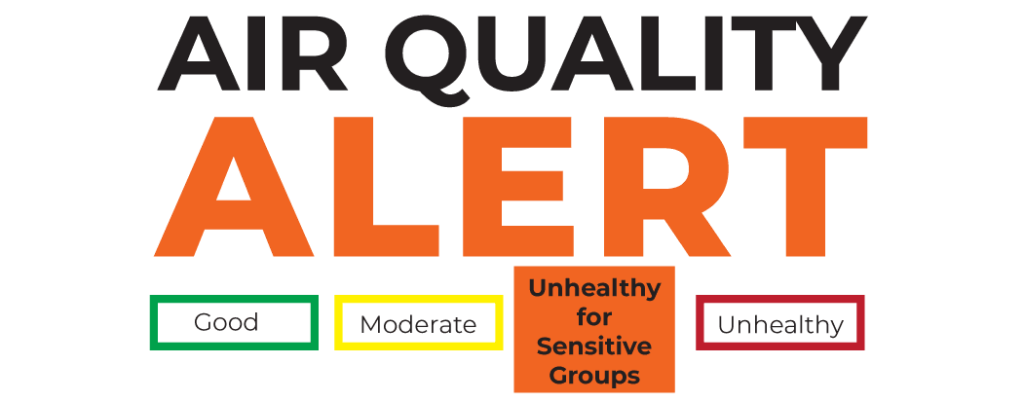
The Agency issues an Air Quality Alerts when ozone or other major air pollutants are expected to reach levels considered unhealthy for sensitive groups.
The Agency expects to see levels of ozone in the “unhealthy for sensitive groups” range on the Air Quality Index (AQI).
Use this SITE to track pollution levels in real time.
“Sensitive Groups” refers to people with health issues that might be affected by pollution. This category includes:
Babies
Young children
Elderly people
People with respiratory disease
People with allergies
People with hypersensitivity
For people with sensitivity issues, this could be bad enough to be affected. People with asthma will experience shortness of breath more often. Children and the elderly may suffer more coughing or allergic reactions. Long-term exposure may cause more serious damage.
For more details on the Air Quality Index and its corresponding health messages, refer to AirNow. You may also choose to sign up for EnviroFlash, a free s
A statement from Trevor Timm, Executive Director, Freedom of the Press Foundation
Loveland Magazine is a member of the Freedom of the Press Foundation
We are heartbroken to learn that our dear friend Daniel Ellsberg, world-renowned whistleblower and Freedom of the Press Foundation co-founder, has passed away at the age of 92.
Daniel Ellsberg stands as one of the most influential figures in American history, leaving an indelible impact on the last century. His courageous decision to leak the Pentagon Papers to The New York Times in 1971 led to the most important Supreme Court case for press freedom in the modern era, sparked a series of events that culminated in the resignation of President Richard Nixon, and ultimately accelerated the end of the Vietnam War.
He became a hero to millions for his unwavering anti-war activism and decades-long fight to abolish nuclear weapons, but his long-term legacy may lie with the countless whistleblowers whom he inspired to follow in his footsteps.
As the first source of a journalist to be prosecuted under the often-abused Espionage Act, Ellsberg spent the second half of his life passionately defending other whistleblowers who were less fortunate than him. It’s only because of what he would refer to as “a series of miracles” (in reality, severe government misconduct), that he did not spend decades in prison himself. So, he made it part of his mission to draw attention to the unjust and unconstitutional law, and help the other patriotic whistleblowers who were irreparably harmed by it.
It’s why we’ve always considered whistleblower rights a core press freedom issue. How much of the journalism we know and love would not be possible without the countless Daniel Ellsbergs we never hear about?
It’s also true that Freedom of the Press Foundation would not exist without him, as he was the galvanizing force behind our organization’s founding in 2012. Since then, he sat on our board for more than 10 years and has been our constant inspiration. We only hope we can live up to his righteous example.
Our organization plans to honor our dear friend by carrying the torch for two of the causes he championed for much of his life: reform of the U.S. government’s secrecy system and repeal of the Espionage Act. Recently we announced the creation of the Daniel Ellsberg Chair on Government Secrecy, which aims to tackle those two issues with the same passion, rigor, eloquence, and intellectual honesty that he embodied.
We’ll have more news on that front soon. In the meantime, our thoughts are with his wonderful wife Patricia, his children Robert, Mary, and Michael, and the countless people whose lives he touched, both in person and from afar.
Top executives from Signature and Silicon Valley banks would forfeit much of the compensation they received over the past two years under legislation U.S. Sen. Sherrod Brown introduced Thursday with the top Republican on the Senate Banking Committee he chairs.
Brown said the legislation he negotiated with South Carolina GOP Sen. Tim Scott combines the best aspects of other bills that his colleagues proposed to crack down on bank misbehavior after the March collapse of Signature and Silicon Valley banks. The pair excoriated the banks’ top executives last month at a banking committee hearing.
Their proposal would allow the bank’s board or the Federal Deposit Insurance Corporation to claw back executive compensation received in the 24 months prior to a bank’s failure as well as profits realized from selling the bank’s stock. It would exclude small community banks, and senior executives, or “white knights” that come to institutions in crisis.
It also would strengthen banking agencies’ ability to remove or prohibit employment of senior executives who mismanaged risk, require bank bylaws to include governance and accountability standards, and increase the maximum civil penalty that regulators can assess on bad actors from $1 million to $3 million.
The Ohio Chamber of Commerce is supporting a proposed amendment to the state Constitution that has huge implications for such issues as abortion, gun control, and even democracy itself.
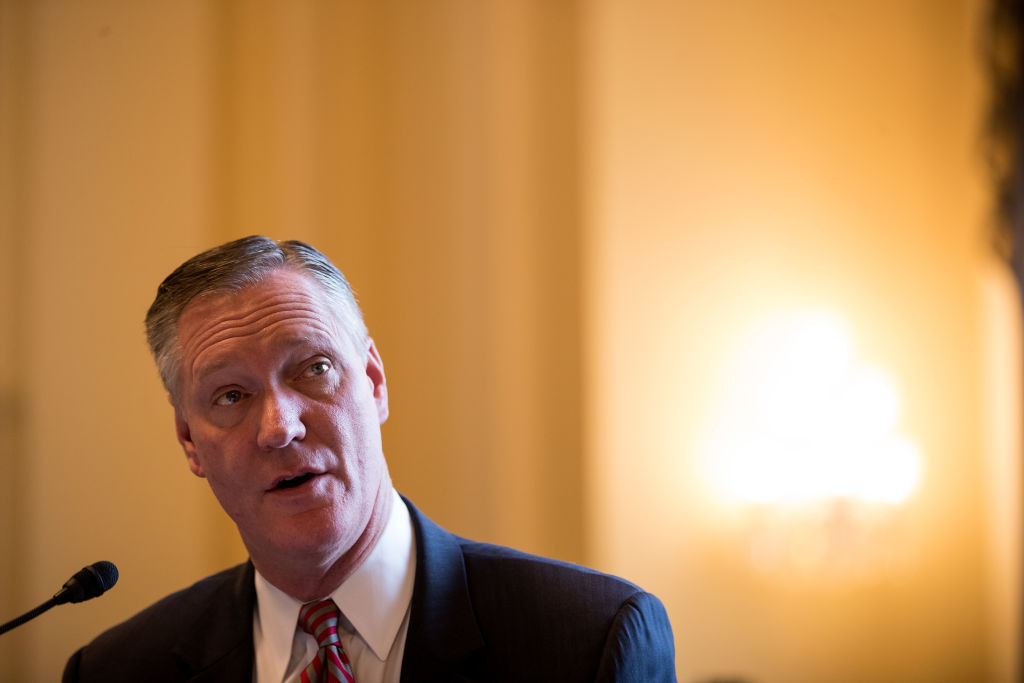
But Steve Stivers, president and CEO of the chamber, isn’t willing to talk about those things as his organization joins the effort to make it much harder for voters to amend the Ohio Constitution.
The Chamber last month came out in support of a proposal by Ohio’s Republican-controlled legislature that would make it far harder for voters to gather enough signatures to put a constitutional amendment on the ballot. It would also require a majority of at least 60% to pass it instead of the current 50%. In doing so, the Chamber is joining forces with Ohio Right to Life, the Buckeye Firearms Association, and an out-of-state, election-denying billionaire.
The measure, Issue 1, will be on the ballot Aug. 8 because Republicans in the legislature last month reversed a ban on such elections that they passed just last year because voter turnout in the dog days of summer is typically abysmal. In August 2022 it was 7.9%.
On May 11, Stivers issued a statement saying the Chamber takes no position on abortion rights — even though the measure it’s supporting is intended to block a voter-initiated abortion-rights amendment that is expected to appear on the November ballot. Stivers also said the group isn’t taking a position on other “social” issues that are popular with voters, but the Republican supermajority in the state legislature — declared an unconstitutional gerrymander multiple times by a bipartisan Ohio Supreme Court — seems determined to stymie.
“The Ohio Chamber Board voted today to take no position on the November election’s reproductive rights issue,” Stivers said. “The Ohio Chamber is a business association and takes positions on business issues, not social issues. While we support protecting our constitution in August, this has everything to do with subjects like minimum wage, employment at-will, and other business issues.”
That ignores businesses’ interest in avoiding unpopular legislation such as Ohio’s harsh abortion restrictions passed out of an extremely gerrymandered legislature. A survey conducted last August indicated that a third of job seekers wouldn’t even consider working in states with strict abortion limitations and that 27% percent of workers in states with the most restrictive abortion laws wanted to leave.
But Stivers, a former Republican congressman, has declined to discuss such things. Since issuing the May 11 statement, the Chamber hasn’t responded to requests for an interview with Stivers, and it ignored written questions that were sent as a follow-up.
Lack of transparency
The refusal of the state’s most prominent business organization to discuss the ramifications of a constitutional change it’s supporting adds another undemocratic layer to an initiative that already has many, said Catherine Turcer, executive director of Common Cause Ohio, which opposes State Issue 1. She said the Chamber and its members will sink lots of corporate money into the fight to cut voters’ power, but it doesn’t want to be open with them.
“One of the challenges with corporate donations and business organizations is that the money does the talking,” Turcer said. “It gets spent on elections, but we don’t hear directly from the people behind it. And we should expect to hear that because at the end of the day, a corporation doesn’t get to vote. At the end of the day, a corporation is an artificial entity. (Behind them are) human beings making decisions and we should understand what is happening. Or at least the press should have an opportunity to ask questions.”
The position the Chamber is taking in favor of State Issue 1 is out of step with four former governors of both parties, five former Ohio attorneys general, and more than 240 organizations — such as Turcer’s — who are adamantly opposed to the measure because they believe it would effectively lock Ohio voters out of their state Constitution.
The provision Issue 1 seeks to change was championed by former President Theodore Roosevelt as a way to force an unresponsive government to address the public’s concerns.
Adopted in 1912, it sets a high bar for voters to gain access to the Ohio Constitution. It requires supporters of an amendment to gather a large number of voter signatures (413,000 for the abortion-rights amendment planned for the November ballot) and it requires that a given number of them be gathered in each of 44 counties in the various regions of the state. After all that, it also has to gain a majority of the vote to become part of the Constitution.
Under Issue 1, Republicans in the legislature, anti-abortion groups, pro-gun groups — and the Chamber — want to require 60% of the vote for an amendment to pass, even as they try to pass the restriction under the current, 50% requirement. In other words, they’re trying to get a simple majority in a low-turnout Aug. 8 election to pass an amendment saying that a 40% minority can quash future amendments supported by 59.9% of Ohio voters.
Issue 1 “is a proposal to substantially diminish the most significant power held by the people, the power of initiative petition to amend the Ohio Constitution. Our Constitution leaves no doubt about this,” Ohio Supreme Court Justice Jennifer Brunner, wrote in a partial dissent published on Monday. She was dissenting because she thought the court didn’t go far enough in ruling that parts of Issue 1 are “likely to mislead voters.”
Like Brunner, Turcer argues that the effort to enhance the power of the gerrymandered legislature relative to the voters is undemocratic. And — along with former Republican Gov. Bob Taft — she argues that even from the standpoint of its supporters, the measure is shortsighted.
“It’s problematic that organizations decided to make it harder for citizens to change the Constitution because they don’t like specific policies. But it’s not always going to be 2023,” Turcer said. “There are a number of different ways we can improve the state and leaving that to a minority of Ohio voters is really scary. It’s really scary to think that a majority of voters — whether it’s 55% or 58% — approve of something, but they can’t actually put that policy in place.”
Misleading claims
Adding to accusations that the proposed change is anti-democratic are the misleading reasons proponents have given for needing it.
Stivers, Ohio Secretary of State Frank LaRose, and other proponents argue that voter access needs to be ratcheted down to “protect” the Ohio Constitution from monied out-of-state interests. But when he announced an earlier version of the measure last year, LaRose couldn’t point to any examples of such interests amending the Constitution in the past.
At the same press conference last year in which LaRose claimed he was trying to protect the Constitution, he also claimed that he was thinking long-term. He said he wasn’t trying to block the expected amendment protecting abortion rights.
The Republican majority members of the Ohio Redistricting Commission in 2021 and 2022. Top row from left, Ohio Gov. Mike DeWine and Secretary of State Frank LaRose. Bottom row from left Ohio Auditor Keith Faber, then-House Speaker Bob Cupp, and Senate President Matt Huffman. Official photos.
LaRose also denied that he wanted to foil another attempt by Ohio voters to stop extreme gerrymandering after he and other Republicans on the state Redistricting Commission ignored repeated orders by the state Supreme Court to follow earlier amendments passed with 70% of the vote. The Republican commissioners last year ran out the clock on the process and lawmakers in the consequently unconstitutional districts voted to put the amendment that would make it much harder for Ohio voters to amend the Constitution on the Aug. 8 ballot.
In her dissenting opinion Monday, Justice Brunner said that by ignoring constitutional prohibitions against gerrymandering, Republican leaders make it easy to come up with the needed votes for the legislature to put a constitutional amendment on the ballot while making it almost impossible for voters to do the same.
“If the General Assembly continues to ignore (anti-gerrymandering) orders of this court regarding the state legislative redistricting process, gaining a three-fifths vote should not be difficult for it to accomplish,” she wrote.
Lack of candor
Turcer of Common Cause said that business groups such as the Chamber ignore issues like gerrymandering at their peril. That’s because lawmakers from gerrymandered districts have every incentive to cater to the most charged-up elements of their base and ignore everybody else. It‘s an engine that produces extreme legislation that can prompt boycotts, protests and require businesses to provide special benefits to protect employees.
“The folks who do support Issue 1 and the special election clearly don’t care about gerrymandering — the manipulation of district lines to manipulate elections and policy,” Turcer said. “Gerrymandering has a profound consequence for our business leaders and the business community. It is extremely short-sighted to not think about how challenging it will be to do a citizen initiative with the news rules that are in place.”
LaRose again demonstrated in May that he was being less than forthright when he claimed his support for the effort was only out of concern for the future integrity of the Ohio Constitution, and not current fights over abortion and gerrymandering.
“That’s not what this kind of a change should ever be about,” LaRose said last November.
The lack of candor about their reasons for wanting to effectively lock Ohio voters out of the state Constitution seems to extend even to the name of the campaign committee supporting the measure: Save Our Constitution.
It’s possible that Stivers, the Chamber, and other business interests are narrowly focused on stopping a minimum wage hike to $15 an hour — which enjoys the support from 60% of the public.
The Chamber might also be responding to pressure from legislative Republicans. The Cleveland Plain Dealer reported that GOP leaders last month put the arm on corporate lobbyists to contribute to the Issue 1 push as they draw up a multi-billion dollar state budget that is of great interest to the companies the lobbyists represent.
Either way, Turcer said, the Chamber and its members are trying to water down democracy for their own, narrow purposes.
“For political expediency, they would like to make it harder for us to participate in direct democracy,” she said. “They would prefer to dilute the power of voters rather than promote their own policy agenda with voters.”
MARTY SCHLADEN
Marty Schladen has been a reporter for decades, working in Indiana, Texas and other places before returning to his native Ohio to work at The Columbus Dispatch in 2017. He’s won state and national journalism awards for investigations into utility regulation, public corruption, the environment, prescription drug spending and other matters.
Loveland, Ohio – The Art League of Loveland has announced the 3rd annual Art Gallery Crawl, which will be held Saturday, June 24, from 4 until 9 PM.
The event is back by popular demand and boasts the participation of 118artists featured throughout the City of Loveland showing their wares and talking with guests about their work. The show includes jewelry makers, painters, sculptors, ceramic and glass artists, fiber artists, and many more.
As always, Loveland’s seven primary art galleries will be holding Open Houses and featuring a variety of renowned artists — both past and present. In addition, eight local businesses will be featuring artists, including Bond Furniture, Hometown Cafe, Trailside Provisions, and more.
This year’s Art Crawl will have a Welcome Tent at Union Savings Bank on the corner of West Loveland Avenue and Wall Street, where participants can get more information, such as a map of all the venues and a listing of all the artists participating.
The Art Crawl brochure will also show the mile-and-a-half route the event’s “Art Buggy” will be taking, so guests can either walk the route or hop on the free shuttle to pursue their artistic journey viewing a wide variety of art and meeting local artists and artisans. The galleries and venues will be providing special deals and light refreshments for all.
“Right Click” this map to see a larger view, and for printing.
“The show really highlights artists living in and around Loveland,” says Deirdre Dyson, the show’s Honorary Chair and one of the city’s award-winning artists. “Loveland has so much to offer artistically, and we’re proud to sponsor this city-wide event celebrating the arts.” Dyson is the owner of Art House II, which features several galleries of her work.
Overall, 118 artists will be showing their wares, including jewelry, paintings, drawings, pottery, sculptures, glass, fiber arts, and many more.
The Art Gallery Crawl once again will be offering four $250 raffle prizes for participants who complete the Art Gallery circuit and visit each venue. Each prize entitles the winner to select $250 worth of artwork from any of the participating artists/galleries.
There will be several additions that make this Art Crawl a “can’t miss” event! For example, thanks to the Grail’s Art Director, Caroline DiGiovenale, there will be a Children’s Station at Jackson Street Market offering free crafts and activities to entertain young and old alike. A food truck, Caveman Crepes, will be serving up sweet and savory fare at the Welcome Tent. Plus, there will be live music by Ellen Mershon at Whistle Stop Clay Works! This is a free cultural arts event for the entire family brought to you by the Art League of Loveland and the Art Crawl’s many generous sponsors. All are welcome.
ABOUT THE LOVELAND ART GALLERY CRAWl
MISSION:
The Art Crawl highlights the City’s vibrant art culture — and focuses on the extraordinary creative works by our many Loveland artists!
This event also introduces participants to Loveland’s rich art history. For example, in historic West Loveland, there are two art galleries that feature internationally renowned artists:
Nancy Ford Cones (1869-1962), was an award-winning pioneer in photography as an art medium.
William Schickel (1919-2009), was a prolific liturgical artist and architect whose body of work includes paintings, sculptures, stained glass, and furniture design.
During this one-day art event, Loveland Art Galleries and Artists hold Open Houses from 4-9 PM and offer light appetizers and drinks, while also showcasing a featured artist or highlighting artwork for sale. Altogether, there are seven art galleries and dozens of artist studios within the city.
To provide an extra element of fun for our art crawlers, most galleries provide individual raffles, and one large LAGC raffle prize ($250) will be offered to those crawlers who complete the entire art gallery circuit.
The LAGC “Art Buggy” Shuttle offers hop-on, hop-off transportation from one end of town to the other (about a mile-and-a-half circuit).
All Loveland artists who live and/or work within the Greater Loveland area are welcome to participate. Many local businesses also support this event by featuring local artists’ works or through sponsorships.
The first Loveland Art Gallery Crawl was initiated last year by a group of committed artists and art lovers. The success of that event led to the creation of the Art League of Loveland (ALL), a non-profit organization for artists and art lovers that is dedicated to ensuring all artists thrive in the Loveland community.
This year’s Loveland Art Gallery Crawl is led by members of the Art League of Loveland. For more information: www.ArtLeagueofLoveland.org
Those on the ground trying to eradicate hunger in Ohio say the new budget proposal from the state Senate would only exacerbate the problem.
After finding out that many of Ohio’s foodbank clients are forced to choose between paying for food and things like utilities and medicine, the Ohio Association of Foodbanks urged the state legislature to include increased funding to the Ohio Food Program and Agricultural Clearance Program (OFPACP), along with hopes that the federal government would make positive changes to the Supplemental Nutrition Assistance Program.
“Clearly (the study’s) findings had the reverse impact on the Senate Republicans,” OAF executive director Lisa Hamler-Fugitt, told the OCJ. “If enacted, (the Senate’s budget proposal) will make hunger, insecurity, and poverty worse than it is now.”
The Ohio Senate’s version of the budget, headed to the chamber’s finance committee, would reduce the OFPACP funding and added a request for the Department of Medicaid to establish work reporting requirements for Medicaid.
The House version of House Bill 33, the official title of the budget bill, included $15 million per year for the next two years to the food and agricultural clearance program, and created free-lunch eligibility for any student who qualified for the reduced lunch program as well.
Neither of those are included in the Senate version.
“Eliminating increased funding to help workers, families, older adults, disabled Ohioans and marginalized people put food on the table, when the state of Ohio has incredible resources at its disposal, is cruel and short-sighted,” the OAF said in a statement.
The Hunger Network in Ohio disparaged the GOP version of the budget for cutting funding not only to the hunger efforts, but also to K-12 education and free and reduced lunches in schools.
“We cannot continue to balance our budget on the backs of hardworking and hungry Ohioans,” said Nick Bates, director of the network. “This proposal will leave Ohioans hungry, our schools under-resourced, and families without the resources to get ahead.”
According to Hamler-Fugitt, the association of foodbanks provided take-home groceries to more than 3 million state residents in the last quarter, over 30% more than the same time last year.
In the research study by the OAF, two in three Ohio households who come to the foodbanks have had to cut the size of meals or skip meals due to a lack of money, which could be attributed to rising food costs and a reduction in SNAP monies boosted during the pandemic.
The association study also found that only 5% of SNAP participants’ benefits lasted a full month since the end of the pandemic-expanded program, which stopped in March.
Ending the program resulted in a monthly loss of about $90 per person on average, according to the OAF.
The Senate Finance Committee will hold hearings on the budget and conduct a floor vote on the bill. The deadline for passage is the end of June.
SUSAN TEBBEN
Susan Tebben is an award-winning journalist with a decade of experience covering Ohio news, including courts and crime, Appalachian social issues, government, education, diversity and culture. She has worked for The Newark Advocate, The Glasgow (KY) Daily Times, The Athens Messenger, and WOUB Public Media. She has also had work featured on National Public Radio.
Public and private education supporters had a mixed bag of reactions to the state budget proposal released by the Ohio Senate GOP on Tuesday.
Public school advocates criticized the bill’s provisions making private school vouchers almost universal at 450% of the federal poverty level, allowing those who may be able to pay for the private education to be eligible for scholarships.
“Paying private school tuition for wealthy families is not a good use of our education dollars, especially when the state is still trying to accomplish the full and fair public school funding that is required by Ohio’s constitution,” Ohio Federation of Teachers president Melissa Cropper said after the budget draft was released.
Ohio Senate GOP leadership proclaimed that “significant reforms” were on the horizon in education policy, with Senate President Matt Huffman saying the new education budget would bring “the results our parents should expect for their children’s education.”
Senate Republicans said school districts would receive “at least the level of state aid they received this school year,” and Senate Finance Committee Chair Matt Dolan, R-Chagrin Falls, touted the increase of the minimum state share of instruction from 5% to 10%, but certain “guarantees” would be eliminated in the current education funding formula.
One of those eliminated guarantees would be $106.8 million to 36 districts, which paid residents for private school scholarships.
“The state now directly funds students where they are educated making this giveaway a wasteful use of taxpayer funds,” an announcement on the budget stated.
Those direct funds will be distributed on a sliding scale based on income if the budget bill passes as written, but the eligibility level in the proposal stands at an annual income of $135,000 for a family of four.
“Every student in Ohio will be eligible for a scholarship worth at least 10% of the maximum scholarship regardless of income,” Senate GOP leaders said in a release.
The full scholarship would award $6,165 for K-8 students and $8,407 for high school students.
Senate Minority Leader Nickie Antonio, D-Lakewood, used her initial reaction to the budget proposal to discredit changes made to the private school vouchers.
“A program that was intended to help low-income children could now subsidize wealthy families to continue to send their children to private schools,” Antonio said in a statement. “Our caucus will be spending the next few days digging into the details to follow the money.”
One thing the budget won’t be paying for under the Senate’s budget proposal is an expansion of a statewide free breakfast and lunch program. The House inserted a provision to make school meals free for anyone whose household income qualified them for free or reduced meals, considered a small win by school nutritionists who asked for completely universal school meals.
In the Senate version, that provision has been removed.
Many of those who dislike the education parts of the budget proposal spoke out against Senate Bill 1, legislation that would restructure the Ohio Department of Education to become the Ohio Department of Education and Workforce (DEW), and work within the governor’s office under two deputy directors, one for primary and secondary education, and another for workforce development.
The bill, and the provision now in the budget draft, “transfers most of the powers and duties of the State Board of Education and the Superintendent of Public Instruction to the DEW,” according to budget documents.
The State Board of Ed and the state superintendent would retain power “regarding educator licensure, licensee disciplinary actions, school district territory transfers and certain other areas,” the budget proposal states.
Odds are opponents will be back to decry the inclusion of SB 1’s language in the new budget. Cropper said including the restructure would be “too big of a reorganization to shove through as part of a budget bill.”
“It deserves more attention and a more thoughtful, deliberative legislative process,” according to Cropper.
The same message was sent by opponents of the bill in the last General Assembly, when that version of the restructuring came late in the GA session, and died as the lame duck session ended.
It reappeared at the beginning of the year, and has been going through the committee process in the last few months.
Some right-wing groups praised the education provisions of the budget, with the Thomas B. Fordham Institute complimenting the preservation of third-grade retention and the expansion of vouchers. The group also said the Senate version has “taken another step towards a more coherent and accountable governance system,” referring to SB 1, which they have supported.
“Greater parent empowerment, accountable school systems and strong evidence-based literacy policies can only help increase student achievement,” said Fordham’s Ohio research director, Aaron Churchill.
The Buckeye Institute’s Greg R. Lawson called the proposal “a significant step toward putting students first,” with the plan to universalize private school vouchers and improve charter school funding.
SUSAN TEBBEN
Susan Tebben is an award-winning journalist with a decade of experience covering Ohio news, including courts and crime, Appalachian social issues, government, education, diversity and culture. She has worked for The Newark Advocate, The Glasgow (KY) Daily Times, The Athens Messenger, and WOUB Public Media. She has also had work featured on National Public Radio.