Loveland, Ohio – In contrast to Loveland Magazine reporter Sean Behling’s photo essay of the annual parade which shows a quite festive crowd, these photos show a completely different mood once the ceremony began at the Veterans’ Memorial in the West Loveland Historic District.
The sound track was recorded during the service.
An Extraordinary Plea
Dear Loveland Area Friends,
We are one keystroke and one shutter click away from a technological disaster.
We work from 11-year-old computers and an eight-year-old video camera. This video took perhaps 20 hours longer to edit and produce than it should have because of the antiquated equipment we use.
If you see yourself in this video, a loved one, a best friend, or your favorite Veteran, will you please consider making a donation today?
If you now live out of town or just couldn’t be there and this video adds value to your life by us bringing you to the parade and ceremony, will you please consider making a donation today?
With great appreciation and love,
David, Cassie, (and Sean)
Loveland Magazine
243 Wall Street
Loveland, Ohio 45140
Loveland, Ohio – The Loveland Memorial Day ceremony featured a speech by Sergeant Dave Corlett, an Army veteran who served in Iraq and a 31-year member of the Cincinnati Police Department. An already somber crowd grew silent as he spoke and told the stories of three friends and colleagues, fallen American heroes who died unreasonably young.
Sergeant Corlett is the founder of the Military Liaison Group within the Cincinnati Police Department and an instructor with the Hamilton County Mental Health Crisis Teams. He has worked with Veterans Affairs and the local court system to improve relations between military veterans and law enforcement. His efforts have been recognized by the Department of Justice (DOJ), and he was the winner of the DOJ’s 2021 L. Anthony Sutin Award for Innovative Law Enforcement and Community Partnerships.
Before joining the Cincinnati Police Department in 1992, Sergeant Corlett was a member of the United States Army. He was assigned to Alpha Company, 1st Battalion, 24th Aviation Regiment where he served in Iraq during Operations Desert Storm and Desert Shield.
Loveland Magazine takes great pride in honoring and remembering the brave men and women who have served our country. This Memorial Day, we invite everyone to come together, pay tribute to the fallen heroes, and celebrate the freedom and values they have fought for and died to protect. We honor the sacrifice of so many families.
An Extraordinary Plea
Dear Loveland Area Friends,
We are one keystroke and one shutter click away from a technological disaster.
We work from 11-year-old computers and an eight-year-old video camera. This video took perhaps 20 hours longer to edit and produce than it should have because of the antiquated equipment we use.
If you see yourself in this video, a loved one, a best friend, or your favorite Veteran, will you please consider making a donation today?
If you now live out of town or just couldn’t be there and this video adds value to your life by us bringing you to the parade, will you please consider making a donation today?
With great appreciation and love,
David, Cassie, (and Sean)
Loveland Magazine
243 Wall Street
Loveland, Ohio 45140
House Bill 168 would rename Ohio’s Medical Marijuana Control Program to the Division of Marijuana Control and it would be in charge of regulating the medical marijuana and adult-use programs.
Ohioans 21 and older would be able to cultivate, purchase and possess marijuana if a bipartisan bill passes in the Ohio Statehouse.
State Reps. Jamie Callender, R-Concord, and Casey Weinstein, D-Hudson, introduced House Bill 168 — also known as the Ohio Adult Use Act — earlier this month.
The bill would also allow conviction records for prior cultivation and possession offenses to be expunged.
“Adult-use is good for our economy, good for our justice system, and the right thing to do,” Weinstein said in a news release. “Ohioans are ready to legalize cannabis.”
HB 168 would put a 10% sales tax on adult-use cannabis products. Researchers at Ohio State University estimate the potential annual tax revenue generated from adult-use cannabis in Ohio ranges from $276 million to $374 million in year five of an operational adult-use cannabis market.
“It opens up a route for people to have access to cannabis without punishment, without losing their jobs, without losing child custody,” said Tim Johnson, CEO of Cannabis Safety First.
The bill would rename the Ohio’s Medical Marijuana Control Program to the Division of Marijuana Control and it would be in charge of regulating the medical marijuana and adult-use programs. The division would be housed within the Ohio Department of Commerce.
COLUMBUS, OH — JANUARY 03: Rep. Jamie Callender (R-Concord) speaks from the floor during opening day ceremonies of the 135th General Assembly of the State of Ohio, January 3, 2023, in the House Chamber at the Statehouse in Columbus, Ohio. (Photo by Graham Stokes for Ohio Capital Journal. Republish photo only with original story.)
“Through the expansion of Ohio’s successful Medical Marijuana program to all Ohioans, we will not only be building upon best practices from around the country but utilizing the lessons learned here in Ohio,” Callender said in a news release.
Twenty-two states, including Michigan, and Washington, D.C. have legalized the recreational use of and sale of cannabis.
“It’s time for Ohio to act on this before we fall too much further behind our neighbors,” Weinstein said.
Legalizing marijuana would free up the judicial system from cannabis arrests and possession charges, Johnson said.
“It will allow law enforcement to centralize their resources around more harmful drugs and other priority incidents as far as criminal activity and so forth in their communities,” he said.
Expunged
The expungement piece of the bill would help people go through a quicker process to get their possession or trafficking charges erased.
“The whole principle behind all of this is … to open up our workforce pool … to allow people to return to being able to purchase homes, go to school, receive grants, have custody rights, all of that,” Johnson said.
One of the things the bill does is allow prosecutors to expunge low-level marijuana possession offenses. It also prevents arrests and convictions for possessing marijuana paraphernalia from appearing in Ohio’s criminal records.
Coalition to Regulate Marijuana like Alcohol
The Coalition to Regulate Marijuana like Alcohol is collecting petition signatures to get a similar proposal on November’s ballot. The coalition needs to get 124,000 signatures from 44 of Ohio’s 88 counties by the July 5 deadline.
Their proposal would legalize and regulate the cultivation, manufacturing, testing and sale of marijuana to Ohioans 21 and up. Ohioans 21 and older could home grow with a limit of six plants per person and 12 plants per residence, and it would impose a 10% tax at the point of sale for each transaction.
The proposal was submitted by citizens through an initiated statute, so it is not an amendment to the state’s constitution. Ohio’s Aug. 8 special election will ask voters if the state constitution should be harder to amend.
COLUMBUS, Ohio — APRIL 20: Tim Johnson, an Air Force veteran and retired law enforcement officer who has worked with Ohio lawmakers on cannabis legislation joins supporters of legalized marijuana, April 20, 2023, outside the Statehouse in Columbus, Ohio. (Photo by Graham Stokes for Ohio Capital Journal. Republish photo only with original story.)
Pricilla Harris, executive director of the Sensible Movement Coalition, is excited about the legislation to legalize marijuana, but said advocates favor the ballot proposal.
The ballot proposal has more protections for possession limits — 2.5 ounces compared to the bill’s 50 grams.
“We are still looking for patient protection, workforce protection for employers,” Harris said. “Unfortunately, we are just kind of lacking in that area when it comes to the bill.”
Between legislation and the ballot initiative, marijuana activists are confident weed will soon be legalized in Ohio.
“Either way you’re gonna see something happen this year in Ohio,” Johnson said.
Harris said it’s exciting to think about marijuana potentially being legalized.
“We would no longer be putting collateral damage on the residents of Ohio that are choosing cannabis as their medicine or their personal use,” she said.
Senate Bill 9
Senate Bill 9 — introduced by State Sens. Stephen Huffman, R-Tipp City, and Kirk Schuring, R-Canton — would expand Ohio’s medical marijuana program by adding more permissible forms of medical marijuana and adding to the list treatments for medical conditions.
It would also create a 13-member Medical Marijuana Oversight Commission that would oversee the Division of Marijuana Control within the Department of Commerce to oversee Ohio’s Medical Marijuana Program.
Currently, the Ohio Department of Commerce, the State Medical Board of Ohio, and the Ohio Board of Pharmacy oversee regulation and licensing in the marijuana program.
There are 355,368 patients that have registered for medical marijuana and 168,741 have both an active registration and an active recommendation as of March, according to the Ohio Medical Marijuana Control Program.
Megan Henry is a reporter for the Ohio Capital Journal and has spent the last five years reporting on various topics including education, healthcare, business and crime at The Columbus Dispatch, part of the USA Today Network.
Loveland, Ohio – Whistle Stop Clay Works (WSCW) is now accepting artist registrations for the 2023 Art Festival being held on September 2 from 11 AM until 4 PM in Historic downtown Loveland, Ohio. The Art Festival (formerly known as the Pottery Affaire) is in its sixth year and will have 60 artist booths, food trucks, live music, beer and wine. The Art Festival is back by popular demand and will feature local artists in a variety of media: acrylic painting, charcoal, water colors, glass and bead work, pottery, fiber arts, woodworking, and many more.
“The show highlights artists living in and around Loveland. The show has grown in size each year and Whistle Stop is proud to coordinate this event celebrating the arts,” states Bonnie McNett, WSCW owner and one of the shows organizers.
Judges denied two delays in recent days that would have been key to a bribery and money laundering scandal that took place in Ohio between 2017 to 2020. Lawyers in one suit called it “one of the largest corruption and bribery schemes in U.S. history.”
Denial of a delay in one court case means that a player will still be sentenced late next month.
In denying the other, the judge in that case agreed with two former FirstEnergy executives who said federal law enforcement has them in its crosshairs. But she ordered that they be questioned under oath anyway.
One of those denied was former Ohio Republican Party Chairman Matt Borges, who on March 9 was convicted of racketeering along with former Ohio House Speaker Larry Householder, R-Glenford. Two others who were also charged in 2020 pleaded guilty and a third died by suicide.
Householder directed the effort in 2018 to elect friendly representatives who would make him speaker. He led the 2019 legislative fight to pass the bailout. And he engineered the nasty, dishonest battle to beat back an attempted repeal.
Borges’ role was much more limited. He acted as a go-between with statewide officials such as Attorney General Dave Yost and Secretary of State Frank LaRose — and he paid a worker on the repeal campaign $15,000 as the worker shared inside information about its likelihood of success.
Even though Householder’s role in the scandal was much bigger than that of Borges, each faces a sentence of up to 20 years in prison on the one count of racketeering of which he was convicted. Householder is scheduled to be sentenced in the Potter Stewart U.S. Courthouse in Cincinnati on June 29. Borges was scheduled for sentencing the next day.
But after his conviction, Borges asked the court for extra time to file post-trial motions asking that his conviction be thrown out. U.S. District Judge Timothy Black agreed, giving him until April 24.
Borges didn’t file anything by that deadline. But on May 15, Borges again asked permission to file post-trial motions. He argued that his conviction was on much shakier ground in light of two decisions handed down on May 11 by the U.S. Supreme Court: Ciminelli vs. United States and Percoco vs. United States.
Judge Black, however, on Monday agreed with Assistant U.S. Attorney Emily Glatfelter that the legal theories those decisions dealt with were “neither charged, nor argued, nor instructed” in Borges’ case. Black added that it’s important to keep the case moving.
“Finally, this case has been litigated, tried, and a verdict returned. Defendant Borges is now scheduled for sentencing on June 30, 2023. Disrupting the schedule would needlessly undermine the interests in judicial efficiency and finality,” the judge wrote.
Former FirstEnergy CEO Charles “Chuck” Jones. Source: FirstEnergy, via Flickr
Similarly, a separate federal judge declined to postpone sworn depositions of the two former FirstEnergy executives who directed more than $60 million in corporate cash to Householder-controlled dark money groups that fueled the scandal. She did so even as she acknowledged that former CEO Chuck Jones and former Vice President Michael Dowling “fear they are next in line for indictment” and don’t want to incriminate themselves in their depositions.
U.S. Magistrate Judge Kimberly Jolson is helping to manage the administration of a massive class-action suit against FirstEnergy, Jones and Dowling over the Householder scandal. Investors say the recklessness of the scheme cost them big — especially when it came to light and stock values plummeted.
Alleging federal securities fraud, lawyers for pension funds and other investors have said in court filings, “FirstEnergy and its most senior executives bankrolled one of the largest corruption and bribery schemes in U.S. history.”
Last Friday, Jolson also rejected attempts by Jones and Dowling — the former FirstEnergy executives — to delay sworn depositions to September or even later. The depositions had been scheduled for this week and next, but plaintiffs and defendants agreed to a short delay while Jolson considered the request.
In asking to hold off until Sept. 8, Jones and Dowling said that having to give a deposition under oath put them in a position in which they were damned if they did, and damned if they didn’t.
Answering questions could put them in criminal jeopardy, but if they took the Fifth, the jury in the class-action case is free to conclude they have something bad to hide, Jones and Dowling argued. They added that it’s certain that the feds are coming after them.
“Although the defendants in (the Householder trial) have been found guilty (but are yet to be sentenced) and charges have not yet been brought against Jones or Dowling, there can be no doubt that the government’s investigation into Jones and Dowling remains ongoing,” their motion said.
Judge Jolson replied that she had to weigh those concerns against those of FirstEnergy investors, who already have been fighting the case for nearly three years.
Jones and Dowling “say the stay is temporary, (but) their grounds supporting the stay could extend for months or even years,” Jolson wrote. “Presently, they request that the depositions be delayed until at least September 8, 2023. (Jones and Dowling) have chosen this date because it is the first date on which investigations and proceedings conducted by PUCO might resume—after a third six-month stay of those proceedings was recently granted at the request of” federal prosecutors.
The judge added it didn’t help the former executives’ argument that they haven’t been indicted yet because waiting until that question is resolved is a recipe for further delay.
Jolson said she understood the executives’ dilemma.
“In sum, there is substantial overlap between the issues in this case and the criminal investigation surrounding the Householder case,” she wrote. “And (Jones and Dowling) are faced with legitimate concerns regarding the invocation of their Fifth Amendment rights.”
Jolson added, however, that granting a delay would privilege the former executives who funded the corrupt bailout scheme over the aggrieved investors and the public.
“A stay of these key depositions at this moment — with no clear end in sight — would throw a wrench into the works of discovery and impede or even halt the litigation,” she wrote. “It would privilege the interests of (Jones and Dowling) above those of Plaintiffs, the public (whose interests are particularly implicated given that this is a class action), and the Court.”
MARTY SCHLADEN
Marty Schladen has been a reporter for decades, working in Indiana, Texas and other places before returning to his native Ohio to work at The Columbus Dispatch in 2017. He’s won state and national journalism awards for investigations into utility regulation, public corruption, the environment, prescription drug spending and other matters.
House Bill 183 would require K-12 schools and colleges to mandate that students could only use the bathroom or locker room that matches their sex assigned at birth.
State Rep. Jean Schmidt, a Clermont County Republican, is a co-sponsor of the bill.
A bill banning transgender students from being able to use the bathroom and locker room that aligns with their gender identity was recently introduced by a pair of Ohio Republican legislators.
House Bill 183 — introduced by state Rep. Beth Lear, R-Galena, and state Rep. Adam Bird, R-New Richmond — would require K-12 schools and colleges to mandate that students could only use the bathroom or locker room that matches their sex assigned at birth. It would also prohibit schools from allowing students to share overnight accommodations with the opposite sex.
“No school shall permit a member of the female biological sex to use a student restroom, locker room, changing room, or shower room that has been designated by the school for the exclusive use of the male biological sex,” the bill’s language reads. “No school shall permit a member of the male biological sex to use a student restroom, locker room, changing room, or shower room that has been designated by the school for the exclusive use of the female biological sex.”
Lear did not respond to the OCJ’s request for comment. Bird, who was unable to speak to the OCJ, posted on Twitter that the bill is about protecting children.
“Protecting them from what?” Erin Upchurch, Executive Director of Kaleidoscope Youth Center, said in response. “Nobody is being protected with this bill.”
The bill says this would not prohibit a school from having single-occupancy facilities. It also says this would not apply to someone helping a person with a disability or a child younger than 10 years old being assisted by a parent, guardian, or family member.
Other states like Kentucky, Tennessee, and Iowa have laws that ban K-12 transgender students from using bathrooms that match their gender identity. Kansas and Florida both recently passed laws with bathroom bans that go beyond schools.
Opposition
HB 183 has drawn swift opposition and Upchurch said the bill is “blatantly discriminatory.”
“They’re truly fixated on attacking the transgender, non-binary community and especially young people,” Upchurch said. “It’s creating problems that don’t exist … It creates this very, I think, bizarre fixation on body parts and genitals of young people.”
As a parent, she said it’s concerning that people are worried about what’s underneath her children’s clothes.
COLUMBUS, OH — JUNE 18: Members of the LGBTQ+ community and supporters celebrate during the 41st annual Stonewall Columbus Pride March, June 18, 2022, at the High Street, Columbus, Ohio. (Photo by Graham Stokes)
“Now, bathrooms in schools will be even more unsafe for trans kids, making them altogether inaccessible,” Maria Bruno, Public Policy Director of Equality Ohio, said in a statement. “The sponsors of this bill should try not to go to the bathroom for 8 hours and tell us how that goes before signing up trans students to have to do exactly that.”
Thirty percent of LGBTQ+ students said they were prevented from using the bathroom that aligned with their gender, and 26% were stopped from using the locker room that aligned with their gender, according to Ohio’s 2021 state snapshot by GLSEN, which examines the school experiences of LGBTQ middle and high school students.
When looking specifically at transgender and nonbinary students, 42% were prevented from using the bathroom that aligned with their gender and 36% couldn’t use the locker room that aligned with their gender, according to the Ohio GLSEN report.
Nearly 1 in 5 transgender and nonbinary young people attempted suicide in the past year, according to the Trevor Project’s 2023 survey of mental health of LGBTQ youth.
Anti-trans bills in Statehouse
This is the third anti-trans bill that has been introduced so far this General Assembly.
House Bill 68, also known as the Save Adolescents from Experimentation Act (SAFE Act), would prohibit physicians from providing gender-affirming care, including puberty blockers and hormone therapy, to trans youth. More than 200 people submitted opponent testimony to the House Public Health Committee this week.
“Hatred is the only word I can think of, because I can’t imagine another reason why our adult elected officials are literally coming for and attacking the livelihood, the wellness and the well being of young people,” Upchurch said. “Because they keep adding on to them, it just becomes more and more obvious what they’re trying to do, and that is to obliterate and eradicate an entire community.”
Megan Henry is a reporter for the Ohio Capital Journal and has spent the last five years reporting on various topics including education, healthcare, business and crime at The Columbus Dispatch, part of the USA Today Network.
Loveland, Ohio – Ohio Valley Goodwill Industries re-opened the Loveland store on Thursday after extensive re-modeling and upgrades. There were perhaps 75 early-bird shoppers lined up at the doors waiting as usual for the first shot at the new merchandise put out overnight. Shoppers had to wait until the ribbon was cut.
The interior was virtually “gutted”. New lighting was installed, fresh paint throughout, new interior graphics, new restrooms, five new changing rooms, and a new office highlight the improvement. The drive-thru donation center has received much attention as well.
New pavement stripping has been added at the front of the store to accommodate the donation center.
Ohio Valley Goodwill Industries has described it as their “Flagship Design” and the Loveland location features Goodwill’s new “signature colors.” The store’s re-design will serve as the template that Goodwill will be following in its re-designs and updating for more of its store locations moving forward.
Loveland City Manager Dave Kennedy was a guest speaker and announced that an Auto Zone was going to open next to the Goodwill Store in the coming months.
Loveland Magazine’s Managing Editor David Miller was invited to help cut the ceremonial blue ribbon.
The video takes viewers on a short tour of the interior.
Mark Hiemstra, President and CEO gave opening remarks about re-opening the 38-year-old Loveland institution.
Loveland, Ohio – The Loveland Learning Garden says that they are excited to invite kids to their garden and nature trail this summer for a variety of free events to connect with nature. Programs are tailored for 1st through 4th grades but siblings are welcome.
At least 1 adult must be present with children attending. All programs are held on the campus of Loveland Primary and Elementary schools located at 600 Loveland-Madeira Road in either the garden located between the buildings or behind the school on the nature trail. The garden and nature trail are outdoor spaces for learning that are maintained by volunteers of Loveland Learning Garden.
Please register for events of interest so they know how many to expect.
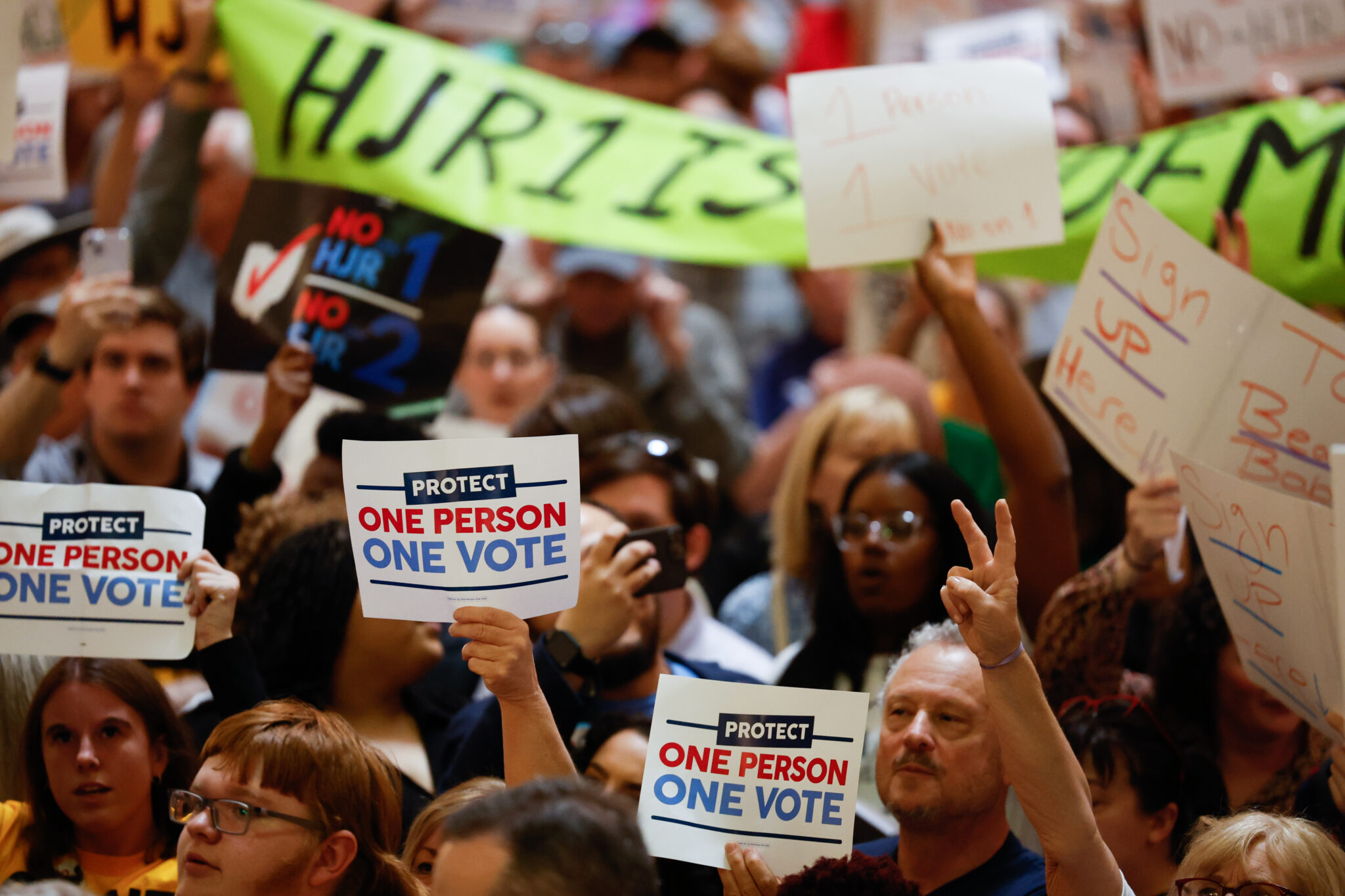
The organization One Person One Vote has filed a new Supreme Court case related to an August amendment proposal looking to make it more difficult to change Ohio’s constitution. The organization has already challenged lawmakers’ attempt to place the question, which would raise the bar for voters to pass amendments from 50% to 60%, on the August special election ballot. The latest complaint has to do with the ballot language Ohioans will see when they cast their vote.
The filing claims the ballot board adopted “a misleading, prejudicial ballot title and inaccurate, incomplete ballot language that improperly favor the Amendment in flagrant violation Ohio’s Constitution and laws and this Court’s jurisprudence.”
The plaintiffs want to court to order revisions or substitute the full text of the amendment as the ballot language.
The Ballot Board’s language
It’s the board’s job to cut through the legalese and craft a neutral, easily understood description of what a given proposal will do. The secretary of state leads the five-member body, and due to constraints on members’ partisanship, the secretary effectively holds the deciding vote.
At a hearing last week, an attorney for One Person One Vote brought up numerous critiques of the proposed language. The drafts made no mention of existing constitutional standards, employed words like “elevate” to cast the changes in a positive light, and even included factual inaccuracies about signature gathering.
Nevertheless, the majority Republican board approved the language along party lines without any changes.
The court challenge
In its complaint, One Person One Vote elaborated on the shortcomings it identified in the ballot board hearing. Again, the group’s chief complaint had to do with the language identifying only the end result, rather than how the amendment changes existing law.
Instead of explaining the threshold for approving constitutional amendments would rise from a simple majority to a 60% supermajority, the ballot board’s language only identifies the 60% threshold.
“As a consequence, a voter might take the ballot language to mean that the people of Ohio do not presently get to vote on proposed amendments at all,” the complaint reads, “and might even understand the amendment itself to create that right in the first instance.”
“Such a blatantly misleading omission contravenes fifty years of this Court’s precedents,” it adds.
In addition to setting a higher threshold for passage, the amendment requires organizers collect signatures from all 88 counties instead of the 44 required now. It also eliminates a period in which organizers can collect additional signatures if their first submission falls short.
The complaint found fault in how the ballot language explains both of those provisions, as well.
One Person One Vote criticized the ballot language for saying the amendment “specif(ies)” that there won’t be a cure period, rather than explaining the amendment would eliminate it.
On signature collection, the group argued the ballot language “does not clear even the minimal bar of factual accuracy.” It describes the requirement as 5% of a county’s eligible voters instead of the 5% who voted in that county in the previous gubernatorial election.
“This is a considerable difference,” the complaint noted, “amounting in Hamilton County, for example, to a difference of nearly 15,000 signatures using 2022 figures.”
Ask and outlook
The plaintiffs want the court to direct the board to come up with new ballot language. They argue the new version must “must fully and accurately describe the status quo,” including that it has been the standard since 1912. Alternatively, they argue, the board could submit the proposed amendment’s text in full to voters.
They also call on the court to direct Secretary LaRose to come up with a new title. “Elevating the standards,” they argue “implies that Ohio’s standards to amend its Constitution are currently too low.” The choice of ‘elevating’ rather than value neutral words like change or modify creates a “prejudicial” impression among voters.
One Person One Vote claims they’re entitled to a rewrite because state law prohibits the ballot title and language misleading voters. The group notes the court’s case law establishes a three-part test. Voters have a right to know what they’re voting on, language that would persuade for or against the proposal is prohibited and the cumulative effect of any deficiencies dictates whether the language is valid.
A spokesman for Secretary LaRose declined to weigh in on the lawsuit, saying only that “we don’t comment on litigation.”
Nick Evans has spent the past seven years reporting for NPR member stations in Florida and Ohio. He got his start in Tallahassee, covering issues like redistricting, same sex marriage and medical marijuana. Since arriving in Columbus in 2018, he has covered everything from city council to football. His work on Ohio politics and local policing have been featured numerous times on NPR.
A four-year-old recorded sermon given by Ohio state Rep. Gary Click, R-Vickery, may shine a light on the religious motivations behind Ohio’s proposed health care ban for trans youth.
The sermon, which was posted on the YouTube channel of Fremont Baptist Church, where Click is a pastor, shows Click defending conversion therapy and suggesting that homosexuality and the idea that one can be trans are pushed by Satan in order to undermine the family.
Throughout the sermon, Click emphasizes his view that God provided a specific plan for the family. Click suggests that homosexuality, trans people, and single-parent homes all break from this plan. He claims that Satan works to stray individuals away from the plan, which he says leads to the “crumbling” of society.
Click is the sponsor of HB 68, also known as the Save Adolescents from Experimentation Act or SAFE Act. The SAFE Act would prohibit physicians from providing gender-affirming care, including puberty blockers and hormone therapy, to trans youth. Gender-affirming care is supported by every major medical organization in the United States.
Click denies that his bill has religious motivations, but his sermon suggests otherwise.
“You’re not born that way,” Click says about trans people during the sermon. “God’s not going to curse you in the wrong body. He’s not going to curse you with desires that cannot be adequately and appropriately and biologically fulfilled correctly.”
At one point, Click appears to admit to having helped with attempted conversion. After condemning a California bill that sought to ban the practice as “an assault on the First Amendment,” Click describes conversion therapy as counseling “someone who struggles with those same-sex attractions, or struggles with their gender identity,” by showing them “what the bible says” and how to be “at one with the body God gave them.” Following this, he says, “I’ve helped people overcome that before.”
During his recent sponsor testimony for HB 68, Click said that he has never practiced conversion therapy and does not know anyone who has, following a question on the topic by state Rep. Rachel Baker, D-Cincinnati.
Conversion therapy has been condemned by several medical associations and human rights groups, including the American Academy of Pediatrics, the American Medical Association, the National Association of Social Workers, the United Nations, and more.
When asked by OCJ for comment, Click said that it is “inaccurate” to say that he has promoted or practiced conversion therapy. He said that “conversion therapy requires force or at minimum an act of trying to change someone into something that they do not wish to be… When an individual is struggling with unwanted feelings and they approach me or someone else, it is entirely ethical to listen to them, pray with them, and provide encouragement and strength, and reinforcement as they determine for themselves how they wish to live.”
Towards the end of the sermon, Click shows a picture of himself with Tony Perkins. Perkins is the president of the Family Research Council (FRC), a right-wing Christian organization that is labeled as an anti-LGBTQ hate group by the Southern Poverty Law Center.
Click finishes by discussing a trip he took to the U.S. Holocaust Memorial Museum in Washington D.C. While displaying a picture of himself standing next to a wall featuring the famous poem “First they came”, which is about the human rights atrocities of Nazi Germany, he further discusses what he deems as an attempt to “undermine our values.”
“When the family crumbles, society crumbles,” Click says. “If the church is silent, then the church will be held responsible. We can’t afford to be silent.”
In addition to the sermon, Click’s affiliation with the missionary group Baptist International Outreach (BIO) raises similar questions. A doctrinal statement posted on BIO’s website states that “homosexuality is an abomination to God and a scourge to any society.” It also calls homosexuality a “sin” that occurs due to people “giving into the perverseness that is in his or her heart.” The statement further claims that the Bible “condemns cross-dressing and effeminacy.”
Click’s biography on Fremont Baptist Temple’s website states that he “currently serves in an advisory capacity for Baptist International Outreach.” In his response to OCJ’s request for comment, Click clarified that he is “no longer serving [in an advisory capacity] with BIO.” He said that BIO is “a good organization” and that he is “not familiar with what their doctrinal statement currently says.”
In his response, Click also said that his role as a pastor and his role as a representative do not conflict. In bold letters, he wrote “the fact that science and the Scripture harmonize is not a conspiracy, it is a reality.” Click did not specify what science he was referring to.
While Click claims that his role as a pastor and as a representative do not conflict, he spends the final section of his sermon discussing the role of Christian conservatives in politics and encourages his audience to become politically involved. He discusses his role as a lobbyist for an international Christian school association and says the goal of his lobbying was to “reclaim our values.”
While encouraging his audience to get involved politically, Click lists several right-wing Christian political organizations and discusses being personal friends with the organization’s leaders. One of these organizations is Citizens for Community Values, now called Center for Christian Virtue (CCV). CCV approached Click in the spring of 2021 to put forth the SAFE Act.
________________________
RILEY ROLIFF
Riley Roliff is a freelance journalist and a student at Cleveland State University. Her reporting focuses on LGBTQ+ issues and the role of money in politics.



 Dear Loveland Area Friends,
![[VIDEO] Sergeant Dave Corlett spoke of three fallen American heroes who died unreasonably young](https://lovelandmagazine.com/wp-content/uploads/2023/05/mem-day-speaker-full.jpg)






 Loveland, Ohio – Whistle Stop Clay Works (WSCW) is now accepting artist registrations for the 2023 Art Festival being held on September 2 from 11 AM until 4 PM in Historic downtown Loveland, Ohio. The Art Festival (formerly known as the Pottery Affaire) is in its sixth year and will have 60 artist booths, food trucks, live music, beer and wine. The Art Festival is back by popular demand and will feature local artists in a variety of media: acrylic painting, charcoal, water colors, glass and bead work, pottery, fiber arts, woodworking, and many more.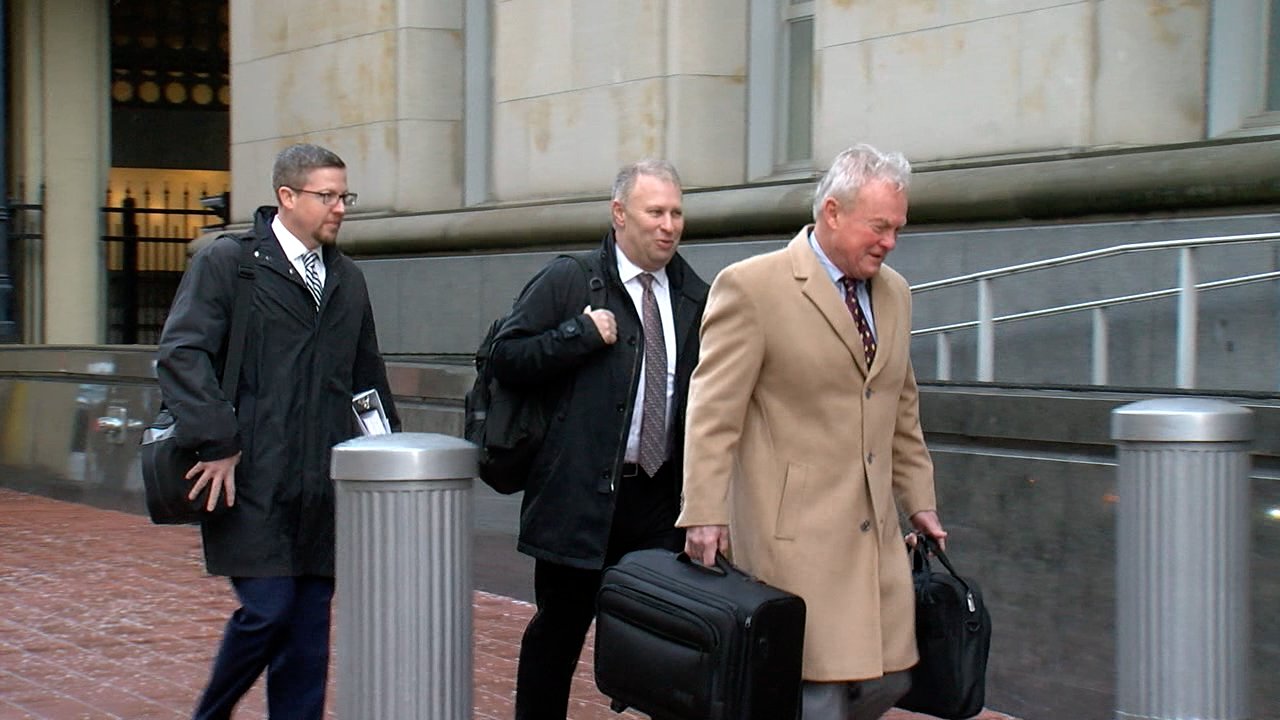




![[VIDEO] Loveland Goodwill cuts Grand Re-Opening ribbon](https://lovelandmagazine.com/wp-content/uploads/2023/05/goodwill-grab.jpg)