Loveland, Ohio – 8Ninety at Loveland apartment homes are making old things, new! We have completely remodeled our units with stainless steel appliances, granite countertops, open floor plans, and a washer and dryer in each unit.
A new clubhouse is in the works for this summer!
Join us for our open house and find your new home before it is too late! You can also call at 513-453-6506.
The renderings of our new clubhouse and pool renovation for 8Ninety at Loveland just came in, and we are thrilled. This is going to be a market-leading amenity, and we cannot wait for the residents to see (and enjoy) the final results!
Venture Communities is thrilled to have just completed its first renovated units at our newest community under management, now re-branded as 8Ninety at Loveland! To accomplish this amazing transformation, we completely changed the layout of the kitchen and pantry (which was previously buried in a dark corner). We added plumbing for a washer and dryer, built a gorgeous island, and completely opened up the space. Residents are excited, and the waiting list for renovated units continues to grow.
Benedict Francis Schickel was born the seventh of eleven children on the 24th of August, 1959, and died peacefully on May 15, 2023, from ALS-related complicatons.
There are seven strengths that shone out in Ben’s life…
• In the blood and through his own pursuits, he was an artst. He created and was recognized for many beautful works of art.
• In this same vein, Ben was a faithful patron and promoter of local establishments and family artsts. He partcularly loved being part of the efforts of the William Schickel Gallery, enjoying his Dad’s and others’ artwork displayed and housed there, as well as staffing the Gallery during gatherings and shows. Among his favorite Loveland haunts were Paxton’s Grill, Loveland Sweet Shoppe and Mile 42 Coffee. Nearly everyone in downtown Loveland knew him and many loved him. Ben also worked for McDonald’s Corporaiton, Montgomery Inn, Loveland Bike Rental and, most recently, InReturn.
• This next strength certainly grew over time. Ben was very courageous in suffering. His entre life seemed to have more than its fair share of that.
• None-the-less, or maybe because of it, the Lord enabled him to learn extreme resilience. After many, sometmes daily, episodes that would leave others in despair, he would gather himself, regain his strength, get up, and start moving forward again.
• In a related way, he did valiant battle with his own pride and grew into a pure and simple humility. He consistently and loyally made phone calls to his family and friends, was able to receive help from others, and allowed the Lord to work through him to help others. He nurtured relatonship and brought his own family closer together.
• This was especially evident by the success of his life among his beloved AA community where he found and offered true friendship and touched the lives of many. Real success.
• At the root of it all, and definitely growing through time and adversity, Ben had a deep faith and reliance on God. He was brought up in the Catholic faith. In the later years of his life, he was a member of the Church of Jesus Christ of Later Day Saints. He was so grateful to the Mormon Missionaries and congregaton who reached out to him with love and support and taught him many important things. He was fortfied by the final Sacraments of the Roman Catholic Church before his death.
Ben graduated from St. Columban Grade School and Moeller High School, and he studied photography at Antonelli College in Cincinnati.
Ben was preceded in death by his parents, William and Mary Schickel, and his brother-in-law, William Haine. He is survived by: his siblings—Anna Haine, Martha and Dan Dorff, Bill and Candi Schickel, John Schickel, Joe and Susie Schickel, John and Elizabeth Robinson, Martin and Kathy Schickel, Jim and Mary Moorman, Jim and Ruth Tabeling, Steve and Joy France; 34 nephews and nieces; 70 grand nephews and nieces; 1 great grand nephew and a second great grand on the way.
The Visitation and Memorial Service will be held at Tufts Schildmeyer Family Funeral Home
129 N. Riverside Drive in Loveland, Ohio, on Tuesday, May 23 10 a.m. to 12:00pm Noon, where a service will be held at 12:00 pm Noon.
The burial will immediately follow at Gate of Heaven Cemetery, 11000 Montgomery Rd., Montgomery, OH 45249. Those who do not wish to go to the burial are invited to go directly to the reception at The Church of Jesus Christ of Latter Day Saints chapel at 8250 Cornell Rd., Montgomery, OH 45249. Memorial donatons can be made to InReturn at inreturn.org.
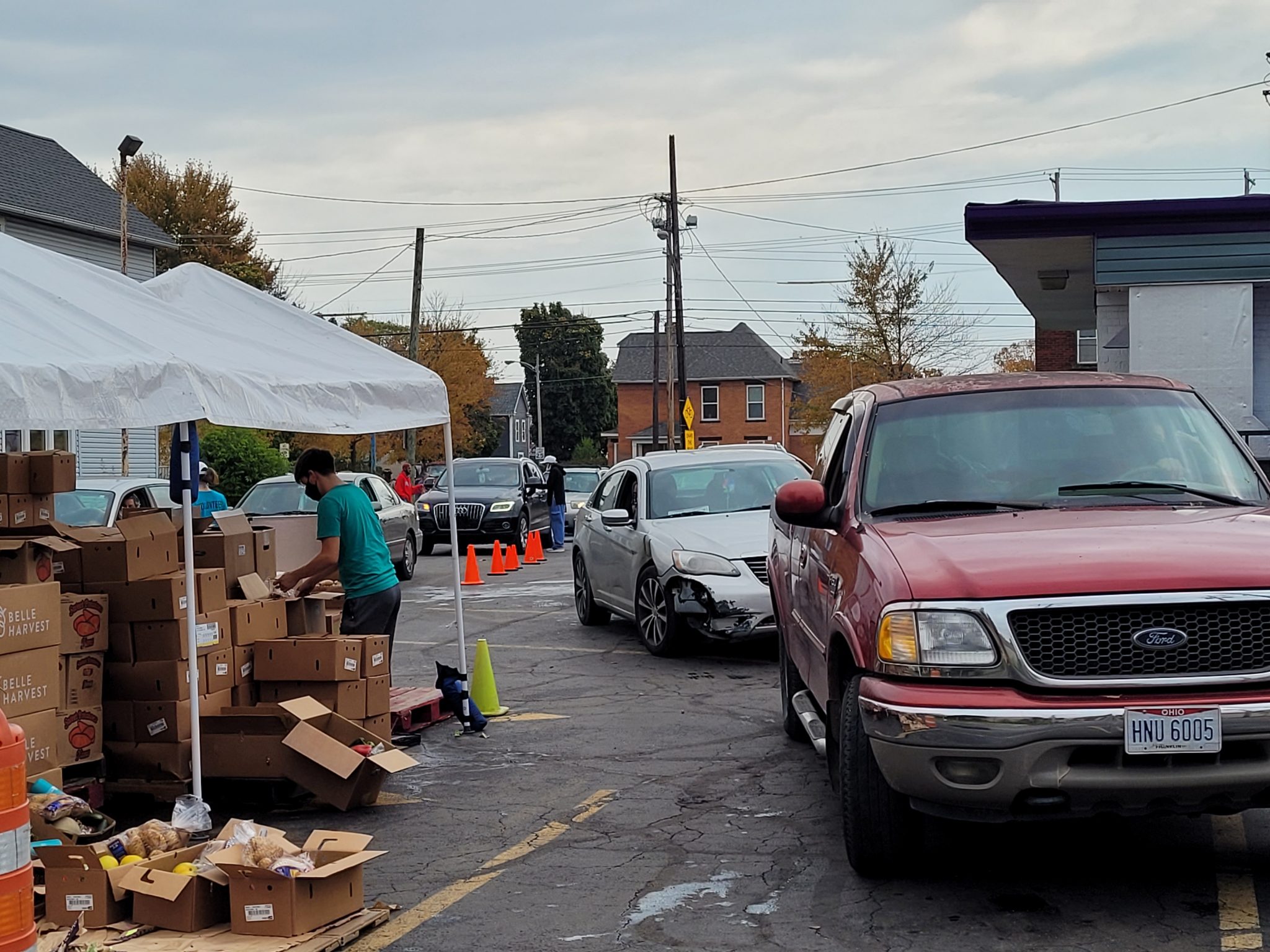
Nearly a quarter-million Ohio drivers have taken advantage of a program started at the end of 2020 that is intended to reduce license-reinstatement fees or waive them altogether, the Ohio Poverty Law Center said Monday.
The group released an analysis of the amnesty program, a bipartisan measure passed by the legislature. It found that nearly 223,000 drivers have participated and saved more than $136 million, with an average individual savings of $612.
“The program has provided a lot of relief from the financial barriers that prevent hundreds of thousands of lower-income Ohioans from driving legally,” Zack Eckles of the poverty law center said during a virtual press conference. “Driving is essential for economic participation in the state of Ohio.”
Suspensions stemming from driving under the influence of alcohol, drugs or with deadly weapons are not eligible for the amnesty. Instead, the program is aimed at people who just don’t have the funds to pay the fees to reinstate their licenses after being suspended for offenses such as driving with no proof of insurance.
“Although reinstatement fees are distinct from punitive fines, they have many characteristics of a fine,” the report said. “For example, they vary by the type of offense or increase in amount for repeated offenses, and they can be extremely burdensome. One particularly punitive reinstatement fee is for non-compliance suspensions, which occur when a driver does not show proof of insurance at a traffic stop or at the time of an accident. These non-compliance suspensions carry reinstatement fees of $100 for the first offense, $300 for the second offense, and $600 for the third and any subsequent offenses within a five-year period.”
To help ensure that only people who can’t afford reinstatement fees get reductions, the program requires that suspended drivers wait 18 months after at least one of their suspensions expire before they’re eligible. Presumably, people who can afford to pay won’t wait that long, but Eckles faulted the rule for holding those without funds “hostage” for 18 months before they can clear their fees and drive legally.
People eligible for Medicaid, Supplemental Security Income, Ohio Workers First, Supplemental Nutrition Assistance or the VA Pension Benefit are eligible to have their reinstatement fees canceled and don’t have to wait 18 months because their eligibility for those programs demonstrates their financial need. However, Ohioans eligible for the waiver made up only about 5% of those who have participated in the amnesty program.
Benefits of the amnesty extend well beyond making it easier for huge numbers of Ohioans to drive legally to work, school, medical appointments and the grocery store.
Of the drivers applying for fee reductions, 85% paid their fees in full, paying $23 million to the Bureau of Motor Vehicles that it otherwise likely wouldn’t have collected. And, with an estimated 75% of those with suspended licenses continuing to drive illegally, the amnesty program probably has greatly reduced the number of uninsured drivers because participants have to furnish proof of insurance to participate.
But even though nearly a quarter-million Ohioans participated in the program, that’s only a third of 748,000 that the BMV notified that they were eligible.
To improve participation in the amnesty program, the Ohio Poverty Law center made three recommendations:
Standardize reinstatement fees at $25
Eliminate suspensions strictly resulting from unpaid fines and fees. “Driver’s license suspensions should only be imposed for dangerous driving, not for a person’s inability to pay a fee,” the report said.
Expand the program so that all 14% of Ohioans living in poverty are eligible for full waivers
______________________________
MARTY SCHLADEN
Marty Schladen has been a reporter for decades, working in Indiana, Texas and other places before returning to his native Ohio to work at The Columbus Dispatch in 2017. He’s won state and national journalism awards for investigations into utility regulation, public corruption, the environment, prescription drug spending and other matters.
Hamilton, Ohio – On Saturday, April 22, volunteers and community members came together to support the annual Best Buddies Friendship Walk at Marcum Park in Downtown Hamilton. The volunteers included Loveland Magazine co-owners, Cassie Mattia and David Miller.
Mattia unloaded trucks and vans and re-loaded them when the walk was over. Her role was also to greet walkers, help them with registration, and publicize the event on social media. Miller took photos from the unloading and set-up until capturing guests eating food and enjoying games after walkers cross the finish line.
Connie Mehlman, the Community Connection Coordinator for the Butler County Department of Development Disabilities was the Greater Cincinnati Walk coordinator.
The Best Buddies International Friendship Walk is the leading walk in the country supporting inclusion for people with intellectual and developmental disabilities. Due to the amazing efforts of everyone involved in the walk this year, the Best Buddies Ohio Greater Cincinnati Friendship Walk raised over $51,000. The funds raised will aid in the expansion of local Best Buddies programs. “Thank you to all those that participated, volunteered, donated, and sponsored the Best Buddies Walk,” said Melman.
Take a look at the Best Buddies Walk action captured in a photo collage video brought to you by Loveland Magazine‘s David Miller and Cassie Mattia.
Thank you to the event sponsors: Hanover Reserve Weddings and Events, Telhio Credit Union, Speak Up a Self-Advocacy group Through Butler County Board of Developmental Disabilities, Bill & Jenny McCloy, The Lang Agency, Gifts In Honor of Joseph Pollock: The Pollock and Bhat Family, and Nothing Bundt Cakes.
COLUMBUS, Ohio — MAY 10: Linda Wagner of Galena holds up a sign during a protest against the SJR 2 before the Ohio House session, May 10, 2023, at the Statehouse in Columbus, Ohio. (Photo by Graham Stokes for Ohio Capital Journal)
COLUMBUS, Ohio — A lawsuit has been filed challenging the state’s legally questionable August election meant to stop abortion from becoming legal. One Person One Vote, a nonpartisan coalition, announced it filed a lawsuit in the Ohio Supreme Court challenging the controversial election.
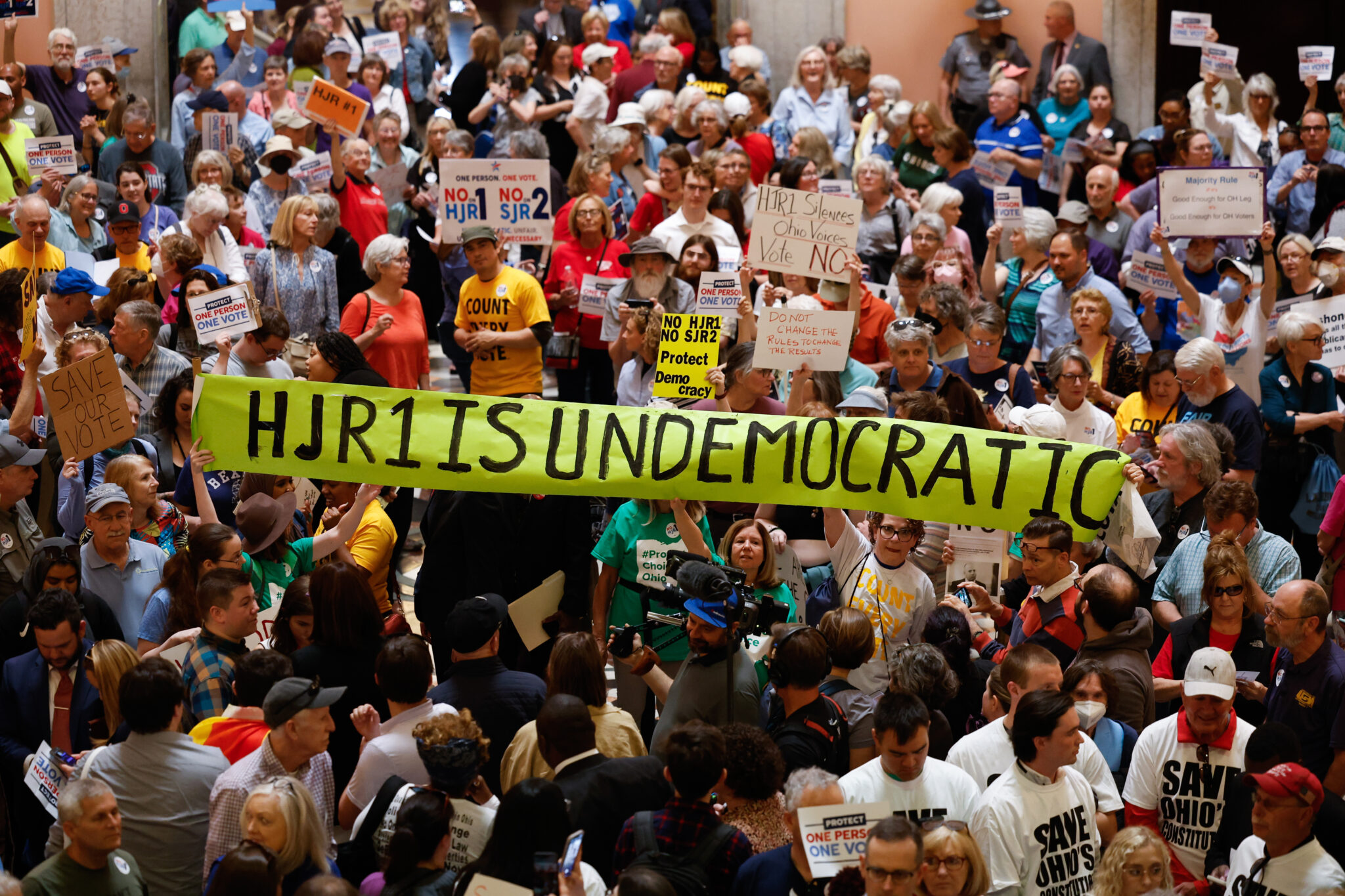
COLUMBUS, Ohio — MAY 10: Hundreds of protesters against SJR 2, and its companion HJR 1, fill the rotunda before the Ohio House session, May 10, 2023, at the Statehouse in Columbus, Ohio. (Photo by Graham Stokes for Ohio Capital Journal)
By creating an August election through the resolution itself, though, they may be in for a legal challenge
Wednesday, Ohio House lawmakers voted 62-37 to advance a resolution asking voters to raise the passage threshold for constitutional amendments. The vote caps off nearly six months of legislative wrangling largely meant to hobble an abortion rights amendment.
Lawmakers are entering questionable legal territory, however, as they set the vote in August through the resolution itself. Legislation approved last December places strict limits on such special elections, and a measure aimed at loosening those restrictions faltered in the House.
Supporters contend there’s legal precedent for setting an election through a resolution, without taking any other action. Some legal experts dismiss that argument out of hand. Organizers opposing the supermajority amendment say they’re weighing their legal options.
House Debate
Half an hour after the House session began, after the prayer and the pledge, after members voted to fill two vacancies and after Rep. Brian Stewart, R-Ashville, began his speech introducing SJR 2, the constant roar of opponents just outside the chamber was easy to hear.
Those screams and chants were still clearly audible long after lawmakers held their vote and left the chamber.
Stewart started down this path last November. That first attempt during the lame duck session eventually fell apart. A second try to get it on the May primary ballot missed the deadline. But on May 10 — the very last possible day to make the August election — Stewart got his vote.
“SJR 2 will ask Ohioans — not us — whether Ohio’s constitution should require a 60% vote threshold to adopt amendments moving forward,” Stewart argued.
He argued, as many other supporters have, that lawmakers have debated the idea for years. It’s notable, however, that Republicans found the political will to act as an abortion rights amendment became a real possibility.
Rep. Bride Rose Sweeney alluded to Republicans’ motivation in her debate against the resolution.
“(This is) a body that, at the first inkling of losing control, moves the goalposts and rewrites the rules to ensure that they remain untouchable,” she said.
See you in August?
Stewart concluded by urging his colleagues to support the resolution “once it is amended,” to allow for an August election.
Not long after, the House voted 56-42 to amend the resolution, adding language explicitly calling for an August special election. Legislative leaders point to a 1967 case in which the Ohio Supreme Court allowed lawmakers to do something similar.
“We are of the opinion that the General Assembly may authorize such special election on a certain date by a joint resolution without enacting a statute,” the court ruled at the time.
But the court based that reasoning on a lack of “conflict between any statute and the action taken” by lawmakers. A footnote cites the definition of “special election” in statute, noting it’s simply any election than those “required to be regularly held.”
That definition has changed since 1967, though.
At the end of last year, lawmakers sharply curtailed August elections. One of the changes had to do with the definition of special elections. The measure added new language allowing August elections “in accordance with” a new statute. That statute only allows August elections for municipalities in financial distress.
One of SJR 2’s sponsors, Sen. Rob McColley, R-Napoleon, argued the court ruling is so broad that those legislative changes are, in effect, a dead letter — but only for lawmakers.
“Even in the face of a statute that may say that there is no such special election that can happen for that stated purpose,” McColley argued, “the court in that case said that yes it very well could happen, and it would happen and that that statute would actually be unconstitutional as it pertained only to this resolution.”
“Legally questionable”
Nearly every Democrat who spoke against the resolution pointed to the hypocrisy of Republicans pushing to eliminate August elections last year only to change course now. Rep. Casey Weinstein, D-Hudson even read Republicans’ arguments back to them from that debate just a few months ago.
“How stupid do you think the people of Ohio are?” House Minority Leader Allison Russo asked. “Do you think that the voters do not see through exactly the lies that you are feeding them?”
After the hearing, she called Republicans’ bid to change the election through the resolution “legally questionable.”
House Speaker Jason Stephens argued the majority is on firm legal footing, but he didn’t exactly embrace the decision to hold the vote in August. Pressed on how to justify the change of heart, he laid it at the feet of the chamber.
“That’s part of, like I said, representative democracy,” Stephens said, “it’s allowing that debate and allowing people to take a vote and now the people of Ohio have a chance to take a vote.”
The view from the rotunda
Amidst the buzz of opponents milling around in the statehouse, Scott DiMauro from the Ohio Education Association criticized the vote as a “brazen power grab.”
“We’ve already started putting the word out on this, there is a campaign that’s already solidifying,” he said. “We’ve got a lot of support, and we believe that we’re gonna have the resources to defeat this in August.”
Jen Miller from the League of Women Voters of Ohio said her organization is considering a lawsuit.
“We’re looking at our options. I can’t say much more than that,” Miller said. “Clearly, this is against Ohio Revised Code, but we’ll look at our options.”
Nick Evans has spent the past seven years reporting for NPR member stations in Florida and Ohio. He got his start in Tallahassee, covering issues like redistricting, same sex marriage and medical marijuana. Since arriving in Columbus in 2018, he has covered everything from city council to football. His work on Ohio politics and local policing have been featured numerous times on NPR.
House Speaker Jason Stephens presiding over an uncharacteristically packed Rules Committee hearing. Some members of the public forced to leave, watched through the windows from outside. (photo by Nick Evans)
It remains an open question, however, just when voters might weigh in on the issue
The stage is set for a long-awaited House vote on SJR 2. The resolution would ask voters whether the threshold for amending the constitution should be 60% rather than a simple majority.
But lawmakers pushing the plan may not be celebrating yet. A parallel effort to send the question to voters before they consider an abortion rights amendment seems to have fallen short.
Supermajority amendment backers are now left to decide whether to accept half a loaf, or to try some last-minute maneuver to set up an August special election.
Speaking after the vote to place SJR 2 on the House calendar, the House speaker and the minority leader said they expected the latter. But it’s not clear what that gambit might look like, or if it would succeed.
Killing August
Placing the 60% amendment on the ballot in August was never part of the plan. Lawmakers voted to get rid of those elections around the same time the first attempt at imposing a supermajority threshold fell apart. They only thought to revive August elections after the latest supermajority effort missed the deadline for the May primary.
Lawmakers pursued a May and then an August election to ensure an abortion rights amendment would have to clear a higher bar. But that argument didn’t move everyone in the Republican caucus.
Rep. Sharon Ray, R-Wadsworth, offered an amendment to SJR 2 stripping out reference to August elections.
“When we did away with August special elections last year after we put our precinct election officials through a very difficult year, you know, we said we were not going to do this anymore,” Ray explained.
She added the upcoming calendar is a bit of a disaster for boards of elections. In addition to conducting a special election, they have to manage filings for local candidates running for school board, city council or mayor this November.
Election day in August would be August 8. The deadline for those local filings? August 9.
“In addition to two different election calendars that are overlapping they’ll have all these filings and I just don’t think it’s fair,” Ray said.
Still, Ray said her reticence only extends to the August elections—not the underlying supermajority proposal.
“I think August, to spend $20 million for an election that’s going to have probably an 8% turnout is really not our best option,” Ray said. “A November election, I will vote to put it on the ballot so people can decide then.”
Rep. Sharon Ray, R-Wadsworth, arguing for her amendment. (photo by Nick Evans)
The Rules committee
Ray’s amendment is unusual for its timing, coming up in the Rules and Reference Committee. It’s typically the last stop for legislation before going to the House floor. It gives House Speaker Jason Stephens, who leads the committee, significant control over when and if a proposal goes before the chamber.
But while the Rules committee sets the agenda, it rarely deals with policy amendments. Tuesday, after a two-and-a-half-hour delay, the committee met, and approved Ray’s changes. Every Republican on the committee – with the exception of state Rep. Jay Edwards, R-Nelsonville – voted to advance the proposal to the floor.
“We’re close to this being jammed down our throats and I think it’s wrong, and I don’t think there was enough discussion had on this entire premise,” Edwards argued.
Every Democrat voted against advancing SJR 2.
Notably, if the House approves changes to SJR 2, the Senate would have to agree before it makes the ballot.
Shenanigans
Despite Ray’s amendment excising August election provisions, Republican and Democratic leaders had no illusions about the issue being dead. House Minority Leader Allison Russo said she expects an amendment when the resolution comes up for a floor vote.
“Well, certainly they can get on the floor tomorrow and take that language right back out and amend it, which I wouldn’t be surprised if that happens,” Russo said. “So, you know, some of this is theatrics, I think.”
Russo argued that even if Republicans are successful, the proposition is a loser at the ballot box — regardless of when it goes before voters.
She also criticized Speaker Stephens for letting the resolution advance. Stephens only won the speakership with the support of Democrats, and his reluctance to advance a supermajority measure was a big reason why. But Russo sidestepped questions of whether Stephens had violated a deal with Democrats.
“This isn’t about reneging on Democrats,” she said. “It’s about reneging on the people of Ohio and taking away a right that they have had for over a century.”
For Stephens’ part, he echoed Russo’s expectations about last minute floor amendments.
“There will probably be more than one amendment, I guess, on this resolution tomorrow, one of the amendments will probably be for an August election,” Stephens said. “So, we’ll have that debate tomorrow.”
And the August election is not a problem, Stephens said. He offered the dubious assertion they can hold one without passing any additional legislation at all.
“Yeah, the legislature has the constitutional authority to create an election day,” Stephens argued.
This despite lawmakers passing a bill just months ago limiting August elections to municipalities in fiscal emergencies or primaries for Congressional vacancies. And despite lawmakers working, and eventually failing, to pass legislation this session to explicitly allow special elections for amendments offered by the general assembly.
Can he do that?
Steven Steinglass, dean emeritus at Cleveland State’s law school and one of the foremost experts on the Ohio Constitution, flatly rejected Stephens’ contention.
“The answer is they do not have that power, and if that is what he said he’s getting bad advice from his lawyers or whoever he seeks advice from,” Steinglass said.
The problem, he explained, is that recent legislation restricting the circumstances under which an August election can happen. Those restrictions are in statute, and a joint resolution doesn’t change statutes. In the end it boils down to a separation of powers issue.
“It’s been clear for 125 years that you cannot add statutory type language to a joint resolution,” Steinglass explained. “They’re two different legal instruments, if you will. The point is that the governor has no role regarding joint resolutions, but the governor could veto a statutory change.”
He cited the relevant case law from 1897, as well.
“The Ohio Supreme Court said, and I quote, the statute law of the state can neither be repealed nor amended by a joint resolution of the General Assembly,” Steinglass said.
Nick Evans has spent the past seven years reporting for NPR member stations in Florida and Ohio. He got his start in Tallahassee, covering issues like redistricting, same sex marriage and medical marijuana. Since arriving in Columbus in 2018, he has covered everything from city council to football. His work on Ohio politics and local policing have been featured numerous times on NPR.
A consequential firearms measure cruised through the Ohio Senate and is currently waiting on a hearing in the House Insurance committee. The proposal, like numerous previous measures, preempts local action, this time by prohibiting fees or liability insurance for gun owners.
Cities around Ohio are wrestling with increases in violent crime since the pandemic, but many local leaders argue they’re hamstrung by state laws barring most local firearm restrictions.
Columbus, for instance, is currently locked in a court battle with the state to impose three local firearm ordinances. Those laws aren’t particularly draconian — they prohibit high-capacity magazines, criminalize straw sales, and require safe storage. Nevertheless, state officials insist they violate state law preempting local restrictions.
The insurance proposal would extend those preemptions further.
Sen. Theresa Gavarone, R-Huron. Photo from OhioSenate.gov
Liability insurance
Sens. Terry Johnson, R-McDermott, and Theresa Gavarone, R-Bowling Green, insist an insurance requirement for gun owners would infringe on their constitutional rights. They filed a similar bill in the previous general assembly.
“The right of the American citizens to keep and bear arms is as clear as day,” Johnson said on the Senate floor. “And attempts to make it so it’s difficult for law abiding citizens to exercise this right, that’s guaranteed, blazoned into the Constitution, that’s wrong.”
The sponsors aren’t particularly concerned about the fact that they can’t identify a single Ohio municipality that has proposed an insurance requirement. Instead, they point to legislation elsewhere.
“There is a trend of extreme anti-gun measures that directly contradict the Constitution,” Gavarone argued. “In places like California, Illinois, and New Jersey. So we can never discount the fact that it could and probably will be attempted in Ohio.”
“Senator Johnson and I wanted to slam the door shut on present and future attempts on infringement on this particular constitutional right,” Gavarone added.
The sum total of gun owner liability requirements in the U.S. are a state law in New Jersey and a local ordinance in San Jose, California. Both laws are the subject of federal litigation. Illinois lawmakers have proposed insurance requirements in the past, but those measures haven’t made it through the legislature.
COLUMBUS, OH — FEBRUARY 15: Senate Minority Leader Nickie J. Antonio, D-Lakewood. (Photo by Graham Stokes for Ohio Capital Journal. Republish photo only with original story.)
Pushback
In committee, Powell resident Michelle Lee Heym questioned the logic driving the legislation.
“Why would you make access to a lethal weapon easier by prohibiting payment of insurance for normal people?” she asked. “Normal people get insurance when they buy a car, for protecting themselves against sickness or injury. It is almost comical to think one would not buy liability insurance when purchasing a firearm.”
Sen. Hearcel Craig, D-Columbus, criticized the bill as “a performative action that undermines the home rule of Ohio cities and townships.”
Craig argued the prohibition removes a tool for incentivizing safer conduct — like locking up firearms or reporting them as stolen.
More fundamentally, Senate minority leader Nickie Antonio argued the sponsors have their priorities backward. She cited a string of recent victims shot for banal misunderstandings.
“We’re preemptively protecting something that might happen down the road,” she said, “instead of addressing the things that have already happened, and providing some kind of solutions — common sense solutions to address gun violence.”
The measure passed the Senate on a party line vote. The House has referred the bill to the Insurance Committee. The current schedule has it slated for its first hearing May 10.
Nick Evans has spent the past seven years reporting for NPR member stations in Florida and Ohio. He got his start in Tallahassee, covering issues like redistricting, same sex marriage and medical marijuana. Since arriving in Columbus in 2018, he has covered everything from city council to football. His work on Ohio politics and local policing have been featured numerous times on NPR.
The state’s operating budget is showing progress in the areas of infant supports, including a housing pilot program to benefit pregnant people and even doula services, but a bipartisan duo in the Ohio House wants to do better.
State Reps. Andrea White, R-Kettering, and Latyna Humphrey, D-Columbus, joined with advocacy groups on Tuesday to talk about House Bill 7, with supporters heading straight to a proponent hearing immediately following the press conference on the bill.
White and Humphrey introduced the bill to the House Families and Aging Committee on April 25, but as the budget process continues with various appropriations showing up and being revised from the governor’s initial executive proposal, White said it’s important to keep up with funding, especially when it comes to Ohio’s infants and mothers.
“Ohio’s doing very well, but we’re not going to accept no for an answer,” White said.
HB 7 has provisions to support doula services, pregnancy and postpartum individuals, children and families in poverty, early intervention, child care, a cost savings study for the Medicaid program and the Head Start Program.
“The initiatives in this bill will support and empower families … and establish systemic changes that will remove barriers to services and reduce administrative burden to both programs and the state,” said Julie Stone, executive director of the Ohio Head Start Association.
The legislators and groups supporting the legislation pointed to widely reported statistics showing Ohio as one of the lowest-succeeding in the country when it comes to infant mortality, with 1 out of 150 babies unable to live to see their first birthday, and the infant mortality rate at 14.1 per 1,000 births for Black babies in Ohio, and 5.5 per 1,000 for white babies.
“In this case, if we do not invest now, there will not be an opportunity, for many, for us to pay later because we are losing too many lives,” White said.
Improving supports for the doula program in Ohio has been an ongoing struggle, with various bills attempting to bring funding to the effort, including one currently sitting in the Ohio Senate.
In HB 7, like similar legislation attempted in the past, the Ohio Board of Nursing would be required to establish a registry of certified doulas, a Doula Advisory Board would be established within the board of nursing, and the Department of Medicaid would house a program to cover doula services through a Medicaid provider agreement.
Doula programs have frequently asked for Medicaid reimbursement to be a part of the resources they can access, since many programs are using their own funds or that of donors to provide pregnancy-related services and education.
“The doula programs are clearly one of the more outstanding programs we have seen in this nation,” said Angela Dawson, executive director for the Ohio Commission on Minority Health.
The doula programs already work to improve pregnancy outcomes throughout the state with 12 “infant mortality hubs” funded throughout the state as well, according to Dawson. But full investment into doula services could actually end up saving the state money through avoidance of complications in pregnancy, and raising the state’s ranking when it comes to infant mortality.
“The reality is that Ohio has never achieved the infant mortality goal for African American babies, we have an opportunity before us … let our vote prepare the state for the children,” Dawson said.
The current draft of the budget, which is still up for approval in the Ohio Senate, includes $16 million in funding for the Healthy Beginnings at Home program, a research study that tests the impacts of rental assistance and housing services on infant mortality.
Under HB 7, the program would receive $15 million more in fiscal year 2024 “to support stable housing initiatives for pregnant mothers and to improve maternal and infant health outcomes,” according to an analysis by the Legislative Service Commission, and $1 million in both 2024 and 2025 for the Move to Prosper program, “which makes affordable rental housing available in neighborhoods that offer access to opportunities.”
Amy Riegel, executive director of the Coalition on Homelessness and Housing in Ohio, said the funding would allow them to expand the study to more areas in the state, and “make it a statistically significant study that can be replicated” nationally.
___________________
Susan Tebben is an award-winning journalist with a decade of experience covering Ohio news, including courts and crime, Appalachian social issues, government, education, diversity and culture. She has worked for The Newark Advocate, The Glasgow (KY) Daily Times, The Athens Messenger, and WOUB Public Media. She has also had work featured on National Public Radio.
In an Ohio House committee, witnesses pleaded with lawmakers to reject the effort to install a 60% threshold for future constitutional amendments. The joint resolution they’re considering would put the question to voters on an upcoming ballot. After breaking for an extended recess around lunch time, lawmakers heard more testimony and voted to advance the resolution.
But the 7-6 margin was probably tighter than supporters wanted. All five Democrats on the committee voted against it, and of the eight Republicans on the committee, only state Rep. Brett Hudson Hillyer, R-Ulrichsville, who previously floated amendments to make the resolution more palatable to opponents, voted against it.
Elsewhere in the Statehouse, a different House committee set to vote on restoring August elections Tuesday morning delayed its start. Almost six hours later, the chair canceled the hearing.
The same conservative lawmakers pushing to bring back August elections got rid of them just a few months ago. At the time, they argued they’re too costly and generate meager voter turnout. But now, an August election day suits their plan to advance the supermajority amendment.
Taken together the two proposals represent a last-ditch effort by some Republican lawmakers to hobble an abortion rights amendment ahead of November’s election. More than 200 interest groups have come out against the effort. Four previous governors and five previous attorneys general — Republican and Democratic — have also publicly criticized the plan.
But the proposal’s opponents got a reprieve of sorts from House Speaker Jason Stephens. The Kitts Hill Republican scrapped Wednesday’s House session after declining to schedule the 60% supermajority or August special election measures.
That puts an exceptional amount of pressure on the House session scheduled for May 10 — the last day lawmakers can approve the measures in time for an August election.
SJR 2 opposition
During Tuesday’s hearing, opponents harped on what they called the hypocrisy of lawmakers pushing the supermajority resolution forward. From the outset, Republicans backing the proposal have contended their effort is a way to discourage “out of state special interests” from buying the state constitution, and that it has nothing to do with undermining an abortion rights amendment on the horizon.
A group called Save Our Constitution PAC is now running ads targeting five GOP members perceived as insufficiently supportive. The funding for those ads comes, not from Ohio, but from Illinois billionaire Richard Uihlein. The owner of the shipping supplies company Uline, has previously funded far-right candidates around the country and groups promoting election denialism.
Dorsey Hager from the Columbus Central Ohio Building and Construction Trades Council criticized Uihlein’s involvement.
“An idea introduced to protect the Ohio constitution — our Constitution — from special interest is actually being promoted by a group funded by an Illinois billionaire who’s trying to change Ohio’s constitution,” he said.
Save Our Constituion PAC’s treasurer is David Langdon, the same Cincinnati attorney who’s behind the non-profit Protect Women Ohio. That organization is currently running spurious attack ads against the abortion rights amendment.
The ACLU’s Gary Daniels drew a bright line between efforts in favor of the joint resolution and those in opposition of abortion rights.
“Soda taxes, casinos, former House Speakers, monopolies and evil special interests are among the list of reasons supporters have cooked up to argue SJR 2 is necessary,” Daniels argued.
“But Ohioans know — and very few supporters are left pretending — this involves anything but abortion and gerrymandering.”
All 88 Counties
Opponents also keyed in on a less discussed, but potentially even more consequential set of restrictions added to the resolution.
Not only would organizers seeking a constitutional amendment need to clear 60% at the ballot, they’d first need to gather signatures from 5% of the electorate in all of Ohio’s 88 counties. Current law requires that percentage from at least 44 counties and grants organizers a “cure period” to gather valid signatures if the ones they turn get rejected.
“To cover all 88 counties, and then be denied that cure period,” Trevor Martin argued, “is again, it’s devastating to the citizen initiative process.”
Mia Lewis from Common Cause Ohio explained legitimate signatures can get rejected for mundane discrepancies. Say you’ve moved but haven’t updated your voter registration — using your current address would scrap your signature. Sometimes organizers gather signatures for close to year. If you move in the interim and update your registration, that old signature gets thrown out.
“It’s blindfolding the people that are trying to collect the signatures and telling them to take this leap of faith,” she argued. “There is no way for them to know how many of those signatures won’t be valid. They don’t know how many people are going to move. They don’t know how many people have put the wrong address that doesn’t match the registration.”
She called requiring signatures from all 88 counties and eliminating the cure period “punitive.”
Bonds
Opponents also took aim at the supermajority threshold’s impact on bond issues. Hager, from the Trades Council, brought up a school bond issue in his hometown of Marysville.
“If this passes, they’re gonna be able to add on to the STEM school in Marysville where they’ll be able to produce more kids in science, technology that will go to work at Scott’s, go to work at Honda (and) keep those industries growing and thriving,” Hager argued.
Requiring a 60% supermajority, he contended, would endanger those investments.
But Rep. Brian Stewart, R-Ashville, argued bonds aren’t a big issue. Stewart, who’s sponsoring the House version of the 60% threshold measure, argued every bond for the last 15 years would clear the bar.
“Why are you in your sort of fear mongering over 1990 bond issues when we’ve passed every bond issue for the last 15 years with over 60% of the vote?” Stewart asked Jen Miller from the Leauge of Women Voters of Ohio.
Miller acknowledged Stewart is correct about the most recent bond proposals. But taking a longer view the track record gets murky.
Former state representative and Dispatch editor Mike Curtin analyzed bond issues going back to 1980. Under a simple majority, two thirds passed, but with a 60% supermajority the record flips. Of the eighteen bond issues only eight would pass, and two of those just barely.
Noting how that picture changes with a broader view, Miller pressed Stewart on the growing opposition for his legislation.
“If this were such a great proposal, would we have so many former AGs and governors of both political parties coming out in opposition? Would you have to 240 organizations and growing come out in opposition? Would you need a million dollars from an out-of-state megadonor billionaire?” Miller asked.
Nick Evans has spent the past seven years reporting for NPR member stations in Florida and Ohio. He got his start in Tallahassee, covering issues like redistricting, same sex marriage and medical marijuana. Since arriving in Columbus in 2018, he has covered everything from city council to football. His work on Ohio politics and local policing have been featured numerous times on NPR.
















 Benedict Francis Schickel was born the seventh of eleven children on the 24th of August, 1959, and died peacefully on May 15, 2023, from ALS-related complicatons.
 MARTY SCHLADEN



 Nick Evans has spent the past seven years reporting for NPR member stations in Florida and Ohio. He got his start in Tallahassee, covering issues like redistricting, same sex marriage and medical marijuana. Since arriving in Columbus in 2018, he has covered everything from city council to football. His work on Ohio politics and local policing have been featured numerous times on NPR.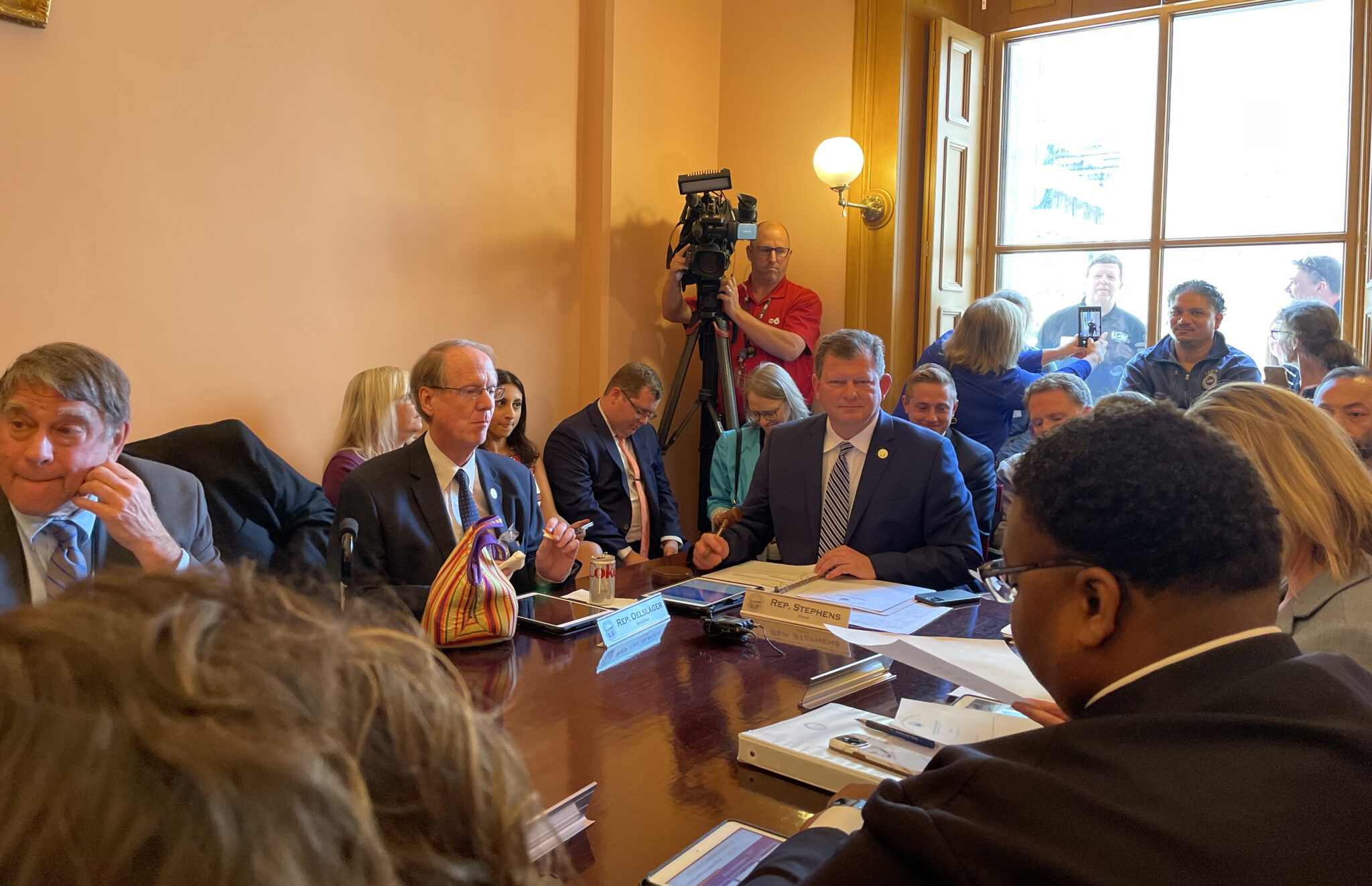




 Susan Tebben is an award-winning journalist with a decade of experience covering Ohio news, including courts and crime, Appalachian social issues, government, education, diversity and culture. She has worked for The Newark Advocate, The Glasgow (KY) Daily Times, The Athens Messenger, and WOUB Public Media. She has also had work featured on National Public Radio.