Author: Loveland Magazine

  • Lawmakers propose new ‘self-defense’ high school graduation requirement

    Lawmakers propose new ‘self-defense’ high school graduation requirement

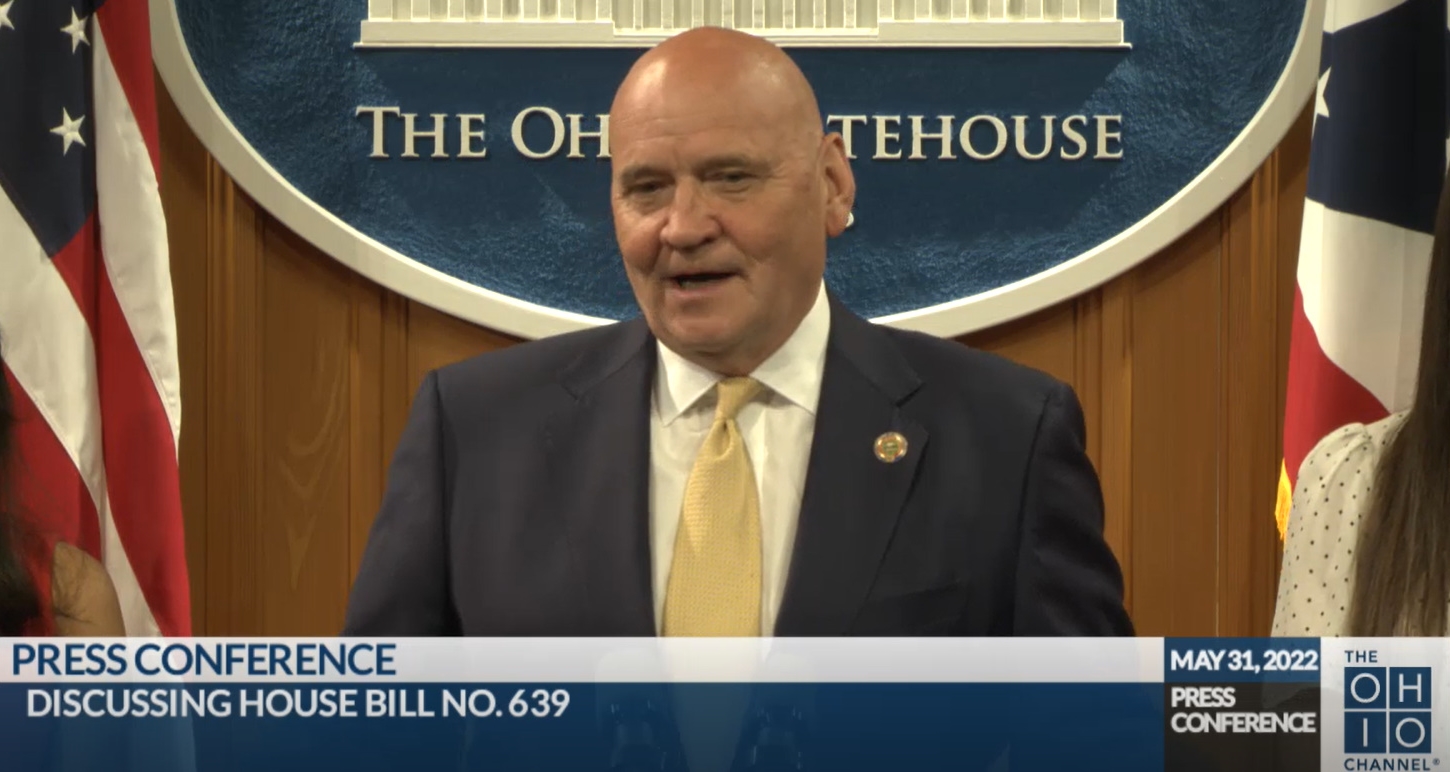
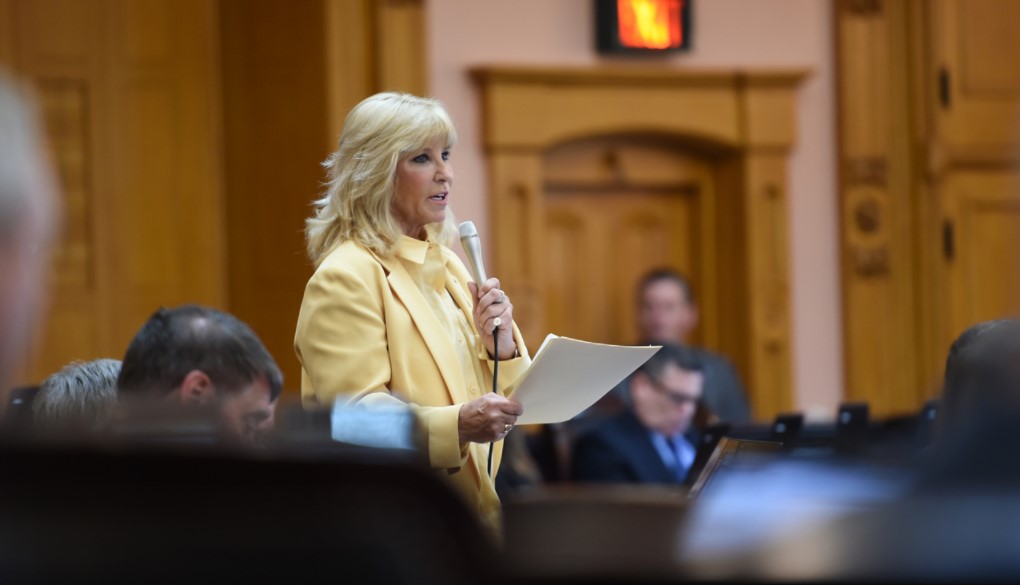
    State Rep. Tom Young, R-Washington Township.

    BY: NICK EVANS –  Ohio Capital Journal

    New legislation from Ohio state Reps. Tom Young, R-Washington Township, and Andrea White, R-Kettering, would require next year’s class of high school freshmen to take a course on recognizing and responding to threatening situations in order to graduate. The idea for the so-called “Student Protection Act” came from a number of recent high school graduates as part of an extracurricular project.

    Abby Purdy described how the proposal came from conversations she had with fellow Olentangy High School students Sydney Schultz and Vaidehi Patel about walking to their cars after work in the dark.

    “Everyone had very similar fears, and it kind of just sprouted from there,” Purdy explained. “We had a survey and many of the responses conveyed the same fears and we felt that self-defense would be the best way to help people feel that they have the tools to protect themselves.”

    Patel, Purdy and Schultz repeatedly invoked the idea of self-defense, as did the bill’s sponsors, but that’s a bit of a misnomer. Speaking afterward, Young acknowledged they struggled with how best to describe the course’s aims, but he was clear they’re not envisioning some sort of martial arts training.

    “No, this is not Tae Kwon Do, throwing people across a mat or anything like that,” he explained. “It’s raising an awareness on how to prevent and then respond to an aggressive situation — mentally, and perhaps a way to get out of a situation.”

    Rep. White emphasized the importance of teaching students how to respond to bullying and assault.

    “These behaviors should never be tolerated or allowed to go unreported,” she said. “And reinforcing this message with our young people while equipping them with the defensive tactics and proactive strategies that they can use to help protect themselves and avoid dangerous situations is critical.”

    Although the measure isn’t explicitly meant to teach students how to respond to a school shooting, last week’s shooting at an elementary school in Uvalde, Texas looms large. Young offered hopes that the coursework they’re proposing might discourage violence indirectly.

    “I would hope that this would not only raise awareness to prevent things happening to yourself and how to de-escalate, but also hopefully being aware of their classmates or somebody who’s struggling, that it opens up a dialog.”

    Young and White want districts to bring in school resource officers or certified self-defense instructors to provide demonstrations of self-defense. The legislation is silent, however, on who qualifies as an outside instructor or what form their demonstrations should take. Because the course will be part of the health class, teachers will also have to complete a course in self-defense training, but it’s up to the districts to determine which programs qualify.

  • Lt. Gov. Husted joins bank board — while he’s still in office

    Lt. Gov. Husted joins bank board — while he’s still in office

    BY: MARTY SCHLADEN – Ohio Capital Journal

    Ohio Lt. Gov. Jon Husted says he doesn’t have a conflict of interest as a new board member of an Ohio bank — that’s regulated by the administration of which Husted is a part.

    Despite the denial, his new side gig is likely to add to ethics questions about an administration that has already had its share of scandals.

    Cleveland.com on Monday night broke the news that Husted had joined the board of Heartland Bank, a Central Ohio-based institution that is talking up its expansion into Cincinnati and Northern Kentucky. Husted and the DeWine administration made no announcement when Husted joined the board in March and it only became public when the bank made an announcement last week, the paper reported.

    Asked for comment on Husted’s new job, DeWine Press Secretary Dan Tierney said, “Our office doesn’t have immediate comment.”

    For his part, Husted won’t say how much the bank is paying him to serve on its board.

    “The position is compensated and will be reported appropriately on his financial disclosure,” Husted spokeswoman Hayley Carducci said in an email.

    The most recent annual financial disclosures were due earlier this month. So it will apparently be almost a year — and after the November election — before voters will know how much the bank is paying Husted on top of the $176,000 salary he gets from taxpayers.

    Carducci also said there wouldn’t be a conflict of interest for a sitting lieutenant governor to also sit on the board of an Ohio bank. That’s despite the fact that his 2018 and 2022 running mate, DeWine, appoints the director of the Ohio Department of Commerce, which regulates banks.

    “The Lt. Governor doesn’t have oversight over the Ohio Department of Commerce or their banking regulators,” Carducci said. “He doesn’t expect any conflicts, but would certainly recuse himself and act in any way that the law requires should any conflicts arise.”

    However, it seems possible that there could be conflicts in cases where Husted takes no action. 

    For example, the Department of Commerce has to approve bank mergers, an arena in which Heartland has a clear interest. It’s plausible that if the department considers another merger application from Heartland, its staff might pull punches in the knowledge that the No. 2 official in the DeWine administration sits on the bank’s board.

    Indeed, in announcing that Husted would be joining its board, Heartland chairman, president and CEO G. Scott McComb talked up the importance of the lieutenant governor’s “relationships” to the bank’s expansion plans.

    “Jon brings an enormous amount of knowledge, relationships and experience that will be beneficial to the board as we continue to grow our franchise throughout Ohio,” McComb said in a statement. “His calculation and strategic decision-making skills complement our already diverse and accomplished board.”

    Paul Nick, executive director of the Ohio Ethics Commission, told Cleveland.com that state ethics law doesn’t address whether a state official like the lieutenant governor can hold outside jobs.

    But Scott Pullins, a lawyer and a candidate for the Ohio House in this year’s Republican Primary, said he thinks Husted is violating the law.

    “Ohio law is clear and our current lieutenant governor should know better,” he said in a statement.  “Because he serves in more than one state position, Ohio’s current lieutenant governor is already one of the highest paid state employees.”

    He added, “Lt. Governor Jon Husted must either resign immediately as a state official or resign from these two corporate boards. He simply cannot do all of these jobs and Ohio law, in my opinion, expressly prohibits it.”

    Pullins was referring to the fact that Husted serves not only as lieutenant governor, he also heads up InnovateOhio, an agency that was created just after he took office in 2019. Husted also serves on the board of the holding company that owns Heartland Bank as well as that of the bank itself, Pullins said in an email.

    Pullins, who is a also a member of the Knox County County Republican Party’s Central Committee, said he thinks by serving on those boards, Husted is violating section 102.03 of the Ohio Revised Code. Among other provisions, it says, “No public official or employee shall solicit or accept anything of value that is of such a character as to manifest a substantial and improper influence upon the public official or employee with respect to that person’s duties.”

    Regardless of whether it violates the law, Husted’s possible appearance of a conflict isn’t unique in those around DeWine. Consider:

    • Sam Randazzo, DeWine’s appointee to chair the Public Utilities Commission of Ohio, received $22 million — $4.3 million of it just before his appointment — from Akron-based FirstEnergy. Even though he was supposed to be acting as a regulator, Randazzo helped write House Bill 6, the law at the center of what federal prosecutors said was probably the biggest bribery and money-laundering scandal in Ohio history. Randazzo resigned, but hasn’t been charged.
    • DeWine’s son, state Supreme Court Justice Pat DeWine, refuses to recuse himself from a case in which Gov. DeWine and other Republicans on the Ohio Redistricting Commission have passed legislative maps that a bipartisan majority of the court have four times ruled to be unconstitutionally gerrymandered. Justice DeWine has voted with the minority to uphold the Republican maps even though several ethics experts have said he has a clear conflict of interest by not recusing himself from the case.
    • Experts have also said that Maureen Corcoran, DeWine’s appointee to run the Ohio Department of Medicaid, had conflicts of interest when she awarded billion-dollar contracts to two health care giants last year while she owned stock in them. Corcoran refuses to say how much that stock is worth.
    • DeWine himself owns at least $1,000 worth of stock in Intel as the state considers giving the company a $1.9 billion incentive package as part of a $20 billion project in which the company would build at least two chip plants in Central Ohio. Like Corcoran, DeWine refuses to discloseanything beyond the minimum required by Ohio ethics law, which has been criticized as inadequate.
  • Newly revealed texts suggest regulator knew rate hike was improper

    Newly revealed texts suggest regulator knew rate hike was improper

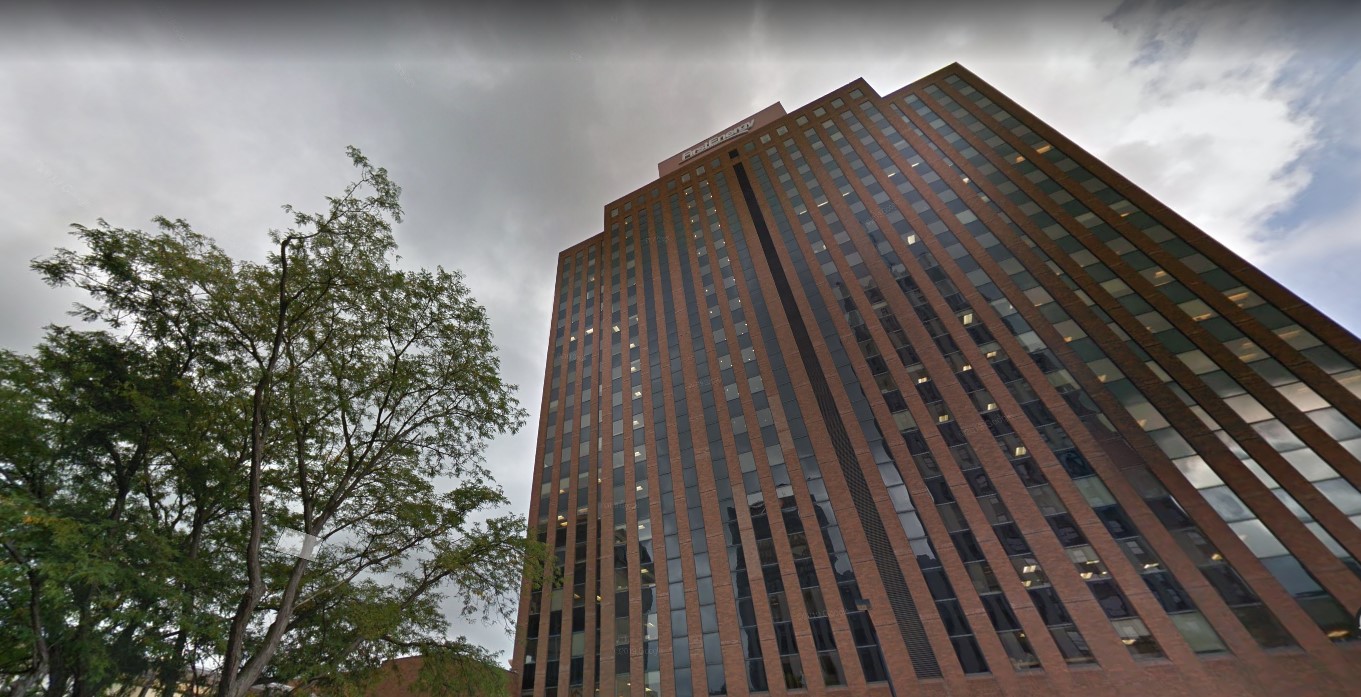
    FirstEnergy’s headquarters in Akron. Source: Google Maps.

    Former PUCO chair also said he knew FirstEnergy could keep the money

    BY: MARTY SCHLADEN – Ohio Capital Journal

    More evidence emerged Friday that Ohioans for years have faced questionable utility increases that were granted out of possibly dubious motives.

    On June 19, 2019, FirstEnergy’s leaders were furiously pushing what would later be called one of the biggest bribery and money laundering schemes in Ohio history. The same day, the Ohio Supreme Court struck down a big rate increase the Public Utility Commission of Ohio had granted to FirstEnergy three years earlier, saying it was illegal.

    In reference to the ruling, then-FirstEnergy Vice President Michael Dowling exchanged texts with Asim Haque, who until several months earlier had been chairman of the PUCO, the entity that regulates monopoly utilities such as FirstEnergy.

    One of Haque’s messages suggests that he knew a rate increase he voted to allow FirstEnergy to implement was illegal, but that the Akron-based utility would be allowed to keep the $460 million it had already collected.

    “And knowing that it would likely be found illegal and could not be refunded, I knew you would hold onto the funds,” Haque wrote in the text, which was first reported by Eye on Ohio and the Energy News Network.

    The news organizations received the texts as part of a records request. The Office of Ohio Consumer Counsel, the state’s official watchdog, first obtained the messages. It provided copies to the Capital Journal as part of a separate request.

    In an email, Haque said that he was only joking.

    “My text exchange with Mike Dowling was tongue-in-cheek based on my previous contentious interactions with him and the company,” he said. “You will see at the bottom of the text message(s) that I say that I’m kidding. FirstEnergy was not a fan of mine, and the notion of my picture in the halls of their Akron headquarters would have been especially absurd.”

    The last part was a reference to a separate text in which Haque told Dowling he “was the regulator who annoyed you most” but because of the rate increase Haque supported, “I should have a small picture in memoriam within those hallowed halls in Akron.”

    However, it’s hard to see comments about supporting a likely illegal, non-refundable rate increase as a joke, said Rob Kelter, an attorney with the Environmental Law and Policy Center, which has opposed many FirstEnergy revenue requests.

    “It’s one thing to make a joke about your picture being in the hallowed halls in Akron and he was kidding around,” Kelter said Friday. “But as far as that one key comment that he knew it would likely be declared illegal, that it couldn’t be refunded? That’s unacceptable.”

    In a regulatory filing, the consumers’ counsel said something similar.

    “Distressingly, we learned from FirstEnergy’s (text messages) that it apparently was known within the PUCO that the (rate increases) would likely be found illegal and that, even so, FirstEnergy would get to hold onto the funds because they could not be refunded to consumers.”

    FirstEnergy spokeswoman Jennifer Young said in an email that she couldn’t comment because of ongoing litigation.

    To justify his support for the increase, Haque, the former regulator, said FirstEnergy had asked for one worth $4.5 billion, while the one he supported was worth much less. He added, “it was above all a sensible decision and it was right for Ohio consumers, as I explained in my concurrence to the decision…”

    The Supreme Court, however, didn’t agree, and subsequent investigations of the increase raise even further questions.

    Called a “distribution modernization rider,” the increase was supposed to raise money to upgrade the electrical grid. But the order allowing it didn’t place many restrictions on how the money could be spent.

    It said that grid modernization could be expensive, and that the funds could be used to pay for it directly. But then it added that FirstEnergy could use the huge new pot of cash to support grid modernization “indirectly.”

    We “recognize that the (subsidiaries) and FirstEnergy Corp. may use revenue from Rider DMR to indirectly support grid modernization investments …,” the filing allowing the rate hike said. “Such steps should lower the cost of borrowing the funds needed to invest in grid modernization and may include reducing outstanding pension obligations, reducing debt, or taking other steps to reduce the long-term costs of accessing capital.”

    It’s not clear FirstEnergy did even that. It placed some of the funds into a pool from which utilities the company owned in other states could borrow. And a subsequent audit said that FirstEnergy didn’t track the money from the rate increase, so it’s impossible to say how it was spent.

    And, because the PUCO didn’t build in a refund mechanism, the $460 million FirstEnergy collected from the rate hike is part of $1.5 billioncollected from illegal, but non-refundable utility hikes granted by the PUCO since 2009.

    In not building in a refund mechanism, the PUCO said not that it was trying to protect consumers, but the monopoly utilities. Making the rate increases “subject to refund would be counterproductive and impose additional risks on the Companies,” the PUCO wrote in an order.

    Kelter, of the Environmental Policy Law Center, said he could only partly believe Haque’s claim that he was joking with Dowling the day the Supreme Court struck down the rate hike.

    “You can give Chairman Haque the benefit of the doubt that some of that was in jest,” Kelter said. “But not the part about what he did for them in terms of getting them the money knowing that their order was likely to be overturned — doing that anyway so that they could collect the money for a few years in the interim.”

    In the same message, Haque, an appointee of former Gov. John Kasich, hinted at worse things to come.

    Haque concluded the text by saying, “It’s up to chair Randazzo now to find a path for you.”

    That was a reference to Sam Randazzo, current Gov. Mike DeWine’s appointment to chair the PUCO. Randazzo later resigned after the FBI searched his Columbus condo amid revelations that FirstEnergy paid him more than $4 million just before he became the state’s top utility regulator. That was part of $22 million the utility had paid to entities controlled by Randazzo over the years.

    While he was supposed to be regulating utilities, FirstEnergy said Randazzo played a role in writing House Bill 6, of which federal investigators said FirstEnergy and its associates corruptly plowed $61 million into its passage and received a $1.3 billion ratepayer bailout in return.

    Former Ohio House Speaker Larry Householder, R-Glenford, and four associates were charged in the case. Dowling and Randazzo have not been charged and deny wrongdoing.


  • Loveland’s annual road program announced

    Loveland’s annual road program announced

    by David Miller

    Loveland, Ohio – This is a list of city-wide streets scheduled to be included in this year’s paving program. Construction is expected to be underway during the summer. In the announcement, the City said that other streets may be added to the 2022 paving program at a later date, dependent on available remaining funds. They also want residents to know that on-street parking restrictions and minor traffic delays are expected. The project cost is $1,200,000.

    • Bonnie Heath Circle 
    • Brecker Street**
    • Broadway Street  (Between Five Points Intersection & Hanna Ave.) 
    • Caprice Court 
    • Colonial Drive
    • Cottonwood Drive
    • Countydown Lane  (Intersection of Brandywine Ln. to Northern Terminus)
    • Five Points Intersection  (Restriping)
    • Hanna Avenue
    • Harper Avenue
    • Hawks Ridge Circle
    • Heartwood Court
    • Highland Avenue*
    • Isabella Court
    • Laurel Street
    • Oak Street  (Between Hanna Ave. & Cedar Dr.)
    • Overlook Drive
    • Ramsey Court
    • Rich Road  (W. Loveland Ave. to Corp. Limit)
    • Sentry Hill Drive
    • State Route 48* (O’Bannon Creek Bridge to North Corp. Line)
    • Thomas Paxton Court
    • Valley Forge Drive (Ramsey Ct. to Founders Dr.)
    • Victory Street**
    • W. Loveland Avenue  (Between Anniversary Park & Lebanon Road)
    • W. Loveland Avenue / Loveland-Madeira Road  (Restriping)
    • Wall Street (W. Loveland Ave. to Kiwanis Park)
    • Wilson Street**
    • Wildwood Court
    • Woodcrest Drive

    *Dependent upon utility work

    **May be pushed to 2023 if other roads surpass budget


  • Do you work from home?

    Do you work from home?

    Promoted Post
    If you work from home, whether in a hybrid model or full time, what you need from your home has likely changed.

    Besl, Baden & Christy Jones asks, “Do you find yourself wanting more space? What about wishing your home was more multi-functional?”

    Work has fundamentally changed since the onset of the pandemic and with that, so have housing trends.

    In our latest blog, we’re talking all about how remote work continues to impact home sales for both buyers and sellers, along with trends that you can take advantage of if you’re selling your home.
    Learn More →
  • Senator Sherrod Brown honored Ohio’s fallen officers

    Senator Sherrod Brown honored Ohio’s fallen officers

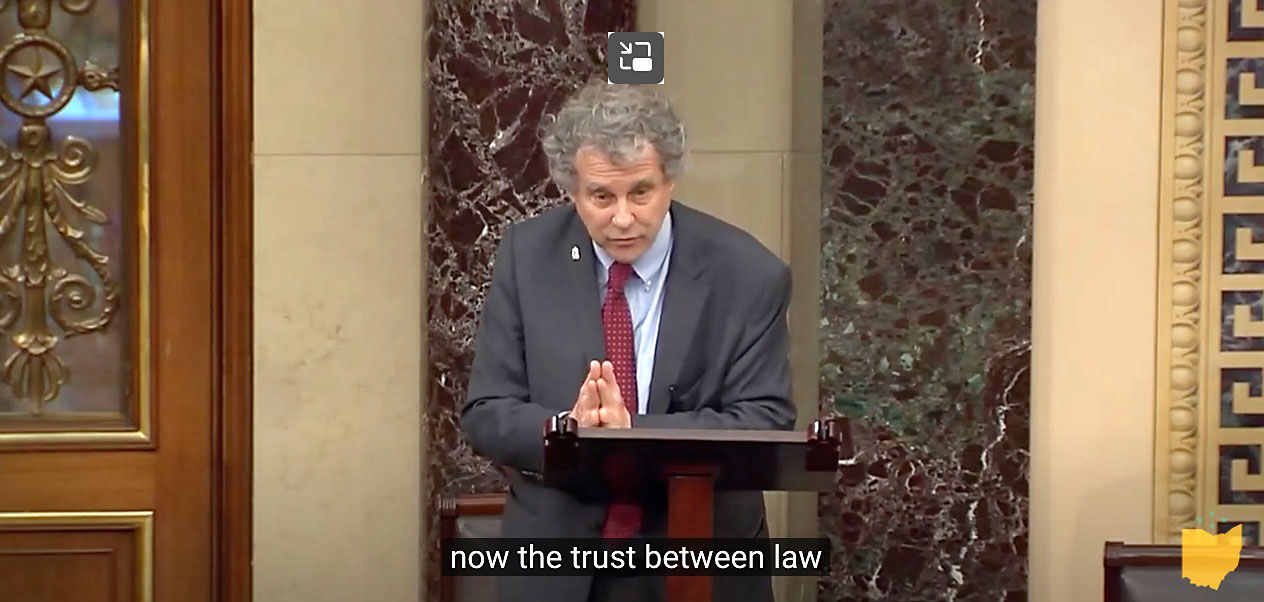
    Yesterday, on the Senate Floor, U.S. Senator Sherrod Brown (D-OH) commemorated Police Week and honored Ohio’s fallen officers who made the ultimate sacrifice for their communities last year.

  • F.D.A approves COVID 19 booster dose for children 5 through 11

    F.D.A approves COVID 19 booster dose for children 5 through 11

    A Press Release of the FDA:

    On Tuesday, the U.S. Food and Drug Administration amended the emergency use authorization (EUA) for the Pfizer-BioNTech COVID-19 Vaccine, authorizing the use of a single booster dose for administration to individuals 5 through 11 years of age at least five months after completion of a primary series with the Pfizer-BioNTech COVID-19 Vaccine. 

    “While it has largely been the case that COVID-19 tends to be less severe in children than adults, the omicron wave has seen more kids getting sick with the disease and being hospitalized, and children may also experience longer term effects, even following initially mild disease,” said FDA Commissioner Robert M. Califf, M.D. “The FDA is authorizing the use of a single booster dose of the Pfizer-BioNTech COVID-19 Vaccine for children 5 through 11 years of age to provide continued protection against COVID-19. Vaccination continues to be the most effective way to prevent COVID-19 and its severe consequences, and it is safe. If your child is eligible for the Pfizer-BioNTech COVID-19 Vaccine and has not yet received their primary series, getting them vaccinated can help protect them from the potentially severe consequences that can occur, such as hospitalization and death.”   

    On Jan. 3, the FDA authorized the use of a single booster dose of the Pfizer-BioNTech COVID-19 Vaccine for administration to individuals 12 through 15 years of age after completion of primary vaccination with the Pfizer-BioNTech COVID-19 Vaccine. Today’s action expands the use of a single booster dose of the vaccine for administration to individuals 5 through 11 years age at least five months after completion of a primary series of the Pfizer-BioNTech COVID-19 Vaccine. The FDA has authorized the Pfizer-BioNTech COVID-19 Vaccine for use in individuals 5 years of age and older and has approved Comirnaty (COVID-19 Vaccine, mRNA) for use in individuals 16 years of age and older.

    “The Pfizer-BioNTech COVID-19 Vaccine is effective in helping to prevent the most severe consequences of COVID-19 in individuals 5 years of age and older,” said Peter Marks, M.D., Ph.D., director of the FDA’s Center for Biologics Evaluation and Research. “Since authorizing the vaccine for children down to 5 years of age in October 2021, emerging data suggest that vaccine effectiveness against COVID-19 wanes after the second dose of the vaccine in all authorized populations. The FDA has determined that the known and potential benefits of a single booster dose of the Pfizer-BioNTech COVID-19 Vaccine for children 5 through 11 years of age at least five months after completing a primary series outweigh its known and potential risks and that a booster dose can help provide continued protection against COVID-19 in this and older age groups.”

    Data Supporting Effectiveness

    The EUA for a single booster dose of the Pfizer-BioNTech COVID-19 Vaccine for children 5 through 11 years of age is based on FDA’s analysis of immune response data in a subset of children from the ongoing randomized placebo-controlled trial that supported the October 2021 authorization of the Pfizer-BioNTech COVID-19 Vaccine primary series in this age group. Antibody responses were evaluated in 67 study participants who received a booster dose 7 to 9 months after completing a two-dose primary series of the Pfizer-BioNTech COVID-19 Vaccine. The antibody level against the SARS-CoV-2 virus one month after the booster dose was increased compared to before the booster dose.

    FDA Evaluation of Safety

    The safety of a single booster dose of the Pfizer-BioNTech COVID-19 Vaccine in this age group was assessed in approximately 400 children who received a booster dose at least five months (range 5 to 9 months) after completing a two-dose primary series. The most commonly reported side effects were pain, redness and swelling at the injection site, as well as fatigue, headache, muscle or joint pain and chills and fever.

    The FDA did not hold a meeting of its Vaccines and Related Biological Products Advisory Committee on today’s action, as the agency previously convened the committee for extensive discussions regarding the use of booster doses of COVID-19 vaccines and, after review of Pfizer’s EUA request, the FDA concluded that the request did not raise questions that would benefit from additional discussion by committee members. The FDA will make available on its website relevant documents regarding today’s authorization. 

    The amendment to the EUA was granted to Pfizer Inc.
     

    Related Information

  • House bill would make voters choose safety measures in schools

    House bill would make voters choose safety measures in schools

    Getty Image

    BY: SUSAN TEBBEN – Ohio Capital Journal

    A bill that may be up for a vote soon in the Ohio House would put the decision of whether or not to have a school resource officer up to the voters in each school district.

    House Bill 501 seeks to change Ohio law that the sponsors of the bill say doesn’t define “school safety and security,” though it does include mental health services, safety training and safety personnel.

    School resource officers, which are typically certified law enforcement officers use through an agreement with the officer’s police or sheriff’s department, would be included in the “safety personnel” part of Ohio law, under the new bill.

    If passed, the bill would leave that school safety and security definition up for voters by authorizing school boards to levy property tax “for the specific purpose of providing for SRO services, as opposed to safety and security in general,” according to an analysis of the bill by the Legislative Service Commission.

    Municipalities and townships will also be able to levy property taxes “for the specific purpose of funding SRO services for school districts located within their territory” under the bill, according to the LSC.

    The bill had its third hearing in House Ways and Means Committee on Tuesday, with no testimony and not changes to the SRO part of the bill. Committee chair state Rep. Derrick Merrin said the bill may be voted on at the next committee meeting.

  • [Video and Slide Show] Ramsey-Paxton Cemetery Association holds ceremony for marking new headstones and grave dedication

    [Video and Slide Show] Ramsey-Paxton Cemetery Association holds ceremony for marking new headstones and grave dedication

    Sean Behling
    Sean Behling is a Loveland Magazine Reporter

    by Sean Behling

    Loveland, Ohio – A cold, drizzly morning on Saturday, May 7th, gave way to more tolerable weather by noon when a momentous ceremony was held at the Ramsey-Paxton Cemetery in the White Pillars subdivision. It was a celebration of the dedication of new headstones for Lt. Col. Thomas Paxton, Captain John Ramsey, and Isabella Paxton Ramsey. After a member of the Sons of the American Revolution gave a speech detailing the historical significance of Ramsey, Paxton, and their family, a parade arrived, led by living descendants, to celebrate the renovations they’ve made to the cemetery. 

    Once the parade arrived, the National Anthem was sung, and people gathered closer to witness the ceremonial ribbon-cutting. The ribbon-cutting featured, 102-year-old Kay Promton, the oldest living descendant of Lt. Col. Paxton. Joining Kay were community leaders and contributors to the Ramsey-Paxton Cemetery restoration. The large crowd then gathered and listened to the heartwarming speech that Rob Geiger, president of the Association, gave.

    Following the touching speech, Geiger handed out plaques to those who had worked hard and long to keep this landmark of Loveland intact. The plaques held ceremonial keys to the cemetery and were set on pieces of cherry wood salvaged from a decaying tree that had to be removed during the cemetery’s restoration.

    Receiving plaques were:

    • Loveland Legacy Foundation
    • Loveland Magazine
    • City of Loveland
    • Paxton’s Grill
    • Ramsey’s Trailside
    • Eads Fence
    • Rainey Tree Service
    • Riverview Monuments
    • American Legion Post 256 and Auxiliary
    • Veterans of Foreign Wars Post 5749
    • Emma Clemons, Girl Scout Troop 43534

    After the plaques were handed out, and the new gravestones were unveiled, the ceremony ended with a musket salute. The Sons of the American Revolution lined up, their muskets loaded and pointing out into the nearby woods, firing off numerous shots, before finally putting their heads down in respect of these fallen soldiers.

    Other groups participating during the dedication ceremony were, Clough Valley Chapter – Daughters of the American Revolution, Cincinnati Chapter/Sons of the American Revolution, American Legion Post 256 and Auxiliary, and Veterans of Foreign Wars Post 5749. Individuals playing important parts in the dedication were, Will Freeman singing the National Anthem, Kay Thomson, Bella Geiger, Kassidy Ostendorf, and Robert Reid signing Amazing Grace. Tiffany Niehaus, Stephanie Pinella, and Cindy Abbott read biographies of Thomas Paxton, John Ramsey, and Isabella Paxton Ramsey.

    Debby Niehaus and Paige Craig led a responsive reading.

    The emcee for the event was Rob Geiger, the President of the Ramsey Paxton Cemetery Association.

    Thank you to everyone who was able to make this ceremony happen and to everyone that has worked to keep this historic location alive for so many years. The Ramsey-Paxton Ceremony is located on Ramsey Court in White Pillars, so feel free to go on down and pay respects to the founder of Loveland while soaking in the cemetery’s history.

    The Ramsey-Paxton Cemetery began in 1813 with the burial of Lt. Col. Thomas Paxton. Lt. Col. Paxton was a Revolutionary War Soldier who served with General George Washington at Valley Forge in 1777 as well as General Anthony Wayne at the Battle of Fallen Timbers in 1794. The curved bridge on West Loveland Avenue over the Lt. Col. Paxton.

    Paxton is considered the first permanent settler between the Little Miami River and the Scioto River in the Virginia Military Tract, credited with raising the first local crop of corn, and was the founder of Loveland. Paxton’s involvement goes even further, from helping to have the first polling place in Clermont County to help make the statehood of Ohio possible.

    Paxton’s son-in-law, as well as Revolutionary War patriot and one of the first settlers of Clermont County, Captain John Ramsey, was buried in the cemetery in 1847, as were other family members up until 1913.

  • Lawmaker proposed $300m handout to nursing homes; then raised $52,000 from their liaisons

    Lawmaker proposed $300m handout to nursing homes; then raised $52,000 from their liaisons

    Rep. Sara Carruthers. Photo from the Ohio General Assembly website.

    BY: JAKE ZUCKERMAN – Ohio Capital Journal

    An Ohio lawmaker last year proposed allocating $300 million of federal COVID-19 relief funds, divvied up among Ohio’s nursing homes with no strings attached.

    Ten days later, Rep. Sara Carruthers, R-Hamilton, received a $13,200 campaign contribution from the CEO of a chain of 59 nursing homes, $13,200 from his business partner, and another $13,200 from the CEO’s wife.

    Two weeks later, a lobbyist for an association of nursing homes that backed the bill gave her another $13,200. The four contributions together comprise nearly half of all Carruthers’ campaign fundraising in 2021.

    The legislation, House Bill 461, didn’t technically pass. However, the idea was folded into a separate appropriations bill that handed out $4.18 billion in federal pandemic relief funds to schools, child care and others. That bill gave an additional $300 million to nursing homes — atop the roughly $6.45 billion they receive in state and federal Medicaid funds — so long as the chronically short-staffed industry spends it on its workforce and not on executives, administrators, or staffing agencies.

    However, on Wednesday, an amended form of HB 461 reappeared before the House Economic and Workforce Development Committee as an entirely rewritten document.

    Instead of giving the facilities a lump sum payment of $300 million, the new version of the bill calls on the state Department of Medicaid to pay facilities an extra reimbursement for each resident they house in a private (instead of shared) room.

    State analysts haven’t yet offered a formal cost estimate for the idea. However, Robert Applebaum, Director of the Ohio Long-Term Care Research Project at Miami University, offered a high-end estimate of around $343 million in costs in the first year alone.

    Carruthers did not respond to a phone calls and an email to her legislative office.

    Does the bill make sense?

    Applebaum said there are many good facilities that put a sincere effort toward providing adequate care that simply don’t make enough money from the state’s formula to reimburse facilities for care given to Medicaid patients. That formula is established by state law.

    However, some homes in Ohio provide dangerously poor care. An Ohio Capital Journal investigation identified dozens of facilities that, according to federal regulators, placed the health and safety of residents in “immediate jeopardy” during the pandemic. At least 84 residents died in connection with the alleged infection control violations at 13 Ohio facilities during the pandemic. Additionally, despite a federal requirement, only 77% of nursing home workers are vaccinated against COVID-19 — the third lowest rate by state, according to federal data analyzed by the investigative journalism outlet ProPublica.

    “It’s not that nursing homes shouldn’t get any [federal COVID relief funds], but why are we not using this as an opportunity to improve the quality of the facilities?” Applebaum said.

    He said states can adopt strategies to improve care like providing more funds that must go to often-underpaid workers; or creating a pot of money specifically for facilities that meet certain quality targets.

    While steering facilities to placing residents in private rooms is sensible, Applebaum questioned what added costs this puts on the sparsely filled facilities or why lawmakers are setting such a low bar.

    To reach his $343 million estimate: There are about 940 nursing homes in the state, each with an average census of about 69 residents. Care for about 60% of those residents is funded by Medicaid. The bill, as written, provides an extra $25 per patient per day in a private room. So assuming all Medicaid patients wind up in private rooms, the bill will cost $343 million per year. However, that crude formula likely assumes more residents wind up in private rooms than is to be expected.

    In the out years, the bill leaves it to the Department of Medicaid to determine the extra reimbursements for housing patients in a private room.

    Timing

    Carruthers introduced HB 461 on Oct. 25, 2021. On Nov. 4 of that same year, Brian and Gretchen Colleran each contributed $13,200 to her campaign. Brian Colleran is the CEO of Foundation Health Solutions, which operates 59 nursing homes in Ohio. His business partner, Daniel Parker, contributed the same amount on the same day.

    In 2017, Colleran and Parker paid $20 million to settle Medicaid fraud allegations lodged via the U.S. Department of Justice. They were accused of billing claims to Medicaid for unnecessary treatment at 18 of their nursing facilities and billing Medicare for hospice services for ineligible patients. The settlement is not a finding of guilt, and they weren’t convicted of any crime.

    The two did not respond to a voicemail and written inquiry left with the company.

    On Nov. 19, 2021, Roger King — a lobbyist whose sole client is the Academy of Senior Health Sciences — gave her another $13,200. King’s phone number listed on lobbying forms directed a call to the Academy’s executive director, who didn’t respond to a voicemail.

    Carruthers’ bill received its first hearing in its new form Wednesday in a committee focused largely on labor and economic issues — as opposed to committees that typically handle Medicaid and long-term care issues like the Health Committee, the Finance Subcommittee on Health and Human Services, or the Families, Aging and Human Services Committee.

    The committee is chaired by Rep. Jay Edwards, R-Nelsonville, who himself has received more than $80,000 in campaign contributions since 2020 from Parker, Brian Colleran and Gretchen Colleran, according to campaign finance reports.

    In an interview, Edwards said he knows of Colleran and Parker and has “spoken to them about their operations” but doesn’t have a relationship with them. He acknowledged that Carruthers’ bill “probably” doesn’t have much to do with workforce or economic development issues. However, he said a point can be made that private rooms might increase staffing needs, which makes the bill something of a workforce issue.

    During Wednesday’s hearing, Rep. Catherine Ingram, D-Cincinnati, questioned why the bill was apparently rewritten instead of getting introduced as a new, unique bill. In an interview, she said it’s part of a strategy to keep legislation in a friendly committee where a chairman would fast track it, which she believes is the current strategy.

    She said she supports funding elder care, but that money should follow the increasing consumer demand of providing more in-home care and keep older Ohioans out of nursing homes.

    Ohio House Speaker Bob Cupp, R-Lima, didn’t respond to inquiries about the contributions to Carruthers, or why a nursing home bill is under review in an economic and workforce committee.

    This article was updated with further explanation of the cost estimate from Robert Applebaum.