Author: Loveland Magazine

  • Dems flip abortion fight, seek to legalize abortion in Ohio

    Dems flip abortion fight, seek to legalize abortion in Ohio

    BY: SUSAN TEBBEN – Ohio Capital Journal

    Ohio House legislators say the intend to flip the legislative narrative in the state, pushing for a state constitutional amendment legalizing abortion in opposition to the many bans being considered.

    State Reps. Michele Lepore-Hagan, D-Youngstown, and Jessica Miranda, D-Forest Park, face a hard fight to get the measure through a General Assembly currently encompassed by a Republican supermajority, and one that has introduced multiple “trigger” bans that, if passed, would take effect in the event the U.S. Supreme Court decision in Roe v. Wade is overturned or changed.

    Under the amendment, which would be voted on by Ohioans if passed by the House and Senate, surgical and medical abortion services would be cemented into the Ohio Revised Code, along with contraceptives.

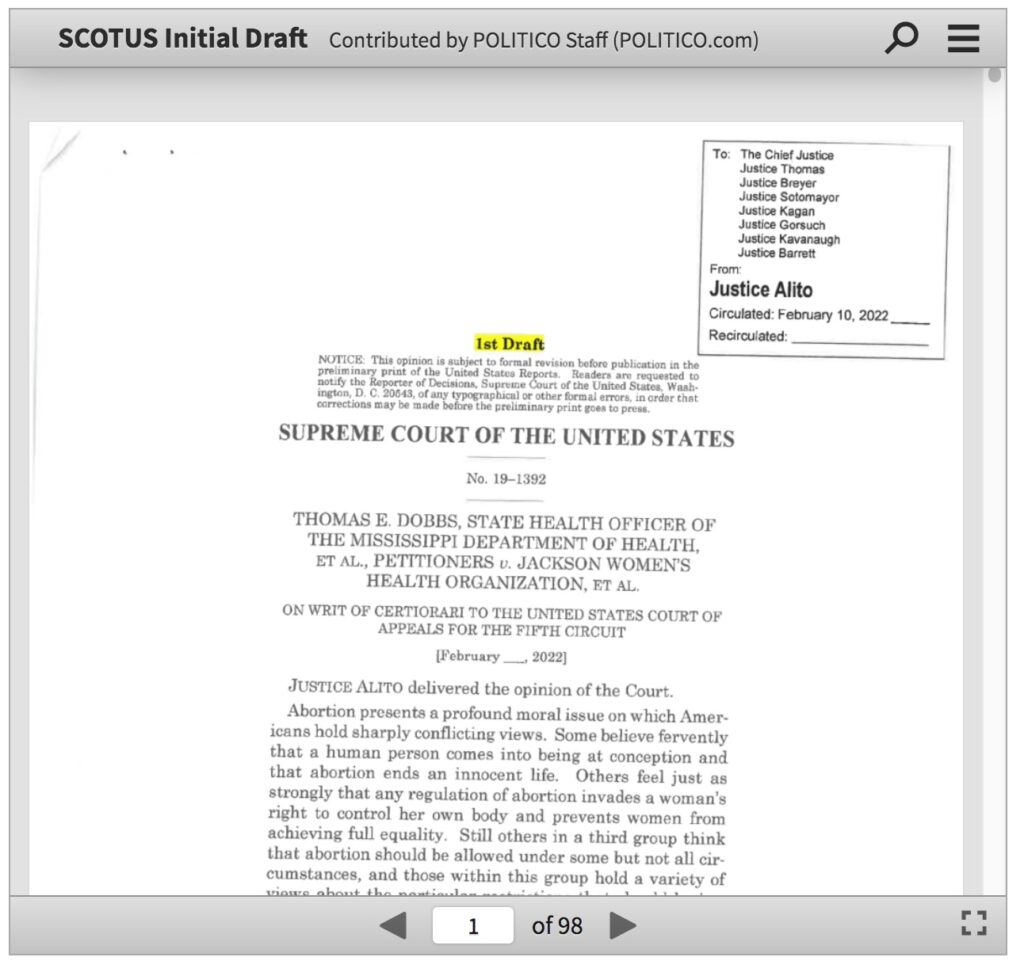
    The representatives said the attempt at an amendment came after a draft ruling from U.S. Justice Samuel Alito implied a future ruling that could limit or eliminate abortion legality nationwide. The opinion, though not the final opinion of the court, “presents a 50-year reversal on safe and legal access to abortion in the United States,” Lepore-Hagan and Miranda stated in announcing their proposed amendment.

    “I will not stand by and allow political extremists to take us back to a time where individuals were unable to make their own health care decisions and access the care they need in their communities,” Lepore-Hagan said in a statement. “No one should be forced to carry a pregnancy against their will.”

    A constitutional amendment requires a three-fifths vote of the legislature for passage, and has to be received 90 days before an election to be placed on the ballot.

    A companion resolution is also planned in the state Senate, led by state Sens. Nickie Antonio, D-Lakewood and Sandra Williams, D-Cleveland. Success in the Senate would depend on Republican support, just as a win in the House would.

    “In overturning a woman’s right to choose, I share the concern that we will have laid a roadmap to upend other civil rights, including protections for the LGBTQ community,” Antonio wrote in her own statement.

    Sponsors of the amendment are still in the process of gathering co-sponsors, and drafting bill language, after which it will be formally introduced and moved to a committee.

  • Founder of Netherlands’ “Dementia Village” to headline elder care symposium in Loveland

    Founder of Netherlands’ “Dementia Village” to headline elder care symposium in Loveland

    Advertisement

    June 2

    Oasis Conference Center, Loveland, Ohio
    Presented by The Law Practice of Dennison Keller, LLC Keynote Speaker: Eloy van Hal

    Open to the public / continuing education credits offered Register at: www.elderlawcincinnati.com

    On June 2, “Dementia Village” Founder Eloy Van Hal, of the Netherlands, will join industry leaders including a world-renowned cardiac surgeon, a research scholar in geriatrics, elder law attorneys, and experts in LGBTQ senior care at a new symposium in Loveland. The Cutting Edge of Elder Care: Global Approaches to Serve Elders in Our Own Community will bring together international, national, and local thinkers committed to advancing care for seniors.

    “Dementia Village” Founder Eloy Van Hal

    Van Hal is a superstar in the field of elder care. For more than 20 years, he managed nursing homes and elder care facilities. In 2009, He co-founded the “Dementia Village” known as Hogeweyk, just outside of Amsterdam. It was a completely new model of personalized dementia care, allowing residents to live in a neighborhood according to their lifestyle with the freedom to walk around instead of being locked in the wing of a stand-alone building. In 2015, Van Hal took on the role of senior managing advisor to help implement communities like the “Dementia Village” around the world. His thought-provoking presentations inspire his audiences to think beyond the status quo, often leaving them astonished by what is possible.

    “I am very pleased with this opportunity to speak about the paradigm shift in dementia care,” Van Hal said. “We as founders of the Hogeweyk are working on a global movement to shift the way we think and act when people living with dementia need support and care.”

    The Law Practice of Dennison Keller, LLC is organizing the event with the goal of bringing positive change and global perspectives to the tri-state. Keller, past President of the Life Care Planning Law Firms Association (LCPLFA), has over 15 years of expertise as an elder law attorney.

    “By 2050, estimates show there will be 84 million people in this country over the age of 65, double our current amount,” Keller said. “We must think morally and logistically about best practices for treating our aging population.”

    Dennison Keller’s firm is Cincinnati’s only member of the LCPLFA.

    Keller’s firm is Cincinnati’s only member of the LCPLFA, a national association of inter- disciplinary law practices that offer care coordination, family education, and help with financial and health care decisions in addition to legal services. His fourteen-person staff includes two lawyers, two nurses, and four licensed social workers.

    Symposium topics include, caring for aging baby boomers, hidden symptoms of dementia, race and religion in long term care settings, technology advances in elder care, new research on helping families better communicate as they care for a parent, and culturally competent care for LGBTQ older adults. The event is open to the public and nurses, social workers, counselors, and marriage and family therapy therapists can earn continuing education credits.

    In response to ever-changing practices and laws, Keller added a session to the symposium schedule at the last-minute to include a discussion of Esther’s law, a brand-new Ohio law allowing cameras in nursing home rooms.

    In addition to hosting seminars and webinars, Keller teaches at UC’s Osher Lifelong Learning Institute. With the introduction of this symposium, his practice is taking elder care education to the next level.

    Learn more and register for the symposium at: www.elderlawcincinnati.com

    The Serene Suites Premier Memory Care is the symposium’s Saphire Sponsor; Strawser & Staley Funeral Homes, Spring Grove Funeral Homes and Cremation/Thompson, Hall & Jordan Funeral Home are Diamond Sponsors; Right at Home, Home Care and Assistance, Central Parke Memory Care & Transitional Assisted Living, and Seasons, A Senior Lifestyles Community are Emerald Sponsors.

  • Ohio Redistricting Commission resubmits maps already rejected as illegal by supreme court

    Ohio Redistricting Commission resubmits maps already rejected as illegal by supreme court

    BY: SUSAN TEBBEN – Ohio Capital Journal

    The Ohio Redistricting Commission Thursday voted to resubmit maps to the Ohio Supreme Court that the court has already rejected as illegal and unconstitutional partisan gerrymandering.

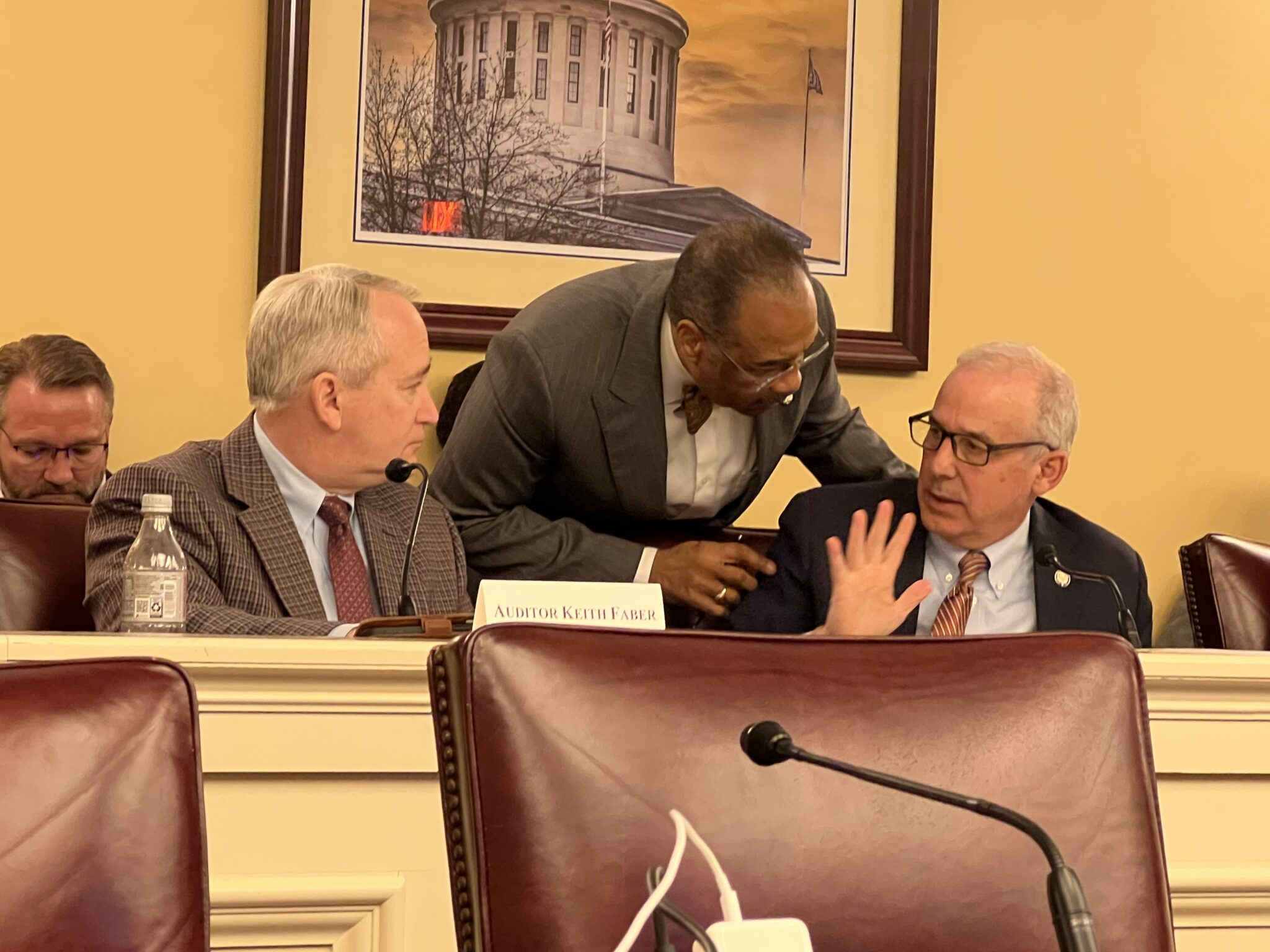
    The commission once again passed its third map 4-3 along party lines, with the exception of Republican Auditor Keith Faber, who said he voted no for the same reasons he voted against the map originally, claiming favoritism for Democrats.

    Republicans voting for the maps were Ohio Gov. Mike DeWine, Secretary of State Frank LaRose, state Sen. Rob McColley and state Rep. Jeff LaRe (sitting in for Senate President Matt Huffman and House Speaker Bob Cupp respectively).

    With a U.S. District Court promising to order the third set of maps to be put in place for the 2022 election, the commissioners saw fit to push those maps back into play, despite not one but two rejections by the state’s highest court.

    Indicating the action that was forthcoming from the commission, LaRose read a two-page statement he said explained the “logistical realities” of administering an Aug. 2 primary.

    He said the third map is already programmed in county boards of elections systems, which was done at his order, and he said he “would not instruct the boards to deprogram Map 3 before May 28, risking that the new map could be invalidated with no immediate options to administer a primary election.”

    “Therefore, Map 3 is the only viable option to effectively administer a primary election on Aug. 2, 2022,” LaRose told the commission on Thursday.

    In pushing for passage of the maps, McColley said these maps would be “only for use in the 2022 election.”

     State Rep. Jeff LaRe and state Sen. Vernon Sykes talk during Thursday’s meeting of the Ohio Redistricting Commission.
    (Photo: Susan Tebben, OCJ)

    The constitutional amendment overhauling redistricting processes in the state spelled out the commission’s ability to pass partisan four-year maps or bipartisan 10-year maps. It does not specify a two-year option, which critics say spells trouble in the supreme court battle.

    “We will continue to look at our legal options, and possibly this would only be a two-year map and we will work to get better maps in the future,” said Jen Miller, executive director of the League of Women Voters of Ohio. “But the redistricting commission can’t decide to adopt a two-year map.”

    The Ohio Supreme Court rejected the maps on March 16 for the same reason it rejected all other maps: partisan favoritism.

    “Substantial and compelling evidence shows beyond a reasonable doubt that the main goal of the individuals who drafted the second revised plan was to favor the Republican Party and disfavor the Democratic Party,” the majority wrote in their opinion on those maps.

    Court justices also rejected the maps after they were slightly changed by GOP mapmakers and submitted as the fourth map from the Ohio Redistricting Commission. Huffman introduced revised Map 3 on March 28, after he said it became clear the independent mapmakers maps were not going to be completed on time.

    On Thursday, the Democratic members of the commission, seemingly building up arguments against being held in contempt by the Ohio Supreme Court, introduced changes to a proposed map drawn by independent mapmakers in late March. That map had previously been dismissed by Republican members of the commission who claimed it unduly favored Democrats and didn’t address all the constitutional and court-ordered changes required of new state House and Senate maps.

    House Minority Leader Allison Russo brought up the maps, as she did in a letter earlier Thursday, asking for proposed amendments to the map by Thursday afternoon.

    She told the commissioners those items had been identified and addressed prior to Thursday night’s meeting. No other commission members submitted amendments, she said.

    But Republican commissioners were quick to express their dissatisfaction with these maps during the meeting, even as revised.

    McColley referenced an affidavit by independent mapmaker Dr. Douglas Johnson, saying Johnson acknowledged the maps were not done when he and Dr. Michael McDonald left their posts on March 28, having had their plan dismissed by the commission.

    Russo pushed back on the assertion, saying the maps were finished, but were only “double-checked” after completion.

    “To be clear, this map is finished,” Russo said.

    The Johnson/McDonald map was turned down again by the ORC on Thursday, with a party-line 5-2 vote.

    Russo read a statement at the end of the night, calling the latest journey to Map 3 “a bad-faith effort to punt (Republican) responsibility to another entity,” meaning the federal court.

    “The events that led us back here were not committed through incompetence,” Russo read from the statement. “We are here purposefully.”

    LaRose and DeWine were missing from the commission meeting after a recess following the vote to adopt the third map. Spokespersons said they had other commitments, and because the commission did not have any other voting items, they chose to leave before the meeting adjourned, and before media could ask any questions.

    DeWine’s spokesperson, Dan Tierney, said it was “simply impossible to adopt any map or resubmit any map that an election could be run on August 2.”

    Asked why the commission didn’t meet earlier than two days before the deadline, Tierney said there were “issues coming to compromise.”

    The maps now go to the Ohio Supreme Court for consideration and court challenges, which seem likely.

    As the commission’s newest co-chair, LaRe said with a map passed to cover only the next two-years, the commission still needs to continue its work.

    “We’re only talking about the ’22 election, so there’s more work for the commission to do,” LaRe said. “We’ve got to look at the next election cycle, so we’re not done yet.”

    He did not give a timeline on when the commission will begin working on the next election.

  • Job Opening permanent part-time Finance Clerk for City of Loveland

    Job Opening permanent part-time Finance Clerk for City of Loveland

    Advertisement

    NOTICE OF VACANCY & EXAMINATION

    The City of Loveland is accepting applications for a permanent part-time Finance Clerk position.  Position includes wide variety of accounting, income tax and customer service duties  Requires High School diploma with college level courses in accounting, business or computer technology, at least Associate’s degree preferred, with at least 1 year of experience, or equivalent combination of training or experience.  Proficiency in math, typing, 10-key entry and Microsoft Word and Excel also required. Pay range: $18.27 – $27.85 per hour, DOQ.

    Send resume, application, e-mail address to Finance Clerk Position; 120 W. Loveland Ave; Loveland, OH 45140—must arrive by June 6, 2022. 

    To print an application or see a detailed job description visit: Jobs • Loveland, OH • CivicEngage (lovelandoh.gov). 

    A civil service examination will take place on Monday, June 13 at 6:30 p.m. at the Loveland Safety Center, 126 S. Lebanon Rd, Loveland, OH 45140 to create an eligibility list for this position.  Applicants eligible for the special credits listed below must provide evidence at time of application:

    a. 1 year of active service or 2 years of inactive service in the United States military or Coast Guard.

    b. Associate’s or Bachelor’s degree from an accredited college or university.

    Loveland is an equal opportunity employer.  Any candidate with a disability who requires reasonable accommodations to complete the examination must request this no later than June 8 and provide medical verification.

  • U.S. Senate to try again on abortion rights after bombshell disclosure of draft opinion

    U.S. Senate to try again on abortion rights after bombshell disclosure of draft opinion

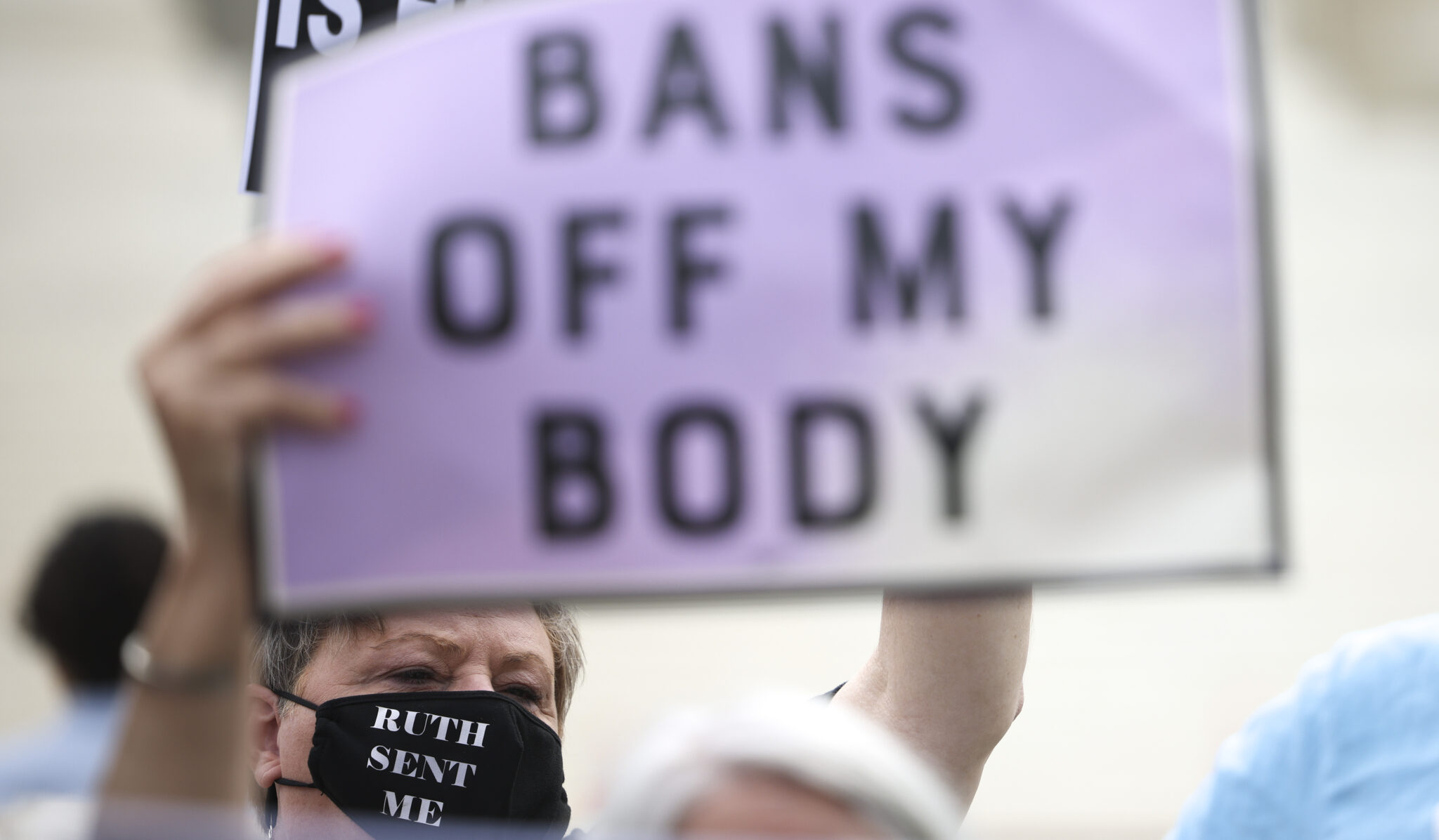
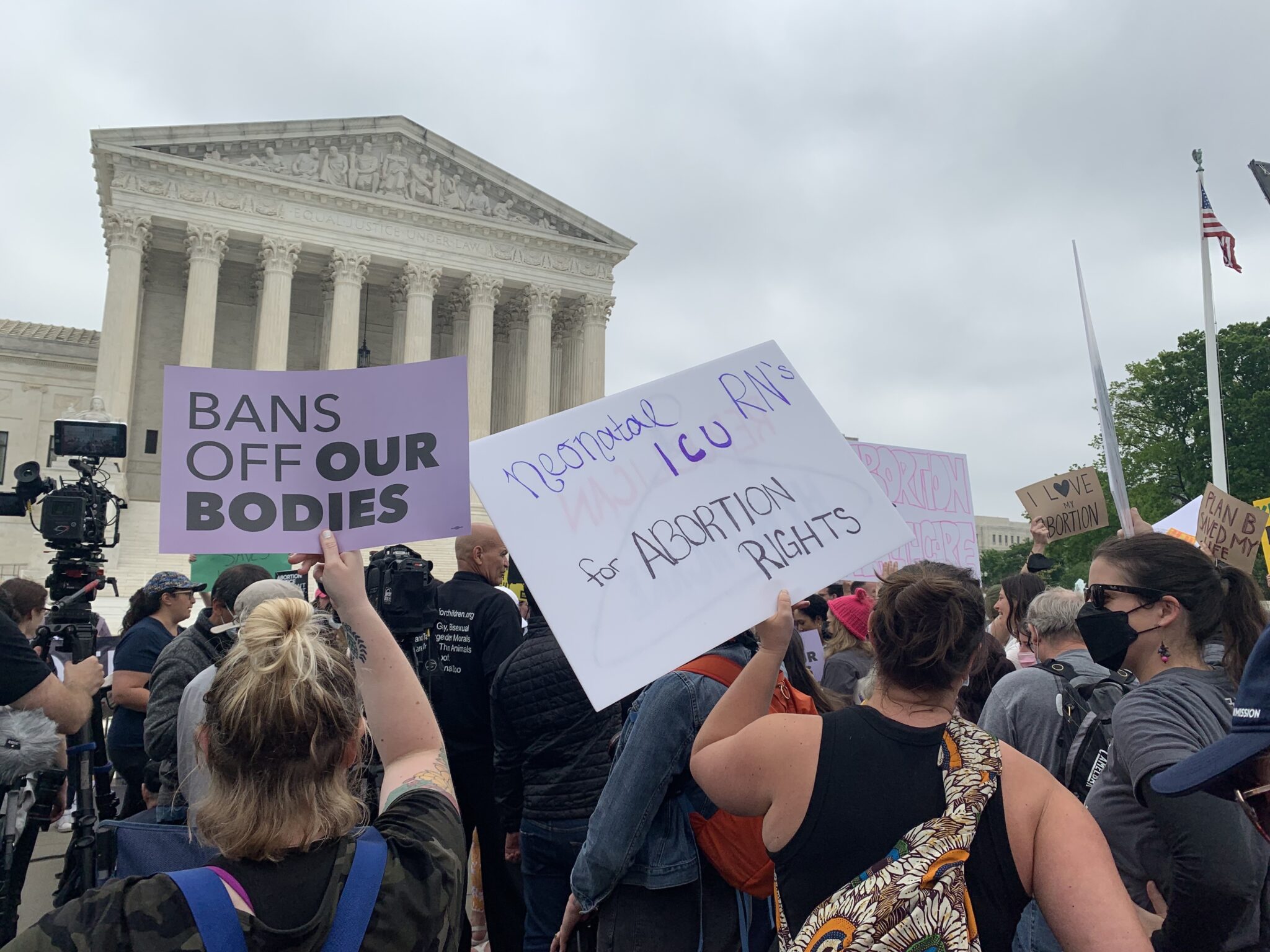
    Abortion rights activists protest outside the U.S. Supreme Court Tuesday. Photo by Jane Norman, States Newsroom.

    BY: JENNIFER SHUTT – Ohio Capital Journal

    WASHINGTON — U.S. Senate Democrats on Tuesday pledged a new vote codifying the right to an abortion after publication of a draft court ruling that showed the Supreme Court on track to overturn the landmark Roe v. Wade abortion decision.

    Democrats, who likely won’t have the votes to advance that bill, also predicted that abortion will emerge as a major issue in the upcoming midterm elections for members of Congress.

    Their comments came as abortion rights supporters across the United States reeled in reaction to the disclosure of the initial draft U.S. Supreme Court opinion, led by Justice Samuel Alito and leaked to Politico. While the court ruling is not final until published, the draft states that earlier abortion decisions “must be overruled.”

    Senate Majority Leader Chuck Schumer, a New York Democrat, said Tuesday he plans to release a new bill this week that senators will vote on next week to codify Roe v. Wade.

    But in the evenly divided Senate, it will run into problems getting past a legislative filibuster that requires 60 votes for legislation to advance.

    Were Roe v. Wade to be struck down by the court, which is dominated 6-3 by conservatives, the question would be left up to states, and more than two dozen Republican-led states have been racing to enact abortion bans and restrictions.

    Supreme Court Chief Justice John Roberts said the draft, published on Monday night, was authentic, though he cautioned it wasn’t the final opinion, and said he’d directed the Marshal of the Court to investigate the leak.

    Republicans called for the Justice Department to also investigate how the draft made its way to two journalists, saying the leak was a violation of the court’s judicial process.

    Roberts said the leak of the document was wrong.

    “Court employees have an exemplary and important tradition of respecting the confidentiality of the judicial process and upholding the trust of the Court,” Roberts said in the statement. “This was a singular and egregious breach of that trust that is an affront to the Court and the community of public servants who work here.”

    The court is expected to release its official ruling in the case, Dobbs v. Jackson Women’s Health Organization, within the next two months, though many organizations have long expected the six conservative justices to at least pare back the constitutional right to an abortion.

    Democratic senators on Tuesday said a final decision undoing the constitutional right to an abortion the Supreme Court established five decades ago would be unacceptable and harmful to women.

    Montana Democratic Sen. Jon Tester said letting each state, once again, set its own abortion laws would be a “step in the wrong direction.”

    “I think that a woman’s right to choose, a woman’s right to make their own health care decisions is really fundamental to who we are as a nation,” Tester said.

    Washington Democratic Sen. Patty Murray criticized the conservative justices for moving to undo nationwide protections for people seeking to terminate a pregnancy.

    “We do not want this to become a country where women are forced to remain pregnant no matter their personal circumstances and yes, we are talking about situations like rape and incest,” Murray said.

    “A country where extreme politicians will control patients’ most private decisions. A country where for the very first time ever the next generation of women will have fewer rights than their mothers.”

    Michigan Sen. Gary Peters, chair of the Democratic Senatorial Campaign Committee, said abortion rights will become a “major issue” in November’s midterms elections.

    “We’ve seen legislation being passed in state legislatures across the country to limit reproductive freedom for women. But there was always the belief that Roe versus Wade was there,” Peters said. “If Roe versus Wade is overturned, it’s a completely different ballgame.”

    60 votes needed

    In the Senate, Democrats would need 60 senators to vote to get past the legislative filibuster and actually pass legislation codifying abortion access throughout the country. Those votes would be required to end debate and move on to final passage, which is a simple majority vote.

    Peters, asked if Democrats could somehow get to a 60-seat majority in the midterm elections, said “it would be pretty difficult to get there.”

    While the entire U.S. House — an increasing number of whom represent gerrymandered districts — will be up for reelection in November, just one-third of the U.S. Senate will face voters.

    This year that will be 35 seats, with 14 occupied by Democrats and 21 filled by Republicans.

    The Cook Political Report with Amy Walter rates five of those races — Arizona, Georgia, Nevada, Pennsylvania and Wisconsin – as “toss up.” Florida, North Carolina and Ohio are classified as “lean Republican.”

    Senators’ positions 

    Georgia Sen. Raphael Warnock said he’s going to “do everything” he can to “support reproductive rights.”

    He’s one of many Senate Democrats who support eliminating the filibuster.

    “No Senate procedure should get in the way of basic civil rights — voting rights, reproductive rights,” Warnock said.

    Arizona Democratic Sen. Mark Kelly isn’t as convinced that the Senate should change its procedures, but didn’t rule out backing a change to how bills are processed.

    “If there is a proposal to change the rules, I will make a decision on what is in the best interest of the country and the folks I represent in Arizona,” Kelly said.

    Fellow Arizona Democratic Sen. Kyrsten Sinema doesn’t back such a change and neither does West Virginia Democratic Sen. Joe Manchin III.

    That means Senate Democrats don’t have the votes during this Congress to codify abortion rights or change the rules to make it easier to pass abortion rights legislation.

    If Democrats lose control of the Senate following the midterm elections, Republicans are expected to keep the filibuster in place.

    Minority Leader Mitch McConnell, a Kentucky Republican, said Tuesday he would “absolutely” commit to keeping it intact.

    “We don’t want to break the Senate and that’s breaking the Senate,” he said.

    McConnell declined to answer questions on how a final Supreme Court decision overturning Roe v. Wade would affect women throughout the country or whether he’d bring legislation to the floor to address federal abortion laws.

    “All of this puts the cart before the horse,” he said.

    National Republican Senatorial Committee Chairman Rick Scott, a Florida Republican senator, declined to say if the Supreme Court overturning abortion as a fundamental right would affect the election.

    “I think this is an important issue to many people, but so is inflation, so is crime, so is the border,” Scott said. “So, these are important to people and people are gonna be passionate about this. And we ought to be passionate about what we believe in.”

    Scott — who infuriated many fellow GOP senators earlier this year when he released an 11-point plan without leadership approval — declined to say if the GOP would try to pass a bill banning abortion nationwide if they gain control of the Senate in the midterms.

    “We’ll worry about that next year,” Scott said.

    ‘Inconsistent’ justices

    While many Senate Republicans oppose abortion rights and would support the Supreme Court overturning Roe v. Wade, two expressed frustration with the possibility.

    Maine Republican Sen. Susan Collins — who voted to confirm Neil Gorsuch and Brett Kavanaugh, but not Amy Coney Barrett— said in a statement that “If this leaked draft opinion is the final decision and this reporting is accurate, it would be completely inconsistent with what Justice Gorsuch and Justice Kavanaugh said in their hearings and in our meetings in my office.”

    Collins declined to answer reporters’ questions throughout the morning, simply saying she’d released a statement.

    Alaska GOP Sen. Lisa Murkowski — who supported Gorsuch and Barrett, but not Kavanaugh — told reporters that certain justices voting to overturn precedent would erode her confidence in the court.

    “If in fact this draft is where the Court ends up being, it has rocked my confidence in the court. That is because I think there were some representations made with regards to precedent and settled,” said Murkowski. “Comments were made to me and to others about Roe being settled and being precedent.”

    When the Senate took a procedural vote in February on a House-passed bill that would codify the right to an abortion, Collins, Murkowski and Manchin all voted against moving to final passage.

    Schumer said he expects a new vote could be different from the one taken just over two months ago.

    “It’s a different world now, the tectonic plates of our politics on women’s choice and on rights in general are changing,” Schumer said.

    “Every senator, now under the real glare of Roe v. Wade being repealed by the courts, is going to have to show which side they’re on. And we will find the best way to go forward after that. But don’t think that what happened two (months) ago will be exactly the same.”


  • $3.49 White TEE  SPECIAL at Apex Specialties

    $3.49 White TEE SPECIAL at Apex Specialties

    Advertisement

    Contact Paul or David Elliott at 513-677-0700 or mailto: apexloveland1@gmail.com.

    Apex Imprinted is a full service promotional specialty company, located in Loveland, Ohio. At Apex, we provide assistance with theme creativity, layout and design, and the finest imprinted and embroidered items. We have access to over 600,000 promotional products, and are dedicated to finding the ideal product for your promotional need. We look forward to working with you on your next project.

  • A judge ordered Dewitt McDonald released last month, so why is he still in prison?

    A judge ordered Dewitt McDonald released last month, so why is he still in prison?

    Getty Images.

    BY: NICK EVANS – Ohio Capital Journal

    Right now, Dewitt McDonald is sitting in prison at Richland Correctional Institution even though late last month a judge ordered his release.

    McDonald’s case goes back to a 1994 drive-by shooting in Sandusky that left one woman dead. Prosecutors claimed McDonald was in the car, and they charged him with aiding and abetting the crime. McDonald has maintained his innocence.

    A jury nevertheless convicted McDonald in 1995 and he was sentenced to life with no eligibility of parole for 20 years.

    “Dewitt McDonald has now been incarcerated 27 going on 28 years without even one hearing giving him access to parole,” his attorney Kimberley Corral explained.

    And therein lies the controversy that led to Erie County Judge Tygh Tone issuing a March 29 writ of habeas corpus to McDonald. That order directed officials to release McDonald from prison. Attorney General Dave Yost’s office is appealing to keep him behind bars, and sued Judge Tone in a state appeals court for good measure.

    The state’s aggressive pursuit of the case is notable given the underlying facts of the case. In his federal filings for relief, McDonald’s attorneys raise a number of reasons they say to doubt McDonald’s guilt. It’s not clear, they argue, that he was in the car at the time of the shooting or even that bullets fired from the car killed the victim, Vivian Johnson. Prosecutors secured McDonald’s conviction largely on the testimony of a woman named Krista Harris.

    During the first grand jury hearing, Harris said McDonald was with her at the time of the shooting, and the grand jury didn’t recommend charges. Before the second grand jury, her story flipped and they returned an indictment.

    A few years later though, she told state investigators that county prosecutor Kevin Baxter had coerced her into providing false testimony in McDonald’s case and one other by threatening her with criminal charges. She also alleged Baxter coerced her into an ongoing non-consensual sexual relationship. Baxter’s brother Edward corroborated Harris’ story. Baxter himself denied it.

    Yost’s office declined to comment on McDonald’s case, “given the pending litigation in the Erie County Court of Common Pleas, the 6th Circuit Court of Appeals and the Ohio Supreme Court.”

    The state’s central argument for why McDonald hadn’t gotten a parole hearing comes down to arithmetic. The Ohio Department of Rehabilitation and Corrections contends McDonald won’t be eligible for a parole hearing until he’s served 36 years, because they’re stacking the terms for other offenses on top of the 20 years listed in his sentencing documents.

    “So, all of the sudden, his term is 36 to life,” Corral said, “which was just a decision by an administrative agency. It was not supported by any court order.”

    After she filed a motion to clarify, the court came down on the side of McDonald — he should be eligible for a parole hearing after 20 years. That was in November of 2020. The state’s subsequent appeals to the circuit and supreme court were unsuccessful. In December last year, McDonald still hadn’t gotten a parole hearing, so Judge Tone issued another order, this time directing the parole board to hear his case “immediately.”

    Instead, the state pushed the court to dismiss McDonald’s appeals. Two months later Judge Tone issued the order to release McDonald.

    In the current appeal, Yost’s office contends the habeas order is invalid because it originated in Erie County rather than Richland County where he was incarcerated. In response, Corral agrees that state law requires a habeas claim be filed where an inmate is held, but said that McDonald was being held in the Erie County jail at the time she filed. The state argues back that he was only in Erie County temporarily for a court hearing. They also contend the case can’t be transferred to Richland County.

    “If you follow the state’s logic,” Corral argued, “the state has the sole authority to move prisoners around from county to county. They could defeat every single habeas ever filed by just moving someone after the litigation is complete.”

    “That can’t possibly be the procedure intended by the legislature, and that’s not what courts have held in the past,” she continued.

    As it stands, McDonald’s case is a mess.

    The circuit court, faced with the state’s appeal of Judge Tone’s habeas decision and a writ of prohibition against the judge, sidestepped the matter and sent the case back to the trial court for the Tone to explain his decision or rescind it. Meanwhile McDonald’s defense has appealed to the state supreme court.

  • Nine rare cancers tied to burn pit exposure added to VA benefits list

    Nine rare cancers tied to burn pit exposure added to VA benefits list

    BY: JENNIFER SHUTT Ohio Capital Journal

    WASHINGTON — The U.S. Department of Veterans Affairs is adding nine rare respiratory cancers linked to burn pit exposure to the list of illnesses eligible for disability and health benefits.

    President Joe Biden, who has said his son Beau Biden’s exposure to toxic fumes from the pits could have led to his death, announced the policy change Monday, saying in a statement he hopes to avoid repeating mistakes of the past.

    “We learned a horrible lesson after Vietnam, when the harmful effects of exposure to Agent Orange sometimes took years to manifest, and too many veterans were left unable to access the care they needed,” Biden said. “I refuse to repeat that mistake when it comes to the veterans of our wars in Iraq and Afghanistan.”

    The VA said Monday that it will begin processing disability compensation claims for former U.S. military members who were in Southwest Asia from Aug. 2, 1990, to the present or in Afghanistan, Djibouti, Syria, or Uzbekistan from Sept. 19, 2001, to the present.

    The cancers include squamous cell carcinoma of the larynx, squamous cell carcinoma of the trachea, adenocarcinoma of the trachea, salivary gland-type tumors of the trachea, adenosquamous carcinoma of the lung, large cell carcinoma of the lung, salivary gland-type tumors of the lung, sarcomatoid carcinoma of the lung and typical and atypical carcinoid of the lung.

    The VA said it plans to contact veterans who fall under the new rule, which will be published on Tuesday, or survivors, to tell them how to apply for benefits.

    Veterans or survivors who had prior claims denied can file a supplemental claim for benefits, according to the VA announcement.

    VA Secretary Denis McDonough said in a statement the change in policy will ensure “veterans who suffer from these rare respiratory cancers will finally get” the health care and benefits they “deserve, without having to prove causality between their service and their condition.”

    The VA said “a focused review of scientific and medical evidence” determined that “there is biological plausibility between airborne hazards and carcinogenesis of the respiratory tract — and the unique circumstances of these rare cancers warrant a presumption of service connection.”

    Biden originally announced the VA would add nine cancers to the eligibility list during his State of the Union address in March. 

    At the time, Biden said burn pits — which incinerated medical and hazard material, jet fuel and other substances — were one of the many dangers U.S. soldiers faced during deployments.

    “When they came home, many of the world’s fittest and best trained warriors were never the same,” Biden said during his speech. “Headaches. Numbness. Dizziness. A cancer that would put them in a flag-draped coffin.”

    Biden, in his State of the Union address and his statement Monday, called on Congress to “pass bipartisan legislation to comprehensively address toxic exposures and further deliver the vital benefits our veterans have earned.”

    The U.S. Senate unanimously approved a bipartisan bill from Montana Democratic Sen. Jon Tester and Kansas GOP Sen. Jerry Moran in mid-February that is the first of three pieces of legislation meant to address health care needs linked to burn pits.

    When announcing the $1 billion legislation in early February, Moran said that 3.5 million combat veterans have experienced some level of toxic exposure since 9/11.

    “This is the first step on a continuum of trying to make certain that those who experienced toxic exposure, and as a result are suffering in their health and well-being, receive medical benefits,” Moran said at the time.

    The U.S. House voted 256-174 in early March to approve a separate bill that would be much larger in scope and price.

    That legislation, referred to as the Promise to Address Comprehensive Toxics or PACT Act, would cost about $280 billion during the next decade.

    House Majority Leader Steny Hoyer, a Maryland Democrat, said during floor debate the legislation would “expand veterans’ health care access and benefits to address the effects of these toxic exposures that occurred during their military service.”

    “We asked our veterans to go to battle for America, and they answered that call,” Hoyer said. “When they return home, veterans should not have to go to battle against red tape to receive the medical treatment and benefits they have earned through their service.”

  • How much a map costs: one law firm accounts for 1/3 of redistricting expenses

    How much a map costs: one law firm accounts for 1/3 of redistricting expenses

    Ohio Redistricting Commission co-chair state Sen. Vernon Sykes talks to Senate President Matt Huffman during Sunday’s meeting of the ORC. The commission ended up throwing out independent mapmaker work and adopting a slightly revised version of the third map, already rejected by the Ohio Supreme Court. (Photo: Susan Tebben, OCJ)

    BY: NICK EVANS – Ohio Capital Journal

    As lawmakers consider their next move on redistricting, the overall cost has ballooned to nearly $1.8 million, according to an accounting through April 19 provided by the Legislative Services Commission.

    The bulk of that expense has been charged to the Legislative Task Force on Redistricting, which has accounted for $983,283 going back to August of 2019. Their biggest single line item was a $282,271 expenditure to Ohio University, the school tasked with preparing census data for mapmakers. All told, the school received $427,597 for its efforts.

    The second biggest line item charged to the Legislative Task Force was $103,000 to the law firm Nelson Mullins Riley & Scarborough. GOP lawmakers hired two Nelson Mullins attorneys, Thomas Farr and Phillip Strach, at a total cost of $114,500 to advise the General Assembly on redistricting. Farr and Strach made a name for themselves in part by defending North Carolina’s racially gerrymandered maps in court.

    That advice might be expensive, but their representation costs more. Once the maps were challenged in court, Senate President Matt Huffman and House Speaker Bob Cupp again turned to Nelson Mullins to serve as their defense team. So far, they’ve run up nearly $475,000 in attorneys’ fees.

    Between the firm’s work as special counsel advising mapmakers and its work unsuccessfully defending those maps in court, Nelson Mullins has earned $589,512.62 — roughly a third of the total cost of redistricting already, with more billable hours to come.

    And that’s not the only firm making money representing the Republican leaders — Taft, Stettinius & Hollister has made $30,986 representing Huffman and Cupp. In addition, a different law firm, Organ Law, has brought in $68,022 representing the Ohio Redistricting Commission.

    Across the aisle, meanwhile, the law firm Ice Miller has raked in $174,792 representing Democratic members of the Commission, Sen. Vernon Sykes and House minority leader Allison Russo.

    In all, Ohio has spent nearly $750,000 on litigation through April 19.

    The $1.8 million accounting provided by the Legislative Services Commission could be far from the end of redistricting’s expenses. Late last month Republican members of the Ohio Redistricting commission decided to ignore the proposals offered by a pair of independent mapmakers they brought in to draft boundaries. That episode cost the state $89,000, but the invoice from only one of the mapmakers is reflected in the current accounting.

    Similarly, there are more bills coming on the legal front. The most recent invoice is dated April 11 — four days before the state supreme court tossed lawmakers’ fourth try at drawing legislative boundaries.