Author: Loveland Magazine

  • U.S. Senate backs shift to permanent daylight saving time

    U.S. Senate backs shift to permanent daylight saving time

    BY: ARIANA FIGUEROA – Ohio Capital Journal

    WASHINGTON — The U.S. Senate with little debate on Tuesday unanimously supported a permanent change to daylight saving time, several days after Americans once again went through the hated “spring forward” ritual of changing their clocks.

    If the bill, the Sunshine Protection Act, clears the House, it would mean most states would stay on daylight saving time throughout the year — giving them an extra hour of sunlight in the evening.

    “Just this past weekend, we all went through that biannual ritual of changing the clock back and forth and the disruption that comes with it,” Florida Sen. Marco Rubio, the Republican who sponsored the bill, said on the Senate floor. “One has to ask themselves, why do we keep doing this?”

    Rubio said that he believed a majority of Americans want to do away with the time switch and would prefer an extra hour of daylight, especially during the winter months. The Senate agreed under a process known as unanimous consent.

    The bill, if signed into law, would not go into effect until 2023, to give airlines and other companies time to adjust. A White House spokesperson did not respond to a question about President Joe Biden’s position on daylight saving time.

    The House held a hearing last week at which a panel of experts debated the health, energy and economic impacts of changing clocks twice a year. While lawmakers on the panel couldn’t decide which time to switch to permanently, they all agreed that the United States should stick to one or the other.

    It turns out daylight saving time is a shared mission among Florida lawmakers. U.S. Rep. Vern Buchanan, a Florida Republican, introduced the House version of the bill, H.R. 69. He wrote on Twitter that he is drafting a letter to House Speaker Nancy Pelosi, asking to bring his bill to the floor for an immediate vote.

    States have moved to pass or enact measures in favor of year-round daylight saving time, but without congressional approval, they can’t adopt those changes.

    Iowa’s state House recently passed a bill that would put the state on daylight saving time, pending federal action.

    Two states have passed measures to stay on standard time — Arizona and Hawaii. Both congressional bills would allow states to stay on standard time if they adopted the time change before the Sunshine Protection Act went into effect.

    Daylight saving time was used as an energy-saving measure during various points in U.S. history, such as World War I and World War II, and has become a permanent fixture since the energy crisis of the 1970s.

    This is not the first time the U.S. has moved to make daylight saving time permanent. On Dec. 14, 1973, Congress voted to put the U.S. on daylight saving time for two years. While 79% of Americans approved of the change in December of that year, within three months, approval fell to 42%, according to the New York Times.

    The biggest concern stemmed from children going to school in the dark, which soon proved to be dangerous as more children were reported to be hit by early-morning drivers.

    Shortly after President Richard Nixon resigned, Congress passed a bill that would restore standard time, which was then signed by President Gerald Ford.

    Daylight saving time this year ends on Nov. 6.

  • Ohio city sues Netflix and Hulu for piece of streaming pie

    Ohio city sues Netflix and Hulu for piece of streaming pie

    BY: JAKE ZUCKERMAN – Ohio Capital Journal

    A small, Cleveland suburb has filed a lawsuit against Netflix and Hulu, trying to force the streaming companies to pay a franchise fee typically applied to cable providers.

    The lawsuit is part of a growing national trend of cities in at least 13 states, often pinched by shrinking budgets, targeting the nascent streaming industry for new tax revenues.

    The city’s suit is filed under a state law written and passed in 2007 — when Netflix was mostly mailing its customers DVDs and Hulu had yet to launch.

    Maple Heights, population 23,000, filed a class action suit in federal court in August 2020. Its claim is simple: Streaming services like Netflix and Hulu provide content that reaches customers through DSL and fiber optic cable lines along public rights of way, just like cable providers do.

    Those cable providers must pay a tax of up to 5% of their gross revenue in an area as a “video service provider” fee. If cable companies must pay, Maple Heights argued, then so should Netflix and Hulu. The lawsuit comes as customers increasingly bail on cable and opt for streaming — a trend that’s costing cities money.

    Both Dish Network — which owns both cable and streaming companies — and Ohio Attorney General Dave Yost have filed legal arguments supporting Netflix and Hulu. In July, U.S. District Judge James S. Gwin sent two certified questions to the Ohio Supreme Court to answer:

    • Are Netflix and Hulu “video service providers” under Ohio law?
    • Can Maple Heights bring the lawsuit in the first place?

    The Supreme Court is scheduled to hear arguments in the case next month.

    In 2007, bipartisan state legislators passed a law centralizing franchising rights at the state level instead of local. The law defined video service as “the provision of video programming over wires or cables located at least in part in public rights-of-way.” However, it excludes video programming provided solely via a service that offers content “over the public internet.”

    Both the streaming companies emphasized they don’t have any hardware in Ohio, and the law exempts internet companies anyways.

    “Netflix has no wires, cables, or other infrastructure in any Ohio public rights of way,” the company’s lawyers wrote.

    Additionally, the 2007 said a company must provide “video programming” — Netflix argues it doesn’t. Its lawyers said ‘programming’ necessarily means prescheduled shows and movies, as opposed to Netflix’s on-demand content.

    Maple Heights said the content Netflix provides is not only comparable to broadcast television, but “indistinguishable.”

    The city argued the “public internet” exemption referred to internet service providers, not streaming services. And content behind a paywall, it said, isn’t public. As far as hardware: The law only requires the companies to use cables — not build or own them, the argument said.

    “Indeed, [Netflix and Hulu’s] ability to deliver their content — and, in turn, operate their enormously profitable businesses — depends wholly on the quality and strength of these wireline facilities,” lawyers for Maple Heights wrote.

    A Netflix spokeswoman declined to comment. Hulu did not respond to inquiries. Maple Heights Mayor Annette Blackwell and a lawyer representing the city didn’t respond to inquiries.

    Mixed success 

    More and more cities, all with similar laws levying fees on cable companies who rely on the use of public rights of way, have filed similar lawsuits over the past two years.

    A count from Bloomberg Law, current as of October 2021, identified 13 such lawsuits around the country. Four have been dismissed. Most the others are mired in procedural battles, including plaintiffs seeking to keep the cases in state court and the streaming companies seeking to transfer them to federal court.

    In Ohio, cities’ share of state tax collections has dwindled. In 2020, the local government fund, split among cities and townships, received $377 million. In 2010, it was $612 million. In 2000, the fund was $675 million, plus another $95 million in a similar account.

    The Ohio Municipal League, which typically advocates for more local government funding, didn’t respond to inquiries about the case, nor did the Ohio Chamber of Commerce.

    Public Knowledge, a Washington D.C.-based think thank focused on tech policy, argued the state interest in franchise fees from cable companies don’t apply to streaming companies.

    Cord-cutters disgorged cities of franchise fee revenues, its lawyers argued, putting the cities in a pickle. But expanding the tax to include streaming services will hike costs for customers and stifle competition from potential competitors.

  • DeWine signs law removing training, background check, permitting requirement to conceal carry

    DeWine signs law removing training, background check, permitting requirement to conceal carry

    BY: JAKE ZUCKERMAN – Ohio Capital Journal

    Gov. Mike DeWine signed a bill into law Monday removing training, background check and permitting requirements to carry a concealed weapon in Ohio.

    When the law takes effect in 90 days, all Ohioans aged 21 and older who are lawfully allowed to possess a weapon will be able to carry it concealed on their persons. Prior law required them to undergo eight hours of training, a background check, and an application through their local sheriff.

    The enactment of “constitutional carry” or “permitless carry” marks a long-coveted win for the gun rights movement and firearms lobby, and a major loss for Democrats, anti-gun violence activists, police organizations and public health researchers who opposed it.

    Ohio is now the 23nd state in the U.S. with a permitless carry law, according to a count from the U.S. Concealed Carry Association. Several states including Iowa, Tennessee, Texas, and Wyoming passed versions of the law in 2021. Alabama signed the legislation into law just last week.“This is a day that will go down in history,” said Dean Rieck, Executive Director of Buckeye Firearms Association. “The brass ring has always been to eliminate the licensing mandate … and now, finally, that day is here. This is a great moment for Ohio and for those who wish to more fully exercise their Constitutional right to keep and bear arms.”

    The bill passed the House 58-36, with only Republicans in support. Two Republicans voted in opposition with Democrats, though at least one said he did so only because the bill does not go far enough.

    It passed in the Senate 24-9. All Democrats voted against the bill. Sen. Jerry Cirino, R-Kirtland, voted against the bill when the Senate first passed it in December. However, he reversed on the final Senate vote.

    Supporters of the legislation say it’s a logical extension of the Second Amendment to the U.S. Constitution, which states: “A well regulated Militia, being necessary to the security of a free State, the right of the people to keep and bear Arms, shall not be infringed.”

    Sen. Terry Johnson, R-McDermott, the bill’s lead sponsor, said in a floor speech the bill is also in some ways a response to protesters “burning down their own cities” — a reference to racial justice protests that formed in the wake of a police officer murdering George Floyd during a stop in the summer of 2020.

    Critics say the policy will enable undertrained and possibly dangerous or unstable people to carry a concealed weapon. Public health research has linked concealed carry policies to increases in violent crimes.

    For instance, the American Journal of Public Health found that states with looser concealed carry regulations were associated with an 11% increase in handgun homicide rates than states with stricter policies. Modeling from the National Bureau of Economic Research found states that adopt concealed carry laws experience between a 13% and 15% increase in violent crime in the 10 years after implementation.

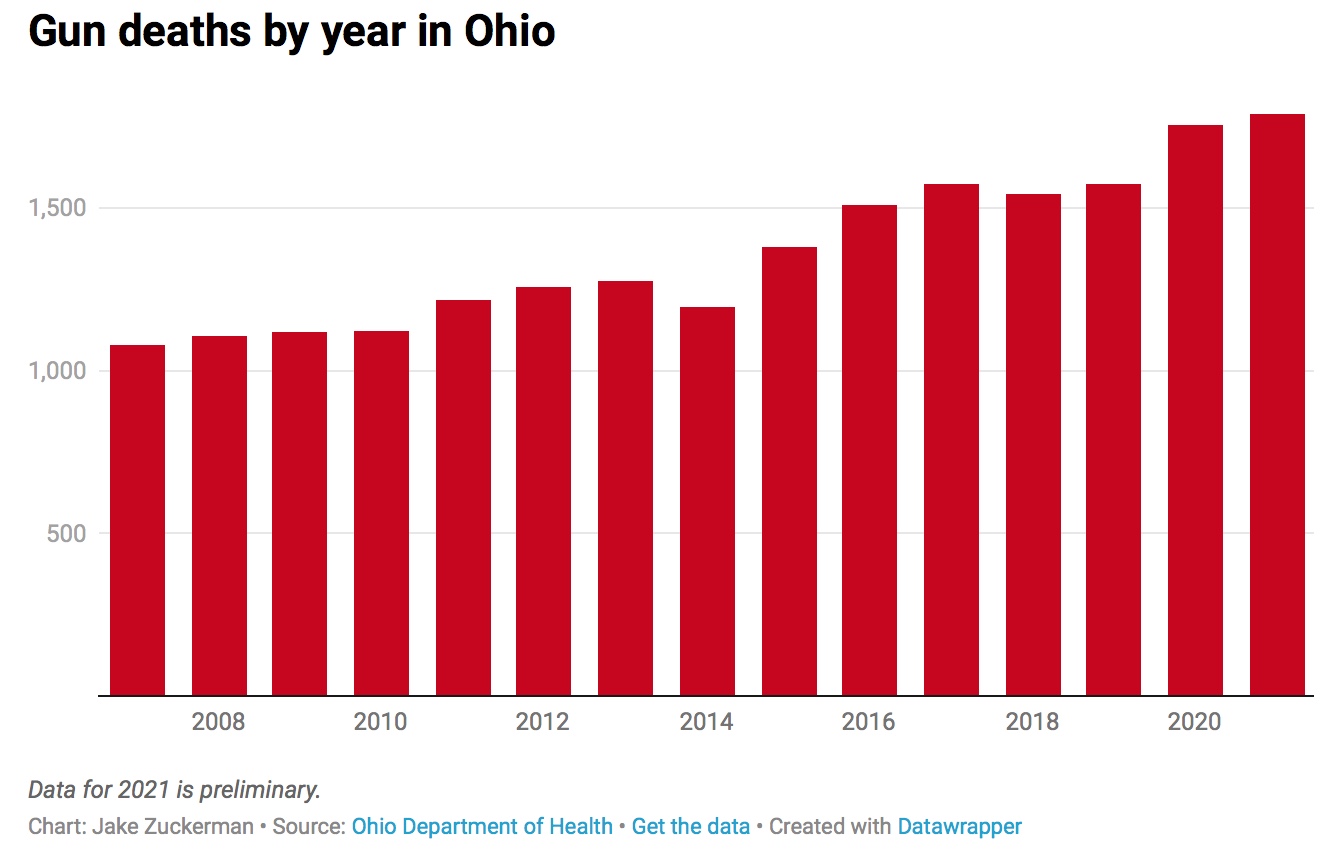
    According to the Health Policy Institute of Ohio, between 1999 and 2020 there have been large increases in annual rates of homicides (123%) and suicides (49%) in the state. While the prevalence of guns in suicides is steady, they’re becoming increasingly prevalent in homicides.

    However, gun supporters often point to a study published in the American College of Surgeons that didn’t identify any significant association after states adopted looser gun policies.

    In a statement, House Minority Leader Allison Russo criticized DeWine, emphasizing the thousands of concealed carry permits that are denied, revoked or suspended every year under the current system. While permitless carry doesn’t change who can possess a gun, it removes an additional layer of scrutiny within the current system.

    “Removing these responsible and reasonable precautions compromises the safety and security of our communities and law enforcement,” Russo said. “SB 215 completely betrays Ohioans who have called time after time for commonsense gun safety legislation, not extreme bills that endanger the lives of our children and families. Republicans have made it crystal clear that they value the approval of the gun lobby more than the lives of Ohioans and the police officers who protect our communities every day.”

    Gary Wolske, president of the Fraternal Order of Police of Ohio, spoke out against the law in a Columbus Dispatch column. He argued the requirement to seek a permit is a reasonable one that strikes a balance between constitutional rights, officer safety, and public safety. The new law also removes a requirement under current law that those carrying a weapon “promptly” notify an officer that they’re armed. Instead, people who are carrying need only inform an officer they’re armed if the officer asks.

    Photo by Matthew Hatcher/Getty Images

    The Ohio Supreme Court has held since 2003 that “there is no constitutional right to bear concealed weapons.” While the right to bear arms, the court said, is fundamental, it is not without limitations.

    Since then, Ohio has steadily loosened its gun laws.

    Ohio first enacted a concealed program shortly thereafter in 2004. Several of its sponsors at the time remain in office including (by their current offices) Auditor Keith Faber, Lt. Gov. Jon Husted; congressmen Bob Gibbs, Jim Jordan and Bob Latta; state Sens. Bob Peterson, Tim Schaffer and Kirk Schuring; and state Reps. Jamie Callender, Bill Seitz, Scott Oelslager, Tom Patton and Jean Schmidt.

    Two years later, the legislature passed a law preemptively blocking Ohio cities from passing any gun restrictions stricter than those established by the state. The law was used to squash lawsuits from Ohio cities including Clyde, Cleveland and Cincinnati seeking to regulate guns within their borders.

    In March 2015, a new law reduced the required training hours to receive a concealed carry permit to eight from 12. Early last year, Gov. Mike DeWine signed a “stand your ground” bill into law, which removes the legal requirement that a person try to retreat from a perceived attack before responding with lethal force.

    The governor announced passage of the permitless carry bill in a news release comingled with several other bills. He didn’t offer any comment.

  • GOP redistricting attorneys ask court to make decision on congressional map after 2022 election

    GOP redistricting attorneys ask court to make decision on congressional map after 2022 election

    Ohio Senate President Matt Huffman and Ohio House Speaker Bob Cupp, both Lima Republicans. Official photos.

    BY: SUSAN TEBBEN – Ohio Capital Journal


    Legislative leaders and the state’s chief elections officer dug their heels in on continuing on with the May primary election, even as Ohio groups seek invalidation of the latest congressional redistricting map.

    Secretary of State Frank LaRose, Senate President Matt Huffman and House Speaker Bob Cupp have responded to requests by the League of Women Voters and a group of Ohio citizens represented by the National Redistricting Action Fund that the Ohio Supreme Court invalidated the newest congressional district map.

    Huffman and Cupp submitted their response together, starting by saying the Ohio Redistricting Commission “does not exist to simply rubberstamp redistricting plans favored by (court challengers).”

    “It is entitled to exercise reasonable discretion in balancing the highly complex factors that go into congressional redistricting,” attorneys for Cupp and Huffman wrote.

    While also arguing that the congressional map passed at the beginning of March is constitutional, Cupp and Huffman’s attorneys took the stance that the commission is the only authority in map-making in the state.

    The LWV and NRAF had differing opinions on next steps if the court invalidated the map, with the NRAF asking the court to take over, but the LWV saying the map should be sent back to the courts for very specific revisions.

    The legislative leaders argued that the Ohio Redistricting Commission is a “creature of the Ohio Constitution,” but with duties provided to it “independent of any other branch of government in Ohio.”

    “It is the commission and the general assembly who solely possess the legislative authority to create legislative and congressional districts,” attorneys wrote.

    It’s not fair, nor is it in line with the law, to compare the commission-adopted map to other maps that may have been submitted to the commission, but were never brought up for a vote or formally considered, Cupp and Huffman state in their court filing.

    In their objections to the map, challengers had offered up maps from Stanford and Harvard political science professors as models for a replacement map.

    Republican leaders flatly disagreed with the idea.

    “It is now plainer than ever that it is dangerous and disingenuous to base Ohio constitutional law and the voting rights of millions of citizens on this untested and contradictory evidence conceived of by paid-for-hire mathematicians and social scientists,” Cupp and Huffman argued.

    LaRose echoed the comments made in Cupp and Huffman’s filings that the map is constitutional and “needs no revision.”

    But if the court rejected the map, LaRose said, it does not have the power to “unilaterally implement its own congressional district plan.”

    “Again, Secretary LaRose will administer the 2022 congressional primary and general elections in accordance with a constitutional congressional district plan,” attorneys for LaRose wrote.

    In this vein, Cupp and Huffman’s attorneys asked that the court “defer any action” on the congressional map until after the 2022 election.

    They blamed the new state redistricting process, along with “significant logistical challenges” and even the U.S. Census delays brought on by the COVID-19 pandemic for exacerbating an “already challenging scenario” and leading to the adoption of the new congressional plan only days before the candidate filing period for the May 3 primary.

    The Ohio Supreme Court is considering court challenges for not only the congressional map, but also the legislative maps. The ORC adopted the maps one week after the court-ordered February 17 deadline, risking contempt charges.

  • Governor appoints former lawmaker to elections board who hyped up 2020 voter fraud claims

    Governor appoints former lawmaker to elections board who hyped up 2020 voter fraud claims

    Christina Hagan-Nemeth. Source: Ohio General Assembly.

    BY: JAKE ZUCKERMAN – Ohio Capital Journal

    Gov. Mike DeWine appointed a former lawmaker to a state board that oversees political campaigns who has publicly amplified debunked notions of election fraud in 2020.

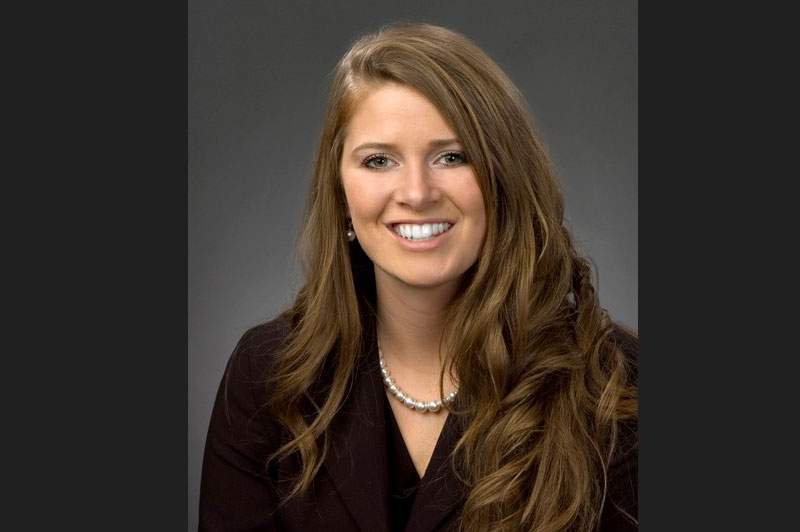
    Christina Hagan-Nemeth, who served in the Ohio House before mounting two unsuccessful congressional bids, was appointed Tuesday to the Ohio Elections Commission. Her term runs through the end of 2026.

    A review of her public social media posts and talk radio appearances show she amplified the unsupported and repeatedly discredited claim that President Joe Biden somehow stole the election from Donald Trump. With the appointment, she now sits on a panel responsible for reviewing allegations of campaign finance violations and other offenses. The commission can levy fines, make criminal referrals, and intervene in campaigns at politically sensitive junctures.

    “The American people are entitled to an honest election,” Hagan wrote on social media Nov. 7, 2020, the day TV networks first projected Biden would win enough states to clinch the electoral college.

    “All legal votes should be counted. If you think these are controversial statements you must not agree w/safeguarding the sacred value of our individual votes as Americans.

    Ten days later, she made similar comments.

    “I’ve never prayed for fraud. But I have prayed that if it exists and especially to the degree to which its exposure can change the media’s projected outcome of the election…That it should be brought to light in a profound and irrefutable way,” she wrote. “I’m on team #EveryLegalVoteShouldCount.”

    Hagan, a Republican, did not respond to a phone call, text, or message to her personal Facebook account.

    DeWine has walked a tightrope since 2020 of denying the existence of widespread voting fraud but refraining from criticism of Trump — the leading proponent of the “stop the steal” movement. Speaking to CNN’s Jake Tapper on Jan. 3, 2021, DeWine refused to answer when asked why so many people believe that widespread election fraud occurred in 2020.

    He didn’t answer questions about Hagan’s statements, only noting through a spokesman that her appointment was recommended by Republican leaders in the state House and Senate.

    On Jan. 6, 2021, a crowd of hundreds of Trump supporters, swept up in his claims of a stolen election, violently stormed the U.S. Capitol seeking to halt certification of the 2020 election. Over the course of about seven hours, the attackers injured 114 police officers and caused about $1.5 million in damages, according to a U.S. Government Accountability Office report. Several officers died in the aftermath, including four by suicide. A Trump supporter was shot and killed after crawling through a transom window toward members of congress.

    Two weeks later, Hagan posted to her Facebook page an article written by Tony Perkins, leader of the Family Research Council, an anti-LGBTQ organization. The article depicts some Jan. 6 rallygoers as “peaceful protesters who desperately wanted to be counted.” Others, it states, weren’t peaceful but “were just as concerned about the future of elections after what happened in November.”

    Discussing the one-year anniversary of the riot on a conservative talk radio show, Hagan mocked a comment from Vice President Kamala Harris comparing Jan. 6 to other hallowed days in American history like 9/11 or the attack on Pearl Harbor.

    “I think the most dramatic word that we can accurately use [to describe Jan. 6] would be a riot, but not even, because there were really — nothing was defamed, nothing was attacked to any degree,” she said.

    In February 2021, Hagan shared an article from a conservative news outlet about the Supreme Court’s review of election fraud lawsuits.

    “SCOTUS now adds ELECTION FRAUD LAWSUITS to List of Cases To Be Considered… Not Loving the timing… But better late than never,” she said.

    She made similar comments a few days later, saying it “could get interesting” that the Supreme Court is scheduled to consider voter fraud cases in three states Biden won. The Supreme Court denied the request to consider the cases later that month.

    On a few occasions, she has accused Democrats of election fraud. In May 2020, the U.S. House passed legislation that would have prohibited states from requiring any form of identification to obtain an absentee ballot. Hagan said this shows that Democrats are trying to “rig the next election.” She made similar comments on talk radio about two bills that would overhaul election administration via prohibiting voter identification requirements, reinstating parts of the Voter Rights Act that were struck down by the Supreme Court, and more.

    “They are always, always aiming to undermine,” Hagan said. “And every single word that comes out of their mouth is orchestrated for that intentional destruction.”

    Elections commission

    The Ohio Elections Commission is a seven-member panel comprised of three Republicans, three Democrats, and one independent.

    On Tuesday, DeWine also appointed John Lyall, a Democrat, to serve on the commission.

    As recently as last week, Hagan circulated petitions to run for congress, according to the Cleveland Plain Dealer. But on March 4, she publicly announced she wouldn’t run for the seat.

    She first won office to the Ohio House in 2010 at the age of 21, where she served for eight years, the constitutional maximum. In 2018, she lost in a congressional primary to current Rep. Anthony Gonzalez — one of 10 Republicans who voted to impeach Trump in connection with Jan. 6 and has denounced the idea that the election was stolen.

    At the time, she used a campaign ad calling for a need to “secure our borders” and stop illegal immigration from Mexico. Snopes, the fact checking website, later reported the ad used footage from an Italian TV network showing Moroccan immigrants crossing into Spain.

    Trump endorsed Hagan in her 2020 run for the same seat, according to WKYC.

  • Congressional map challengers ask court to stop map use

    Congressional map challengers ask court to stop map use

    Photo: Courtesy of the Ohio Supreme Court

    Attorneys for League of Women Voters proposed that the commission be given the maps again, but with specific instructions to fix District 1 in Hamilton County

    BY: SUSAN TEBBEN – Ohio Capital Journal


    The League of Women Voters and a group of Ohioans represented by a national redistricting group have asked the Ohio Supreme Court to keep the state from using recently approved congressional maps.

    “Having embarked on its latest map-drawing journey with an irredeemably broken compass, it is no surprise that the (Ohio Redistricting) Commission has once again found itself lost,” Ohioans led by the National Redistricting Action Fund stated in their court filing.

    The group called the newest map – which breaks the state down into 10 Republican districts, three Democratic districts and two “tossup” districts  – “an extreme partisan outlier again,” putting the state at a “partisan advantage at odds with Ohio’s voting patterns.”

    Because of this, they ask the court to strike down the Ohio Redistricting Commission’s second try at congressional districts, move the candidate filing deadline that was March 4 and “if necessary, itself adopt a constitutional plan as early as March 17.”

    “At this point, the commission cannot be trusted behind the wheel,” attorneys for the group wrote.

    The League of Women Voters stopped short of asking for the court to take over the process, saying “it is premature at this juncture for the court itself to implement a plan.”

    Attorneys for the Ohio league proposed that the commission be given the maps again, but with specific instructions to fix two districts: District 1 in Hamilton and Warren counties and District 15, which stretches from the western and southern sides of Franklin County to the Southern half of Shelby County.

    The LWV, represented by the ACLU of Ohio, also argued an alternative plan written by Harvard professor Dr. Kosuke Imai was brought up to to the commission “but was ignored.”

     A congressional redistricting plan proposed by Harvard professor Dr. Kosuke Imai. The League of Women Voters said this map was “ignored” by the Ohio Redistricting Commission, despite following constitutional redistricting requirements.

    The plan had a 10-6 partisan breakdown, but was never brought up for a formal vote by the commission.

    In court documents included with the LWV’s objection to the newest congressional map, Dr. Imai said his map “demonstrates that it is possible to generate a redistricting plan that is free of partisan bias and compactness problems while complying with the other redistricting criteria.

    Imai was also mentioned in the legislative redistricting court battle, when attorneys said the professor conducted 5,000 simulations of Ohio districts and never came up with the same amount of GOP partisanship in any of the simulations.

    Attorneys for the National Redistricting Action Fund said Ohio’s Republican caucus chose to “let the clock run out” on any efforts by the General Assembly to create a congressional plan, and were slow to act even as the ORC began its first week back after the GA made no decision.

    “The General Assembly seemingly took no action to even attempt to draw a plan itself because it was unwilling to attempt to reach the bipartisan agreement that would be necessary to pass emergency legislation,” Adams’ attorneys wrote.

    After the commission adopted a GOP-created map along party lines, the map challengers say Secretary of State Frank LaRose moved forward with “implementing the new gerrymandered plan,” despite the fact that it hadn’t been (and still hasn’t been) given the go-ahead by the state supreme court.

    The NRAF also argues the map continues to violate the constitution, specifically the provision prohibiting the favoring or disfavoring of one political party over another.

    “This disparity between statewide vote share and congressional seat share is astounding,” attorneys wrote.

    Asking for the court to take over the process is not a new argument state redistricting challengers have made. Attorneys arguing against legislative maps also asked the court to take charge after three attempts by the redistricting commission.

    The NRAF also asked the court to postpone “relevant election deadlines” for the May 3 primary, saying the court has “broad authority to issues orders postponing election deadlines to address harm that would occur if elections were to proceed under an unconstitutional map.”

    Republican commission members have said the power to change elections lies with the General Assembly.

  • COVID vaccination hits record lull in Ohio; less than 2 in 3 are vaccinated

    COVID vaccination hits record lull in Ohio; less than 2 in 3 are vaccinated

     A Columbus Fire Department member dons gloves while working at a mass vaccination site at the Celeste Center in Columbus. Photo by Jake Zuckerman, Ohio Capital Journal.

    BY: JAKE ZUCKERMAN – Ohio Capital Journal

    Ohio’s COVID-19 vaccination campaign has hit a new lull after two months of record low numbers of residents getting vaccinated.

    While the concept of diminishing marginal returns would suggest this is to be expected, Ohio remains under-vaccinated on a national and international scale. Just 62% of state residents are vaccine-started, and 57% are vaccine completed.

    Ranked by state, Ohio is the 8th least vaccine-started in the nation and the 17th least fully-vaccinated, according to data from The New York Times. Americans nationally, despite widespread access to vaccines, are about 76% vaccine-started. That’s below a list of countries both wealthy and poor including Cuba (94%), Chile (93%), Canada (86%) and Vietnam (81%), according to Our World in Data, a global, public dataset tracking the pandemic. Ohio is about as vaccine-started as Pakistan (63%).

    While COVID-19 cases, hospitalizations and deaths are significantly down from the winter surge, vaccination is still key for the present and future. It provides powerful, direct protection to the recipient. It also, when enough people in a community are vaccinated, provides indirect protection for those who aren’t vaccinated or have weaker immune systems.

    The consequences of the low vaccination rate are simple and lethal. About 22,000 Ohioans have died of COVID-19 since Jan. 1, 2021. About 95% of them were unvaccinated. In the same period, 64,000 Ohioans were hospitalized with the disease. About 93.5% of them were unvaccinated.

    At the more local level, more than half of Ohio’s 88 counties harbor populations where less than 1 in 2 residents are vaccinated, according to an analysis of state data. These counties tend to be more rural and Appalachian.

    Like other frontiers of the pandemic, vaccination became mired in partisan politics with real human consequences. On average, former President Donald Trump won 53% of the vote share statewide in the 2020 elections. But in Ohio counties that are less than 50% vaccinated, Trump won on average 74% of the votes.

    While COVID-19 deaths concentrated in populous, urban centers early in the pandemic, the paradigm shifted after vaccines became available, according to the Pew Research Center. By late 2021, death rates in the counties Trump won most decisively were about four times those of President Joe Biden’s winningest counties.

    On a statewide basis, older Ohioans are vaccinated at significantly higher rates than their younger counterparts. For instance, those 65 and older are between 80% and 85% vaccinated. Those aged 20 to 49 are between 51% and 63% vaccinated.

     Source: Ohio Department of Health. Graph by Jake Zuckerman.

    Ohio schools require vaccination as a term of enrollment against a broad spectrum of infectious diseases like measles and chicken pox, yielding immunization coverage between about 75% to 95% depending on the disease.

    However, the conservative state legislature has signaled an unlikeliness to mandate coronavirus vaccination.

    Republicans in both chambers of the General Assembly passed legislation in 2021 blocking schools and colleges from mandating receipt of COVID-19 vaccines that are only federally approved on an emergency basis. Both the Moderna and Pfizer vaccine have since received full federal approval.

    The Ohio House passed legislation prohibiting a wide range of employers, businesses and schools from requiring receipt of any vaccine, not just the COVID-19 vaccine. The Senate has not voted on the bill.

  • With inflation, supply-chain kinks, plight of Ohio food banks grows

    With inflation, supply-chain kinks, plight of Ohio food banks grows

    Shelves of canned foods sit partially empty. Photo by Justin Sullivan/Getty Images.

    BY: MARTY SCHLADEN – Ohio Capital Journal

    For millions of Ohioans, world events are making it harder to fill their pantries and refrigerators, an official who helps oversee the state’s food banks said on Wednesday. Those pressures will only increase pantries’ need for state assistance, she said.

    The coronavirus pandemic had already put pressure on the state’s food banks as demand increased and supply-chain disruptions made it harder and more expensive to get food. Now the Russian invasion of Ukraine is poised to further squeeze global flows of wheat and fuel, exacerbating those trends, said Lisa Hamler-Fugitt, executive director of the Ohio Association of Foodbanks.

    Further complicating the picture is that the new scarcity of food is slashing commercial contributions to organizations that supply the neediest Ohioans, making them desperate for help.

    “I would say that is an understatement,” Lisa Hamler-Fugitt said. “Overall, donations are down substantially. Before we went into the pandemic, private-sector donations from food manufacturers, wholesalers, retailers and local food and fund drives would range from 45% to 50 % of all we had to distribute. Since the pandemic that has declined dramatically.”

    Lisa Hamler-Fugitt

    Now the portion donated by commercial suppliers is closer to 33% at the same time that costs to purchase and transport food are growing. Consider:

    • Eggs that cost food banks 40 cents a pound in 2019 now cost 94 cents, a 135% increase.
    • Ground beef that cost $2.14 a pound in 2019 costs $2.84, a 33% increase.
    • Pasta has gone from 42 cents a pound in 2019 to 70 cents now, a 66% hike.

    Also, a $2,000 per-child tax credit expired in December, plunging an estimated 10 million American children and 280,000 in Ohio back into poverty. Hamler-Fugitt said that of families receiving the credit, 59% said food was their No. 1 expense, so its expiration is increasing demand at Ohio food banks even as costs go up.

    “Families that were standing in grocery store lines are back in our food pantries,” she said.

    Federal data appear to support that claim. The Census Bureau’s Household Pulse Survey estimated that about a month after the credit expired, 339,000 Ohio families with children sometimes or often didn’t have enough to eat in the past seven days. 

    Compare that to the period from Sept. 15-27 when the credit was in full force. Then an estimated 264,000 Ohio families with children sometimes or often didn’t have enough to eat, the survey said.

    If those estimates are accurate, that means food insecurity for families with children has leapt 28% since the expiration of the child tax credit.

    In addition to all the other inflationary pressures on food, Hamler-Fugitt said she suspected another: price gouging.

    “I hear from the farmers saying, ‘We’re not making any more money.’ How is that possible?” she said.

    In his State of the Union Address Tuesday, President Joe Biden echoed that suspicion. He said concentration in the meatpacking industry is alarmingly high.

    “Guess what, you got four basic meat packing facilities,” he said. “That’s it. You play with them or you don’t get to play at all. And you pay a hell of a lot more. A hell of a lot more because there’s only four.”

    The White House estimates that those four companies — JBS, Cargill, National Beef Packing and Tyson Foods — control 85% of beef packing in the United States, 54% of poultry and 70% of pork. The administration says it’s making an effort to promote competition in those sectors and across the economy. 

    But even if those efforts are eventually successful, Hamler-Fugitt said Ohio food banks need help more quickly. She praised the support they’ve gotten from Gov. Mike DeWine throughout the pandemic, but said the food centers need $183 million for supplies, operating costs and to upgrade their infrastructure.

    Ohio has more than $600 million in unexpended funds from the American Rescue Act and about $500 million more is on the way, Hamler-Fugitt said. A DeWine spokesman didn’t immediately respond to a request for comment.

  • Ohio pensions have $38 mil in Russian-owned gas company; $147 mil more in region

    Ohio pensions have $38 mil in Russian-owned gas company; $147 mil more in region

    BY: JAKE ZUCKERMAN – Ohio Capital Journal

    Two Ohio public employee pension programs currently have a combined $38 million invested a Russian state-owned natural gas company, while another pension program has $147 million invested in the region.

    The Ohio Public Employees Retirement System (OPERS) has about $25.1 million invested in Gazprom in a combination of stocks and bonds, according to a spokesman.

    The School Employees Retirement System (SERS) has about $13 million invested in the company, according to a spokesman.

    The School Teachers Retirement System (STRS) did not offer specifics on Gazprom, but a spokesman said it has about $147 million in Russia and Ukraine.

    Gazprom is a natural gas driller, shipper, and seller, controlled by the Russian government and among the largest companies in the world.

    Some investors have pulled out of the company in the wake of the Russian invasion of Ukraine, which has included attacks on civilians. For instance, Shell announced Monday it’s ending an “equity partnership” in multiple Gazprom ventures. BP announced it’s pulling out of investments with a different Russian state-owned gas company. The U.S. and other western countries have imposed sanctions on Gazprom’s Nord Stream 2 pipeline and other sweeping penalties aimed at Russia.

    Gazprom’s stock price, meanwhile, has plummeted.

    None of the Ohio pensions announced plans to divest, and they all emphasized that their Gazprom and Russian holdings are but a small percentage of their investments.

    For instance, OPERS spokesman Michael Pramik said its $25.1 million in Gazprom amounts to .02% of its $123.8 billion in investments. Pramik didn’t answer directly whether the pension plans to divest, but said it is in compliance with federal restrictions on foreign economic activity.

    “On a personal level, we are disturbed by the events taking place this week and hope for a peaceful resolution and the safety of the Ukrainian people,” he said.

    Spokesman Tim Barbour said SERS’ $13 million in Gazprom amounts to .0007% of its $18.2 billion in investments. He noted the pension’s stake in Gazprom has decreased from $26.5 million in 2014. He said the pension has “encouraged” portfolio managers to find alternate choices.

    “At this time, we have not determined if additional measures will be implemented in our investment strategies due to Russia’s unprovoked military attack on sovereign Ukraine,” he said.

    The Ohio Police and Fire Pension Fund does not have any investments in Gazprom, per a spokesman. The Ohio Highway Patrol Retirement System said the same.

    In a letter Wednesday, Attorney General Dave Yost asked the pensions to divest from Russian investments.

    “I write today to request with exceptional urgency that you inventory your Russian equities and move to divest them with all deliberate speed, if you have not already done so,” he said. “This is a matter of moral imperative, for Russia’s aggression must not be supported with Ohio capital — particularly the retirement assets of Ohio public employees, some of whom are of Ukranian descent.”

  • Ohio clinics sue to bar new abortion bill

    Ohio clinics sue to bar new abortion bill

    Protesters of a bill to promote a total abortion ban with the overturning of Roe v. Wade demonstrate outside the Ohio Statehouse in September. Photo by Susan Tebben

    BY: SUSAN TEBBEN – Oho Capital Journal

    A lawsuit has been filed against the newest state abortion restriction and its regulation of doctors’ ability to practice medicine.

    The ACLU, Planned Parenthood Southwest Ohio Region and Women’s Med Dayton are asking a Hamilton County Common Pleas Court to keep the state from enforcing a law to create “onerous and unwarranted” restrictions to health care in Southwest Ohio in particular.

    The Ohio General Assembly passed Senate Bill 157 in December, and the law is set to be effective March 23, if the court doesn’t fulfill the lawsuit’s request.

    If the law goes into effect, doctors who work with state public universities or medical centers will not be allowed to also be affiliated with abortion clinics in the state.

    Abortion clinics that conduct surgical abortions are considered “ambulatory surgical facilities,” also the name of other outpatient facilities where procedures can be done.

    Clinics who conduct abortions are required to have a “written transfer agreement” with a local hospital to which a patient can be transferred should medical care “beyond the care that can be provided at the ambulatory surgical facility” is needed.

    Those hospitals need to be within 30 miles of the facility.

    To obtain a variance to the written transfer agreements, doctors are required to have hospital admitting privileges within those 30 miles. But these variance agreements could be made more complicated by this new law, originally pushed by bill sponsors as a way for the Ohio Department of Health to track so-called “failed abortions,” which the state already defines as abortion procedures in which the child is alive when removed from the pregnant person’s body.

    So-called “failed abortions” are rare, and state data shows none of the abortions conducted after 19 weeks – still not considered a gestation period when a baby would survive outside of the womb – were on viable pregnancies.

    In the new lawsuit, doctors argue not only would the law create constitutional conflicts by singling out abortion providers, but it would also keep physicians from being able to “operate their businesses and pursue their professions,” including caring for their patients.

    “Because of SB 157, many patients seeking procedural abortions will be significantly delayed in accessing this vital, time-sensitive and constitutionally-protected health care until later in pregnancy, when the procedure not only carries greater health risks, but is also more expensive,” the lawsuit states.

    The Ohio Department of Health already requires abortion clinics to have at least four backup physicians to obtain the medical variance agreement, something that’s been in place since 2015.

    That, alone, is a problem when there aren’t enough doctors to allow for four backup doctors.

    “The hostile climate in Southwest Ohio makes it extremely difficult to find even one backup doctor to support a variance,” the lawsuit states. “There has been a national campaign to harass and shame the Dayton doctors who provide backup services to patients of WMD.”

    If variances are lost, licenses to practice as an ambulatory surgical facility are lost. That would mean a lose of health care services in Southwest Ohio, meaning the patients would be the ones suffering.

    “If plaintiffs’ ASF licenses are revoked, people needing procedural abortions would be forced to travel hundreds of miles round-trip to the next closest procedural abortion providers, and, due to a statutory waiting period, make that trip twice, or stay overnight, in order to access procedural abortion,” the clinics wrote in the lawsuit.

    The fact that the lawsuit has been assigned to Judge Alison Hatheway could mean good things for abortion clinics. Hatheway has been the judge on two other lawsuits fighting against state abortion restrictions, and in both cases Hatheway has ruled in favor of temporary stops to state legislation clinics said hampered their right to provide care.

    Most recently, Hatheway stopped a fetal tissue disposal law for a second time, saying clinics are “substantially likely to succeed” in their suit against an Ohio law that would require clinics to pay for burial or cremation of fetal tissue resulting from an abortion.

    In April of last year, the judge blocked a law restricting telemedicine abortions in the state.