Author: Loveland Magazine

  • Students defrauded by for-profit colleges to get millions in loan repayments

    Students defrauded by for-profit colleges to get millions in loan repayments

    BY: ARIANA FIGUEROA –  Ohio Capital Journal


    WASHINGTON — The U.S. Department of Education announced Wednesday that nearly 16,000 student borrowers would receive millions in loan repayments, after the department found that four private for-profit institutions made misleading claims about their job placement rates.

    “The Department remains committed to giving borrowers discharges when the evidence shows their college violated the law and standards,” U.S. Secretary of Education Miguel Cardona said in a statement.

    “Students count on their colleges to be truthful. Unfortunately, today’s findings show too many instances in which students were misled into loans at institutions or programs that could not deliver what they’d promised.”

    Cardona said this was part of the Department of Education’s targeted borrower defense policy, which provides relief to students who are found to have been defrauded.

    The four institutions include DeVry University, which is based in Illinois, but has 40 locations in 18 states; Westwood College, based in Colorado, which closed in 2016; ITT Nursing, based in Indiana, which filed for bankruptcy in 2016; and the Minnesota School of Business/Globe University, which closed in 2017.

    “Today marks the first findings against a school, DeVry University, that is open and still enrolling new students,” Federal Student Aid Chief Operating Officer Richard Cordray, representing the department, said during a call with reporters.

    Cordray said that students who attended DeVry University from 2008 to 2015 can file claims to the department. DeVry asserted that 90% of its students who graduated found employment, when the job placement rate was really about 58%.

    The department will approve $71.1 million in borrower defense charges for about 1,800 former DeVry students.

    “In this case, we reviewed considerable evidence showing that DeVry substantially misstated its job placement rates, and the likelihood of students finding new jobs in their field of study after graduation,” he said.

    Officials at DeVry could not be reached for comment.

    Cordray said that from 2007 to 2016, officials from ITT Technical Institute lied to students seeking to enroll in its associate nursing degree program.

    “The program was not accredited,” he said. “And students were unable to get the benefit they were promised from their courses (of) study.”

    The department plans to approve about $3 million to 130 students. This is the fourth time the department has issued discharges to students who attended that institution, for a combined $660 million in discharges for about 23,000 students who attended ITT Tech during those years.

    Student borrowers who attended the criminal justice programs at the Minnesota School of Business and/or Globe University will be entitled to full borrower defense discharges, department officials said. The department has already approved about $3 million in discharges for 270 students.

    The department is also approving $284.5 million in discharges to more than 11,900 student borrowers who attended beauty schools such as Corinthian Colleges, which closed in 2015, and Marinello Schools of Beauty, which closed in 2015.

    Cordray said the department also found that Westwood College misled student about graduate job placement rates of 80% or higher and falsely claimed that graduates would make salaries of $50,000 or more. The department found that the salary data was based on national federal data and that graduates of the institution made half or less of those salary claims.

    The Department of Education will approve about $53.1 million for 1,600 student borrowers who submit those claims.

    During the Biden administration, the Education Department has distributed more than $2 billion in borrower defense discharges.

    Last year, the department announced that more than 323,000 borrowers who have a permanent disability would receive $5.8 million in automatic student loan discharges.

    The Biden administration has resisted lawmakers’ call to cancel up to $50,000 worth of federal student loan debt per student. The Federal Reserve estimates that the total U.S. student loan debt is more than $1.75 trillion. The Department of Education owns about 92% of that student loan debt.

    White House Press Secretary Jen Psaki said during a Tuesday briefing that Biden has “forgiven $15 billion in student loans, benefiting more than 675,000 student loan borrowers since he took office.”

    As part of Biden’s campaign platform, he said he would forgive up to $10,000 per student in federal student loans, but he has not directed the Department of Education to make that change. Biden has said he wants Congress to put forth legislation to cancel up to $10,000 worth of debt per student for him to sign into law.

    Psaki also pointed to the pause on student loan repayment due to the coronavirus pandemic.

    “No one has been required to pay a single dime in federal student loans, and he extended the hiatus of payment until May to give people some extra breathing room,” she said.

  • Redistricting commission punts again, defies court order

    Redistricting commission punts again, defies court order

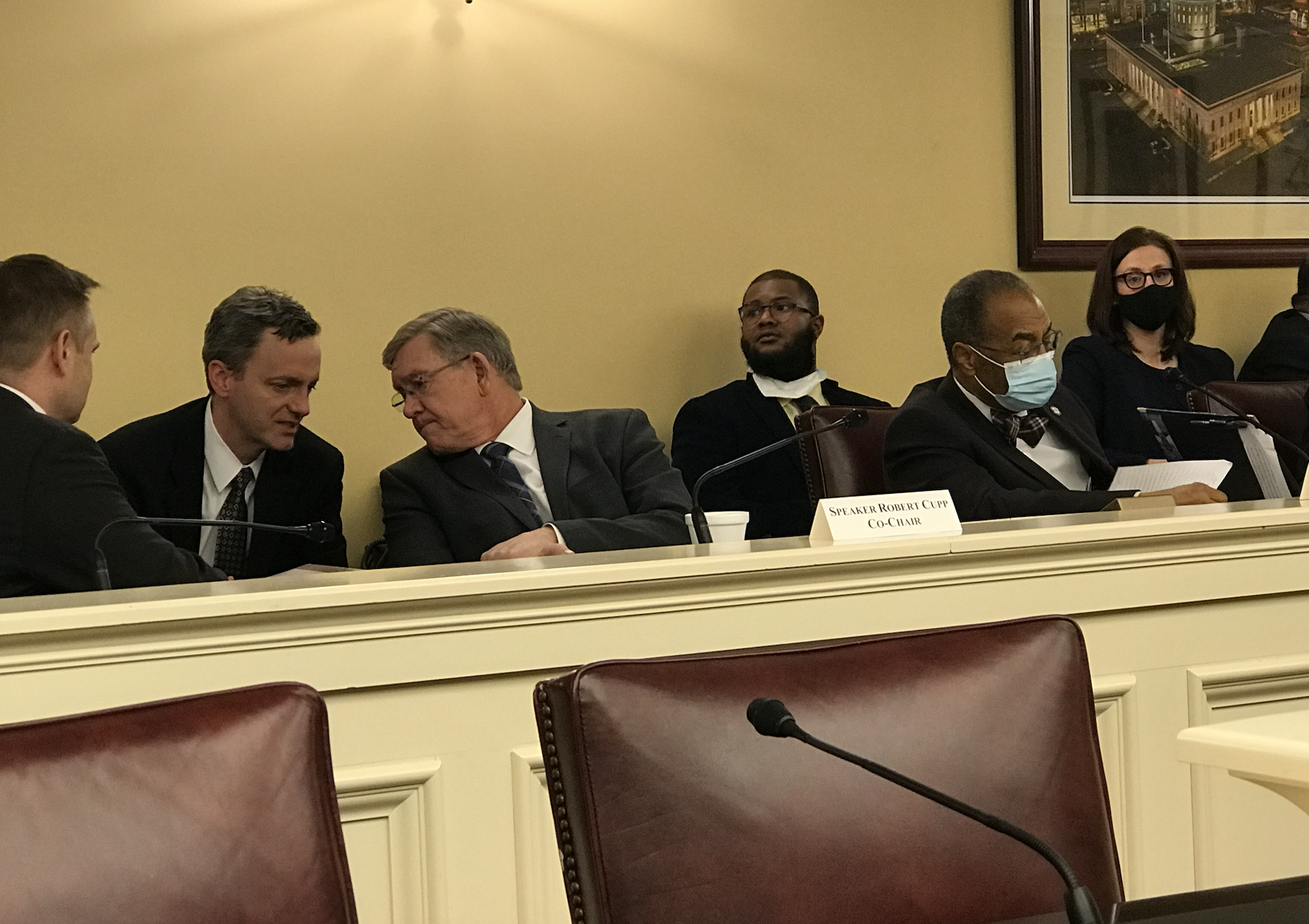
    The Ohio Redistricting Commission co-chairs, House Speaker Bob Cupp, second from left, and state Sen. Vernon Sykes, second from right, prepare to restart the Ohio Redistricting Commission meeting on Thursday after a recess. The ORC adjourned the meeting without sending a new legislative redistricting map to the Ohio Supreme Court, as they ordered it to do. (Photo: Susan Tebben, OCJ)

    BY: SUSAN TEBBEN –  Ohio Capital Journal


    Heated questioning and behind-the-scenes discussions between Ohio Redistricting commissioners led to a deadline-breaking decision to make no decision Thursday after the Ohio Supreme Court rejected two previous attempts at Statehouse maps as unconstitutional gerrymanders.

    The Ohio Redistricting Commission could now face contempt of court, and the state faces a constitutional crisis after the commission adjourned without adopting a legislative redistricting map to submit by their court-ordered Thursday midnight deadline.

    The GOP members of the commission, of which there are five, did not present a map during Thursday’s meeting. Senate President Matt Huffman, who did most of the talking for the majority party, said there was no reason to, because mapmakers had told commissioners that they could not comply with the supreme court’s directives and all the redistricting provisions of the constitution simultaneously.

    “Under these circumstances, I don’t believe the commission is able to ascertain a General Assembly district plan,” Huffman told the commission before they adjourned.

    Gov. Mike DeWine only spoke at one point during the meeting, which was as the impasse became clear, and a map did not appear to be forthcoming.

    He did not agree that the commission could leave without bringing a map before the court, and did not think that was what the commission should do anyway.

    “I don’t think we have the luxury of saying we’re just quitting,” DeWine said.

    After the meeting adjourned, DeWine doubled down on his opinion that the commission had an obligation, and a legal one at that, to produce some sort of map for the state’s high court to consider.

    I think it is a mistake for this commission to stop and basically say that we’re at an impasse. I don’t think that is an option that the law gives us.

    – Ohio Gov. Mike DeWine

    The commission was offered a map by the two Democrats on it with a 54-45 partisan breakdown, but GOP members voted down the measure along party lines after lengthy and tense criticism by Republicans, for the most part Senate President Matt Huffman.

    Taking the brunt of GOP criticism was House Minority Leader Allison Russo, who made the motion for the commission to accept the Democratic drawn maps.

    Huffman took the commission through the Democrats’ maps region by region, pointing out different GOP-incumbent districts that he said violated the constitutional provision prohibiting the favoring or disfavoring of one political party over another.

    He accused the Democratic caucus of racial gerrymandering in a few districts, specifically the Ohio Senate’s 25th District, made up mostly of Lake County, and House District 44, covering Ottawa and parts of Lucas County. Huffman accused the Democrats of gerrymandering by redrawing the districts and the communities therein to favor their candidates.

    Russo denied any existence of “packing and cracking,” the strategy of packing communities into a smaller area than necessary to benefit one party or another, or spreading a community out among a larger space than necessary to dilute its voting power.

    “What you’re asserting is just simply false,” Russo said.

    Throughout the meeting, she parried with Huffman and other Republicans, consistently asking the commission members to spell out specific constitutional violations in the Democratic maps.

    “If you have a map to propose that achieves this or suggestions to propose that address some of these concerns that you have, so far I have not yet seen a constitutional violation,” Russo said.

    When asked by Russo if the GOP had a map proposal to bring before the commission, Huffman hedged, saying he needed to finish his questions and “see how it goes.”

    He brought up the idea to “let the public decide” on the Democratic maps as he continued his dissection of the map, but said there were hours of testimony to refer to in lieu of more public hearings.

    “I’m not proposing additional public input,” Huffman said.

    What’s next?

    After the commission adjourned without doing as the Ohio Supreme Court asked, legislative leaders didn’t have a plan as to what would come next.

    “I don’t know; I don’t have a next step,” Huffman said.

    Cupp, a former Ohio Supreme Court justice himself, refused to speculate on what the courts might do, but said the commission will “try to keep working and if there’s some ideas that come forward on how to develop a legislative district map,” he said, the commission “would work very hard to do that.”

    Auditor Keith Faber made a motion to change the rules of the commission well into Thursday evening, after the commission went into a recess to discuss the Democrats’ presentation. The change, which was passed 6-1 with only Russo voting against the motion, allows the commission to reconvene at the request of three members of the commission. Those members do not have to be the co-chairs, and it does not have to be a bipartisan request.

    Co-chair state Sen. Vernon Sykes, D-Akron, confirmed that the court can not adopt the maps themselves, but as far as what happens next, he, too, was in the dark.

    He did, however, say it is possible the commission members could be held in contempt of court for failing to follow a court order.

    “I believe that is a possibility,” Sykes said.

    When asked if he would be okay with that happening as a consequence, he said he is “okay with us moving forward, whatever can be done to help us move forward.”

    When pressed on if that included contempt: “Including whatever we can do.”

    Constitutional scholars remain uncertain about the next steps of the process, mostly because the state hasn’t gone through it before.

    “This is a new process, and Ohio voters clearly wanted more collaboration and a more bipartisan process than we’ve seen so far,” said Mike Gentithes, associate professor who teaches constitutional law at the University of Akron.

    The University of Akron’s Seiberling Chair of Constitutional Law, Dr. Tracy Thomas, gave the outside perspective on the situation, saying it was “likely to end up in the courts for a while regardless of the outcome today.”

    Several states have invalidated maps because of partisan favoritism and sent them back for revisions without a solution for a stalemate.

    “In the absence of some constitutional mandate or overriding federal legislation, which we don’t really have, the line-drawing is part of the political process and subject to the usual majoritarian control,” Thomas told the OCJ.

    The Ohio Supreme Court is not likely to let this lack of action slide, in Gentithes’ opinion, and this could potentially lead to yet another overhaul of the process, since it seems the incentive to have 10-year maps with bipartisan agreement didn’t have the desired effect.

    “That might teach us how to restructure an amendment to actually have some teeth,” Gentithes said.

    The primary election is an entirely different bear, and Secretary of State Frank LaRose spent his short time speaking at the commission meeting impressing upon the commission the urgency of making decisions.

    “This challenge is not one that can be met with creativity, and grit and tenacity … instead this one is simply dictated by logistical deadlines,” LaRose said.

    Adding to the threat of legal trouble for the commission, without district lines, LaRose said the commission is in danger of missing a federal deadline to send absentee ballots to Ohio citizens who are overseas or in the military.

    “We are dangerously close to possibly violating federal law,” LaRose said.

    Cupp chuckled at a question about whether or not he accepted the idea of breaking federal law, saying, “I’m not okay with breaking any law.”

    The primary date is unlikely to change, in his mind, because of a lack of support for the idea in his chamber.

    “I don’t think in the House that there is a majority vote for moving the primary election at this time,” Cupp said. “Let alone, the two-thirds vote we would need for it to happen immediately.”

  • Zac Taylor Signs Contract Extension

    Zac Taylor Signs Contract Extension

    Hobson_Geoff

    Geoff Hobson

    Bengals.com Senior Writer

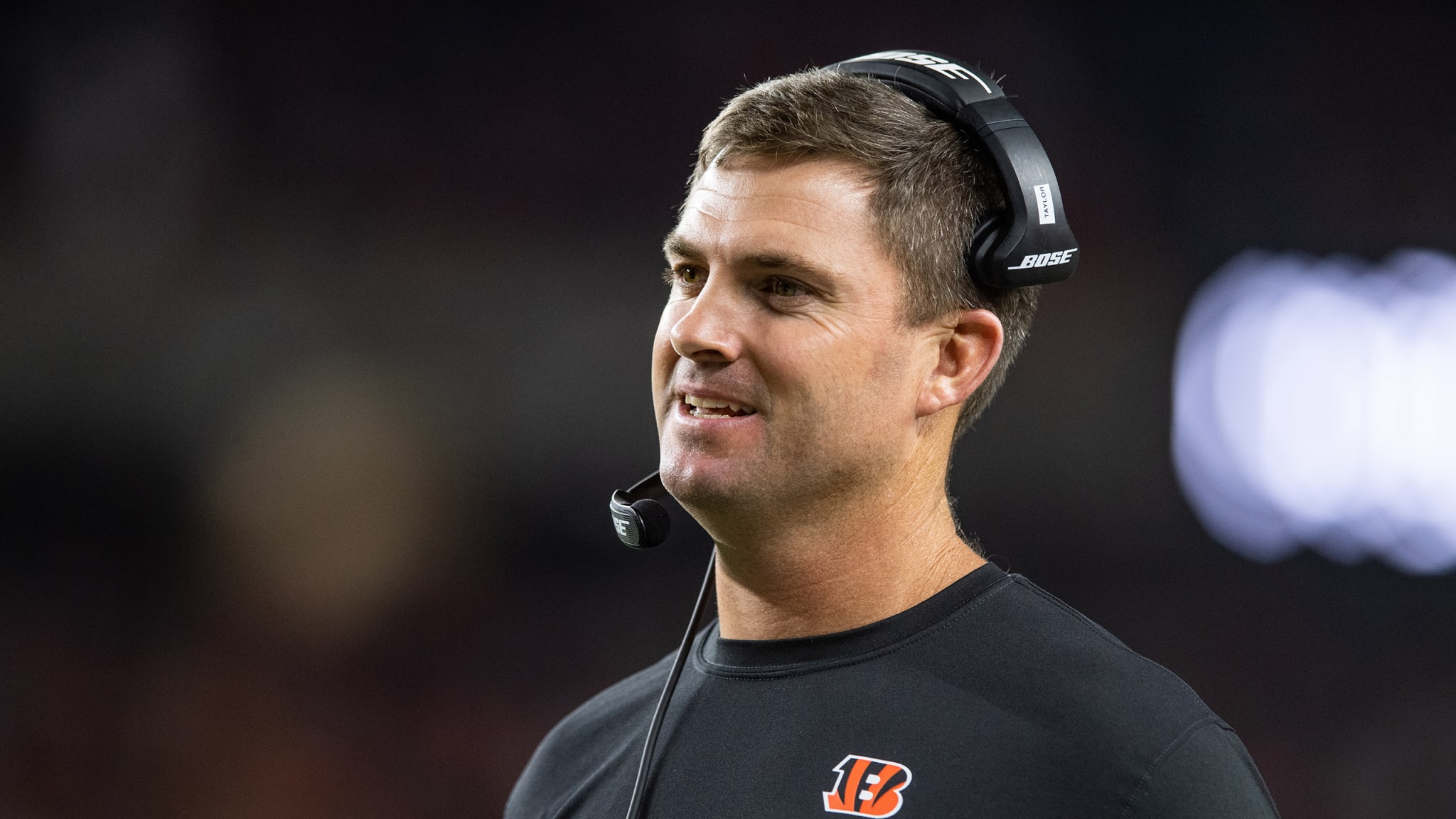
    Three years ago, the day after the Super Bowl, Zac Taylor signed on to coach the Bengals.

    Three days after this Super Bowl, Taylor signed an extension through 2026 before heading to Wednesday’s Washington Park rally honoring his Bengals and their just-miss loss to the Rams in Super Bowl LVI.

    “He’s a good young coach,” said Bengals president Mike Brown, back in his Paul Brown Stadium office handwriting thank you notes to his well-wishers.

    “Zac has come into the league and worked to develop the foundations for a winning program that can be successful over time. The fruits of Zac’s efforts were seen this year, and Zac is well-regarded by our players and coaches. I know the effort and passion Zac brings to the building and to our team, and I am pleased by his approach. And I think the city of Cincinnati sees him the way the players and I do. He’s brought excitement to the town and deserves credit and recognition for that.”

    It was Brown and the city that Taylor acknowledged with game balls after the Bengals won their first playoff in game in 31 years, a thrilling 26-19 Wild Card win in a sea of sound supplied by the largest Paul Brown Stadium crowd ever.

    After linebacker Germaine Pratt’s interception at the Bengals 2 with 12 seconds left, Taylor pointed to Brown’s patience through the 6-25-1 record of his first two seasons. Then he went to Mount Lookout Tavern to hand out some game balls to fans, igniting a playoff tradition. 

    “If I coached in any other organization in football, I probably wouldn’t be here right now in my third year. That’s the truth,” Taylor said.

    The patience paid off when a team that lost 13 one-score games in that stretch became the first team in history to win three straight postseason games by just 13 points.

    And after Taylor began his career unable to win his first 15 road games, he delivered the franchise’s first two road playoff victories.  

    “He’s excelled managing the team. When he first started, he was someone who had dealt with one side of the ball. I think he’s learned to manage the whole thing,” said assistant head coach and special teams coordinator Darrin Simmons.

    “It just comes from experience. He has a great way with our players. When he talks to them, it’s heartfelt. It’s to the point, but heartfelt and everybody listens to what he says and they take what he says to heart. It’s well thought out. It’s structured. All the guys that matter are listening. He’s also helped select the right guys to build the foundation and get the culture he wants.”

    220122-Burrow-Joe_dropback

    Mike Brown spent his first years in pro football watching his father, Browns head coach Paul Brown, dominate the game in the 1950s with quarterback Otto Graham. That cemented his belief that the coach and the quarterback are at the top of the list when it comes to winning in the NFL and he’s got faith in the team of Taylor and Joe Burrow.  

    Then as he helped his father build the expansion Bengals, he saw how patience could be a virtue.

    “I watched what he did. He was doing a good job when sometimes the results weren’t what we wanted,” Brown said. “There were reasons for it. Once we got Joe in the harness and some other guys playing the way they can play, we got to the point where we can pretty much play with anybody.”

    It was also not lost on the offensive-minded Brown that the 2021 Bengals scored 444 points in the 16 games the starters played. That was four short of the franchise record set by the iconic 1988 offense. Clearly, he likes the new wave offense Taylor runs. 

    “In this league, if you want to get to where you wish, getting to the Super Bowl, you need a lot of things,” Brown said. “All of those are important. But certain people, and I would be one, would say the most important part is being able to score. These days 30 points is at a level you’re able to win week in and week out. It’s something we’re shooting for in the future. We have the ability to do it if we’re going right. Zac is the reason we can do that. It’s his system. He teaches it effectively and our guys have bought into it.”

  • Dems: We’ll talk about primaries when fair maps are passed

    Dems: We’ll talk about primaries when fair maps are passed

    State Sen. Vernon Sykes, D-Akron, speaks with press alongside House Minority Leader Allison Russo on Friday. The Dem caucuses pushed their maps and pushed for cooperation in the ongoing redistricting process. (Photo: Susan Tebben, OCJ)

    BY: SUSAN TEBBEN –  Ohio Capital Journal

    After making technical fixes brought up by GOP members of the Ohio Redistricting Commission, Ohio’s Democratic caucuses in the legislature are again pushing for their maps to be a model for redistricting in the state.

    Legislative leaders of the party also still believe a May primary is possible, but until maps are produced with bipartisan agreement, they say they can’t come to the table to talk about other election options.

    House Minority Leader Allison Russo, state Sen. Vernon Sykes, and Democratic redistricting mapmaker Chris Glassburn met at a press conference on Friday to bring up their versions of legislative maps, but also to give Republicans an ultimatum on the process.

    “It is not a lack of ability that is delaying the process, rather Republicans lack the will to do what is constitutionally required to deliver the fair maps that Ohioans overwhelmingly demanded not once, but twice,” Russo said.

    As of Monday evening, spokespeople for Senate President Matt Huffman, Secretary of State Frank LaRose, Auditor Keith Faber and Governor Mike DeWine said they had no information about when the commission would be meeting.

    “Check with the co-chairs,” said Huffman’s spokesperson when asked if Huffman had heard about the commission or provided his own schedule to the commission.

    “Secretary LaRose is ready and willing to meet at the call of the co-chairs,” LaRose’s spokesman told the OCJ. “He is focused on explaining to the General Assembly the risks associated with trying to run a secure, accurate and accessible election on the current timeline without the finality of new districts.”

    A spokesperson for House Speaker and commission co-chair Bob Cupp did not respond to requests for comment on Monday.

    The maps presented on Friday were the same that were released on Tuesday, which Glassburn said didn’t hold major substantive changes. Mostly the maps contained corrections to precinct lines or single census blocks, some of which were requested by Senate President Matt Huffman asked for in the most recent meetings of the Ohio Redistricting Commission.

    Sykes, D-Akron, is the co-chair of the Ohio Redistricting Commission with House Speaker Bob Cupp, R-Lima. The two previous times the ORC met on legislative redistricting, Sykes and the Democrats expressed their frustration with a lack of transparency and a lack of concessions they say the Republicans were willing to provide as the map-making process went on.

    The two legislative redistricting plans that came from the ORC were passed on purely Republican majorities, and each time, Sykes left the process feeling as though Democrats weren’t heard and the GOP was unmovable.

    Still, Sykes said he is “hopeful” about the newest process, now with a court-ordered deadline of February 17. He said staff members have been “exchanging some information.”

    But despite only days until the deadline, Sykes acknowledged getting the commission together is still an uncertainty.

    “Right now, the reason we’re not meeting is because (the Republican commission members) can’t get organized on a date and time and place to do that, so we have not received any indications of what they plan on doing,” Sykes said.

    Gov. Mike DeWine, who convenes the Ohio Redistricting Commission and serves as a member, went to Los Angeles this past weekend to watch the Cincinnati Bengals compete in the Super Bowl.

    He held a media availability in LA on Thursday, “to talk about Super Bowl LVI, all things Cincinnati Bengals, and all things Ohio ahead of the big game on Sunday,” according to his office.

    A spokesperson for fellow ORC member and Senate President Matt Huffman, R-Lima, wasted no time in releasing a statement on behalf of the majority party regarding the Dem maps and criticism of the process.

    “I’m sure at this point, Democrats believe they could draw House and Senate maps in crayon and watercolor and the same four members of the court would approve their unconstitutional maps,” Senate majority director of communications John Fortney wrote in a statement.

    The only specific criticism Fortney gave of the Dem plan was the 1st Senate district, saying the new plan “shoved it into districts that will not have another Senate election until 2024.”

    One thing Dems said they’d be willing to wait on is deciding whether or not a May primary is possible. Russo still believe a primary can be held on May 3 as scheduled “if we take the necessary steps to promptly pass fair, constitutional maps.”

    Republicans, including Huffman, brought up the idea of holding two primaries to take the pressure off the Ohio Secretary of State’s Office and local boards of election should the redistricting process take them past filing deadlines and administrative timelines for the election.

    In court filings with the Ohio Supreme Court asking them to uphold the previous maps, GOP members of the ORC asked the court to allow them to use the unconstitutional maps for the primary or wait to file a decision until after the 2022 general election.

    The Ohio Supreme Court did not move the primary, but reiterated in their rejection of the revised legislative maps that the General Assembly “has the authority to ease the pressure that the commission’s failure to adopt a constitutional redistricting plan has placed on the secretary of state and on county boards of elections by moving the primary election, should that action become necessary.”

    The secretary of state’s office, which both Republicans and Democrats say they’ve met with, has expressed hesitancy to postpone the May 3 election, or to have two separate primaries.

    The nearest deadline for the election is March 19, when the Uniformed and Overseas Citizen Absentee Voting Act says absentee ballots for eligible Ohioans should be sent out. April 5 starts the early voting period for the state under the current election timeline.

    Rob Nichols, spokesperson for Secretary of State Frank LaRose, said discussions on the election are “important, complex and ongoing.”

    “We continue to engage in negotiations over redistricting with those involved,” Nichols told the OCJ.

    The press conference ended a week that started with multiple committee meetings in the House and Senate to discuss congressional redistricting, all of which were canceled as House Speaker Bob Cupp said the GA didn’t have the support needed to pass new maps, as ordered by the Ohio Supreme Court. With the deadline for legislative approval set for Feb. 13, Cupp said the process will now move to the ORC. They will have another 30 days to come up with new maps.

  • COVID vaccine for kids under 5 delayed until at least April

    COVID vaccine for kids under 5 delayed until at least April

    BY: JENNIFER SHUTT – Ohio Capital Journal

    WASHINGTON — A COVID-19 vaccine for young children will be delayed by at least two months as Pfizer and BioNTech gather more information on a three-dose regimen.

    The disappointing news for many parents came after the Biden administration earlier had announced it was preparing to get the vaccines out to states as soon as it could following federal approval.

    The pharmaceutical companies and the Food and Drug Administration released separate statements Friday saying a review of the vaccine for children under 5 years old will likely not take place until early April.

    “Based on the agency’s preliminary assessment, and to allow more time to evaluate additional data, we believe additional information regarding the ongoing evaluation of a third dose should be considered as part of our decision-making for potential authorization,” the FDA said in a statement.

    The FDA said it would postpone the Vaccines and Related Biological Products Advisory Committee meeting scheduled for Tuesday to “​​give the agency time to consider the additional data, allowing for a transparent public discussion as part of our usual scientific and regulatory processes for COVID-19 vaccines.”

    Pfizer and BioNTech began submitting data to the FDA on a two-dose regimen for children under 5 earlier this month at the request of the agency.

    Pfizer Chairman and Chief Executive Officer Albert Bourla said at the time the company would submit data on a two-dose regimen while it continued researching a three-dose regimen.

    “Ultimately, we believe that three doses of the vaccine will be needed for children 6 months through 4 years of age to achieve high levels of protection against current and potential future variants,” he said on Feb. 1.

    The Biden administration immediately began getting ready for approval of the emergency use authorization request. White House Coronavirus Response Coordinator Jeffrey Zients said the next day the federal government was preparing to ship the vaccine to states as soon as it was approved.

    “Following FDA authorization, we would immediately begin packing and shipping doses to states and health care providers,” Zients said, noting the federal government had already “secured ample doses and the necessary needles and supplies” designed for this age group.

    The White House was also preparing to work with local and state health officials as well as pediatricians to distribute information about the vaccine, including to hesitant parents.

    That process now won’t get underway until at least April, as Pfizer and BioNTech gather more data on what will likely be a three-shot vaccine.

    “Given that the study is advancing at a rapid pace, the companies will wait for the three-dose data as Pfizer and BioNTech continue to believe it may provide a higher level of protection in this age group,” the companies said in a statement. “The companies expect to have three-dose protection data available in early April.”

  • Strategic Vision Process continues on February 23 for Loveland Schools

    Strategic Vision Process continues on February 23 for Loveland Schools

    Promoted Post

    2022 will be a pivotal year for Loveland City Schools. We are launching a strategic vision process to determine the future of the district, and we want you to be involved. I want to hear from all of our stakeholders in regards to the priorities they have for the education of our most valuable asset: Our kids!

    The strategic vision process will gather input from across our Loveland City Schools community of parents, students, staff members, and anyone who lives within our district boundaries. We will be working to hear as many voices as possible and come up with a set of future goals for Loveland City Schools. When we have a shared vision of what it means for our students to be successful, we can work together to help our students achieve those goals. 

    A series of community meetings will be announced soon, and if you can’t attend a meeting, we will be using other tools to give you a chance to make your thoughts known. The work that went into building our Portrait of a Tiger will be used as a starting point for this discussion, and we will grow our vision from there. I encourage you to get involved and help us in this important mission.

    A Community Input Sessions was held on Wednesday, February 9, at Loveland High School during our Showcase Night. A second Community Input Session will be held on Wednesday, February 23, 2022, at 6:00 pm at Loveland Middle School. 

    Our Portrait of a Tiger was created with community input during a series of meetings in 2019. This is our vision for what our students will get from a Loveland City School education beyond academic excellence. This will form the basis of our strategic vision. 

    Return to this PAGE in the coming weeks to see the latest as we begin this journey together. 

  • Poll: 60% of Ohio GOP primary voters say election was stolen

    Poll: 60% of Ohio GOP primary voters say election was stolen

    BY: JAKE ZUCKERMAN – Ohio Capital Journal

    Nearly two in three Ohio Republicans likely to vote in the upcoming primary election believe the election was “stolen” from President Donald Trump, according to polling conducted late last month.

    Of 800 “likely” voters sampled in late January, 62% said they believed the election was stolen and 29% believed there was “some fraud” but President Joe Biden won. Only 8% indicated Biden won with “no fraud.”

    Top issues from voters in the poll, conducted by the firm Fabrizio Lee on behalf of a PAC supporting U.S. Senate Candidate J.D. Vance, included “border security and immigration” (16%), followed by “election and voting security” (13%) and several economic areas like inflation, taxes, government spending and jobs (all around 11%).

    “While every single message tests well, the best of the bunch are cutting federal aid to localities that allow non-citizens to vote, requiring proof of citizenship to get public assistance, and allowing border states to complete the border wall with Mexico,” the polling states, in advice to Vance.

    There’s no evidence to suggest the election was stolen. Trump’s administration officials have said there was no fraud at enough scale to sway the election, as have state audits and media investigations. However, Trump and his allies in politics and media have insisted the 2020 election was fraudulent regardless.

    In the U.S. Senate GOP primary for the open seat to be abdicated by incumbent Sen. Rob Portman, nearly all the leading candidates — Josh Mandel, Vance, Mike Gibbons, and Jane Timken — have embraced Trump’s claim that the election was stolen.

    Only Sen. Matt Dolan, R-Chagrin Falls, has unequivocally rejected the election fraud theory and called out leaders who “perpetuated lies.” The recent polling shows 15% of his likely voters believe the election was stolen.

    “Dolan voters differ greatly from the rest of the electorate, but they are only 3% of the vote,” the polling states.

    The polling was first reported and obtained by Politico last week. Fabrizio Lee earned a “B/C” grade from FiveThirtyEight, a data-driven politics blog that rates pollsters based on their methodology and historical accuracy.

  • Redistricting changes shifted state school board districts before being struck down

    Redistricting changes shifted state school board districts before being struck down

    Melissa Cropper, executive director of the Ohio Federation of Teachers said the decisions DeWine made appear to be pushing out members and candidates who supporters of public education and topics like diversity and inclusion. The lines as established under the unconstitutional maps would impact candidates focused on topics important to the OFT, like diversity and inclusion in education.

    BY: SUSAN TEBBEN – Ohio Capital Journal

    Amid the chaos and uncertainty of the redistricting process, a deadline loomed that would decide representation on the Ohio State Board of Education. It depended on having district lines to reference.

    Legislative and congressional maps are both in limbo after the Ohio Supreme Court rejected both maps, the legislative maps getting sent back for a second time last week.

    Gov. Mike DeWine was forced to assign the Ohio State Board of Education districts himself because the deadline for establishing districts for the board was January 31. Using the state senate map adopted by the Ohio Redistricting Commission on Jan. 22, DeWine signed the letter notifying board members of their districts on the day of the deadline.

    Ohio Revised Code states the board of education districts must be established by Jan. 31 in a redistricting year, and if the General Assembly doesn’t create those districts themselves, the governor must take on the job.

    Each board district has to makeup three contiguous state senate districts.

    “Each state board of education district shall be as compact as practicable,” the state law reads.

     The Ohio State Board of Education districts as they have been prior to redistricting efforts this year.
    Source: Ohio Department of Education

    Many of those districts didn’t change, but the most significant changes seemed to be in four particular districts; the districts represented by Dr. Christina Collins, Dr. Antoinette Miranda, Michelle Newman and Meryl Johnson.

    Collins’ new district would have stretched from Union County through Holmes County, and includes parts of Franklin County in between.

    Being a resident of Medina County, this plan would push her out of her district, and though the board of education races are considered non-partisan, Collins said it put her in a district that voted “overwhelmingly for significantly right-leaning state board candidates,” namely District 1 board member Diana Fessler and two candidates who unsuccessfully ran against Miranda and Newman.

    “The distance presents its own challenges given I do try to be involved in the counties I represent, but I also question my philosophical appeal as a representative to what appear to be this territory’s political preferences,” Collins wrote in an email to the OCJ.

    Newman’s three senate districts would have included her Newark residence in the 31st District, along with the 33rd district that brings her representation all the way to the Pennsylvania border. She would also represent the rural 30th district, that rolls from Jefferson County down the state line to Meigs County.

    Newman said she’s going to continue to serve kids and support public schools whatever her district lines.

    “However, when I saw my new district jump from 13 to 18 counties, lost the compactness of its previous state and also shifted to nearly all rural vs the urban/rural mix I had before, my eyebrows definitely raised,” Newman told the OCJ. “The fact that the Ohio Supreme Court just ruled the new maps unconstitutional proves my wariness was correct.”

    Miranda’s districts were set to go from the Columbus area near Ohio State University to Nelsonville near Ohio University.

     State Senate districts in Northeast Ohio, as shown on the most recently struck down legislative map. State board of education member Meryl Johnson would have represented districts 22, 23 and 24 under this plan, districts separated by another board member’s area in Senate district 27.
    Source: Dave’s Redistricting App

    Johnson’s 11th district would be broken by a peninsula of the 27th Senate district, covered by board member Tim Miller. That break separates the 22nd Senate district, which includes Ashland, Wayne and Medina counties, from the 23rd and 24th, which include pieces of Cleveland proper and Cuyahoga County.

    Only 11 members of the state board are elected, with the other eight appointed by the governor.

    Education officials don’t see the changes as coincidental. They see a connection between the changes made to the districts, and the four board members choices on the board, most importantly, their decision to support (and refuse to rescind) a resolution that condemned racism in state schools.

    “The governor certainly signaled an intent in terms of who they seem to be trying to protect on the board and who they seem to be drawing into competitive districts,” said Scott DiMauro, president of the Ohio Education Association.

    A spokesperson for DeWine corroborated state law that said it was his job to assign districts if the legislature fails to do so, but did not answer questions as to how DeWine decided on the district lines or whether he contacted incumbent members about the changes before making them official.

    Some incumbent members of the legislature were told as the map-drawing process went along what changes would be made to their districts, and were asked for input before the maps were officially presented to the public.

    DiMauro said the state board of education is an important entity to watch because of the power they hold over curriculum decisions, licensure law enforcement and even the hiring/firing process for teachers.

    The message the state board sends in Ohio is important, and curriculum messages some board members have made regarding education on race in schools have a “destructive” effect, according to DiMauro.

    “There’s a sense that you want a state board that is above politics,” DiMauro said.

    Melissa Cropper, executive director of the Ohio Federation of Teachers said the decisions DeWine made appear to be pushing out members and candidates who supporters of public education and topics like diversity and inclusion. The lines as established under the unconstitutional maps would impact candidates focused on topics important to the OFT, like diversity and inclusion in education.

    “I think ideally we wouldn’t even be talking about what the school board lines are until we have fair districts drawn,” Cropper said.

    With the senate maps among the three maps struck down by the Ohio Supreme Court, the education districts are at the mercy of the new redistricting plan, which the court has asked for by Feb. 17.

  • No Storybook Ending As Bengals Come Up Short , 23-20, In Super Bowl LVI

    No Storybook Ending As Bengals Come Up Short , 23-20, In Super Bowl LVI

    Hobson_Geoff

    Geoff Hobson

    Bengals.com Senior Writer

    INGLEWOOD, Calif. – In the Hollywood foothills Sunday, the Bengals took an improbable story that would have been rejected by any scriptwriter in town, but couldn’t produce their first ever Lombardi Trophy in heartbreaking 23-20 loss to the Rams on the steamy sound stage of Super Bowl LVI.

    The Bengals were creeping to rookie kicker Evan McPherson’s field goal range with 40 seconds left at midfield on fourth-and-one, but the Rams future Hall-of-Fame defensive tackle Aaron Donald made the signature play when he nearly sacked quarterback Joe Burrow and made him get rid of a desperate throw that had no shot. The play defined how the L.A. pass rush took over the game with a Super Bowl-record tying seven sacks.

    The Bengals defense that had supplied so much magic at the end of games in this postseason, couldn’t conjure up any more. It incurred three penalties in 10 seconds inside the 10 inside two minutes.

    It set up Rams quarterback Matthew Stafford’s rolling one-yard flip to wide receiver Cooper Kupp with 85 seconds left to give them the margin of victory. It was Kupp’s second touchdown of the game and gave him 92 yards and the Super Bowl MVP trophy against a stubborn defense that deserved a better fate.

    With 1:47 left from the 8, linebacker Logan Wilson was called for a hold on Kupp. Then a TD was wiped away by offsetting penalties, a Rams’ hold and roughing on Bengals safety Vonn Bell. Again on Kupp. Then cornerback Eli Apple was called for holding Kupp and that put the ball on the Bengals 1.

    The Rams pass rush, docile in the first half with just one sack in the last minute, erupted in the second half and their record-tying seventh sack was particularly vicious early in the fourth quarter and sent Burrow limping to the sidelines grabbing his right knee. Rams edger Von Miller and outside linebacker Leonard Floyd broke him in half and twisted on a third-down play that sickened Who Dey Nation. When right tackle Isaiah Prince belted Floyd for the shot on Burrow, it was Prince who got flagged.

    But as Burrow waved off trainers and doctors the heroic Bengals defense pitched another stop and Burrow came back on. He finished a very brave 22 of 33 for 263 yards and a 100 passer rating.

    The Bengals offense just never did find any consistency Sunday. From his own 40 and the clock ticking under seven minutes, Burrow took a shot at slot receiver Tyler Boyd on a third-down slant and Boyd suffered his first drop since the third game of the year and that set up the winning 15-play drive.

    After a lethargic 155-yard first half that put them in a 13-10 hole, the Bengals stepped up as the third quarter team they’ve all year long in a wild opening to the second half. It only took one snap. Burrow stepped up in the pocket and whipped a long one to Tee Higgins (100 -yard night) battling Pro Bowl cornerback Jalen Ramsey on the left sideline. Ramsey fell down as Higgins outmuscled him and he was off on a 75-yard touchdown play that put them in front 17-13 on the longest postseason pass in Bengals history.

    Then on the next snap, cornerback Chidobe Awuzie came up with their eighth interception of the postseason when quarterback c’s pass tipped off the hands of wide receiver Ben Skowronek and in a span off 22 seconds the Bengals had a chance to put in the dagger as the momentum swung visibly to the orange-and-black-clad fans.

    But in no particular order, Donald awoke from a first half stupor he didn’t appear on the stat sheet and chased Burrow out of bounds for his first of two sacks of the night. But when he pushed Burrow to the ground as he was going out of bounds, the bench objected and the offensive line got in Donald’s face.

    There were no flags, but fireworks when a fan ran on to the field. Then on third-and-three from the Rams 11, Donald got Burrow again for a sack and as Burrow hopped up he appeared irked one of his receivers broke the wrong way.

    c kicked the 38-yard field goal to give them a 20-13 lead, but the sense was the Rams defense had turned the tide just as quickly.

    The Rams got a Matt Gay field goal to cut it to 20-16, but the Bengals couldn’t answer. Burrow had wide receiver Ja’Marr Chase wide open on third down, but Burrow one-hopped it.

    Then on the next series, the Rams rattled off back-to-back sacks. Von Miller, who also had been dormant in the first half, worked a stunt on the right side and came roaring inside to dump him for a 10-yard loss near his goal line.

    As the defense had done all postseason it kept them in it as the game veered into the fourth with the Bengals holding an eerie 20-16 lead, the lead they lost in with 34 seconds left in their last Super Bowl 33 years ago.

    The Bengals made the Rams punt three times in a row as their front play just as dominant as the Rams did. Nose tackle D.J. Reader ended one drive on a sack. Edge Sam Hubbard dropped running back Cam Akers for a two-yard loss to end another. Then Wilson and cornerback Mike Hilton combined for a tackle to stop another drive. The Bengals were immense in the run game, holding the Rams to 43 yards on 23 carries.

    The first half didn’t go the way the Bengals drew up it, but they had to feel fortunate that by the time Dr. Dre and Snoop Dogg took the halftime stage at SoFi Stadium, they only trailed the Rams, 13-10, and were getting the ball to start the second half.javascript:falseJoe Mixon lofts back-corner trick-play TD pass to Tee Higgins

    When running back Joe Mixon throws your only touchdown pass of the half for his first career touchdown pass in the biggest game of all, you know your offense isn’t operating high octane. Burrow couldn’t get in a groove as the Bengals managed just 155 yards in a half they really only put together one good drive.

    At that point the Bengals had done a nice job controlling Donald. Neither he or Miller was on the halftime stat sheet.

    Burrow was 12 of 18 for just 114 yards while Mixon ripped off 40 yards on seven carries but they couldn’t string anything together. Still, down 13-3, Burrow put together a nice 12-play touchdown drive hitting all of thee of his receivers and a nice swing pass to Chase for a four-yard rush on third-and-two in the red zone.

    Then Mixon became the first non-quarterback in four Super Bowls to throw a touchdown (Eagles tight end Trey Burton courtesy of the Philly Special) when he took a pitch wide, ran, then straightened and lofted a ball over safety Nick Scott when he came up on the run and Higgins had a six-yard touchdown catch. Higgins had three catches for 25 yard in the half that included a nifty 14-yard YAC.

    Their only penalty of the half hurt them. It came after free safety Jessie Bates III made an end zone interception on a third-and-long, but Vernon Hargreaves III, who was inactive, came off the bench to celebrate. It left Burrow with the ball at the 10 instead of the 20 with three timeouts at the two-minute warning.

    In all three playoff games the Bengals had scored in the final two minutes of the half. But they couldn’t get anything going. On one snap, Miller and Donald chased him into an incompletion and the the first sack the Rams got was a coverage sack for Floyd with about a minute left in the half.

    The Rams got the ball in good field position, but on third-and-one Lions quarterback Matt Stafford took a deep shot to wide receiver Van Jefferson and Awuzie was draped all over him. Stafford played OK, but not good enough to become the 32nd quarterback to be Super Bowl MVP. He had three touchdowns and he survived Odell Beckham Jr.’s devastating knee injury in the second quarter. But he also threw two picks and completed just 26 of 40 passes for 283 yards.

    The lethargic Bengals offense got a spark from, who else? Burrow to Chase. Chase got by Pro Bowl cornerback Jalen Ramsey, something you don’t usually see, and Chase responded with a catch you don’t usually see, a diving one-handed catch for a 46-yard play.

    After the big play, the Bengals were snugly in the red zone at the Rams. But Burrow threw three straight incompletions and McPherson went 13-for-13 on a 29-yard field goal to cut the lead to 7-3.

    The passing game just didn’t click all day. Miller leaped over left tackle Jonah Williams to knock down the first down pass. On second down, Burrow went to Mixon in the flat, but there was nothing there. And on third down, with Ramsey on Higgins and not getting much room. The ball was a tad behind Higgins and broken up.

    Bengals edge Trey Hendrickson blew up the first series of the game with a sack when Rams running back Cam Akers knocked left tackle Andrew Whitworth off the block on second down and on third down tackle B.J. Hill hauled down Akers for nothing to complete a dominant first defensive series. It was a harbinger of the defense’s effort the rest of the way, but the offense couldn’t get to the magic 24 points.

    It seems like for the first time this postseason the Bengals didn’t play complementary ball on the Super Bowl’s opening sequence. The offense faltered despite terrific field position at their own 42. But head coach Zac Taylor opted to go for it on fourth-and-one at midfield, they didn’t get it and the Rams cashed for the game’s first touchdown.

    The Bengals couldn’t get three yards on three snaps after Burrow hit Boyd slanting underneath for seven yards on first down. On second down Mixon barely got two up the middle and backup running back Samaje Perine got nothing in the same place on third down. Then on fourth-and one, Burrow spread them out and it looked like he had Higgins open on the right sideline, but he went back to the middle where Chase was bracketed and the ball was defended by inside linebacker Ernest Jones.