The Ohio House will vote, once again, on legislation to remove training and permitting requirements to carry a concealed handgun in the state.
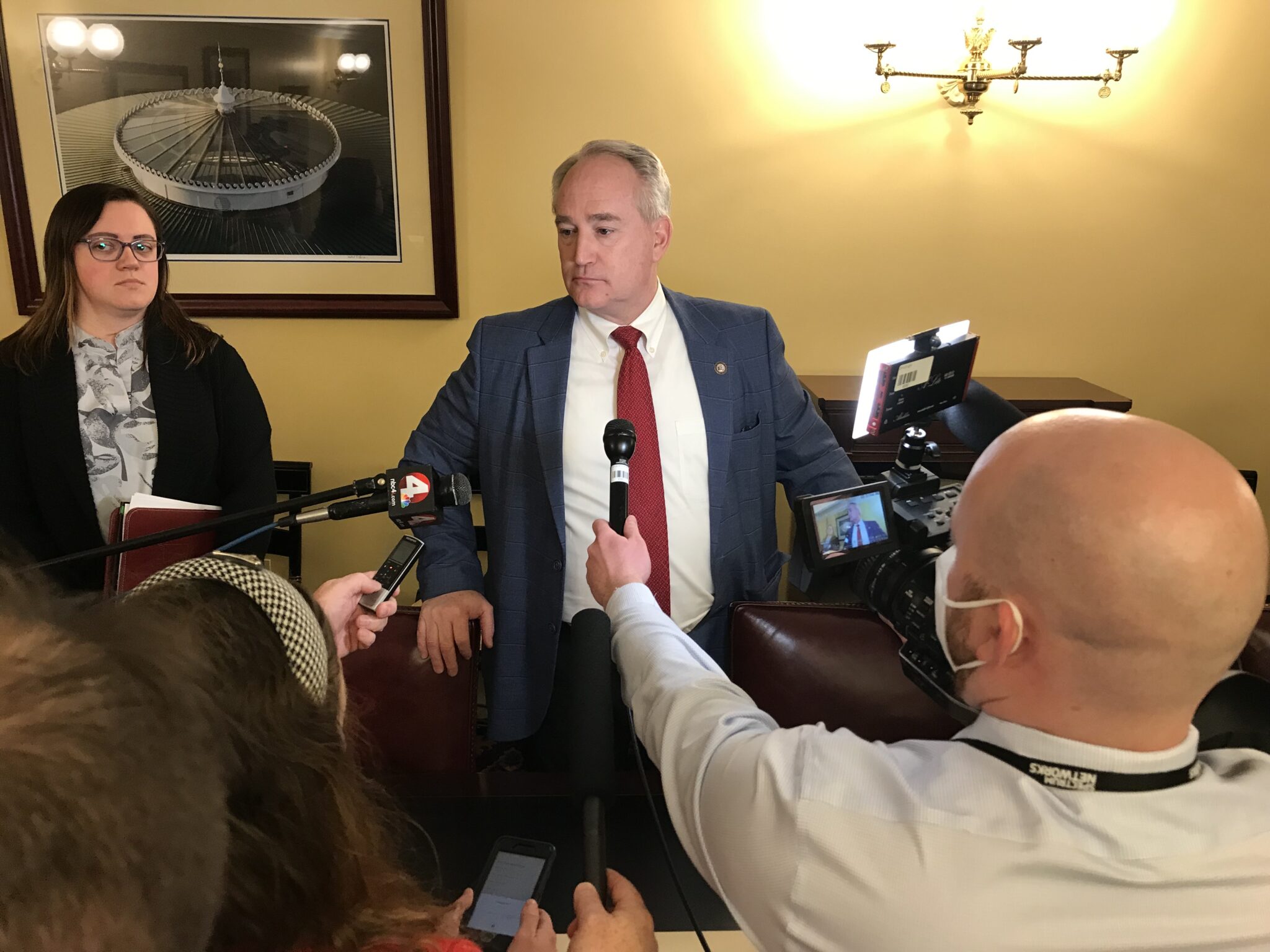
House Speaker Bob Cupp, R-Lima, said the legislation, which a House committee passed out on Tuesday, will be up for a passage vote at a floor session Wednesday afternoon.
Because the House adopted two amendments to the bill, it will need to return to the Senate for approval. Cupp said it will “hopefully” pass over in time for a Senate concurrence vote, meaning the bill could be sent to the governor’s desk come Wednesday afternoon.
However, Senate President Matt Huffman, R-Lima, indicated the Senate would not vote on the bill Wednesday so members could analyze the changes. The Senate passed the legislation in December in a 23-8 vote, with all but one Republican in support. All Democrats opposed the legislation.
Senate Bill 215, sponsored by Republican Sen. Terry Johnson of McDermott, would remove the requirement under current law that gun owners obtain a license to carry a concealed weapon from their local sheriff. The application requires completion of an 8-hour training course and clearing a background check.
Instead, any Ohioan aged 21-and-up who can lawfully possess a gun would be allowed to conceal and carry the weapon.
Between 3,000 and 5,000 concealed carry applications are typically denied per year, according to data from the attorney general’s office. Possible reasons for denial include certain felony and misdemeanor convictions, a previous court finding of mental illness, being the subject of a civil protection order and others.
Looming passage of the bill comes as 2021 has overtaken 2020 as the record-setting year for gun deaths in Ohio, according to data from the state health department. GOP Rep. Shane Wilkin, R-Hillsboro, who leads the committee that passed the legislation Tuesday, said he “doesn’t really understand the question” about how he thinks about passing a gun rights expansion amid a surge in gun violence.
Cupp brushed aside a similar question.
“Guns don’t kill people; people kill people,” he said. “Also it was the deadliest year for the highways, as I understand it. So not sure there’s a connection.”
Several activists with Moms Demand Action, an anti-gun violence organization that formed in the wake of the Sandy Hook School Shooting that left 20 children dead, pleaded with lawmakers Tuesday to drop the bill in something of a last-ditch effort.
At the hearing, Republicans voted down a series of amendments from Democrats generally aimed at reducing gun violence. One would have created an “extreme risk protective order” mechanism, in which families or law enforcement can petition a judge to temporarily seize weapons from a person experiencing a mental health crisis. Another would close a loophole that allows the purchase of firearms in some settings like gun shows without a background check. Another would have required licensed gun sellers to issue a one-page pamphlet to buyers about Ohio’s gun carrying, possession and use laws.
Democrats — citing opposition testimony on the legislation from the Fraternal Order of Police, Hamilton County Sheriff Charmaine McGuffey and others — emphasized law enforcement opposition to the legislation and characterized it as a threat to the general welfare.
“SB 215 is anti-public safety and anti-police,” said Rep. Tavia Galonski, D-Akron. “This legislation puts Ohio law enforcement officials in the line of fire and makes them less safe. We need to be taking steps to make our communities safer, and this dangerous bill does the opposite.”
The Buckeye Firearms Association, a prominent gun lobby group, has declared the bill (informally known as “constitutional carry” or “permitless carry”) to be a major priority issue as primary elections near.
As such, both the House and Senate, under firm Republican control, have passed dueling yet substantively similar versions of the bill. With the Senate legislation as the vehicle of choice, the House must pass the legislation and send it to the Senate. The Senate can either accept the House’s changes (minor in nature) or bring the matter to a conference committee to iron out any differences.
However, Rep. D.J. Swearingen, R-Huron, who offered the amendments, indicated Tuesday that they were introduced with the sponsor’s blessing. The Ohio House passed a different but nearly identical bill in November on a party line, 60-32 vote.
Public health researchers and anti-gun violence researchers draw links between relaxed gun policies and homicide rates and others. For instance, researchers with the American Journal for Public Health found states with permitless carry laws were associated with an 11% increase in handgun homicide rates. The National Bureau of Economic Researchers found states experienced about a 14% higher rate of violent crime after adopting a new concealed carry permitting system similar to Ohio’s current one.
Gun advocates argue that those who plan to illegally carry a weapon or use it for nefarious purposes will already do so, regardless of any permitting requirement. Additionally, they say Ohio laws already allow for the open carry of firearms, so it’s somewhat incongruous that the law doesn’t allow for the concealed carry of firearms.
Some bill supporters, including Senate President Huffman, have argued the legislation is a logical extension of the Second Amendment to the U.S. Constitution. However, the Ohio Supreme Court ruled in 2003 that “there is no constitutional right to bear arms.”
Senate President Matt Huffman, left, and House Speaker Bob Cupp, right, speak before the Tuesday meeting of the Ohio Redistricting Commission. GOP leaders may move for a vote on new congressional maps as early as Wednesday morning. (Photo: Susan Tebben, OCJ)
Congressional maps could be voted on as early as Wednesday morning by the Ohio Redistricting Commission.
Senate President Matt Huffman took the lead in presenting GOP congressional maps in a Tuesday meeting of the ORC. He said he plans to make a motion to adopt the maps at a Wednesday meeting, scheduled to begin at 10 a.m.
Congressional maps proposed by GOP members of the Ohio Redistricting Commission on Tuesday.
The maps were released to the public just before the Tuesday meeting, and Democratic members of the commission said they received the maps earlier that day.
“The map looks pretty crisp and tight, what we have right now,” Huffman told reporters after the meeting.
The senate president said the map “did not exist until sometime Monday afternoon or Monday night.”
In terms of partisanship, something that’s been at the forefront of court challenges against legislative and congressional maps, the new maps have a 10-3 GOP advantage. Two districts – District 1 that covers Warren and part of Hamilton County, and District 9 that stretches from Williams and Defiance County, along the top of the state to Erie County – are both within the range considered by experts to be tossups with a slight Democratic advantage.
District 1 carries a 51%-49% Dem advantage, and the 9th district has a narrow 50.25%-to 49.75% lean toward Democrats.
Democrats continued to call out Republicans for keeping them out of the process, which Huffman took issue with during Tuesday’s meeting. But Huffman also said disagreement has been a bipartisan affair.
“In this process, the Senate has a version of the world that they like, the House has their version, you’ve got three independent acting commissioners who all have their version,” Huffman said. “At some point (agreement) does become impossible.”
Commission co-chair state Sen. Vernon Sykes, D-Akron, said Dems planned to send suggestions and recommendations to the GOP before they came together again on Wednesday, but he still didn’t see the need to rush the process.
Republicans have said they’d like to get the congressional maps done by the end of the week to accommodate deadlines for the May primary. The Ohio Supreme Court gave the commission until March 14 to submit new congressional plans to them.
“This time limit … is self-imposed, it can be changed,” Sykes said. “So, if we are seriously concerned with trying to be fair, then we need to take the time that’s necessary to have a good collaboration.”
One matter that the commission attempted to put to rest on Tuesday was whether or not they needed bipartisan approval to adopt maps this time around. Democrats believe the constitution requires it since the maps have had to come back to the commission.
House Speaker Bob Cupp said he reached out to state Attorney General Dave Yost for an opinion on the matter, and Yost said a simple majority is all that is needed. All other plans, constitutional and legislative alike, that have come out of the commission have been passed by a simple majority.
Cupp said the fact that the commission is allowed to use a simple majority vote shouldn’t serve as indication that the ORC doesn’t plan to aim for bipartisan agreement, but the AG’s opinion is “certainly persuasive” in saying the GOP majority could move forward.
As the congressional map consideration moves ahead, the commission is yet again awaiting a decision from the Supreme Court on its legislative plan. They submitted the plan a week after the Feb. 17 deadline, for which they could face contempt charges.
A hearing to discuss the contempt charges was scheduled for Tuesday, but the court postponed the hearing without rescheduling it.
A judge who oversees utility cases was involved in writing a coal and nuclear bailout now at the center of what prosecutors have described as the largest public corruption case in Ohio history, subpoenaed documents show.
That same judge, Greg Price, is presiding over multiple regulatory cases in which a government watchdog agency is trying to investigate that same corruption. His orders, spanning 18 months, have blocked investigations into a utility at the center of the scandal on multiple fronts.
One ruling barred the agency from deposing a witness who worked on a FirstEnergy Corp. audit — an audit that the company’s CEO said in a text message that former PUCO chairman Sam Randazzo helped conceal. Another allowed FirstEnergy to attest to regulators its own innocence, as opposed to hiring an independent auditor to review the company’s practices after it was accused in court documents of participating in a bribery scheme.
As an attorney examiner at the Public Utilities Commission of Ohio, Price hears cases involving disputes between utility companies, residential interests, industrial interests, and others. Examiners — essentially administrative judges — preside over PUCO case hearings, issue procedural orders like what evidence must be turned over between parties in a case, and influence the five-member commission on final orders.
The records show Price helped draft the legislative text, received regular updates about its legislative progress, formally reviewed HB 6 for the PUCO, and was briefed on its status as lawmakers launched efforts to repeal it after the FBI arrested the Ohio House speaker and four alleged co-conspirators.
The legislation, among other provisions, provided $1 billion from ratepayers to bail out two nuclear plants owned at the time by a FirstEnergy subsidiary; subsidized two coal plants jointly owned by several utility companies for an estimated $700 million from ratepayers; and allowed FirstEnergy to “decouple” its revenue from its energy sales, which its CEO said would “recession-proof” the company.
Prosecutors charged former House Speaker Larry Householder in July 2020 with using $60 million secretly provided by FirstEnergy to pass the bill, enriching himself personally and politically. FirstEnergy in 2021 entered into a deferred prosecution agreement with the DOJ, admitting to bribing not only Householder but former PUCO chairman Sam Randazzo. The company says it paid Randazzo $4.3 million for regulatory favors just before he was appointed.
Householder has pleaded not guilty and awaits trial. Randazzo has not been charged with a crime and has maintained his innocence. FirstEnergy paid a $230 million penalty and is cooperating with the investigation in an effort to avert a charge of honest services wire fraud.
Alongside the criminal probes, the PUCO has four open cases regarding FirstEnergy and House Bill 6. These have put Price in charge of answering questions about what kind of evidence FirstEnergy must turn over to outside investigators. Ashley Brown, a former PUCO commissioner and current executive director of the Harvard Electricity Policy Group, said this poses a conflict of interest for Price.
“It’s very, very strange to me that he would be both involved at the policy level and adjudicating those same policy issues later on,” Brown said. “If it were me, I’d recuse myself.”
In a brief phone call, Price declined to answer questions about the subpoenaed records or his role in the passage of HB 6. Matt Schilling, a PUCO spokesman, declined to answer written questions or make officials available for interviews, citing open PUCO cases and pending criminal investigations.
However, he defended Price’s apparent involvement in drafting HB 6.
“It is not unusual for the PUCO or its subject matter experts to be asked to review and share their expertise regarding legislation pertaining to public utility and commercial transportation law,” Schilling said.
Utility law is complex and requires specialized industry and legal knowledge to practice. But an administrative law judge like Price is supposed to be neutral and his actions transparent, said Neil Waggoner, an environmental advocate with the Sierra Club.
“The PUCO, especially under Randazzo’s tenure, showed itself to be neither of those things,” he said. “We need a full accounting of exactly what input and involvement PUCO commissioners and staff had in regard to HB 6 and repeal efforts, as well as an accounting for how that may or may not have impacted ongoing proceedings.”
Then-PUCO Chair Sam Randazzo testifies as an interested party regarding House Bill 6 on May 7, 2019. Source: Ohio Channel.
Requests denied
Householder was arrested July 21, 2020. The PUCO, somewhat inexplicably, didn’t launch any investigation into FirstEnergy until Sept. 15 of that year.
When it finally did, it rejected requests from the Ohio Consumers’ Counsel to hire an independent auditor to determine whether the company broke any laws in the passage of the bill. Instead of bringing in a disinterested investigator, Price ordered a FirstEnergy official to answer to the PUCO whether it did so. The FirstEnergy official denied wrongdoing at the time.
Randazzo resigned as chairman in November 2020 after the FBI raided his condo and FirstEnergy first disclosed the $4.3 million payment to him. The company said it identified the payment via an internal investigation ordered by its board of directors after Householder’s arrest.
In September 2021, Price presided over a hearing over whether FirstEnergy would have to turn over that same internal investigation to the Ohio Consumers’ Counsel, a state-funded watchdog agency that represents residential consumers’ interests before the PUCO. Price ordered the company to give it to the PUCO to review privately, before ruling whether it should be turned over.
“We’ve heard a lot about this internal investigation, but we are in no position to make any rulings as to whether or not it’s privileged sight unseen,” Price said.
After review, the PUCO found the report to be protected by attorney client privilege and ruled it didn’t need to be released.
Around that same time, Price ruled FirstEnergy didn’t need to provide the Ohio Consumers’ Counsel with the documents it gave federal regulators who sought to investigate the HB 6 episode. Price denied the request until the Federal Energy Regulatory Commission issued its audit.
“If and when a public audit is released by FERC, we can revisit this issue at that time,” he ruled in August 2021, according to a hearing transcript.
FERC’s audit, released earlier this month, found FirstEnergy improperly used $71 million to lobby for the passage of HB 6 and ordered the company to develop a plan to refund customers. The Ohio Consumers’ Counsel has since asked Price to honor his word. The matter awaits a ruling.
Larry Householder addresses reporters June 16 after lawmakers voted to expel him from the General Assembly. He has pleaded not guilty to a racketeering charge and awaits trial. Photo by Jake Zuckerman.
‘Burning’ an audit
Before utility companies can add extra fees to users’ bills, they need the PUCO’s permission.
FirstEnergy in 2017 got that permission to apply a “Distribution Modernization Rider” (DMR) fee to its customers. Over the objections of the Consumers’ Counsel, the PUCO denied a request to attach a refund mechanism to the charge. The commissioners called adding a refund mechanism “counterproductive.”
Two years, one lawsuit, and $458 million collected from customers later, the Ohio Supreme Court deemed the charge unlawful and cut it off. The judges found the PUCO allowed the charge without making sure FirstEnergy uses the money to modernize the grid (despite the name). However, state law prohibits the court from demanding refunds unless PUCO explicitly creates such a mechanism.
When the PUCO allowed the charge, it hired Oxford Advisors to serve as a third-party monitor and file a final report auditing the funds. Oxford, through PUCO staff, requested a delay on its deadline to file the report. The commissioners, with Randazzo at the helm one year into his chairmanship, instead determined the audit would be “moot” and dismissed the case on Feb. 26, 2020.
Less than two weeks later, FirstEnergy CEO Chuck Jones sent a text to another company executive (the text was later obtained by the Consumers’ Counsel via records request).
In the text, Jones said Randazzo “will get it done for us but cannot just jettison all process.” He lists several favorable regulatory decisions, including “burning the DMR final report has a lot of talk going on in the halls of PUCO about does he work there or for us?”
In December 2020 and under heavy public scrutiny, the PUCO ordered a different firm, Daymark Energy Advisors, to resurrect the audit and determine how FirstEnergy used the money.
Citing the text as an impetus, the Ohio Consumers’ Counsel asked the PUCO to issue a subpoena for any draft version of the final Oxford audit, and to compel an Oxford employee to testify about it.
Price, in a ruling earlier this month, denied the requests relating to that final audit. He said the Counsel’s reliance on the text message shows its “obvious interest in investigating potential wrongdoing” admitted to by FirstEnergy “rather than investigating what the Commission actually has jurisdiction over investigating, which is whether [FirstEnergy] improperly used DMR funds.”
He ordered the auditor to testify at a PUCO hearing, but only about an earlier filing — not the report that was allegedly covered up.
Daymark’s final audit, released in January, could not trace the outcome of the DMR money because FirstEnergy commingled it with revenue from all 11 of its utilities. The auditors said they were unable to determine both whether the money was spent on modernizing the grid and whether it was spent on HB 6 lobbying.
However, Price, defending the decision to reject the Ohio Consumers’ Counsel’s subpoena, said the second audit “appears to fully address whether [FirstEnergy] properly expended the DMR funds.”
The Consumers’ Counsel has since appealed the case to the five commissioners on the PUCO, emphasizing the “extraordinary” nature of the case. The Counsel asked the PUCO’s legal director — not Price — to certify the appeal and sent to the full commission to overrule Price.
“To paint issues pertaining to the use of DMR funds as outside the PUCO jurisdiction is just plain wrong,” the Ohio Consumers’ Counsel wrote.
‘Nicely done Greg’
The most explicit reference in the subpoenaed records of Price working on HB 6 comes in the window between when law enforcement arrested Householder and when they raided Randazzo’s condo.
After the arrests, a state legislative committee considered a repeal of the bill. A state representative asked in writing whether Randazzo helped write or review the decoupling language in HB 6.
“We did make suggestions to mitigate some of the more objectionable language that, as I recall, would have given the PUCO limited/no discretion,” Randazzo said in an email to Scott Elisar, his former law partner who he hired as PUCO’s policy director.
“Tammy and Greg Price were involved I think. I do recall saying that it should be removed because it was going to be confusing when blended with other issues as well as the difficulties people were having distinguishing between [FirstEnergy] and [FirstEnergy Solutions].”
Most of the records are less clear as to Price’s involvement. They show that starting on April 12, 2019, the day HB 6 was introduced, Price was regularly updated on the bill’s developments. When Randazzo sought help with his testimony before lawmakers in May 2019, PUCO’s legal director Angela Hawkins added Price to an email thread.
“Will make him available to assist if necessary on the below issue,” she saidon May 6, 2019.
On May 20, 2019, Randazzo thanked the head of the Ohio Air Quality Development Authority, Christina O’Keeffe, for a visit to discuss HB 6. Price and other staff are copied onto the email chain, though it’s not clear who attended.
When the bill passed the House on May 29, 2019, a legislative report from the governor’s office listed Price, Elisar and the PUCO’s Statehouse liaison as legislative and legal reviewers for the agency on the bill. A similar reportfrom when the bill passed the Senate listed the designation as well. Price was listed as a “required attendee” for the PUCO on a July 15, 2019 hearing and received a briefing on it afterward.
In late September 2020, another PUCO lawyer wrote a formal legal memoanalyzing legislation to repeal HB 6. The memo is addressed to Price and Randazzo.
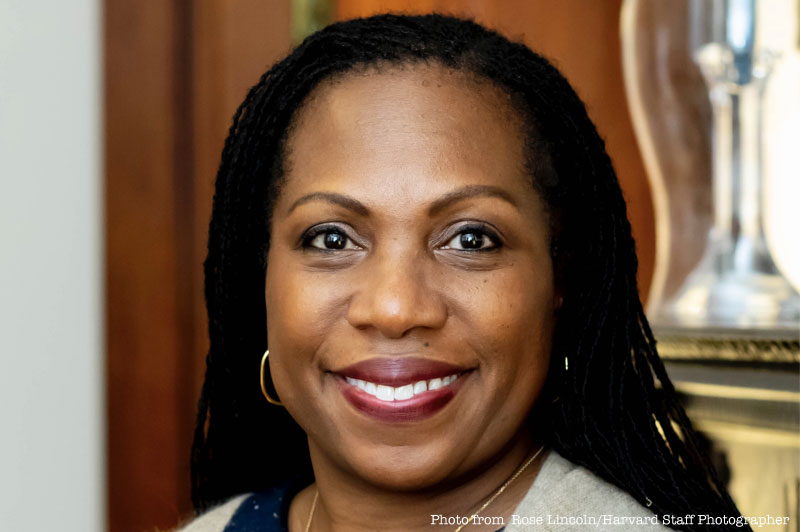
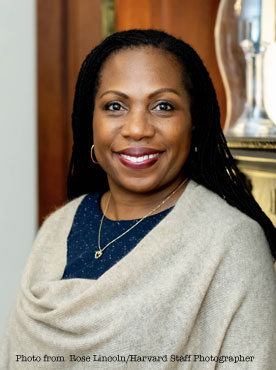
Washington, DC – Today, President Biden announced his intent to nominate Judge Ketanji Brown Jackson as Associate Justice of the U.S. Supreme Court. Currently a judge on U.S. Court of Appeals for the D.C. Circuit. If confirmed, she will be the first Black woman to serve on the Supreme Court.
Since Justice Stephen Breyer announced his retirement, President Biden has conducted a process to identify his replacement. President Biden sought a candidate with, “exceptional credentials, unimpeachable character, and unwavering dedication to the rule of law.” In a release from the Whitehouse, the President also sought a nominee, “much like Justice Breyer—who is wise, pragmatic, and has a deep understanding of the Constitution as an enduring charter of liberty. And the President sought an individual who is committed to equal justice under the law and who understands the profound impact that the Supreme Court’s decisions have on the lives of the American people.”
A former clerk for Justice Breyer, Judge Jackson has broad experience across the legal profession – as a federal appellate judge, a federal district court judge, a member of the U.S. Sentencing Commission, an attorney in private practice, and as a federal public defender. Judge Jackson has been confirmed by the Senate with votes from Republicans as well as Democrats three times.
After law school, Judge Jackson served in Justice Breyer’s chambers as a law clerk. She served as a federal public defender from 2005 to 2007, representing defendants on appeal who did not have the means to pay for a lawyer. If confirmed, she would be the first former federal public defender to serve on the Supreme Court.
Prior to serving as a judge, Judge Jackson followed in the footsteps of her mentor Justice Breyer by working on the U.S. Sentencing Commission—an important body, bipartisan by design, that President Biden fought to create as a member of the U.S. Senate. Her work there focused on reducing unwarranted sentencing disparities and ensuring that federal sentences were just and proportionate, according to the press release.
Judge Jackson lives with her husband, Patrick, who serves as Chief of the Division of General Surgery at Georgetown University Hospital, and two daughters, in Washington, D.C.
Ketanji Brown Jackson was born September 14, 1970.
Four Republican members of the Ohio Redistricting Commission passed a third round of legislative maps Thursday, exactly one week after the Ohio Supreme Court’s deadline passed.
The maps just introduced Thursday afternoon passed with a 4-3 vote, with both Democrats voting against as with previously passed maps.
The House map presented on Thursday shows a 54-45 GOP advantage in the House and an 18-15 advantage in the Senate. While 19 of the Democratic House districts and seven in the Senate are considered competitive political “toss-ups” in the 50% to 52% advantage range, none of the Republican districts are, with all of them having a Republican advantage more than 52%.
Auditor Keith Faber was the lone Republican to vote against the maps, which he said is for the same reasons he didn’t support the Democratic maps last week.
“I think there are some issues that I have concerns with and so for that reason, I didn’t think, to be consistent, I could overlook them in this map,” Faber said.
Those issues included compactness and political subdivision splits.
The Ohio Senate districts as shown on the newest GOP redistricting proposal. The map was brought forward Thursday during a meeting of the Ohio Redistricting Commission. Source: Ohio Redistricting Commission
“I understand the desire to have a map, I understand the desire to send a map to the supreme court that they will uphold, but again, I’m not going to violate my view of the constitution merely to get a map done,” Faber said.
While the Ohio Redistricting Commission originally met this week to talk congressional maps, for which they have another few weeks to meet the supreme court deadline, legislative maps took the attention away.
Senate President Matt Huffman joined with Gov. Mike DeWine and Faber in bringing up the legislative matter amidst talks on congressional district lines.
The commission is constitutionally required to use statewide state and federal elections data from 2016 to 2020 to come up with the data for their maps.
The passage comes mere days before the commission members must appear before the supreme court and answer for missing the deadline of Feb. 17.
The Ohio House districts as shown on the GOP map proposal presented during a Thursday meeting of the Ohio Redistricting Commission. Source: Ohio Redistricting Commission
The court asked for all members to come to a March 1 hearing on the possibility of contempt of court for ORC members.
The commission members adjourned a meeting that deadline day with no maps approved. GOP leaders, including commission co-chair House Speaker Bob Cupp, said no agreement could be made and compliance with the orders of the court and the Ohio Constitution weren’t possible in the 10 day window they were given after the last legislative maps were struck down.
Democrats maintained throughout Thursday that they were left out of the process, and the map that Republicans presented does not address toss-up districts.
“We have been and continue to be willing to work with them if they want to collaborate at any time to produce a commission map,” co-chair state Sen. Vernon Sykes, D-Akron.
In their statement supporting their maps, the GOP refuted the Democratic comments.
“The final adopted plan contains input from those members of the commission, directly or through their staff, who chose to participate,” Cupp read from the statement.
Without bipartisan agreement, if the supreme court accepts the maps this time around, they will last four years.
After the maps were passed, Secretary of State Frank LaRose asked the commission to allow him to distribute a statement for candidates whose residency might change because of the district changes.
Now the commission will move back to congressional maps. Cupp said the commission plans to meet on Tuesday, the same day as their contempt hearing.
An administrative judge blocked a watchdog’s attempt to obtain an audit that the Ohio utility regulatory agency’s former chairman, who has been accused of taking a $4.3 million bribe, allegedly tried to squash before publication.
The ruling, released Friday evening, is a setback for the Ohio Consumers’ Counsel, a state funded agency representing residential ratepayers in utility cases. The OCC has pushed for investigations of FirstEnergy, especially since the company admitted to playing a central role in a massive public corruption scandal.
The OCC asked the Public Utilities Commission of Ohio to grant it a subpoena to obtain a copy of any draft audit into a $458 million charge from FirstEnergy that started in 2017 collected called the “Distribution Modernization Rider.” The OCC also sought to depose an auditor who worked on report.
The Ohio Supreme Court blocked FirstEnergy from continuing to charge customers for the DMR, two years after it was first applied on monthly bills. The court said the PUCO unlawfully failed to ensure the money is actually spent on modernizing the grid. A subsequent PUCO investigation was inconclusive as to whether the DMR monies were used to fund the bribery operations.
The Supreme Court’s order questioned the value of leaving intact the audit when it overturned the rider, finding the reviews fail to properly protect ratepayers from the “possible misuse of DMR funds.” Additionally, the justices reasoned that any findings of misuse of the funds would be moot given the court had already blocked the charge and a state law blocked the court from ordering refunds unless PUCO explicitly allows for them, which it did not. The PUCO later nixed the audit, citing the court’s thinking.
The OCC has previously obtained a text message from FirstEnergy’s CEO referencing former PUCO Chairman Sam Randazzo “burning the DMR final report.”
The text partially came to light when FirstEnergy entered into a deferred prosecution agreement with the U.S. Department of Justice to possibly avert a charge of wire fraud. The company agreed to pay a $230 million penalty. It also admitted to paying Randazzo $22 million over nine years, including $4.3 million just before he started as PUCO chairman. The company also admitted to a separate $60 million bribery scheme ran through the state Legislature to pass House Bill 6 in 2019.
Randazzo has not been charged with a crime and has maintained his innocence. The PUCO has received two subpoenas in connection with the investigation.
PUCO Attorney Examiner Gregory Price denied both the OCC’s requests. He said the facts are clear that no such draft report exists in any form. Additionally, the question of FirstEnergy’s political spending is being “thoroughly addressed” in other PUCO cases.
Price ruled OCC’s reliance on the Randazzo text shows its “obvious interest in investigating potential wrongdoing” as opposed to matters it “actually has jurisdiction over.”
In December 2020, about two months after federal agents raided Randazzo’s home, the PUCO opted to resume the audit into the DMR. However, this time it hired Daymark Energy Advisors. That audit, released earlier this year, was inconclusive as to whether the DMR funds were used to fund the HB 6 campaign. FirstEnergy, the auditors said, pooled funds from all its 11 utilities in one pot, creating an “inability” for the auditors to track the funds.
Price, however, said the final report “appears to fully address whether [FirstEnergy] properly expended the DMR funds.”
In records the PUCO provided to federal prosecutors, Price is copied onto email threads regarding policy meetings before and after the passage of House Bill 6. As was first reported by Cleveland.com, one email shows Price was invited to one such meeting days before the House passed the bill.
Other investigations into FirstEnergy, Randazzo and other alleged conspirators continue. Former House Speaker Larry Householder is expected to stand trial on a racketeering charge in connection with the scandal this fall. He recently asked a court to dismiss the charge against him. That motion has not yet received a ruling.
Meanwhile, FirstEnergy shareholders have filed a class action lawsuit against the company as well.
Indianapolis– A new rules exception that allows a passer to intentionally throw an incomplete forward pass for the purpose of conserving yardage, and the redefining of the term “chop block” – both of which are intended to minimize risk of injury – are the two most notable rules changes coming to high school football for the 2022 season.
These changes stand out among the seven total recommendations brought forth by the National Federation of State High School Associations (NFHS) Football Rules Committee, which held its annual rules meeting January 23-25 at the Conrad Hotel in downtown Indianapolis.
The NFHS Board of Directors subsequently approved all seven of the committee’s suggestions. “With this year’s rules changes, the committee once again showed its focus on minimizing risk in high school football,” said Bob Colgate, NFHS Director of Sports and Sports Medicine and liaison to the NFHS Football Rules Committee. “By expanding the parameters for a legal forward pass and redefining the chop block so it can be more easily officiated by game officials, the committee has taken measures to mitigate two potentially risky situations within the game.”
Rule 7-5-2 EXCEPTION 2 now permits a player to purposefully throw an incomplete forward pass without warranting an intentional grounding penalty provided the passer is outside of “the pocket” (lateral boundary of the free-blocking zone) and the pass reaches the neutral zone or the extension of the neutral zone beyond the sideline. “The question (with this rule) has always been, ‘if the defense makes a good play, are we bailing out the offense by letting the quarterback throw the ball away?’” said Richard McWhirter, Chair of the NFHS Football Rules Committee and Assistant Executive Director of the Tennessee Secondary School Athletic Association. “This year, I think the committee felt the wellbeing of the passers and not subjecting them to extra hits was worth changing the rule.”
An alteration to Rule 2-3-8 addressed the new definition of a chop block, which is now described as “a combination block by two or more teammates against an opponent other than the runner, with or without delay, where one of the blocks is below the waist and one of the blocks is above the waist.” Previously, the defensive player’s knee was used to determine the high and low components of a chop block. “This is going to strengthen the rule and it’s also going to help the game officials,” said McWhirter. “I think they’re going to be able to enforce this rule better than they have in the past because determining ‘below the knee’ and ‘above the knee’ is tough to do. I think it’s really going to improve the game.”
Players will be able to wear the number 0 as a jersey number starting in 2022, as the range of acceptable numbers listed in Rule 1-4-3 was expanded from 1-99 to 0-99. However, any number preceded by the digit zero will be illegal.
State associations now have the option to extend sideline team boxes beyond their traditional 50-yard expanse (between the 25-yard-lines) as long as both teams are allowed to use the same dimensions. This new NOTE attached to Rule 1-2-3g also gives state associations the freedom to decide which individuals can access the extended area.
Two minor changes involving game clock and play clock procedures were made to Rules 3-4-7 and 3-6-1a(1)e EXCEPTIONS, respectively. In Rule 3-4-7, any foul committed within the last two minutes of either half will automatically result in the offended team’s option to start the game clock on the snap. Prior to this change, the offended team was required to accept its opponent’s penalty in order to gain control of the game clock.
The committee edited the EXCEPTIONS to Rule 3-6-1a(1)e, which clarify the necessary conditions for an abbreviated 25-second play clock after a stoppage in play. This rule now includes an exception for Rule 3-5-7i, mandating that a 40-second play clock be employed following a foul committed only by the defensive team.
The final rule change for 2022 is an alteration to Rule 1-3-3 regarding game equipment. Any game official – not just the referee – may order the ball changed between downs.
The NFHS Football Rules Committee is composed of one representative from each of the NFHS member state associations that use NFHS football rules, along with a representative from the NFHS Coaches Association, NFHS Officials Association and NFHS Sports Medicine Advisory Committee.
A complete listing of the football rules changes will be available on the NFHS website at www.nfhs.org. Click on “Activities & Sports” at the top of the home page and select “Football.”
According to the most recent NFHS High School Athletics Participation Survey, 11-player football is the most popular high school sport for boys with 1,006,013 participants in 14,247 schools nationwide. In addition, there were 31,221 boys who participated in 6-, 8- and 9-player football, along with 2,604 girls in all four versions of the game for a grand total of 1,039,828.
This press release was written by Nate Perry, coordinator of media relations at the National Federation of State High School Associations (NFHS).
Update: The ACLU filed a request with the Ohio Supreme Court to ask for the Ohio Redistricting Commission’s reasoning behind deciding not to file new legislative redistricting maps by the February 17 deadline. Details below:
The leader of an anti-abortion lobby and other Ohio citizens are suing the Ohio Redistricting Commission and the Secretary of State, accusing them of depriving them of rights under the U.S. Constitution.
Attorneys from the Columbus firm of Isaac Wiles & Burkholder, LLC, asked the U.S. District Court for the Southern District of Ohio to declare current legislative districts “or lack thereof” in violation of the U.S. Constitution, and to adopt the last plan the ORC approved. That plan, a revision of the first plan struck down by the Ohio Supreme Court, was also struck down by the high court.
Though not members of the lawsuit in their official capacities, several of the plaintiffs are leaders or staff at Ohio Right to Life, a lobby group who works on anti-abortion measures throughout the state.
Mike Gonidakis, president of Ohio Right to Life, is the lead plaintiff in the case, along with Mary Parker, OR2L’s director of legislative affairs. Also listed in the lawsuit is Margaret Conditt, who is on the lobby’s website as a “member trustee.”
Beth Vanderkooi, another plaintiff in the case, is the executive director of Greater Columbus Right to Life, and Ducia Hamm was previously listed as associate director of affiliate services for Heartbeat International, and religious anti-abortion organization.
After declaring two rounds of previous maps unconstitutional gerrymanders, the state supreme court sent the commission back to work with a Feb. 17 deadline, which the ORC passed by without adopting new maps.
Ohio’s state legislative districts are not “substantially similar in population,” according to the lawsuit.
With Thursday’s “impasse” of the Ohio Redistricting Commission members, the plaintiffs in the lawsuit say they “are cut out of the political process.”
“Either the 2010 legislative districts apply and their votes are diluted by the population growth reflected in the 2020 U.S. Census data,” the lawsuit stated. “Or alternatively, they are not members of any state legislative district and cannot vote for state house of representatives or senate candidates.”
The commission filed their notice of impasse on Friday, laying out the commission’s actions and non-actions from Feb. 7, when the supreme court invalidated the ORC revised General Assembly plan, until Thursday, when no map was approved.
“Among other discussion, (Senate) President (Matt) Huffman stated that the commission was at an impasse, as the commission is unable to ascertain and determine a plan that complies with the court’s order and the Ohio Constitution,” the notice, written by the Ohio Attorney General’s Office, informed the supreme court.
The federal lawsuit filed late Thursday cites the 2020 census, which showed a net gain of more than 250,000 Ohioans over the last 10 years.
Because “valid redistricting” has yet to occur, the plaintiffs say they can’t decide on candidates to support, make a decision to run for office or “educate themselves or others on the positions of candidates in their districts and prepare to hold those candidates responsible.”
Gonidakis and the other Ohioans acknowledged that a nearly five-month legal battle on legislative redistricting is unlikely to have a resolution before the voter registration deadline of April 4 for the May primary, which is why they requested the use of a previous map for the primary.
The parties in the lawsuit said they chose the previously submitted maps, maps adopted without bipartisan support and called unconstitutional by the supreme court, because they “properly distribute voting power and are based on 2020 census data.”
They worry if elections were allowed to take place before the redistricting process is resulted, overpopulated districts could see vote dilution, and thus a “deprivation of political power and resources.”
A lack of districts deprives Ohioans of the right to vote, in violation of the U.S. Constitution and fundamental rights of Americans, the lawsuit states.
“There is no harm in the Redistricting Commission following the U.S. Constitution and plaintiffs receiving the right to vote,” according to the lawsuit.
The court challengers ask that a three-judge panel be assigned to the case to keep the ORC and the Secretary of State from “acting on their behalf” and implementing, enforcing or conducting elections under the current state of redistricting.
The lawsuit also asks the court to establish a schedule “to adopt a timely enacted and lawful plan and implement the new plan for Ohio’s state legislative districts.”
The lawsuit does not allege racial gerrymandering or any vote dilution based on racial discrimination, which the U.S. Supreme Court has set as a standard for taking any redistricting cases.
Senate President Matt Huffman, a member of the Ohio Redistricting Commission, accused Democrats of drawing maps to favor Dems while using racial gerrymandering. The Dems were the only ones to propose a map at Thursday’s meeting of the commission, and it was voted down along party lines after a lengthy dissection, mainly by Huffman.
This is the second federal lawsuit to be filed regarding redistricting in Ohio. In December, a pair of Mahoning County residents sued accusing the ORC of discriminating against Black voters in legislative and congressional district lines.
That lawsuit was put on hold after district lines were invalidated, and is still awaiting court decisions on maps before proceeding.
Court challengers asks for impasse reasoning
On Friday, attorneys for the League of Women Voters and other court challengers asked the court to order the commission to explain their “bald refusal” to abide by the February 7 court order.
“What steps the commission itself undertook to comply with the court’s order – and why there could be no possible plan to comply with the (state) constitution – remain shrouded in generalities,” wrote Freda Levenson, attorney for the ACLU, in a Friday filing with the supreme court.
Levenson called out Governor Mike DeWine’s comments after the commission adjourned without a map, in which he said it was a “mistake for this commission to stop and basically say that we’re at an impasse,” and that the choice was “not an option that the law gives us.”
The notice of impasse “provides no concrete statement of any reason why a more proportionate plan could not be enacted,” according to court challengers, and provides no no explanation of steps taken to draw a compliant plan.
“It provides a bare conclusion, as if it were sufficient to justify the refusal to comply with this court’s order,” the court document stated.
Levenson asked that the court order the commission to file evidence by February 22 that “must concretely identify why a compliant plan could not be drawn” and specific reasons why the commission did not consider other plans. The court document also asked for a position from the court on whether it can order an extension of the candidate filing deadline for the May primary.
Attorney Phillip Strach speaks before the Ohio Supreme Court, arguing for the constitutionality of legislative district maps. The court heard arguments on three cases asking it to reject the maps approved in September. (Photo: Susan Tebben, OCJ)
The Ohio Supreme Court weighed in on the redistricting battle on Friday evening, asking the members of the Ohio Redistricting Commission why it shouldn’t hold them in contempt of court for defying its order.
Chief Justice Maureen O’Connor signed an entry in all three of the lawsuits against the ORC on legislative redistricting, asking Gov. Mike DeWine, Secretary of State Frank LaRose, Auditor Keith Faber, Senate President Matt Huffman, House Speaker (and commission co-chair) Bob Cupp, state Sen. (and commission co-chair) Vernon Sykes and House Minority Leader Allison Russo, to explain the “failure to comply with this court’s February 7, 2022 order,” and why they shouldn’t face anything from fines to jail time, the consequences for contempt of court.
The court had been asked by the League of Women Voters, the Ohio Organizing Collaborative and a group of Ohio residents – the parties in the three lawsuits originally filed to challenge maps approved by the ORC – to order the commission to give specific reasons for their choice to adjourn without maps on Feb. 17.
The ORC members now have until noon on Feb. 23 to tell the court why they shouldn’t be held in contempt.
The groups also asked for justification for the commission’s lack of action on any sort of map, despite being presented with a map by the Democratic House and Senate caucuses, which they shot down along party lines on the day of the deadline.
Huffman accused drawers of the Dem map of racial gerrymandering to the benefit of Democrats in certain districts, including the district that holds Lake County, typically a strongly GOP area. Russo wholly denied the accusations.
The GOP commission members said during the meeting that they could not find a way to draw maps that complied with all the redistricting provisions of the constitution, while also complying with the rules the supreme court had given in their majority opinion invalidating the previous maps. Mainly, the GOP said they couldn’t hit the target of 54-46 partisan breakdown asked for by the court justices, a number based on statewide voter preferences over the last 10 years.
But some of the commission members, of both parties, disagreed with the decision to leave before approving a map.
“I think it is a mistake for this commission to stop and basically say that we’re at an impasse,” Gov. Mike DeWine said on Thursday. “I don’t think that is an option that the law gives us.”
Co-chair Sykes agreed that contempt was a possibility for the commission members, and said he was willing to do whatever could be done to move forward.
Asked after the commission adjourned if that included contempt of court: “Including whatever we can do.”
The choice to adjourn didn’t require a majority vote, but was met with no formal objections.
The supreme court ordered the ORC to come up with “entirely new” maps after invalidating not one but two different sets of legislative district maps. Their deadline to file with the Secretary of State’s Office was Feb. 17, with those maps then being sent to the court for review by the next day.
The order came the same day a federal lawsuit was filed by Ohio residents, some of whom are also anti-abortion advocates in the statewide lobby group Ohio Right to Life. That lawsuit asks the district court to take over the process, and accuses the redistricting commission of preventing them from advocating for candidates, running for office, and even voting.







![[Miami Township TeleVision] Township Administrator: State of the Township](https://lovelandmagazine.com/wp-content/uploads/2022/02/miami-township-jeff-wright.jpeg)