Loveland, Ohio – “So, for all of you who are grocery shopping this weekend, please keep us in mind and up the items you could donate to the Pass It On Food Drive,” said Libby Westerman on Monday evening.
Loveland Magazine was invited to the LIFE Food Pantry on Monday so we could help spread the word about this year’s annual food collection that for the past 20-years has always been scheduled ahead of the holiday season.
Every year, along with the assistance of Loveland City Schools, a food drive takes place to collect items to disburse as Thanksgiving boxes – to clients of the LIFE Food Pantry and other residents in the community as well as holiday bags for later in December.
Westerman is in her third year of organizing the food drive throughout the Loveland schools and wanted to give parents and others in the community a heads-up about participating.
In this LOVELAND MAGAZINE TV video, LIFE Executive Director Linda Bergholz explains how extremely important the event is for the pantry. She said, “As you all know, Thanksgiving is coming up and for us at the food pantry it is an extraordinarily important time of year. Food insecurity has always been important. Food insecurity during a Pandemic is enormous.”
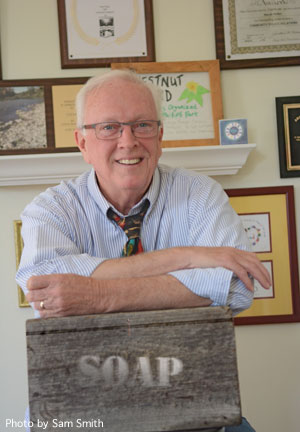
Bergholz introduces Westerman and Nancy Grant who founded Pass It On in 2001 as a way children could give to the community and heal after the 9/11 terrorist attacks.
Grant said twenty years ago, “Well, we can’t change the world, but we can change our little corner of it.” She had this idea to line up the kids down the street and pass the food donations one bag and box, hand-to-hand at a time to one another until it reached the church. A pay it forward so children could feel good about themselves. She thinks it worked after 9/11 and will now – during the Pandemic.
Westerman tells you how you can participate and Grant tells you about the origin, and because of the Pandemic, why it is still so important for the children and our community.
You don’t want to be that parent that opens up a backpack on the morning of the drive and discovers at the bottom an unread note and realizes there are no canned cranberry sauce or Mandarin oranges in the cupboard that your child is supposed to take to school that morning. Each classroom/grade K-8 will have specific items to collect, bring to school, and pass along to the food pantry.
Students at the Loveland Intermediate and Middle schools will walk the food the several blocks to Prince of Peace Lutheran Church down the road from their school where it will be sorted and eventually given away.
This year’s “Pass It On” will be on Friday, November 19th.
This is a heads-up to grandparents and guardians as well because your child can probably only participate if you do some early shopping for them.
Many students and volunteers deliver the donations from the food drive to Prince of Peace Lutheran Church where volunteers sort, date check, organize and assemble a Thanksgiving meal box to go out to area families. The huge effort is to ensure that all our Loveland families and singles will have the items they would need so they can sit down together and enjoy a traditional meal for the holiday.
Each classroom/grade K-8 will have specific items to collect. When your child brings home information about the Pass It On Food Drive, please be generous when you send your donations with them to take to school.
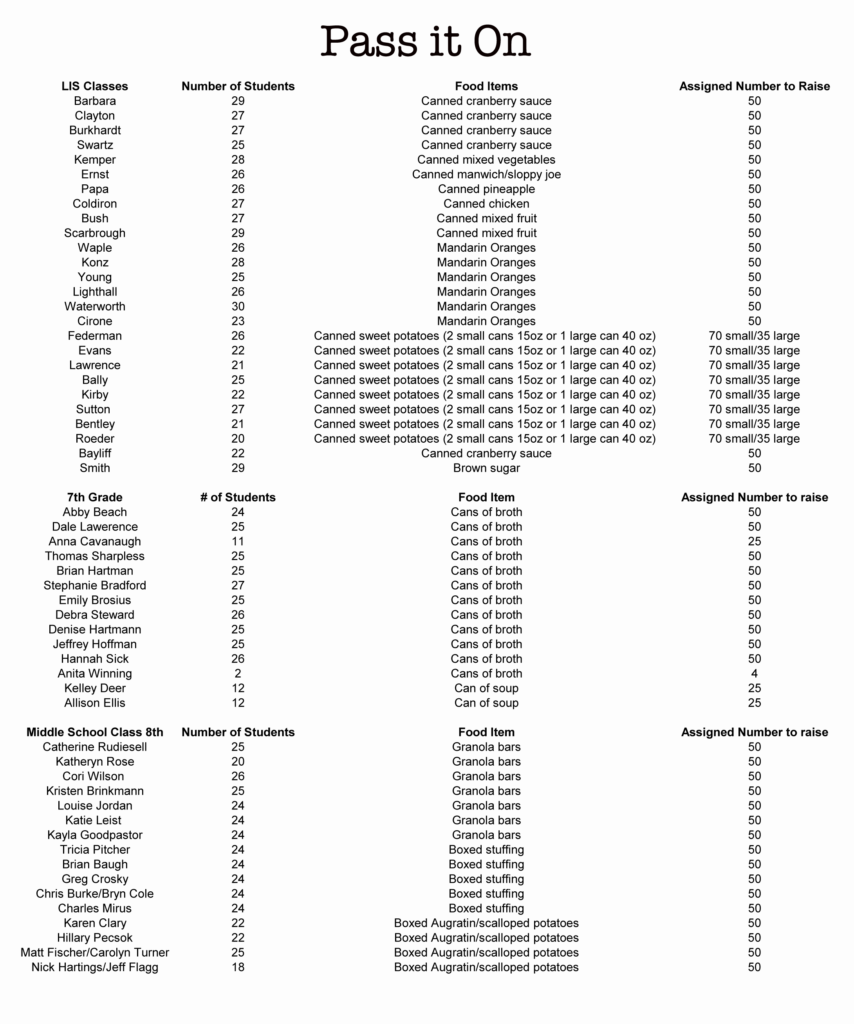
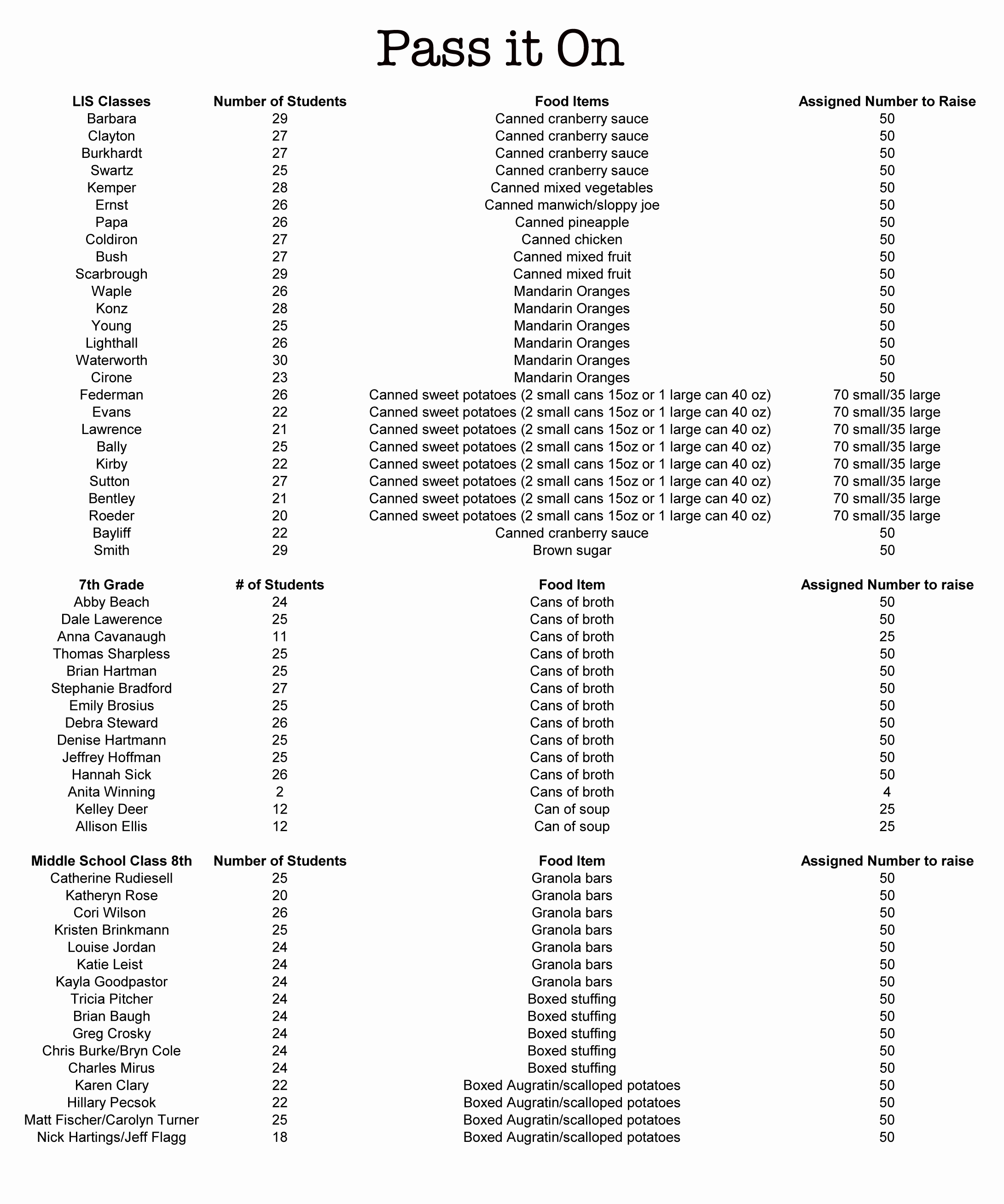
Here is the shopping list. You can also download and print this shopping list to take with you while grocery shopping.
Statehouse Republicans introduced a newly drawn map for Ohio’s districts in U.S. Congress Monday night that maintains a firm GOP majority.
While amendments are possible, the map is poised to pass out of a Senate committee Tuesday with a full Senate session to follow, and House sessions planned for Wednesday and Thursday.
Data behind the map were not made available Monday evening for full analysis, but it appears to show two safely Democratic seats based in Cleveland and Columbus and a majority of others being solidly Republican or leaning Republican and one district that could be a toss-up.
That district is one of three splitting Cuyahoga County, including the southwestern portions of it in a district with all of Medina County and Akron in Summit County.
Hamilton County is also split into three districts, with all of Republican Warren County connected to the city of Cincinnati and an eastern portion of the county included in a district that stretches east out to Meigs County. The map also takes a chunk out of central Hamilton County for a district that stretches along the western Ohio border from Butler up to Darke County.
Click to open in a new tab and view larger
While the center of Franklin County in the map would be a safely Democratic seat, outlying areas in a C-shape along the northern, western, and southern portion would be included in a Republican-leaning district that stretches westward to Clark County and southward to include Clinton, Fayette and parts of Ross County.
The map combines Montgomery County with Greene County and the central part of Clark, creates a district that stretches from Trumbull and Mahoning counties down along the Ohio River on the eastern border to Washington County, and puts Toledo and Lucas County in with Defiance, Williams, Henry, Fulton, Ottawa, Sandusky and Erie counties.
Statehouse Republicans claim the map presents seven competitive districts and noted that it keeps seven of eight of Ohio’s largest cities whole while dividing only 12 counties.
On Twitter, a number of Statehouse Democrats panned the proposal.
Without bipartisan support, Republican legislators could vote through four-year maps. Any maps will have to be approved by Gov. Mike DeWine. If four-year maps go through, court challenges are likely.
State legislative maps passed in September by the Ohio Redistricting Commission are currently before the Ohio Supreme Court after three lawsuits were filed against them. The court has four Republicans and three Democrats. Republican Chief Justice Maureen O’Connor ruled against Ohio’s current maps in 2012, and is considered a possible swing vote.
An analysis of state data shows that 11 months into the vaccine rollout, the ground is still fertile for outbreaks all around Ohio. Of 88 counties in the Buckeye State, only Delaware (71% vaccinated) surpasses the national vaccination rate of 68.5%. In 58 counties, less than half the population is vaccinated, according to data as of Sunday.
Ranked by state, Ohio (56% vaccinated) is the 10th least-vaccinated in the country, according to data from The New York Times.
In Henry County, a rural swath of northwest Ohio, COVID-19 is spreading at more than twice the statewide rate of about 400 infections per 100,0000 residents. About 52% of residents are vaccinated. Health Commissioner Joy Ermie said the spread is not specific to any outbreak or location, it’s just swimming through homes and social events of mostly unvaccinated people.
“The quicker we turn this around, the quicker we’ll see a decrease in our cases,” she said. “It will be a forever cycle if we cannot increase our overall vaccination rates.”
Public health workers in coronavirus-sieged counties said in interviews for this article that it’s time to start accepting that COVID-19 is likely here to stay in some form or fashion, absent a paradigm shift on vaccination.
Several indicated a circular pattern in vaccination; the unvaccinated, by and large, are staying unvaccinated. The vaccinated are fortifying their immune system with booster doses.
“I would absolutely love to say COVID is over in X [number of] months,” Ermie said. “But I feel much more confident that we should take our energy away from, ‘How is this going to end?’ to ‘How can we learn to live with it?’”
Gavin Smits receives a first dose of the Pfizer COVID-19 vaccine. (Photo by David Ryder/Getty Images)
Federal authorities approved the use of vaccines on children aged 5-11 earlier this month, which will likely jumpstart vaccination rates to some extent. In north-central Ohio’s Seneca County, a population of roughly 55,000 people, about 47% of residents are vaccinated. The county’s case rate is nearly twice the statewide average.
About 20 children were vaccinated at a clinic last Tuesday night, according to county health commissioner Anne Goon. She said there hasn’t been any mad rush on vaccines, but she was happy with Tuesday’s crowd.
She said adults in the community have bristled with vaccines, masks, and assorted infection control policy responses to the pandemic. Some parents have refused to have their kids tested after they’re exposed to the coronavirus at school, she said, even if it’s required for an after-school sport.
“We have a portion of our population that just doesn’t think COVID is real,” Goon said. “That it’s just a hoax.”
To Dr. Bruce Vanderhoff, Ohio’s top doctor and director of the state health department, the state is “approaching” a point in the pandemic where coronavirus becomes more of a nuisance than threat to the public welfare. We’re not there yet though as the extra-transmissible delta variant of the coronavirus “relentlessly” seeks out the unvaccinated, he said.
“In some circumstances, what is driving what we’re seeing is low vaccination rates in some communities,” he said. “So we have to continue to focus on the importance of vaccination.”
Vanderhoff, speaking to reporters Friday, offered a more optimistic take on Ohio’s vaccination rate. Among Ohio adults, more than 2 in 3 have now received at least one dose of vaccination. The COVID-19 vaccination rate, he said, has surpassed the rate of Ohioans who get their annual flu shot. It pales in comparison to vaccination against disease like measles or polio, but those vaccines have been around longer and are (mostly) legally required to enroll in school.
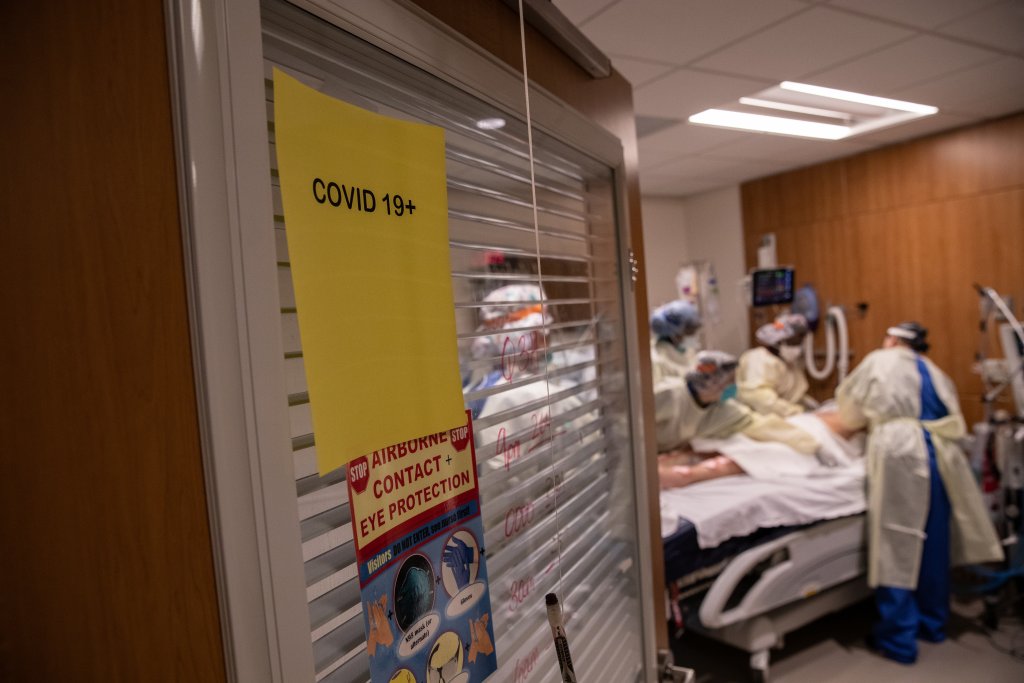
Despite Vanderhoff’s optimism, hospitalizations for COVID-19 have increased across every age group over the last week. For people aged 30-39, who are less vaccinated than their elder counterparts, hospitalizations leapt 48% in that time frame. More than 2,700 Ohioans are currently hospitalized with COVID-19, up from less than 2,200 earlier this month.
John Palmer, a spokesman for the Ohio Hospital Association, said the statewide COVID-19 patient census has been increasing by about 60 patients daily as of late.
“Hospitals are operating at high-capacity levels with workforce challenges and any surge will have a devastating impact leading to disruption of health care access for communities,” he said. “Despite three safe, approved and effective vaccines available today to stop this virus we continue to see spread and it’s frustrating to respond to a virus that is preventable.”
All told over about 20 pandemic months, more than 25,600 Ohioans have died from COVID-19, part of the U.S.’ 762,000 dead. More than 82,000 Ohioans have been hospitalized, including more than 10,000 who required ICU care. A staggering 1.6 million Ohioans have been infected with COVID-19.
Mark Cameron, an immunologist at Case Western Reserve University, is not surprised by COVID-19’s resurgence. Even highly vaccinated states like Vermont (82% vaccine started) are wrestling with outbreaks. In Ohio, cold weather makes respiratory viruses more spreadable and drives humans to gather inside instead of outside.
“It’s absolutely unacceptable to operate in a space in which 50-60% of the people are unvaccinated,” he said.
He expressed frustration with a sense of complacency from the public whenever the coronavirus ebbs, and an unwillingness to acknowledge the predictable patterns of disease spread based on low vaccine coverage, weather and human behavior.
“I don’t know what unique to say at this point,” he said. “Here we are risking another impact on our holiday season through sickness, hospitalization and death.”
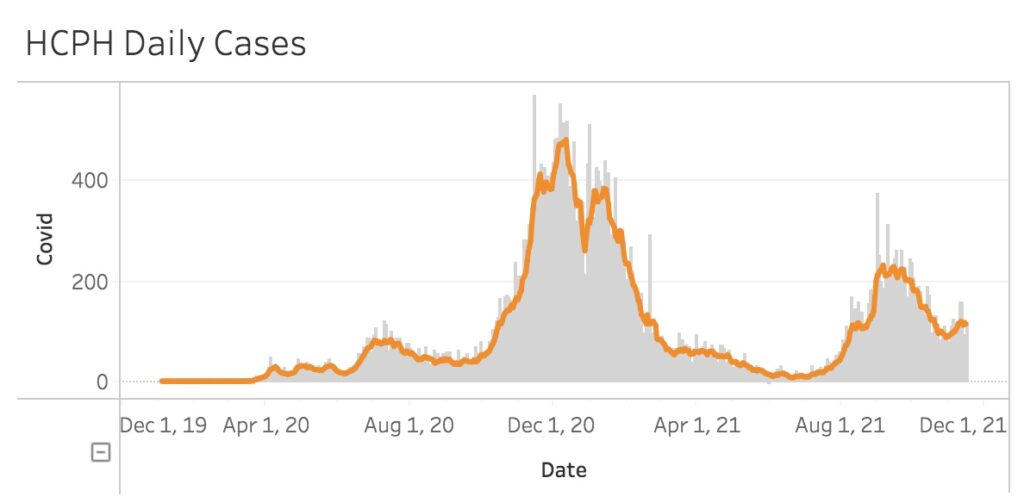
Hamiolton County Public Health 11-16-2021
November 16
Warren County Health Services reported 62 additional COVID-19 cases on Tuesday, along with 60 recoveries.Health Services is monitoring 493 active COVID cases as of Tuesday, 471 of them involving mild illness.
Thirteen (13) people are hospitalized as of Tuesday, one (1) fewer than Monday. One (1) is critically ill, and the remainder have moderate illness. Nine (9) others are moderately ill outside of the hospital.
All but two (2) of Tuesday’s cases involved community spread of COVID-19, as two (2) were reported in a skilled nursing facility.
Warren County Health Services continues to see a significant spike in COVID-19 transmission, with the majority of its new cases arising from workplace exposures, family/household exposures and indoor events/gatherings as the highly transmissible Delta variant remains involved with virtually all local cases.
Sixteen (16) of Tuesday’s cases involved individuals who had been fully vaccinated. Cumulatively as of Tuesday, 1,086 of 44,513 fully vaccinated Warren County residents have tested positive for COVID-19. To date, 1,027 of 1,086 had mild illness, while 41 became moderately ill, two (2) seriously ill and one (1) critically ill. Fifteen (15) passed away, all of them elderly and/or with extensive health issues, seven (7) of them at nursing homes.
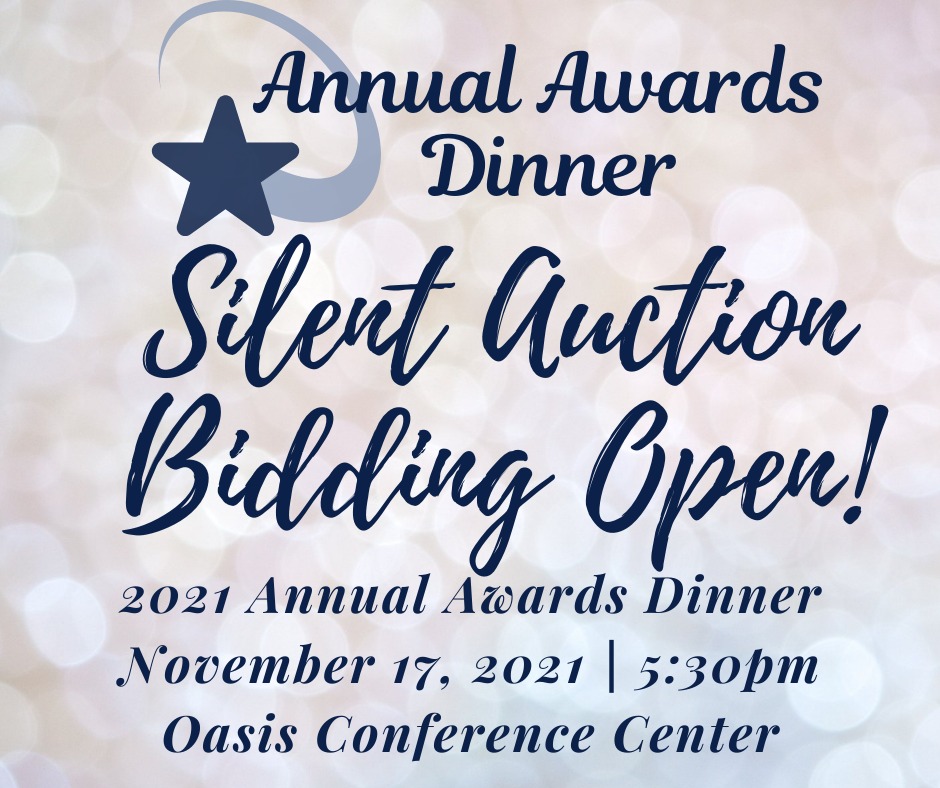
Loveland, Ohio – The LMRCA Silent Auction is now LIVE! Start your bidding HERE.
The silent auction is in conjunction with the Chamber’s Annual Awards Dinner, however, you don’t need to attend to win.
Proceeds from the auction will benefit Grant Us Hope, an organization dedicated to youth suicide prevention, and the Little Miami River Chamber Alliance Scholarship fund. Start your holiday shopping early and support these great organizations while you do it.
Please note that there is a “Buy It Now” option if you find something you simply must have!
You can bid on an Apple AirPod, Coach Purses, a Date Night in Loveland, Kings Island passes, a Golf Day at the Oasis, Sports Items, and many more great bargains.
Final Chance to Register to attend the Awards Gala!
Registration closes at noon today!
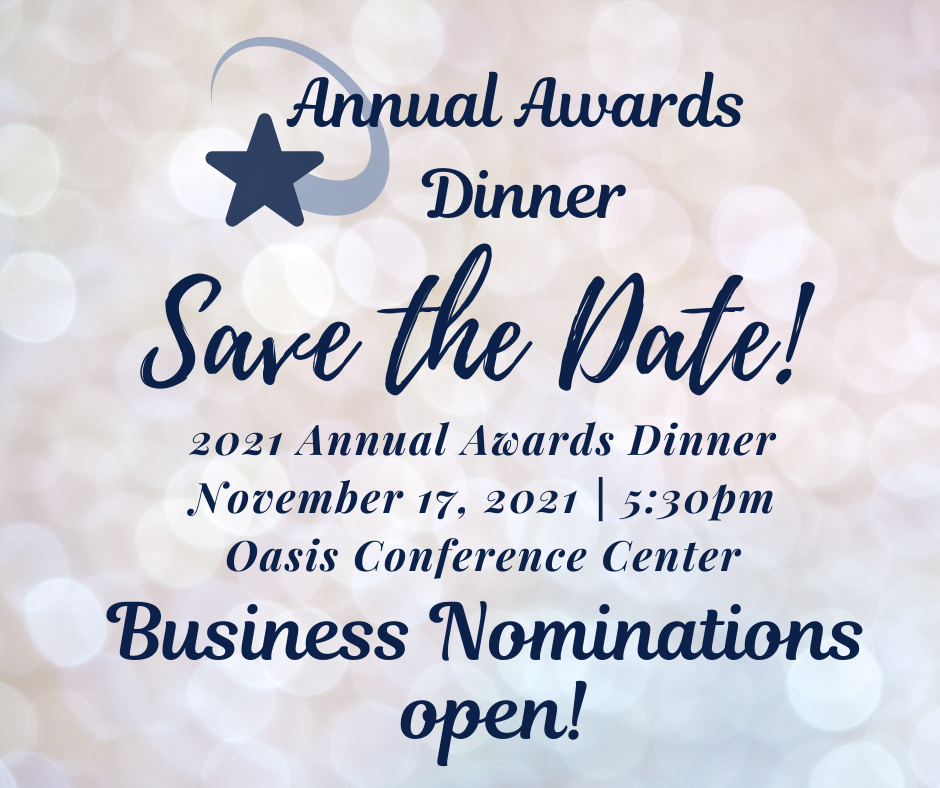
Each November, The Little Miami River Chamber Alliance says “Thank you” to our businesses for all they do for our community and honor them for enhancing our community and making it a better place to live.
The Annual Awards Dinner is an evening for all area businesses to come together and celebrate their successes and community contributions.
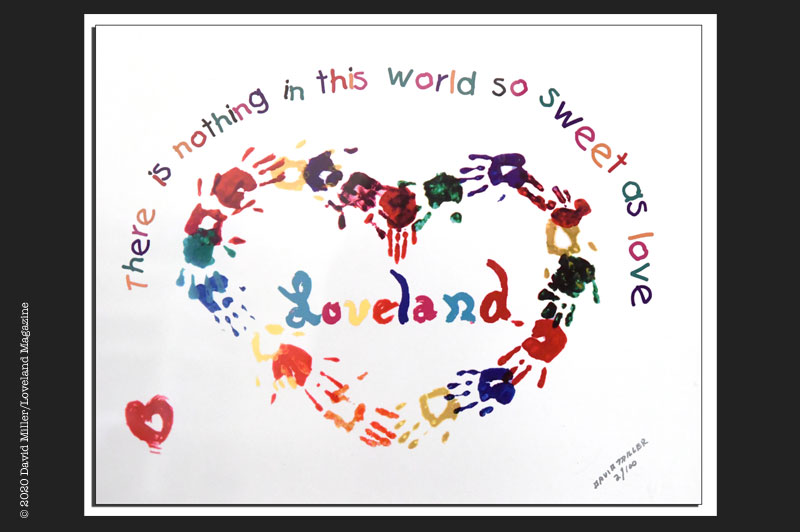
Loveland, Ohio – If you are a little Miami River Chamber Alliance member, resident of the Loveland School District, or work in the Loveland area your Valentine Card Design original artwork may be submitted.
Artwork must reflect or incorporate the theme: “Love is…..” and must also include (or provide space for) the phrase, “There is nothing in this world so sweet as love.”
One-color, two-color, and full-color entries are acceptable. Artwork must be flat (two-dimensional) and reduce proportionately to fit within a 5 inch by 3 ¾ inch space, the size of the printed Valentine’s Day cards.
The submission deadline is November 20, 2021.
Last year’s winner was Cindy Wilmes and she created this video of her taking one of her cards to be stamped at and mailed from the Loveland Post office.
Entry forms and contest rules are available at the Little Miami River Chamber Alliance, 113 Karl Brown Way, Loveland, OH 45140. If you would like one sent to you, call the Little Miami River Chamber Alliance at 683-1544.
The winner will receive design credit on the back of the 2022 Valentine’s Day cards, recognition at the Valentine Kick off, other local recognition, media recognition and two complimentary invitations to the Little Miami River Chamber Alliance Annual Valentine Breakfast. Entries not selected may be picked up after December 10, 2021.
The winning card design will be featured as a “Cover Photo” in Loveland Magazine.
Click below to witness the 2021 Valentine Art and Card Reveal presented to you by LOVELAND MAGAZINE TV!
Watch this interview by Cassie Mattia interviewing the 2021 Valentine Card Designer and Valentine Lady Jeannie Shumaker.
We have more Loveland Magazine TV videos for you to enjoy! Click below to watch now!
Ohio senators have filed legislation that represents a broad revision of the state’s medical marijuana system. Among the changes is language expanding access to the drug if a physician “reasonably” believes their patient’s symptoms would be relieved or they would otherwise benefit from marijuana.
It’s a potentially massive expansion of eligibility for patients after years of piecemeal additions to the list of qualifying conditions. But for the bill’s sponsor, Sen. Steve Huffman, R-Tipp City, a streamlined regulatory structure is the measure’s primary aim.
“The biggest example is the Department of Pharmacy regulates dispensaries, and the Department of Commerce regulates cultivators,” Huffman described. “So if you own one of each you have to go to each one to make business decisions.”
He notes the Department of Pharmacy will still manage a database of prescriptions through the Ohio Automated Rx Reporting System, or OARRS, but most oversight will fall under the purview of a new Division of Marijuana Control housed in the Commerce Department. Huffman also believes the measure will encourage the department to offer more licenses as the market grows and put pressure on license holders to bring product to market rapidly.
Senate Minority Leader Kenny Yuko has signed on as cosponsor of the bill. It doesn’t cover everything on his wish list — he notes it lacks employment protections for people prescribed the drug — but he sees it as an important step forward.
“I know the need. I know what we did in 2016 was just the smallest of fractions of what was needed here in Ohio,” Yuko said. “What this bill does is trying to move us in the right direction. Is it all inclusive? Not even close. Does it cover all the issues I want covered? Not yet.”
Meanwhile, the proposal is competing for attention with three recreational marijuana proposals — two in the Statehouse and the third at the ballot box. Huffman and Yuko both draw a distinction between medical and recreational pot, insisting that their measure and the other ideas are completely different conversations. But as the universe of qualifying patients expands, the distinction between recreational and medicinal gets blurry.
One notable aspect left out of Huffman and Yuko’s measure are provisions for home cultivation. Both measures in the House make allowances for it. Democratic Reps. Casey Weinstein of Hudson and Terrence Upchurch of Cleveland would allow up to 12. Meanwhile Republican Reps. Jamie Callender of Concord and Ron Ferguson of Wintersville would allow six plants with up to two of them flowering. The ballot measure would allow home grown marijuana as well, capping the amount at six plants per person and no more than 12 per residence.
Yuko doesn’t oppose giving Ohioans latitude to grow their own, noting some constituents have complained about long drives to a dispensary.
As for a specific amount, Yuko said he’d leave that determination to “the experts.”
But Huffman is skeptical of home cultivation. He worries it might support illicit sales or become a magnet for theft. He also contends restricting production to regulated growers is a consumer safety consideration.
“I don’t know what other medicine you grow or make yourself at home,” Huffman says. “And so that’s why we’re staying away from home grown. It’s to keep the quality up.”
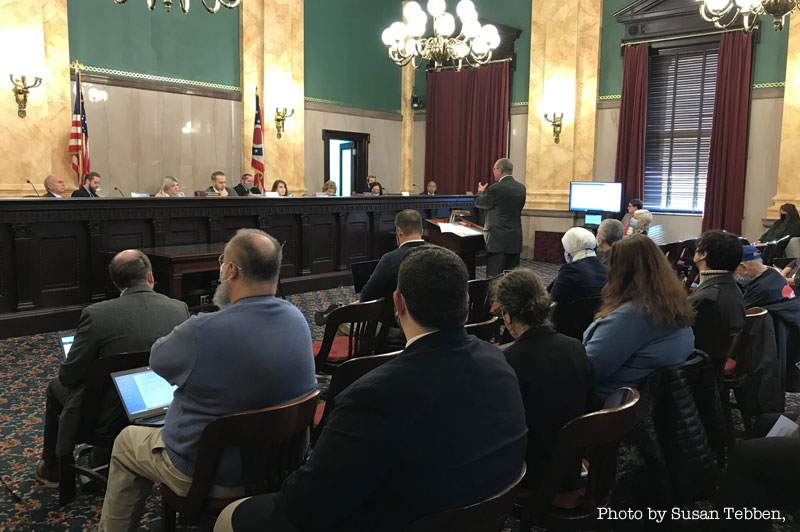
The Ohio Senate Local Government and Elections Committee hears from the public on two redistricting proposals, one from Senate Dems and the other from the Senate GOP on November 4.
The last of the General Assembly’s congressional redistricting public hearings in individual committees are this week, just as a joint committee starts work.
In Senate Local Government and Elections Committee on Tuesday, the last scheduled hearings on GOP and Democratic bills to change the congressional district maps in the state occurred, with much of the same criticism for the GOP map that anti-gerrymandering groups and Ohioans in target areas say don’t focus on fairness.
The Ohio Senate GOP’s congressional redistricting map proposal.
On Tuesday, Bellbrook resident Wendy Dyer spoke through tears about the volunteering she did to promote the petition that would eventually change the state constitution and the redistricting process as a whole. She said at that time she felt a sense of achievement and change in the state, something that’s now changed with the map proposals from the GOP.
“I thought Ohio had really accomplished something,” Dyer said. “Now I really just feel stupid that I honestly believed that my government would do the right thing.”
Anne Light Hoke, of Columbus, said she disagrees with the Senate Republican map that moves her from District 3 to District 15, which is nestled in with three other districts in Franklin County, but then stretches due south into most of rural Southeastern Ohio.
Hoke said as a resident of Columbus, she said she has “urban concerns” like public transportation, traffic congestion and police brutality.
“Although I was born in a small town, I no longer have small town concerns like broadband access, access to sewer systems and water systems, burning trash regulations and fracking,” Hoke told the committee members on Tuesday.
The public input is set to continue Wednesday morning in the House Government Oversight Committee on House Bill 479, the House GOP’s map proposal. As of Wednesday, the committee agenda had not changed to include a new map proposal from the House Democrats, introduced on Monday.
Also on Wednesday, the new joint committee on congressional redistricting is scheduled to meet for the first time at 2:30 p.m. in the Ohio Statehouse’s south hearing room. The two chairs of the House and Senate committees that have been hearing individual map proposals, state Rep. Shane Wilkin, R-Hillsboro and state Sen. Theresa Gavarone, R-Bowling Green, will be the co-chairs of the joint committee.
The joint committee is also scheduled to meet on Friday at 10:30 a.m., in the House Finance Room (Room 313).
The Veterans Crisis Line connects Veterans in crisis and their families and friends with qualified, caring Department of Veterans Affairs responders through a confidential toll-free hotline, online chat, or text. Veterans and their loved ones can call 1-800-273-8255 and Press 1, chat online, or send a text message to 838255 to receive confidential support 24 hours a day, 7 days a week, 365 days a year. Support for deaf and hard of hearing individuals is available.
Fill out a financial assistance form without leaving home. It’s one of the ways your Veterans Service Commission is helping you stay safe and supported in response to COVID-19.
VA Medical Center Transportation Program
Hamilton County Veterans Service Commission is excited to announce the VA Medical Center Transportation Program. Metro passes are available at no cost for VAMC Cincinnati medical appointments. Eligibility: Honorably discharged veteran and Hamilton County resident. Requirements: One-time office visit to establish eligibility and appointment verification (available from VAMC). Ask about Metro Access. Call 513-946-3300.
VA Benefits
The Hamilton County Veterans Service Commission has Service Officers to assist in filing for VA benefits.
County Veteran Service Officers (VSOs) are accredited through the Ohio Department of Veterans’ Services. VSOs are also accredited through various congressionally chartered veteran service organizations.
By appointment only, call 513-946-3300 to speak with a Service Officer and to schedule an appointment.
FAQ
Do you provide emergency financial assistance?
Emergency funds for food, housing and utilities may be provided to veterans and/or their dependants. The following factors will be considered when determining financial need: proof of veteran status (DD-214 or other separation or discharge record), proof of household income, and current bills. Unemployed veterans are required to be actively seeking employment or must provide medical evidence of the inability to work.
Where can I get information about my late father’s military career?
Call our office at 513-946-3300 for details pertaining standard form 180.
What can I do to upgrade my bad conduct discharge, if possible?
Call our office at 513-946-3300 for details about an upgrade discharge packet.
How does a veteran become enrolled in the “direct deposit” program for VA compensation or pension benefits?
We can assist in completing this form and faxing it to VA Regional Office.
I was on active military duty from 1959 through 1960. I recently became disabled, not from any service-connected cause, and may not be able to return to work. Am I eligible for nonservice-connected pension benefits from VA since I now have a limited income?
Veterans’ entitlement to nonservice-connected disability pension is premised on three basic criteria: the individual must have a minimum of 90 days of active military service, one of which must have been during a designated wartime period; the veteran must be permanently and totally disabled or so disabled that it would be impossible for the average person to pursue substantially gainful employment; and the veteran’s countable income must be within limits defined by statute. Because your active service was entirely during peacetime, you do not meet the service eligibility requirement for pension benefits.
My ex-spouse was a veteran. Am I entitled to benefits?
Generally, the answer is no. The end of the marriage normally means the end of eligibility for benefits.
I am a veteran. Will VA pay for my funeral and burial expenses?
No. Only veterans who are receiving monetary benefits at the time of death qualify for the payment of burial and/or funeral expense. Even in those cases, VA payments will not come close to paying for the average funeral and burial expense.
I got hurt when I was in the service. Does that mean I am service connected?
No – you are not service connected until the VA adjudicates your formal claim and grants service connection. It is a formal, legal process.
I was told I cannot file a claim for service connection because I have been out too long.
Not true. It may be harder to get your claim approved, but there is no time limit for filing a claim for service connection. We recommend you file as soon as possible after release from active duty because the effective date of your claim is determined by when you file. The start payment date is the same. If you got out in 1958 and your claim is approved in 2010, you will be paid only from the date you filed your claim – not back to your discharge.
Do you have to serve in a war to be considered a Veteran?
No. There are different requirements based on which benefit is sought. Generally a Veteran is a member of the Armed Forces that has served on Active duty for other than training purposes or who was disabled due to their military service. Please call for more information.
Can I get a copy of my discharge paper?
Yes. We can assist in obtaining a copy of your military discharge (DD-214). Please call for more information.
My father/mother is now a patient in a nursing home. Medicaid says I have to apply for VA Pension, what do I do?
You will need to file an application for VA Pension. You will need to bring in an original or certified copy of DD 214, Separation Paper, all monthly income received from all sources, amount of Assets, Marriages, Divorces, Death Certificates, Social Security Numbers of Veteran and Dependents.
Loveland, Ohio – “So, for all of you who are grocery shopping this weekend, please keep us in mind and up the items you could donate to the Pass It On Food Drive,” said Libby Westerman on Monday evening.
Loveland Magazine was invited to the LIFE Food Pantry on Monday so we could help spread the word about this year’s annual food collection that for the past 20-years has always been scheduled ahead of the holiday season.
Every year, along with the assistance of Loveland City Schools, a food drive takes place to collect items to disburse as Thanksgiving boxes – to clients of the LIFE Food Pantry and other residents in the community as well as holiday bags for later in December.
Westerman is in her third year of organizing the food drive throughout the Loveland schools and wanted to give parents and others in the community a heads-up about participating.
In this LOVELAND MAGAZINE TV video, LIFE Executive Director Linda Bergholz explains how extremely important the event is for the pantry. She said, “As you all know, Thanksgiving is coming up and for us at the food pantry it is an extraordinarily important time of year. Food insecurity has always been important. Food insecurity during a Pandemic is enormous.”
Bergholz introduces Westerman and Nancy Grant who founded Pass It On in 2001 as a way children could give to the community and heal after the 9/11 terrorist attacks.
Grant said twenty years ago, “Well, we can’t change the world, but we can change our little corner of it.” She had this idea to line up the kids down the street and pass the food donations one bag and box, hand-to-hand at a time to one another until it reached the church. A pay it forward so children could feel good about themselves. She thinks it worked after 9/11 and will now – during the Pandemic.
Westerman tells you how you can participate and Grant tells you about the origin, and because of the Pandemic, why it is still so important for the children and our community.
You don’t want to be that parent that opens up a backpack on the morning of the drive and discovers at the bottom an unread note and realizes there are no canned cranberry sauce or Mandarin oranges in the cupboard that your child is supposed to take to school that morning. Each classroom/grade K-8 will have specific items to collect, bring to school, and pass along to the food pantry.
Students at the Loveland Intermediate and Middle schools will walk the food the several blocks to Prince of Peace Lutheran Church down the road from their school where it will be sorted and eventually given away.
This year’s “Pass It On” will be on Friday, November 19th.
This is a heads-up to grandparents and guardians as well because your child can probably only participate if you do some early shopping for them.
Many students and volunteers deliver the donations from the food drive to Prince of Peace Lutheran Church where volunteers sort, date check, organize and assemble a Thanksgiving meal box to go out to area families. The huge effort is to ensure that all our Loveland families and singles will have the items they would need so they can sit down together and enjoy a traditional meal for the holiday.
Each classroom/grade K-8 will have specific items to collect. When your child brings home information about the Pass It On Food Drive, please be generous when you send your donations with them to take to school.
Here is the shopping list. You can also download and print this shopping list to take with you while grocery shopping.


![[Video Interview] Thousands of Loveland Children will “Pass It On” and you can join them!](https://lovelandmagazine.com/wp-content/uploads/2021/11/pass-it-on.jpg)