Author: Loveland Magazine

  • Whistle Stop Clay Works raises $2,000 for the League of Animal Welfare

    Whistle Stop Clay Works raises $2,000 for the League of Animal Welfare

    Loveland, Ohio – Every holiday season, Whistle Stop Clay Works in Loveland chooses a non-profit to be the recipient of their holiday ornament sales. This year the studio chose the League of Animal Welfare, a non-profit that finds homeless pets their forever home and provides low-cost veterinary services.

    “The economic impact of the pandemic has hit our community hard. We wanted to help some of the most vulnerable members of our community: dogs and cats who have been surrendered by people who can no longer care for them,” said Kay Bolin, studio co-owner.

    It is a Whistle Stop Clay Works tradition to give away unglazed holiday ornaments at the Christmas in Loveland event held in December each year. This year they made 500 gnome ornaments that were distributed free of charge to local residents. The studio also sold hand-painted gnome ornaments for $10 each with 100% of the purchase price benefiting the League.

    “The response from the surrounding community was overwhelming,” said Bonnie McNett, studio manager. “The studio sold 193 ornaments and we rounded up the total to make our donation $2,000.”

    The League of Animal Welfare has been helping homeless pets and giving them the lives they deserve for over 70 years. More information can be found at:  https://www.lfaw.org/.

    Whistle Stop Clay Works is located at 119 Harrison Avenue in historic downtown Loveland, Ohio. They have an art gallery and offer classes for adults and children, workshops, private parties, Cocktails & Clay, and studio rentals. More information can be found at: www.whistlestopclayworks.com.

  • Game Preview: U.C. Football Wraps Up Prep, Ready to Battle Alabama

    Game Preview: U.C. Football Wraps Up Prep, Ready to Battle Alabama

    No. 4 Cincinnati will play in the CFP Semifinals at the Cotton Bowl on Friday at 2:30 CT

    Zach Stipe Associate AD / Communications for UC Football

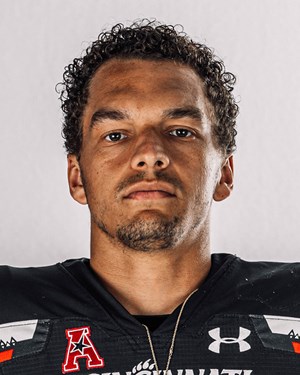
    Arlington, Texas – The No. 4-ranked Cincinnati football team has made history all season, advancing to the College Football Playoff, while breaking countless records. 

    The Bearcats will look to make more history inside AT&T Stadium on Friday when they meet No. 1 Alabama in the 86th Goodyear Cotton Bowl Classic at 2:30 p.m. CT in Arlington, Texas.

    On Thursday, UC wrapped up its final practice at the Dallas Cowboys’ stadium before returning to the team hotel for final preparations. 

    The Bearcats (13-0) will face an Alabama team (12-1) that is in its seventh CFP appearance and coming off a dominant win over No. 3 Georgia in the SEC Championship. 

    Cincinnati will look to improve to 14-0 for the first time in school history and advance to the national championship game in Indianapolis on Jan. 10. 

    UC is coming off a convincing win over No. 20 Houston in the American Athletic Conference championship game, 35-20, on Dec. 4.

    “This isn’t a team that wants to ‘shock the world’ or anything like that,” said UC head coach Luke Fickell. “It’s a team that really believes in what it is that they’ve done and loves challenges. I think so far, that’s been the message for us. We understand that it’s a larger challenge than maybe anything we’ve faced in the past. The team (Alabama) has obviously been in the playoffs seven times and are, as we refer to them, the champs. I think the messaging is kind of specific to who our guys are and what they’ve been through. It’s definitely about, ‘these are the champs, and to be the champs, you’re going to have to be at your best.’” 

    Read on at UC Football…

    FOLLOW THE BEARCATS
    For all the latest information on Cincinnati Athletics, please visit GoBEARCATS.com. For up-to-the-minute updates, follow Cincinnati Athletics on Twitter, Instagram and Facebook.

  • Congressional redistricting hits the Ohio Supreme Court

    Congressional redistricting hits the Ohio Supreme Court

    BY: SUSAN TEBBEN – Ohio Capital Journal

    The case of congressional redistricting was heard by the Ohio Supreme Court on Tuesday, where arguments about reforms put in place by voters and the data used by the General Assembly to draw maps framed consideration of districts going forward.

    Ben Stafford, an attorney representing the National Redistricting Action Fund’s challenge of the congressional maps approved in November, said the case centers on compliance with the constitutional reforms that revised the redistricting process, particularly the GOP majority’s use of partisanship in creating its map.

    “This case is about how the General Assembly has thumbed its nose at these reforms and enacted a plan that palpably violates Article 19’s new anti-gerrymandering protections,” Stafford told the court.

    Stafford said the 2021 enacted map has “extraordinary partisan skew,” with Republicans favored in 12 of 15 districts, amounting to 80% of congressional seats in the state. Using voting results as a starting point for analysis, as Stafford said should have been done, would have leveled out the district lean at 54% Republican, 46% Democrat, according to results of statewide races over the past decades.

    “A plan where one party is favored to win 80% of the seats when it only wins 53 or 54% of that vote clearly favors that party,” Stafford said.

    However, the attorney for the legislative leaders, Senate President Matt Huffman and House Speaker Bob Cupp, Phillip Strach, called the 2021 plan “the most constitutionally compliant of all plans before the General Assembly” because other plans presented “split more counties and other jurisdictions than the enacted plan.”

    But Republican legislators who worked on drawing the maps also saw the redistricting process as a foregone conclusion, destined for a legal battle, according to Strach.

    The attorney for Cupp and Huffman argued that based on the “political geography” of Ohio, the General Assembly could have drawn maps using no election or partisanship data whatsoever, and it still would have come up with a Republican majority, leading to accusations of GOP secrecy and scheming.

    “And so, what the General Assembly decided this time was ‘look, we’re going to be sued no matter what, and so we’re going to make sure that we draw competitive districts,” Strach told the justices.

    Strach was asked to address an expert witness for the map challengers in the case, a political scientist who ran the Ohio map through a redistricting program 5,000 times and never came up with the amount of Republican lean as the map approved by the state legislature.

    The simulations were “deeply flawed,” Strach told the state’s high court, and dependent upon human intervention.

    “At the end of the day, the computers draw what a human being tells it to draw, and so if you don’t tell the computer to use criteria that match what the General Assembly actually used, then what it will spit out is really just garbage,” Strach said. “It really is meaningless for any legal analysis.”

    The idea of what data would be proper to use in redistricting was the subject of lengthy discussion during oral arguments on Tuesday, but the main conclusion attorneys on both sides came to was no database was better than another.

    “Nobody agrees on what data to use,” Strach said. “It’s hard to use congressional districts data because it’s always changing. It’s easier to use statewide data.”

    Challengers debated databases and which specific data to use, such as federal election results versus statewide results, but said the biggest problem with the 2021 plan was how map-drawers used the data they used.

    Stafford said map creators for the GOP, namely Senate staffer Ray DiRossi and House mapmaker Blake Springhetti, had much more data than they let on publicly, but didn’t use it all in presenting the new map proposal.

    “What was disclosed publicly was this cherry-picked measure, a measure designed to make the plan look more competitive than it actually was,” Stafford said.

    Regardless of the measure or metric used, however, Stafford said the bias in the 2021 plan “remains the same.”

    Supreme Court justices also jumped in on the debate of which data to use in forming congressional districts, with Justice Sharon Kennedy seemingly agreeing that the federal results made sense in drawing congressional districts.

    “If you look at Ohio’s elections, and you look at your own datasets, more people turn out in Ohio to vote in federal elections than in statewide elections, by and large,” Kennedy said.

    Justice Patrick DeWine spoke to the argument by map challengers who said the legislature erred in skipping the 2014 election results rather than using all election results for the last 10 years. DeWine said because the 2014 election was an election “unlike any other we’ve had in Ohio,” specifically the landslide victory by former governor John Kasich over Democratic challenger Ed Fitzgerald, it might not be prudent to include that data.

    “I’m not sure which data set is best, I’m not sure the court could pick that, but it doesn’t seem immediately obvious to me that including several statewide elections in a year that was … probably the farthest from the norm we’ve had in Ohio in the last couple decades would make the data a lot better,” DeWine said.

    Other justices explored the idea that reforms of the redistricting should have been the guideposts for mapmakers over database manipulation.

    Chief Justice Maureen O’Connor posed the idea that the “intervening factor” in deciding how to draw maps was “the vote of the people.”

    Strach argued that the previous map passed in 2011 and highly criticized for a lack of public accountability “was never overruled,” and O’Connor jumped in.

    “Didn’t the people overrule it? Maybe not overrule it in front of us or another court, but the people in their vote overruled what had been done up to that point, did they not?”

    Justice Jennifer Brunner touched on minority representation in redistricting, asking whether keeping to the constitution in terms of splits and keeping counties whole overrode the requirement to protect minority voting rights, specifically in Hamilton County.

    Strach argued that under the 14th Amendment if the General Assembly had considered race, it would have violated “racial gerrymandering” prohibitions unless there was a “sufficient reason” to redraw districts, including a minimum of 50% Black population required to combine a district.

    “There’s been no showing in this case, no allegation by anyone even in the legislative process that such a district could have been drawn, and so using race in Hamilton County would have violated federal law in this case, and that’s why it wasn’t done,” Strach said.

    Just as it did in the legislative redistricting case, the court pondered the next steps if the map was rejected as violations of the constitution.

    When Strach said being found in violation of the constitution would be “the end of the story” for congressional maps, O’Connor countered that by saying “it could go back to the drawing board,” something Strach said “could go on for quite a bit” or be taken over by federal courts.


  • DeWine signs abortion restriction likely to close SW Ohio clinics

    DeWine signs abortion restriction likely to close SW Ohio clinics

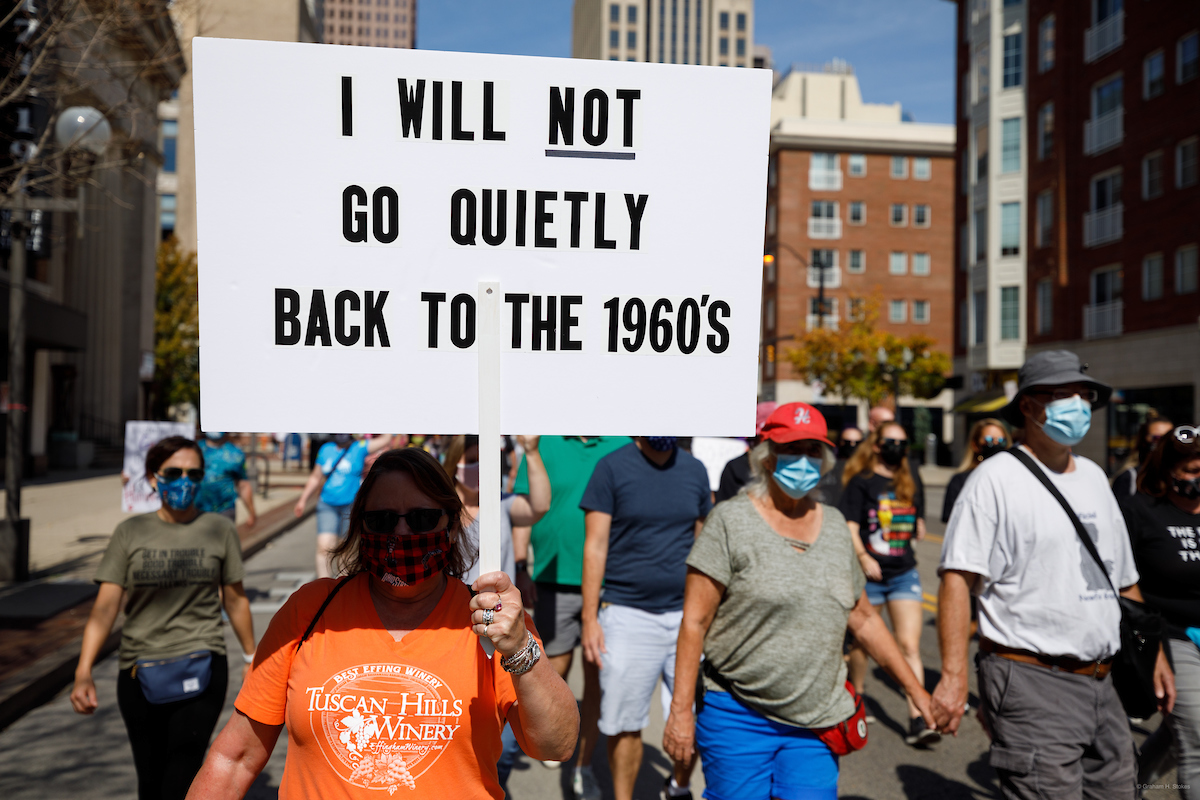
    Anti-abortion demonstrators march. (Photo by Robert Zullo/ States Newsroom).

    BY: SUSAN TEBBEN – Ohio Capital Journal

    Ohio Gov. Mike DeWine signed a new abortion law on Wednesday that looks likely to close Southwest Ohio abortion clinics.

    DeWine signed Senate Bill 157 without further comment, along with several other bills that passed through the legislature in their last work week before the holidays.

    The bill was condemned by abortion providers, who said not only that portions of the bill that direct doctors on the amount of care they should give babies born as a result of a “failed abortion” are already part of medical oaths and Ohio law, but that the bill would impact wanted pregnancies in which complications become a factor.

    “At this moment, we’re at a crisis point for abortion access in Ohio and across the country,” said Kersha Deibel, CEO of Planned Parenthood Southwest Ohio. “…Stripping abortion care from Southwest Ohio will cause havoc that disproportionately impacts our communities.”

    The Southwest Ohio region of Planned Parenthood also opposes the legislation because of changes to hospital transfer variance agreements between abortion providers and physicians, prohibiting for doctors who are funded by Ohio’s public medical schools from participating.

    “There is no medical justification for disallowing qualified, experienced physicians from agreeing to provide backup coverage for abortion providers under a variance,” said Dr. Adarsh Krishen, chief medical officer for Planned Parenthood of Greater Ohio. “In fact, if the state was genuinely concerned for patient safety, such physicians would be ideal. Instead, this provision is only meant to make it more challenging for abortion providers to remain licensed and operational.”

    The religious policy lobby Center for Christian Virtue praised the law and the potential shut down of Women’s Med Center in Dayton and Planned Parenthood of Southwest Ohio’s clinic, saying the state “has made a bold statement about where our values lie.”

    DeWine did not comment on the bill with his announcement that the bill had been signed.

    The bill is one of a few pieces of abortion legislation brought by the legislature this year. Another measure would make abortion illegal with the rollback of the U.S. Supreme Court decision in Roe v. Wade.

  • New Releases! – Gift Cards! – RESTOCKS GALORE! – Happy Holidays!

    New Releases! – Gift Cards! – RESTOCKS GALORE! – Happy Holidays!

    PLAID ROOM RECORDS

    IN HISTORIC DOWNTOWN LOVELAND

    New Releases for 12/23!

    Hey y’all! This week’s new releases are obviously a little light due to the holidays! We did manage to grab a very small amount of the Mars Volta represses, imported straight from Germany. Apologies in advance for small quantities and high prices! A few other stragglers here, including The Descendents, Robert Pollard, Tommy Guerrero, Morgan Wade, Pylon, and more!

    We’re offering top dollar for the records in your closet or basement!

    Browse New Releases

    Before we get into the restocks – here’s a quick recap of our store hours over the next couple weeks!

    December 23: 12-7pm
    December 24-25: CLOSED
    December 26: 12-5pm
    December 27-28: CLOSED
    December 29-30: 12-7pm
    December 31: 12-5pm
    January 1: CLOSED
    January 2: 12-5pm

    Gift Cards!

    Gift cards are new this holiday season for our non-local folks! We finally got our in-store and online systems integrated so that you can buy gift cards online for use in-store or online! If you’re not local to us – and looking for that last minute stocking stuffer – let your loved ones know we offer gift cards here!


    Restocks below! A massive week for receiving – close to 5,000 pieces were checked in – including almost 800 unique titles that are still in stock. For a complete list, check the link below! Highlights listed directly below that. We especially wanted to call out the Cannonball Adderley release – we’ve had so many folks ask us about this and we never got copies in on the original release date!

    Family owned and completely independent, we are proud to offer personal, high quality service along with a vast selection of over 45,000 new and used LPs! 122 West Loveland Avenue
    Loveland, OH 45140

    Browse ALL restocks from this week

  • Recreational marijuana backers submit signatures

    Recreational marijuana backers submit signatures

    BY: NICK EVANS – Ohio Capital Journal

    A group pushing for recreational marijuana in Ohio is one step closer to the ballot after the Coalition to Regulate Marijuana Like Alcohol submitted 200,000-plus signatures to state officials. Now county boards of elections begin the work of verifying signatures.

    The coalition’s plan would allow Ohioans over 21 possess, use, and purchase cannabis. They propose a 10% tax on sales that would fund social equity and addiction programs. Another portion of that revenue would bolster the general funds of cities that choose to allow dispensaries within their borders. The plan would even allow adults to grow a limited amount of cannabis at home.

    “The success of our petition drive shows just how eager Ohioans are to end prohibition and legalize the adult use of marijuana,” coalition spokesman Tom Haren said in a press release. “We look forward to receiving the results of the Secretary of State’s review, and are eager to begin working with legislators on this important issue.”

    Signature gatherers overshot the required threshold of 132,877 by about 70,000 to provide a buffer for any signatures that get thrown out. So long as they meet the required overall number and get a designated portion from at least 44 of the state’s counties, the proposal goes to state lawmakers. If lawmakers choose not to approve the measure, the coalition has the chance to get another round of signatures to put their proposal on the ballot.

    At this point, the ballot seems like the most likely path to approval, but that doesn’t mean the GOP-controlled legislature is blind to the shortcomings in Ohio’s existing marijuana program. Sen. Steve Huffman, R-Tipp City, has shepherded a measure through the Senate that would make significant under-the-hood changes to the state’s marijuana policy while leaving the overall structure intact. That bill passed the Senate last week.

    But provisions like allowing homegrown marijuana are a non-starter for Huffman.

    “Because that’s recreational marijuana,” Huffman said in a November interview about his bill. “If you’re going to grow five for your medical purpose, you know, the neighbor kids going to steal one, [and] you’re going to sell a couple.”

    And Huffman isn’t alone. A recent poll conducted by Gongwer News Service shed light on how much the ground is shifting when it comes to marijuana — 43% of Republican lawmakers supported adult use, dead even with those who oppose it.  But when it comes to homegrown marijuana, the GOP is far more unified in its opposition. When it comes to personal use, 64% of GOP members registered opposition and 86% said they are against people growing cannabis for commercial use.

    Assuming the coalition’s signatures meet requirements, lawmaker have four months to act on their proposal.

  • Prevention Called Key to Heading Off COVID, Cold, Flu

    Prevention Called Key to Heading Off COVID, Cold, Flu

    Mary Schuermann Kuhlman and Public News Service

    Whether it’s COVID-19, the seasonal flu or a cold, health-care professionals say reducing your risk of illness starts with prevention.

    All three respiratory diseases are caused by viruses and share similar symptoms including a cough, sore throat and runny nose.

    Elena Roach, a certified pediatric nurse practitioner for The Healthcare Connection, a Cincinnati-area federally qualified health center, said actions we take to prevent the spread of COVID can reduce the risk of getting a cold or the flu.

    “Flu is spread from respiratory secretions, kind of like COVID,” Roach explained. “And you sneeze and cough and eat and drink and talk, flu can spread that way as well.”

    Roach pointed out last year’s mild flu season was the result of precautions taken during the pandemic. Those steps include avoiding close contact with people outside your household, frequent handwashing, and wearing a face mask while in indoor public places.

    Ohio’s daily COVID case count has nearly doubled in two months, now at roughly 7,200. Influenza activity still is low, but starting to rise.

    COVID spreads more easily than the flu and common cold and causes more serious illnesses, but Roach noted much like COVID, an infected person can spread the flu before they feel sick.

    “The flu is contagious even before symptoms start for about four days,” Roach emphasized. “And then for people who have been around somebody with the flu, like living in close quarters or close contact, symptoms can usually start within a week after contact.”

    A test can determine whether an illness is COVID or the seasonal flu, and Roach recommended calling a health-care provider if you are experiencing fever, body chills and other respiratory symptoms.

    “The good thing about the flu is that there is a treatment for the flu called Tamaflu,” Roach advised. “And as long as you start that within 72 hours of the onset of symptoms, it reduces your symptoms and the longevity of the course of the illness. “

    She said you can boost your protection from both illnesses by getting vaccinated. According to the Centers for Disease Control and Prevention, people who are vaccinated and become infected with flu or COVID experience fewer symptoms and are much less likely to be hospitalized.

    References:  


    COVID-19 Dashboard Ohio Dept. of Health 2021
    Flu Dashboard Ohio Dept. of Health 2021
    Flu information CDC 12/20/2021
    COVID-19 information CDC 02/22/2021

  • Gov. DeWine deploys National Guard to hospitals as COVID deaths surpass 2020

    Gov. DeWine deploys National Guard to hospitals as COVID deaths surpass 2020

    Photo by John Moore | Getty Images.

    BY: NICK EVANS –  Ohio Capital Journal

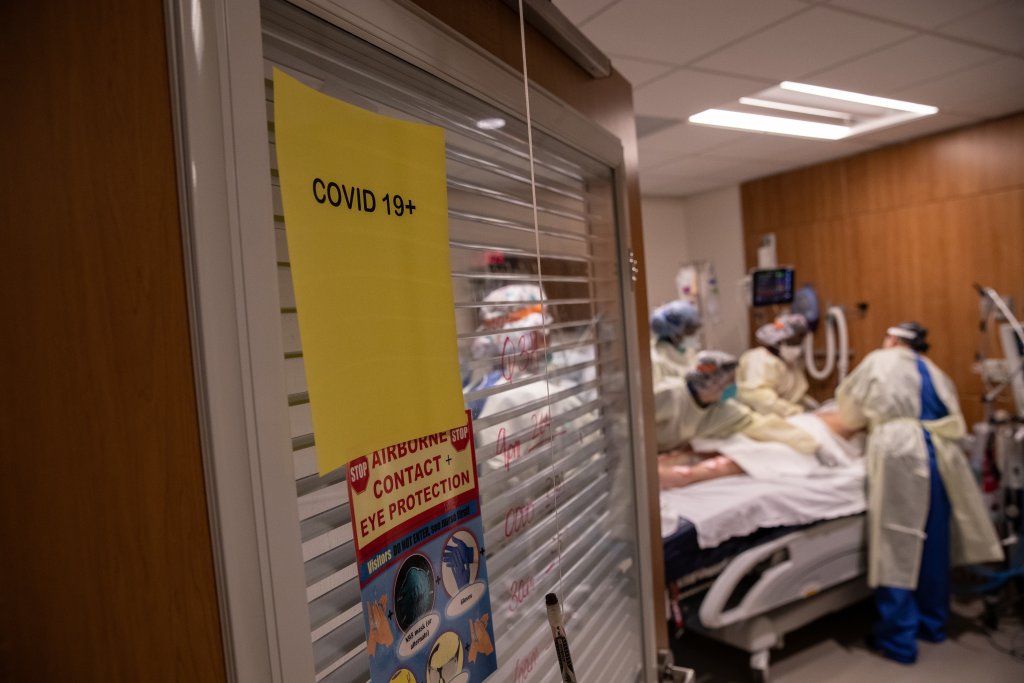
    Gov. Mike DeWine is deploying more than 1,000 national guard troops to Ohio hospitals ahead of a busy holiday season that could swell the number of COVID-19 patients. The state is also in talks with a hospital staffing agency that could bring in additional workers from out of state.

    “This will allow for Ohio hospitals to bring in qualified nurses and other medical personnel from out of state to fill needed positions and help ease some of the pressure on hospitals and their staff over the critical holiday period,” DeWine explained.

    The governor’s move comes as the state faces a sobering reality: More people have died of COVID-19 this year than last despite widely available and effective vaccines. Many residents have stubbornly refused to get vaccinated, and the arrival of the highly contagious delta variant has underscored the consequences of their collective inaction. The nearly 14,000 Ohioans who have died this year were almost exclusively — about 95% — unvaccinated individuals.

    Now, with the even more contagious omicron variant spreading, hospitals are bracing for yet another wave of the virus. According to Mike Abrams who heads up the Ohio Hospital Association, facilities around the state are teetering.

    “In recent weeks hospitals have had to make difficult decisions to ensure hospital services were available including postponing elective surgeries, transferring patients to other facilities and diverting EMS services,” Abrams said in an emailed statement. “We are also seeing an increase in influenza cases. The ongoing workforce challenges facing our members coupled with latest surge of COVID-19 patients has created an urgent need for workforce assistance.

    DeWine’s office notes most hospitals in Northern Ohio have suspended elective surgeries and in the central and southeastern part of the state, many are beginning to follow suit. But after almost two years, DeWine said the nature of the need has changed.

    “Earlier in the pandemic, our concern in our hospitals was about beds, was about space, today is about personnel,” DeWine said. “22 months. 22 months of this pandemic has taken its toll on our health care workers, and that is certainly, certainly understandable.”

    Of the 1,050 national guard troops being deployed, about 150 are medically trained personnel who can assist in helping patients. DeWine insisted that he and Adjutant General John Harris have worked together to ensure the deployment won’t mean pulling people away from a hospital day job to go work at a different hospital. The remaining 900 troops will be tasked with support services.

    “They will do many things to help the hospitals in this time of great, great crisis,” DeWine said. “It will involve transport within the hospital, food and the environmental work that goes on in hospitals and is so very important every single day.”

    The governor’s office expects the deployment to begin Monday. There’s no specific timetable for when it might end. While the governor says talks with the staffing agency are advanced, he would not put a timeframe on when that agreement would be finalized.

  • Ohio Supreme Court dismisses lawsuit targeting vaccine lottery

    Ohio Supreme Court dismisses lawsuit targeting vaccine lottery

    Pictured is the Thomas J. Moyer Ohio Judicial Center where the Ohio Supreme Court meets. Photo courtesy Wikimedia Commons..

    BY: JAKE ZUCKERMAN – Ohio Capital Journal

    The Ohio Supreme Court dismissed a lawsuit Thursday that alleged the state’s COVID-19 vaccine lottery program was an illegal spend and that mask mandates violate a Holocaust-era ethics doctrine around experiments with human subjects.

    The court dismissed the suit on legal grounds like standing and jurisdiction and left alone the vaccine conspiracy theories that undergirded the lawsuit.

    The plaintiffs, Ohio Stands Up — a group of citizens who have filed multiple lawsuits challenging mask mandates and vaccines — sought to block the “Vax-a-Million” lottery. They sought to do so to “prevent child abuse and the criminal battery of children in Oho by dangerous experimental and untested DNA altering poisonous mRNA shots.”

    The suit accused Gov. Mike DeWine of violating the Nuremberg Code, a set of principles that emerged after the Holocaust and guide the ethics of conducting experiments on people. They emphasize obtaining consent of the subject. Ohio Stands Up cited mask mandates as one violation, and baselessly alleged that vaccinated people “emit spiked protein cells,” turning them into “biological weapon[s]” who could harm unvaccinated people.

    Overwhelming real-world research indicates COVID-19 vaccines have been safe for their more than 200 million American recipients and are powerful protectors against hospitalization and death from the disease.

    In a concurring opinion, Justice Sharon Kennedy agreed the court should dismiss the lawsuit for legal shortcomings, but noted “I express no opinion regarding the weighty constitutional issues that Ohio Stands Up raises.”

    Robert Gargasz, an attorney for Ohio Stands Up, said in an email the court ruling means that “Ohioans will need to be protected in the first instances by judges now occupying the Common Please Courts in all of Ohio’s 88 counties.”

    When asked if he stands by his claim that vaccinated people are “biological weapons,” Gargasz responded with a string of 20 emails citing sources including the prominent anti-vaccine group Children’s Health Defense, a blog titled “welovetrump.com” and an article titled “MEDICAL HOLOCAUST against children.”

    A spokesman for DeWine declined comment, as he said is the governor’s policy on “frivolous” lawsuits.

    The dismissal Thursday is the latest loss for Ohio Stands Up on mostly procedural grounds — judges have by and large refrained from getting into some of the dubious medical claims inside. Earlier this year, the group dropped a similar lawsuit against the state Health Department regarding COVID-19 policy after U.S. District Judge James Carr called their allegations nearly “incomprehensible” and some of the supporting evidence to be of “dubious provenance and admissibility.”

    The attorney on that case, Thomas Renz, has also filed six other lawsuits in federal courts around the country making similar claims, sometimes on behalf of national anti-vaccine activist group America’s Frontline Doctors.

    Judges in Kentucky, Maine and Ohio have dismissed those lawsuits (some are under appeal), according to a search of federal court records. His lawsuits against New Mexico Gov. Michelle Lujan Grisham, another in Alabama against the secretary of the U.S. Department of Health and Human Services, and another suit against DeWine in Ohio remain open.

    Previous lawsuits have identified individual members of Ohio Stands Up, including state board of education member Kirsten Hill. However, Hill said in an email Wednesday she was not involved with the Supreme Court effort, which doesn’t personally identify any of the plaintiffs.

    Ohio Stands Up has raised nearly $149,000 through a GoFundMe account, with donations used to “continuously fund legal services” through Renz and Gargasz. The page hosts a message from Renz, who did not respond to an email, written in July.

    “The lie is coming unraveled but the most dangerous animal is a cornered animal,” the post from Renz states. “We need to fight harder now than ever or trust me when I say that vaccine mandates and permanent lockdowns will be reality.”

  • Abortion bill passage could bring clinic closures in Cincinnati and Southwest Ohio

    Abortion bill passage could bring clinic closures in Cincinnati and Southwest Ohio

    BY: SUSAN TEBBEN – Ohio Capital Journal DECEMBER 9, 2021 12:50 AM

    The newest abortion bill to pass the Ohio House could spell the closure of Southwest Ohio clinics and the criminalization of doctors.

    Despite multiple Democrat attempts to amend the bill and remove the language that would affect doctors’ ability to transfer patients from abortion facilities, Senate Bill 157 passed Wednesday afternoon along party lines, 59-33.

    State Rep. Allison Russo, D-Upper Arlington, attempted to bring in the same amendment she tried to include in committee hearings on the bill, to remove the bill’s provision prohibiting physicians who are affiliated with and funded by public medical schools and institutions from having transfer agreement variances with abortion clinics.

    This would effectively close clinics in Southwest Ohio, Russo emphasized in Wednesday’s House session.

    “As a reminder to my colleagues, these consulting physicians that are required in order to get a variance from these transfer agreements, do not actually perform abortion services,” Russo said. “They are only consulted by the facility in the very rare case when there is an emergency and the need to transfer a patient to the hospital.”

    After the bill was passed, Planned Parenthood’s Southwest Ohio region confirmed this would in fact be true, and is something they plan to fight against.

    “Stripping abortion care from Southwest Ohio will cause havoc that disproportionately impacts our communities,” said Kersha Deibel, CEO of Planned Parenthood Southwest Ohio. “This isn’t the end, and we will continue to fight — abortion is still legal in Ohio.”

    The organization said the closure of Planned Parenthood and Women’s Med of Dayton through this bill “would make Cincinnati the biggest metropolitan (area) in Ohio without an abortion provider.”

    The bill was originally slated by sponsors to prevent doctors from allowing a fetus born alive after an attempted abortion to die without medical intervention, and to create another reporting system for “failed abortion” cases.

    The chairman of the House committee that passed SB 157, state Rep. Susan Manchester, R-Waynesfield, stood in support of the bill on the House floor on Wednesday.

    “This is an important piece of legislation that provides a system to protect infants that are born alive after an abortion by enforcing the administration of prevailing standards of care that apply to every child,” Manchester said.

    Testimony made throughout the Senate and House committee process by abortion and pro-choice advocates focused on current law that already prohibits doctors from failing to provide care in a life-saving situation, and reporting requirements already in place by the Ohio Department of Health.

    Opponents of the bill also said “failed abortions” are a rare occurrence, as shown by state data.

    The bill became more controversial once the amendment on physician variance agreements was added, after which abortion advocates called the bill “dangerous,” even saying the bill would impact complicated pregnancies in hospitals, not just abortions in surgical facilities.

    Another amendment tabled by the GOP majority attempted to remove the criminal charges physicians face for not following documentation procedure created in the bill. State Rep. Beth Liston, D-Dublin, presented the amendment just as she did in the previous House committee.

    In the bill, doctors could face felony charges for failing to provide care to infants after an attempted abortion (something that is already a part of Ohio law), and for failing to file the proper paperwork on “failed abortions” as prescribed in the bill.

    Liston said the bill impacts “futile” medical situations in which resuscitation of the baby isn’t scientifically possible and keeping the parent from holding the child only adds to the trauma of the situation.

    “The only situations this bill impacts are those emergency circumstances where the woman’s life is at risk or there is a serious complication with the fetus,” Liston said. “These are desired pregnancies and devastating situations to all involved.”

    State Rep. Kristen Boggs, D-Columbus, tried to add an amendment for workplace protection for pregnant Ohioans, and state Rep. Stephanie Howse, D-Cleveland, also tried to amend the bill to make workplace accommodations for pregnancies. Also attempted as an amendment was the inclusion of paid family leave, which has been a measure state Rep. Janine Boyd, D-Cleveland Heights, has championed for multiple general assemblies.

    All amendments were tabled along party lines.

    The bill is headed to conference committee because of a technical change added during hearings in the House Families, Aging & Human Services Committee, and could head to Gov. Mike DeWine’s desk in the next week.

    DeWine has consistently approved of anti-abortion legislation, so it seems unlikely he will veto the bill.

    Abortion is legal up to 22 weeks gestation in Ohio.