He so likes to make DORA cup deliveries to the bars, bistros, carry-outs, and restaurants in Loveland’s downtown historic district.
Give Apex a call when your needs arise for the latest fashions in casual sportswear, team uniforms, and a world full of cool advertising and promotional items.
Apex Specialties, your local supplier for over 30 years. Be sure to mention our Sock Monkey and receive a special bonus on your order. And we aren’t talking bananas either.
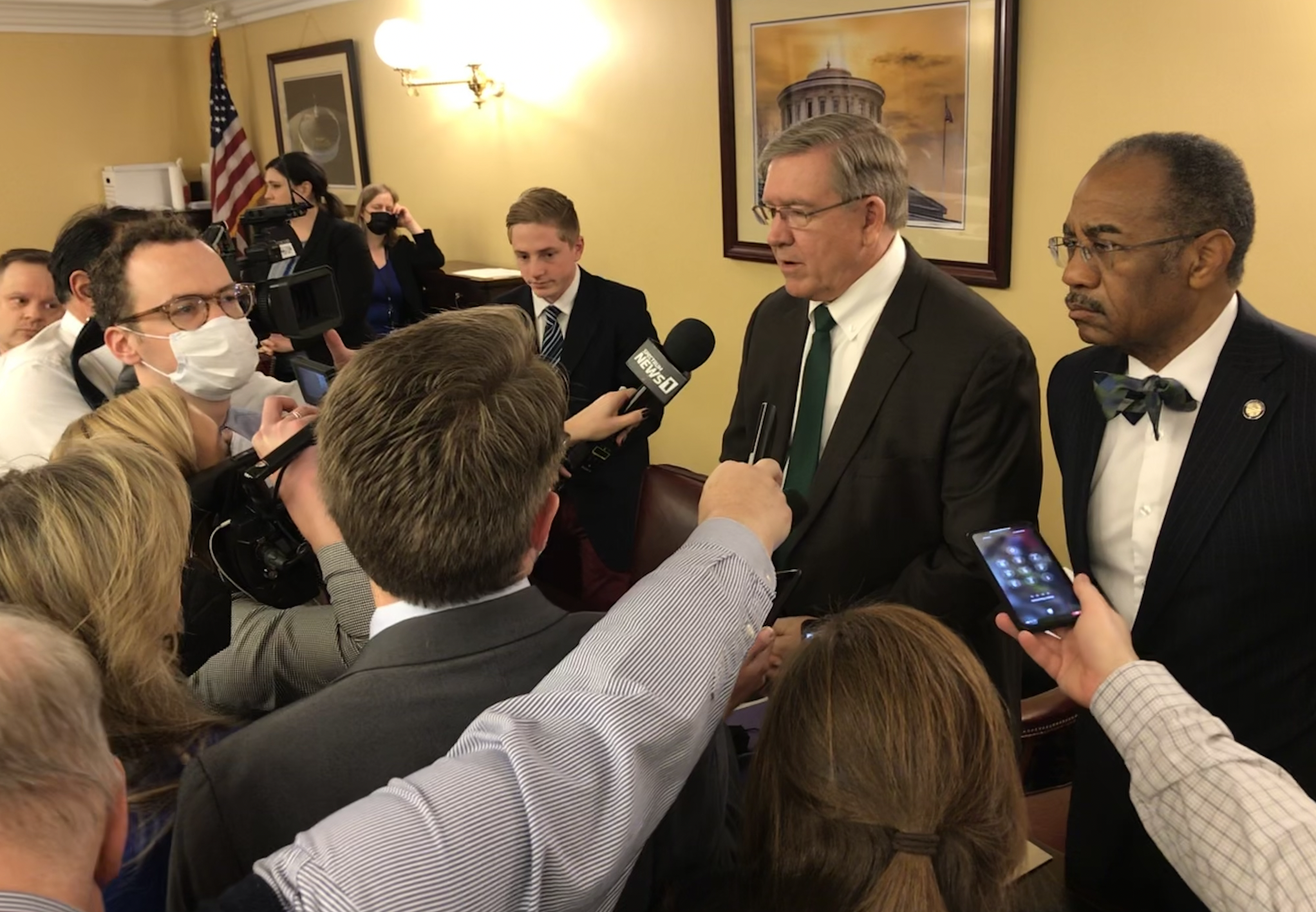
House Speaker Bob Cupp, center right, and state Sen. Vernon Sykes, far right, co-chairs of the Ohio Redistricting Commission, speak to media after Tuesday’s meeting to restart the legislative redistricting process. (Photo: Susan Tebben, OCJ)
The Ohio Redistricting Commission began anew on Tuesday, though the details of their newest legislative mapping process are still up in the air.
In its Tuesday meeting of the ORC, commission co-chairs House Speaker Bob Cupp and state Sen. Vernon Sykes said work to correct problems identified by the Ohio Supreme Court with legislative district maps has already begun between the Democratic and Republican caucuses.
The commission is working on a deadline of Saturday, which is 10 days from the date the supreme court made their decision. Cupp said the commission is keeping in mind meeting the deadline so that the maps can be considered for any objections, which have to be submitted within three days of map approval.
“This is a very time-sensitive matter, and we’re well aware of that,” Cupp said.
Secretary of State (and ORC member) Frank LaRose said more than one deadline needs to be met in the process.
“The General Assembly has ordered me to conduct an election on May 3, and I am committed to making sure that that happens,” LaRose told the commission. “But without finality on maps, that starts to become mechanically impossible very soon.”
Some deadlines are already doomed because of how much time the redistricting process has taken, LaRose said. This weekend is the deadline for the state to submit the Federal Write-In Absentee Ballot forms for the next election.
“That’s not going to be met because we’re not going to be ready to do that this weekend,” LaRose said.
Because of the timeline, LaRose said he’s asked the legislature for temporary authority to adjust the administrative deadlines between the candidate filing deadline at the beginning of February and the May primary.
The request is similar to the one approved under Senate Bill 258, the bill that approved the congressional district lines in November, that moved deadlines for the congressional elections.
However, Cupp said he doesn’t sense “any appetite to change either the filing deadline or the primary election,” even if administrative deadlines change.
The commission has about a week to come up with new maps that follow all constitutional regulations for redistricting, and aim for a 54% Republican/46% Democratic balance in the state aligned with statewide voter preferences. Sykes said the commission has agreed and shared data to be used in the mapmaking process, which will be the 2016 to 2020 statewide election data.
Cupp said the commission is committed to working toward that 54-46 ratio.
“(The supreme court has) determined that that needs to be closely followed,” Cupp said.
Last week, in a 4-3 decision, the state’s highest court rejected maps approved by the commission in September 2021. Justices in the majority vote said the commission did not even attempt to meet constitutional standards to create a map that doesn’t favor or disfavor one political party over another, or use the proper data to calculate the statewide voter preferences.
The court found that Cupp and Senate President Matt Huffman were the only two commission members “involved when the plan that was ultimately adopted was drawn,” and the principal mapmakers were not asked to comply with Section 6 of the constitution, which prohibits partisanship.
At the Tuesday meeting, Gov. Mike DeWine – father of Supreme Court Justice Patrick DeWine and dissenter in the redistricting ruling – took time to read over the court’s decision on legislative redistricting and level-set the commission on the task at hand. He said the commission should “take affirmative steps” to comply with the constitutional standards, and make certain everyone from commission members to staffers know they need to comply.
“So, anybody who is drawing a map, anybody who works with any members of this commission should be instructed by the individual commission members to do that,” DeWine said.
The newest member of the commission, newly minted Democratic Ohio House leader state Rep. Allison Russo, D-Upper Arlington, was sworn in to fill the position left vacant by former House Minority Leader Emilia Sykes. She said the commission should take its second chance at the maps “to do what is right by Ohioans and deliver bipartisan 10-year maps.”
“We should start with the assumption that it is absolutely possible, and move forward,” Russo said after the meeting.
Russo told commission members during the meeting and the press afterward that she is pushing for public meetings to be scheduled quickly before the ORC loses the opportunity.
The commission did not set up any future meetings or give any indication of how the map-making process is going during Tuesday’s meeting. Cupp said he and Sykes will be meeting to discuss a schedule for future meetings “as business would warrant us to.”
“Obviously this is a little uncertain process, it’s new,” Cupp said. “We’re kind of feeling our way as we go.”
Anti-gerrymandering advocates attended the meeting and said they were encouraged to hear the court’s expectations playing into the first meeting, but saw a lack of public input as the process started.
“It would be better to have an understanding of what maps they’re starting with, when hearings will be, how the public can participate, and so it’s my hope that even within the next 24 hours we get a lot more information,” said Jen Miller, executive director of the League of Women Voters of Ohio.
One of the many legacies left by former Bengals head coach Marvin Lewis is he wanted his players to know who came before them.
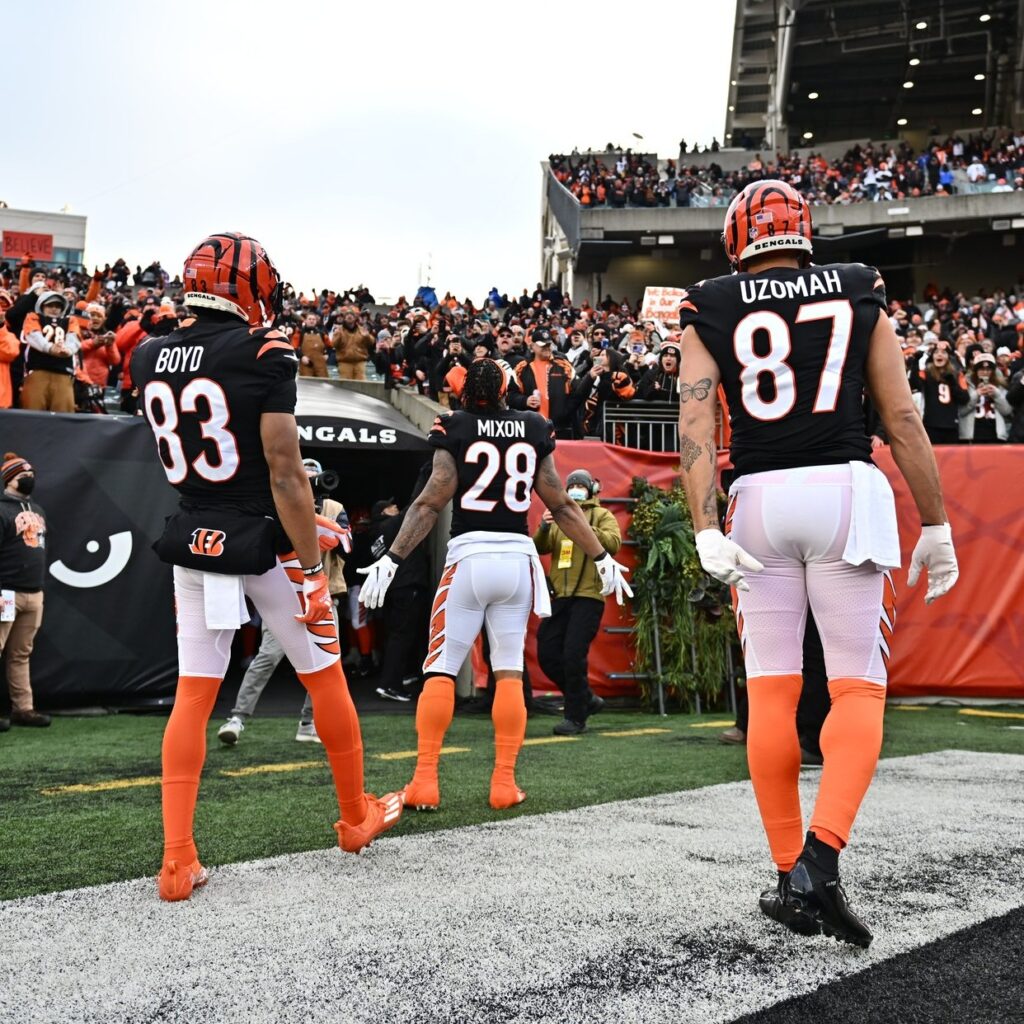
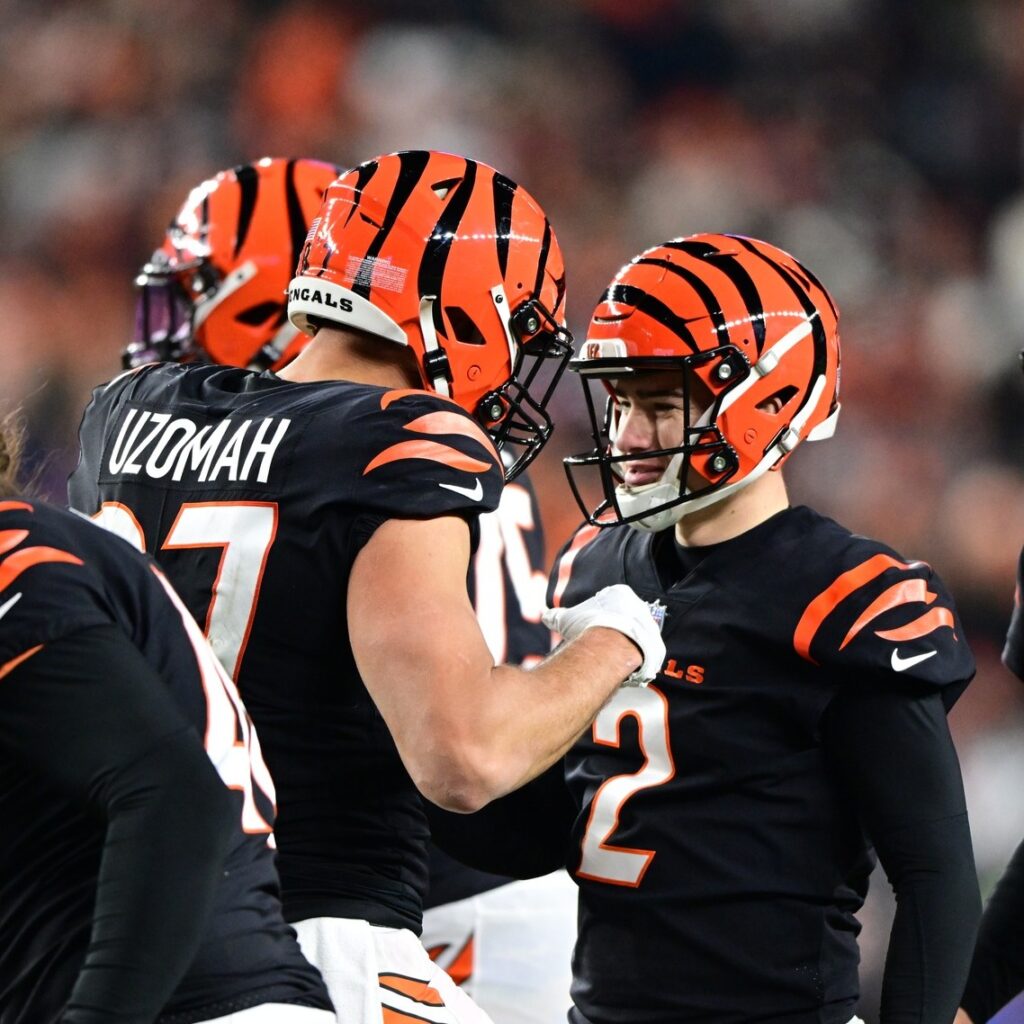
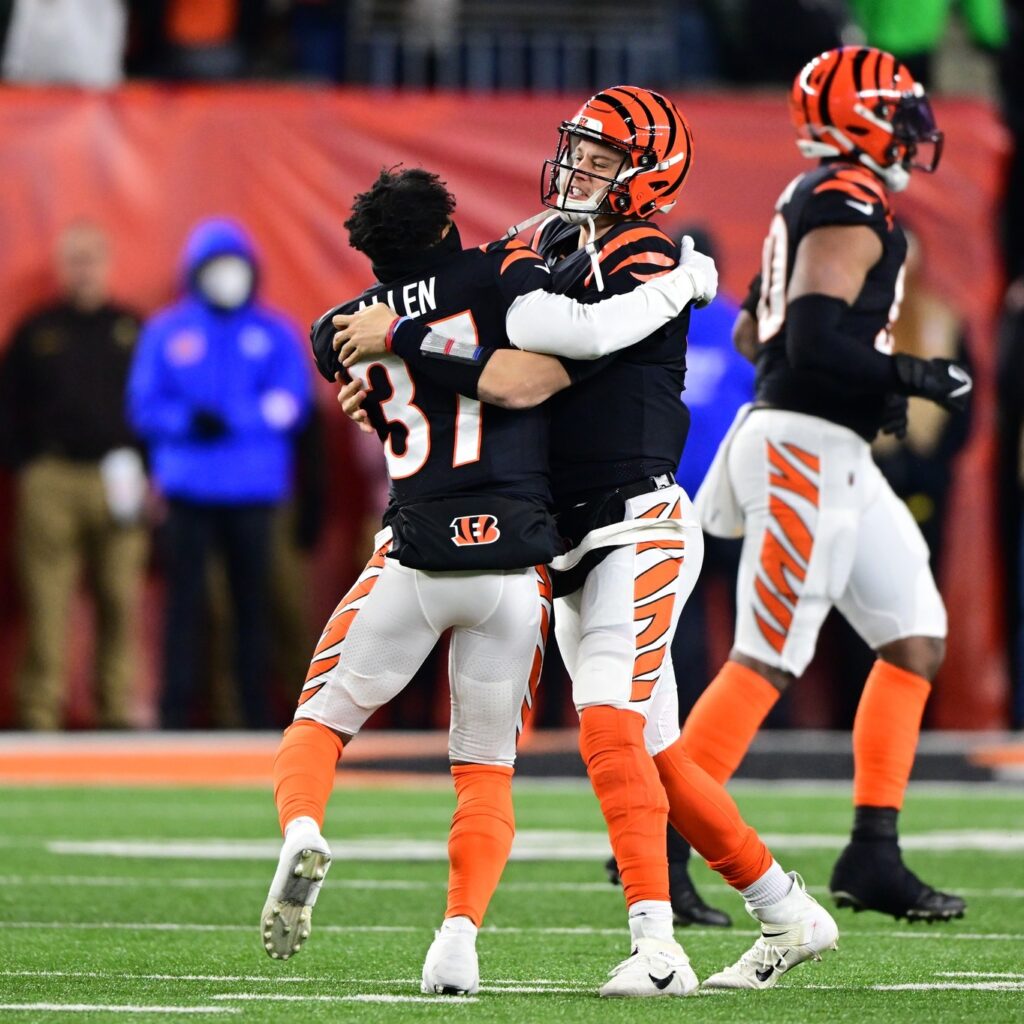
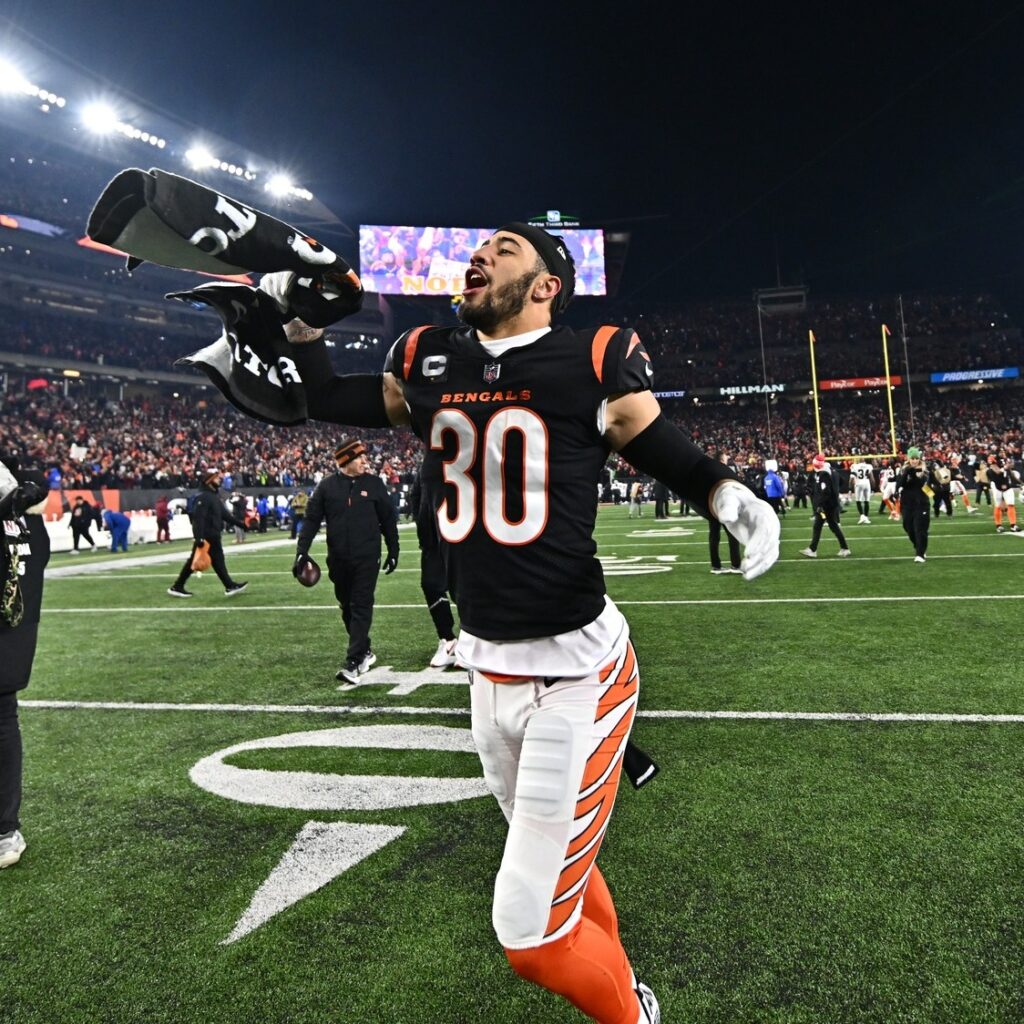
The Pro Bowl list in the team’s main auditorium at Paul Brown Stadium is where tight end C.J. Uzomah saw Rodney Holman’s name and that’s why he wore his No. 82 jersey at his postgame news conference that was just as wild as Saturday night’s 26-19 Wild Card victory over the Raiders.
“I’ve seen Rodney Holman’s name since I’ve been here, for seven years. I did some research and I know he was the last tight end to win a playoff game, went to a Super Bowl with the Bengals,” Uzomah said. “I thought it would be a nice tribute of things to come and kind of pay homage and say this is how it’s going to be. We’re going to run the table and win the whole thing.”
Uzomah’s research began with Holman, along with Bob Trumpy regarded as the Bengals’ best all-round tight ends catching and blocking, making it to three straight Pro Bowls from 1988-1990. That spanned the 1988 Super Bowl trip and ’90’s last playoff win. He may have also gleaned that Holman caught Boomer Esiason’s longest pass of that 41-14 win over the Oilers, a 46-yarder during his two-catch, 51-yard day that also involved six rushers going for 187 yards.
Uzomah played like a Pro Bowler Saturday night in the biggest game of his career. He was a perfect underneath weapon for quarterback Joe Burrow’s patience against the Raiders’ stubborn shells in the secondary.
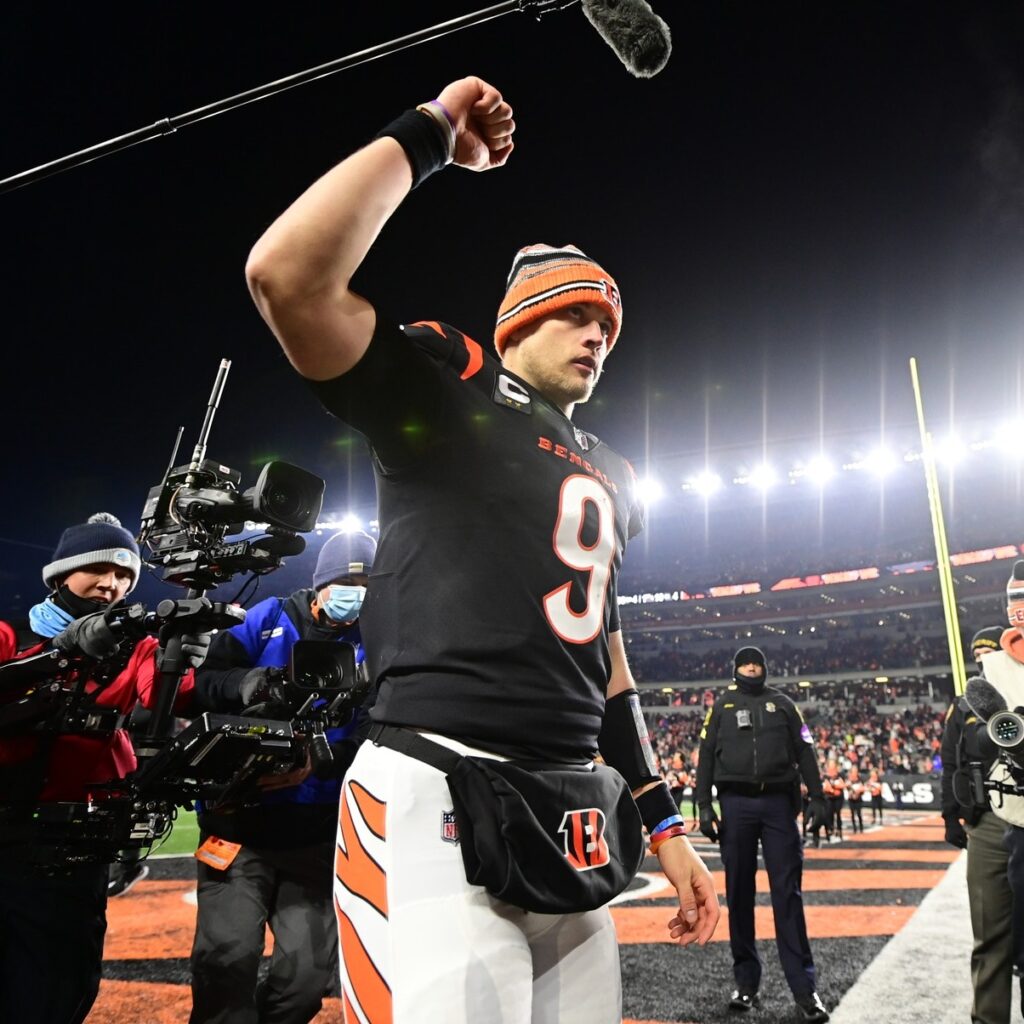
Uzomah’s six catches for 64 yards marked his best day since his 91-yarder in the Oct. 24 win in Baltimore. His seven-yard touchdown catch on third down, smoked through three defenders, was the 10th play of an opening drive quarterback Joe Burrow said set the tone for a night they would score points the first five times they had the ball.
He also helped hold the Raiders’ feared pass rush, No, 1 in the league generating pressure, to two sacks and five hits.
“I feel like I put it in a good spot. I threw it right out of the break,” Burrow said of the dart he threw for the touchdown, “and C.J. did a good job reading the coverage, and understanding that he doesn’t need to go anywhere, just turn around and he’s going to get the ball.”
Uzomah said he had no choice.
“Right when I broke the huddle and saw the coverage I knew it was coming to me. I knew he was going to throw it. I just had to hang on. Right when I turned I saw his eyes and said, yep, touchdown. Let’s go,” Uzomah said. “Joe threw me a dot. That was an incredible throw.”
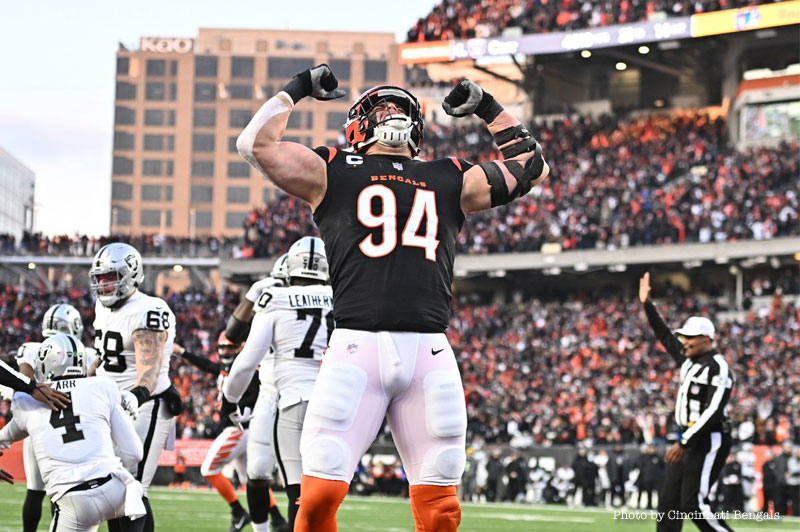
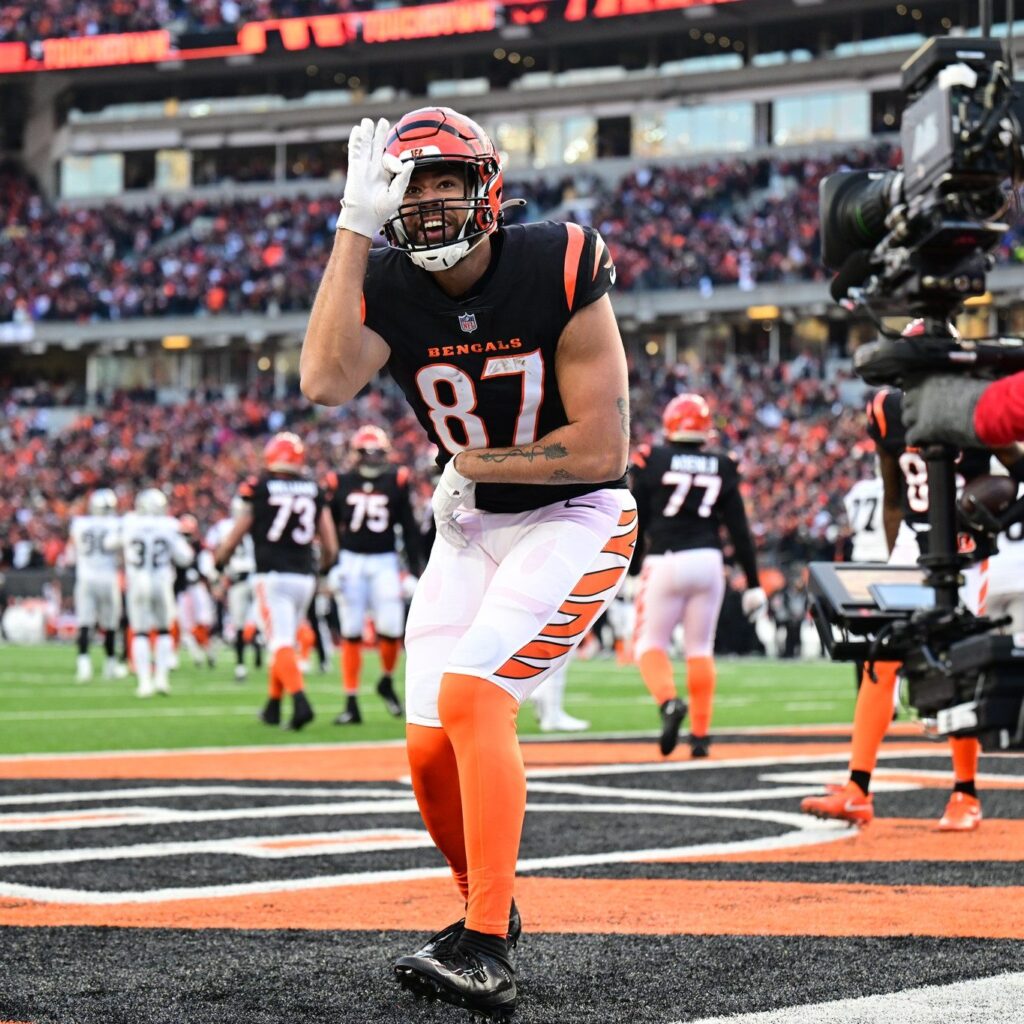
Maybe even more incredible is Uzomah’s touchdown celebration. It was even better than burying a time capsule under the two-yard-line, site of linebacker Germaine Pratt’s interception with 12 seconds left.
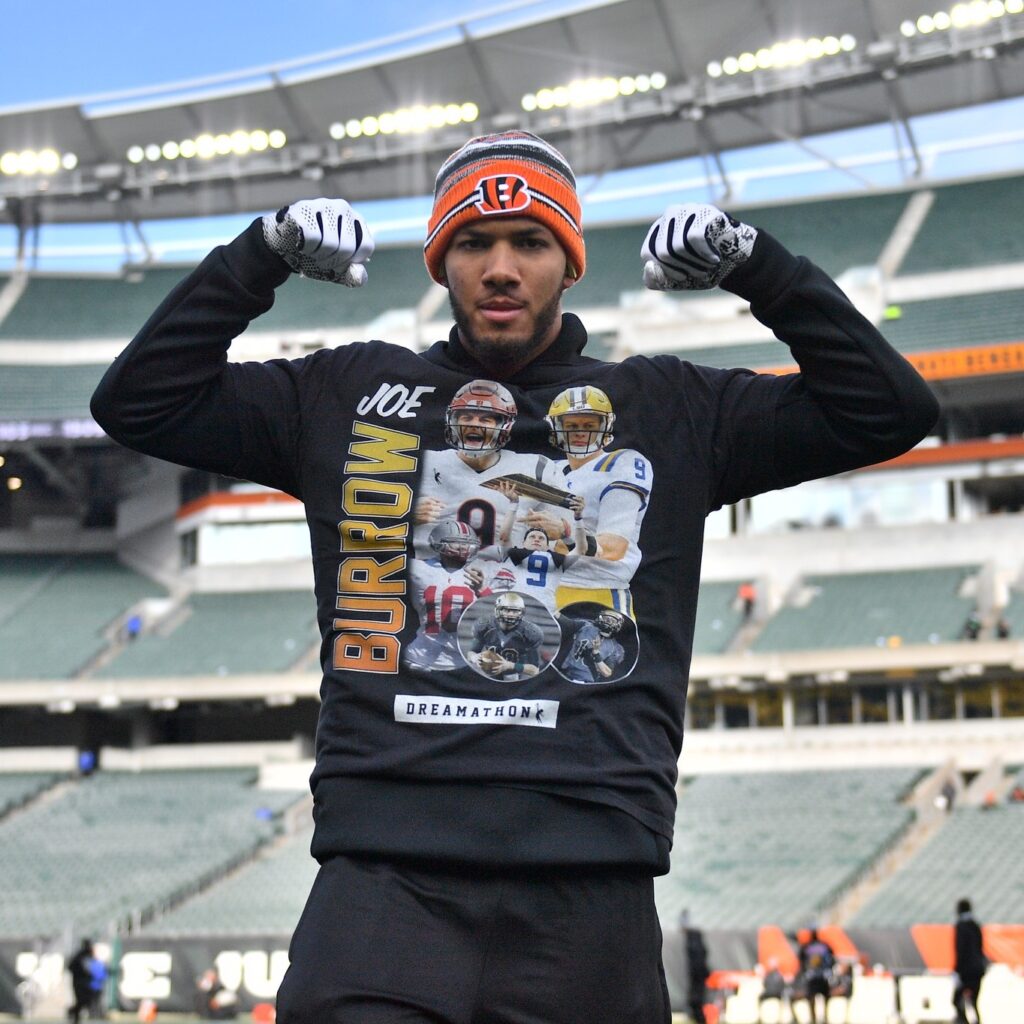
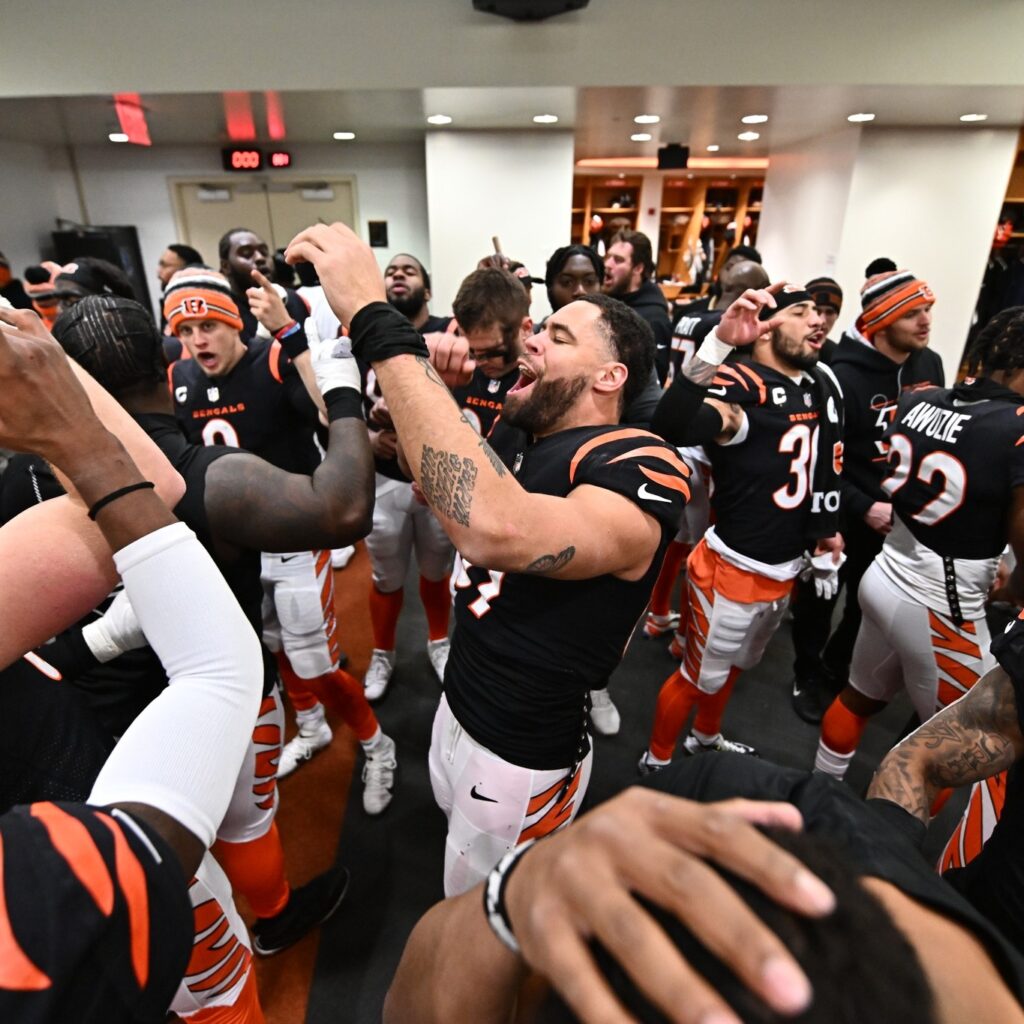
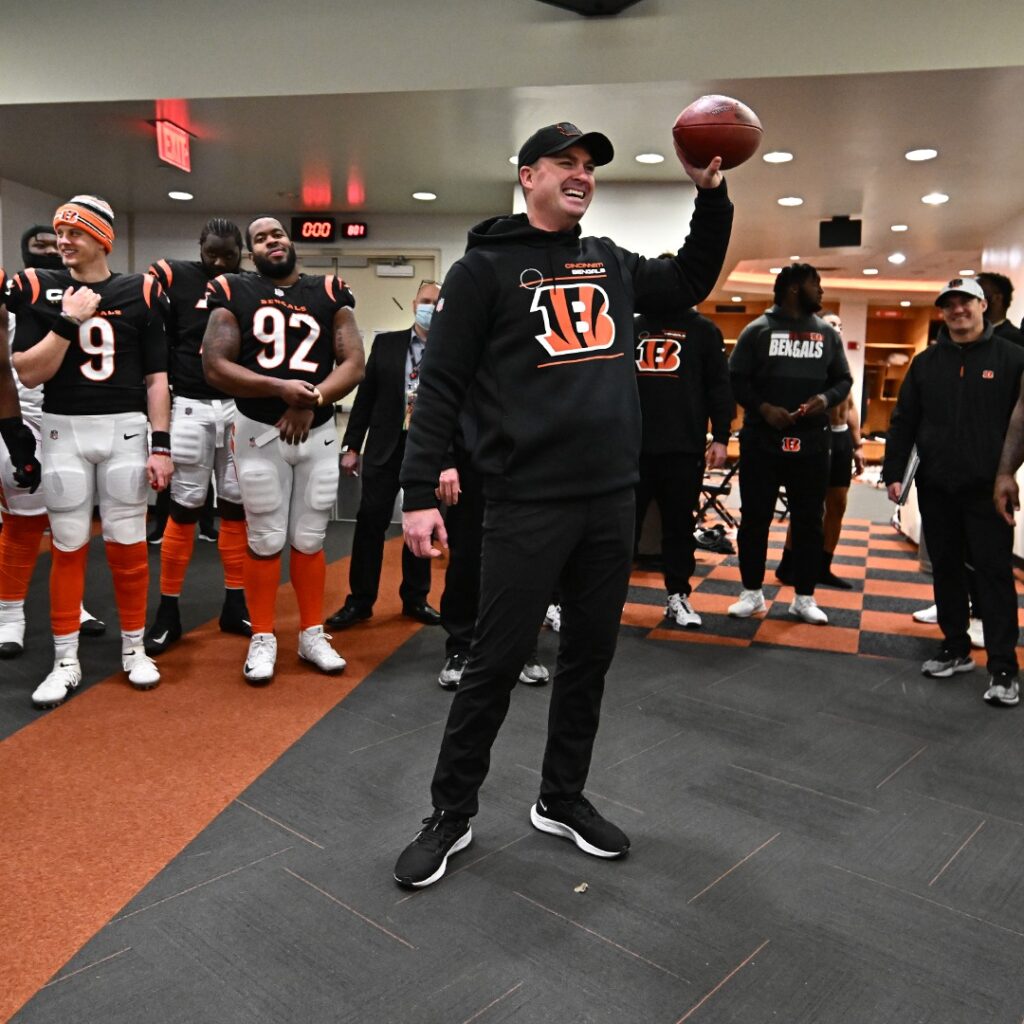
Photos from the Bengals FaceBook Page…
Uzomah wanted to pay homage to both Saturday night’s Ruler of the Jungle, Ickey Woods and his Shuffle, as well as rookie wide receiver Ja’Marr Chase’s New Orleans’ “The Griddy,” that has become the rage with Chase’s 13 touchdowns.
So he started with “The Shuffle,” and merged it with “The Griddy” It also looked like he threw in a chug at the end to honor his old fellow tight end Tyler Eifert, the last Bengal to score 13 touchdowns.
‘Yo, if I score, I’m going to do the Ickey Shuffle into the Griddy.’ He said, ‘Not if, when,’ “Uzomah said of his talk with a friend. “I was like, ‘All right, bet.’ I probably should’ve practiced for sure because that was not well done. But hey, got in the end zone. Screw it.”
CHASE AGAIN: This is why Chase should be everyone’s NFL Rookie of the Year.
The Raiders came out in that first drive and tried to cover him one-on-one and it just doesn’t work with Burrow because they’re one in the same. Chase abused cornerback Brandon Facyson for three catches for 37 yards and Chase was off to the fifth 100-yard game in Bengals postseason history with nine catches for 116 yards. Only Marvin Jones with 130 in 2013 and Cris Collinsworth with 120 in 1982 had more and Chase had more than Collinsworth (107) and tight end Danny Ross (104) in Super Bowl XVI.
Chase said the coverage was no different than what happened in Las Vegas Nov. 21, when he had just three catches for 32 yards with a long of 17.
“We didn’t take advantage of it the first time,” Chase said. “I have that mentality that I’m unstoppable. I don’t think I can be stopped.”
Burrow and Chase didn’t hit the knockout long punch. The long was 28. But they bloodied the Raiders with lethal jabs. The one that that got the TKO and wobbled Vegas came on the Bengals’ utterly necessary scoring drive after the Raiders had cut the lead to 23-16 with 14:17 left in the game.
Six plays and less than three minutes later the Bengals were staring at third-and-seven from their own 39 and Burrow and Chase might as well have been back on the Bayou. Chase ran a go route down the right side but adjusted because he knew Burrow would be going back shoulder and cornerback Desmond Trufant would be screeching past him.
Nineteen yards. The precious points to put them up two scores came five minutes later on Evan McPherson’s 28-yard field goal with 6:46 left. The 7:31 drive did in the Raiders as much as the points.
Burrow: “Ja’Marr did a great job at the line creating some separation, and I had somewhere to put it on the back shoulder, and we’ve hit those all year, so that was a big play in the game.”
All year?
Chase: “I had a go route. Joe threw it back shoulder to slow me down and I adjusted.”
Asked how many times they had done that, Chase said, “Probably 1,000 plus. We did it in college all the time.”
The decision to take Chase with the fifth pick in the last draft keeps paying dividends in this season’s big moments showcasing the pair’s almost supernatural connection.
“College is where you have one of the most fun times, where you get to meet people for a lifetime,” Chase said. “I met Joe at college and I’ll be (friends with him) for a lifetime. He’s helping me grow, I’m helping him grow. We’re getting each other better, getting the organization better, team better and getting better on our own.”
BATES AT HIS BEST: Bengals free safety Jessie Bates III, one of the linchpins of this team since he was drafted in the second round of the 2018 draft, saved the best performance of his fourth season for his first playoff game. He had six tackles and for the second time in his career had three passes defensed. One was bigger than the next.
Two snaps before Pratt’s interception, Bates nearly had one when he knocked it away from wide receiver Zay Jones in the end zone.
Bates ended the first series of the second half in a Raiders punt when he didn’t give up on a third-and-four Raiders quarterback Derek Carr hit wide receiver Hunter Renfrow over the middle to the sidelines. As Renfrow was about to put it away for a 22-yard gain, Bates reached in at the last second and knocked it away as Renfrow was going out of bounds.
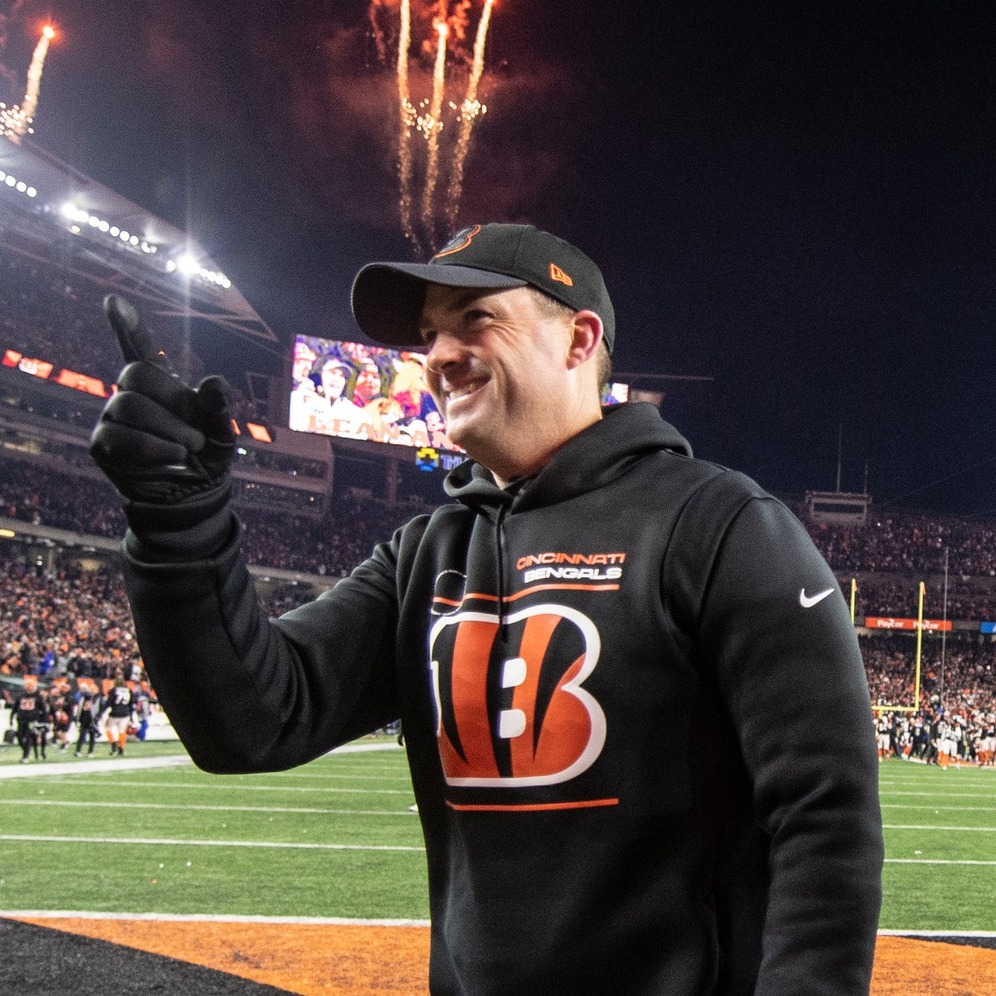
“He stood out a lot to me. He made the big play on Renfrow,” said head coach Zac Taylor, “on the third down where it got overturned, and I think he had a play in the fourth quarter on a tight end. You’re right, I’ll certainly know better when I see the tape, but I definitely felt Jessie’s presence.”
twitter
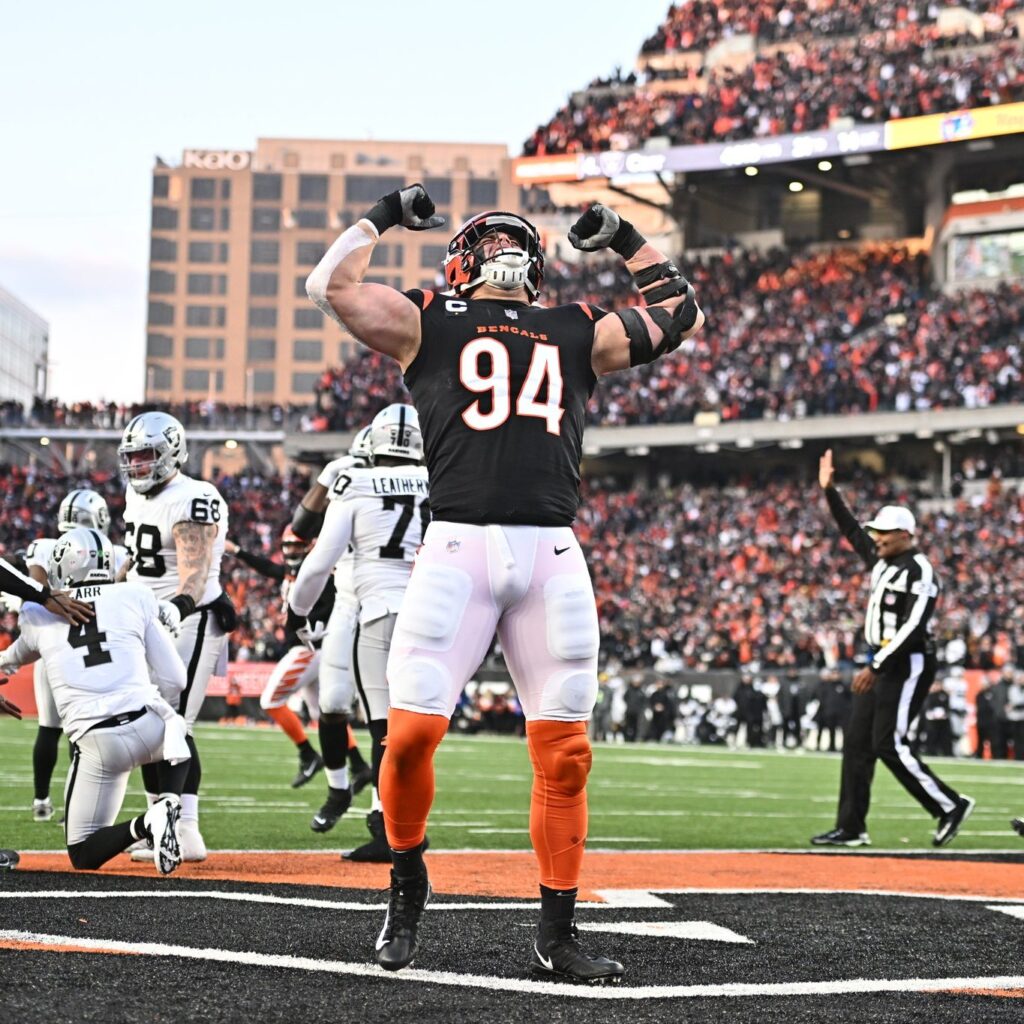
SAM’S NIGHT: If this game belonged to anybody, it was Cincinnati native Sam Hubbard, Bates’ 2018 draft classmate. The Bengals left end typified the city’s resolve when it comes to their team on a night three of his brothers on the defensive line went down.
It started with tackle Mike Daniels, already playing for the injured Josh Tupou, leaving with a groin injury in the first series. Then in rapid succession early in the second half they lost leading sacker Trey Hendrickson to concussion protocol and three technique Larry Ogunjobi to an ankle injury that got him carted off.
Hubbard ended up playing 92 percent of the snaps, 71 of them, and can’t remember coming out in the second half.
“To me personally, it means the world. Never in my lifetime have we had a playoff win,” Hubbard said. “I feel like we broke a curse. Really, just looking up in the stands, seeing the city come alive, it’s hard to put into words what it means to everybody in the city, and I’m just really happy to be part of the team that was able to do it. We got a lot more in store.”
Hubbard was so exhausted he didn’t even know it was third down from the Bengals 10 with 3:42 left in the game and Carr needing three yards for a first down and the Raiders trailing, 26-16.
But Hubbard had enough of a rush that Carr’s pass to tight end Darren Waller hit his helmet and forced a field goal.
“We had a lot of guys go down on the defensive line. Guys stepped up and just had to grind it out,” Hubbard said. “We were trying to keep (Carr) in the pocket, doubling guys on the back end. Just grinding it out, keeping them out of the end zone, doing whatever we could. Everybody’s fighting, clawing together. I think the love we have with each other as teammates is what allowed us to bow up at the end and in the red zone so many times.”
When Carr wheeled them right back down the field, tackle B.J. Hill slowed the momentum with a sack. Both Hill (81 percent of the snaps) and nose tackle D.J. Reader (66) were immense as the only tackles for much of the second half. And rookie edge Cam Sample slid into tackle at times, which he rarely did this year. His 34 snaps (44 percent) were the third most he took this season.
SLANTS AND SCREENS: Chase was surprised his 15-yard run on a jet sweep came on fourth-and-one. It was a well-designed play that began with Burrow under center and when the Raiders tightened up they sent Chase wide right, one of the three times he carried for 23 yards.
“I haven’t played running back for a long time, but they’re giving me those tosses and getting my speed to the outside. Being hit by linebackers, I know how hits feel again. But it’s cool. Go out there and make a play with the ball in my hands,” Chase said. ” I’m built like a running back. They only do it for the receivers who are built like running backs. So I see myself doing it more.” …
Chalk up two more Bengals records for rookie kicker Evan McPherson, who already has the career record with nine field goals of at least 50. His four field goals broke the Bengals postseason record held by Horst Muhlmann in 1973 and Jim Breech’s iconic three in Super Bowl XXIII. His 14 points broke the record of 12 held by four position players: Woods in the 1988 AFC championship game, running back Stanley Wilson in the 1988 AFC Divisional, Danny Ross in Super Bowl XVI and running back Charles Alexander in the 1981 AFC Divisional …
Related Content
NEWS
Bengals Salute Highlights And History With Roaring Wild Card Win
Naturally, the Bengals would win their first playoff game since Sam Wyche, Boomer Esiason, Ickey Woods and, yes, Rodney Holman, when a relentless linebacker not known for coverage but for turnovers ripped the ball from the nephew of a former Bengals quarterback for an interception with 12 seconds left on fourth down and two yards from overtime.
Electric customers across Ohio collectively spent an estimated $211 million via add-on bill charges over the last two years to cover for losses from two coal-fired power plants that continue to bleed millions annually, according to new data from state regulators.
The money to the Ohio Valley Electric Corp. (OVEC) — an entity comprised of several investor-owned utilities from multiple states that operates the plants — flows thanks to a 2019 state law now at the center of a criminal bribery prosecution.
The Public Utilities Commission of Ohio began to allow three of the utilities that own and are contractually obligated to buy power from OVEC — American Electric Power (43% equity stake), Duke Energy (9%), and AES Ohio (4.9%) — to pass on their losses on OVEC to their customers, starting in the mid-2010s. The payments were originally only allowed through 2024. Through 2019, the three utilities’ customers were charged an estimated $159 million on OVEC.
House Bill 6, a law passed in 2019 that’s now the focal point of what prosecutors have said is the largest political corruption investigation in state history, extended the subsidies through 2030 and spread the three utilities’ (AEP, Duke and AES) losses to electric customers of all Ohio utilities (not just those that own OVEC).
In 2020, Ohio electric customers statewide paid $115 million to OVEC’s owners to cover their losses on the deal, according to data provided by a PUCO spokesman. In 2021, they paid about $97 million (July through December 2021 costs are estimates). Under the law, residential customers pay a maximum $1.50 per month to utilities to cover their OVEC losses. Industrial customers pay a maximum of $1,500.
OVEC operates two 1950s-era coal plants in Cheshire, Ohio and Madison, Indiana, originally built to power the federal government’s uranium enrichment facilities near Portsmouth. That agreement ended in 2003. The utility companies that own OVEC last renegotiated their contract in 2011 extending its life through 2040.
Technically, the OVEC plants could save utility customers money if OVEC could generate and sell electricity at below-market costs. However, a mix of market forces, environmental regulations and recently spending more than $1 billion on a “scrubber” system designed to limit emissions have left the plants selling electricity at costs well above those of PJM, an energy marketplace serving utilities in 13 states including Ohio.
“[Our] analysis shows that at this time, the OVEC plants cost customers more than the cost of energy and capacity that could be bought on the PJM wholesale markets,” wrote London Economics International, a firm the PUCO commissioned to audit the subsidies, in December.
A draft version of a 2020 PUCO-commissioned audit by the same firm found that “keeping the plants running does not seem to be in the best interests of the ratepayers.” The line was removed from the final version at the request of a PUCO staffer who asked the auditors to use a “milder tone and intensity of language,” according to emails obtained by the Ohio Consumers’ Counsel (OCC), which represents ratepayers in PUCO cases and has advocated ending the OVEC subsidies.
Along with the raw finances, Ohio consumers are subsidizing plants that have belched nearly 21 million tons of carbon dioxide, 21,000 tons of nitrogen oxide, and 12,000 tons of sulfur dioxide into the atmosphere since January 2020, plus smaller discharges of arsenic, lead, and mercury, according to data from the U.S. Environmental Protection Agency provided by the OCC.
“Why the hell is this still in place?” said Neil Waggoner, an advocate with the Sierra Club’s Beyond Coal campaign. “I think that this is utility capture in practice. This is the utilities in this state having a death grip on the regulators and people in power to the point that they’re getting exactly what they want.”
The Clifty Creek Power Plant, in Madison, Indiana, which is operated by OVEC. Photo taken by Rep. Casey Weinstein, D-Hudson, who visited the plant and has called for a repeal of state law forcing Ohio ratepayers to subsidize it.
A sticky bailout
FirstEnergy Corp. admitted in July to paying more than $60 million to an account controlled by the former House Speaker and his allies to ensure passage of HB 6. The prosecutors’ allegations have focused in court documents on an estimated $1.3 billion nuclear bailout and other non-coal related provisions of the sweeping bill that are favorable FirstEnergy. Former speaker Larry Householder, accused of using the money to engineer passage of the bill and shore up his own political aims, has pleaded not guilty. Two Householder allies involved in the alleged scheme have pleaded guilty to racketeering.
State lawmakers in early 2021 passed legislation repealing the nuclear bailout and “decoupling” provision (a ratepayer-backed revenue guarantee for FirstEnergy). However, the OVEC bailout was left intact.
There are bipartisan efforts in the House and Senate to repeal the OVEC bailout from state law, and the narrower PUCO-approved bailout that preceded them. Neither has come up for a vote and the sponsors are pessimistic on their chances.
Sen. Mark Romanchuk, R-Ontario, perhaps the plants’ most prominent critic and co-sponsor of the Senate legislation, said he is in negotiations with the utilities that own the plants and is not giving up. He declined an interview.
“Not sure where things will go but we’re not giving up,” Romanchuk said.
House Democrats have called for a repeal of the OVEC subsidies, though they only control 34 of 99 seats in the chamber. Rep. Jeff Crossman, a Parma Democrat who recently announced plans to run for attorney general, said the OVEC charges should be repealed but as much is unlikely.
“There’s probably not a will to undo the OVEC charges,” he said. “They donate gobs of cash to the right folks. There’s just no other reason to support these plants.”
House Speaker Bob Cupp, R-Lima, said in October he doesn’t believe there’s support in the House Republican caucus to repeal the coal bailout.
House Majority Leader Bill Seitz, R-Green Twp., has told several state media outlets the bailouts aren’t going anywhere. He did not respond to written questions about the uneconomic nature of the plants, or why ratepayers should cover their owners’ losses on them.
“We’ve beat this [OVEC] horse to death. It’s not going to change,” Seitz said to Cleveland.com in October. “They’ve introduced God knows how many bills — none of them are going anywhere, in my humble opinion.”
Michigan takes action
AEP is by far OVEC’s largest shareholder, with a roughly 43% equity stake in the company, and the two share several executives.
While repeal efforts in Ohio are at a lull, other states have signaled resistance to allowing utilities to continue to pass OVEC’s owners’ losses to customers.
The Michigan Public Service Commission in a November order noted that OVEC’s costs exceed the market price of electricity by tens of millions. It warned that AEP’s local utility may not be able to pass on all its OVEC losses to customers that are “incurred because of imprudent” decisions.
“The order today put I&M [an AEP unit] on notice that the Michigan share of these excess costs are unlikely to be permitted without additional evidence that continuing to purchase power from the units was in the best interest of its customers,” the Michigan regulators said in a news release.
AEP spokesman Scott Blake said in an email the OVEC plants are “critical resources that help ensure the reliability of the grid and offer protection from increases in the costs of other fuels.” He said AEP Ohio customers for decades benefitted from OVEC’s power via affordable electricity and good jobs. OVEC, he argued, insulates customers from cost spikes caused by things like a surge in natural gas prices or a shortfall of renewable energy supply.
“AEP Ohio customers benefited for decades from the power provided by OVEC in the form of affordable electricity and good jobs,” he said. “While there may be years where power from OVEC is more expensive than the market, as generation from natural gas and other sources becomes more expensive, customers could see refunds from OVEC in the future.”
Fitch Ratings determined OVEC’s outlook is “stable” in February — just one step above “speculative.” However, its analysts found that repealing HB 6 wouldn’t necessarily harm OVEC’s prospects. The analysts reasoned that for one, in the event of a repeal, AEP, Duke and AES would still be able to pass on their OVEC losses to customers. For two, the “sponsoring” utilities have already contractually agreed to purchase the power OVEC generates, regardless of who eats the losses.
Meanwhile, in a Virginia appeal of a public service commission rate case, Virginia Attorney General Mark Herring accused OVEC of charging an AEP utility in Virginia well beyond market costs for electricity. The case is ongoing.
A think-tank in favor of Gov. Mike DeWine’s decision to end supplemental unemployment assistance despite a continued pandemic impacting the economy is yet again pushing the Ohio Supreme Court to support the decision. The governor himself is also weighing in.
The federal supplemental assistance from The CARES Act expired on Sept. 4, 2021 though DeWine ended it in Ohio on June 26, 2021.
In a court filing this week by attorney (and former state Senate president) Larry Obhof, the Buckeye Institute called the early ending of additional Federal Pandemic Unemployment Compensation (FPUC) “sound economic policy.”
The group argued in their second push for the court to land on the side of DeWine that “neither state nor federal law compels Ohio to continue participating” in the unemployment program.
“Federal law clearly indicates that states are free to participate and, if they so choose, to withdraw from the program as well,” the institute wrote in the Jan. 10 court filing.
Ohio residents Candy Bowling, Shawnee Huff and David Willis sued the DeWine administration in September to get the additional $300 monthly unemployment benefits reinstated, which they say are needed to help with household expenses such as rent, food and medical expenses since they were laid off due to the pandemic, according to their lawsuit.
What’s still up to the court to decide is whether the governor, not the state as a whole, was required to continue participating in the program. Obhof says in court documents that he is not.
“Because the Governor acted lawfully, the courts may not substitute their judgment for his policy decision,” he wrote.
The group argues, as DeWine did when he decided to cut the benefits, that the additional payments were “delaying employees’ return to work,” and ending the support brought more employees back, though businesses across the nation are still struggling to get back to full staffing.
“The Governor’s decision to end the additional FPUC payments was not a magic talisman for Ohio’s economy, but it was sound economic policy,” the institute wrote.
DeWine filed his own brief arguing a lower court’s ruling saying the governor shouldn’t have ended the assistance “rests on a misreading of a state law” requiring the director of the Ohio Department of Job and Family Services to adopt rules and regulations necessary to “secure to this state and its citizens the advantages” of federal statutes, in this case including the CARES Act funds.
“No state law – ‘long-standing’ or otherwise – compelled Ohio to participate in the program here at issue,” DeWine’s brief stated. “Because nothing compelled the governor to participate in the program, the governor’s withdrawal did not contradict any policy mandate from the legislature.”
DeWine’s son, Supreme Court Justice Patrick DeWine, recused himself from this case “to avoid any appearance of impropriety that might result from my father’s public involvement in this matter,” according to court documents.
In supporting the governor, the Buckeye Institute interpreted the additional unemployment benefits as a negative for the economy because Goldman Sachs economists cited in their brief estimated the median recipient of the benefits received “roughly 90% of their prior wage,” though it did not specify what the median wage for those beneficiaries was or whether it was enough to support Ohioans in essential ways.
The Buckeye Institute brief joined other Ohio groups who supported governor’s decision. In August of last year, the Ohio Chamber of Commerce, the Ohio Business Roundtable, the Ohio Restaurant Association, the Ohio Hotel and Lodging Association, the Ohio Grocers Association and the Ohio Trucking Association filed their own brief saying the FPUC benefits “will result in a scenario where many individuals will make more in unemployment than when working,” calling the staffing issues for businesses an “artificially created labor shortage.”
The groups levied their support once again in a Jan. 7 filing, which also included the Ohio Manufacturers’ Association, the Ohio Council of Retail Merchants and the Ohio Farm Bureau Federation.
In this filing, they made a matching argument with the Buckeye Institute that the governor is allowed to “exercise discretion regarding Ohio’s participation in federal programs.”
The state Supreme Court denied two attempts in the case to speed up the process of deciding the case, but has not set other deadlines in the case, including whether or not they will have an oral argument to hear from attorneys on both sides.
In the big picture of the insurrection, the criminal charges against Alexander Sheppard are unremarkable.
Federal prosecutors say Sheppard arrived in Washington D.C. from Powell, Ohio after posting on Facebook that the election was “RIGGED.” He faces five charges, including disorderly conduct in a Capitol building. He wasn’t accused of violence or destruction, but of joining the throngs of about 2,000 people who comprised a mob that stormed the Capitol in an attempt to forcefully block the U.S. Congress from certifying President Joe Biden’s 2020 electoral win.
Then-President Donald Trump and his allies hosted the Jan. 6, 2021 event, based on the central lie the election was fraudulently stolen from the incumbent. Trump said in a speech that day the attendees should “stop the steal” and “fight like hell” because they’re “not going to have a country anymore” if they don’t.
Sheppard, 21 at the time, was spotted in footage outside the House Speaker’s lobby just before a Capitol Police officer shot and killed Ashli Babbitt as she tried to climb through a transom window toward members of Congress.
In charging documents, prosecutors included a still photo from raw footage from a man named John Sullivan, who also breached the Capitol that day. About 80 seconds after the camera shows the included still frame of Sheppard — wearing a Trump red “Keep America Great” hat and navy blue hoodie, yelling at police officers blocking the door — Babbitt gets shot some 10 feet away.
Alexander Sheppard, pictured on right. Source: DOJ
A public defender representing Sheppard, who has pleaded not guilty, did not respond to inquiries, including whether Sheppard witnessed Babbitt’s shooting. A spokesman for the U.S. Attorney’s Office for the District of Columbia declined comment.
The episode is a reminder of the way Ohioans pockmarked events around the Capitol on an infamously seditious, chaotic and politically violent day of American history. At least 38 Ohioans were accused of crimes in connection with the riots. Six have pleaded guilty, mostly for comparatively minor offenses.
The Ohio cohort’s alleged conduct ranges from conspiring to plan the event with the Oath Keepers (a paramilitary group), to waging hand-to-hand combat with police officers and wrestling down barricades outside, to smoking joints and carrying a bottle of bourbon around the seat of government.
Many of the suspects filmed and photographed themselves throughout the day, which prosecutors relied on heavily in bringing charges against the defendants. Several signaled allegiances to QAnon, a sprawling, online conspiracy theory whose believers essentially say the Democratic Party runs a massive, Satan-worshipping child sex trafficking ring that only Trump can thwart.
A review of court documents, raw footage and news coverage shows the range of conduct Ohioans took part in that day.
Oath Keepers and the ‘stack’
A still from footage of the riots in Washington D.C. captures Jessica Watkins, 38, seen with several people in Oath Keepers regalia, heading up the Capitol stairs. Screenshot from YouTube, credit Ford Fischer / News2Share.
Some of the most serious charges of the day accuse several Ohioans who are Oath Keepers of conspiring to plan the events of Jan. 6. The Oath Keepers are a right-wing, anti-government extremist group within the militia movement comprised mostly of former law enforcement and military members. Twenty one members from multiple states were charged with various offenses.
They were seen in matching combat gear in a “stack” formation (hands on the shoulders of the person in front of them) moving up the stairs toward the east side entrance of the Capitol. Prosecutors have accused them of conspiring to plan a Capitol raid as far back as November 2020. On Jan. 6, they wore matching combat fatigues and ballistic helmets. They were unarmed, but prosecutors have alleged they had a “quick reaction force” at the ready to deliver guns if needed. A lawyer representing one defendant, however, said in court filings the ‘force’ was one overweight, old man and called the government’s claim a gross overstatement.
Jessica Watkins, a Champaign County bartender, ran a small group she called the “Ohio State Regular Militia” — a subset of the Oath Keepers that folded in with the larger unit that day.
“To me, it was the most beautiful thing I ever saw until we started hearing glass smash,” she said of the raid in a January 2021 interview with the Ohio Capital Journal “That’s when we knew things had gotten really bad.”’
Watkins characterized her participation as non-violent. Footage has since emerged, identified by amateur internet sleuths “Capitol Terrorists Exposers” and later published by The New York Times, showing her and other Oath Keepers in a crowd trying to push past the Capitol Police into the U.S. Senate.
“Get in there! They can’t hold us!” Watkins yells in the footage.
Jessica Watkins was charged with conspiracy for her role in the Capitol attack, alongside other Oath Keepers in military-style garb. New footage shows Watkins (and others linked to the group) pushing against riot police on Jan. 6, contradicting claims by her defense counsel. pic.twitter.com/blfDeeYaP2
Also in the clash were Ohioans Donovan Crowl and Sandra Parker, according to prosecutors. Bennie Parker, Sandra’s husband, stayed in communication from outside the building. All have pleaded not guilty.
“So can I bring my gun?” Bennie Parker allegedly texted Watkins before the riot, charging documents state.
‘Kill the tyrannical government’
Douglas Wright, of Canton, in a photo prosecutors say they obtained from his Facebook page. Source: DOJ
David Mehaffie, of Kettering, Ohio, acted as a quasi-commander during one of the most brutal clashes between rioters and police during the siege, according to federal prosecutors. Police had formed a human barricade against a door at an exterior terrace at the Capitol complex.
According to prosecutors, he left the scrum and spent 26 minutes above the fray “to coordinate the mob’s actions” by directing efforts and passing weapons around like stolen police shields.
“If you are going in, get on this side,” he yelled to rioters, according to footage obtained by prosecutors. “Push! Push!”
Capitol Police Officer Michael Fanone would later say he was electroshocked in the fracas involving Mehaffie. A woman named Rosanne Boyland, a pro-Trump member of the mob, died after she was trampled amid the chaos, according to the Huffington Post.
Mehaffie pleaded not guilty and awaits trial. His lawyer did not respond to inquiries. Other Ohioans were accused of violence elsewhere on the Capitol grounds.
Cliff Mackrell pushed, shoved, struck at, and peeled a gas mask from the face of a Capitol Police officer outside the building to expose him to various chemical irritants like tear gas in the air, according to footage obtained by prosecutors.
“Whatever it takes take for my country,” he said in the footage, per the DOJ. He posted on Facebook later that day that it’s our “literal jobs as Americans to kill the tyrannical government.”
Facebook messages later obtained by law enforcement quote Mackrell, a Wellington, Ohio man, as saying his head hurts because he was hit 10 to 15 times with a baton.
Mackrell has pleaded not guilty and awaits trial. His lawyer did not respond to an email.
“Yesterday wasn’t the end,” he said to the newspaper. “Yesterday was the first battle of the war. I promise you.”
In charging documents, prosecutors included a photo of him and other rioters with their hands on a metal barricade, seeking to overpower Capitol Police officers on the other side. In Facebook posts prosecutors say they obtained, Wright seemed to have foreseen clashes with law enforcement.
“WE ARE GOING TO HAVE TO FIGHT THE BLUE TOMORROW,” one message states (capitalization in the original).
“FROM WHAT I SEEN TONIGHT THE TEMPERS WILL BE UP TOMORROW AND POLICE LINES WILL BE BREACHED,” reads another.
Wright pleaded not guilty. His attorney did not respond to an inquiry.
Jared Hunter Adams, a Plain City, Ohio man, was accused of entering the building. Prosecutors say he brought two hunting knives to Washington D.C., but did not bring them with him into the building. They cited alleged comments from Hunter captured in footage as evidence to successfully quash a motion from Hunter to allow him to possess firearms while he awaits trial.
“Next time we won’t leave our guns at home,” he said on Jan. 6, per court documents.
Adams has pleaded not guilty. His lawyer, Joseph Roll Conte, declined to comment.
QAnon: Where we go one, we go all
Ohio woman Christine Priola, right, roamed the floor of the U.S. Senate during the Jan. 6, 2021 insurrection. She currently faces several criminal charges stemming from the event. She has pleaded not guilty. (Photo by Win McNamee/Getty Images)
Some Ohioans publicly signaled their adherence to QAnon, the online conspiracy theory that exploded in popularity during the pandemic
A Piqua, Ohio woman named Therese Borgerding was photographed holding a large “Q” (in the theory, Q is a high ranking anonymous government official who leaves cryptic messages for followers about Trump’s looming purge of detractors from the federal government) sign. She has pleaded not guilty. Her lawyer did not respond to an inquiry.
Timothy Allen Hart, a Dayton man, was photographed wearing a “Q” sweatshirt inside the building. Another, Ethan Seitz, saw a “militia” that “wants to storm the Capitol and take the building after Trump’s speech,” according to Facebook messages obtained by law enforcement included in charging documents. Along with posts stating that the people “will not allow our country to be stolen! #stopthesteal,” he posted a photo of himself the night before the riot from his hotel room.
The post states he’s in Washington D.C. and ends with QAnon’s unofficial mantra: “Where we go one, we go all.”
Another woman named Chrstine Priola was one of a smaller group of rioters who allegedly made it onto the floor of the U.S. Senate. Prosecutors say she wielded a sign reading “THE CHILDREN CRY OUT FOR JUSTICE” — QAnon followers often use vague references to protecting children as a coded means of attracting new followers. Shortly after the riot, Priola resigned from her role as a school therapist for the Cleveland Metropolitan School District, according to Cleveland.com. She resigned in a QAnon-tinged letter stating she was “switching paths to expose the global evil of human trafficking and pedophilia, including in our government agencies and children’s services agencies.”
Priola has pleaded not guilty. Her attorney, Charles Langmack, noted that discovery (the trading of evidence between the defense and prosecution) is ongoing and declined further comment.
The partiers
James Matthew Horning smoking what prosecutors say is a marijuana cigarette. He was also photographed inside the Capitol. Source: DOJ.
The Jan. 6 mob contained violent extremists, Trump zealots, an Olympic swimmer, men in costume, and a number of people who seemingly flowed into the building with a crowd.
However, there’s some evidence that people used the mayhem simply to catch a buzz in a government building.
“F**k it, smoking a joint on the Capitol steps right now,” wrote James Matthew Horning, who attended the protests with his daughter, according to prosecutors.
In a Facebook comment thread provided by a tipster to the FBI, a person asked Horning why he attended the protests. Horning listed three reasons.
“To participate in anarchy, to smoke weed in government buildings, [but] the real reason was to intimidate congress,” he wrote in a post detailed in the documents. “They have a 9% approval rating. We accomplished that. Maybe they will work on that because they know we could have got them and have mercy”
Columbus men Robert Anthony Lyon and Dustin Thompson attended the event, the latter of whom was accused of trying to steal a coat rack on his way out the door. Thompson bailed on the coat rack and fled when confronted by police, according to prosecutors.
Lyon was allegedly found to have marijuana, pipes, and bourbon in his bag — he was charged with crimes related to the insurrection, not the substances.
In another case, prosecutors alleged an Instagram video from an account called “brotunda” that appeared to show Hart smoking marijuana in the rotunda of the Capitol building.
“It can be inferred that Hart was smoking marijuana in the video due to the fact that the induvial who was taking the video was counting how many ‘joints’ were in the video and asked another individual if he smoked weed,” an FBI agent wrote in an affidavit.
Hannah Halbert, executive director of Policy Matters Ohio, noted had Congress done the same when it set the federal minimum wage in 1968, it would now be worth about $13 an hour, and she pointed out $9.30 amounts to just over $19,000 annually for a full-time worker.
“That’s still more than $2,000 under the poverty guidelines for a family of three,” Halbert explained. “Even if they’re working full time, playing by the rules, doing what they can, they’re still not going to be able to break that poverty threshold.”
Ohio is among nine states where a 2022 minimum-wage increase is tied to the cost of living. California’s hit $15 Jan. 1, as part of an incremental increase. Eight other states are also in the process of incrementally raising their minimum-wage amounts to $15 an hour.
According to Policy Matters Ohio, raising Ohio’s minimum hourly wage to $15 by 2026 would benefit 1.6 million workers. Halbert is convinced it would help the overall economy and reduce income inequality.
“Thirty-six percent of working women in Ohio would see a pay increase, and 44% of Black working Ohioans would also see an increase,” Halbert outlined. “Raising the wage really does help clear up some of these drivers of inequality in the low-wage system.”
Halbert emphasized the impact of the pandemic on job market data makes it difficult to determine just how many Ohioans are affected by the 2022 increase. Some 84,000 workers benefited from a $0.15 minimum-wage adjustment in 2019.
Reporting by Ohio News Connection in association with Media in the Public Interest and funded in part by the George Gund Foundation.
The Ohio Department of Education is still watching the impact from the COVID-19 pandemic affect the children of the state.
Interim Superintendent of Public Instruction Stephanie Siddens had to deliver some grim realities last month to a Senate Primary and Secondary Education Committee eager to learn about what the next steps will be for school districts.
“Across the country, there is a real and urgent need to embrace new and innovative ways to accelerate learning,” Siddens said.
Dr. Stephanie K. Siddens. Photo by the Ohio Department of Education.
Siddens said expected decreases happened in enrollment and state test scores between the 2019-2020 and 2020-2021 school years, with participation in state tests reduced in areas with “vulnerable” students.
“While the data are not, certainly, the kind of news we want to share, we know they’re not all-together surprising given the circumstances,” Siddens said.
As expected by state officials, total enrollment for pre-K through 12th grades was down 3%, equivalent to 53,000 students. Almost half of those 53,000 were pre-school and kindergarten-aged students.
The early-education decreases were the result of delayed enrollment by parents and other educational alternatives chosen during the pandemic, according to Siddens.
The number of students being home-schooled increased as well, up 25% between the 19-20 and 20-21 school year.
Of more concern to Siddens and the ODE is the rise in “chronically absent” students.
“Almost 1,000 schools had more than 30% of their students chronically absent,” Siddens said.
Statewide, one in four students were chronically absent, but that number is “likely conservative,” according to the superintendent, because school districts had flexibility in reporting attendance as they tried to maintain hybrid and remote learning. Still, the data the state has shows a 7% increase in the state, or about 109,000 students.
The state defines chronic absenteeism as missing 10% or more of the school year for any reason, excused or unexcused, and on the ODE website, it acknowledges that absenteeism is more chronic in “historically underserved” areas, often urban districts.
Because the state has had an influx of COVID-19-related aid, $6.5 billion of which has been distributed for educational needs, Siddens said the ODE plans to and has encouraged individual districts to use money from the American Rescue Plan and the Elementary and Secondary School Emergency Relief (ESSER) Fund, both federal funding sources, to target chronic absenteeism. One of the main goals of the education-related ARPA and ESSER funds was to combat learning loss related to the COVID-19 pandemic.
The higher rate of chronic absenteeism compounds with expected dips in proficiency, shown through state testing. English and Language Arts proficiency rates decreased 8% across most grades and math proficiency decreased by 13% statewide, according to state data.
“Ohio has had substantial achievement gaps before the pandemic and the gaps were further exacerbated by the events of the past two years,” Siddens said.
Under ARPA regulations, school districts have to keep at least 20% of their funds specifically to address learning loss with methods such as extended school, summer enrichment programs and before/after school programs.
The state can’t tell districts how to spend their money, it merely acts as a “pass-through” for the funds, according to Siddens, but it did release guidance on what can and can’t be done with the funding.
While the state tests are giving the state somewhat of an idea where the school districts stand in terms of overall proficiency, officials say diagnostic reports that come from individual districts have shown a better picture of what’s going on at ground level. The diagnostic reports are not required to be provided to the state, but Dr. Christopher Woolard, interim chief programming officer for the ODE, said they’ve heard “lots of good examples” of the practice taking place in districts.
“The state tests are giving information on that annual check-in from that state perspective, but the real power of that data is the data that’s being generated on a regular daily, weekly, monthly, quarterly basis at the local level,” Woolard said.
The same could be said of the state’s look at the new Fair School Funding plan, to be implemented as part of the most recent state operating budget, passed this year.
Siddens said the state has been working to implement significant changes to the funding formula for Ohio’s education system, including the direct funding of schools, how the state creates a more equitable method of funding, plus establishing a base cost based on the cost to educate students and minimum staffing levels at individual districts.
The state expects to bring changes forward in January, having updated the schools in early December of the plans.
Some of those changes have to come in the form of direct dialogue with districts in order to know what is needed in different areas. ODE director of the Office of Budget and School Funding, Aaron Rausch, said it’s particularly important to work with the state’s educational service centers, in furtherance of that goal.
“We’ve asked them to work locally with districts to identify, regionally, here’s what the need is, understanding that the need in northwest Ohio might be different than what the need is here in central Ohio,” Rausch said.
As it attempts to work through the many changes headed for Ohio education, the ODE is also working on leadership changes in their own department.
Siddens, who was the senior executive for the state’s Center for Student Supports, was named as interim superintendent after previous superintendent Paolo DeMaria left the post, and after his chosen replacement, former Deputy State Superintendent John Richard, left after less than a month for a new job.
A job search for a permanent superintendent has begun anew, with plans for a search firm to begin the process in January. The Ohio Board of Education has the final say on the new hire, and they’ve had leadership transition of their own, with President Laura Kohler stepping down in October after controversy reigned over a racism resolution the board approved, then repealed.
After Kohler’s departure. Charlotte McGuire was named to the presidential post, with fellow board member Steve Dackin named as vice president.[/vc_column_text][vc_zigzag][vc_column_text]
Susan Tebben is an award-winning journalist with a decade of experience covering Ohio news, including courts and crime, Appalachian social issues, government, education, diversity and culture. She has worked for The Newark Advocate, The Glasgow Daily Times, The Athens Messenger, and WOUB Public Media. She has also had work featured on National Public Radio.
MORE FROM AUTHOR[/vc_column_text][/vc_column][vc_column width=”1/3″][vc_widget_sidebar sidebar_id=”td-default”][/vc_column][/vc_row]
Dr. Sherri Tenpenny testifies before the Ohio House Health Committee on June 8, 2021. During her presentation, she said vaccines are magnetizing to their recipients and “interface” with 5G cell towers. (Photo source: The Ohio Channel)
In June, Sherri Tenpenny, a state-licensed doctor of osteopathic medicine and notorious COVID-19 disinformer, baselessly claimed in a televised, government meeting that COVID-19 vaccines “magnetize” recipients and “interface” with cell towers.
The comment wasn’t an aberration from Tenpenny, who has in the past described vaccines as a tool of “depopulation.” The Ohio State Medical Board, an agency tasked with overseeing discipline and complaints of state physicians, still renewed her license in September as part what it called an “automatic” process of handling renewals.
Her renewal points to a bigger problem at the intersection of politics, mass media and public health: a loud, super minority of physicians has found ways to monetize lies about COVID-19 and vaccines that prevent it, and state medical boards are ill equipped to handle the problem, according to a report released earlier this month by the de Beaumont Foundation.
“During this ongoing public health emergency that has claimed more than 5 million lives globally, a small minority of physicians have exploited the credibility that comes with their medical licenses to disseminate disinformation to the public,” the report states. “Their lies, distortions, and baseless conspiracy theories have caused unnecessary suffering and death that are prolonging the pandemic.”
“Their lies, distortions, and baseless conspiracy theories have caused unnecessary suffering and death that are prolonging the pandemic.”
– de Beaumont Foundation
Only about 21% of state medical boards have taken any disciplinary action against a licensee for disseminating false or misleading health information, according to a survey conducted by the Federation of State Medical Boards. About 2 in 3 boards said they’ve noticed an increase in complaints on the issue.
Ohio’s medical board’s stated mission is to “protect and enhance the health and safety of the public through effective medical regulation.” Spokeswoman Jerica Stewart said state law allows the board to discipline doctors for making a “false, fraudulent, deceptive, or misleading statement in relation to the practice of medicine and surgery.” However, there’s a high standard of proof to meet. Tenpenny’s license, Stewart said, was automatically renewed, part of an automated process to keep up with the 92,000 licensees in Ohio. Tenpenny did not respond to an email.
“Ohio law prohibits the Medical Board from sharing details about received complaints and investigations even if a licensee chooses to publicly comment on their interactions with the board,” she said. “I’d also like to reiterate, a recent renewal does not prevent the board from taking future disciplinary action and does not mean that there isn’t an open investigation.”
The de Beaumont report criticizes boards that have “rubber stamped renewals for doctors who are in clear violation of medical standards, which allows them to do more harm with no questions asked.”
Medical boards have structural problems stopping them from disciplining disinformers, per the report. Their work is shrouded in secrecy, the problem is somewhat new and fast-evolving, and investigations are time consuming.
These claims fly in the face of real-world evidence showing vaccines are incredibly powerful protectors against serious health outcomes from COVID-19 like hospitalization or death. Likewise, researchers have found there’s no increase in mortality in vaccine recipients, and that recipients had lower rates of non-COVID-19 mortality after adjusting for age and other characteristics.
The de Beaumont Foundation, a public health advocacy group, commissioned polling on the issue from Morning Consult. Of 2,200 adult respondents, about 9 in 10 said physicians don’t have the right to “intentionally spread misinformation or false health information.” About 8 in 10 said they should be disciplined for doing so.
Arlington, Texas – The No. 4-ranked Cincinnati football team went toe-to-toe with the defending national champions before ultimately falling to No. 1 Alabama, 27-6, in the College Football Playoff Semifinals at the 86th Goodyear Cotton Bowl Classic on Friday at AT&T Stadium.
Trailing 24-6, the Bearcats threatened in the fourth quarter after senior quarterback Desmond Ridder found Michael Young for a 28-yard catch that placed Cincinnati inside Alabama territory. Cincinnati had a 4th-and-3 play from the Crimson Tide 22, but Ridder was sacked with just over 10 minutes remaining in the game.
Alabama tacked on field goal on the next drive for the final score.
“It doesn’t feel great right now, but we at least had the opportunity to step back here, reflect a little bit more and recognize where it is that we’ve come from just in the last five years with this group of guys,” head coach Luke Fickell said. “I don’t know if I can see it or pick it up right now, but I promise my wife will make me, later tonight, take a couple deep breaths and recognize where these guys have taken us and what they’ve done for us.”
Led by 32 seniors, the Bearcats finish 13-1, completing the greatest season in school history with their first College Football Playoff appearance, battling the defending national champions in front of a raucous sellout crowd of 76,313 inside the Dallas Cowboys’ stadium.
Cincinnati finished among the nation’s Top 10 teams in scoring offense and scoring defense. UC set single-season school records for touchdowns (70) and points (516), featured the Jim Thorpe Award winner (Coby Bryant), a consensus All-American (Ahmad “Sauce” Gardner) and 12 first-team All-Conference players. Fickell also won nearly every national coach of the year award.
Ridder passed for 144 yards, completing 17 of 32 attempts, and wraps up his career as the most-decorated Bearcat in school history. His 44 wins are the third-most any quarterback in college football history.
“I’ve met a lot of good, close friends that are going to be with me for the rest of my life,” Ridder said in the postgame press conference. “I’ve played a lot of great football with a lot of great players, a lot of great coaches. I’m going to remember every single year, from my true freshman year when I wasn’t playing until now. This loss I just want to thank coach Fick (head coach Luke Fickell) and all the coaching staff, all the training staff, academic staff and all of our fans who supported us even in our down years. Everyone who came out this weekend, traveled to Dallas to support us, I just want to say thank you.”
Jerome Ford led the ground game with 15 rushes for 77 yards, while Young (55 yards) and Tre Tucker (43) each had four catches. Darrian Beavers, whose next game will be the Reese’s Senior Bowl in February, paced the defense with 10 tackles, including two for loss and a sack.
Cincinnati battled tough and kept the game close, holding the Crimson Tide scoreless in the third quarter, and trailed 17-6 entering the fourth quarter.
Perhaps Alabama head coach Nick Saban summed up the Cincinnati performance best.
“There’s no doubt in my mind, Cincinnati belongs in the playoff,” Saban said. “They gave us all we could handle.”
Alabama rushed for 301 yards and was led by Cotton Bowl Most Outstanding Offensive Player Brian Robinson, Jr., who had 204 yards on the ground. Crimson Tide defensive end Will Anderson, Jr. was named the Cotton Bowl Most Outstanding Defensive Player after totaling six tackles and two sacks.
The Bearcats held Alabama quarterback Bryce Young to 181 yards on 17-of-28 passing with an interception, but the Heisman Trophy winner accounted for all of the game’s touchdowns with passes.
Cincinnati opened the second half fast, receiving the ball and promptly marching down the field in 11 plays as Ridder completed his first five passes after the intermission and drove UC to the Tide 19-yard line. However, the Bearcats settled for a 37-yard field goal from Cole Smith that cut Alabama’s lead to 17-6 at the 9:57 mark in the third quarter.
Cincinnati and Alabama traded punts on the next two possessions before Bryce Young sailed an interception to senior safety Brian Cook while he was being hit by senior defensive tackle Curtis Brooks on a third-and-6 play with five minutes left in the third quarter. UC could not capitalize on the turnover as Ridder was sacked on third-and-16 and the Bearcats were forced to punt once again.
Alabama scored first in the game, using 11 plays to move 75 yards on its first possession. The Crimson Tide ran the ball on its first 10 plays before quarterback Bryce Young found receiver Slade Bolden for the game’s first touchdown at the 9:51 mark in the first quarter.
Ridder connected with senior wide receiver Michael Young twice on the first possession for UC, including a 19-yard first down. He found sophomore receiver Tyler Scott for a 22-yard pass that brought the Bearcats inside the 10-yard line and forced Alabama to call timeout at the 5:48 mark. The Bearcats’ drive stalled at the 9, however. Smith drilled a 33-yard field goal – his first since Oct. 8 – to make it 7-3.
A sack for a six-yard loss by Beavers forced Alabama to kick a 26-yard field goal, which gave the Crimson Tide a 10-3 at the start of the second quarter.
After a three-and-out on their first possession of the second quarter, the Bearcats’ defense forced a three-and-out of their own.
Freshman punter Mason Fletcher pinned Alabama back inside their own 10-yard line twice in the second quarter. The first time on a 54-yard punt that had the Tide start from their own 9. The second was a 48-yard punt that was muffed by returner JoJo Earle and left Alabama starting from the 6. The results of the drives were a 44-yard missed field goal by Will Reichard and a 44-yard touchdown pass from Young to Ja’Core Brooks that made the score 17-3 just before halftime.
RESERVE YOUR 2022 SEASON TICKETS NOW The Cincinnati Athletics Ticket Office is now accepting deposits for 2022 football season tickets here.
FOLLOW THE BEARCATS For all the latest information on Cincinnati Athletics, please visit GoBEARCATS.com. For up-to-the-minute updates, follow Cincinnati Athletics on Twitter, Instagram and Facebook.