The Brent Spence Bridge serves as a major artery for commerce and daily travel between Northern Kentucky and Cincinnati. As part of the heavily trafficked I-71/I-75 corridor, the bridge facilitates the movement of approximately $2 billion in goods each day, making it one of the most vital transportation links in the Midwest.
However, its outdated design and increasing congestion have long been a concern. Originally built in 1963 to accommodate about 80,000 vehicles per day, the bridge now carries nearly double that number, leading to frequent bottlenecks and safety issues. Planned improvements – including the construction of a new companion bridge and upgrades to surrounding roadways – are expected to alleviate congestion and modernize the infrastructure.
The $3.6 billion Brent Spence Bridge Corridor Project secured a significant win in early 2023 with $1.6 billion in federal funding. However, recent developments have thrown the project’s future into uncertainty.
The Clermont County Park District says they are excited to see what the logo for the 2025 Spring Litter Cleanup will be.
The 2025 Logo Design Contest is for local K-12 students. The winner will receive a $100 cash prize and will also receive a $100 cash donation to their school art department or local art program! There will also be $25 individual cash prizes given to the winning design for each grade level (K-12).
Past Winners
All K-12 students attending a school located in Clermont County or within the East Fork Little Miami River Watershed (including home-schooled students) are eligible to compete. Interested students should register using this form. Logo designs should emphasize litter clean-up and prevention – complete contest rules are listed here. Design entries are due to the Clermont Soil & Water Conservation District office by Friday, February 28, 2025.
Immediate mental health crisis support resources for those in urgent need.
A Trauma-Informed Reporting Guide for ensuring empathetic coverage of crisis events.
Tools and guidance for those supporting loved ones or navigating difficult times themselves.
Resources for dealing with traumatic events like natural disasters, community violence, global conflict, and more.
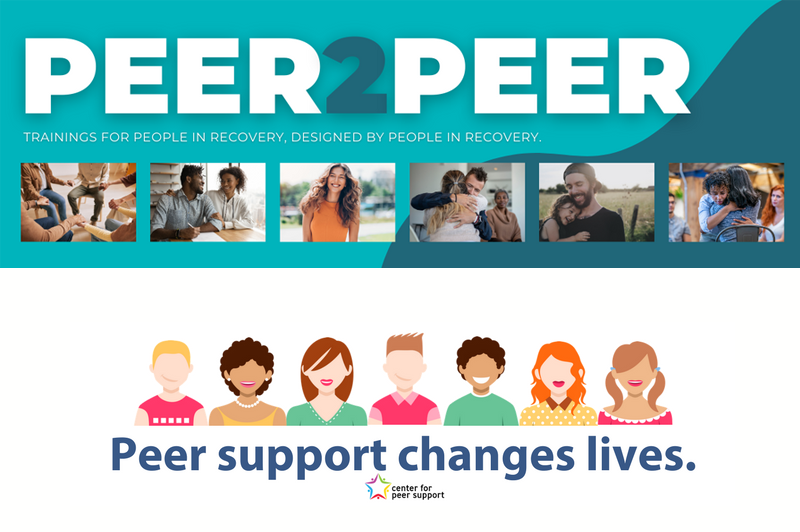
Since 2016, they’ve trained 1,038 individuals in Peer Support Training! Want to help you use your experience with mental health and substance use recovery to serve people in need?
Why?
No cost training
Virtual training to eliminate transportation barriers
Technical assistance and support through the certification process, ensuring you complete the process
Study materials
Job readiness assistance
Job connections
Ongoing continuing education to maintain certification
Last week Gov. Mike DeWine signed a measure into law prohibiting Ohio financial institutions from using a separate merchant code for gun shops or requiring gun owners to purchase liability insurance. The measure also prohibits governments or agencies from maintaining a list of gun owners.
Similar merchant code prohibitions have passed in more than 15 other states. But notably, the bill’s sponsors did not identify a single Ohio entity considering an insurance requirement or ownership list. As such, the proposal’s purpose appears geared toward burnishing lawmakers’ pro-gun bona fides.
And it offers a potential answer for where messaging legislation goes when state leaders have already embraced almost every policy firearm enthusiasts could ask for. With state law already endorsing stand your ground, arming teachers, and permitless carry, lawmakers are left to chase hypothetical threats to the Second Amendment.
GET THE MORNING HEADLINES.
Last minute amendments
The measure Gov. DeWine signed brought together two standalone pieces of firearm legislation late in the session. After those bills were combined House lawmakers proposed tacking on another piece legislation known as the Second Amendment Preservation Act.
Furious at restrictions imposed by the Bureau of Alcohol Tobacco and Firearms, sponsors proposed stripping out all reference to federal firearm provisions in state law in a bid to bar local police forces from assisting federal agencies. They pitched the proposal as an “anti-commandeering” bill — i.e. prohibiting federal officials from using local authorities to enforce federal laws.
But the measure went a few steps further. The initial version sought to inscribe the sponsors’ interpretation of the Second Amendment in state law, a task typically reserved for the courts. With those “infringements” codified, local police departments could face stiff fines for any purported violations. Departments could even be fined for hiring someone who previously worked for a federal agency.
Opponents warned the proposal would cripple task forces fighting drug and human trafficking and undermine tools like the ballistics database authorities rely on in gun violence cases. The Missouri law on which it’s modeled was struck down in federal court, and last year a federal appeals court unanimously upheld that decision.
The House floor amendment adding those provisions to the bill failed.
What now?
Dean Rieck who heads up the Buckeye Firearms Association praised DeWine for signing the measure prohibiting liability insurance and tracking ownership.
He framed the underlying provisions as “fight(ing) recent efforts by gun control advocates to make gun ownership more expensive and less private for law-abiding gun owners instead of cracking down on the actual criminal misuse of firearms.”
As for his organization’s priorities going forward, he said they’d fight “against Second Amendment infringements” and urge both parties to prioritize measures holding violent criminals accountable.
The Second Amendment Preservation Act was a major priority for the organization Ohio Gun Owners. On social media, the group’s president Chris Dorr argued the Republican members who voted against the amendment should face primary challenges. The group later made member-specific thank you posts for the 32 Republicans who wanted to pass the provisions.
A central premise of the measure was that state law can be leveraged to blunt the impact of federal firearm regulations by depriving agencies of local assistance. But even with a conservative, gun-friendly administration taking office, Dorr said it’s just as important to pass the bill.
“It is critical that the General Assembly pass the Ohio Second Amendment Protection Act during the Trump Administration years so that, with a Second-Amendment-friendly Department of Justice, that law can get on the books and stay on the books long after President Trump is gone from the White House,” he argued.
Dorr said they’re expecting to run it back in the coming General Assembly and although he declined to name them, said they’ve got a sponsor. As for their other priorities, he described even greater “stand your ground” protections and the right to “carry, transport or possess any lawful weapon” an Ohioan owns, rather than just handguns.
But for the time being, he emphasized their happiness with DeWine signing any firearm legislation.
“Legislation like this is exactly the kind of legislation the Ohio General Assembly should be putting on his desk in response to the attacks big corporations have leveled against conservative America,” he said.
What opponents think
For organizers pushing for greater gun restrictions, lawmakers eventually balking at the most sweeping proposal doesn’t get chalked up as a win.
During the past session, Democrats proposed a handful of measures exerting a modicum of control over gun sales or promoting gun safety. One bill proposed a 10-day waiting period for gun sales. Another would’ve eliminated taxes on gun locks and other safety devices. The most sweeping proposal would’ve rolled back the law allowing Ohioans to carry concealed weapons without a permit. None of them passed.
Everytown for Gun Safety Senior Counsel Alison Shih criticized the bill DeWine approved last week and derided lawmakers’ months-long debate over the Second Amendment Preservation Act.
“This is a perfect example of what gun rights extremists in Ohio, led by Governor DeWine, love doing,” she argued. “Instead of taking action to end the gun violence crisis — which is killing children and teens more than anything else in this country — in pushing bills like a Second Amendment Preservation Act, lawmakers are creating a culture of fear by inventing some nonsensical ominous boogeyman coming to steal their rights.”
“These lawmakers seem more interested in protecting violence than victims,” she added. “Instead of creating even a moderate culture of responsible gun ownership, these gun extremist lawmakers are sacrificing Ohioan family lives.”
Follow Ohio Capital Journal Reporter Nick Evans on X or on Bluesky.
YOU MAKE OUR WORK POSSIBLE.
_______________
Nick Evans
Nick Evans has spent the past seven years reporting for NPR member stations in Florida and Ohio. He got his start in Tallahassee, covering issues like redistricting, same sex marriage and medical marijuana. Since arriving in Columbus in 2018, he has covered everything from city council to football. His work on Ohio politics and local policing have been featured numerous times on NPR.
Ohio Capital Journal is part of States Newsroom, the nation’s largest state-focused nonprofit news organization.
Loveland, Ohio – Emergency management, from mitigation through long-term recovery, must be recognized and supported by all elected officials as a critical government service. They play a crucial role in public safety. Their understanding and support of emergency management is vital to the safety and well-being of the public and our communities.
Emergency management is a critical government function from mitigation through long-term disaster recovery and preparedness efforts.
Before a disaster occurs, elected officials are encouraged to meet with their emergency management officials and establish solid relationships, request briefings on state and local preparedness efforts, learn about emergency plans and procedures, and visit emergency operations centers and other critical facilities.
During times of crisis, elected officials can be a valuable asset to their communities by having a clear understanding of how government responds to emergencies and disasters, what resources are available, what types of assistance can be provided to citizens and local governments, and how much time it may take to deliver the assistance.
As Ohio’s 136th General Assembly begins, the newly minted House Speaker has already taken a stand on education, saying spending for the state’s public school funding model is “unsustainable.”
Priorities (and for that matter, legislative committees) have yet to be formally established, but comments by Speaker Matt Huffman, R-Lima, have already brought criticism from public school advocates across the state.
Speaking to reporters after the first official meeting of the Ohio House under his leadership, Huffman was asked about the Cupp-Patterson public school funding plan, also called the Fair School Funding Plan by supporters.
The funding model for state support of public schools has been through most of its six-year phase-in, seeing funding through the last two budget cycles. This year was set to be the last phase-in for the funding, but Huffman said there is no such thing as a “three-generation roll-out” and pointed to his comments when Cupp-Patterson was first considered by the legislature. Back then, he did not support funding the full measure all at once, because he said it would tie down future state legislatures with a funding method they may or may not be able to afford.
“I don’t think there is a third phase to Cupp-Patterson,” Huffman said this week. “I guess the clearest statement I can say is that I think those increases in spending are unsustainable.”
The new speaker went on to say the state needs to look at “whether these dollars are being spent wisely in some districts, we know they are in many.”
Public school advocates have fought for the funding model, a model that focuses on real-time costs from district to district, rather than a blanket amount of state funding for all schools. While the comments from Huffman were criticized by advocates, they didn’t necessarily come as a surprise.
“It’s certainly disappointing, but it doesn’t change anything for us,” said Scott DiMauro, president of the Ohio Education Association. “Implementing the Fair School Funding Plan is still our top priority.”
YOU MAKE OUR WORK POSSIBLE.
Without the funding, public schools will have to reach further into the pockets of taxpayers with levy-increase requests, something that shouldn’t have to happen under a system that constitutionally supports public schools.
” If the speaker thinks there isn’t enough education funding to go around, Ohio law is very clear,” Melissa Cropper, president of the Ohio Federation of Teachers, told the Capital Journal. “The legislature must fund public schools and make cuts to the costly and ineffective universal private school vouchers that were put in place by Speaker Huffman (as an Ohio senator) and other legislators,” said Melissa Cropper, president of the Ohio Federation of Teachers.
Those who support the funding model pointed to the $1 billion that went to scholarship funds including the EdChoice private school voucher program in 2023, which the legislature approved to give Ohio students near-universal eligibility to move to private schools of their choosing if they live in public school districts considered under-performing.
“If the speaker wants to talk about sustainability, you have to start with those numbers,” DiMauro said.
Late last year, the legislature also removed provisions of a bill that would have added accountability measures to the private school voucher program, despite education advocates asking that accountability measures for private schools match those of public schools.
Eric Brown, former Ohio Supreme Court chief justice and chair of the steering committee for Vouchers Hurt Ohio, said the group “never trusted that state lawmakers would fully fund public schools.”
“Instead they are intent on giving refunds and rebates to wealthy families to pay for private schools and forcing homeowners and taxpayers to pay more for their local public schools,” Brown said in a statement. “We believe this system is unsustainable and unconstitutional.”
DiMauro acknowledged that the Fair School Funding Plan will require inputting the real costs on an ongoing basis to account for inflation, and having the funding method keep up with those costs, but to do so would only be keeping up with what the constitution asks of state leaders, he said.
“It means finally having a system that will meet the requirements of the constitution and serve the needs of the nearly 90% of students who are in our public schools,” DiMauro said.
Aaron Churchill, Ohio research director for charter school advocates The Fordham Institute, said the cost of the Cupp-Patterson plan is “something that the legislature is just going to have to grapple with over the longterm.”
Charter schools in Ohio have “long been underfunded,” Churchill said, and the fact that public school enrollment has seen a decline in recent years shows that public schools “should have less need for funding” but also more focus on putting the funding “where the needs are the greatest.”
“Our school funding should be driven by enrollment and head counts,” Churchill said. “There’s a lot of money going to our public schools, so the dollars are going even further than they would if our state had a growing student population.”
The enrollment in public schools has gone down slightly over the past few years, though some experts attribute that to a national decline in birth rates more than participation choices. The National Center for Education Statistics sets projections for enrollment, and estimates Ohio’s public school student enrollment will go down by 7.6% by 2031, a loss of more than 127,000 students.
The most recent data from the Ohio Department of Education and Workforce showed more than 1.75 million students in public schools, versus 173,156 students in the state’s non-public schools.
The public school numbers showed a loss of 5,400 students compared to numbers reported by the ODEW in fiscal year 2023. That’s down from 2022 as well, but public schools saw an increase of nearly 18,000 students between 2021 and 2022, according to state data.
Non-public schools have seen gradual increases since fiscal year 2021, when enrollment was reported at 162,917.
Still, in the 2022-2023 school year, the ODEW reported 88% of schools in Ohio were traditional public schools, followed by community schools at 9.4% and vocational schools at 2.1%.
YOU MAKE OUR WORK POSSIBLE.
_________________
Susan Tebben
Susan Tebben is an award-winning journalist with a decade of experience covering Ohio news, including courts and crime, Appalachian social issues, government, education, diversity and culture. She has worked for The Newark Advocate, The Glasgow (KY) Daily Times, The Athens Messenger, and WOUB Public Media. She has also had work featured on National Public Radio.
Ohio Capital Journal is part of States Newsroom, the nation’s largest state-focused nonprofit news organization.
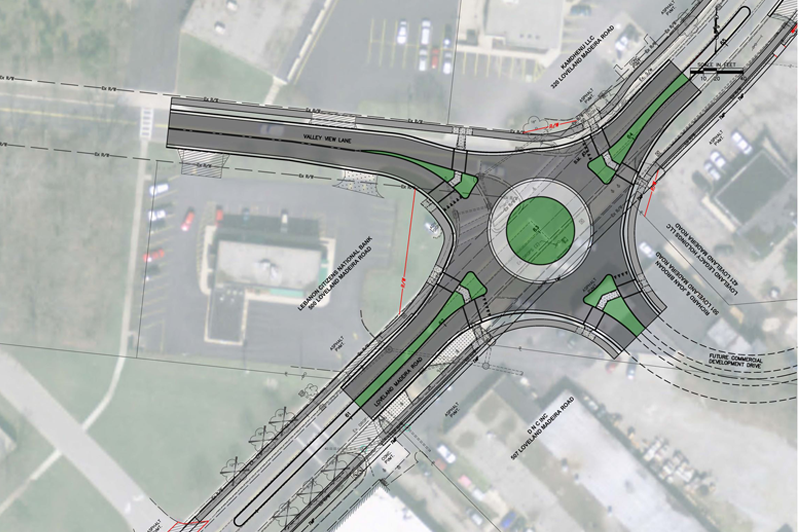
Loveland, Ohio – The City of Loveland, in partnership with the Ohio Department of Transportation, is proposing a roadway improvement project on Loveland Madeira Road from West Loveland Avenue to just past Valley View Lane. Proposed improvements are being funded by a $4.6-million grant through the OKI Regional Council of Governments and include the following:
Pedestrian enhancements, including sidewalk installation on the east side of the roadway and a multi-use path on the west side of the roadway.
Construction of a roundabout at the intersection of Valley View Lane and Loveland-Madeira Road to add a fourth leg of the intersection to accommodate future property development.
Streetscape enhancements, including street trees, lighting, green storm water infrastructure, benches, high-visibility crosswalks, bike racks, and relocation of overhead utilities to underground.
Grass-center median installation at various locations to manage traffic movement.
Permanent and temporary right-of-way will be required in order to complete the proposed work. Construction is scheduled to begin in 2027 and be completed in 2028.
The City of Loveland is hosting a public meeting on Wednesday, Feb. 12, 2025, from 6-8 p.m. at Loveland City Hall, 120 W Loveland Ave. to ensure the proposed project is viable and successful.
“The purpose of the meeting is to discuss the project and proposed improvements with the community, answer questions, and gather community input before making final decisions.”
This is an open house event with no formal presentation. We are asking all those interested to attend and participate in this public meeting, which is being conducted in-person.
Additional materials will be made available at the public meeting and at LovelandOH.gov. City Hall invites you to review the materials once they are available and submit your questions using the comment form on the website or by email, phone, or mail. Your feedback is welcome at any time but must be received by March 12, 2025, to be formally documented and considered during the preliminary project development phase.
Individuals who require reasonable accommodation to participate in this meeting should contact Assistant City Manager Chris Wojnicz by February 1, 2025.
“Public participation is solicited without regard to race, color, sex, age, national origin, or disability.”
A printout of the exhibits will be provided to any individual having issues accessing the project website or attending the meeting. Send a request using one of the contact methods listed below:
Mail: City of Loveland, Attention: Chris Wojnicz, 120 W Loveland Avenue, Loveland, Ohio 45140
To continue to honor President Carter’s life of service, Habitat organizations around the world are raising doors to symbolize the “many doors of opportunity that President Carter helped make possible”.
Tribute to former U.S. President Jimmy Carter
Friday, January 17, 2025
12:30 PM Outside City Hall 801 Plum St, Cincinnati, OH 45202
A tribute door will be displayed from Noon until 1:30 PM at Cincinnati City Hall. You are invited to sign the door with your name or personal message.
Following the service, the door will be displayed and available for signing in the Fairfield ReStore for the remainder of the month.
(4655 Dixie Hwy, Fairfield, OH 45014)
Street parking is recommended on 8th Street or Plum south of 8th. Paid parking lots are also available on 8th and 9th Streets, east of City Hall.













 Emergency management is a critical government function from mitigation through long-term disaster recovery and preparedness efforts.


 Tribute to former U.S. President Jimmy Carter